After a bit of a nervous sail from Vuda, waiting to see what the mast would tell us we had done poorly or forgotten to do, we anchored in a familiar spot off Denarau. We had returned so that we could catch up with our friend Eugeni, who we might not see again for some time as he intends to head to New Zealand at the end of the season, whilst we are heading to Vanuatu, New Caledonia, and Australia. Over dinner, Eugeni, who to my knowledge speaks Bulgarian, French, Spanish, and English, encouraged us to try and learn Spanish, something Cara and I have talked about but failed to ever action. He kindly gave us some language books that he no longer needs, so Taurus now rings with the sound of amateurish Spanish conversation, “Quiero comer algo ahora porque tengo hambre” (I want to eat something now because I’m hungry).
On anchor outside Denaru.
The following day we set off to the Yasawa Islands, a group to the north west of Viti Levu. We set sail in fairly light winds, hoping that they would fill in as the day wore on, but instead they grew lighter and veered to the north. As the wind died completely we sought an anchorage for the night so that we could avoid motoring.
Our chosen sight was Vomo Island (the site of another resort) and given there was no wind at the time we chose to head to the northerly side where we would be protected from the predicted sou’ easterly winds. After dodging numerous bombies and a reef we found a spot to drop anchor and settled down for the night. The weather became so still that we wondered if we were experiencing the ‘calm before the storm.’ When the wind returned later than night it naturally came from the north, so that we had little protection, but luckily it wasn’t strong enough to do anything but make the anchorage uncomfortably bouncy.
Like the proverbial mill pond. Off Vomo Island.
We were off early next morning and enjoyed an exciting sail in 25 knots. Drawaqa is a site where several islands in close vicinity create channels or passages that are strongly tidal and attract all manner of sea life. Its popularity means that two resorts are established nearby and about half a dozen yachts were already in the anchorage when we arrived.
Enroute to Drawaqa. Final passage into the anchorage. Drawaqa anchorage.
After dropping the hook we jumped into the dinghy and headed out to the nearest passage. The water was bizarrely warm, apparently due to the coral, and very clear with an exceptional amount of sea-life.
First thing next morning we heard a couple of outboards racing past, and sticking our heads out saw the resort boats heading out to the northern passage. Thinking that the activity may portend the arrival of the manta rays which the area is known for, we grabbed our gear and headed straight out. On arrival we lowered the dinghy’s anchor and jumped into the water. However, we hadn’t swum very far before we realised the strength of the current and quickly turned back. By the time we got back we were blowing hard, so decided to stick with the dinghy and ‘drift dive’ — that is take the dinghy ‘up stream’ and then hold on to it and be borne along with it. An added benefit of this technique is that in busy areas you are far more visible to other boat operators and so less likely to be run over.
On our second trip we jumped in and saw three or four manta rays directly below us. These massive creatures, evolved from sharks, are four to five metres across but entirely benign. They feed on plankton, and though it appears they have a sting the appendage cannot be used as a weapon, unlike sting rays whose ‘sting’ can be fatal. The mantas ignored us completely and swam in loops as they fed on their tiny prey. We felt very privileged to witness this silent and graceful underwater ballet. The photographs don’t really convey the size of these things, but if you imagine them the size of small cars you won’t be far wrong.
After this encounter we messed around up the mast, trying to sort out the wind generator (which continues to play up), and retying thin line from the steps to the shrouds on the upper two thirds of the mast. We had been encouraged not to replace this line when we refurbished the mast, but we hadn’t sailed very far before we came to understand its value — preventing lines and halyards getting wrapped around the steps.
Back up the mast. At least I’m confident it’s not likely to fall down now.
For the next week we hopped north, jumping from anchorage to anchorage, exploring the beautiful Yasawa Islands, and fixing the things that broke along the way. One day we were taking the dinghy to a nearby reef only for the outboard to stop and petrol to start running out of the mouth of the carburettor. We quickly turned the petrol tap off and rowed back to Taurus to start the trouble shooting process. It turned out to be a stuck float and easily fixed once the carburettor was in pieces. I think everyone has heard the old saw that defines cruising as ‘fixing boats in exotic locations,’ but in our experience it’s proven entirely accurate.
Fixing the outboard.
The weather was a little wet and wild for several days, leaving us confined to the boat. One down pour left so much water in the dinghy that the next day I took the opportunity for a fresh water bath, the first in a very long time! In between the days of rocking and rolling we visited the village of Yasawa i Rara. In this beautiful spot, at the very north of the Yasawas, we were delighted to bump into old friends. Bernie we had first met at Minerva Reef, and Sam and Emma we met when cruising in Tonga. We all went ashore together for the required sevusevu and then explored the village and stunning beach.
Catching up with friends and enjoying a shared sevusevu. Bula! Arts and crafts for sale at Yasawa i Rara.Cara enjoys the beach. View from the beach. Taurus in background. Sunset at Yasawa I Rara.
Next day we left our friends and sailed south, heading back down the island group, and ultimately anchored near the Blue Lagoon Cave. The cave apparently featured in the Blue Lagoon movie. This 80s flick is only remembered today for the manner in which it inappropriately sexualised a very young Brooke Shields, so it’s perhaps a bit tawdry that the name is used by so many resorts and tourist spots in the area.
We were charged a pretty steep F$50 per person for entry into the cave, but managed to avoid having to give kava as well. The traditional gift had been demanded from some cruisers, adding another F$10 to the cost. The expectation seemed unreasonable given the amount of money we were paying and the absence of any sevusevu ceremony, which essentially reduced the kava to another form of payment. After swimming in pristine caves in Tonga for free, this Fijian offering was pretty average and decidedly expensive. We were also encumbered by a ‘guide,’ who showed us a second cave but seemed to feel that we would be endlessly impressed by the echoes that his constant yelling created. Still, we’re unlikely to ever come back this way and getting together with other cruisers for sundowners on the beach that night definitely made up for the cave’s mediocrity.
Bath time. No rubber ducky but a big rubber dinghy!Blue Lagoon Cave.Sundowners.
After having sailed the west coast of the Yasawas (the east being a bit trickier due to the prevailing wind, reefs, and lack of anchorages) we are now heading back to the Denarau / Vuda area. Friends of ours, Dave and Jackie, who we sailed to Tasmania with last year are arriving soon from Australia in their yacht, Hansel. We also need to start thinking about checking out of the country soon, and we have to be in either Vuda or Denarau to do so. Fiji has been incredible, but the amount of time available to visit Vanuatu and New Caledonia before heading south to Australia (to avoid the cyclone season) is getting short.
Everything still stops for dolphins.New spinnaker getting an airing (thanks Pete!)Voyage of the good boat Taurus: 11th of August – 28th of August 2024.
Yakuilausewa Island near Denaru. The place to go in northerlies.
With Christine, Cara’s mum, visiting, our cruising experienced a change of tempo. Wanting to take Christine out on Taurus we sailed to Mala Mala Island, an island resort which we could visit for $30 a head. The price was pretty reasonable as it meant that we could use the resort’s facilities. The snorkelling around the island was surprisingly good and access to the reef was nice and easy. We settled down in the sun with a bottle of vodka that we had smuggled ashore and mixed with cold coke from the bar so we could get pleasantly inebriated without losing our shirts.
Mala Mala Island.Christine enjoying the beach.
Getting onto Taurus from the dinghy is often challenging, in fact dinghies are generally acknowledged to be the most dangerous aspect of sailing, and it wasn’t made any easier on this particular day by a short chop and power boats racing past. Fijians are the loveliest of people, but the idea of slowing down when motoring through an anchorage hasn’t yet entered the cultural consciousness. Christine took the difficulties of transferring from a bouncing dinghy to a bouncing yacht in her stride, and we were very impressed by her derring do.
Another day we took a bus into Nadi to explore the market and have lunch.
Nadi market.
Pete, a good friend of ours from Dunedin, and his daughter, Emily, arrived a few days before Christine was due to depart. Pete, bless his heart, brought us a ‘new’ spinnaker, nuts and bolts, and numerous odds and ends that we hadn’t been able to find in the islands.
Indian temple at Nadi, the lavalavas were provided free of charge — would have liked to buy mine! Indian temple at Nadi. Pete and Emily hanging out at Musket Cove. New (second hand) spinnaker a flying.
All too soon, Christine, Pete, and Emily were gone and we had to get on with the pressing need to get our mast fixed. Before that, however, we had the chance to meet Aaron Carotta, the chap whose ocean rowing boat we almost collided with in Tonga. The row boat eventually washed up in Fiji, and Aaron had come to collect and repair it. Despite being capsized by a freak wave and spending time in his life raft, Arron’s dream to circumnavigate the globe using human power only remains undiminished. He intends to set off again as soon as the boat is in a fit condition. Aaron is a really neat guy, very easy to chat to, and quite the inspiration. More about his adventures can be found here: http://www.adventureaaron.com.
Coffee with Aaron.
Next day we headed into Vuda Marina (pronounced Vunda) where we had arranged to meet the local rigger, Sam. Eugeni, the solo-sailor we had originally met in Tonga, was on a mooring in Denaru and offered to show us the way and give us a hand. The entrance to Vuda is both narrow and shallow, which equates to a nervous passage. Having someone on hand who knows where to go and how the marina ties its boats up is mighty reassuring and helpful in these situations.
Heading into Vuda Marina. The bar!
The marina has an odd setup that we haven’t experienced before due to the fact that it was originally a circular water storage facility. Visiting yachts are tied bow in with four lines holding the boat in position. In the middle of the circle is a large buoy which the boats tie up to during cyclones. I’m not sure how this exactly works, but the buoy is obviously the sailing equivalent of what is known in climbing circles as a BFR (a Big ‘Flaming’ Rock) — an anchor point so strong that it can’t fail. The berthing method made getting on and off the boat a bit of a game, and one boat that came alongside us decided it was too much trouble and left again within a half an hour.
The marina staff weren’t very happy about our lack of detailed plans, but as Sam was in Australia competing in a sailing race, we hadn’t been able to discuss a timetable with him. As travel lift (a machine used to lift yachts onto the hard and which also has a crane that we intended to use to lift our mast off the boat whilst we stayed in the water) slots were filling up, Eugeni encouraged us to have a go at taking the mast down ourselves. We knew what needed to be done but lacked the confidence to try and do it ourselves. Eugeni’s experience provided the boost we needed, and thus armed we booked the travel lift and prepared the boat. This involved taking down all the stuff that attaches to the shrouds (wires that attach to the mast from port and starboard) and stays (wires that attach fore and aft), the sails, the furler, the radar and wind generator, the boom, and so on. If it sounds like a lot of work, it is, and the mid 30s temperature, day after day, made it sweaty hard work. On top of the heat, we had been warned that there were a lot of mosquitoes at Vuda, and they soon made an appearance. The mosquitoes at least give some whiney notice of their presence and impending bites, whilst the ‘no-see-ums’ have a magical ability to bite whilst remaining invisible. Insect repellent seems to attract these little monsters, so they, and their super itchy bites, have to be endured.
Removing the wind generator, radar, and mount (we actually did this on anchor the day before going into Vuda). The duvet is airing rather than ready to act as a crash pad.
Having asked Sam to take the mast off the boat we thought we had better let him know what our plans were. Happily, it turned out that Sam had arrived back in Fiji the day before and was able to come and assist. Only having third party insurance focuses the mind on what can go wrong, so it was nice to have someone else, with their own insurance, turn up to take charge.
Sam takes charge, attaching the sling on the mast to the crane on the travel lift. Eugeni, solo-sailor and all round good egg. New sleek look Taurus. Back on the berth. Time for the real work to start.
With the mast down we needed to remove all lines and wires to prevent them being melted during the welding process. We then detached the three points on the mast where the shrouds attach, a process that required us to make an improvised press before we could finally free them. Then we had to remove a number of cleats and the sheaves from the mast that the lines run through. By the time we were done the mast was almost a bare aluminium tube, 13.5 metres long. At this point Sam suggested that it might be a good idea to think about painting it. The bronze anodised finish was faded in places and there was no way that we would be able to find a paint to cover the reinforcing patches that would blend in, so painting didn’t seem a silly idea. Hopefully, we will never have the mast down again and painting it in situ, on the boat, would be nigh on impossible.
Where to start??
Before we could do anything we had to wait for Vakesh, a master welder, to weld three sets of reinforcing plates on the mast, making it much stronger than it was when new. After this we could sand the mast and boom, remove some more bits of hardware, fair any imperfections, apply an etch primer, and finally paint with two pot polyurethane paint. Because of the heat, humidity, and drying time we could only paint in the early morning. One day we came out to start work and found that someone had left a New Testament on the mast. Perhaps they thought we needed some spiritual support? We left the book there and when we returned it was gone — a miracle perhaps?
Vakesh at work. Reinforcing plates either side add a full cm of extra aluminium.
The marina has a policy that prevents spray painting unless a tent is erected that covers the work. A 14 metre tent was not something that we wanted to erect, so we decided instead to roll and tip. This involves rolling paint onto a surface with someone else lightly stroking a brush over the work to remove air bubbles and so on. Done well it can create a job very near the quality of a good spray job (this was the method we used to paint Taurus’ hull). However, a key factor when rolling and tipping is making sure the paint doesn’t dry too quickly as the brush will then ‘pull’ the paint making streaks. The first thing we needed to do was to move the mast into a more shaded spot where the paint wouldn’t immediately dry.
Just like the good old days when we had to do ‘log runs’ in the army.
In the above picture Cara is laying the first coat of two-pot polyurethane, the dark grey coat she is painting over is etch primer. All up we gave the mast and boom three coats of the polyurethane light grey. The lines and wiring were then replaced with new, new lights, new VHF aerial, and all the jobs one does when the mast is down and access is available. Finding all the bits and pieces required was a mission, with things like coax cable (for the VHF radio) available, but the connectors that join the cable to the aerial at one end and the radio at the other couldn’t be found for love nor money. We had some spares, but only for the thick cable that wasn’t available in Fiji. Luckily we were able to beg, borrow, and buy the right size from other cruisers. Replacing the mast on the boat went without a hitch and by the end of day the riggers job was done. We had plenty more to do, replacing all the bits and pieces that we had previously taken off: boom, sails, radar mount, radar, and so on and so forth.
Of course, our stay at Vuda wasn’t all work, work, work. We found the time to catch up with friends, to visit the resort next door and spend a few hours by their pool, and to catch up with Eugeni in Denaru (and visit the chandlers there). Though the situation wasn’t ideal the setting was so beautiful that we still felt incredibly.
No alcohol was drunk in the making of this scene. Stunning sunsets come as standard.
We eventually left Vunda sixteen days after our arrival. The rigger cost us F$2,600, the welder F$900, and the marina F$2,000 (F$300 for the crane each time, F$200 for storing the mast on the hard, and F$70 per day for the berth). The unexpected cost and lost time is a bit of a bummer, but it’s all part of the journey. It certainly makes us appreciate sailing again, with a ‘new’ mast and a tight rig, and we are now on our way to the Ysawa Island group that we hope to explore for a couple of weeks. Soon we will need to return to Denaru to check out of Fiji and then head towards our next destination, Vanuatu.
“New’ mast works 🙂Voyage of the good ship Taurus: 25th July – 11th August 2024.
We left Kia Island with a nice easterly breeze that allowed us to sail for most of the morning. Alas, later in the afternoon the breeze slowly died away and we ended up motoring in very hot and humid conditions. During this time we were joined by one of the largest pods of dolphins we have met to date, and they swam at the bow of the boat in the crystal clear water.
Synchronised swimming dolphins.Dolphin. Another dolphin.
As the day dragged on we tried various ways to keep our cool. At one point I rigged our hammock between the mast and gib, laid back with a cold beer, and tried to stay in the shade. This might sound idyllic, but the way in which the hammock closed around me was pretty clammy and uncomfortable, and after fetching me my first beer Cara chose to ignore all calls for further hydration. So it wasn’t that great. To be honest I am not one for sitting around in the sun, so trying to pass time when all there is to do is to sit in the sun is pretty painful. I appreciate that many of our friends and family, especially those back in Dunedin who have had a miserable summer, will think that I’m skiting (boasting), but continue on gentle reader and you will discover that soon enough the other shoe was to drop…
Better than the office.
At the end of the day we anchored behind Yanucagi Island, a mangrove swampy kind of place with a nasty reef, so we didn’t go ashore and left first thing in the morning. Our destination was Yadua Island, an island that sits between Vanua Levu and Viti Levu, the two main islands in the Fijian group. As we approached Yadua Island we were delighted to see Maina heading in to the bay, and later on who should appear but Love Machine. We have bumped into these yachts several times since we first met in Tonga and have become good friends with their crews. We arranged to have sundowners and a catchup and invited the crew of another yacht already in the bay to join us.
Beersies.
Yadua is known for great snorkelling, and has several different reefs to choose from. This is the first time we have seen sharks on this trip and they seemed neither afraid or curious, which is more than can be said for us. No doubt they will have seen many more snorkellers in the past than we have seen sharks.
A white tip shark — no threat to humans. These small fish are great, if you move suddenly they all dart into the coral. Hours of fun.Lots of healthy coral.
Another day we walked across a small isthmus to another beach where we gathered coconuts and tried to find crabs to eat.
Trying to climb coconut trees. There was a lot of rubbish on the beach sadly (as you can see in the background).A yacht comes into Yadua at sunset.
After a couple of days we left our friends who were heading on to the Yasawa group and headed south west towards Viti Levu. I was a bit under the weather so Cara took the reins and ran the cutter for the day. One small incident had me kicking myself. We had managed to catch another Wahoo and after getting it on board and killing it with a blow to the head, I thought I would try a technique I had read about which involves cutting the fishes throat and the artery at the back fin and then allowing it to drag behind the boat to bleed out — thereby saving a good deal of cleaning up (we normally put the fish in a chilly bin with seawater to exsanguinate, but it’s still a ‘bloody mess’). Unfortunately, as soon as the fish was back in the water the gaff slipped out and then the lure, with fish attached, broke off the line. I thought briefly about jumping in to rescue lure and fish as they floated away, but we were sailing, which makes stopping the boat a challenge, and I didn’t fancy finding out first hand how one of the hooks feels when it rips into your flesh (luckily for fish they don’t have feelings — according to Kurt Cobain — though I find hooked fish always look pretty miserable, and I’m sure a hooked Julian would be most unhappy). We turned the boat around but fish and lure had gone to Davy Jones. I do hate killing something pointlessly, though I’m sure the fish went back into the food chain, and I do hate losing a lure that was working so well — but on the bright side, no fish for tea!
On arrival we sailed through a series of channels in reefs which was great fun as the wind came from a direction that allowed us to continue sailing on jib alone as we navigated our way through. Anchoring off Volivoli we spied a resort and decided to go ashore for a decent meal. Unfortunately, after getting the dinghy off the boat, the engine on the dinghy, and our glad rags on we were turned away without even being able to buy a drink in the near empty bar. Perhaps our rags weren’t glad enough?
Taurus from the Volivoli resort. Sunset at Volivoli.
Our journey continued next morning, and we sailed downwind all day following channels between the mainland and reef.
Oh oh! Things were going too well!
At the end of the day Cara noticed a small tear in the jib, so we quickly furled it away before it ripped any further — a stitch in time and all that. We stopped near another mangrove swamp and next morning dropped the sail for repair. After placing patches either side of the sail and stitching them together we were ready to go again.
Repairing the sail. A sailor’s palm is invaluable for this kind of work.Repairing the sail had to wait for a number of squalls to pass.
The damage to the sail was near a previous tear, so we suspected that perhaps there was something sharp catching the sail as it dragged past the mast, such as a split pin. I climbed the mast to find an unpleasant surprise…
Working up the mast has been getting easier as we find new techniques to increase safety and comfort. Bugger.
The port side lower shroud attachment had ripped through the mast wall. As you can see in the previous photo, in which I’m climbing the mast, Taurus has two sets of spreaders, the short lateral bars that extend from the mast and three sets of shrouds that attach beneath the spreaders and at the top of the mast. The shrouds laterally support the mast at points of high stress so that failure of the shrouds can create a situation in which the mast collapses. Our rig was replaced in December in New Zealand, but with no idea when the damage had been incurred we had to face the unsavoury fact that we may have sailed a long way, sometimes in heavy weather, with a sub-par rig. On the positive side, the fact that we may have sailed a long way, sometimes in heavy weather, with a sub-par rig that hadn’t yet collapsed gave us some confidence that the mast wasn’t about to fall over. If the glass can’t be full then half full has to be next best.
With this in mind, our ripping the sail turned out to be a stroke of good fortune, because it meant that we found this issue near one of the few places in Fiji where we can get professional rigging work carried out. It is quite possible that had it not happened we would have set sail to Vanuatu none the wiser, and the next opportunity for repair would probably be in Australia. I was reminded of the story of when a farmer’s son breaks his leg and all his neighbours come along and say, ‘such bad luck.’ The next day the army turns up and conscripts all the young men and takes them off to war. The farmer’s son is left behind due to his injury and all the neighbours come and say to him, ‘such good luck.’ Other incidents happen with luck flip flopping between apparently good and bad as regularly as a pendulum, with the moral being that one can never really say if fate has been kind or not as it always depends on contextual factors that lie in the future.
Taurus, a little bent but not broken.
We couldn’t contact the rigger working in Denaru at the weekend, a few hours to the south, so decided to continue with our plans. Our next stop was Lautoka, a bustling city of 70,000 people, Fiji’s second largest city, and a hub of sugar cane production. After a ‘gentle sail’ of a couple of hours we found an anchor site in the harbour and took the dinghy to shore via a very narrow dredged channel. Our first priority was a decent meal. Though Cara, who does most of the cooking onboard, is able to do wonders with the ship’s rations, there is a limit to what can be created in our small galley. Eating out is a treat we both look forward to, especially as the food in Fiji is universally delicious and cheap as, well, chips.
F$6.50 worth of yumminess.
After curry for lunch we headed to the market to re-provision. The range of fruit and vegetables in these places is amazing, with many exotic items for sale that I have never seen, let alone can put a name to. The aroma of the market is something else as well, with many Indian spice merchants selling their goods from open containers. Everywhere you turn people smile and call out, “Bula!”, Fijian for “hello!”
As we were leaving we noticed a crowd gathered round what looked like a corner dairy. We went over to see what the attraction was and found that the All Blacks were playing Fiji on TV, and those unable to get a table inside, or too poor to buy a beer, stood outside to cheer their national team on. We knew that the game was taking place but hadn’t realised it was going to be played so early — the San Diego venue catching us out. As ever, the Fijians couldn’t have been kinder and made room for their Kiwi friends so we could all enjoy the game.
After the game we carried on back to the boat when suddenly we heard a weird hooting noise. The next thing a train rattled through the centre of town, right along the middle of the main road, pulling wagon after wagon of sugar cane. It was a surreal sight but obviously something that happened frequently enough for the locals to completely ignore it.
‘hoot, hoot!’ said the train.
We returned to the dinghy and ran back out to Taurus to get under way. Cara’s mum, Christine, was due to arrive in a couple of days and we needed to be in Denarau to meet her.
The dredged channel to the harbour was just wide enough for two dinghies, at a pinch.
Anchoring outside Denarau we googled the local town to see what was available and if it was worth going ashore for a look around and a drink or meal. The prices were shocking compared to what we had grown used to, with the cheapest meal available over $50.00 and most closer to F$90 — over ten times what we had paid for a meal a couple of hours north in Lautoka.
The next day we took the dinghy into Denarau Marina and then walked the twenty minutes to the hotel Christine was staying in. The streets were immaculate with manicured hedges and lawns and gated communities along the way. The hotel was something else as well: opulent in your standardised corporate fashion, and full of white people wearing expensive jewellery and designer clothes. Being stuck for anywhere to go for dinner we ended up eating in the hotel restaurant and paying F$89.00 per person for a buffet. Naturally, because we were paying such a high price for the meal, I tried to stuff in as much as possible, whilst the Fijian staff cleared plate after plate so we could stuff in some more. The experience felt less luxurious than slightly demeaning; the hotel restaurant, no fancier than any of its ilk in any corner of the world, reminded me of childhood holidays at Butlins — get the punters in, get them fed, get them out. The racial divide between those being served and those serving was also uncomfortably distinct. Presumably people of colour do stay at the Sofitel sometimes, but I have yet to see one. The wealth divide was only slightly less obvious due to the uniforms the staff wore. I couldn’t help but wonder what the Fijians must think of us — paying a fortune for an average meal that we shovelled down as if expecting a famine and desperately needed to add to our already well padded frames. The courtesy of the staff was no less than we had found elsewhere in Fiji, but there was an edge of unhappy subservience, of their kindness having been bought and paid for.
Denaru felt unreal, like a Fiji Disneyland, a place where the rich go to experience a Fiji sans the unpleasant rubbish and poverty that they might find elsewhere — a sanitised Fiji that can’t possibly offend unless your taste runs towards not paying exorbitant amounts of money for an experience devoid of charm or reality. Or, perhaps the idea is simply to sit in the sun with other wealthy people and the location, besides bragging rights, is entirely beside the point. A control booth that separates the hotel complexes from the rest of the country, complete with barrier arm, reinforced the view that real Fijian people weren’t welcome in this playground for wealthy foreigners. Back at the marina I found a book in the office that was written for super yacht owners. Within its pages the tourism ministers of various Pacific nations, including New Zealand, competed to fawn and pander to the mega wealthy and beg them to visit. One of the chapters was all about the altruistic possibilities of mega yacht cruising, a hub for natural disaster management being the example given. I couldn’t help but snort with derision. Perhaps we should hand out super hero capes to these people, along with the tax breaks, opportunities for citizenship, and God knows what else that they expect and take for granted.
Fiji Disney land.
My champagne socialist roots are showing, and who am I to complain about how other people spend their money? The older I get the less I feel I know. It’s not my intention to insult anyone or try to assume a moral high ground. I am privileged to have the opportunities to travel that I do, and I couldn’t have done it without Cara who earnt a very good salary as a doctor. However, I feel that I have some right to record my discomfort with the money taking machine that passes itself off as an opportunity for relaxation and travel because A: this is my blog, and B: Cara and I have deliberately tried to minimise our footprint and live simpler, sustainable lives. Having seen the degree of poverty elsewhere, and the kindness that the poor have shown us, the wealth being squandered in this never-never land is jarring. Life changing amounts for the average Fijian blown on a week’s worth of pool side recliner.
In the Four Quartets T. S. Eliot wrote the following famous lines:
“We shall not cease from exploration And the end of all our exploring Will be to arrive where we started And know the place for the first time. Through the unknown, remembered gate When the last of earth left to discover Is that which was the beginning; At the source of the longest river The voice of the hidden waterfall And the children in the apple-tree Not known, because not looked for But heard, half-heard, in the stillness Between two waves of the sea.
—T.S. Eliot, from “Little Gidding,” Four Quartets. Originally published 1943.”
I’m not necessarily convinced that the point of a holiday in a five star hotel is ‘exploration’ or personal growth. But perhaps the point of sailing on a small yacht on a budget for as long and as far as possible is. If so, one lesson that we keep running into is that money is no substitute for community. The warmth of the Fijian people, the laughing and happy children one sees everywhere, the lack of crime, all highlight the view that though first world nations may glitter, their lustre may be that of fool’s gold.
Voyage of the good ship Taurus: 14 July-25 July 2024.
Next time: Friends arrive and we speak to a rigger about fixing the mast…
After three days anchored off Also Island, two of which we were confined to the boat because of the weather, we had a window to move on. Rather than try what seemed a fairly sketchy entrance through a shallow reef we backtracked and left via the same reef we had entered by. It was a worthwhile experience, seeing what we had motored through at night, and being able to see the sea break on the reef either side of the passage. The chart may say that the passage is 200m wide, but it seemed narrower and I’m not sure that we will be keen to repeat the experiment, though its good to know that we can enter anchorages in the dark if we have to.
If you look closely you can see breaking waves either side of the channel. The lens has made the passage look a little wider than it appears to the naked eye.
After clearing the reef we turned west and had a grand sail downwind in about 30 knots with nicely following seas. After the light winds and tight beating we had struggled with during our last few sails it was fantastic to be able to make ground effortlessly, and we flew along on our jib sail alone.
Our destination for the night was Blackjack Bay, a sheltered cove back inside the reef. We ran off the distance in no time and anchored in this lovely spot to enjoy a quick swim and sundowners.
Approaching Blackjack Bay.
In the morning we undertook our weekly, sometimes daily, work in the engine compartment, this time to adjust the throttle idle that had mysteriously decided to unset itself, before taking the dinghy to shore. The deserted beach showed signs of occasional habitation, probably by local fishermen, and the inevitable plastic bottles and rubbish that are discarded or washed up. We foraged a few coconuts and tried to remove the husks on a handy fallen tree, an operation that’s near impossible on the boat. There is a real knack to being able to do this easily, and we don’t have it. In a survival situation I suspect we would burn more energy getting into the coconut than it could possibly provide, but luckily we have plenty of energy stored away.
Where did the coconut go?
Next day we left early, hoping to visit Labasa. Labasa is the main city and administrative centre for Vanua Levu, though one guide describes it as like Savusavu but minus the charm. Getting to the city was a bit of an undertaking or adventure, depending on how you choose to look at it, requiring us to anchor someway off shore due to mud shallows, and take the dinghy up the Labasa River for about an hour. There are two mouths to the river which join just in land, and naturally we took the wrong one and ended up having to drag the dinghy in knee high water across the mud. Poor Cara was more like thigh high, and she had a bit of a fright when she felt the mud sucking her down…
Soon enough we were back afloat and motoring along, though our poor 8 HP outboard engine is a bit underpowered for this kind of work. I had presumed that the river would flow fairly constantly to the sea, but it turned out that the river was tidal and that we would be going against the tide both ways. Had we known we wouldn’t have been able to to change our plans because we would have needed to leave very early, way before we arrived, but it was another reminder of the value of local knowledge.
Cara fashions the latest thing in living with annoying husband technology.
Outboard engines are so noisy we decided to take along our earmuffs, and as well as muffling the racket they had the added benefit of giving the locals on the river a good laugh. Our Heart of Darkness trek finally ended when we spotted the city clinging to either bank of the river — and finding a 40 foot yacht at anchor. We could see the crew aboard so we motored over and were invited on-board for a coffee. Andre, the French skipper, had spent six months in France and six months in Fiji for the past twenty years. He told us that the river was navigable if you were very careful. However, his tales of finding cyclone holes in mangrove swamps and so on suggested that this was a sailor/adventurer of a far higher calibre than us, and I think our taking the dinghy was the wisest course.
Just beyond Andre’s anchor spot was a bridge and two dinghy jettys. We attached the dinghy to one and climbed ashore into a bustling market. Labasa has a large population of Indian Fijians, and the frenetic energy of the place made me think of what I imagine Delhi or Bombay is like. We hadn’t been in an area with such a high density population since leaving Whangarei, and we were left feeling a bit dazed and overwhelmed.
Police officers control the pedestrian crossings.
After buying provisions and grabbing an Indian curry for lunch we had to find some fuel for the dinghy as we had used more than expected getting upriver. Happily there was a fuel pump on the jetty selling ‘pre-mix’ (two stroke petrol with oil already added) and once we had roused the attendant we were able to start the journey home. We were both a bit anxious about the late hour and the possibility of not getting back to Taurus before dark. Luckily we made it just in time, only running aground once more on the return trip.
Taurus lies at anchor in the distance. Not a lot of time to spare before dark!A welcome sight!
Our next destination was Kia Island, a small island about four hours sailing away but still within the reef that circles much of Vanua Levu’s northern shore. The island is known for a cannon that sits atop its highpoint, which has apparently been sitting there since the late eighteenth century.
We had a nice sail there, and as we navigated a passage through the reefs we caught two more wahoos and were entertained by a pod of dolphins. In the last blog I mentioned that the wahoo we caught fed us for three nights — it turned out to be four— and I could barely face the idea of eating more of this ‘delicious’ fish for another week. Hence we decided to keep our small prize and give the larger monster to the villagers on Kia, it being traditional to give kava and other gifts on arrival.
Another week’s worth of fish… yay.
Having anchored off Linau village we were spurred on to get ashore quickly by the large fish that we couldn’t refrigerate. We wrapped it in newspaper and jumped in the dinghy and headed to the beach. The villagers of course make their living as fishermen, so what they thought of tourists bringing them a fish I don’t know, but they were too polite to scratch their heads or turn it down, and thankfully they didn’t cook it on the spot for us to share.
Mission Get Rid of Fish. Linau Village
Like all of the villages we have visited in Fiji, Linau is beautifully cared for and inhabited by the friendliest people on God’s good earth. We were escorted to one of the elder’s huts, the Chief being unwell, and treated like honoured guests. A special mat was rolled out for us to sit on, whilst the villagers sat on the floor. They made us tea and pancakes, and the local kids were rounded up so that they could sing us some songs. After the welcoming ceremony we were collected and taken to the school which had just had a fete and entreated to join in the kava ceremony. For those who haven’t experienced this, kava is a root that is mixed with water and pounded to create a liquid. This is then handed round in a coconut cup and is drunk as others clap in a deeply symbolic celebration of fellowship. The drink is very mildly intoxicating — in large quantities it can make your lips tingle and your tongue feel numb — and tastes rather like muddy water. If the kava is a bit disappointing to a westerner, the warmth of the Fijians towards their guests is very special and touching.
Village elders who welcomed us. The children were rounded up to sing us songs. We recorded them and then showed them the video which had them in stitches. Save, a church elder sits on my left. The concern to make visitors feel welcome is a heartwarming Fijian custom.
The following morning, a Saturday, we were back in the village at 8am to meet our guides who were going to show us the cannon. The guides were two children, Mossi aged 14 and Akula aged 12, who had been volunteered for the job. The track was virtually non-existent and instead we scrambled up a steep Fijian hillside covered in loose shale and rock in twenty five degrees of heat and something like 90% humidity. Mossi and Akula could not have been more kind and considerate. They patiently waited for us old foreigners, lobster red and soaked in sweat; they solicitously gave their hands to help us over trees or slippery areas; they pointed out things of interest like spiders and toxic plants; they fetched us papaya and coconut from the trees. After about an hour we arrived at the top of the hill and found the cannon, lying on its side and covered in undergrowth. Just above it was a rock pinnacle and steep cliff that the boys showed us but guarded to prevent us going too close. Clearly they would be in big trouble if we were to get injured!
Akula (in yellow) and Mossi. Sailing isn’t good training for climbing hills we discovered!Akula protects me from falling off the cliff. You can see how high we climbed. Taurus sits on anchor in the bay.
The tradition in the village has it that the cannon is maybe English and has been atop the hill since 1790 or there abouts. The only thing of which they are sure is that the cannon was taken up the hill by the village women, because the men weren’t strong enough. A Fiji Times article from 2015 adds the following information:
At the turn of the 19th century, sandalwood was one of the most valuable and sought-after timbers in the old world.
When the tree was accidentally discovered in Fiji’s northern islands, a bloody, decade-long timber boom began. Spanish, British and American ships descended upon Vanua Levu – the Sandalwood islands. We’re in Ligau Village, Kia, an island in the Macuata province that was once an outpost in this wild west shootout for sandalwood. Welcome to a Taste of Paradise.
Much of Fiji’s pre-colonial history can be read in the journals and diaries of the sailors, clergymen and missionaries.
They may be a one sided account of the old days, but it is the only written record Fijians have of their pre-colonial history. One that caught my interest was of English sandalwood trader, William Lockerby.
He had arrived to Fiji in 1808, a few months earlier than the first Chinese onboard the Eliza. It was the peak of the sandalwood boom and every businessman, conman and pirate was attracted by the tales of undiscovered riches. Fiji was yet to be discovered by the European explorers. Lockerby kept detailed accounts of his observations.
The early 1800s were like the California gold rush of the old wild west. The good, the bad and the ugliest examples of the papalagi, the white man, was about to descend on the unsuspecting native civilisation.
AROMATIC TIMBER
The light brown timber of old sandalwood and butt of the tree contains an aromatic oil; long prized in Polynesia for scenting coconut oil.
Whilst the Tongans prized the fragrant timber, high prices on the Chinese market made it one of the most valuable timbers in the world, as it still is today. In Asian countries, sandalwood carvings are used in religious ceremony whilst the sawdust is turned into joss sticks and incense for prayer.
For the native Fijian of this period, the sandalwood trade brought regular exchanges of goods with the Europeans, and the bartering for anything made of iron; a new commodity to the Fijians. But the decade long sandalwood boom was also the bloodiest in their dealings with the pale skinned papalagi.
So precious was this timber that many European traders would raid villages or other ships – and sometimes even murder for it. Unfortunately for the Fijians, their first contact with the white man was with some of the worse band of misfits, conmen and pirates to sail the high seas.
The wariness and mistrust of the strangers would set the tone for the next century, as Fiji was no longer an undiscovered country.
JOURNEY TO KIA
Lockerby’s journals recount an island outpost on the northern side of Vanua Levu called Kia, and lucky for me that the Reef Endevour was pulling into anchor off its shores.
It was once known as Brown’s Island, supposedly named after an American ship’s mate who had stumbled upon a treasure of untouched sandalwood plantations. Along with other Americans and Englishmen, Mr Brown had essentially taken over the island with his motley crew.
Several ship’s iron cannons had been placed high on the hills to ward off any invaders. Lockerby recounts they had been there a “dozen years ago” – placing their installment around 1795 – something the local villagers I spoke to, did not know.
STRONGER WOMEN
The village is at the base of a hard mountain rocky range with sheer cliff faces. The village women at Ligau tell an amusing story of when their forefathers and brothers trekked up the steep hill to mount the cannon for Brown.
More than a dozen men lifted the 2 tonne iron cannon up the treacherous mountain. As they reached about halfway up the peak the men collapsed from exhaustion and sent message for the women to take it to the top for them; and they did. The women laughed, “We’re stronger than the men!” I was dying to see the old cannon documented in the sandalwood trader’s journal.
The village elders said it was still there but expressed doubt we would make it. I don’t blame him! Lucky we have a remote controlled drone camera, it was a long way up and over the peak.
Watching the drone’s monitor, we all waited in anticipation, it was like finding a needle in a haystack, but finally there it was. We’d discovered the cannon that William Lockerby had written about more than 200 years ago.
All too soon it was time to leave our friends on Kia and head to another anchorage. Cara’s mum, Christine, and friends of ours, Pete and his daughter, are heading to Fiji soon, and we need to keep heading south so that we can meet them.
Off Kia Island. Sailing away. Kia Island in the background (the grubby towels are what we use to clean up the bilge). Voyage of the good ship Taurus: 9th of July – 14th of July 2024.
Next time: the stress of cruising gets a bit much and I have to sit down and have a beer…
We spent six days in Nawi Marina, catching up with friends, restocking the boat, and getting a few boat jobs sorted. Savusavu, the town across the river from the marina, was great for re-provisioning, but other than buying food and eating food, there isn’t a whole lot to do there. Indeed, the local geothermal streams, an obvious potential tourist attraction, was instead used as a kind of free, communal oven. Whilst tourists may have to entertain themselves, this lack of commercialisation is one of Fiji’s great charms.
Geothermal community oven. Mainstreet, Savusavu. Food is amazing and cheap.
One of the last jobs we had to do before leaving Nawi was refuel. There is a lot of chat amongst cruisers about the quality of fuel bought in the islands. This is because contaminated fuel can prevent an engine from working, demand expensive repairs, and creates an obvious safety issue. In the past, buying diesel was something of a gamble, and the people in Nawi are clearly aware of this as the guys who helped us fuel up went to great pains to prove to us that their diesel had no contaminants. They used a kind of litmus paper to show the absence of water — then put the tester under a tap to show us the change in colour that would occur if any water was present. They showed us their filtration system, and they used clear hose so that you could see that the diesel was clear and a consistent colour. As the pumps haven’t been installed yet, they then hand-pumped about two hundred litres on board. All with happy smiles and a thumbs up. Compared to dragging jerrycans around you have to give this kind of service five stars!
We left Nawi that afternoon and slowly sailed back towards the reef entrance where we had decided to anchor for the night. We went for a snorkel that afternoon, and memorably were met by a school of black and white fish that not only showed no fear, but surrounded us and nibbled at any exposed areas they could reach. The feeling wasn’t entirely pleasant, so we didn’t hang around in the water for very long.
Bitey fish.
In the evening we took the dinghy to a resort owned by Jacque Costeau’s son. The setting was amazing and we stuck a nose into the restaurant but didn’t bother asking to see a menu as the food was clearly going to be pricey.
Cousteau Resort Cousteau Resort.
Our plan was to try and head north east so that should a weather window appear we could sail to the islands of Lau, an island group that lies to the east of the main Fiji islands where visitors have to check in, which means sailing back against the prevailing winds. The wind direction was marginal next day, but marginal is better than right on the nose so we gave it a go. Unfortunately, there was more motoring than sailing and by early evening we were getting a bit sick of it so we found an anchorage. Our chosen place to stop overnight was Fawn Bay, a lagoon accessed by threading your way through a channel in the coral reefs.
We passed an uneventful night and set off early next day hoping for a better sail. We motored out through the double dog leg and found a stiff breeze blowing directly on land and a short sharp chop that saw Taurus hobby horsing through the waves. We generally raise the main when heading into the wind but on this occasion, perhaps because of the wind strength or the wave action, the reefing lines at the rear of the sail were blown back into the wind generator and instantly became hopelessly tangled. Although there was the potential for damage to the wind generator and reefing line this was not a serious situation, but it did mean that we couldn’t raise the mainsail.
Bugger! I had a quick go at releasing the line with the boat hook but there was clearly no way this would work. Here I am using the boat hook to grab the generator and pull it ninety degrees from the wind to reduce its spinning. After this I strapped the pole to the rear stay.
Within minutes, however, things took a serious turn for the worse when the engine oil pressure alarm went off. Oil pressure alarms are not something that can be ignored because the engine can quickly seize and be ruined. We were now on a lee shore with a narrow and difficult coral passage between us and safety in a yacht whose sailing ability was impaired and whose engine needed to be turned off ASAP. We initially thought to turn back, thinking we could use the jib to sail into the anchorage, but the turns were so narrow and sharp that one mistake would see us on the rocks. Instead, we decided to bring out the jib and see if Taurus could claw herself away from the coast on a single sail. Thankfully, in the strong wind she proved able to do just this and we were able to turn the engine off whilst gaining sea-room and thinking time. The engine issue had to wait, there was no obvious oil leak in the bilge so we knew nothing catastrophic had happened, but the priority had to be sorting out the main sail so that we could sail efficiently. We thought briefly about cutting the reefing line but in the strong wind it seemed likely that we would need our third reef fairly shortly. The best option, though not an easy one, was to use the bosun’s chair to climb the rear stay and undo the ropey mess. This we managed to do, and whilst I wouldn’t choose to climb the rearstay again in those conditions, the line was released, the generator saved, and we had an operational mainsail again. Sadly, we don’t have any photos of the operation as Cara said that she was busy belaying me so that I didn’t fall to my death, I ask you…
After the morning’s excitement we had a great sail. The wind slowly built to just under 30 knots so we chucked in the third reef, glad we didn’t cut the line (though we could have rethreaded something fairly quickly), and flew along on a broad reach. This angle of sail, with the wind at ninety degrees to the direction of travel, is Taurus’ preferred angle, and we spent much of the day effortlessly cruising along at 8 knots, hanging out whilst the Hydrovane steered.
Our destination was Viani Bay, a well known anchorage famed for the quality of the snorkelling and diving on the nearby Rainbow Reef. The reef extends far out from land so that accessing the bay means sailing a long way in apparently open sea before you can enter the channel and sail back. We were entertained during this last hour by the odd sight of a rainbow that seemed to hug the contours of the island we were sailing next to. It’s not something either of us had seen before.
We had just lowered the anchor when John from Maina came up in his dinghy to inform us that the local bar’s happy hour started in fifteen minutes. Evening’s entertainment sorted!
Left to right: Erin, Bruno, John, Fiona, me.
There were several yachts already in the anchorage when we arrived. These included John and Fiona on Maina who we first met in Tonga, Bruno and Erin on Love Machine who we met in Nawi, and Ding on Chiquita — a solo sailor who had been sailing around the Pacific, mainly Fiji, for nearly two decades. Cruising sailors are often interesting folk, and this wee collection was no exception to the rule. Erin is a marine scientist who has recruited a number of cruisers to collect data, her husband Bruno built their yacht himself, is a sail maker, and a world class sailor having sailed competitively all over the globe. John was a university lecturer and Fiona a dentist who specialised in treating anxious patients. Ding, it turned out, had been a member of the British Olympic Sailing Team, as well as a former marine surveyor for Lloyds of London. We were in exalted company, but luckily everyone enjoyed a drink or two and the conversation and wine/beer/rum flowed.
Ding: sailor, marine surveyor, lawyer, and all round good egg.
Next day we were invited aboard Ding’s beautiful Sweden 50. These yachts are the last word in quality, and this one had taken Ding all round the Pacific for the past seventeen years. Ding was in the process of rewiring her following a fire when we came aboard (hence the switchboard being exposed behind him) but he was far from overwhelmed by the task, instead seeming to relish the opportunity. He kindly offered us a copy of his GPS tracks, a kind of digital breadcrumb dropped everywhere he had sailed, accurate to within a few metres, and able to be overlaid on our charts. This kind of of information is invaluable in areas that have been poorly surveyed, and allow a degree of certainty which means that you can enter areas in poor visibility — though it doesn’t mean it’s not nerve wracking as we were soon to discover!
The next character we were to meet was Jack Fisher, a local diver and fisherman. Jack is a bit of a living legend, having taken cruisers out to the reef and shown them where to dive for decades. Recently, ill health and the opening of three dive schools in the area has hit Jack’s business, but he was very happy to show us his favourite dive spot for a small fee. At F$20 a head, Jack’s price is a bargain compared to the dive shops that charge almost $350 for two dives.
Mr Jack Fisher — a font of knowledge and true gentleman. Diving on Rainbow Reef.Bruno enjoying the sights.
The diving was great, especially for someone used to diving in Dunedin where an 8mm wetsuit is required and visibility is often reduced to a couple of metres. The water is so warm here that I dived in a rash top and shorts, meaning I could dispense with nearly all my lead weights. The fish life was abundant and the coral spectacular.
School bus at Viani Bay.
Unfortunately the local dive shop wouldn’t refill our tanks, something that all dive shops in New Zealand would do for about $10. The German lady owner went to some pains to explain, very reasonably, that they don’t want to run their compressor all the time, filters are expensive, and so on. Despite these assurances it was difficult not to feel that the real reason is because they want to discourage independent divers. I understand why this might be the case, businesses are in the business of making money after all, but it seems a shame to limit the experience of the reef to those wealthy enough to pay the pretty stiff fees. The difference between Jack’s expectation and those of the business arguably reveals the dichotomy between past and current cruising trends. The old-school, affordable cruiser life-style hasn’t disappeared, but it is endangered. The consumer ethos of modern life has been taken to sea, so that many modern sailors choose to sail massive yachts or behemoth catamarans which serve as floating apartments — complete with all the luxuries of home. The simplicity and self-reliance that was so valued by sailors only a decade or so ago is fading away, or at least becoming marginalised. Not so long ago, Taurus at 39 feet would have been considered a large yacht, but today she is regarded as small. The marine and tourist industry is happy to cater to the demands of this cashed-up-ideology, and charges accordingly.
Rainbow Reef.
One of the reasons that Cara and I chose to live on a boat was because we wanted to embrace a more minimalist lifestyle, to chase experience and quality of life rather than the almighty dollar. A smaller boat is not only cheaper to buy but also, and more importantly, far, far cheaper to run and sail long term. Despite this well known fact, we have met numerous people who have sold everything they own in order to buy the biggest boat they can afford. I understand that some people have good reasons for taking this course, the desire for family to come sailing for instance. Nevertheless, the outcome is limited potential income, from rent for example (which we depend on), and reduced opportunity for a comfortable return to land (should ill-health perhaps demand it), whilst simultaneously incurring far higher cruising expenses. In my view that’s lose/lose. I recognise that I’m standing on a soapbox, that other views are equally valid, and people can spend their money anyhow they want, but as I know some people reading this blog have hopes of cruising in the future I will end with Larry and Lin Pardey’s famous advice: ‘go simple, go small, go now.’ Cara and I decided to follow this dictum and we haven’t regretted it yet.
This unhappy fish is known as a ‘wahoo’ — due, apparently, to the fight they put up when caught. This was sufficient to supply dinner for the two of us for three nights.
Our hope to get to Lau led us to leave our friends in Viani Bay and head to Qamea Island and Nadilo Bay. The island is to the south east of Vanua Levu, so once again difficult to reach due to the prevailing winds, but the weather apps suggested there might be an opportunity to go. Unfortunately, the window quickly shut and we had a miserable sail, beating as close as we possibly could into a stiff wind. Taurus pounded into the steep swell and it was very slow going. Our misery wasn’t helped by a late night the night before — I will in the future be ever wary of Dings who say, ‘one for the road!’ Eventually we thought we could tack but we had misjudged our angles and we had to tack back to get safe access to the channel between reefs. The rest of the day continued to be a headache due to the close angle we had to follow and the numerous reefs and shallows we had to negotiate. The only highlight was catching a wahoo, a tuna-like fish that is great eating, though after three days you can have enough of a good thing!
When things are going badly they tend to continue to go badly, and we ended up running aground trying to anchor in Nadilo Bay. As the old saying goes, ‘there are sailors who have run aground, and there are liars’ but it’s not something that you want to make a habit of, especially on a falling tide. Still, Taurus’ strong construction ensures that a wee contact with land won’t do much more than damage the anti-foul, so we dragged ourselves off and got the hook down.
Nadilo Bay at low tide. We are anchored in twenty metres here so you can see how quickly the bay shallows. We went from plenty of depth to no depth. Bugger, again.
The weather window to get to Lau continued to shift, and ultimately we had a chance to either motor for ten hours to get there or forget it. After the day of light winds, meteorologists were predicting a week of sou’ easterly gales. We never choose to motor unless we have to, and some of the reports from Lau suggested that it was over-crowded, so not great fun and potentially difficult to find a good anchor spot in the weather coming. Instead we decided to turn north to find shelter in an area that we hoped to be able to continue sailing in, instead of being stuck on anchor.
The light wind and distances involved made a plan difficult to arrive at. We could sail, but we couldn’t sail quickly, and if we didn’t stop at about lunchtime we would not find an anchorage until after dark. I wasn’t keen to anchor early in case the weather came in before expected and we found ourselves stuck on anchor in a reef. After a bit of a confab we decided to keep sailing whilst we could, and, if necessary, sail a bit further so that we could anchor at sunrise
The light winds meant slow speeds and the chance to be dragged along behind Taurus. The sun is going down on the island that we needed to sail around to get to our planned anchorage.
During the sail Cara managed to load Ding’s tracks onto our chart system. The accuracy of the GPS tracks meant that we had the option of entering an anchorage in the dark. Ultimately, this is what we did. We approached Nukusa Channel, the entrance to Also Island, at about midnight in the pitch dark. We knew that there were reefs each side of us, but the channel was about 200m wide. As long as we kept to Ding’s track we should be good. In New Zealand we would think nothing of doing this, but Fiji’s poor charts mean that you can’t navigate a series of bends in coral blindly by chart alone. This kind of exercise is a bit like abseiling. If you have faith in the gear it’s not frightening at all — if you don’t it’s petrifying! We knew the accuracy of GPS, we could see the track, but following it through a reef in the pitch dark was an eerie experience and one that seemed a little too close to fool-hardiness. Needless to say we kept a very close eye on the depth monitor, and in the end it felt a bit like playing an 80’s video game. All I had to do was keep our boat on the charted line — but in this game we didn’t have three lives. Still, within twenty minutes it was all over and once inside the reef we left Ding’s track and anchored in 25 metres of water rather than mess about any more in the dark. The night was so still there was no fear of dragging.
It was with something of a surprise that we woke the next day and looked outside. We knew that we were surrounded by reefs but were met by a wide expanse of ocean. We kept seeing the splashes of large fish all around us but couldn’t work out what they were. Later we heard a loud nasally kind of exhale, a sound that we associate with seals. Are there seals in Fiji we asked ourselves?
Surrounded by reefs in Fiji.
An hour or so later a fishing boat came over to say hello. The three Fijians, Pauliasi, Kelemedi, and young Sekove, were so friendly it seemed rude not to invite them onboard. Sekove, who has just started school, was curious about everything, especially the soda stream. I found it telling that Pauliasi, who came downstairs for a tour, looked around in wonder and whispered, “so many electronics.” Even though we think we are doing it simple there’s different levels of simplicity, and our version is a great deal more expensive and complex than that employed by these men who live by the sea.
Pauliasi, Kelemedi, and Sekove.We sent Sekove off with some stickers. In the above photo he is getting his picture taken whilst showing them off. The children in Fiji are incredibly grateful for the smallest of gifts. I suspect that they don’t suffer with anxiety a great deal. Community, outdoors living, and a lack of screen time seems to more than make up for their comparative poverty compared to NZ’s youngsters.
The mystery of the unknown sea creatures was solved by Pauliasi, who told us that they were turtles. Later on we almost ran one over with the dinghy, but we have yet to get a good look at one of these gentle giants. The fishermen also advised us that the still weather meant bad weather was on its way. We knew that this was the case, but thought we were sheltered on the northern side of the island from the sou’ easterlies due the following day…
The calm conditions were a little eerie.
Later that day we moved to anchor near Also Island, the home of Jim Bandy who sadly died last year. Jim was well-known in these parts. A self taught engineer, he apparently used to build his own gearboxes for race cars that he drove competitively. Major companies like Ford and Ferrari had him on speed dial so the story goes. Eventually Jim turned to cruising and finding himself in Fiji he made himself so useful to the local community that the chief gave him an island to live on. This paradise was to become his cage. His wife left him, his boat sank during a cyclone, and he became too ill to leave. Jim’s shop and workshop is now run by his Fijian wife, Sophia. This lovely lady clearly misses Jim a great deal, but she made us welcome and allowed us to wander around the island. At the highest point is an SSB aerial made from the mast of Jim’s lost yacht, still proudly wearing a now redundant lewmar winch. It would be nice to have a keepsake from Jim’s island, and the winch is better quality than most on Taurus, but Sophia’s loss seemed too recent and raw for us to entertain making an offer for one of Jim’s possessions.
Approaching the shop on Also Island. Sophia Bandy in her shop. Walking round Also Island. We should have had more insect repellent on!SSB aerial with Lewmar bling. Bure (Fijian hut) on Also Island. Taurus lies at anchor in the distance.
We returned to Taurus, having been advised that we couldn’t get to the local village to meet the chief until high tide, and settled in for the night. Normally, we take the engine off the dinghy, but the weather was so calm, we felt well protected, and we intended using the dinghy the next day, so made the mistake of leaving it on. Of course, the wind picked up so we went through various stages of dinghy management that all proved inadequate as the weather got worse and worse. Our ‘protected’ side of the island turned out to be anything but, and we had to move Taurus just before dark as we found the wind was channeling down from the hills and was strongest of all where we had chosen to anchor. We didn’t want to move too far in the dark so we got out of the worst of it and determined to make a better job of it in the morning. About 10:30 pm the wind reached 30 plus knots and the dinghy, complete with engine, decided to try and take off. We had already semi-hoisted her to lift her out of the waves and chucked in some jerrycans to weigh her down, but we now had to get the engine off and the dinghy on-board. Ah, the joys of a late night soaking whilst fighting with heavy inanimate objects on a bucking boat in a maelstrom. Despite our best laid plans, the night that followed was one of the most uncomfortable we’ve had onboard, the boat merrily bouncing around its anchor in a most alarming manner. Still, we had a 5:1 anchor chain ratio out and plenty of room to drag so we knew that we were in no danger. Such times remind us that living the dream comes at a cost, and you can’t appreciate the highs if you never experience the lows.
Voyage of SVTaurus, 27th of June to the 8th of July 2024.
Next time: new adventures await. Difficult to say what as we are now up to date!
We left Vava’u on Monday the 17th of June, two days before our thirty day visa was due to expire. Exiting the country was straight forward, the only complication being the number of yachts trying to leave, or enter, so that the short customs dock ended up being two yachts deep. We were fortunate, once again, to be able to raft up alongside another boat, so we didn’t have to cope with the industrial rubber fenders on the dock that left massive black smears on the hulls of those that tied up next to them.
The yacht we came alongside, Marisha, was captained by a solo-sailor who told us his name was ‘Eugene.’ Although he sounded French, Eugene, or Evgeny to use his actual name, comes from Bulgaria. Evgeny is one of those fascinating guys that you often meet whilst cruising. He had been sailing in the South Pacific for years after deciding one day to sell his IT company and abandon the rat race. Also typical of the cruising life, we would say goodbye to Eugene only to bump into him several times over the next few weeks.
With so many yachts leaving on the same day the sail to Tonga began as a bit of a race, a race by definition being two yachts or more sailing in the same direction. We tried everything we could to maximise our speed, but sailing downwind in light airs is not Taurus’ forte, and being smaller than the other boats (boat speed being directly related to the length of waterline) we reconciled ourselves to a slow trip and last position. That having been said, Taurus didn’t disgrace herself and of the various options for the passage the one we chose, the middle passage which would take us eventually through the reefs of Lau, saw us arrive, more or less, with everyone else.
Sailing downwind is generally a bit of a challenge. If you have both sails on the same side of the boat the mainsail blocks the wind from reaching the gib, which then collapses. In a seaway this issue is exacerbated by wave action that encourages the sail to collapse and then explosively refill, jerking the boat forward and creating shock loads that are liable to cause breakage (which is how we broke a jib car when we left Minerva). If you can head straight downwind it is possible to fly the sails on either side of the boat, called wing on wing, which allows both sails to remain full. However, the helmsman has to remain extremely vigilant as should the yacht fall off and the wind creep around the mainsail then a crash gybe ensues, which sees the mainsail coming flying across the boat with potentially fatal consequences to crew and equipment. A few years ago I was hit in the head by the boom on a trailer sailer in this very situation; I count myself fortunate to have escaped with a scar, a night in ED, and a memory not quite as sharp as it used to be. A line that prevents the boom flying across is a must (known as a preventer), but even so the technique demands concentration and the yacht can settle into a nauseating side to side roll that makes life aboard extremely difficult.
Poled out jib
The constant slatting of the sails soon frays both nerves and equipment, so often in downwind conditions the main is put to bed and the boat is sailed under jib alone. In light airs the sail will continue to collapse so a spinnaker pole is used to help support the sail. Naturally, this comes with its own issues, not least being the time and complexity of setting the pole up. Three lines are required to hold the pole in position, up, forward and aft, and the pole itself, a long and unwieldy tube of aluminium, is difficult to manoeuvre on a moving boat. Then, should the wind shift or the crew desire to sail in a different direction the whole mess needs to come down and be set up again on the other side. Racing crews can gybe a boat with a spinnaker in seconds, short handed cruising sailors cannot, and the hassle often means that spinnaker poles, and sails, are left unused.
Cara and I had long shied away from using our spinnaker for just this reason. In coastal sailing they are often more trouble than they are worth. However, facing days of downwind sailing in light winds we were keen to try any option available. Thus, we dug the spinnaker sail out and, having only hoisted it once before by ourselves, determined to give it a go. Happily, everything went more or less to plan, and after messing around for a little while as we learnt how to do what we were trying to achieve, Taurus took off. With the spinnaker up we careered away at about 7 knots in a stable and steady direction, a huge relief after the rolling, slatting, and desultory 3.5 knots we had been doing before.
Under spinnaker.
The relief at moving at a decent speed, in comfortable fashion, and in very steady winds, lulled us into one of the most elementary of spinnaker mistakes. The boat felt so stable we decided to leave the sail up as the wind increased to 16 knots and darkness fell. At 3 am, things always happen at 3 am, Cara came and woke me; the wind speed had increased to 20 knots and seemed likely to climb higher, the spinnaker needed to come down.
It is not great to have to try to remember how to douse a spinnaker when you need to do so at any time, and trying to remember how to deflate this massively powerful sail at 3 am in the dark is beyond foolish. The sail resisted all our attempts to manually overpower it and eventually something had to give, the old material ripping before the sail finally bowed to our efforts. As you would expect, the wind then died down to its steady 12-16 knots, and if we had just waited all would have been well. However, had we not doused the sail the wind would no doubt have increased further, and we would have ended up in a right pickle — as Ned Kelly said, “such is life.”
As many have remarked, the sea is an unforgiving teacher. Muddling through will get you so far, but eventually laziness, foolishness, lack of knowledge and/or experience will grow teeth and bite you in the bum. When the sun came up we tried to repair the spinnaker, but as soon as we hoisted her up she ripped again. Several hours of work was shown to be unworthy in less than ten seconds. Our folly meant that we were back to slow speeds, a rolly motion, and, as we approached the reefs round Lau, frequent changes of the pole from one side to the other.
‘Repairing’ the spinnaker
You can only blame yourself for mishaps like these, but if mistakes create experience, and experience leads eventually (hopefully) to expertise, then you have to take it on the chin. Our compensation lay in the stunning scenery, delightful weather, the sight of dolphins playing, and the knowledge that sooner or later Fiji would appear on the horizon.
Sunsets at sea are often spectacular. Cara watches dolphins play. Dolphins.
When the wind dropped we threw out a fender on a line for safety and went for a swim, when we were moving we read, dozed, and lolled about, made sloth like by the heat which never dropped below the high twenties.
Morning ablutions.
By the time we reached Fijian waters we had entered a dreamlike existence, in which the journey felt like it could go on and on. Taurus was by and large looking after herself and we bobbed along inside her, quite content in our quiet, steamy, slow moving world.
Sunrise in Fijian waters. Note the ‘Q’ flag flying.
Upon reaching Fiji’s outlying islands we raised our ‘Q’ flag, a yellow flag flown from the starboard shrouds that is the international symbol for a yacht needing to clear customs and quarantine. We threaded our way carefully through the islands and reefs of Lau, mindful that the charts are famously inaccurate and that failing to zoom in on electronic charts can lead to vital information not being seen — such as the presence of islands and reefs. Every year yachts are lost because the crew didn’t see a reef until their boat crashes into it.
Our timing for entering Savusavu, our port of entry, was off, and we had heard stories about Fijian customs becoming very unhappy about cruisers anchoring before being cleared in, a story that may not be entirely accurate. Given the risk of potentially upsetting the authorities we chose to heave-to outside the reef, and spent several hours bobbing along in the darkness, sailing back to our starting point as we got close to land, and then heaving to and bobbing back again. At dawn we returned to sailing mode and ran inside the reef, enjoying the sight of the very green jungle and signs of civilisation.
Cara had arranged for us to enter a marina for the first few days after our arrival, and we were delighted to be met by a chap in a RIB (Rigid Inflatable Boat) who led us up the river and showed us to the ‘Q’ dock where you have to wait until Customs has cleared the boat and crew. Wait we certainly did. We arrived at 8:30 am and didn’t see Customs until 4:30 in the afternoon. It is illegal to leave the boat until cleared, even to step foot on the dock, so we had to sit onboard all day in sight of the marina, its bar, and its fresh showers. At least when the Customs people finally turned up they were in too much of a rush to be overly officious.
Being guided up Nikama Creek to Nawi Marina. Our friends, John and Fiona on Maina, on the “Q’ dock. The boat opposite them is Marisha. Eugene’s mainsail had become stuck and couldn’t be lowered, and as no-one could go to help him until we were cleared in the rig banged and clattered from side to side all day. Having cleared Customs the ‘Q’ flag is lowered and a courtesy flag, the national flag of the country you are in, raised. This indicates that you intend to follow the laws of the country — as opposed say to privateers. The Otago Yacht Club burgee sadly disintegrated on passage, and we raised instead a NZ flag that indicates the nationality of crew members, as distinct from the country of the boat’s registration. The other two burgees (triangular flags) are the Ocean Cruising Club and Pacific Island Rally.
Nawi Marina has only recently opened but we would highly recommend it as a very nice and reasonably priced place to stay. The marina, and the town of Savusavu, was a bit of a revelation. The friendliness of the people, the goods available in the shops, the cleanliness, and the reasonable prices, were jarringly different to what we had grown accustomed to in Tonga. It’s sad to say, but everyone we spoke to that had been in Tonga commented on the difference between the island neighbours. Why Tonga should be so much poorer and less friendly is hard to explain. It may in part be a cultural thing — we had been warned that Tongans were ‘reserved.’ Some Tongans expressed anger at the royal family, and ex-pats complained about the Church that can demand tithes of up to 60% of their parishioners’ salaries. Perhaps the recent tsunami has something to do it, or perhaps the locals are simply sick of tourists (a phenomenon that happens the world over), I don’t know. I can only say that we were made to feel more welcome in Fiji in our first few minutes than we were ever made to feel in Tonga.
A welcome committee helped us tie Taurus into her berth and then placed a garland on her bow. Nawi Marina. About NZ$30 dollars a day for our berth. Very clean, new, and very helpful and friendly staff. Cara was straight to the cocktail bar. Partially open air toilets (and showers) was a big hit with the cruisers.
The town of Savusavu lies across the river from Nawi, but the marina puts on a free shuttle boat that leaves every half-hour. After what we had grown used to the market left us speechless (compare the photo of the market in Vava’u in our previous blog with the one in Fiji).
The people couldn’t do enough to help, and everywhere you went they called out, “Bula!’ (hello).Free shuttle from marina to town. F$30.00 for a feast.
After a few days R and R we settled back into boat life and picked up the chores that were top of the list. We wanted to test our bilge pumps, so deliberately filled Taurus with about 300 litres of water to check that the alarm alarmed and the pumps pumped. Then it was on to some minor rust treatment and a few hours up the mast trying to fix the steaming light that was playing up.
Deliberately filling the bilge with water.
All the bending over in funny attitudes caused me to suffer another back strain, I really need to stretch more often. But with a handful of pills I was able to function and we made plans to depart. Savusavu had been great, but there is a lot of Fiji to see and we have friends and family coming to visit at the end of the month so time is short.
Next time: we get nibbled on by fish, have all sorts of difficulties exiting a reef, run aground (a separate incident), and enjoy various other nautical frolics and calamities.
Fair winds!
Tonga to Fiji, about 400 NM —the passage took us four days, including heaving to on the last night.
A short sail of about two hours brought us from Pangai to Fau at the northern end of the island of Nafuka. We had heard of a place called Matafonua Lodge, located just off the beach there, which has a reputation for being cruiser friendly. Anchoring off the island was a bit of a game due to the number of ‘bombies.’ These isolated clumps of coral should perhaps be called ‘minies’ instead due to the hazard they pose to yachts. On charts, bombie areas are frequently shown as blanket coral, so the best way to navigate these areas is with satellite imagery, available from Google Maps, and with someone at the bow keeping a close eye out. In the photo above the dark areas in the water are bombies, but they aren’t always so obvious. It is recommended that boats only go into these areas with the sun behind the boat and on a rising tide — the latter in the hope that you’ll float off quickly if you run aground!
Google Maps satellite image of Fau.
The above image is taken from Google Maps. We first anchored in quite deep water but decided we were too far out and exposed to the wind. So we hauled up the anchor and ended up anchoring in the patch of clear water to the west of Matafonua Lodge, which is marked by the star. You can clearly see the number of bombies that have to be avoided.
Once we were happy with our anchor location we took the dinghy ashore. After a stroll along the beach we popped in to the lodge for a cold drink and to see if we could have dinner there one night. We were told that a BBQ was being arranged for the following day and that we were welcome to attend. The owner, Darren, is an interesting chap. An ex-British Forces diver, he went on to become an underwater cameraman. He and his wife, Nina, had been running the lodge for the past fifteen years and raised their children there. We met their daughter on the way back to the boat, riding a horse. She told us that she collected horses and had six that roamed around the island. You couldn’t help but think how lucky they were to have grown up in this idyllic spot. On the way back to Taurus we went snorkelling around the bombies to cool off and, after checking the anchor was firm, ended up giving Taurus’ bum a clean.
Note the airscoops on deck, small ‘sails’ designed to capture the breeze and direct into the open hatches below. A poor man’s air conditioning. Checking that the anchor has bedded in.Matafonua Lodge.Snorkelling around Taurus to check the anchor and give her bum a clean.
Next day we took the dinghy to Nukunamo, a small deserted island separated from the larger island by a small channel. We walked around and managed to upset the ‘locals.’
Nukunamo IslandUnhappy resident…
After another swim we headed back for sundowners, and to preload before dinner. Sadly, Cara wouldn’t let me off the boat in my Tongan finery, which seemed like a good idea after a few gin and tonics!
Dinner that night was great and made a welcome change to our usual boat fare. Guests at the lodge had come from all over the world and it was great to chat to them as well as Nina, Darren, and their kids.
During dinner Darren told us of an island called Ofalanga where the snorkelling was exceptional. The weather was deteriorating so we had a wet trip back to Taurus. The wind coming from a slightly different direction gave us a very bumpy night, and my awareness of the rocks all around us and the impossibility of leaving in the dark if we dragged meant a long and uncomfortable night. Fortunately, there were no issues and in the morning we navigated our way back out to deeper water and set sail.
A windy and bumpy night was in store…Enroute to Ofalanga. Ofalanga Island. The ring of coral around the island is just visible.
The sail was fast and fun, but the anchorage at Ofalanga, ringed by coral, was exposed to the wind and pretty marginal. Having come such a long way to go snorkelling, Cara and I decided to give it a go. Getting the engine onto the dinghy as it bucked around in the waves was pretty challenging, and I was mindful that if the engine failed and we couldn’t get back to Taurus in the rough conditions then our next stop was Fiji. There are no inhabitants on Ofalanga so you can’t expect assistance if things go wrong. With this in mind we took a Personal Locator Beacon (PLB) as well as a VHF for the ride to the reef so we had a backup plan if things went ‘pear shaped.’
The weather made the dinghy ride to the reef a bit dodgy, but we found a gap and made our way into sheltered water. Inside it was a bit shallow, and we had to avoid coral heads that we didn’t want to damage, and that could potentially damage the dinghy. So far from habitation the water was beautifully clear, but we didn’t see a huge number of fish — probably because they were in deeper water which was difficult for us to access.
Ofalanga in the background. Fantastic visibility but not many fish.
Returning to the boat we got the engine off and the dinghy back aboard. We had a decision to make, either stay on anchor overnight and leave for Vava’u in the morning, or leave later that evening and sail through the night. Ideally you would not leave an anchorage surrounded by reefs at night, or arrive at a new island and have to anchor in the dark, but Viva’u was ten hours sailing away so we couldn’t have it both ways. In the end the boat was bouncing around so much that staying wasn’t really feasible. So at 9pm that night we pulled up the hook and carefully headed back out to sea.
The night’s sail was fine, if a bit rough in the fresh breeze, and the timing of our arrival was near perfect, Vava’u appearing on the horizon just as the sun rose. We were both very tired though, two nights with almost no sleep had taken its toll.
Vava’u appeared on the. horizon at the same time as the sun.
Vava’u is the northern most island group in Tonga, and has a reputation for great cruising and a more commercial approach to tourists. Naturally we had to check in on arrival, but the government gives cruisers 48 hours to do so, so the priority was to find an anchorage and get some sleep.
Next day we sailed into the harbour in which Vava’u’s main town, Neiafu, is sited. The bay was full of yachts in a large mooring field and there was little room to anchor so we got on the radio and organised ourselves a mooring for TOP$20 a night.
Neiafu is a picturesque little town that consists of more or less one main street. The shops were asian run supermarkets (more like what we would call dairies in NZ), a market, several restaurants, a bank, and a small chandlery.
Neiafu main street.Market.Customs Office
After clearing into the island group we wandered around town to stock up on groceries, found some cheap beer, and got some cash out. Then it was back to Taurus, after getting the dinghy off the rocks where she’d been left high and dry when the tide went out. That night we were entertained by the fruit bats in the nearby trees, and found a natural solution to the problem of running out of mixers for sundowners. A coconut, a drill, and a slightly inebriated operator — what could go wrong?
Steady now… no ACC in Tonga!
We were both still pretty tired, and as neither of us could be bothered to cook we went in search of dinner and found a lovely waterside restaurant where the waitress gave us lessons on how to swear in Tongan.
Still jaded from the trip.
There being no rest for the wicked, we carried out an oil change the following morning. We try to change Taurus’ oil every hundred hours of engine running time, and we had found another small oil leak that we hoped might cure itself with a thicker oil. Of course it didn’t, but at least the oil coming out was now nice and clean.
In the afternoon we said adieu to Neiafu and headed out to a nearby anchorage. We wanted to visit two local attractions: Swallows Cave and Mariners Cave. These caves have been carved out of the coastal cliffs, but the water is too deep to anchor a yacht close by so they have to be accessed by dinghy. The anchorage we had chosen was as close as we could get, leaving us a dinghy ride of about forty minutes to get there.
I didn’t expect a great deal from Swallows Cave as another cruiser had told us that the cave had been vandalised badly. Still, it was pretty neat to drive the dinghy into a cave, and the vandalism wasn’t too bad. Luckily we decided to go for a snorkel, which lead to a magical experience. Inside the cave was a massive school of small fish and one or two slightly larger fish of a different species. The school melted into different shapes like a living lava lamp and hollowed out to allow the other fish to pass through. We were both transfixed and took a short video for posterity. The video can be found on YouTube here: https://www.youtube.com/watch?v=7SFl1PKMccI
Cara surfacing after diving through the school of fish. As Monty Python put it, “fishy, fishy, fishy!’
Next morning we moved and re anchored closer to Mariners Cave. I was a bit nervous about about this trip as it involves diving into a cave and surfacing on the inside in an air pocket. I’m not a great swimmer, my lungs aren’t great after being abused by cigarettes in my youth, and the idea of being trapped under water is one of my least favourite. However, we were fortified by other cruisers telling us that it was no more difficult than diving under the keel of your boat, which I don’t find particularly easy, but hey, how hard could it be?
The location of the cave is provided by lat and long, which gives some room for error. After finding somewhere to anchor the dinghy in the rough vicinity we could see a cave, but weren’t sure it was the right one. We had been told that you could see the air pocket from the outside, but that perhaps depended on the time of day or conditions, because we could see nothing. I wasn’t keen to dive into a cave and find that there wasn’t an air pocket because we were in the wrong place. After a lot of pussy footing around and diving down and back up, Cara thought she could see the air pocket. Getting a bit sick of the exercise and ashamed of my fear I dove down and popped up in the air pocket. A big relief! The inside of the cave was naturally difficult to see, but the light shining through the water from the outside was beautiful. The Go-pro chose this time to go on the blink so we had to go back to the dinghy to fix it and then videoed our going in a second time . We posted this on You Tube, so that it hopefully provides a measure of safety and reassurance for other visitors in the future. For those interested the videos can be found here: https://www.youtube.com/watch?v=oTO1JVpG2do
Cara heading inside the cave. Inside the air pocket and about to dive out..Heading out of Mariners Cave.
A few days after our visit to the cave we were telling friends of ours how we had messed about for so long because we were nervous about the dive. They had just arrived in Viva’u and their faces fell. They asked if we had heard the news from Fau. We had no idea what they were talking about but clearly something terrible had happened. Still obviously traumatised by the event they told us that JJ, Darren’s eighteen year old son, had drowned free diving just a couple of days after we left. There had been a nightmare scenario with people being called on the radio to assist with their dinghies, but confusion about who was being asked and where they were supposed to go. Eventually JJ was rescued, but after twenty minutes underwater the attempt to resuscitate him was unsuccessful.
We met JJ when we were at Fau. He was a friendly, confident, athletic young man. It turned out that he was going to represent Tonga at the olympics in kite surfing. We can only imagine the impact that his passing will have on Darren, Nina, and their family.
The rest of our stay was pretty quiet. One day we wandered around a hardstanding for yachts where we found one boat very similar to Taurus. I hate to think of the difficulties involved in undertaking a major boat project in Tonga, where everything is expensive and many everyday things simply unavailable. For example, I was quoted TOP$150.00 for a plate of stainless steel 200mmx100mmx4mm that I would expect to pay about $20 for in NZ. After four weeks in Tonga we had the choice to extend our visas, at the cost of TOP$70 each, or leave. We both felt that it was time to move on, Fiji was beckoning.
A similar design to Taurus. Not sure what make though. The trip from Pangai to Vava’u was our last big sail in Tonga. Our next step was to turn west and head for Fiji.
Next time, we leave Tonga, shred our spinnaker, and after four days arrive in Fiji…
We arrived in Tonga on 20th of May, thirteen days after leaving Opua, NZ. The first few days were spent acclimatising to the hot and humid weather and catching up on lost sleep. Due to the heat we spent a lot of time swimming and snorkelling in the beautifully warm water. When we first set anchor off Big Mamma’s on Pangiamotu Island there were about five other yachts, but as the week wore on more boats arrived and soon there was about twenty of us swinging around the bay.
Snorkelling site by Big Mamma’s.
Most people, like us, were waiting for the party at Big Mamma’s before leaving, but we also needed to obtain fresh food, refill our diesel tank, and get some laundry done. Nuku’alofa, the local town and capital city of Tonga, is a twenty minute dinghy ride from the Pangiamotu anchorage. A water taxi is available at Pangiamotu, but at TOP $50 (Tongan Paanga — about 70c in 1 NZ$), it was a bit pricey. Town was a fifteen minute walk from the dinghy dock, but refilling jerrycans required another taxi (TOP$50) and laundry was supposed to need yet another taxi (TOP$50) and cost TOP$10 a kilo. We spent some time trying to find cheaper alternatives, asking if we could pay to use facilities in hotels and so on, but ultimately the was no way round the cost of washing, so one and a half loads of washing cost us TOP$70.
We were able to save on the cost of taxis by hiring a car. We hired a car from Fab Rentals for $80 a day, but because we made the booking on a Saturday we didn’t need to return the car until Monday morning (everything is shut on Sunday) so got a day’s use for free. The rental arrangement was a bit odd: I wasn’t asked to provide any ID, or proof of licence, didn’t sign anything, and didn’t even pay when I picked up the car (we ended up leaving the money in the glovebox when we dropped the car off on Sunday evening). The trust was endearing, but I hate to think what might have happened if we had been involved in an accident, or if a coconut had fallen through the windscreen (the number of cars driving around with broken windscreens suggests this happens regularly). Thus we got our washing and diesel jerrycans sorted out on Saturday morning, and spent the afternoon and Sunday sightseeing around Tongatapu, Tonga’s main island.
Smashed windscreens are a common sight in Tonga.
The parts of the kingdom we have seen so far create mixed emotions. On one hand it is stunningly beautiful, on the other the beauty is often marred by the degree of rubbish and pollution. It is difficult to know why this is, and we are wary of judging this poor nation from a wealthy Westerner’s stand point. After all, if our rubbish wasn’t picked up every week and taken away how long would it take to pile up and blow around? Happily, the further north we go the better the situation appears to be, presumably because the northern islands are less populated, and the islands with resorts have the kind of pristine beaches we all dream about.
A sadly common sight. Rubbish is pretty common.
After dropping off the laundry we took our pretty fancy rental car, a Suzuki Swift, and hit the tourist trail. Our first stop was the Anahulu Cave, a cave with a pool where you could go swimming. Lonely Planet describes the place as “over-loved” and “blackened … [by] too much foot traffic.” They have a point, and the experience was spoilt a bit by the inevitable trash, but swimming in a cave was still pretty magical. Cara and I were the only people there and the guy sitting at the entrance turned on the lights especially for us. We went in by ourselves and followed a handrail around the pool to some steps where you can access the water. After swimming in so much saltwater the fresh water felt terrific, but the bats flying around and rubbish encouraged us not to drink too much! We only explored a small part but apparently you can swim for several hours through different parts of the cave system if you know the way.
Our next next stop was the site where Captain Cook landed in Tonga, after which we headed to Ha’amonga ‘a Maui Trilithon: the Polynesian Stonehenge. No-one knows who built the trilithic gate, or when, but the blocks weight about forty tonnes each. These sites are owned by the Tongan King and are kept scrupulously clean and tidy.
Captain Cook’s landing site. The Polynesian Stonehenge.
Next day we took the car and hit the roads again, accompanied by Jessica, the skipper of Saltlines, a commercial steel ketch that takes paying customers around the Pacific. We visited a famous three headed coconut tree (really), an amazing coast line full of blow holes, and a massive rock thrown up onto the coast by an ancient tsunami.
Amazing coconut tree.Blowholes. Tsunami rock. 120 litres of diesel — poor old dinghy.
Saturday night was also party night at Big Mamma’s. All the cruisers came together to chat and drink and eat, and a good night was had by all.
Monday morning saw us anchored outside Nuku’alofa so that we could nip into town to get our clearance from Tongatapu signed and head off to Ha’apai, the next island group. The Tongan authorities control foreign visitors by getting them to clear in and out of the three island areas: Tongatapu, Ha’apai, and Vav’au. This apparently pointless bureaucracy is not improved by the inefficiency of the customs service. We arrived at 9:30 am at the main customs office and were told to go over the road to the other office. There was no-one there so we hung around for almost an hour before I headed back to the main building. It turned out that the customs agent was there, but in a meeting; I was told that he would be with me shortly. After another forty -five minutes the chap finally turned up. We went out to his car to drive across the road to his office. Once there he took the stamp from his car, stamped and signed our form, and we were free to go.
During this procedure Cara felt a reasonably strong earthquake, whilst I, in another part of the building, felt nothing. We left and picked up some groceries and were heading back to Taurus when all hell broke loose. There were sirens, police cars driving up and down the road with the officers shouting out the windows, shop-owners throwing the goods outside their shops inside, Tongans running hither and thither, and a general air of panic. It turned out that the earthquake had triggered a tsunami whose arrival was imminent. We were told by a passing driver to get to high ground, but having driven around the island for two days we knew that Tonga has no high ground, and trying to talk our way into a three story building for shelter seemed equally difficult. Although the situation felt unreal, Nuku’alofa had been devastated by a tsunami in 2022, so we could hardly discount or ignore the warning. Without a better plan we decided to hurry back to Taurus and the security of her steel walls, and hoped that we had time to get her into deep water. As we left we could see ahead of us all the yachts that had been anchored at Pangiamotu, and there was a general sprint from Nuku’alofa Harbour through the reefs.
Race to deeper water as tsunami sirens blare.
Happily, the alert was cancelled soon after and as we had cleared customs we sailed north to that nights anchorage, Malinoa Island. The island was fantastic and it was wonderful to have the place all to ourselves, and be able to snorkel in the clear water and walk on the deserted beaches.
Our very own island paradise – for one night.
Next day we left early, and prepared for a boisterous day’s sail in 30-35 knots. We expected to sail for about six hours to the next anchorage so set the Hydrovane (wind steering device) and settled down. After a few hours we found the Hydrovane was struggling to keep the boat on course in some of the stronger gusts, so I jumped onto the wheel to help turn the boat back onto course when she wandered off. I had been on the wheel for about ten minutes when I saw a large white object right in front of us. I said, “shit! There’s a whale!” The object disappeared as we dipped into the next trough but as we rose again I saw it was in fact a capsized boat. It disappeared again as I desperately turned the wheel and we just avoided a collision. Cara quickly grabbed her camera to take a photo, and recorded a waypoint on the chart.
The capsized boat turned out to be a 23 foot long ocean-going rowing boat. It had been abandoned in June 2023 when its occupant, Aaron Carotta, had been dumped out of it by a freak wave. Aaron was eventually rescued from his life raft by a merchant ship. His boat turned out to have travelled some two and a half thousand nautical miles from the site of the accident to the point where we almost collided with her (for further details: https://www.dailymail.co.uk/news/article-12245025/Man-sailing-world-23-foot-rowboat-rescued-lost-power-capsized-wave.html).
In happier days. This seems to be the other side and (and top half) of Aaron’s boat. Image courtesy of adventureaaron.
We contacted the local Marine Search and Rescue centre with details and co-ordinates as well as posting on the rally chat group to warn other yachts heading the same way. Cara also posted the information on Aaron’s Facebook page. We got a nice message back from him saying that the sighting was “a long awaited gift,” and explaining how he hopes to rescue the boat with the help of the Tongan Navy.
Social media being what it is, some Facebook members criticised us for not taking the yacht under tow and attempting to salvage her. To some degree I can understand their point as they are basing their opinions on the photo we provided with a fairly calm looking sea. However, photos always flatten the sea and the conditions were far from calm, which is why I was hand steering. Approaching any boat in 35 knots and 3 metre waves, even one with crew and some mobility, is a difficult and dangerous endeavour. For a two person crew to attempt to tie a line onto another boat without aid in rough conditions (and even to right the boat as one person suggested, presumably expecting one of us to go over-board to try and do so) is really asking for damage or injury. To then try and tow this ‘sea anchor’ somewhere, hours from anywhere, would have reduced our speed to almost zero (we have previously towed a broken down tinnie and know that yachts aren’t designed for this kind of work) and seriously hampered our manoeuvrability. If someone’s life was on the line sure, you would take these risks, but to take them in order to salvage debris would be simply foolish.
Our adventures weren’t over for the day. We had planned to anchor at Kelefisia Island inside a coral reef. In the conditions we could hardly see the entrance, only a good deal of breaking waves, but we had the chart and satellite images with a GPS overlay of our position so began our approach. Cara wasn’t happy to go in, and I was nervous too, but the entrance to Minerva had been similar and once inside a stormy day became immediately calm. We pushed on but the entrance was very narrow and even as we neared the marked anchor site the waves continued to pound over the coral and throw us around. To drag an anchor in such a location could spell disaster, so seeing no light at the end of the tunnel we threw the wheel around and ran back to deeper water. In the back of our mind was the sad case of another rally yacht that had run aground on a coral reef near Fiji and had to be abandoned. The boat had been anchored next to us in Minerva and the experienced crew had brought her all the way from the US. Efforts are continuing to refloat her and we wish the crew well, but their experience shows just how easily a boat can be lost in this area.
Cara, the technical and navigation officer, quickly came up with a Plan B and we headed north again, dodging the islands and reefs, to Nomuka. Unfortunately we were fast running out of daylight, and the extra two hours sailing meant we had to enter the channel between two islands and several reefs in the dark. The anchor site was pretty challenging as the reef gave little protection from the wind and would turn Taurus as soon as the wind impacted on one side of her bow or the other. This was a bit unnerving as we didn’t have a huge amount of room and above the wind we could hear waves crashing on the reefs all around. Even though Cara and I had radios the wind meant that Cara couldn’t hear me at the bow, or see me, so we were effectively having to work independently. Thankfully, the holding was good and the chain quickly pulled us up. We enjoyed a stiff drink before bed!
We stayed at Nomuka for a couple of days, stretching our legs on the island and snorkelling around the reef. We then left, heading to an anchorage at Ha’afeva Island which promised decent protection in the strong SE winds predicted.
Ha’afeva is home to a small number of Tongan people, perhaps a hundred or so, who live in a village on the windward side of the island. The village was extremely basic, though boasted three churches and a missionary who had come all the way from the US. Dozens of pigs roamed the streets along with the obligatory dogs, whose uncontrolled breeding is a major issue. We had hoped to get some fresh produce but the ferry from the mainland was late and all the shop had was packets of chips, biscuits, and fizzy drinks.
Pigs and shacks. Life is pretty basic on these isolated islands. The red building is the islands only shop.
A couple of days later we left the island, heading North East to Pangai, where we needed to check in to the Ha’apai group, the group we had been in for the past several days. It was a pretty miserable sail as we tried to claw our way in the right direction by sailing as close as to the wind as we could. In one case we had to change course to sail to the west of an island because we couldn’t clear its eastern shore and the poor boat took a bit of a pounding. This is the downside of sailing in a trade wind zone where the wind almost always blows from one direction — it’s great unless you need to go against the wind! On arrival at the anchorage we managed to trail a line from the traveller, so that when we reversed on our anchor it got wrapped round the prop, stalled the engine, broke the cam cleats, and ripped some of the mounting hardware out of its setting. As this is more or less exactly what we had previously done in Minerva (with a fishing line) I was pretty annoyed with myself. In my defence, we didn’t think the traveller line would reach the prop, but it turned out that with the boom on one side, and if the lines then go into the water on that side then yes, yes they do. A quick swim freed the prop (though I don’t want to keep doing this as it’s possible to bend the shaft), manually working the gearbox got it changing gear again, and a few bodges had the traveller operational as well, so no major issues. I’m still annoyed with myself though — poor old Taurus deserves better care.
Tough sail to Pangai (we’re on a beam reach here but mostly sailed close hauled). The islands in the distance are volcanoes, the one on the left was venting a good deal..
Rather than have to return to Pangai to check out again, as the authorities require, we chose to book out at the same time as checking in. The customs lady clearly wasn’t very happy about this, saying we would only have 24 hours to leave once checked out, but the alternative would be to sail back from wherever we end up in the Ha’apai group, anchor, take the dinghy off the boat, and drive into town to try and find the customs officer again, all for a stamp. As there is no urgency to check in, the imposed 24 hour time limit to leave after checking out seems a bit silly, so we played along, and if the 24 hours becomes two days or three days, why should anyone care?
Pangai itself is not a town that requires two visits. Many of the shops and restaurants were closed, including the local garage. This was almost a disaster as we needed petrol, but a kind samaritan drove us out of town to fill our jerrycans and then brought us back to the dinghy. The local grocery store was less kind, inflating their prices by almost 100% for the visiting foreigners. When we realised the scam it was a bit late to do anything about it, and as we had only lost a few dollars we chalked it up to experience. Although we paid a higher price than the locals in this case it remains a mystery to us how the Tongans get by. Everything here is more expensive, often double the price of what we are used to in New Zealand, which is itself facing a cost of living crisis. As I doubt Tongan salaries are higher than Kiwi ones, a lot of Tongans work in NZ and send money home, I wonder how they get by? Certainly, a great many of the business, especially food stores, seem to be owned by Chinese people, so that avenue of income seems pretty limited for the locals.
Local garage was a ten minute car ride out of town. Local supermarket. Showing our trip so far through the Tongatapu and Ha’apai Group. The last group, Vav’au, is further north.
Next time, we leave Pangai and head to the beautiful Fau Island before sailing north to Vav’au.
Tuesday May 7th saw up early as we had an appointment with NZ Customs at 8:30 am. The guys were friendly and relaxed but they made a point of making sure we understood that when we left we had ‘cleared customs’ and had to go straight back to Taurus and leave. No stopping for coffee, no visiting friends, no last minute errands.
It was a beautiful, sunny day and as we motored out of the marina a girl on large steel ketch called Saltlines yelled across, “Where are you heading?” With equal measure of trepidation and pride I yelled back “Tonga!” There was very little wind so once we were at sea we set out to hoist our spinnaker. This is a sail that we have never used with just the two of us on board because it’s a massive piece of cloth, designed for light air, and if the wind builds a spinnaker can get out of control very quickly. If you want to see what I mean just google something like ‘spinnaker fails.’
Spinnaker up!
With the spinnaker up we began making decent speed, but the wind slowly built and soon enough we had to take the sail and pole down again. That day we went from main and spinnaker, to main and jib, and slowly reefed the sails down until we hoisted the storm jib in about 35 knots of wind. We were sailing conservatively as there had been a number of squalls, including a spectacular thunder and lightning show with driving rain. However, the lack of drive meant the boat wallowed terribly and we watched on the AIS as Saltlines, also heading to Tonga, caught us and then sped away.
The next day the wind blew from astern and we finally poled out the jib to stop it slatting as the boat rolled and the gusts rose and fell. We ended up travelling at quite a good rate of knots, which helped with the sloppy seas so much that I was loathe to take it down even as the wind gained in strength. On an extended passage a crew of just two people can’t really afford to sail too conservatively. Faffing around with the sails all night means you don’t get enough rest, the slower you go the harder life on board becomes due to the motion of the boat, and, of course, the slower you go the longer you have to spend at sea, with the inherent danger of being caught in bad weather. So, with all that in mind we left the jib poled out and fairly rocketed along all night.
Jib poled out. We were flying along in 30 plus knots of wind at one point but the boat was fine.
Our first two days at sea were pretty rough due to the sea state. We knew that this would be the case, but the later weather pattern suggested light winds and our heavy steel boat doesn’t sail well in light air, so we chose rough seas and wind over motoring. As it happened many of the boats that waited in Opua were to experience rough weather near Minerva when we were tucked up inside in the shelter of the reef.
One of the rougher days. Storm jib all ready to go…
So what is it like to spend thirteen days crossing a small part of the Pacific? Obviously, Cara and I are pretty new at the game, and there are many books written by sailing legends that can provide a much better, more accurate, and more nuanced narrative. My short answer would be something unhelpfully ambiguous like, ‘it is miserable and glorious.’ The miserable aspect is easy to quantify. The eminently quotable Dr. Samuel Johnson, of English Dictionary fame, once claimed that “no man will be a sailor who has contrivance enough to get himself into a jail; for being in a ship is being in a jail, with the chance of being drowned… a man in a jail has more room, better food, and commonly better company.” In a similar vein, J. Boyd Shellback argued that “he that would go to sea for pleasure, would go to hell for a pastime.” Though these gentlemen are referring to sailing in the days of yore, the sea hasn’t changed a great deal, and the theme retains a good nugget of truth.
In this modern world we generally live incredibly comfortable and secure lives. When we have to face the rare prospect of being uncomfortable the experience is finite, a few minutes, a few hours perhaps. When you go to sail across an ocean in a small boat being uncomfortable lasts day after day after day, and how very uncomfortable it is. Imagine living in a small room, perhaps half the size of your living room, in which you have kitchen, bathroom, bedroom, and living room. You can’t leave this room. Now add an extra person, so that you have to negotiate the space with them and work around them. Put that room at 30 degrees, so that whenever you put something down it immediately tries to slides away and crash to the floor; a not quite shut door swings and slams shut, generally with your fingers in the jam; you have to think about which side of the room to sit on — get it wrong and you’ll be thrown out of your seat; the drain of either your kitchen or toilet sink will be below sea level, so that should you open the sea cock to drain the sink you will find that rather than the sink emptying, the sea will pour inside. The sea will continue filling your room until you notice and reclose the seacock — best not to leave it open too long as there is a lot of sea and not a lot of volume in a boat (we once took on about 200 litres of seawater in this fashion). If you can’t open the seacock how do you get rid of the dirty water from the dishes that’s sloshing round and trying to escape the sink? Silly things like this are frustrating for a day or two, but after thirteen days they become a real PITA. Now imagine this oddly angled but stationary room swinging between 30 degrees to the left and 30 degrees to the right, your living space undulating irregularly like a madly erratic pendulum. Add some violent vertical movements, up and down, the odd horizontal slam sideways as a wave smashes against the hull. Imagine trying to making dinner, going to the toilet, trying to sleep. Remember that you and your partner have to maintain a constant watch for other vessels, this demands a watch system through the hours of darkness that will allow you, on a good night, perhaps 3-5 hours of broken sleep. This ‘room’ doesn’t sail itself. Adjusting the sails, the course, the helm, is a constant demand, a demand that you can’t ignore if you’re sleepy or a bit fed up, because if you get it wrong you can break your boat, yourself, or your crew-mate, and help is a long, long way away. Should you happen to fall overboard, perhaps whilst reefing your main at 3am in a gale and driving rain, then you are simply dead. There have been numerous incidents of professional sailing teams, five or six strong, being unable to rescue lost crew members (even when they are still attached to the boat). For a short handed, two person, crew, the chances of a successful rescue are miniscule. For this reason, sailor’s lore often compares the sea to molten lava — fall in and you’re history. All of this sailing business depends upon an immediate relationship with the weather. If its raining you get wet; if its hot you sweat, you can’t just open the windows because the sea will come crashing in. Of course we use weather forecasts and prediction services, but often they are wrong. This results in sometimes having to motor. When we left Minerva a wind was supposed to help us half way, but it didn’t appear. When a wind did spring up it was on our nose and the size of the swell prevented us being able to get anywhere near Tonga. On one tack we sailed North West, on the other South East — but Tonga was East and the only way we could get there was by dropping the sails and motoring, for two days. Two days of the engine droning away as it consumed expensive, smelly diesel. Naturally, it would be nice to be able to throw your dummy out of the cot and quit at times, but once you’re on the roller coaster there ain’t no getting off. You are trapped in your noisy, smelly, deranged room that won’t remain still for two seconds, in the company of a tired, grumpy, seasick partner, that hates you for convincing him/her that this was a good idea. Does days of this sound fun?
Reefing main in the early hours of the morning. I’m using a red-light to preserve night vision.
So, where, you may wonder, is the up side in all this? Sailing boats, in my humble opinion, are the least inanimate of inanimate objects. You will never be able to persuade a sailor that his boat doesn’t have a soul, because if they didn’t feel their boat’s soul they wouldn’t sail. In between the misery, fear, and nausea there are joyous days when the wind, sea, and course combine to make the boat a living creature that transports its crew to magical destinations as if it were a flying carpet. It has been said, with some justification, that sailing is the most expensive way in the world to travel for free — but sailing is more than travelling, its a way of communing with nature, of breaking the shackles of life in the 21st century, of experiencing the immediacy of life and finding reward in the experience. Sailing is not like driving, not like catching a train, no where near the oh so sanitised experience of flying. Sailing, on a good day, is pure, elemental, exhilaration. This sense of freedom more than makes up for the bad days, obviously, because otherwise no-one would sail.
On our sixth day at sea Cara and I arrived at South Minerva Reef. The two Minerva Reefs (North and South) belong on any sailor’s bucket list. They are surreal. To start, you can’t actually see them as you approach, and it is only when you are frighteningly close that you see a rim of white water as the sea crashes against the coral.
The chart shows our proximity to the reef, but looking out the window there’s nothing to see. Weird.
The southern reef is in the shape of a figure ‘8’ with entry into one of the circles through a gap in the coral. You approach the reef unable to see it, essentially following your chart inside, and suddenly you find yourself in twenty metres of sheltered water and able to drop anchor. All around all you can see is ocean, often rough waves, but you are calm and still. After days of constant movement the sensation of peace is magnified to a near religious experience. The Minerva Reefs are special places.
Cara post swim, Minerva Reef.
The following day we sailed for four hours to North Minerva, and experienced the same bizarre sense of finding haven where there really shouldn’t be any. The first day we swam in the beautifully clear water. Anchored in 16 metres we could easily see the seafloor. Next day Cara noticed a school of fish beneath the boat. We grabbed our fishing rods to try and catch dinner but the fish weren’t biting and we soon realised why. Large tuna type fish were diving through the school that were obviously seeking protection from our hull. I ran downstairs to get the spear gun intending to jump in, but as I got to the dive platform I saw several of these tuna swimming towards me. In the second or so I had before they disappeared I calculated trajectory, velocity, depth and surface refraction, pulled the trigger, and to my eternal surprise missed my toes and speared a fish!
School of fish beneath Taurus.The fish is an Amber Jack. Great eating!
That afternoon the Tongan Navy came to tea — at least we offered them tea when they came to see what we were up to. The guys were built like the proverbial outdoor facilities, so big they could hardly fold themselves inside the dodger, and armed to the teeth with half a rugby team in an IRB for backup and a naval ship sitting behind us; we made sure we were super polite.
Answer to every question: Yes Sir!Yes sirs!Funny how you feel guilty when the authorities turn up — even when you’re not!
We sheltered at Minerva for a couple of days as a gale blew through and decided to make a run for Tonga, about three hundred nautical miles away, two and a half day’s sailing. Before we left we went snorkelling in the incredible water and went for a walk on the reef.
Terra Firma? This was low tide..
The sea life was pretty incredible, and we did see a massive crayfish, which the Minerva’s are renown for, but we still had a fridge full of Amber Jack so we left it in peace.
The weather window to get to Tonga was pretty marginal, with one day’s good sailing predicted following by head winds and then zero wind. Not wanting to motor too much we decided to take advantage of the decent day to get half way and then tack the rest. As I mentioned above this plan didn’t work out and we had to motor most of the way, which was disappointing. Still, other people who left after us had an even more miserable time with stronger headwinds, so we can’t complain.
One exciting incident en-route was finding lots of water in the bilge. It is a tenet of sailing that the sea should stay outside of the boat, so this was of concern. We heaved to, a way of placing your sails in opposition so that the boat essentially stops, and quickly checked the seacocks (the holes in the hull that can let water in) to work out where the water was coming from. Regular readers of the blog will remember that we had a big oil leak in Whangarei. When sorting out that mess we had to move a plastic box from beneath the engine that the anchor compartment drained into. We felt that not a lot of water would drain from said compartment (sealed except for a small hole that allows the 10mm chain in and out) so replaced it with a smaller container that we placed under the cabin soul (floor). This container had filled and then overflowed and was under such pressure that we had a small fountain when we removed the hose. The anchor compartment was sealed with silicone for our passage but I had left the bung out whilst at Minerva. During the gale we had torrential rain but I didn’t imagine that that much water could have found its way in. This seems to be the way of boats — you try to fix something which causes a chain reaction which ends in something biting you in the bum. Needless to say we have kept a close eye on the container since, and might return to the old system. Whilst stopped we also checked the engine oil (which was fine!), and filled up the diesel tank.
Back in my naughty box. Pumping out water this time (not ideal but better than oil)
After two days of trying to sail but being unable to get any closer to our destination we bit the bullet and motored, finally ‘arriving’ at Tonga at about 1 am on Sunday 19th of May. Not wanting to enter the reef strewn area in the dark we hoved to again and gently jogged along at about 1 knot until 5:30 am when it gets light. We then sailed into Tongatapu Harbour to clear customs at the city of Nuku’alofa. This again is an odd experience as the chart warns of all manner of ‘land,’ which is in fact underwater reef, so you follow a torturous route in, trusting entirely to the chart plotter. The customs mooring is famously rough concrete, so we were delighted to be asked to moor alongside a larger yacht that had just beaten us in. ‘Yes Sir!’ we said. The customs formalities went smoothly, though the quarantine officer ripped us, and several other yachties, off —the $23 fee being elevated to $50. Have a beer on us mate, what goes around comes around.
Since our arrival we have been catching up on sleep, and spending a lot of time swimming because it is very hot and humid. Any activity results in sweat beading on the end of your nose and dripping into your lap. Yesterday we took the dinghy to town and wandered round Nuku’alofa. I wasn’t sure what to expect but I was surprised by how few people speak English, and how much damage remains from the tsunami a few years ago. There are few facilities here but we intend to stay till Saturday as there is a rally party at ‘Big Mamma’s,’ and who could miss that?
Cara and Mama. Her bar and restaraunt , Big Mama’s,’ is a famous sailing destination. Unfortunately the 2022 tsunami caused a lot of damage. We sailed to Tonga!
We left Whangarei Harbour on Monday 22nd of April. Leaving the heads we were caught out by an unexpected squall that caused us to struggle with our sails for a minute or two, and managed to make such a hash of it that a container ship coming in to the harbour blew its foghorn at us to make sure we knew he was there. Abashed, we carried on and hoped that not too many people had seen our amateur dramatics!
We needed to call in to Whangaruru to pick up a Jordan Series Drogue that we had bought second hand. The Jordan drogue was designed after the Fastnet Race disaster in 1979 in which nineteen sailors lost their lives. The drogue is essentially a long line with a number of small fabric cones attached (Taurus requires about 130 cones) that create drag and stop a boat accelerating too quickly in storm conditions. The idea is that with a drogue deployed the boat rides up and over waves as they go past, rather than flying down the face of a wave and smashing into the bottom of a trough and potentially pitchpoling (turning end over end), or broaching side on to the wave pattern and being rolled and capsized. As with all things sailing there is little consensus about storm tactics, but it is generally acknowledged that if you are going to use a drogue then a Jordans is probably the best option. Having been caught out in a storm of nearly 50 knots coming up the coast we were keen to have something in our arsenal that we could throw out, even if it was a kind of Hail Mary.
Ron, whose drogue we were buying, came out and picked us up in his dinghy and took us ashore to his beach front home. He and his wife, Sheryl, had sailed to the Islands many times in their fifty foot ferro boat, Pilgrim. Ron, now in his 70s, was clearly chomping at the bit to go cruising again, but Sheryl had a nice home and a little dog, and so it seemed like Ron’s cruising days were over and he had unhappily ‘swallowed the anchor.’ The deal done we were ferried back out to Taurus and Ron gave us a final wave, yelling out how jealous he felt as we motored away.
Our Jordan Series Drogue. The whole thing gets wrapped up in a canvas roll, but it’s still a serious investment in weight and space on a small boat.
Our next stop was a magical spot at Whangamumu and we had a fantastic sail, just managing to stay ahead of rain clouds and a series of rainbows that coloured the sky behind us.
Staying ahead of the squalls and rainbows. Whangamumu Bay.
Whangamumu is the site of an old whalers’ station. The area was once so popular with whales that it allowed a unique hunting technique. The whalers would shepherd the whales into a bay and then string up a steel net to prevent them leaving, allowing the hunters to kill the trapped animals at their leisure. The ruins of the whalers’ station remain, with pieces of machinery and large concrete vats for rendering blubber standing as mute witnesses to a bygone era when our oceans were full of life.
An old boiler returning to nature.
The following day we headed north once again and were approached by a NZ Customs vessel just before we rounded Cape Brett. A crewman shouted over that we needed to identify ourselves as they had no record of our boat entering New Zealand. The problem appears to have been due to our current UK registration, Taurus having been registered in Germany when she arrived. This explanation seemed to satisfy the authorities and they left us to try and sail around the Cape in the fretful light winds.
Running foul of the authorities…Cape Brett. Last time we were here, heading South, I was in the bilge bailing out about 200 litres of water..
Sailing into the Bay of Islands we chose to anchor off Russell for the first night. This picturesque town, once a base for whaling ships coming and going from NZ, had such a reputation for violence and vice that it used to be known as the ‘hellhole of the Pacific.’ Cara and I stopped for a drink but there was little vice to be found, and even the fish and chip shop was shut.
Good beer.
The anchorage off Russell was a bit rolly with the coming and going of ferries, so we picked up the hook next morning and headed round the corner to Opua. There we managed to find a quiet spot amongst the moored boats to anchor, and began setting about the latest job list. As any boatie knows, the job list is never finished! We needed to make sure that our drogue could be attached to the boat without chafing, fix our steaming light (a light halfway up the mast that is lit when the boat is under engine), cure a small coolant leak in the engine (I didn’t tighten up a hose properly after disturbing the heat exchanger), take down our dodger and replace the zips, replace the inverter that we use for the sewing machine after it let out its magic smoke whilst we were replacing the zips, clean the head pump, reinforce the stitching on some of our mainsail slugs, address some minor corrosion on our boom and mast, finish off an improvised mechanical advantage system for our traveller (a device that allows the angle of the mainsail to be altered), and first and foremost try to get rid of some of the stuff we had accumulated whilst living aboard for four years, and which had become a massive hindrance when cruising full time.
Replacing the zips on our dodger, ripped apart in a squall at Waiheke. Part of the joy of working on boats is the massive amount of space one has to spread out….Improvised 4:1 mechanical advantage system. The mainsheet traveller provides a way to depower or power up the mainsail. However, without mechanical advantage it can be very difficult to adjust. This system should make life much easier, but it is version 1.0. Time will tell…
In our down time we had the chance to meet other Island Rally members as boats and people began to assemble at Opua ready for the off. Viki, who readers of this blog might remember as our saviour when we arrived in a stormy Lyttleton a few months ago, is the Director of Island Cruising NZ. She had organised various seminars and get togethers for rally crews. We had a chance to visit the OC Tender factory, enjoyed excellent lessons on sail repairs and diesel engines, weather routing, Pacific Island customs, fishing, and so on, as we waited for a weather window to depart New Zealand.
OC tender factory. The boss, Russell, is a bloody nice chap and provided free beer!Fixing sails lesson… What to do when your sail shrinks in the wash….
So, after much discussion, analysis, and a sense of ‘the hell with it, let’s go,’ Cara and I have decided that tomorrow, May 7th, is the big day. Waiting till further in the week is likely to see a reduced sea state, but will also see a period of lighter winds that would force us to motor for several days. The hardest part of any journey, so the saying goes, is casting off the mooring lines. Certainly, after four years of thinking and preparing for this trip it seems a bit surreal to be at the point of departure, but we are looking forward to the challenges and rewards of the passage. As Henry David Thoreau said, “The price of anything is the amount of life you exchange for it.” The cruising life we have experienced over the past few months has certainly not been a constant idyl, though it’s had its moments. At other times its been hard work, stressful, sometimes even frightening — but the idea of returning to a secure and stable existence with a 9-5 job, house, car, and so on, demands way too high a price in my opinion. Next stop Minerva Reef and then Tonga… Neptune willing.
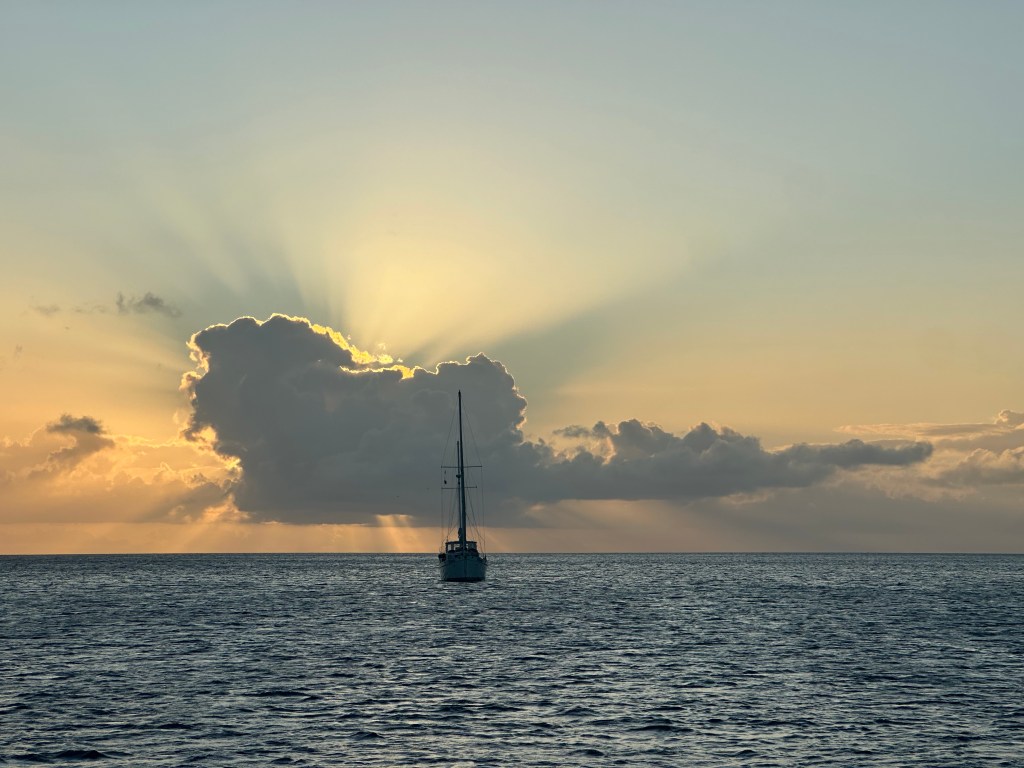

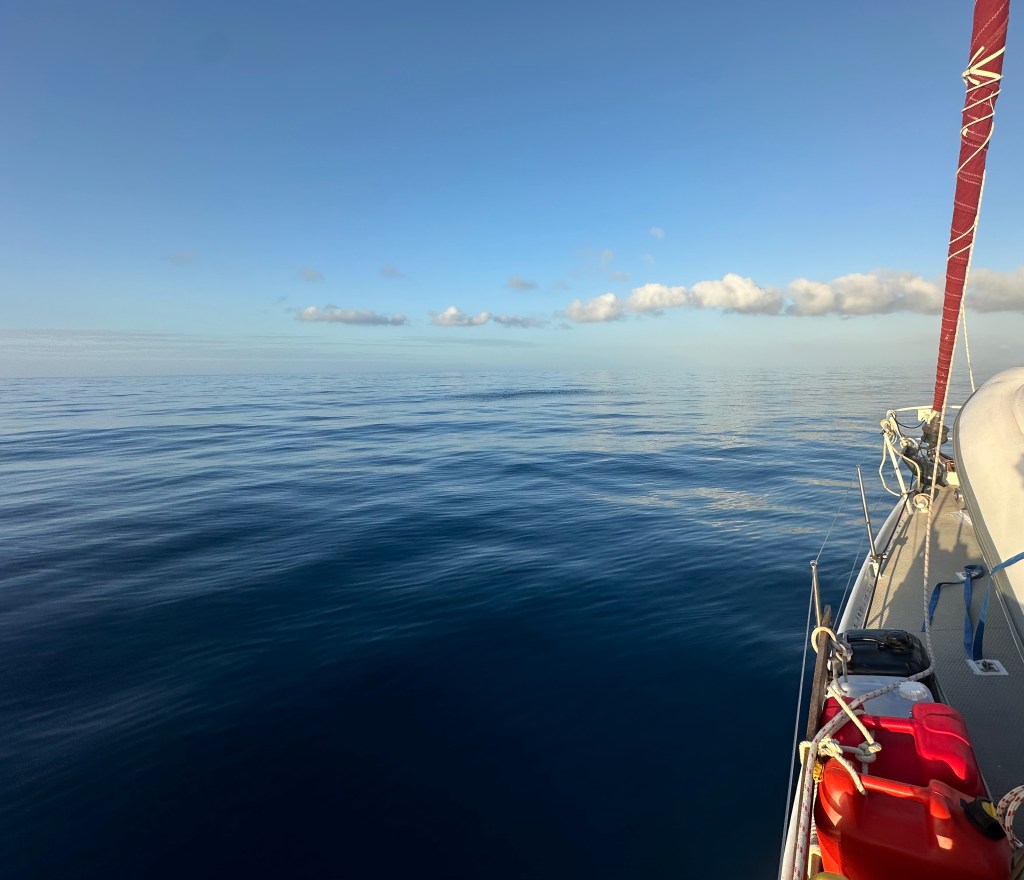


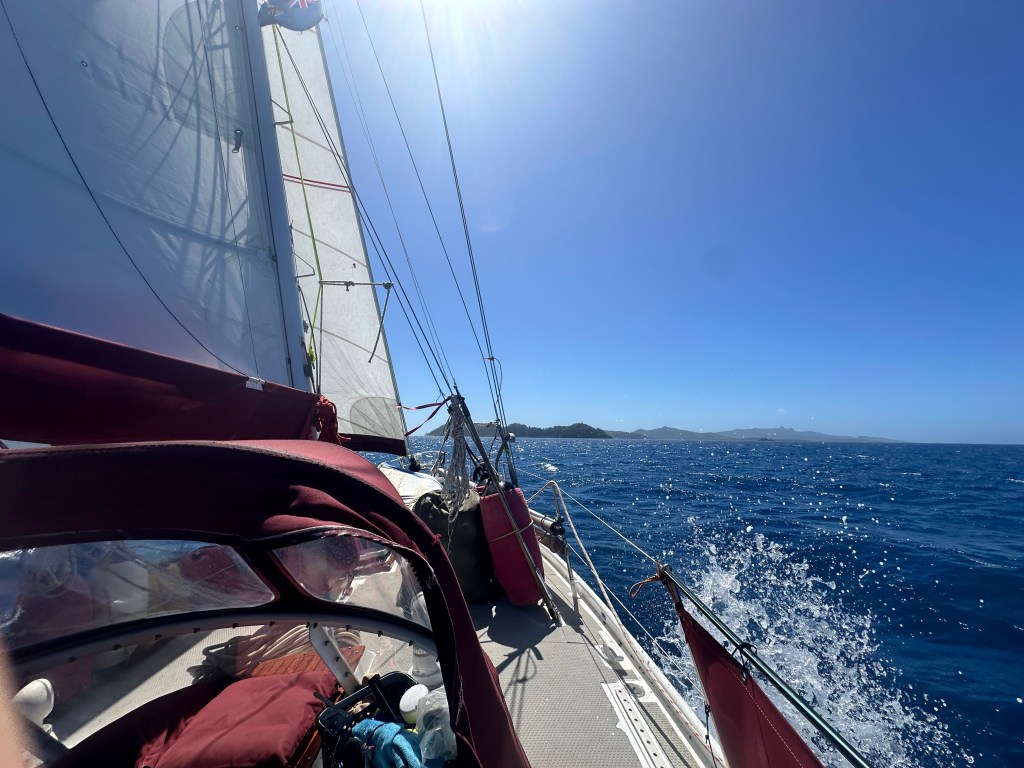
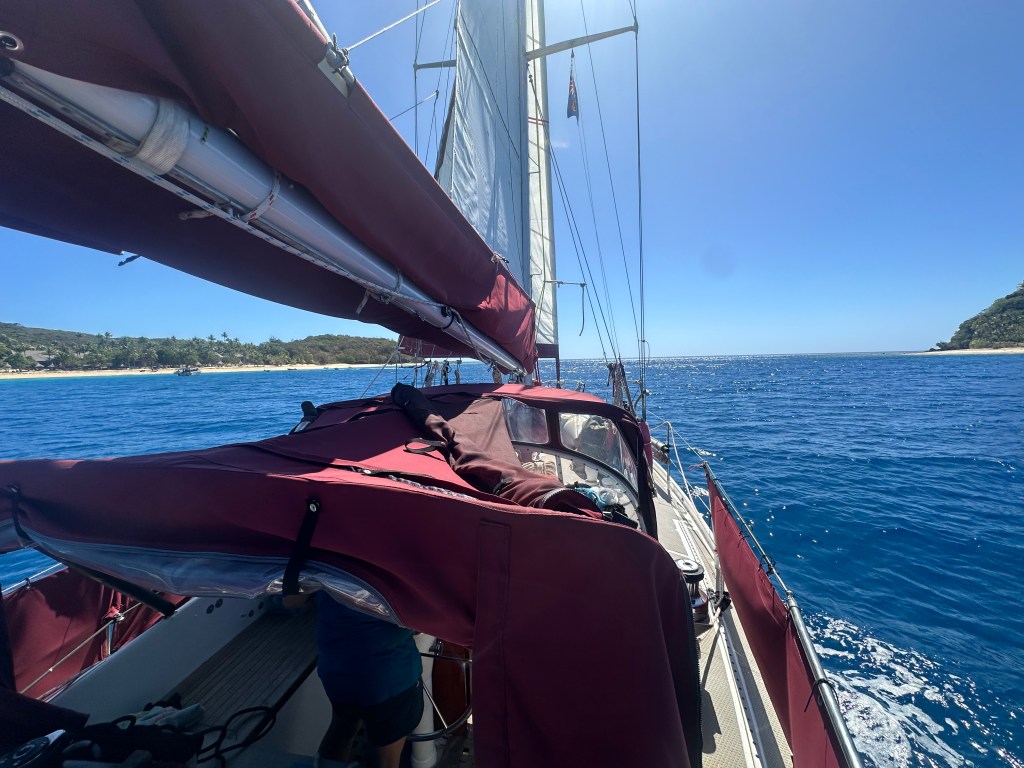
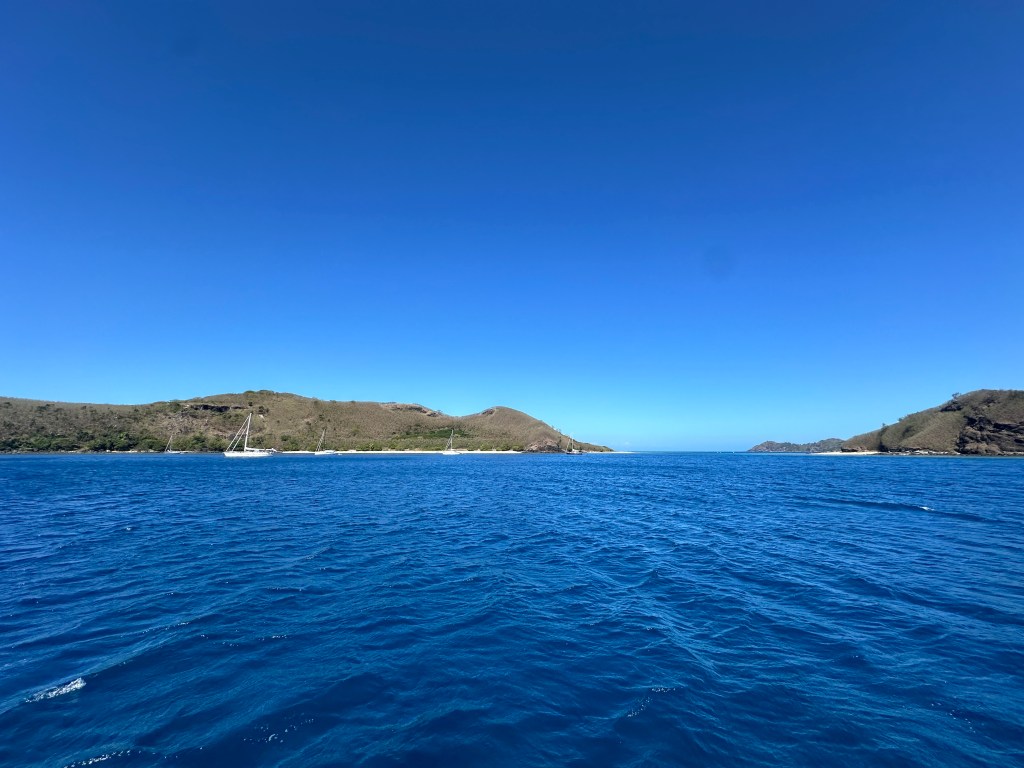
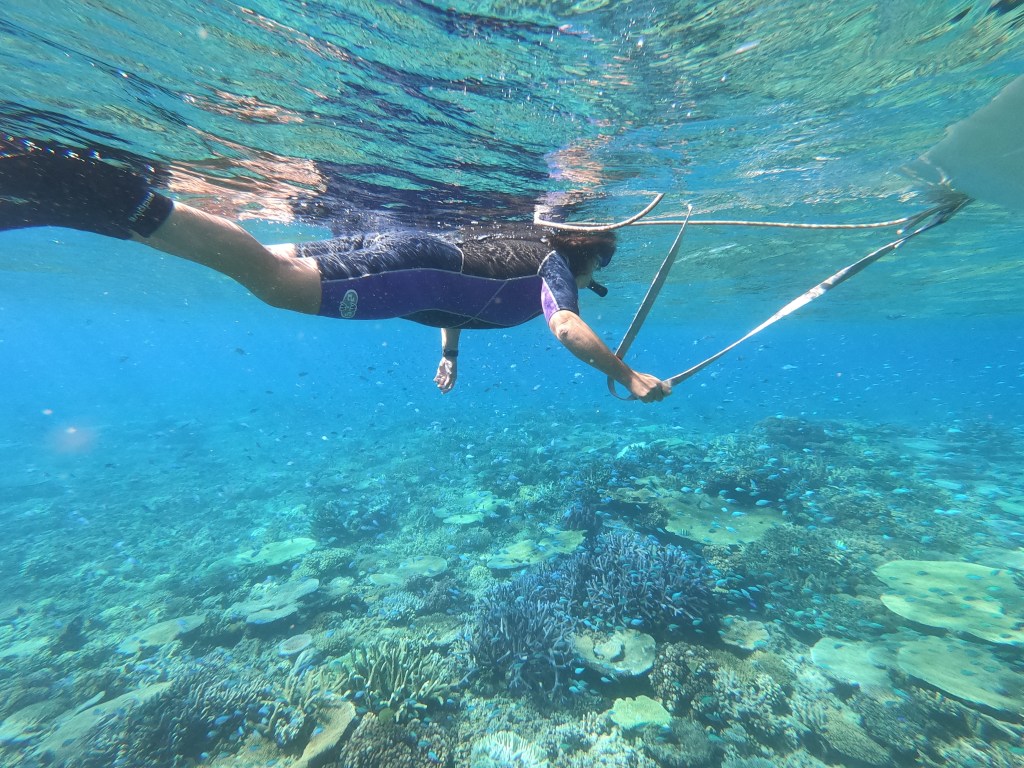
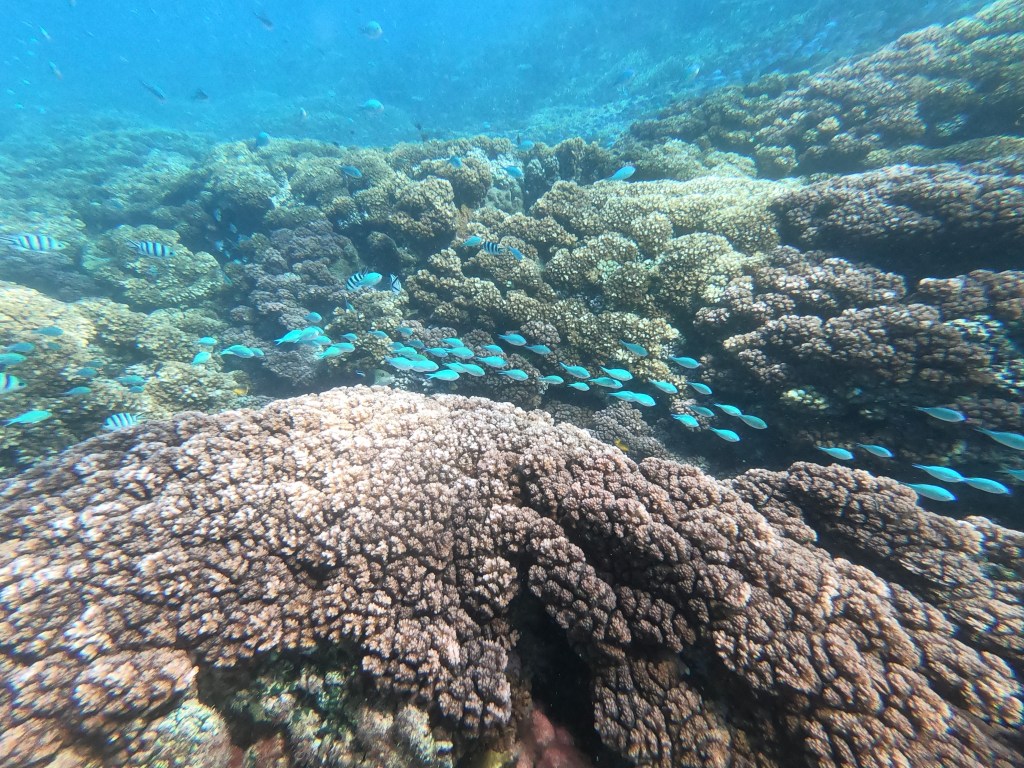
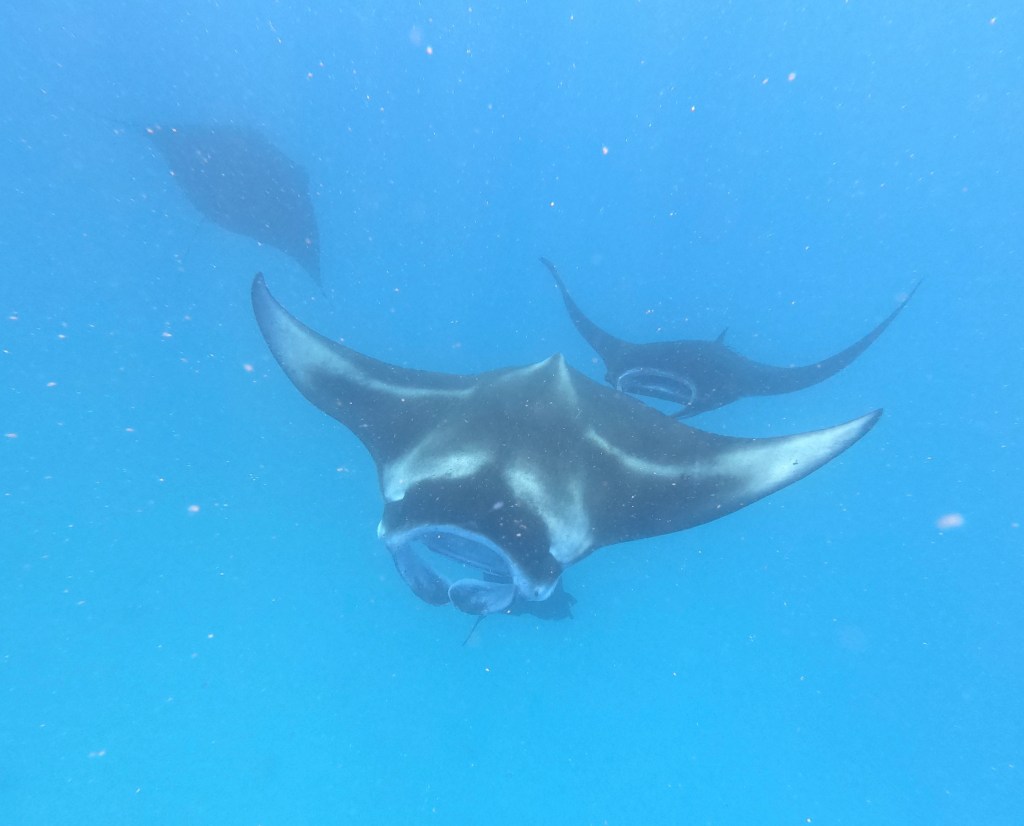
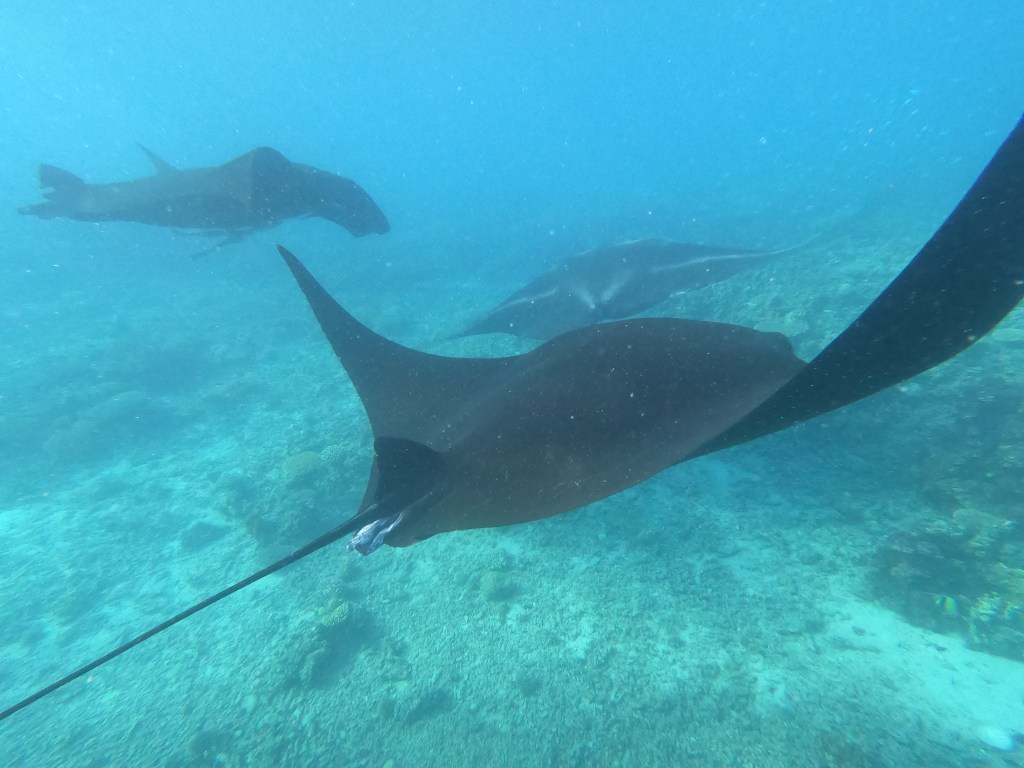
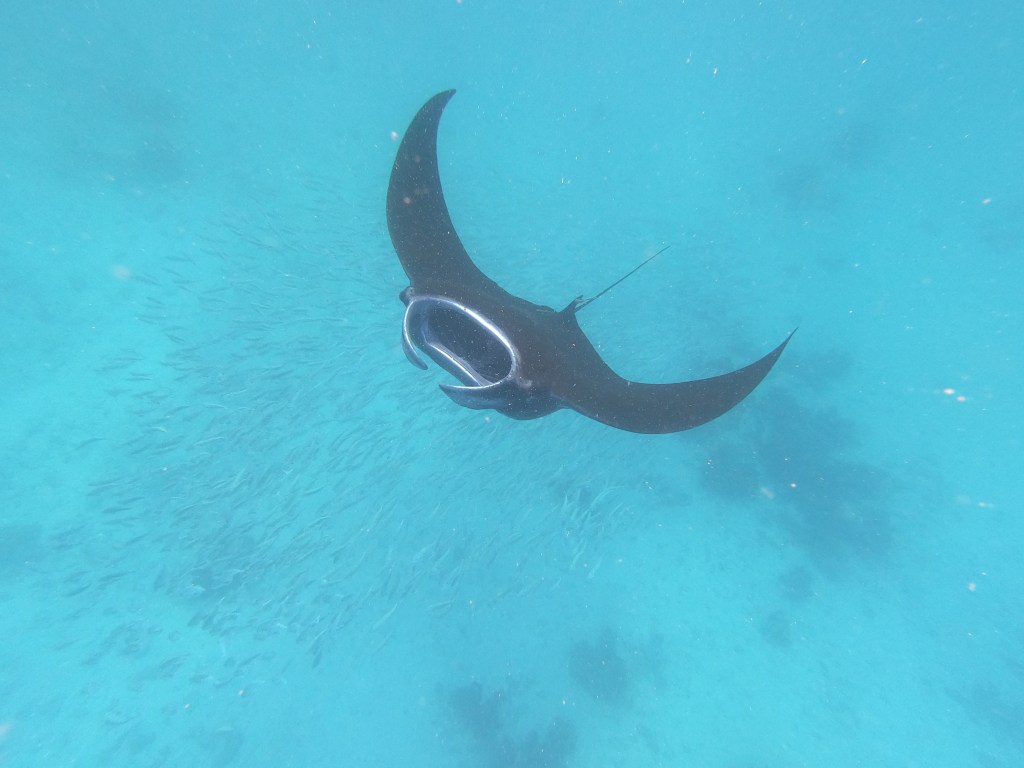

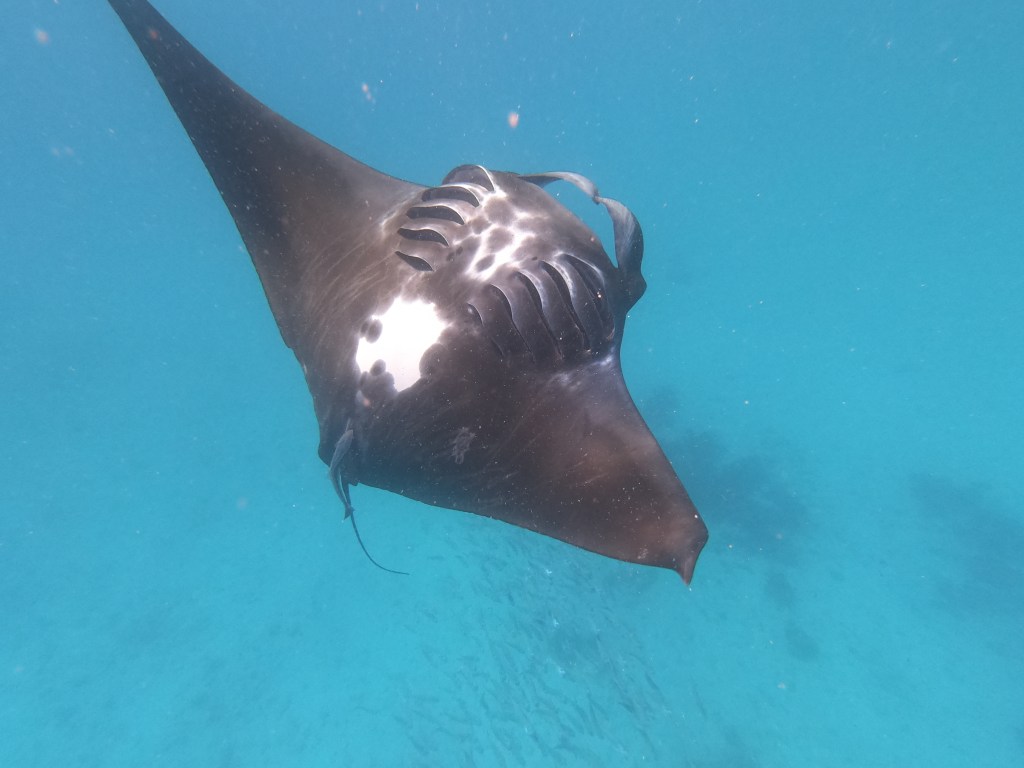

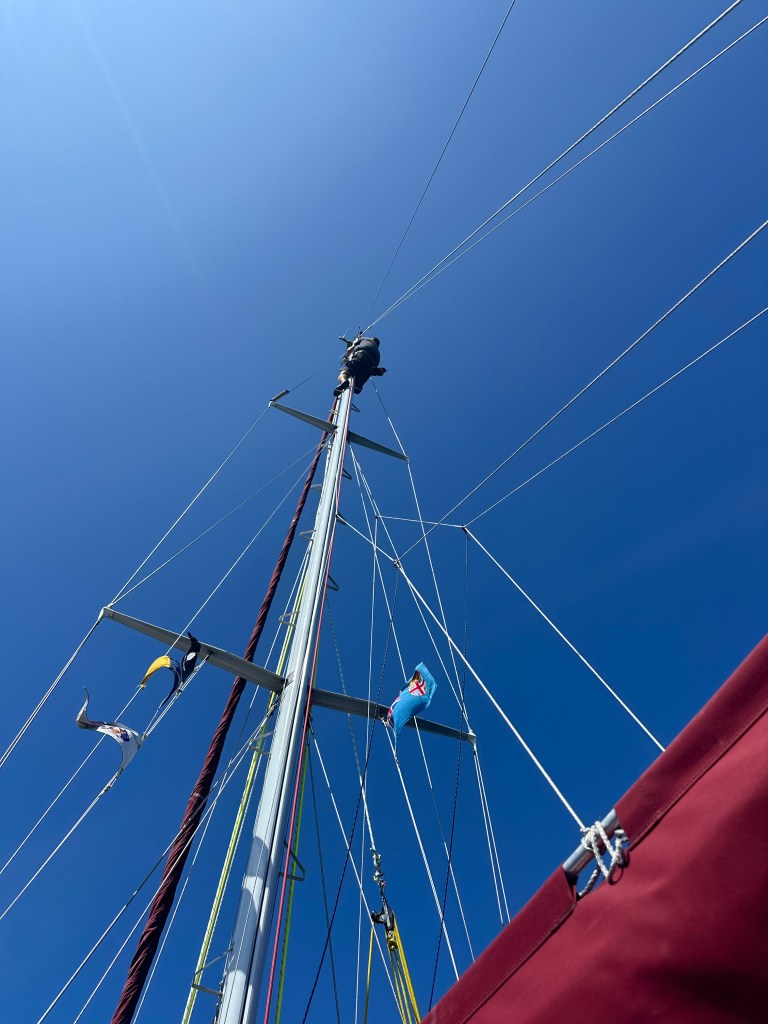
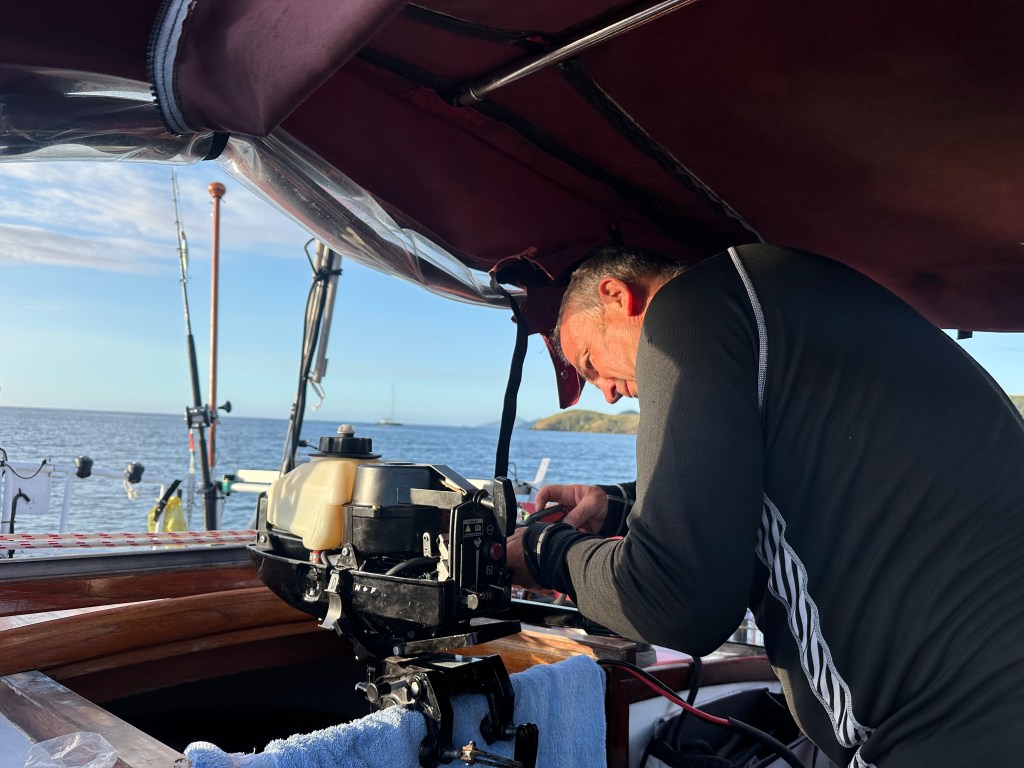
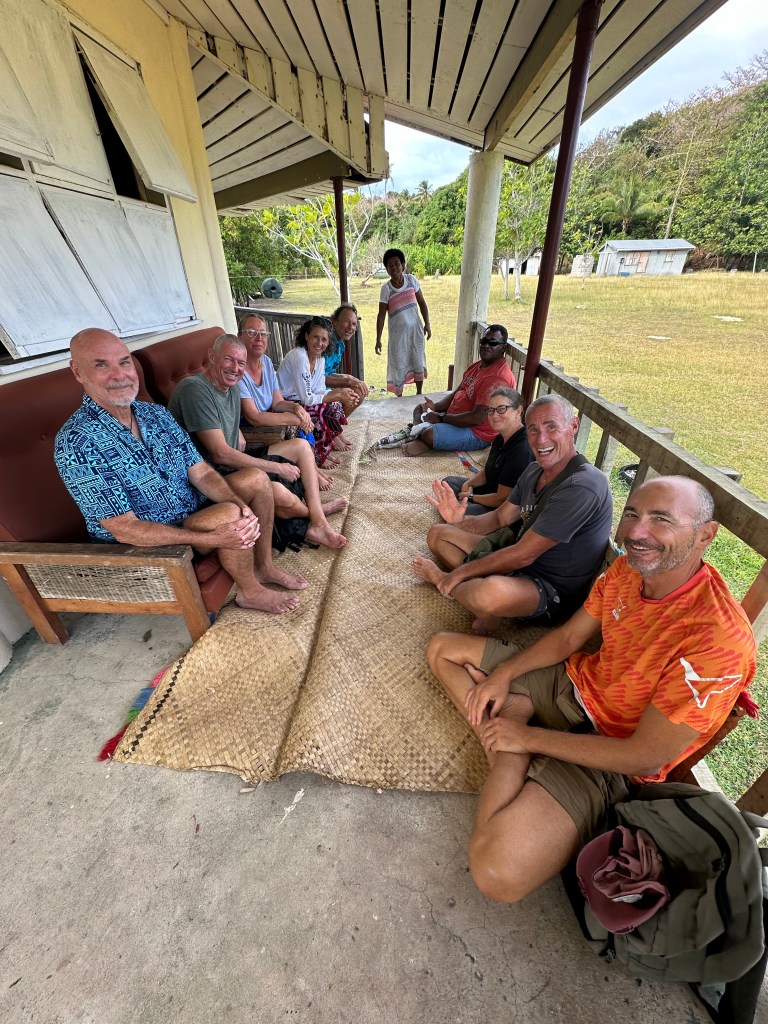
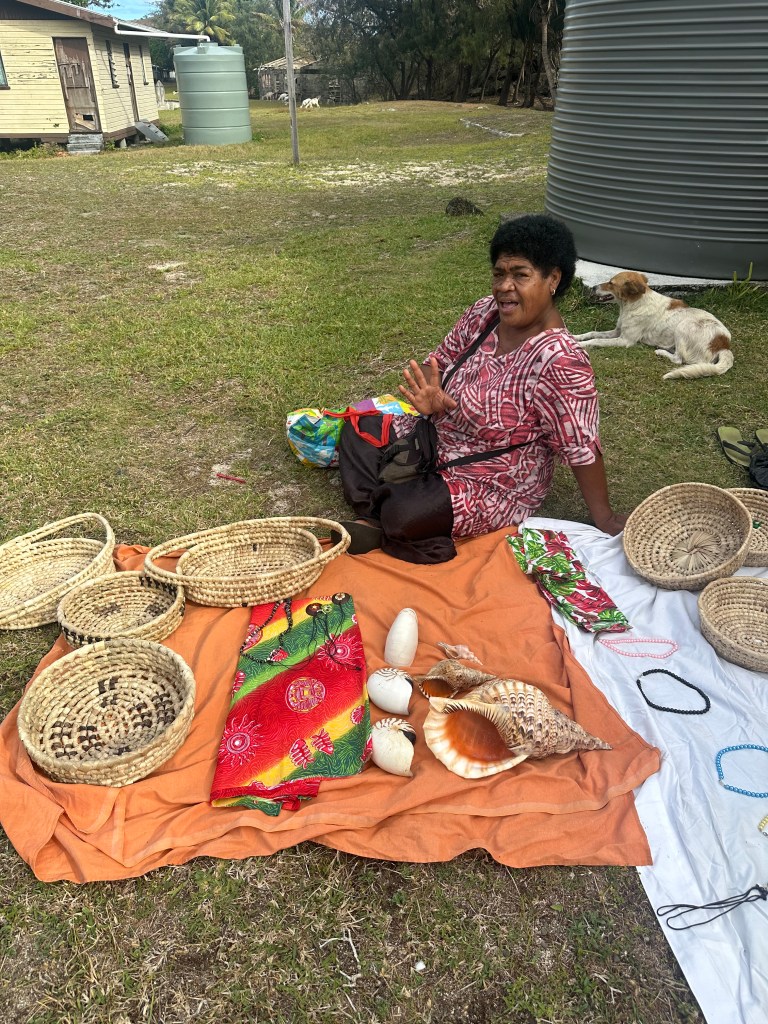


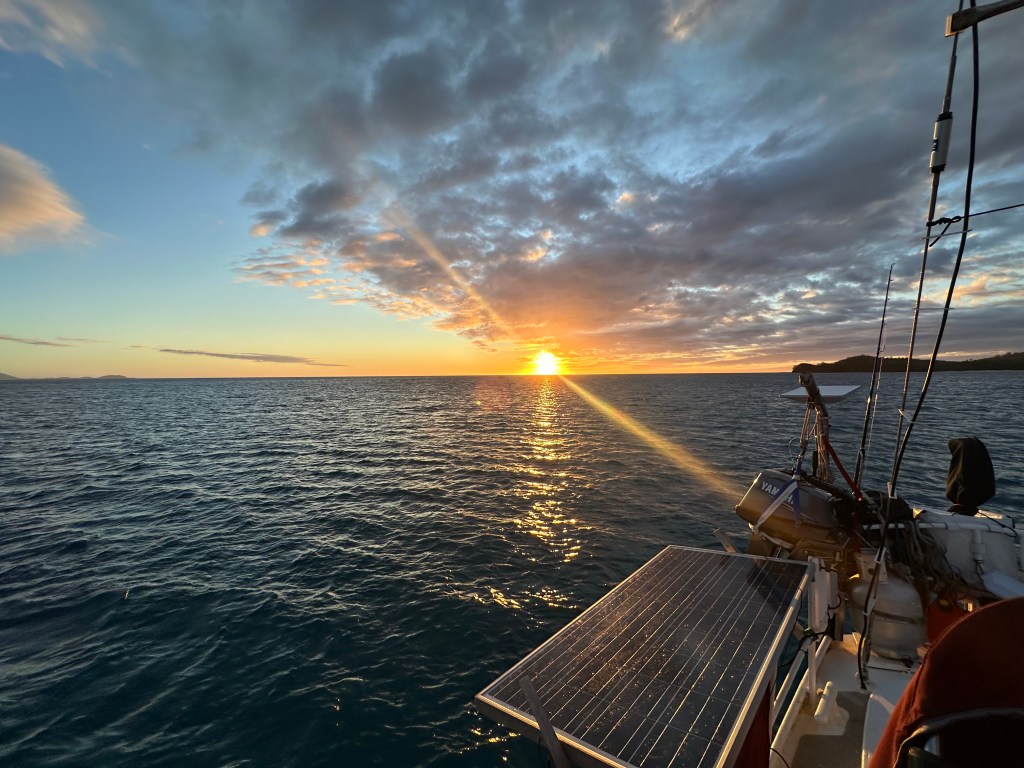


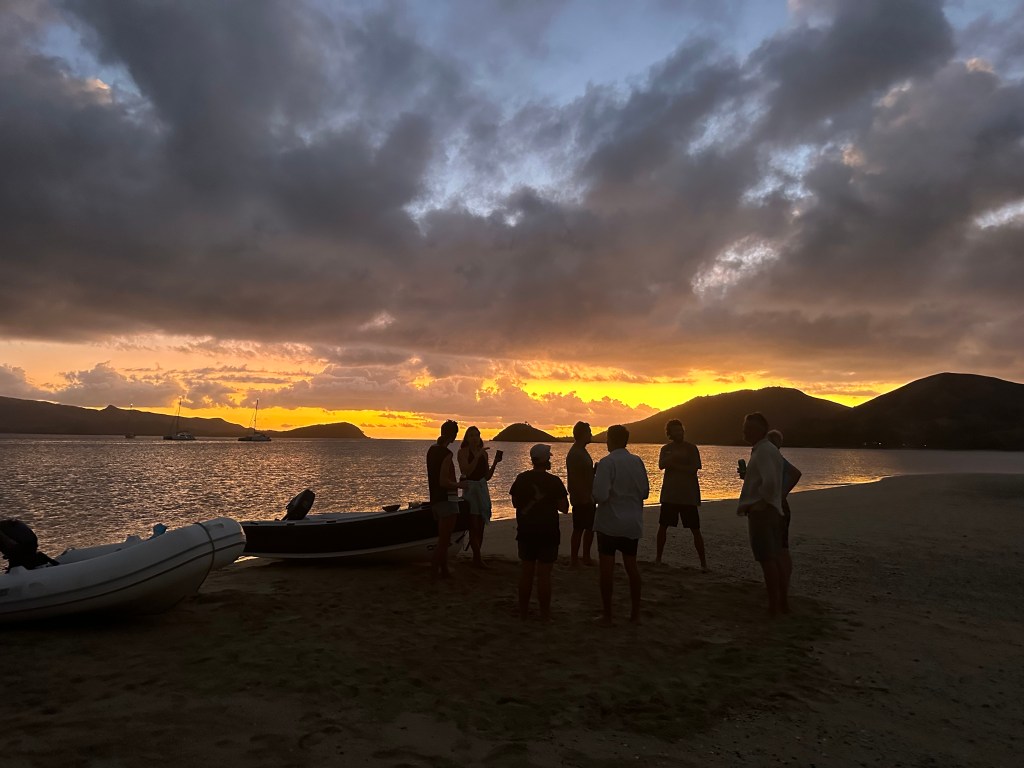


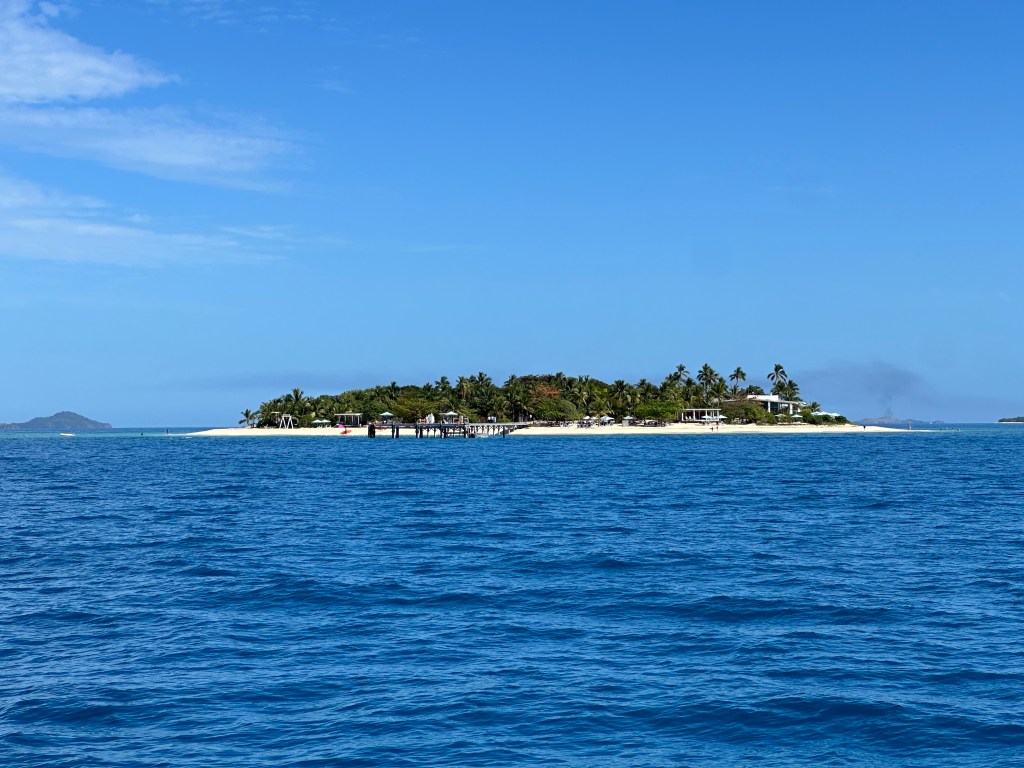
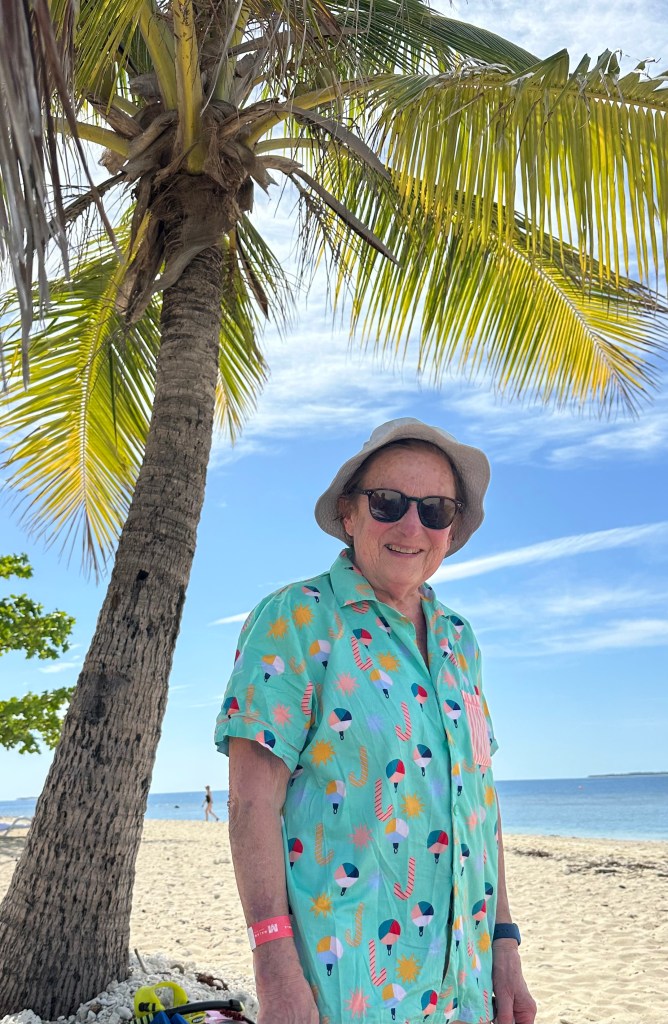
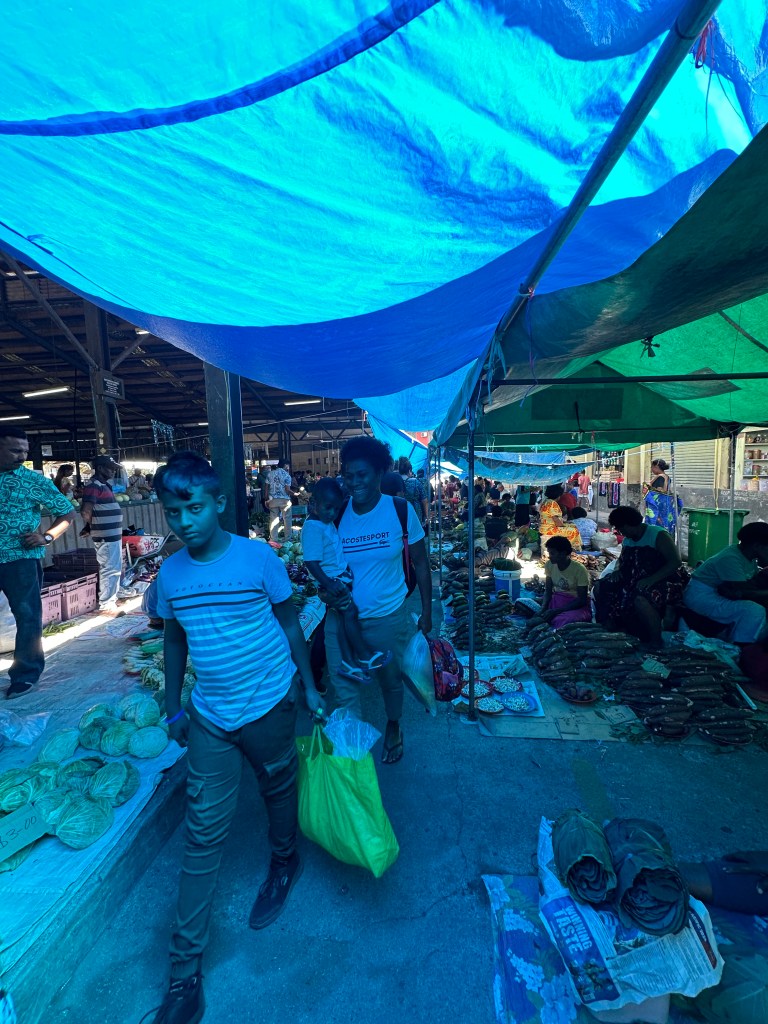
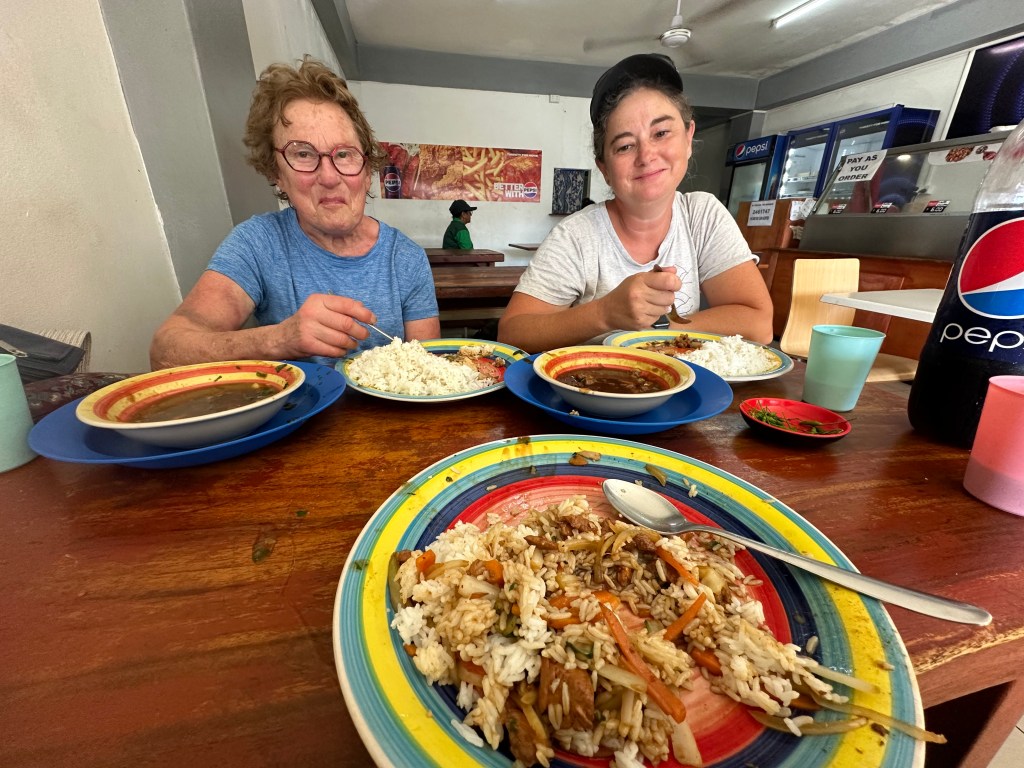

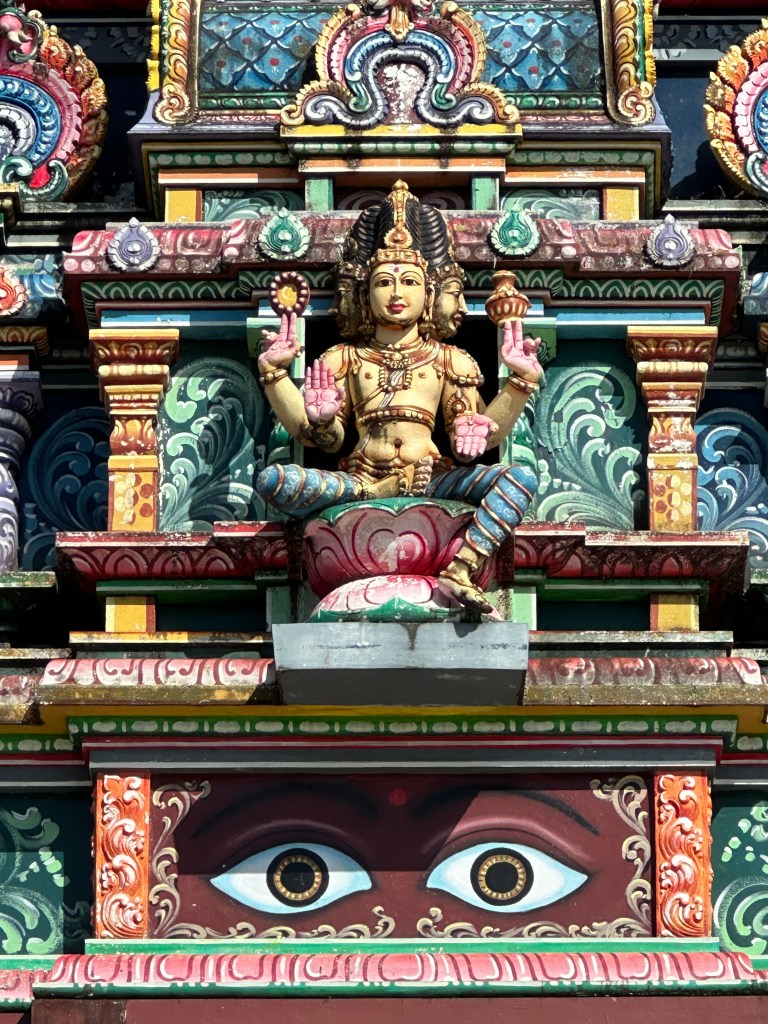
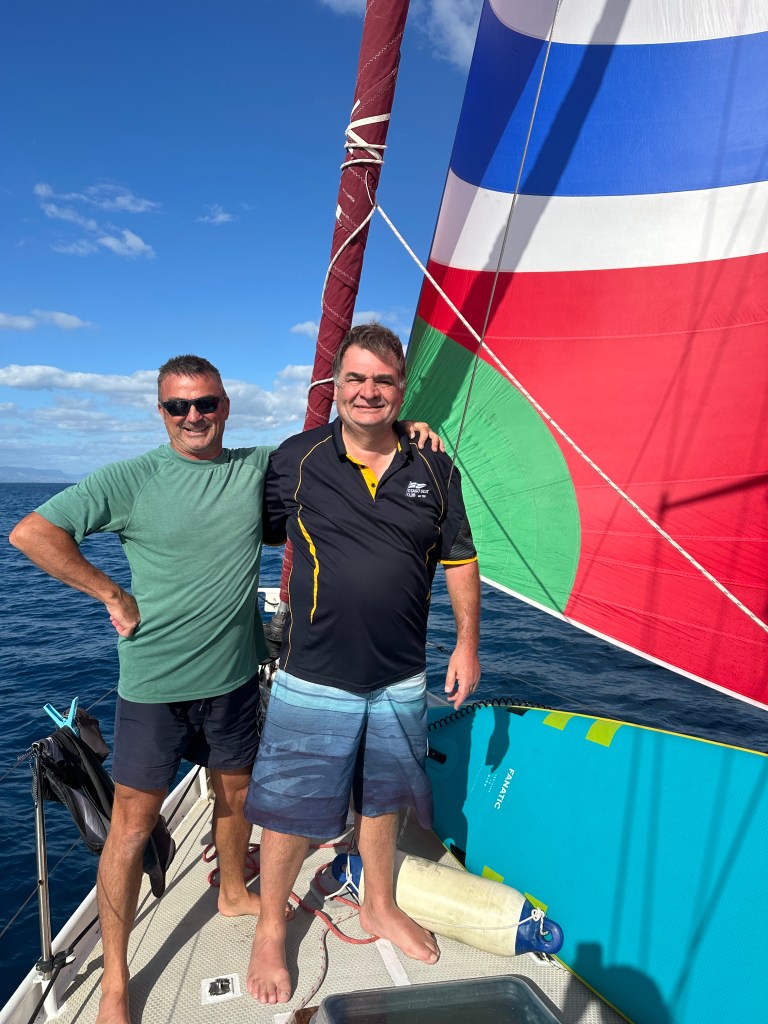
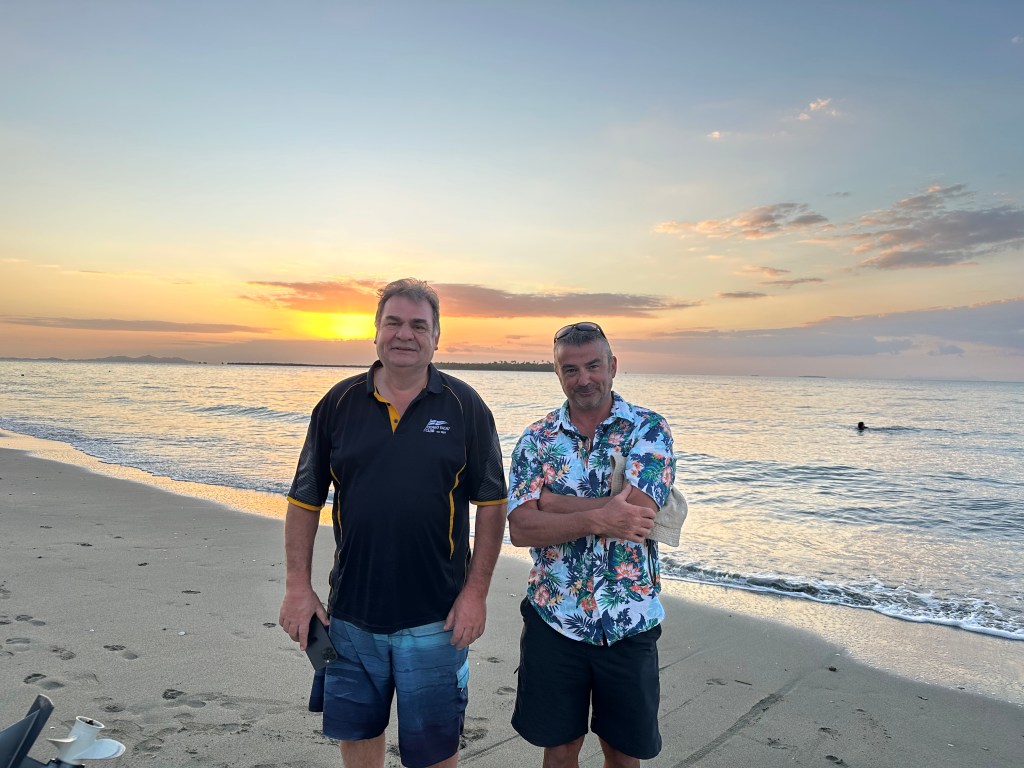
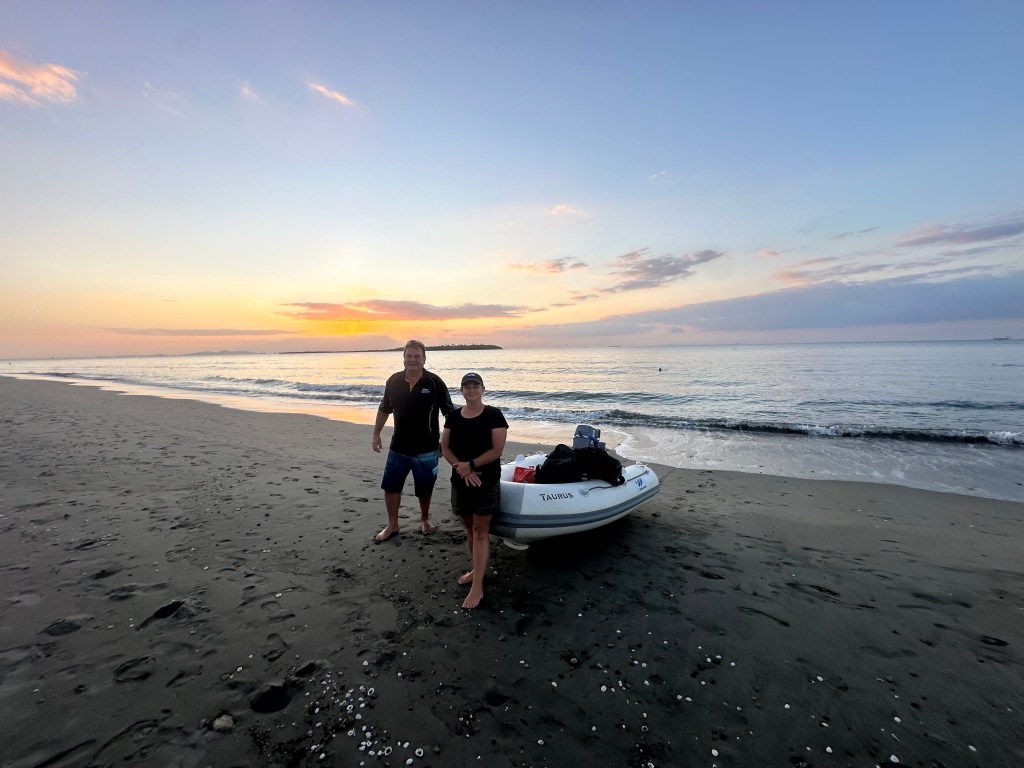


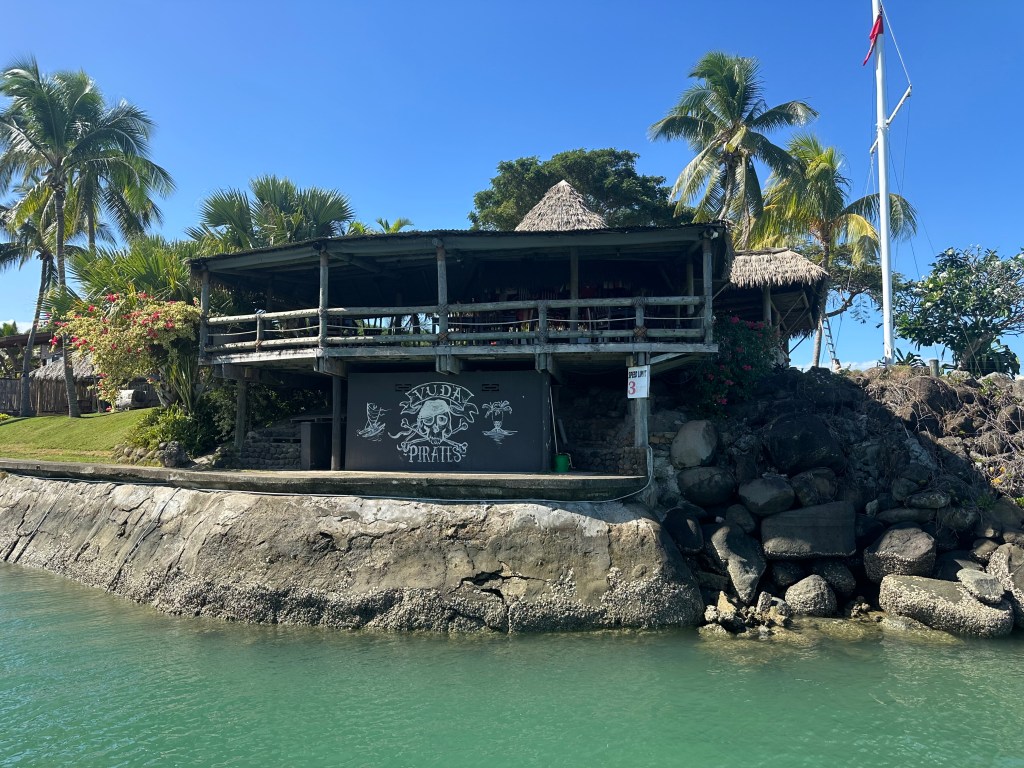


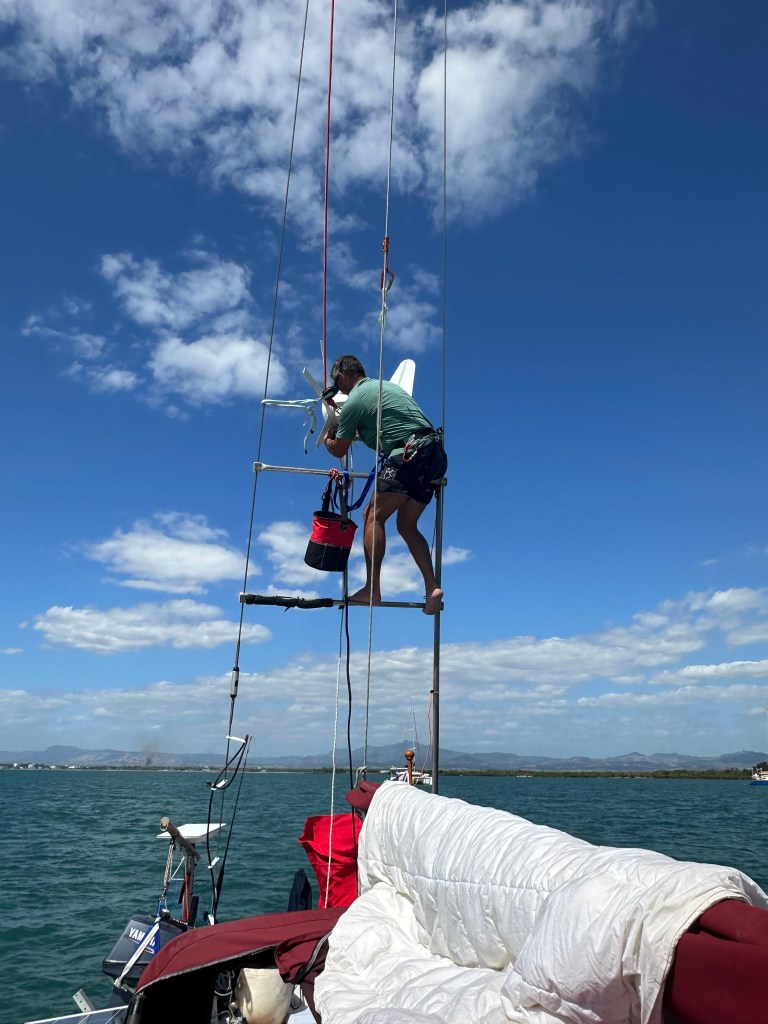
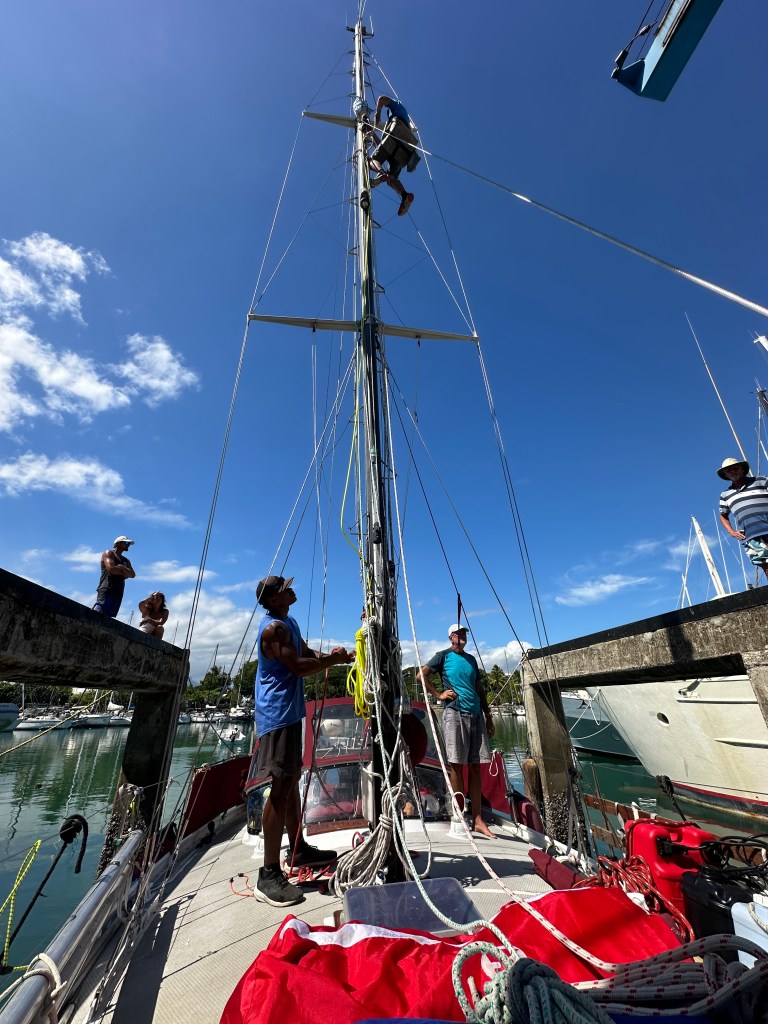
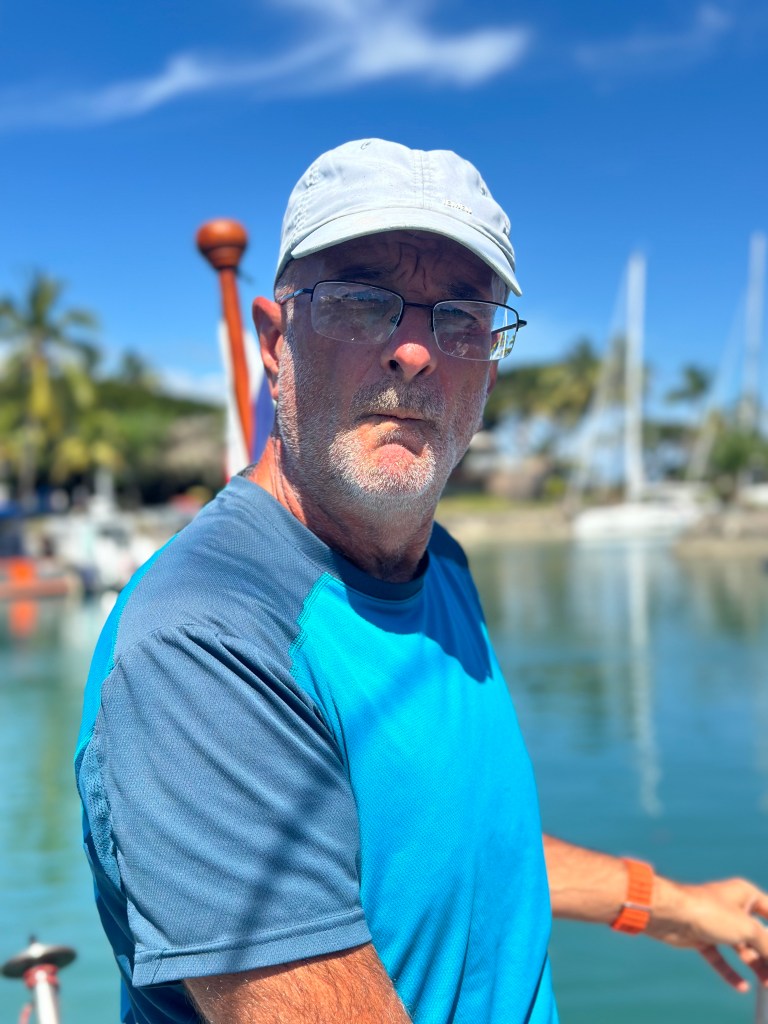
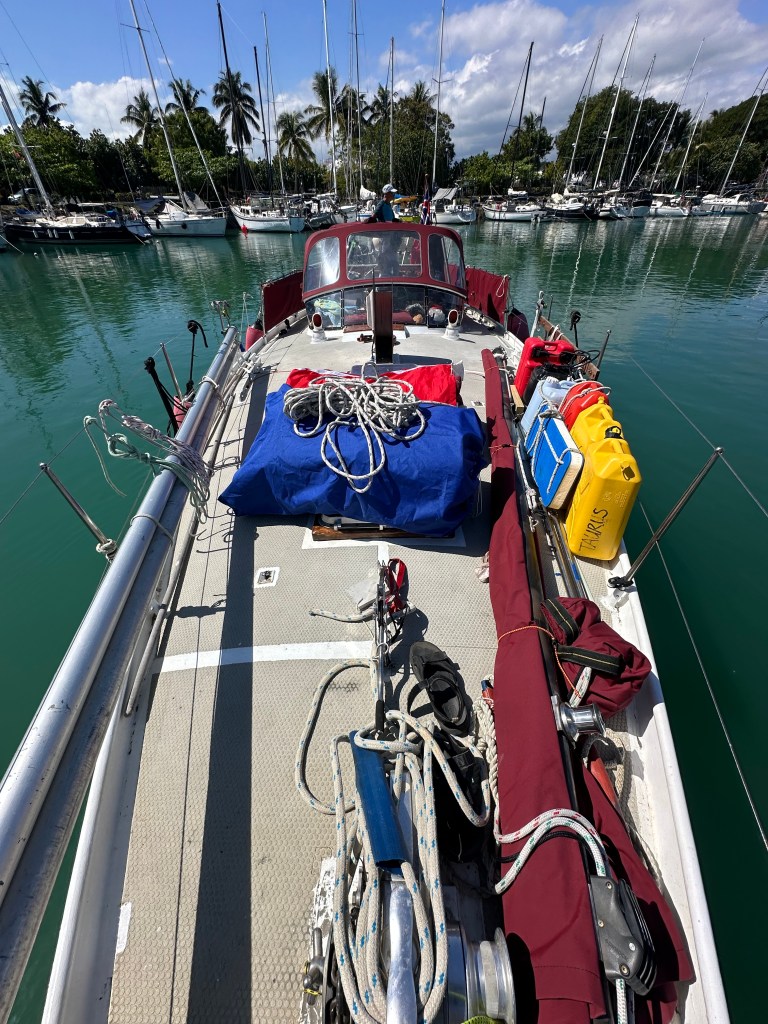
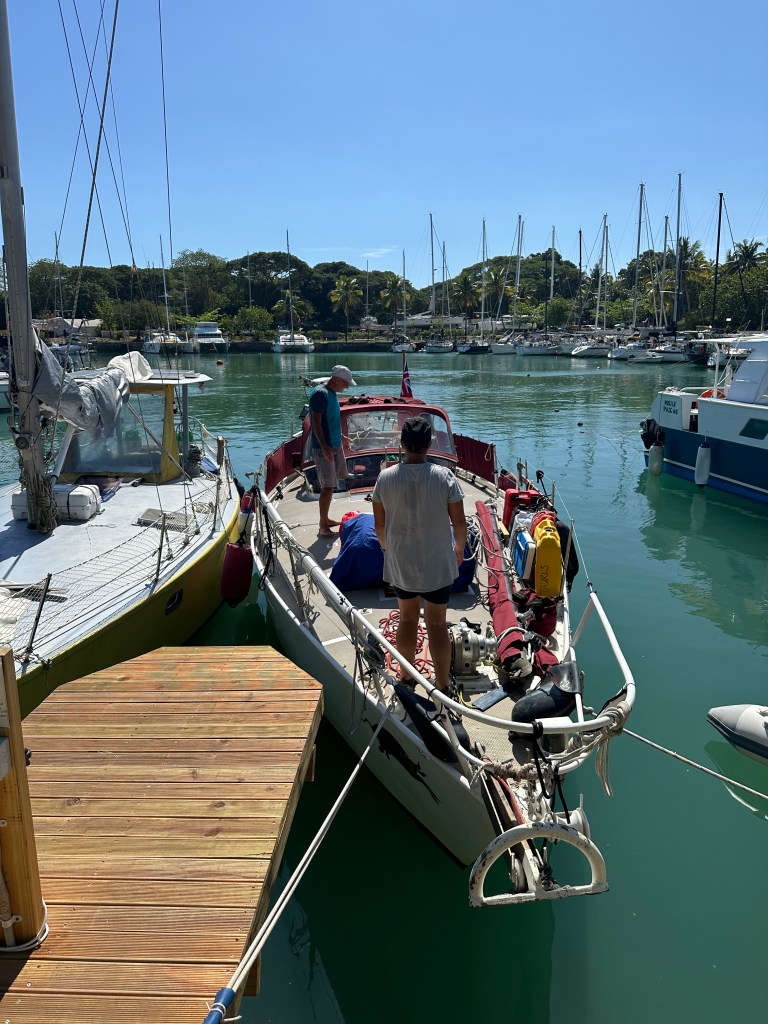


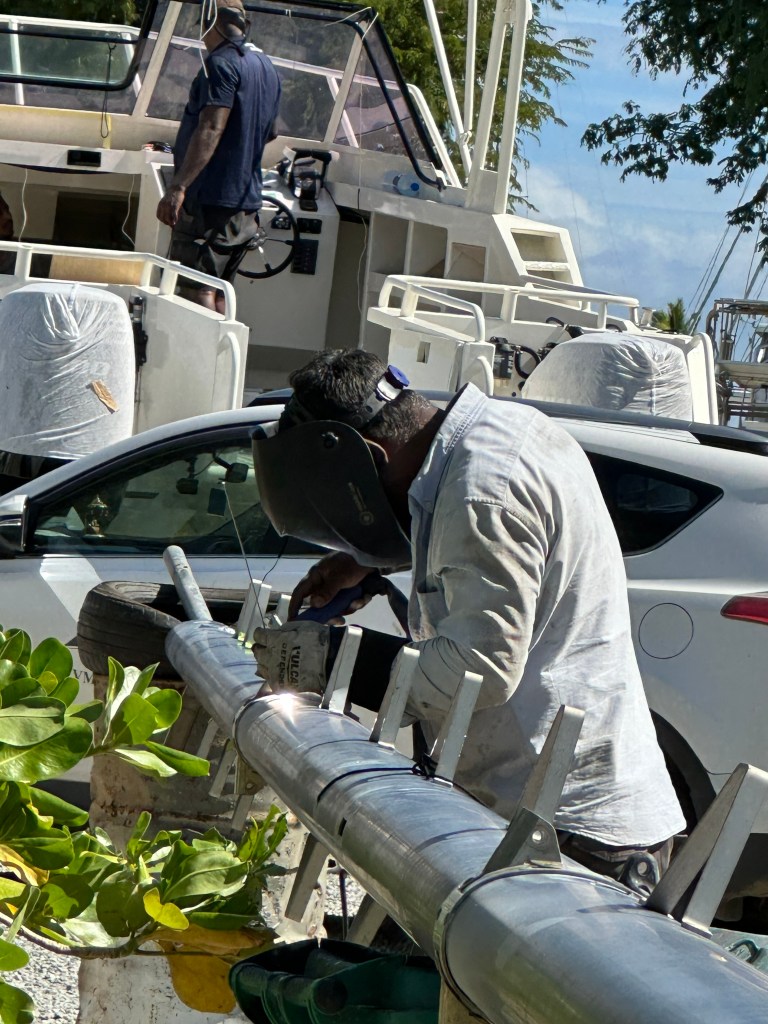
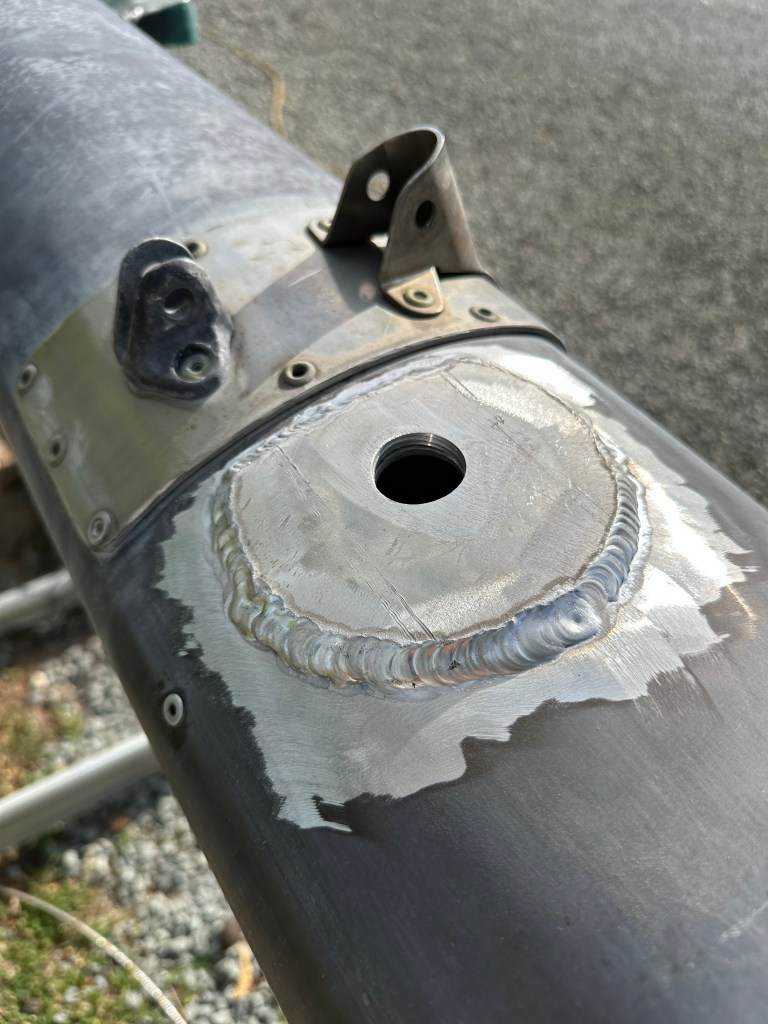
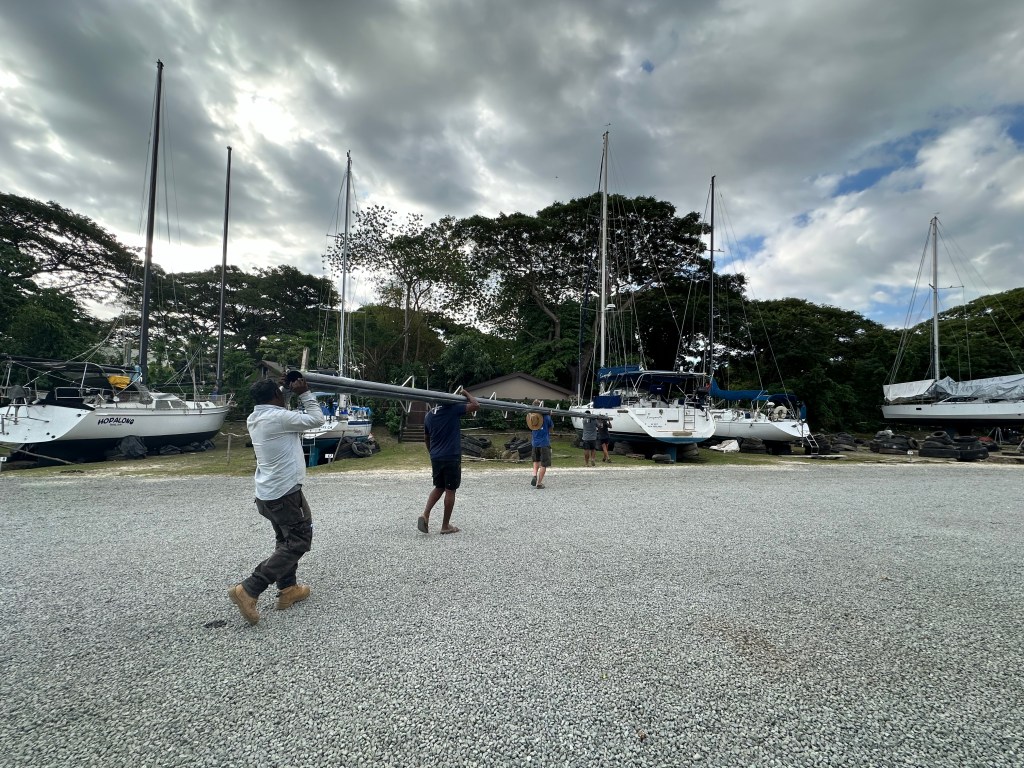
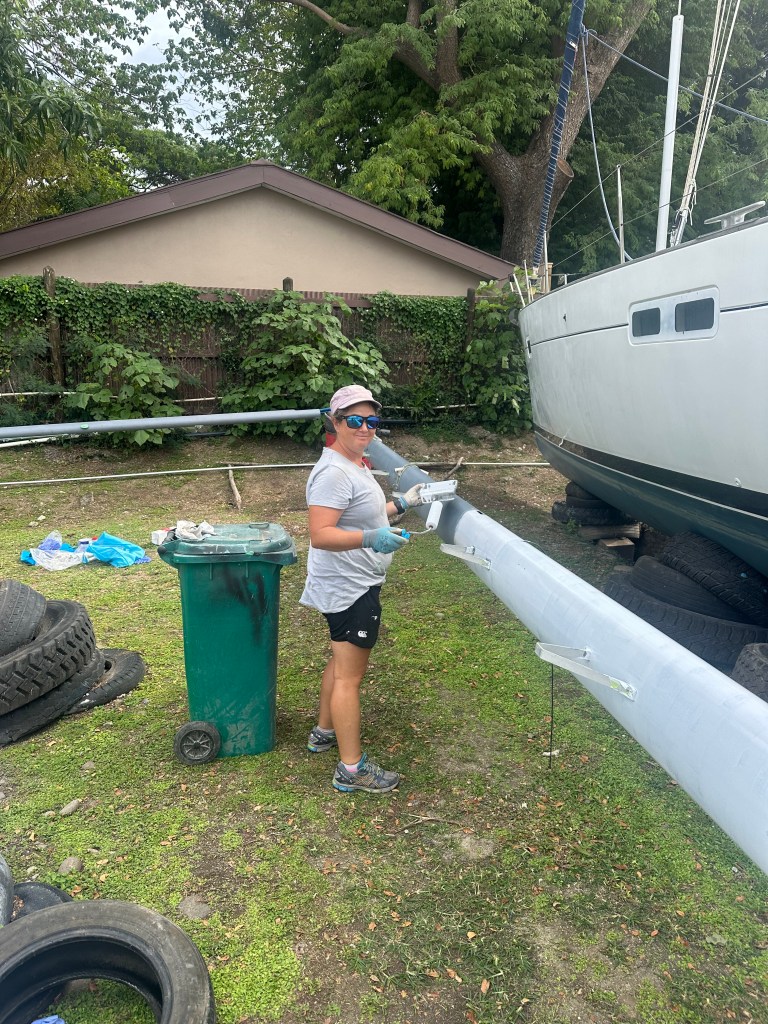

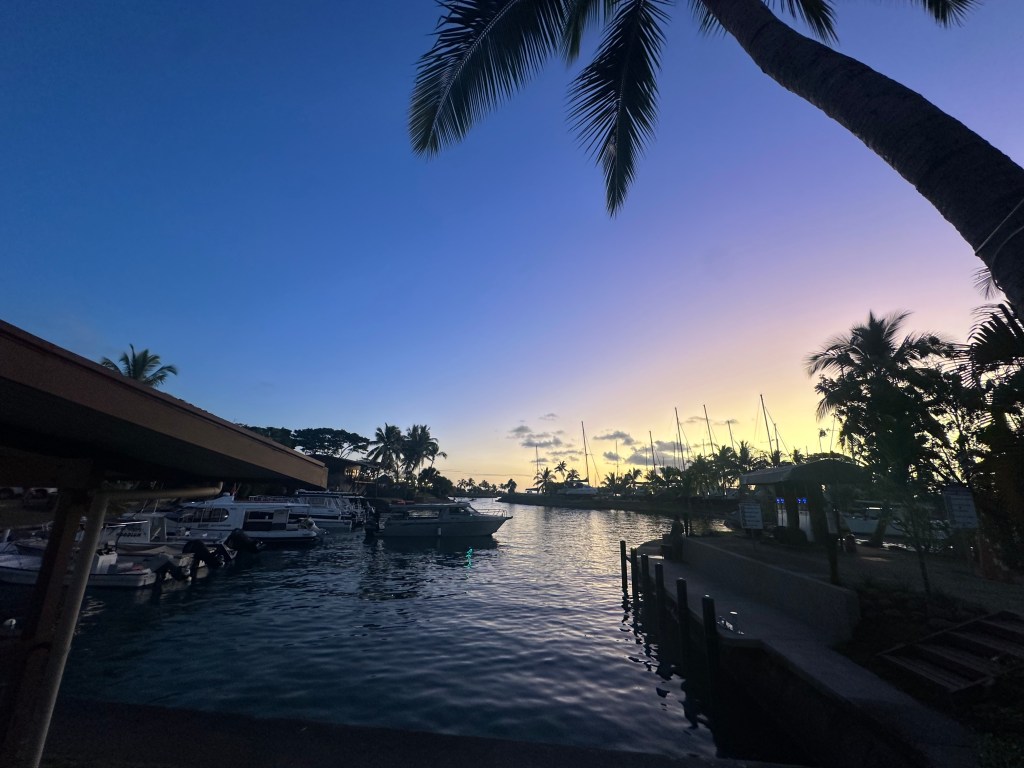


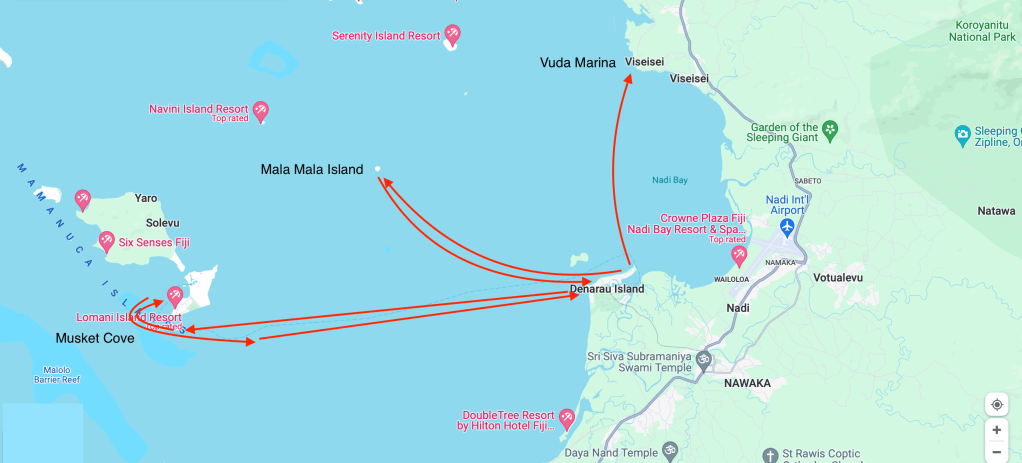

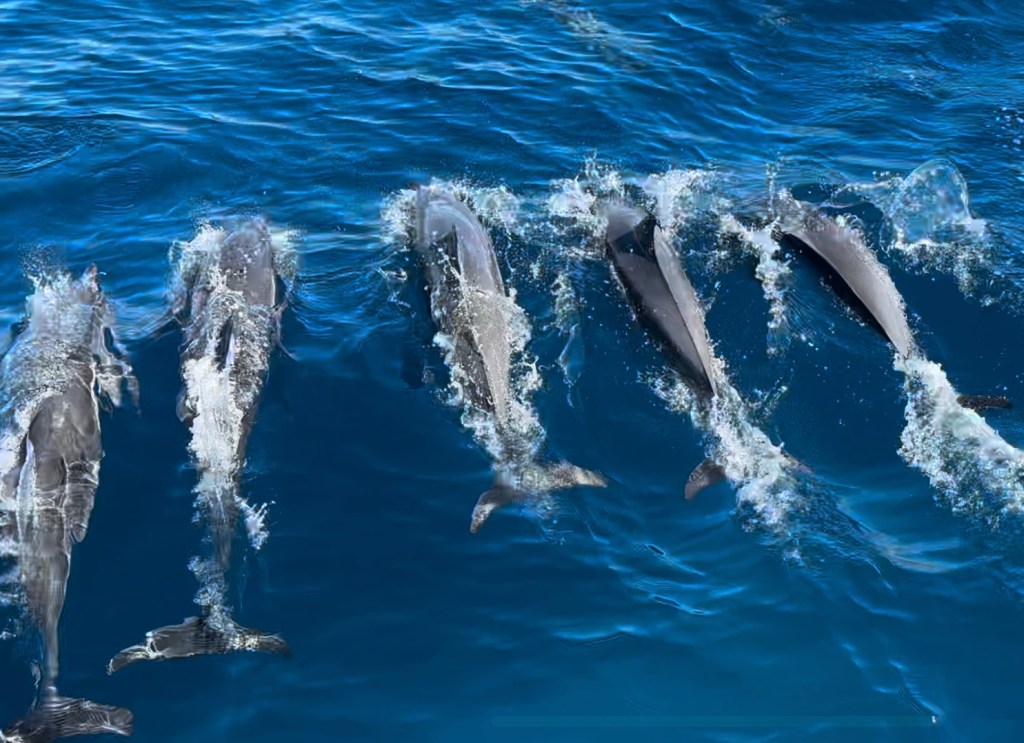

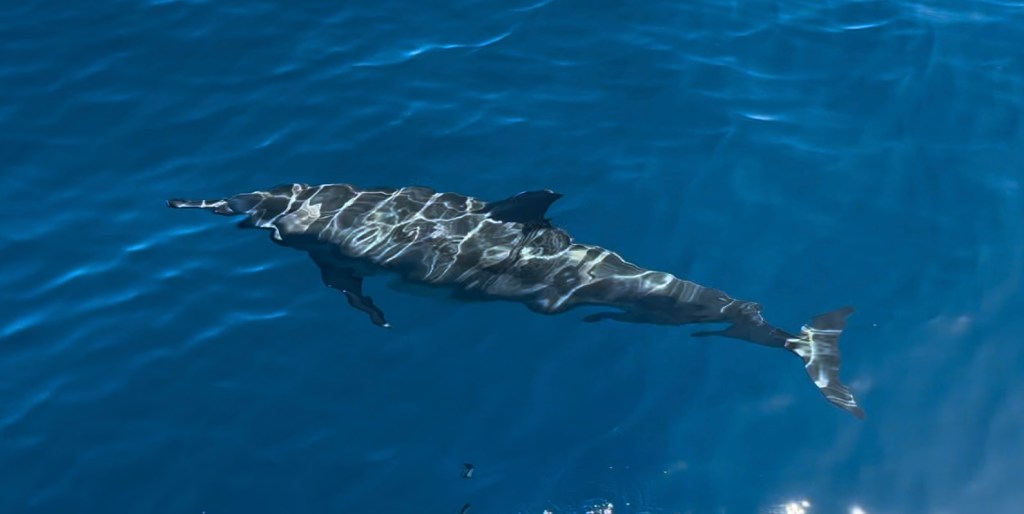

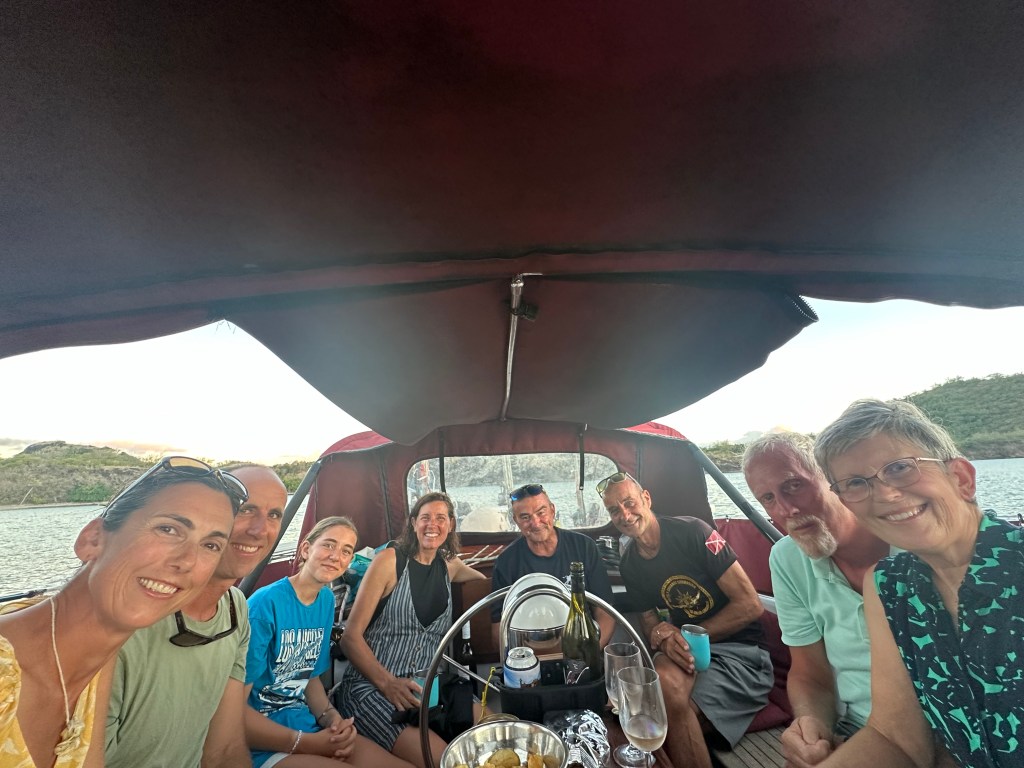


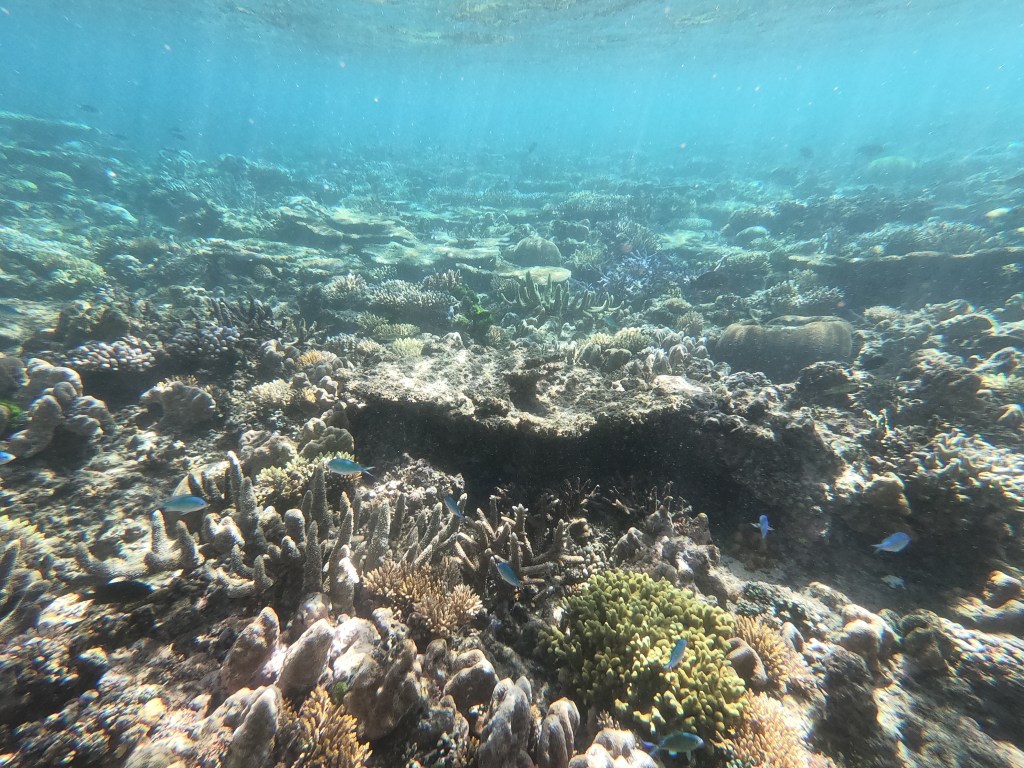
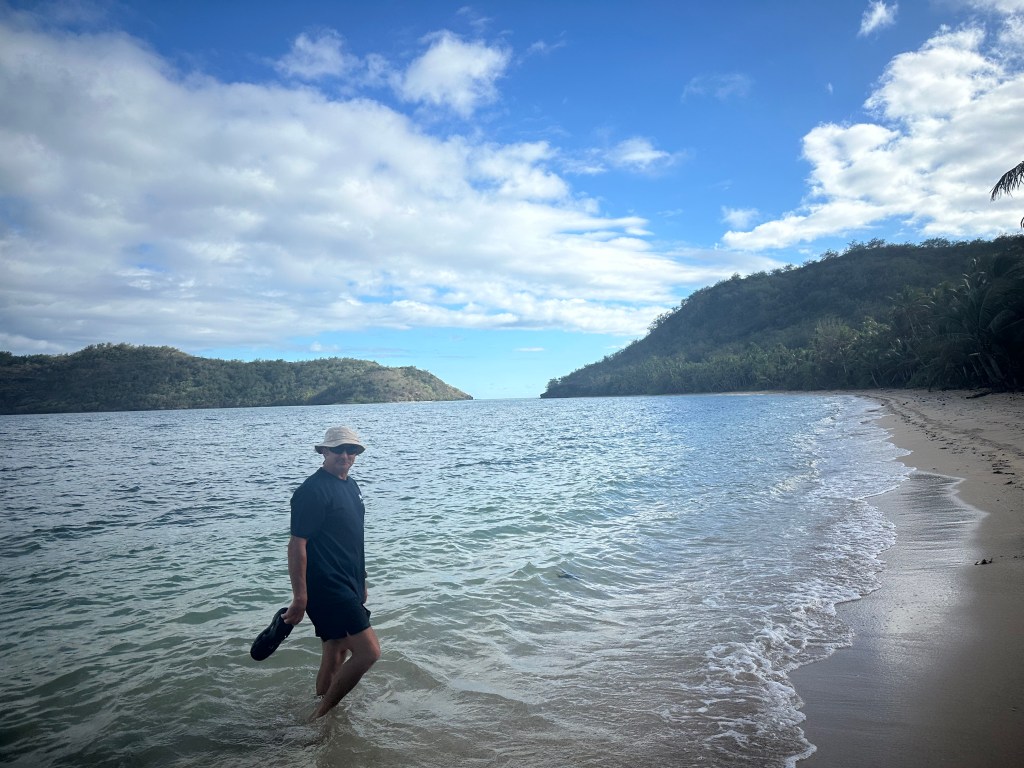
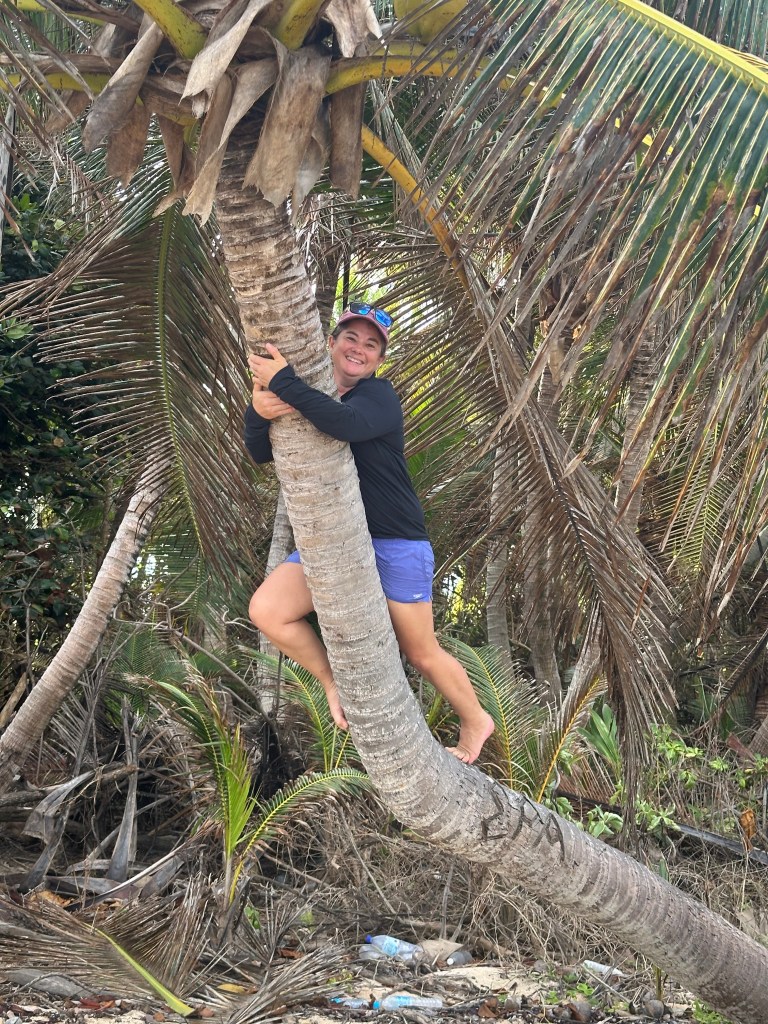

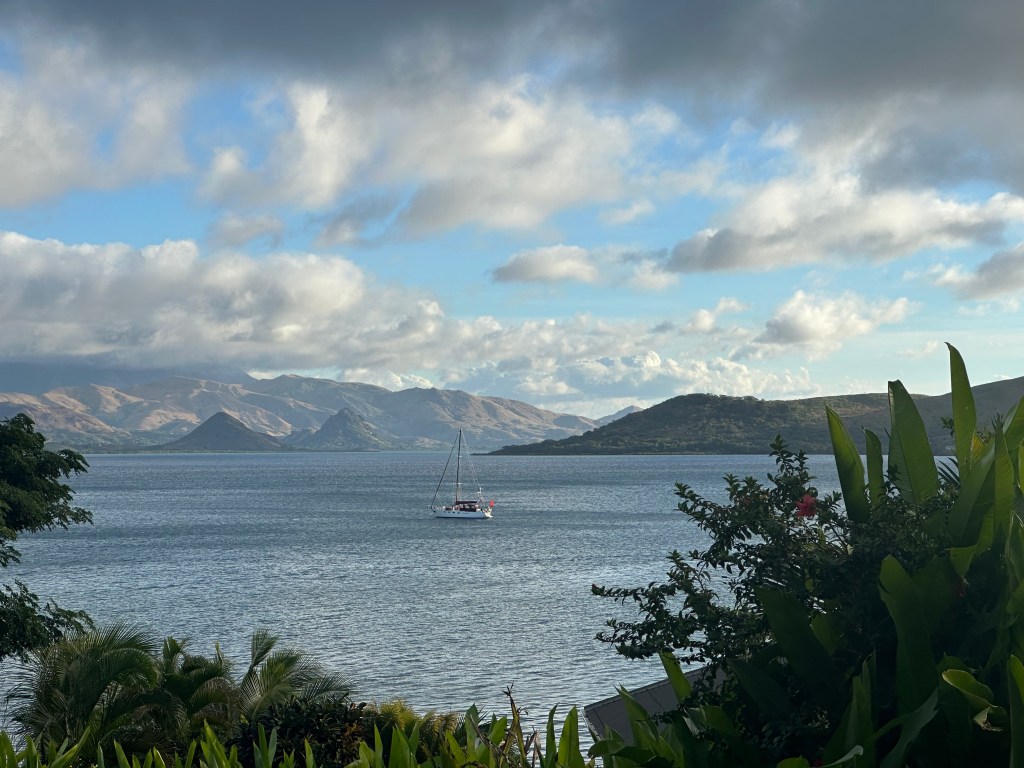
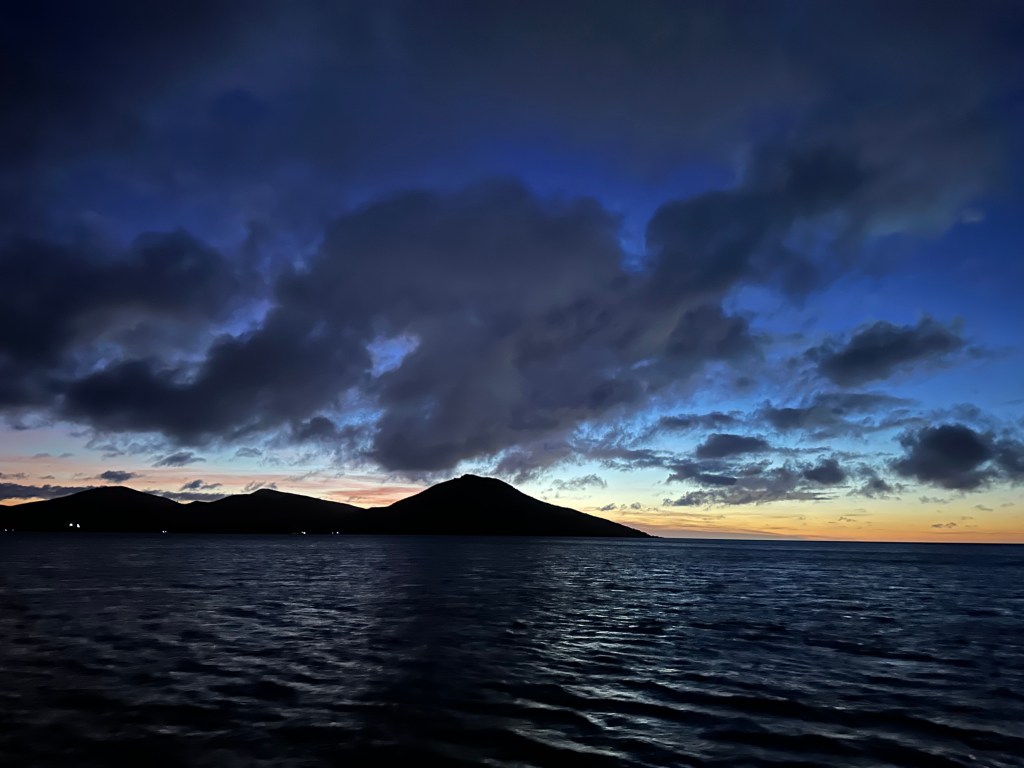
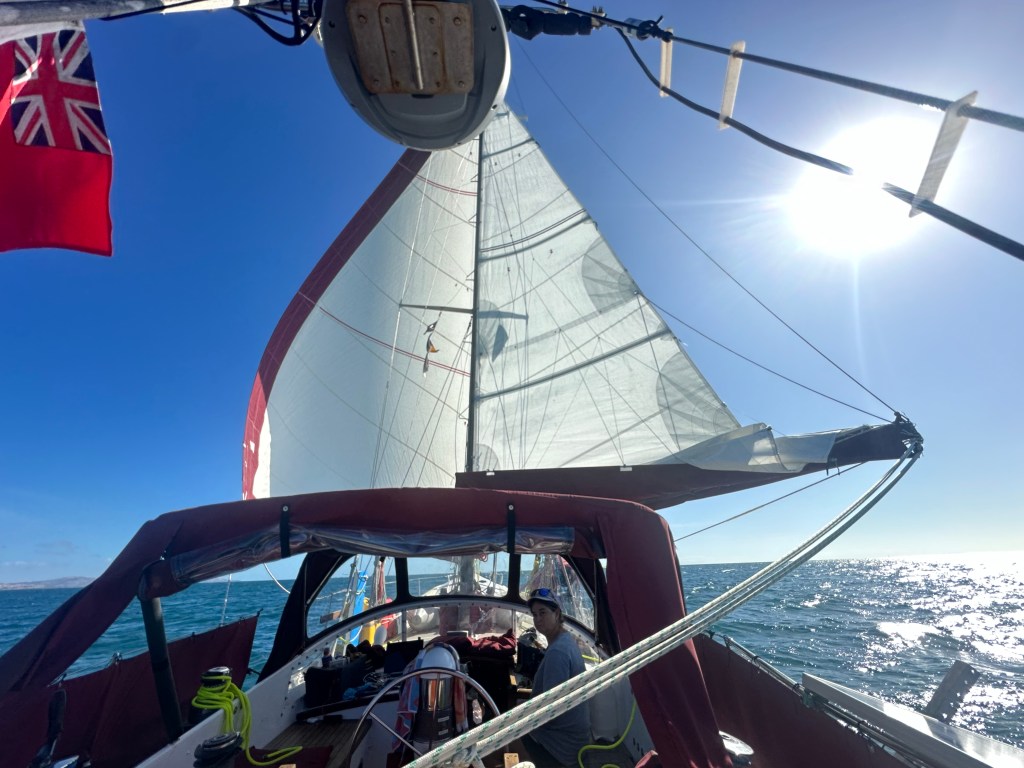

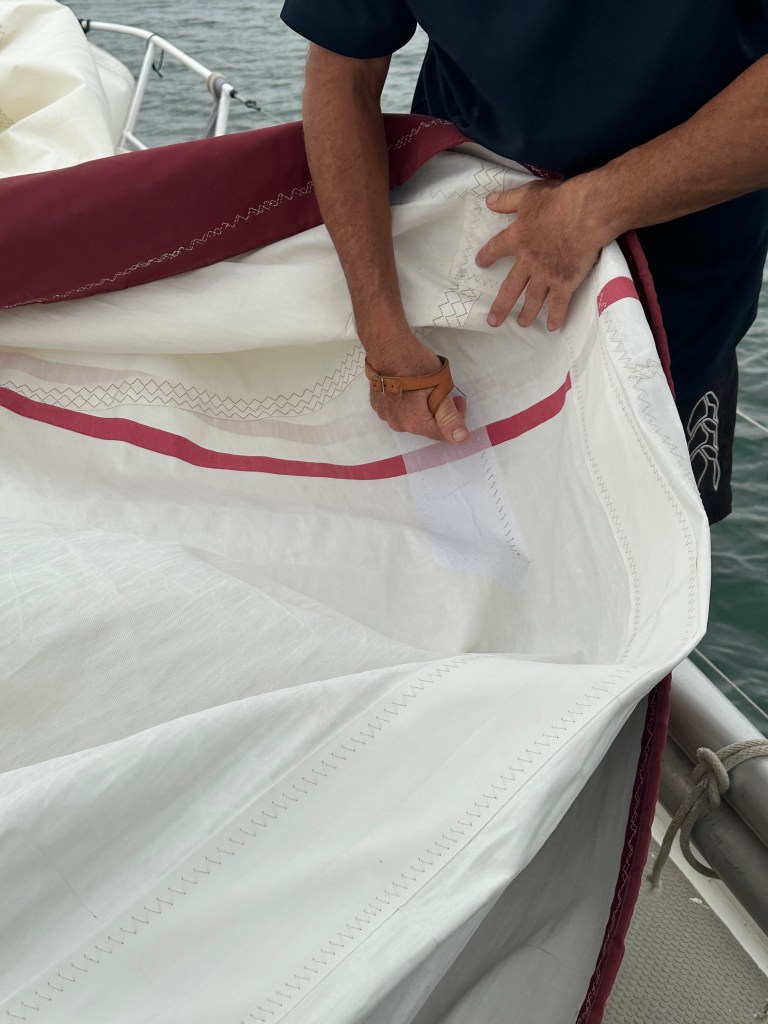
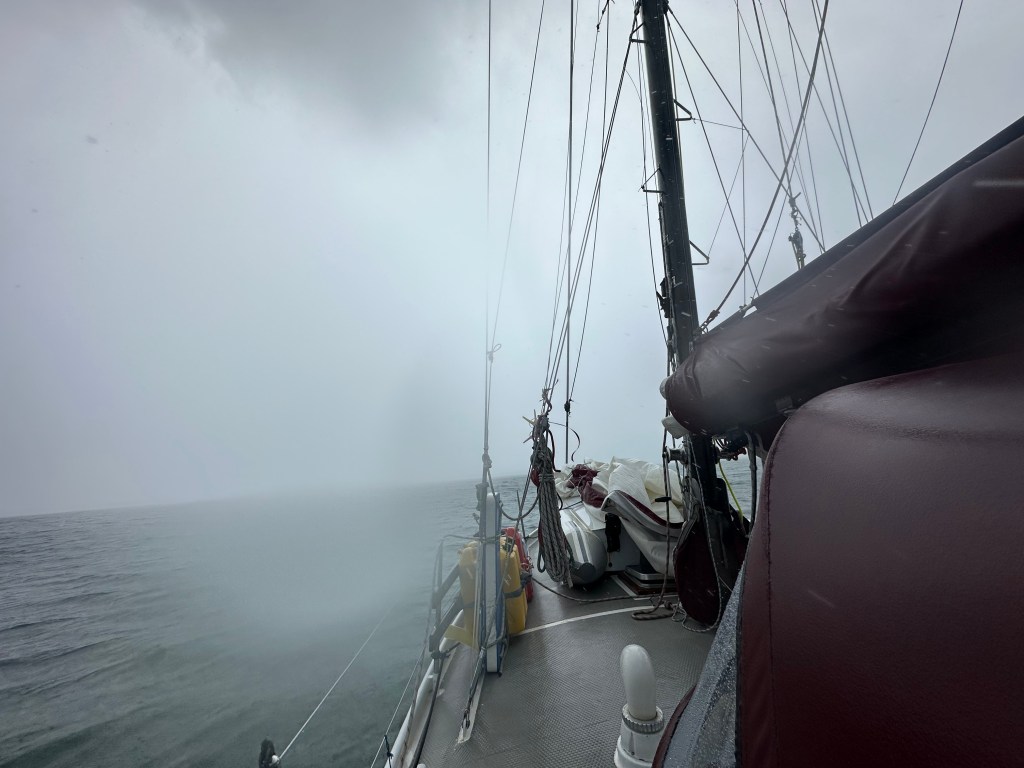
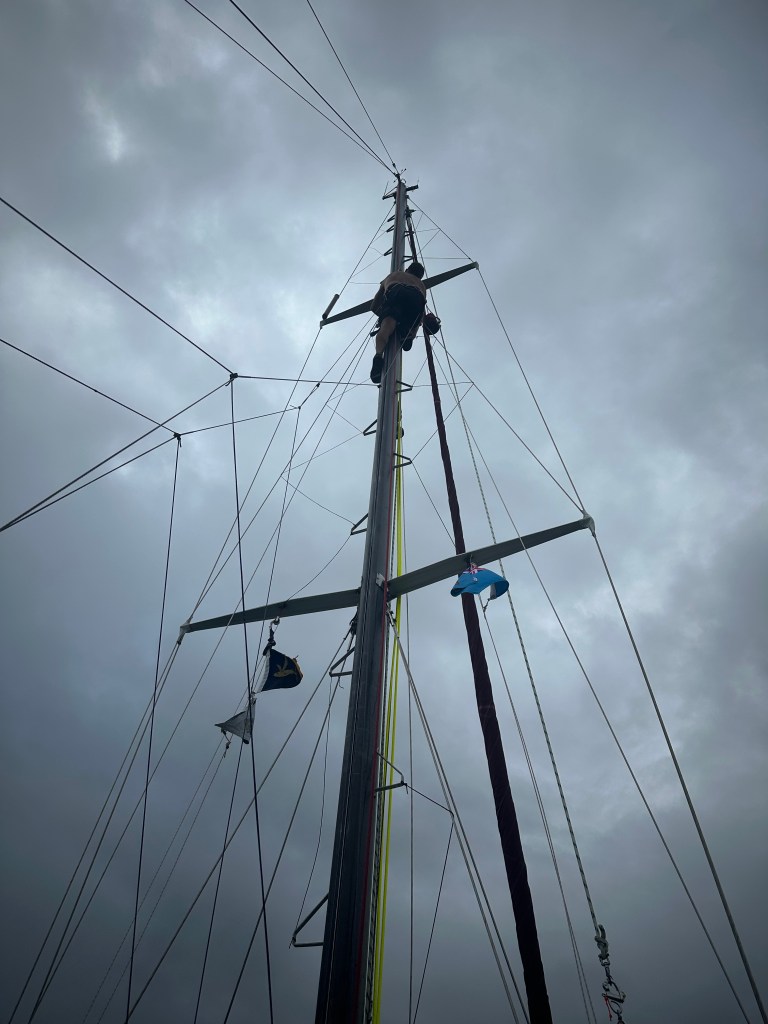
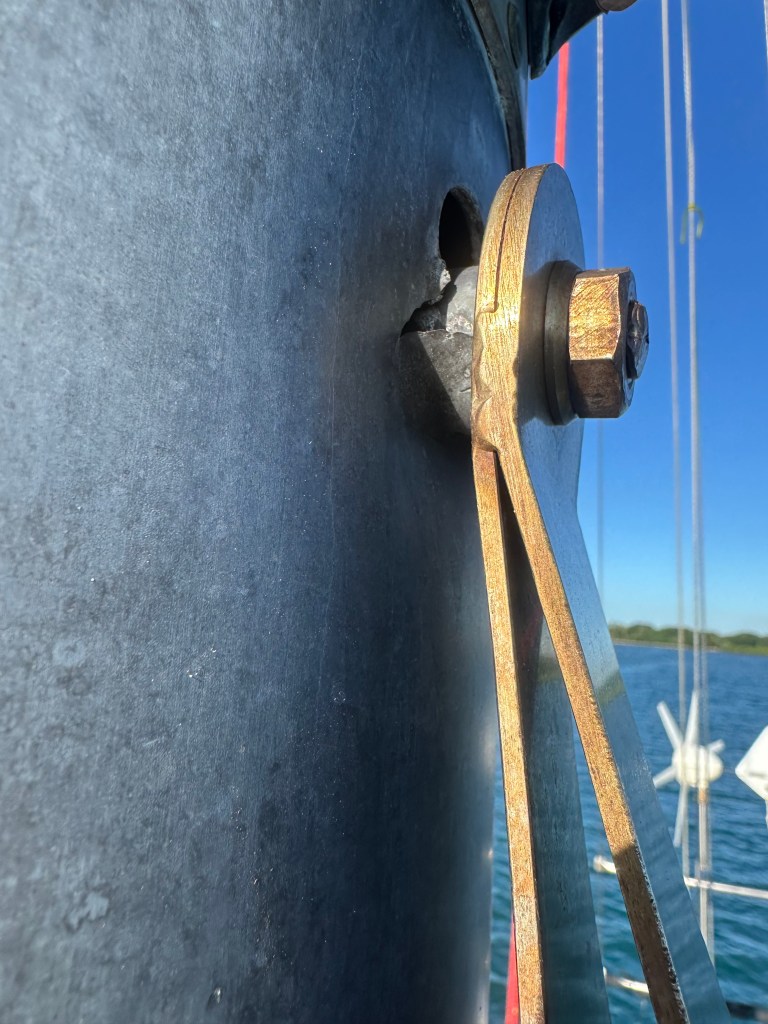
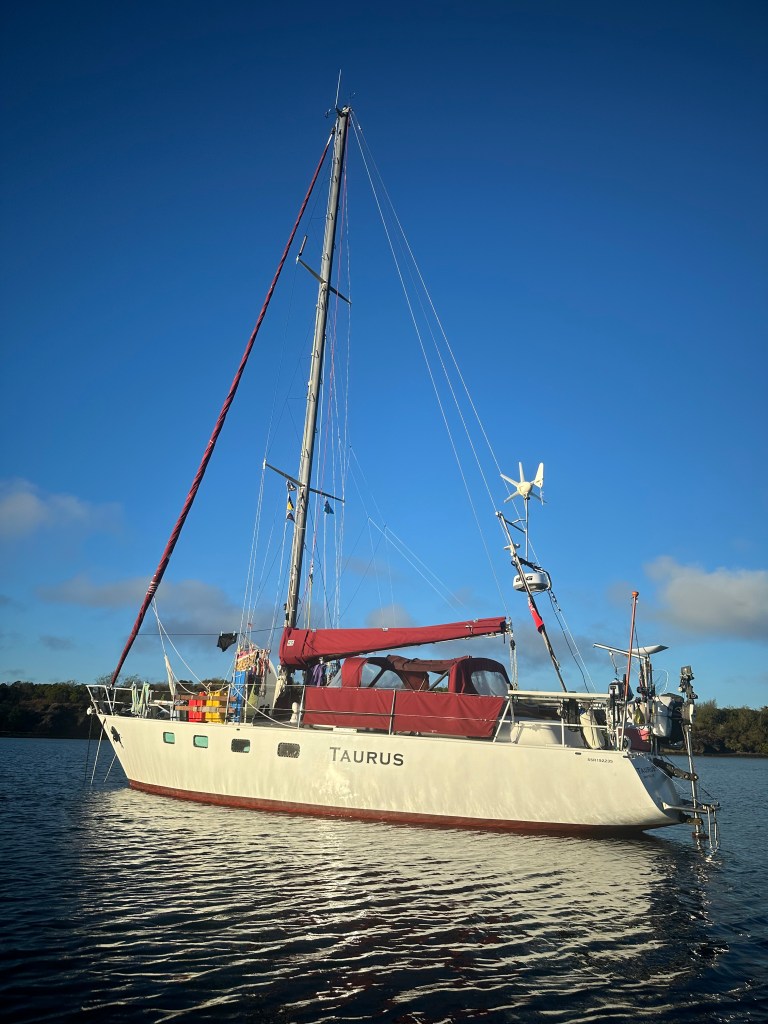
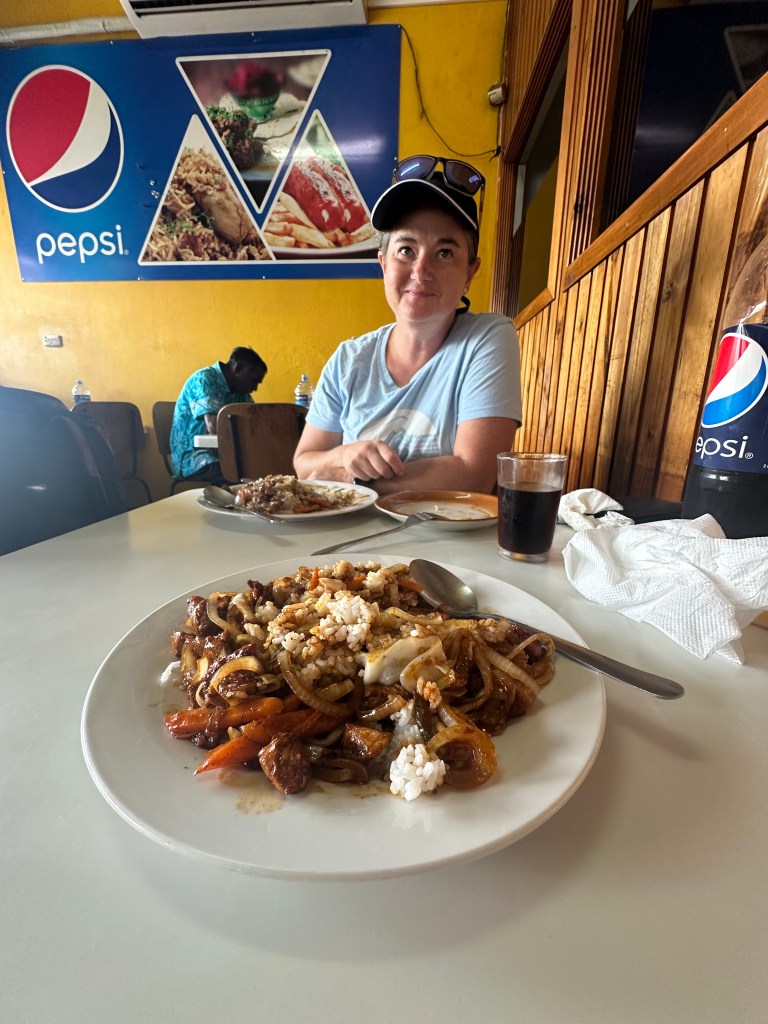
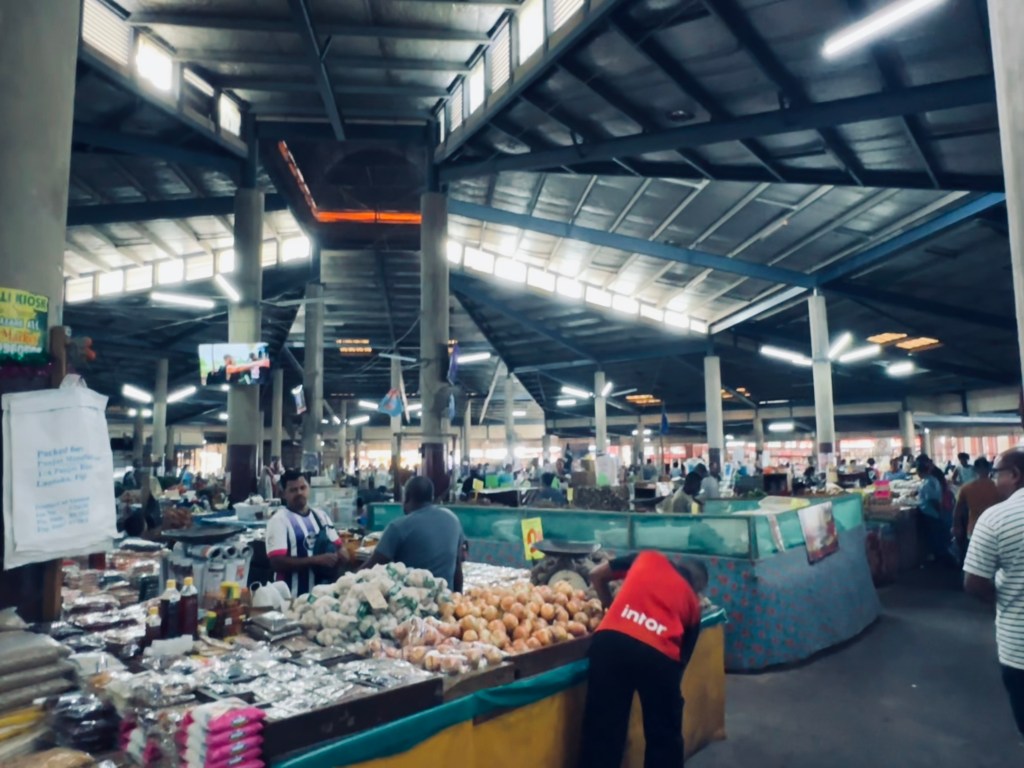
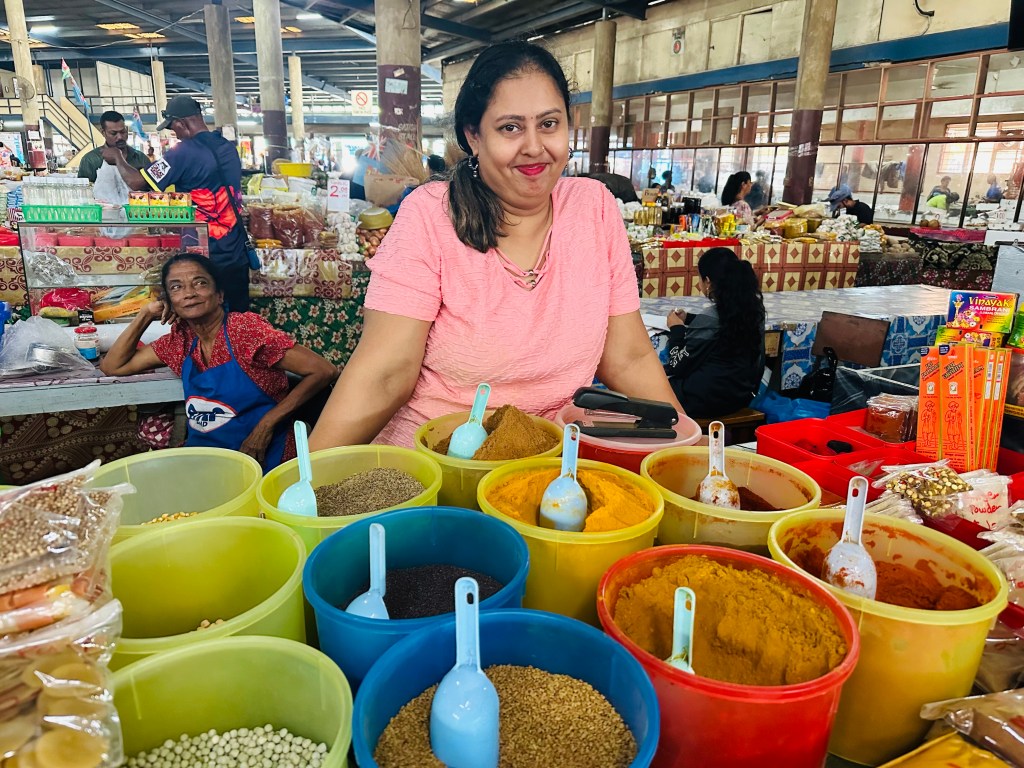
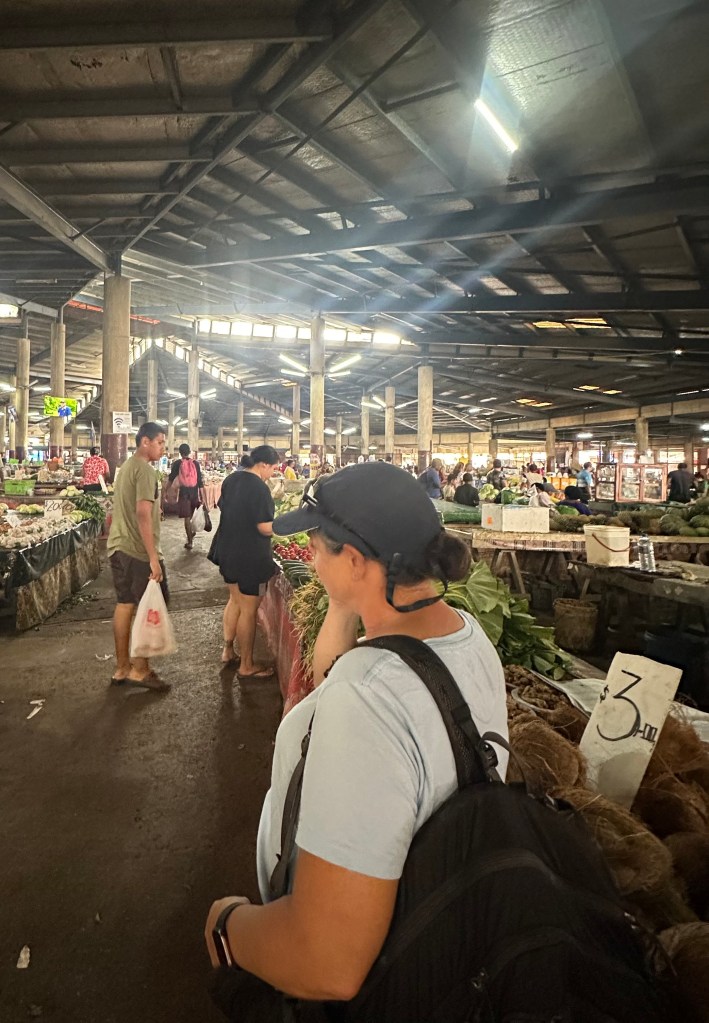
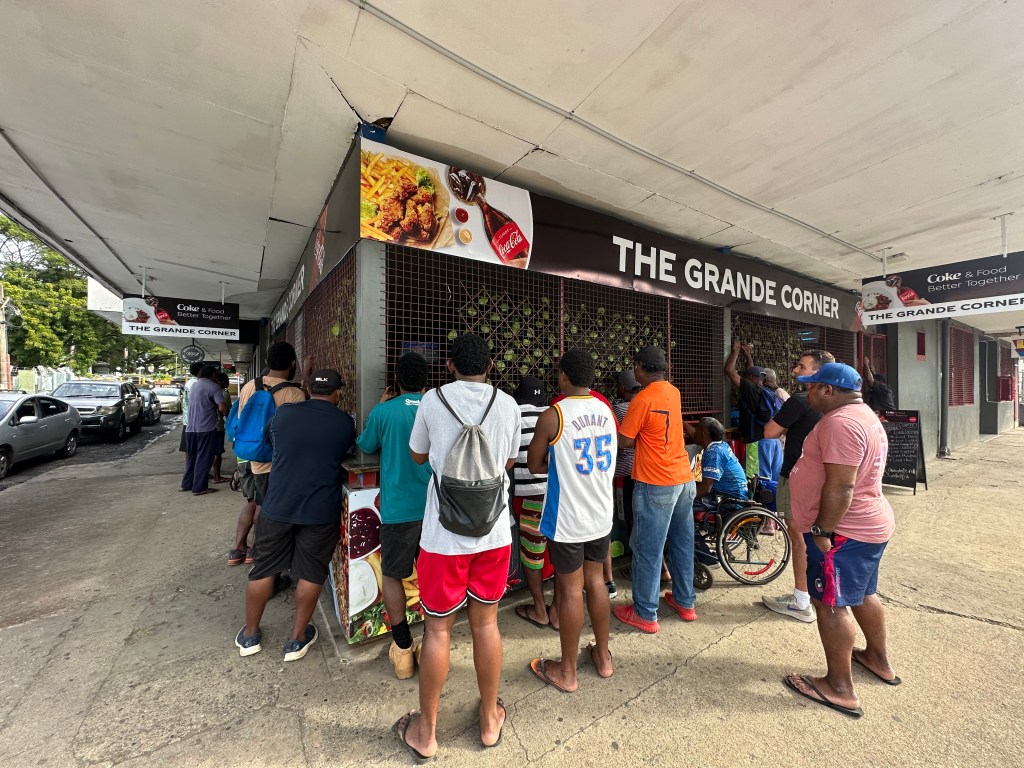
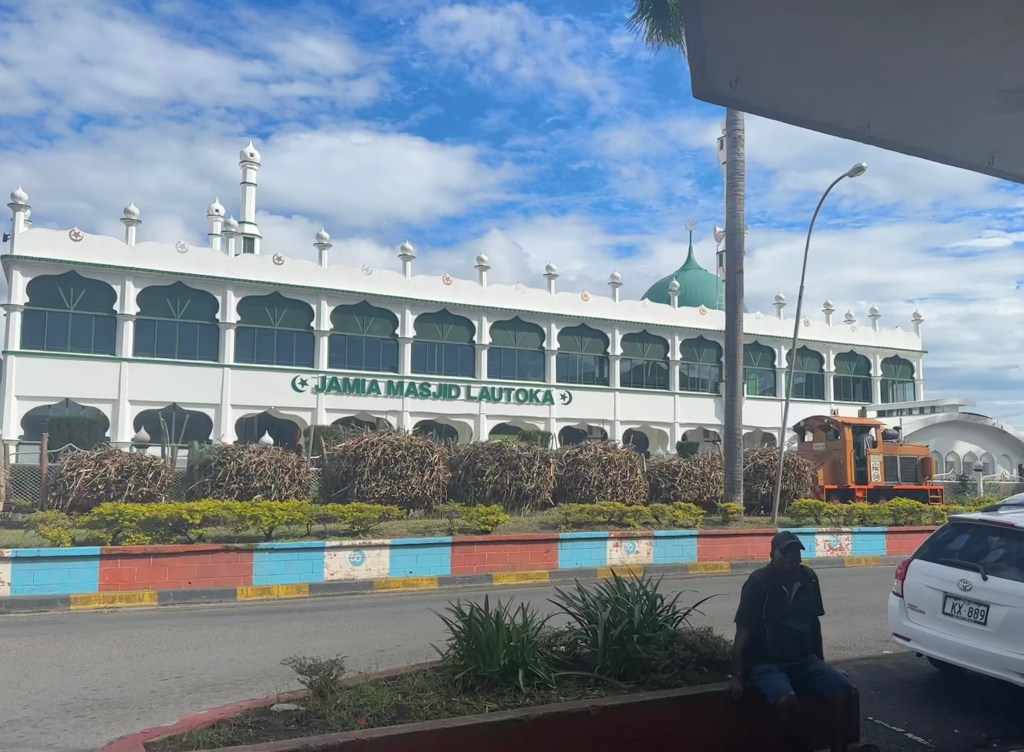

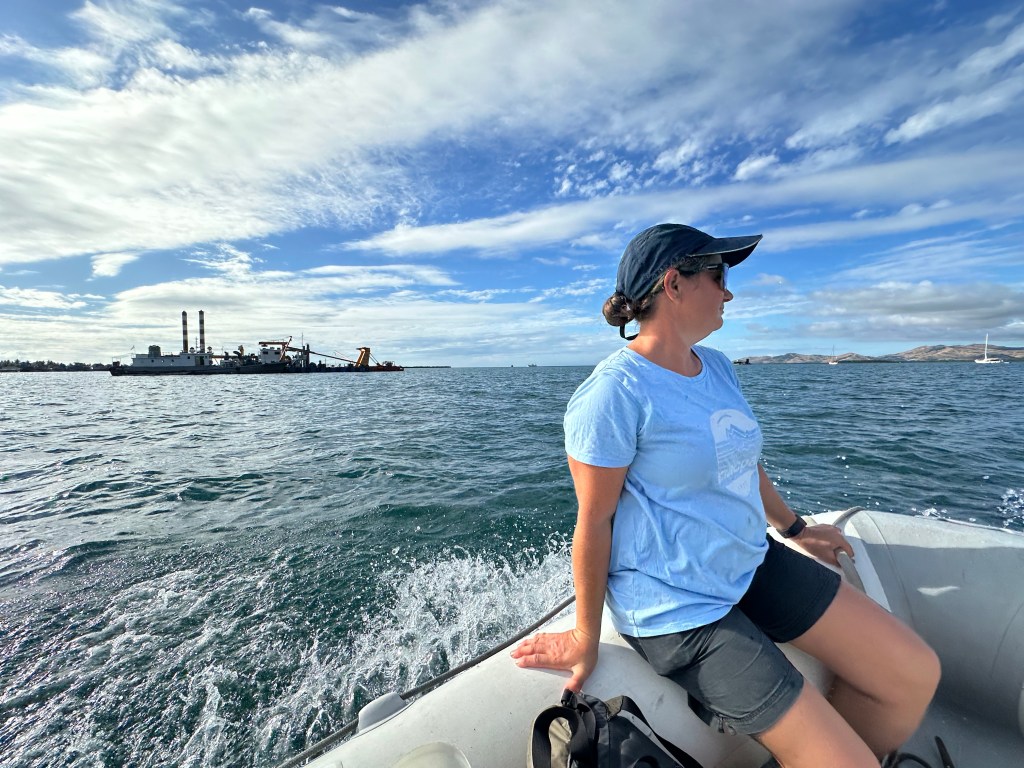

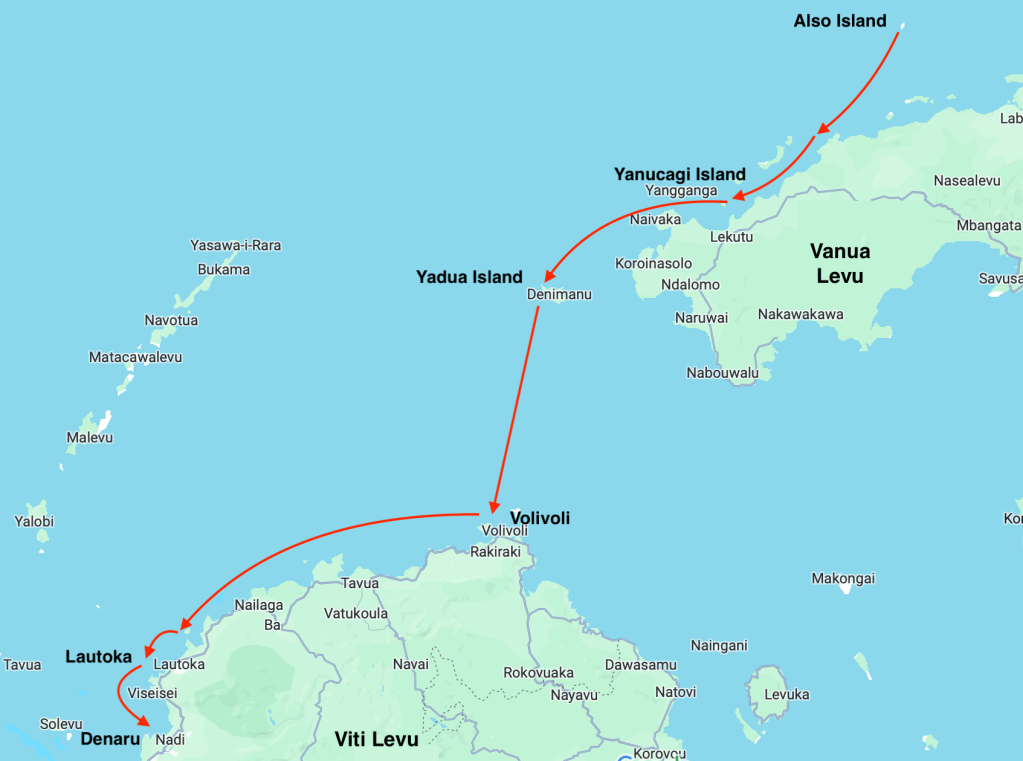
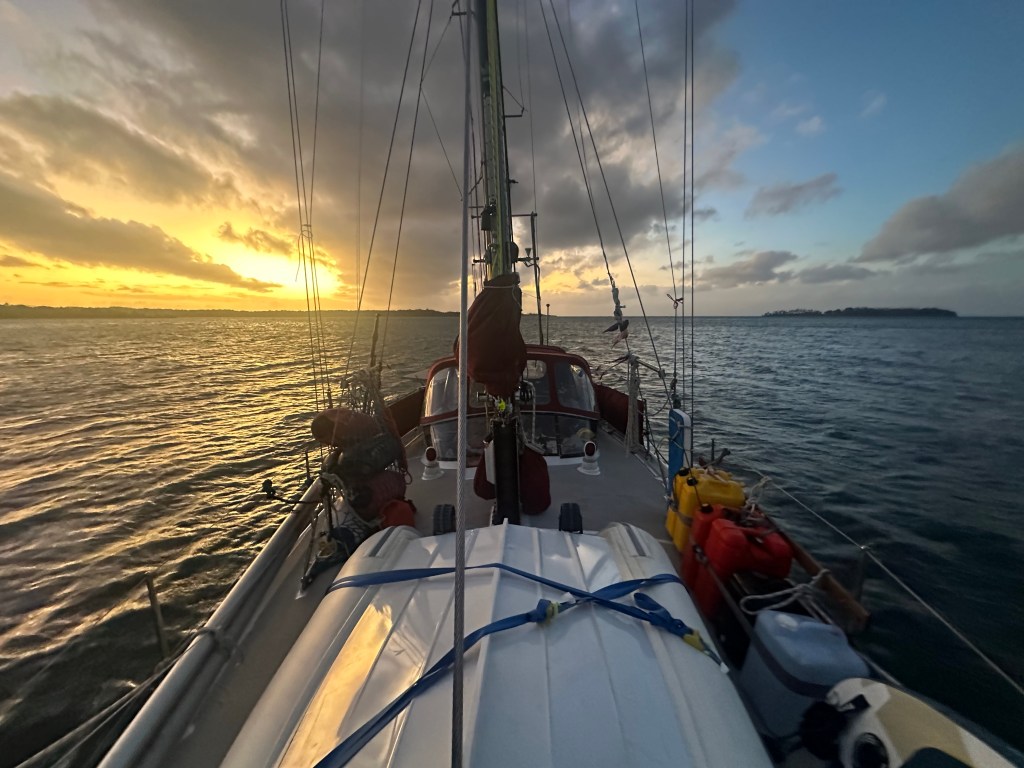
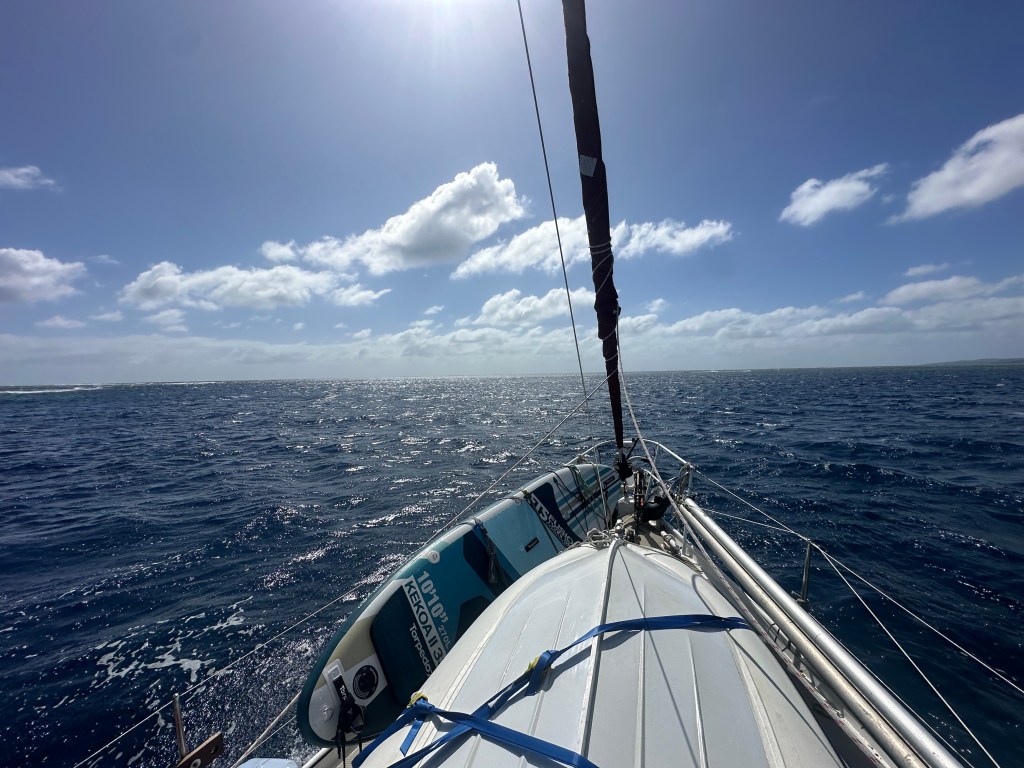
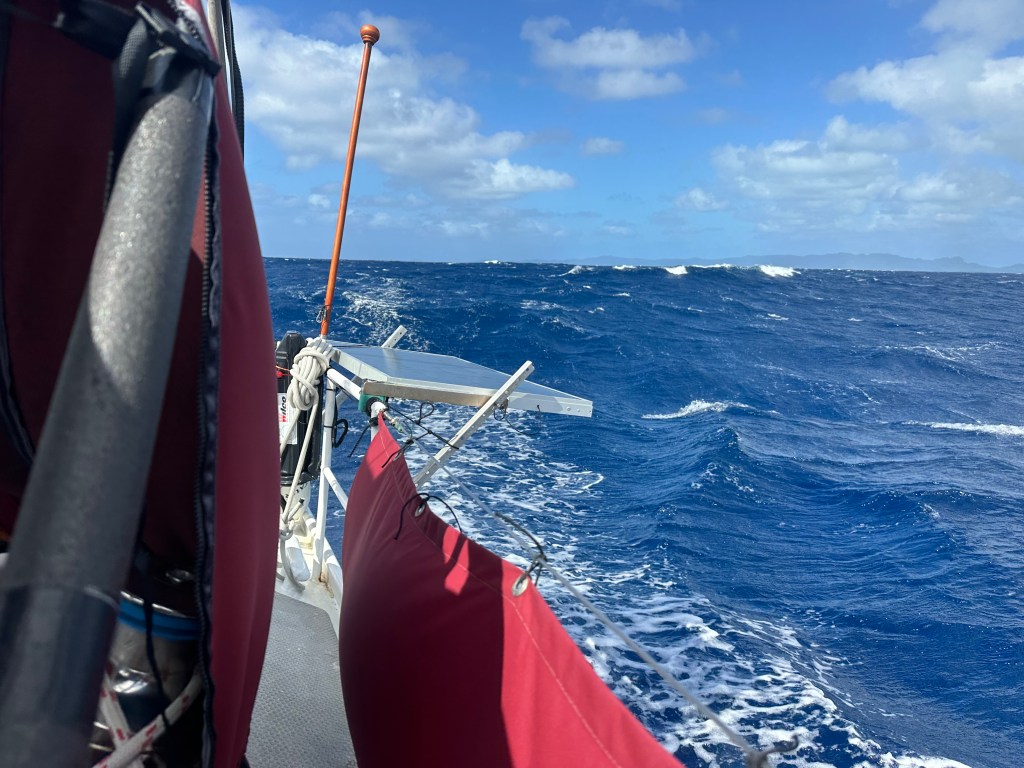
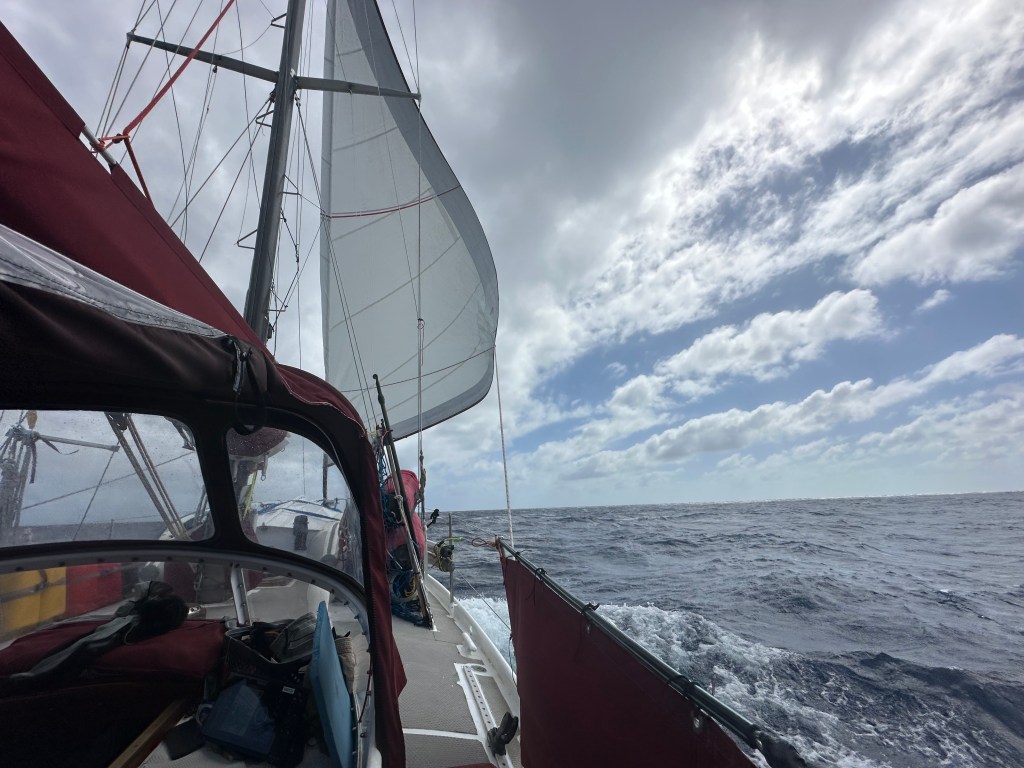
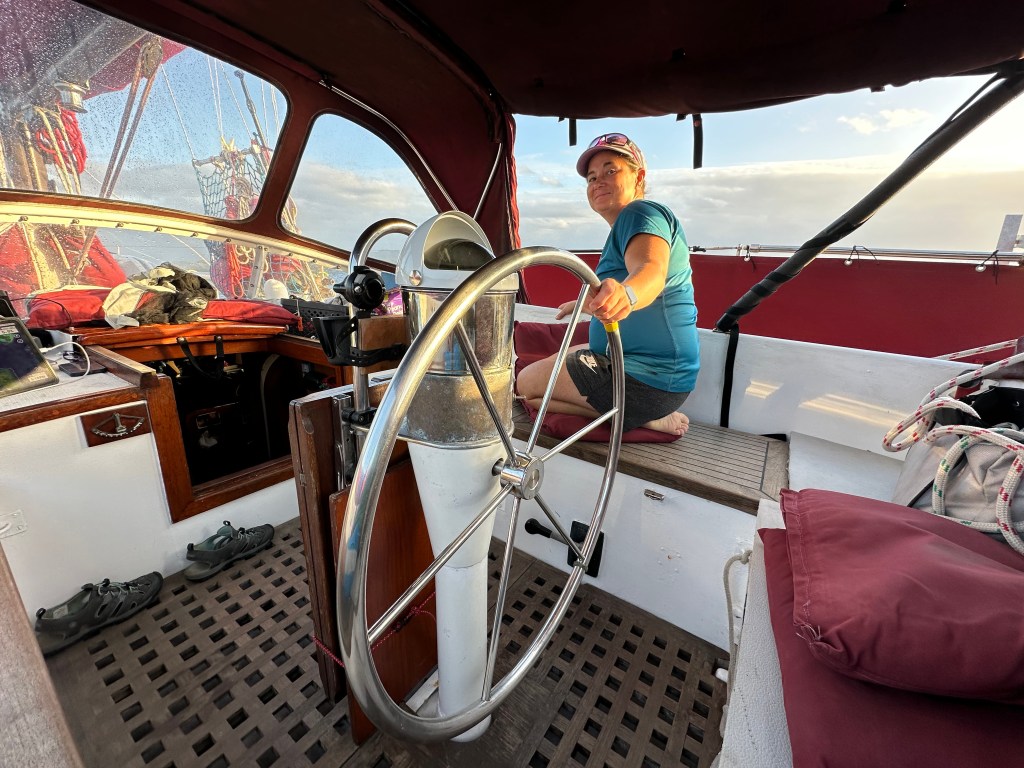
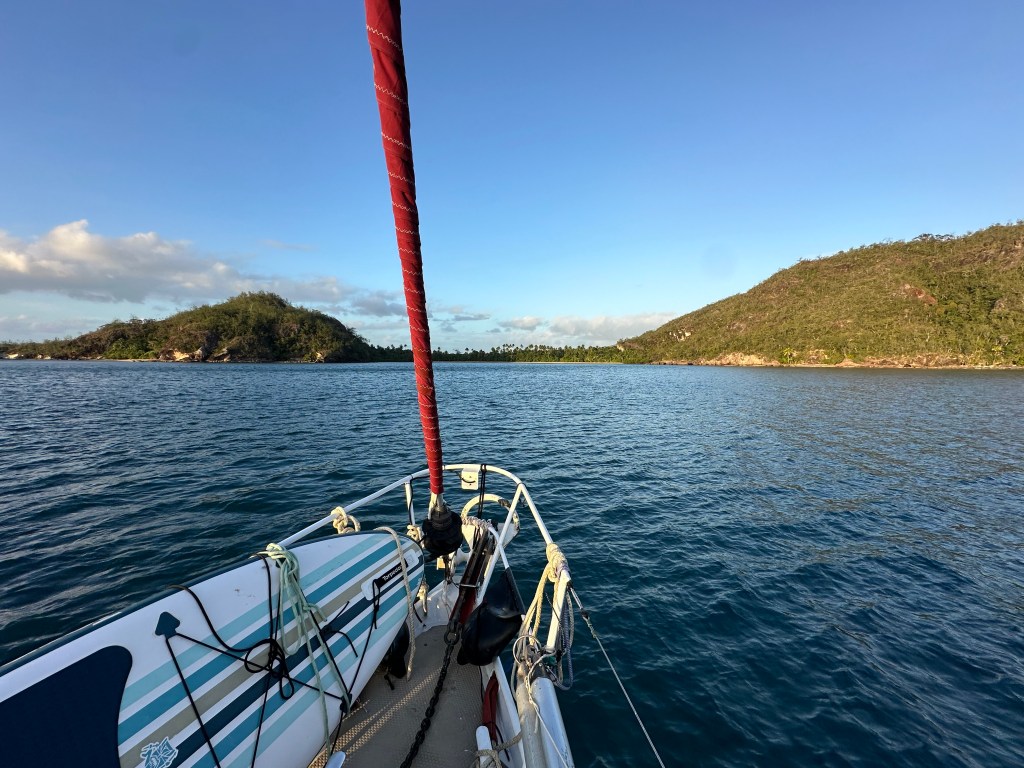

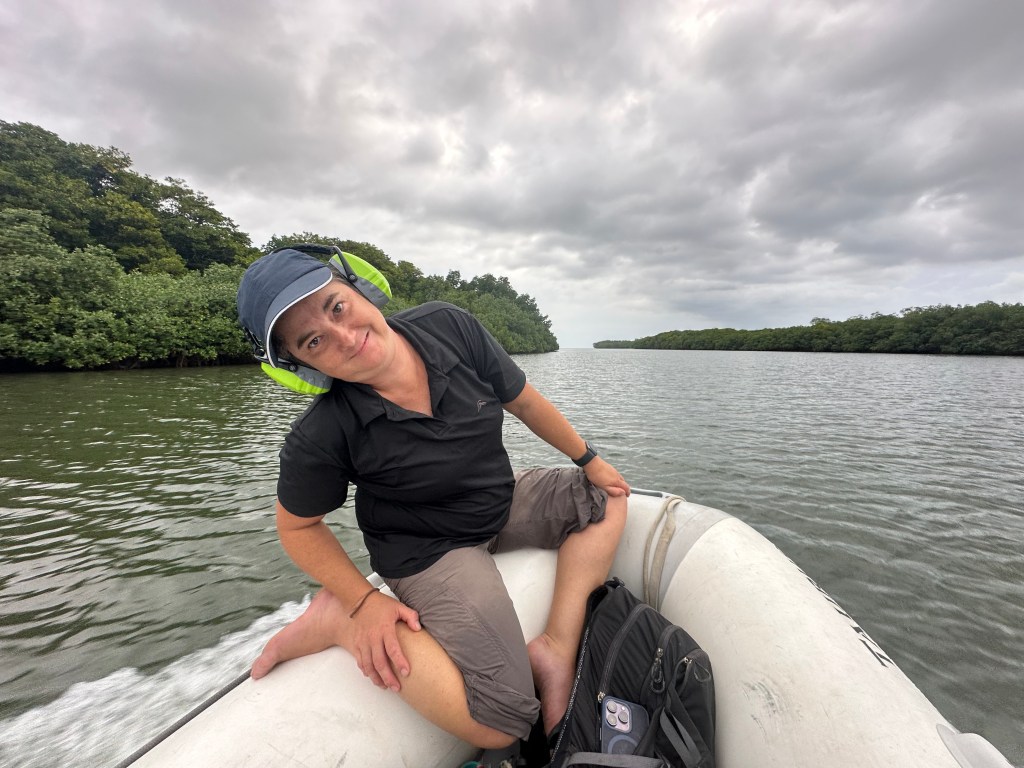

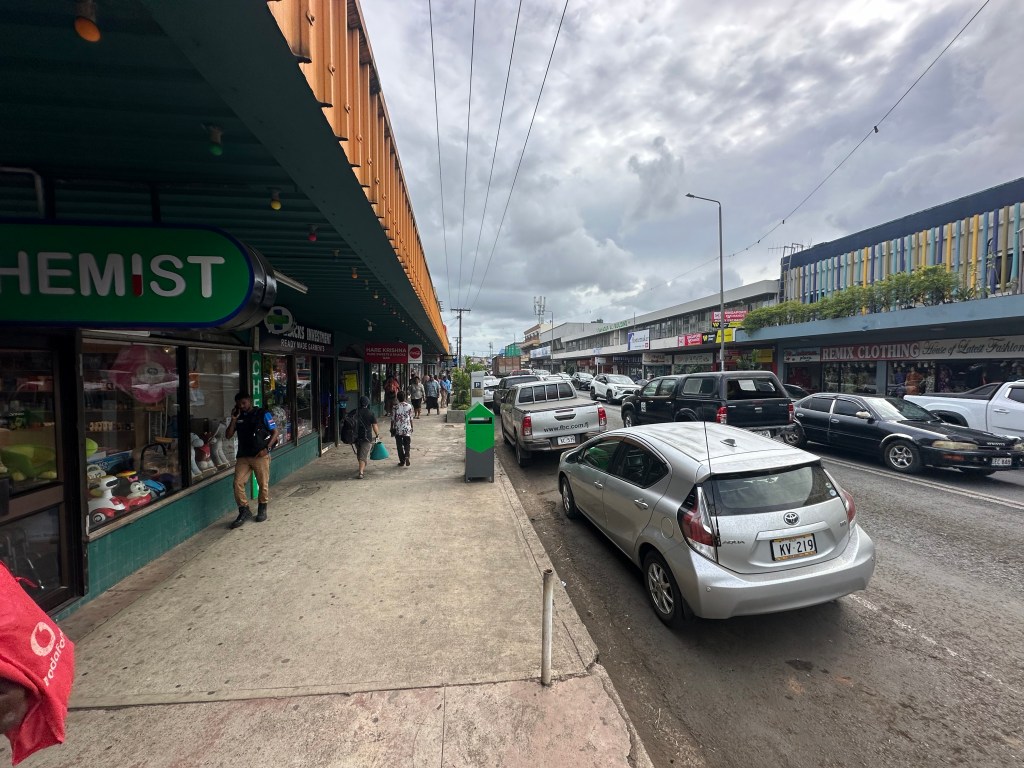
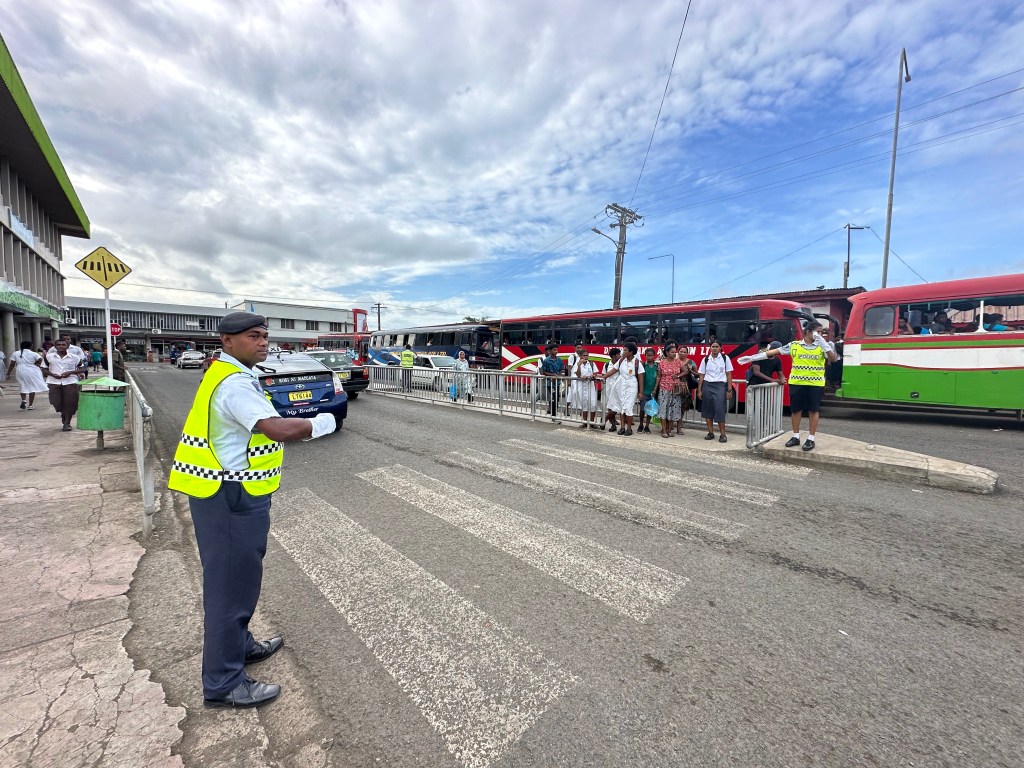
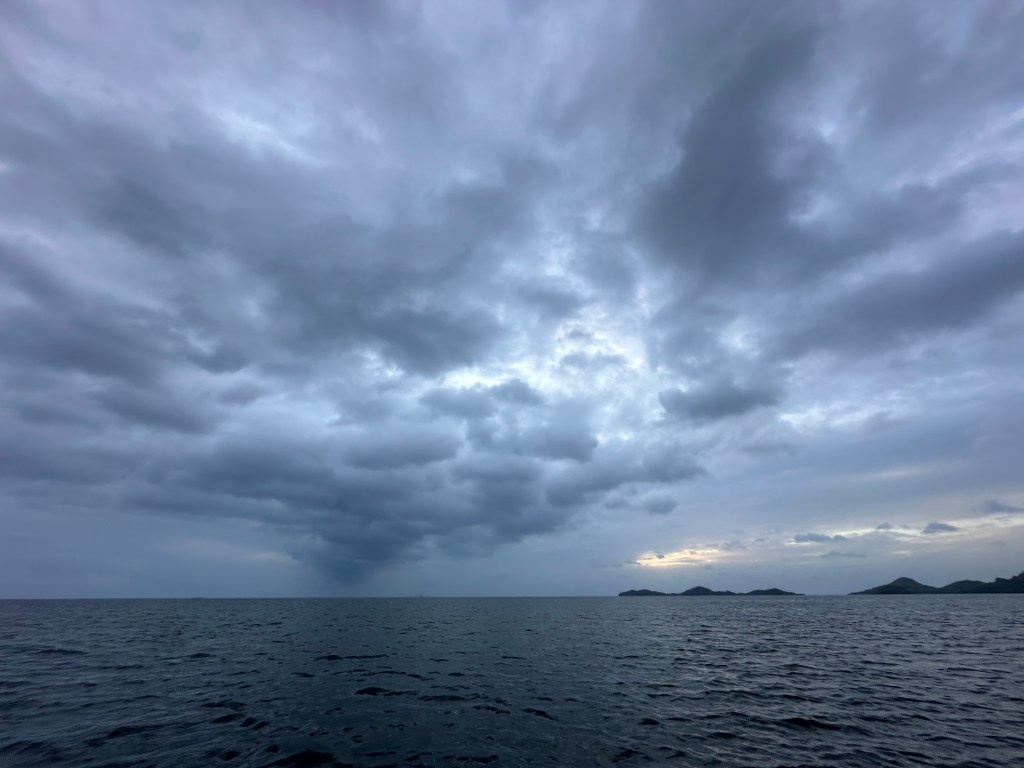
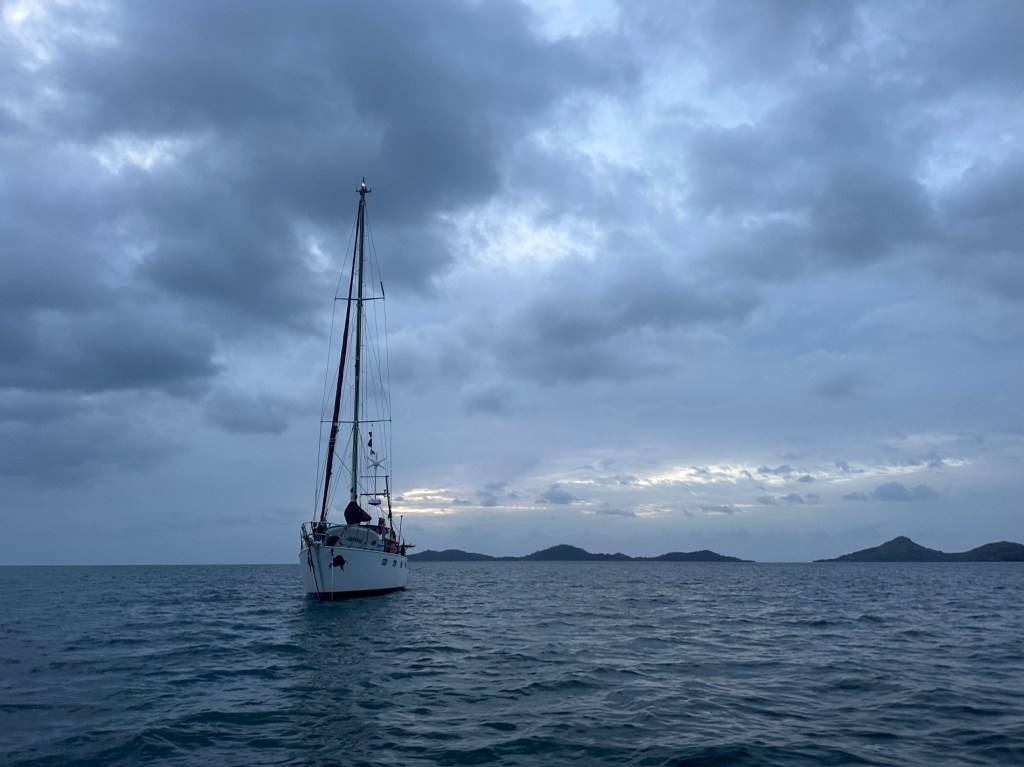
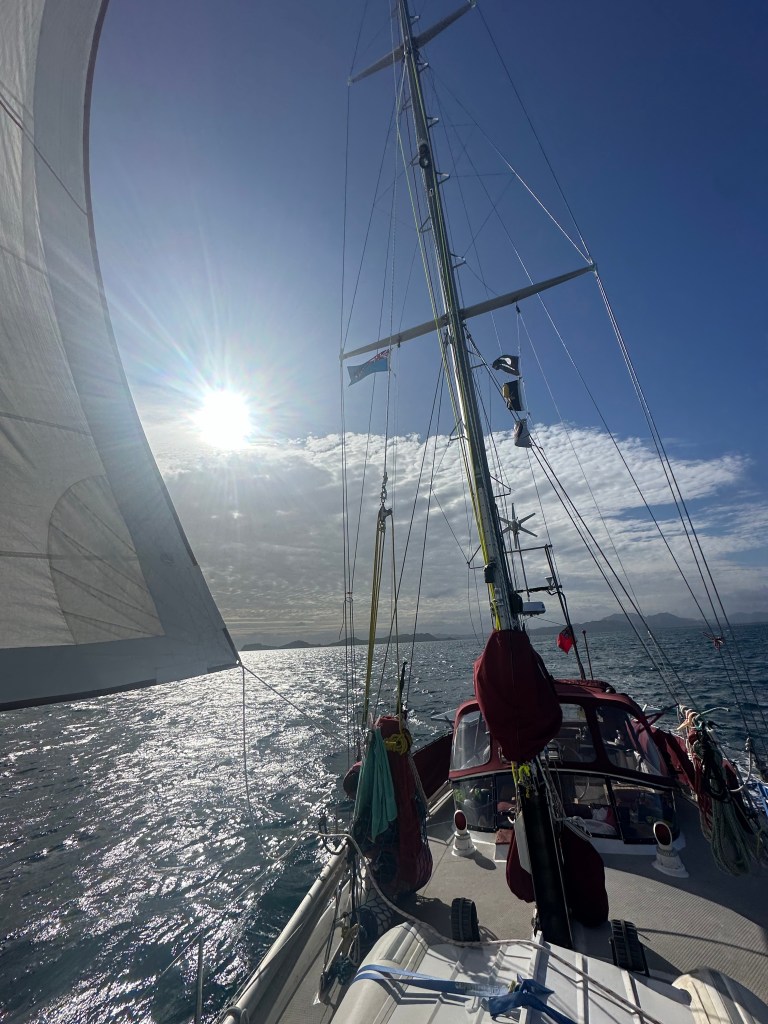


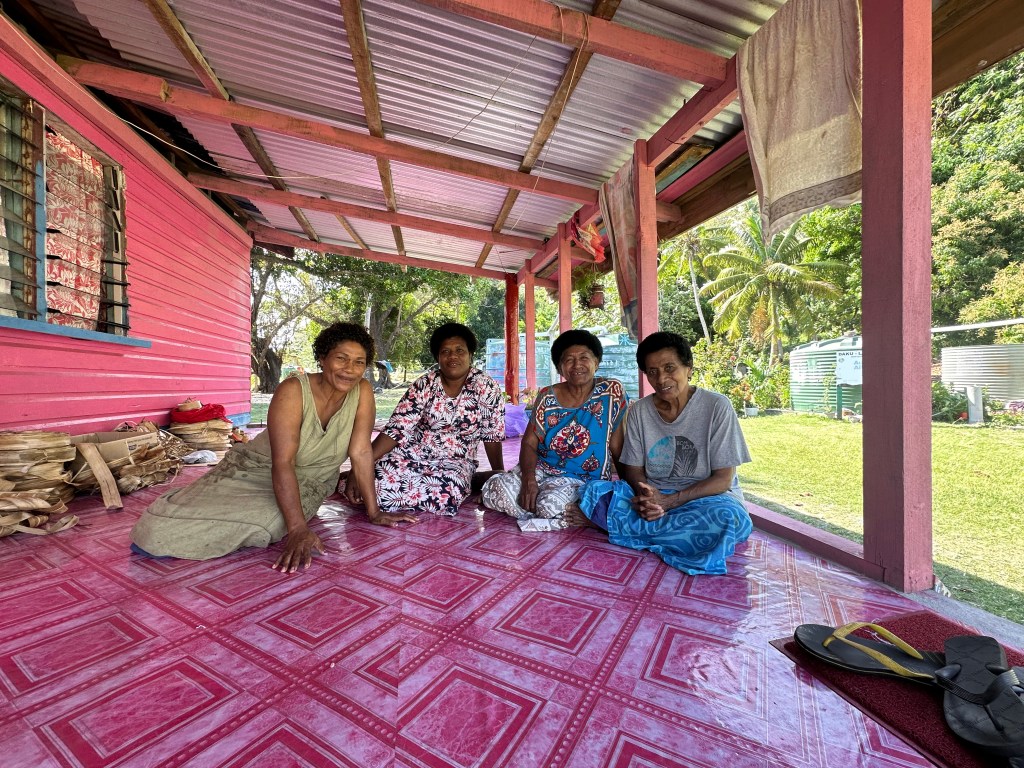
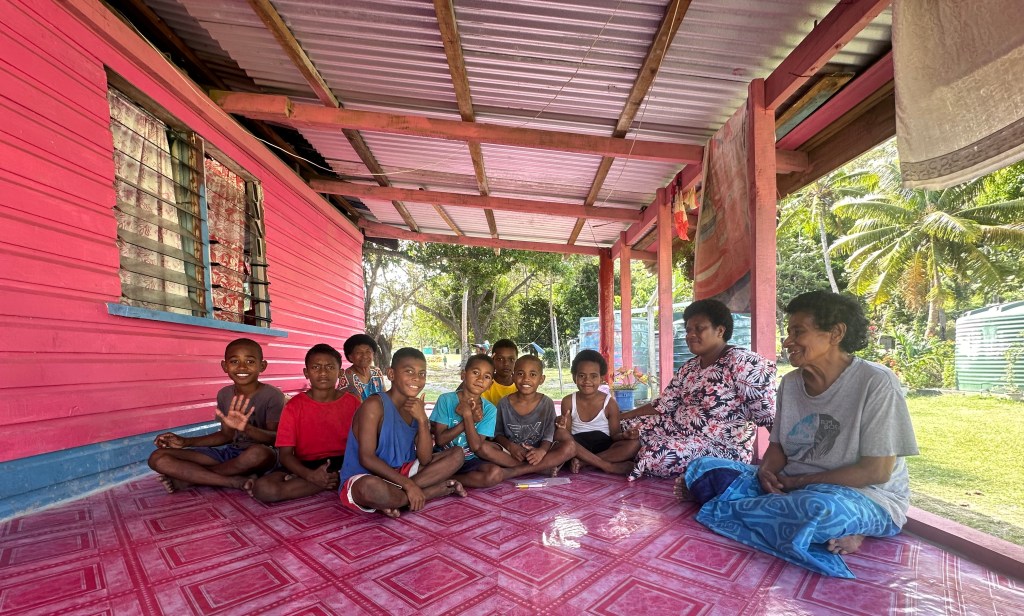

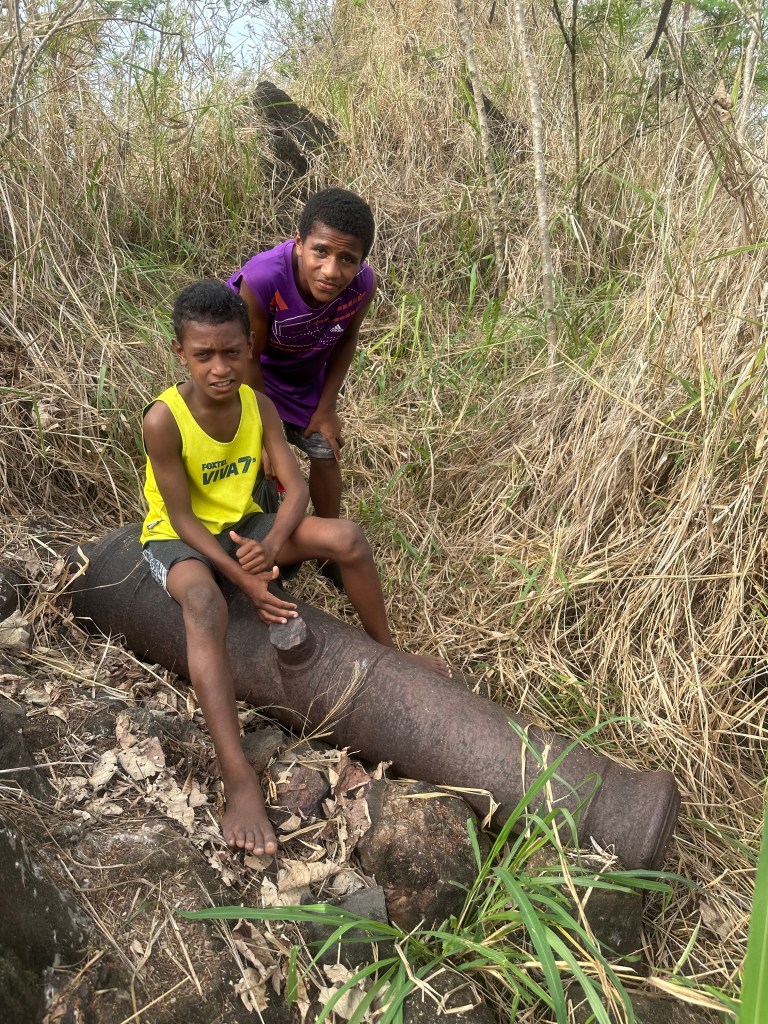


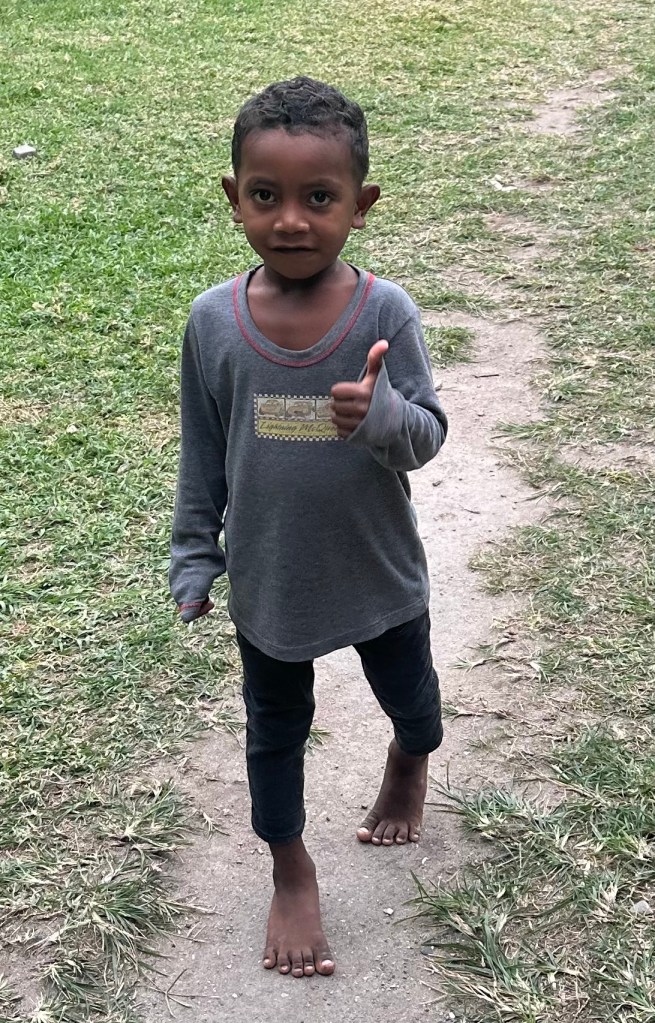
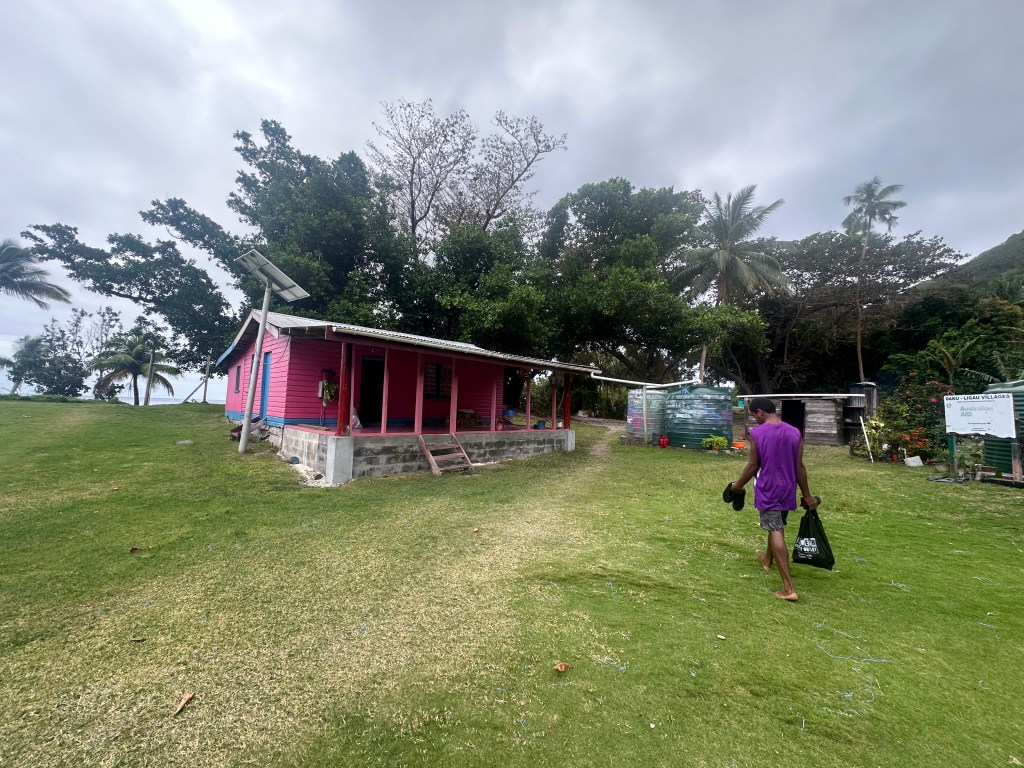
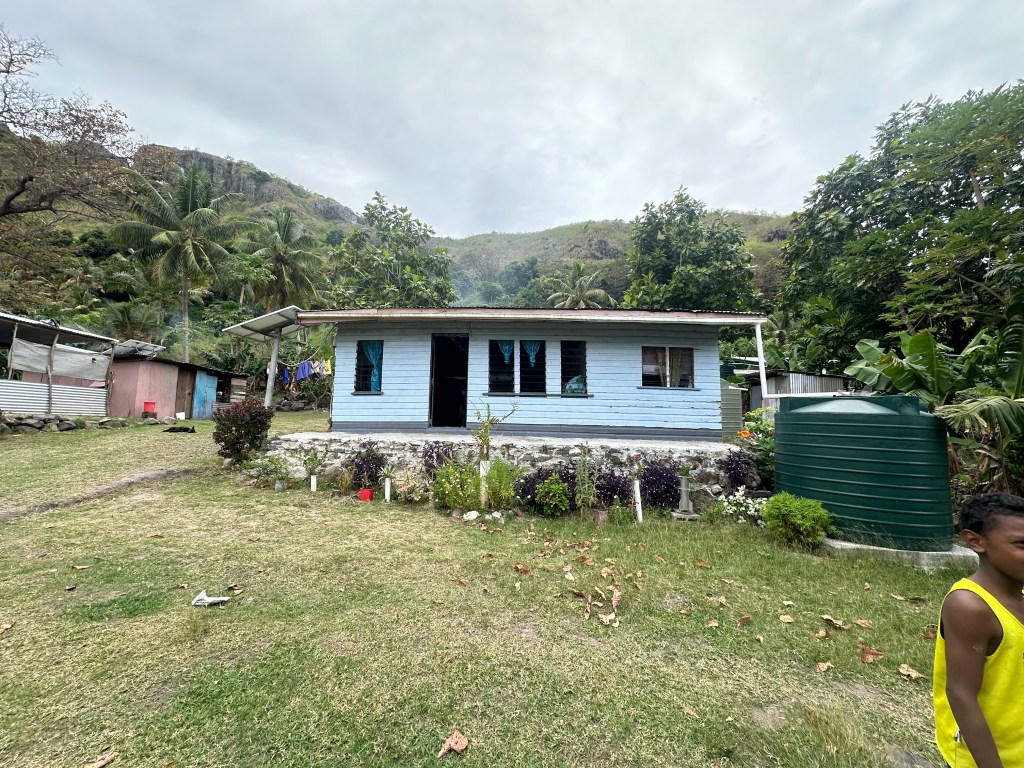
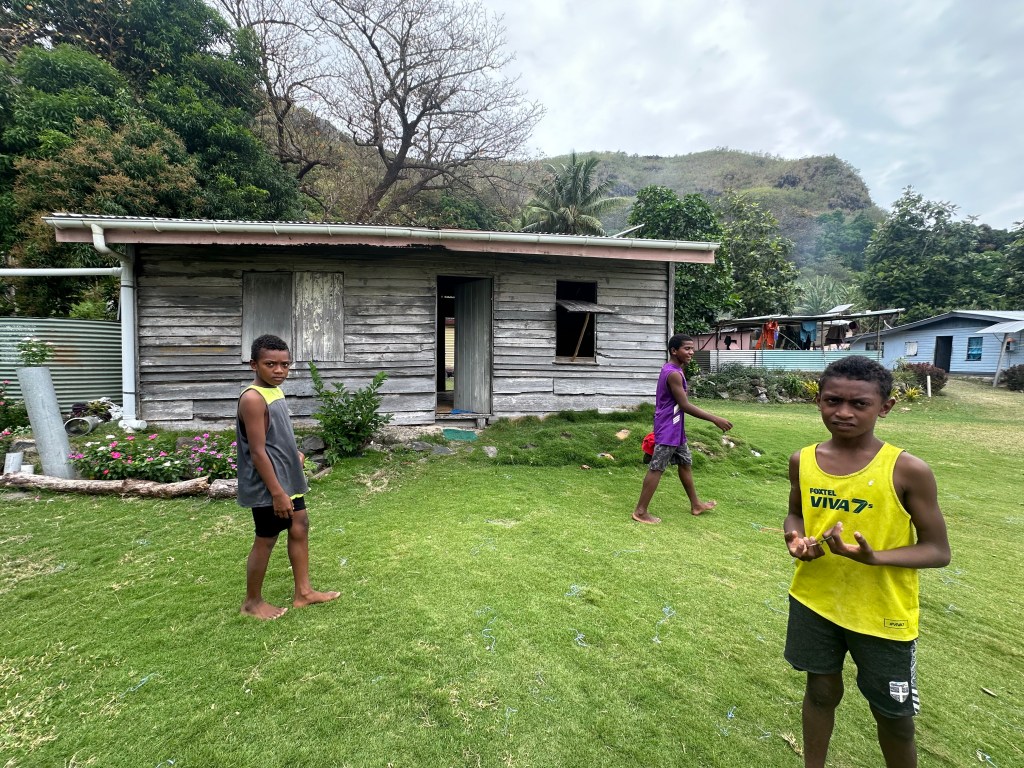
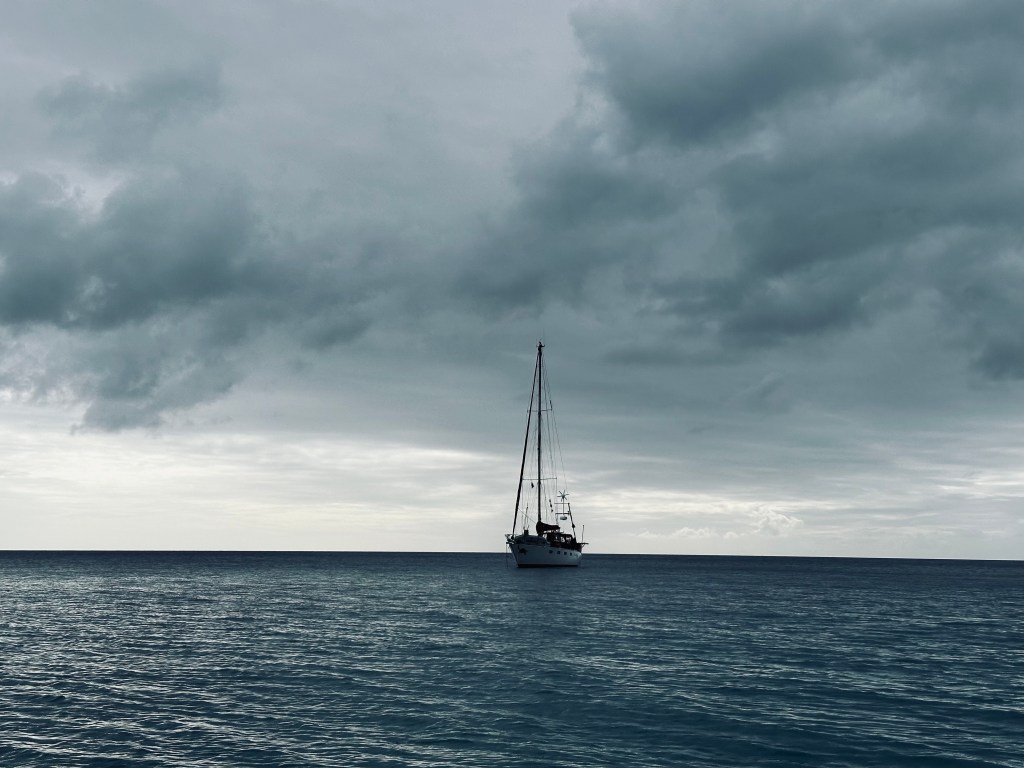
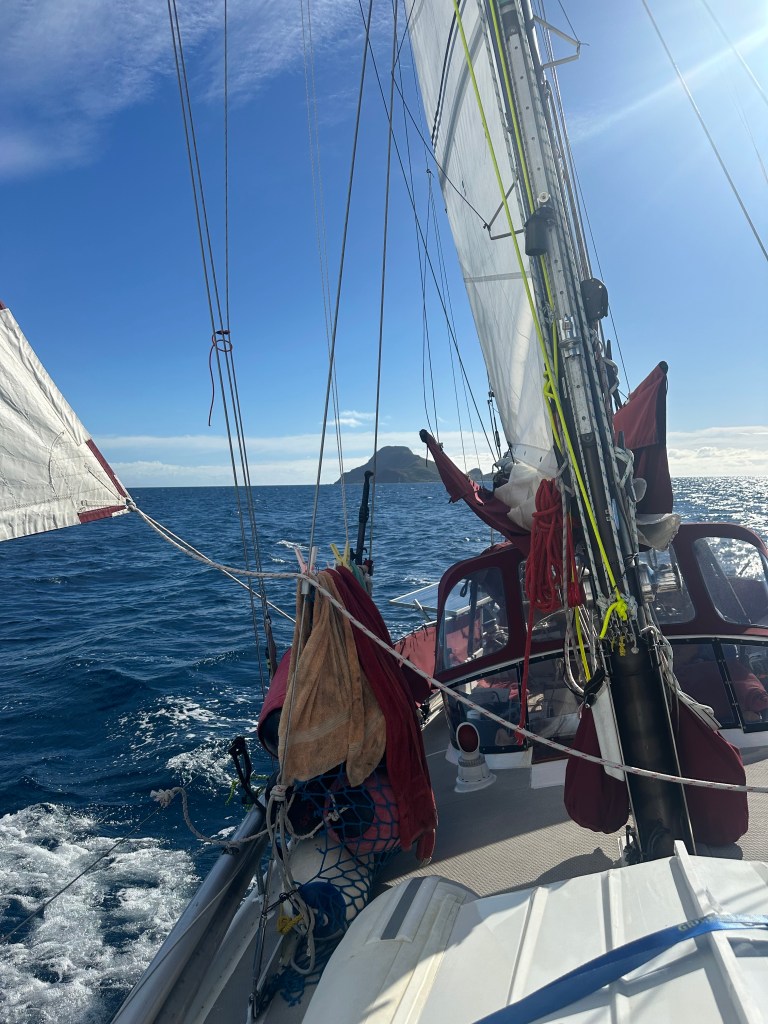
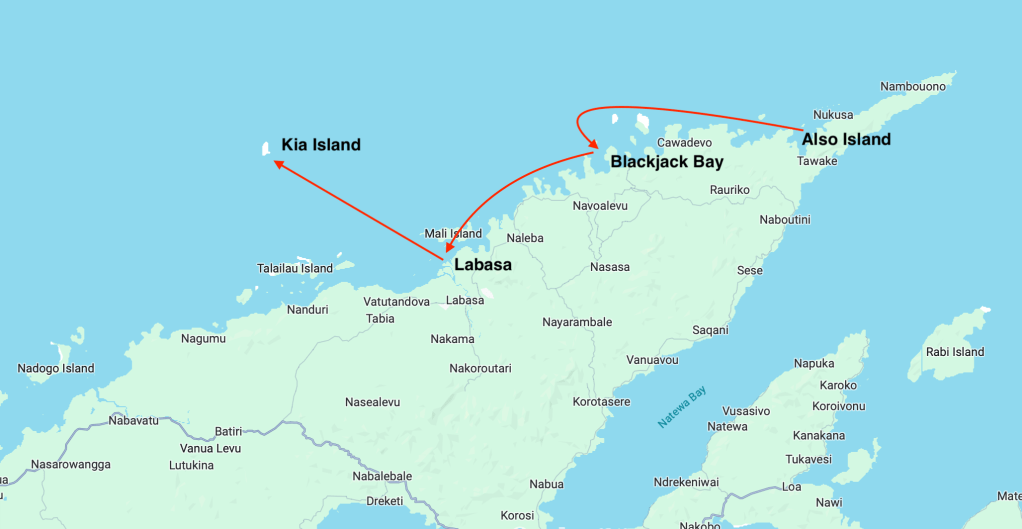
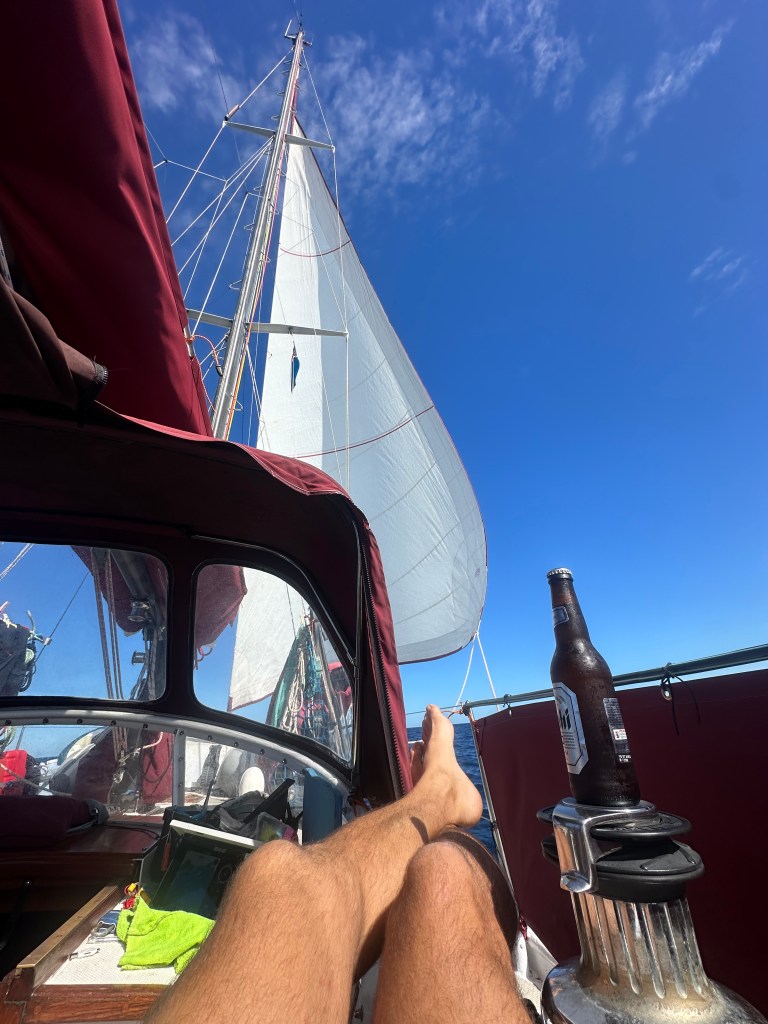


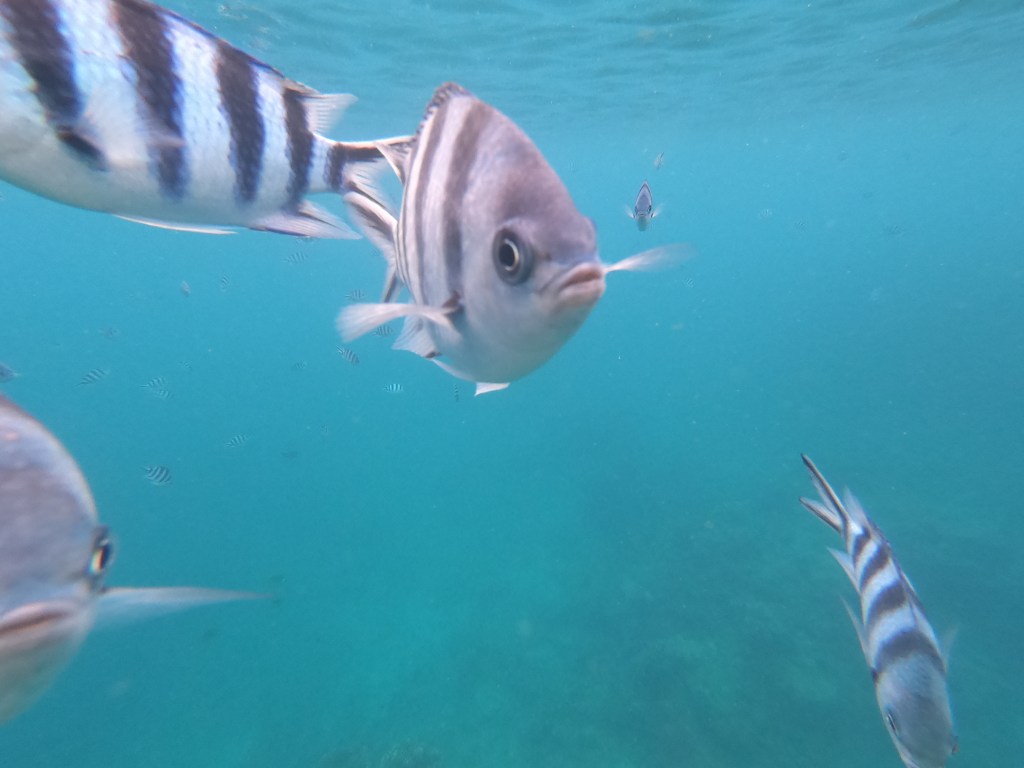
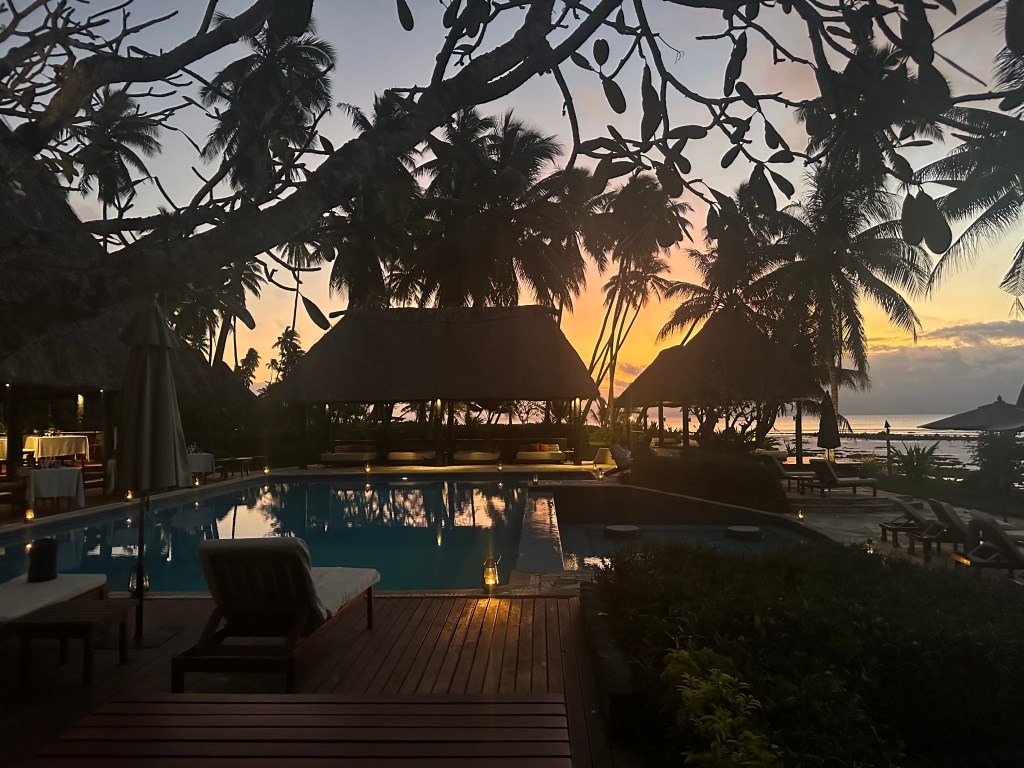
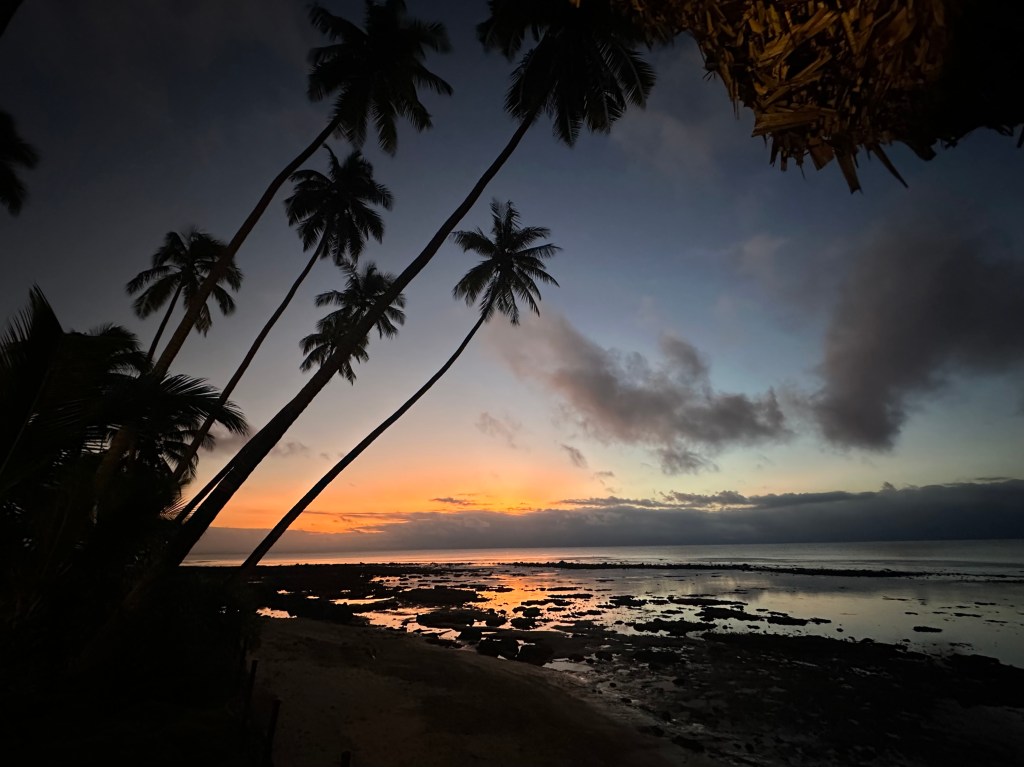
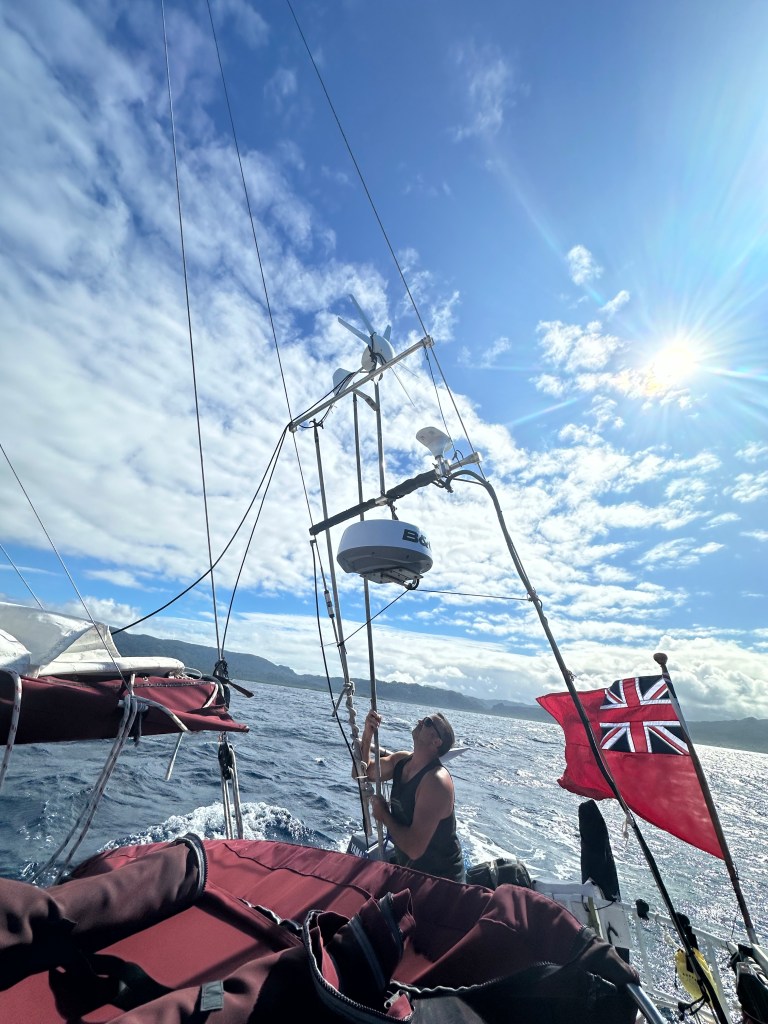
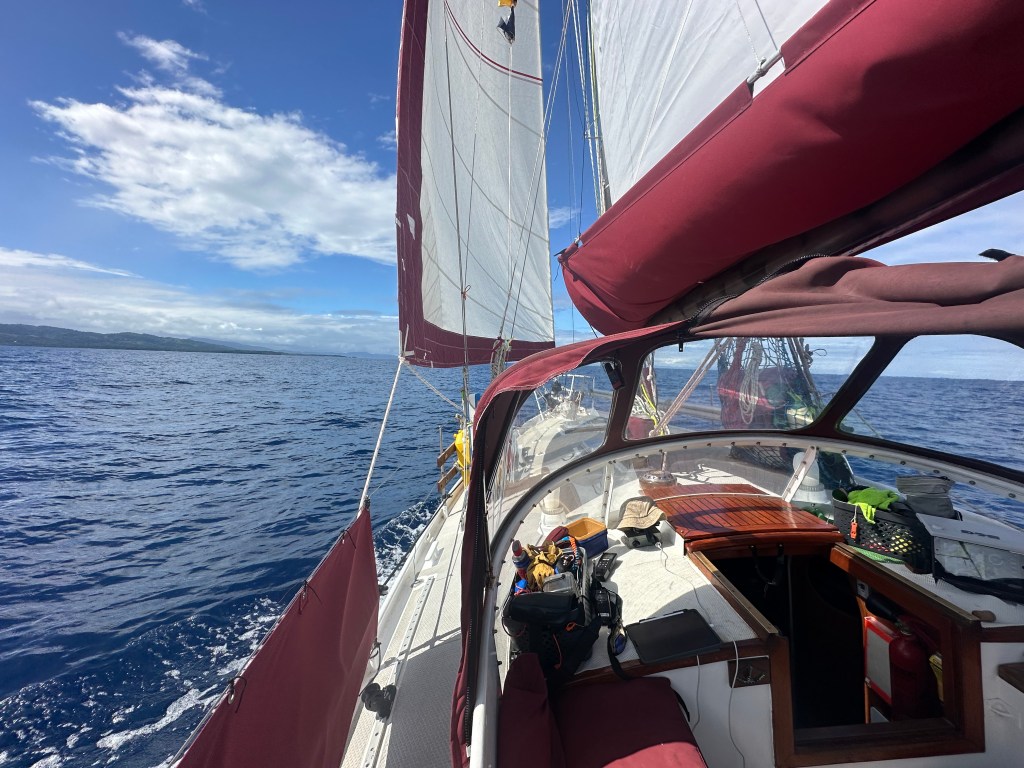
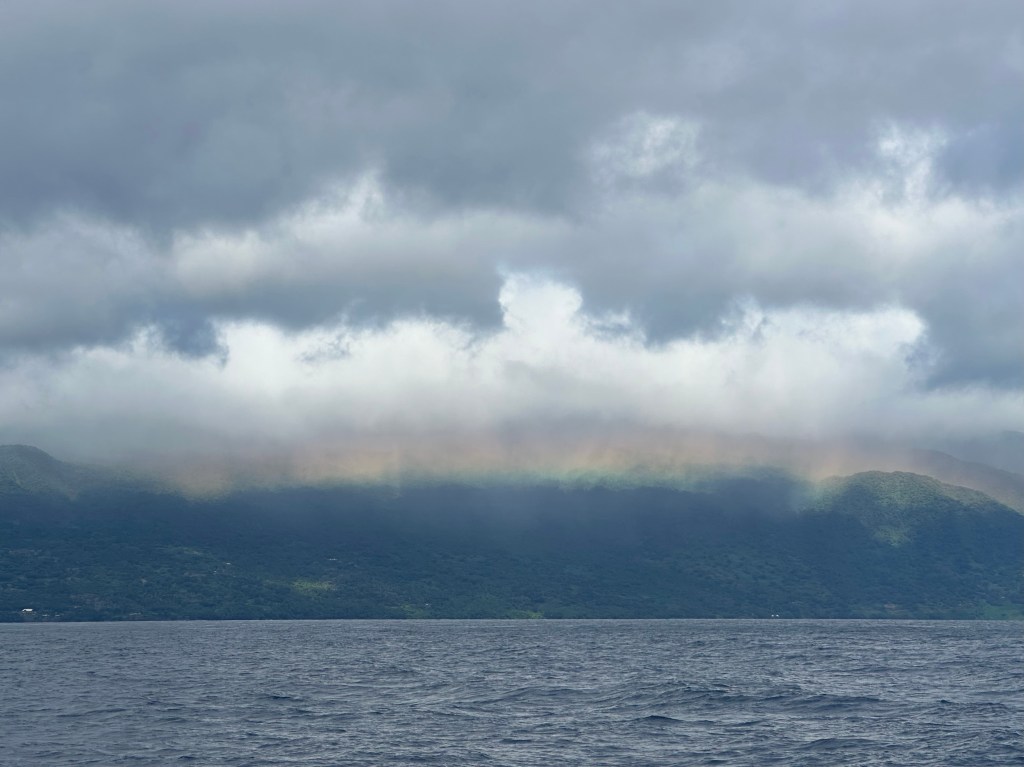


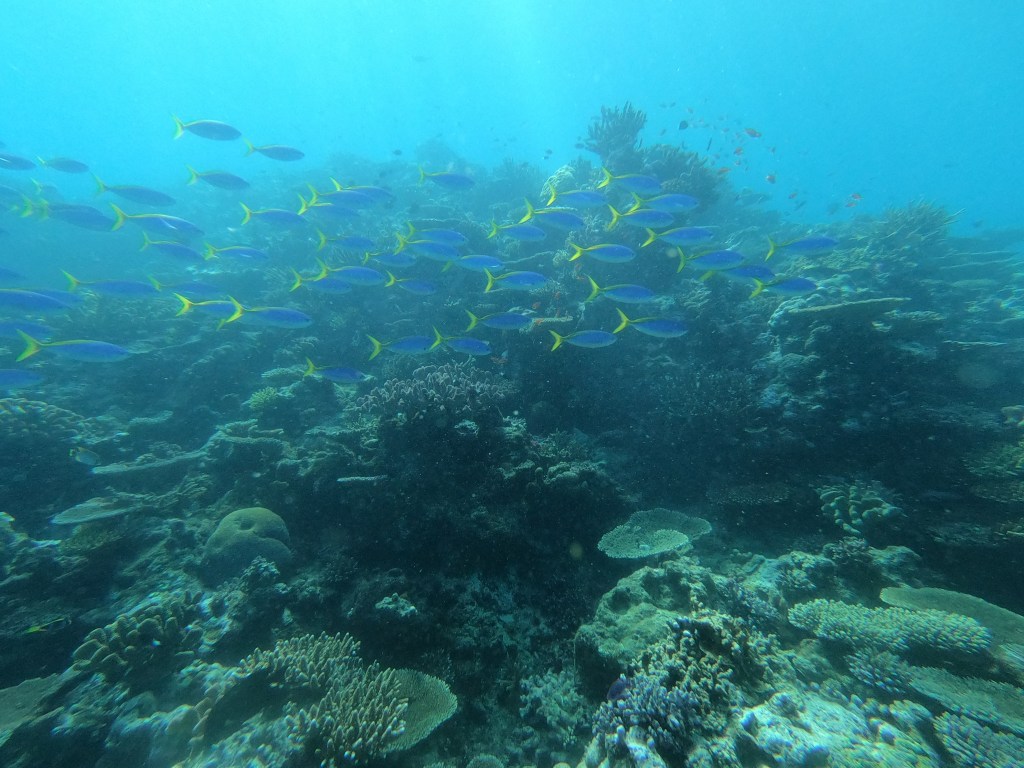
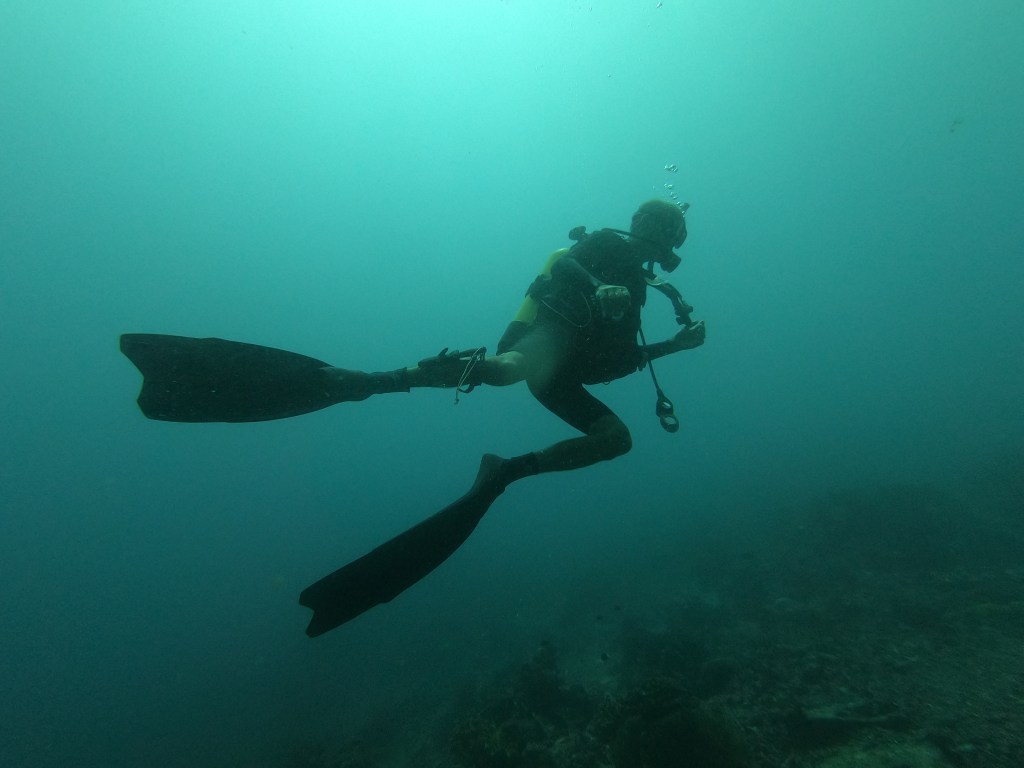

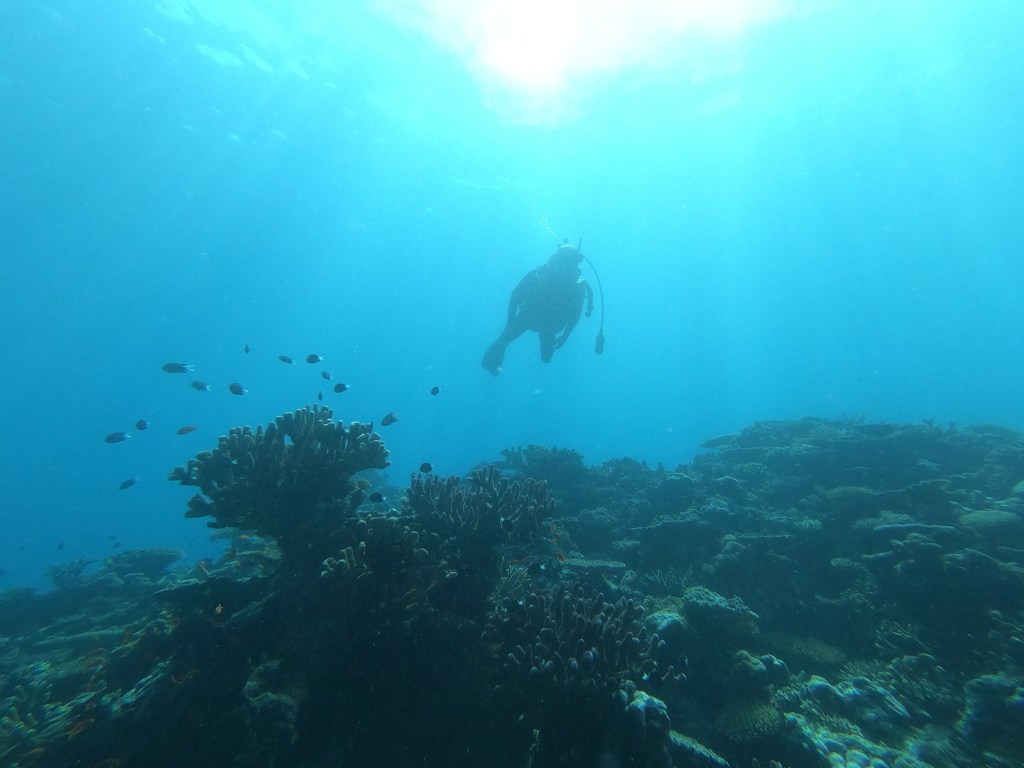
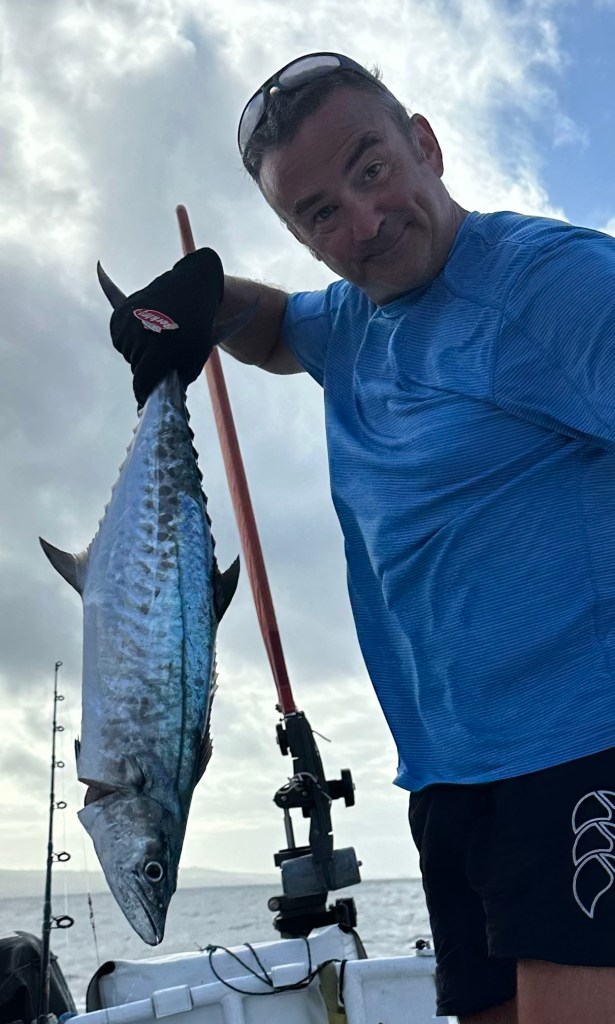

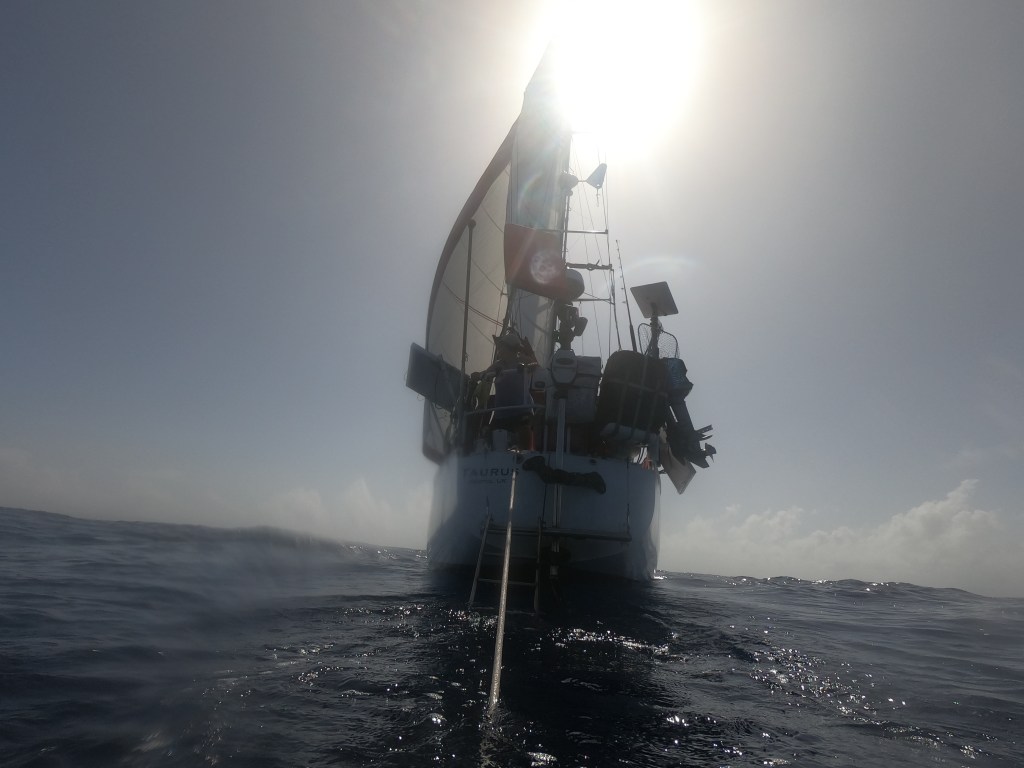
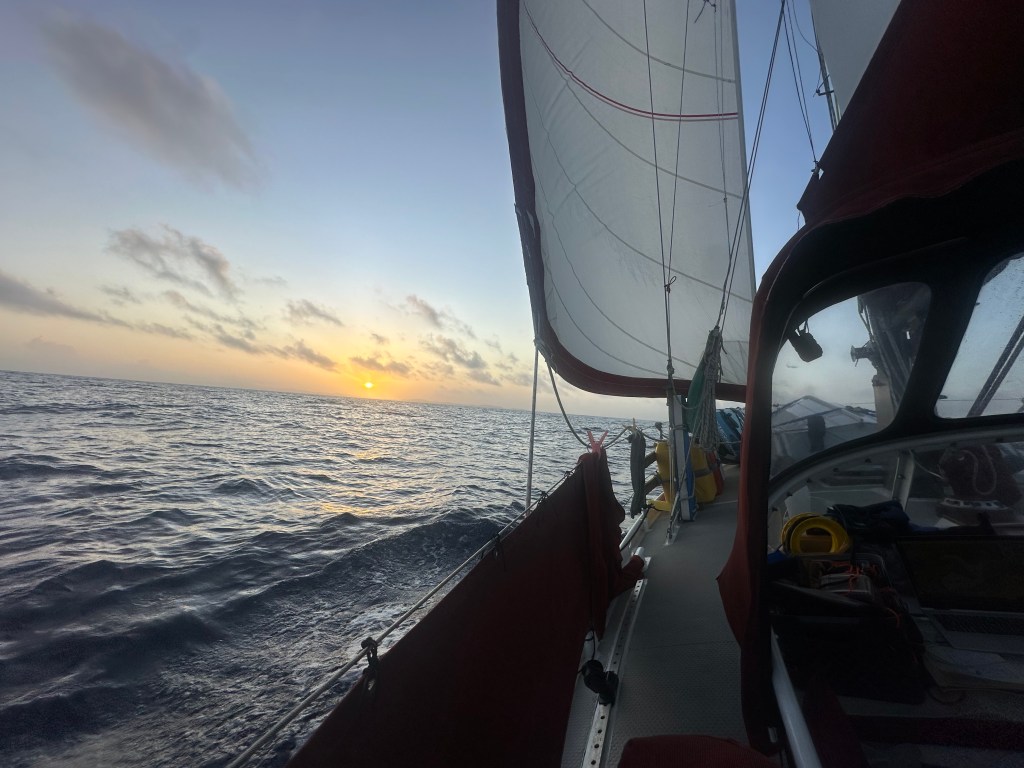
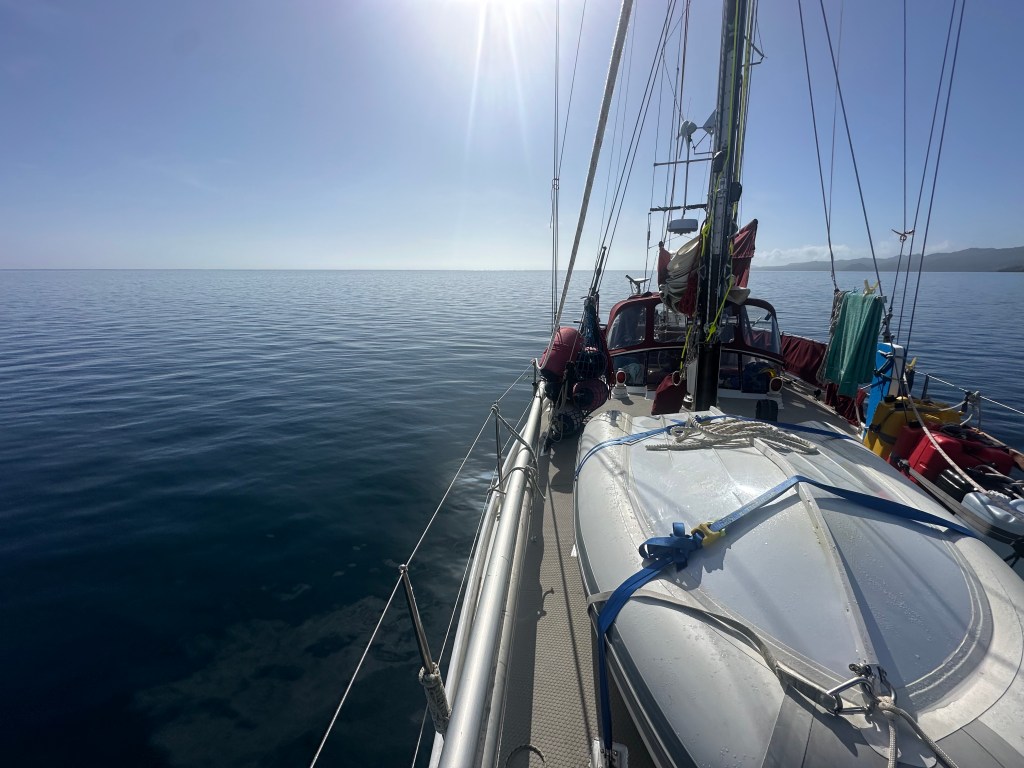
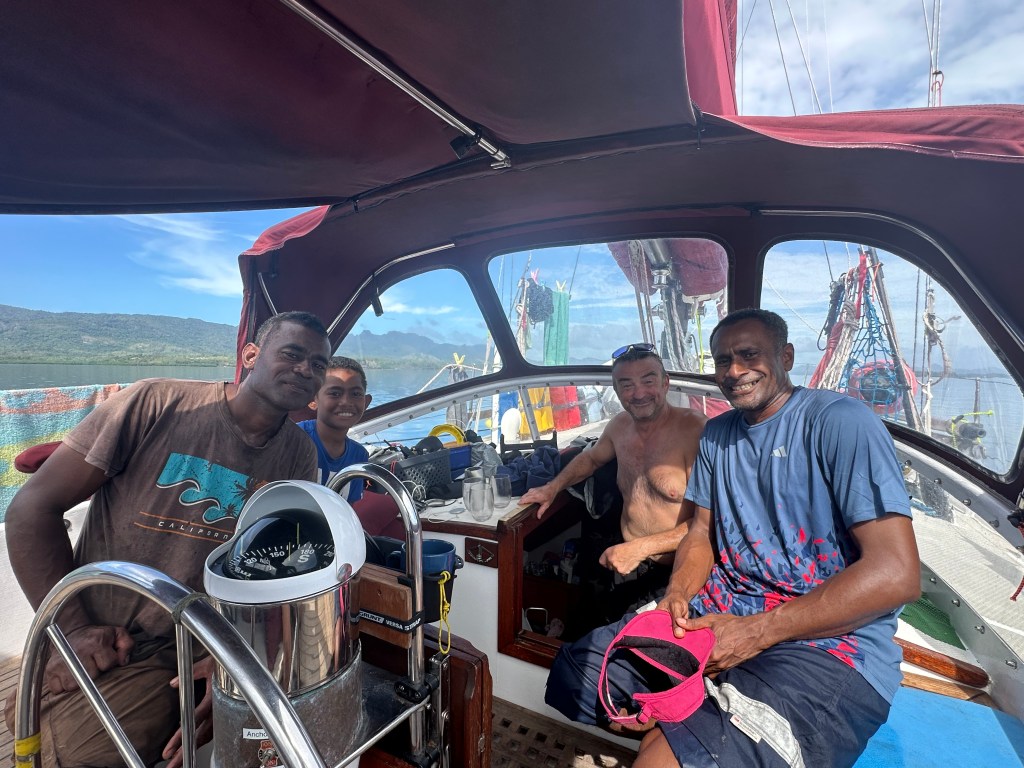
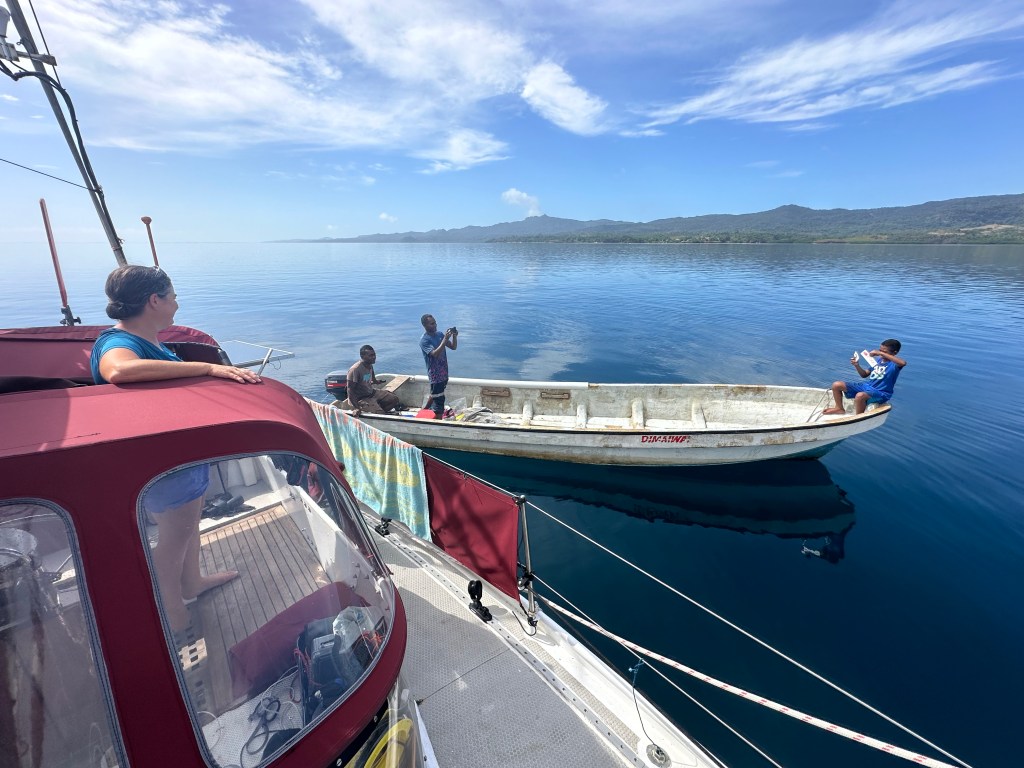
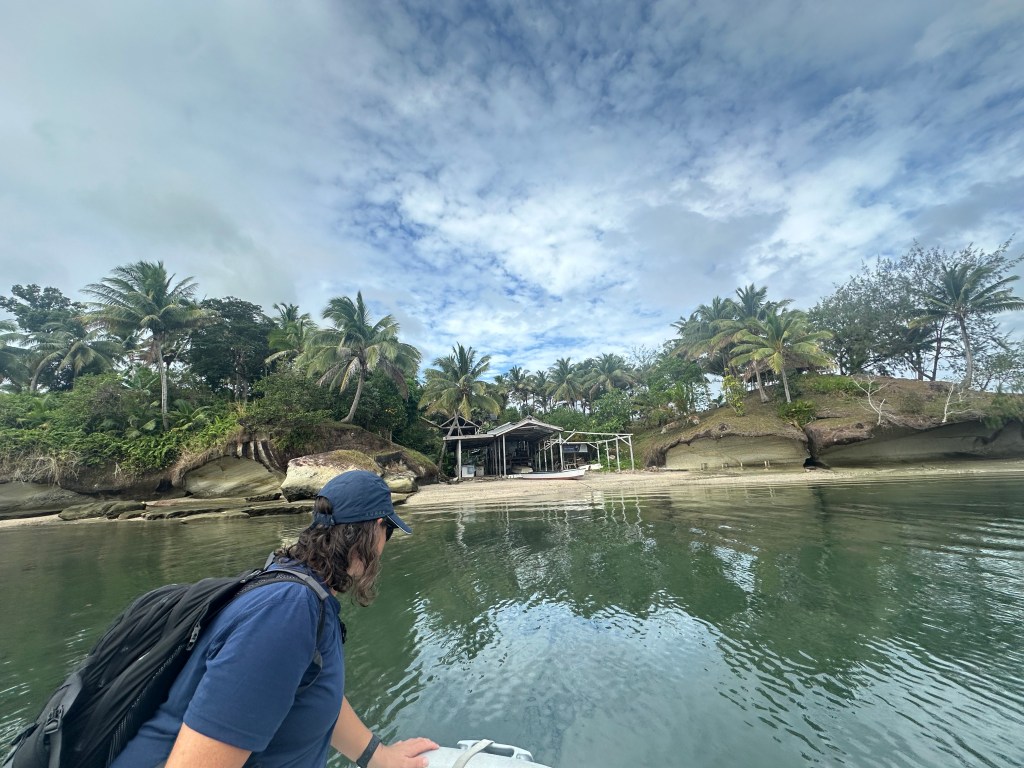
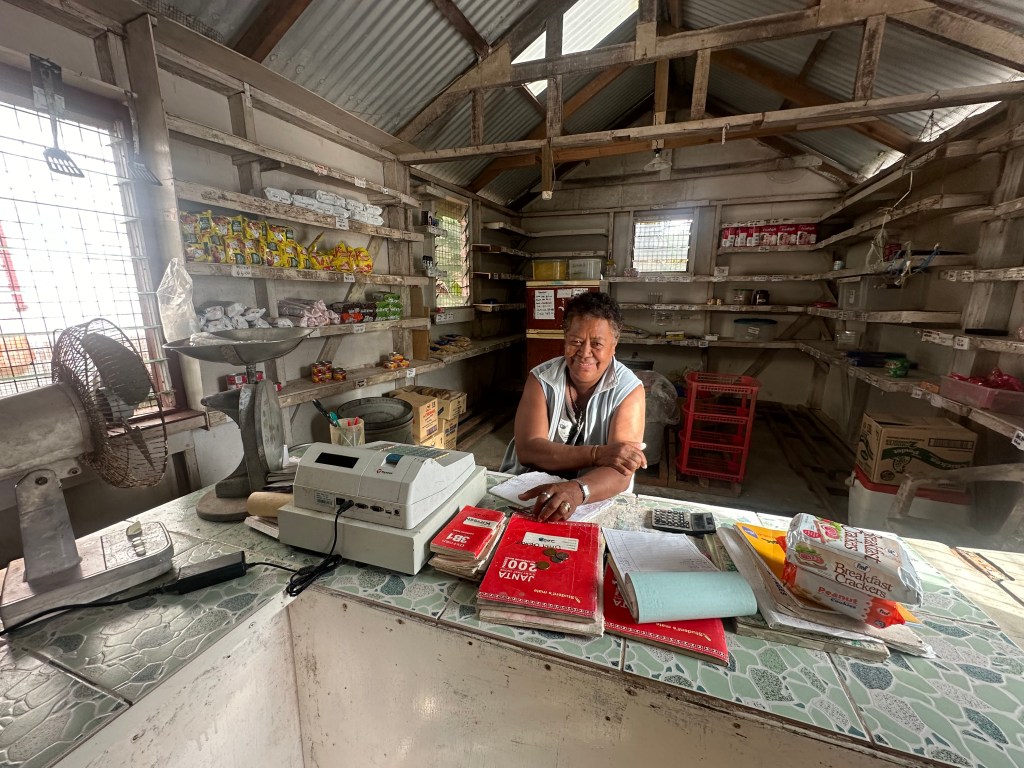


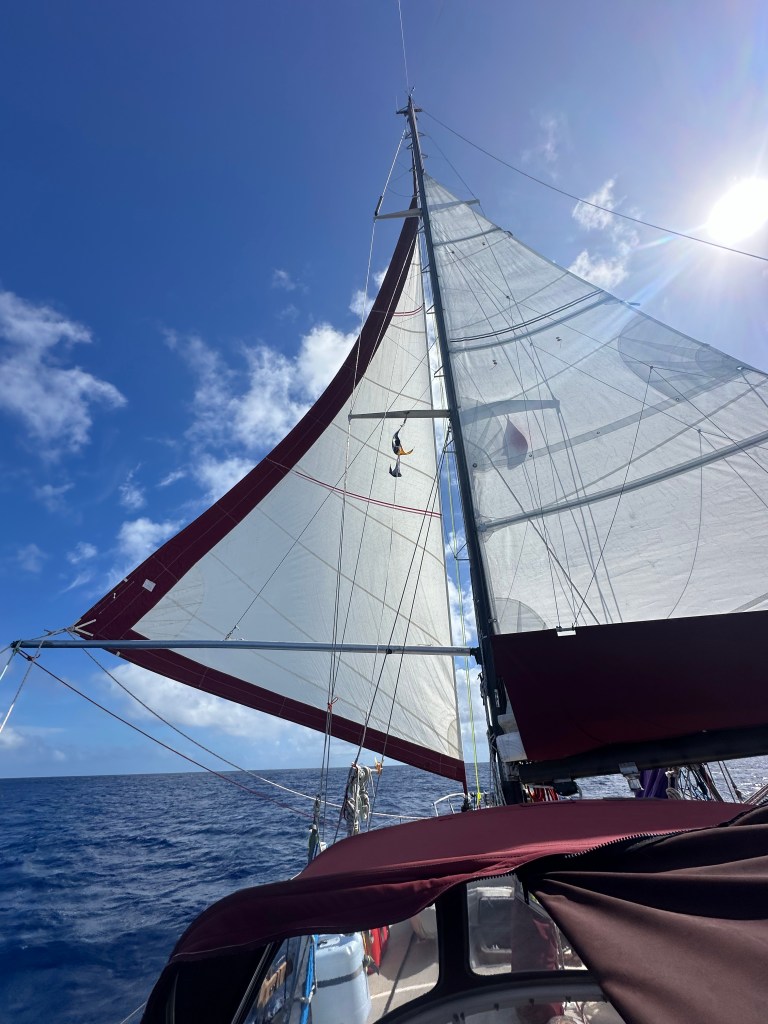
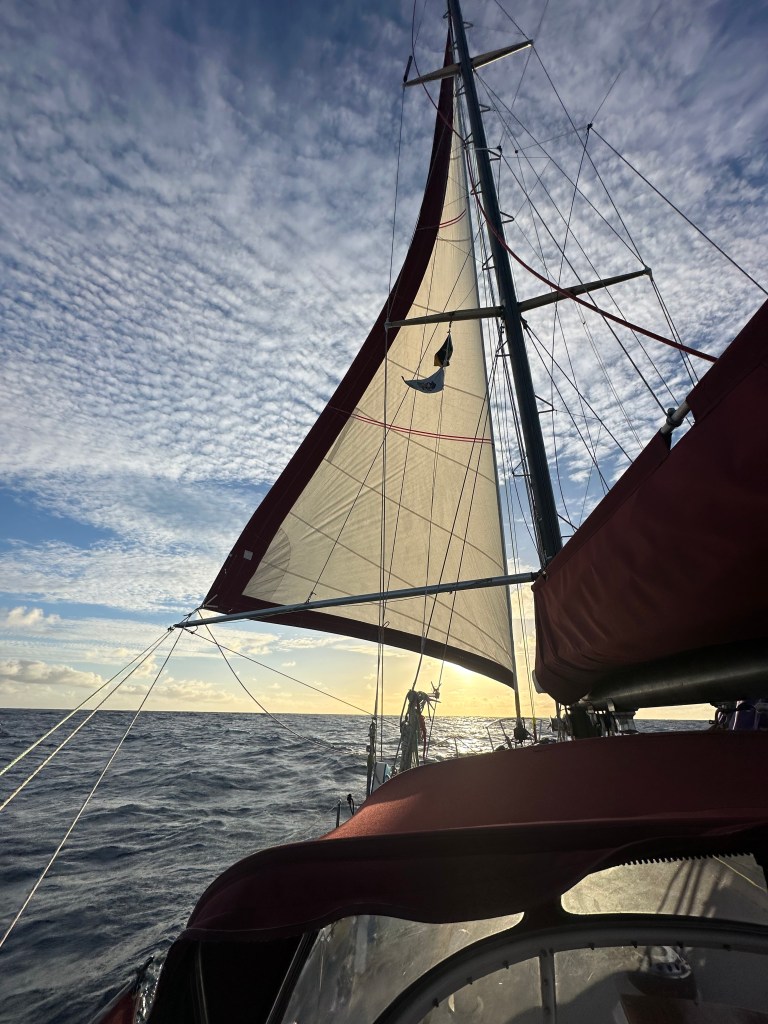

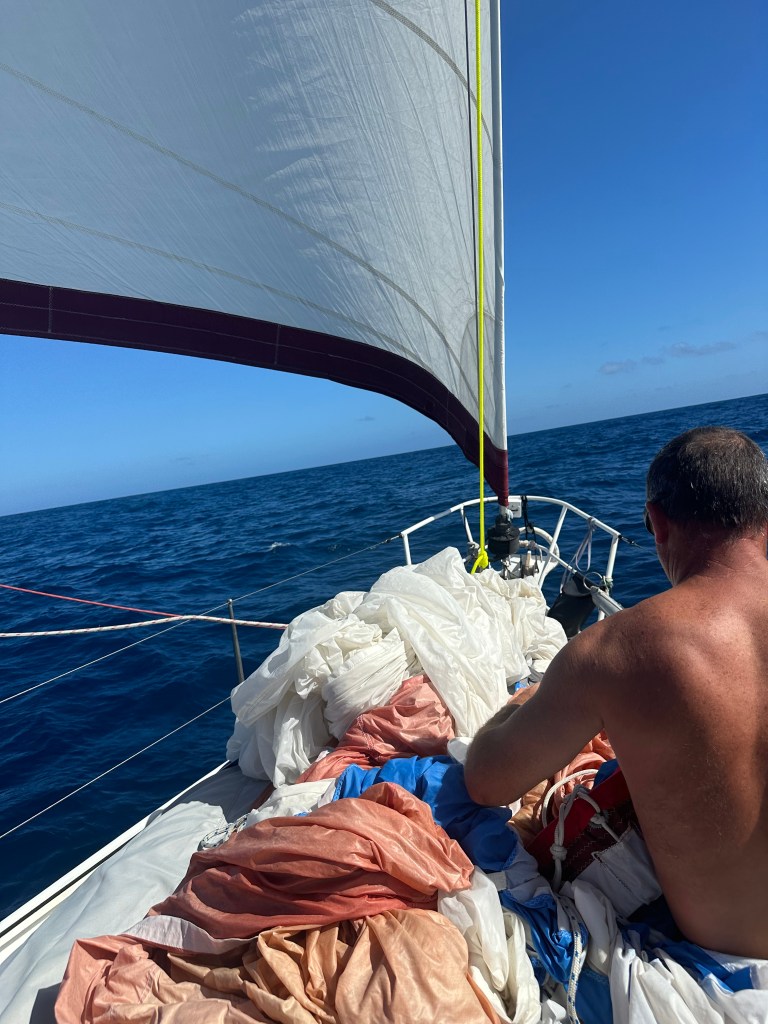


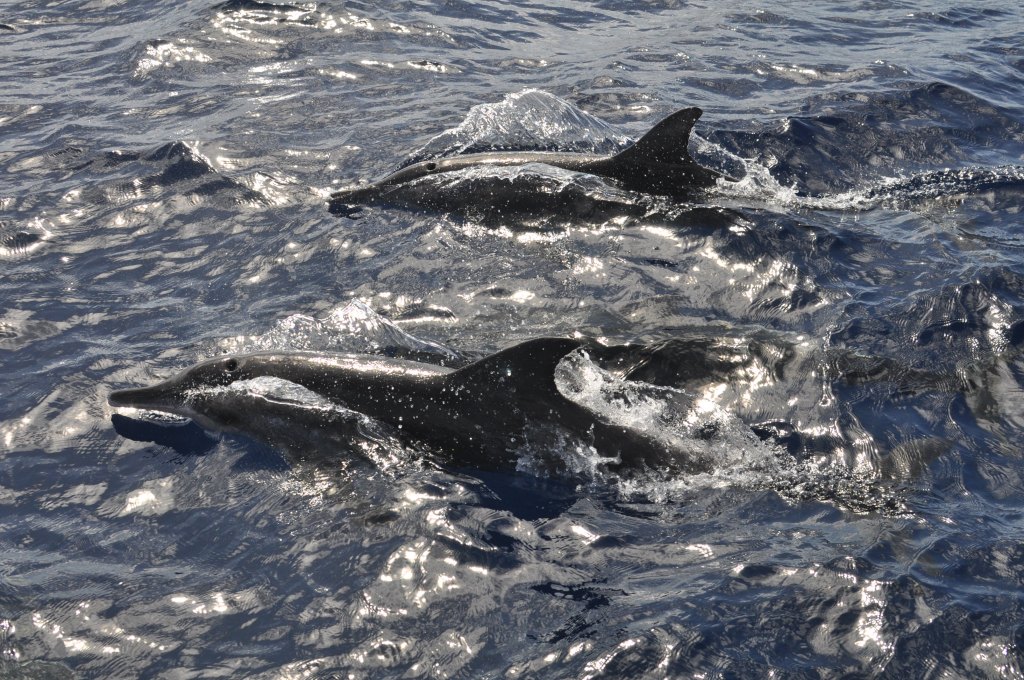
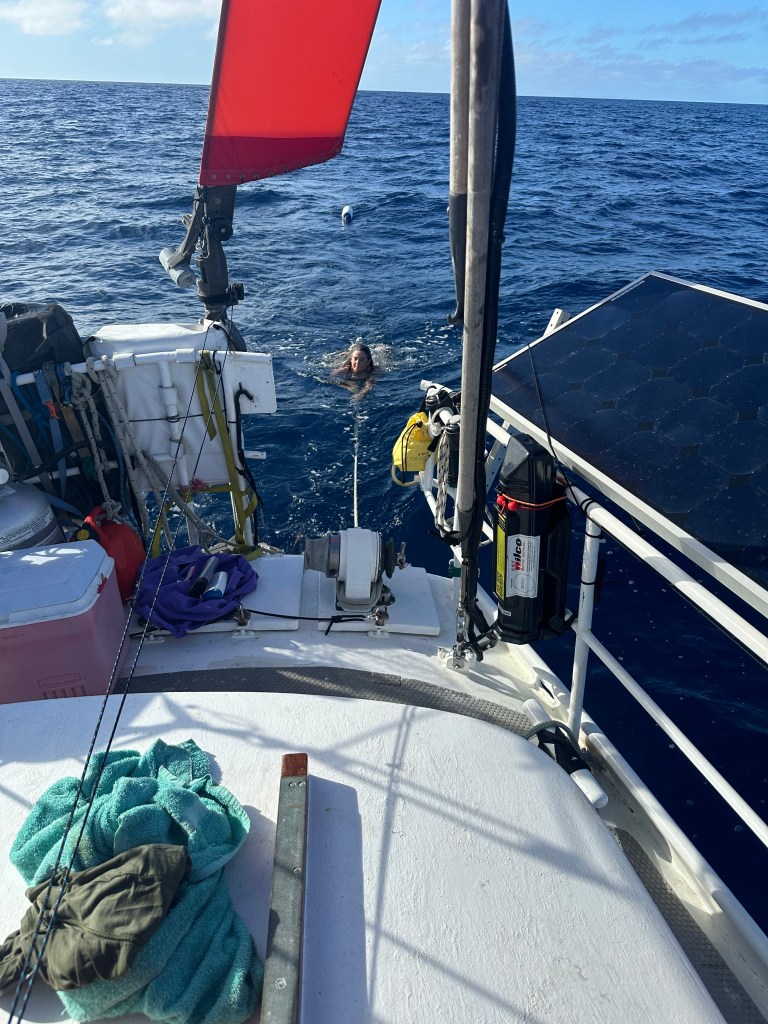

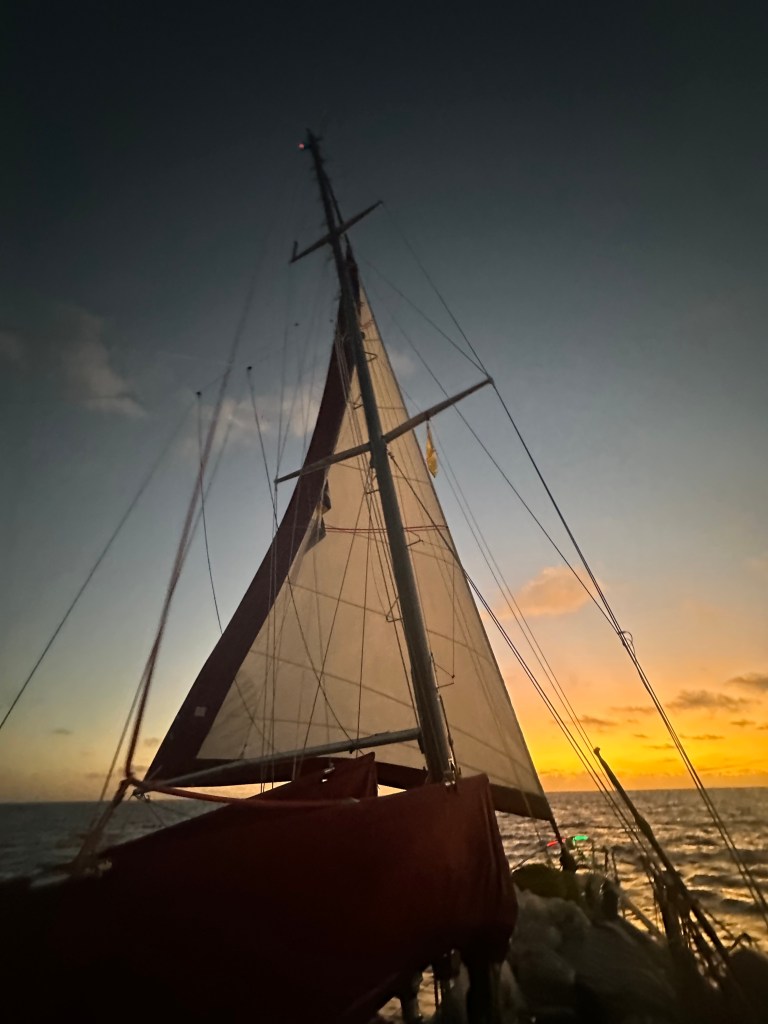
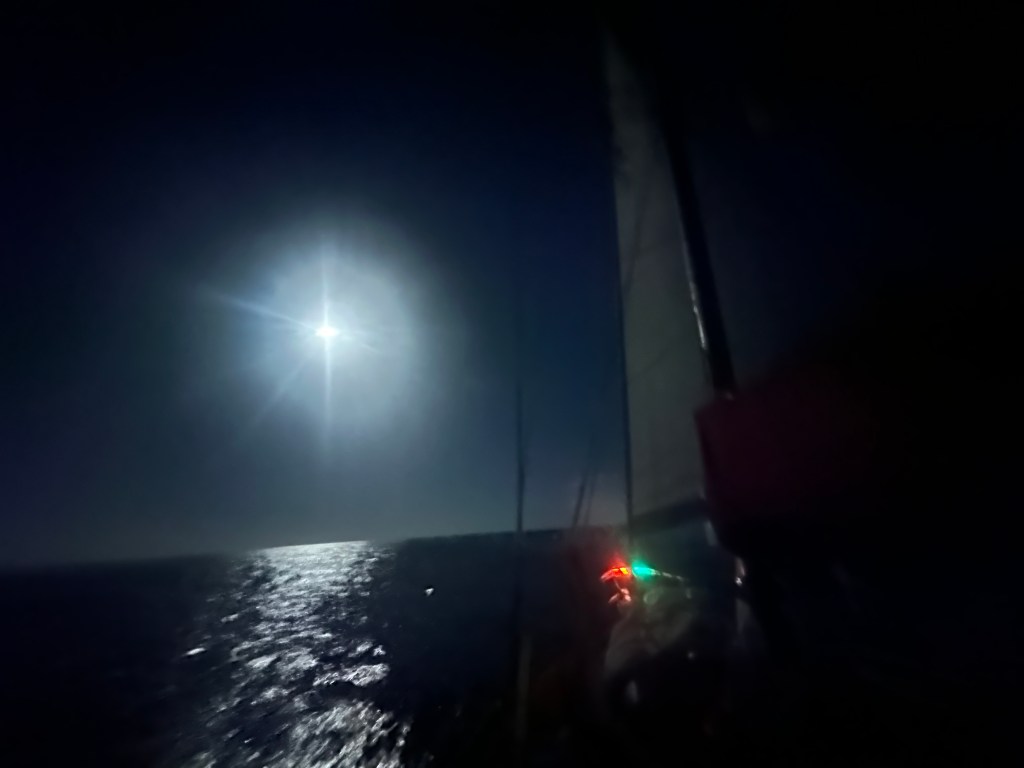

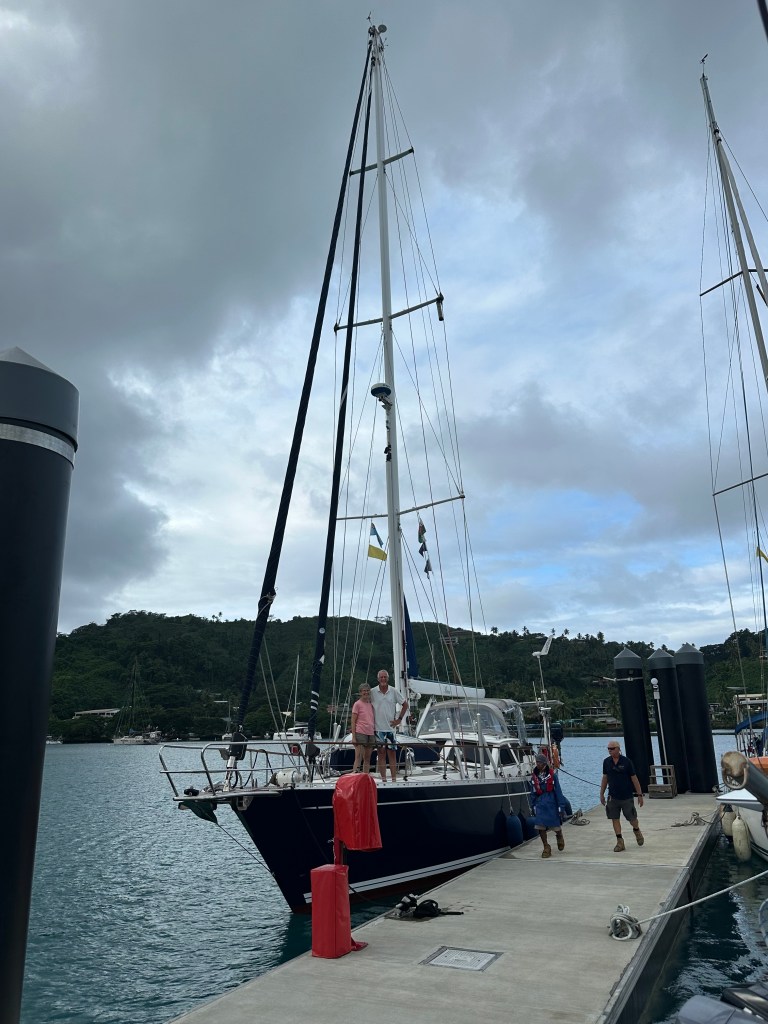
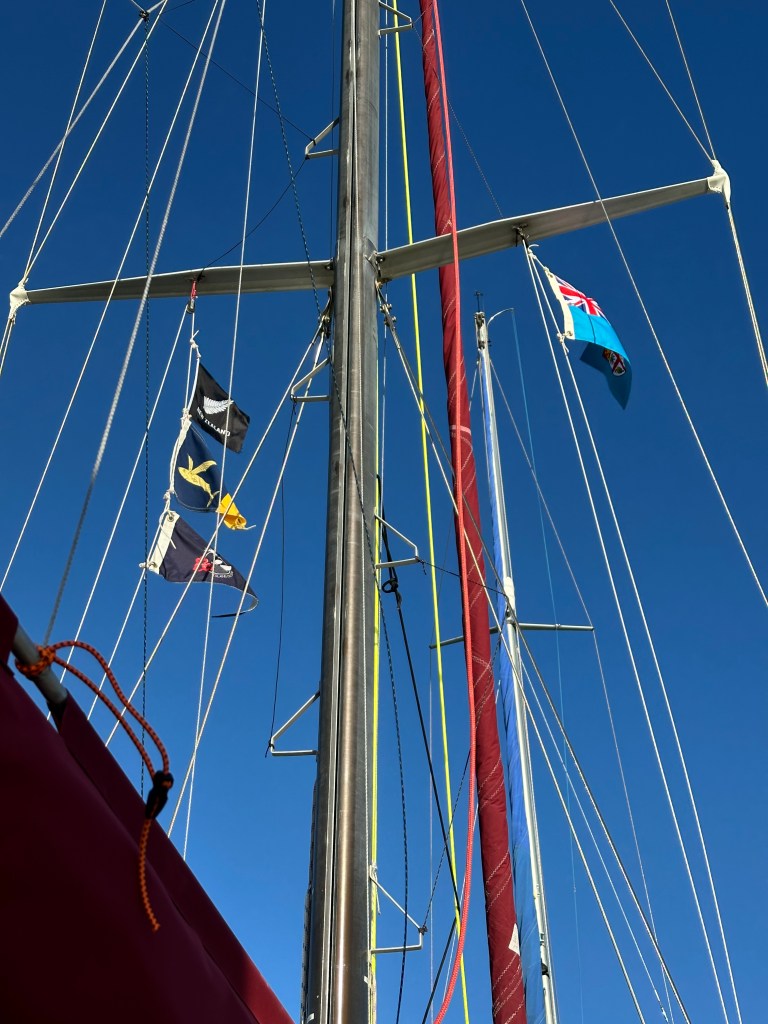

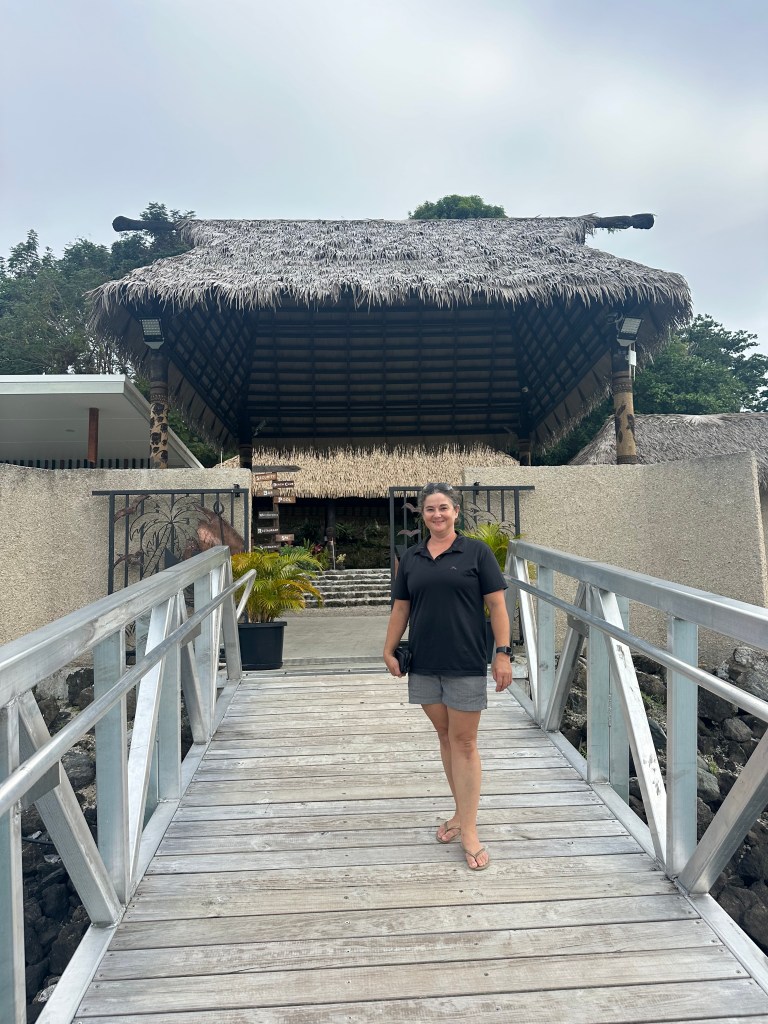
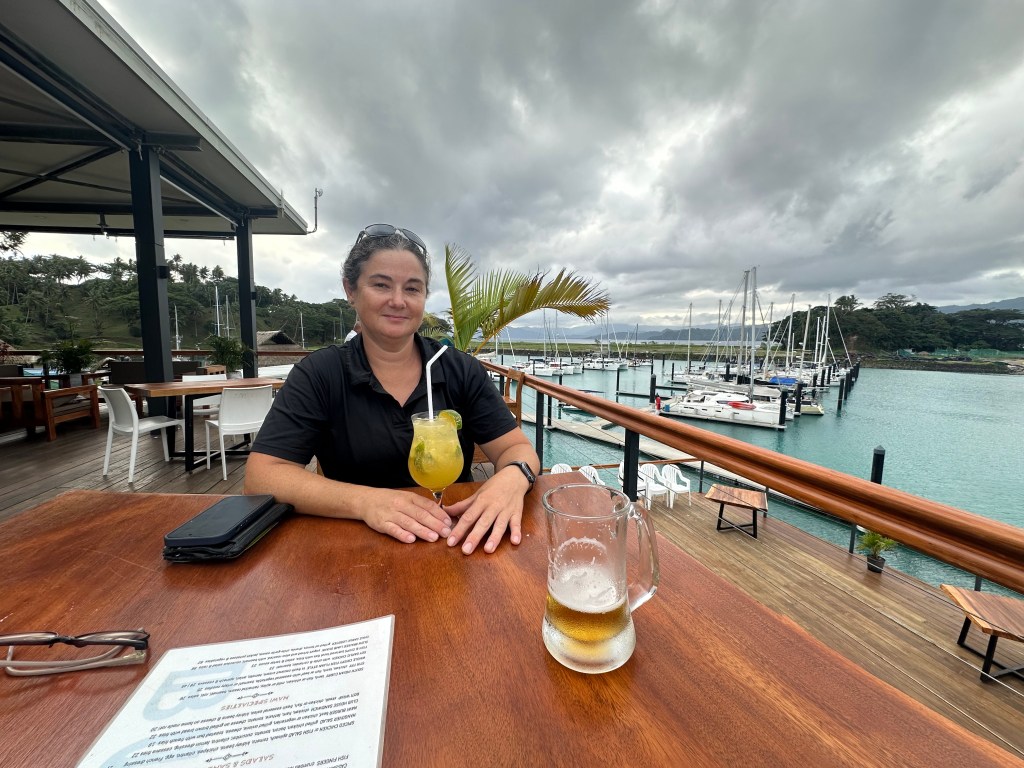
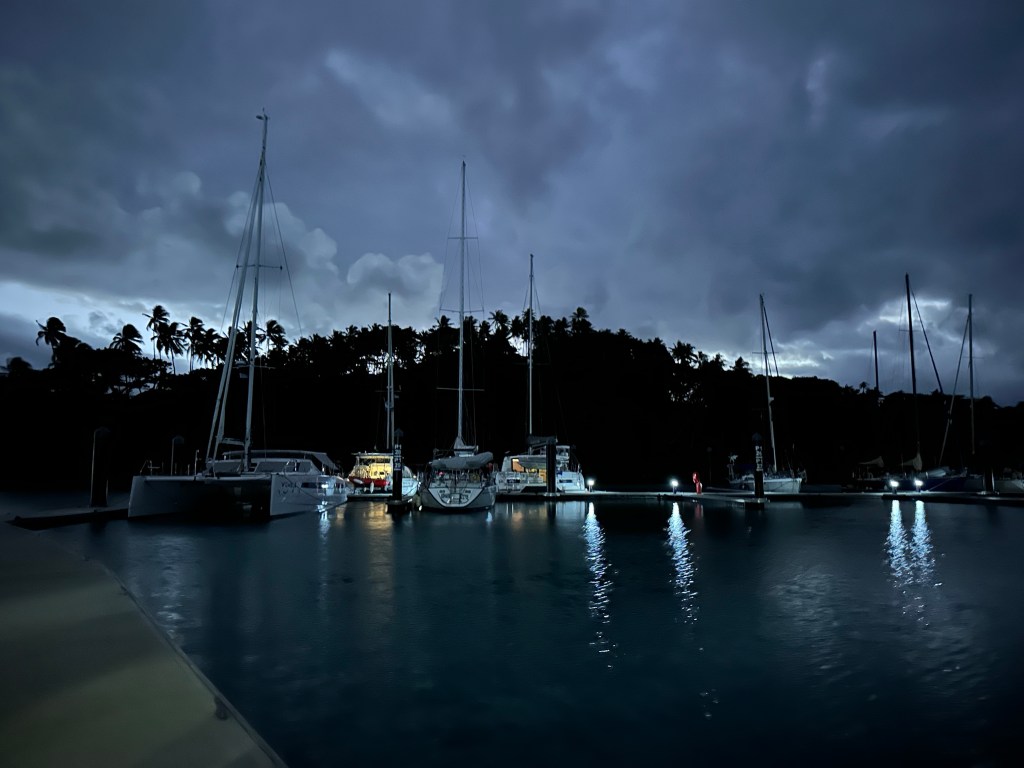
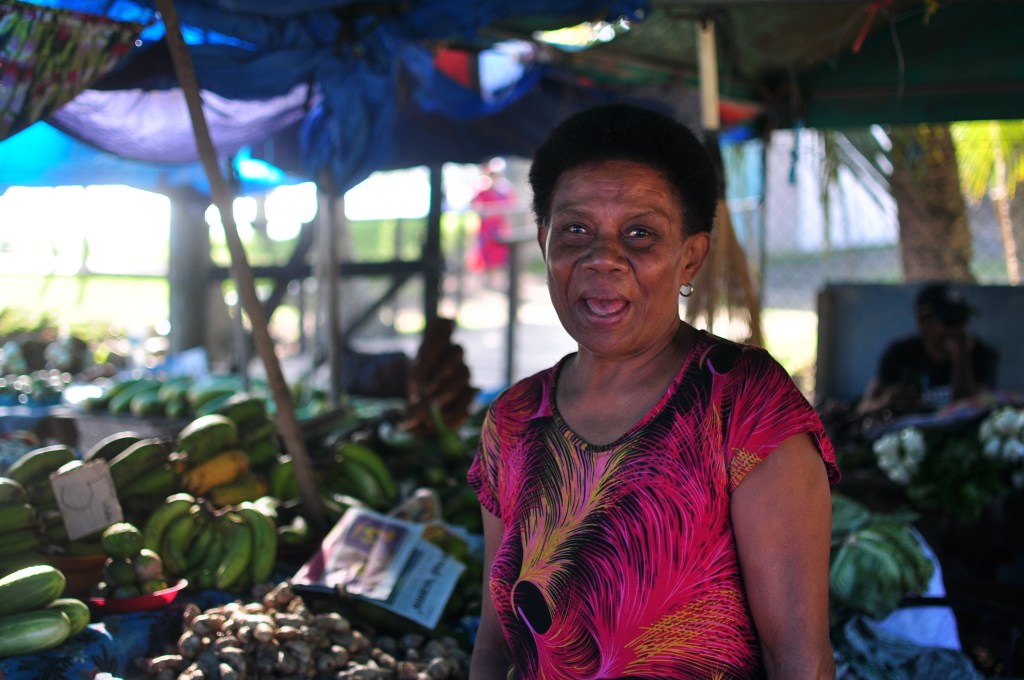

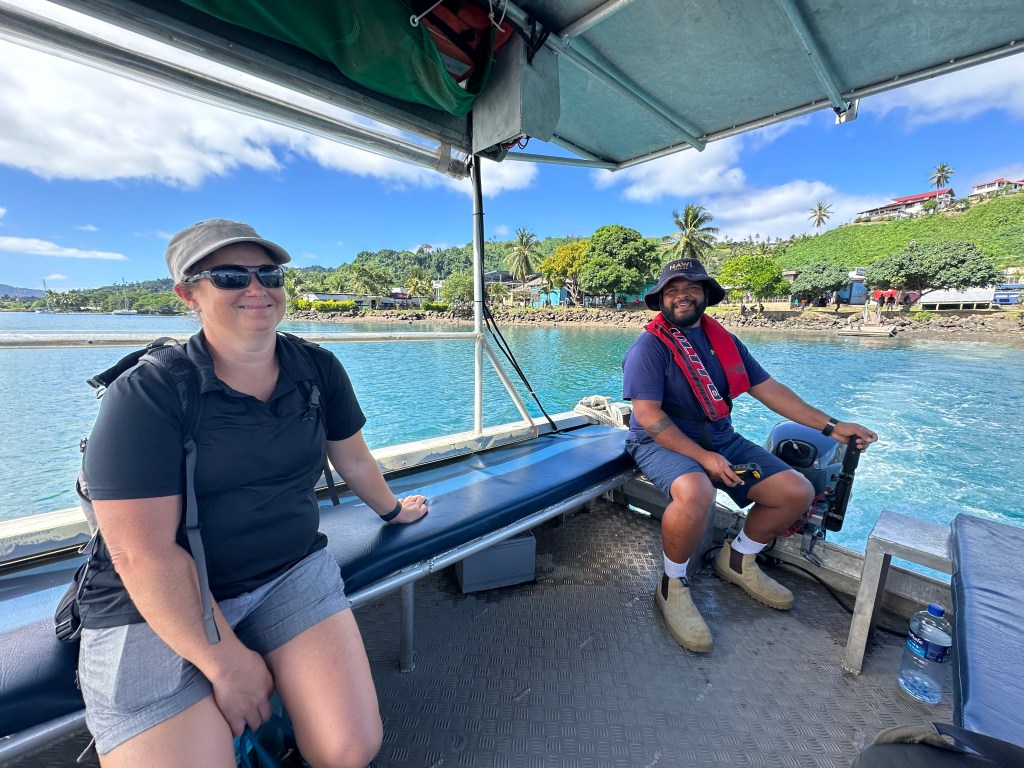
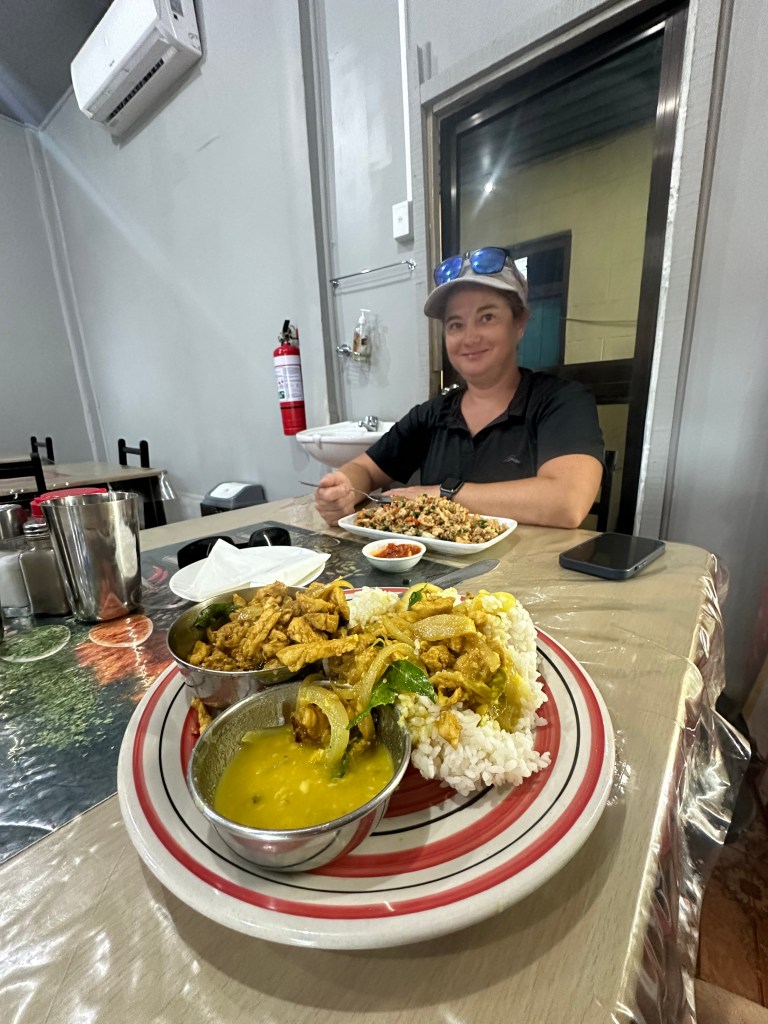
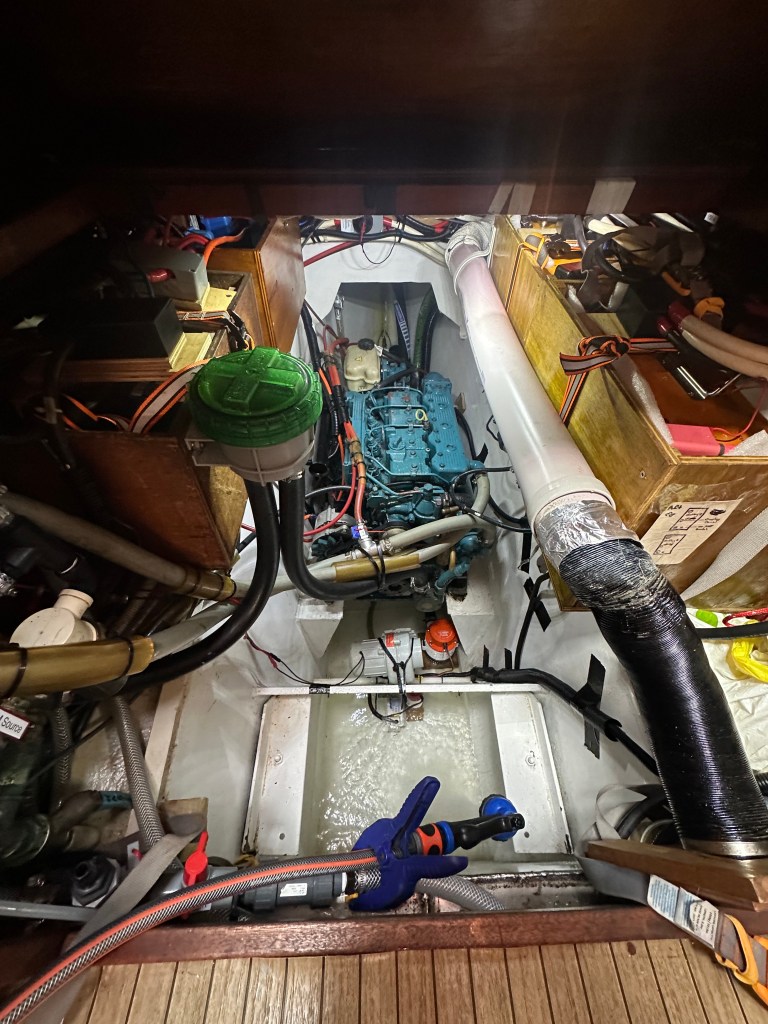
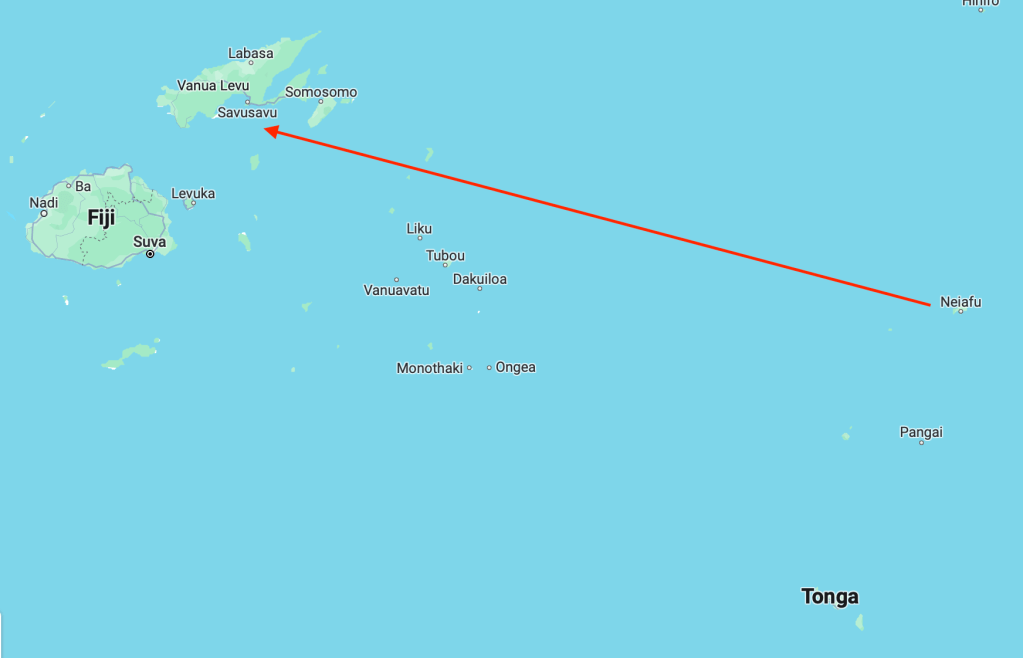
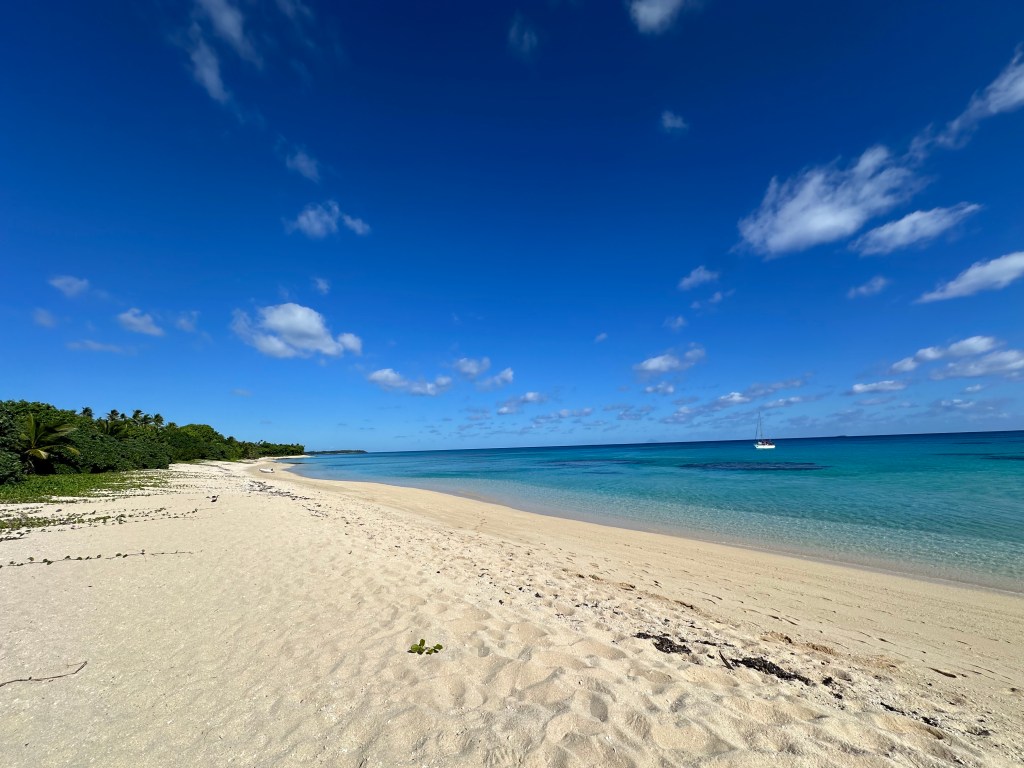


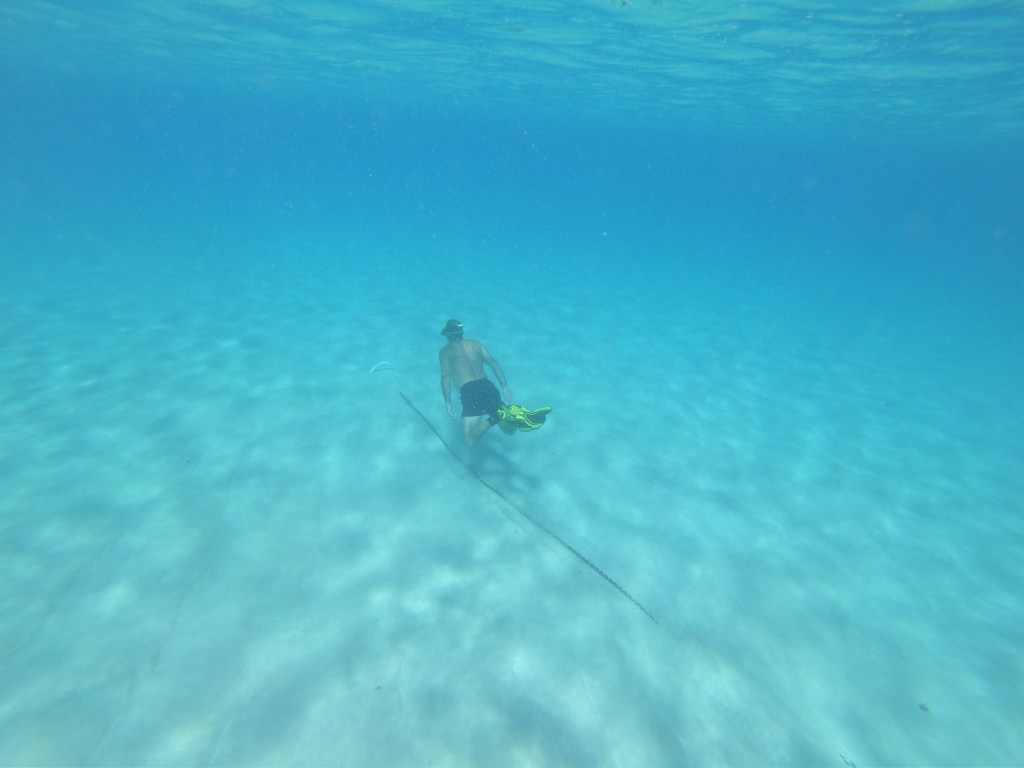

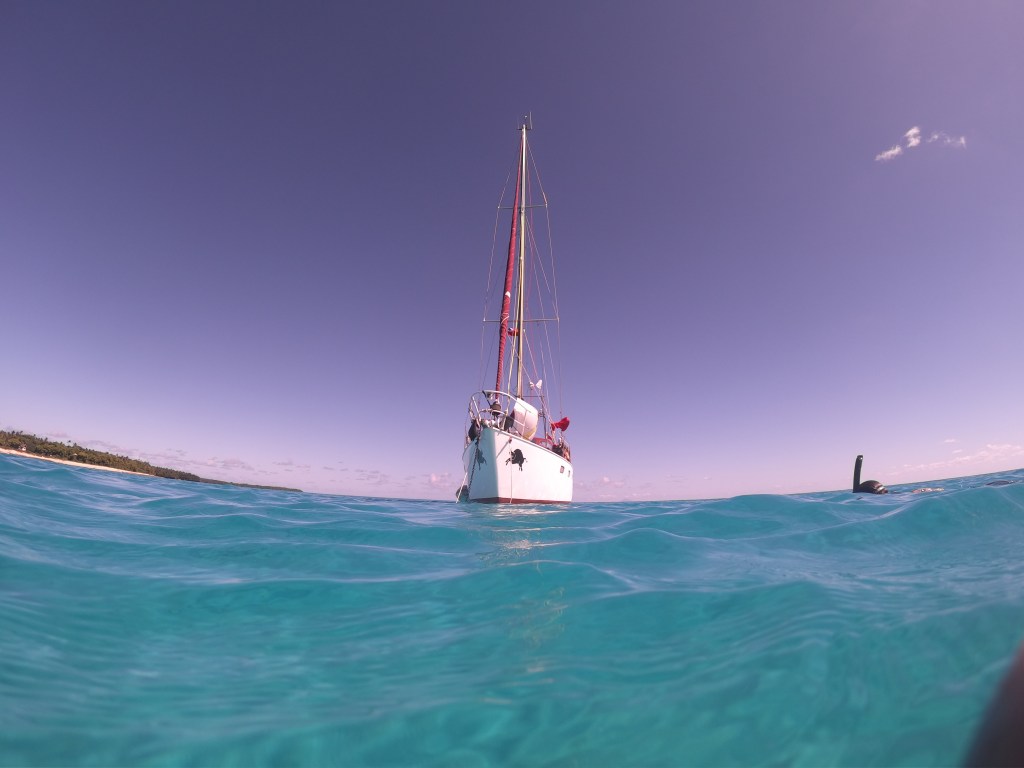

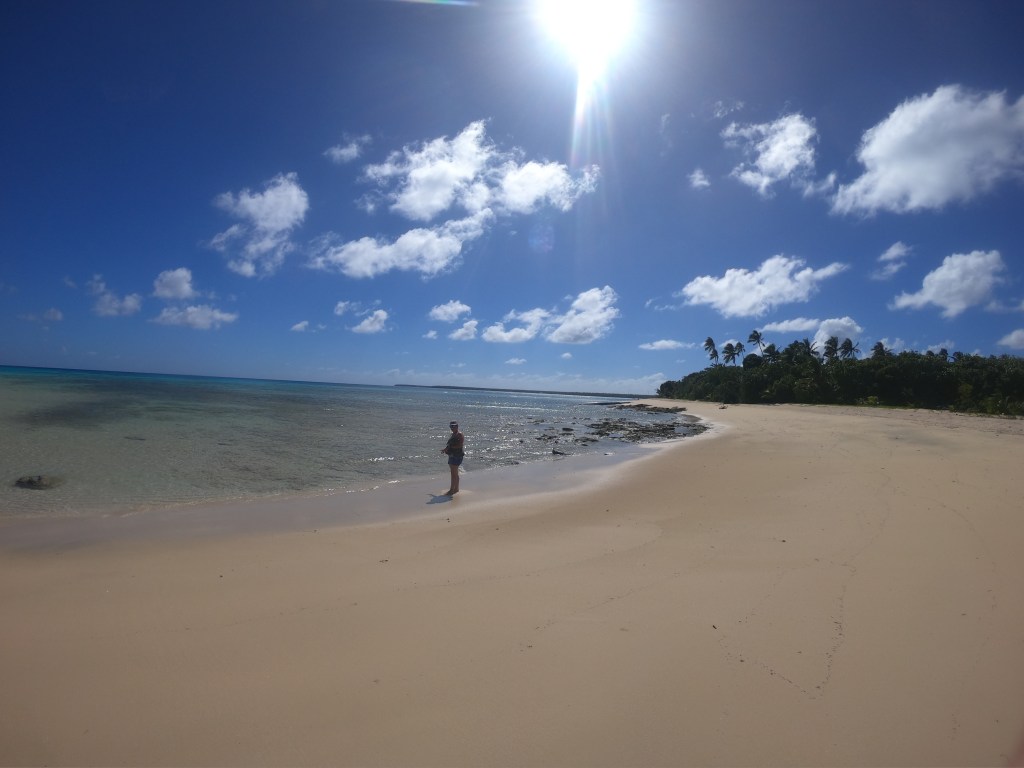
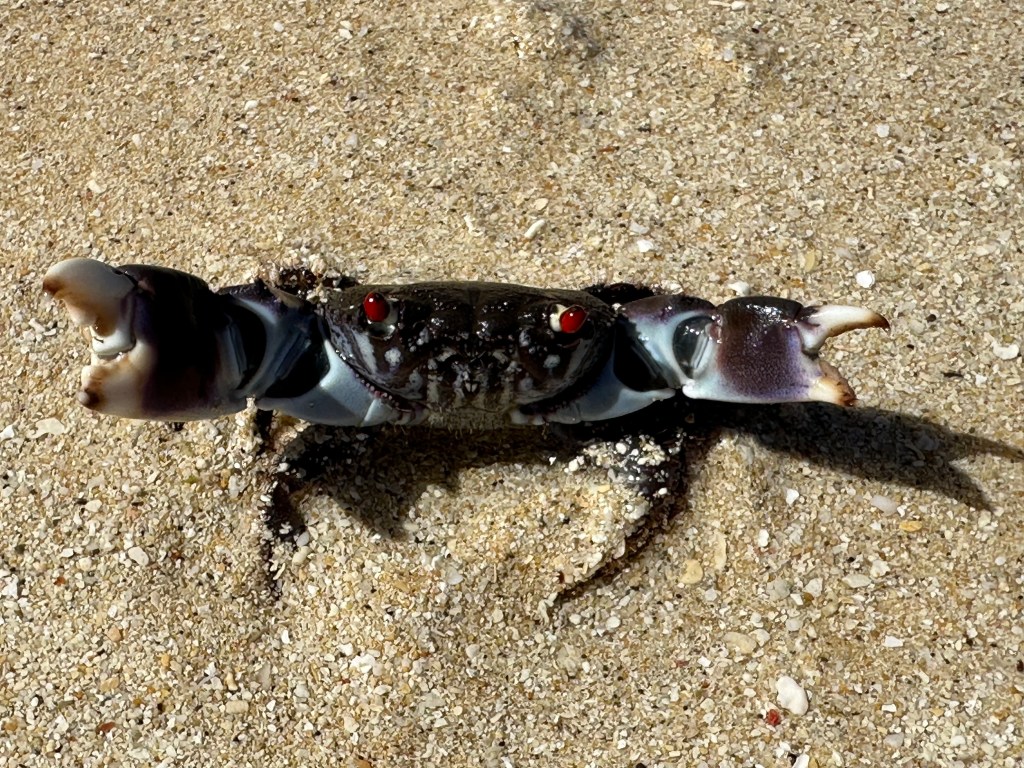
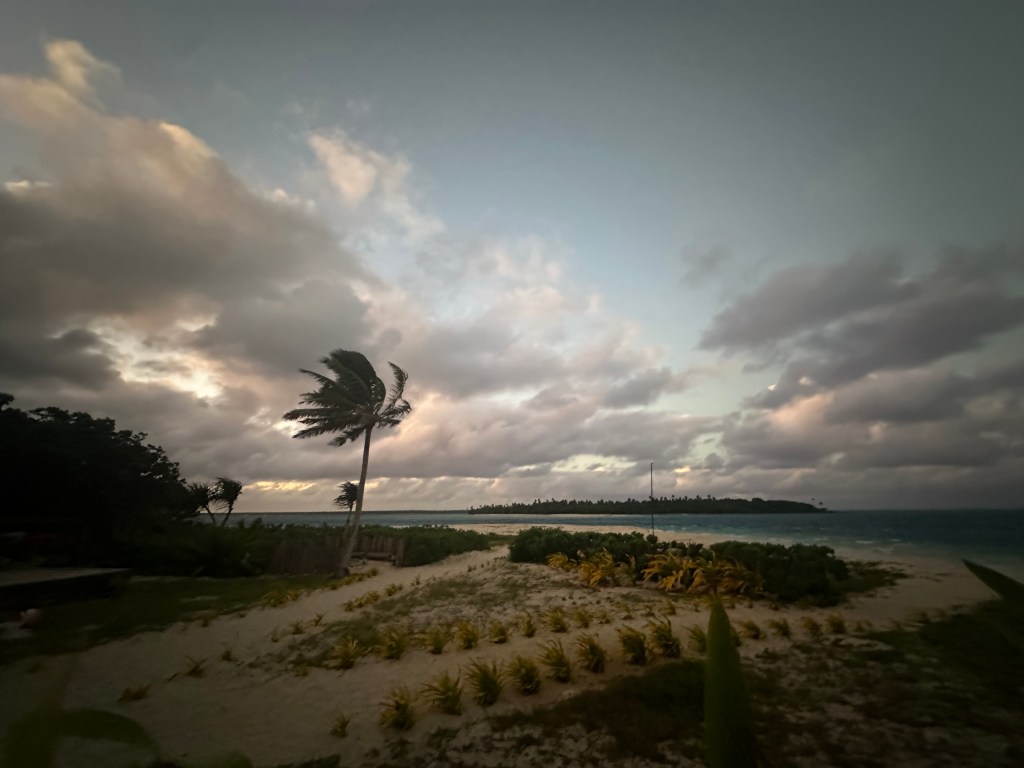
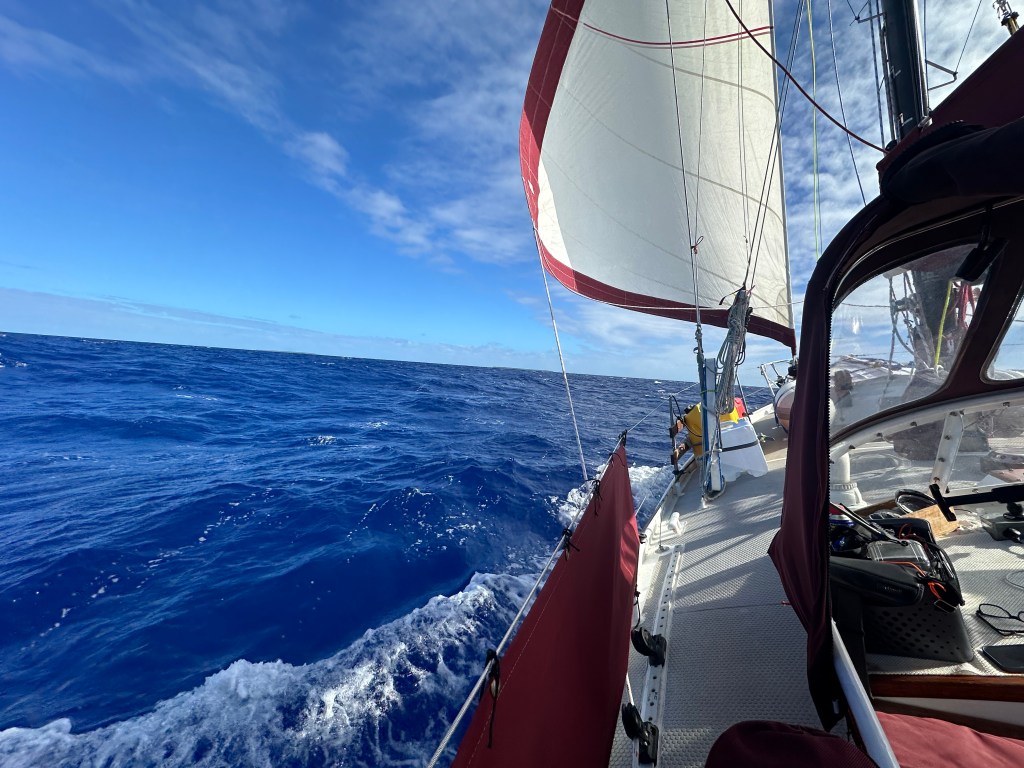
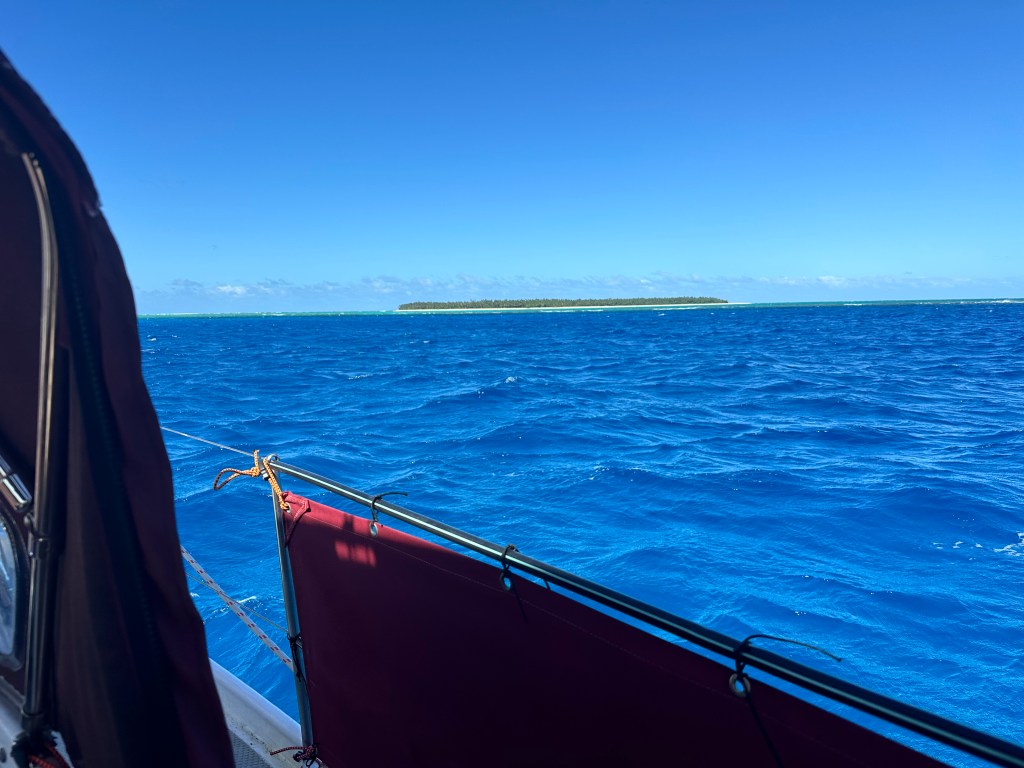

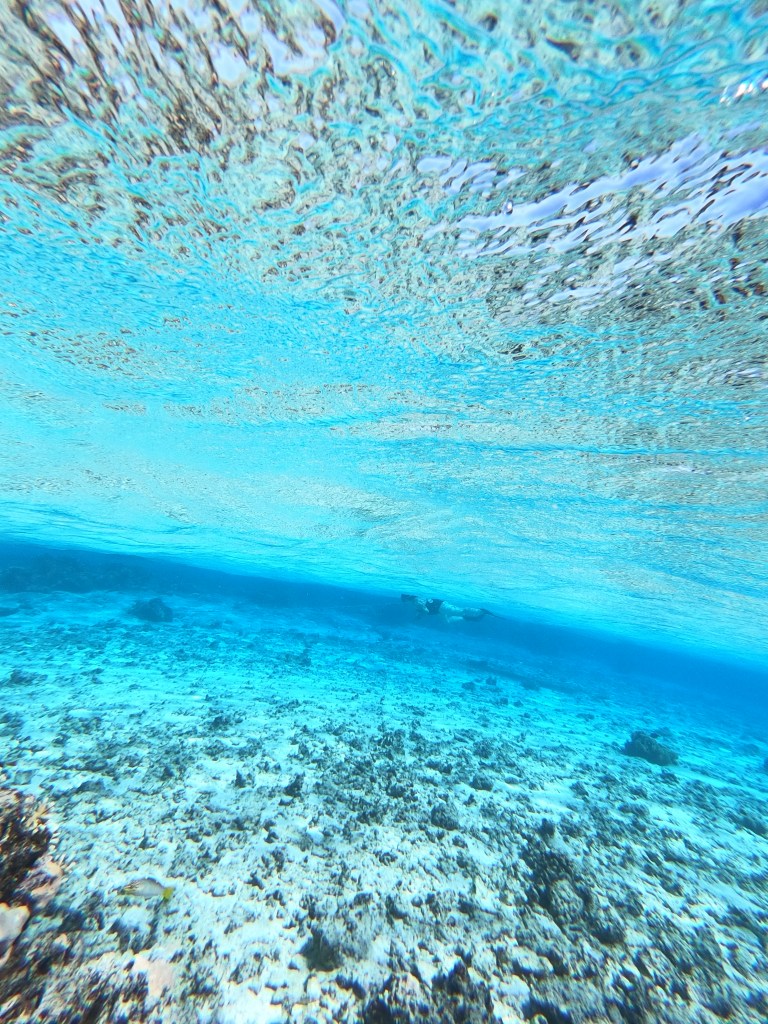
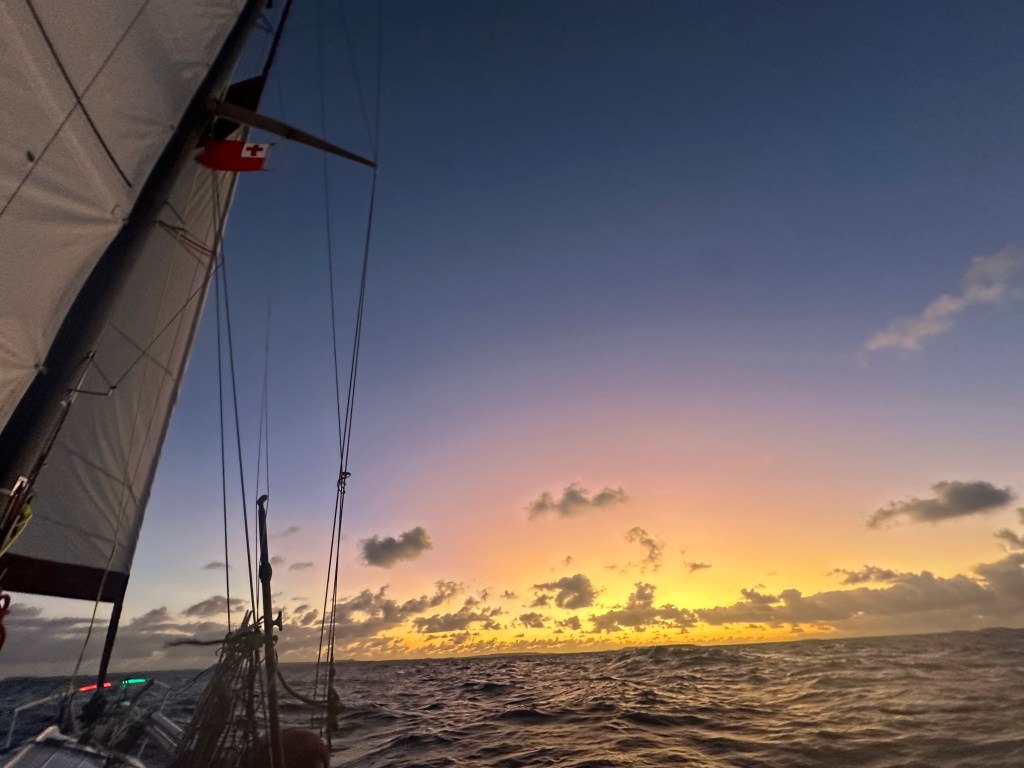

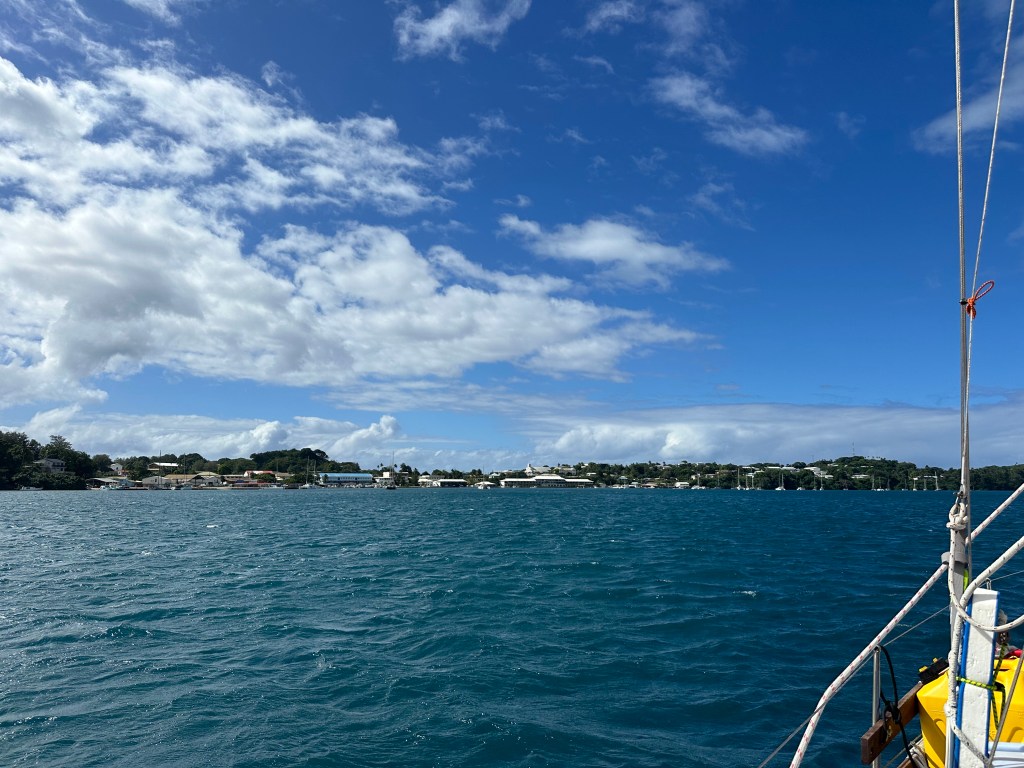
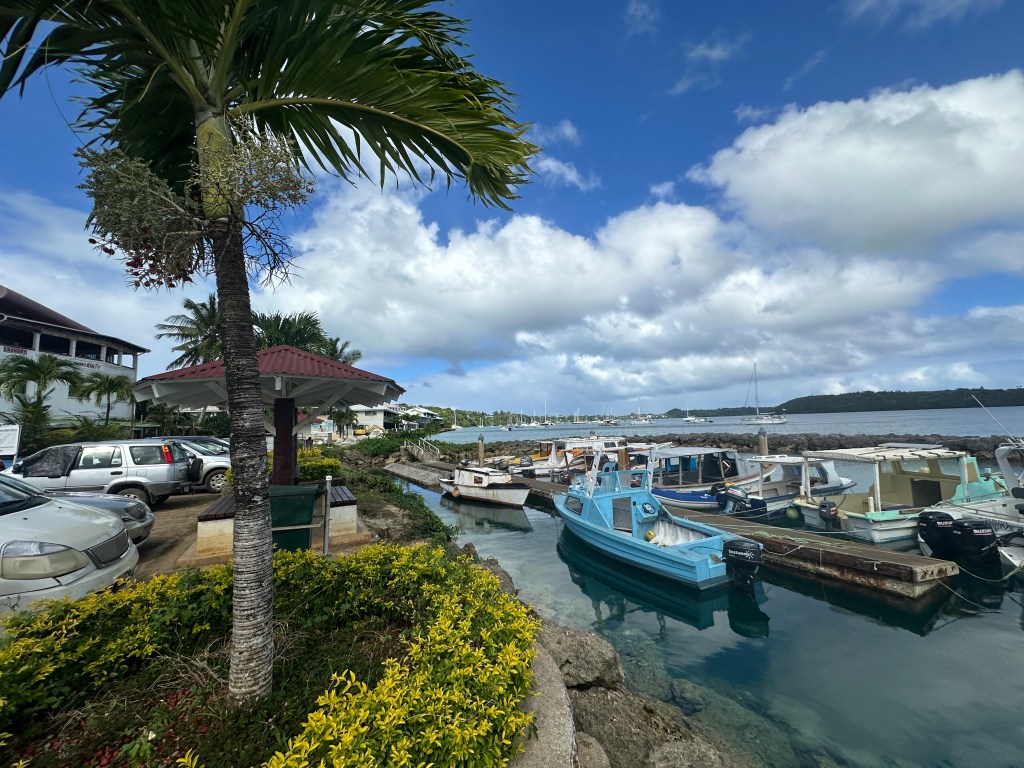
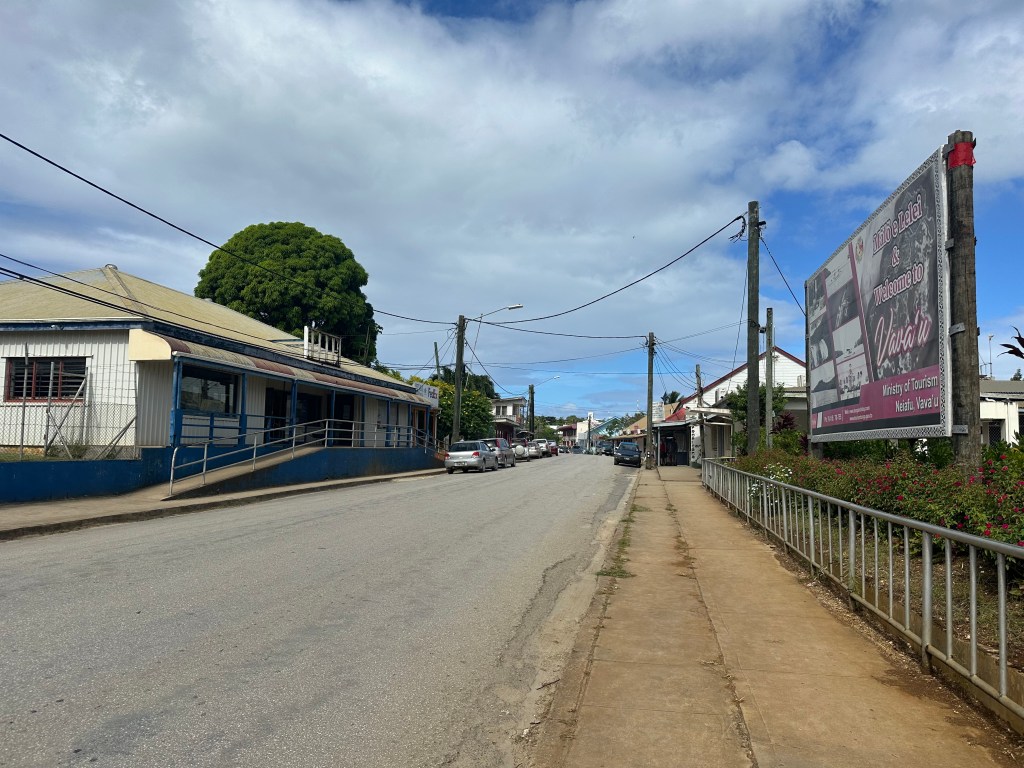
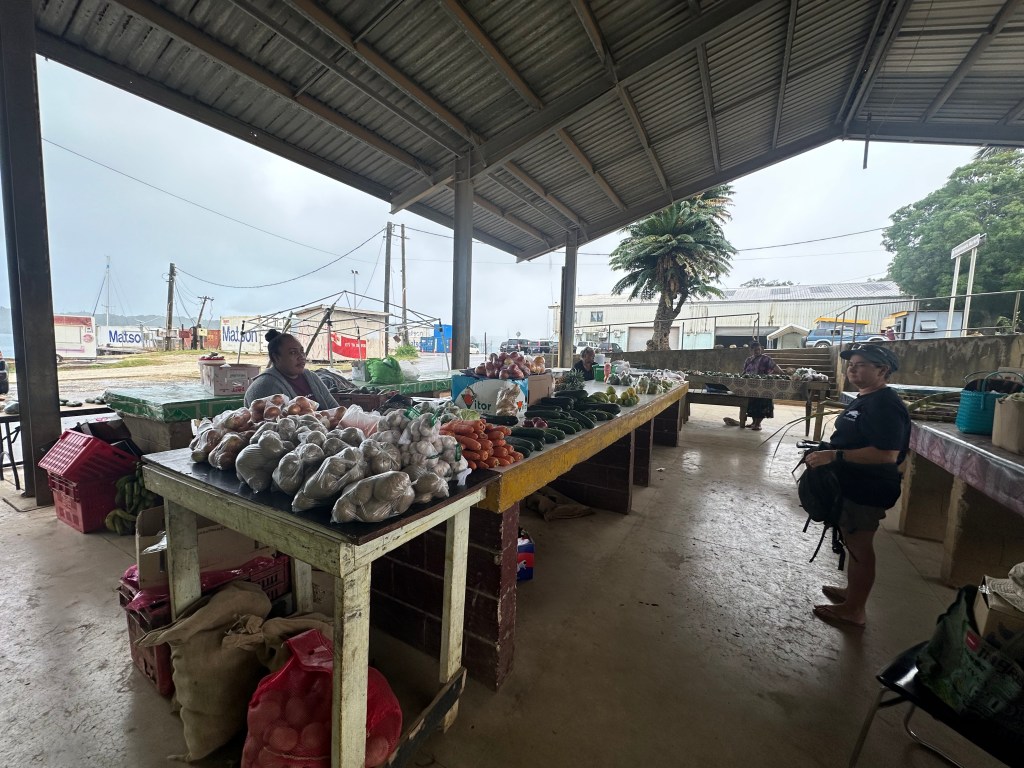
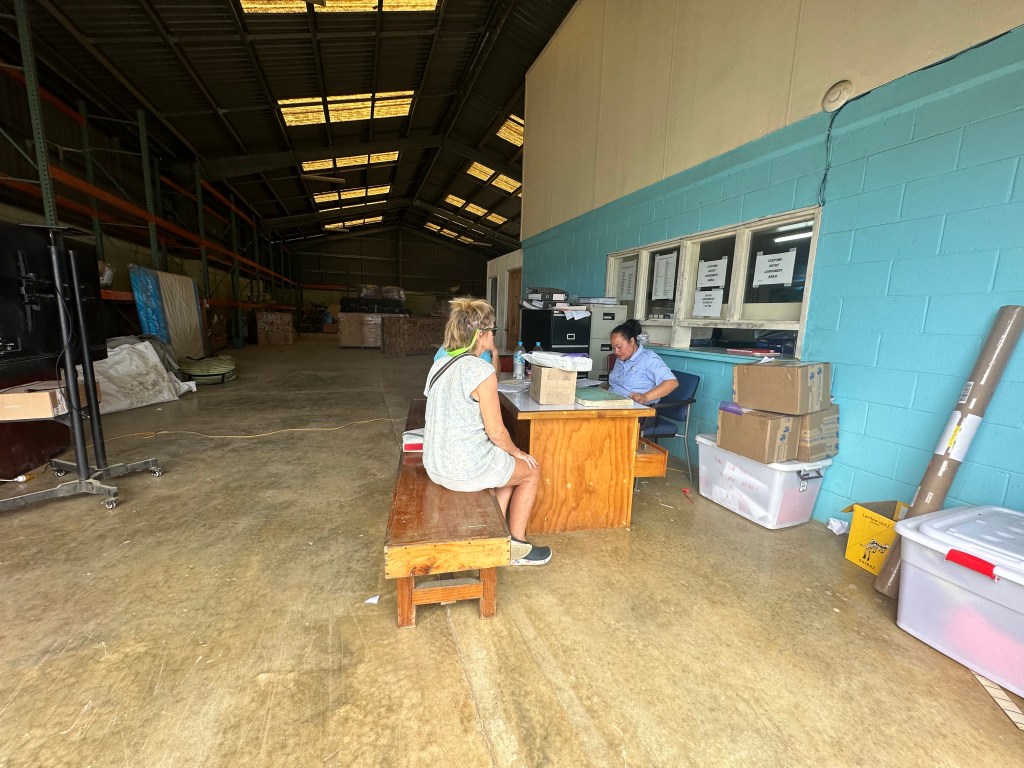
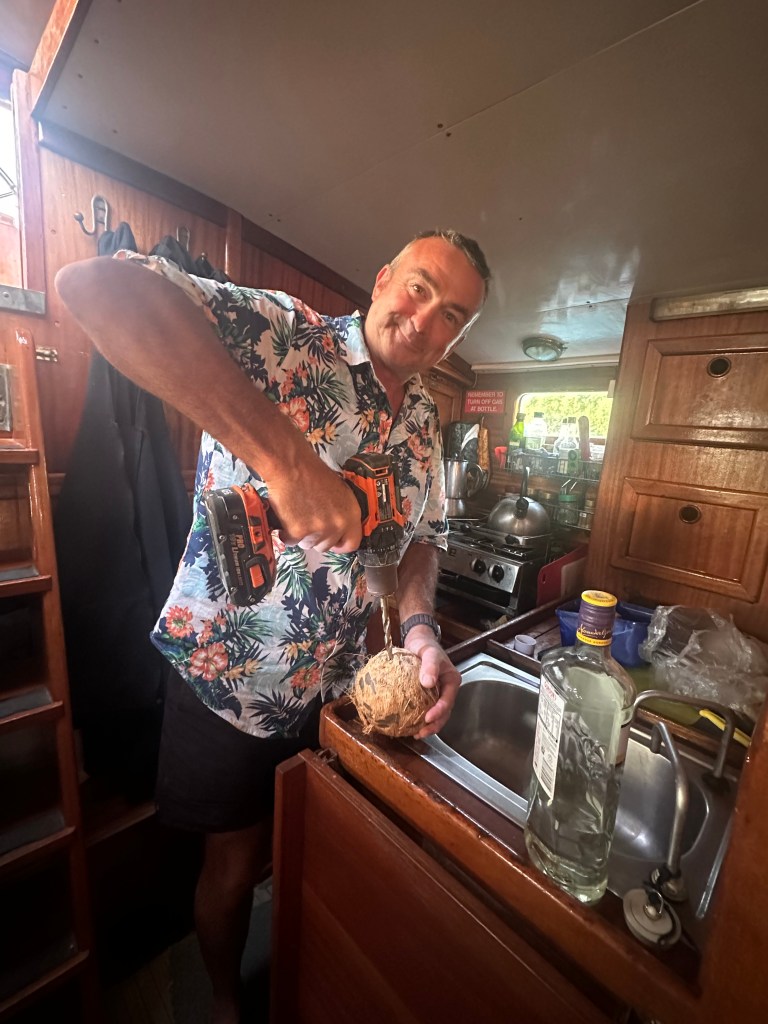
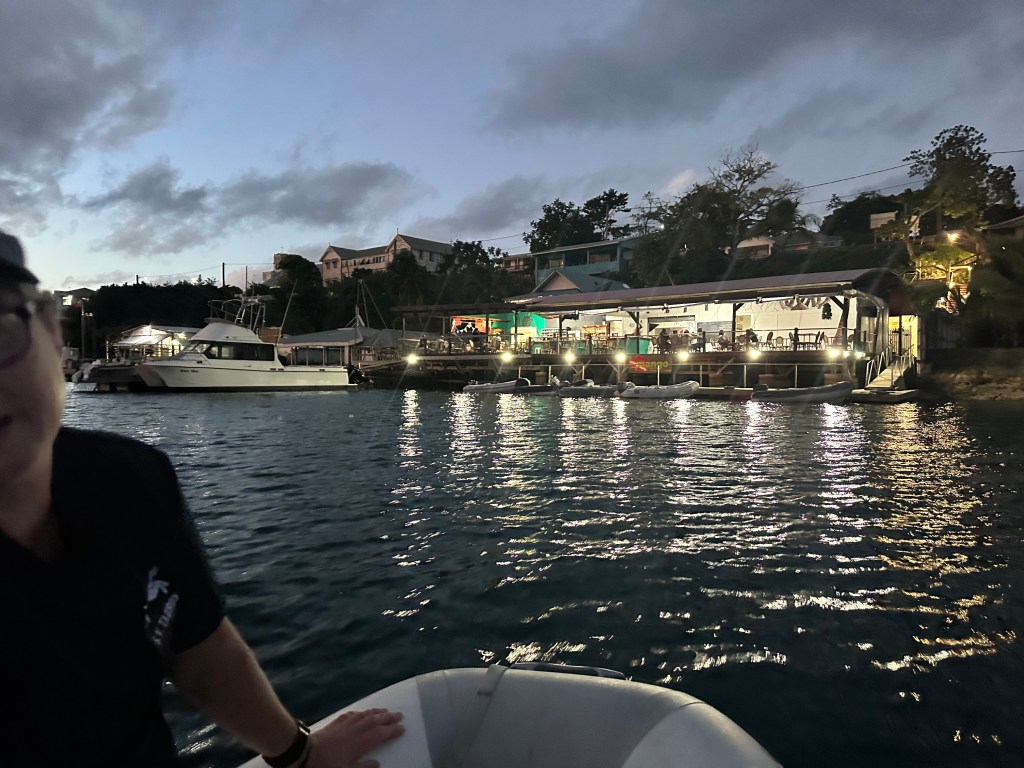

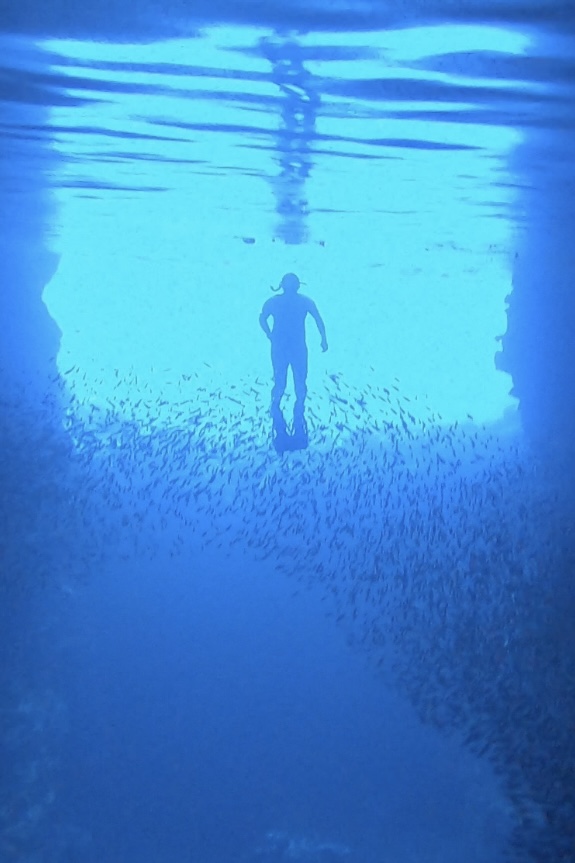

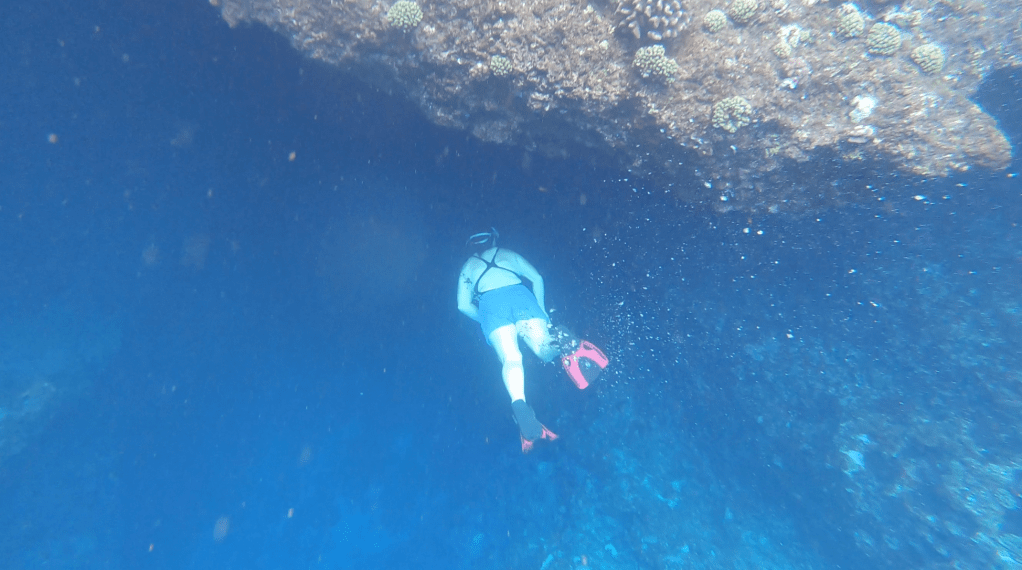
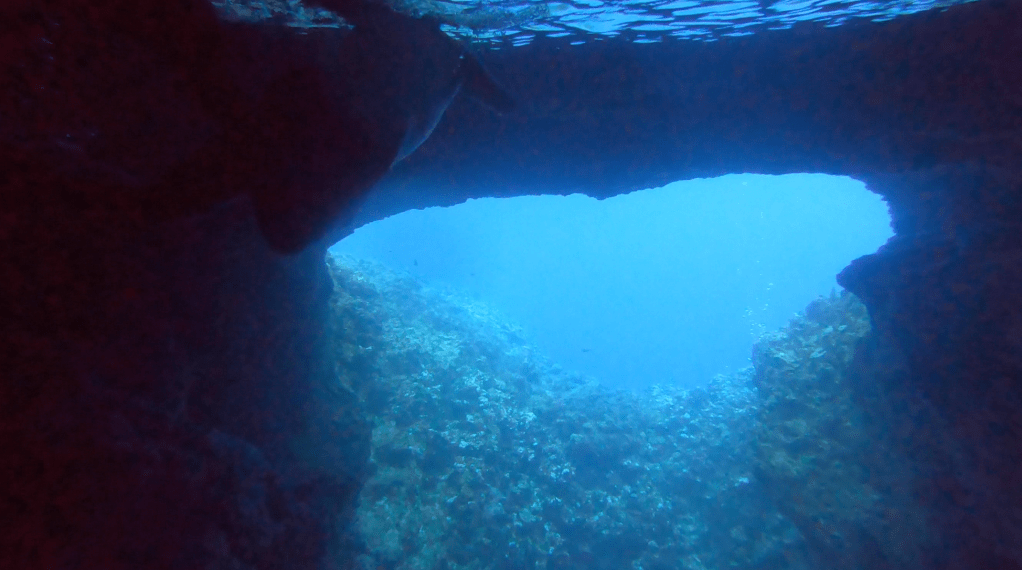

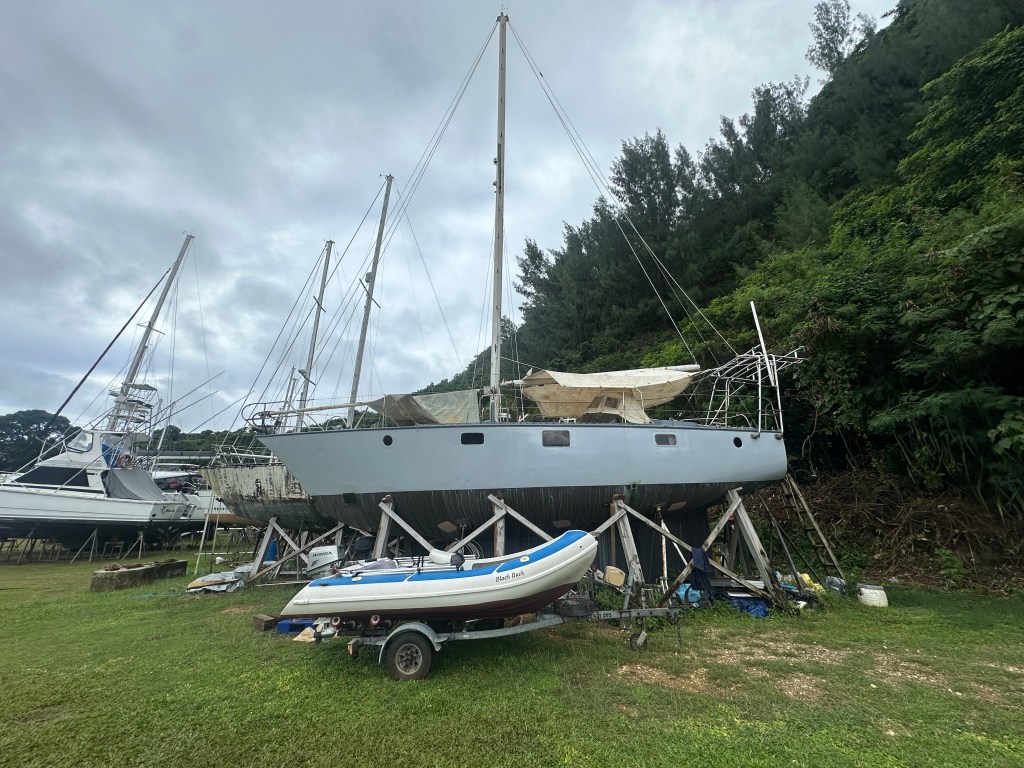
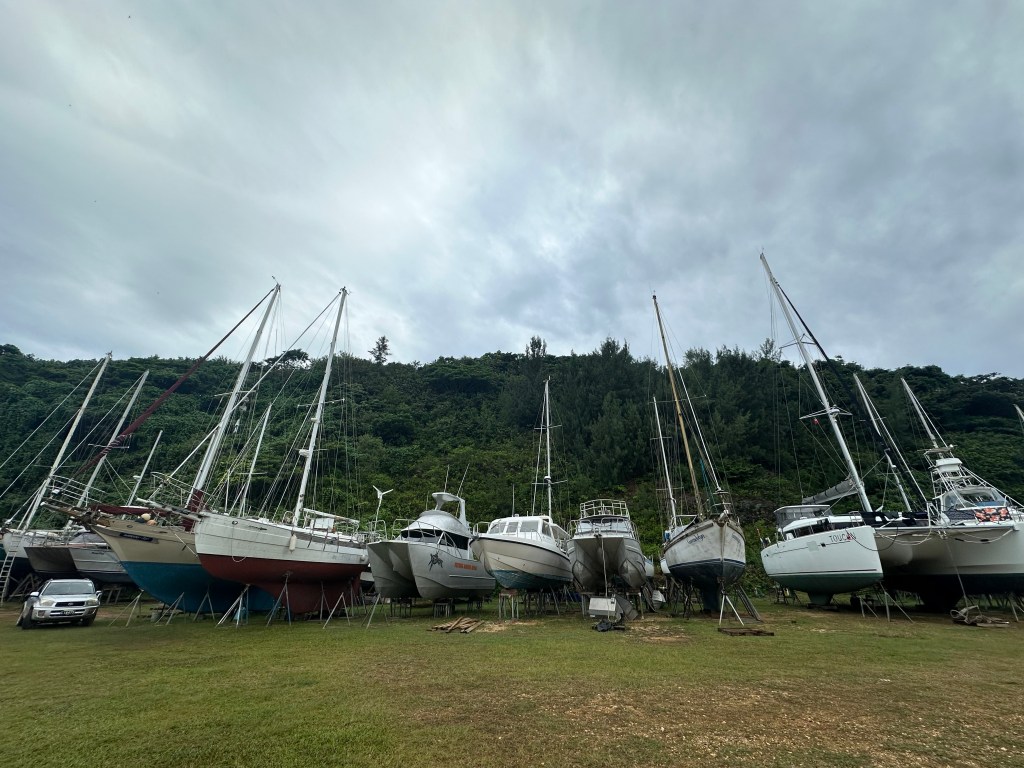

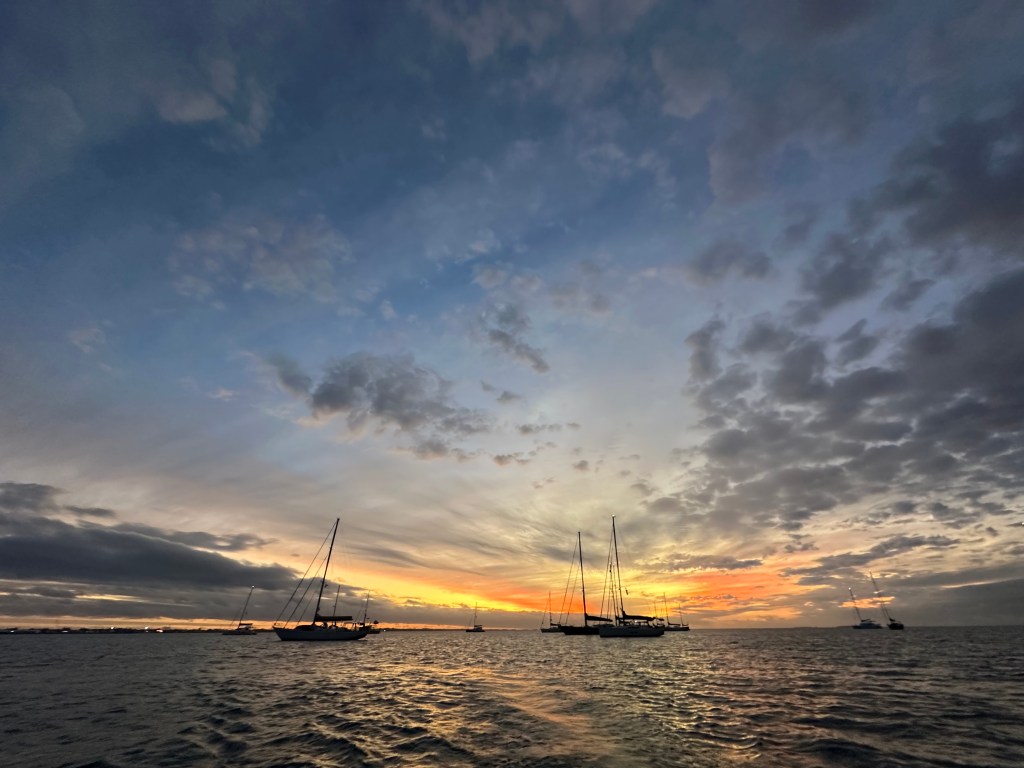

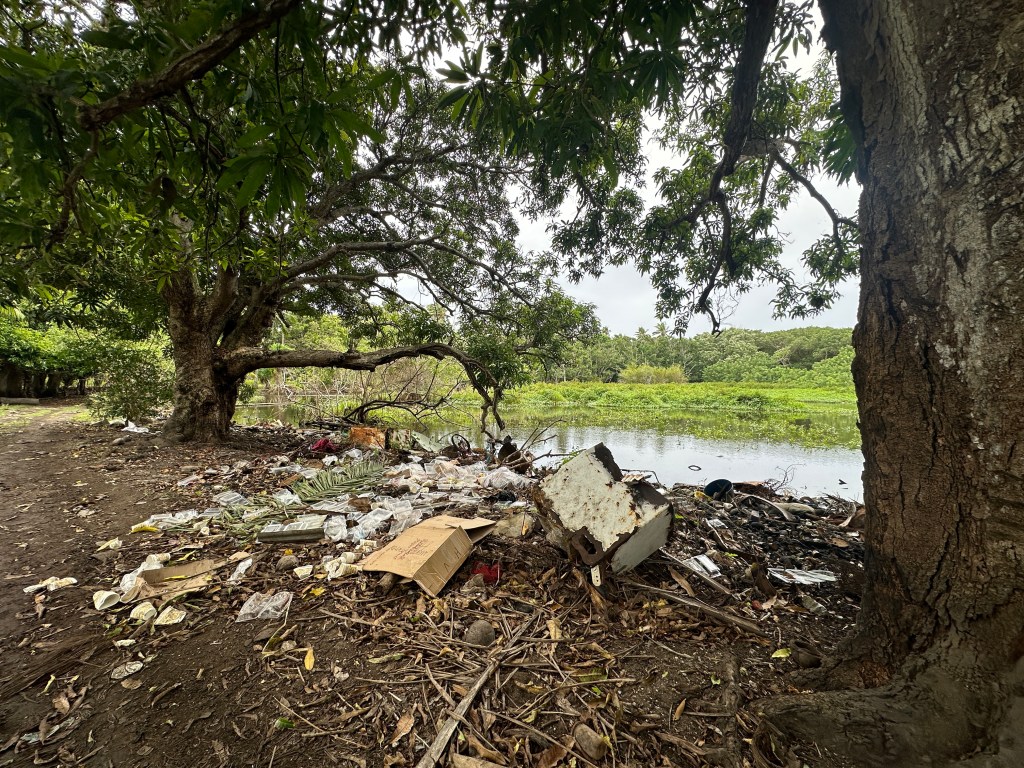
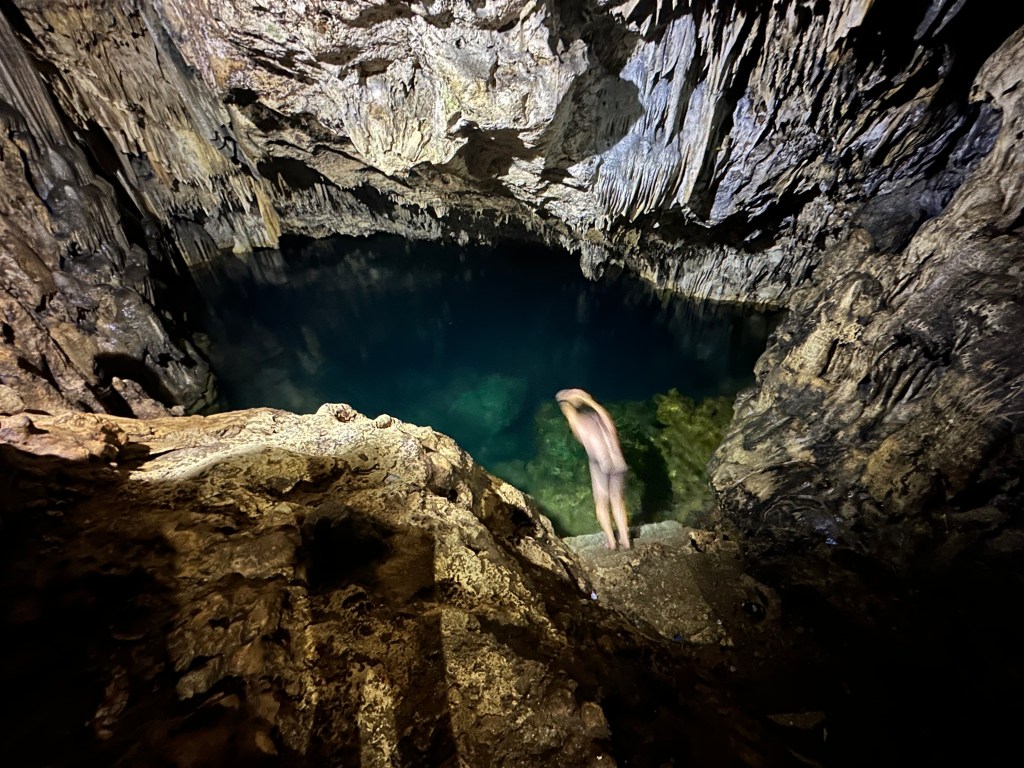
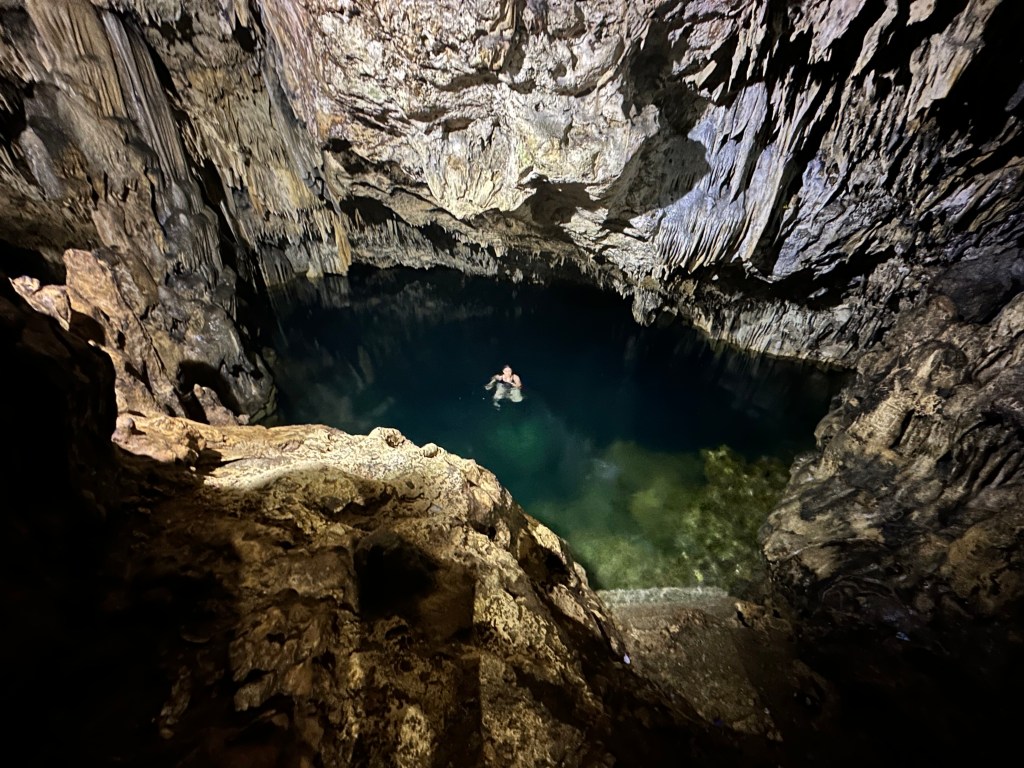
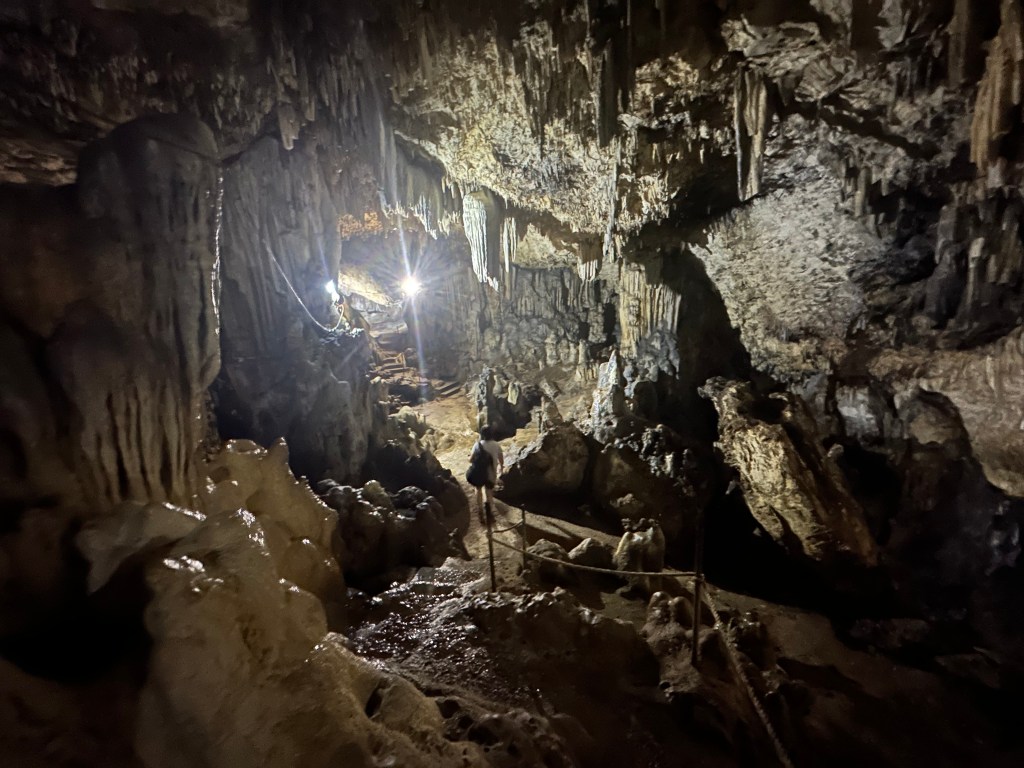
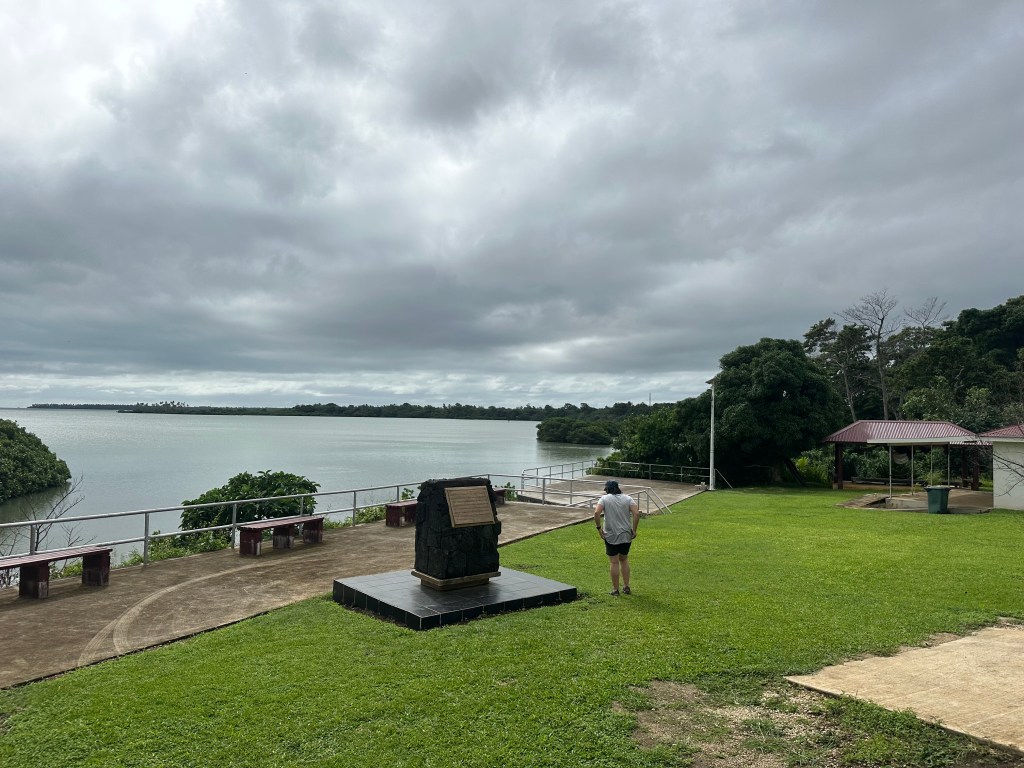
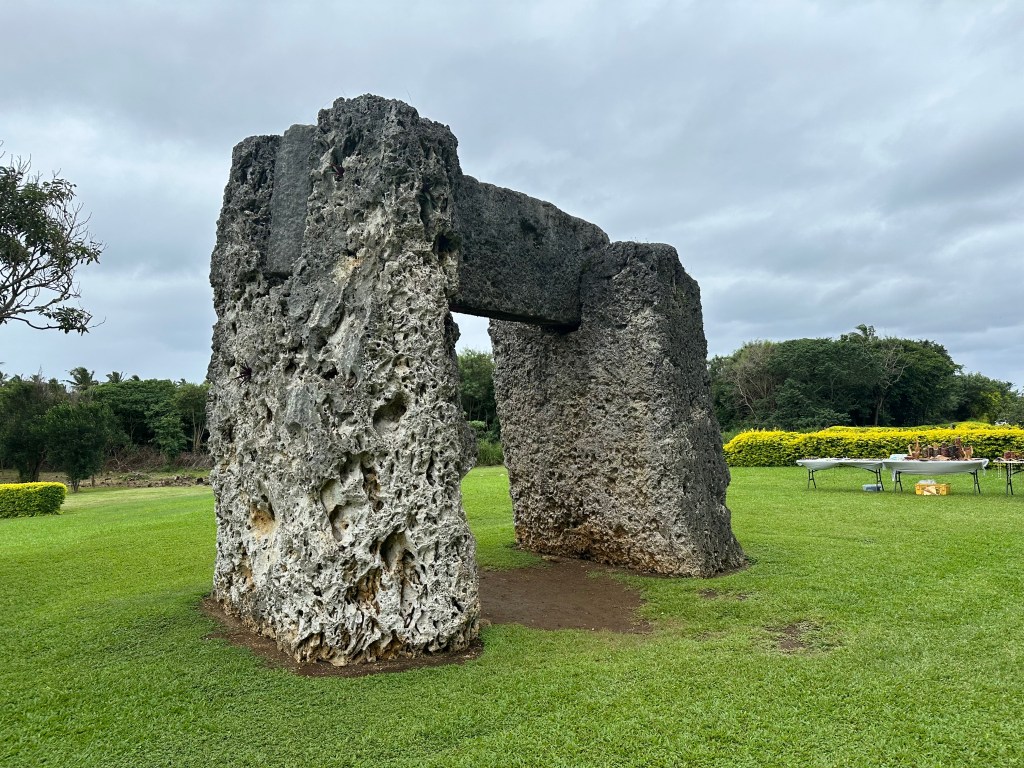
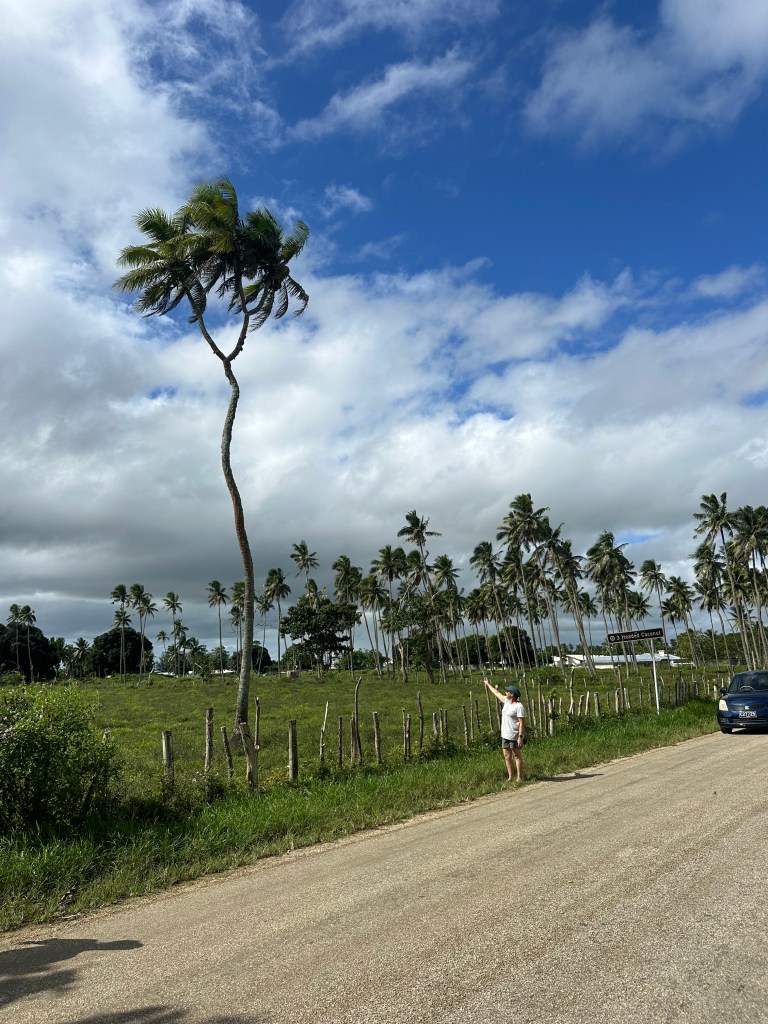
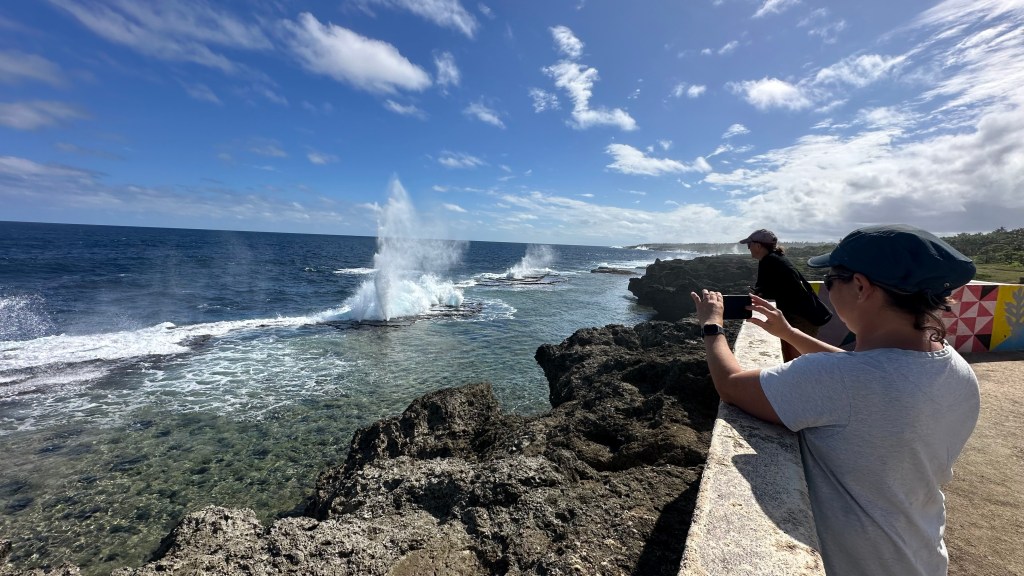
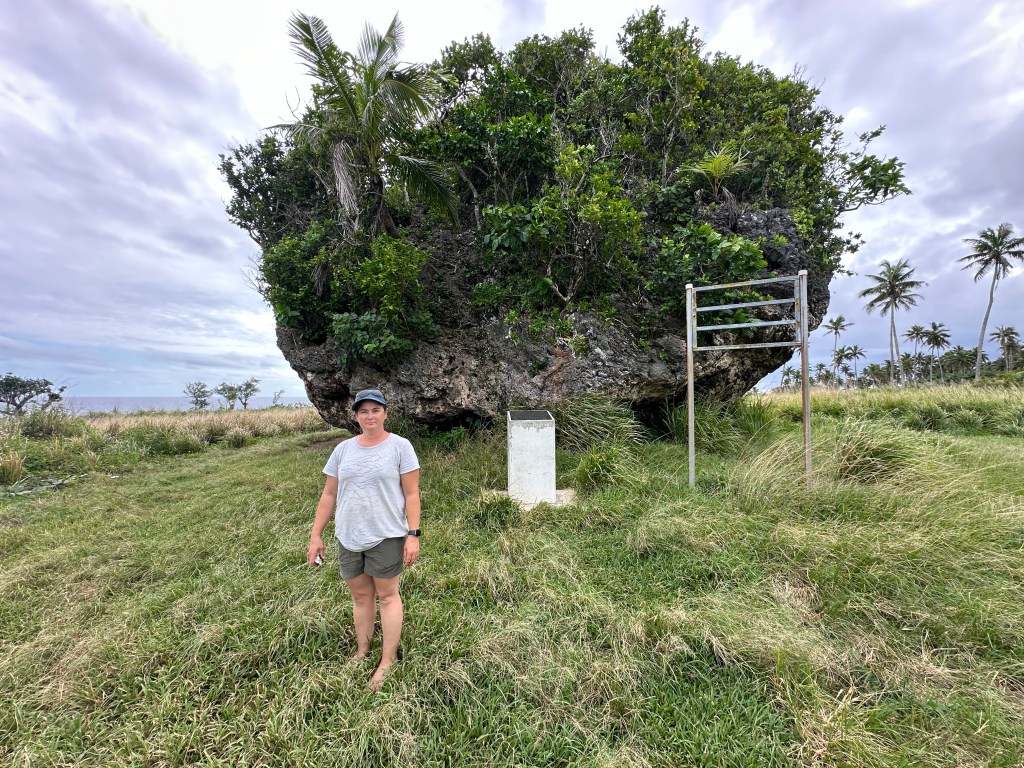

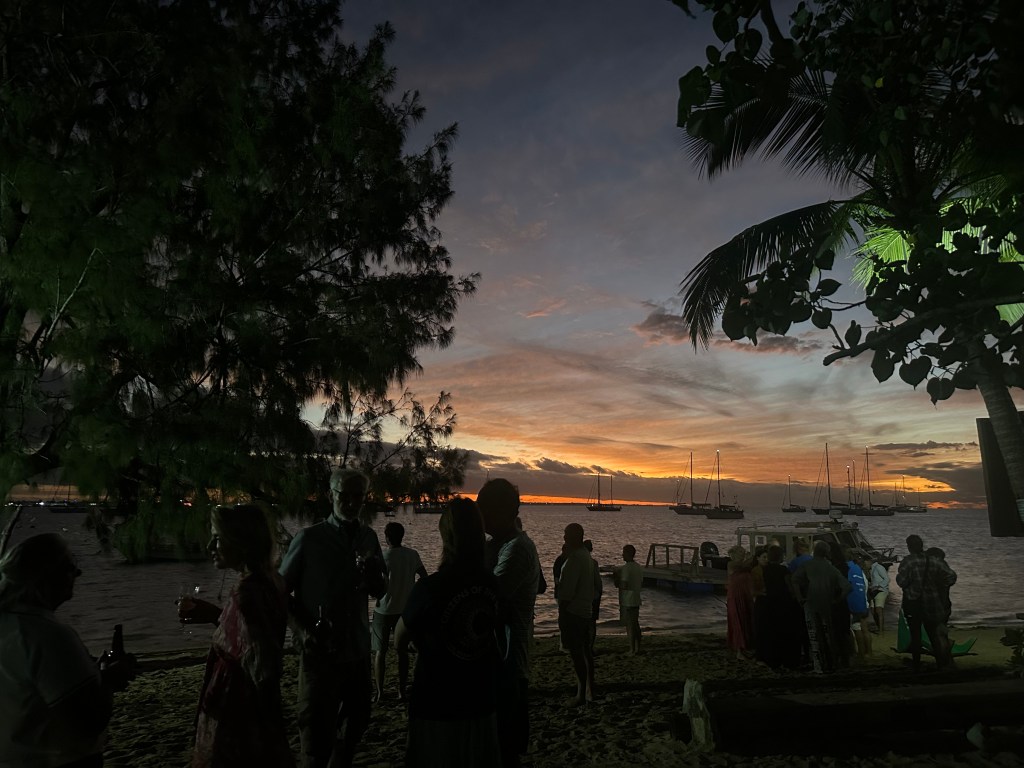
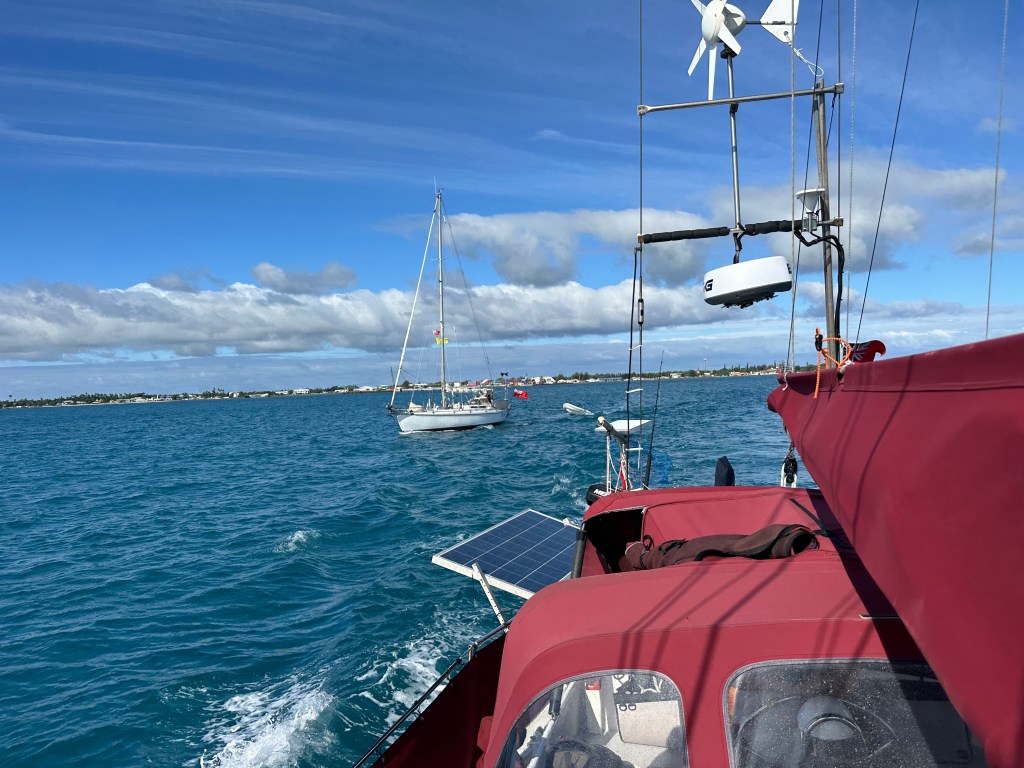
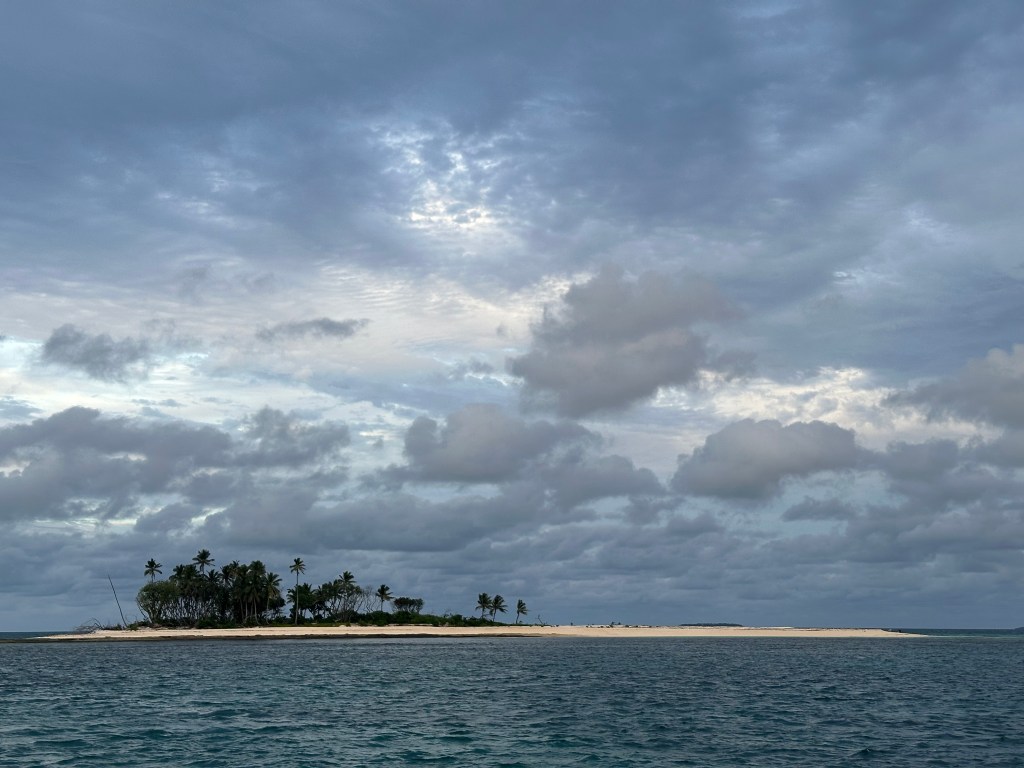
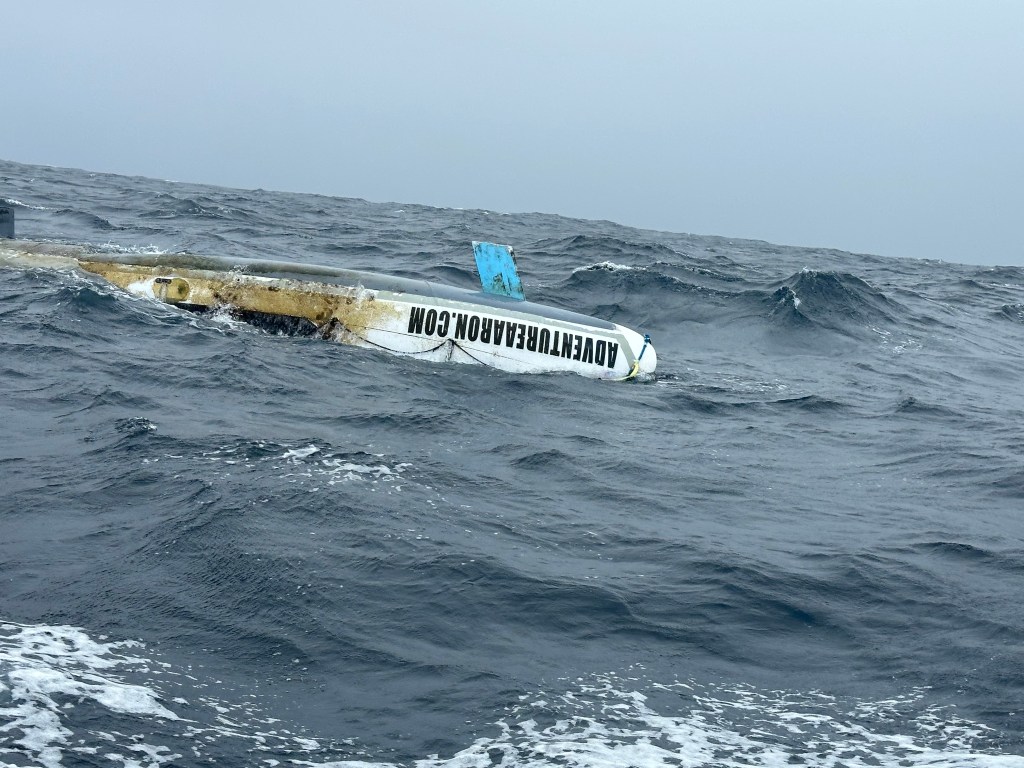
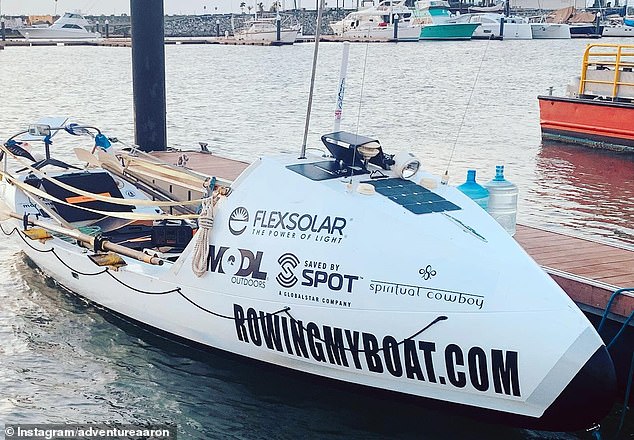

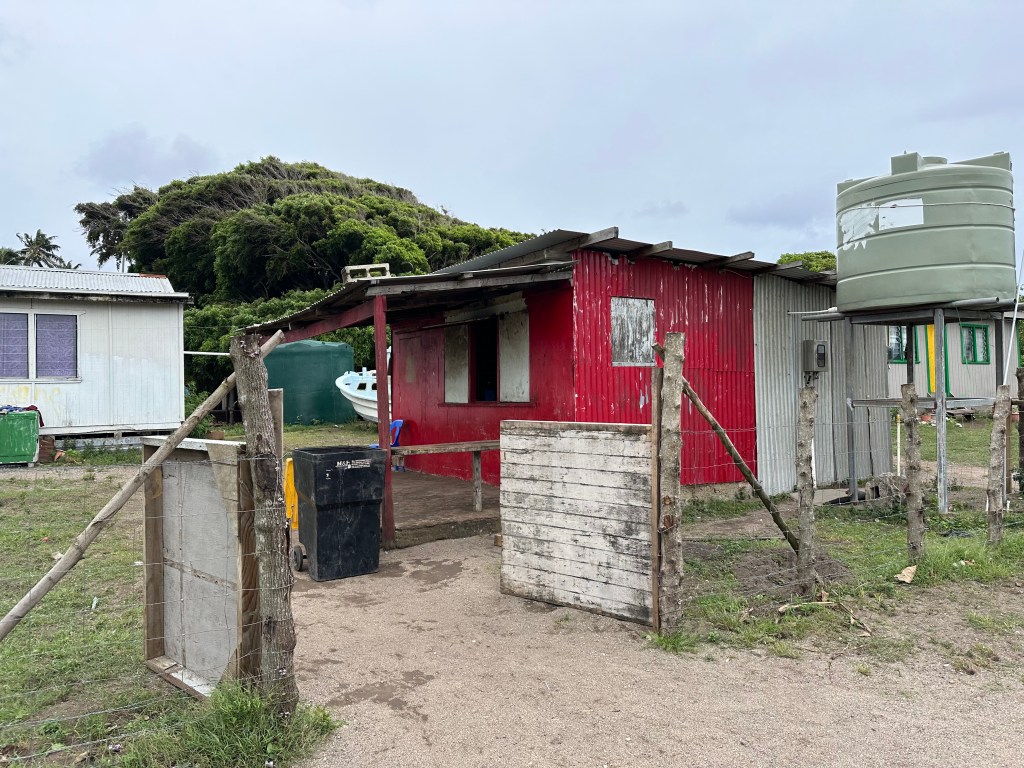
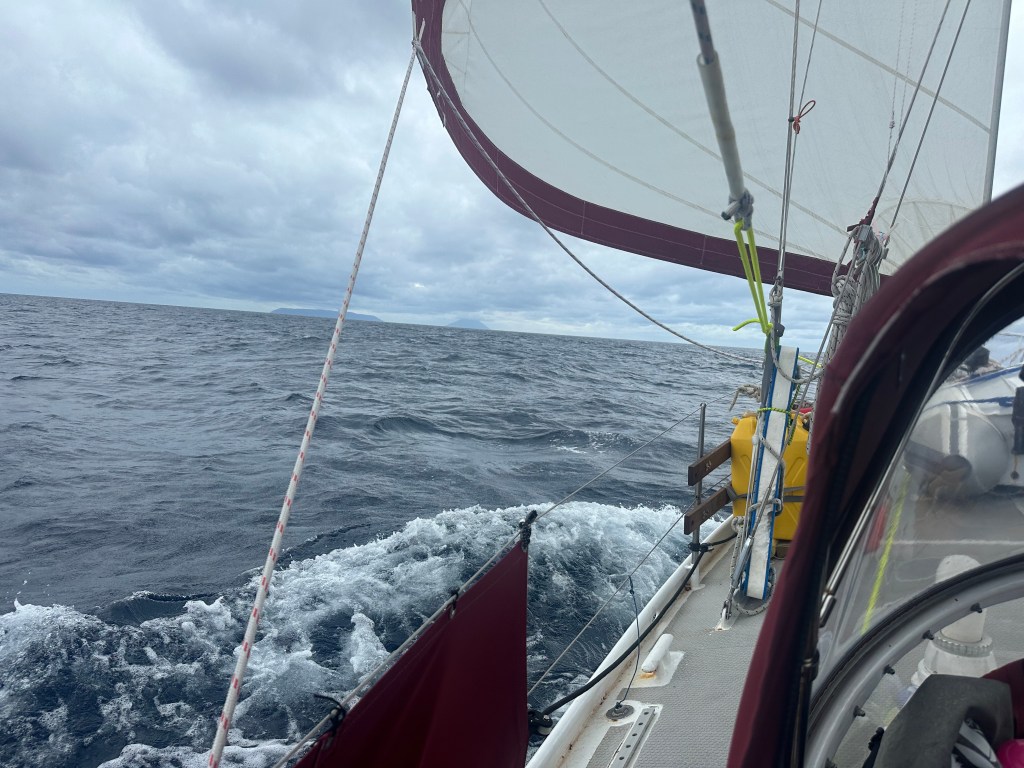
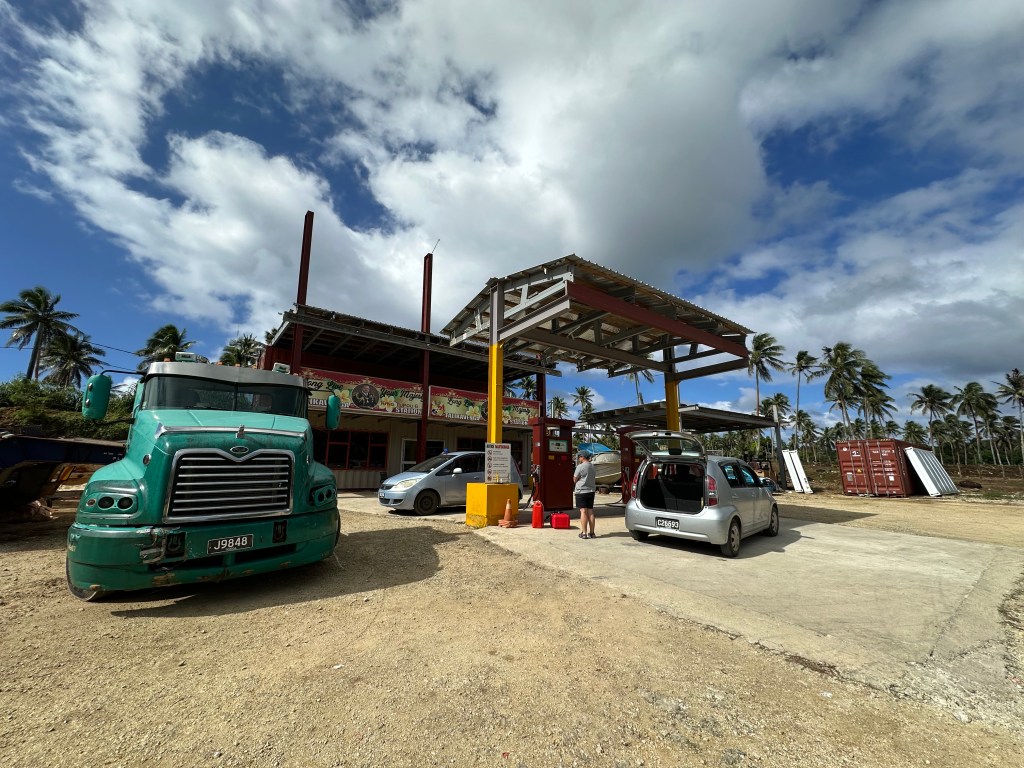
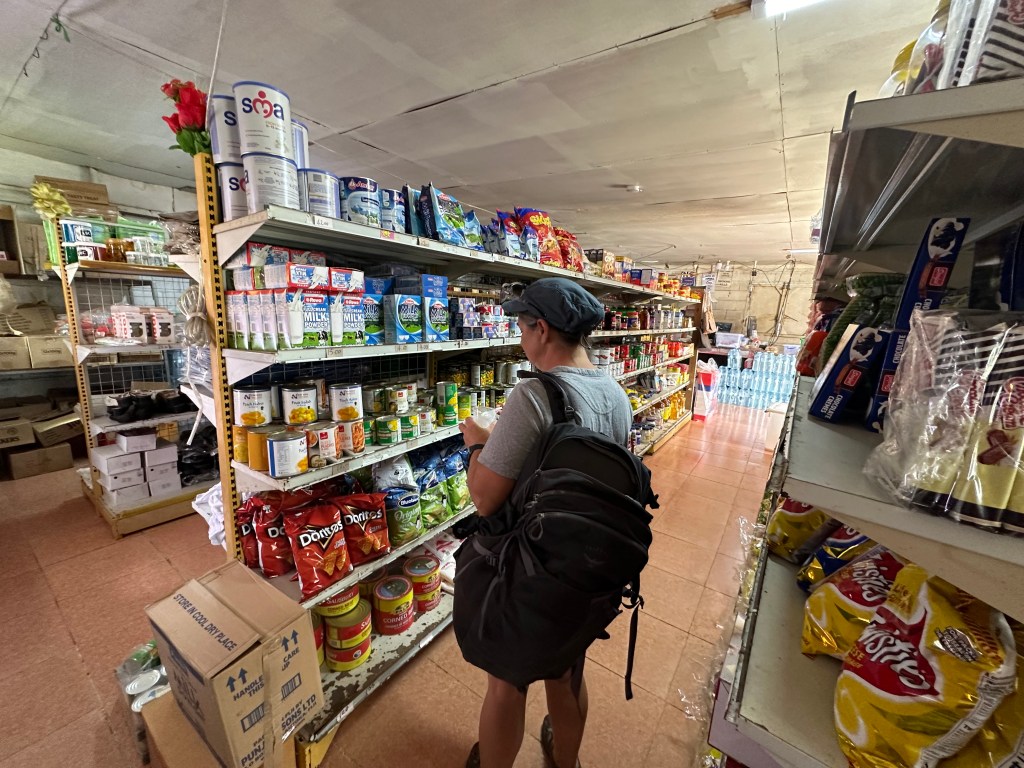
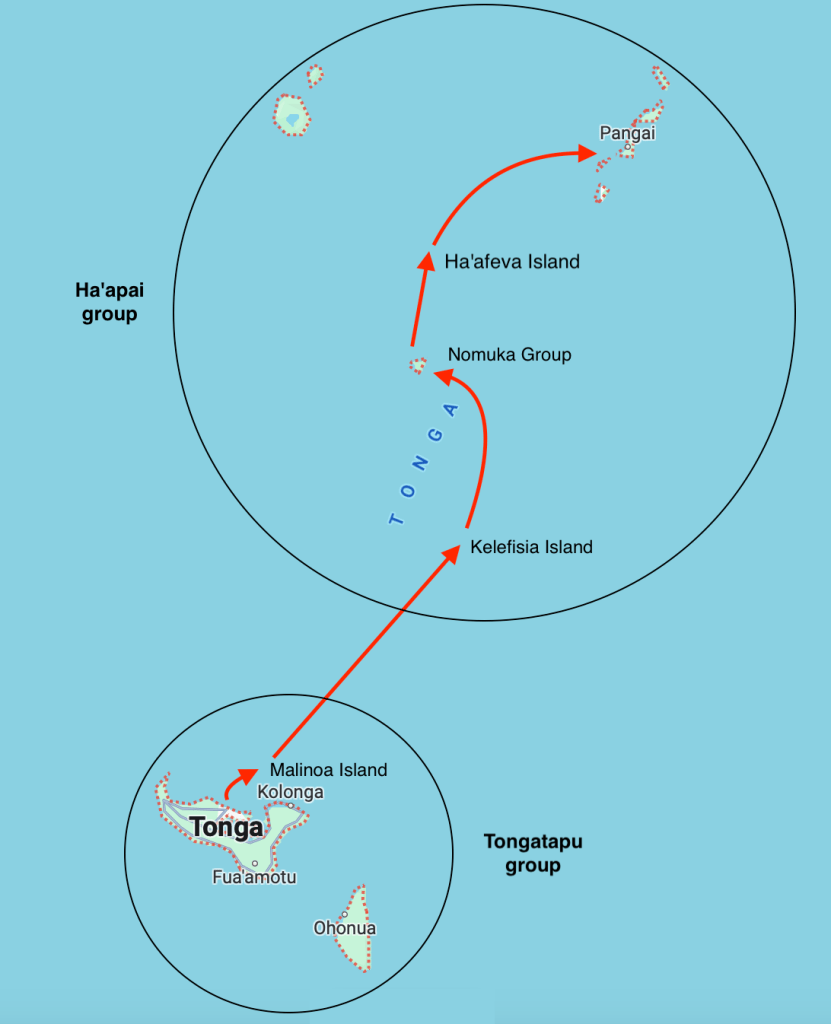
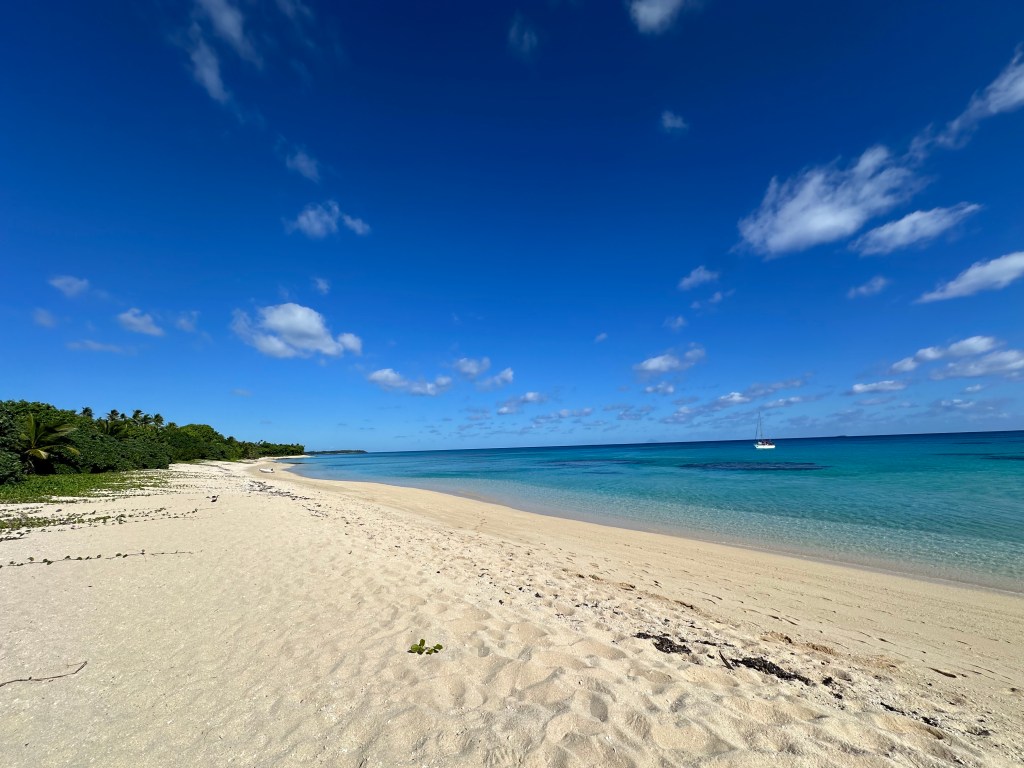

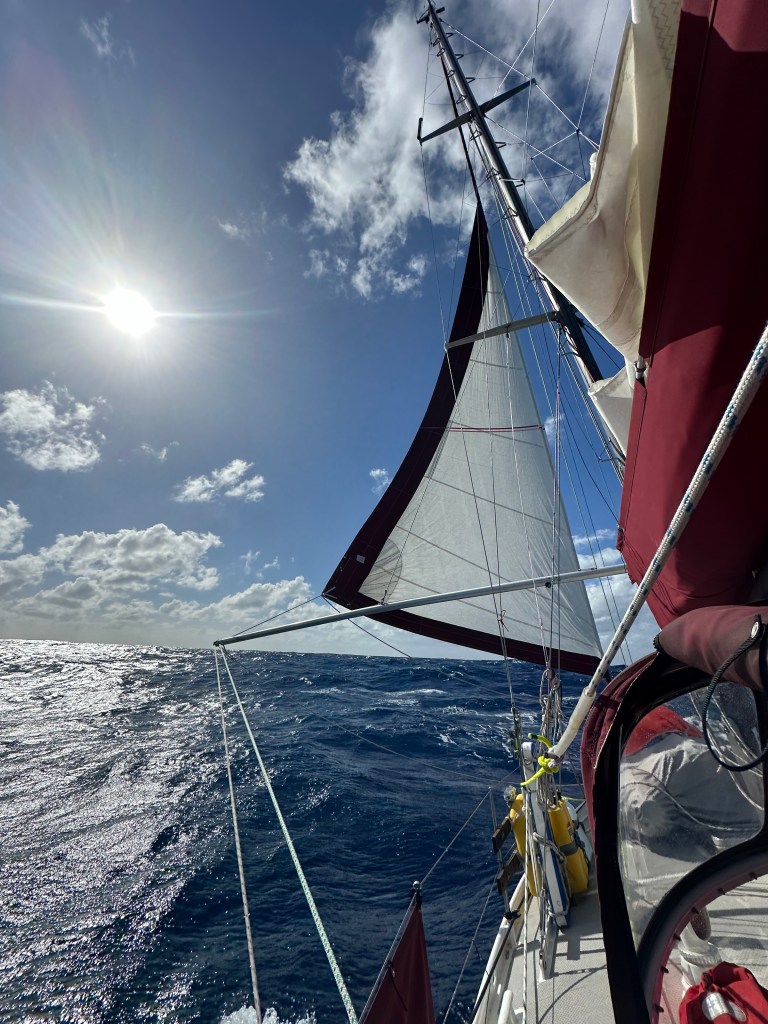
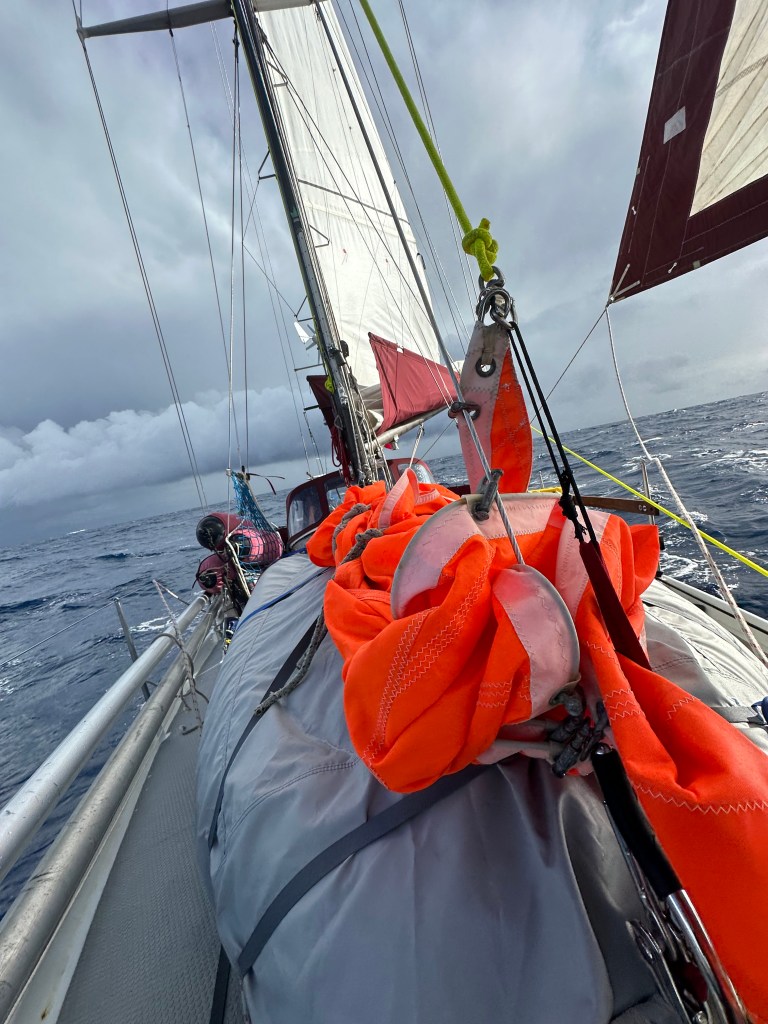
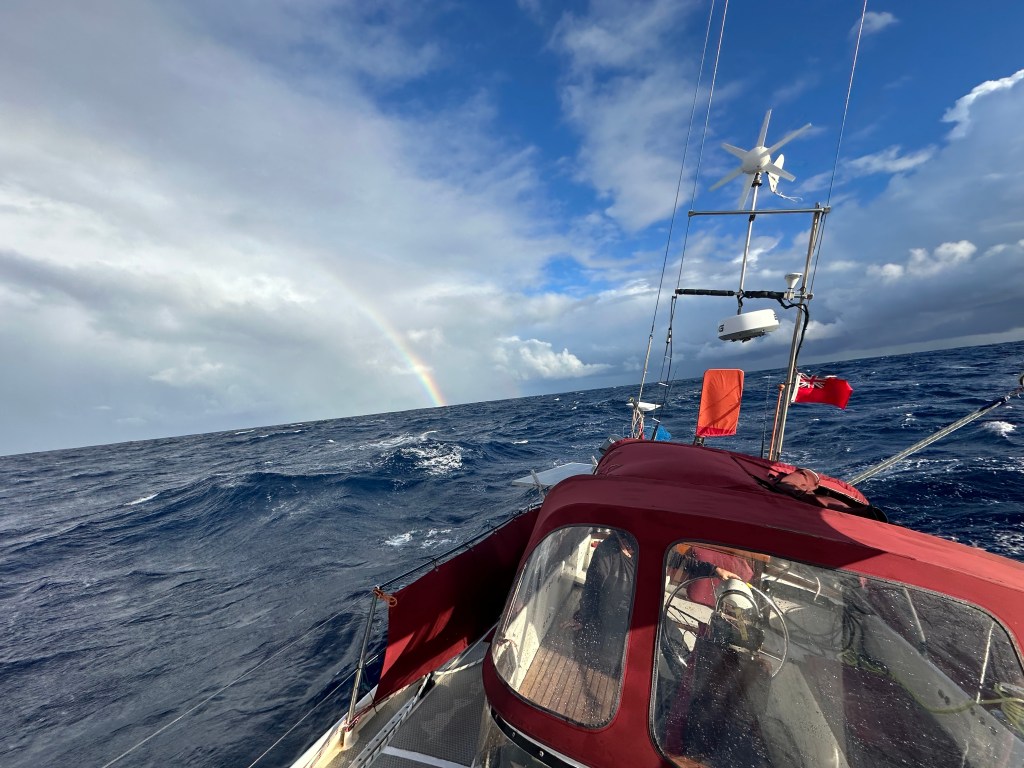

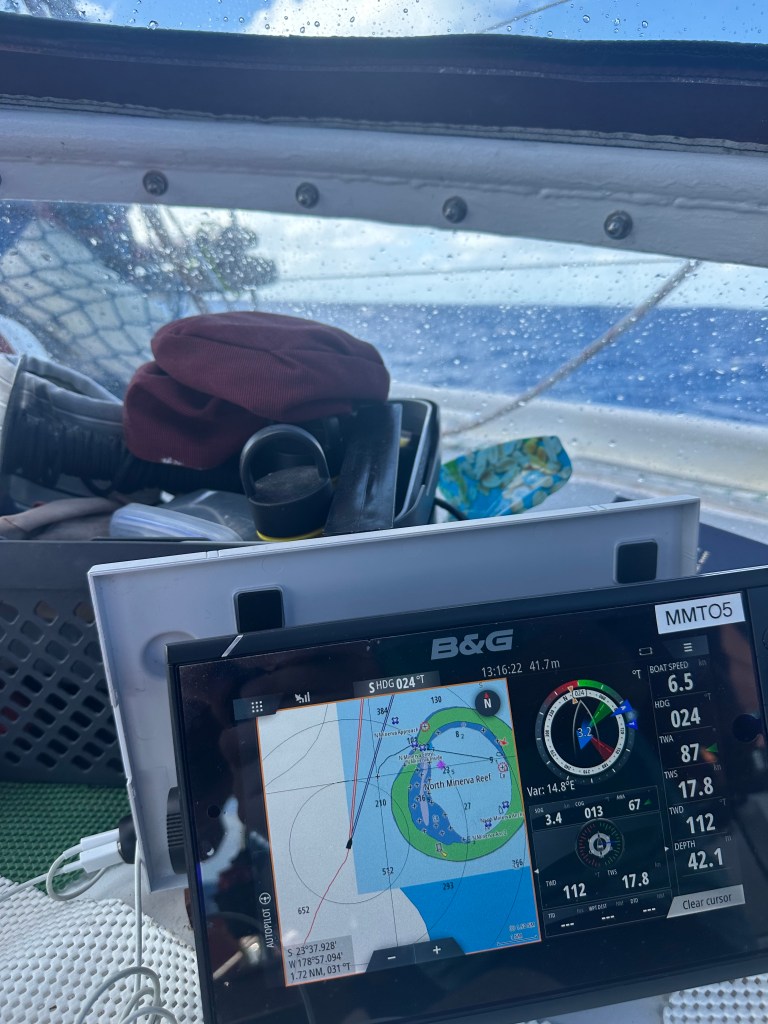


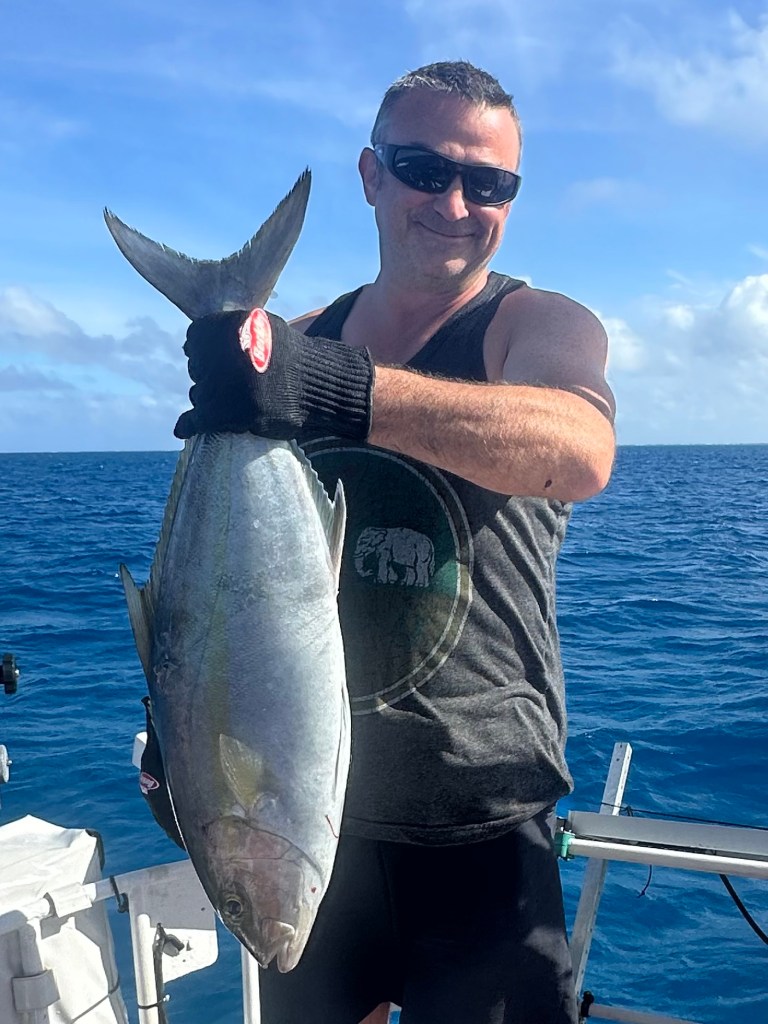
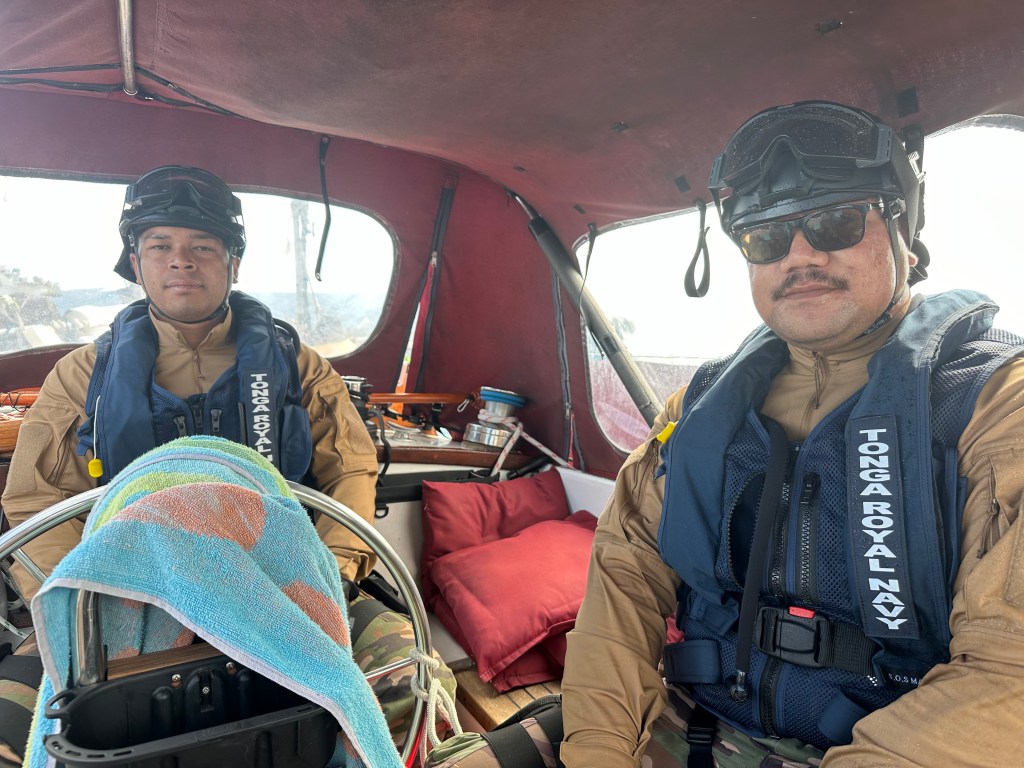
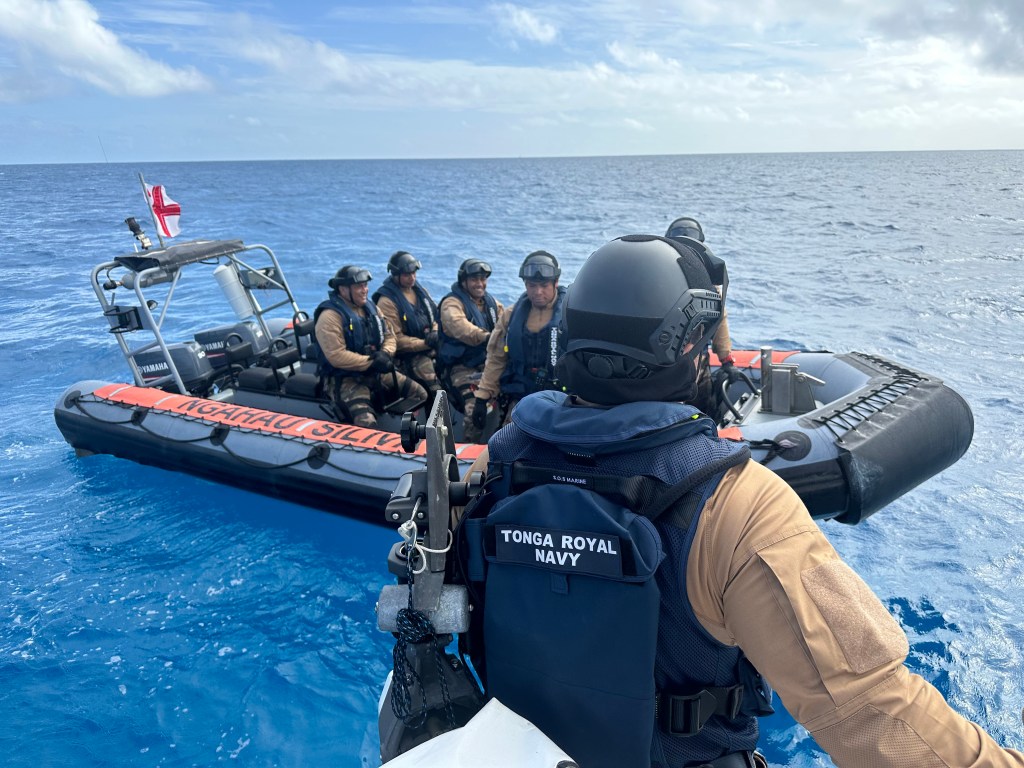
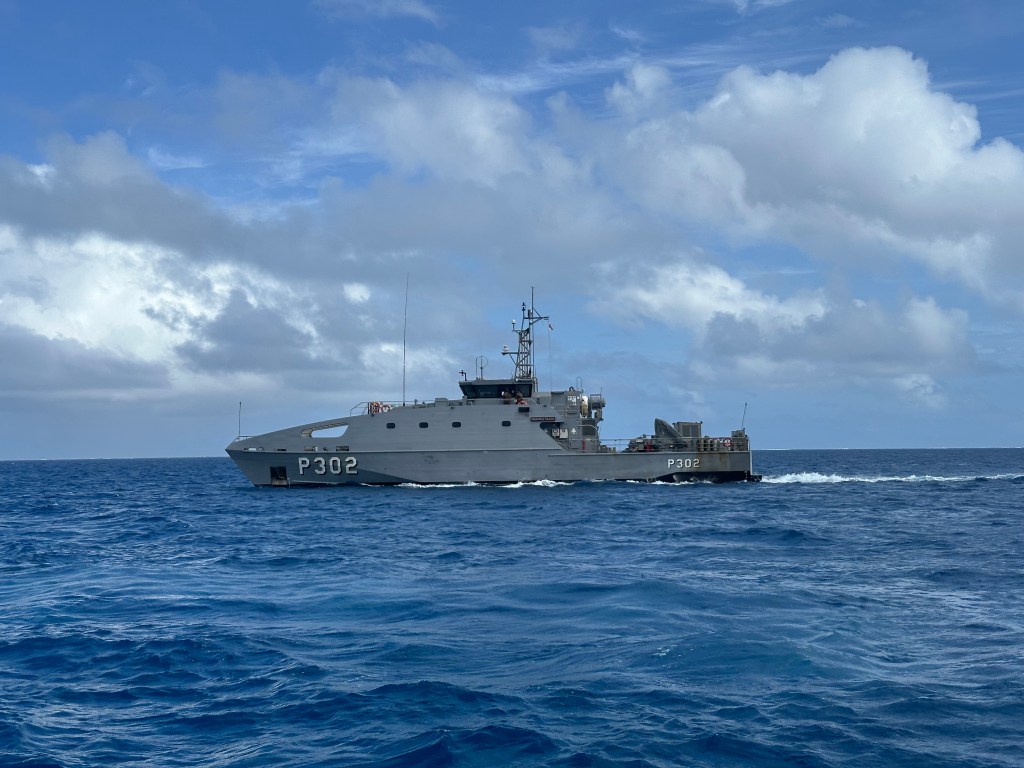


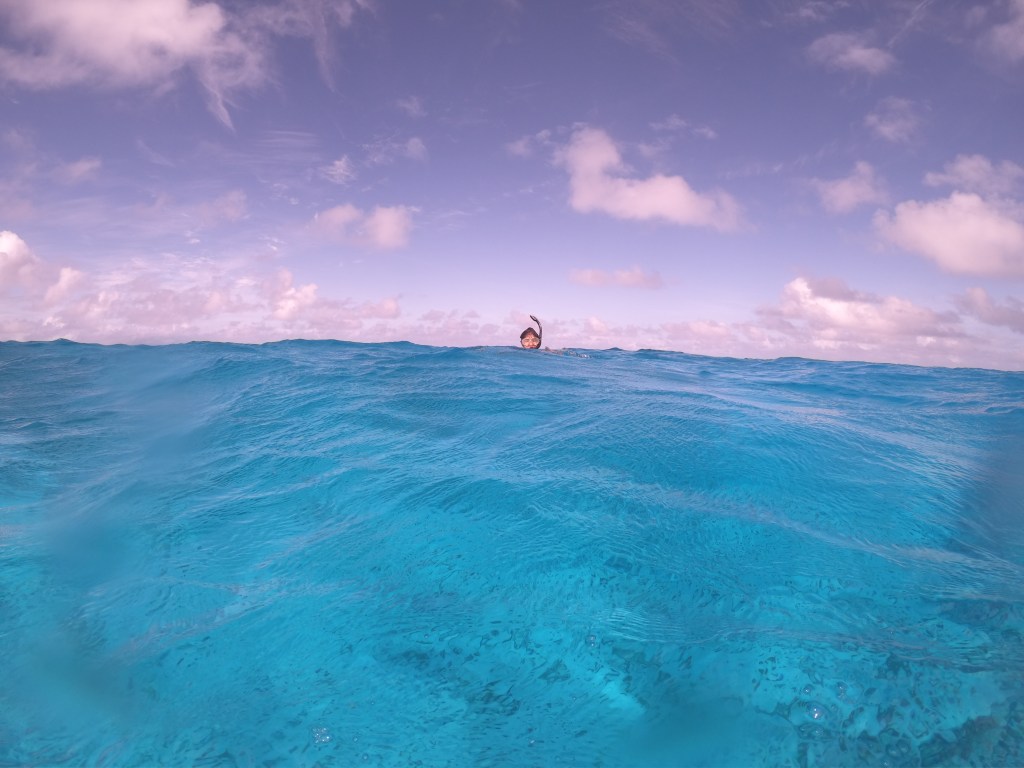
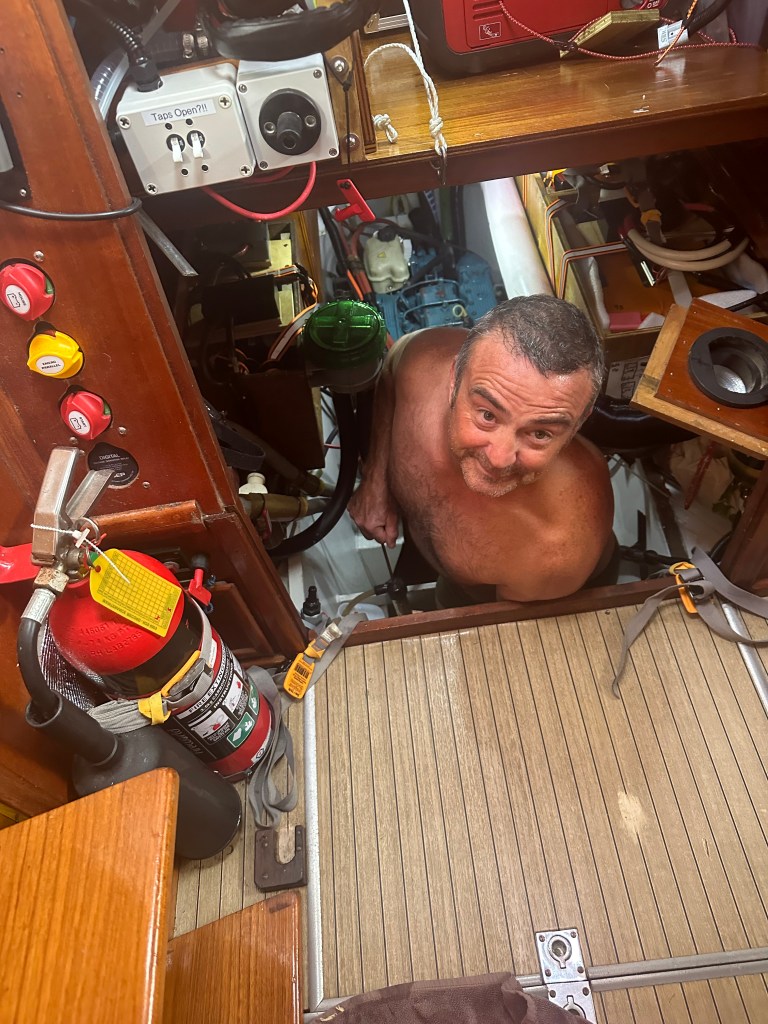


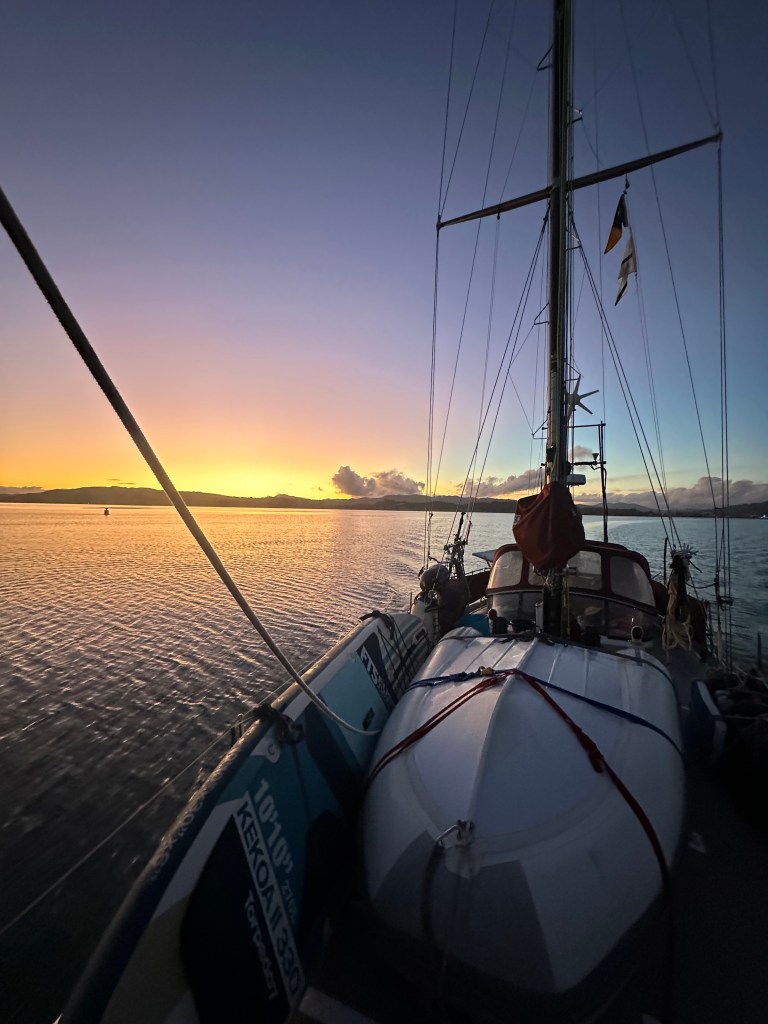
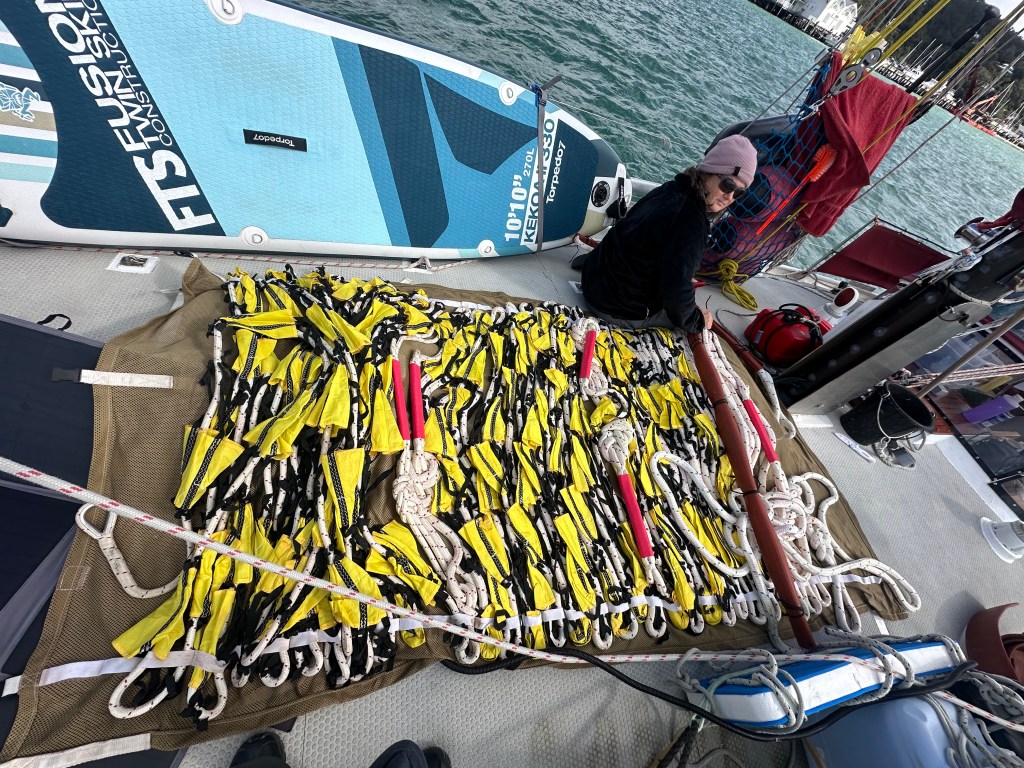
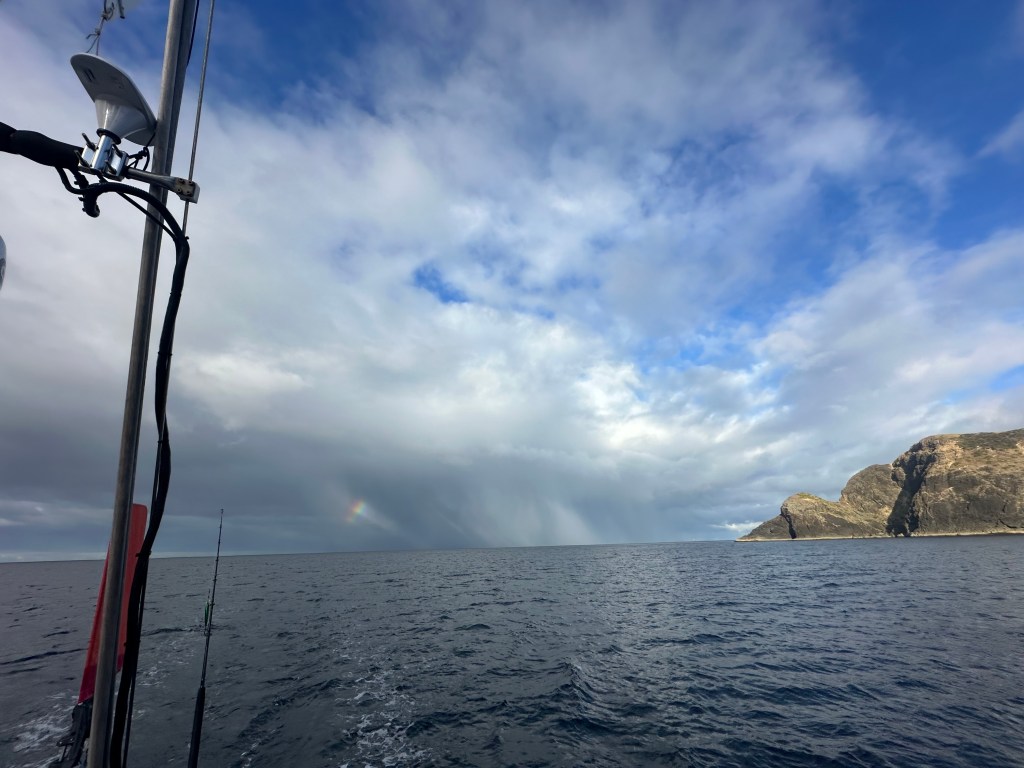
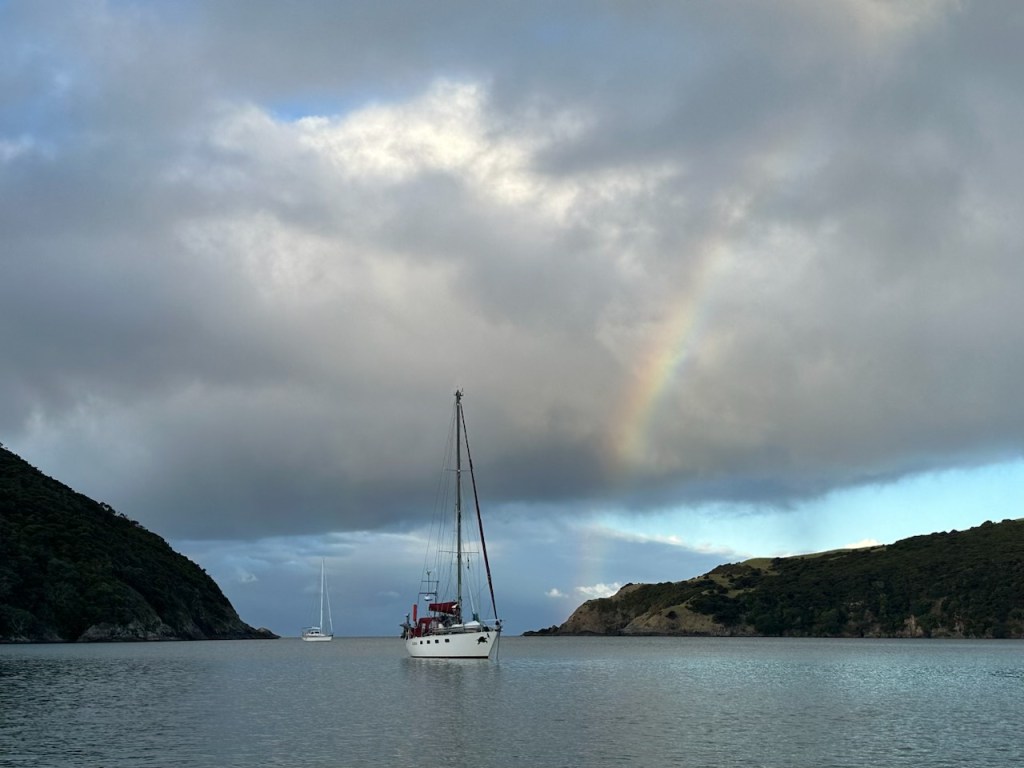

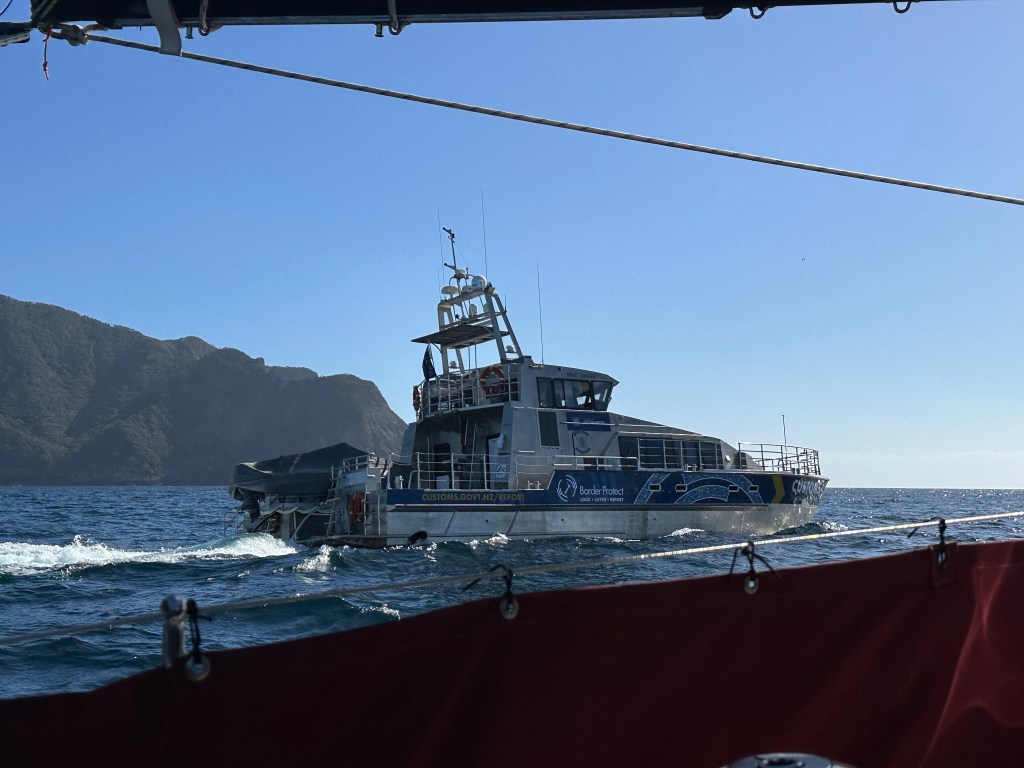


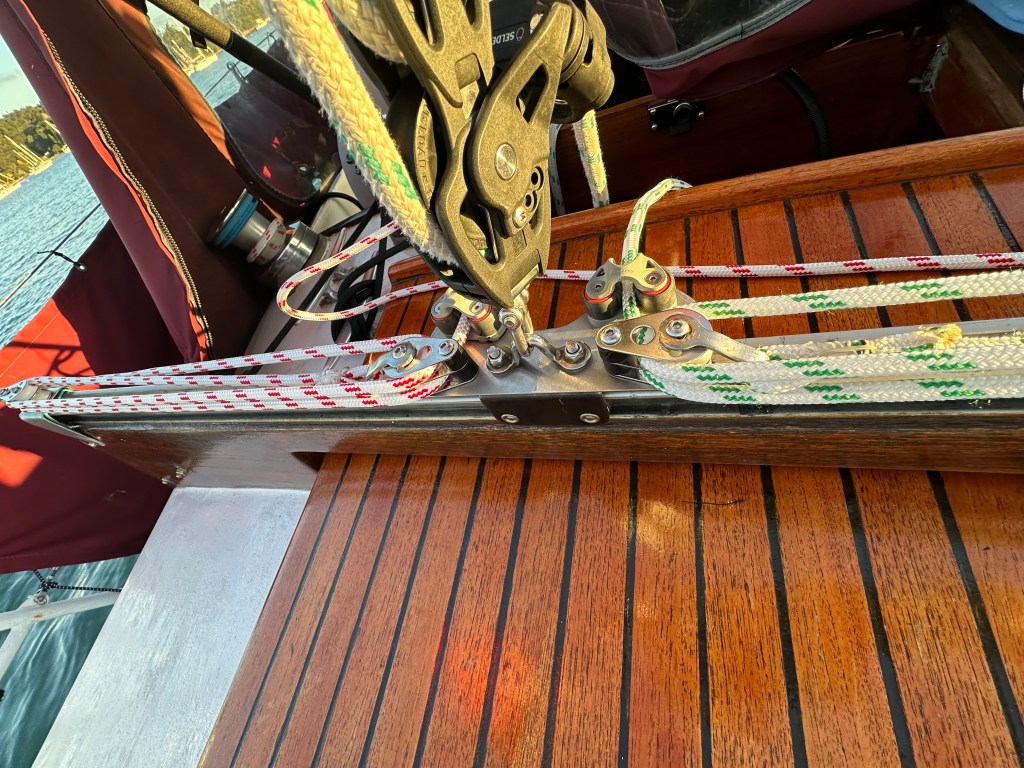


 Sailing Taurus NZ