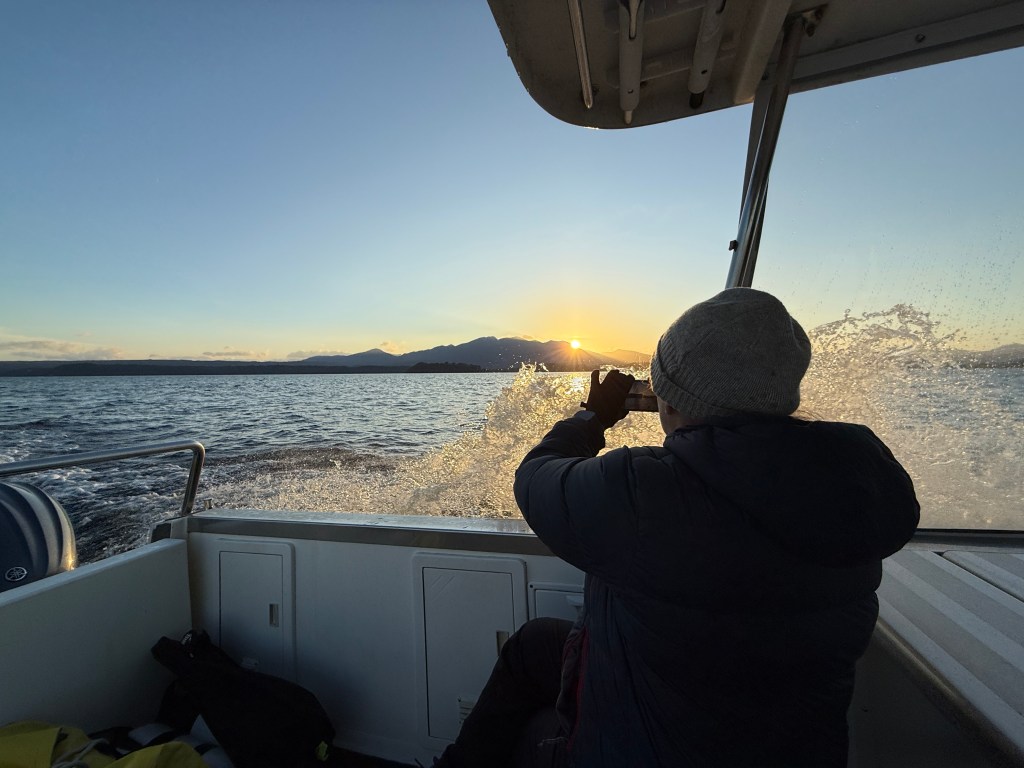
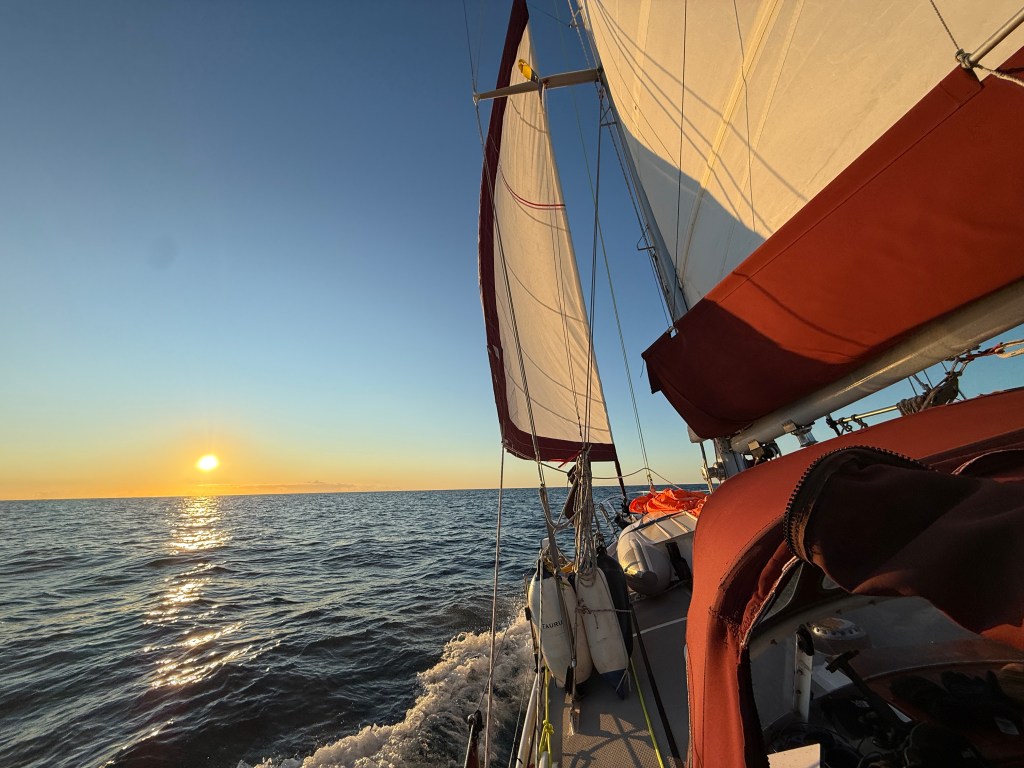
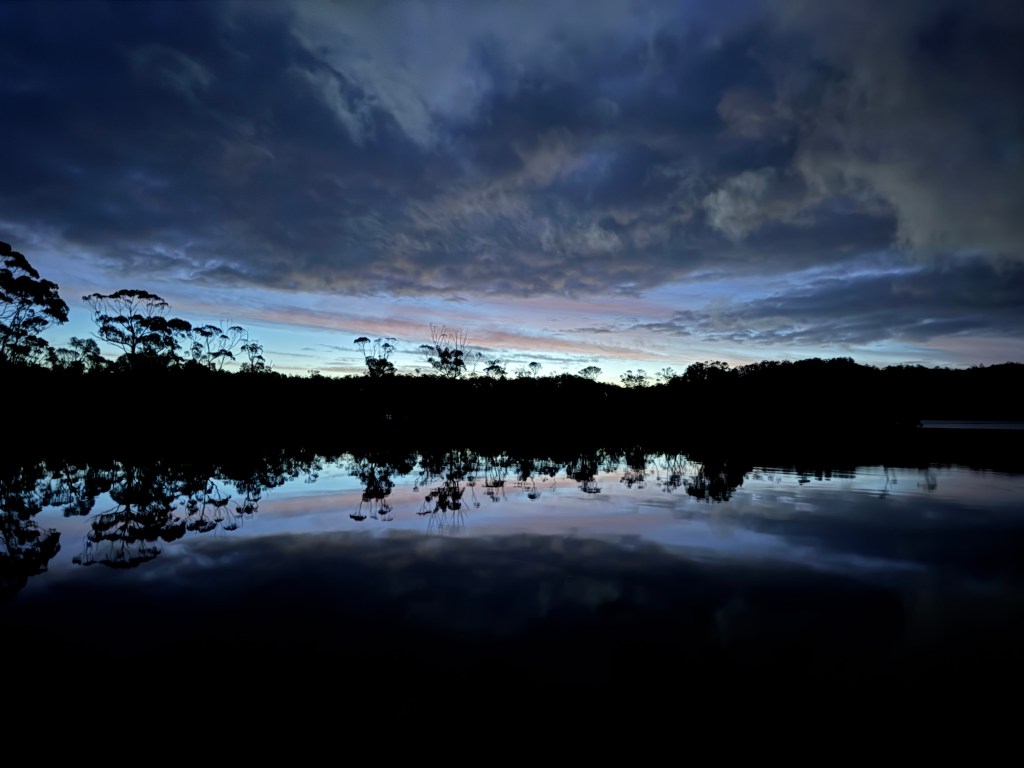
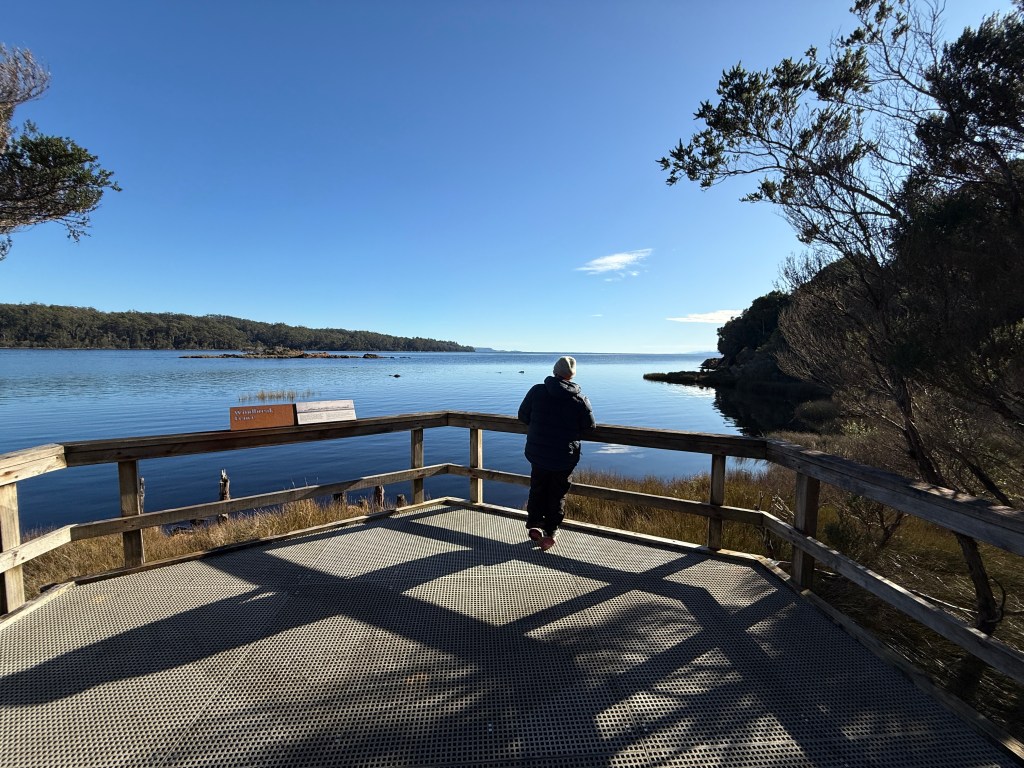
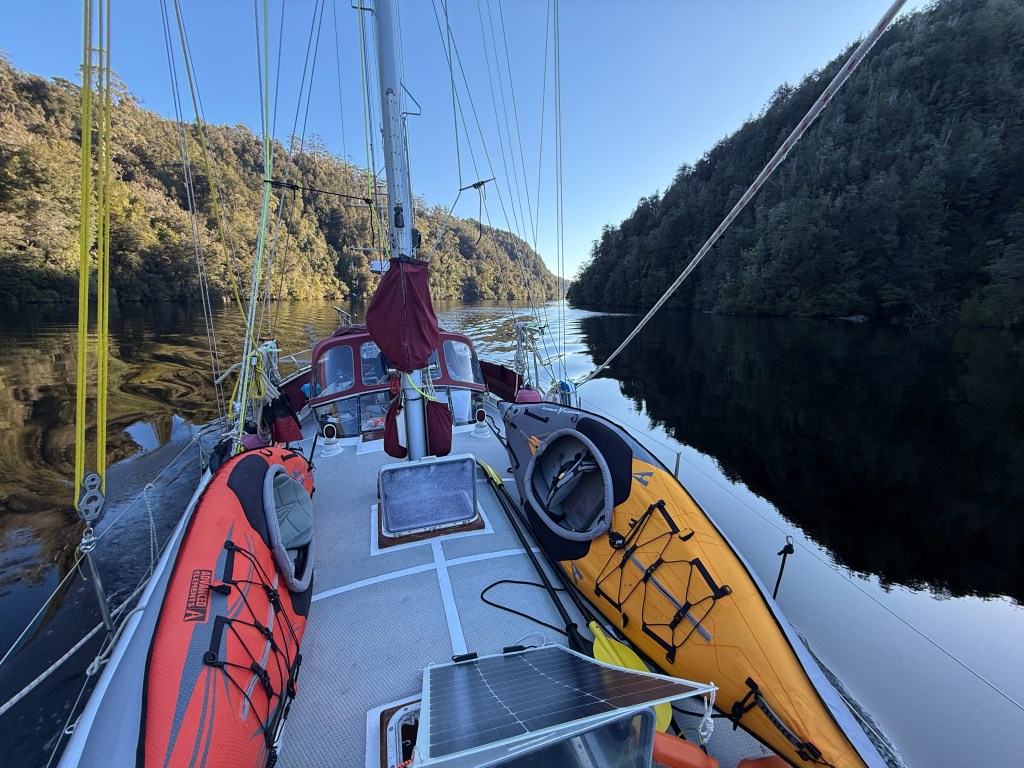
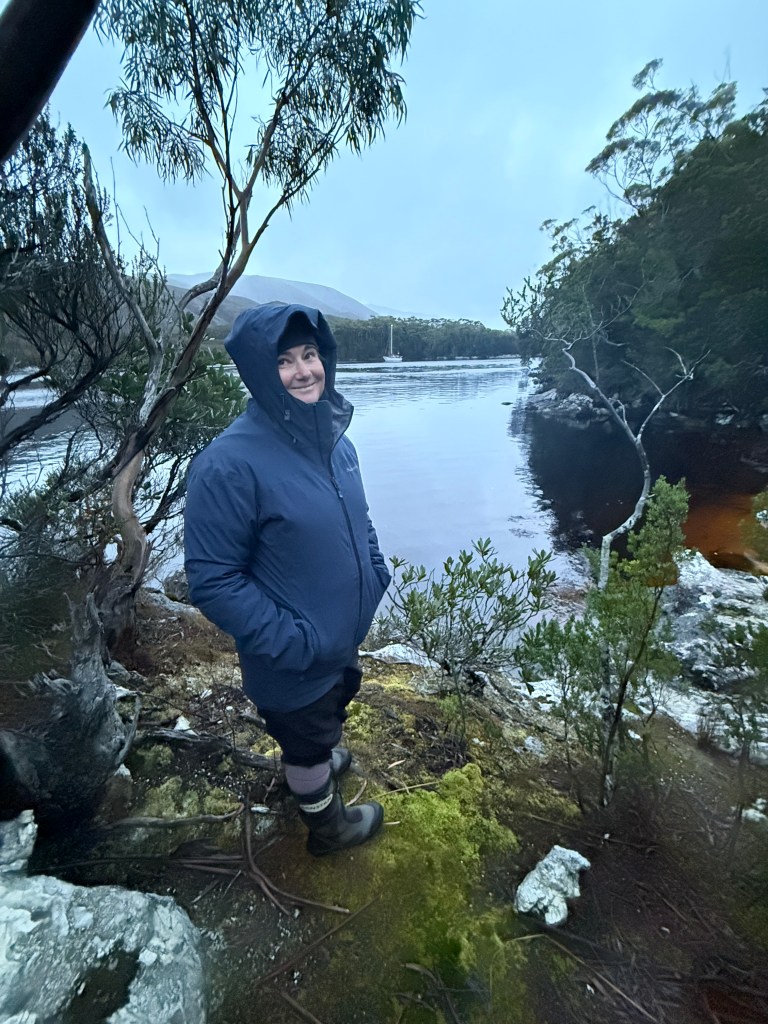
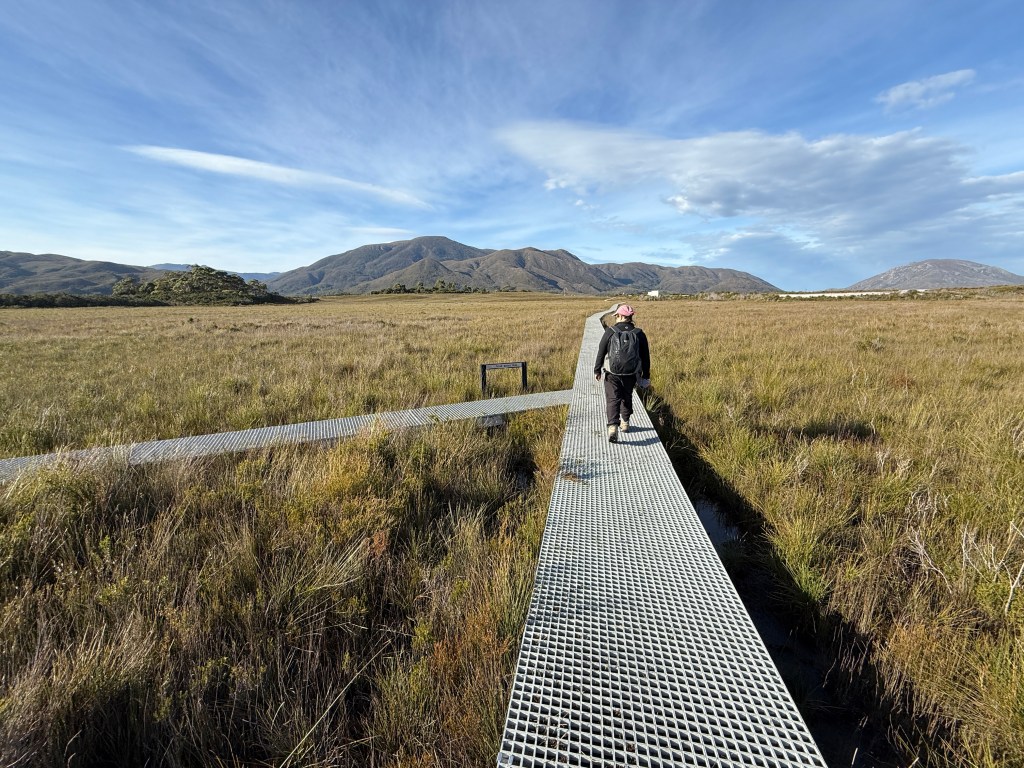
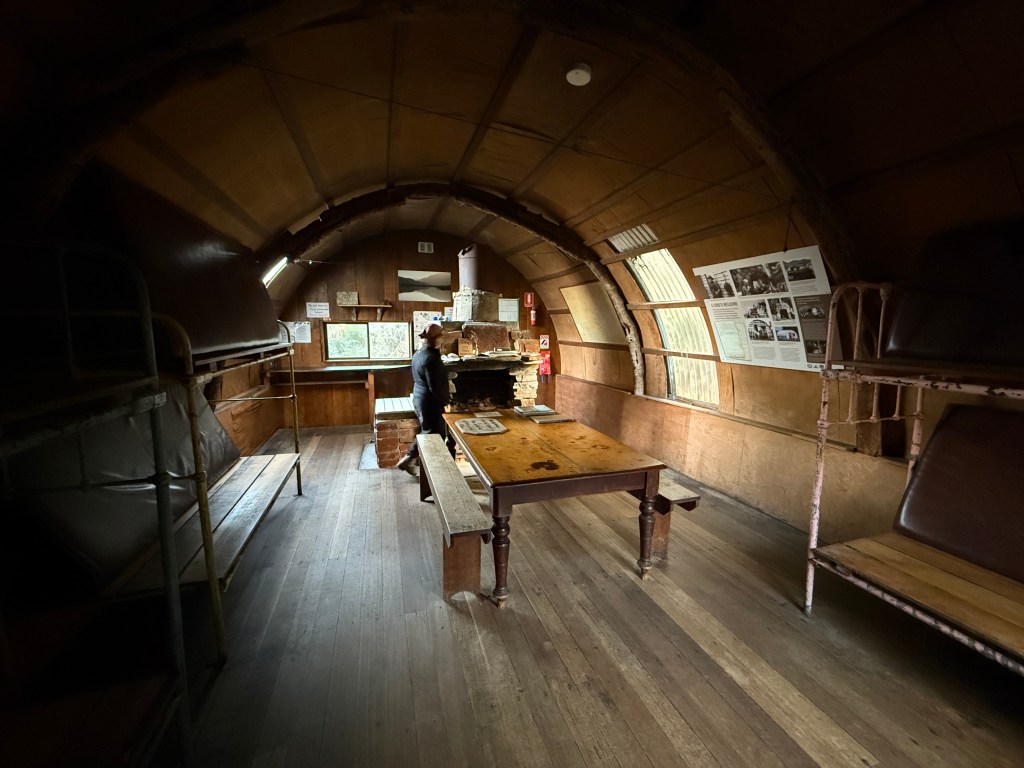
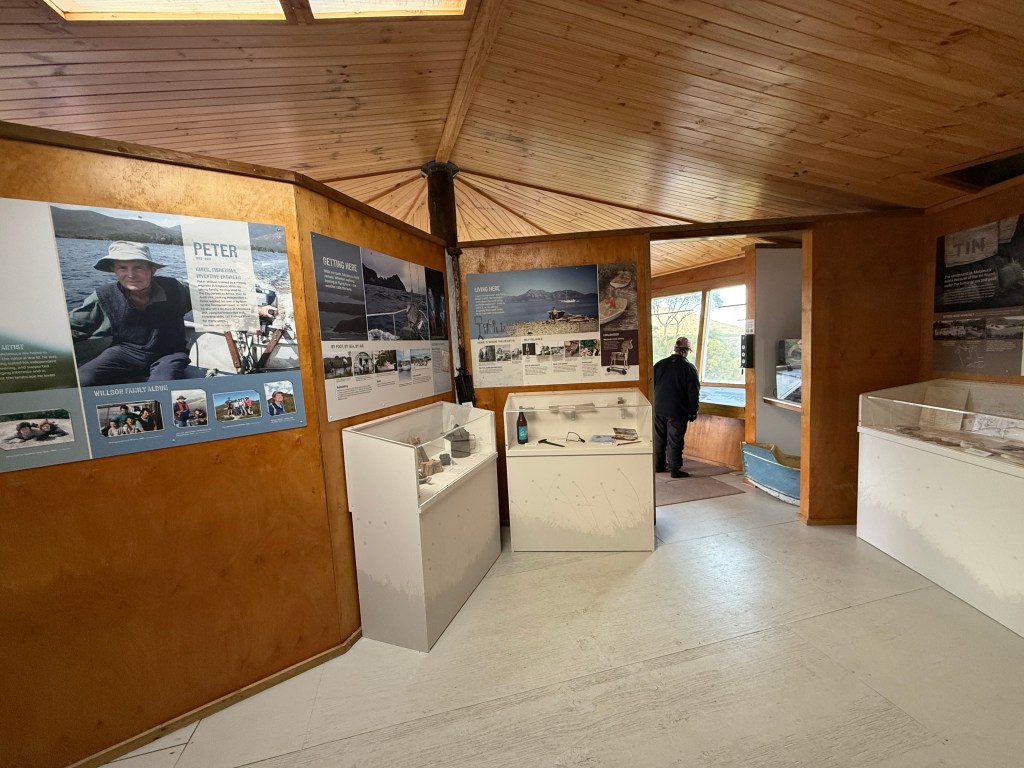
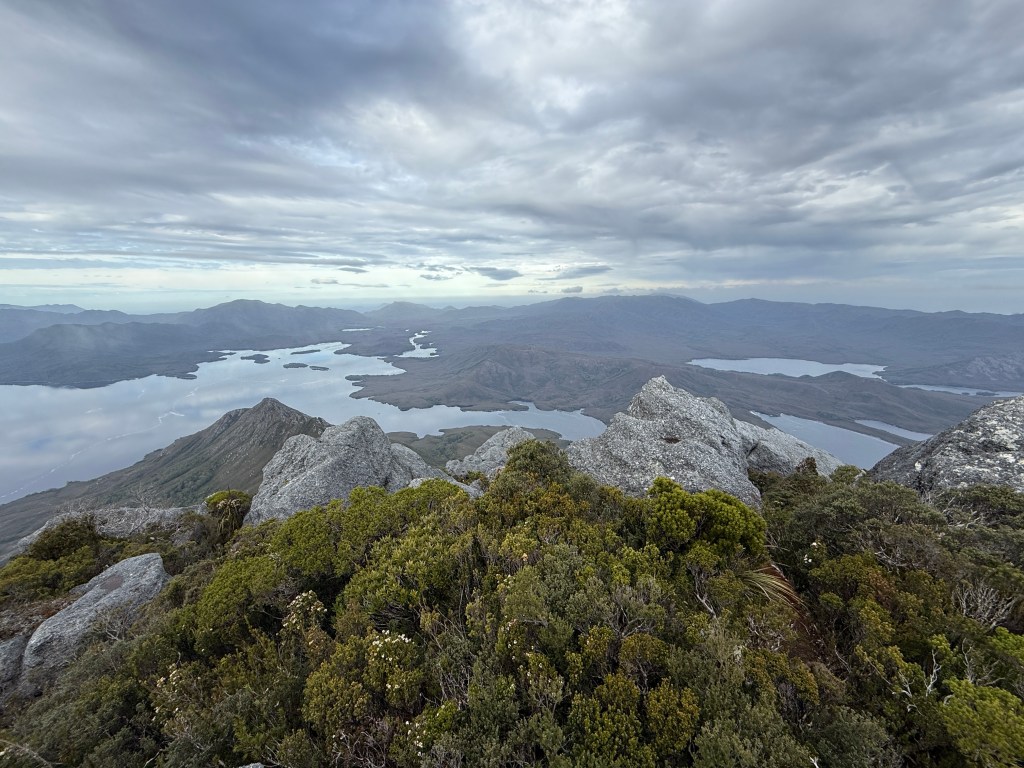
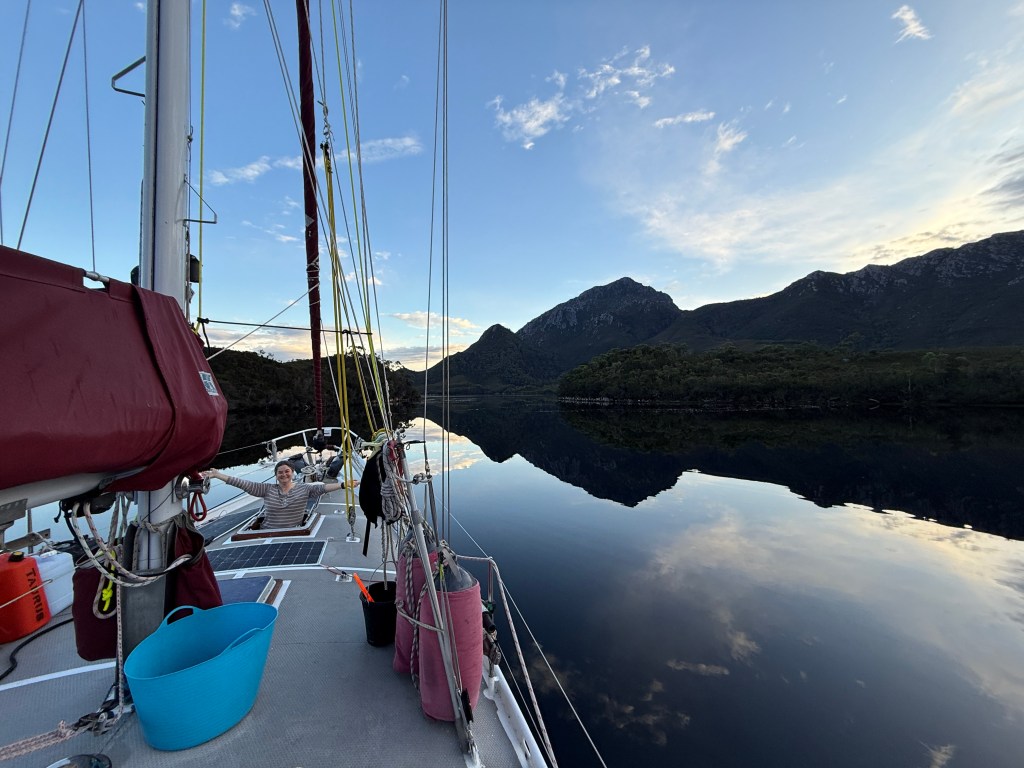
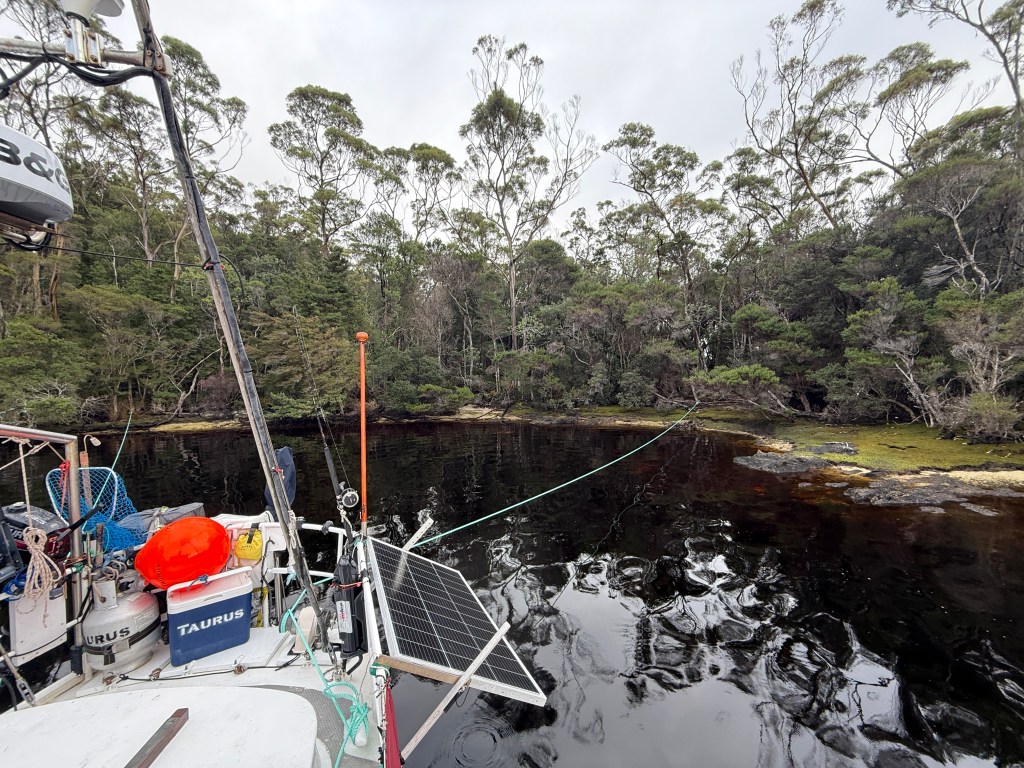
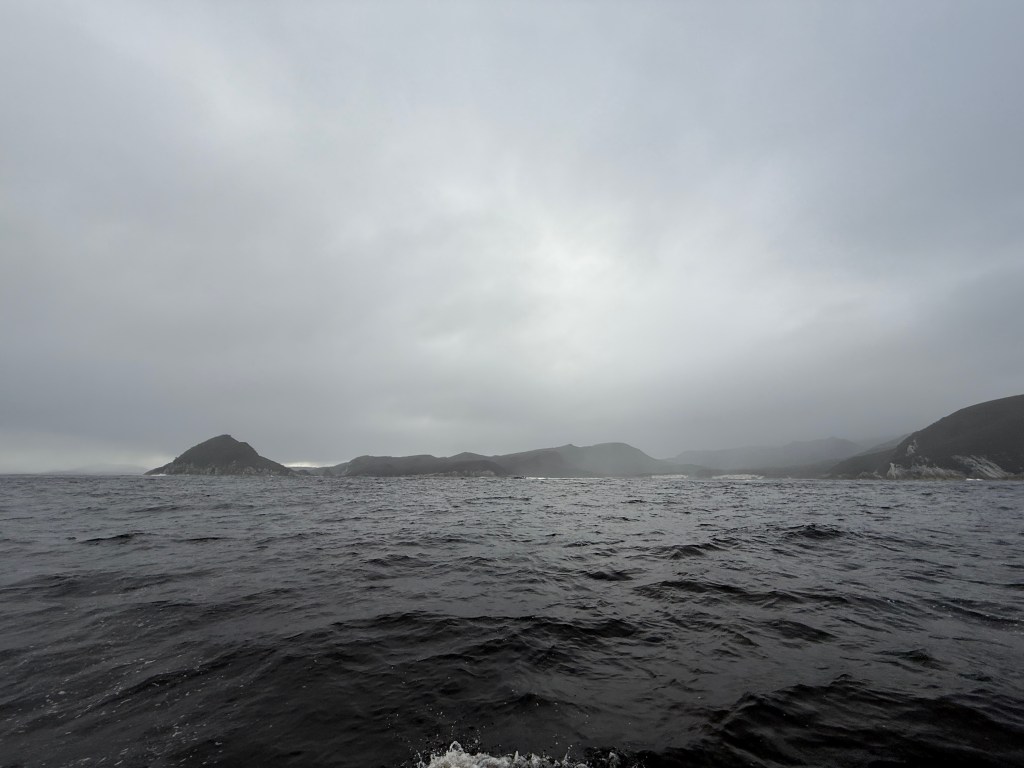
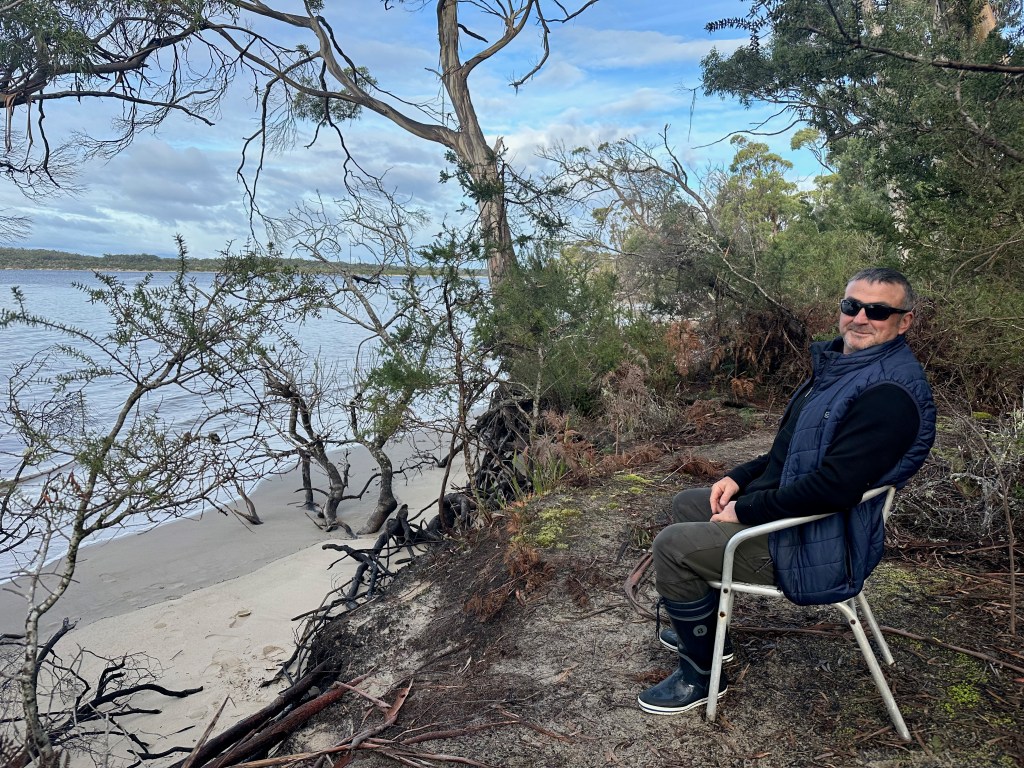
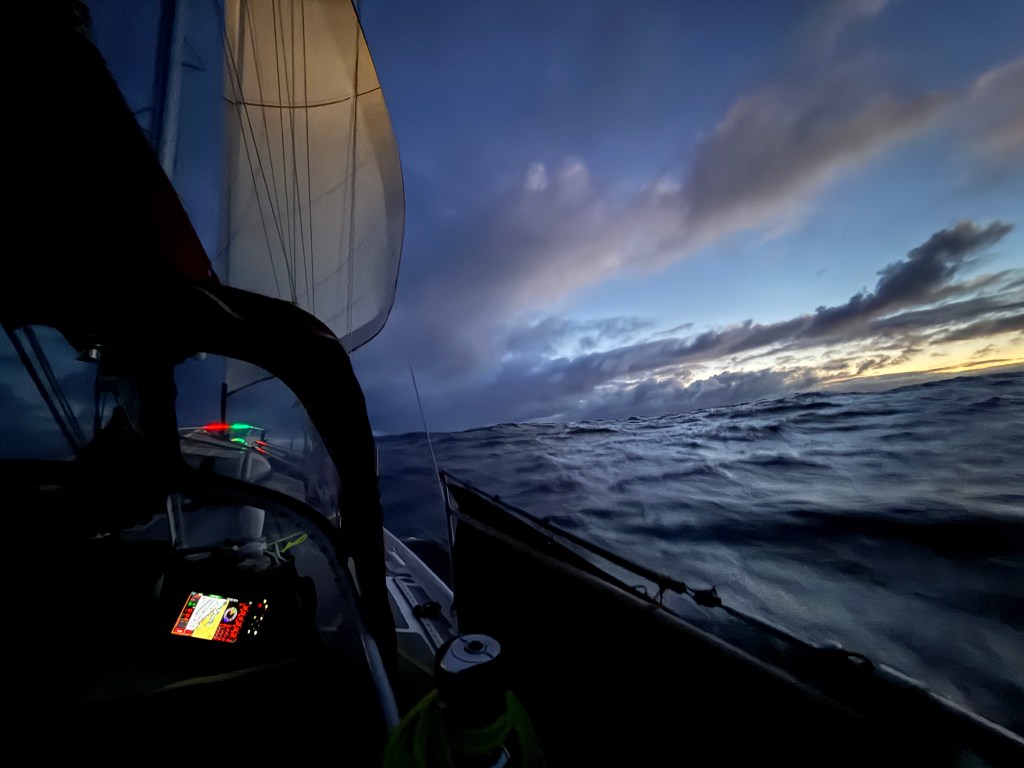
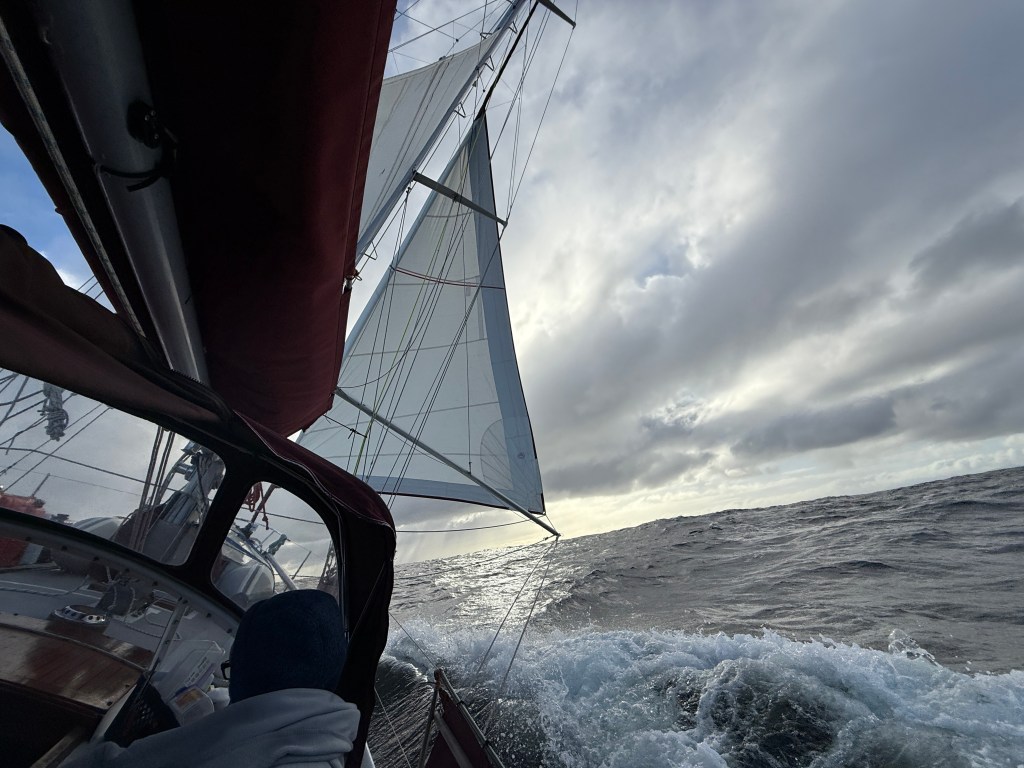
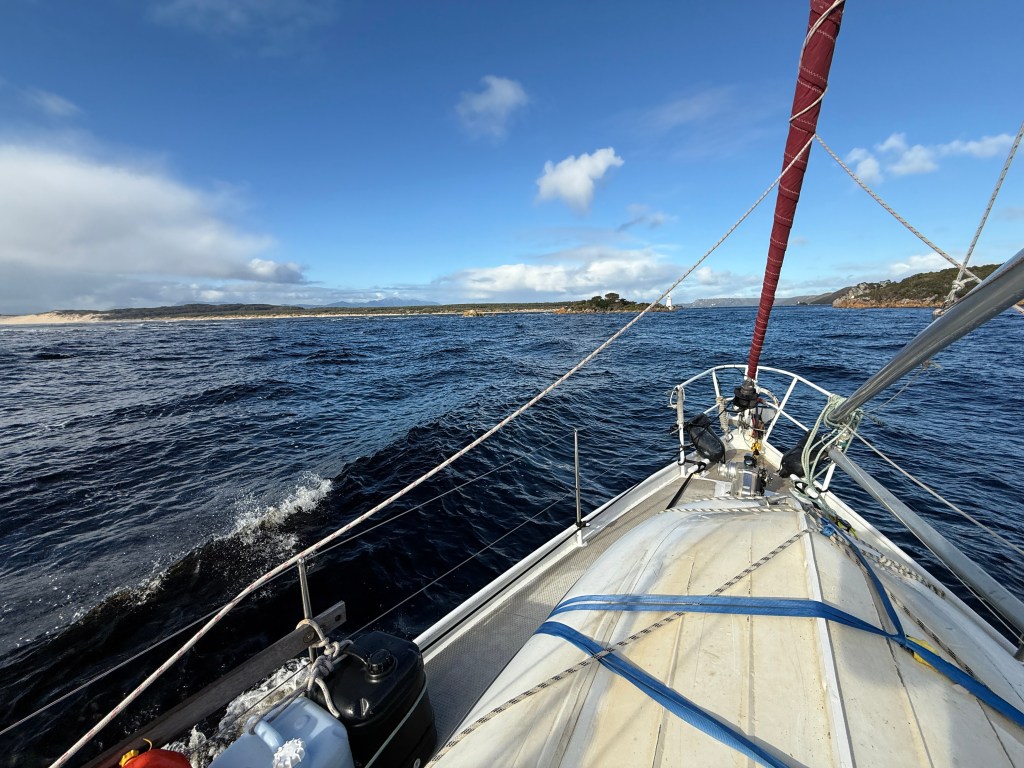
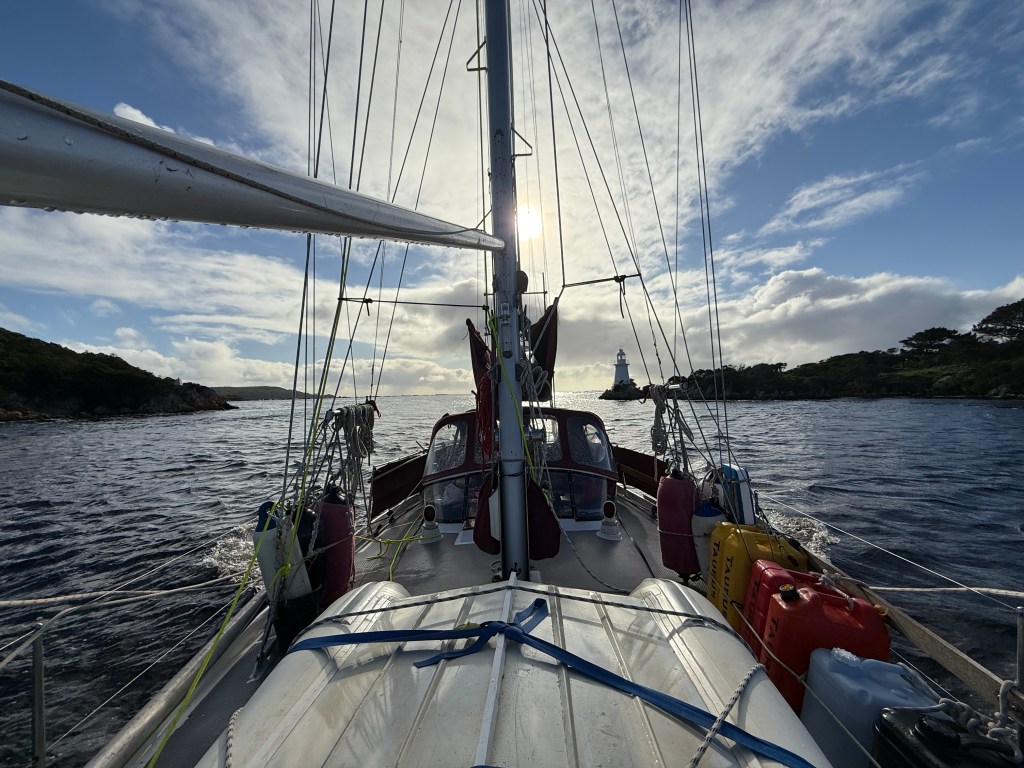
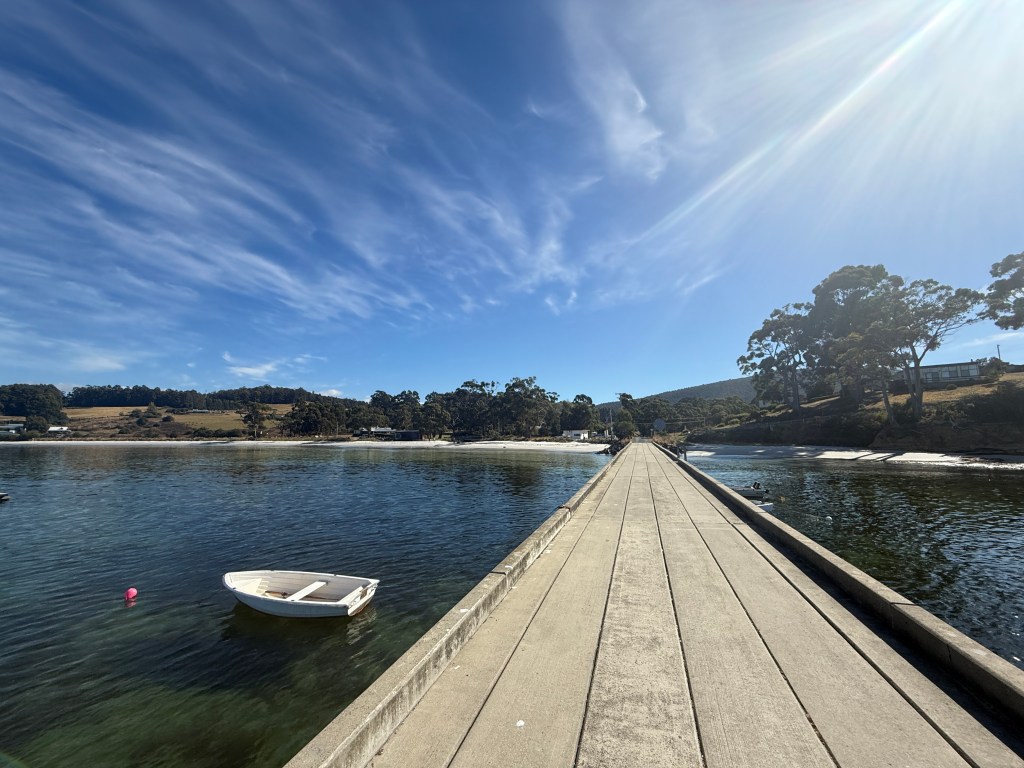
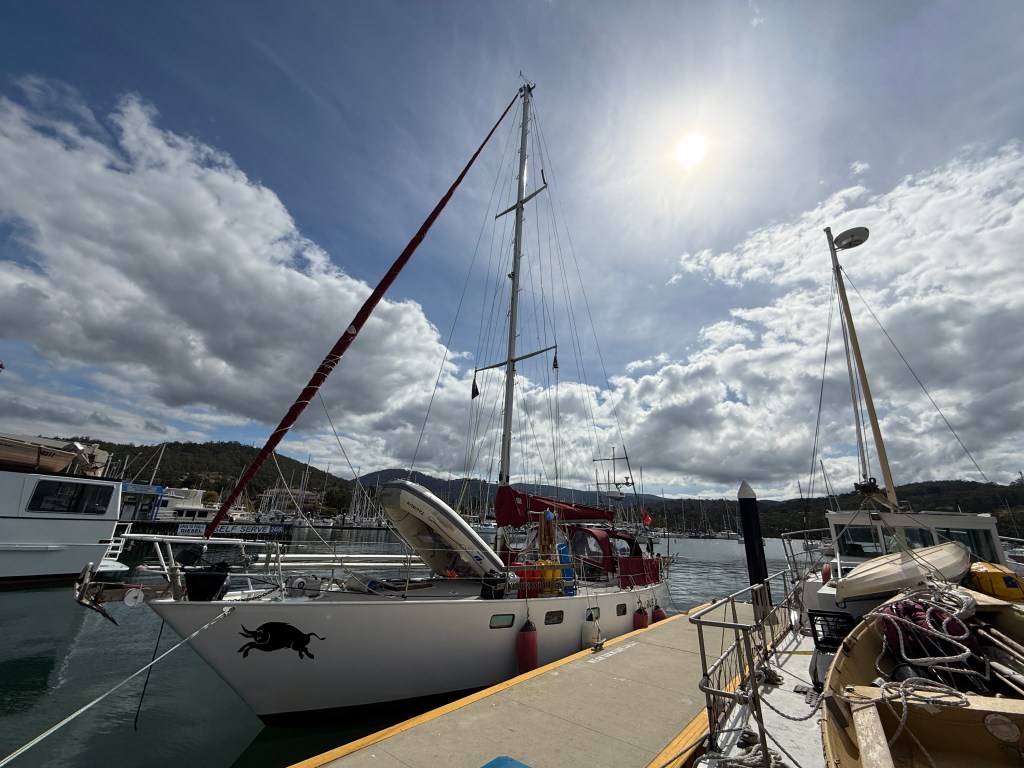
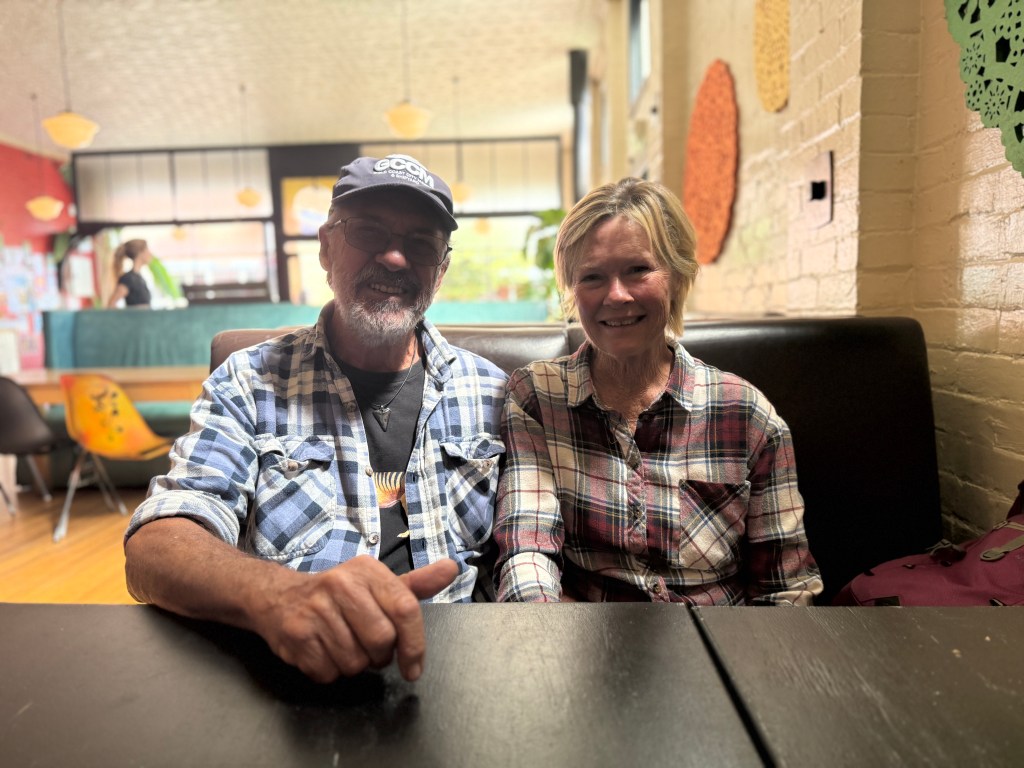
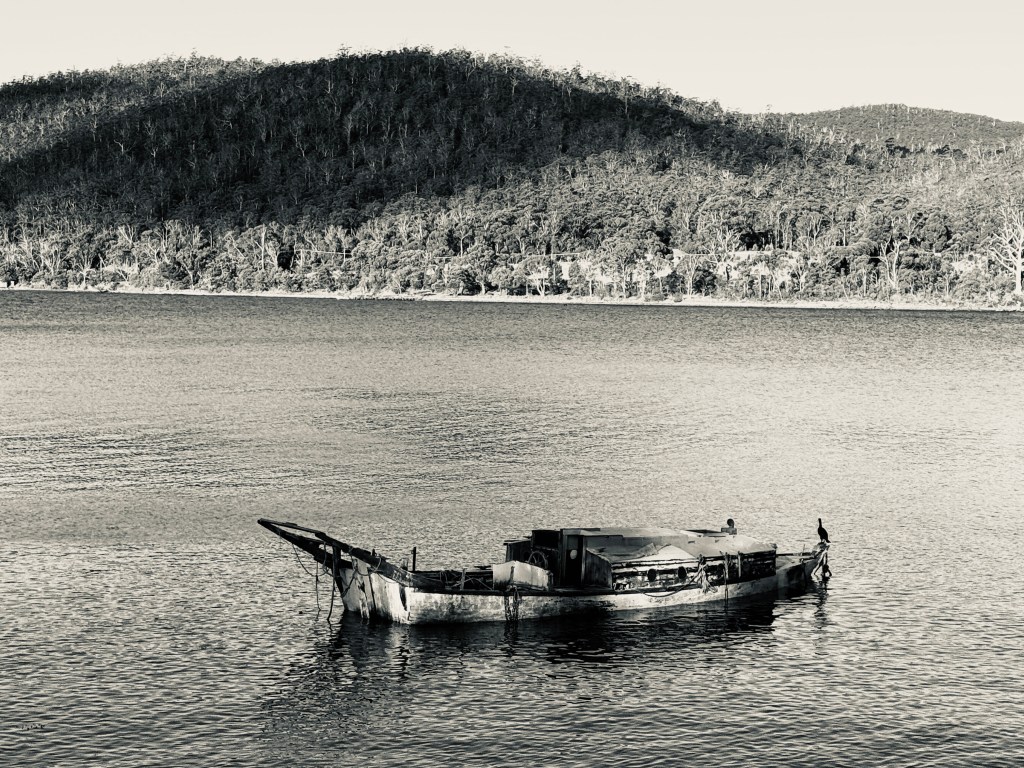
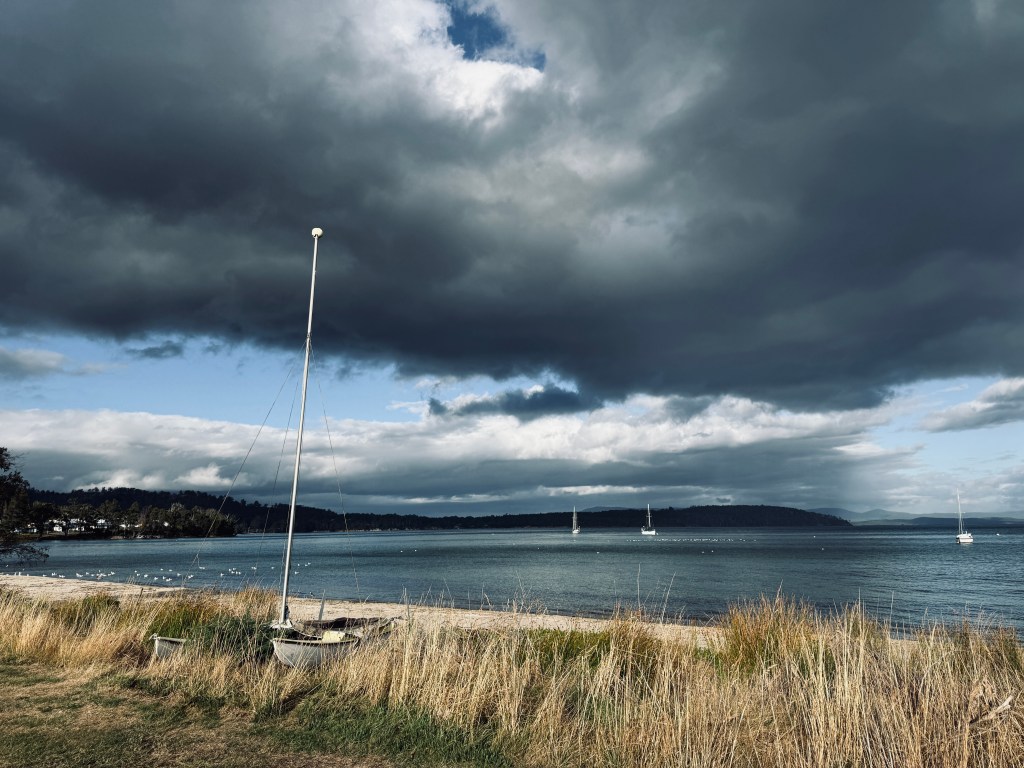
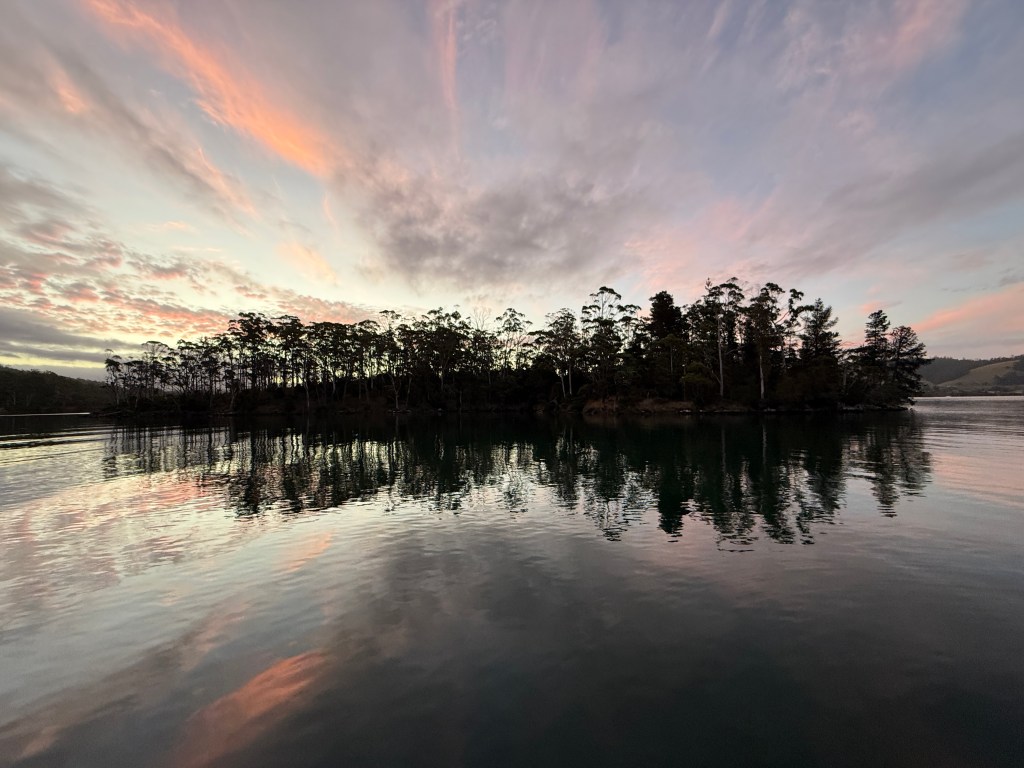
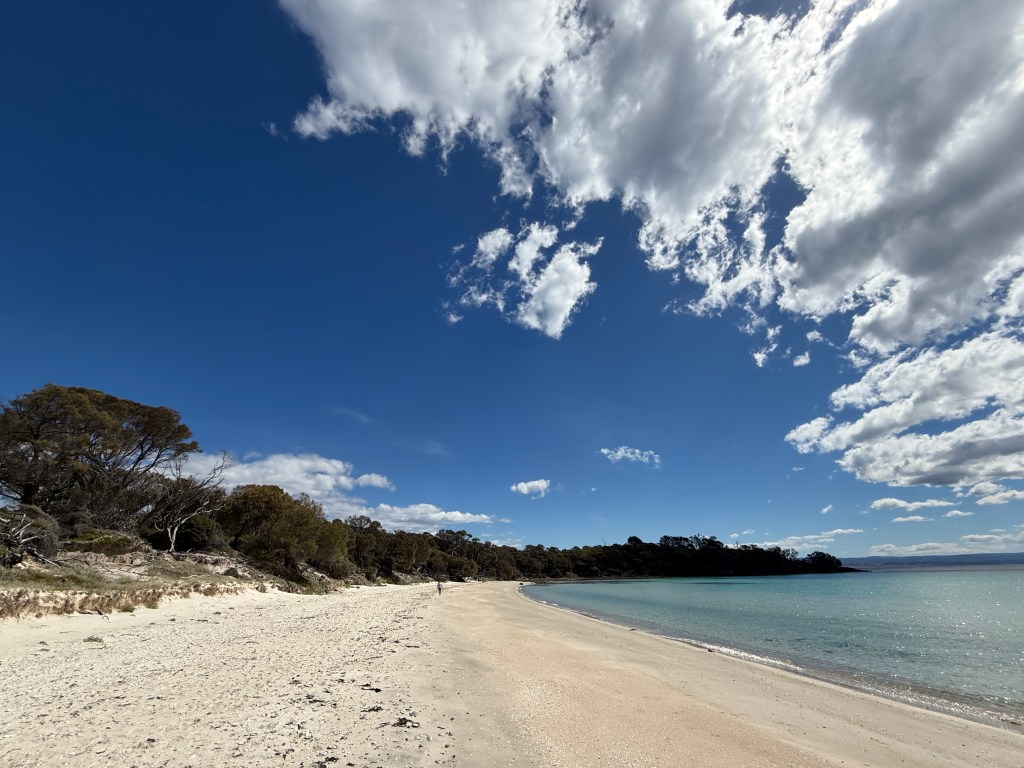
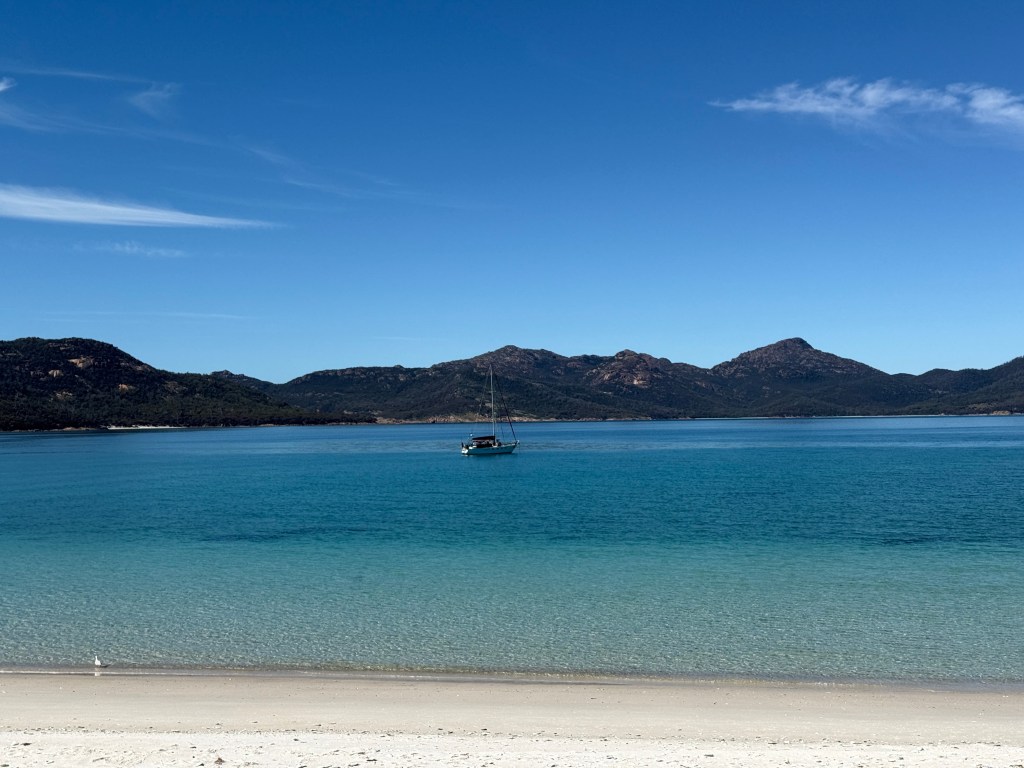
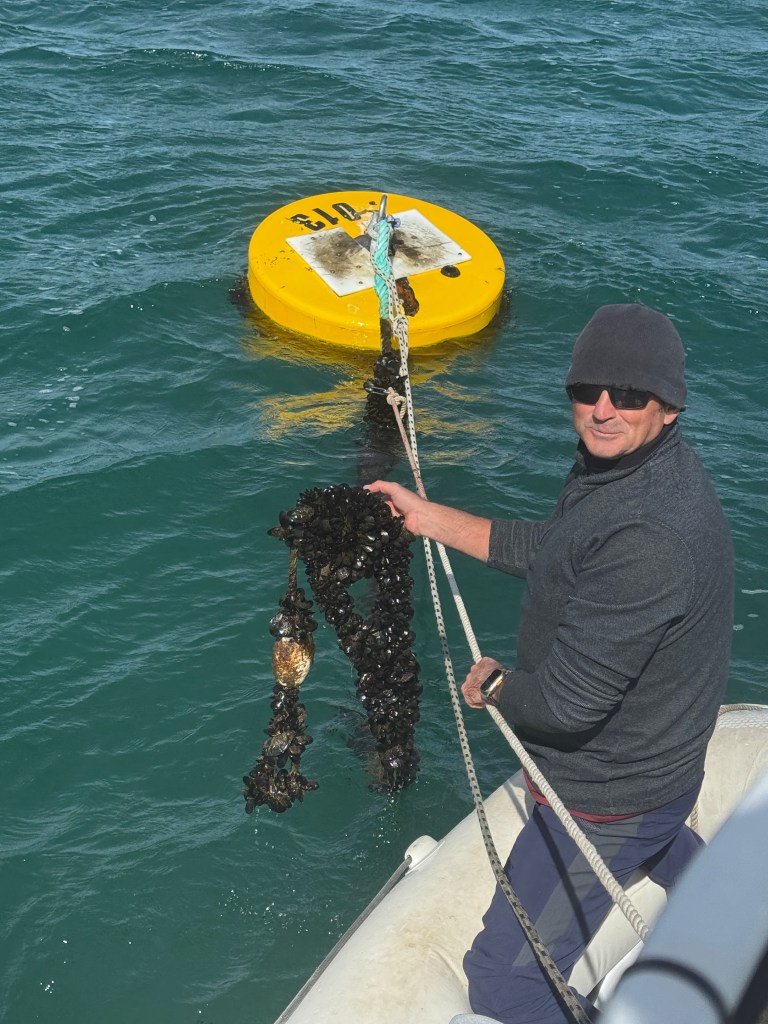
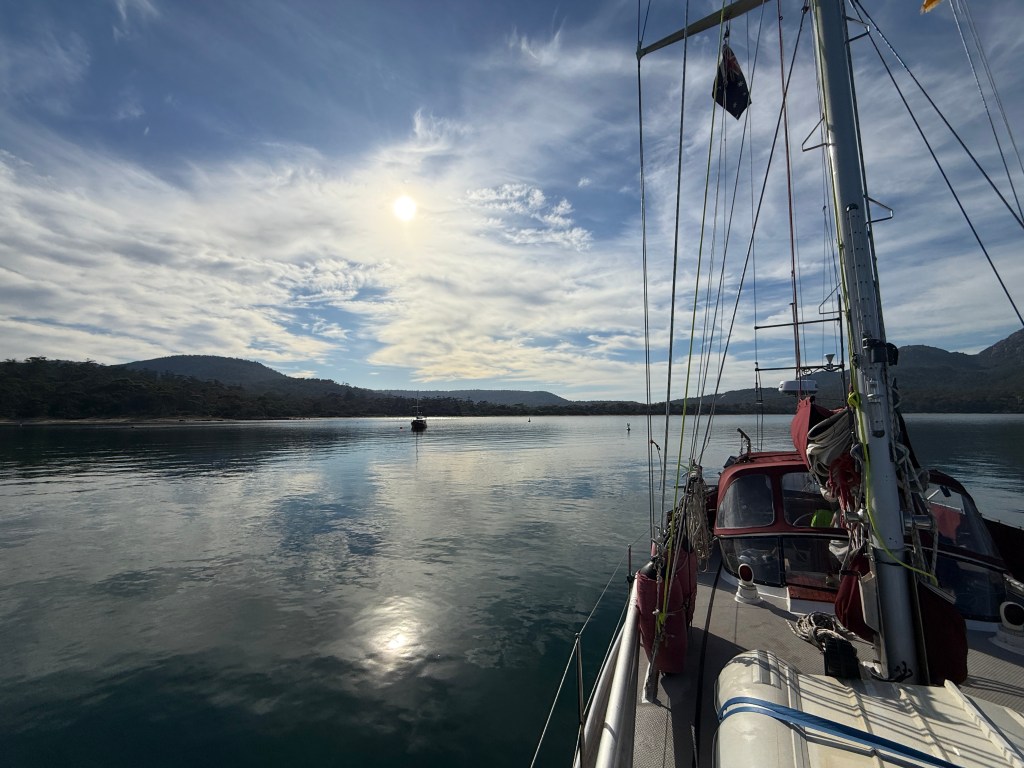
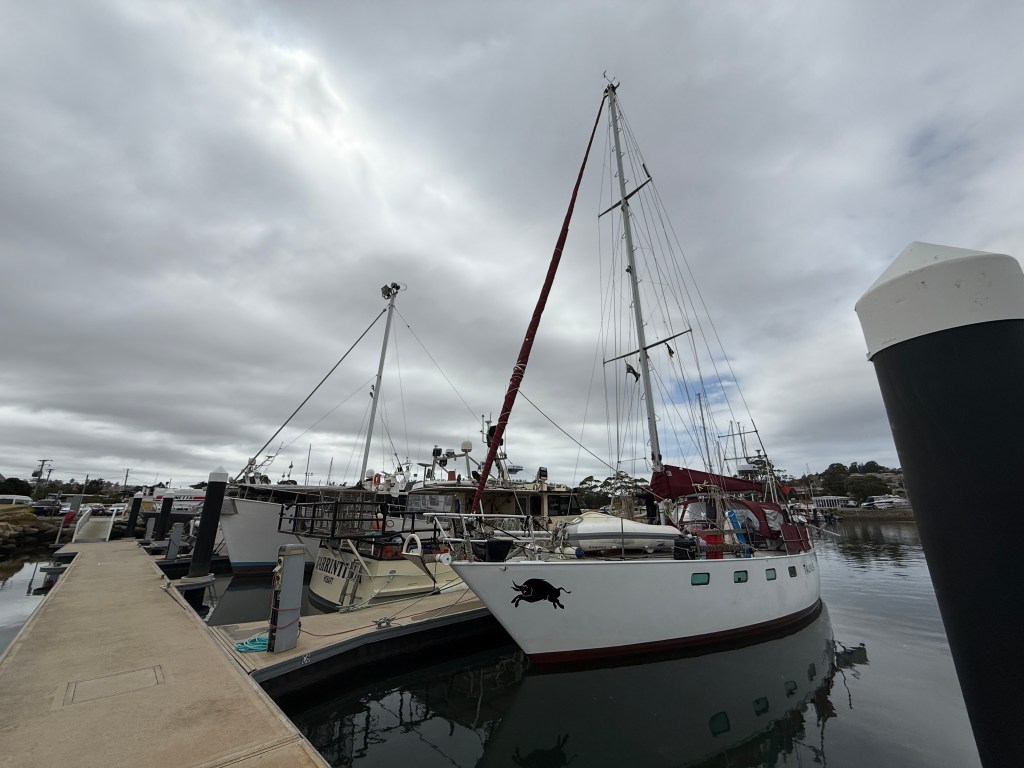
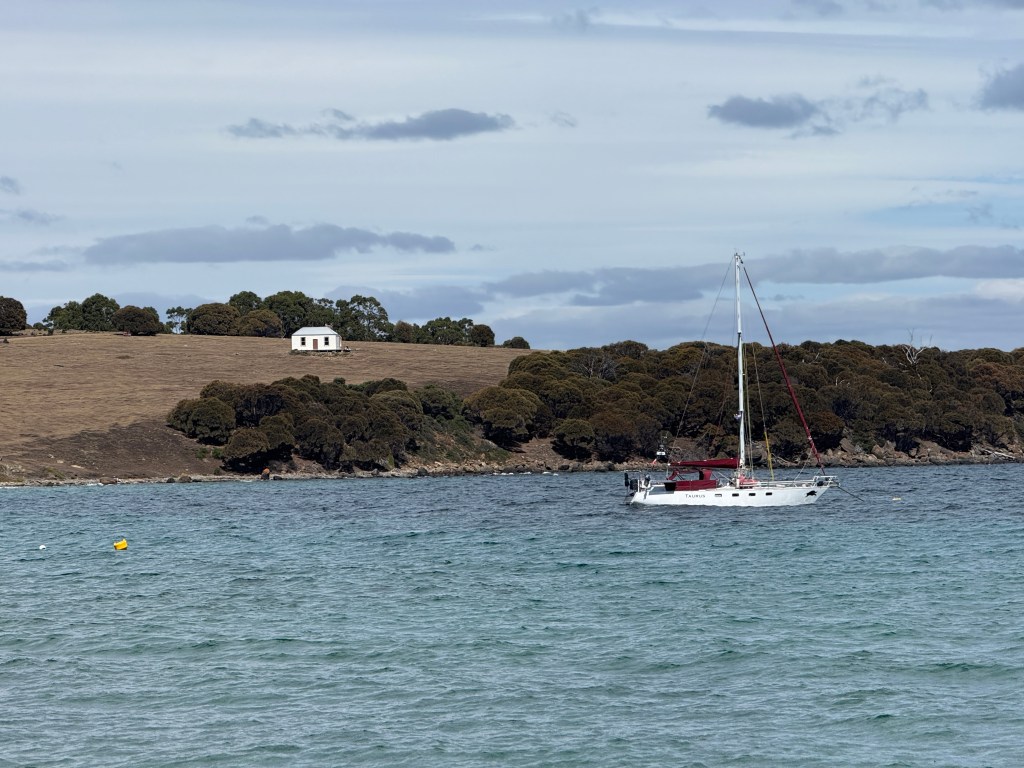
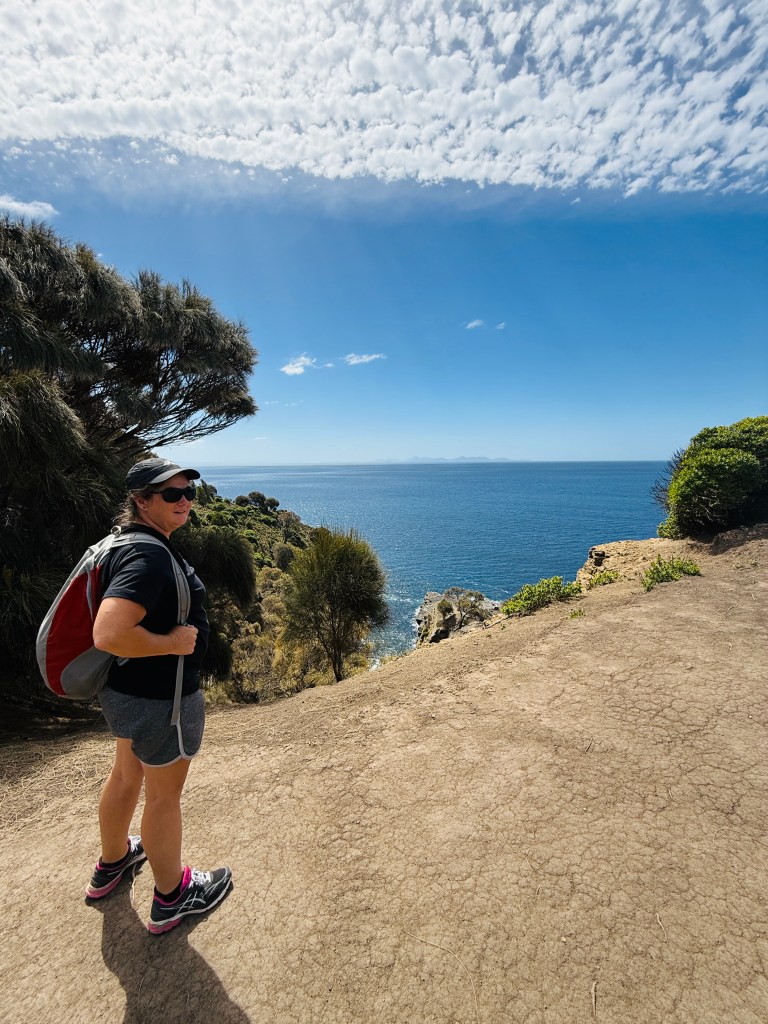
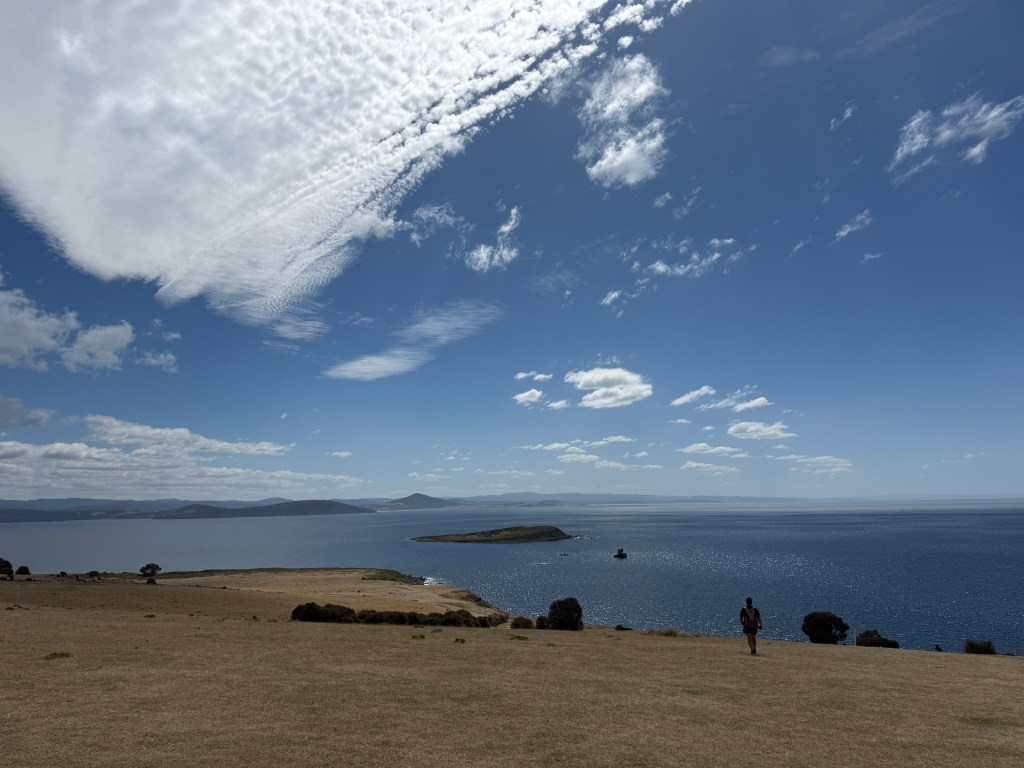
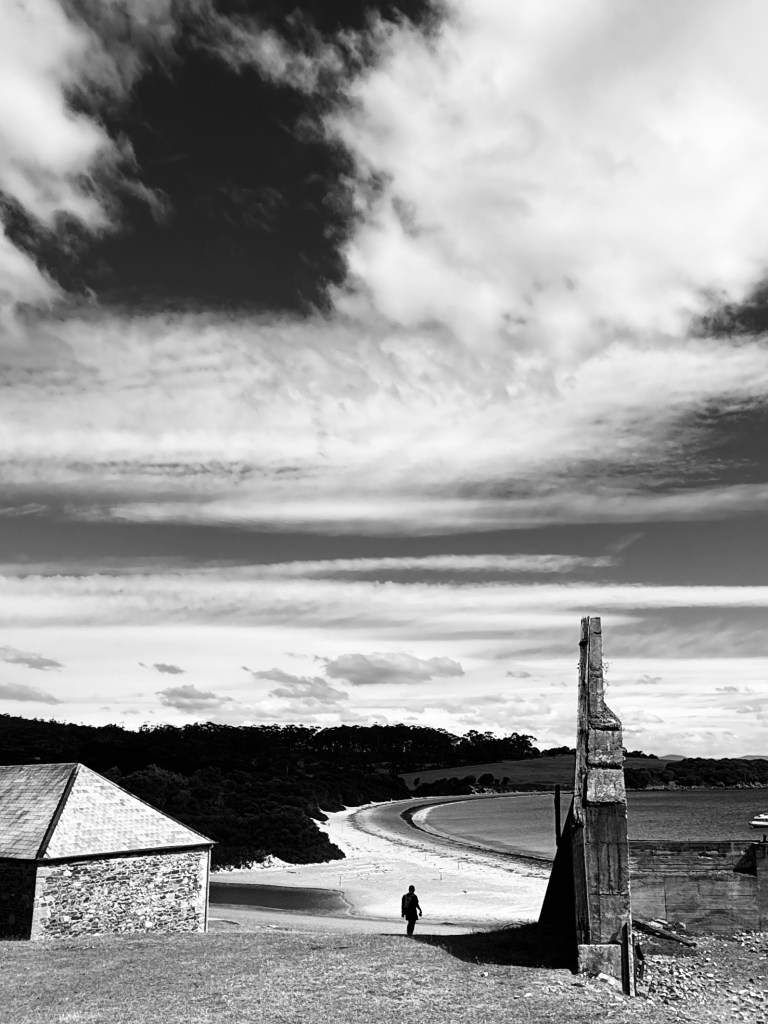
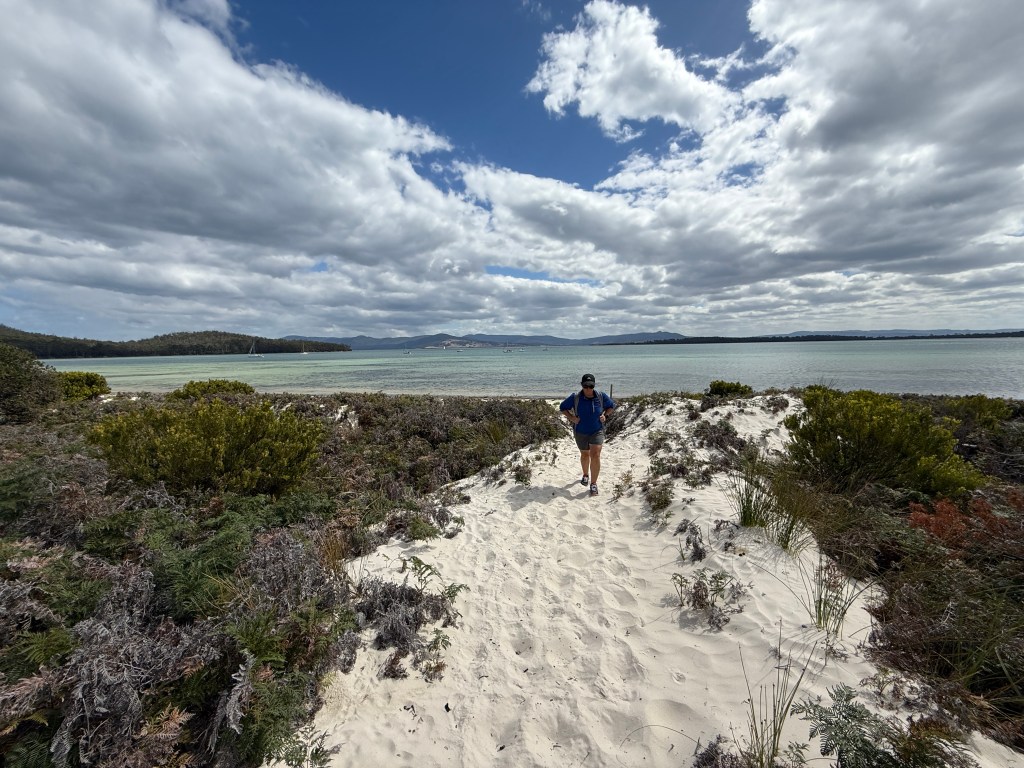
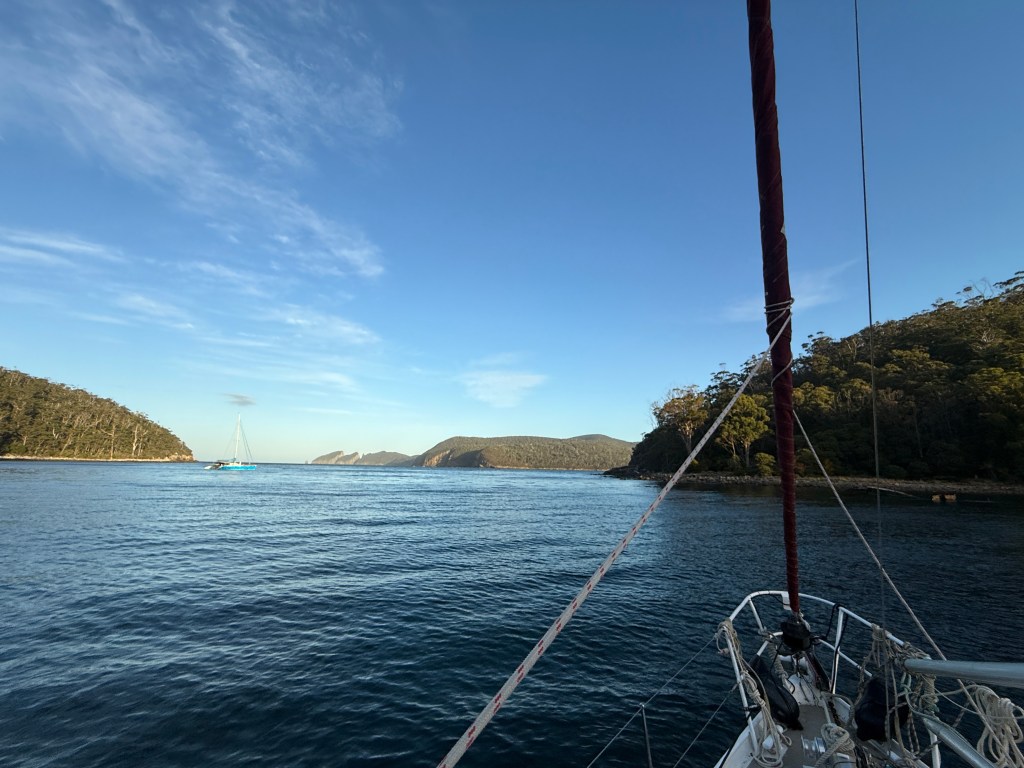
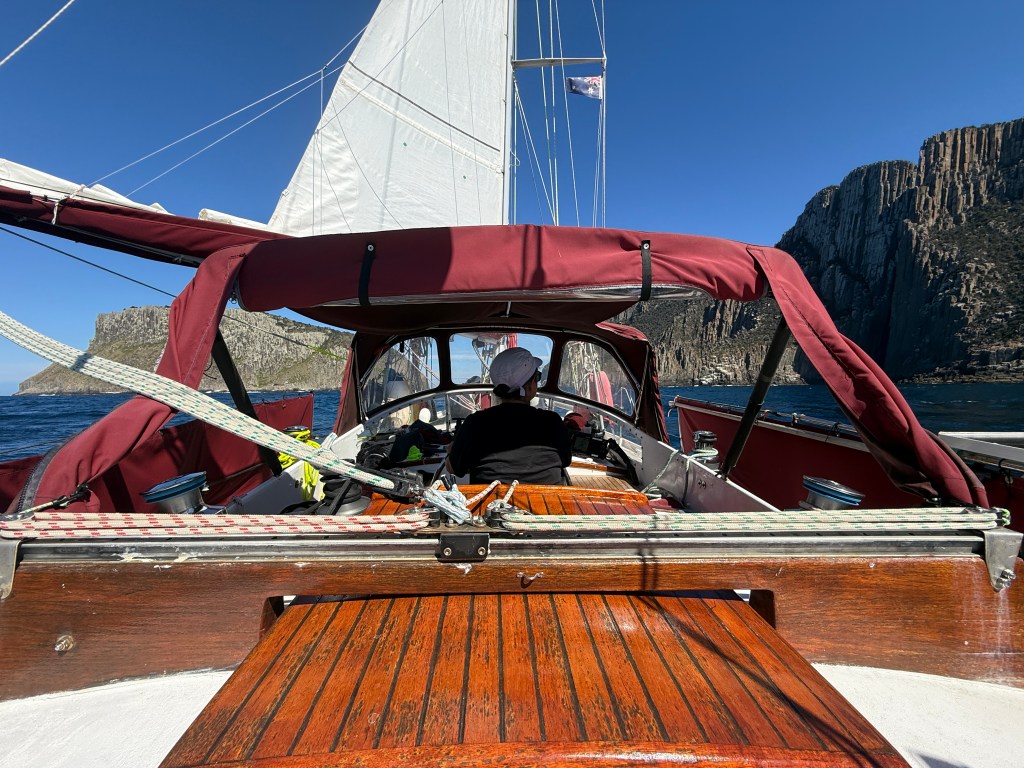
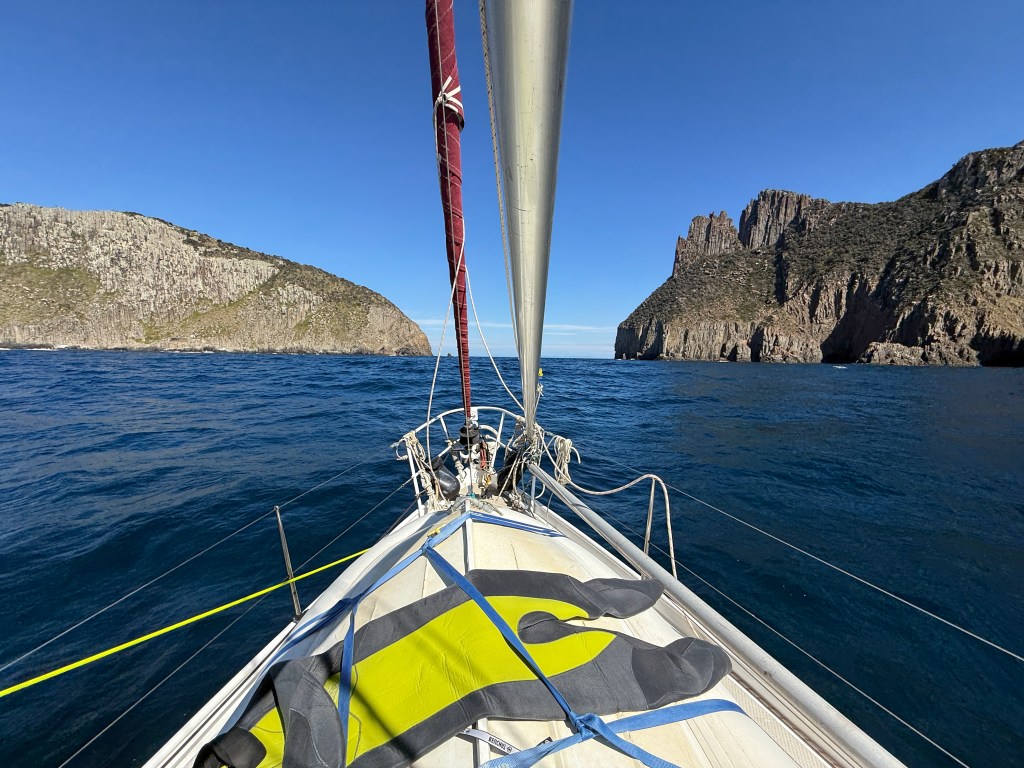
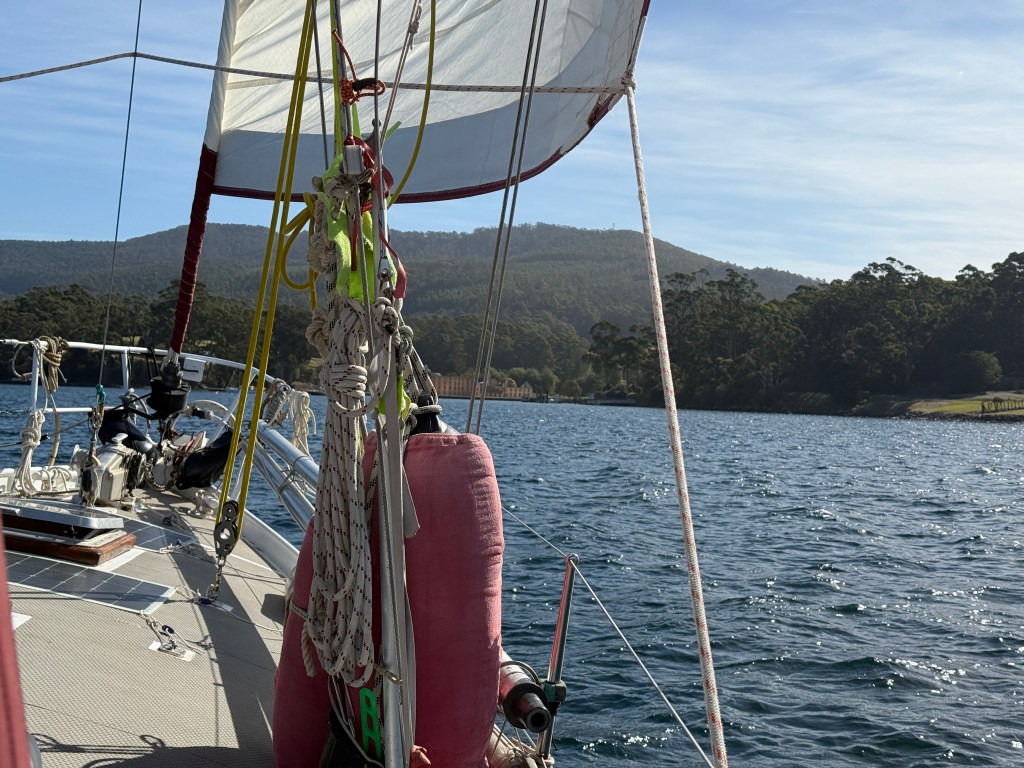
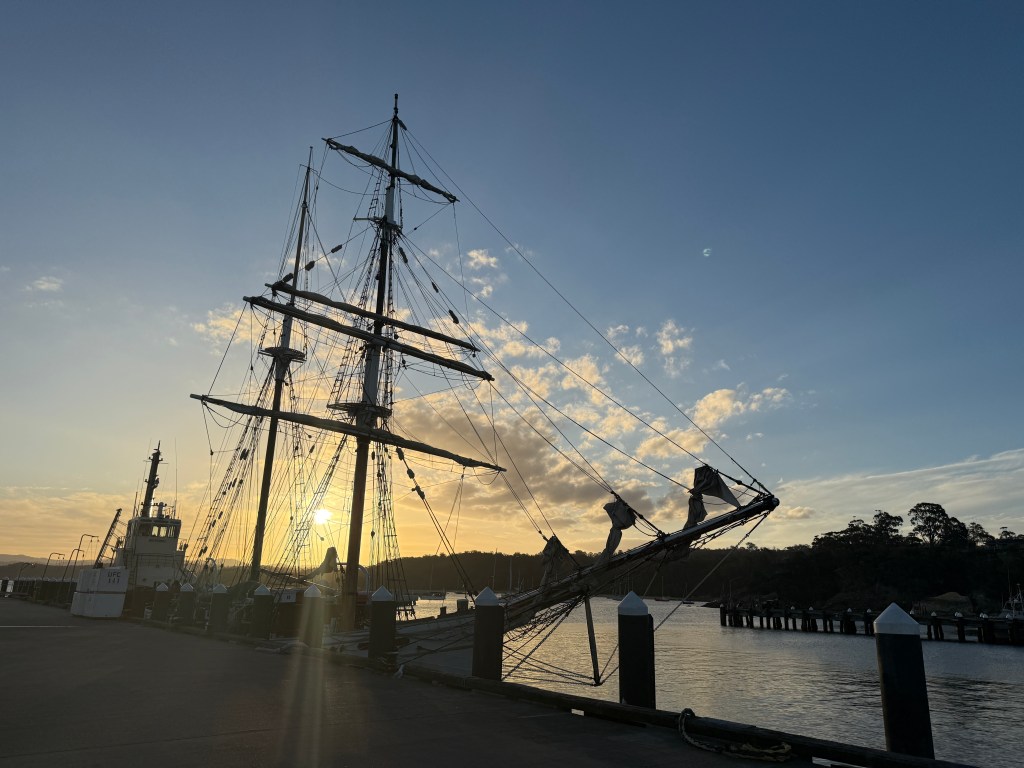
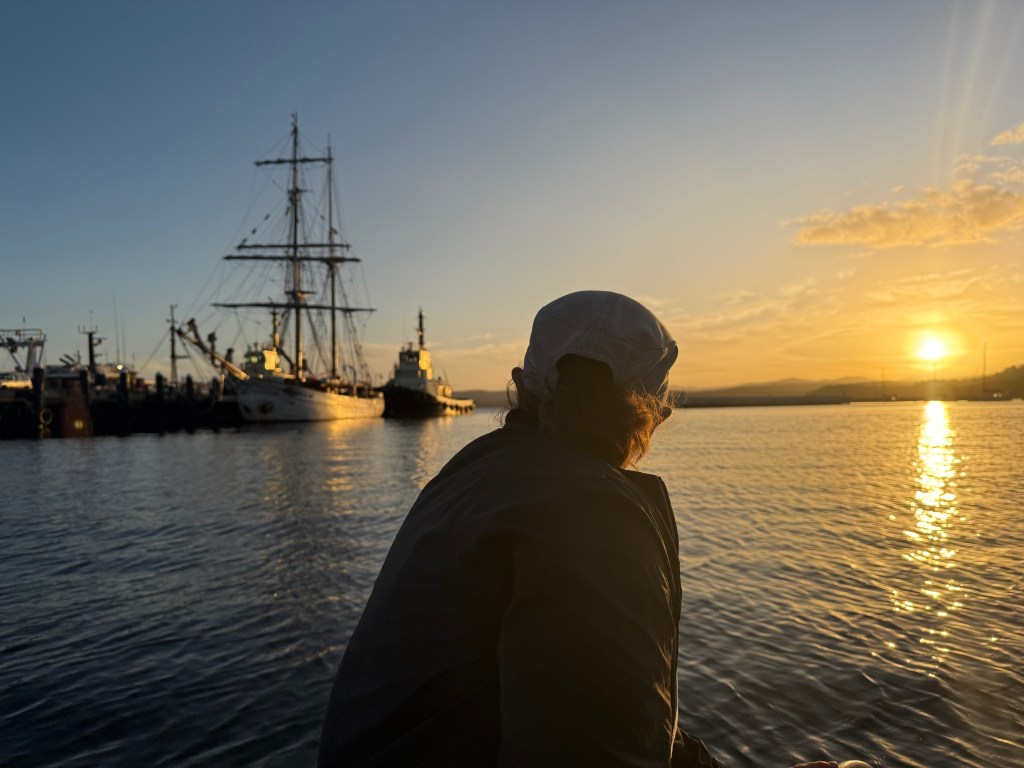
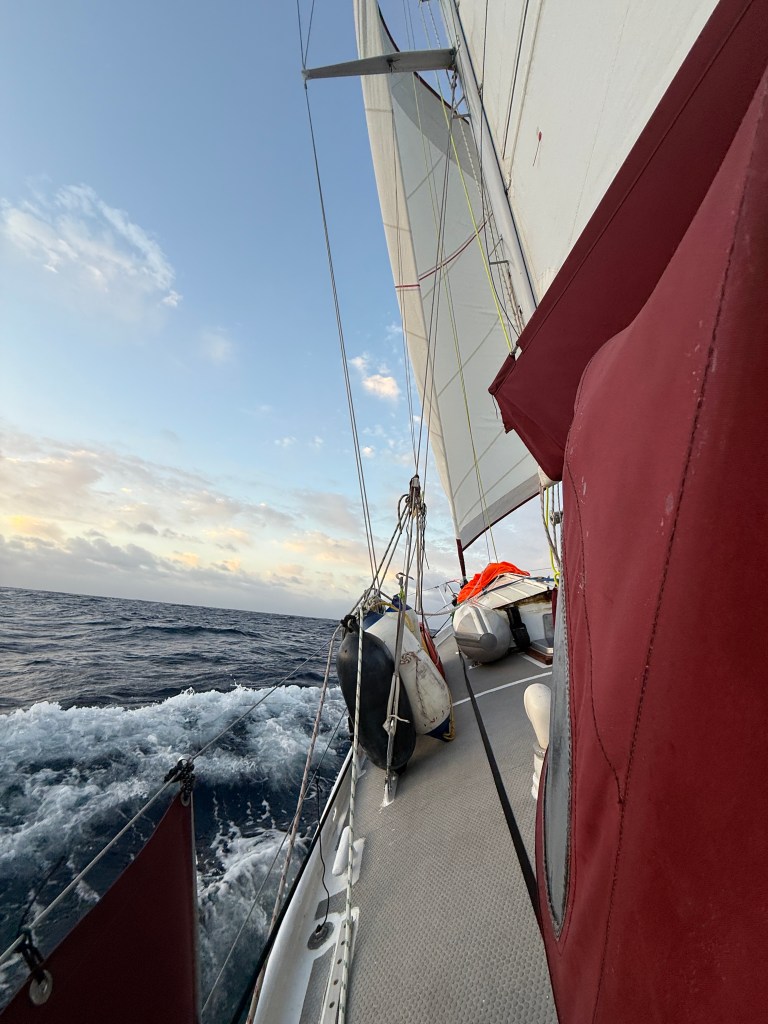
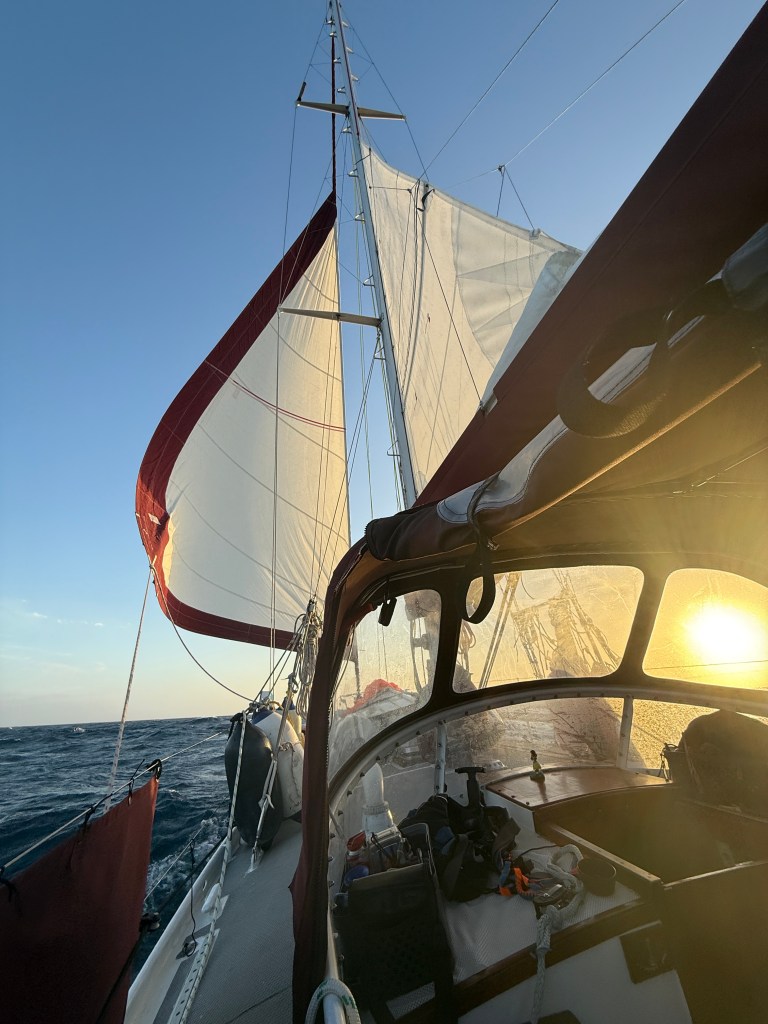
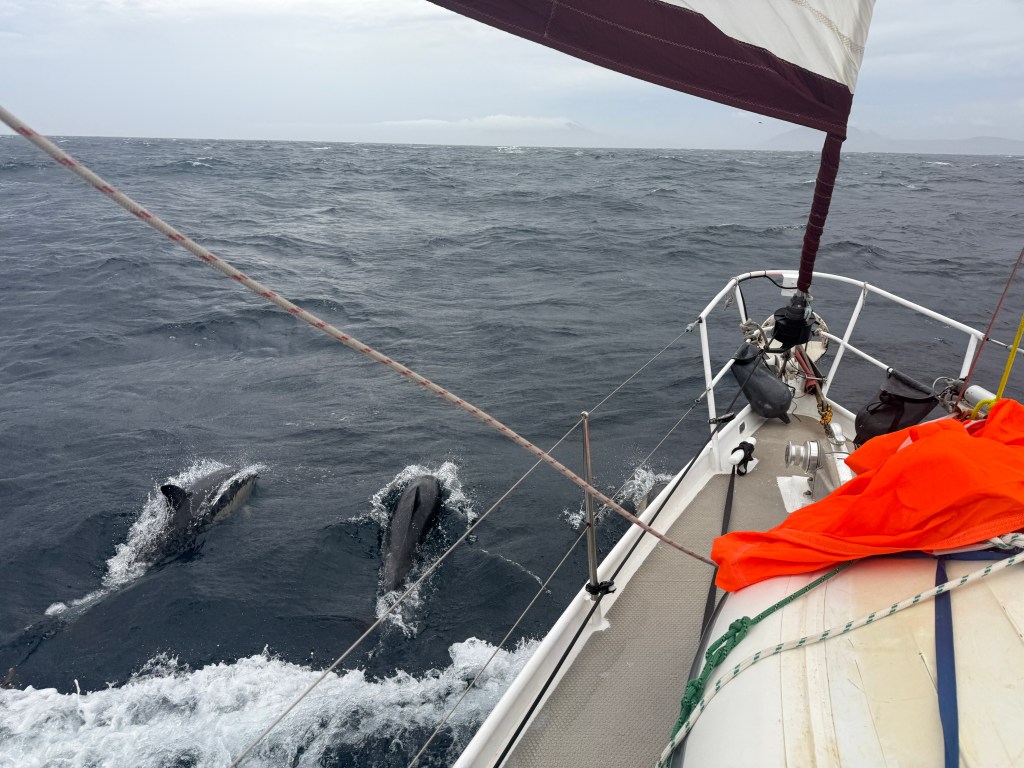
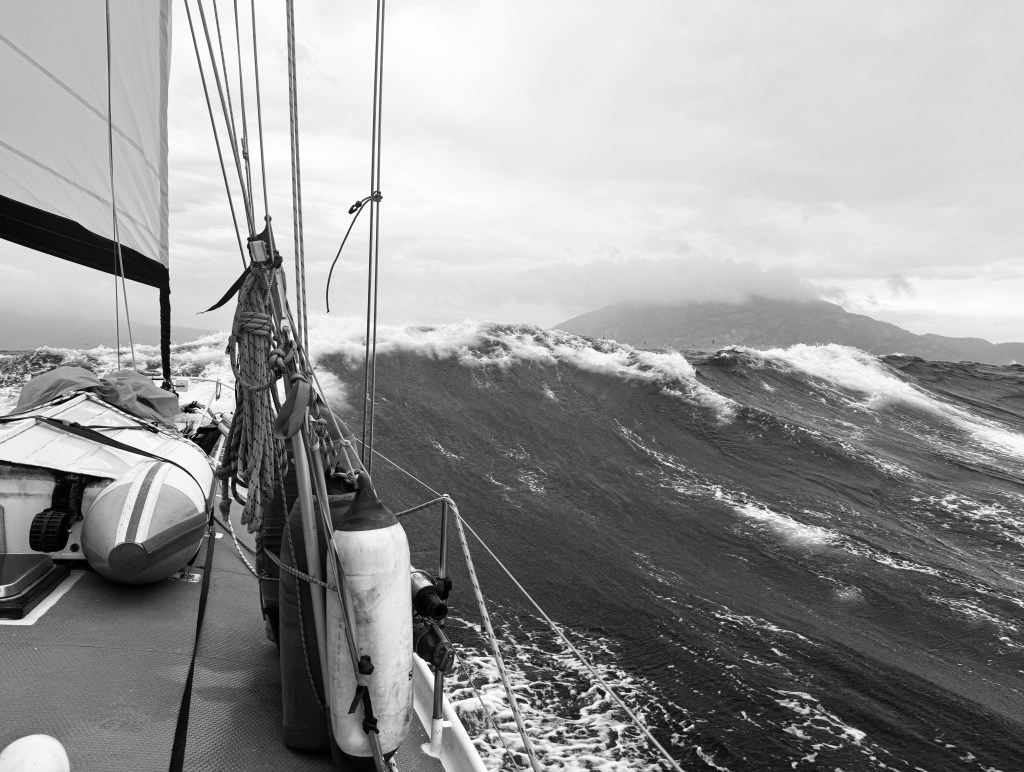
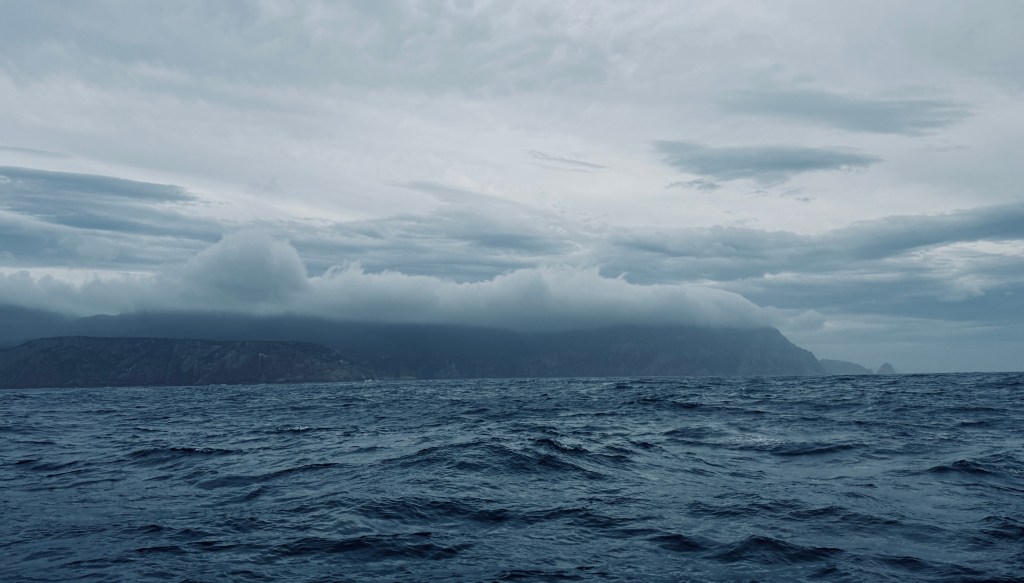
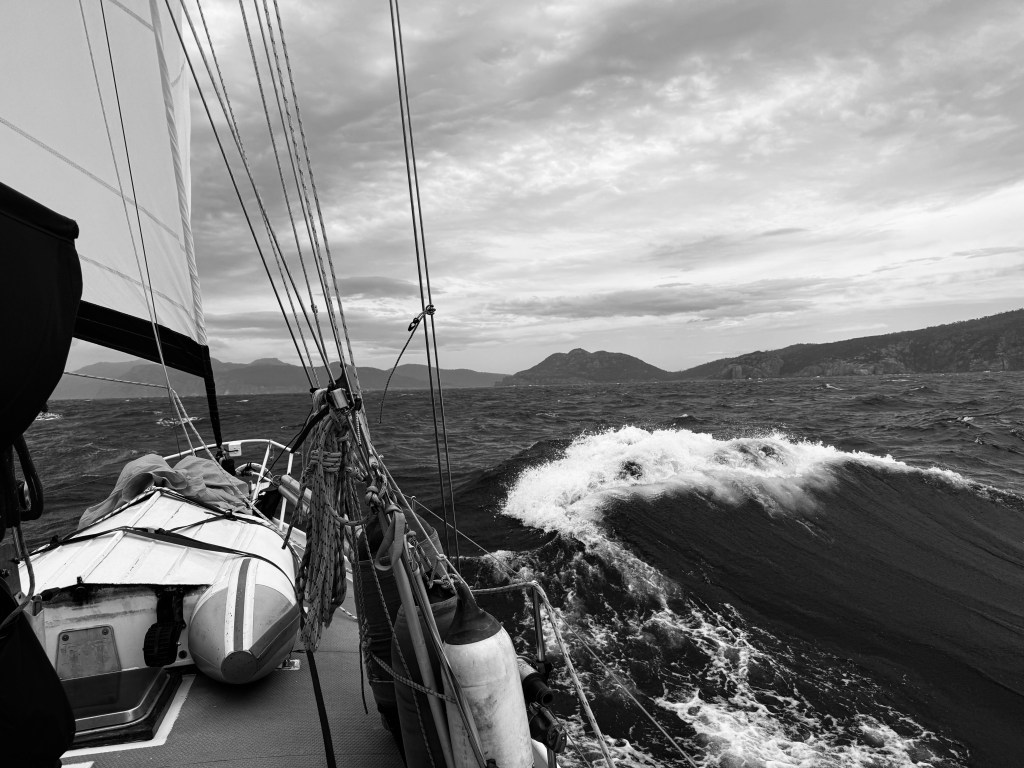
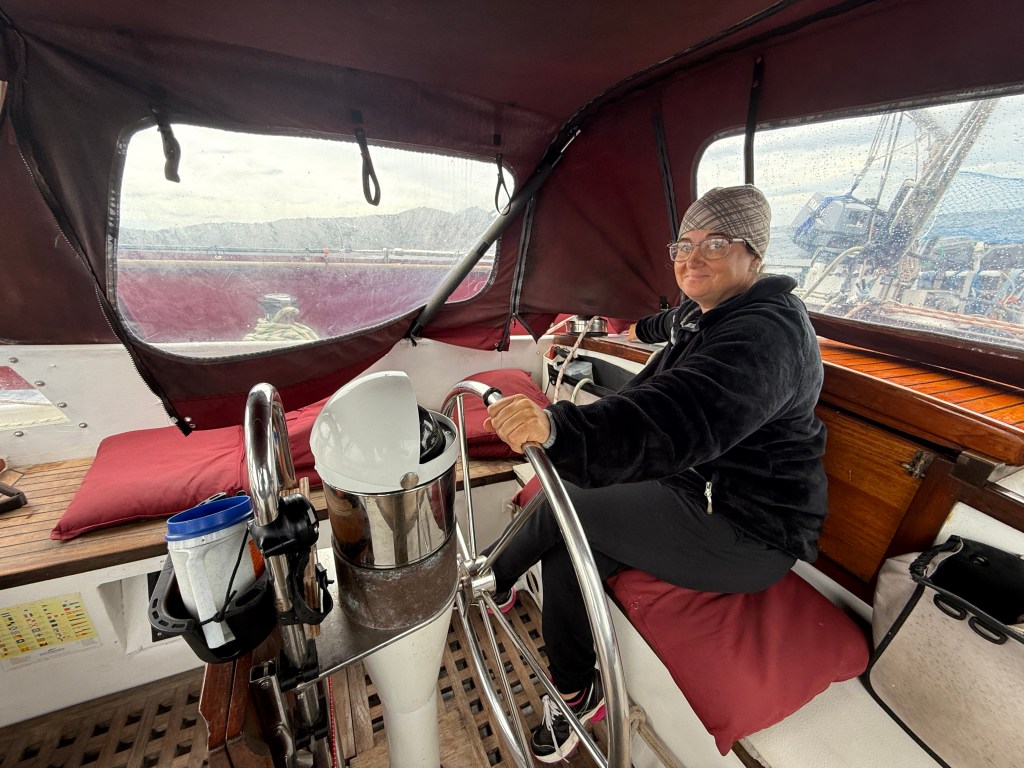
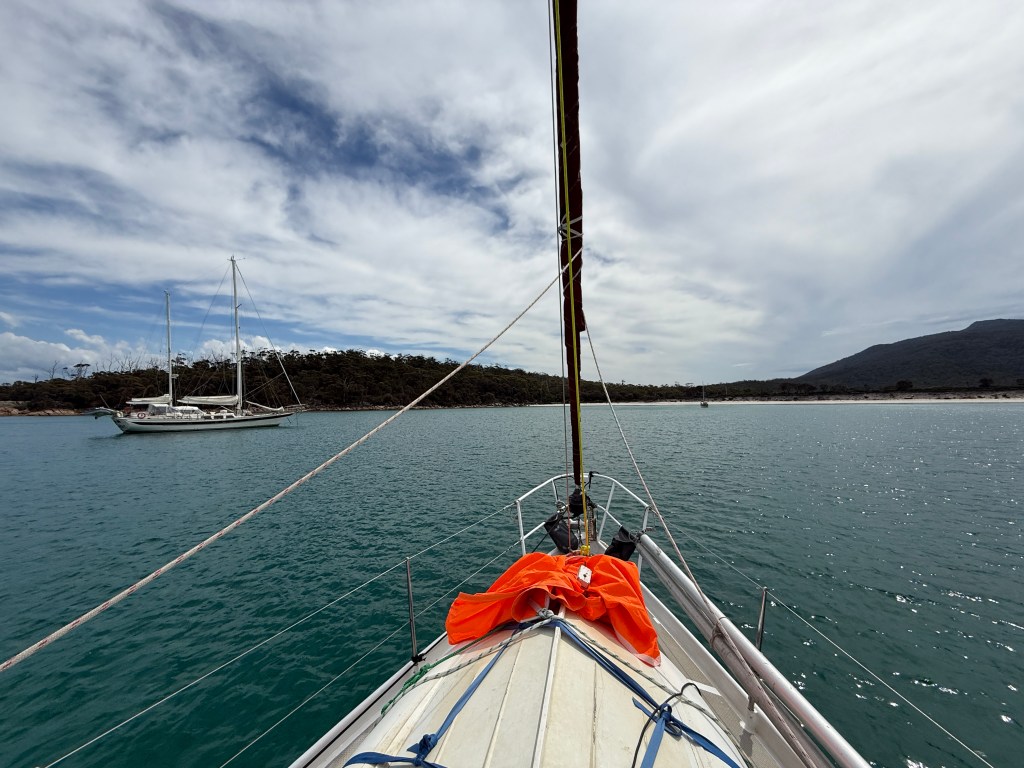
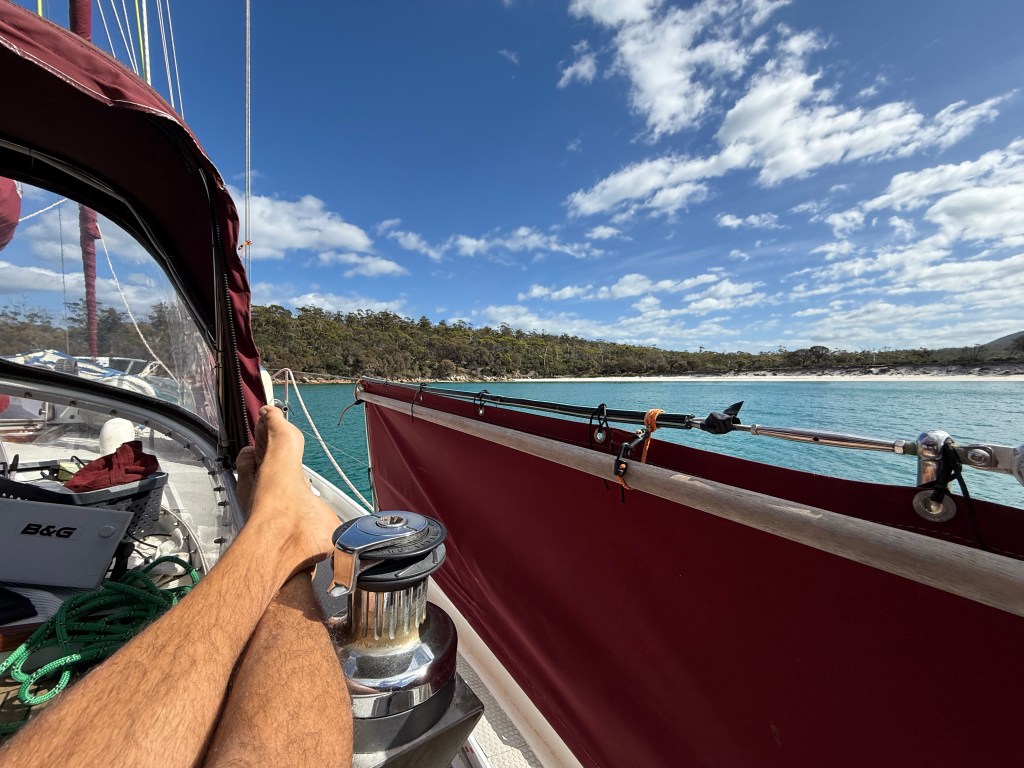
• Kelly Basin anchorage.

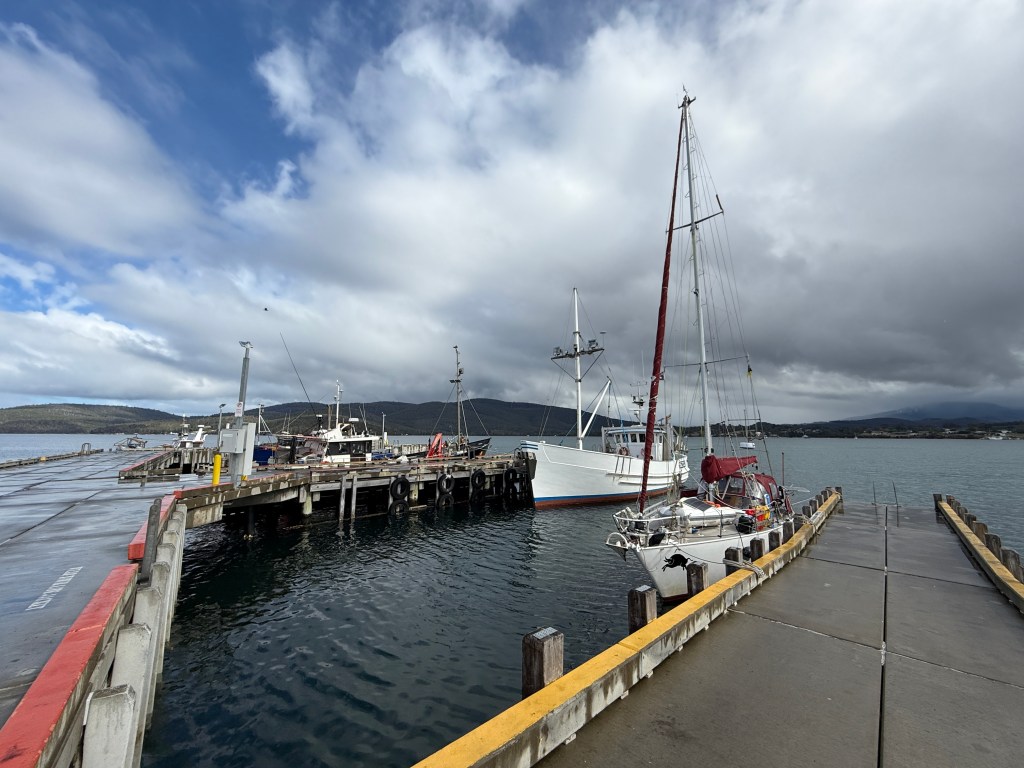
    We had arrived in Macquarie Harbour on the 29th of June, anchoring outside the only town of Strahan which is located in the north east corner.

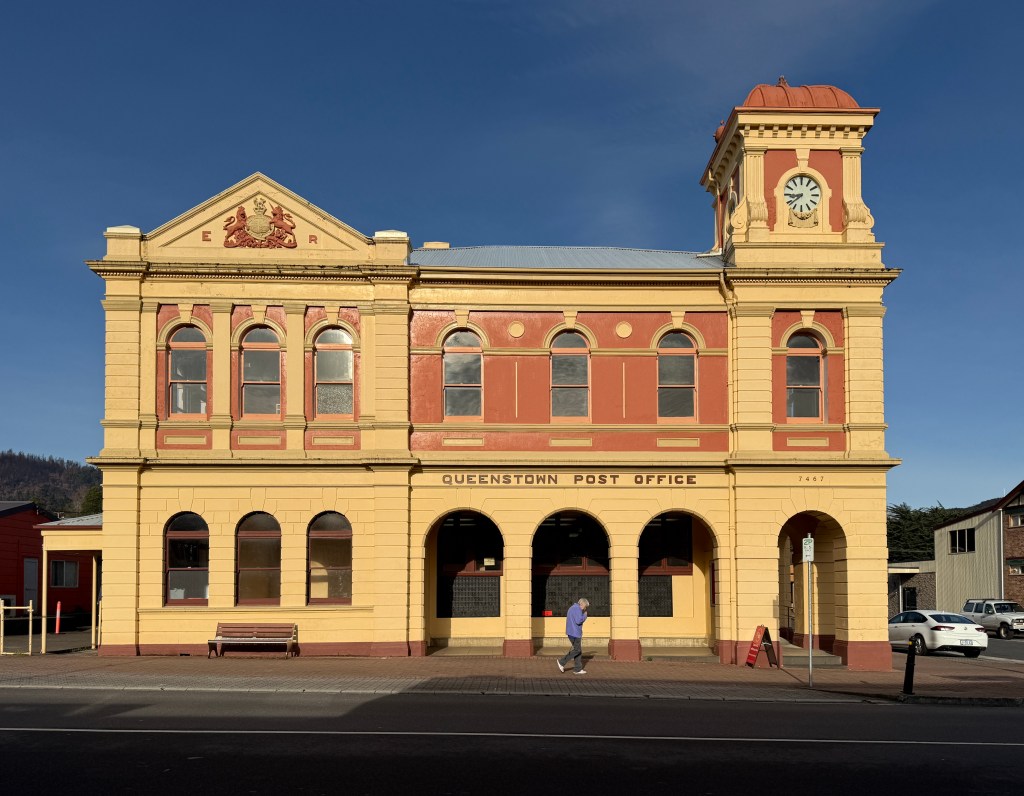
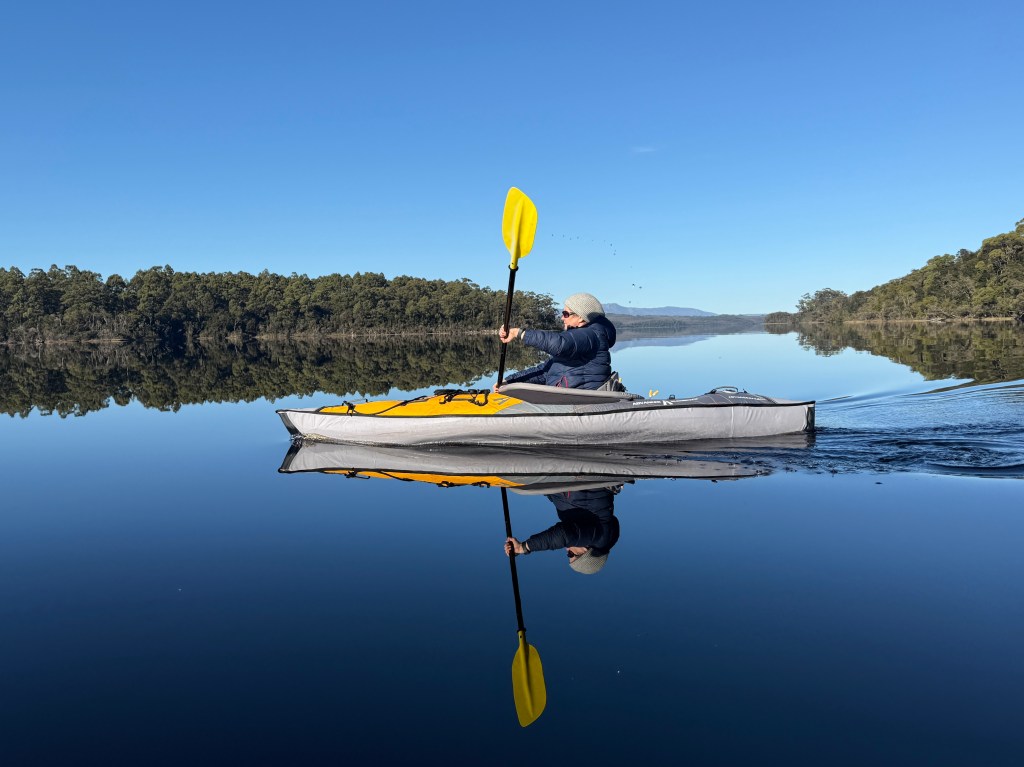
    Before exploring the local area we needed to restock the boat and we had a parcel to pick up. Cara is a keen paddle boarder, where as I used to be an enthusiastic multi-sporter (running, biking, and kayaking), so we carry on board a paddle board and an inflatable kayak for our respective uses. Paddle boarding, however, can be difficult in choppy anchorages, so we decided that another kayak would give us greater flexibility to explore bays, rivers, and so on together. I had looked into the various options available before making my initial purchase, and had decided on an American brand called Advanced Elements. This company makes inflatable kayaks that are actual usable kayaks, rather than inflatable toys. Having been very happy with my purchase we quickly decided to buy Cara one of these, though our frugal inclinations demanded that we wait until the kayaks came on sale. When they did we ordered one through Oz Kayaks, who offer free postage, and arranged for it to be sent to Strahan.

    Strahan Post Office, a lovely old building.

    With the kayak uplifted from the kind people at Strahan Post Office, we spent the afternoon paddling around Risby Cove, the bay that Strahan is built around. As we mooched around we saw a yacht enter the Cove and kayaked over to say hello. This meeting turned out to be a stroke of serendipity. The sailor proved to be one Trevor Norton, a local legend who has sailed in this area, commercially and privately, for decades. An architect by trade, Trevor took it upon himself to add detail to the local charts and invited us to his home for a coffee and a chat about the local navigation hazards.

    Trevor’s ‘man cave’ is an Aladdin’s Cave of sailing memorabilia, and the man himself a mine of information. The hand drawn charts he showed us made our subsequent exploration of the area vastly better informed and safer.

    Trevor Norton. Star geezer.

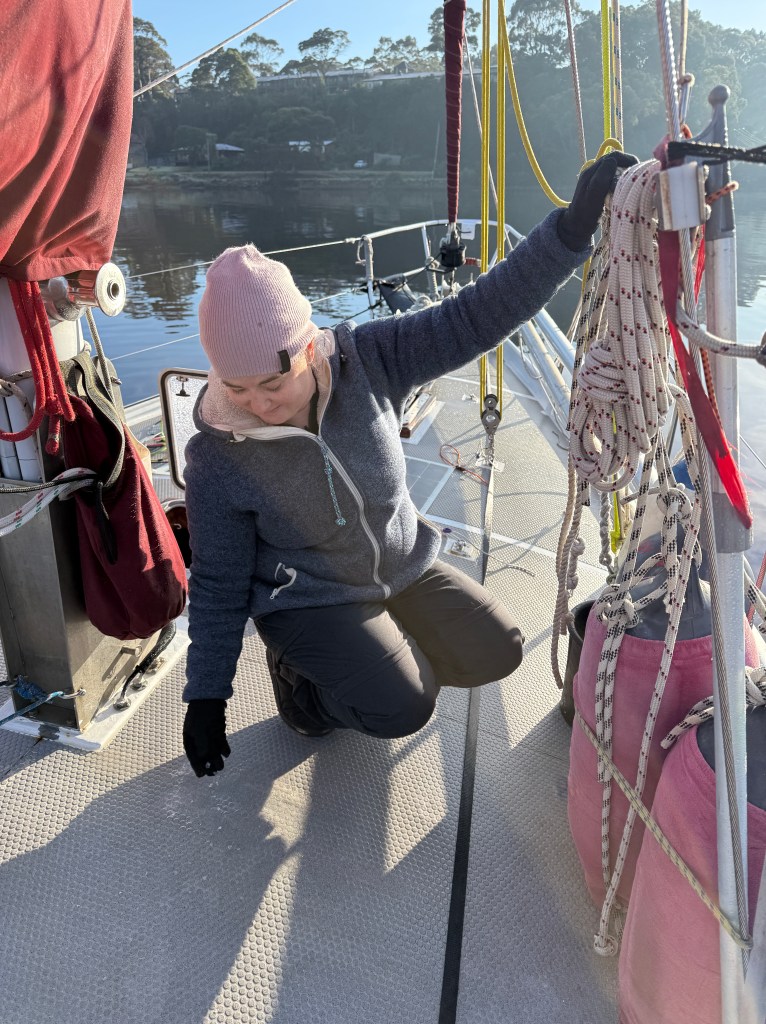
    The weather in Strahan was unremittingly glorious. Everyday was beautifully sunny, clear and calm — though the temperature quickly dropped as the sun grew low in the sky. It wasn’t long before we found the season’s first ice on the deck.

    Ice on the deck! Positively polar..
    Taking rubbish and recycling ashore. We didn’t get far before one of the local ferry operators relieved us of the kayak box to put it in their recycling pile. You can’t beat rural, salt of the earth types for kindness and generosity.

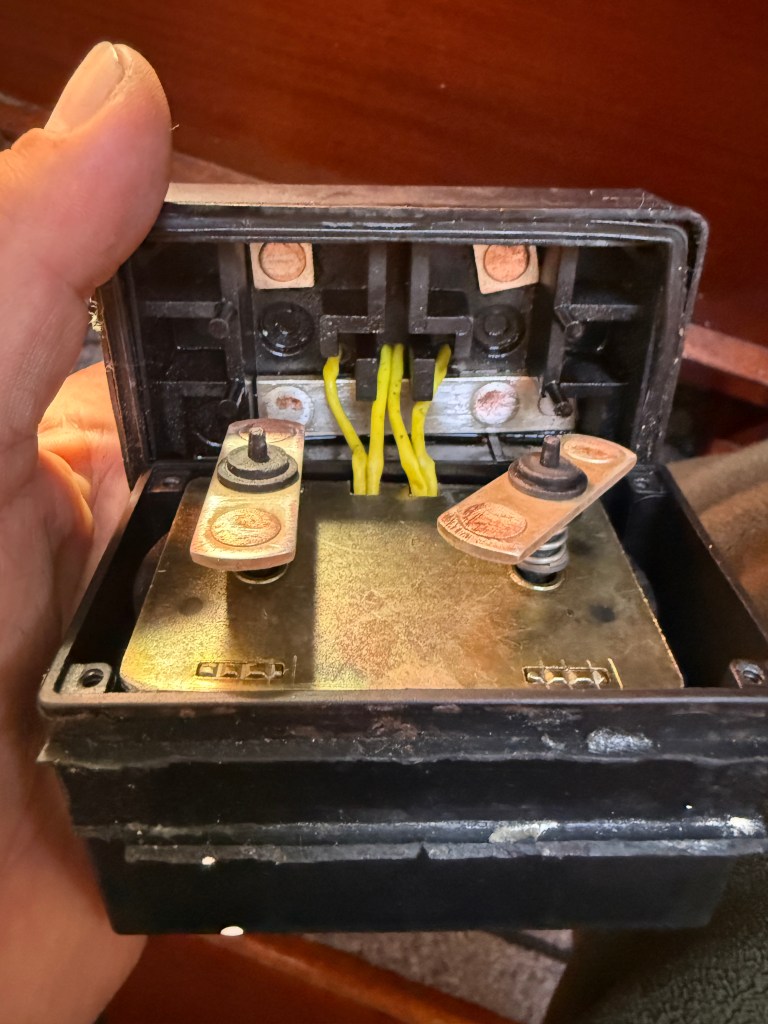
    Armed with Trevor’s charts we were ready to leave, but a moment of foolishness stopped us in our tracks. Our gas solenoid, a safety device which remotely turns off the LPG gas that our cooker uses, began to leak stray current. We monitor this carefully, as stray current in a steel boat can cause corrosion issues. We carry a spare solenoid so decided to exchange old for new. However, trying to rush the job as darkness and the temperature fell, I stripped one of the small gas unions. It was at this point that we realised that we had no spare onboard. It is only when you have to source an unusual part that you realise how limited local resources can be. There was no part and no gas fitter to be found in the wider area, so we had to order something from the nearest town, Burnie. It turned up surprisingly quickly, but for a couple of days we had no gas, so no coffee in the mornings and we had to eat out in the evening. It was a timely reminder to carry adequate spares, and not to rush maintenance work.

    With the cooker back in service we were finally free to go. In the calm conditions we motored the length of the harbour and picked up the southern mooring in Kelly Basin. There are several moorings available to the public in the area, and all seem to be well maintained. The stillness and tranquility was exceptional.

    Kelly Basin mooring.

    After a couple of relaxing days we moved to the northern mooring, another beautiful space that was handy to the deserted town of East Pillinger and the Bird River walk.

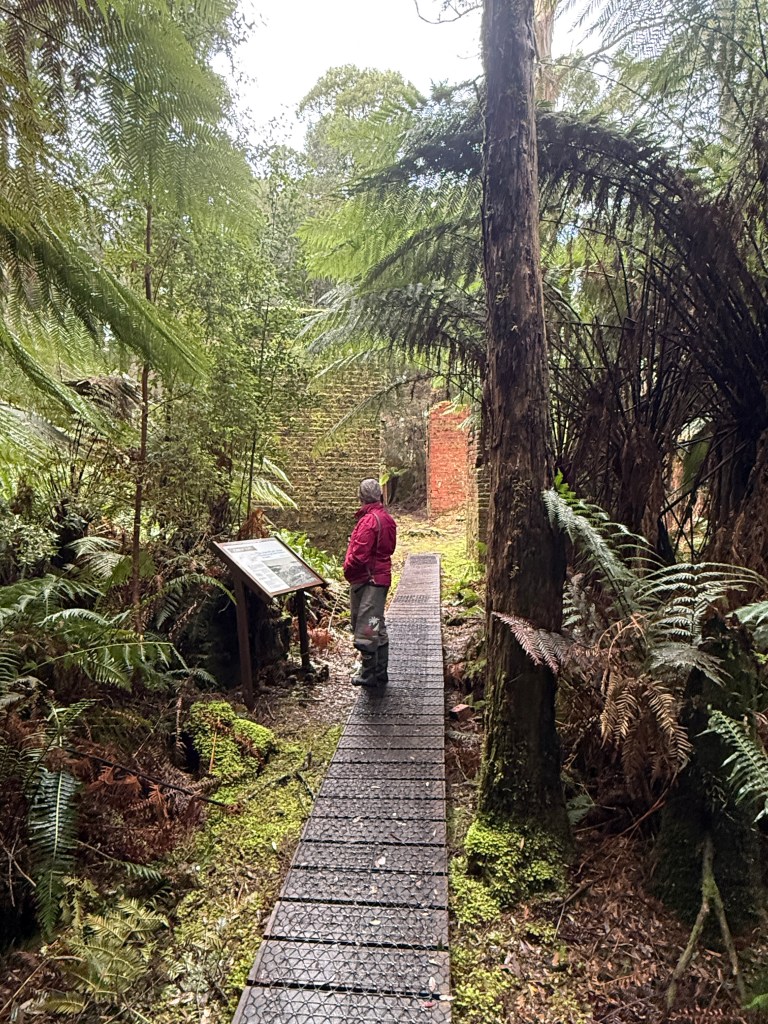
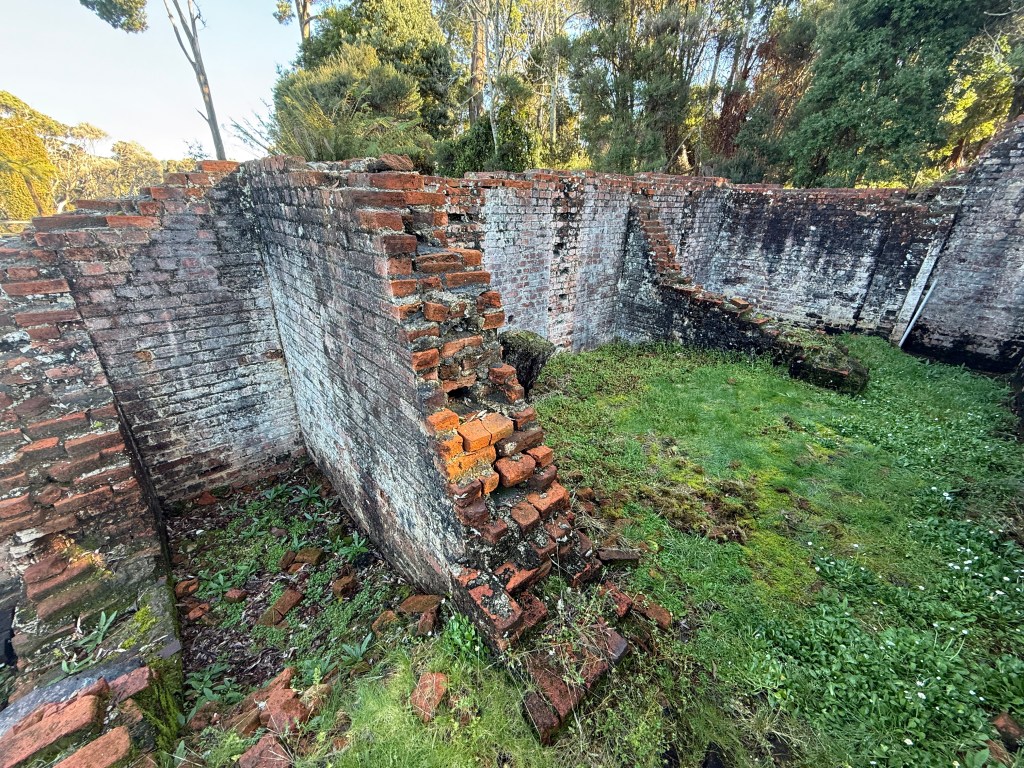
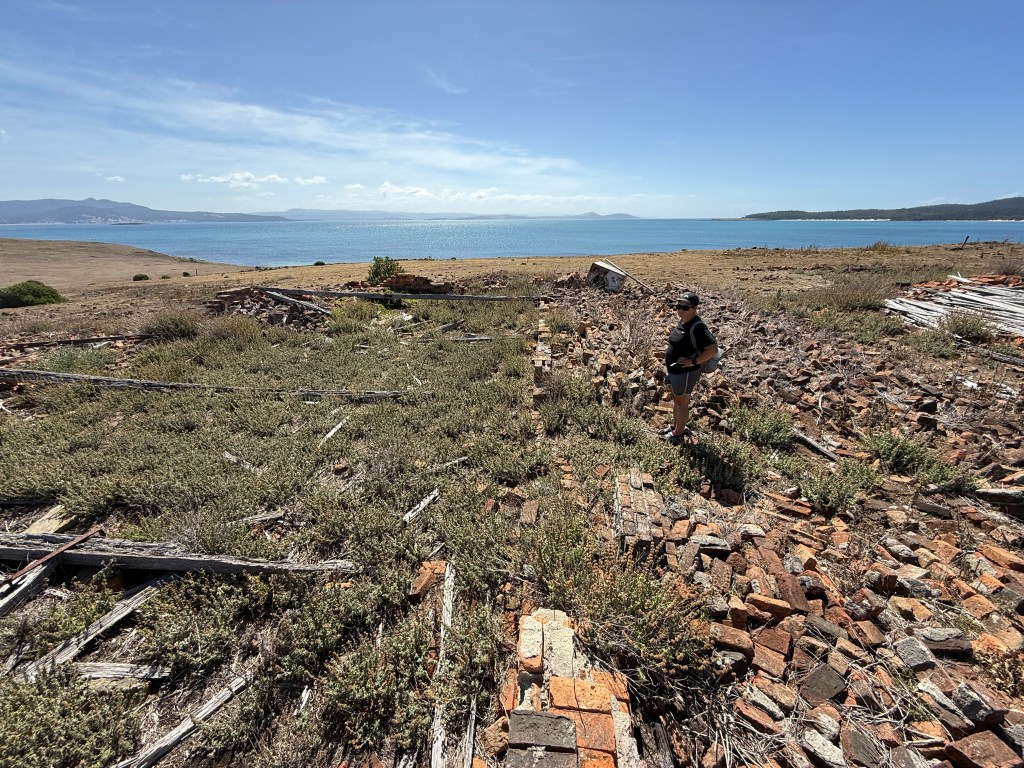
    Established in 1897, East Pillinger was once a thriving mining town with a population of over a thousand people. Commercial misfortune led to the town’s abandonment, with most families moving to Strahan by the early 1920s. The last residents left in the 1940s and since then the bush has been allowed to reclaim the land that had been stolen from it. Today, a few remaining ruins make for a thought provoking walk.

    Exploring the deserted town of Pillinger.
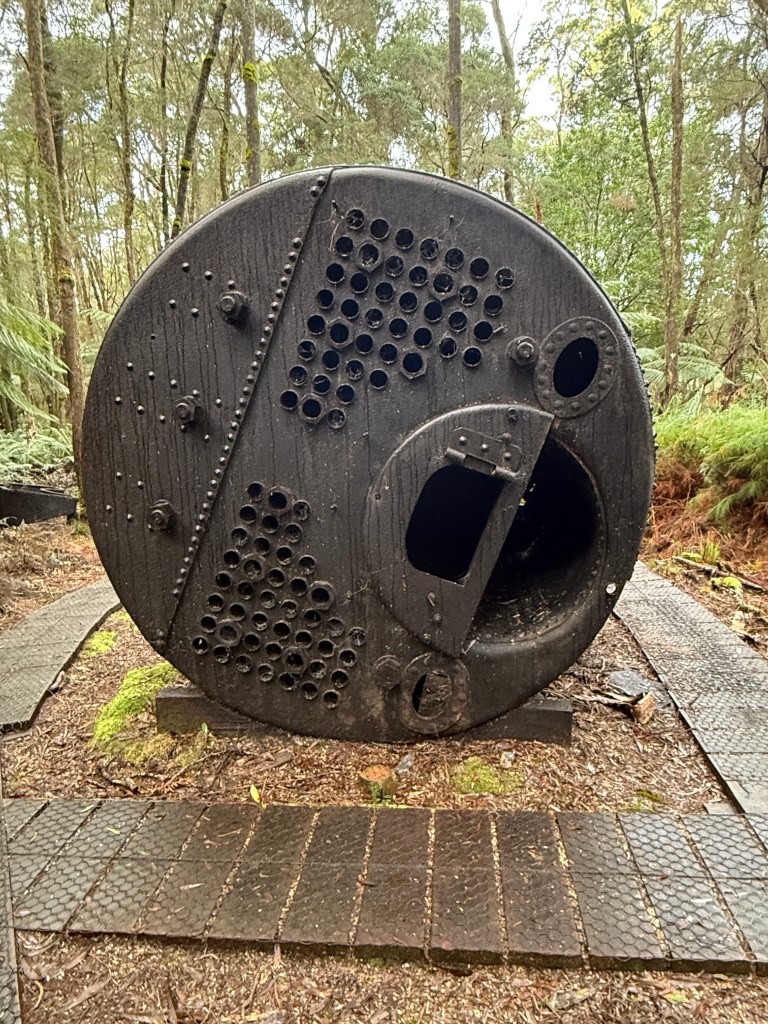
    Abandoned steam boiler.

    The Kelly Basin walk, also known as the Bird River walk, is one of the great Tasmanian short walks. At about 12 kilometres long the walk takes 3-4 hours return, and follows a generally gentle incline along what was once a railway line. There are a few muddy patches, that can often be avoided, and plenty of slippery roots, so decent boots are a good idea.

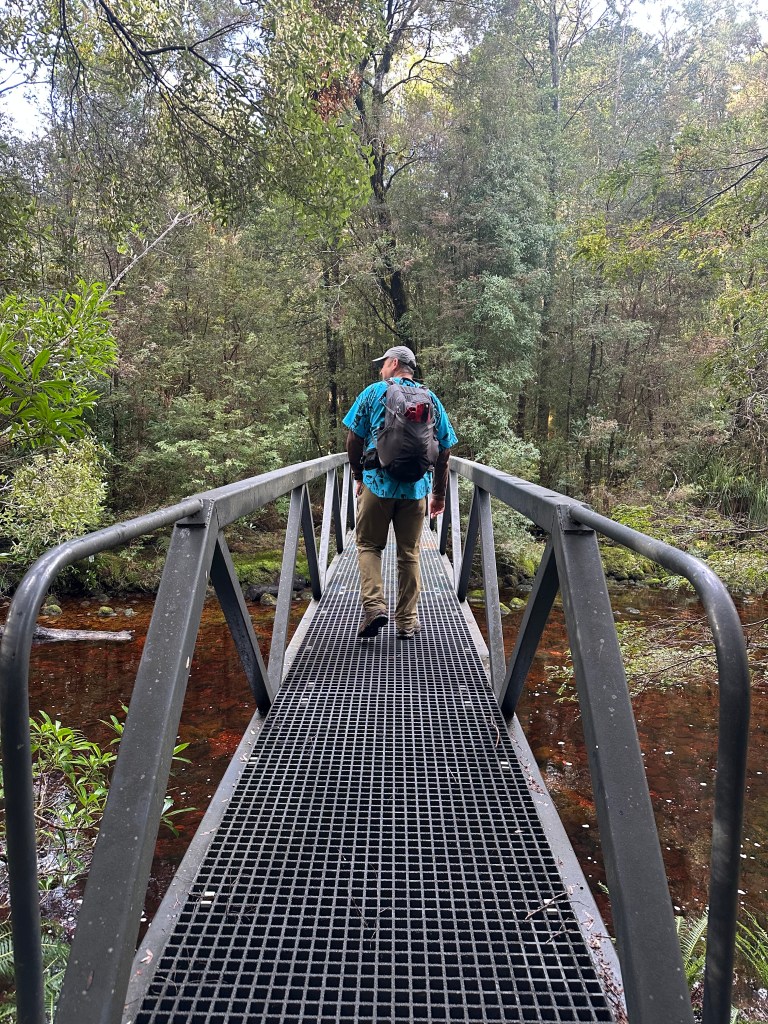
    Bird River Walk.

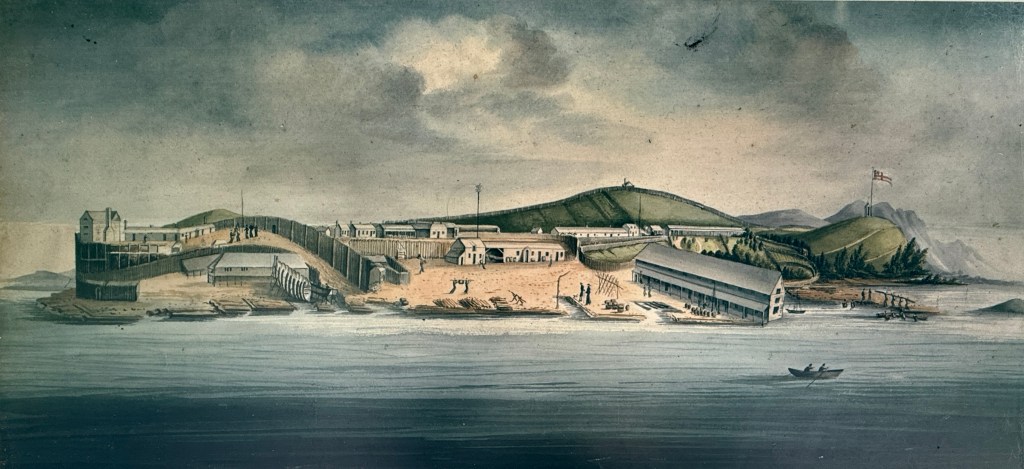
    The following day we left Kelly Basin and motored the short distance to Sarah Island. Sarah Island was home to the first penal settlement in Tasmania, established in 1822. The prison was a ‘banishment settlement,’ used to punish Australian inmates who had reoffended or tried to escape. That the entrance to Macquarie Harbour became known as ‘Hell’s Gates’ gives some idea as to the places reputation. Starvation, dysentery, and scurvy were rampant, punishment was often severe (over 9,000 lashes were awarded to the inmates in 1823 alone), and one prisoner, known only by his surname -Trenham, killed another man simply to face execution and escape the misery of the place. However, the deprivation and cruelty of the early years was slowly turned around, and eventually the island morphed into a hive of local industry, becoming the biggest ship building yard in the British colonies.

    Sarah Island (then known as Settlement Island) in 1833. W. B. Gould (note the wind breakers to mitigate the effects of the strong winds)
    Looking north from Sarah Island. No need for wind breaks on this day.

    Anchoring some little distance to the south, due to rapid shoaling of the bottom, we took our dinghy ashore only to find that the two closest jetties had been destroyed by recent storms. Ultimately we tied up out of the way on the commercial ferry’s jetty.

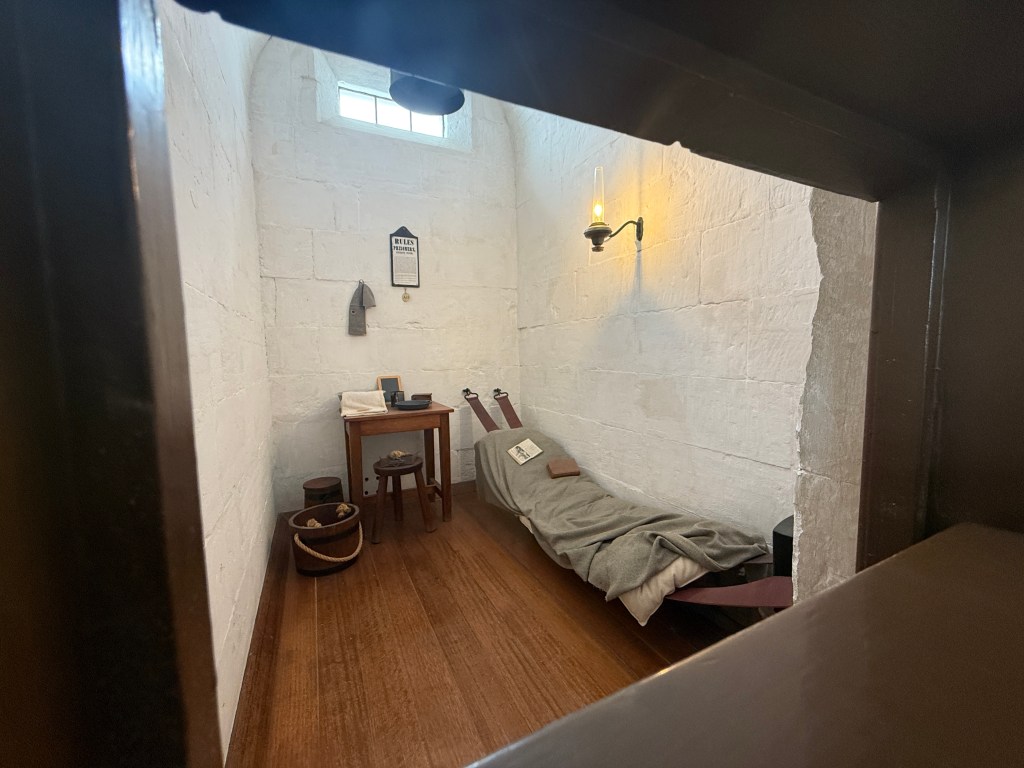
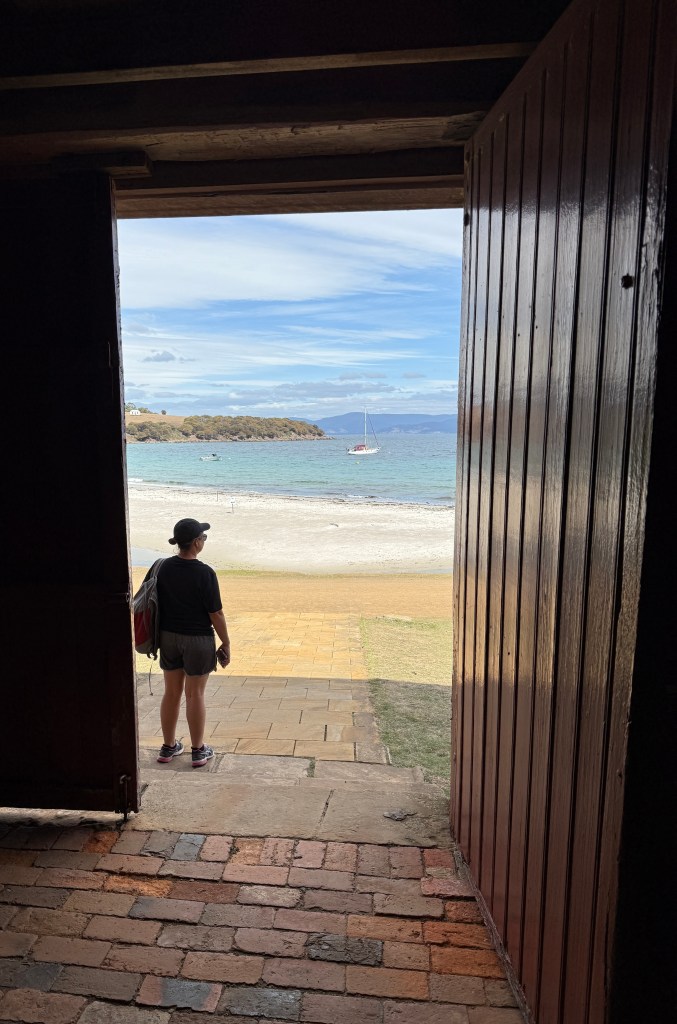
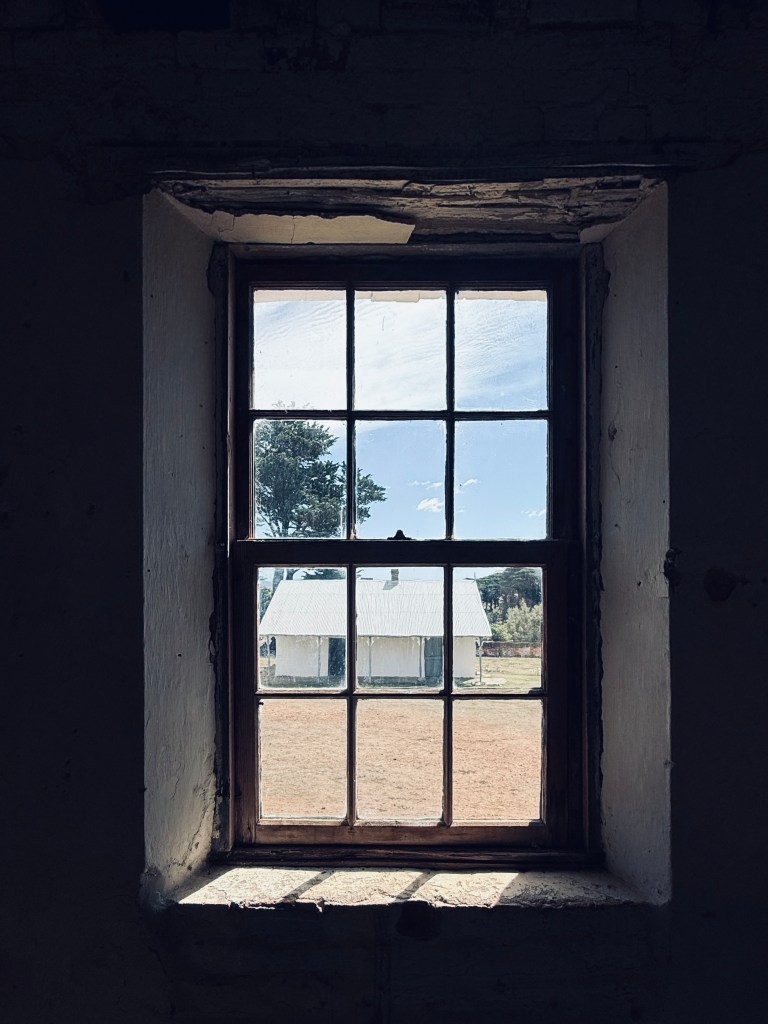
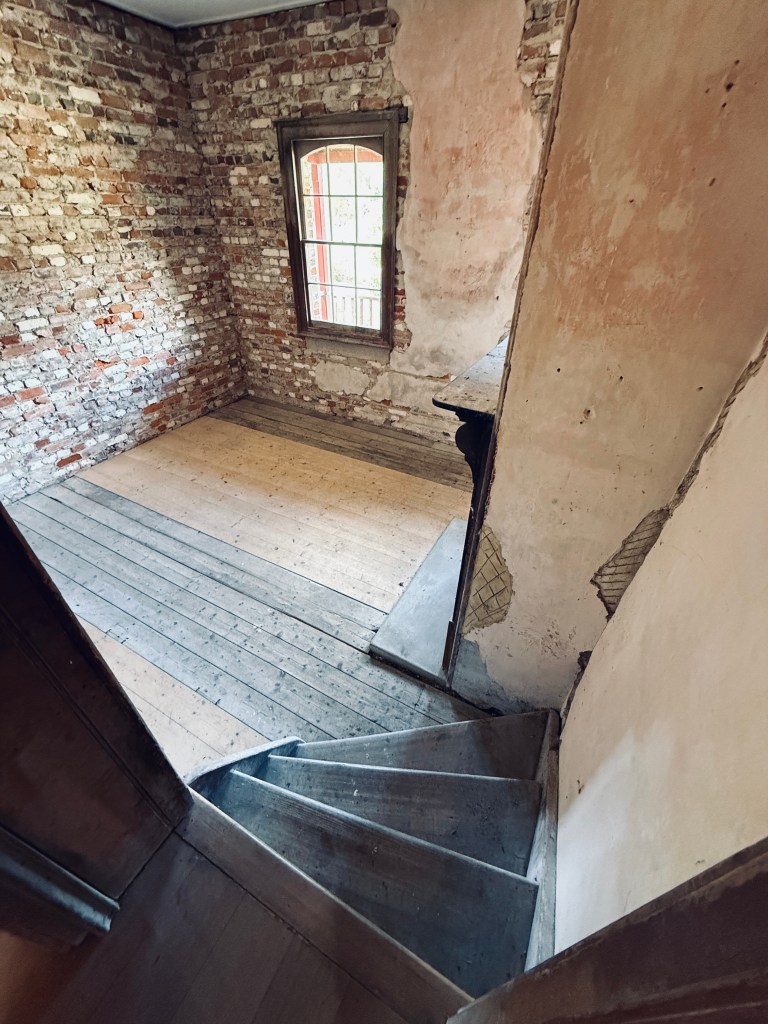
    The ruins are in poor condition compared to those at Port Arthur, but they give some idea of the what the prison was once like. Perhaps the most poignant building is the solitary confinement block. Here men could be kept for up to fourteen days on a diet of bread and water for infringements such as possessing fish hooks. It seems the fear was that inmates would be able to preserve and stockpile food for potential escape attempts. The walls of the ‘grave size’ cells are half a metre thick, presumably for sound proofing, and so increase the sensory deprivation of the incarcerated. A number of names and initials could be seen scratched into the bricks, but the earliest date we found was 1890, long after the settlement had been closed down in favour of the Port Arthur site.

    The solitary cell block.
    Names scratched in the walls.

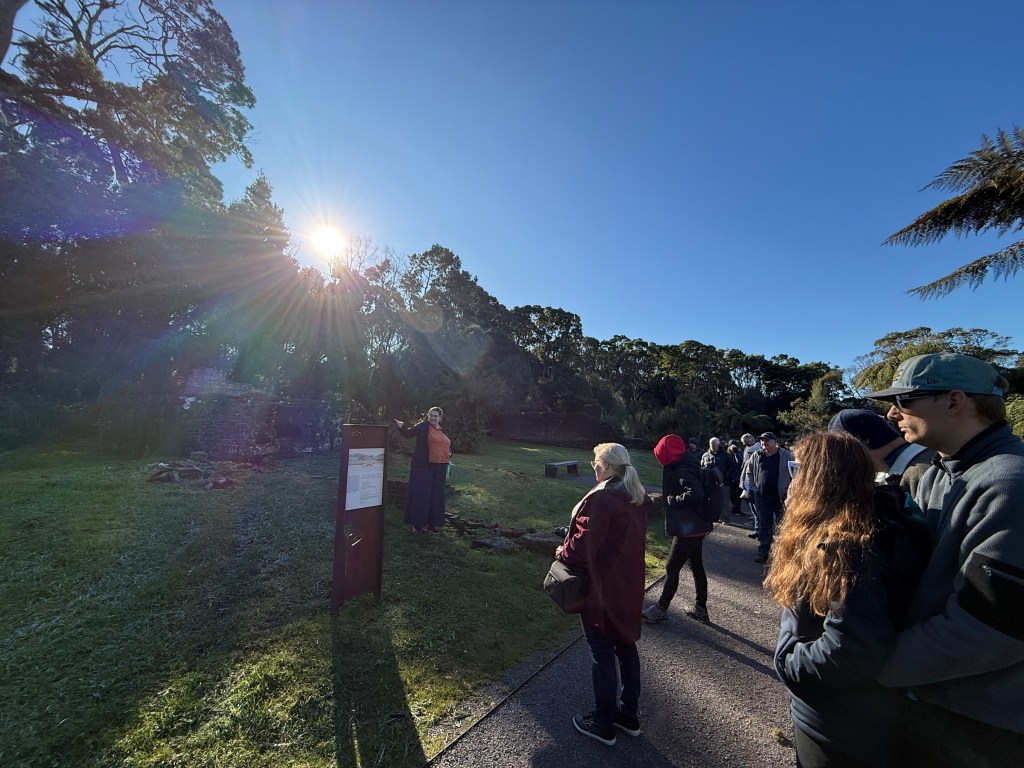
    The tourist ferry turned up after lunch and disgorged its passengers. With the permission of the guide we tagged along to learn some more of the history, which was quite a different experience to having the place all to ourselves.

    Once the ferry left we didn’t linger long. Instead we took the dinghy the short distance to Hallidays Island where over eighty inmates are apparently buried. Sadly, we couldn’t find any trace of their final resting places.

    Hallidays Island.

    Returning to Taurus we lifted the anchor and motored to Birchs Narrows before turning east behind Shamrock Point. As evening fell the mirror like finish of the water was simply remarkable; the two blinding suns making it appear an almost alien world.

    Shamrock Point.

    The day before, we had yelled a quick hello to a fellow sailor in the channel outside our anchorage, and he had yelled back an invitation for coffee at a hut ashore.

    We raised the anchor in a light morning mist replete with rainbow, moved Taurus around the corner, and took the kayaks to a small beach where we could see some chairs set out.

    The sailor turned out to be Max, a man who at nearly 90-years old (his 90th birthday was the following week) still takes his 12 metre sloop out solo. Max and a friend had built the hut on the site of an old loggers hut with the permission of the Tasmanian Parks and Wildlife Service. Apparently during the process they had flown an Aboriginal elder all the way down from Sydney to vet the idea, and he had merely said, “this is nice” before being flown back.

    Max and Cara enjoy a cuppa.

    Max’s hut is a wonderful space to spend a few days and get away from the stresses and burdens of civilisation. The over-size fire keeps the place toasty, whilst the large windows let in a flood of light and give views through the forest to the beach. All are welcome here, though you may need to bring your own gas bottle if you don’t want to have to cook on the wood burner.

    A short walk away Max showed us a dinghy dock that perches over a shallow river which runs to the beach. He pointed out some Huon Pine whose branches hung out over the water. These trees were found to be perfect for boat building due to their rot resistant properties, and so became the focus of a major logging industry in the nineteenth and twentieth centuries, which naturally enough decimated the resource. The remaining trees are strictly protected, but growing only 2mm a year it will be centuries, if not millennia, before the Huon Pine recovers.

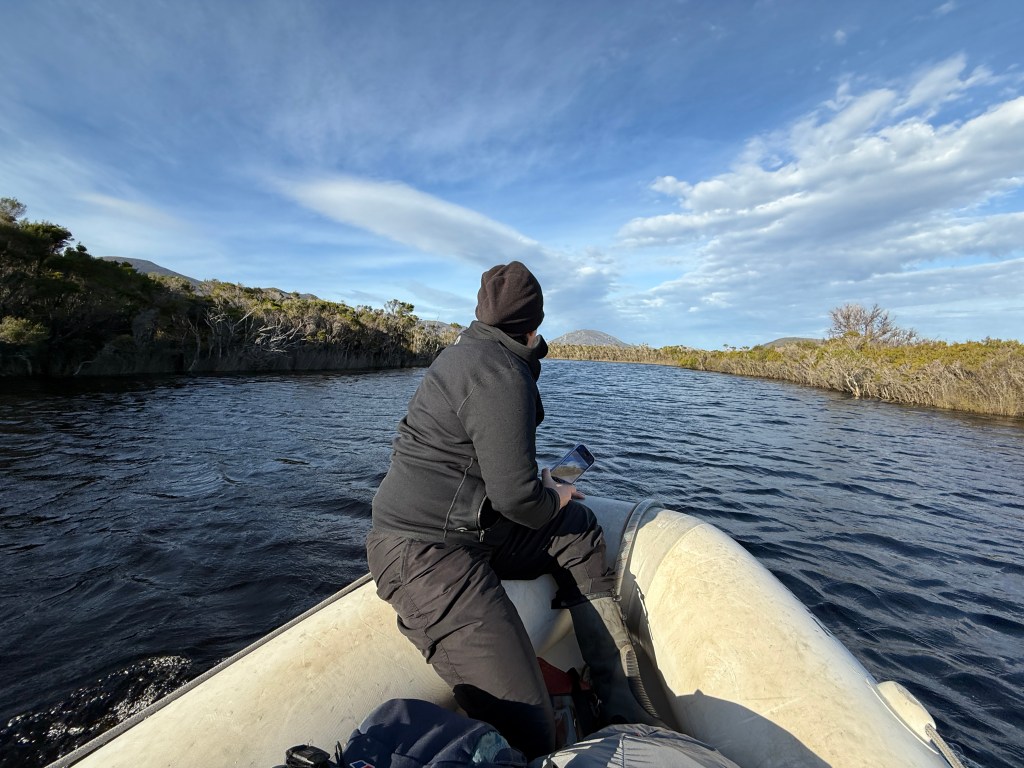
    We regretfully left Max and his slice of paradise and headed towards the Gordon River at the south eastern corner of Macquarie Harbour. The Gordon River is over 170 kms long, and the lower stretches, often 30 metres deep, are easily navigable by boat.

    Cara paddling back to Taurus after visiting Max.

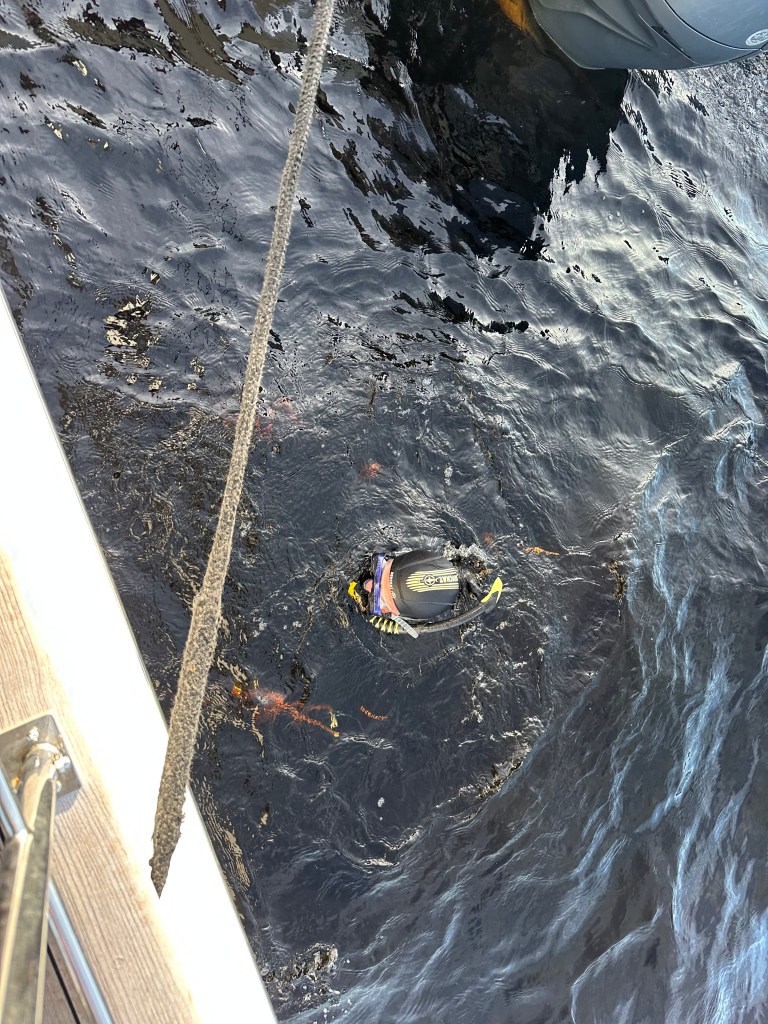
    The channel at the river mouth is indicated by pile markers, but once inside there are few hazards. Perhaps the greatest lies below the surface. We had been warned by a couple of locals to try and avoid anchoring in the river. The depth and dark tannin stained water provide few clues as to what lurks below, and should a boulder or submerged tree trap your anchor you may have to kiss it, and your chain, an expensive goodbye. We later had cause to go diving in the Macquarie, and I can testify to the difficulties that the cold water and near zero visibility create. If you head this way, follow the advise we were given and tie up to jetties or trees that stretch out across the water.

    Mouth of the Gordon River.

    After motoring for a few hours we came to Heritage Landing. A well maintained jetty here is used everyday by the large tourist catamaran based in Strahan. We knew that it would arrive at about 10:00 am so felt confident that we wouldn’t be in their way if we left first thing in the morning. A short walk ashore was well worth while. Elevated boardwalks kept our feet dry whilst the information boards introduced us to various local trees.

    Heading up river.
    Heritage Landing.

    One issue of note was the failure of our C-Map charts (used on our chart plotter) to provide information that would allow us to navigate the river. Fortunately our backup Navionics system picked up the slack, so that together with Trevor’s paper charts we weren’t entirely in the dark.

    C-Map charts (on left), not very helpful. Navionics on right.

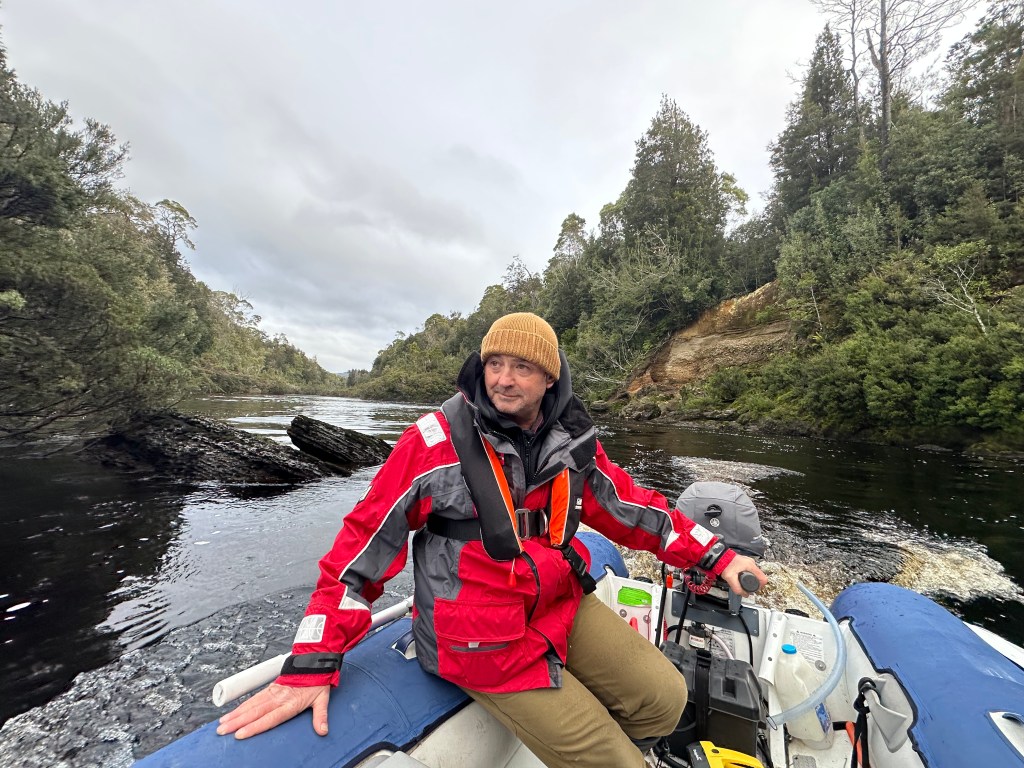
    Next morning the weather was cool and showery. We cast off our mooring lines before the commercial ferry appeared and headed further up stream. Our destination was Sir John Falls, about 13 NMs or 3 hours slow motoring away. We were about halfway when our engine alarm alerted us to a problem. The alternator, it turned out, was producing a mere 10 amps, down from its standard 40 or 50 amps. We silenced the alarm but there was nothing we could do about the alternator beyond checking for loose wires. We talked about turning back, but ultimately decided to keep going and hope that we didn’t end up stuck up the river without a paddle, or engine in our case, which is much the same thing.

    The scenery was incredible and we tied up at Warners Landing, opposite Sir John Falls, to find a launch also tied up. We soon after met the crew, brothers Michael and William, and were invited on-board Sea-Eagle for tea, and later port.

    Sea Eagle at Sir John Falls.

    The kindness and generosity of cruisers we meet never fails to surprise and delight, and so it was that the next day Michael came over to offer us the use of his powerful dinghy to head further up the Gordon River and visit one of its tributaries, the Franklin River. The Franklin River is iconic in Australia, due to its un-spoilt beauty and to the fact that it and the Gordon were almost lost to a damning scheme in the 1980s. Public protests eventually scuppered the project, and the Franklin has ever since been linked with environmentalism and the power of the people.

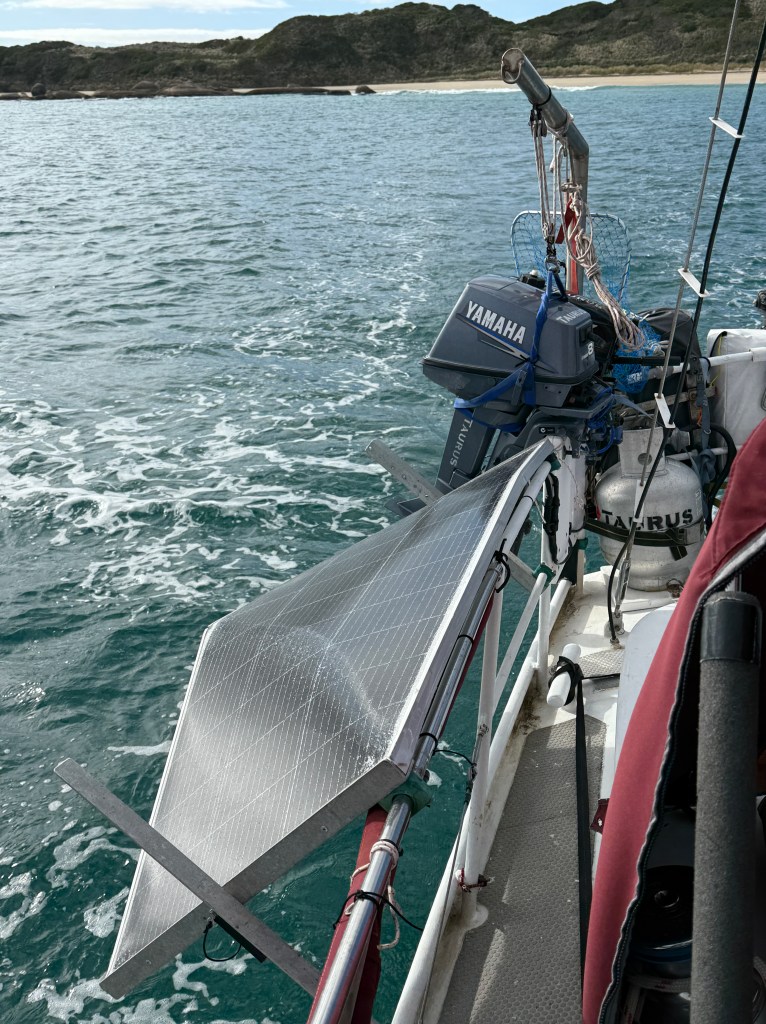
    We couldn’t head further up stream in Taurus, and there was no way that we would have attempted the journey to the Franklin with our little 3.3 hp outboard engine (our 8hp Yamaha is currently out of action), so not wanting us to miss out, Michael made his generous offer.

    Up the Franklin River.

    Before leaving we had to visit the Sir John Falls and explore the walk to the nearby Perched Lake. The waterfall was pretty impressive and it was great to be able to take the kayaks there and get much closer than the viewing platform allows.

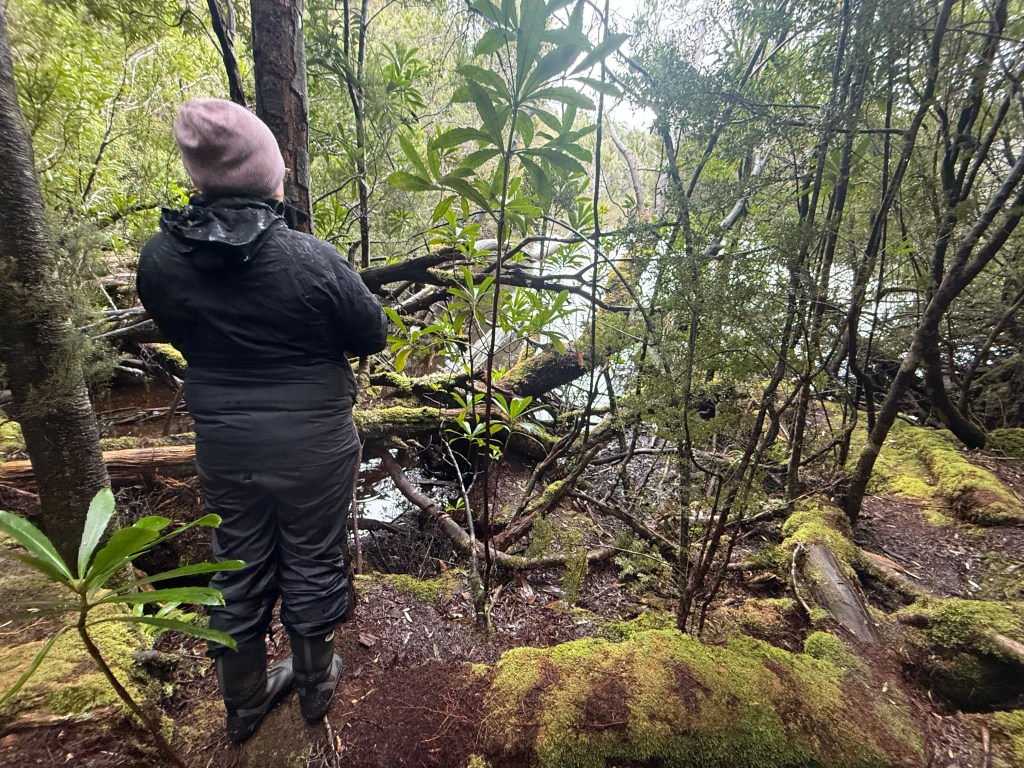
    The walk on the other hand was not so great! The path was very muddy in places, and the markers showing where the path lay were often inadequate or missing. Once we had entered the forest proper we had to detour around fallen trees on several occasions, and it was often a struggle to re-find the path on the other side. When finally we got to the lake the view was decidedly average. My advice to people thinking of doing the walk would be to make sure you have plenty of daylight. It’s easy to get lost and you probably don’t want to spend the night in the woods. Also, wear gumboots and waterproofs! You quickly get soaked pushing through the wet undergrowth!
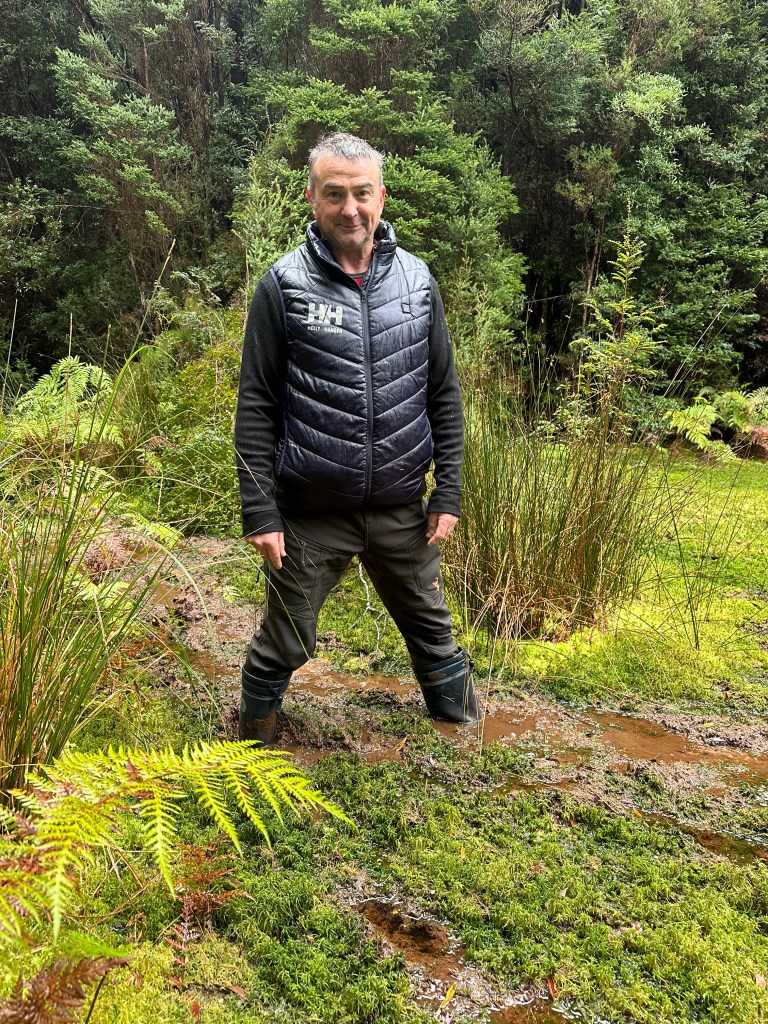
    Hmm… how to get out of here with two boots…
    The view of the lake is a bit underwhelming….

    We said our goodbyes to Michael and William the following morning and turned Taurus about to head downstream. Our engine alarm was still switched off as the alternator was still playing up. We were still getting 10 amps out of it, so could manage our power adequately, and, ultimately, there was nothing we could do about it anyway. The alternator was a problem for another day. Instead of worrying we sat back and enjoyed the views. Que sera sera as Doris Day would say.

    Voyage of the good yacht Taurus: 3rd of July – 10th of July.

    Next time: we try to fix Taurus (yet again), we do the Strahan tourist trail, and we go diving to help friends out of a ropey situation.

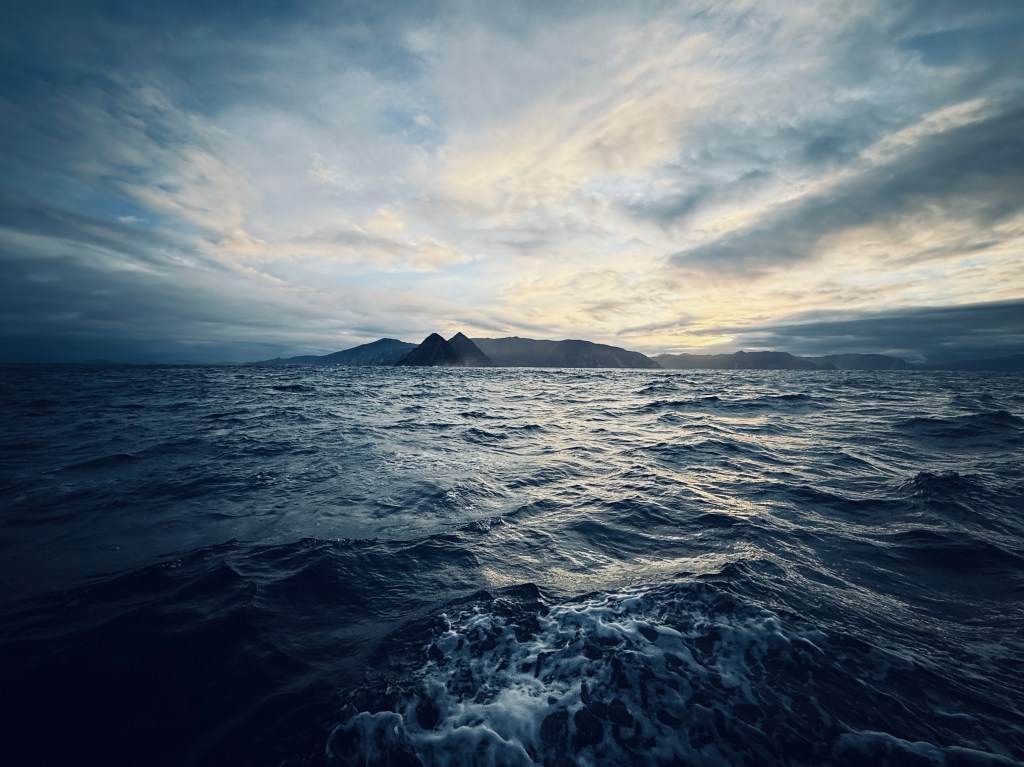
  • South West Cape

    In the previous episode we were on anchor in Recherche Bay, supposedly relaxing before heading out to sea at midnight for the trip to Port Davey. Then the bilge alarm went off. A quick inspection revealed a startling amount of water in the bilge — perhaps 2-300 litres. Taurus‘ bilge can be measured in feet, so she can swallow an awful lot of water before it makes its presence known.

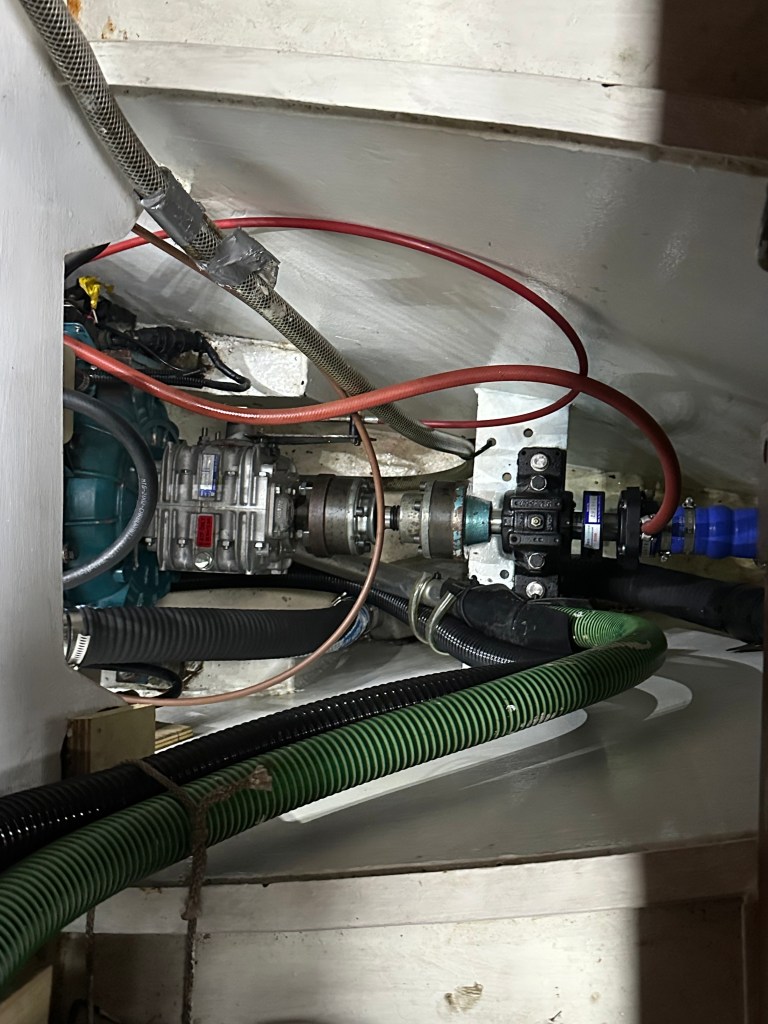
    We quickly worked out that the water was coming in via the stern gland. As I mentioned previously, this is a specialised piece of equipment that allows the propellor shaft to exit the boat and spin without allowing water to come in. Our particular brand of dripless stern gland, Sure Seal, has provision for a spare seal to sit on the propellor shaft ready to be deployed if the one in use fails. However, I had never undertaken this job, and would have preferred to learn with the boat well out of the water. Removing the old seal in situ seemed likely to make a bad situation worse, and if there were any problems with the new installation we could end up with a big leak, possibly exacerbated by using the engine. Being in a fairly remote part of Tasmania I was not super excited at the prospect of ‘giving it a go.’

    Still, ‘fortune favours the bold,’ or perhaps ‘fools rush in where angels fear to tread’ is more apt. We decided we had little choice but to try and change the seal. In such circumstances having a Starlink unit on board is a God’s send. Whatever you might think of Mr Musk, it’s nice to be able to watch a YouTube video detailing the process rather than wading in blind.

    Access was naturally an issue. But by lying on the engine I could just about reach the stern gland. I was once agin very thankful that I had cut out a section of the bulkhead that sits above the gearbox so that I can gain access to the drive unit. Trying to do this job from the rear access way — which demands balancing on one foot with the other tucked round your ear — would have been a nightmare, and probably decided me against attempting the job in the water.

    Lying on the engine to gain access to the stern tube. I really want to tidy up our electric wiring. It’s been judged fine and safe by a marine electrician, but the messiness irks me! It would be a big project though, so it’s on the ‘one day’ list.

    Much to my surprise, the job turned out to be relatively painless. Water didn’t pour in, and within ten minutes we were done. I wouldn’t hesitate to change the seal in the water next time, though now of course we don’t have a spare seal on the prop shaft. Next time the shaft will have to be taken apart to get a new seal on. That’s definitely a boat out of the water job.

    Our big OMG bilge pump (the ‘Oh my God’ pump, for when things get bad) quickly emptied the bilge and we ran the engine to check everything was working OK.

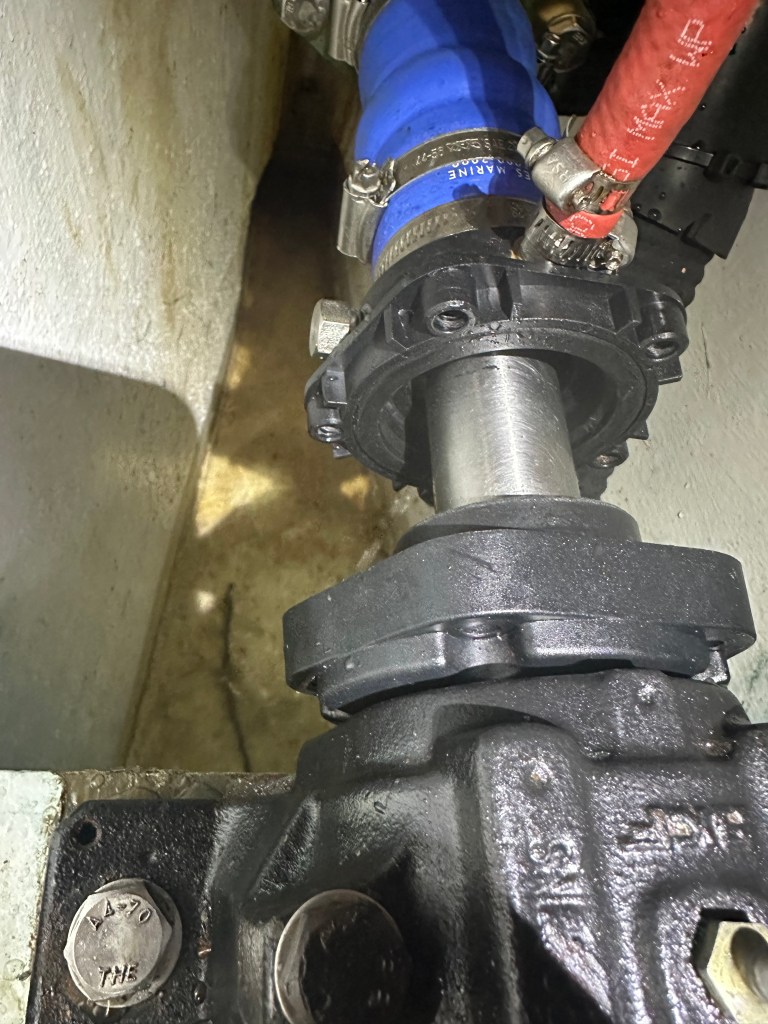
    Here we discovered the next problem. I had been wondering why the seal had failed, and it turned out that the pillow block, that secures the prop shaft, had somehow worked loose. This allowed the shaft to slam forwards and backwards a centimetre or so as the boat was put into forward or reverse. This is the kind of abuse that seals don’t take kindly to!

    The pillow block is the black item bolted on to the white steel cross brace. It sits here between the universal joint (on left) and stern gland (blue tube on right).

    Why should this come loose, and why should it be bolted through a slot rather than a nice tight hole? Well, having replaced the gear box a while ago I may have loosened the bolts and not tightened them up again sufficiently — I don’t remember loosening them but possibly I did. Alternatively, they may have simply worked loose over the past five years or so since they were last looked at and the bearing inside the block replaced. Either way, there was no shaft movement after the gearbox work was done, as we checked everything at the time. Why the slot that allows movement? Presumably, I guess, for fine tuning shaft alignment? The fix was simple. We put the block back in place and I tightened up the bolts as much as I could whilst holding two spanners at arms reach. My plan is to put a rattle gun on them when I get a chance, maybe with new bolts and spring washers, to make sure that they don’t come loose again.

    So, with the sea back where it should be, on the outside, and the boat operational again, it was time to resume relaxing. At midnight we hauled the anchor and headed out to the Southern Ocean.

    Leaving Recherche Bay.

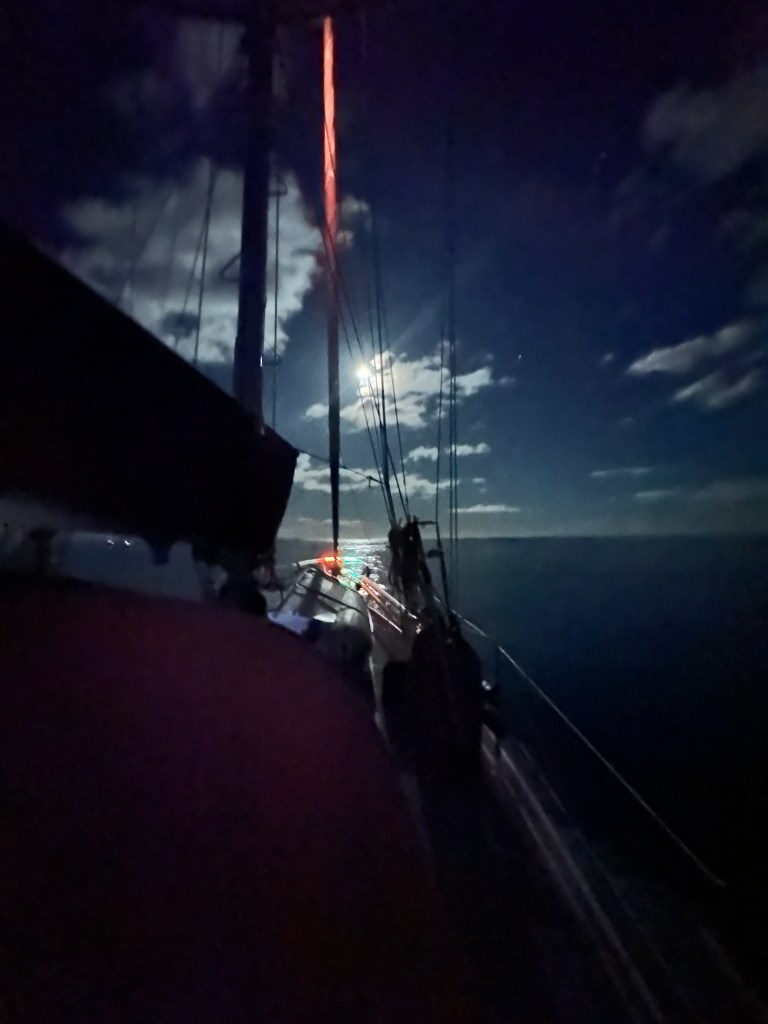
    The sail was fairly smooth, with a nice beam wind and gentle swell. A few hours later we had the excitement of threading our way through the islands that sit to the south of Tasmania in the dark. Thankfully, Australian charts are pretty accurate (though locals tell you of numerous errors), so trusting our chart plotter meant that the exercise was straight forward, if a little anxiety inducing. Seeing the vague silhouette of large rocks emerging from the darkness, almost close enough to touch (so it felt) was an experience that focuses the mind.

    Other potential obstacles were fishing boats. We could identify them by their bright white lights, which drown out any navigation lights they might display, and of course their masters had chosen to turn off their AIS devices so they didn’t appear on our chart plotter. Thankfully they were close inshore so we were able to keep our distance.

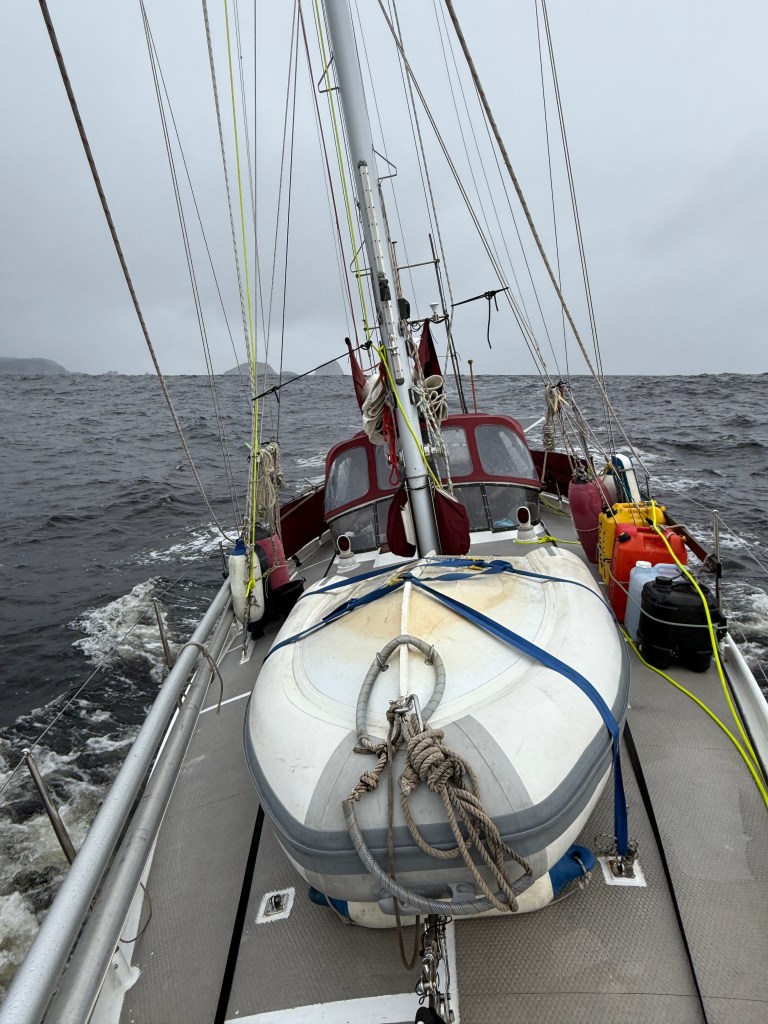
    We soon arrived at the South West Cape, arriving more or less bang on time at 9:00 am. However, the predicted shift in wind failed to materialise and the northerly wind kept on blowing, but now it was blowing from the direction we wanted to go in. We experimented to see if we could tack across the wind to make progress, but with the added hindrance of the swell we were making very little ground and decided to turn to the engine, hoping that the westerly wind would soon appear. Bashing into the wind was slow going, we were down to around two and a half knots for a while, but the wind eventually eased and we were able to thump along at four or five knots.

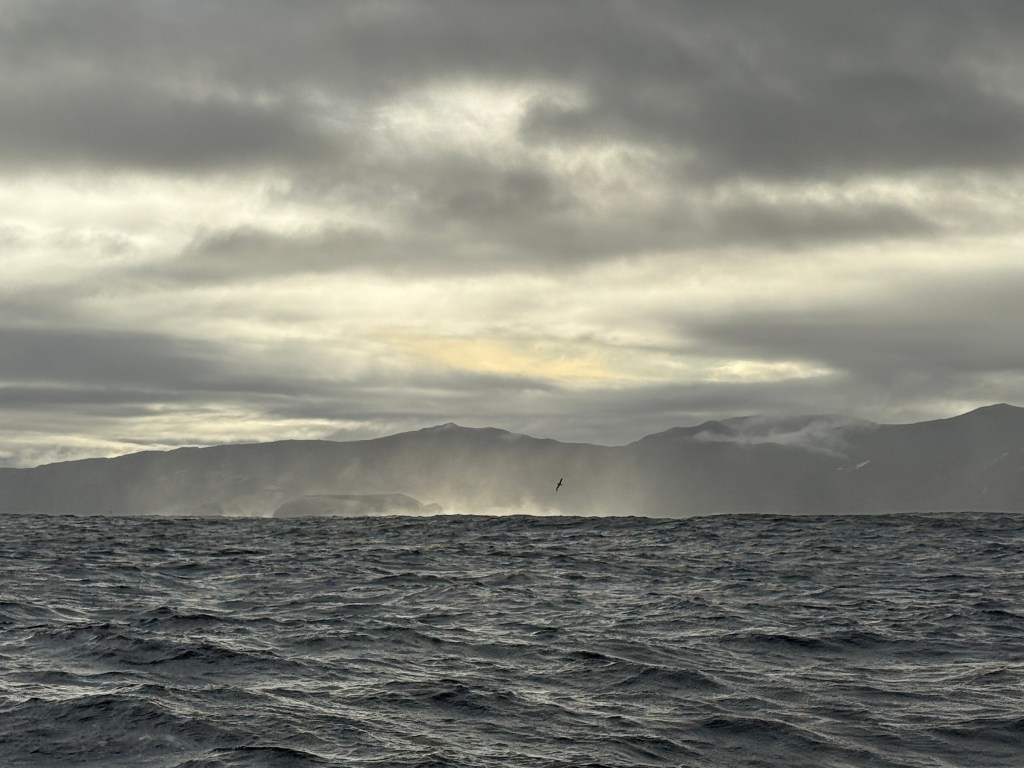
    The grandeur of the Tasmanian seascape is awe inspiring. Before it was realised that Tasmania is an island, all the ships destined for Botany Bay or the Pacific would round this coast. With poor charts, unwieldy ships, and often sick crews, it’s no wonder that so many foundered on this wild and unforgiving coast. I happily spent hours watching albatross fly against a background of spume dozens of feet high, thrown up from the sea crashing against the cliffs. If we had been able to sail I would have been a pig in poo.

    Me in my happy place. Chilly though!
    Albatross and Tasmanian coast.

    The wind finally veered to the south west just as we were arriving in Port Davey. It was perhaps a good thing that it came in late because it arrived with a hiss and a roar. We were relieved not to have been caught on that rugged lee shore in the gusts that quickly started to blow up.

    Entrance to Port Davey.

    Port Davey is about as isolated and wild as isolated and wild gets in first world nations. No roads lead here, and the marine reserve, national park, and world heritage area can only be accessed by boat, an 85 kilometre hike, or by an hour’s flight in a small plane. There are no permanent residents. The area encompassed is substantial, about three times the size of Sydney Harbour. Incredibly, it being winter, it seemed that we had the place to ourselves.

    Once inside the protection of the surrounding hills we found a far more pleasant day. We entered Schooner Bay and dropped the anchor to enjoy the peace and quiet. Unfortunately, as the sou’ westerly winds increased outside, gusts of wind, known variously as willywaws, bullets, or katabatic winds, flew down the slope of the bay, accelerated by gravity, and sometimes heeled Taurus over. In these conditions a good night’s sleep depends on the degree of faith you have in your ground tackle. Fortunately, we know our system well, and have never dragged once the anchor has been set (touching wood as I write this). In our fatigue we slept like babies.

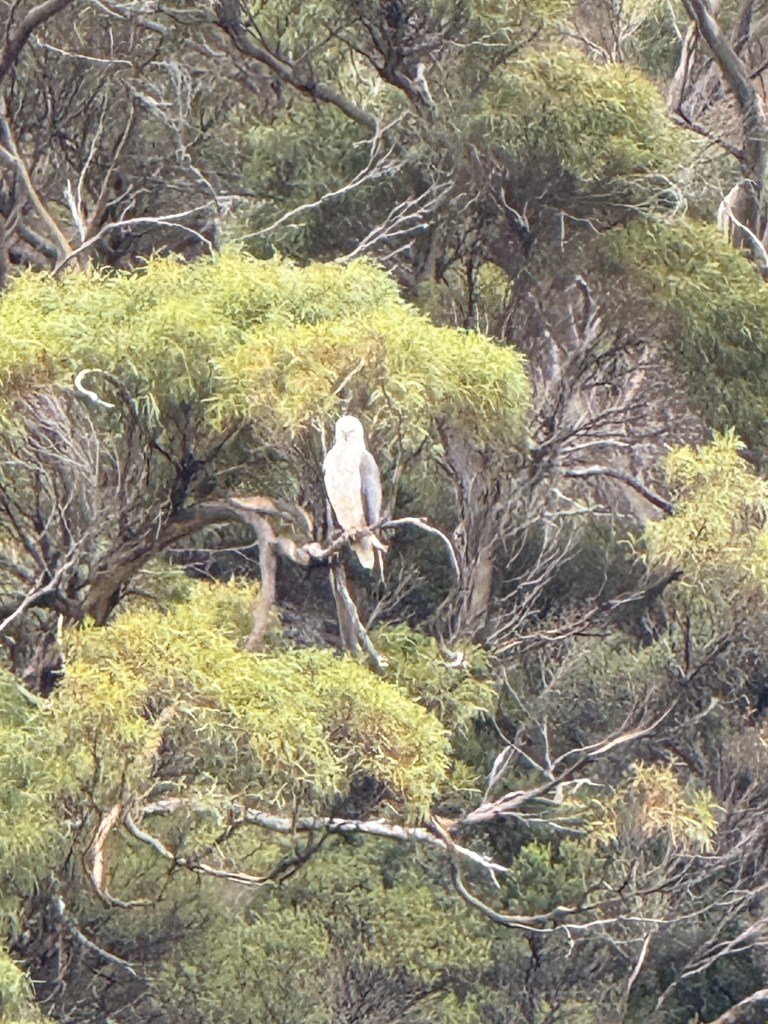
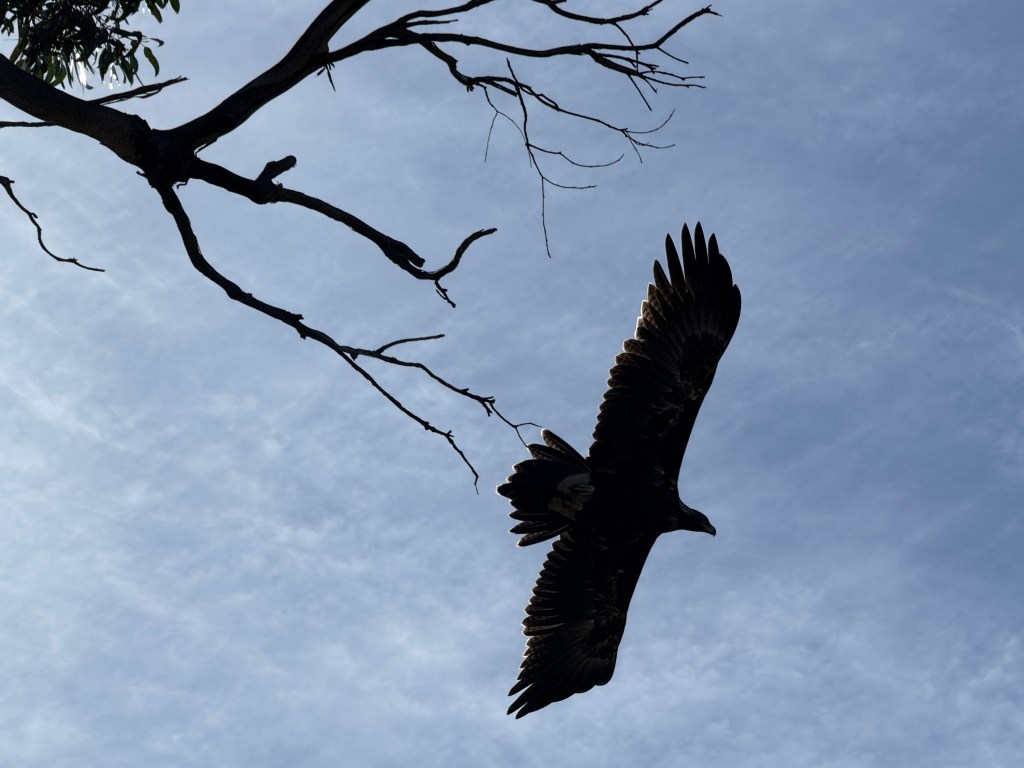
    We woke next morning to find a white bellied sea eagle had joined us for breakfast. After the hustle and bustle of Hobart, and the work and worry of the voyage, it felt like a weight had been taken off our shoulders as we took in the peace and silence.

    Morning neighbour…

    We moved mid-morning to get away from the ongoing gusts, and headed to Casilda Cove. This beautifully protected little bay has steel tie back points so that boats can use stern lines to pull themselves back into the bay. From here we took the dinghy across the channel and walked up Balmoral Hill to check out the views.

    At the track to Balmoral Hill.

    Note the dark brown colour of the water in the photo above. This darkening, caused by tannins leaching out of the peat soil, creates a rare marine environment. The tannin-rich fresh water overlies the tidal saltwater and restricts sunlight from penetrating further than the top few metres. This limits the normal growth of marine plants, allowing plants and marine invertebrates that normally grow in much deeper waters to thrive. The unusual marine life is one of the reasons why the area was granted world heritage status.

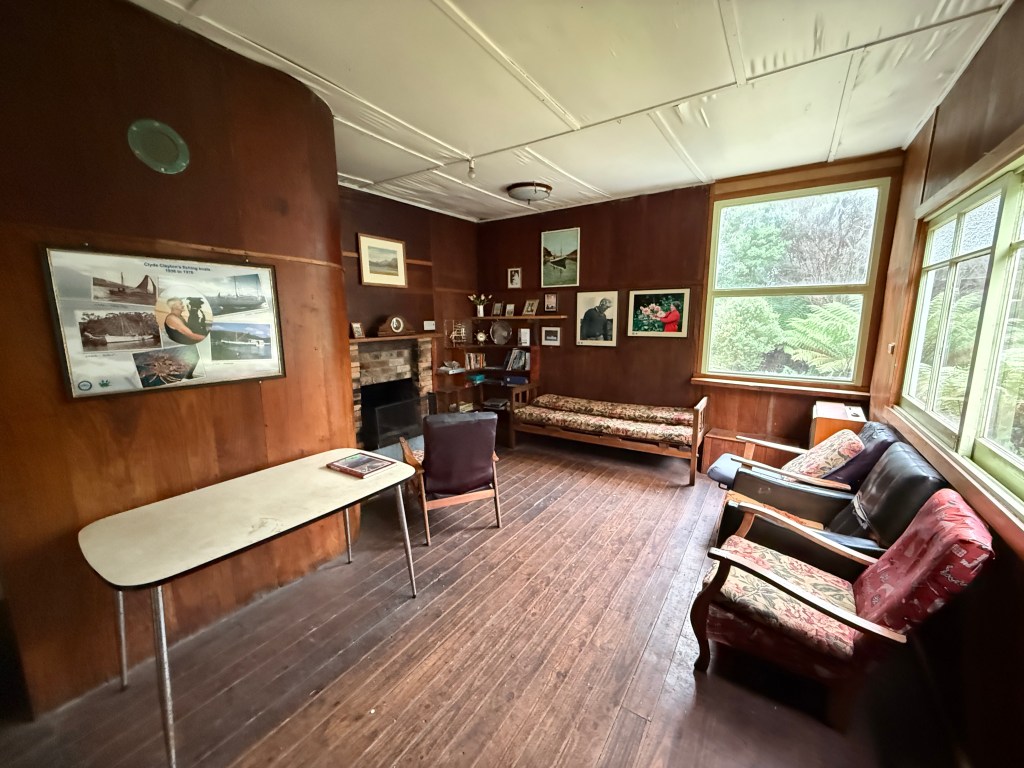
    Later in the day we shifted to another bay called Clayton’s Corner. For many years a couple, Win and Clyde Clayton, lived and worked here, creating a home out of the wilderness. Their house is now preserved by a volunteer group, and is open for visitors to use as they will. If we could have worked out how to use the wet back we could have taken a bath.

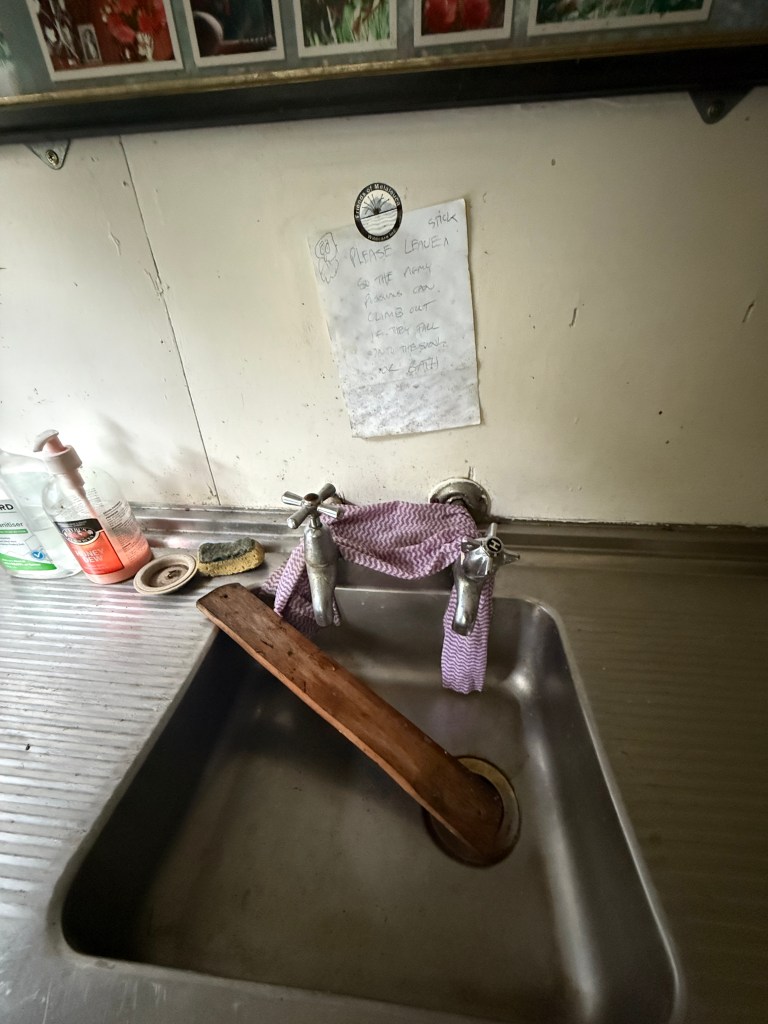
    The sign above the sink reads “Please leave a stick so the pygmy possums can climb out if they fall into the sink or bath.”

    From here we took the dinghy down a shallow inlet to Melaleuca. A small airstrip there provides access to the national park, a couple of huts provide shelter to trampers on the South Coast Track, and scientists studying the region have accomodation from which they can fly in and out. We actually found three scientists in residence when we visited. They had been fishing for sharks which can apparently provide evidence of the presence of heavy metals in the water. We were all a little surprised to meet, as we all thought that we had the place to ourselves, but they were flying out the following day so we didn’t grumble about their intrusion.

    Dinghy ride down the Melaleuca Inlet.
    Trampers’ hut… outside.
    Trampers’ hut… inside.
    Melaleuca Lagoon.

    Also at Melaleuca is a little museum devoted to Deny King. A local legend who lived here from 1945 until his death in 1991. Deny was a miner, naturalist, painter, and environmentalist whose work encouraged the creation of the Port Davey National Park and World Heritage Area. Quite a guy.

    Deny King museum.

    Recognising that we had another day of good weather in hand we were determined to climb Mount Rugby. This 750 metre high peak dominates the local landscape and promised incredible views. We had to move the boat to another anchorage to access the track. We chose Iola Bay, a fabulous little place entered through a narrow inlet from the Bathurst Narrows.

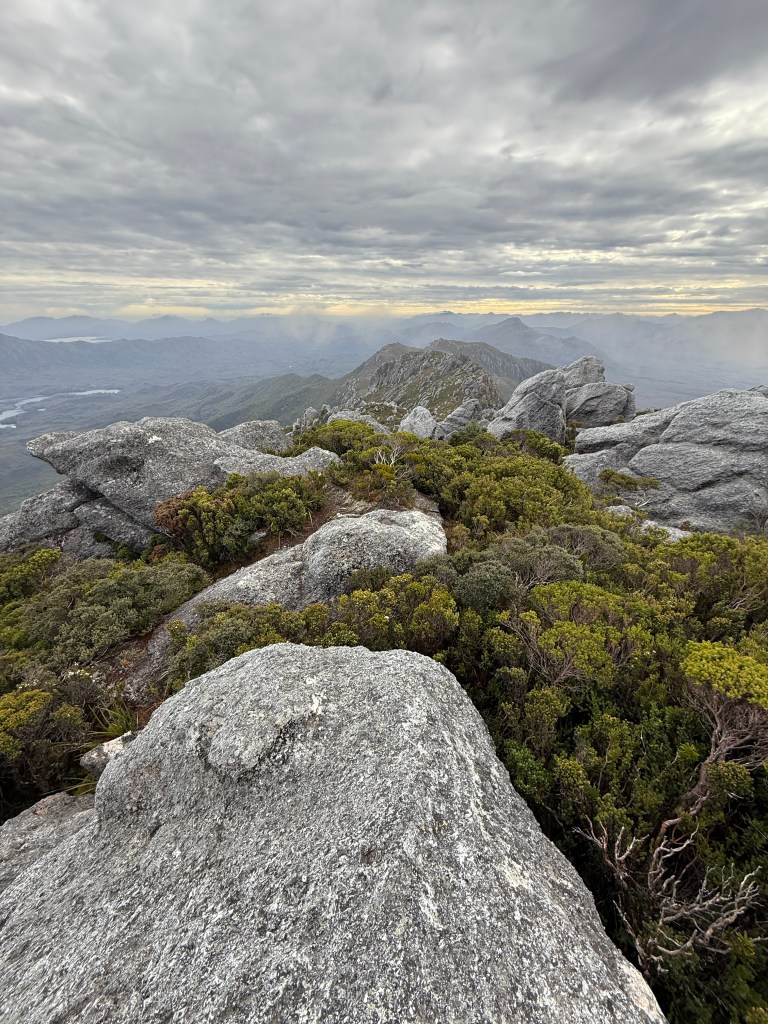
    We had read that the climb up Mount Rugby takes about five hours return, but we wanted to start early because it gets dark at 4:00 pm and neither of us wanted to be blundering around in the bush unable to see. The ‘track’ is maintained by the local wallabies, and often reflects their height and shape, so forming small tunnels for the average human to have to push through. Due to the peaty soil it was also very wet and slippery. The last hundred meters to the peak is a jumble of large boulders and scraggy bush. Walkers are advised to mark their route when ascending so they can find their way back down. Unfortunately, this has resulted in a number of bits and pieces of marked track that converge and diverge, and one has to be careful not to end up getting lost or going the wrong way .

    As I boulder hopped the last stretch an experience I had a couple of years ago played in the back of my mind. I had been walking the Tin Range in Port Pegasus in Stewart Island, a remote area in New Zealand similar in many ways to Port Davey. I was trying to find the summit of the ridge, and was bush bashing through scrub high over my head. Finding a rock outcrop I decided to climb it to orientate myself. From the top I could see the ridge stretching away so began to climb back down. In the process, the boulder I was hanging off, shifted and began to fall. I threw myself away from it and landed in a bush with the boulder smashing into the ground about a foot away. It still gives me a cold sweat to think about what would have happened if any part of me had been underneath that rock when it landed. Cara had headed back down the ridge, and any search party would have been hard pressed to find me.

    With this in mind, and Cara having decided to stop at the ridge, I was wary of taking any silly risks. Something as minor as a sprained ankle or hyperextended knee could be a major problem in this environment. Cara would have no chance of carrying me in the rugged terrain, and any help is a long way a way. Unfortunately, you could only proceed by taking a few sketchy risks: climbing large slippery boulders, jumping across gaps, and constantly slipping and sliding on the muddy path. It would be an easy place to get hurt, but the views from the top were worth it.

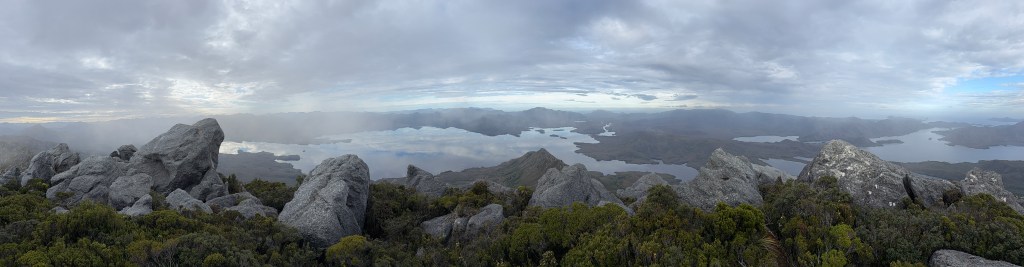
    View from Mount Rugby. Claytons Corner and the Melaleuca Inlet are to left of centre stretching into the distance. Taurus is anchored in Iola Bay, centre.

    I was glad to get back to the dinghy and Cara. Full time cruising doesn’t keep you fit, so we were both pretty tired and looking forward to putting our feet up.

    Taurus in Iola Bay. Mount Rugby centre. Morning Cara!

    With the weather on the change we needed to move to somewhere that offered better protection from the north. On the way we stopped at Parker Bay. This somber spot is where the body of Critchley Parker was found in 1942. Parker had been surveying Port Davey as part of an initiative to create a Jewish homeland in Australia. He was dropped off by a local, intending to walk to Fitzgerald, but was forced to turn back due to foul weather. Unfortunately, his matches having gotten wet, he was unable to signal for help and died of hypothermia and starvation after some fifty days alone. His body, and diary, were found five months after his death, and he was buried nearby. Surrounded by scrubby bush his grave seems a miserable place to spend eternity, but I guess he’s not complainig.

    As the wind started to rise we carried on up the channel to Wombat Bay. This anchorage is advertised as well protected from the north, and once again there were strong points to tie back to. However, with the extra high tide and dark coloured water we couldn’t find them, so we ended up tying back to some stout looking trees. The protection was passably good, but we still rocked about as strong gusts found their way into the bay. We considered staying for a later sou’ westerly change, but we had a lot of chain out, about fifty metres by the time we’d reversed back to shore. This meant that if anything were to happen to our stern lines in the southerly we could swing onto a lee shore in no time at all. The protection from the south west appeared adequate, but, as we had found out in Schooner Bay, it can be very difficult to judge without knowing the dynamics of a place. Sometimes the hills that you think will provide protection work instead to accelerate the wind into you.

    Rather than take a risk and maybe have a couple of uncomfortable days we decided instead to hightail it back to Casidila Bay. The wind in the channel entrance was howling, with spin drift being thrown up from the wild white horses. Heading the opposite way we found that the entrance to Casidila was sheltered.. We anchored and stern tied back, pulling Taurus as close into the bay as possible. The rocks behind ended up a little close for comfort, but we had a metre and a half of water under us at low tide and we sat rock solid for the next 48 hours as the rain pelted down and the wind roared over our heads.

    Between a break in squalls I grabbed some muddy clothes, besmirched from slipping and sliding on the Mount Rugby track, and threw them in a large bucket on deck. I added rain water from the dinghy and agitated away with a bare foot. To my surprise, within a few minutes the temperature of the water made it simply too painful to continue. I hadn’t realised just how cold it was; a salutary lesson not to fall in the water!

    Stern lines tying Taurus back into Caldina bay.

    With the front having passed we moved to the northern arm of Port Davey and anchored in Bond Bay. From here we could take the dinghy up the Davey River about five miles, but as the weather turned again, creating the risk of breaking waves up river, we decided not to risk it. Instead we took a trip ashore to look for the remains of an early settler’s house.

    Passing the entrance to Port Davey on the way to the North Arm — brrr
    The beach at Bond Bay. Taurus on anchor. Amazing to have a place like this all to ourselves.
    Looking out over Bond Bay from the site of the house remains.

    Our last day in Port Davey was spent on the boat again, sheltering from rain and another northerly front. The wind was due to swing to the sou’west and slowly die the following day. This seemed an ideal weather window to get north. We could sail most of the 18-20 hours to Macquarie and pass the notorious entry, officially known as Macquarie Heads, but universally known as ‘Hells Gates’ — the name bestowed by convicts who passed through — in light winds. Due to the lack of shelter from westerly swells and wind, the narrow entrance, and the surrounding shoals and strong currents, cruising guides advise not to attempt the Gates in strong westerly conditions, or in the dark. The Tasmanian Anchorage Guide simply states that in “gale force NW conditions or when there is a heavy NW swell or W swell, there can be dangerous breaking seas anywhere E of Cape Sorrell [the headland to the west of Macquarie Heads]. In these conditions it is most unwise to be in this vicinity.” As the wind at this time of year on the West Coast seems to be a never ending series of Sou’ westerly gales and Nor’ westerly gales, opportunities to enter Macquarie can be few and far between.

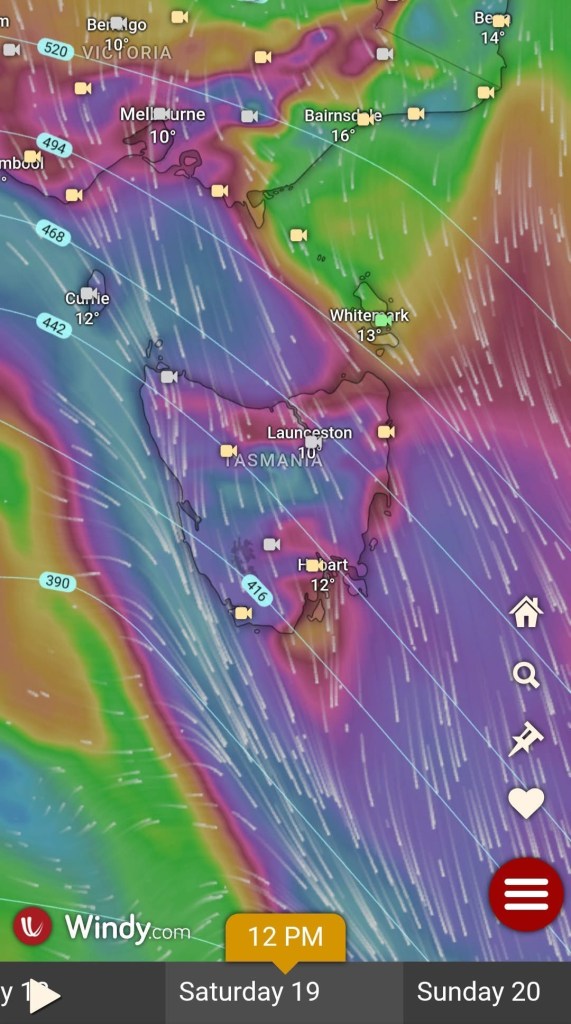
    We kept a close eye on a weather app that provides real time wind updates. By 6:30pm the wind had swung to the west and it was time to go. It was pitch dark, and I admit to being apprehensive about leaving Port Davey and the conditions we might find out at sea. The power of this place demands respect. Here the Southern Ocean, which has run unchecked for thousands of miles, meets land. The seas pile up as the ocean floor rises to form jagged rocks and cliffs. On the tail of a northerly gale the conditions were unlikely to be pleasant, and we were gong to have to force our way through until we could round the headland. Our modern navigation equipment was a God’s send as our position was constantly updated, but my mind kept returning to the thought of what we would need to do if the engine was to die, and we had to try and sail back between the rocks and islands to a safe anchorage. It wasn’t a comforting thought.

    Fortunately, the Lister Petter kept thumping away, smashing Taurus through the waves and swell, and we finally rounded the corner and could retreat from the unequal fight against the elements. Naturally the wind veered sufficiently to prevent us sailing for another hour or so, but finally we were able to unfurl the jib and turn off the motor.

    Dawn off West Coast of Tasmania.

    As expected, the waves stirred up by the strong northerly had become confused by the westerly change. These combined to create a violent movement onboard which prevented us from getting any sleep. Adding to the challenge, the wind kept heading anti-clockwise so that our predicted sou’ westerly ended up as almost a sou’ easterly. As the night wore on the wind ended up blowing from directly behind us. We routinely use preventers, which stop the boom smashing across the boat in a crash jibe, so the conditions were more irritating than dangerous: the jib kept collapsing and refilling, explosively yanking on the lines and gear. We needed to pole it out, but feeling tired and nauseous neither of us were keen to attempt the operation in the violent seas and darkness. Instead, I played with different amounts of sail, altered the sheets and cars, dropped the main, but in the end nothing really worked. Ultimately, the snapping of the sail gear grew so wearisome that I furled the jib and put the engine back on. I hate to motor when I can sail, but sometimes you just have to say the hell with it. Come daylight we poled the jib out and raised the main to the third reef, holding the boom amidships to try and reduce the roll. The ride still wasn’t comfortable, but we were moving and it was the best we could do.

    An Albatross flying over the Southern Ocean. A wonderful thing to see.
    A rolly ride..

    Despite the conditions we made fairly good time, passing Macquarie Lighthouse at Cape Sorrell at 1pm. Our timing was near perfect as slack tide was due at 1:30pm, the calmest period to enter the harbour. We avoided the rocks that the lighthouse warned against, watching fascinated as the waves smashed themselves into atoms against them, and rounded the cape to head towards Hells Gates. The swell remained surprisingly powerful, and for a brief moment Taurus surfed along at 10 knots. The entrance to Hells Gates is guarded by a mole on the western side, a wall built in the convict era to reduce the swell, whilst to the east an impressive series of breaking waves give notice of the sandy shoals. In the light conditions we had no trouble motoring in, but it was all too obvious why this place is best avoided in the dark or strong westerlies.

    Cape Sorrell.
    Approaching Hells Gates..
    and safely through..

    Having passed the Gates we then needed to follow various channels through a maze of sand banks. How people managed to get in and out of this harbour in the age of sail, heaven only knows, but it is little wonder that so many ships were wrecked here.

    Strong currents inside the harbour.

    Finally we reached Strahan, a picturesque little town, dropped the anchor, and unshipped the dinghy. We rowed across to the local pub and ordered some food and a beer. Ah, the glorious benefits of civilisation!

    Strahan from the anchorage.

    Then it was back home to a boat oddly still and quiet after all the frenetic movement we’d grown used to. It was time for a good night’s sleep.

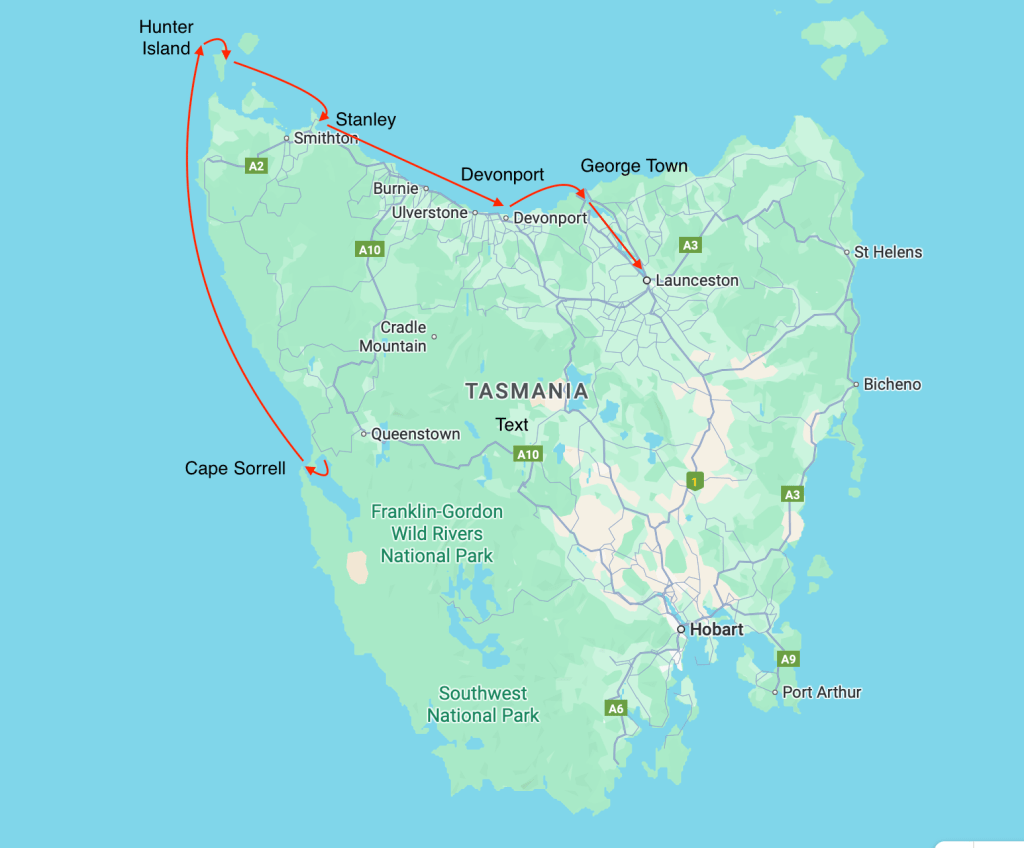
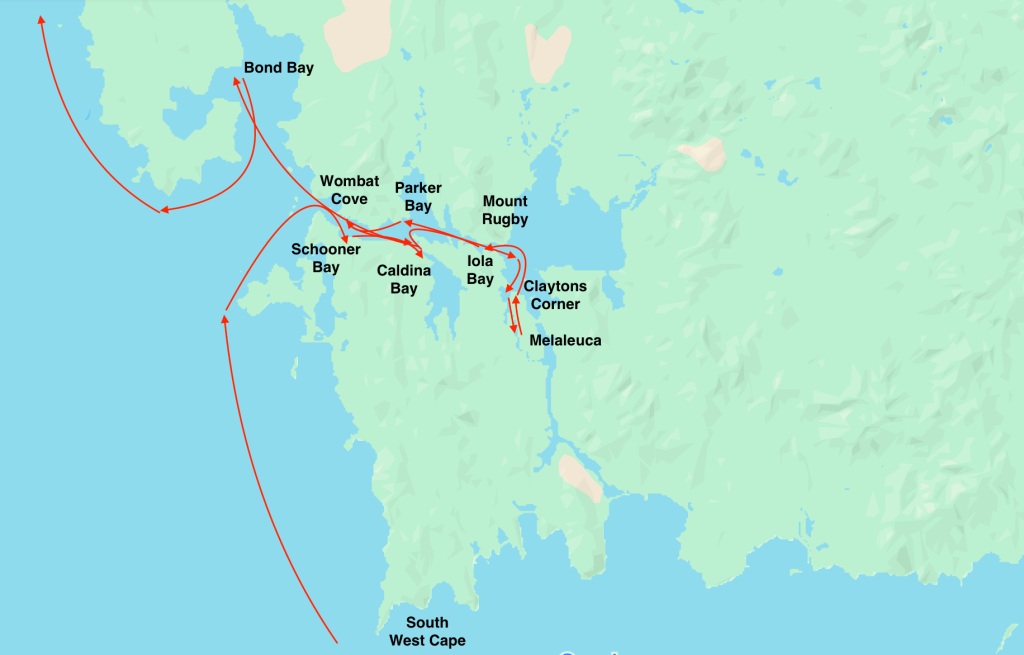
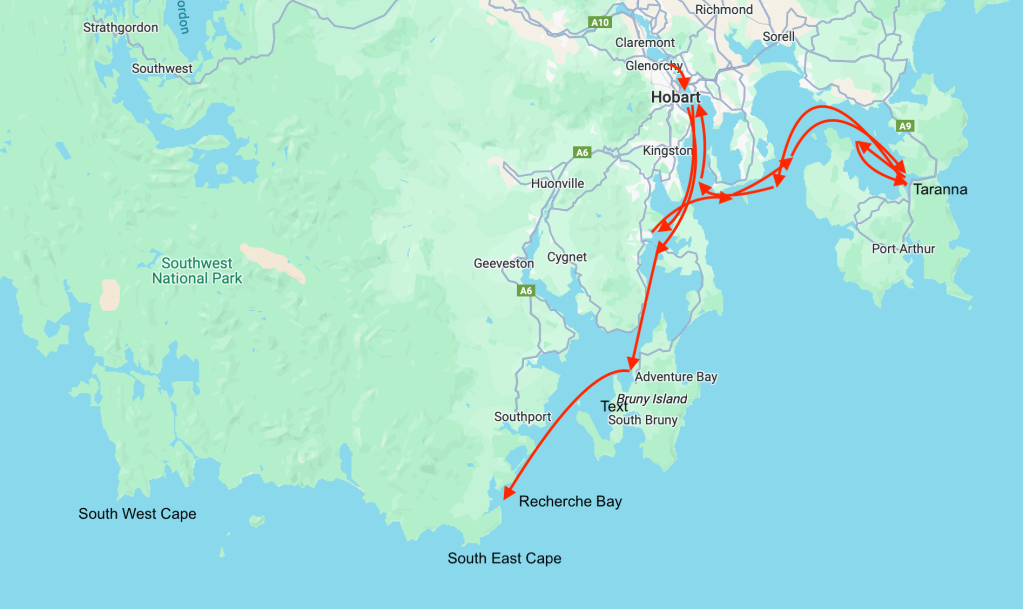
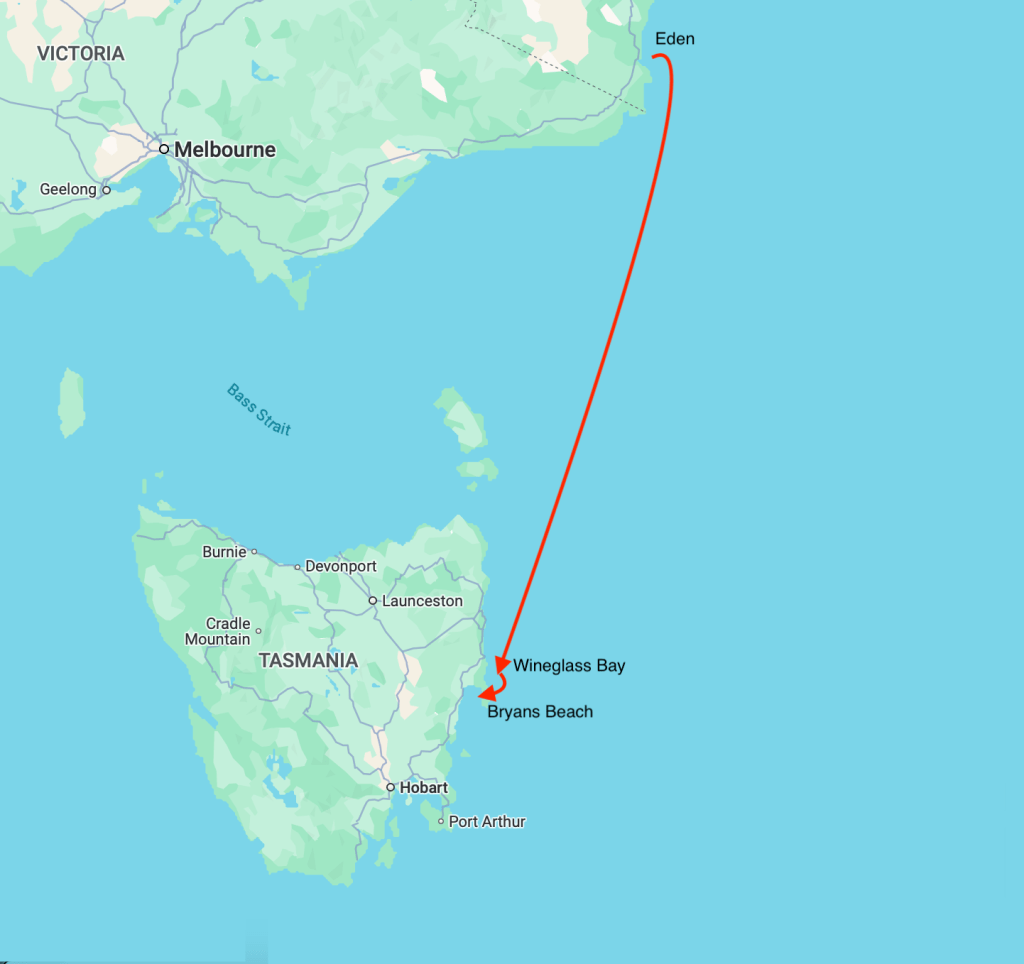
    The voyage of the good yacht Taurus: 16th of June – 29th of June 2025. Inset area shown below.
    The good ship Taurus’ tour of Port Davey, 2025.
  • Hobart during MOFO

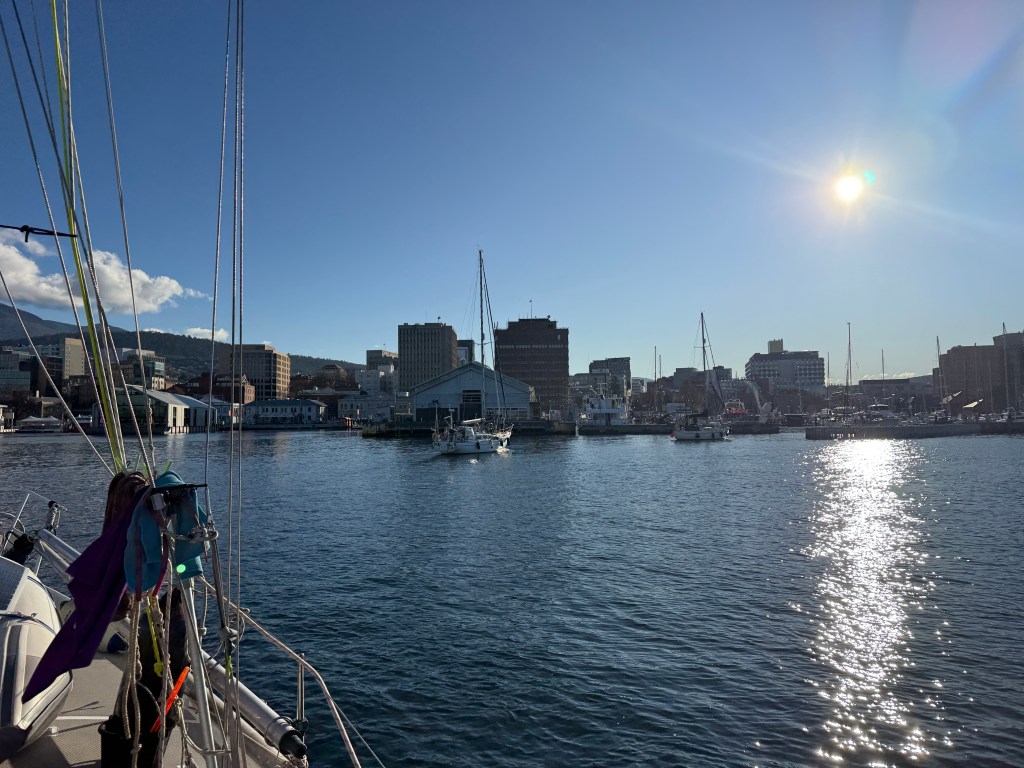
    After two months in the Prince of Wales Bay Marina it was time to go. Screwing our courage to the sticking place, we tossed off our mooring lines and left the security of our berth. Sailing under the Tasman Bridge we headed downriver, back to the public jetties at Sullivans Cove for some last minute groceries. Next morning we were on our way to Kettering.

    Our plan was to slowly sail back down the D’Entrecasteaux Channel to Recherche Bay, the closest all-weather anchorage for those planning to head to Port Davey. The sixty nautical mile trip from Recherche to Port Davey involves sailing west for roughly nine hours, ‘turning the corner’ (as they say in these parts) at the aptly named South West Cape, and then sailing north for another three hours or so. Unfortunately, westerly gales are the norm in the infamous ‘roaring forties.’ Indeed, those intrepid souls who race around the world use the strong prevailing winds in these latitudes to blast around the globe in the shortest possible time. We couldn’t leave until the weather decided to play ball, but we had to be ready for when it did.

    Naturally, things didn’t go quite to plan. I strained my back carrying jerrycans of diesel to the boat, and the weather did nothing but blow westerly gales and storms. My back injury and the ‘yeah, nah’ weather meant the trip was on hold until both improved.

    It was time to reassess. Before leaving Prince of Wales we had met a nice couple from the Ocean Cruising Club, David and Andrea, who also happened to be members of the Cruising Yacht Club of Tasmania (CYCT). They told us that the CYCT was about to have a rally around the Norfolk Bay area, and suggested we tag along. Because getting to Port Davey was our priority we hadn’t intended to accept this kind offer. However, it turned out that our neighbours on the jetty at Kettering, Phil and Julia, were organising the rally. When they also invited us to join them it seemed too good an opportunity to miss given the circumstances.

    A few days of lazy sailing seemed like the perfect antidote for my back, and it also meant that we could return to Hobart to see some of the Dark Mofo celebrations, an annual mid-winter arts and culture festival.

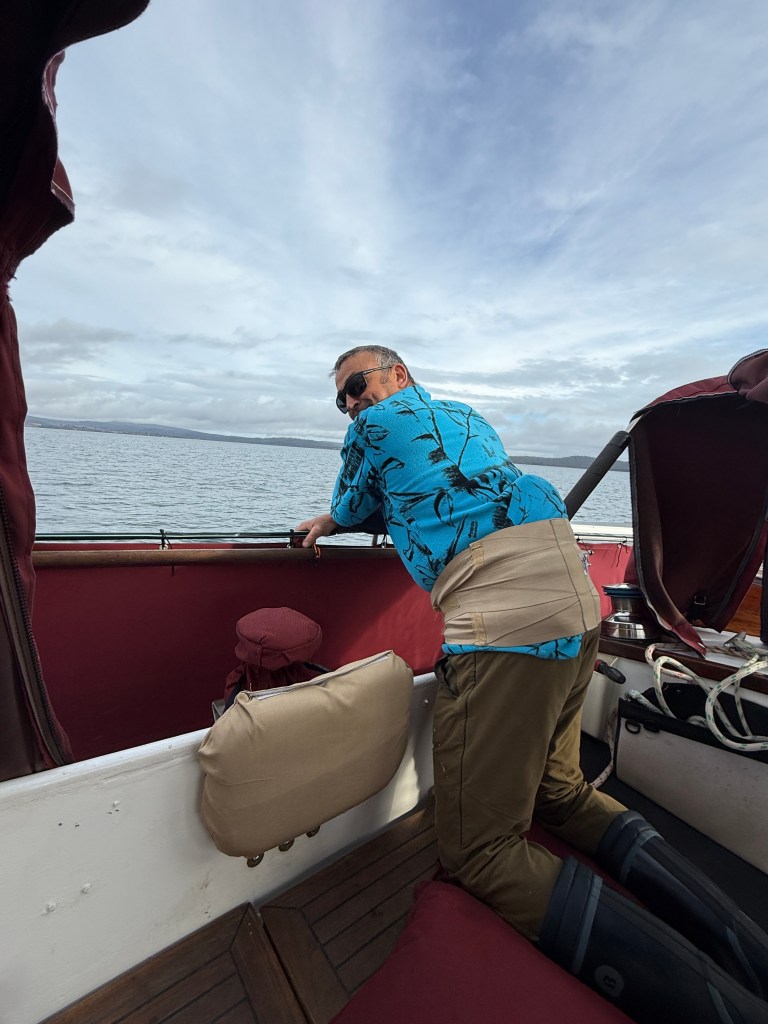
    In the above photo, I’m not modelling the latest Hobart fashion, but using a back brace to pin a hot water bottle to me. I find the best treatment for a strained back is support (a back brace), heat (a hottie), and a mixture of tramadol, codeine, and alcohol (note the silly smile). Taken in small measure this mixture generally allows me to push through the few days until the spasms stop, and failing that it certainly makes the world a more serene place.

    We enjoyed a relaxing sail to Norfolk Bay, pleased to be able to take our time for once. The rally had arranged a bonfire to kick off the celebrations and we were able to catch up with some (not very) old friends and make a few new ones.

    Photo taken before the naked dancing began…

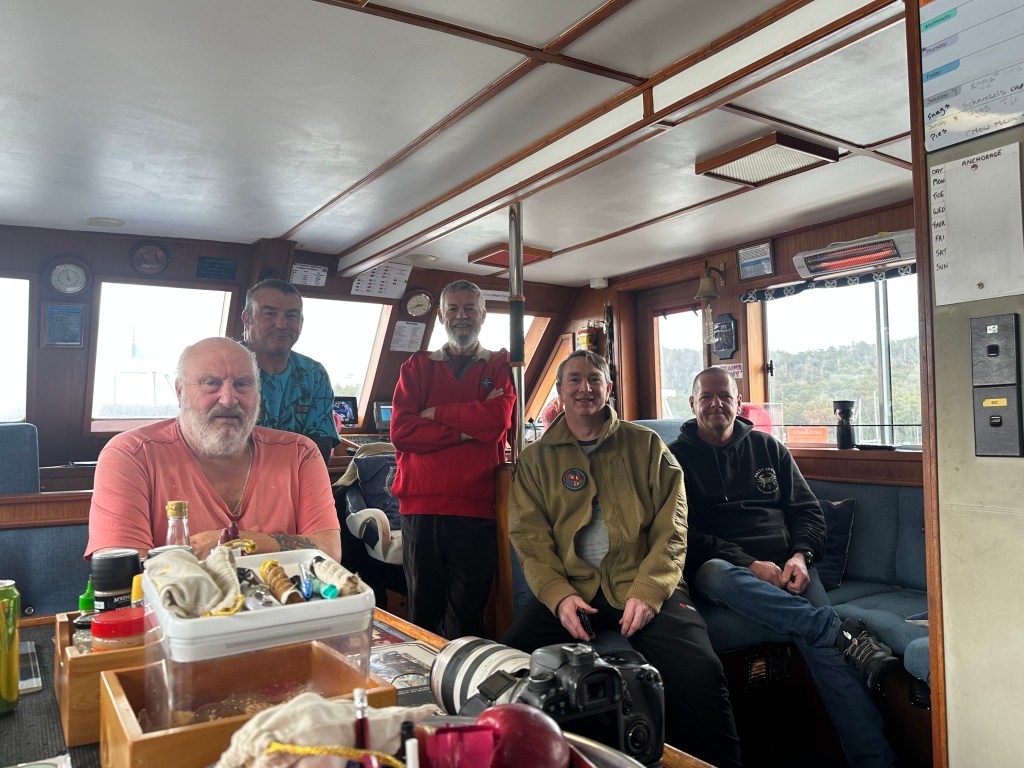
    One of the crews we particularly enjoyed meeting was that of Southern Explorer. This converted trawler is run as a charity by veterans for veterans, teaching modern seamanship and traditional ‘marlin spike’ rope work. The guys were as generous as Tasmanians always seem to be, lending us books on the Port Davey area and providing lots of good advice for the upcoming trip.

    The crew of Southern Explorer: Rick, me, David, Peter, and Simon.

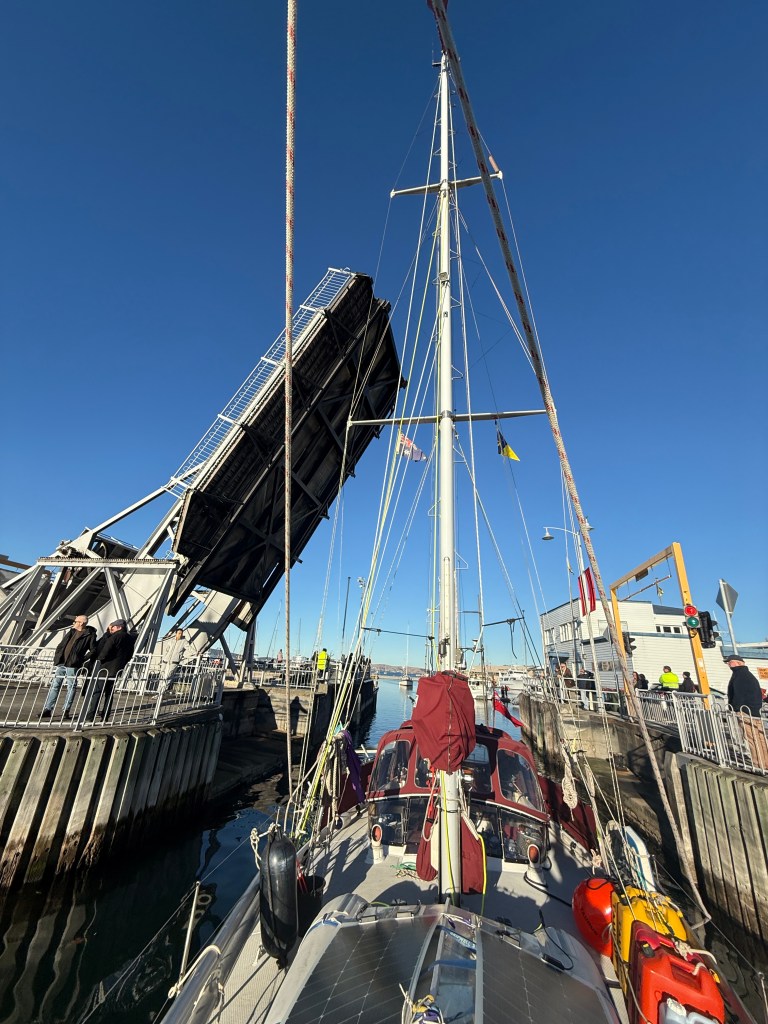
    After a fun few days the rally wound up and we headed back to Sullivans Cove. We had a few reasons to return. Apart from the Dark Mofo celebrations, we had decided that the saggy mattresses in our v-berth might be contributing to my back problem. Renewing the foam had become a priority. Last, but not least, The CYCT had arranged to gain access to Constitution Dock over Mofo. This historic area can’t normally be entered due to a road bridge that isn’t routinely opened. In typically generous fashion we were offered a berth if we wanted to join in. It was another opportunity that seemed too good to be missed.

    Taurus in Taranna on the CYCT rally.
    Sailing past the Iron Pot lighthouse on the way back to Hobart.

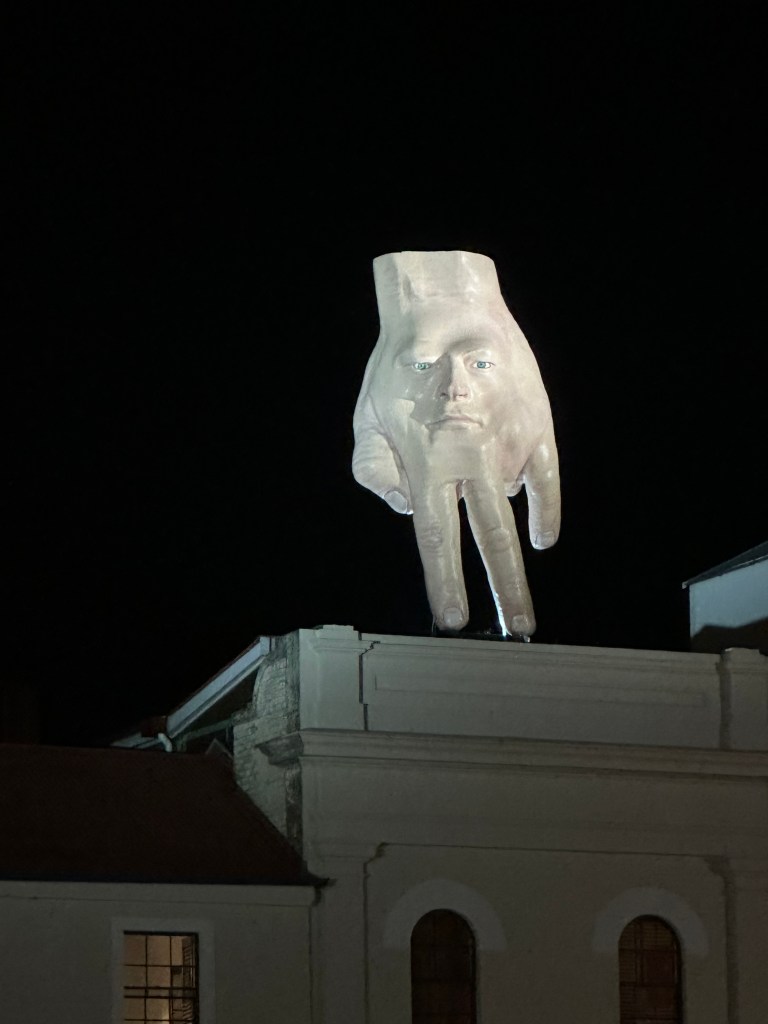
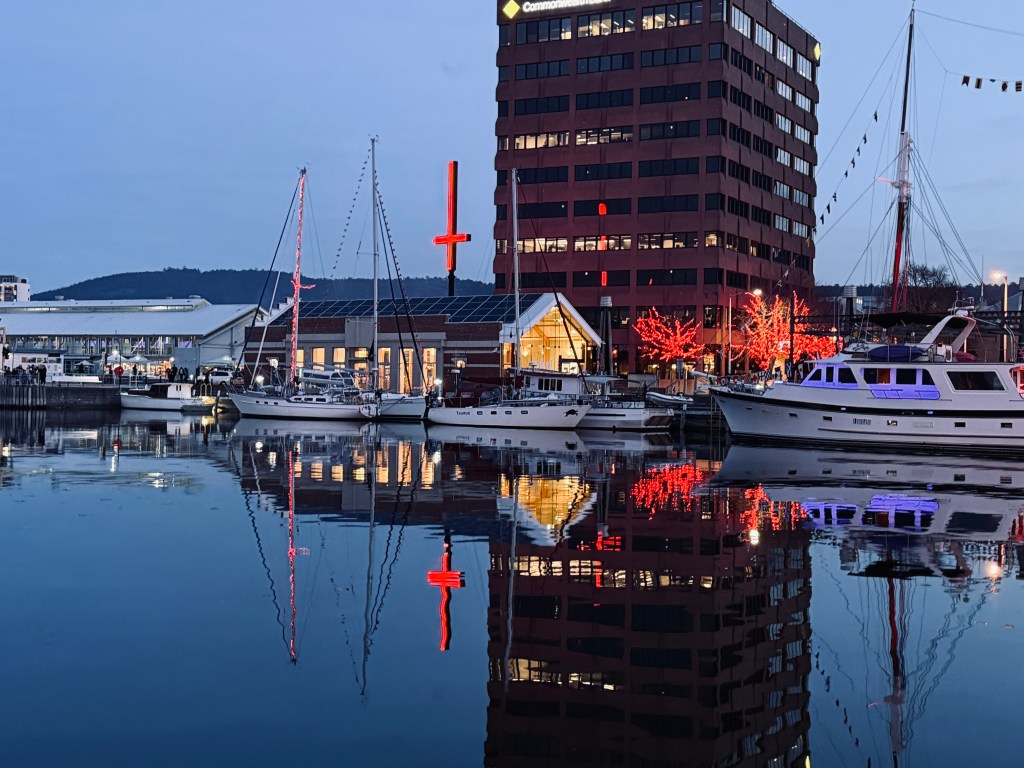
    Run by the people who operate MONA, it should come as no surprise to find that the Dark Mofo blends irreverence, art, and hedonism. Even so, I was still a little surprised to see that they had been able to get away with erecting a series of large glowing inverted crucifixes along the waterfront. What, I thought, would the Christians say?

    Art…

    Part of the Dark Mofo celebration is Dark Feast; an enclosed area where innumerable street vendors come together to sell food and alcohol. The festival is very popular with the locals, who all come out to play and enjoy a break in the bleak mid-winter.

    After eating and drinking our fill, and replacing our mattresses (thanks to Foam Land in Hobart who really helped us out), it was time to leave our cosy berth. We headed over to an anchorage at Bellerive and next day joined the twelve CYCT boats who were getting ready to enter Constitution Dock together so that the bridge didn’t have to be open any longer than necessary.

    It was a bit nerve wracking to sail Taurus into a confined space with twelve other yachts, all looking to moor up at the same time. In a long keel boat, with inherently limited manoeuvrability, it could easily have become a bit of an embarrassing nightmare. Thankfully everything went smoothly and our blushes were spared.

    A queue of yachts heading into Constitution Dock..
    safely under the bridge…
    and safely tied up alongside another boat.
    Another view of Taurus in Constitution Dock.

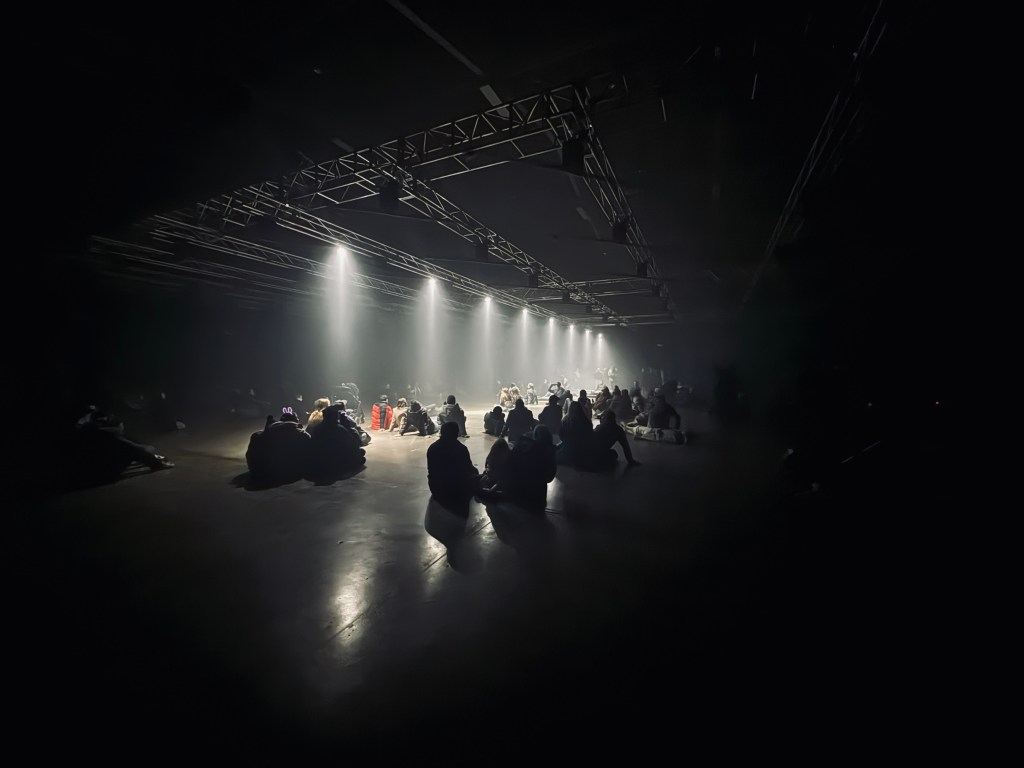
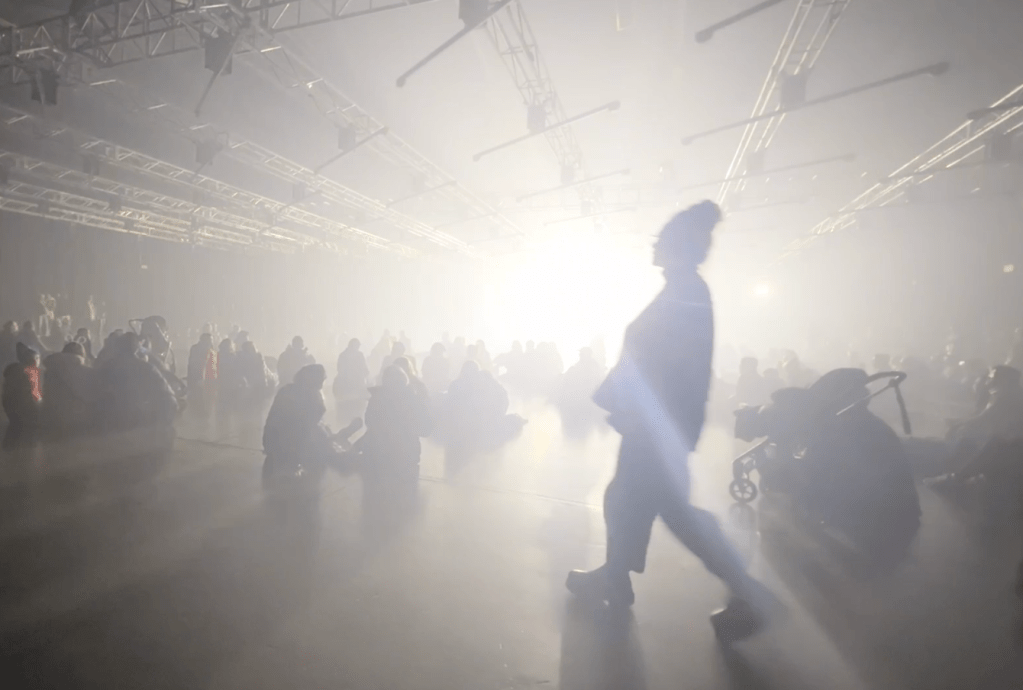
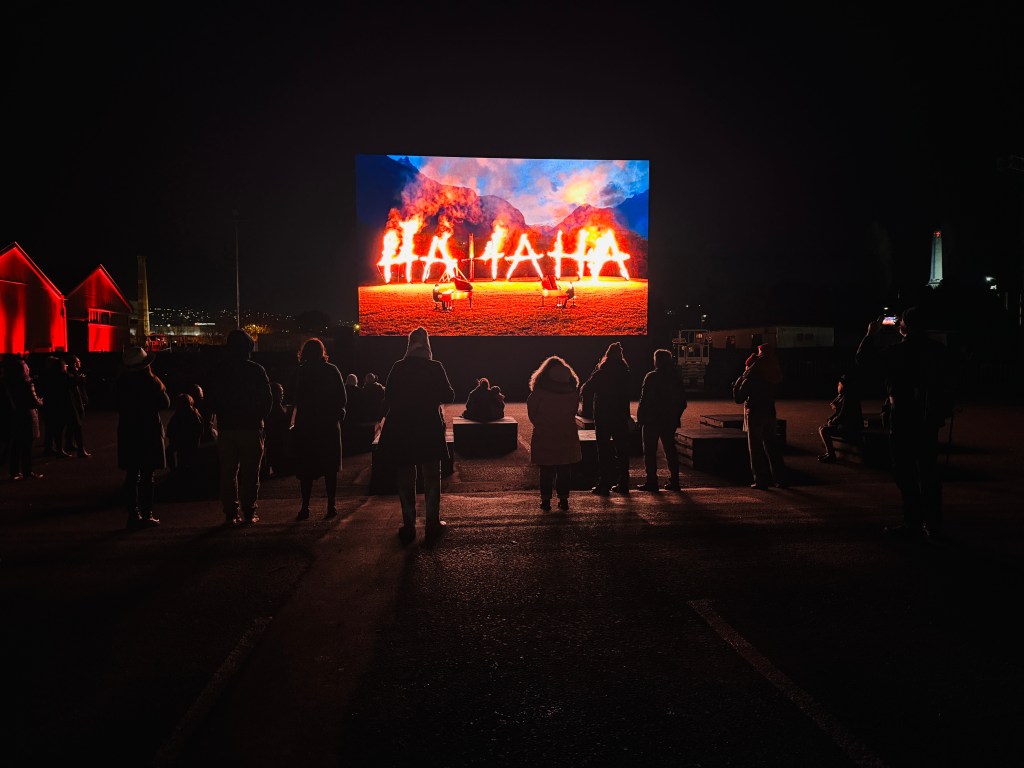
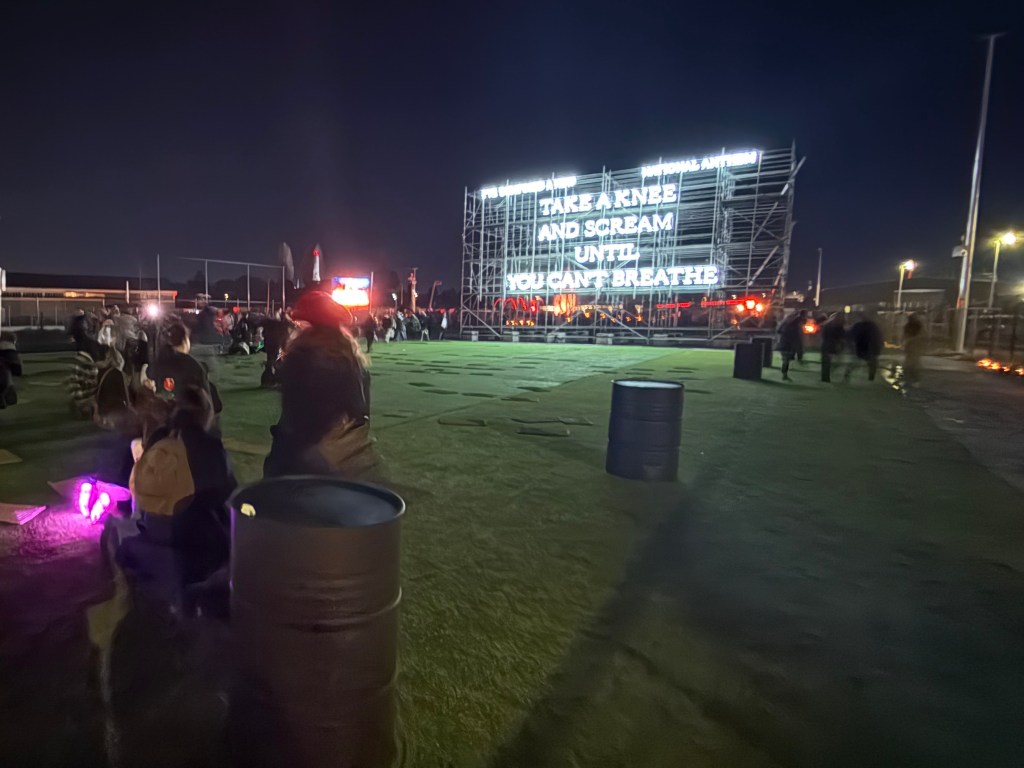
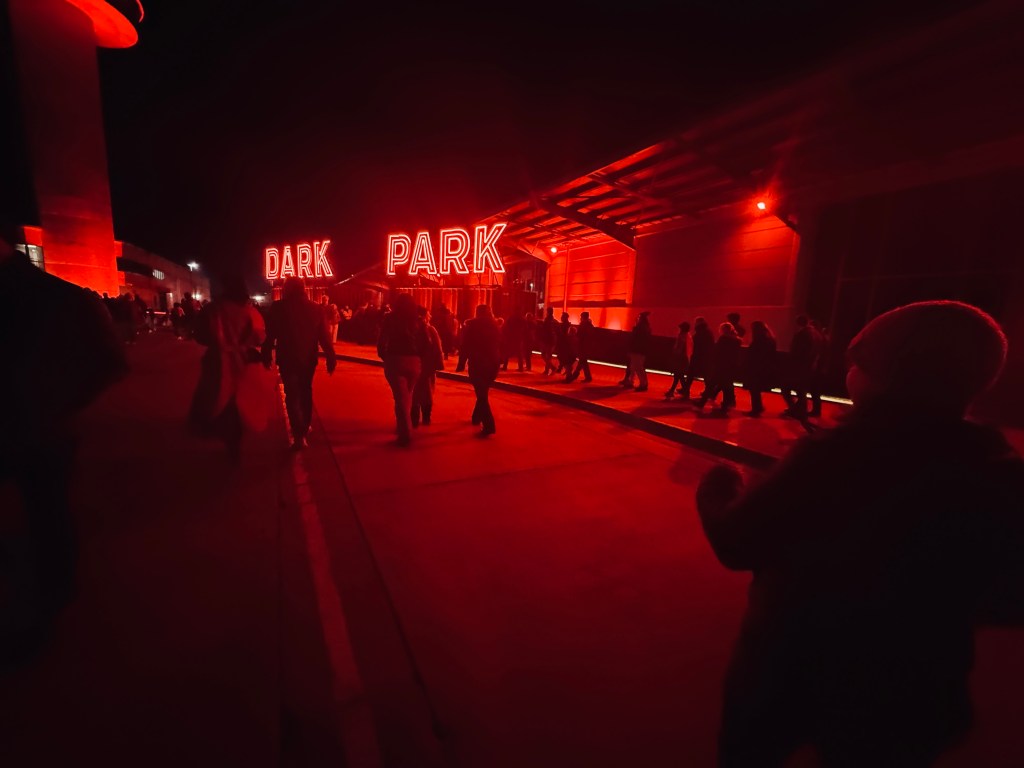
    That night we visited another part of the Dark Mofo event. The Dark Park had a number of ‘arty’ things going on. Some were spectacular and some a little bit weird.

    The moving lights reflect wind currents in Japan…
    Burning letters, classical pianists, and jumping motorcycles..
    We forewent the opportunity to scream. It seemed a bit perverse to do so for ‘fun’ when so many in this world are screaming for real.

    The following day it was time to leave Hobart once again. We had, we hoped, a short weather window that would allow us to get to Port Davey in a couple of days time. We needed to get down to Recherche to be ready for the off.

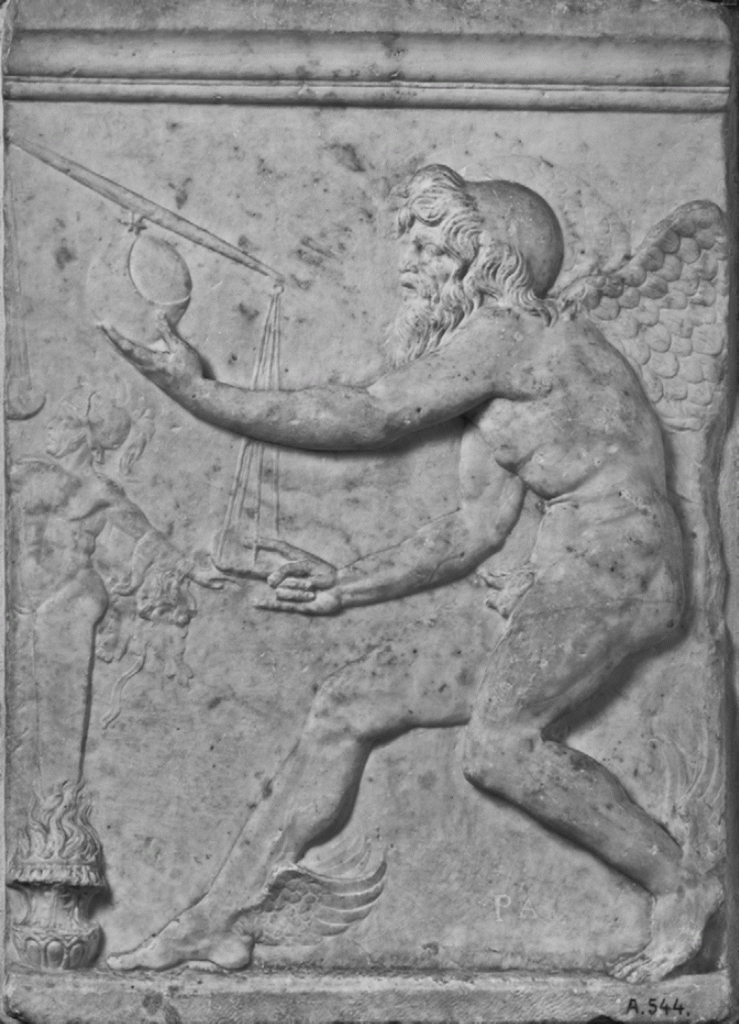
    We sailed back down the D’Entrecasteaux Channel over the course of two comfortable days, stopping in Tin Pot Bay for a night and arriving in Recherche Bay in the early afternoon of the next day. The weather window we hoped to take was pretty tight. A northerly wind would allow us to get to the South West Cape, and was then predicted to die away at about 9am to be replaced by an intensifying sou’westerly, which would allow us to sail north and slip into Port Davey before things got too ‘exciting.’ Of course, depending on the absolute accuracy of weather predictions is pretty foolish — predictions being predictions after all — but it was the best opportunity we’d seen for weeks. The Roman god of opportunity, Occasio, was depicted as a figure with a long fringe at the front and shaven head at the rear. The idea was that if you didn’t grab hold of him as he approached, you didn’t get a second chance. So it was with us, if we wanted to reach Port Davey we would have seize the opportunity before it disappeared. To be at South West Cape at 9am we needed to leave Recherche at midnight, so we settled down to try and relax for what was likely to be a bumpy trip.

    Occasio — Roman God of Opportunity.
    Leaky stern gland. The water is running in (you can just see it) from the black square thing in front of the blue tube…

    Then the bilge alarm went off. Opening up the engine compartment we found something like 2–300 litres of water sloshing around. Bugger. It turned out that this was coming from the dripless stern gland seal, a seal that is supposed to prevent the sea coming in from where the propellor shaft exits… Miles from any help, with no possibility of being able to lift the boat, and with little time before a long awaited opportunity to make our next passage, the timing couldn’t have been much worse (though in hindsight, the alarm going off when we were halfway to Port Davey would have been much much worse). On the plus side our ‘OMG bilge pump’ made light work of emptying the boat, but what to do? It didn’t seem wise to head to an extremely remote area of Tasmania in a boat trying to sink…

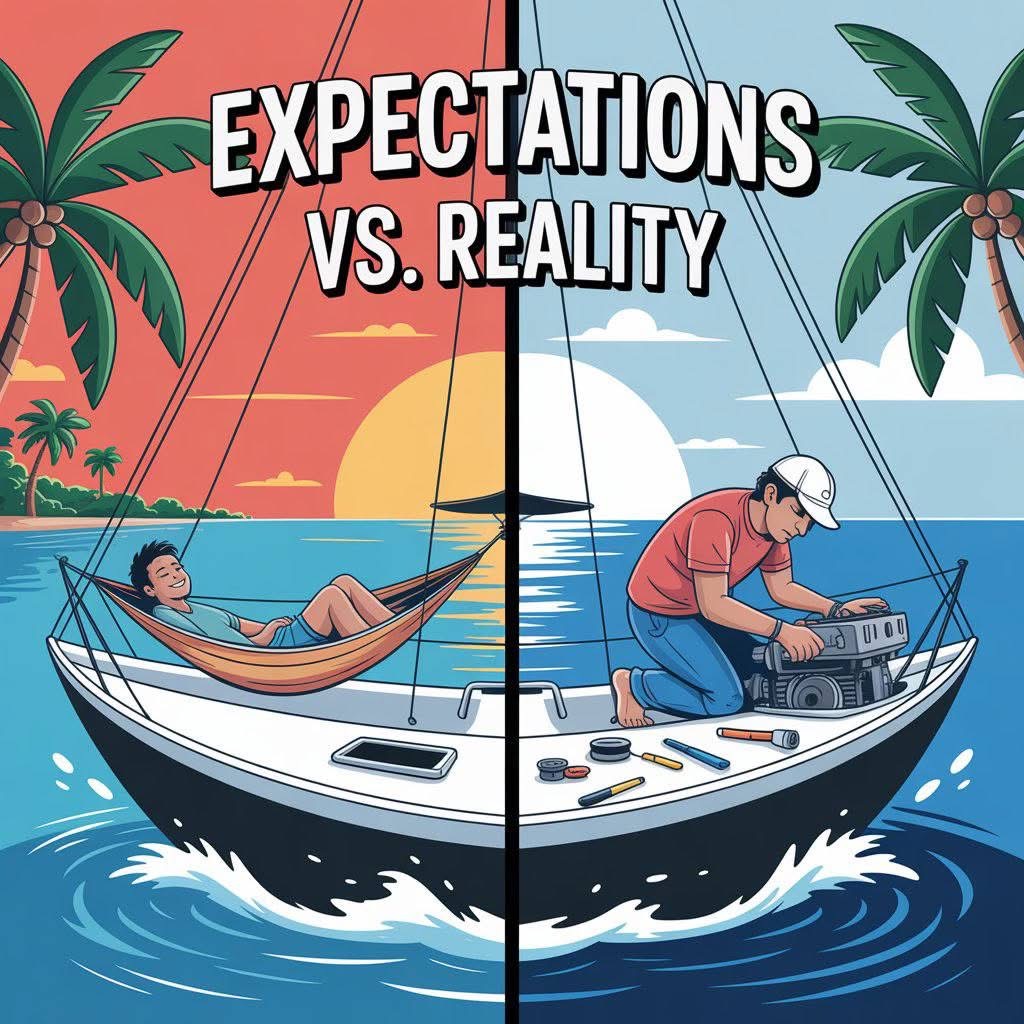
    Cruising, aka fixing boats in exotic locations. The guy on the right, by the way, seems to offer another iteration of the cruising fantasy. He (or she) should be covered in grease, trying to stuff himself (herself) into a tight corner to reach a bolt that’s out of sight and just out of reach, and working on a boat rocking around like a demented rodeo steer!

    Next time: what’s wrong with the bloody boat now, and (all together now) “can we fix it?”

    Voyage of the bloody thing Taurus: 2nd of June–16th of June 2025.
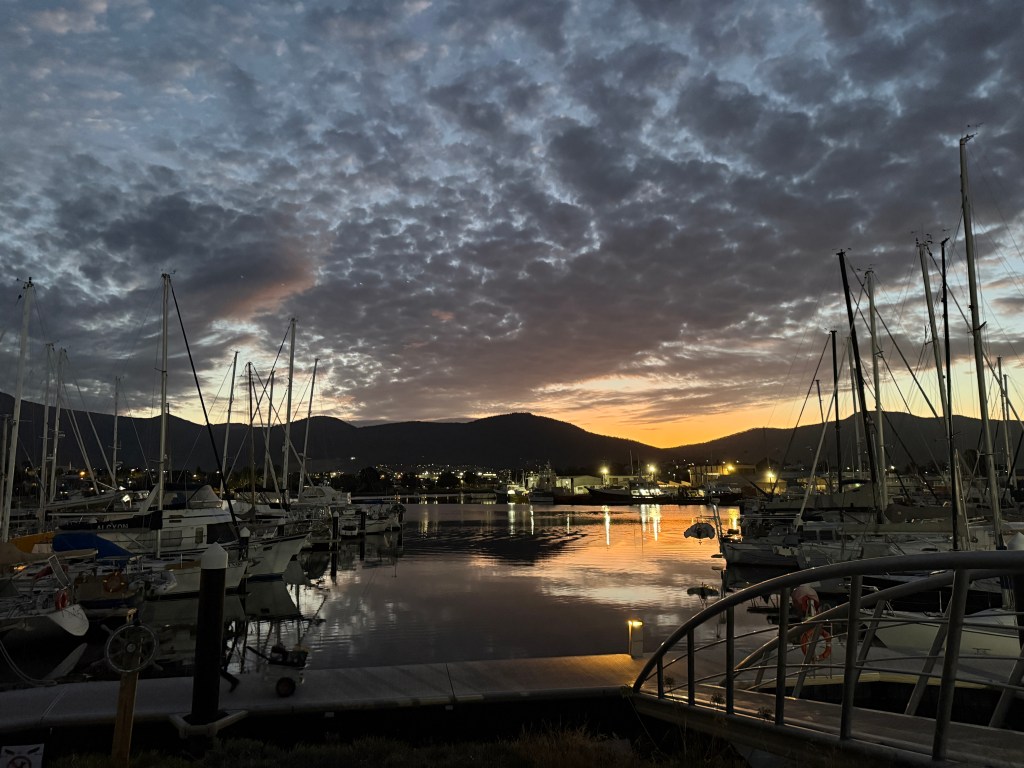
  • Sunset, Prince of Bay Marina, Hobart.

    The incredible sailing in Tasmania, and innumerable bays and anchorages, naturally means that sailing is a popular pastime. This, in turn, means that there are a number of marinas. An incomplete list of those in Hobart includes Bellerive, Derwent, Kings Pier, Margate, Lindisfarne, Oyster Cove, Royal Yacht Club of Tasmania, and Prince of Wales Bay. Following the difficult experience I had living on anchor for a month in Bundaberg, when Cara headed back to New Zealand last time, I was prepared to spend a bit of money if it meant I could get off the boat easily and have access to such trivialities as food, toilets, and showers. The variety of options made the choice a bit tricky, but, as all seemed to offer more or less the same facilities, we took the obvious course and chose the cheapest: The Prince of Wales Bay Marina.

    For once, the path of frugality didn’t end up biting us in the bottom, and staying at the Prince of Wales has been a great experience. But I get ahead of myself…

    Leaving the free Sullivans Cove berth in downtown Hobart we sailed up the Derwent River, passing under the iconic Tasman Bridge. When it opened on 29 March 1965, this bridge was the longest pre-stressed concrete bridge in Australia, with a total length of almost 1.5 kilometres. Today, some 73,000 vehicles cross the bridge daily, making it the highest volume road section in Tasmania.

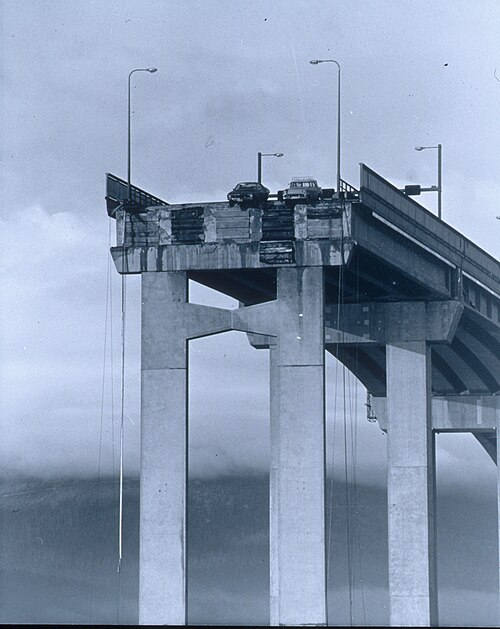
    At 60 metres high, the bridge appears almost unnecessarily tall and ‘humped’ (when driving over it seems strangely steep). Another notable thing is that the piers are irregularly spaced. This irregularity is due to a terrible accident that took place in 1975. On a quiet Sunday evening in January the bridge was struck by the SS Lake Illawarra, a bulk ore carrier with a cargo of 10,000 tonnes of zinc concentrate. The collision caused two piers and three sections of concrete decking, totalling 127 metres, to collapse. The vessel sank almost immediately, drowning seven crew members who were trapped below deck. Five more people died, the occupants of four cars which plummeted from the bridge into the river. The disaster split the city in half, forcing commuters living on the eastern shore to drive an extra 25 kilometres to reach the CBD via the next bridge to the north. It took two and half years for the collapsed bridge to re-open.

    Tasman Bridge after Collapse. Courtesy of the Australian Department of Climate Change, Energy, the Environment and Water

    Happily our transit beneath the bridge was uneventful. We motored into the Prince of Wales Bay, found our berth, and secured our mooring lines.

    Berth G35. Home from home.

    Cara only had a couple of days before her flight to New Zealand, and before we knew it it was time for her to leave. Her mum, Christine, had asked her to give her a hand as she recovered from an operation. She was due to be away for three weeks, but this would prove to be four as one of her uncles sadly passed away and she stayed for the funeral.

    Various boat jobs kept me busy for the first couple of weeks, and then I grabbed the opportunity to go sailing with a friend on his yacht for a few days. We had met Sam and Emma aboard their classic wooden yacht Norla in Tonga, and bumped into them again in Fiji, Vanuatu, New Caledonia, and Bundaberg. Hailing from Hobart they were now home, but Sam was keen to get away for a few days and invited me along as crew.

    SV Norla

    Sam and I chose to explore the Lime Bay State Reserve area, a park that I hadn’t visited as yet. This region is renown for its great natural beauty and historic significance, especially in regards to Tasmania’s convict past. Eaglehawk neck, on the right of the map below, is the only land bridge that joins the Port Arthur settlement area with the rest of Tasmania. It was famously guarded by savage dogs during the convict period, effectively turning the peninsula into an island that was almost impossible to escape from.

    Anchorages Sam and I stayed at — A: Lagoon Beach; B: Ironstone Bay; C: Lime Bay.

    Anchoring in Ironstone Bay we took the dinghy ashore and followed an overgrown track to the remains of a convict coal mine, sited at the aptly named Coal Point.

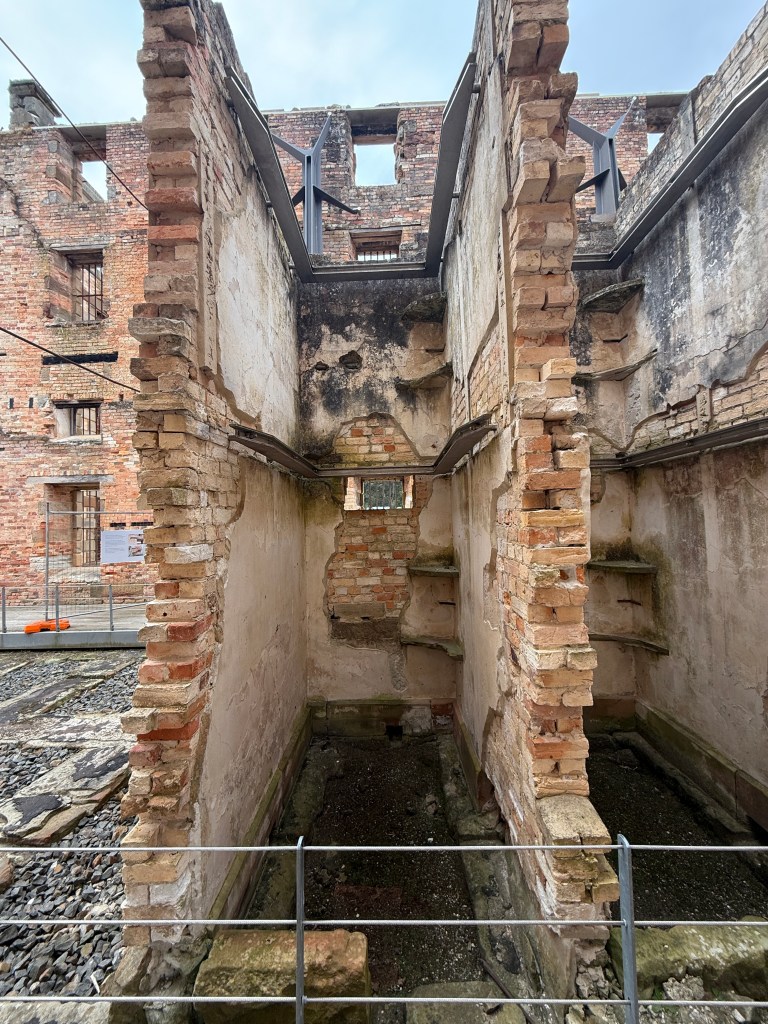
    The mine, established in 1833, was the state’s first operational mine, providing a much-needed source of local coal. The site once included a large stone barracks, which housed up to 170 prisoners; punishment cells; a chapel; bakehouse; store; and various quarters. By the late 1830s the site produced most of the coal used in Van Diemen’s Land. However, not everyone was keen on the product. The coal was of a poor quality that emitted showers of sparks when first lit, setting fire to carpets and ladies’ dresses.

    The Coal Mines operated as a probation station from 1833 to 1848. The site had a fearsome reputation as a place of gruelling punishment for the worst class of convicts. During the 1840s up to 600 people were held here. To keep them in line, four solitary cells were built deep in the underground workings to punish those who dared to commit further crimes. Those were the days!

    Entrance into the mine — all fenced off nowadays.
    Building ruins.

    Alas, my sailing sojourn with Sam had to cease all too soon, and then it was back to Taurus, trouble, and toil.

    Sailing with Sam.

    The list of jobs carried out included servicing our Lofrans windlass (I wrote an article about this for the Island Cruising group if anyone is interested), touching up paintwork, improving the life raft bracket, repairing the dodger, fixing the sewing machine, and innumerable other chores that find their way onto the never-ending boat jobs ‘to do’ list.

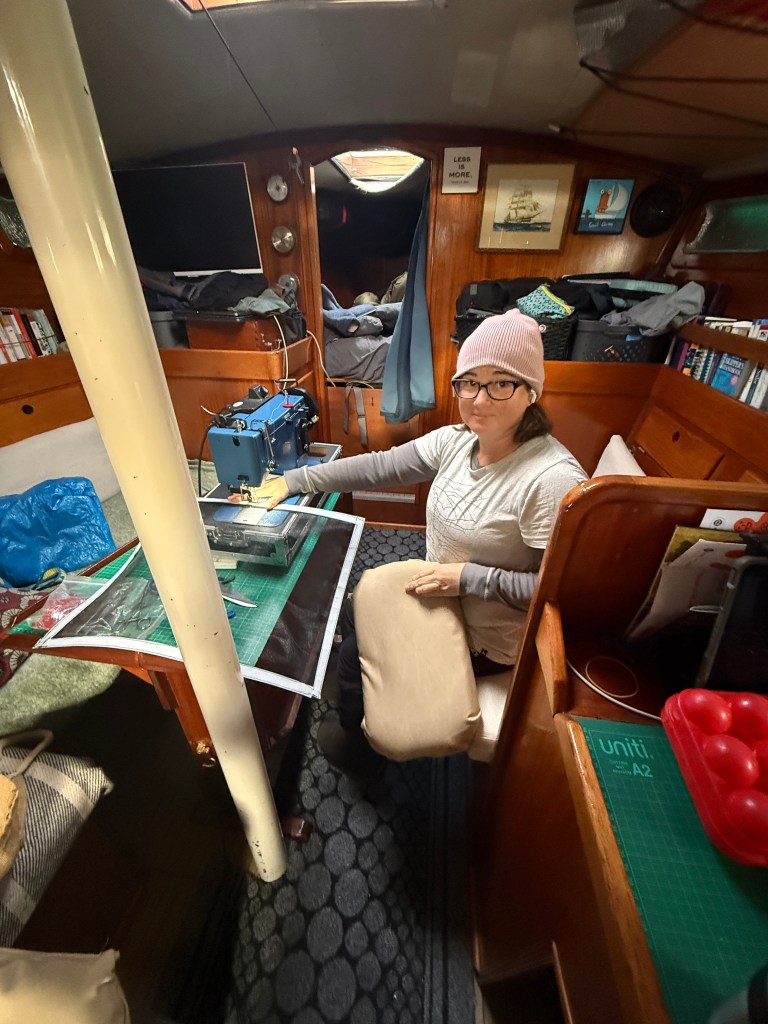
    Cara on the Sailrite. Great when it works, a PITA the other 90% of the time.

    Being at the Prince of Wales Bay Marina made many of these jobs fairly straightforward, as the area is surrounded by engineers, hardware stores, and the like. Had I gone to another marina, such as Kettering, which is far more isolated, I would have struggled to get anything done without access to a vehicle. On the subjects of vehicles, the Prince of Wales Marina has two courtesy cars that cost $10 to rent for two hours. As the marina staff go home at 4:00 pm if you borrow the car after 2:00 pm it’s yours for the night, which is great for visiting friends or takeaways!

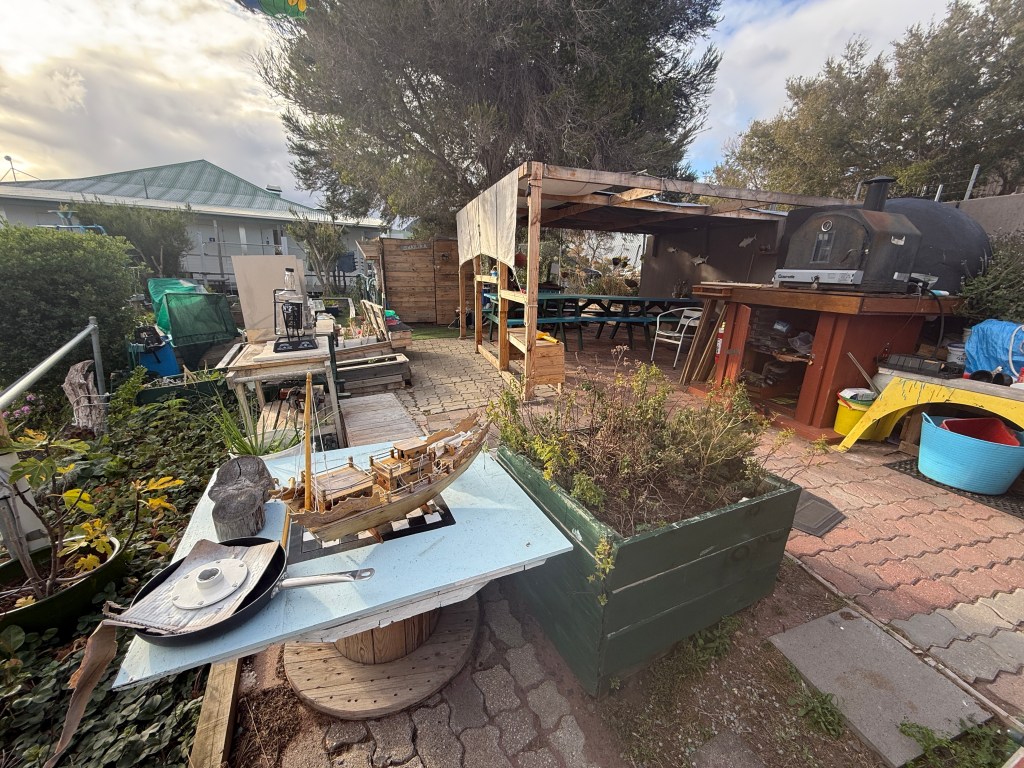
    Barbecue and work area at Prince of Wales Bay Marina.

    After a month, Cara returned, just in time for a cold snap that put an end to any further painting. The weather since has been cold in the evenings and mornings, but beautifully clear and sunny later in the day, and often surprisingly warm. We have only had a couple of days of rain, indeed, Hobart is apparently the driest of all Australia’s state capitals.

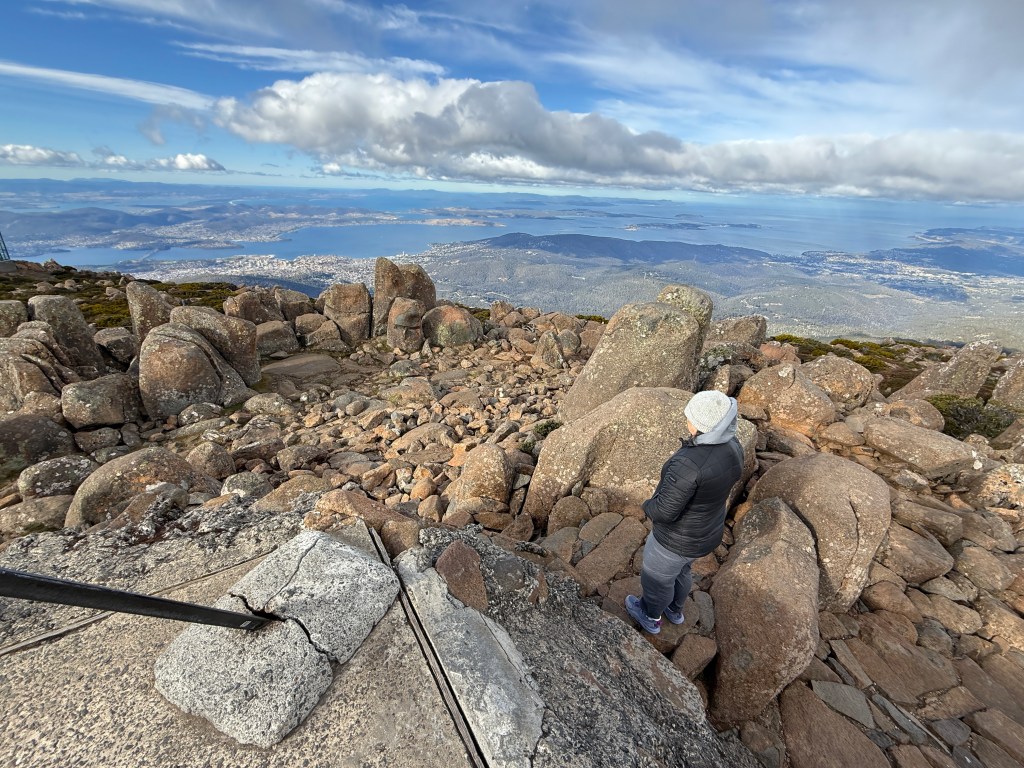
    In part the lack of rain may be due to the iconic Mount Wellington, which acts as a bastion against inclement weather and can be seen from all round the city. We hired a car and drove up the mountain to take in the views, a trip well worth undertaking and one that Charles Darwin made when he visited Hobart aboard The Beagle in 1836. On the day we visited, survival seemed less predicated on fitness than on beanies and puffer jackets. Perhaps Charles had better weather…

    View, looking south, from the trig point atop Mount Wellington. It was a bit ‘parky.’

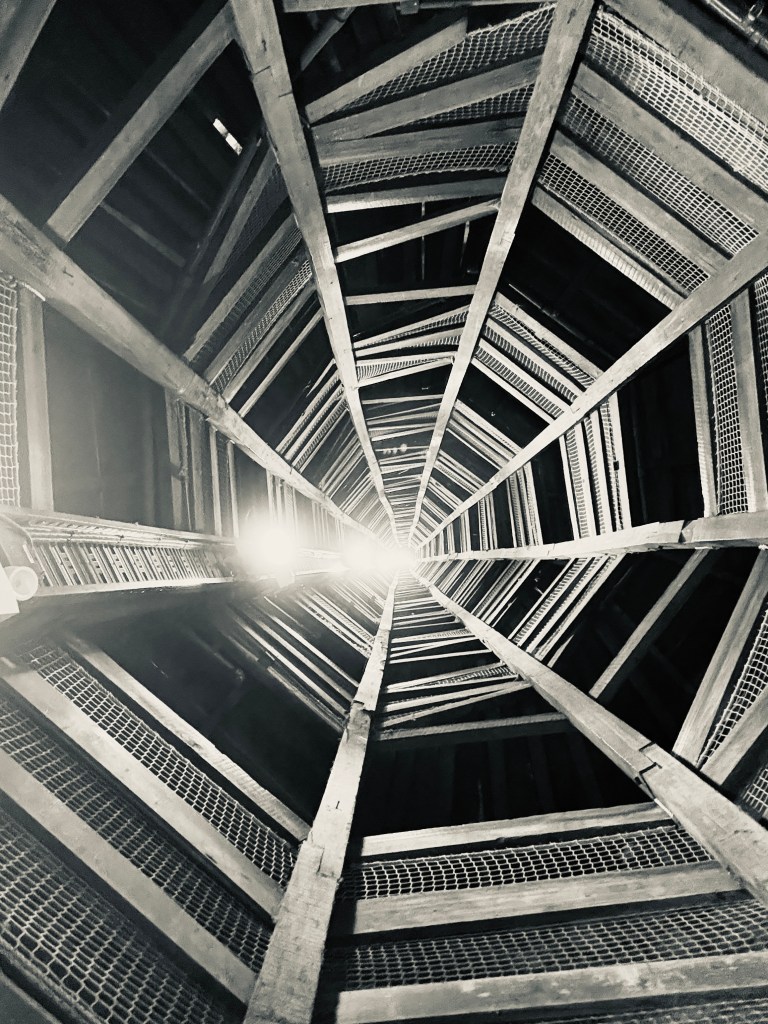
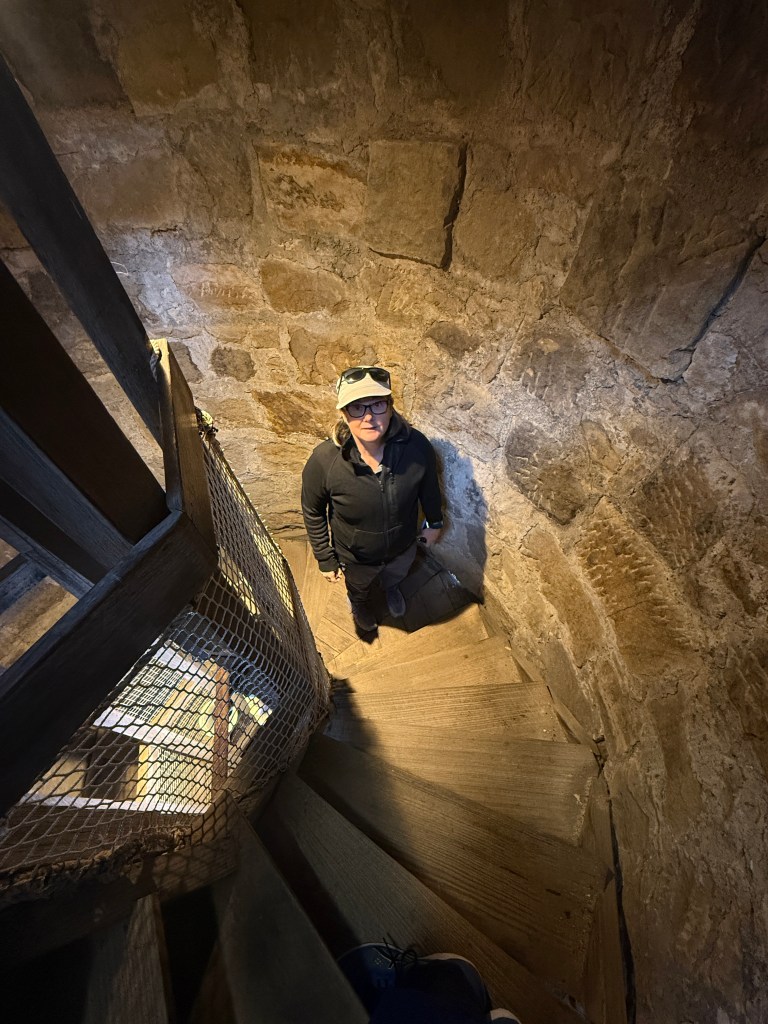
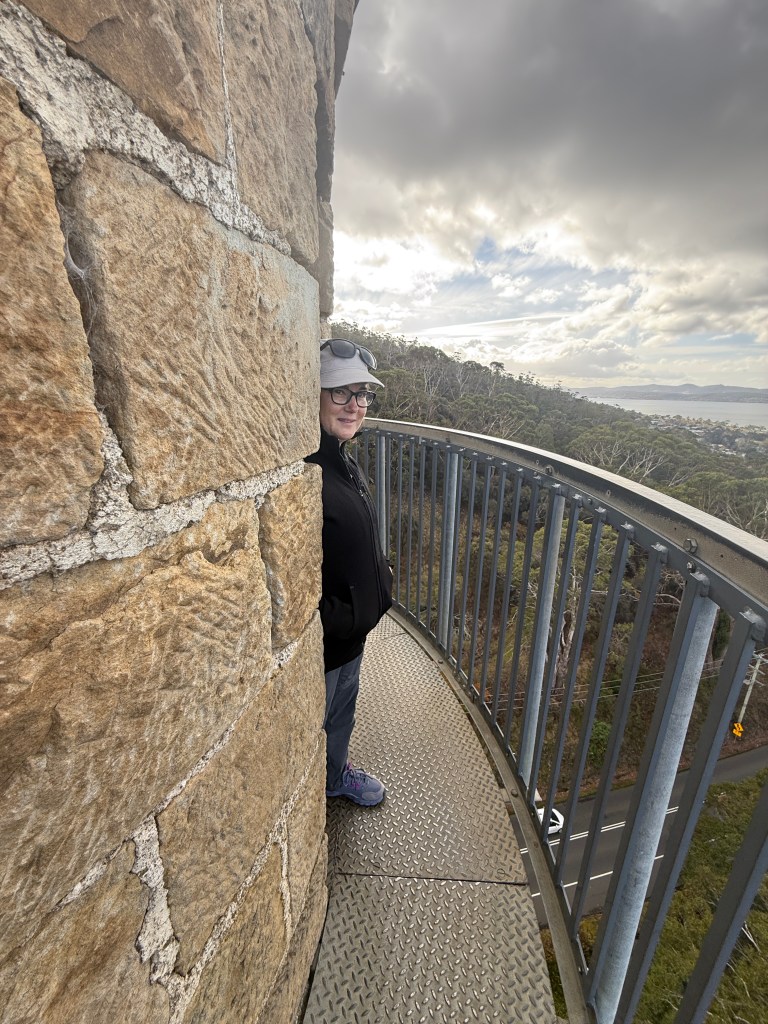
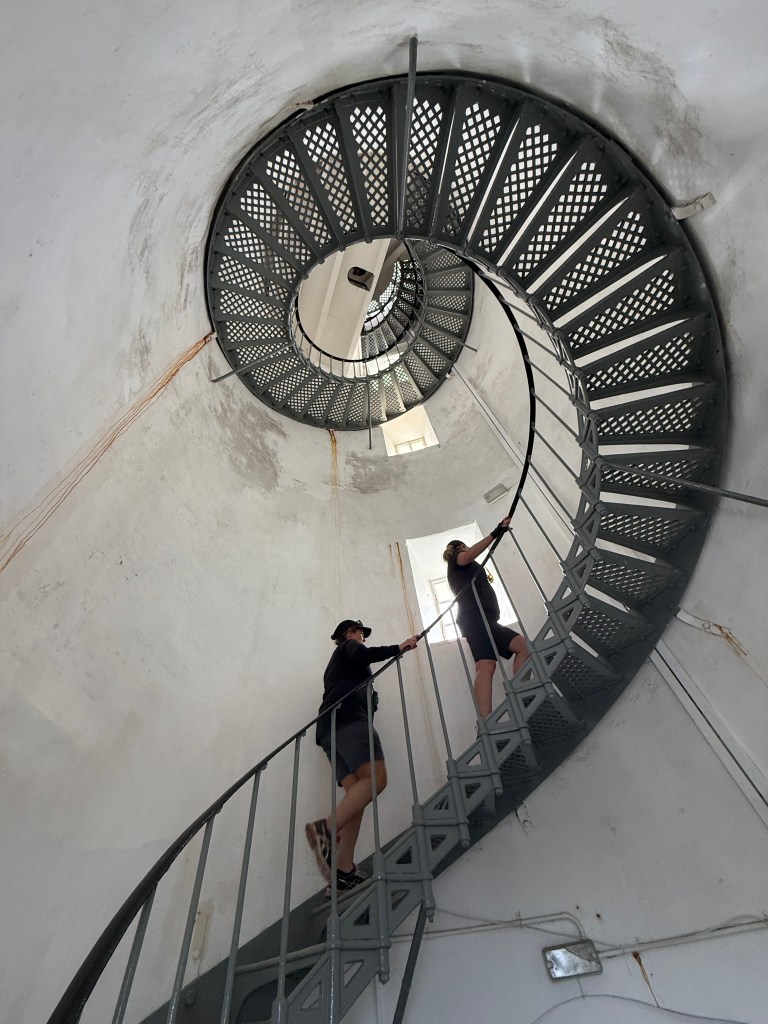
    On another day we visited the ‘shot tower.’ This landmark structure, standing almost 50 metres high, was built in 1870 by one Joseph Moir to make pellets or ‘shot’ for shotguns. Basically, lead is melted at the top of the tower and allowed to drip through a steel plate with the appropriate size holes. The lead then falls the height of the tower, which ensures that the droplets become spherical rather than tear shaped, into a vat of cooling water where they are gathered. Today, one can still climb the tower, but it felt far more rickety than the lighthouse we visited recently. Perhaps the thin, creaky, wooden staircase had something to do with the sense that one shouldn’t linger too long — just in case!

    The shot tower. You can walk around the balcony at the top, which feels quite high up and not very well supported!
    Lots of steps to climb.
    Almost there Cara!
    Someone wasn’t keen on the balcony…

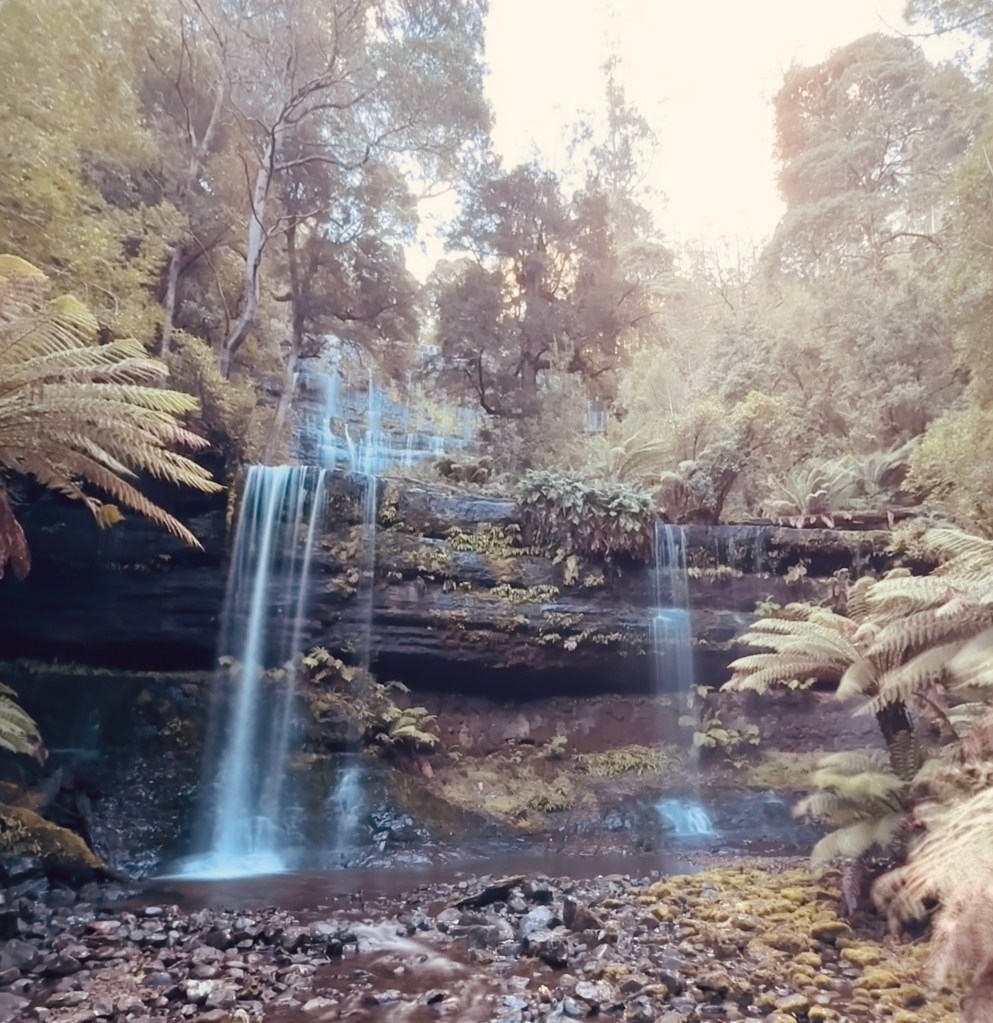
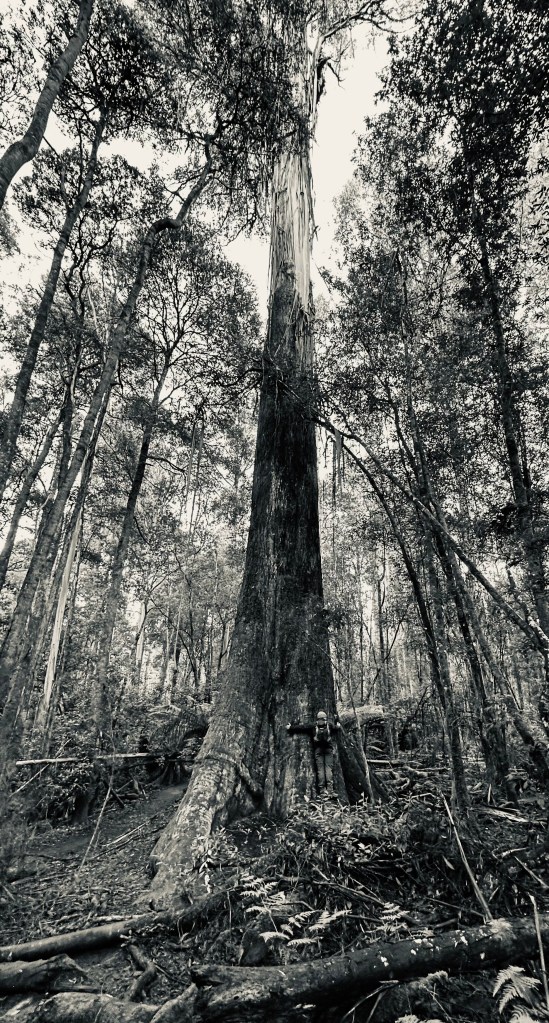
    Russell Falls and Mount Field National Park were also on the tourist agenda. This area is renown for its beauty, waterfalls, and large trees.

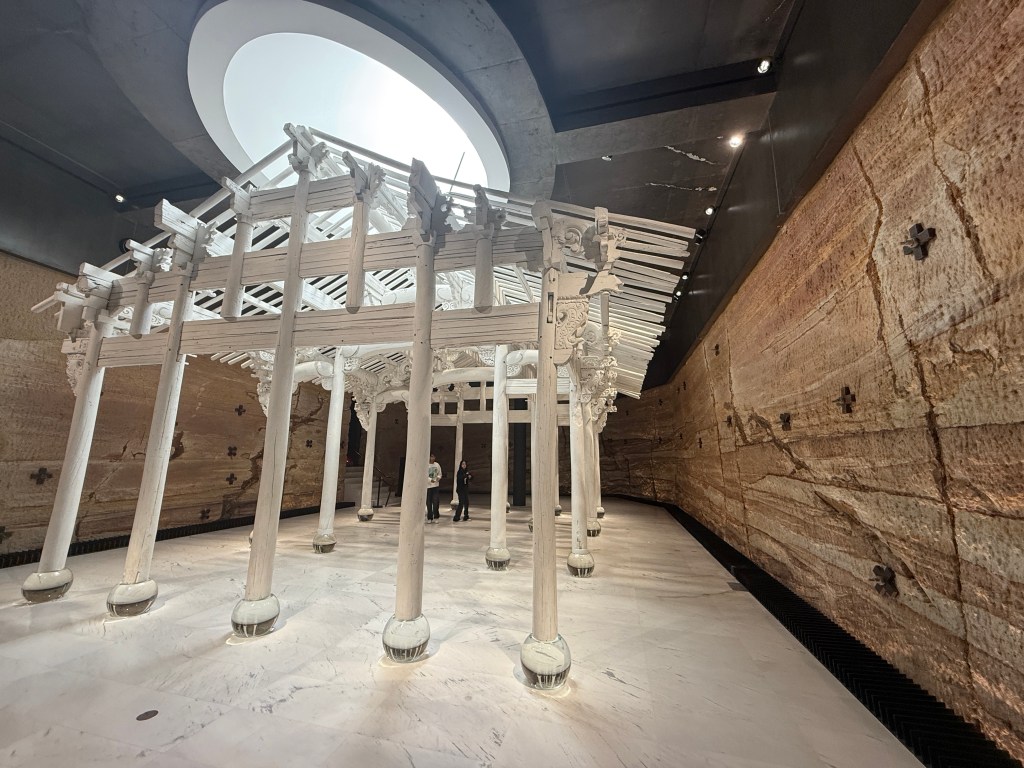
    A trip to MONA, the Museum of Old and New Art, was mandatory. The eclectic nature of this private collection, apparently funded from the profits of gambling, is legendary. Much of it seems intended only to shock. The famous wall covered in plaster casts of dozens of vulvas is sadly gone, replaced by mirror finished hanging balls (a win for the guys perhaps, but the spheres didn’t seem to get nearly as much attention). Elsewhere, the puerile remains. For example, Oleg Kulik’s large black and white photo of a naked man on all fours being mounted by a dog, hangs close to a life size sculpture of a dead horse (naturally the mould was taken from a real dead horse) hanging in a sling. Next to these objects an ancient Egyptian sarcophagus leans against a wall. One wonders what the occupant would have thought of the decor of this, his latest tomb. Of course, in these times who can say what passes for decency? The man in the photo might identify as a dog, the dog as a man. Still, if the art is sometimes weird, the architecture is often wondrous, and worth the admittance price alone — disguised as Tasmanian residents we only paid $5 each.

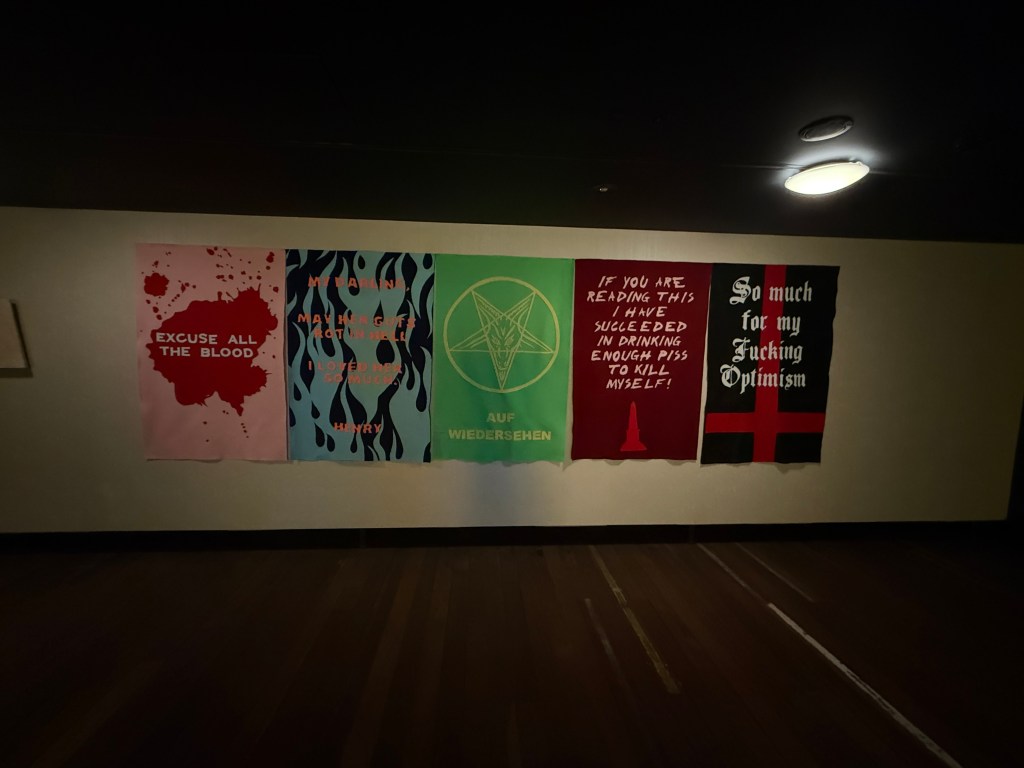
    These posters feature lines taken from suicide notes. Art eh?

    As of today, Cara has been back for nearly a month. We should have left the marina already, but staying for three weeks costs the same as the discounted price for a month. It’s hard to leave somewhere when you’ve paid to be there. Life is comfortable: the showers are hot, the washing machines work, and the toilets are only a five minute walk away. Once again, we have to surmount our reluctance to cast off our mooring lines and take that step into the unknown. Still, if paying for access to showers, washing machines, and toilets means that they can be considered ‘possessions,’ then we must bare in mind the wise words of Bertrand Russell, who declared that “it is the preoccupation with possessions, more than anything else, that prevents us from living freely and nobly.” Who would choose to be a clean slave when they can be a dirty south sea vagabond?

    Taurus at Prince of Wales Bay.

    In the next day or two we’ll be back out on anchor and waiting for a weather window that will allow us, hopefully, to sail to Port Davey on Tasmania’s West Coast. Like many stretches of water around Tasmania, the West Coast is notorious for strong winds and big seas, so we won’t be heading there unless the weather promises to be kind. Perhaps we should stay in the marina for another month, or maybe till Summer? A hot shower would be nice…

  • A boisterous sail across the D’Entrecasteaux Channel.

    After a couple of days hanging out in Jetty Bay it was time to move on. We left Bruny Island, again, and sailed across the D’Entrecasteaux Channel in freshening conditions that peaked slightly north of thirty knots. The challenging sail was yet another reminder that you can never take conditions for granted in these waters.

    We anchored in the southern part of Southport, in a place called Deephole Bay. We chose that particular spot for shelter and access to a popular walk from the beach to a nearby lagoon.

    The walk was pretty hot, so we were keen to go for a dip on arrival at the lagoon. Alas, it turned out to be more of a shallow paddle.

    Togs, undies, bum! So much for a swim…

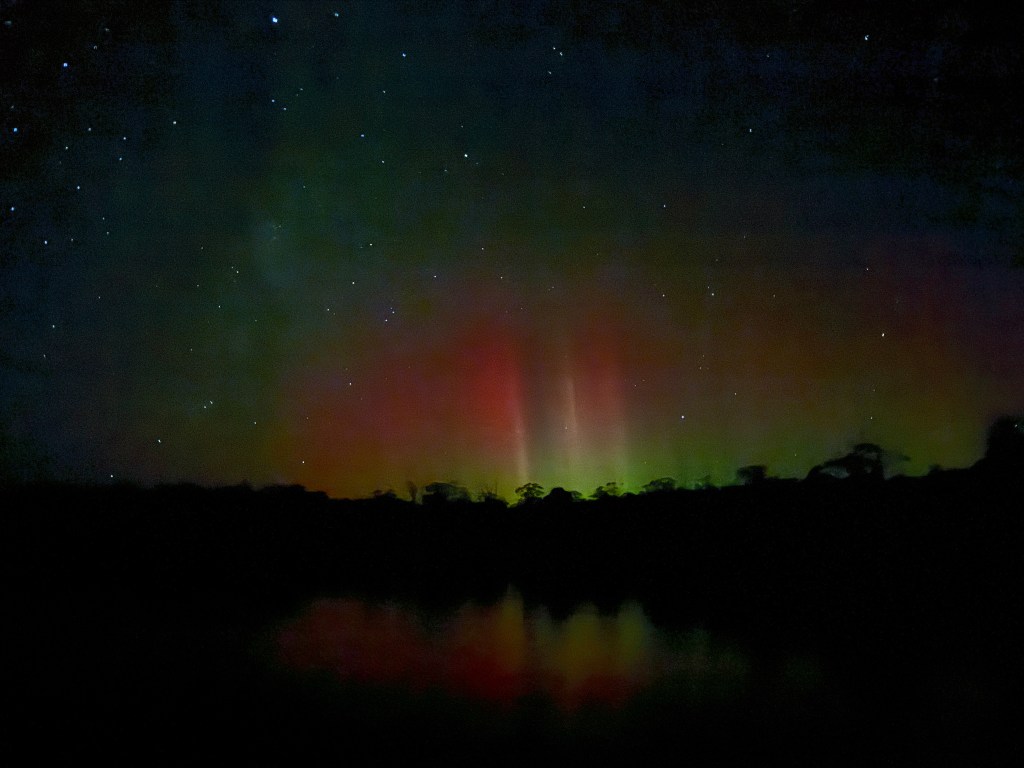
    That night we were treated to our first Aurora Australis light show. The southern lights can be spectacular this far south, but they had alluded us so far, probably because we close the boat up at night to keep the heat in.

    Aurora Australis.

    The following day we upped anchor and headed to the township of Southport. We had heard that Southport was pretty small, but the reality was exceedingly tiny indeed. The only ‘shop’ was a coffee vendor in a caravan. Nor did the amenities stretch to rubbish bins, so the trash we had taken to shore to dispose of ended up being carried back to the boat.

    Southport. Not a bustling metropolis.

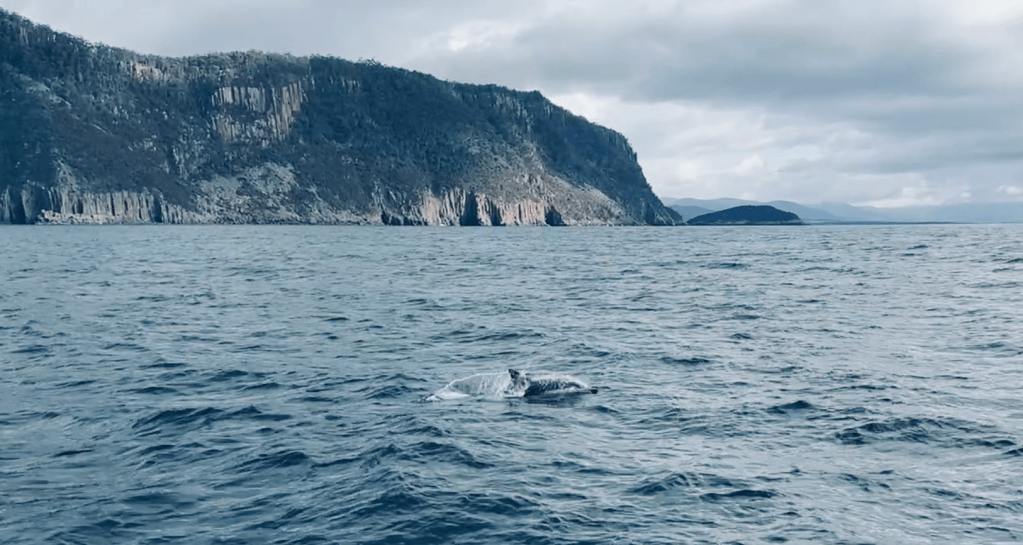
    With so many places to visit we couldn’t hang around. The sail back to Bruny Island was one of those fantastic experiences that combine perfect sailing conditions with natural wonders. We witnessed some kind of seal feeding frenzy, frolicking dolphins, and even distant whale spumes.

    Taurus in her happy place.

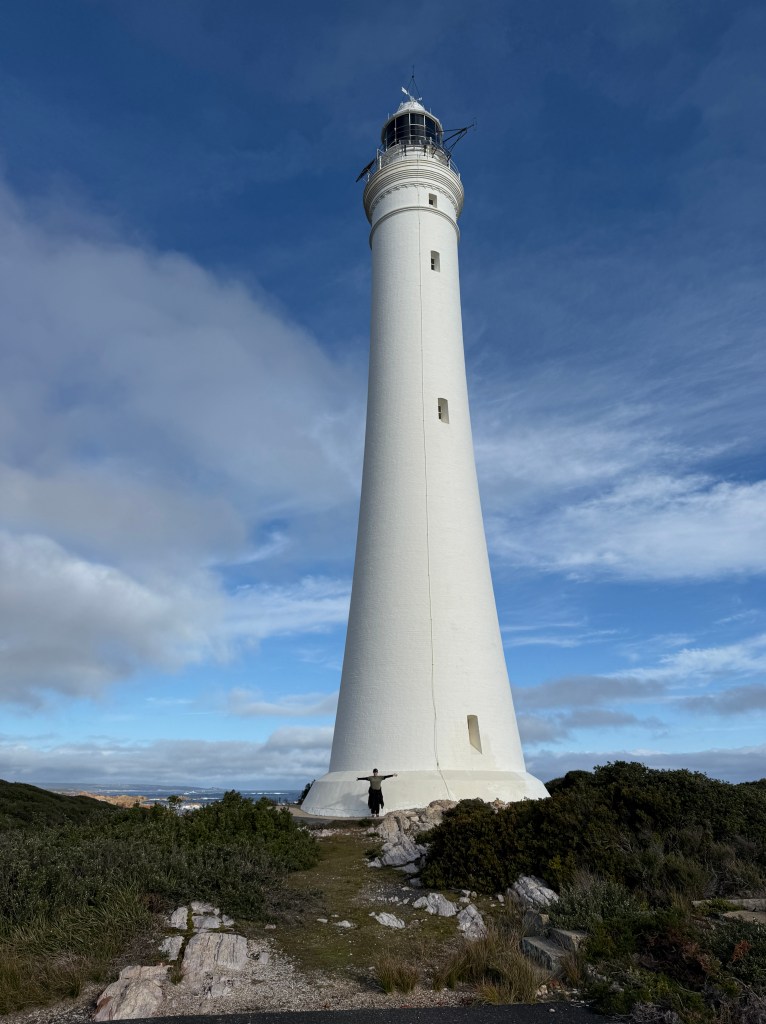
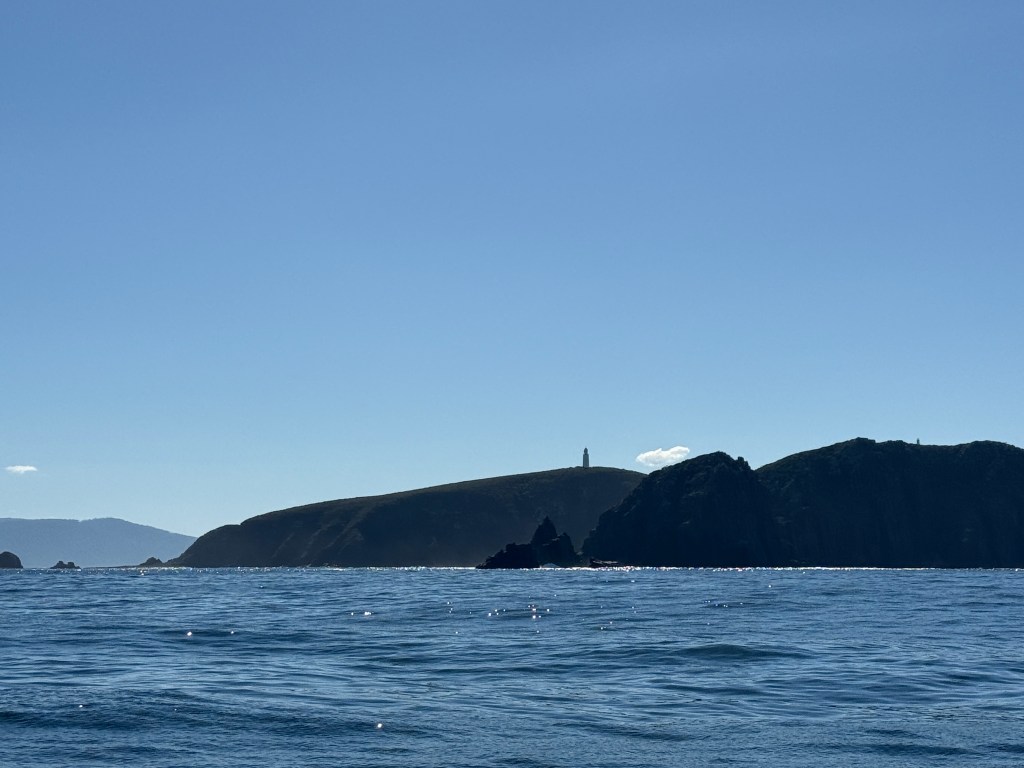
    As we sailed around the southern end of Bruny we were treated to the sight of the Cape Bruny Lighthouse from seawards.

    Our destination for the day was Cloudy Bay, an anchorage that proved to be fairly rolly — which shouldn’t have come as a surprise as the bay is largely open to the south. On arrival I had to go for a swim to clear some kelp from the propellor, and whilst diving realised that the screws holding our propellor anode were coming adrift. I had to dive down several times to tighten the machine screws, and then dropped the Allen key multitool, which required more time in the cold water to recover. Even with an 8mm wet suit it took a long time to warm up again.

    A southern front was due early in the morning, so we needed to leave early to ensure that we didn’t end up stuck in the bay. Thus, we were up at 5:00 am and heading south.

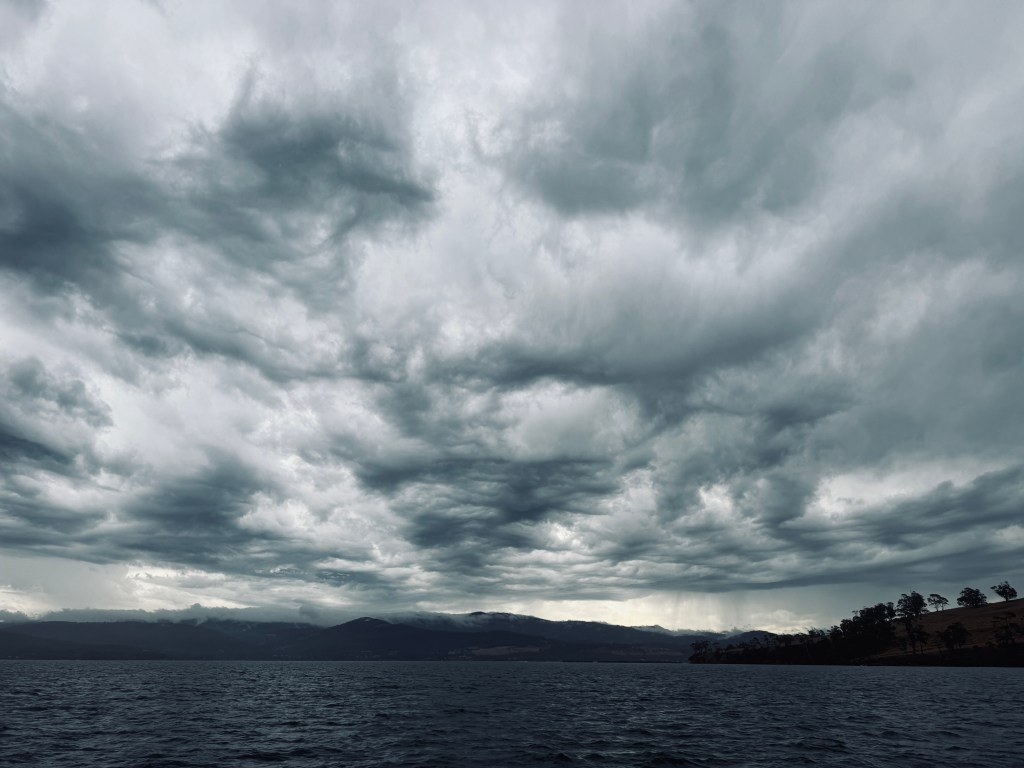
    Front on the way.

    Once past the headland we turned east and enjoyed a decent broad reach. The waves rebounding from the cliffs made for a bit of a sloppy sea, but soon enough we rounded Tasman Head and could turn northwards for following wind and seas.

    The dolomite columns (and dolphins) are common features in Tasmania.

    We were heading for Adventure Bay, a place I had been looking forward to visiting since I learnt something of its history. Adventure Bay has been graced by the presence of some of history’s greatest sailors, navigators, and explorers.

    Abel Tasman was the first to visit in 1642, but was unable to anchor due to severe weather. In consequence, he called the large outer bay ‘Storm Bay,’ a title it still bears today. Tobias Furneaux, Cook’s second in command, visited later in 1773. His ship, The Adventure, provided the name for the bay. Cook had carried on to New Zealand after becoming separated from Furneaux, but he stopped here on his third and final voyage in 1777 — before he left for the Pacific and his date with destiny. William Bligh visited Adventure Bay no less than four times. First with Cook in Resolution, and later as Captain of the infamous Bounty. On his third visit, on the Providence, during his second bread fruit voyage, he was accompanied by a young midshipman by the name of Matthew Flinders. So, for a self-professed sailing and history geek, Adventure Bay was a bit of a ‘must see,’ and Cara patiently tolerated my excitement.

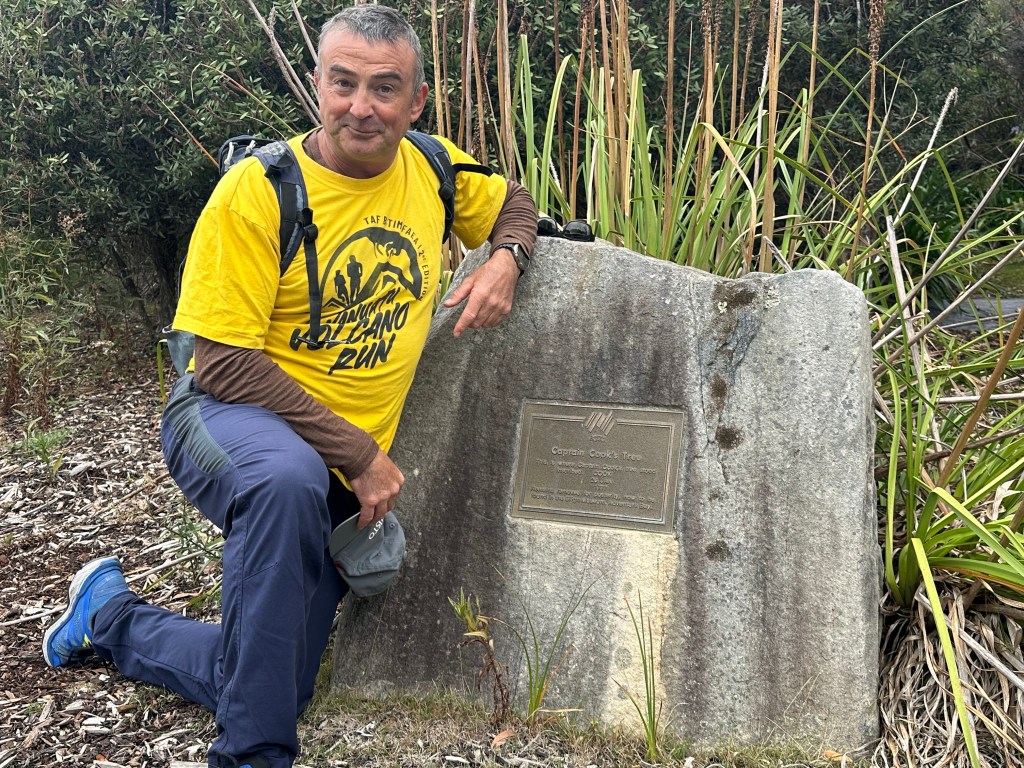
    Of course, there wasn’t much to actually see. A concrete post marking the site where Cook had nailed a brass plaque to a tree. A small museum with the remnants of said tree, and a couple of eateries. If only the rocks could talk.

    Kneeling in the footsteps of Captain James Cook.
    The Bligh Museum. $5 entry and a free bag of pears from the lady who runs the place.

    Like most of Tasmania, the real hero of Adventure Bay is the stunning scenery. Cara and I found the Fluted Cape Walk, a 6 kilometre track that gave incredible views out over Storm Bay. The scenery gave us plenty of excuses to stop for a breather, and with the steepness and length of the ascent we needed them!

    Storm Bay from the Fluted Cape Walk.

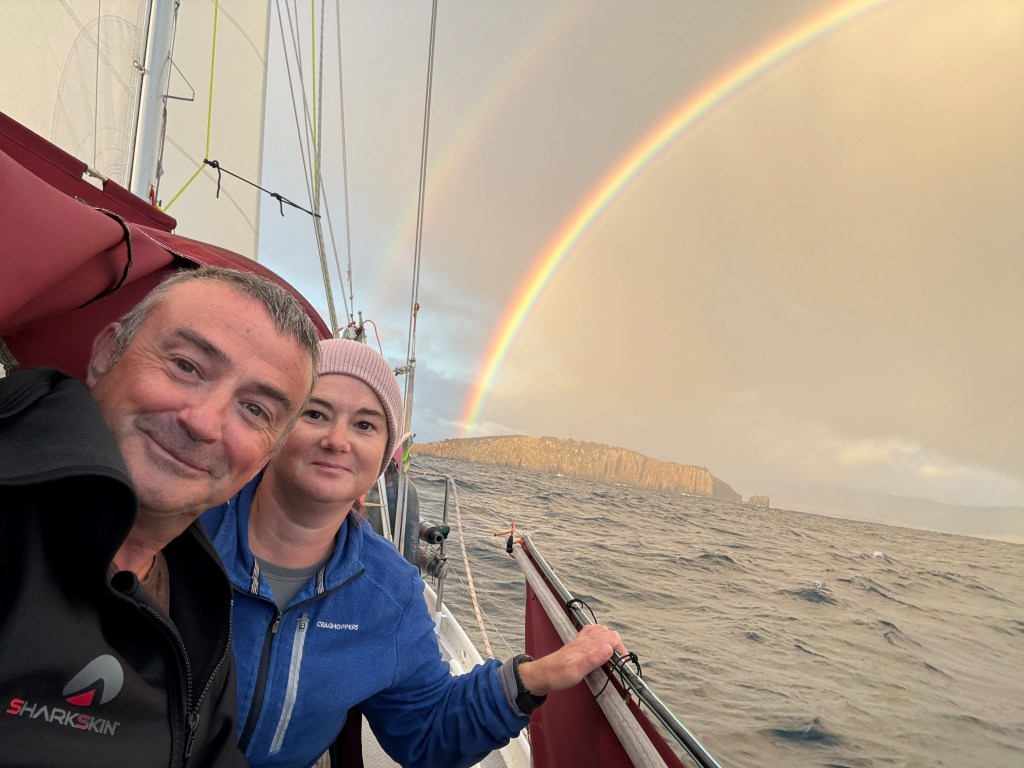
    Cara had a date to travel back to New Zealand approaching. Her mum was having an operation and needed some support. We had to keep moving, so we headed across Storm Bay to the town of Nubeena. The sail to this beautifully protected bay was another highlight, the wind and sea gods smiled upon us, and even sent us a double rainbow.

    Once anchored at Nubeena we soon ended up at the RSL (The Returned Services League) for something to eat. Like all of these places it was chock full of historic displays and militaria. The line between remembrance of the sacrifices others have made, and plain glorification of war can be pretty thin, and I personally find many of these places lean a little too much to the latter for my taste. Still, when the obligatory cannon is outside the pub at least it’s not in the playground, like so many are in Australia. I suspect veterans of the great wars would have shuddered to see children playing on these instruments of savage mutilation and death. These things seem intended to groom the next generation for the next conflict, but others, I’m sure, would disagree. At the end of the day, the RSL does good work for veterans and makes a grand feed, so why think too deeply about the attitudes underlying the decor?

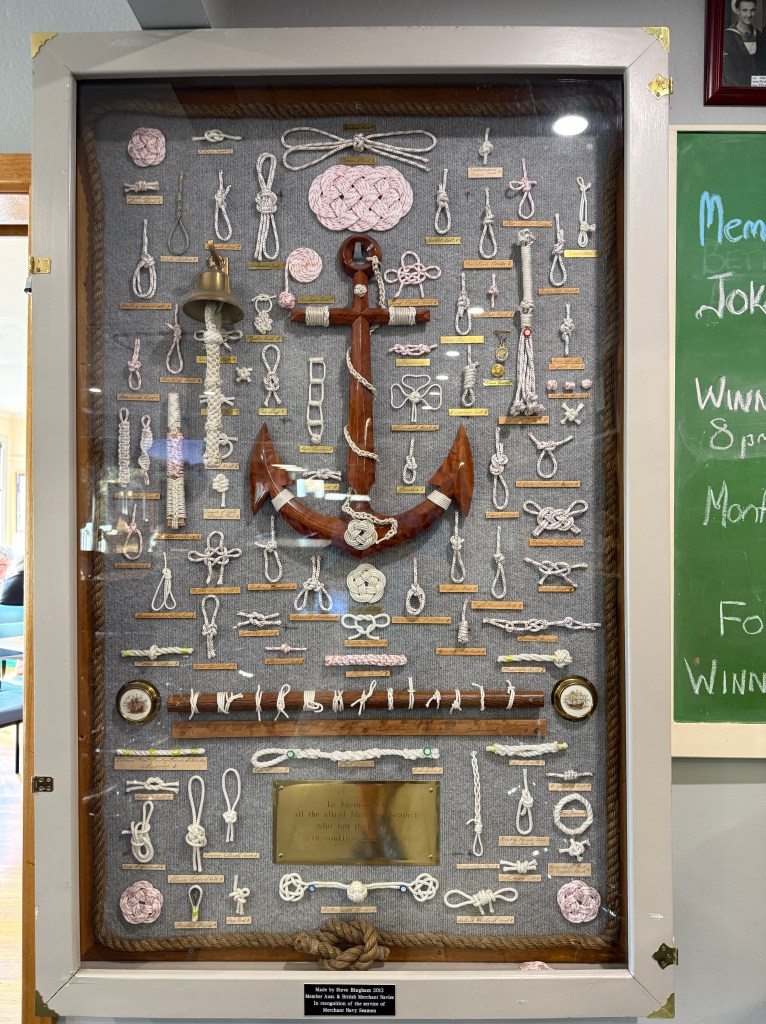
    Some fine Marlingspike work.
    What every pub needs: rifles and a photo of King Charles. The King’s location, next to the toilets, is perhaps a reflection of the growing republican spirit in Oz…

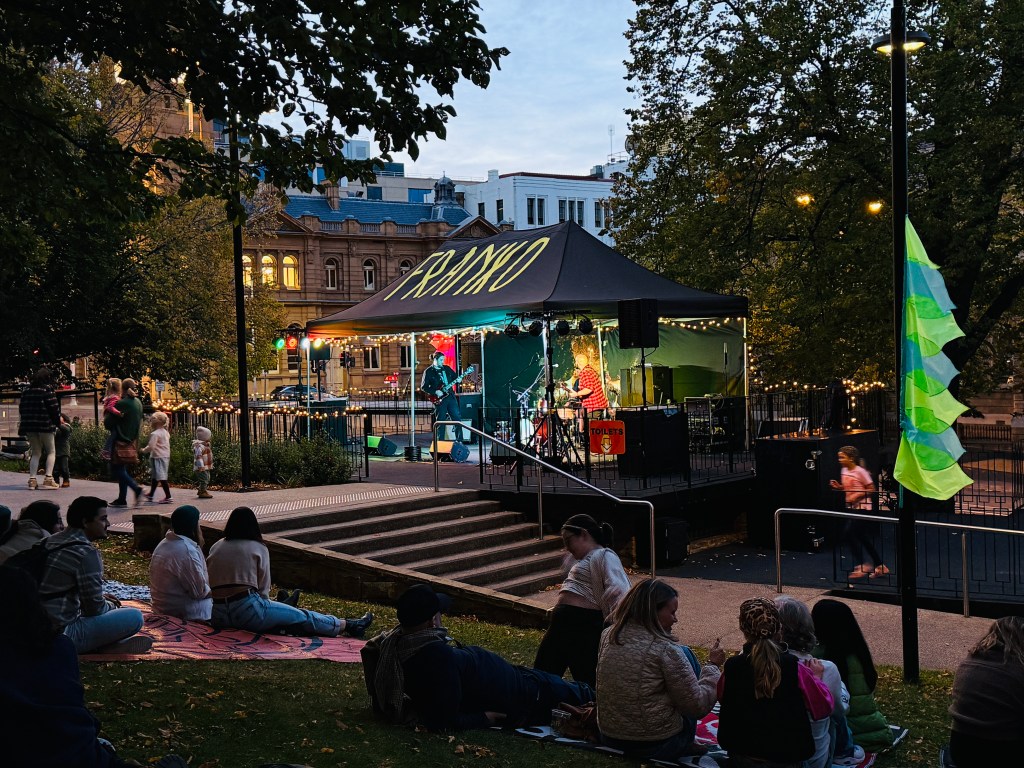
    Our brief stay ended with a six hour return sail to Hobart. We found a free berth back in Sullivans Cove at the heart of down town Hobart, and that evening headed in for a free concert at the park. The next day would see us carrying on up the Derwent River to the Prince of Wales Bay Marina.

    Music in the Park.
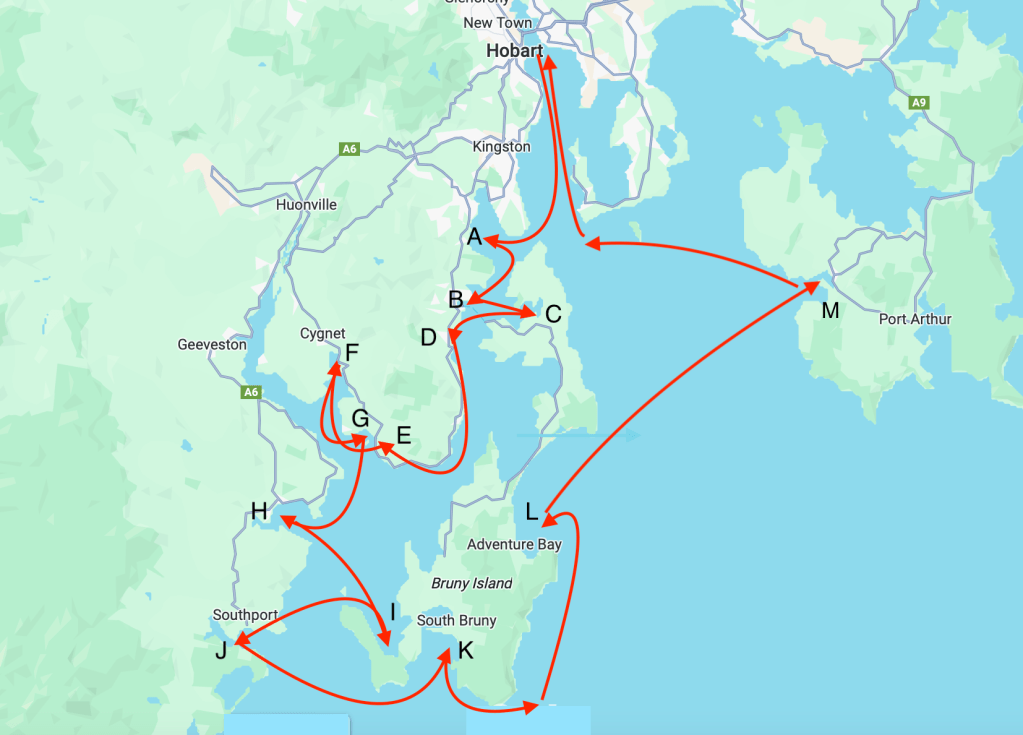
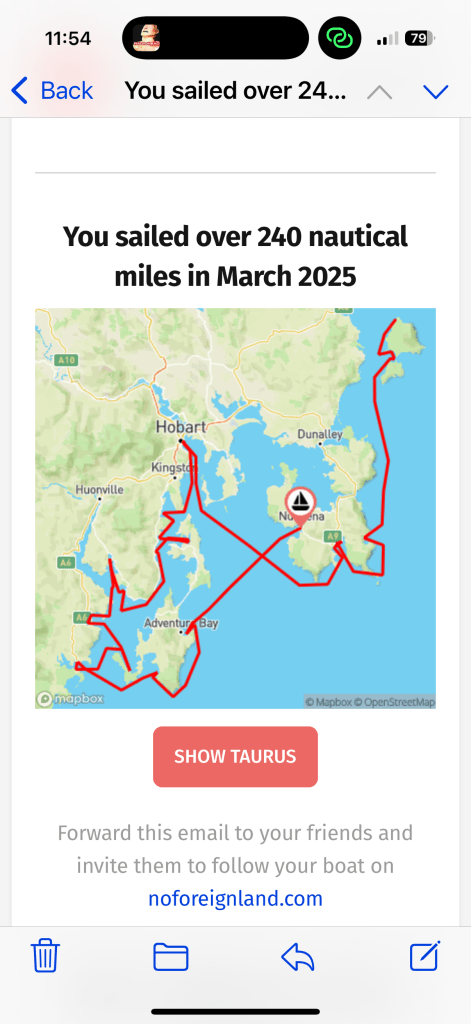
    Our sojourn around Bruny. In the previous blog I covered anchorages A-I.

    Key:

    A: Snug Beach, B: Kettering/Oyster Cove, C: The Duck Pond, D: Peppermint Bay, E: Garden Island, F: Cygnet, G: Eggs and Bacon Bay, H: Dover, I: Jetty Bay, J: Southport, K: Cloudy Bay, L: Adventure Bay, M: Nubeena.

  • My father was fond of quoting Harry Day, a World War I, Royal Flying Corps ace, who apparently said, “Rules are for the guidance of wise men and the obedience of fools.” It was, therefore, perhaps their fault that Cara and I were playing fast and loose with the rules in Hobart. You are only supposed to stay on the free jetty at Sullivans Cove for 24 hours, but as our windlass was in pieces, making anchoring difficult, and as there were plenty of spaces, we emailed the people in charge and hoped no-one would mind if we stayed longer.

    Why, you may ask, was our windlass in pieces? Well, for a little while now the windlass has been playing up; sometimes failing to work when the switch to raise or lower the anchor is operated. It’s possible to anchor without a windlass on a boat the size of Taurus’, in fact the anchoring part is a breeze, retrieving the anchor is the hard part. For those that don’t know, a windlass is a machine that lets anchor chain out, or brings it back in, via a gypsy or chain wheel (which grips the chain through specially cut teeth) turning on a horizontal plane. If the machine should operate on a vertical plane it would of course be a capstan, not a windlass. These devices used to operate by the simple expedient of having a good number of men turning them by hand, pushing against shafts that slotted into holes on the capstan. A fiddler would oft sit atop the turning capstan shaft, playing merry tunes to keep the sailors happy and help them forget the mule hard labour. Modern capstans and windlasses are turned via a powerful electric motor, keeping everyone much happier — until they stop working.

    Ten millimetre anchor chain weighs approximately 2.5 kgs per metre. We generally anchor in about five metres of water (if possible) and we work out the amount of chain to let out with the simple formula of 15 metres plus twice the depth. So, we generally sit on about 25 metres of chain, or perhaps a little more as we let out another few metres when attaching the snubber line, the nylon line that reduces shock loading. Say thirty metres, or their abouts. Pulling in 75 kilos of chain doesn’t sound that hard does it? However, if you have ever tried dragging thirty metres of chain across a carpark, you will know that chain doesn’t drag easily. Indeed, one of the reasons people use chain in their anchoring system is because the weight of the chain as well as the anchor stops the boat from dragging.

    Of course, the afore-mentioned anchor adds a further 30 kgs of steel, buried in the sand, mud, or whatever muck lies beneath the surface. Anchors are specifically designed not to release their grip on said muck without a fight. Indeed, their raison d’être is to resist all attempts to unseat them. Our 10.5 ton boat has hung off its anchor in winds of about 120 km/h in the past; it doesn’t just ‘pop out’ with a bit of a tug, though to be fair we are pulling it backwards when retrieving it, which makes it less impossible than it would be otherwise. Without labouring the point further, raising an anchor by hand is awkward, back breaking work — involving a long, heavy length of mud slick chain followed by an anchor, maybe with a hundred weight of weed attached. Ultimately, if raising an anchor by hand was easy, sailors wouldn’t spend thousands of dollars on windlasses.

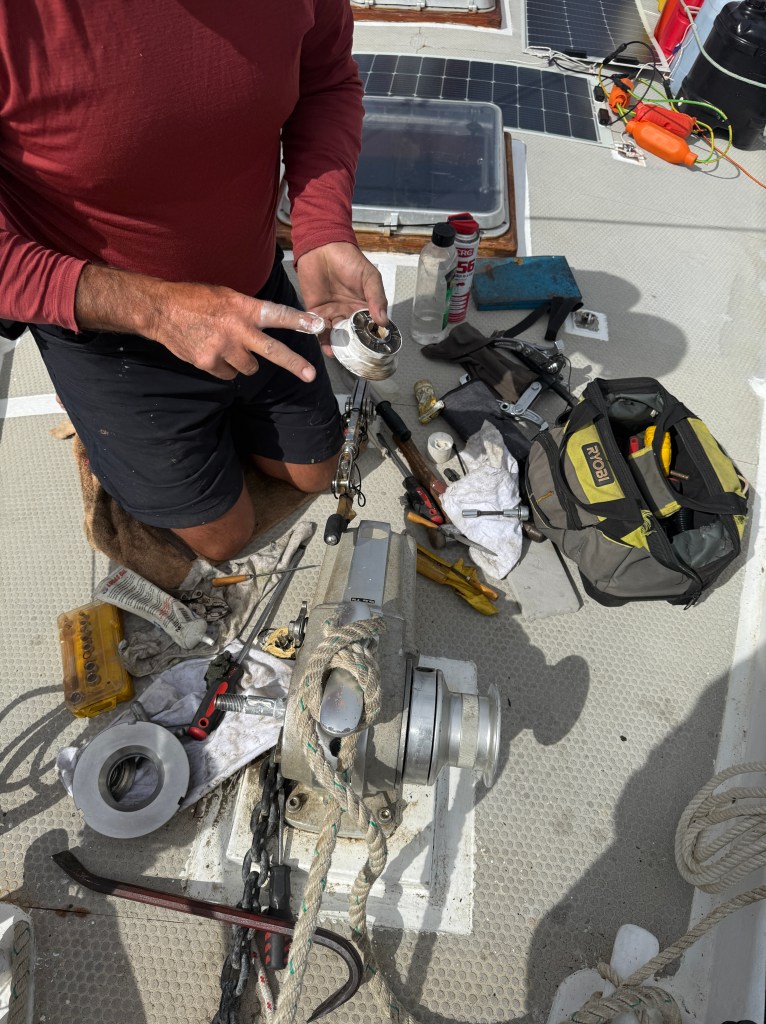
    Pulling apart the windlass. Let the swearing commence!

    Before going anywhere near the machine itself we of course checked the switch, all the connections, and all the other obvious things we could think of. Finding nothing amiss we sought advice, and were advised to try cleaning the motor’s brushes. Three out of four of the brushes were stuck so this gave us a pretty good feeling and we put the thing back together and crossed our fingers…

    We didn’t stay long in Hobart as we visited the city only a couple of years ago, and have to return soon. Cara has to fly back to New Zealand for a few weeks in early April, at which time I will head into a marina in Hobart to try to get a few boat jobs out of the way. We had about a month up our sleeves, so decided to explore the greater Hobart area.

    Hobart is a bit of a yachting Mecca, with nature reserves scattered all around, picturesque villages, stunning islands, and quiet secluded bays by the dozen. It is also an area that is notorious for rapid weather changes and strong winds, so we needed to maintain a certain degree of caution.

    The anchorages we’ve visited recently (I only managed to get to ‘I’ in this blog.)

    Key:

    A: Snug Beach, B: Kettering/Oyster Cove, C: The Duck Pond, D: Peppermint Bay, E: Garden Island, F: Cygnet, G: Eggs and Bacon Bay, H: Dover, I: Jetty Bay, J: Southport, K: Cloudy Bay, L: Adventure Bay, M: Nubeena.

    Enroute to Snug Bay.

    After leaving Hobart we sailed to Snug Bay, accidentally joining a race for a while on the way, and finding what has become a bit of a weather pattern ever since. We initially had too much wind, then too little, then too much, then some thunder and lightning, a bit of a rain, then no wind and brilliant sunshine. Every day is a hodge podge of a recipe with a pinch of everything thrown in.

    Kettering is a lovely little town, mainly composed of a marina, and for those that follow sailing You Tube channels it’s where ‘Free Range Sailing’ spent Covid fixing up their boat. Our friends Robin and Diane, whom we met in Eden, live there, so we went to visit. The facilities in Tasmania are fantastic and once again we were able to get a free jetty berth. Later we found out that the berths with yellow strips are for loading and unloading only, the ones with red stripes you can stay on for up to three days. We were on a yellow berth. However, all the locals told us not to worry about it, so we ended up staying on the jetty for a couple of days. Which was less time than the boat opposite us, also on a yellow berth. When in Rome, and rules and all that…

    Taurus in Kettering. If you are wondering why the dinghy is at a funny angle it’s because we lift it with a halyard so that we can open the front hatch to circulate air. Note the yellow stripes!

    Catching up with Robin and Diane was great. They are a couple that have lived life to the full and are still going strong. Robin spent years building a sustainable farm in the bush, and is the author of perhaps a dozen novels. Diane spent years sailing the world, and together they found their paradise in Cocos Keeling, an Australian island that they describe as if it were paradise. Ever generous, they drove us into town so that we could do our washing and stock up with provisions. We then got a ticky tour around the Huon Valley, an area renown for apple orchards and wooden boat building.

    Robin and Diane, two of the nicest and most interesting people you are likely to meet.

    Leaving Kettering we headed over to the aptly named ‘Duck Pond’ on Bruny Island, or so we thought. We imagined that the near land-locked bay would give us protection from the strong southerlies predicted for the following day. Several other people must have had similar thoughts, and the bay slowly filled up over the course of the afternoon with three yachts of Taurus’ size, a trawler, and three trailer sailors calling it a temporary home. At about 6am we were rudely awakened by our dinghy, which we had angled upwards on the deck to let air in (as per a previous photo), trying to take off in about 30 knots of wind. Luckily we had tied down the front so it couldn’t get far, but as we were securing it we witnessed all the trailer sailors dragging anchor and ending up in a tangle in the northern corner of the bay. Chaos ensured as their bleary eyed crews fought to reclaim their anchors and tried to avoid colliding with one another.

    The Duck Pond in a good mood.
    The Duck Pond in not so good a mood. The boat in the distance is dragging anchor.

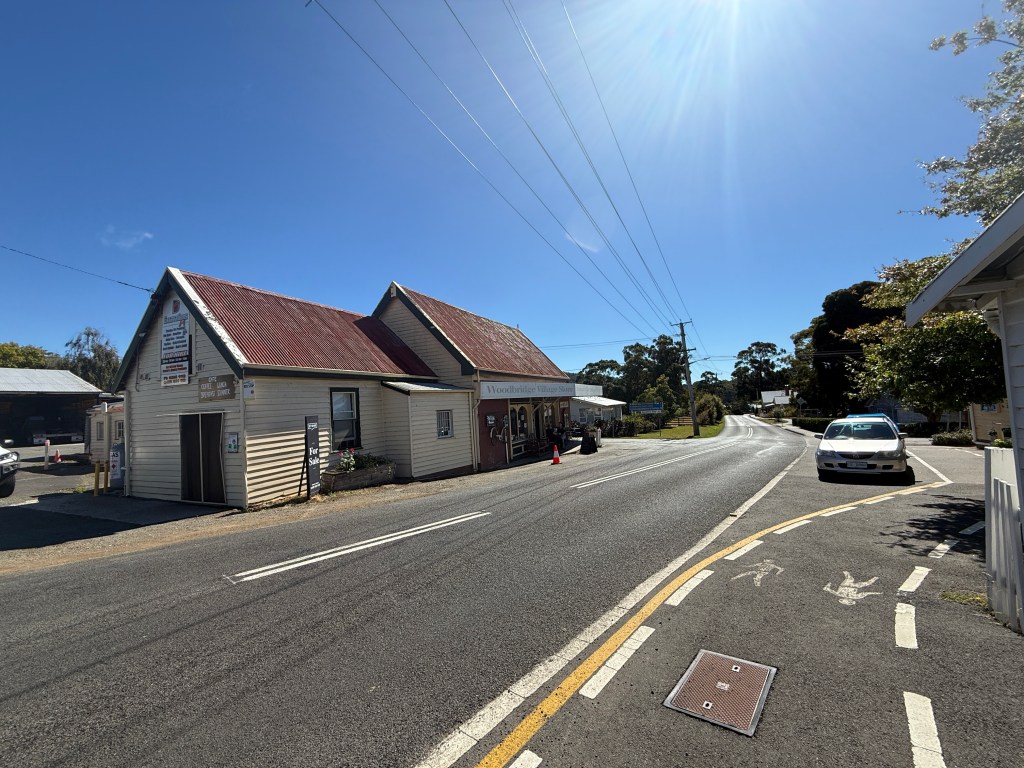
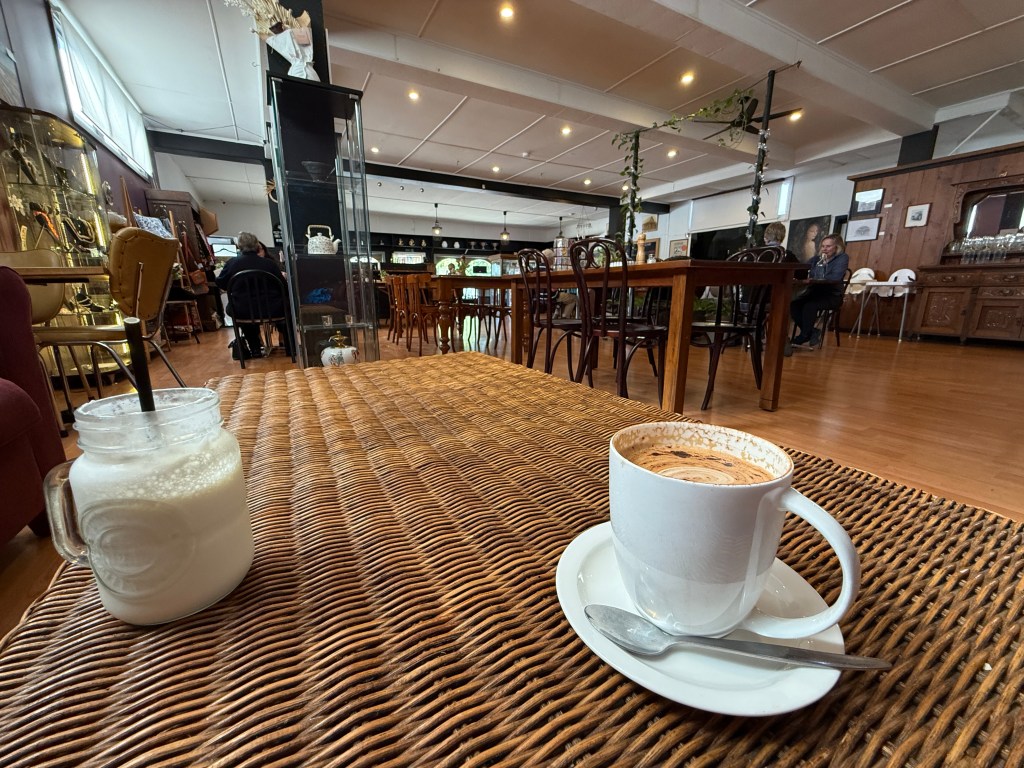
    Peppermint Bay was our next stop, because who wouldn’t stop in Peppermint Bay? Here we were able to sneak through the moorings and anchor close to shore in perfect protection from the strong westerlies that were due (you see what we mean about the weather). The local village, Woodbridge, was interesting to explore and had a fantastic cafe.

    Measuring out life in coffee spoons.

    The following morning we sailed for about six hours, avoiding the numerous salmon farms and small ships that service them, and making numerous changes to the sails as we experienced zero wind to 30 plus knots. Eventually we found shelter behind Garden Island. A slice of paradise we thought, until we came across the “Private Property, No Trespassing!” signs. Time to go!

    Wreck off Garden Island. A previous trespasser perhaps?

    Moving on, we sailed up Kangaroo Bay, past Tranquil Point, and found ourselves at the town of Cygnet. There is a large mooring field in the river outside the town, and one or two boats on anchor. We decided before anchoring to attach a buoy to our anchor to mark its position. We chose to do this because the windlass, alas, was still playing up. Attaching a buoy to the anchor serves two purposes: where it is busy it can be a good idea to highlight your anchor’s position so that (hopefully) the next person who arrives doesn’t drop their anchor on top of it, or in places where the bottom may be fouled, by trees following a flood for example, it provides a way of pulling the anchor out backwards (which might also be helpful if you are lifting the anchor manually). That evening one of the drawbacks of this technique came home to us. As the wind picked up, funnelling up the valley, the yacht next to us, that seemed to have been left on anchor semi-permanently, began swinging in great arcs. We had anchored a good distance from this boat, but as its anchor rode became taut it came closer and closer, and eventually was merrily swinging right over the buoy attached to our anchor. We watched with something akin to horror. If the buoy became stuck around the other boat’s propellor or rudder it could yank our anchor free — possibly leaving us attached to this other yacht and unable to untangle ourselves. However, I was not about to go swimming in a gale under a strange boat! There was little we could do as there was no-one aboard the other yacht, and we could hardly pick up our anchor with it sitting on top of it. Sometimes the best thing to do is to do nothing. We had dinner and shortly after the wind shifted and we were able to lift our hook and move well away from this other boat. I would guess that it had at least 50 metres of chain out in five metres of water. This amount of scope may give better holding (though I have read that after 7:1 more chain accomplishes little) but it creates a hazard for others who have no idea that a boat in the anchorage is going to swing so far. I’d like to say that this is another lesson learnt, but really you can’t go into every anchorage thinking that someone may have laid out miles of chain. How would you ever anchor anywhere?
    Calm before the storm. You can just see the boat that ended up on top of our buoy on the far right.

    The way our windlass had chosen to manifest its ongoing displeasure was by refusing to stop when raising the anchor. The switch failed to obey my increasingly frantic thumb and I could only step back and watch as the anchor slammed home at a great rate of knots. This is probably the most dangerous situation that a windlass malfunction can result in. Researching possible causes later on we read of broken gears, snapped shaft keys, and severed fingers. The likely culprit was a stuck solenoid. This apparently happens with my brand of windlass often enough for charter companies in Europe to junk the brand item and replace it with automobile parts. These, however, aren’t rated for windlass type loads, and no doubt my insurance company would look dubiously on such Heath Robinson practices. We cleaned the solenoid’s connections and vowed to make fixing the windlass top priority.

    Windlass solenoids after being cleaned.

    Heading back down the river we stopped overnight at the wonderfully named Eggs and Bacon Bay. Sadly there were no eggs and bacon to be had.

    We travelled south and landed in Dover. This small town shows signs of the economic woes of the region at large, at least if the number of closed shops is any guide. We parked ourselves on another free jetty for the night, yellow striped again I’m afraid to say, but all the red spots had been taken once again by fishing boats that seemed to be permanently settled there. I doubt the public jetty system was intended to subsidise the fishing industry, but as a non-tax payer who am I to complain? Two bright spots of our visit were meeting Wade and his daughters again (whom we had previously met in Port Arthur); and meeting Martin, the Commodore of the Port Esperance Yacht Club, who invited us in for a beer and gave us the code to the club’s hot showers! Cheers Martin!
    Looking out at Port Esperance.
    Closed Cafe.
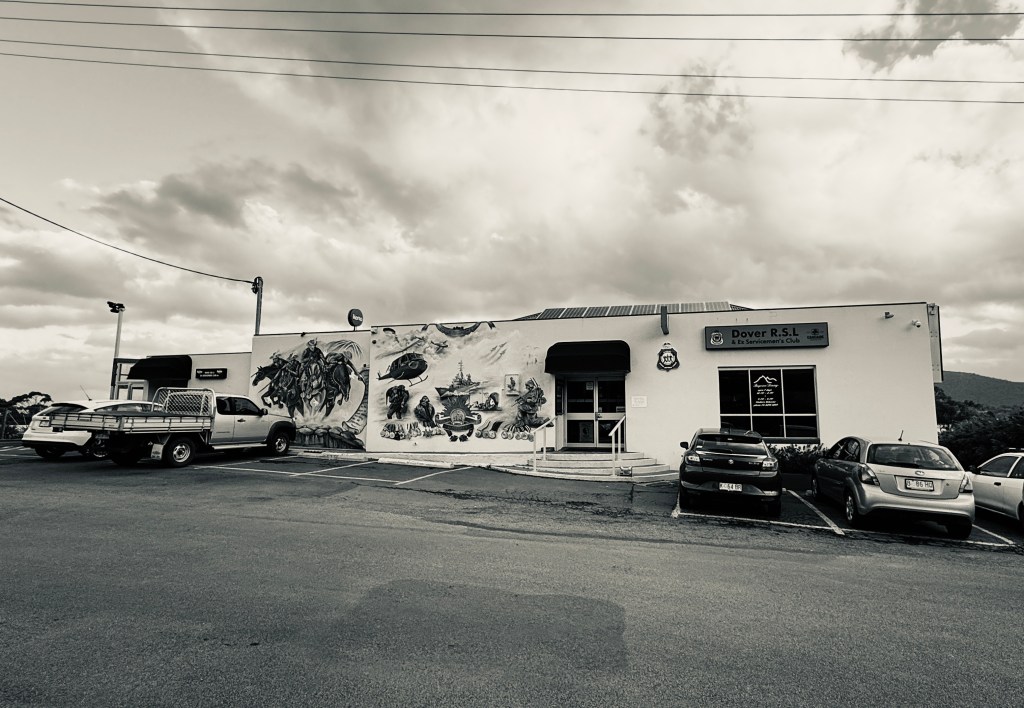
    Dover RSL. The only place to get food.

    Not wanting to out stay our welcome on the unloading jetty we sailed across Port Esperance’s Bay and anchored off Rabbit Island. This tranquil spot made a nice contrast to the slightly sad Dover. Many of these small rural towns appear to be kept going by salmon farming, but the number of farms and their ecological impact is causing increasing concern amongst Tasmanians. Adding fuel to the fire, the business has been thrown into some disrepute recently after a disease killed thousands of fish, and some of the corpses were illegally discarded.

    Rabbit Island.

    With a fine southerly breeze on our beam we sailed in the morning back across to Bruny Island, weaving our way through the salmon farms again, and anchored in Jetty Bay. From here we could walk to the lighthouse at Cape Bruny at the southern tip of the island.

    First lit in 1838, Cape Bruny was Tasmania’s third lighthouse and Australia’s fourth. Today, it is the second oldest extant Australian lighthouse, and the longest continually staffed. The lighthouse was built after a series of wrecks in the area. The most tragic was the sinking of the George III, a convict ship that struck a reef which now bears the ship’s name, with the loss of 133 men, 128 of them convicts. An inquiry was held after the disaster as it was rumoured that a number of the convicts’ bodies were found with bullet wounds, and had supposedly been shot by the guards whilst ‘escaping’ the sinking ship. The whole incredible story can be read here: https://www.environment.gov.au/shipwreck/public/wreck/wreck.do?key=7195

    The lighthouse itself is 114 metres tall, with walls at the base over a metre and a half thick. It was built by 13 convicts (who also had to quarry the stone) in a space of 18months. Apparently the men were promised their freedom if the work was finished on time!

    Cara and I were delighted to find that for a small fee we could enter the lighthouse and be given a guided tour. Our guide, Belinda, was very knowledgeable, and made the experience really worthwhile. In our travels we have visited many light houses, but this is the first time we have been able to access one.

    Belinda, the guide, and Cara.
    Nice view at the top.

    The rest of our stay was spent pulling the windlass apart and putting it back together, kayaking, and exploring. The water is so clear that we could easily see our anchor, five metres below the surface.

    The white bar you can see in the water at the ‘top of the mast’ is the anchor’s loop. You can see why we paint it white. It makes it much easier to see if the anchor has dug into the ground. Here it certainly has.
    Off for a paddle.
    Getting nice and greasy. All boat jobs need a million tools.

    Next time: we carry on sailing, and something will probably break and need fixing.

    As a quick addendum, someone asked the other day about sailing apps we use, and that could be used to track us. A free app we use a lot is called ‘No Foreign Land.’ We use the app to help decide where we might anchor next, as other sailors from around the world upload anchor sites and provide reviews and information — such as the quality of holding, availability of diesel, food, laundries, and such. The app can also be used to track boats, in real time and to see where the boat has been in the past, using information taken from on board devices, such as our Garmin In-reach. Statistics can be fed back to the crew, such as how many nautical miles have been sailed in the past month. Anyway, if you’re interested have a look. We’re happy to help if you need any help or advice.

    Feedback from No Foreign Land.
  • A cell in the ‘Separate Prison,’ Port Arthur.

    Built in 1845, the largest Port Arthur building was originally intended as a flour mill and granary, but by 1857 it had been converted into a prison. One hundred and thirty six cells were available on the bottom two floors, designed to cater for “prisoners of bad character under heavy sentence.” The third floor was a dining hall which doubled as a school, library, and chapel; whilst the top floor was reserved as a dormitory for 348 “better behaved-men.”

    Port Arthur Prison

    Little of the interior of the main building is left after it was devastated by fire in 1897, twenty years after the prison closed. In the photo above you can see how small the cells were (the photo shows two floors). Note the iron hoops in the wall which prisoners would suspend their beds from (as in the photo at the start of the blog).

    In better condition today is the ‘Separate Prison.’ This building (the circular structure to right of centre in the image below) provides an eye-opening window into what it could mean to be a prisoner in the 19th century. A visit is almost as oppressive as it is interesting. Perhaps the most jarring realisation of all is that the system, seemingly designed to inflict psychological torture, was actually intended as a humanitarian attempt to encourage reform. Based on the ‘Philadelphia model,’ the American idea was refined in Britain, most notably at Pentonville Prison which opened in 1843, and strongly influenced the Seperate Prison of Port Arthur which opened in 1849. Designed to “tame the most mutinous spirit,” the system was controversial even in its own day. Supporters termed it “the highest state of [prison] perfection,” whilst its opponents called it “an ingenious contrivance for making mad-men.” 

    Map of the Port Arthur historic site showing the scale of the place. Courtesy of https://portarthur.org.au

    The regulations and routines suggest something of what it would have been like to have served time there. Upon entry the prisoners had their heads shaved and were allocated a number, which was to serve as their only name until after their release. The men were not allowed to speak, sing, whistle, or communicate in any other way. The only exceptions to the rule of blanket silence were permission to pass essential information to a guard, and permission to sing in chapel on Sundays. When outside their cells the prisoners’ anonymity was further enforced by their being made to wear masks. The men also had to maintain a specific distance from other prisoners, and had to turn away from their peers when in the corridors or when engaged in cleaning. The inmates naturally exercised alone, and the desire to isolate them even went so far as to require a specially designed chapel. This ensured, via the use of hinged doors, that the congregation could not see or communicate with each other, and could only stand and peer over wooden screens towards the front of the chapel.

    Separate Prison Chapel.
    Pentonville Prison’s Chapel. The men were fed into the rows one by one and an individual door closed before the next was fed in. Guards ensured that no communication took place.

    Those who broke the rules were punished by being placed in a ‘dumb cell.’ This tiny room remains, and is entered via two doors that when sealed prevent any sound or light from penetrating. The sensory deprivation is an unnerving experience, supposedly giving the prisoner no option but to think of his misdeeds and repent. The few seconds I spent in the cell reminded me of the medieval oubliette, the dungeon cell where men were thrown to be forgotten. Significantly, Pentonville Prison didn’t feature one of these punishment cells, so Port Arthur may have tried to be enlightened — but perhaps it wasn’t as enlightened as it could have been! Apparently, some men spent up to two weeks in these spaces, fed on bread and water and allowed an hour’s exercise every three days.

    Entrance to the dumb cell.

    As cruel as these spaces appear, it is perhaps arguable that some crimes are so heinous that they demand the most severe forms of punishment. Martin Bryant, a current Australian inmate, can only listen to music played on a radio outside of his cell, is forbidden access to news articles about his crime, and is banned from featuring in the Australian media. His crime was to murder thirty five men, women, and children in 1996 in what came to be known as ‘the Port Arthur Massacre.’ Bryant held a grudge against two of the people he murdered, but the other thirty three were tourists, mostly shot in the cafe and gift shop, apparently because their killer desired notoriety. This he achieved, but the scale of his crime prompted what had long been thought of as impossible in Australia: gun reform. The former sites of the gift shop and cafe are today memorials for his victims.

    For all its dark history, Port Arthur remains a beautiful place, almost as if nature is trying to compensate for man’s evil deeds.

    A famous Maori proverb teaches the following: “What is the most important thing in the world? Well, let me tell you, it is people, it is people, it is people.” This is certainly true in the cruising world, and the incredible people we meet are the most rewarding element in this, the most rewarding of lifestyles. We happened to bump into Wade and his daughters, Kate and Kelly at the prison, recognising them from the yacht anchored next to us. Naturally, we arranged to meet later than evening for a few drinks and an animated movie. Wade, it turns out, is a paramedic in northern Tasmania, so we had lots to talk about.

    Wade, Katey, Kelly, and Scruffy.

    All good things must come to an end, and so it was with our sojourn to Port Arthur. Before we left we had the opportunity to catch up with Brice and Nuria on Sabre II and say goodbye. We first met Brice in the Hauraki Gulf, then in Vanuatu, and then again in Eden. Brice and Nuria are now heading north and on to Indonesia, so who knows where, or if, we will meet again?

    Leaving Port Arthur we motored into Storm Bay, which, if just for this day, appeared ill named. The winds were very light, as we knew they would be, but we wanted to leave early to ensure that we arrived in Hobart in plenty of time to catch a friend of ours playing a live music set.

    As we slowly made our way north we were intercepted by a pod of dolphins who appeared to be almost flying rather than swimming so clear was the water.

    When the wind eventually rose we hoisted our light air spinnaker and gladly turned off the engine. We fairly flew along at 4–5 knots, imagining ourselves on the home straight of the Sydney to Hobart race.

    Ultimately, the winner was never in doubt, and sailing won on the day. On arrival we dropped our sails and entered Sullivans Cove to pick up one of the free berths in the centre of town. Next to us was moored Lady Nelson, a tall ship that takes tourists for cruises.

    After a quick tidy up we were off to the pub to watch our friend’s show. Sam is a professional musician who sails part time. We had met Sam and his wife, Emma, as they cruised in Norla, their traditional wooden boat, in Tonga, Fiji, Vanuatu, and New Caledonia, and we had ended up arriving in Bundaberg only a few days apart. Now home in Tasmania they were picking up the strings of their old life.

    Sam in good voice.

    After a few beers and a catch up it was home for an earlyish night, ready to explore Hobart in the morning.

    Taurus sits next to Lady Nelson in Hobart.
    Voyage of the good ship Taurus: 6—8th of March 2025.
  • Having arrived in Tasmania it felt like we should take some time to relax and smell the roses a little. Bryans Beach is part of the Frecyinet National Park, the oldest national park in Tasmania having been created in 1916. The name of the park harks back to the early explorers of Australia. Louis Claude de Saulces de Freycinet (7 August 1779 – 18 August 1841) was a French naval officer who circumnavigated the Earth and published the first map to show a full coastline of Australia in 1811. In this achievement he was aided by the fact that Matthew Flinders, the first man to circumnavigate Australia, the first to discover that Tasmania is an island, and the man who actually came up with the name Australia, had been imprisoned by the French on his return voyage to England. Flinders, a Royal Navy officer subsequently spent the next six years in a French prison. C’est la vie as the French might say.

    A short dinghy ride across the crystal clear water brought us to Bryans Beach proper, and there we found a path that led through the bush to Cooks Beach. In 1769 Captain James Cook anchored here to observe the transit of Mercury and carry out maintenance on his ship, Endeavour.

    Bryans Beach. Taurus in background.
    Rarrr! Whale skull. Quite heavy.

    Cooks Beach remains almost exactly as Cook would have known it. The only modern additions are a small cabin, a toilet, and the odd independent camper walking the Freycinet Trails.

    Cabin at Cooks Beach.
    Cooks Beach.
    Another view of Bryans Beach. Like a holiday brochure.

    We lingered for a few days, soaking up the sunshine, swimming in the clear, cold sea, and tidying up the boat. However, civilisation soon exerted its siren call and we up-anchored to head to Coles, the nearest town. We had actually stayed in Coles when travelling around Tasmania in a camper van a few years ago (after crossing the Tasman in Hansel) so it was interesting to return by sea.

    We tried to pick up a public mooring but ended up on someones private mooring. The barnacles on the mooring line provided clear proof that it wasn’t in regular use, so we decided that nobody would mind if we used it overnight.

    The mooring line was obviously new (the green line at the mooring buoy) but the end that had fallen into the water was so encrusted with barnacles it was practically unusable. We threaded a line of our own through the buoy’s shackle.

    The next day was warm but we had to wait a few hours for the wind to make an appearance. Then we headed back out of the bay and set sail for Prosser Bay near Orford, some six hours away.

    Prosser Bay anchorage.

    After a great sail we spent the night on a public mooring and the following day contacted Ian, the Harbour Master at the nearby town of Triabunna. Ian kindly arranged for us to use the berth of an absent fishing boat, and later gave us a lift to the local petrol station so that we could fill up our jerrycans.

    Like many provincial Australian settlements, Triabunna has an atmosphere of being somehow lost in time. The wide streets stretch into the distance with barely a house to mark their progress. The available space is too great for the few people that live there, so the town spreads itself thin and sprawls out, like a mess of gravy on an empty dinner plate.

    After restocking the essentials: fuel, food, and alcohol, we headed back to Taurus, stopping only for a spot of lunch with the locals.

    Cara says I’m not allowed to feed the birds..

    Tourism is one of the few things keeping towns like Triabunna alive, although as long as the supermarket and pub remain open it’s hard to believe that its state of suspended animation could ever be threatened. The tourist attraction in Triabunna, the only one we discovered, is that the ferry to Maria Island National Park leaves from its harbour.

    Dutch explorer Abel Tasman bestowed the name ‘Maria’ upon the island in 1642. The original Maria was Maria van Diemen, wife of Tasman’s superior, Anthony van Diemen, Governor General of the Dutch East Indies in Batavia. Tasman diplomatically honoured his boss with greater glory, naming the larger land mass ‘Van Diemen’s Land.’ This name remained in use until it was replaced by ‘Tasmania’ in 1856. The change of nomenclature was essentially a PR exercise to attract settlers; the alteration intended to seperate the fledgling colony from its convict past.

    Ultimately, the attempt by Tasmanian authorities to forego their history failed. Maria Island, like Tasmania, and some may some Australia as a whole, continues to bear the legacy of Britain’s convict transportation policy. Today, however, they are quite proud of it. The first convicts to be sent to Maria Island landed at a place called Devonport in 1825. These men were deemed hardened criminals, and had been sentenced to hard labour for reoffending whilst serving sentences for other crimes. Today Devonport stills sees ships disgorging human cargo, but the ships are ferries and the cargo is burdened with cameras and backpacks rather than chains.

    Maria Island ahead.

    On arrival we were able once again to make use of a public mooring. The swell coming into the bay had Taurus hobby horsing quite badly, and made unloading the dinghy a little sketchy. We were later told that the ferry passengers had been amused to see me being jerked out of the dinghy and dumped back into it as the waves rolled past and I tried to release it from Taurus’ side. I can’t complain, I would have enjoyed the show too!

    The site itself is very impressive, with a mixture of convict era buildings and industrial remnants from various enterprises that were tried, and failed, over the succeeding years. The ruins add a picturesque quality to the island, but the natural beauty needs little assistance.

    Convict era storehouse.

    Although the wind and swell had moderated by the time we returned to the bay neither of us were keen to spend the night. Seeking more protection we dropped the mooring buoy and headed south to Chinamans Bay. This anchorage was still pretty rolly and the following day as the wind shifted to the south we followed suit and moved to the southern part of the bay to find more cover.

    Once tucked away we decided to explore Maria a little more. One day we crossed a short neck to arrive at the sea on the opposite side of the island, another we walked all the way round the bay to find another ruined penal site. The highlights of this walk were our encounters with Australian fauna: wombats, kangaroos, an echidna, and a wedge tailed eagle being spotted.

    Crossing the neck to Riedle Bay.
    Echidna’s bum. When they see danger they burrow into a hole and stick their spiky parts out!
    Wombat. Fun fact: they lay cuboid poohs.
    Kangaroo.
    Wedge Tailed Eagle
    Cara.

    Determined to make the most of a northerly that would help us to continue south, we bade farewell to Maria Island. The temperature was definitely cooler, but this was offset by the sight of Mollymawks, a kind of small albatross with amazing eyeliner makeup, flying around our boat. It was almost like being home again.

    Mollymawk.

    As the day wore on the weather improved, and we were soon back to our regular uniform of T-shirts and shorts. After another fantastic sail we arrived at Canoe Bay, a small sheltered spot in the larger Fortescue Bay, with plenty of time to get ourselves comfortable before the northerly wind was predicted to become uncomfortably strong. It was a good job that we arrived early as the bay is small and there were already three boats anchored inside. The best spot, the one that the cruising guides recommend, lies behind a sunken ship, but a big cat was sitting in that space. In the clear water we could see the bottom some 5 or 6 metres below us. It all seemed unpromisingly rocky. We threw the anchor out anyway but weren’t surprised when it failed to grab very well. Deciding that I better have a look I grabbed my wet suit and went for a swim. Far from holding us to the ground, the anchor was lying on its side between rocks as if it was having a bit of a rest. This would not do.

    On the way into Fortescue Bay.

    As I was already in the water I swam over to have a look at the wreck, and then swimming back I found a large sandy area, much better for anchoring in. Cara and I moved the boat and re-anchored, getting a good grip on the bottom this time around. With bad weather inbound we had to be confident that the anchor was well set, the alternative being a terrible night’s sleep and worrying about dragging all night.

    Entrance to Fortescue Bay in centre of photo. Wreck can just be seen on right.

    It was as well that we were happy with the anchor as the gale outside caused a good deal of swell to enter the bay and kept us heaving on the anchor all night. If we’d had cause to worry about our anchor’s grip it would have been a long night indeed!

    With the strong winds having passed we sailed out in the morning and resumed our journey south. In the calm weather we had the opportunity to pass between Tasman Island and the mainland rather than going around, a short cut that didn’t save much time, but provided us with magnificent views.

    Heading into the gap between Tasmania (right) and Tasman Island (Left).

    After rounding the south-eastern corner of Tasmania we could begin to head north west, and finding ourselves in the lee of the island needed to motor for a short while. However, as if on demand, the wind soon shifted to a southerly and we were able to raise the sails and sail into Port Arthur. This picturesque spot is famous for its former convict settlement. UNESCO described the area as one of the “…best surviving examples of large-scale convict transportation and the colonial expansion of European powers through the presence and labour of convicts.”

    Entering Port Arthur.
    Port Arthur Penitentiary on the bow.

    With the wind rising we sailed past the Isle of the Dead, where deceased prisoners were buried, and after sailing past the prison snuck into Ladies Bay, slightly to the north of the prison but better protected. We visited this heritage site when we were here a couple of years ago, but it’s an amazing place and we looked forward to exploring it again.

    Ladies Bay.
    Voyage of the good ship Taurus —24th of February–5th of March 2025.

    Next time: we visit Port Arthur and finally arrive at Hobart.

  • Eden is the southernmost town in New South Wales, sitting at the south east corner of the Australian mainland. This quiet, provincial town of some three thousand souls is the jumping off point for small boats intending to travel to Tasmania. Here they wait for a kindly weather window for the almost three day passage across the notorious Bass Strait.

    Sitting at the confluence of the Southern Ocean and Tasman Sea, the Bass Strait is where cold air and water from Antarctica wrestles with the warm air and water from the tropics. Immense bodies of water that have circled the world unchecked are funnelled into the bottle neck that lies between the Australian mainland and Tasmania. The resulting currents are exacerbated by the rapid rise of the sea floor. Within a few short miles the depth of the sea rises from five kilometres to less than one hundred metres deep, much of the rise occurs as a near vertical precipice just off the coast of Tasmania. As the sea floor rises so the energy of the sea is forced upwards and concentrated, causing waves to rise into steep and often confused peaks.

    These features mean that the Bass Strait could be described as the perfect location for perfect storms. The most famous to have taken place here occurred in 1998 during the annual Sydney to Hobart yacht race. An unusually intense low-pressure system developed, which built into an exceptionally strong storm with sustained winds in excess of 65 knots (about 120 km/h) and gusts of up to 80 knots (almost 150 km/h). The wind created waves over 15 metres tall. In this maelstrom, six sailors died and 55 required rescue; seven boats were abandoned, five of which were subsequently lost. The rescue effort, the largest peacetime operation in Australia’s history, involved 35 military and civilian aircraft, and 27 Royal Australian Navy vessels. Modern techniques have done little to tame this wild place. This years edition of the Sydney to Hobart race saw two further sailors die, and another was miraculously saved after being swept overboard and lost to the sea for almost an hour. You can understand why cruisers wishing to sail to Tasmania wait for good weather. There are few worse places to be in the wrong conditions.

    Fortunately, Eden is a nice place to wait. The New South Wales Government has provided four public moorings that lie sheltered behind a modern sea-break. The moorings lie within an easy dinghy ride to shore, where public toilets and a free public shower can be found opposite the chandlery. The town itself lies atop a hill guaranteed to leave the unfit sailor breathless, but who finds him or herself rewarded with several pubs and eateries upon a successful ascent.

    Another highlight of Eden is the local museum. Eden is famed for three things: for once having been considered as a possible site for the Australian capital city — due to its being equidistant from Melbourne, Sydney, and Tasmania; for being one of the deepest natural harbours in the world; and for its killer whales.

    In the early twentieth century Eden was as a whaling Mecca with a difference. A pod of killer whales formed an unlikely alliance with the shore based whalers, alerting them when humpback and southern right whales were nearby, and herding them into to the bay for the whalers to harpoon. The killer whales were allowed to take the captured whales tongues, a waste product for the whalers, as payment for their assistance.

    The leader of the pod came to be known as ‘Old Tom,’ a character that became so used to interacting with humans that he would sometimes tow the whalers’ boats to their prey to expedite their death, and his meal. When Old Tom’s body was found in 1930 floating in the bay, the locals maintained that he came ‘home’ to die, his skeleton was saved and now hangs in pride of place in the museum. Proudly pointed out are the grooves worn into his teeth from pulling upon the tow lines connected to the whalers’ boats.

    Old Tom

    The museum also has a lighthouse attached, but this is actually a ‘folly,’ a modern recreation built to house an original staircase, lens, and light mechanism. The one hundred step staircase used to be three hundred steps high. The lighthouse keeper would climb to the top to wind the mechanism, raising a weight that hung beneath the light and which would gradually unwind the mechanism causing the light to turn. Apparently, the lighthouse keeper would need to return to the top to rewind and lift the weight every two and a half hours.

    The descending weight.

    The deep harbour allows the entry of cruise ships, and whilst we there a new floating behemoth appeared almost every day, waking everyone up with their tannoyed instructions to passengers and crew. Of greater charm were a couple of tall ships that arrived, heading home after their sojourn to Tasmania for the Wooden Boat Festival. It was disappointing not to be able to make the festival, but still exciting to see these historic vessels being used for what they were intended, and keeping old traditions alive.

    The Soren Larsen.
    Soren Larsen to the left, Taurus on mooring to the right.

    We were fortunate to be in the company of a friendly and social group of cruisers who were waiting for the appropriate weather to take them where they were going. In the photo below (from left to right) we have Thomas, a Swedish solo-sailor who had just returned from Tasmania and was heading north; Ian, a professional sailor being paid to take a catamaran to Adelaide; Cara; Dianne and Robin who are from Tasmania but were heading to Lakes Entrance for a survey in the hope of selling their monohull (they prefer their catamaran); me; and Azza, the new and proud owner of the catamaran that Ian was helping him to sail home. Not featured are Brad and Rae (whose boat we are on) who were returning to Perth from Indonesia. As you can imagine, there was a lot of wisdom in the room when it came to local weather conditions, and when to cross the strait. Thomas, emphasised the need for caution, telling us that his passage across the Bass Strait back to the mainland was one of the worst trips he had had in his semi-circumnavigation from Sweden. The main issue we faced was finding a window that lasted three days. The weather in Australia has been very, very changeable, often ‘boxing the compass,’ blowing from all directions, in a single day, and rarely blowing from the same direction (other than south) for more than a day or two.

    Whilst talking to more experience sailors and learning from them is incredibly valuable, we have found that the more you talk about options, the more confused the issues sometimes become, and the more you can end up second guessing yourself. Ultimately, every crew has to make their own decision as to when to go or not, and then suffer the consequences. After five or six days waiting, Cara and I thought we saw an opportunity. The weather was due to swing to the north on Friday and blow with increasing strength for three days. On Friday the wind was predicted to be 15-20 knots, on Saturday 20-25 knots, and on Sunday 25-30 knots and rising. In these situations you have to bear in mind that the wind strengths are estimates, they might in reality be weaker or stronger, and that wind gusts can be up to 40% stronger than the predicted winds. So, on Sunday we could expect winds of nearly 45 knots (85 km/h) if the forecast proved accurate. The longer we took to get into shelter on Sunday, the worse we could expect the conditions to get. To minimise our exposure we decided to try and steal a march and leave on Thursday night in light and variable winds, motoring south and exchanging diesel for distance and time.

    By Thursday evening we were ready to go but the southerly refused to die. Using a weather app we could watch local weather stations report real-time conditions. We sat, staring at our phones, and waiting for the wind to drop and change direction. By 9:00 pm the trend was finally looking good, so we cast off our mooring line and motored out into the pitch dark night. As we left we met another yacht coming from the opposite direction. Calling them up on VHF we passed on the news that a public mooring was up for grabs. The skipper sounded delighted, saying that he had had a miserable passage from Tasmania and was exhausted. Great, we thought.

    A 330 metre long cargo ship about 1.5 NMs away. Best avoided.

    As we motored through the night we kept a sharp watch, knowing that the initial part of the crossing can be quite busy with ships travelling between Adelaide, Melbourne, and Sydney. Thankfully, we only saw a few ships, and all from a safe distance.

    Eventually the northern wind began to blow and we were able to turn off the engine and raise our sails. The Hydrovane was tuned to our course, and successfully steered the boat 24/7 for the entire trip, using no power, eating no food, and making no complaints. As the day wore on the wind increased, and the forecast appeared to be bang on.

    After an easy downwind sail we enjoyed watching the setting sun, and then settled down into our second night of three on, three off watch pattern. Starting at 9pm the night before meant that we were already feeling pretty tired. In the past we have found that it takes two or three days to get into the swing of a passage, so that shorter passages can feel like harder work than those that are twice as long.

    Dawn duly appeared, and we found that despite our slow start, we were maintaining our expected 120 NMs per day. This speed would see us arrive at our anchorage sometime between Sunday morning and Sunday midday. Hopefully before the bad weather kicked in.

    The wind increased as predicted and we tried various sail configurations to gain speed and reduce roll. For much of the time we had our mainsail raised in the third reef position to act as a dampener, and at one point tried a wing on wing approach, which worked well for a while.

    The third and last day began wet and cold, but we were grateful to find that the strong winds we had feared the entire trip had failed to appear.

    Checking the weather for the next few days we noticed that strong westerlies were predicted. With this in mind we decided to head to Wineglass Bay, an anchorage well protected from the west, but fairly open to an easterly swell. As we sailed along for what we thought were the the last few hours of our trip I made the mistake of posting on Face Book that we had almost arrived and had experienced a great crossing — counting chickens some might say…

    Wind and waves OK, but starting to pick up.
    Pretty placid conditions and a dolphin escort. Tasmania lies in the distance.

    As we approached land a pod of dolphins came to play in our bow wave, but as we enjoyed their company the wind began to rise. The closer we got to Wineglass Bay the stronger the wind got and the larger the waves became. We were now surfing down some monsters that were breaking as they rolled past, and heading straight into our supposed refuge. Knowing that the holding in the bay was described as ‘sometimes poor,’ we were concerned about how well our anchor might hold in these conditions. Given the size of the waves there seemed little chance that we would be able to motor through them if we were unable to anchor and needed to leave. Heading directly towards land in decent following seas and winds that reached almost 40 knots (39.3 knots was the highest I saw) from astern certainly focuses the mind. The greatest fear of the sailor is a lee shore trap, and we seemed to be heading straight into one.

    The dolphins loved the waves. Us, not so much.
    Hmmm…

    In the photo of the chart plotter above you can see Wineglass Bay (above and to the right of the wine glass tag). As you can tell from the previous photographs the waves were following almost our exact course, straight into Wineglass, and the wind speed captured here is 35 knots. For non-sailors, 15 knots is generally considered a nice breeze for sailing, 15-20 is the goldilocks spot — not too little, not too much. At double the wind speed, 30 knots, the power of the wind is quadrupled rather than doubled, so it’s getting a bit strong. At this point most yachts would be well reefed down (their sail areas reduced to de-power the boat). If we wanted or needed to retreat from Wineglass Bay we would have to beat into the wind (sailing at the closest angle to the wind that the boat can sail) which is slow, hard work, and almost impossible in any kind of rough sea state. Attacked head on the waves effectively stop or slow the boat so much that she flounders and has to be turned down wind. With land nearby the result can be disastrous.

    As we got closer to land we were rapidly approaching the point of no return. The temptation to get into shelter was pretty strong, we were both fatigued and the next anchorage was some hours away. However, we were both calculating the risks and I recall looking at Cara, Cara looking at me, and us simultaneously saying, ‘yeah, nah,’ or words to that effect. We jibed and headed back out to sea, following the line of cliffs at a safe distance.

    Naturally the wind then dropped and we thought we were in the clear; naturally as we approached land again the wind began to rise. However, Boreas (the classical name for the north wind) was only teasing us, and eased again as we sailed through Schouten Passage and into the welcome protection of land. Bass Strait and the Tasman Sea had given us the merest taste of what it was capable of serving up, and we were grateful to be able to add the experience to our store of knowledge whilst avoiding any real danger.

    Schouten Passage lies in the centre of the photograph. Happily the wind eased as we approached land for the second time.

    Shortly after we dropped anchor in a beautiful spot known as Bryans Beach.

    Cara, happy to have the passage behind us.
    Bryans Beach. What a difference a big lump of land blocking the wind and swell makes.

    It felt like a weight off our shoulders to have arrived in Tasmania. In New Zealand, our home cruising ground is Stewart Island, an island sanctuary to the south of the South Island, an untamed wilderness home to very few people and plenty of nature. Tasmania, sitting at a similar latitude, is perhaps Australia’s equivalent, though much larger. In the nearly empty anchorage it felt like finally we had room to breathe; that the humidity was reduced to the point that there was air to breathe; and the crystal clear waters suggested that even if there are still sharks, at least you might have a chance to see them before becoming lunch.

    It is funny how certain events can feel significant, whilst others do not. We had made several landfalls during our trip down the east coast of Australia, but our goal had always been to arrive in Tasmania. As readers of the blog will know, we had previously sailed here with our friends, Dave and Jackie, in their boat, Hansel; crossing the Tasman Sea from Nelson and arriving in the Tamar River after a ten day passage in the middle of winter. That trip had been pretty momentous, but we had been able to lean on the knowledge and experience of our friends throughout. Making the Bass Strait trip in our own boat, and under our own cognisance, felt like a different beast, and worthy of a congratulatory beer.

    Taking five.
    Voyage of the good ship Taurus: 19-23rd of February 2025.

    Next time: we start exploring Tasmania.

  • We arrived at Batemans Bay Marina a little after midday on Monday the 3rd of February. Owen, one of the marina staff, and his wife and two children met us at the jetty to take our lines, give us keys, and tell us where the showers and toilets were. We later met the manager, Mitch, who was another decent guy and helped us out as much as possible with lifts to the local hardware store and so on.

    The marina is owned by the d’Albora Group, who own thirteen marinas throughout Australia. The companies mission statement reads:

    At d’Albora, we believe every experience on the water should be lived to the fullest. Our extensive end-to-end marine and hospitality services are carefully designed to create effortless boating lifestyles for our members.

    Of course, the gobbledygook corporate speak really means:

    At d’Albora, we seek to extract every possible cent from our customers whilst giving them the bare minimum that we can get away with in return.

    We knew the double speak routine well enough. But sometimes it can be fun to act like you naively believe such nonsense. Cara and I challenged the company’s zeal for their customers’ “effortless boating lifestyle” by having the temerity to ask for another key to the gates that give access to the berths. With only one key you either have to go everywhere together, someone has to wait on the boat if the other has gone out, or you have to co-ordinate arriving back at the marina at the same time to avoid someone having to wait outside the gate like a school kid whose mum has forgotten to pick them up. Two keys, for two adults, is much more convenient, and allows for a measure of (gasp) independence.

    We didn’t know at the time but the great Victorian author Charles Dickens had previously been a guest at a d’Albora marina. He later altered the subsequent conversation to appear in one of his novels:

    ‘Please, sir, I want another key.’

    The master was a fat, healthy man; but he turned very pale. He gazed in stupified astonishment on the small rebel for some seconds, and then clung for support to the copper. The assistants were paralysed with wonder; the boys with fear.

    ‘What!’ said the master at length, in a faint voice.

    ‘Please, sir,’ replied the paying visitor, ‘I want another key.’

    The marina staff member aimed a blow at his head with the ladle; pinioned him in his arm; and shrieked aloud for the beadle.

    The d’Albora board were sitting in solemn conclave, when Mr Bumble rushed into the room in great excitement, and addressing the gentleman in the high chair, said,

    ‘Mr Limbkins, I beg your pardon, sir! A marina visitor has asked for another key!’

    There was a general start. Horror was depicted on every countenance.

    ‘For another KEY!’ said Mr Limbkins. ‘Compose yourself, Bumble, and answer me distinctly. Do I understand that he asked for another key, after being given the allotted one?’

    ‘He did, sir,’ replied Bumble.

    ‘That sailor will be hung,’ said the gentleman in the white waistcoat. ‘I know that sailor will be hung.’

    To be fair, poor Owen to whom we addressed our request is far from fat. But to our surprise he did express something very much like Mr Bumble’s shock and awe. He told us that even the permanent live aboard couples only get one key (and he should know as he and his family are live-a-boards) and added that a fishing competition was taking place soon (after we were due to leave), and that all the spare keys were needed! After the week we had had these all sounded like not our problems, and we politely pointed out that for $107 per day we would like two keys. Apparently, the giving out of two keys doesn’t gel with d’Albora’s ‘effortless boating lifestyle’ vision, so Owen, being a good guy, smuggled us another key under the counter. Sadly he couldn’t do anything about a second key for the toilet block, but a win’s a win and Cara and I could co-ordinate our bowel movements.

    Our ‘impertinence’ vis-à-vis two keys stemmed in part from the feeling that d’Albora were taking us for a bit of a ride. There was nothing great about the marina (apart from the staff who went out of their way for us, sometimes in direct opposition to d’Albora policies), little that was good, and quite a lot that was kind of average or crappy. Given the price we were paying the experience left a bit of a sour taste in our mouth. I won’t go on about it, but if you are thinking about heading there send us a message and we will fill you in. Unfortunately, the d’Albora corporate experience seems to be becoming normalised in Australia. Hopefully people will vote with their feet so that the law of supply and demand swings back into the users favour.

    Of course, we were in the marina for a reason, to fix our gearbox, so our priority was to get it done as soon as possible and move on. We certainly didn’t want to have to pay for another week.

    Imagine our delight when we found that our gearbox was waiting for us when we arrived. We picked it up that very afternoon and brought it back to Taurus as gently as if it were a sacred relic.

    Our best access to the broken gearbox still installed came from lying on top of the engine and reaching down and behind it. Our plan was to disconnect the Constant Velocity (CV) joint and lift the engine just enough to be able to take the weight from the rear engine mounts that form part of the bell housing. We had to remove the bell housing as the gearbox was bolted onto it from the inside. We had discussed lifting the engine further so that we could get better access to try and fix a minor oil leak from the engine, but getting this extra access required the removal of the water maker, the batteries, the battery boxes, and a good deal of the engine’s plumbing. Ultimately we decided against it because it made what we needed to do a much bigger job. This might well bite us in the bum later on, but sometimes you just have to cross one bridge at a time.

    Fun times. Shortly after we removed the ducting on the right, which serves the diesel heater, for more room.

    Thankfully, when we removed the engine a few years ago we cut a head sized notch out of a steel brace that lies above the gearbox. This is the white steel panel above my head in the photograph above. This notch greatly improves access, and without it the entire job would have had to be attacked from the tiny space entered from the rear of the engine. In this hole one has to balance on one foot above the prop shaft and be careful not to stand on the dripless seal that doesn’t take kindly to such treatment and squirts sea water everywhere to register its displeasure. Stand on it too much and the sea water might not stop squirting in, so best to give it plenty of room.

    We were able to release the forward part of the CV joint fairly quickly, but the aft portion was unwilling to come apart, no matter the blood, sweat, and strong language employed against it. I’m reluctant to say that I’ve grown older and wiser (which is only half true), but I can safely state that I have broken too many things by trying to force them to automatically reach for a bigger lever or hammer. In this respect I am a great believer in the Hippocratic Oath, which starts with the advice, “First do no harm!” This I take to mean ‘when trying to fix something don’t break anything else!’

    After having spoken with a marine engineer friend in New Zealand at some length (cheers Luke!) we were pretty happy that the prop shaft wouldn’t disappear into the sea, and that the dripless seal was secure and wouldn’t start letting the ocean in. With one side of the CV joint released we could now move to the second stage and try to raise the engine. This was as far as we got on the first day, which, if you remember our last blog, had been pretty long and eventful.

    For those who aren’t diesel mechanics or marine engineers, in the above photo the blue bit on the left is the bell housing, which forms the aft part of our engine. The silver block behind it is the gearbox, the egg timer looking thing attached to the rear end of that is the CV joint. The prop shaft joins to that, and runs through a pillow block (the black thing) inside of which is a thrust bearing that keeps the shaft running true and doesn’t let it disappear out the back of the boat. Beyond that, the blue bellows thing is the dripless stern gland that allows the prop shaft to exit the boat without letting water in. Simple innit?

    What we now needed to do was lift the engine so that we could take the weight off the engine mounts and bell housing, and unbolt it. To do this we ran a nice thick rope under the engine and tied a good knot. This was attached to a ‘come along,’ a handy device which provides heaps of mechanical advantage, which was attached at the other end to a lifting point above the engine. Pretty soon we had the engine swinging like it was the 1960s again.

    In the above image the engine sits in its rope cradle. You can just see my belly on the far side of the engine where I am balanced on one foot whilst trying to undo the bell housing. Before taking out the last bolt out I made sure another rope was attached, so that as the weight came on there was no way I could drop it — remember Hippocrates! The other end of that line was attached via the rear companionway to the boom (in fact we tied the boom off and used the main sheet as a handy billy which we attached to the line attached to the gearbox). One of the few benefits of doing this kind of work on a boat is there is normally plenty of rope around. As Cara would tell you, I really like rope. As a young sapper in the Royal Engineers we received a lecture on basic engineering principles, and I remember the lecturer telling us that the simplest machine in the world was a rope. I’m not sure I agree today, it depends on your definition of ‘machine,’ and perhaps a lever is simpler? Anyway, I remember it fired my imagination and the more I learnt about the various systems that allow a rope to provide mechanical advantage the more enamoured I became of it. Rope is great!

    Gearbox is coming, rope attached to it runs over my right shoulder.

    It was a bit of a squeeze getting the gearbox and bell housing past me, but in short order we had the pair sat in the cockpit for inspection.

    New and old gearboxes. You can see the bell housing with bolts holding the old gearbox on the right.

    With the old and new gearbox side by side we could compare the two units. We had been warned that the new one might be some 25mm longer than the original, and that the shaft might exit 25mm lower. If this had proven to be correct we would have had a big headache and all sorts of issues getting the new gearbox in and aligning it with the prop shaft. Thankfully the units proved to be identical as ZM, the manufacturer, had promised.

    Saying a silent prayer that things go back together OK. Note the torque wrench. Fancy eh?

    All we now had to do was remove the bell housing and attach it to the new gearbox before reversing the dismantling procedure. By the afternoon of the third day we were done. You beauty!

    On the fourth day we gingerly tried forward and reverse on the dock, and when nothing went BANG! we cast off and motored out to the river for a quick run up and down. So far so good. Having paid to stay in the marina for a week we now had a few spare days to put Taurus back together. As if to remind us that work on a boat never ends the galley foot pump chose this moment to fail. We didn’t have a spare pump and couldn’t buy a new one, so we had a nice afternoon taking our old, previously failed, pumps apart to try and bastardise a working one. Eventually we succeeded and water returned to the galley sink. We were on a roll!

    Looking to seaward from Clyde River bridge. The marina is near the centre of the photograph, the bar entrance just to the left of it. Note shallow area to the left of anchored boats.

    On the seventh day we departed Batemans Bay Marina and returned to Maloneys Beach, where we had anchored when we first arrived without an engine. On arrival the public mooring was free, so we hooked up to it without really considering the odd design (photo below). Apparently, the mooring rope is supposed to be draped through the horns, but in practice the horns prevent the mooring being pulled in tight because they catch on the anchor, pulpit bars, and whatever else they can grab onto. We let out plenty of slack and hoped that the swell would be sufficient to keep us a safe enough distance away.

    El diablo.

    The following day it seemed like that might be an opportunity to leave as some meteorological models had the wind swinging from the south to the east. As we watched, the wind moved from 180 degrees to 110, so after a while we headed out, only to see the wind switch doggedly back to 160-180 degrees. With no possibility of sailing to Eden, about seventeen hours away, we turned round. Once ‘home’ we ignored the mooring and dropped our anchor, so no more buoy horns to worry about. Friends who were watching us via AIS commented that we seemed to be doing the Hokey Pokey. We had to laugh, and there is certainly some truth in the remark. We have made a habit recently of putting one foot out, one foot in, one foot out and spin around again (apologies to creator of the Hokey Pokey). After leaving Pittwater we had turned around because the wind was much stronger than predicted; we turned round after leaving Jervis Bay due to our failed gearbox; and we had now returned to Batemans Bay when the wind didn’t change direction for us. Still, As JRR Tolkien said, “not all who wander are lost,” and who said a journey has to be made in a straight line?

    With another day to wait for the wind to shift we took the dinghy to shore. To our delight there was a ‘mob’ of kangaroos, lying round scratching themselves in the sun — yes, ‘mob’ is the collective noun for kangaroos. ‘Shore’ turned out to be part of the Murramarang National Park, home to a large number of eastern grey kangaroos, amazing bird life, and a number of tracks through the bush and along the coast.

    Kookaburra.
    View from one of the tracks.

    The following day the wind finally swung into the east and we left Batemans Bay to head south. The wind played ball for the first few hours and we enjoyed decent sailing, but as it eased the speed of Taurus in the current caused the sails to flog and collapse. Ultimately we had to motor for several hours, a test for the engine and gearbox which we seemed to pass (I’m still touching wood that I didn’t do anything wrong in the rebuild).

    Sails up…
    Sails down…
    Sails up…
    …. do the Hokey Pokey and you turn around, that’s what it’s all about!

    Shortly after dawn we arrived off Eden and watched as a cruise liner raced in ahead of us. The wind had finally built and we could sail easily, so we headed towards the public moorings just outside of town.

    Checking the charts before entering Eden.
    last leg…
    On the public mooring outside of Eden.

    There were a number of boats on the other public moorings, belonging to cruisers intending to go in various directions. Pretty soon we had arranged to meet over a few drinks, but that tale will have to wait for another day.

    Voyage of the good ship Taurus: 2nd of February to 13th of February 2025.

    Next time, we meet our neighbours, we explore Eden, we plan our three day journey across the notorious Bass and Banks Strait!