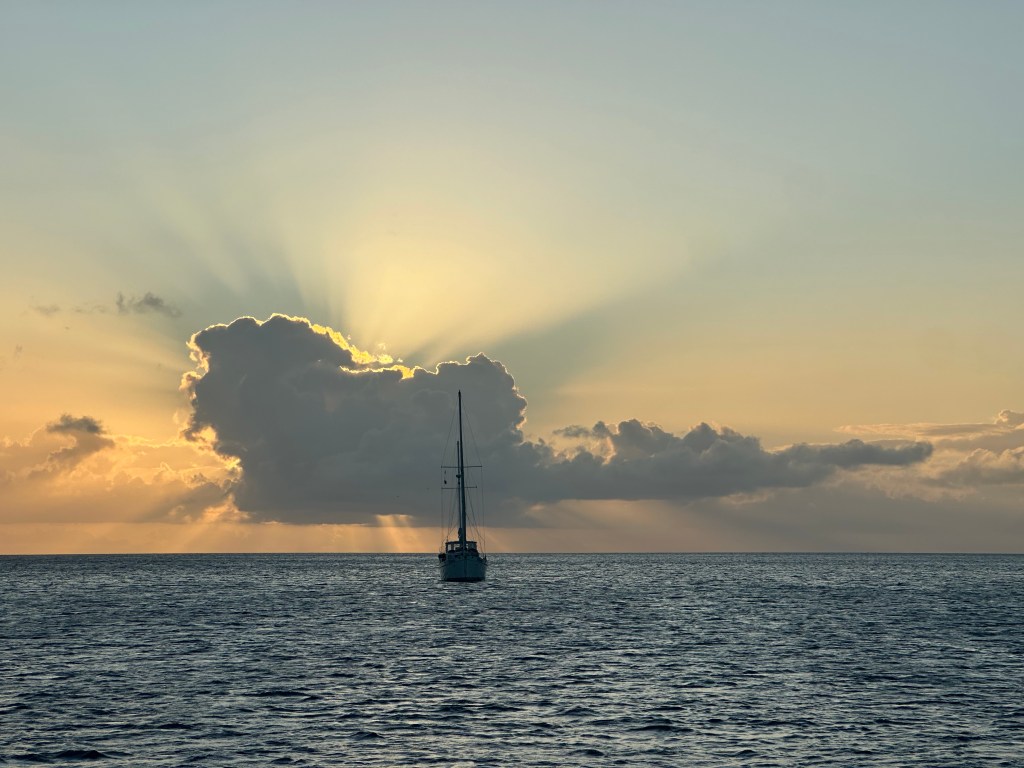
After a bit of a nervous sail from Vuda, waiting to see what the mast would tell us we had done poorly or forgotten to do, we anchored in a familiar spot off Denarau. We had returned so that we could catch up with our friend Eugeni, who we might not see again for some time as he intends to head to New Zealand at the end of the season, whilst we are heading to Vanuatu, New Caledonia, and Australia. Over dinner, Eugeni, who to my knowledge speaks Bulgarian, French, Spanish, and English, encouraged us to try and learn Spanish, something Cara and I have talked about but failed to ever action. He kindly gave us some language books that he no longer needs, so Taurus now rings with the sound of amateurish Spanish conversation, “Quiero comer algo ahora porque tengo hambre” (I want to eat something now because I’m hungry).

The following day we set off to the Yasawa Islands, a group to the north west of Viti Levu. We set sail in fairly light winds, hoping that they would fill in as the day wore on, but instead they grew lighter and veered to the north. As the wind died completely we sought an anchorage for the night so that we could avoid motoring.
Our chosen sight was Vomo Island (the site of another resort) and given there was no wind at the time we chose to head to the northerly side where we would be protected from the predicted sou’ easterly winds. After dodging numerous bombies and a reef we found a spot to drop anchor and settled down for the night. The weather became so still that we wondered if we were experiencing the ‘calm before the storm.’ When the wind returned later than night it naturally came from the north, so that we had little protection, but luckily it wasn’t strong enough to do anything but make the anchorage uncomfortably bouncy.
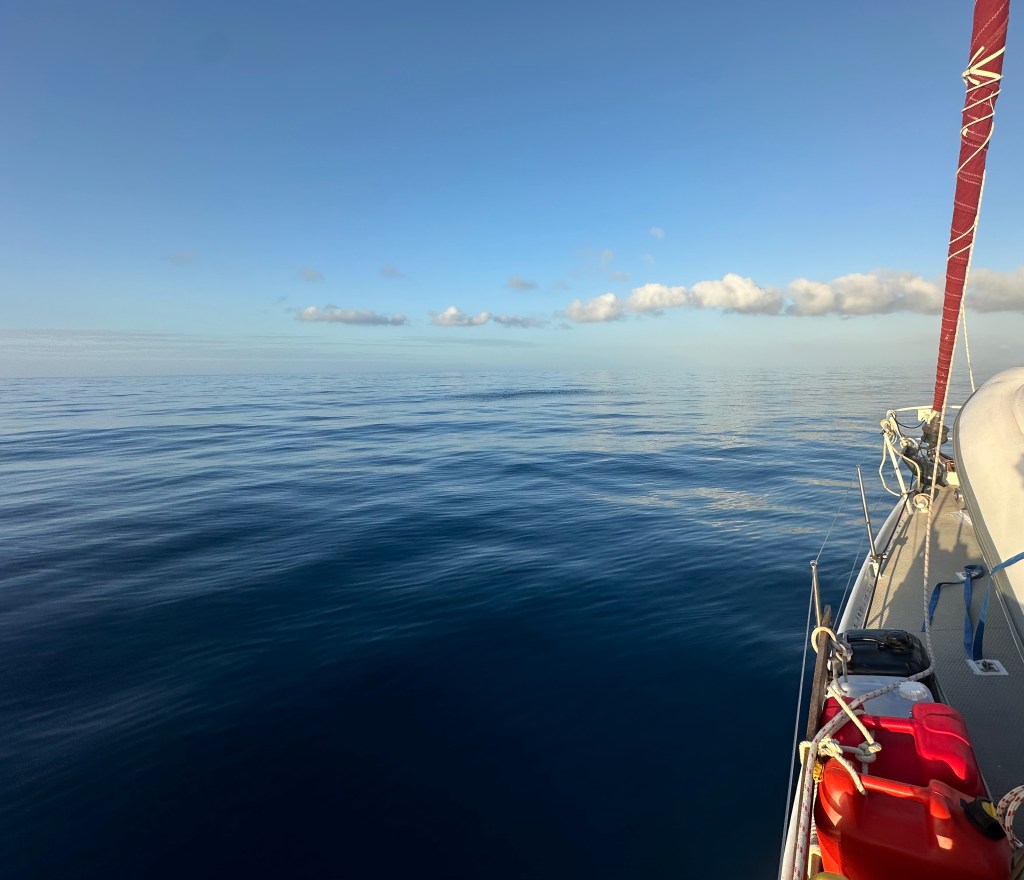


We were off early next morning and enjoyed an exciting sail in 25 knots. Drawaqa is a site where several islands in close vicinity create channels or passages that are strongly tidal and attract all manner of sea life. Its popularity means that two resorts are established nearby and about half a dozen yachts were already in the anchorage when we arrived.
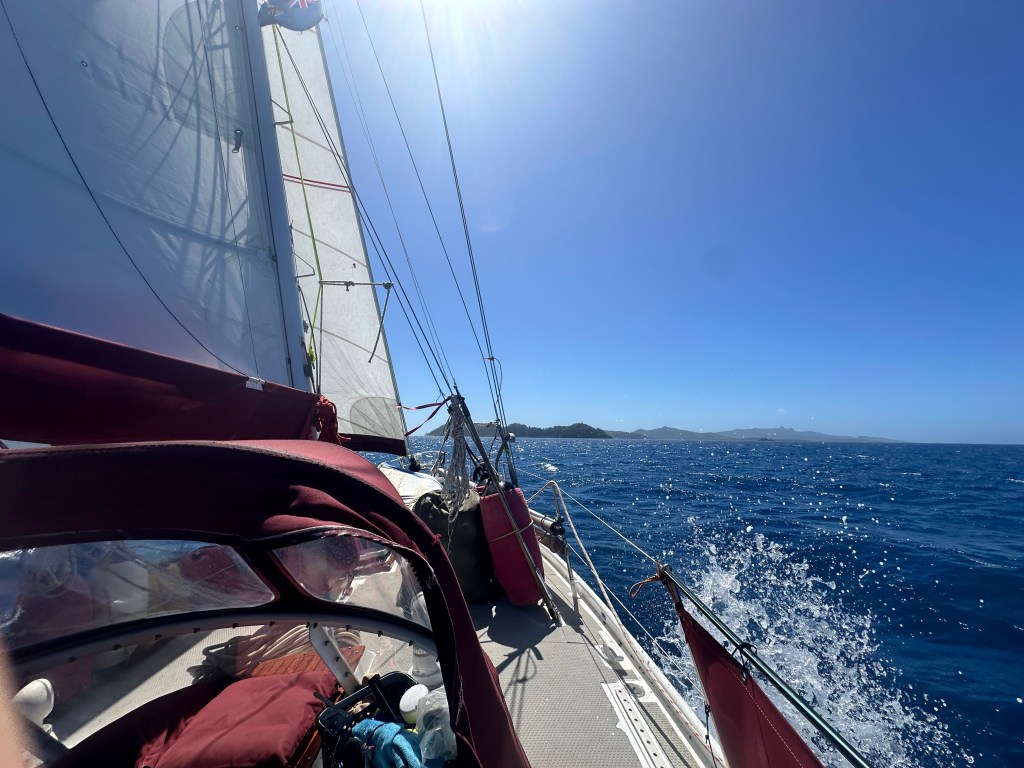
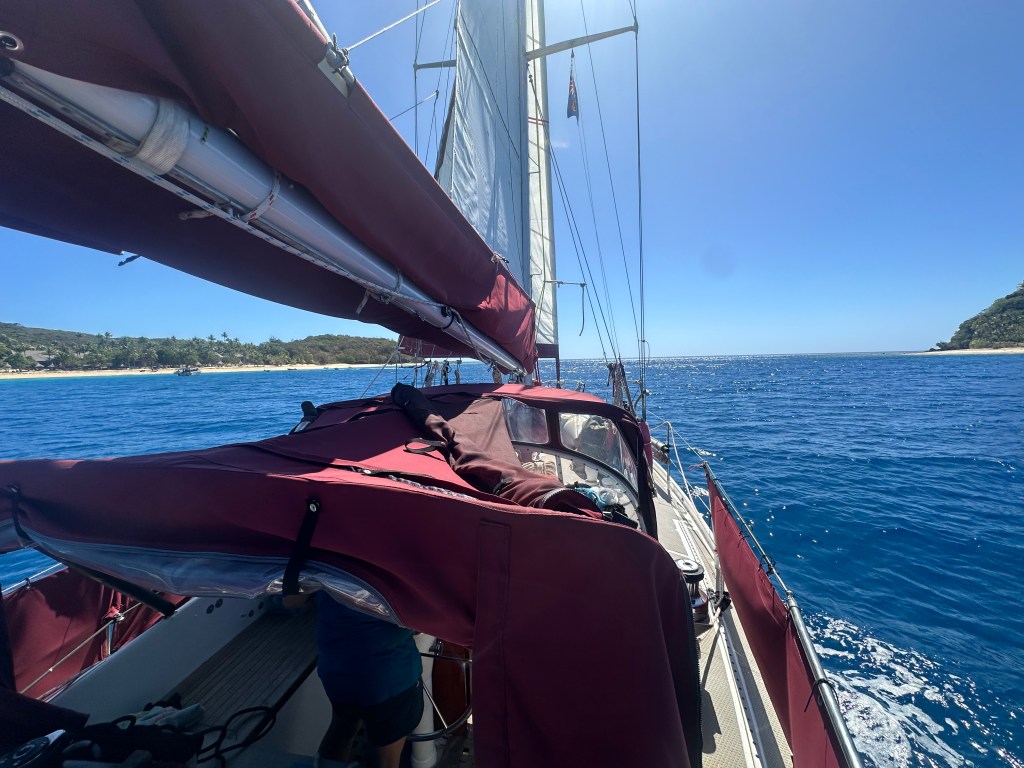
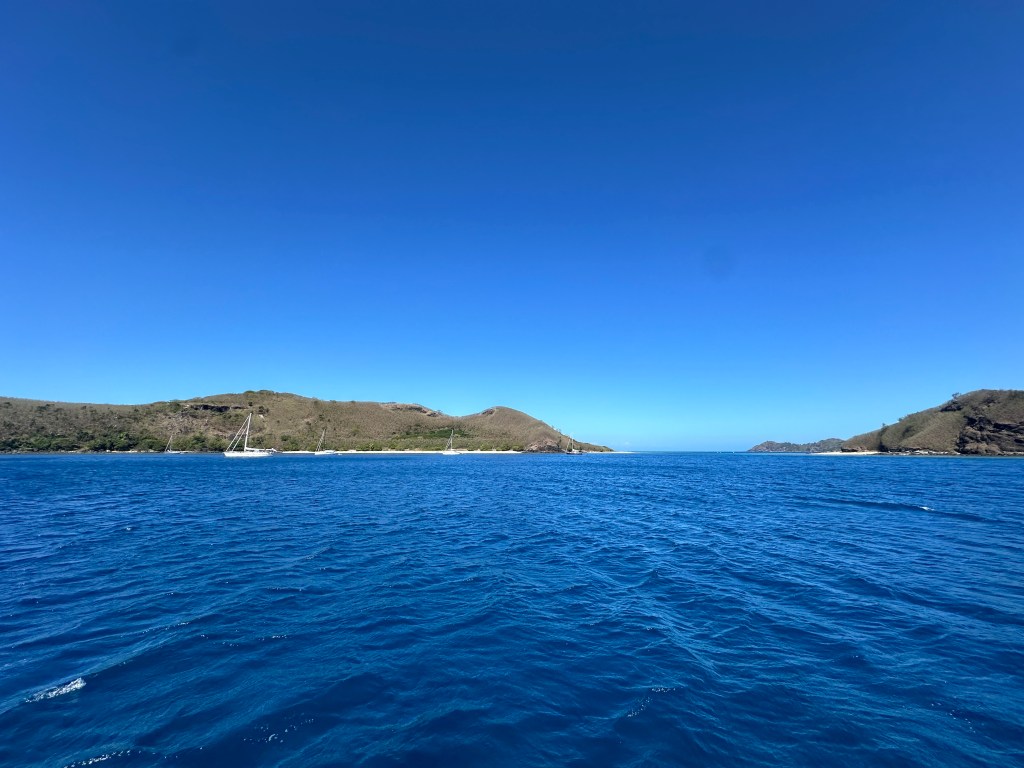
After dropping the hook we jumped into the dinghy and headed out to the nearest passage. The water was bizarrely warm, apparently due to the coral, and very clear with an exceptional amount of sea-life.
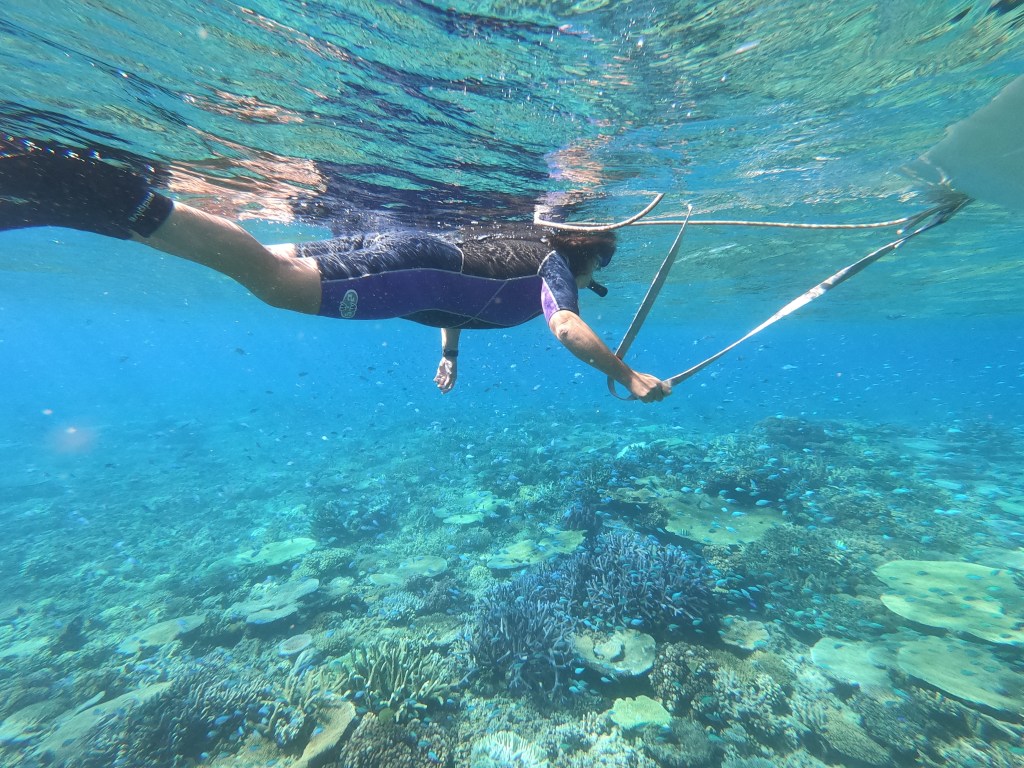
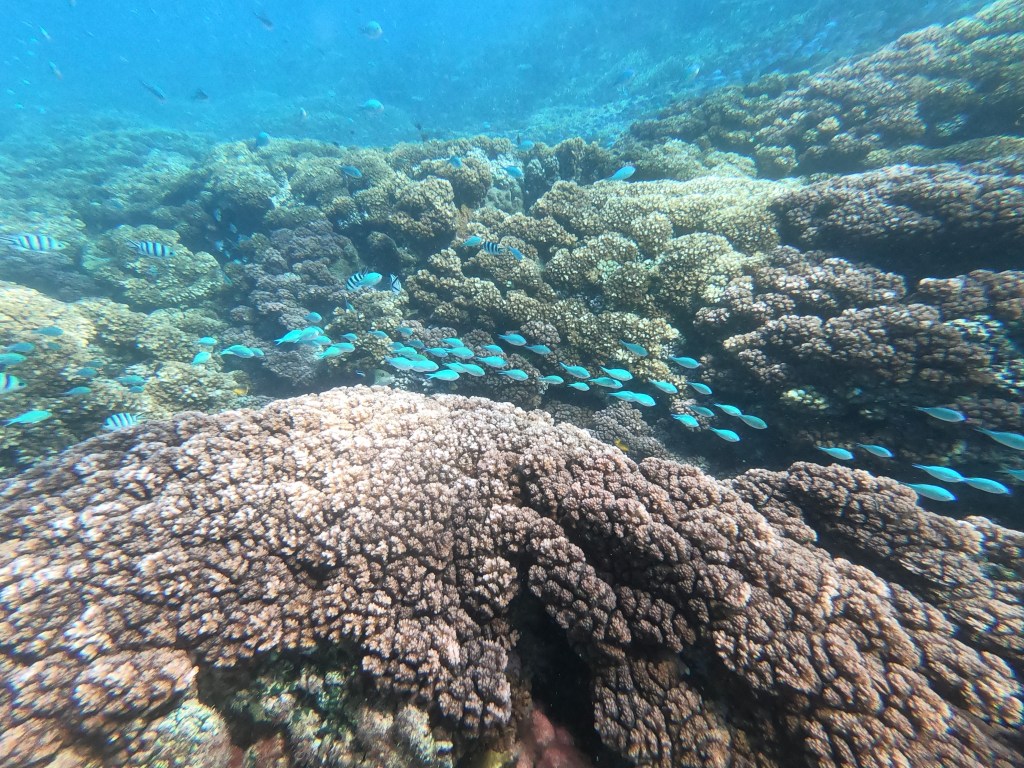
First thing next morning we heard a couple of outboards racing past, and sticking our heads out saw the resort boats heading out to the northern passage. Thinking that the activity may portend the arrival of the manta rays which the area is known for, we grabbed our gear and headed straight out. On arrival we lowered the dinghy’s anchor and jumped into the water. However, we hadn’t swum very far before we realised the strength of the current and quickly turned back. By the time we got back we were blowing hard, so decided to stick with the dinghy and ‘drift dive’ — that is take the dinghy ‘up stream’ and then hold on to it and be borne along with it. An added benefit of this technique is that in busy areas you are far more visible to other boat operators and so less likely to be run over.
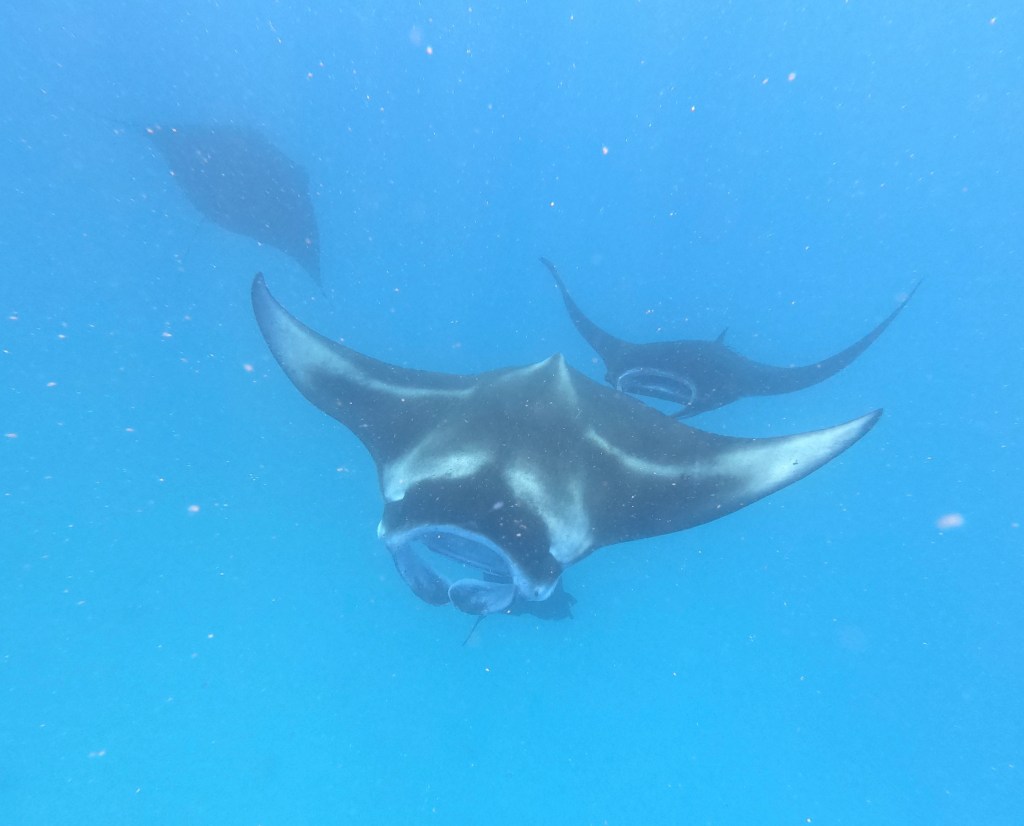
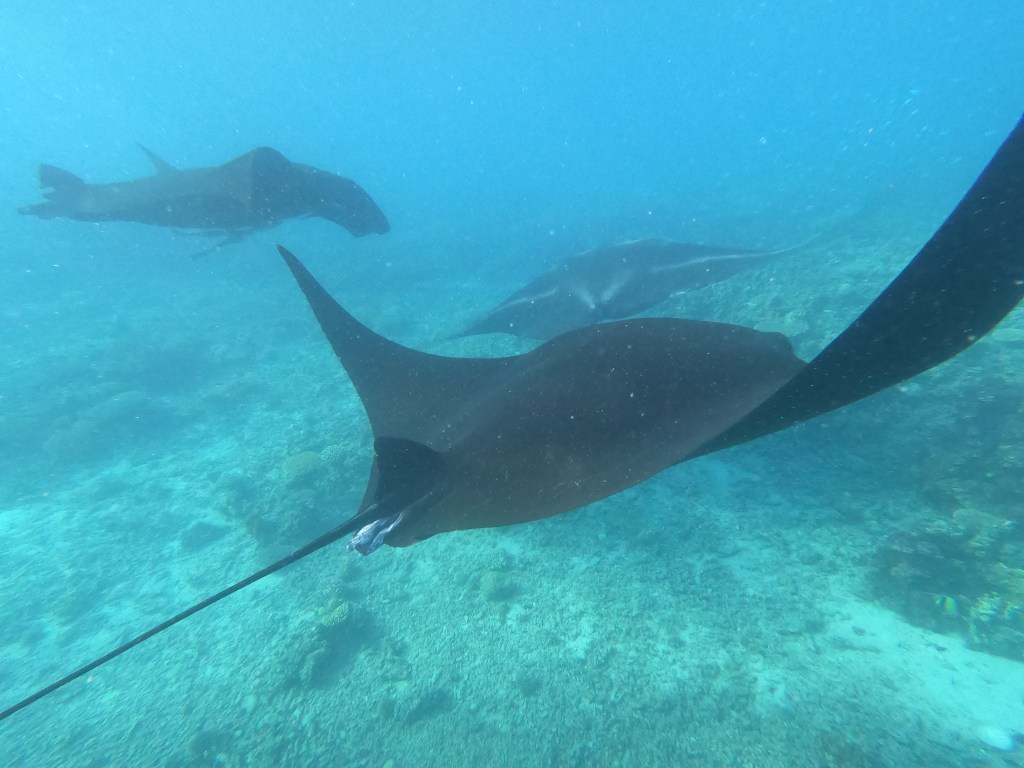
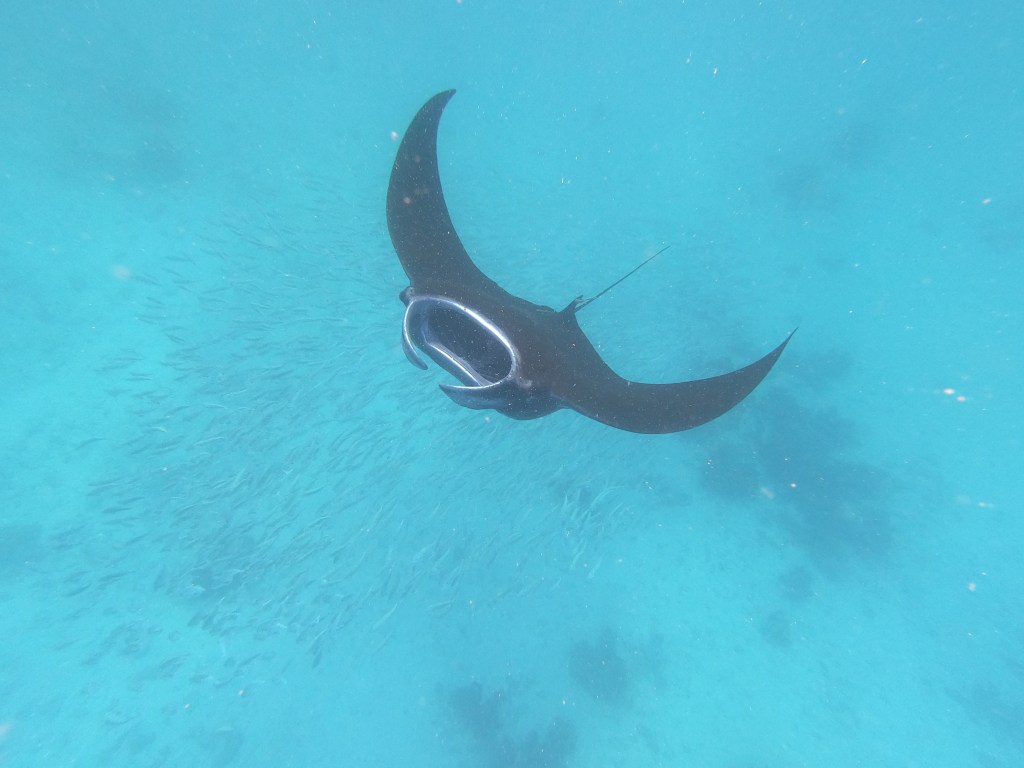
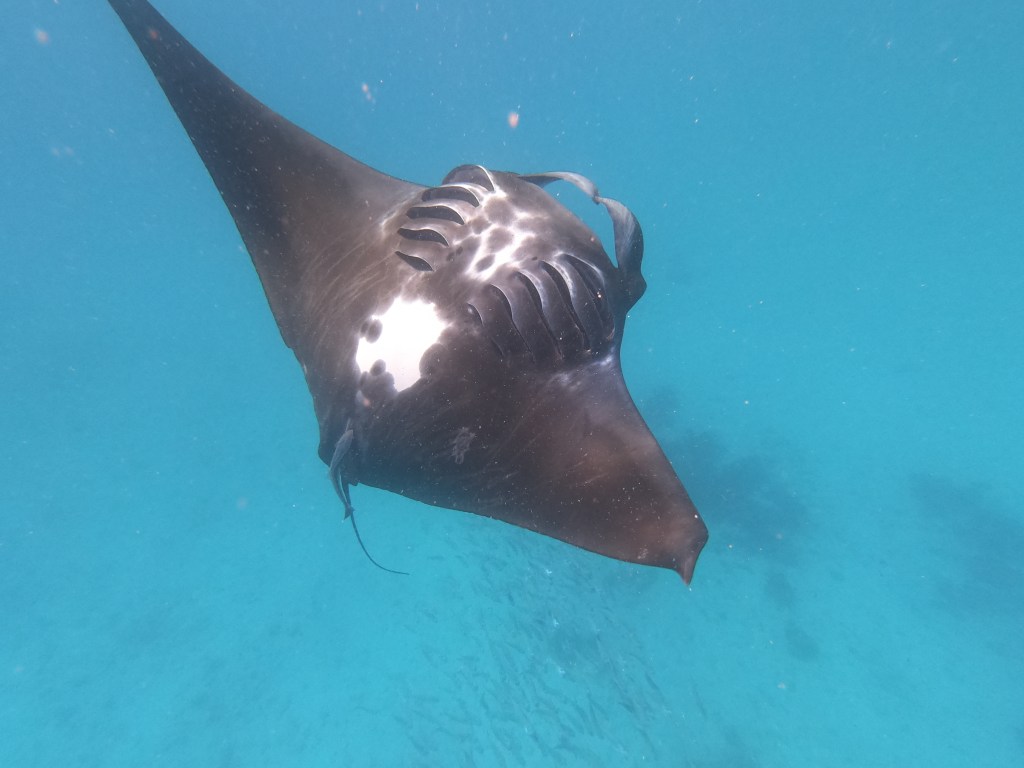
On our second trip we jumped in and saw three or four manta rays directly below us. These massive creatures, evolved from sharks, are four to five metres across but entirely benign. They feed on plankton, and though it appears they have a sting the appendage cannot be used as a weapon, unlike sting rays whose ‘sting’ can be fatal. The mantas ignored us completely and swam in loops as they fed on their tiny prey. We felt very privileged to witness this silent and graceful underwater ballet. The photographs don’t really convey the size of these things, but if you imagine them the size of small cars you won’t be far wrong.


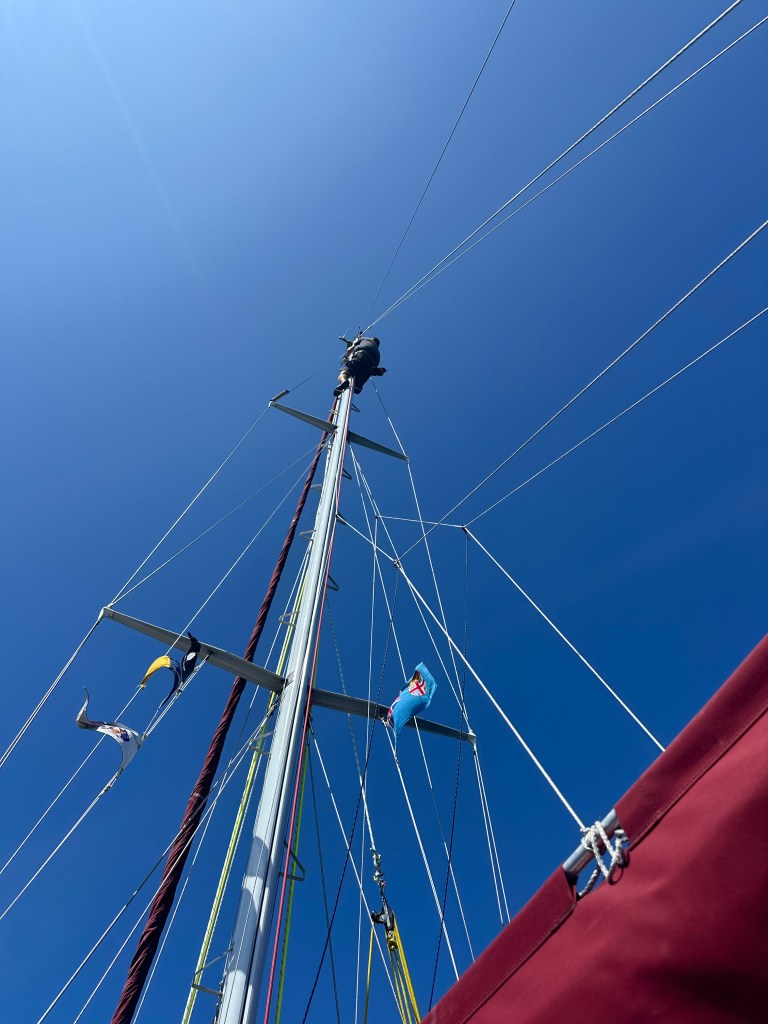
After this encounter we messed around up the mast, trying to sort out the wind generator (which continues to play up), and retying thin line from the steps to the shrouds on the upper two thirds of the mast. We had been encouraged not to replace this line when we refurbished the mast, but we hadn’t sailed very far before we came to understand its value — preventing lines and halyards getting wrapped around the steps.
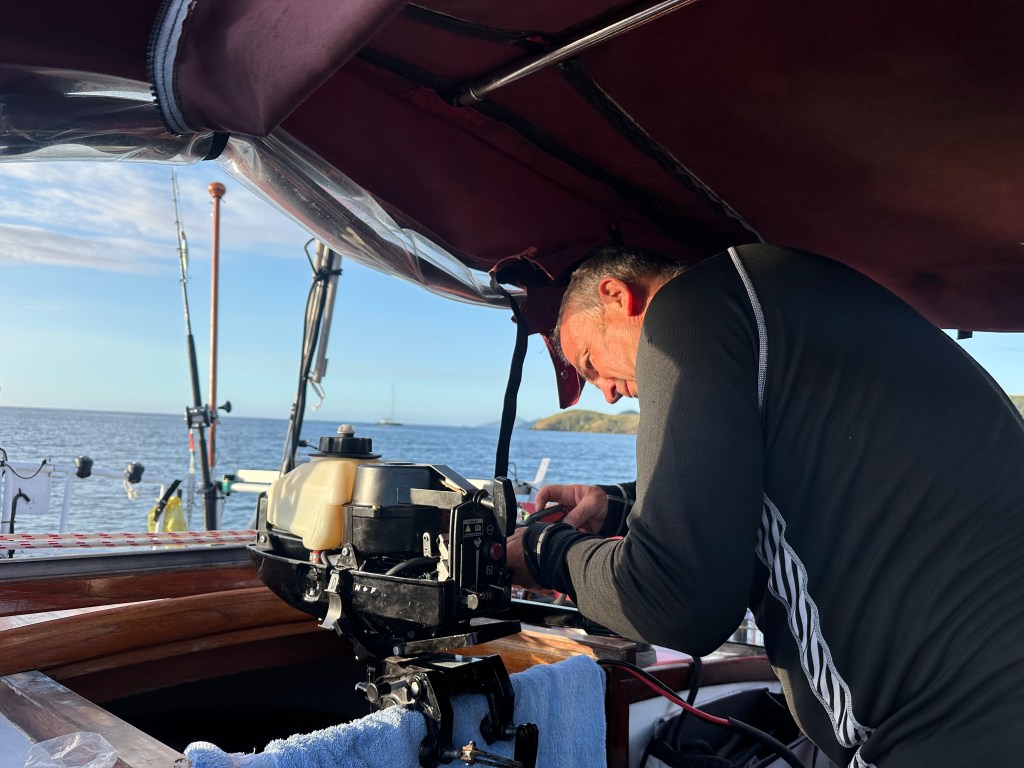
For the next week we hopped north, jumping from anchorage to anchorage, exploring the beautiful Yasawa Islands, and fixing the things that broke along the way. One day we were taking the dinghy to a nearby reef only for the outboard to stop and petrol to start running out of the mouth of the carburettor. We quickly turned the petrol tap off and rowed back to Taurus to start the trouble shooting process. It turned out to be a stuck float and easily fixed once the carburettor was in pieces. I think everyone has heard the old saw that defines cruising as ‘fixing boats in exotic locations,’ but in our experience it’s proven entirely accurate.
The weather was a little wet and wild for several days, leaving us confined to the boat. One down pour left so much water in the dinghy that the next day I took the opportunity for a fresh water bath, the first in a very long time! In between the days of rocking and rolling we visited the village of Yasawa i Rara. In this beautiful spot, at the very north of the Yasawas, we were delighted to bump into old friends. Bernie we had first met at Minerva Reef, and Sam and Emma we met when cruising in Tonga. We all went ashore together for the required sevusevu and then explored the village and stunning beach.
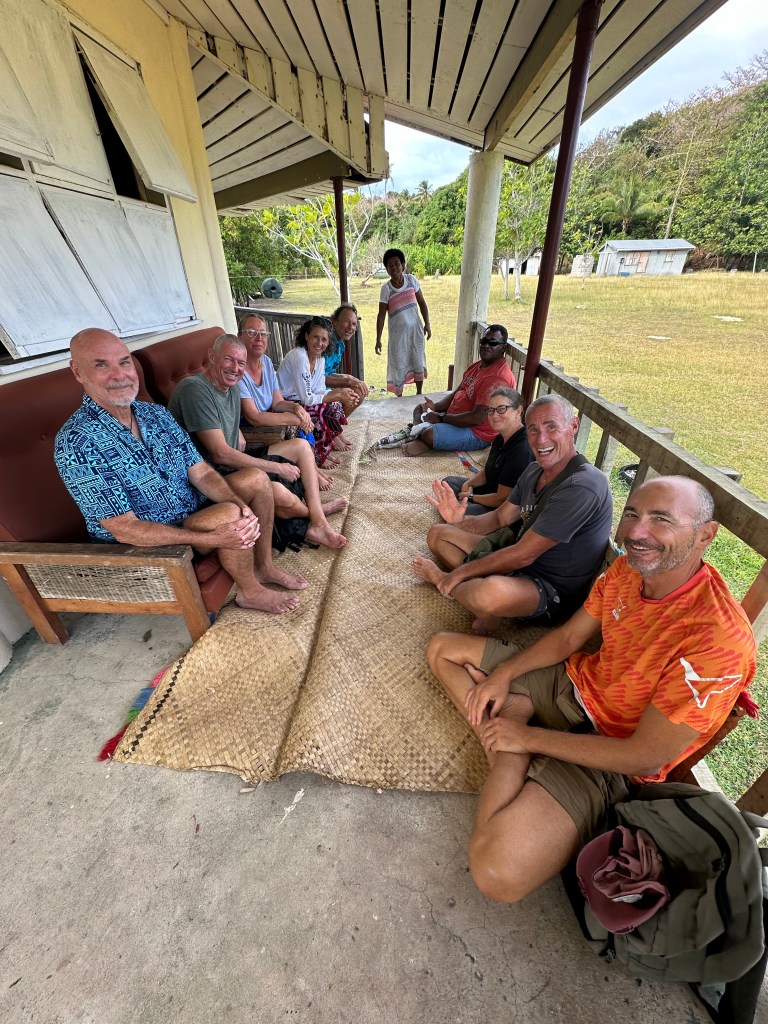
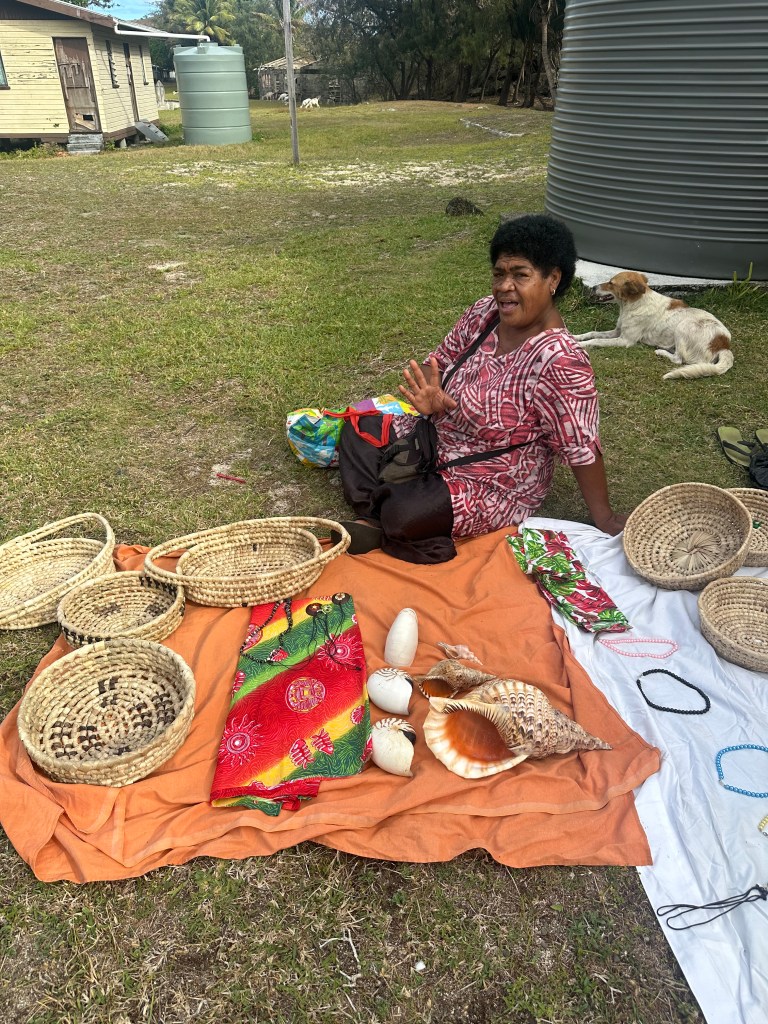


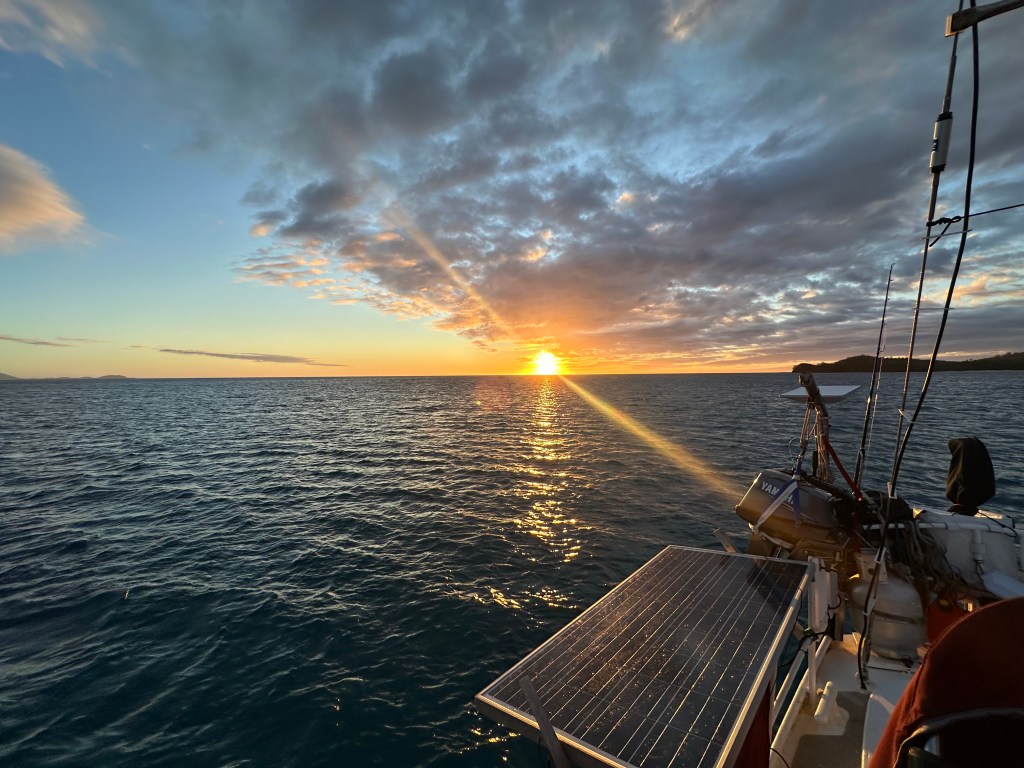
Next day we left our friends and sailed south, heading back down the island group, and ultimately anchored near the Blue Lagoon Cave. The cave apparently featured in the Blue Lagoon movie. This 80s flick is only remembered today for the manner in which it inappropriately sexualised a very young Brooke Shields, so it’s perhaps a bit tawdry that the name is used by so many resorts and tourist spots in the area.
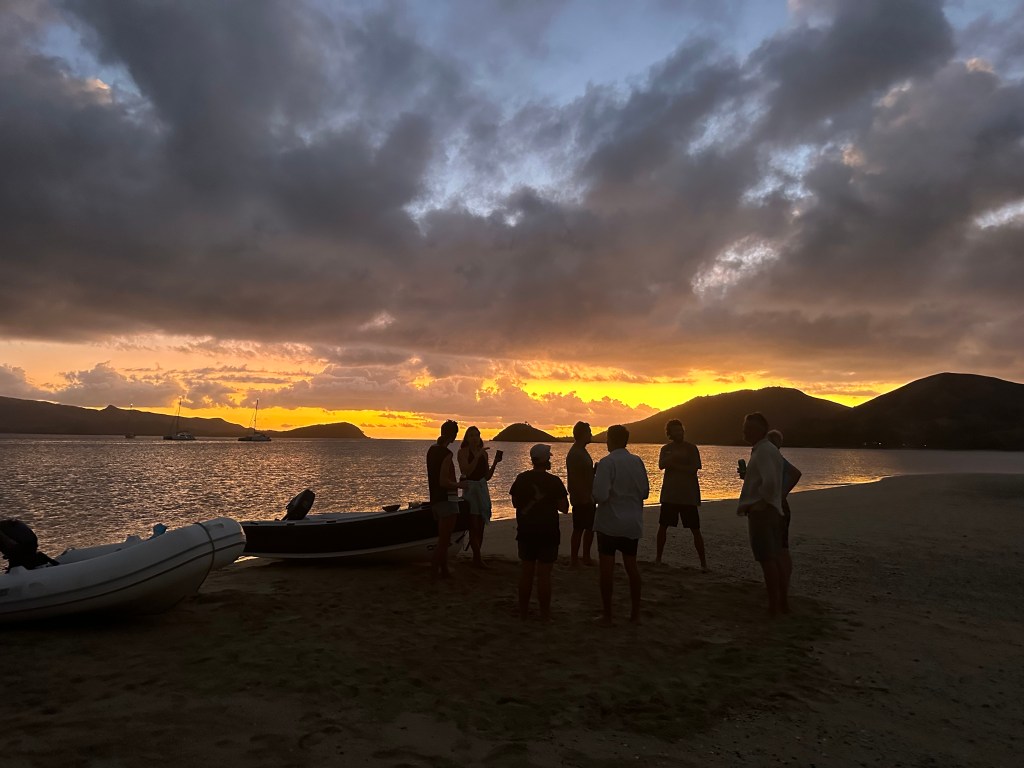
We were charged a pretty steep F$50 per person for entry into the cave, but managed to avoid having to give kava as well. The traditional gift had been demanded from some cruisers, adding another F$10 to the cost. The expectation seemed unreasonable given the amount of money we were paying and the absence of any sevusevu ceremony, which essentially reduced the kava to another form of payment. After swimming in pristine caves in Tonga for free, this Fijian offering was pretty average and decidedly expensive. We were also encumbered by a ‘guide,’ who showed us a second cave but seemed to feel that we would be endlessly impressed by the echoes that his constant yelling created. Still, we’re unlikely to ever come back this way and getting together with other cruisers for sundowners on the beach that night definitely made up for the cave’s mediocrity.


After having sailed the west coast of the Yasawas (the east being a bit trickier due to the prevailing wind, reefs, and lack of anchorages) we are now heading back to the Denarau / Vuda area. Friends of ours, Dave and Jackie, who we sailed to Tasmania with last year are arriving soon from Australia in their yacht, Hansel. We also need to start thinking about checking out of the country soon, and we have to be in either Vuda or Denarau to do so. Fiji has been incredible, but the amount of time available to visit Vanuatu and New Caledonia before heading south to Australia (to avoid the cyclone season) is getting short.


 Sailing Taurus NZ
Leave a comment