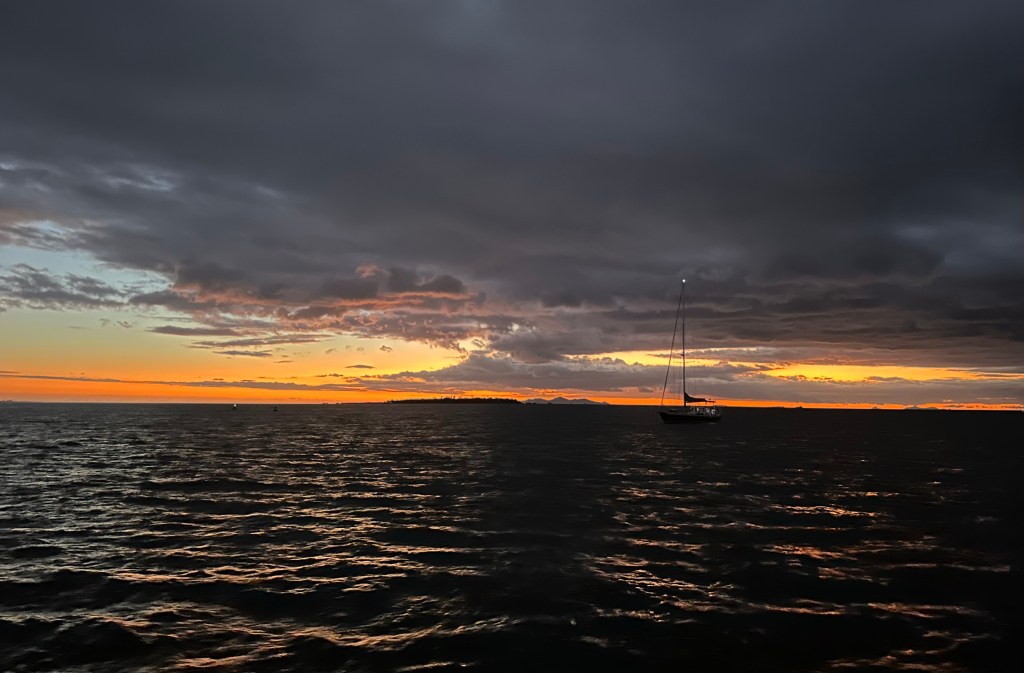
Sailing, and by extension cruising, is an activity self regulated, to some extent, by the wisdom and dire warnings of a legion of sayings, proverbs, and aphorisms. One of these maintains that ‘the most dangerous thing to have on a boat is a schedule.’ This alludes to the view that the safe sailor only sails when the weather is right, and if the weather isn’t right he or she stays in harbour; the sailor who ignores the weather due to other pressures can all too easily find themselves in hot water.
When preparing to leave Fiji, Cara and I were well aware of this hazard, and yet the weather itself imposes its own schedule on cruisers in the Pacific. Due to annual cyclonic activity the cruising season is limited to between April and October, so that prudent captains (and those with insurance, whose policies have clauses demanding departure before a certain date) leave the danger area before the Summer heat imparts its energy to the sea, normally heading to Australia or New Zealand. Whether (weather?) we liked it or not, we had a schedule, and the clock was ticking.
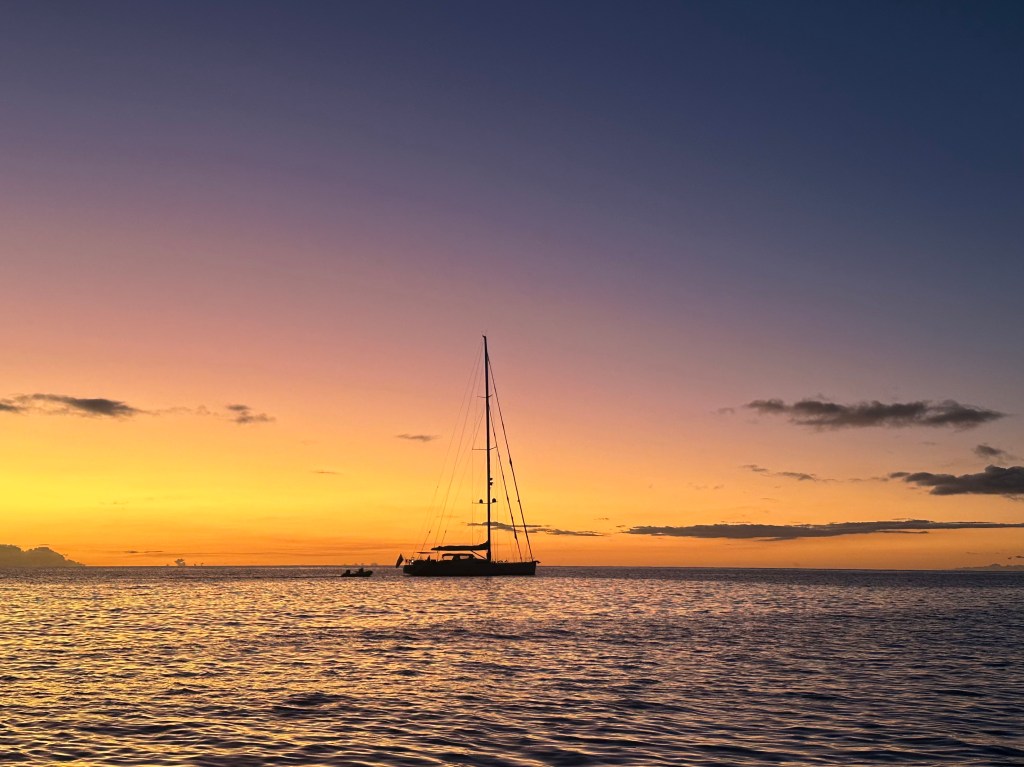
The necessary repairs to our mast had already delayed us somewhat, and once they were finished we began to consider when we should leave. However, we wanted to cruise the Yasawa Group (previous blog) and good friends of ours, Dave and Jackie, who we sailed with to Tasmania last year (see ‘Nelson, NZ to Launceston, Australia,’ June 2023) had left Australia and were sailing to Fiji. It was a no-brainer to catch up with them before we left.
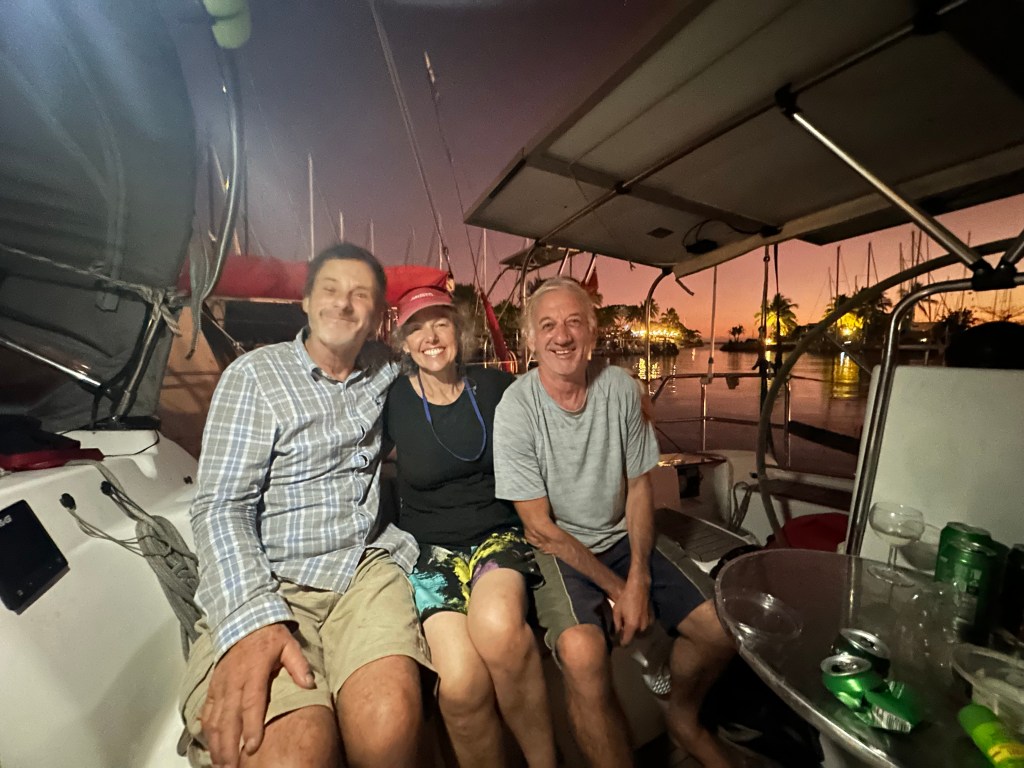
Being consummate and fast sailors, Dave and Jackie managed the 1,700 nautical miles in just ten days. Watching them on AIS as we returned from the Yasawas we saw them heading into Vuda, and so anchored outside the marina and took the dinghy in. Dave’s face as he realised who it was yelling ‘hello’ at him was hilarious! “I didn’t recognise you guys being so brown!” he said. Once they were cleared we of course caught up in the time honoured nautical fashion — over a few drinks.
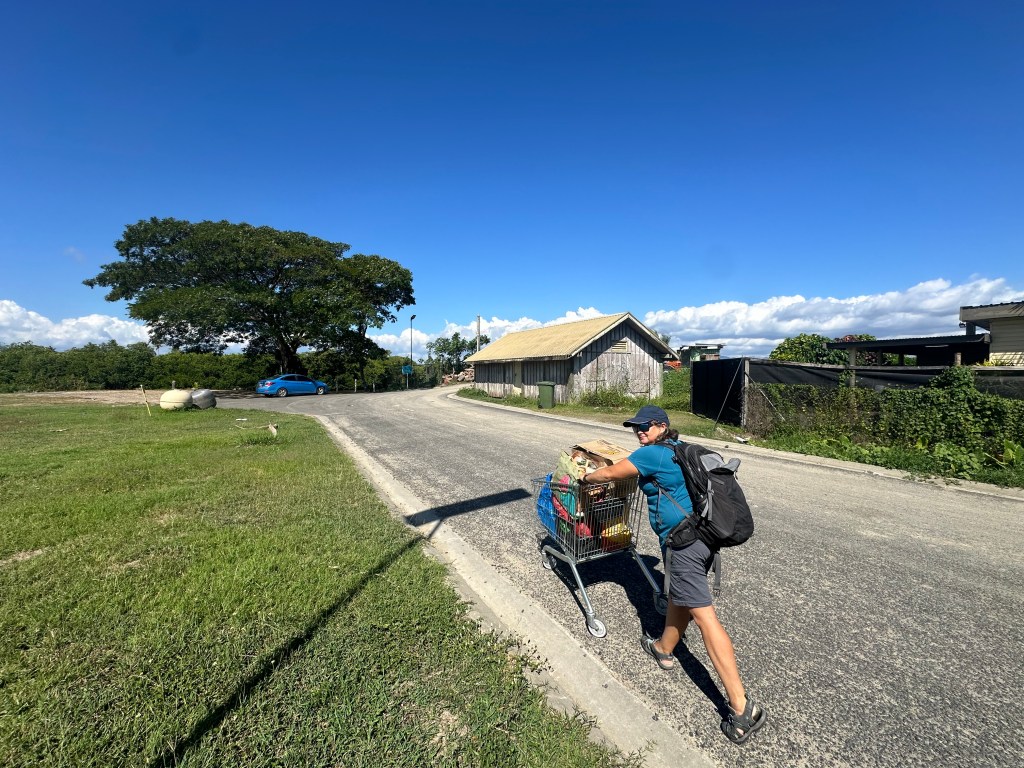
After bidding our friends adieu we sailed across the bay to Denaru. One can clear Fijian Customs from either Vuda or Denaru, and we had decided on the latter because we felt it was easier to resupply at Denaru where you can take a dinghy to a local supermarket. By taking the dinghy downriver and tying it up at a condemned boat ramp the supermarket is only a five minute walk away. We spent a small fortune, stocked up, and were pushing the trolley back down the road when we were stopped by an employee who told us that we couldn’t take the trolley we had, but could take another trolley. Mystified, we asked what the difference was and he said, “I don’t know.” Bowing to the inevitable we did as we were bid and soon found out the difference in the trolleys, if not the reason for the change, the new one would not steer within ninety degrees of straight!
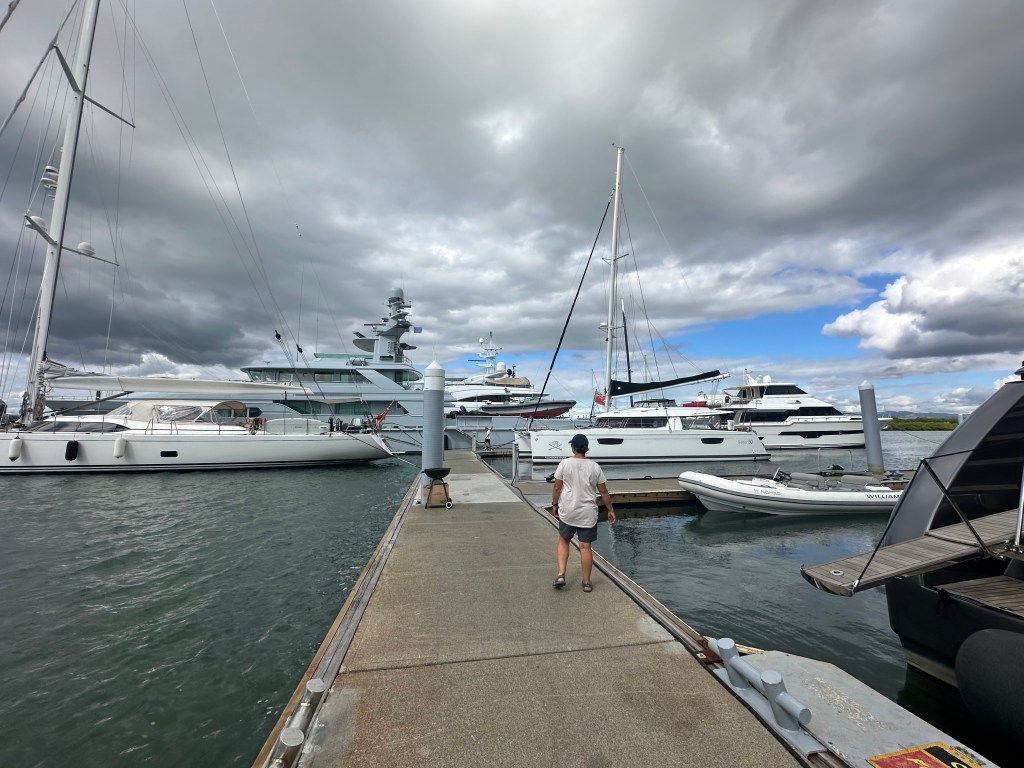
That evening we caught up with a couple of friends moored in millionaire’s row, a part of the marina housing several large yachts and not one, but two super yachts. Our dinghy seemed a little lost tied up in an empty berth designed for a fifty foot monster.

We’d been checking the weather for the previous week or so, and thought that we had identified a window on Monday the 2nd of September for the four day trip to Vanuatu. The fly in the ointment was that the weather on the last day looked a little rough, about 25 knots. Now there are several problems with planning departure dates according to forecasts. For one, there are several different forecasts available, and often they don’t agree. The danger then becomes that you ‘cherry pick’ the one you like. Secondly, forecasts are just that: scientifically empowered best guesses using data available at the time, and the further out from the data the greater the margin of error (many people consider four to five days the maximum in which they will place faith in a forecast). For a four day trip this means that regarding the weather you are sailing from ‘best, fairly accurate, guess’ to ‘God only knows.’ You can’t discount the forecast, but it’s fair to say that what has been predicted is unlikely to be ‘gospel.’
Another issue, and ultimately the most important one, is the human factor: experience or the lack there of; willingness to motor or determination to sail; willingness to be uncomfortable; and so on. Aware of the lack of sea miles we have under our belts, we are always keen to discuss our plans with more experienced friends. Speaking to Eugeni he initially advised us to wait, saying Friday looked ugly. Unfortunately, we couldn’t speak to Dave until late in the day, and then only over an internet connection that kept failing. He seemed to feel that the weather was fairly steady without any rapid changes and that the window was doable.
Owning a heavy steel boat we prefer a good stiff breeze to lack of wind, which causes us to bob around like a pregnant duck with nowhere to be. We don’t like spending money, so we don’t like motoring. Being heavy and steel we know our boat is strong, and we have no qualms about her seaworthiness. So, after weighing all this up we decided that it would be foolish to be put off by the forecasted winds of 25 knots on Friday, something we sail in fairly routinely, and made the decision to go.
Monday morning we were up nice and early and took the dinghy back into the marina to make our appointed meeting with Customs at 9:30am. Luckily we were early because all the officers were leaving. It soon became apparent that whoever we had spoken to had forgotten to record our appointment. This kind of ineptitude is all too common in Fiji. Previous episodes that had impacted us included the Denarau Marina booking us into the marina after receiving a cancellation but forgetting to inform us; whilst the Vuda Marina managed to book the travel lift for the Tuesday following the one that that we actually wanted it for, so we busted our guts getting the mast done, and had friends and a professional rigger sitting around waiting for a crane that never came. Not being able to clear the country after waiting for the window and getting everything ready to go would have been the cherry on top! For some reason Fiji just hasn’t quite made it to the point where people can be relied upon to do their jobs — and the money and time routinely lost and wasted must be horrendous.
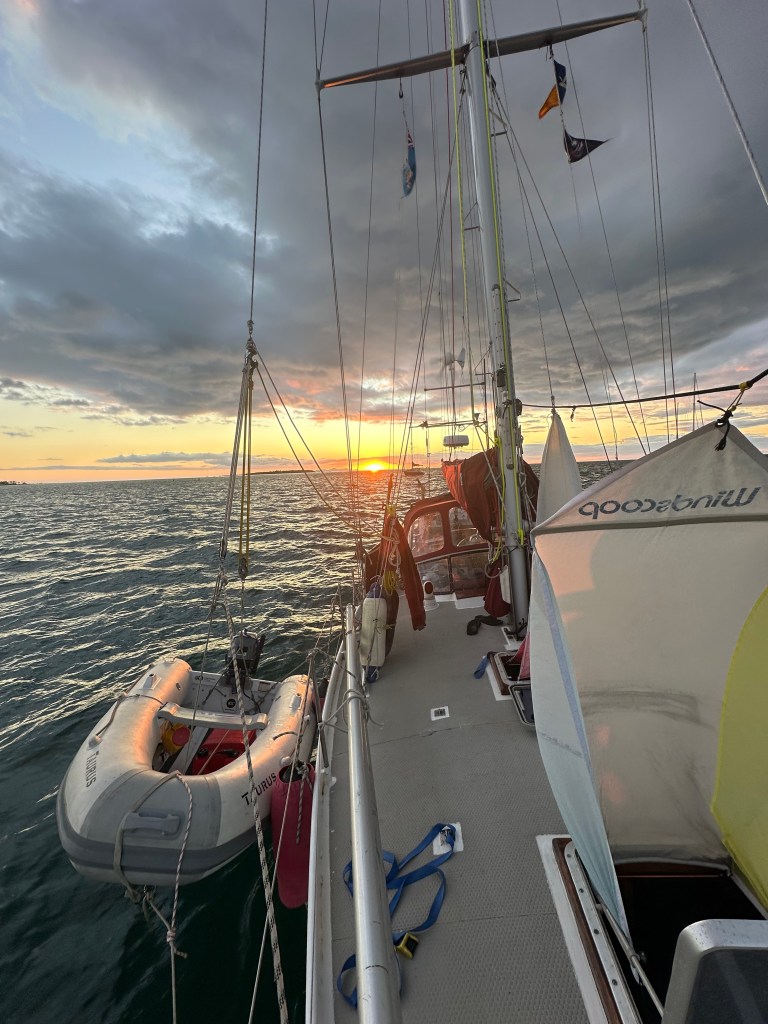
Having cleared Customs we headed straight back out to Taurus, loaded the dinghy on board, tied everything down and lifted the anchor. A 15 knot SE was forecast, but the wind was still light in the protected bay so we motored to begin. Happily, the wind soon started filling in and we were able to raise the sails and turn off the engine.
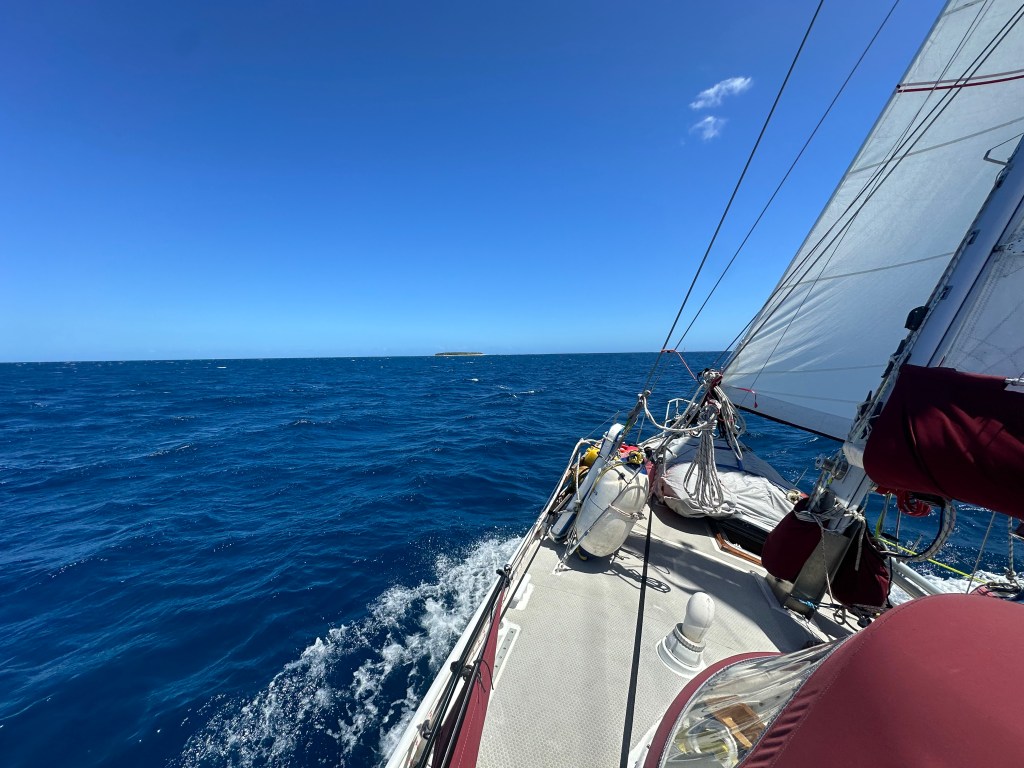
As we approached the Malolo Passage the wind started to increase and I said to Cara that we should reef on the other side. Another famous marine saying is that ‘the time to reef is when you first think of reefing.’ It was a shame we didn’t take this on board because once in the passage the wind strength rose significantly and we struggled to control the boat as we manoeuvred through the tight space between reefs. Another yacht that entered just ahead of us seemed to be having all sorts of issues until they managed to furl their gib and presumably motored through. In contrast, we depowered the rig by letting the main out, choosing to push through the passage and reef the sails properly when we had more room on the other side. In the end we got through fine, but it was amazing to see just how much protection the low lying islands and reefs give from the wind. Once outside we found it was blowing in the high 20s to mid 30s with 2-3 metre waves short intervals apart from the SE. As we were heading in a roughly SW direction this meant that we were broadside onto the wind and waves, a position that is uncomfortable as it rolls the boat around, and can become dangerous if the waves build too high. As this was the start of a four day sail I was keen to ease into it, so we raised the storm jib, put the second reef in the main (made it almost as small as possible) and slowed the cutter down. I was quite concerned that if the forecast was so inaccurate on this our first day it could mean that all bets were off and the gale we had found ourselves in could continue for the whole trip, or get even worse.
The strong winds continued on into the evening, and when I went off watch in the late evening I found I was feeling pretty off. I don’t normally get sea-sick, but it happens occasionally, especially at the start of passages. I encouraged myself to throw up, hoping it would make me feel better but instead it initiated a bad period of vomiting and diarrhoea. Whatever I tried to ingest (water, food, anti-nausea and diarrhoea tables) immediately returned one way or the other and often, somehow, in greater quantities. I soon ended up feeling felt absolutely smashed. Life in a small boat in decent winds can be bad enough, life when sick in a small boat sucks. Any physical effort, like getting out of bed to take my watch, required maximum effort, and when we decided to put the third reef in in the early hours it took me some time before I could do more that sit there staring stupidly at the sail in the dark. It wasn’t until the following day that I finally managed to keep down a tablet and I could start trying to rehydrate and recover. Most of that day I spent in a weird limbo between awareness and semi-unconsciousness. My shifts were spent in the same near comatose state. Every twenty minutes my alarm would go off and I would struggle to sit up and comprehend our position, the relation between wind and sails, and the presence of any other marine traffic. If there was no immediate danger I immediately returned to my torpor. Cara was of course magnificent, but not even she can do 24 hour watches and had to rest at some point.
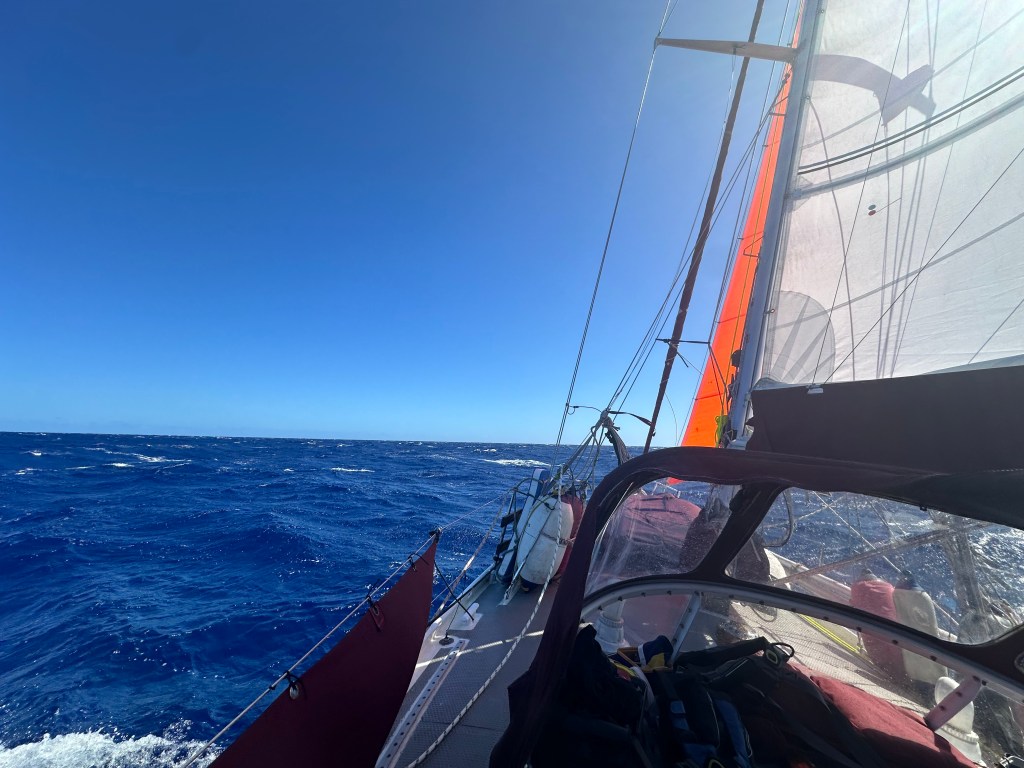
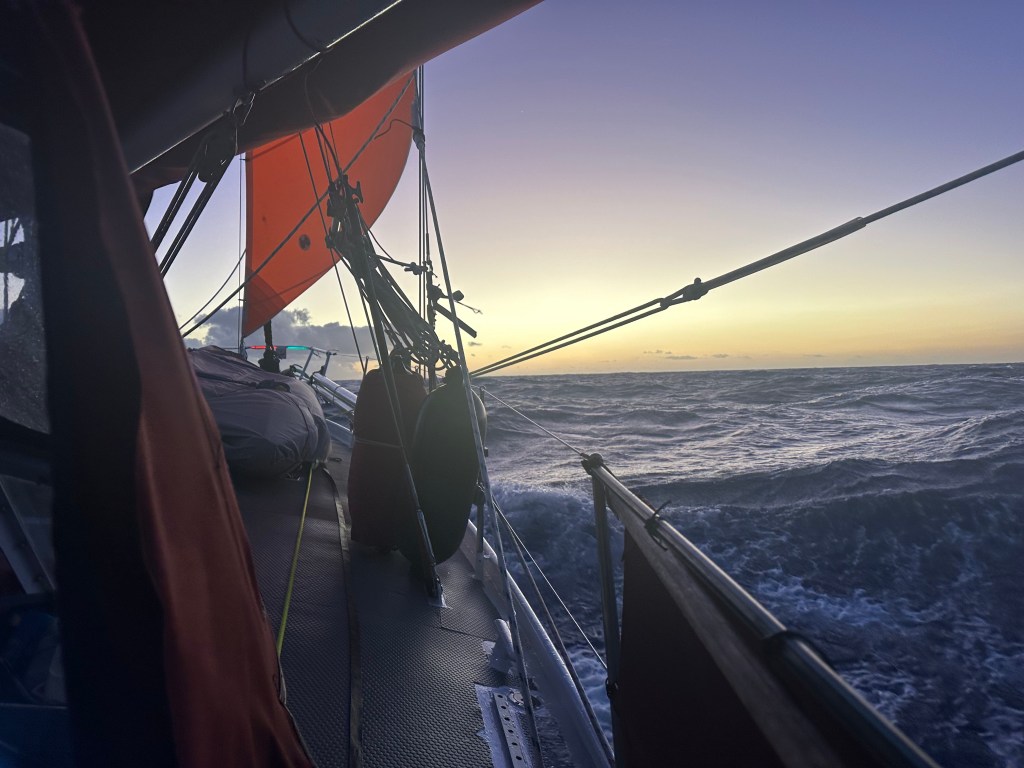
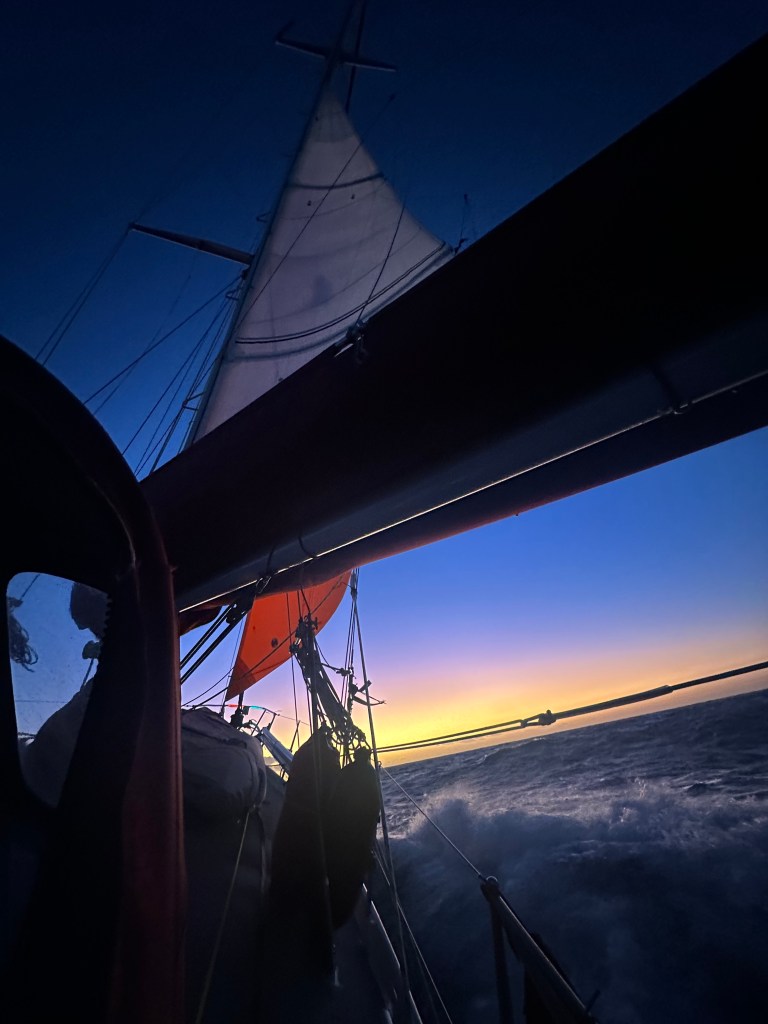
Fortunately, the weather moderated on the second and third day and I remember little about them. The sails were set and we needed to change very little for over 48 hours. By the fourth day we were approaching Vanuatu.
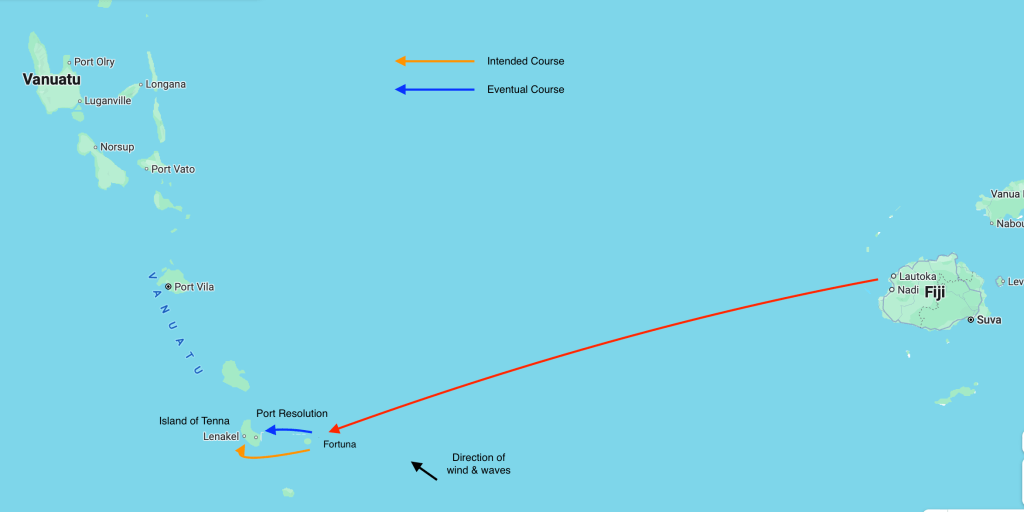
We had decided to head to the island of Tanna in the south of Vanuatu so that we could visit the famous volcano there, Mount Yasur. Unfortunately, the official port of entry is on the western side of Tanna, a small town renown for its unprotected and rolly anchorage, a place known as Lenakel. There is another possible place to enter, Port Resolution, on the east, but this can only be utilised if prior permission has been granted by the authorities. Landing without permission apparently carries the real risk of fines and criminal proceedings.
As Thursday morning began we experienced a sudden deterioration in the weather with the winds rising to mid 20’s and the sea-state becoming much rougher than the wind conditions alone would suggest they should be. This may have been due to the ‘fetch,’ the distance the wind and waves had travelled without obstruction, allowing them to build. As we were still beam on, trying to make headway to round the southern tip of Tanna, we were quite vulnerable to large waves striking the side of the boat. A boat is said to have been ‘knocked down’ if it is forced over onto its side, causing the mast to nearly parallel or even touch the water. We didn’t get quite there, but we were twice thrown much further onto our side than we are accustomed to, with the sea almost entering the cocking coaming on both occasions (I know I was sat in the cockpit and got quite wet). Objects in the cabin, like all our books, that have stuck fast through everything previously thrown at them, came unstuck and went flying before landing in unceremonious heaps, several of them landing on Cara on the opposite side of the cabin. In these conditions we needed to reef on one hand, to maintain control and reduce heeling, but we also needed to keep the boat powered up so that we could push through the waves that might otherwise stop us in our tracks. The solution we reached was to utilise the storm jib (to keep the centre of effort close to the centre of gravity), main with third reef, and a small degree of jib to keep the boat moving. With this set up we were powering along at about 6.5–7 knots, sometimes even 8, whereas once we furled the jib completely we dropped to below 5.
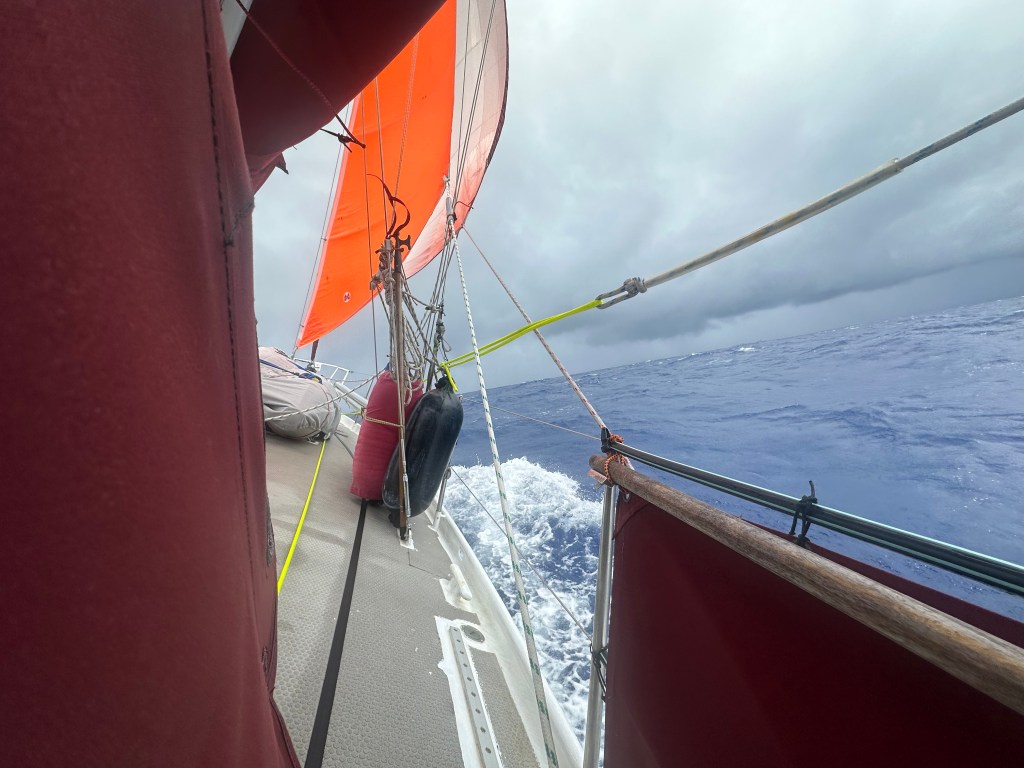
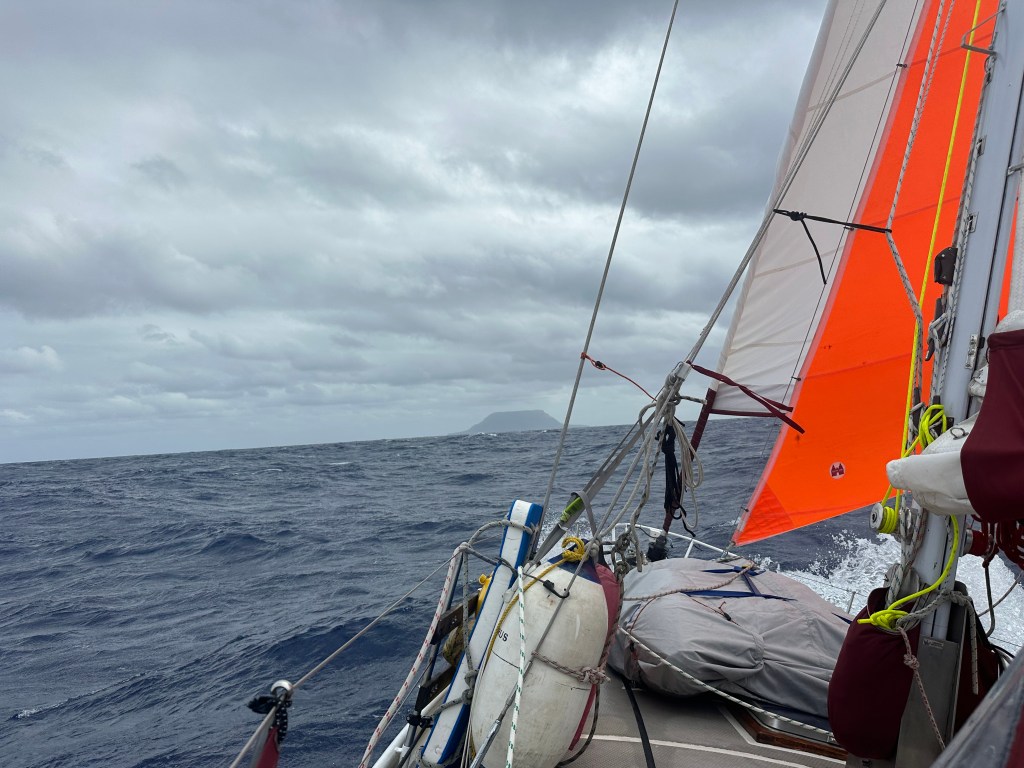
We had been approaching the Island of Futuna, an impressive volcanic island, for hours, trying to get south of it, but we both felt that we had to adjust the course to take the waves off our beam. We thus passed to the north and then when we tried to head to the SE again we found ourselves in the same predicament as before. Our Starlink, which provides satellite internet, was unable to connect in the rough weather, but our Garmin In-reach, which tracks our position and provides text messaging ability, allowed us to try and contact the Vanuatu authorities to see if we could head to Port Resolution. We were also able to contact Viki, the Director of the Pacific Island Rally that we’re a part of, to see if she could email Customs for us.
We heard nothing official back, but as the conditions got no better the apparent folly of trying to sail to Lenakel increasingly overshadowed our fear of upsetting the Vanuatuans. Maintaining a hazardous point of sail in order to reach a distant port with little or no protection, when a safer port was not only closer but also would allow a far safer course of sail seemed crazy, and ultimately made the decision to divert easy. The decision was not made harder by my ongoing lethargy and weakness. At this point I was able to keep down what I ate, but my appetite was almost non-existent and I remained exhausted. The idea of being smashed around for a needless ten hours failed to appeal in the slightest.
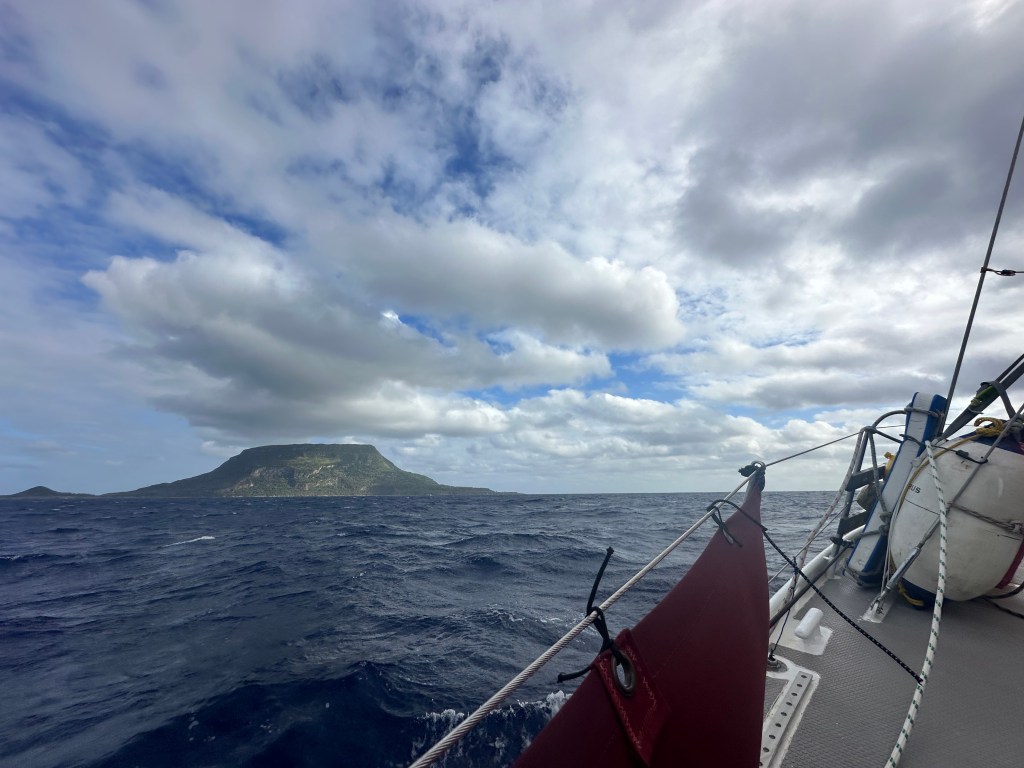
The decision made we changed course and enjoyed an almost immediate respite in the violent movement of the boat. Several hours later we were relieved to be notified that permission had been granted for us to enter Port Resolution, so Vanuatuan prison was off the cards! The rest of the trip was long and bumpy, but uneventful, and only the entrance through the reef into Port Resolution at 11pm, in pitch darkness, remains in my memory. Once inside we saw numerous anchor lights ahead so dropped the hook in about six metres, raised our ‘Q’ flag, and went to bed.
The next morning we found we were anchored next to One Life, the boat that left Fiji on the same day as us. They had beaten us into the anchorage by a few hours but had received permission to go there before leaving Fiji, so had maintained a more direct course. Clearance was straightforward with the Customs, Immigration, and Health chaps coming from Lenakel to meet us — and we happily paying for their time and petrol costs.
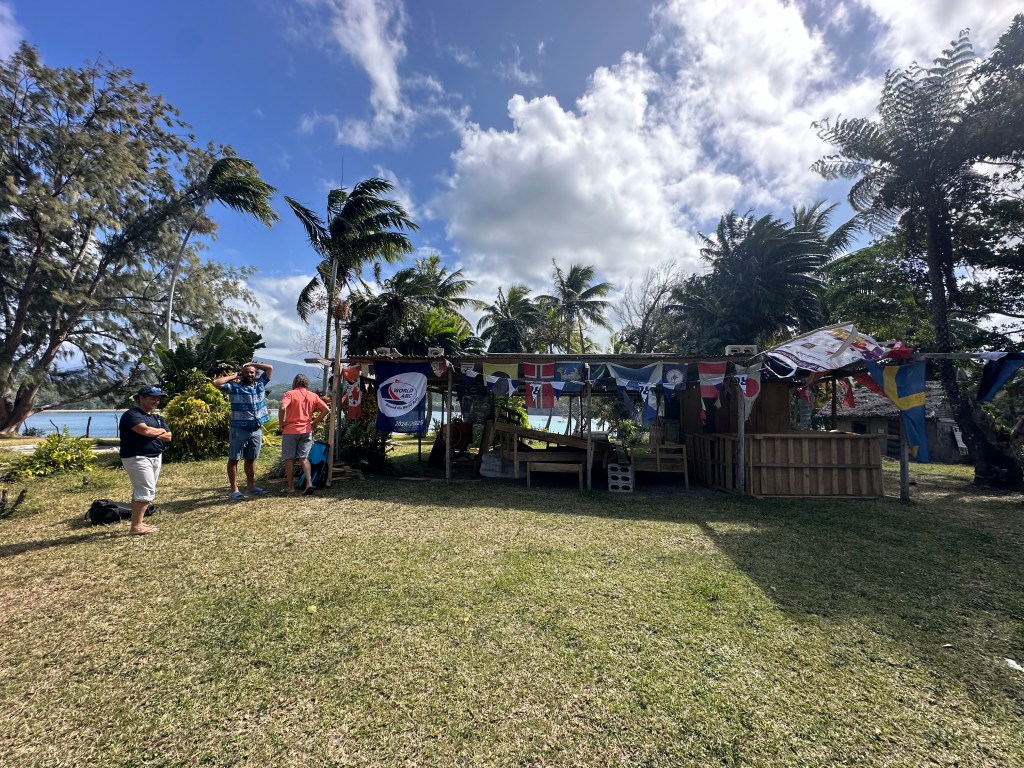
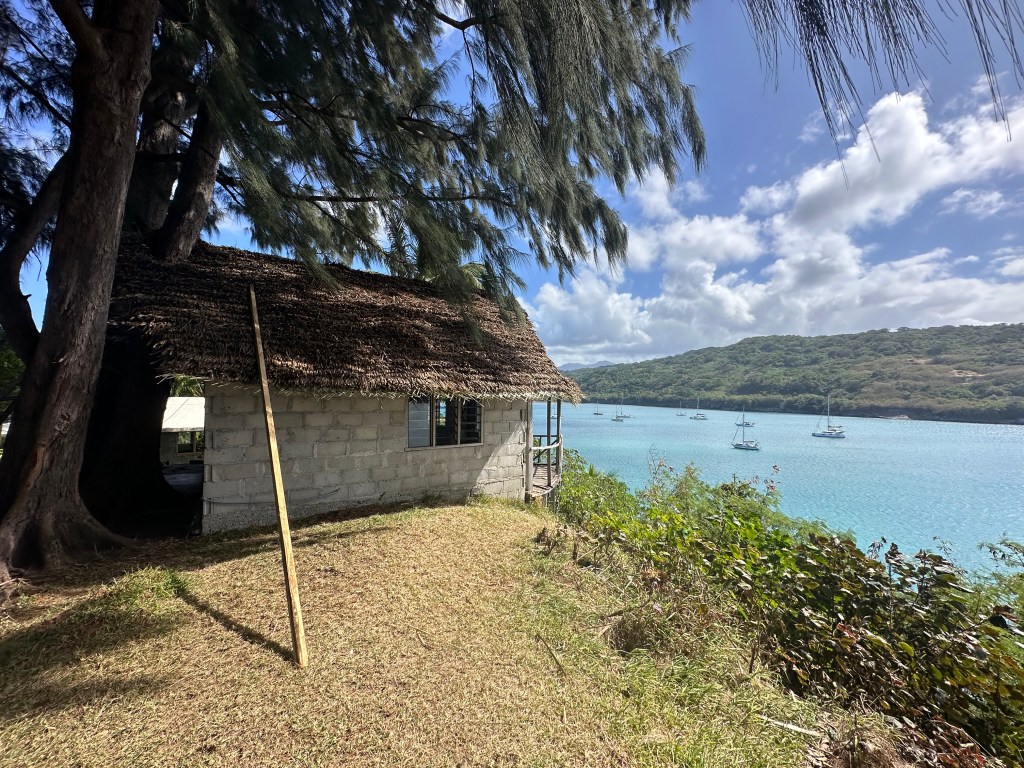
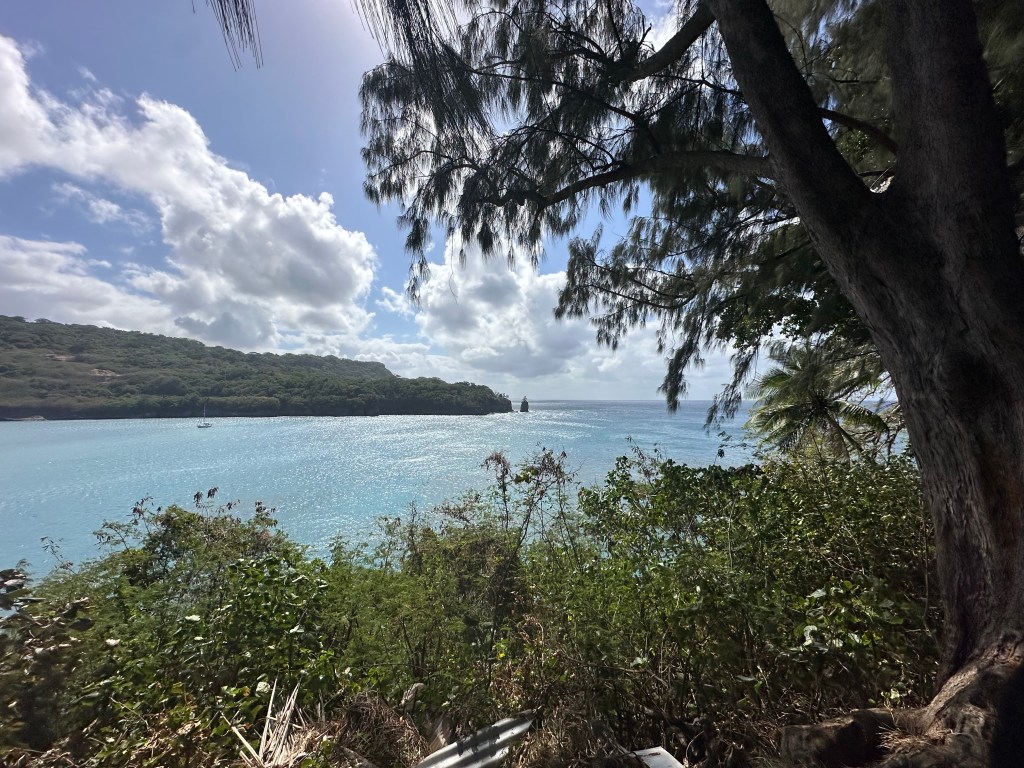
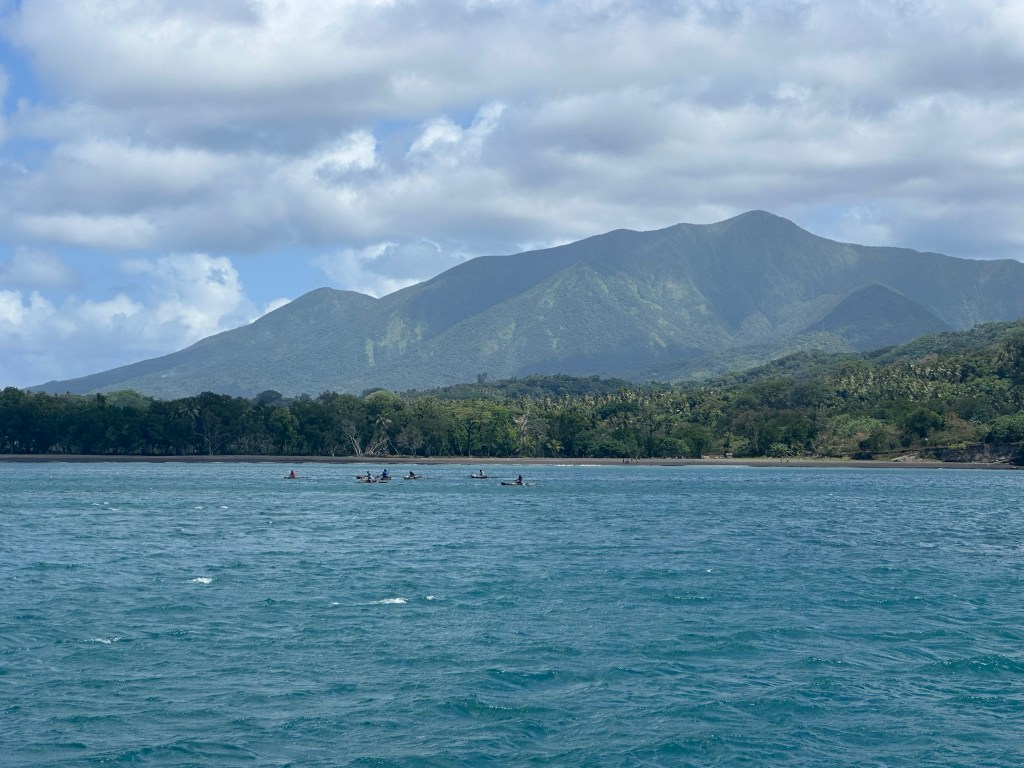
Unsurprisingly, Port Resolution was named by the great Captain James Cook, who visited here almost exactly two hundred and fifty years ago, in August 1774. The following is taken from the Captain Cook Society website: (https://www.captaincooksociety.com/cooks-voyages/second-pacific-voyage/july-september-1774)
They sailed south to another large island “being guided by a great fire we saw upon it.” On 5th [August 1774] Cook realised it “was a Volcano which threw up vast quantities of fire and smoak and made a rumbling noise which was heard at a good distance.” It was the island of Tanna and the volcano was Mount Yasur. Cook “sent two Arm’d Boats under the command of Lieutt Cooper and the Master to examine and Sound” a potential anchorage which was deemed suitable. The “Launch was hoisted out, laid out warps and warped father in”. The ship was moored by four anchors. “Placing our Artillery in such a manner as to command the whole harbour, we embarked the Marines and a party of Seamen in three boats and rowed in for the Shore… two divisions of the Natives were drawn up on each side the landing place… not one was without arms: In short every thing conspired to make us believe they intended to attack us… I thought it was best to frighten them away… and accordingly order[ed] a Musquet to be fired over the heads of the party… this was the Signal for the Ship to fire a few four pound Shott over them which presently dispersed them and then we landed”.
They stayed ten days to “take in a large quantity of both wood and Water”. William Wales, the astronomer, “took the Watch & Astron. Quadt on shore & got Altitudes”. Forster “went ashore & got some plants… the Ships-crew hawled three or four times the Seyne & got upwards of 310 pounds of Fish, chiefly Mullet, Tenpounders & Angelfish”. All three activities were repeated nearly every day.
On the 8th Cook “sent the Launch to the other side of the harbour to take in ballast”. The next day Forster “went with Mr Sparman [botanist], Mr Patton [surgeon], my Son, my Servant & a Marine, who was to convoy us.” Two days later. according to Cook, “two or three boy’s got behind some thickets and threw 2 or 3 stones at our people, who were cuting wood, for which they were fired at by the petty officers present. I was much displeased at such an abuse of our fire Arms and took measurers to prevent it for the future.” Later “we struck the main-top-mast in order to fix new Tristle-trees and a pair of new back stays.”
On 17th first lieutenant Robert Palliser Cooper “Punish’d Wm Tow Marine 1 dozen for trading with the natives when on guard on shore”. Two days later, Cook “sent the guard on [shore] with Mr Wales as usual… A good many of the Natives were, as usual assembled near the landing place and unfortunately one of them was Shott by one of our Centinals, I who was present and on the Spot saw not the least cause for the commiting of such an outrage and was astonished beyond Measure at the inhumanity of the act”.
Three days later “during the night the wind had veered round to SE; as this was favourab[l]e for geting out of the harbour, we at 4 a.m. began to unmoor and at 8 wieghed our last anchor and put to Sea. As soon as we were clear of the land, I brought-to to wait for the Lau[n]ch which was left behind to take up a Kedge Anchor & hawser we had out to cast by… I named the Harbour, Port Resolution after the Ship as she was the first who ever entered it.”
It always feels like a rare privilege to travel in the footsteps of Cook, one of the great navigators, cartographers, and humanitarians. Here, in Port Resolution, the landscape remains an untouched blend of sea, beach, forest, and mountain, so unspoilt that Cook would instantly recognise the place today. It is easy to sit and dream about HMS Resolution appearing around the corner, and the Vanuatuans shedding their western clothes to prepare a welcome committee. What I would give for a time machine.
Next time: we meet the Vanuatuans and explore Vanuatu!


Leave a Reply