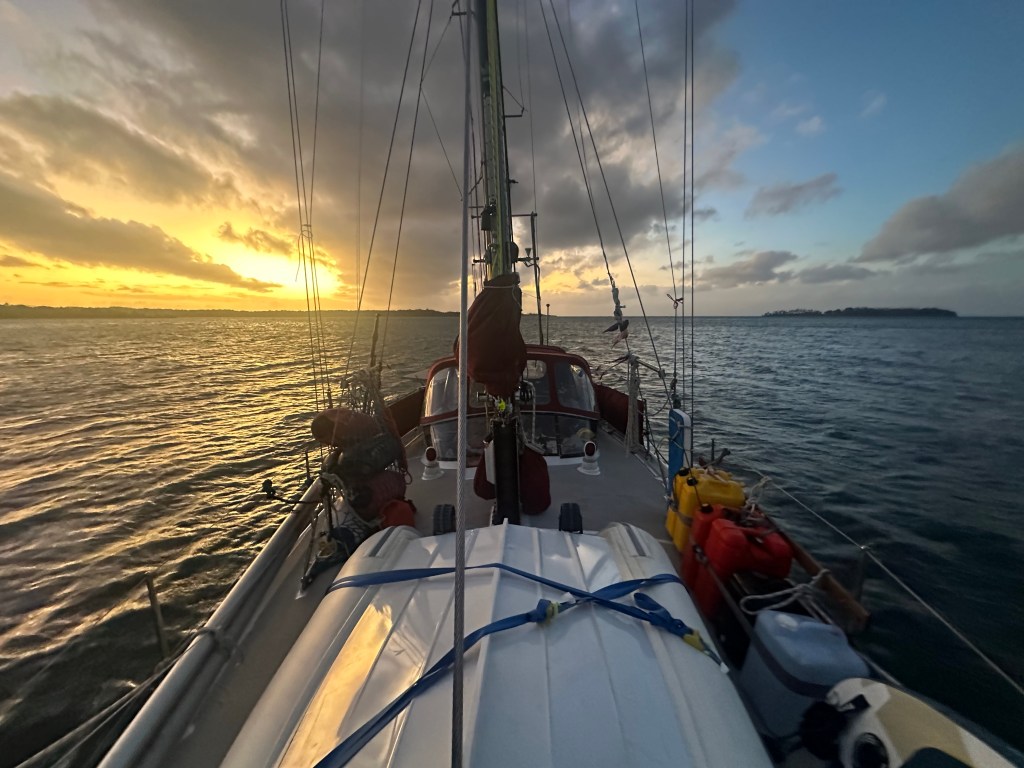
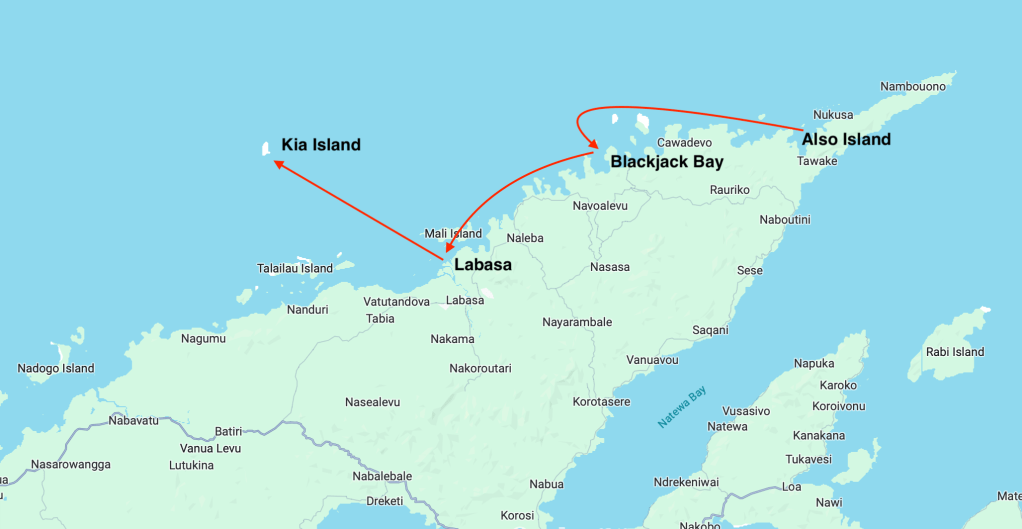
After three days anchored off Also Island, two of which we were confined to the boat because of the weather, we had a window to move on. Rather than try what seemed a fairly sketchy entrance through a shallow reef we backtracked and left via the same reef we had entered by. It was a worthwhile experience, seeing what we had motored through at night, and being able to see the sea break on the reef either side of the passage. The chart may say that the passage is 200m wide, but it seemed narrower and I’m not sure that we will be keen to repeat the experiment, though its good to know that we can enter anchorages in the dark if we have to.
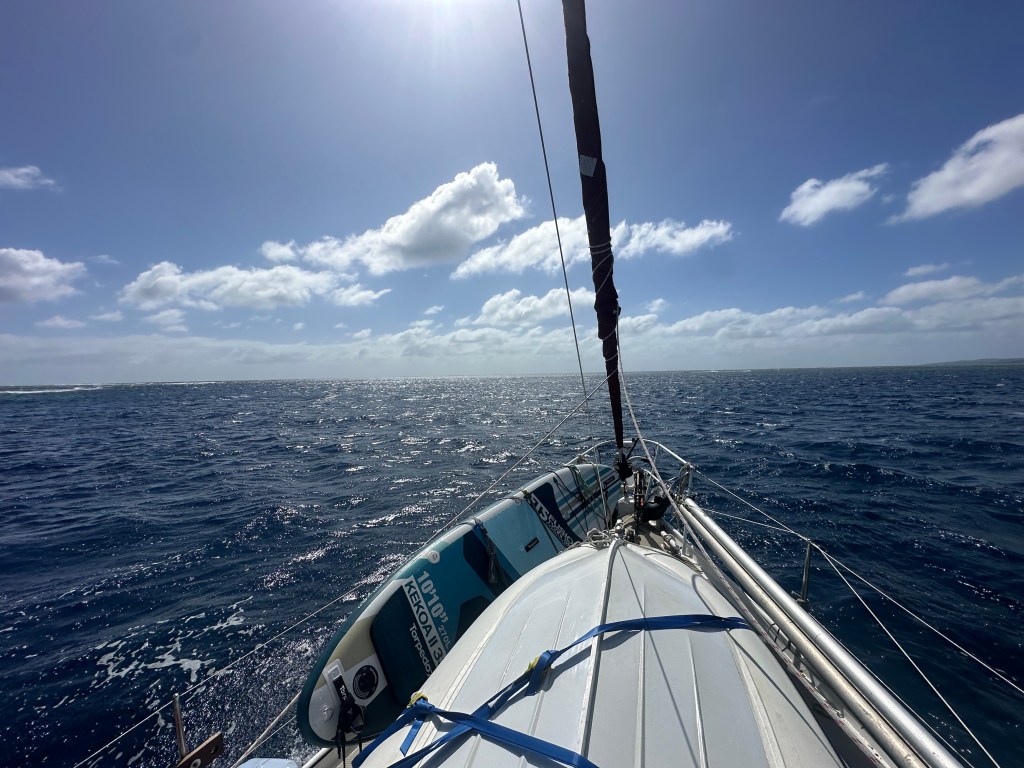
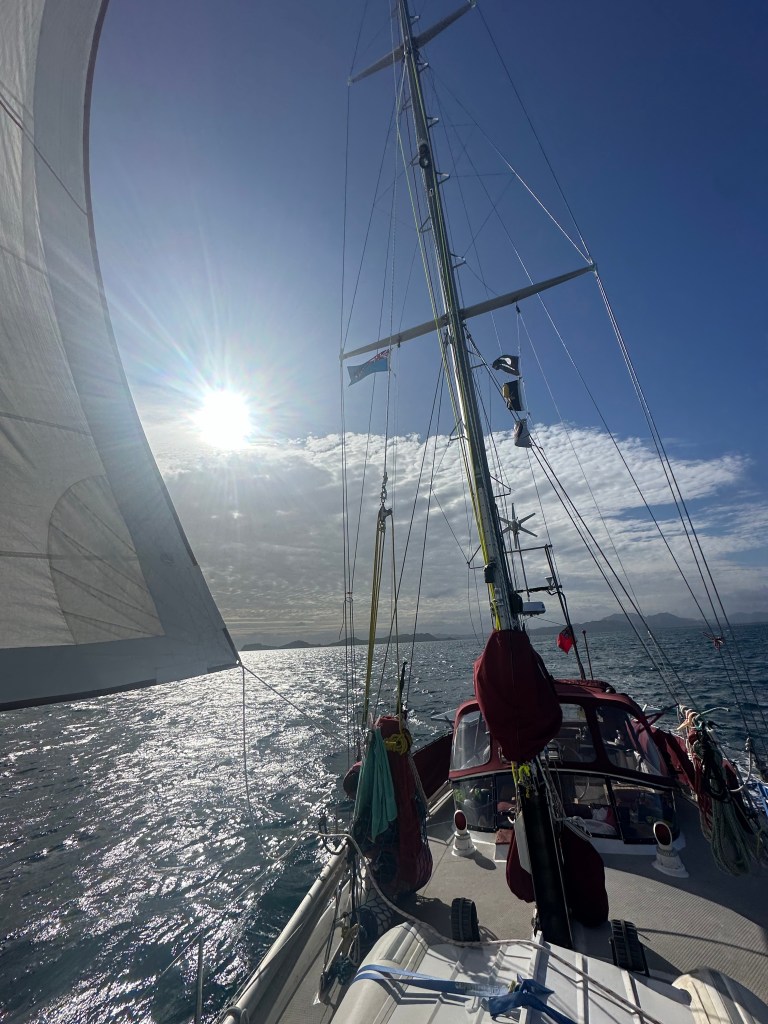
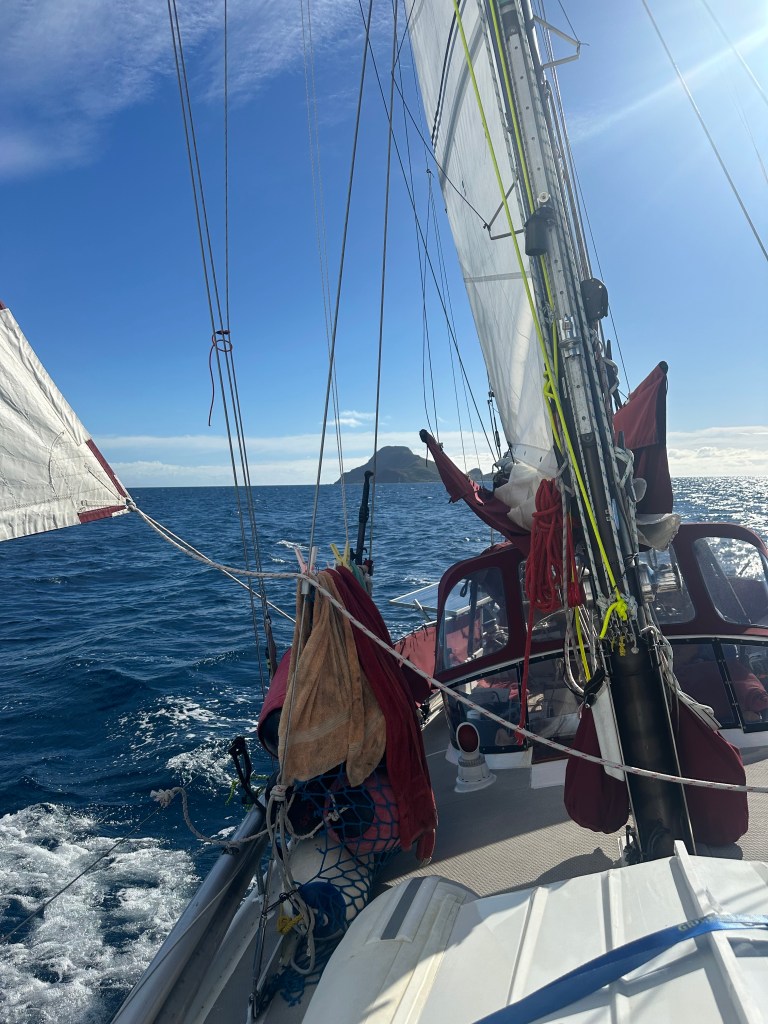
After clearing the reef we turned west and had a grand sail downwind in about 30 knots with nicely following seas. After the light winds and tight beating we had struggled with during our last few sails it was fantastic to be able to make ground effortlessly, and we flew along on our jib sail alone.
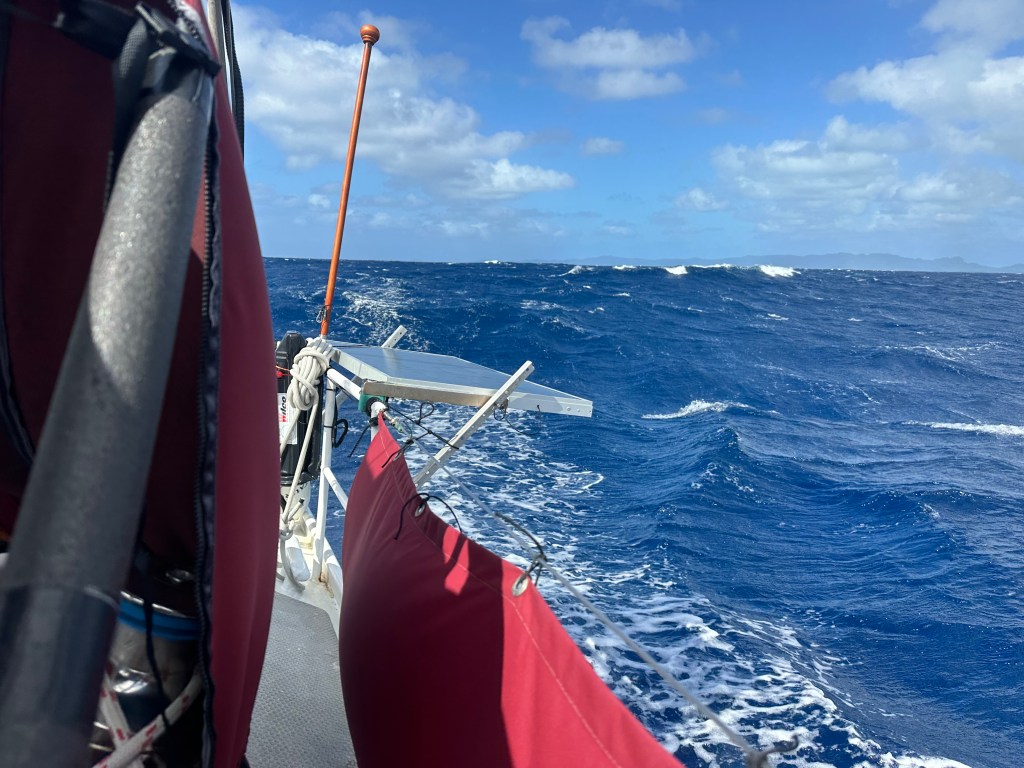
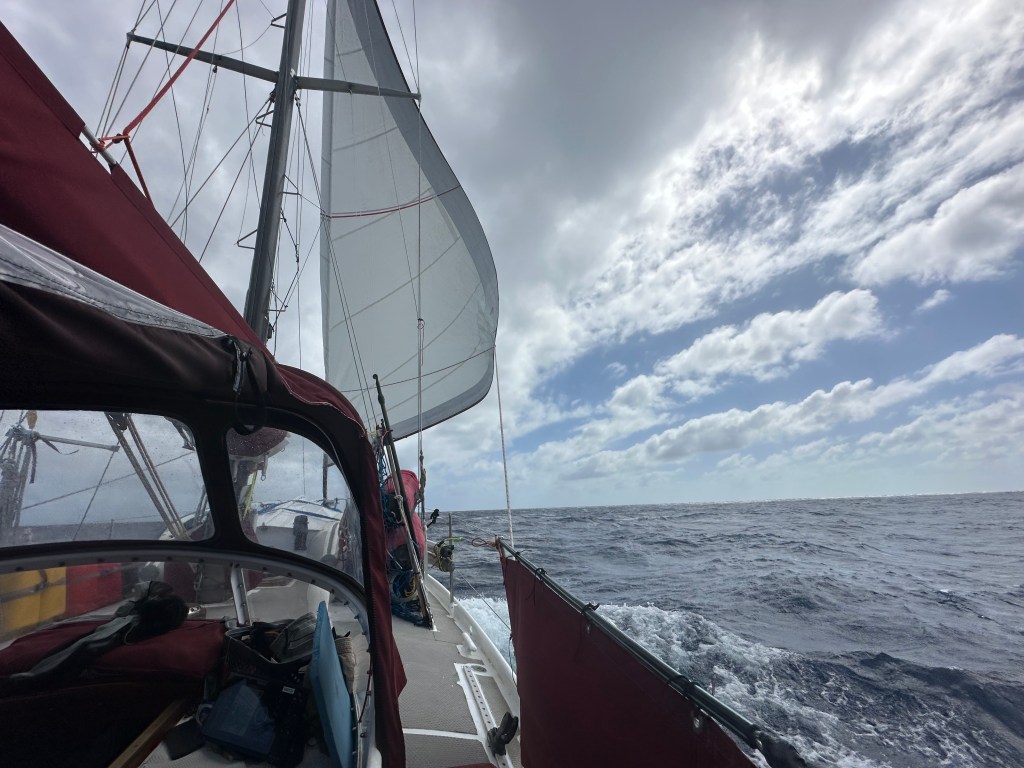
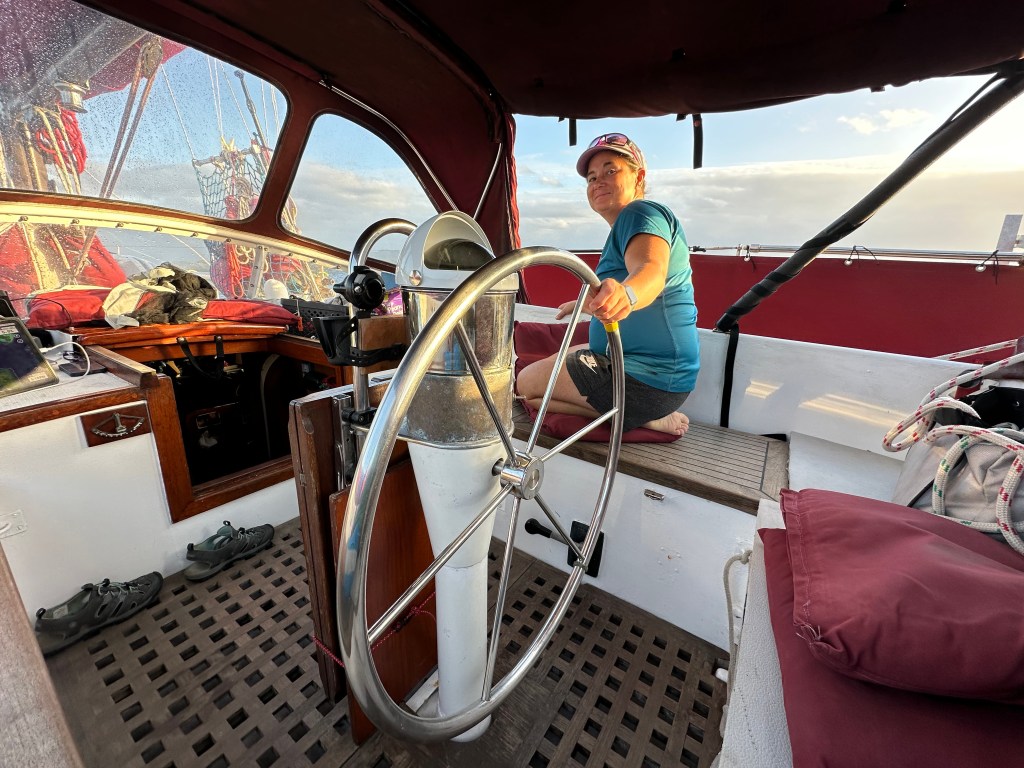
Our destination for the night was Blackjack Bay, a sheltered cove back inside the reef. We ran off the distance in no time and anchored in this lovely spot to enjoy a quick swim and sundowners.
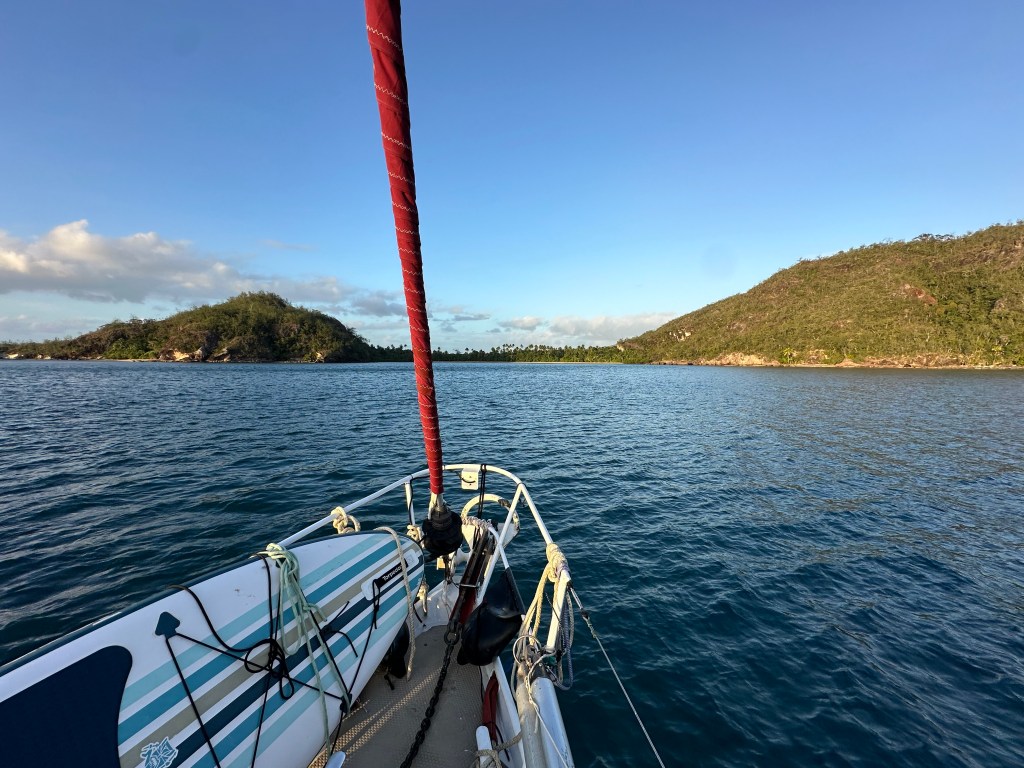
In the morning we undertook our weekly, sometimes daily, work in the engine compartment, this time to adjust the throttle idle that had mysteriously decided to unset itself, before taking the dinghy to shore. The deserted beach showed signs of occasional habitation, probably by local fishermen, and the inevitable plastic bottles and rubbish that are discarded or washed up. We foraged a few coconuts and tried to remove the husks on a handy fallen tree, an operation that’s near impossible on the boat. There is a real knack to being able to do this easily, and we don’t have it. In a survival situation I suspect we would burn more energy getting into the coconut than it could possibly provide, but luckily we have plenty of energy stored away.

Next day we left early, hoping to visit Labasa. Labasa is the main city and administrative centre for Vanua Levu, though one guide describes it as like Savusavu but minus the charm. Getting to the city was a bit of an undertaking or adventure, depending on how you choose to look at it, requiring us to anchor someway off shore due to mud shallows, and take the dinghy up the Labasa River for about an hour. There are two mouths to the river which join just in land, and naturally we took the wrong one and ended up having to drag the dinghy in knee high water across the mud. Poor Cara was more like thigh high, and she had a bit of a fright when she felt the mud sucking her down…
Soon enough we were back afloat and motoring along, though our poor 8 HP outboard engine is a bit underpowered for this kind of work. I had presumed that the river would flow fairly constantly to the sea, but it turned out that the river was tidal and that we would be going against the tide both ways. Had we known we wouldn’t have been able to to change our plans because we would have needed to leave very early, way before we arrived, but it was another reminder of the value of local knowledge.
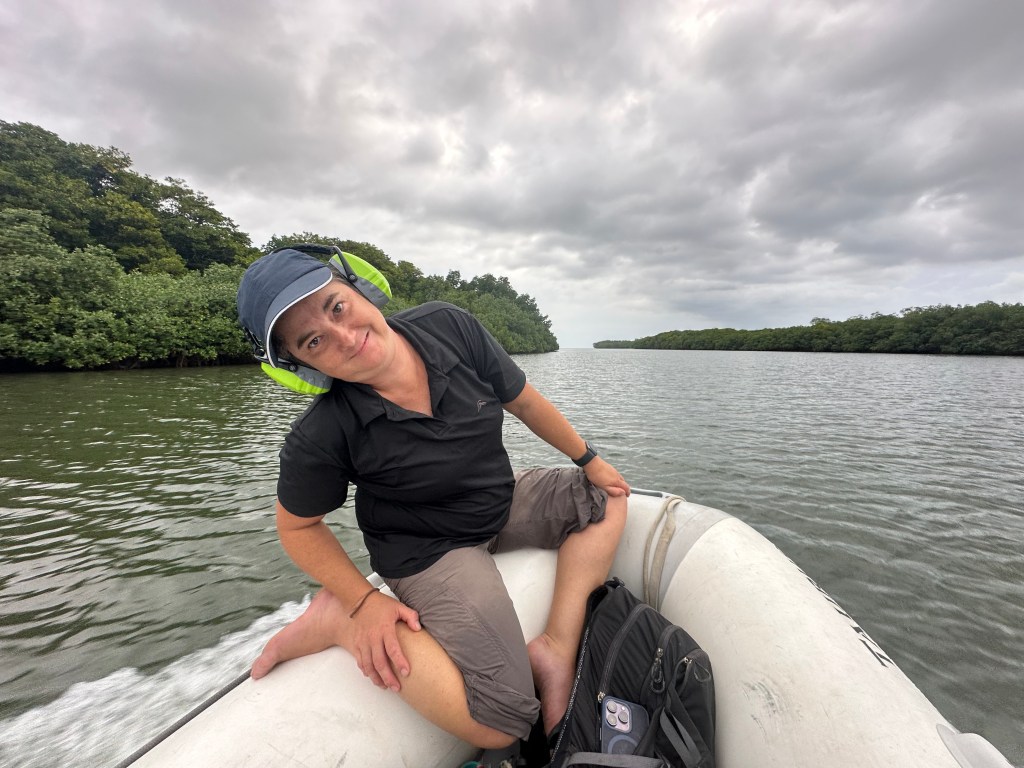
Outboard engines are so noisy we decided to take along our earmuffs, and as well as muffling the racket they had the added benefit of giving the locals on the river a good laugh. Our Heart of Darkness trek finally ended when we spotted the city clinging to either bank of the river — and finding a 40 foot yacht at anchor. We could see the crew aboard so we motored over and were invited on-board for a coffee. Andre, the French skipper, had spent six months in France and six months in Fiji for the past twenty years. He told us that the river was navigable if you were very careful. However, his tales of finding cyclone holes in mangrove swamps and so on suggested that this was a sailor/adventurer of a far higher calibre than us, and I think our taking the dinghy was the wisest course.

Just beyond Andre’s anchor spot was a bridge and two dinghy jettys. We attached the dinghy to one and climbed ashore into a bustling market. Labasa has a large population of Indian Fijians, and the frenetic energy of the place made me think of what I imagine Delhi or Bombay is like. We hadn’t been in an area with such a high density population since leaving Whangarei, and we were left feeling a bit dazed and overwhelmed.
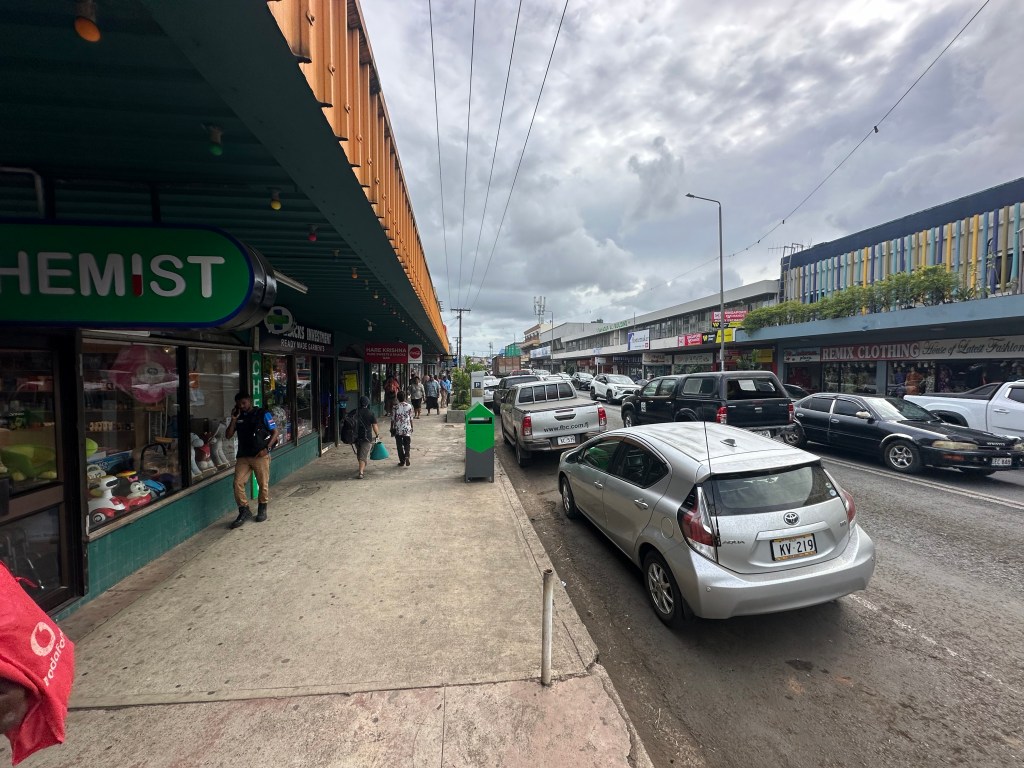
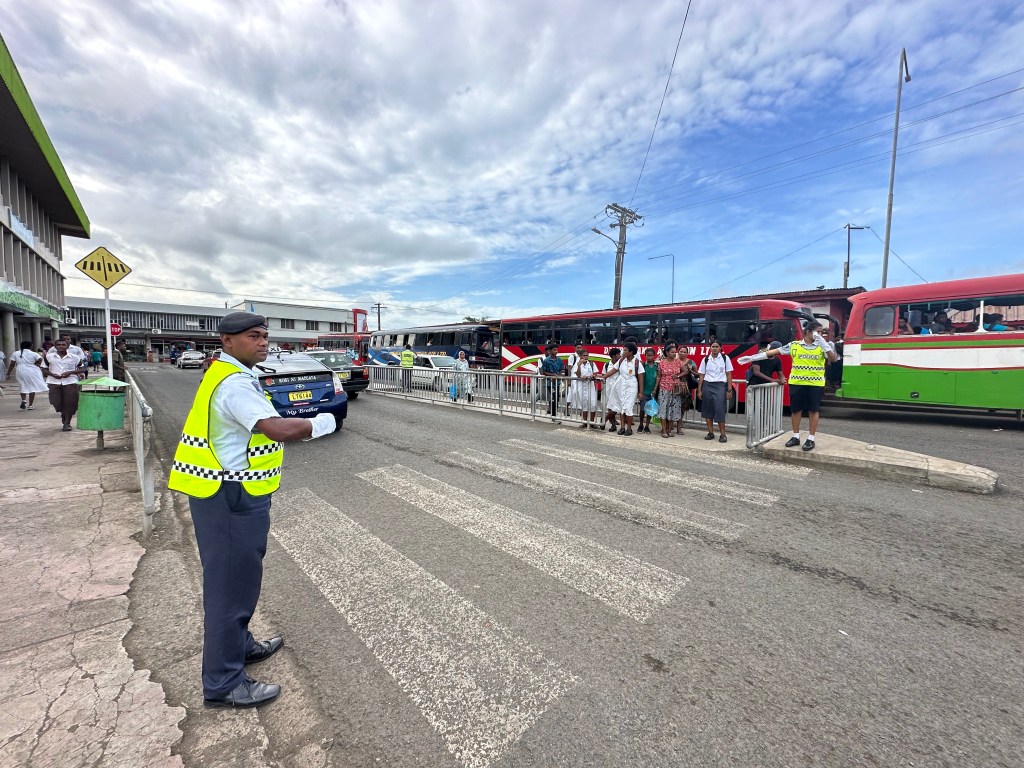
After buying provisions and grabbing an Indian curry for lunch we had to find some fuel for the dinghy as we had used more than expected getting upriver. Happily there was a fuel pump on the jetty selling ‘pre-mix’ (two stroke petrol with oil already added) and once we had roused the attendant we were able to start the journey home. We were both a bit anxious about the late hour and the possibility of not getting back to Taurus before dark. Luckily we made it just in time, only running aground once more on the return trip.
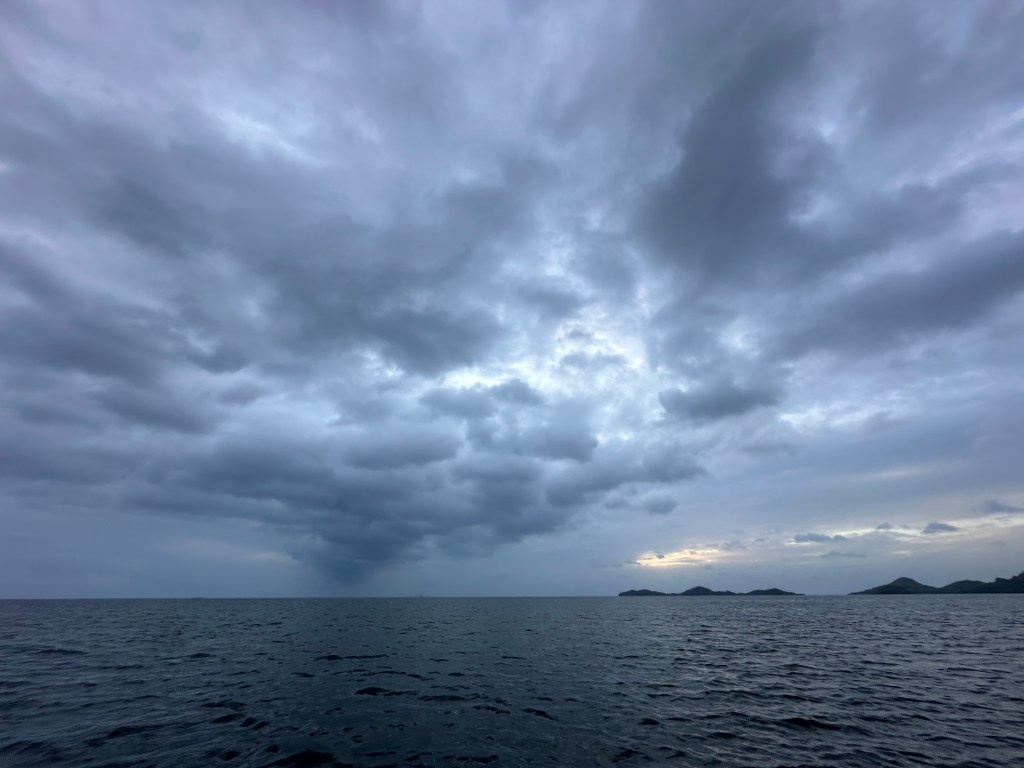
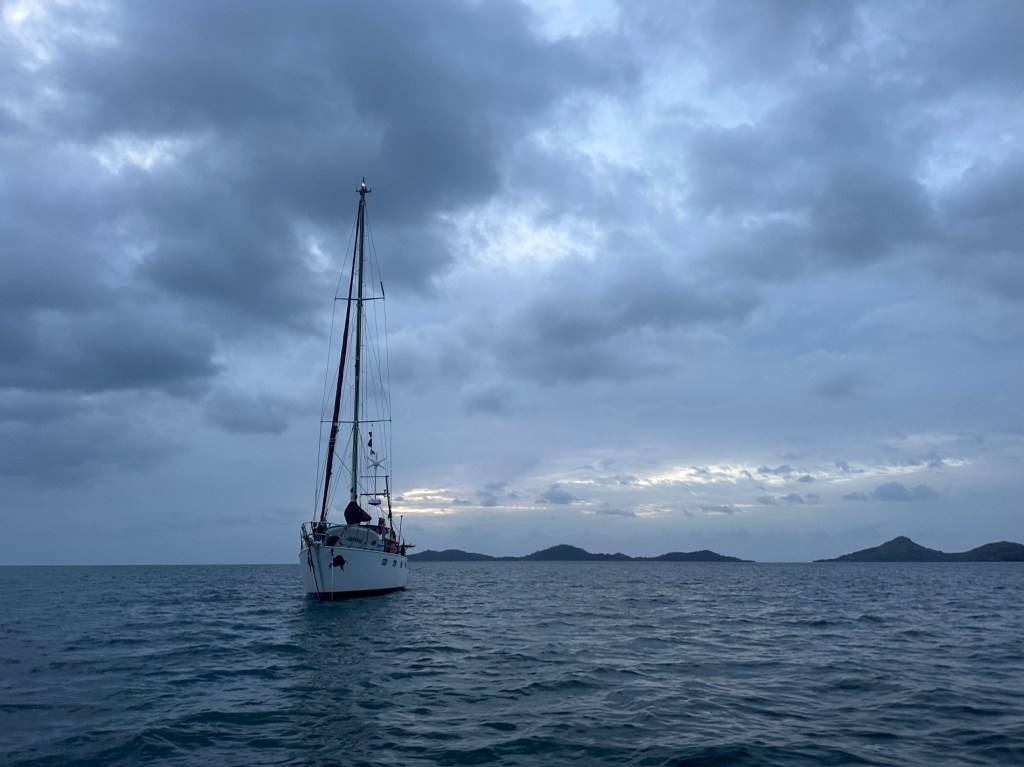
Our next destination was Kia Island, a small island about four hours sailing away but still within the reef that circles much of Vanua Levu’s northern shore. The island is known for a cannon that sits atop its highpoint, which has apparently been sitting there since the late eighteenth century.
We had a nice sail there, and as we navigated a passage through the reefs we caught two more wahoos and were entertained by a pod of dolphins. In the last blog I mentioned that the wahoo we caught fed us for three nights — it turned out to be four— and I could barely face the idea of eating more of this ‘delicious’ fish for another week. Hence we decided to keep our small prize and give the larger monster to the villagers on Kia, it being traditional to give kava and other gifts on arrival.

Having anchored off Linau village we were spurred on to get ashore quickly by the large fish that we couldn’t refrigerate. We wrapped it in newspaper and jumped in the dinghy and headed to the beach. The villagers of course make their living as fishermen, so what they thought of tourists bringing them a fish I don’t know, but they were too polite to scratch their heads or turn it down, and thankfully they didn’t cook it on the spot for us to share.


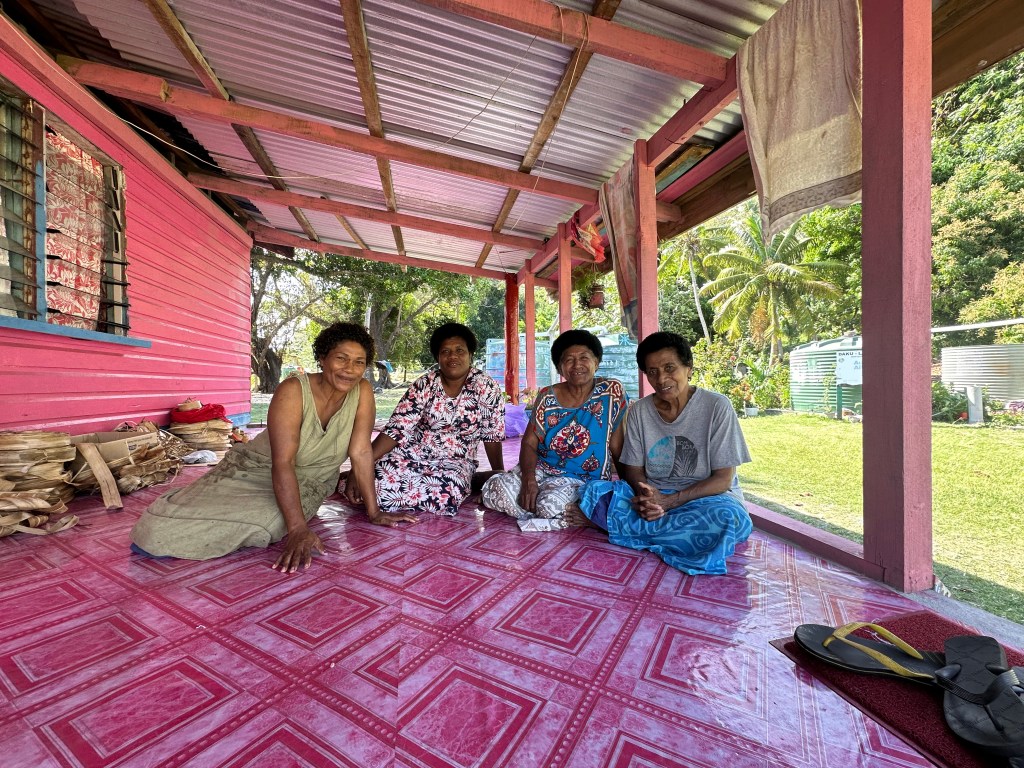
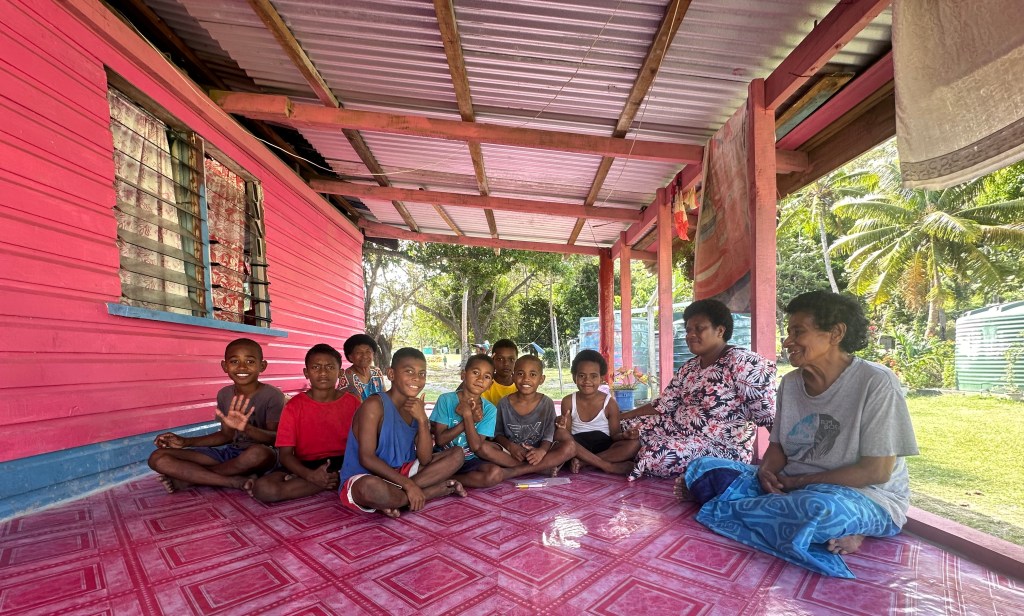
Like all of the villages we have visited in Fiji, Linau is beautifully cared for and inhabited by the friendliest people on God’s good earth. We were escorted to one of the elder’s huts, the Chief being unwell, and treated like honoured guests. A special mat was rolled out for us to sit on, whilst the villagers sat on the floor. They made us tea and pancakes, and the local kids were rounded up so that they could sing us some songs. After the welcoming ceremony we were collected and taken to the school which had just had a fete and entreated to join in the kava ceremony. For those who haven’t experienced this, kava is a root that is mixed with water and pounded to create a liquid. This is then handed round in a coconut cup and is drunk as others clap in a deeply symbolic celebration of fellowship. The drink is very mildly intoxicating — in large quantities it can make your lips tingle and your tongue feel numb — and tastes rather like muddy water. If the kava is a bit disappointing to a westerner, the warmth of the Fijians towards their guests is very special and touching.

The following morning, a Saturday, we were back in the village at 8am to meet our guides who were going to show us the cannon. The guides were two children, Mossi aged 14 and Akula aged 12, who had been volunteered for the job. The track was virtually non-existent and instead we scrambled up a steep Fijian hillside covered in loose shale and rock in twenty five degrees of heat and something like 90% humidity. Mossi and Akula could not have been more kind and considerate. They patiently waited for us old foreigners, lobster red and soaked in sweat; they solicitously gave their hands to help us over trees or slippery areas; they pointed out things of interest like spiders and toxic plants; they fetched us papaya and coconut from the trees. After about an hour we arrived at the top of the hill and found the cannon, lying on its side and covered in undergrowth. Just above it was a rock pinnacle and steep cliff that the boys showed us but guarded to prevent us going too close. Clearly they would be in big trouble if we were to get injured!
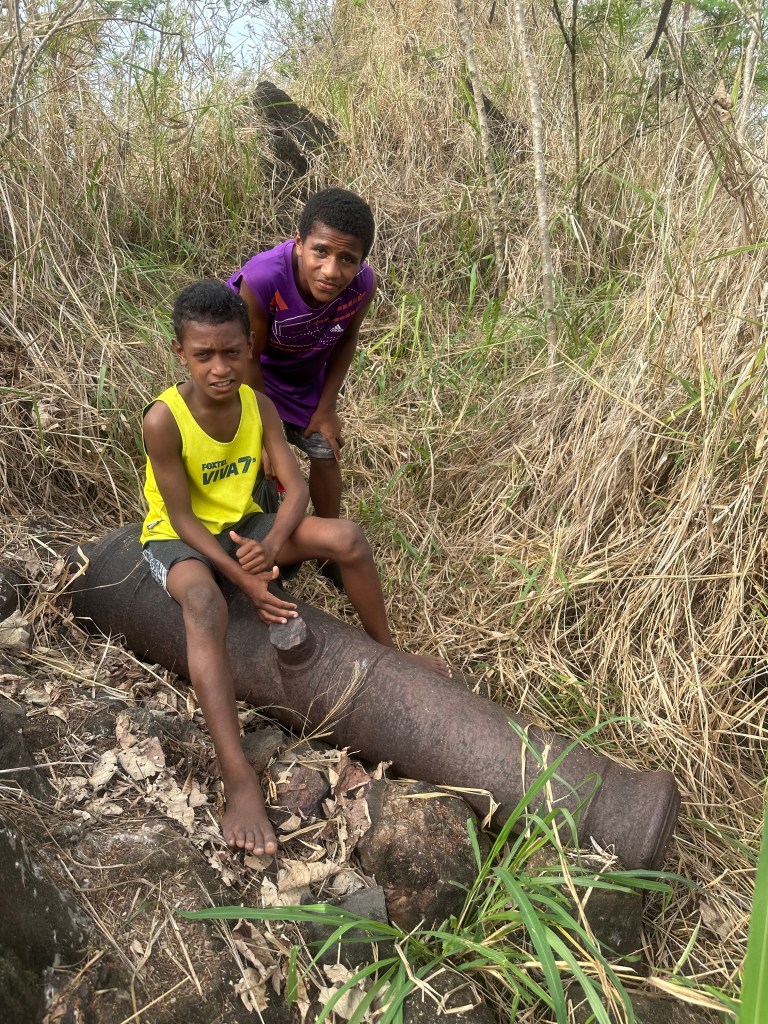


The tradition in the village has it that the cannon is maybe English and has been atop the hill since 1790 or there abouts. The only thing of which they are sure is that the cannon was taken up the hill by the village women, because the men weren’t strong enough. A Fiji Times article from 2015 adds the following information:
At the turn of the 19th century, sandalwood was one of the most valuable and sought-after timbers in the old world.
When the tree was accidentally discovered in Fiji’s northern islands, a bloody, decade-long timber boom began. Spanish, British and American ships descended upon Vanua Levu – the Sandalwood islands. We’re in Ligau Village, Kia, an island in the Macuata province that was once an outpost in this wild west shootout for sandalwood. Welcome to a Taste of Paradise.
Much of Fiji’s pre-colonial history can be read in the journals and diaries of the sailors, clergymen and missionaries.
They may be a one sided account of the old days, but it is the only written record Fijians have of their pre-colonial history. One that caught my interest was of English sandalwood trader, William Lockerby.
He had arrived to Fiji in 1808, a few months earlier than the first Chinese onboard the Eliza. It was the peak of the sandalwood boom and every businessman, conman and pirate was attracted by the tales of undiscovered riches. Fiji was yet to be discovered by the European explorers. Lockerby kept detailed accounts of his observations.
The early 1800s were like the California gold rush of the old wild west. The good, the bad and the ugliest examples of the papalagi, the white man, was about to descend on the unsuspecting native civilisation.
AROMATIC TIMBER
The light brown timber of old sandalwood and butt of the tree contains an aromatic oil; long prized in Polynesia for scenting coconut oil.
Whilst the Tongans prized the fragrant timber, high prices on the Chinese market made it one of the most valuable timbers in the world, as it still is today. In Asian countries, sandalwood carvings are used in religious ceremony whilst the sawdust is turned into joss sticks and incense for prayer.
For the native Fijian of this period, the sandalwood trade brought regular exchanges of goods with the Europeans, and the bartering for anything made of iron; a new commodity to the Fijians. But the decade long sandalwood boom was also the bloodiest in their dealings with the pale skinned papalagi.
So precious was this timber that many European traders would raid villages or other ships – and sometimes even murder for it. Unfortunately for the Fijians, their first contact with the white man was with some of the worse band of misfits, conmen and pirates to sail the high seas.
The wariness and mistrust of the strangers would set the tone for the next century, as Fiji was no longer an undiscovered country.
JOURNEY TO KIA
Lockerby’s journals recount an island outpost on the northern side of Vanua Levu called Kia, and lucky for me that the Reef Endevour was pulling into anchor off its shores.
It was once known as Brown’s Island, supposedly named after an American ship’s mate who had stumbled upon a treasure of untouched sandalwood plantations. Along with other Americans and Englishmen, Mr Brown had essentially taken over the island with his motley crew.
Several ship’s iron cannons had been placed high on the hills to ward off any invaders. Lockerby recounts they had been there a “dozen years ago” – placing their installment around 1795 – something the local villagers I spoke to, did not know.
STRONGER WOMEN
The village is at the base of a hard mountain rocky range with sheer cliff faces. The village women at Ligau tell an amusing story of when their forefathers and brothers trekked up the steep hill to mount the cannon for Brown.
More than a dozen men lifted the 2 tonne iron cannon up the treacherous mountain. As they reached about halfway up the peak the men collapsed from exhaustion and sent message for the women to take it to the top for them; and they did. The women laughed, “We’re stronger than the men!” I was dying to see the old cannon documented in the sandalwood trader’s journal.
The village elders said it was still there but expressed doubt we would make it. I don’t blame him! Lucky we have a remote controlled drone camera, it was a long way up and over the peak.
Watching the drone’s monitor, we all waited in anticipation, it was like finding a needle in a haystack, but finally there it was. We’d discovered the cannon that William Lockerby had written about more than 200 years ago.
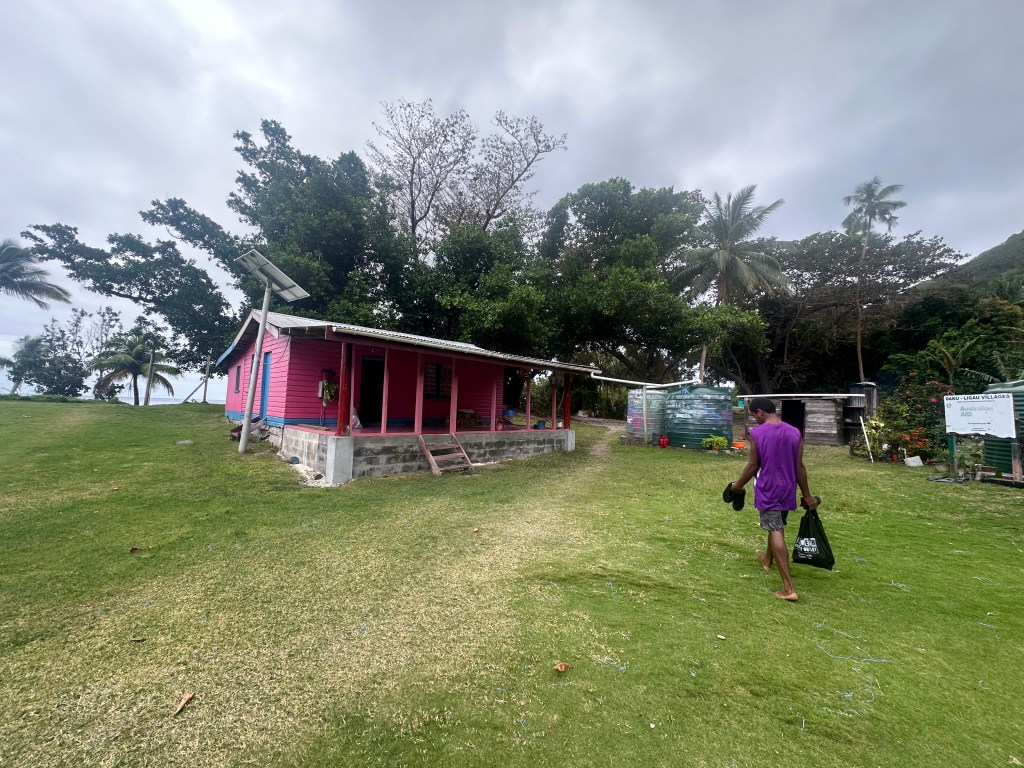
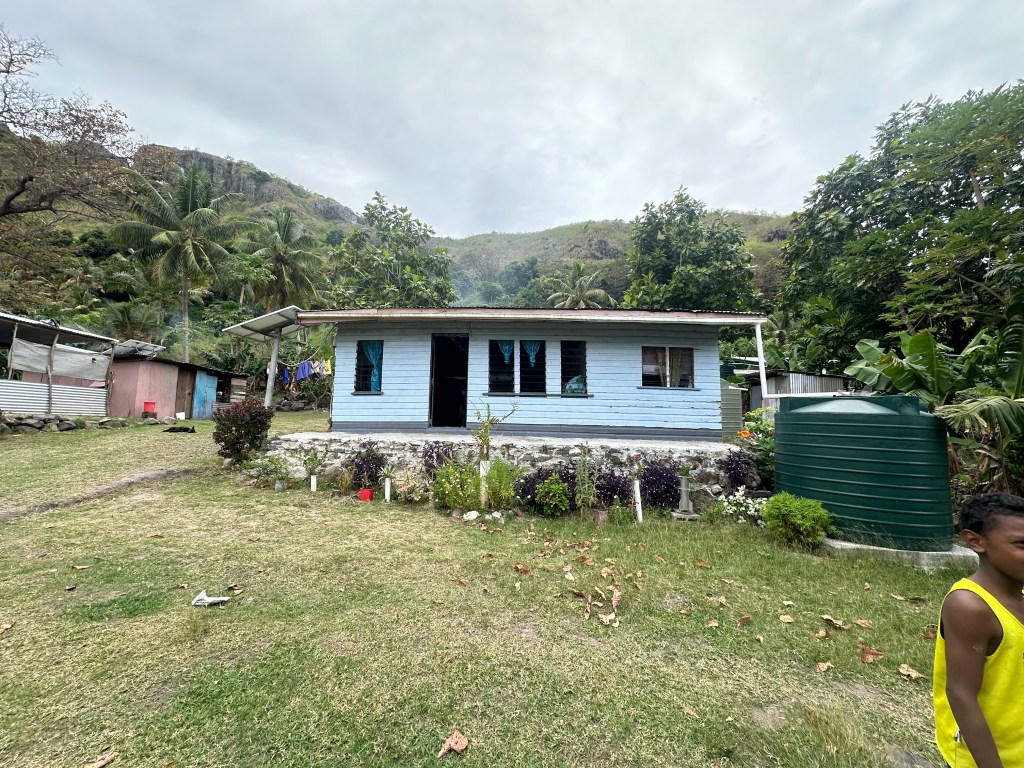
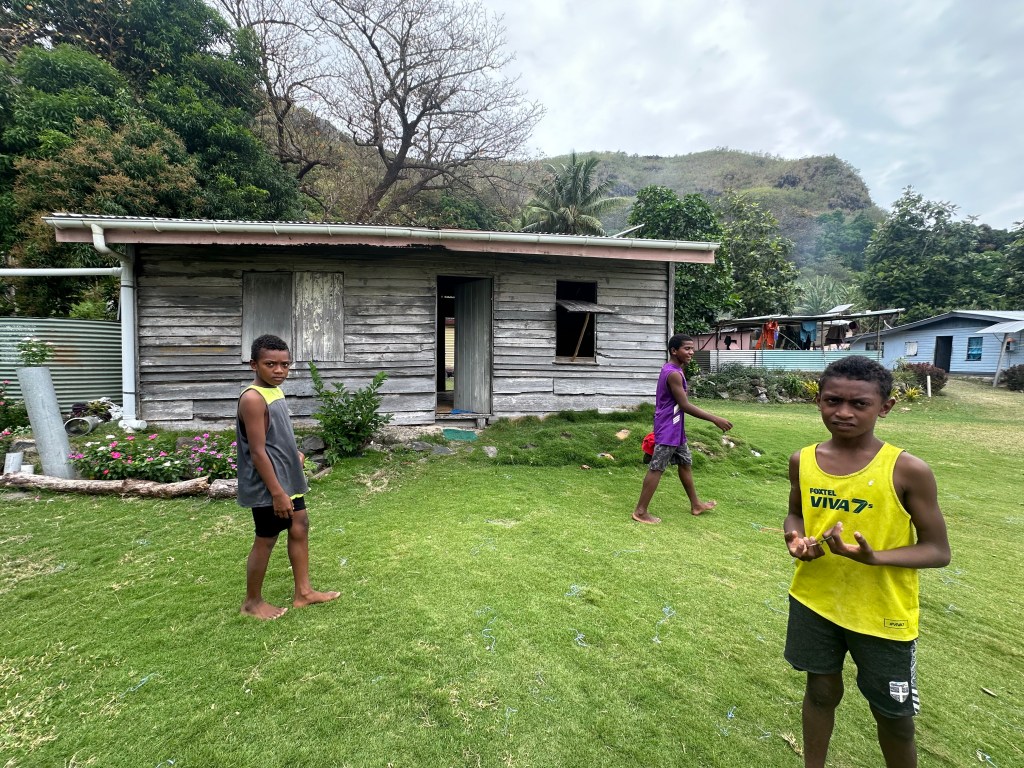
All too soon it was time to leave our friends on Kia and head to another anchorage. Cara’s mum, Christine, and friends of ours, Pete and his daughter, are heading to Fiji soon, and we need to keep heading south so that we can meet them.
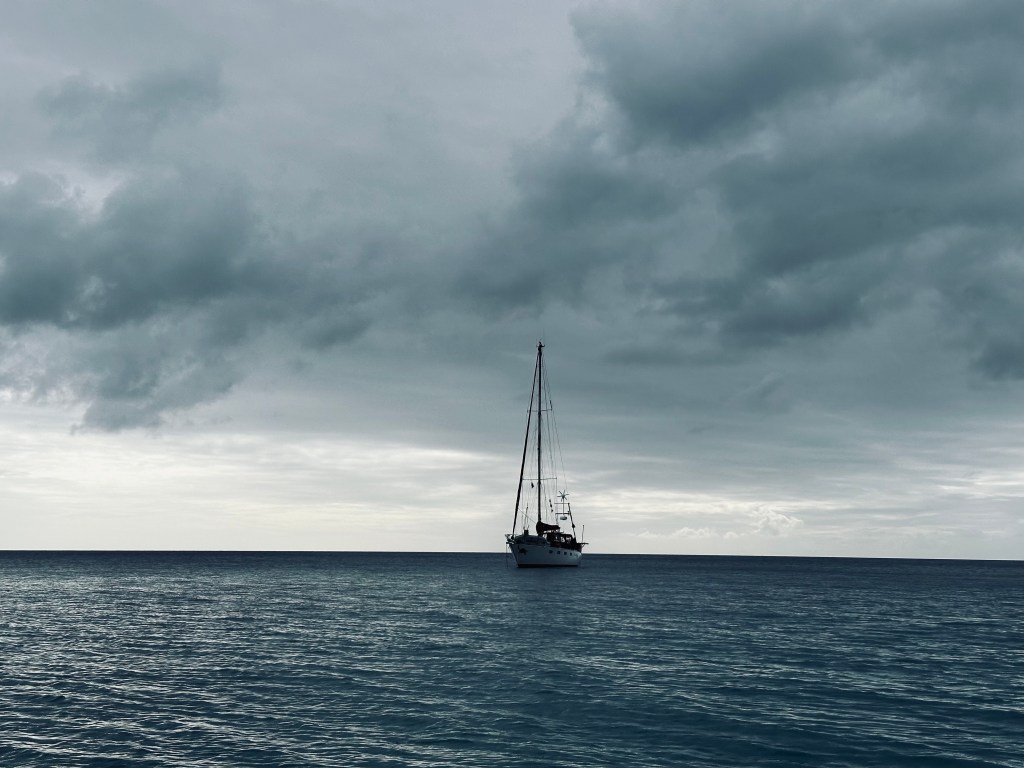
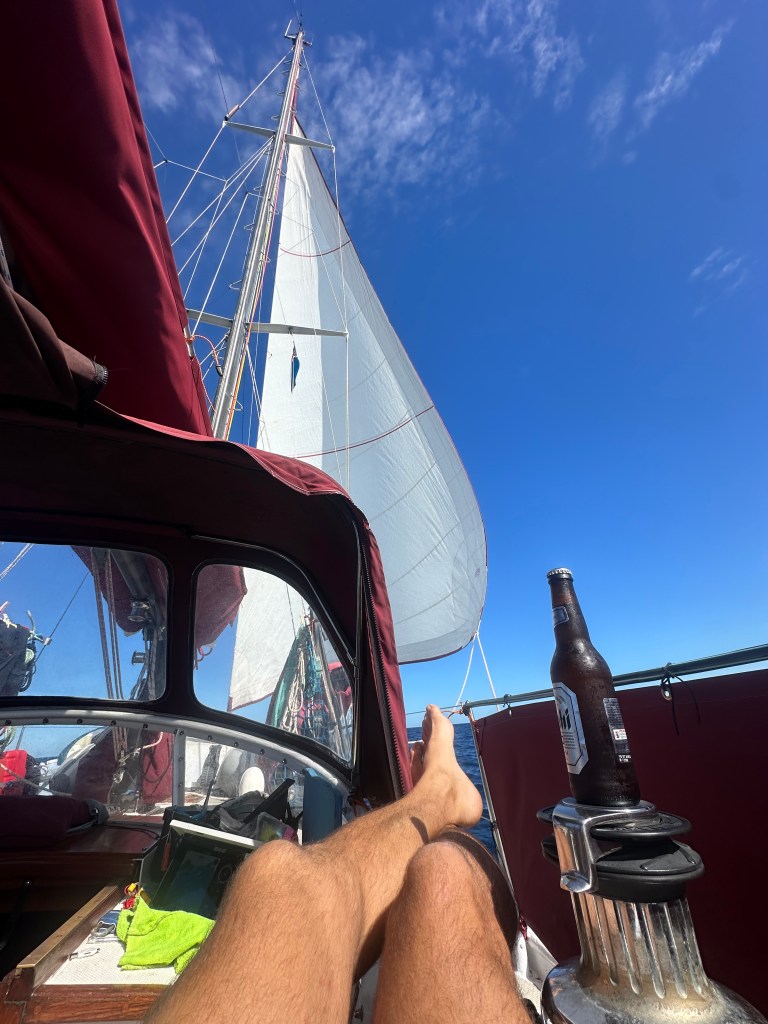
Next time: the stress of cruising gets a bit much and I have to sit down and have a beer…


 Sailing Taurus NZ
Leave a comment