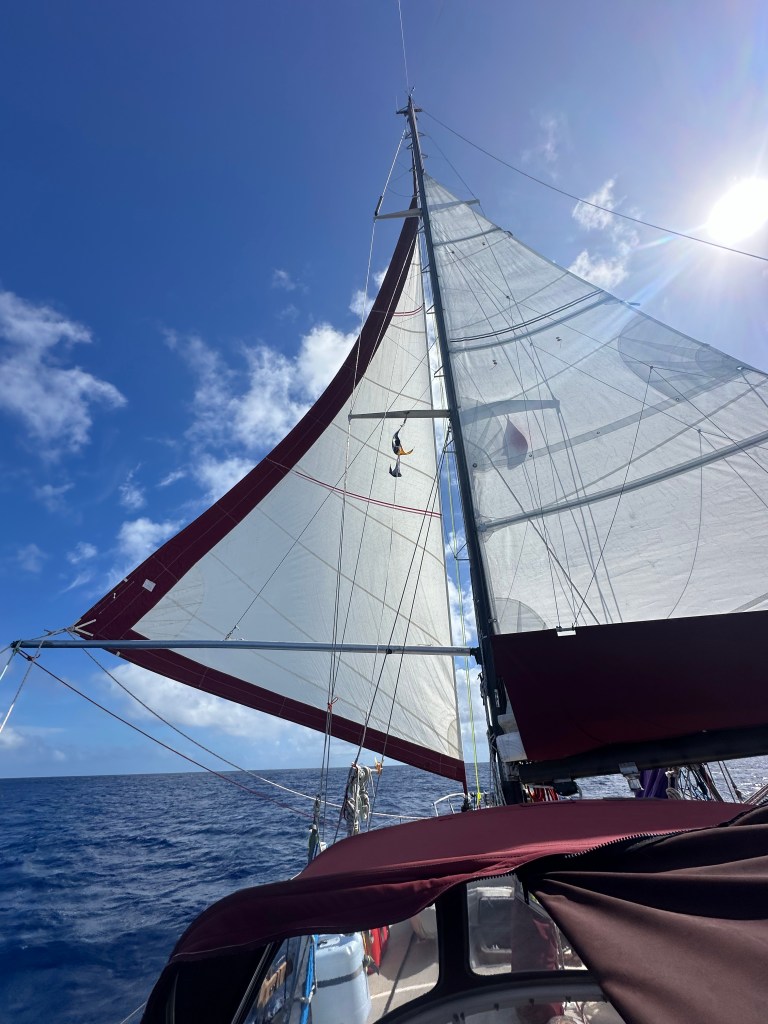
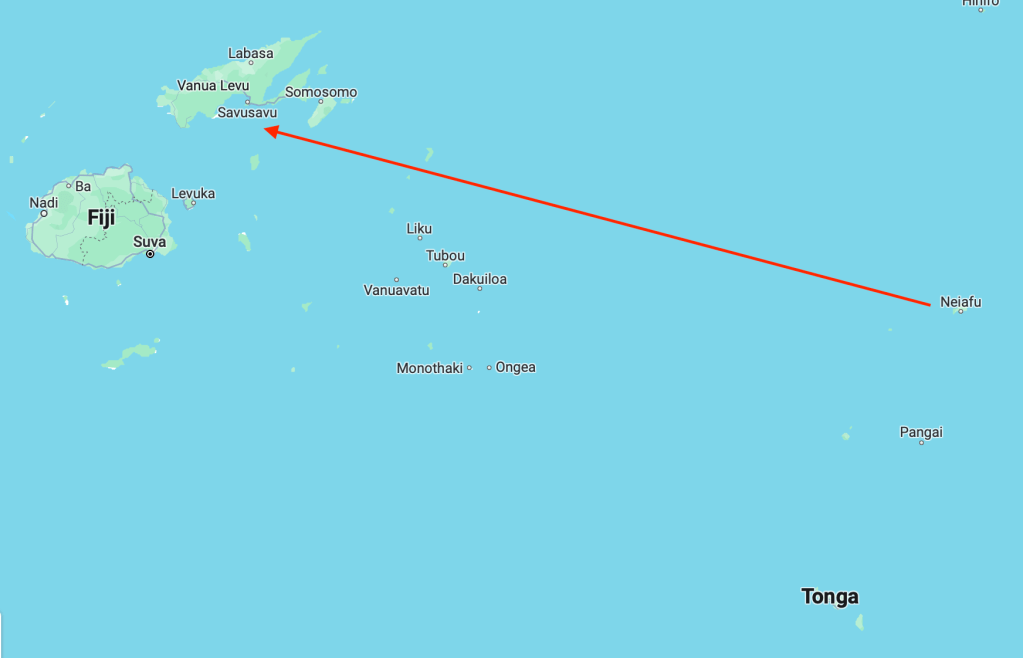
We left Vava’u on Monday the 17th of June, two days before our thirty day visa was due to expire. Exiting the country was straight forward, the only complication being the number of yachts trying to leave, or enter, so that the short customs dock ended up being two yachts deep. We were fortunate, once again, to be able to raft up alongside another boat, so we didn’t have to cope with the industrial rubber fenders on the dock that left massive black smears on the hulls of those that tied up next to them.
The yacht we came alongside, Marisha, was captained by a solo-sailor who told us his name was ‘Eugene.’ Although he sounded French, Eugene, or Evgeny to use his actual name, comes from Bulgaria. Evgeny is one of those fascinating guys that you often meet whilst cruising. He had been sailing in the South Pacific for years after deciding one day to sell his IT company and abandon the rat race. Also typical of the cruising life, we would say goodbye to Eugene only to bump into him several times over the next few weeks.
With so many yachts leaving on the same day the sail to Tonga began as a bit of a race, a race by definition being two yachts or more sailing in the same direction. We tried everything we could to maximise our speed, but sailing downwind in light airs is not Taurus’ forte, and being smaller than the other boats (boat speed being directly related to the length of waterline) we reconciled ourselves to a slow trip and last position. That having been said, Taurus didn’t disgrace herself and of the various options for the passage the one we chose, the middle passage which would take us eventually through the reefs of Lau, saw us arrive, more or less, with everyone else.
Sailing downwind is generally a bit of a challenge. If you have both sails on the same side of the boat the mainsail blocks the wind from reaching the gib, which then collapses. In a seaway this issue is exacerbated by wave action that encourages the sail to collapse and then explosively refill, jerking the boat forward and creating shock loads that are liable to cause breakage (which is how we broke a jib car when we left Minerva). If you can head straight downwind it is possible to fly the sails on either side of the boat, called wing on wing, which allows both sails to remain full. However, the helmsman has to remain extremely vigilant as should the yacht fall off and the wind creep around the mainsail then a crash gybe ensues, which sees the mainsail coming flying across the boat with potentially fatal consequences to crew and equipment. A few years ago I was hit in the head by the boom on a trailer sailer in this very situation; I count myself fortunate to have escaped with a scar, a night in ED, and a memory not quite as sharp as it used to be. A line that prevents the boom flying across is a must (known as a preventer), but even so the technique demands concentration and the yacht can settle into a nauseating side to side roll that makes life aboard extremely difficult.
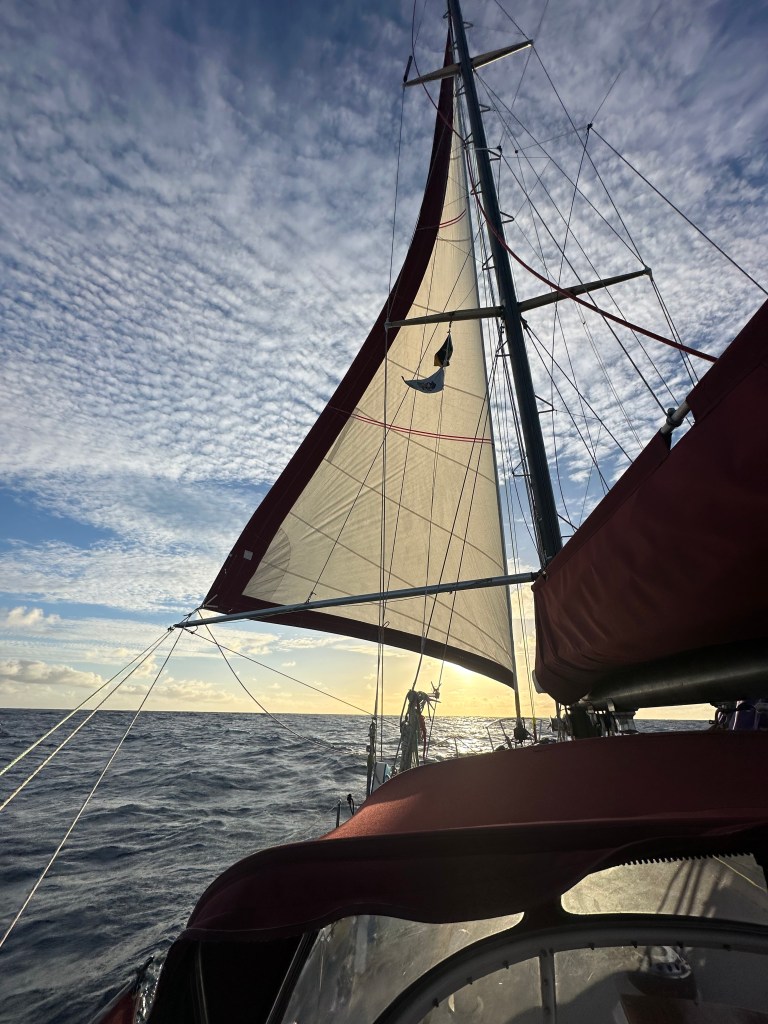
The constant slatting of the sails soon frays both nerves and equipment, so often in downwind conditions the main is put to bed and the boat is sailed under jib alone. In light airs the sail will continue to collapse so a spinnaker pole is used to help support the sail. Naturally, this comes with its own issues, not least being the time and complexity of setting the pole up. Three lines are required to hold the pole in position, up, forward and aft, and the pole itself, a long and unwieldy tube of aluminium, is difficult to manoeuvre on a moving boat. Then, should the wind shift or the crew desire to sail in a different direction the whole mess needs to come down and be set up again on the other side. Racing crews can gybe a boat with a spinnaker in seconds, short handed cruising sailors cannot, and the hassle often means that spinnaker poles, and sails, are left unused.
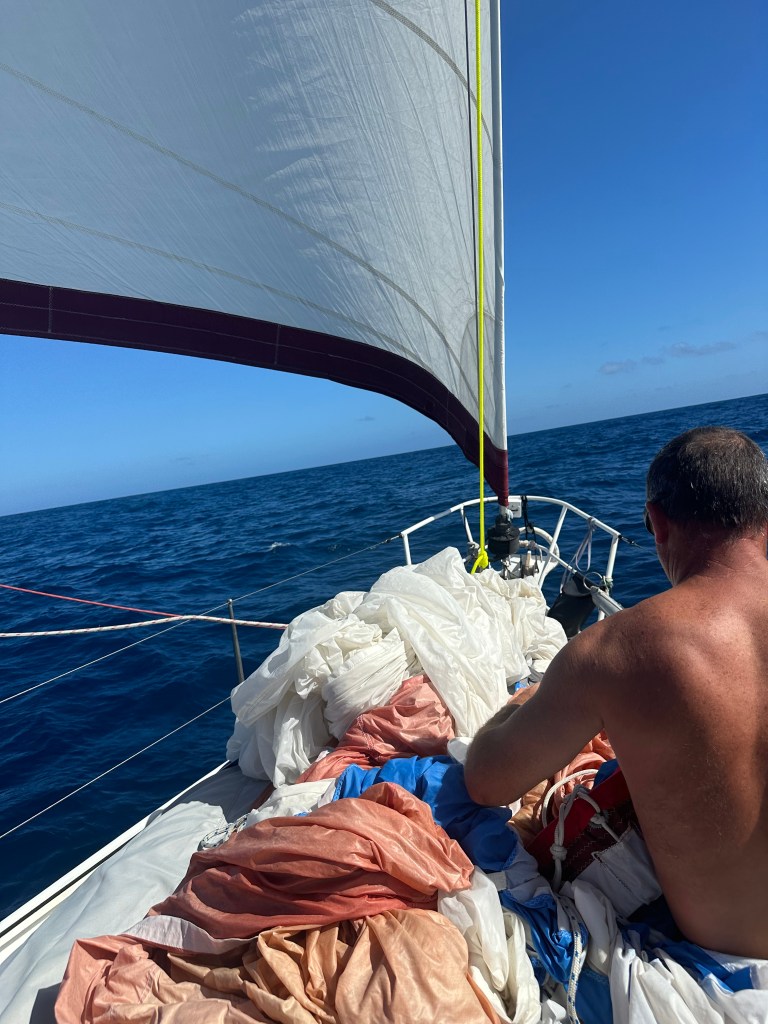
Cara and I had long shied away from using our spinnaker for just this reason. In coastal sailing they are often more trouble than they are worth. However, facing days of downwind sailing in light winds we were keen to try any option available. Thus, we dug the spinnaker sail out and, having only hoisted it once before by ourselves, determined to give it a go. Happily, everything went more or less to plan, and after messing around for a little while as we learnt how to do what we were trying to achieve, Taurus took off. With the spinnaker up we careered away at about 7 knots in a stable and steady direction, a huge relief after the rolling, slatting, and desultory 3.5 knots we had been doing before.

The relief at moving at a decent speed, in comfortable fashion, and in very steady winds, lulled us into one of the most elementary of spinnaker mistakes. The boat felt so stable we decided to leave the sail up as the wind increased to 16 knots and darkness fell. At 3 am, things always happen at 3 am, Cara came and woke me; the wind speed had increased to 20 knots and seemed likely to climb higher, the spinnaker needed to come down.
It is not great to have to try to remember how to douse a spinnaker when you need to do so at any time, and trying to remember how to deflate this massively powerful sail at 3 am in the dark is beyond foolish. The sail resisted all our attempts to manually overpower it and eventually something had to give, the old material ripping before the sail finally bowed to our efforts. As you would expect, the wind then died down to its steady 12-16 knots, and if we had just waited all would have been well. However, had we not doused the sail the wind would no doubt have increased further, and we would have ended up in a right pickle — as Ned Kelly said, “such is life.”
As many have remarked, the sea is an unforgiving teacher. Muddling through will get you so far, but eventually laziness, foolishness, lack of knowledge and/or experience will grow teeth and bite you in the bum. When the sun came up we tried to repair the spinnaker, but as soon as we hoisted her up she ripped again. Several hours of work was shown to be unworthy in less than ten seconds. Our folly meant that we were back to slow speeds, a rolly motion, and, as we approached the reefs round Lau, frequent changes of the pole from one side to the other.
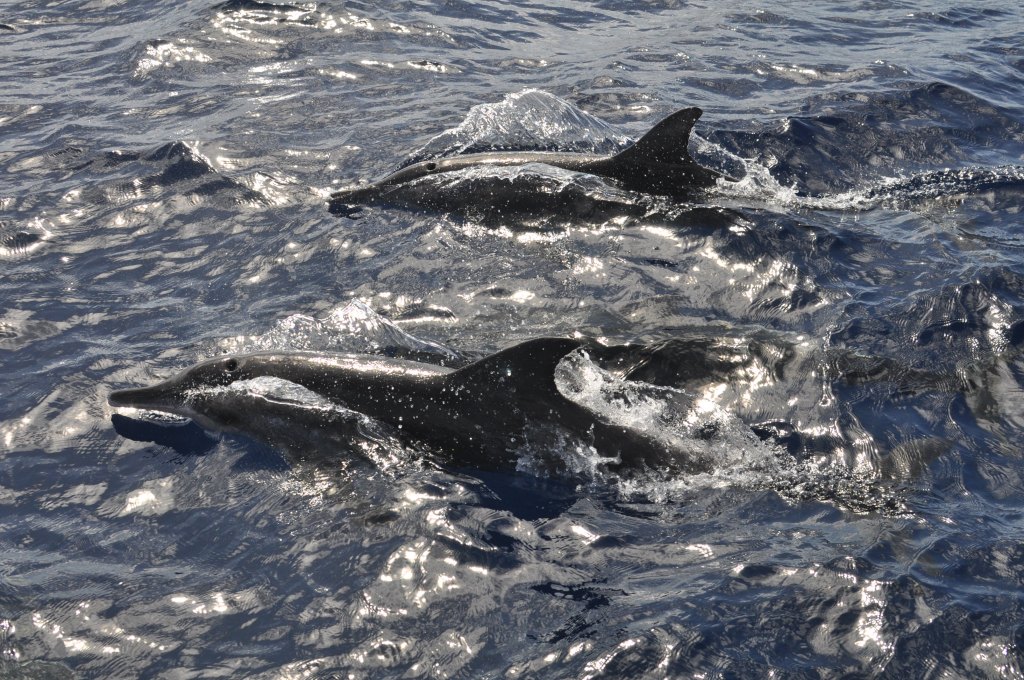
You can only blame yourself for mishaps like these, but if mistakes create experience, and experience leads eventually (hopefully) to expertise, then you have to take it on the chin. Our compensation lay in the stunning scenery, delightful weather, the sight of dolphins playing, and the knowledge that sooner or later Fiji would appear on the horizon.


When the wind dropped we threw out a fender on a line for safety and went for a swim, when we were moving we read, dozed, and lolled about, made sloth like by the heat which never dropped below the high twenties.
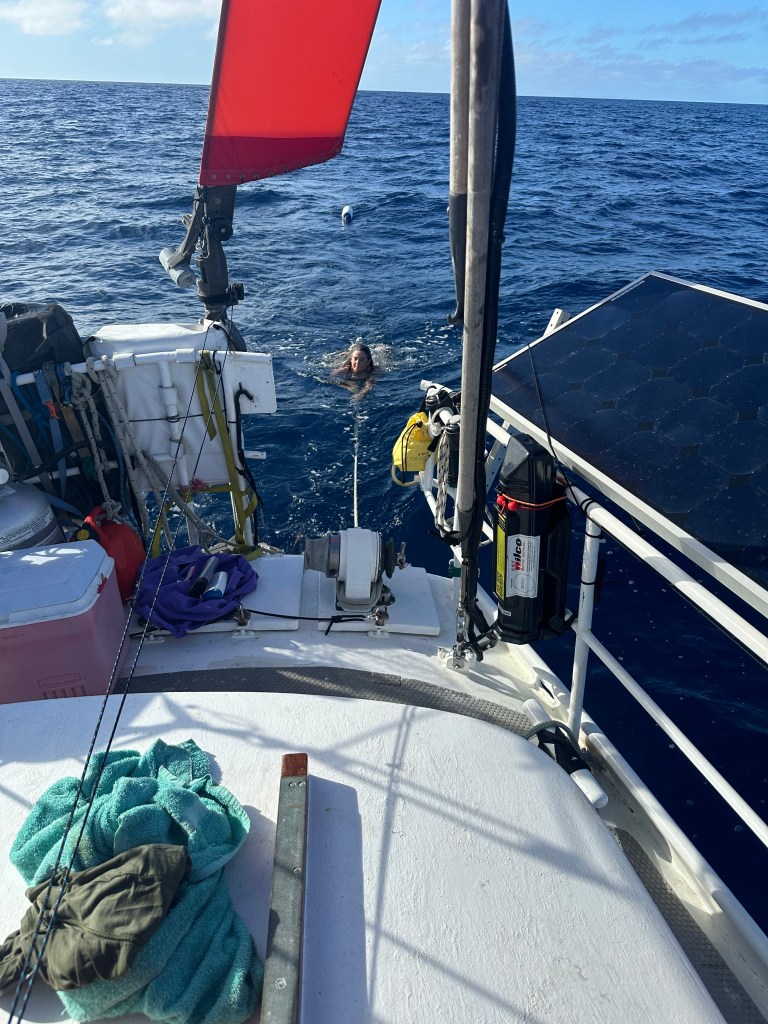

By the time we reached Fijian waters we had entered a dreamlike existence, in which the journey felt like it could go on and on. Taurus was by and large looking after herself and we bobbed along inside her, quite content in our quiet, steamy, slow moving world.
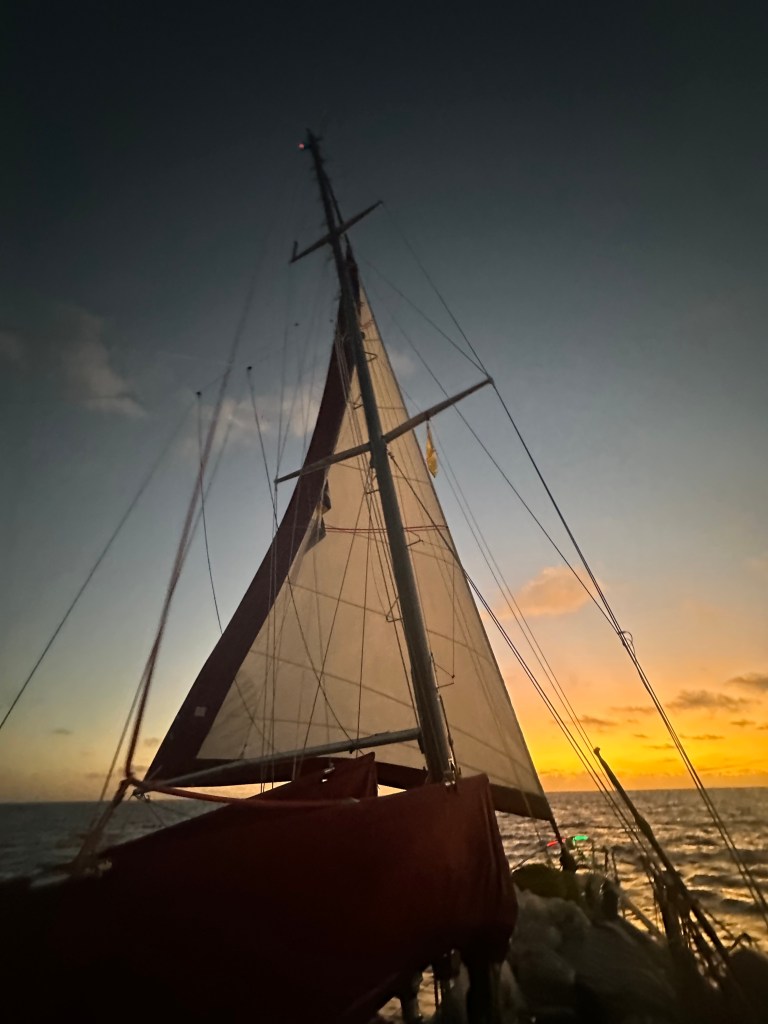
Upon reaching Fiji’s outlying islands we raised our ‘Q’ flag, a yellow flag flown from the starboard shrouds that is the international symbol for a yacht needing to clear customs and quarantine. We threaded our way carefully through the islands and reefs of Lau, mindful that the charts are famously inaccurate and that failing to zoom in on electronic charts can lead to vital information not being seen — such as the presence of islands and reefs. Every year yachts are lost because the crew didn’t see a reef until their boat crashes into it.
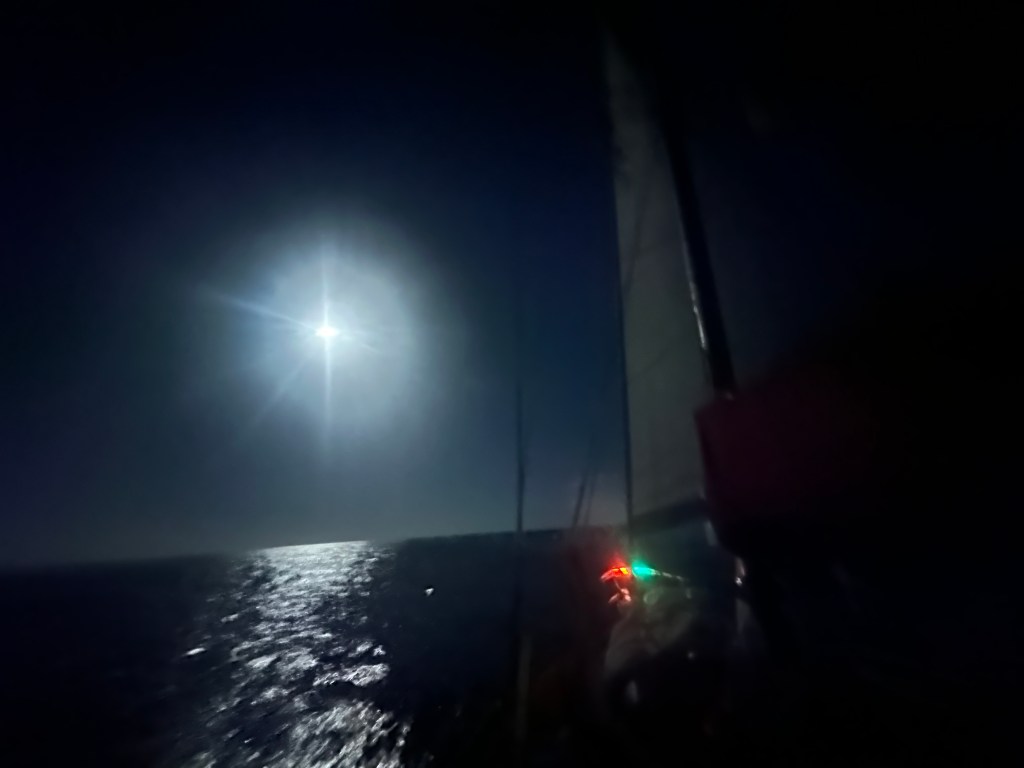
Our timing for entering Savusavu, our port of entry, was off, and we had heard stories about Fijian customs becoming very unhappy about cruisers anchoring before being cleared in, a story that may not be entirely accurate. Given the risk of potentially upsetting the authorities we chose to heave-to outside the reef, and spent several hours bobbing along in the darkness, sailing back to our starting point as we got close to land, and then heaving to and bobbing back again. At dawn we returned to sailing mode and ran inside the reef, enjoying the sight of the very green jungle and signs of civilisation.
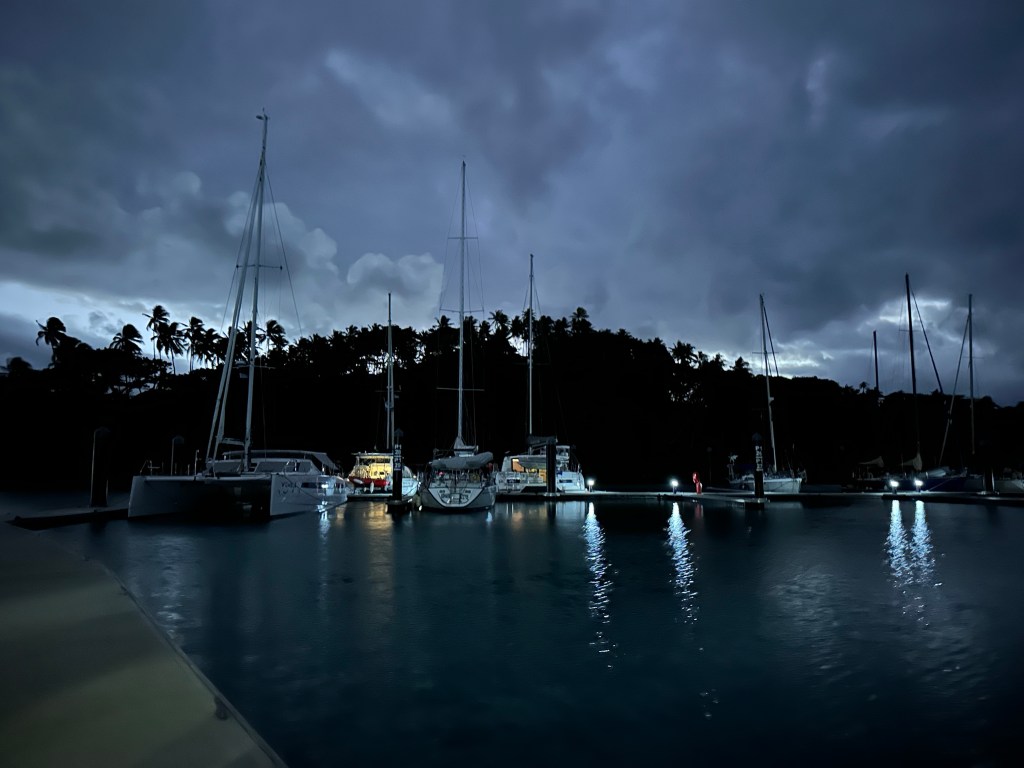
Cara had arranged for us to enter a marina for the first few days after our arrival, and we were delighted to be met by a chap in a RIB (Rigid Inflatable Boat) who led us up the river and showed us to the ‘Q’ dock where you have to wait until Customs has cleared the boat and crew. Wait we certainly did. We arrived at 8:30 am and didn’t see Customs until 4:30 in the afternoon. It is illegal to leave the boat until cleared, even to step foot on the dock, so we had to sit onboard all day in sight of the marina, its bar, and its fresh showers. At least when the Customs people finally turned up they were in too much of a rush to be overly officious.

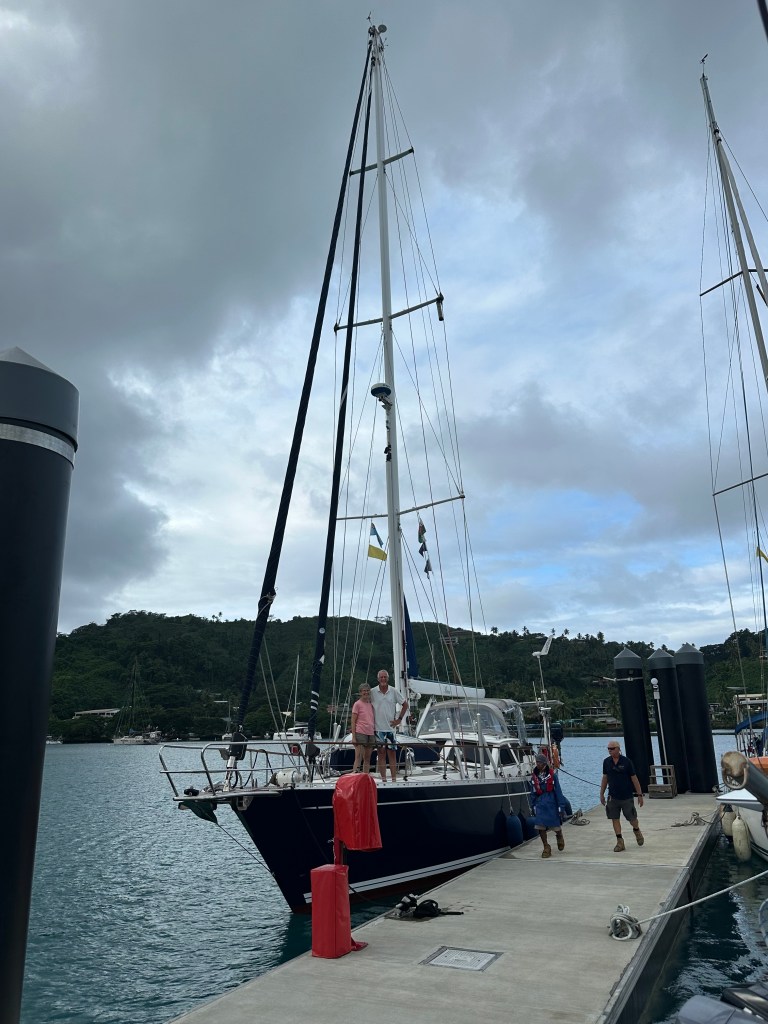
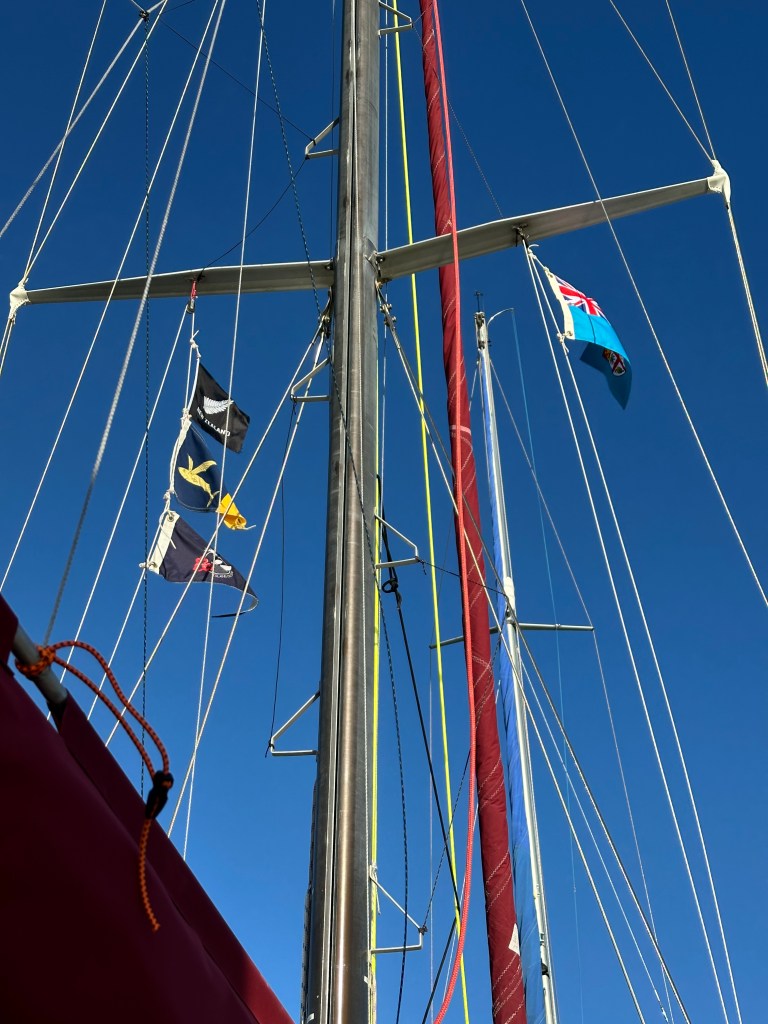
Nawi Marina has only recently opened but we would highly recommend it as a very nice and reasonably priced place to stay. The marina, and the town of Savusavu, was a bit of a revelation. The friendliness of the people, the goods available in the shops, the cleanliness, and the reasonable prices, were jarringly different to what we had grown accustomed to in Tonga. It’s sad to say, but everyone we spoke to that had been in Tonga commented on the difference between the island neighbours. Why Tonga should be so much poorer and less friendly is hard to explain. It may in part be a cultural thing — we had been warned that Tongans were ‘reserved.’ Some Tongans expressed anger at the royal family, and ex-pats complained about the Church that can demand tithes of up to 60% of their parishioners’ salaries. Perhaps the recent tsunami has something to do it, or perhaps the locals are simply sick of tourists (a phenomenon that happens the world over), I don’t know. I can only say that we were made to feel more welcome in Fiji in our first few minutes than we were ever made to feel in Tonga.

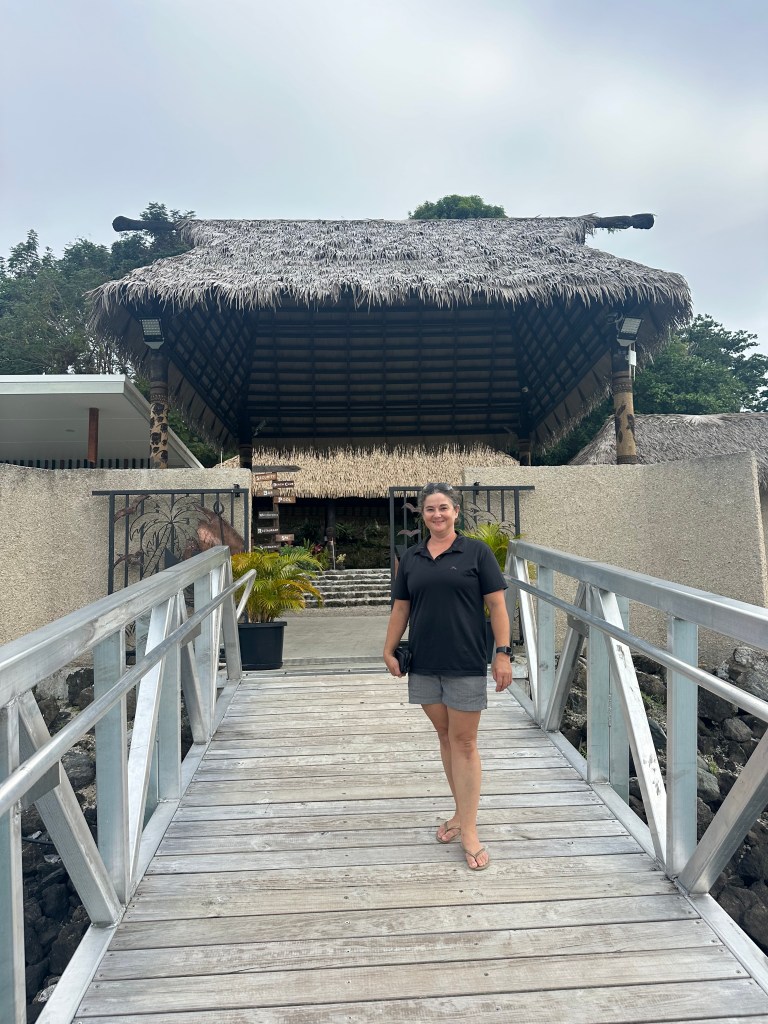
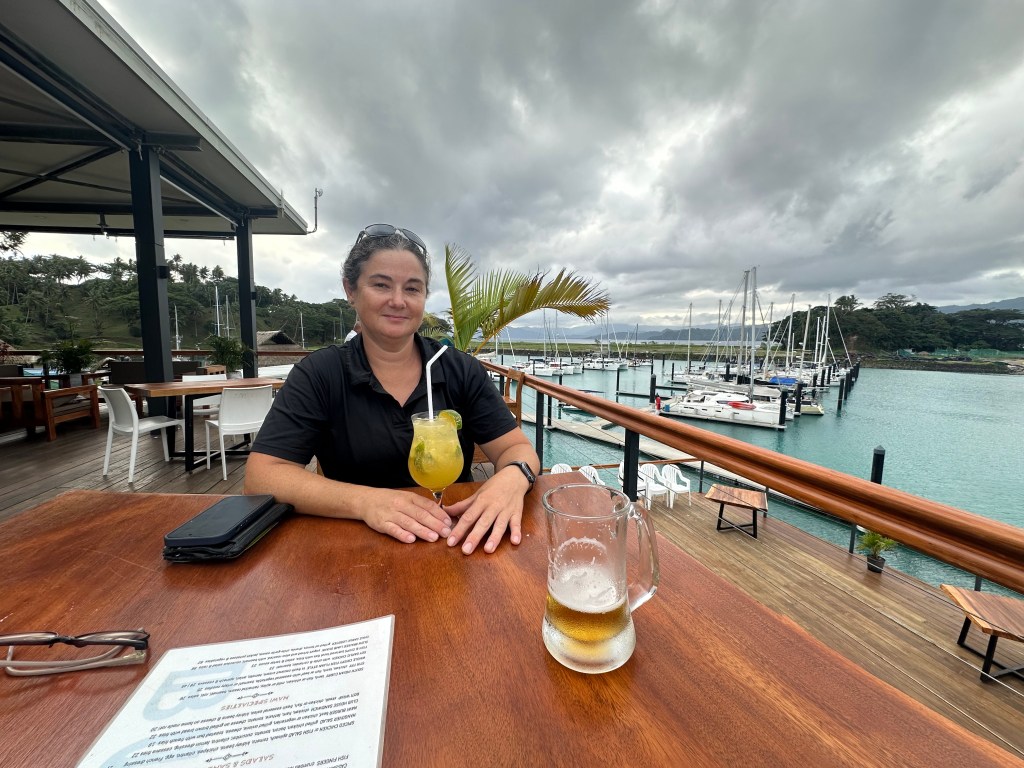
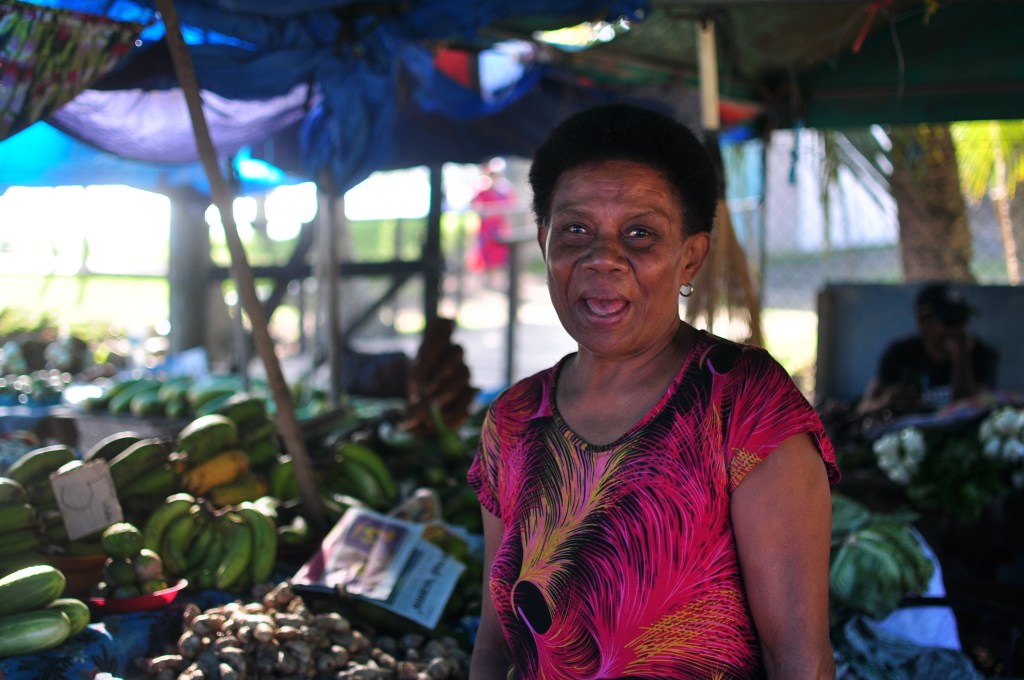
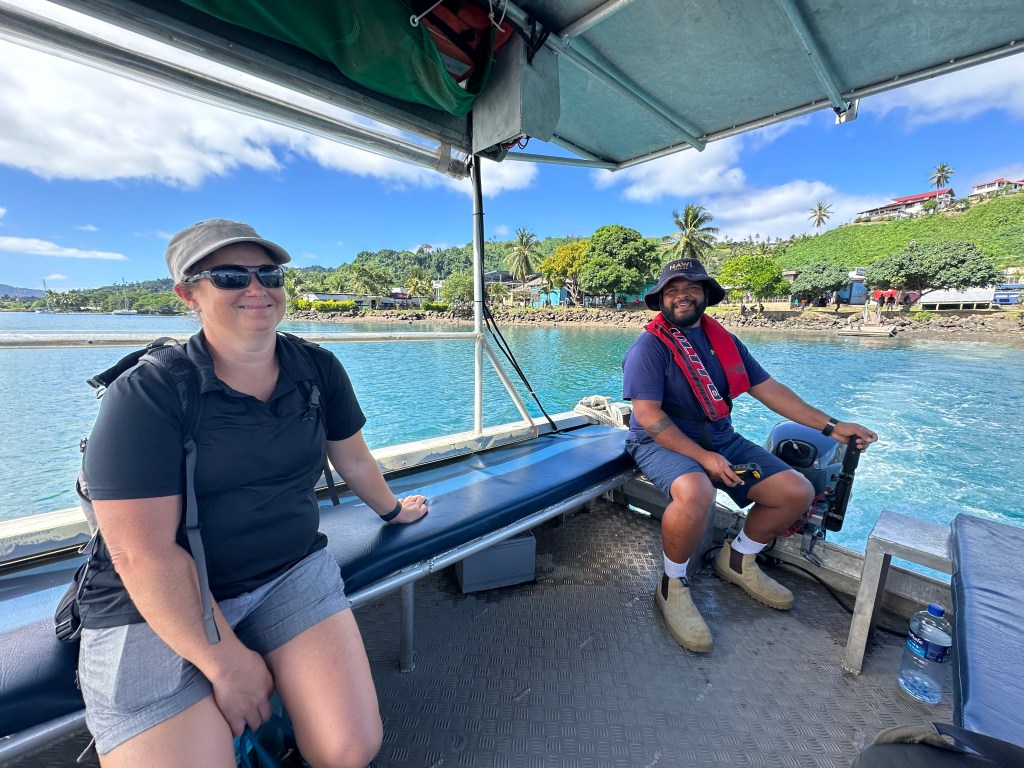
The town of Savusavu lies across the river from Nawi, but the marina puts on a free shuttle boat that leaves every half-hour. After what we had grown used to the market left us speechless (compare the photo of the market in Vava’u in our previous blog with the one in Fiji).

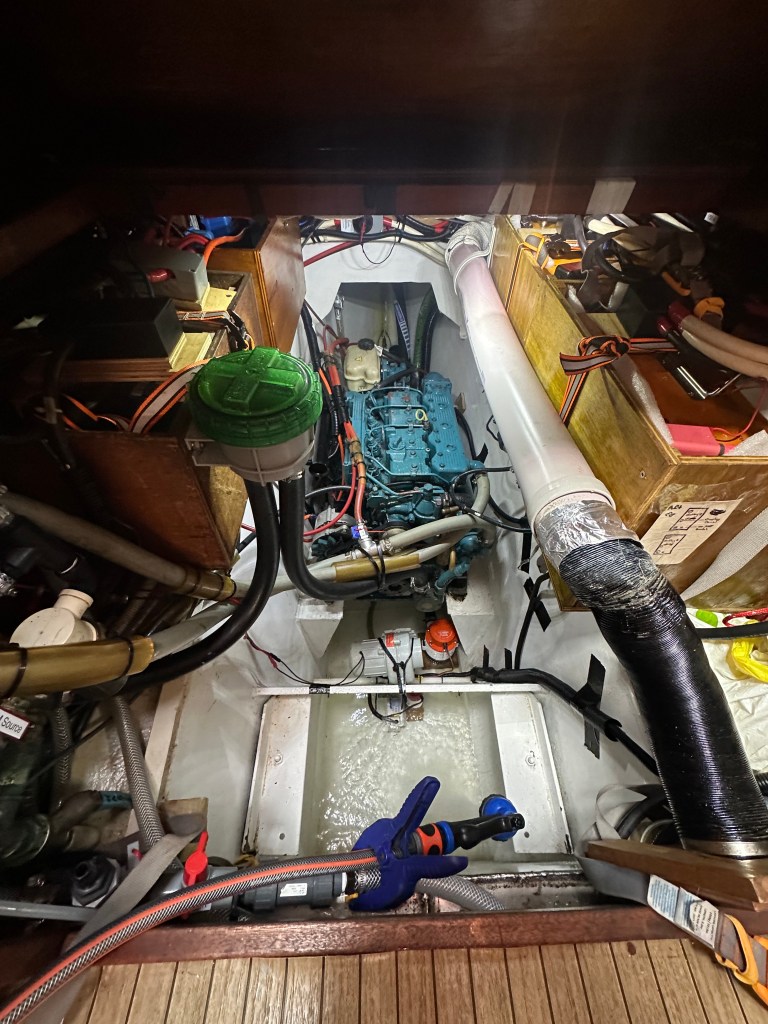
After a few days R and R we settled back into boat life and picked up the chores that were top of the list. We wanted to test our bilge pumps, so deliberately filled Taurus with about 300 litres of water to check that the alarm alarmed and the pumps pumped. Then it was on to some minor rust treatment and a few hours up the mast trying to fix the steaming light that was playing up.
All the bending over in funny attitudes caused me to suffer another back strain, I really need to stretch more often. But with a handful of pills I was able to function and we made plans to depart. Savusavu had been great, but there is a lot of Fiji to see and we have friends and family coming to visit at the end of the month so time is short.
Next time: we get nibbled on by fish, have all sorts of difficulties exiting a reef, run aground (a separate incident), and enjoy various other nautical frolics and calamities.
Fair winds!


 Sailing Taurus NZ
Leave a reply to Sailing Taurus Cancel reply