
Before leaving Brisbane we had to catch up with our good friend, Julian. We had met Julian and his wife Tracey in Noumea, New Caledonia. They had sailed their yacht there before the troubles and ended up staying throughout and having an amazing time, making friends on both sides of the divide as they were apolitical and just about the only tourists in the country. They enjoyed New Caledonia so much that they decided to leave their yacht there and fly back to Australia, so that they could easily fly back again to resume cruising in the region. Unfortunately, Tracey was visiting family in Perth when we found ourselves in Brisbane, so we had to miss the pleasure of her company this time around.
I’ve often found that to get the best out of a new city you need to be shown around by someone who knows it. This certainly proved to be true in this case. Julian suggested we go for dinner at a place called ‘Eat Street,’ which we hadn’t heard of but which was a mere twenty minute walk from where we were anchored.
Eat Street is an incredible place that we highly recommend if you ever find yourself in Brisbane with an evening to fill. Part Moulin Rouge, part carnival, and all about satisfying carnal pleasures — of the eating and drinking variety. The ‘street’ is essentially a wide variety of quality street food outlets, bars, and live music stages thrown together in an eclectic fair-ground-type layout . We were there just before Christmas and the place was heaving, but the queues were short, the food was excellent, and there were tables enough to go around. The music, lights, crowd, and atmosphere created a kind of never never land for adults.


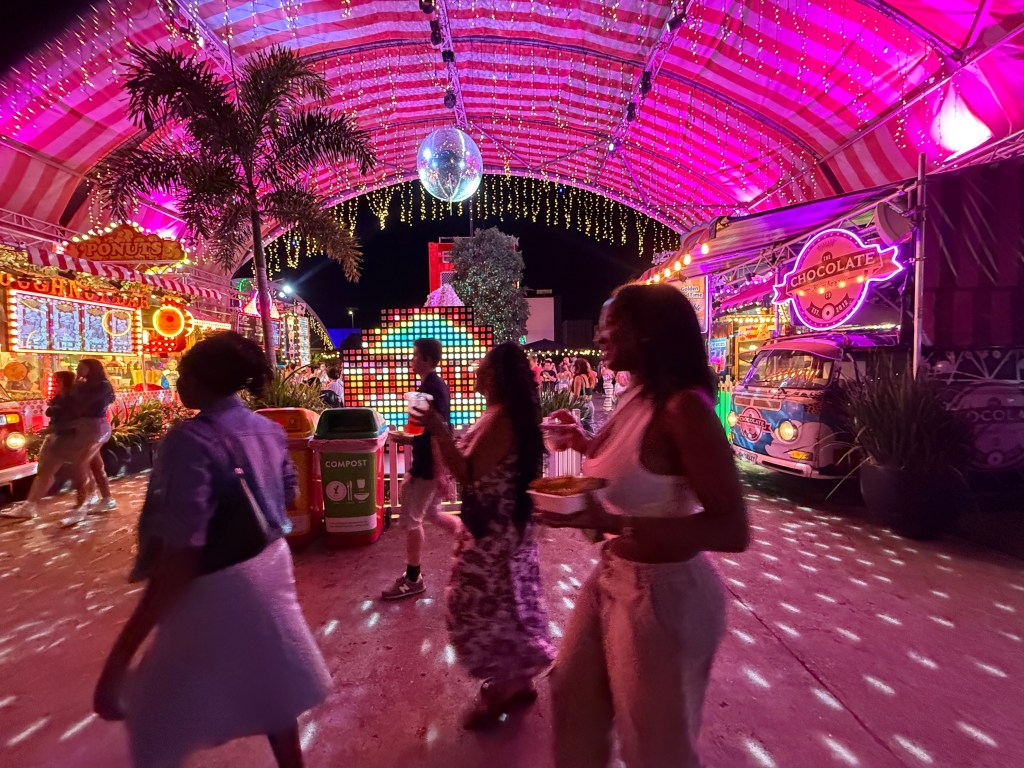
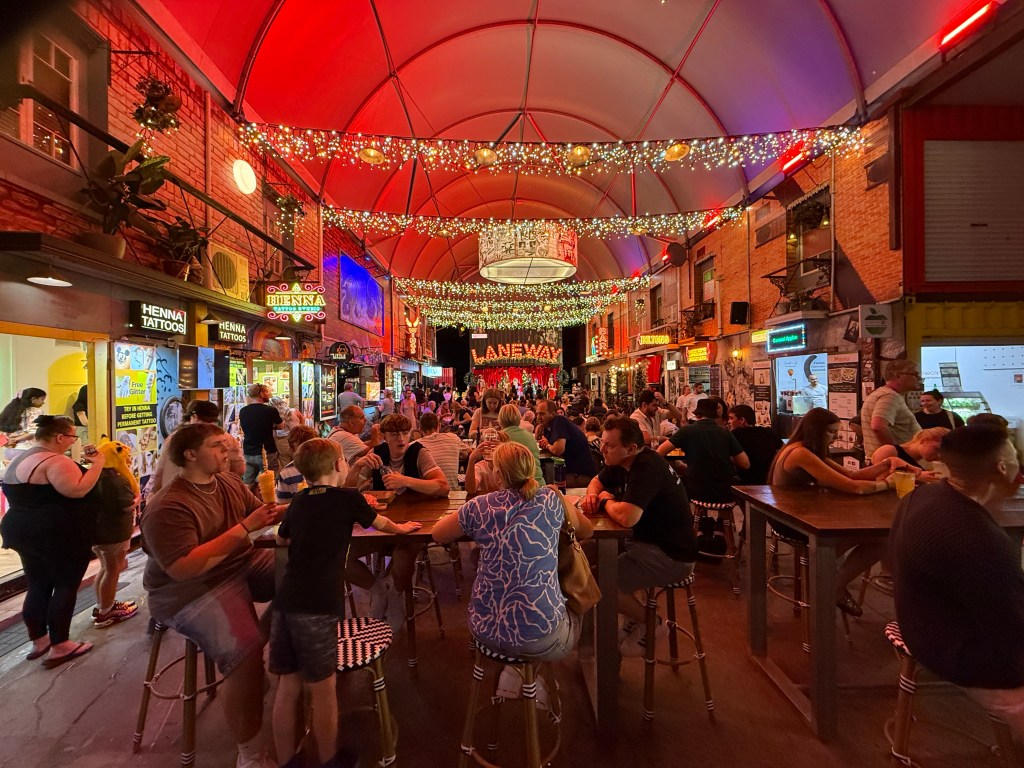

The evening was one of those in which you curse the fact that you only have one stomach to fill, and once full to the point of knowing that it would be a slow waddle home we had to call it a night.
We had planned to head south after leaving Brisbane and find a place to anchor in South Port, the main marina and anchorage area serving the Gold Coast. However, Julian advised us that South Port and the area around it would be insanely busy. His work as a commercial skipper routinely takes him there, and he warned us that over the Christmas break it would be a mad house of launches, tinnies (small aluminium boats with outboard engines) and jetskis — all trying to get wherever they were going as fast as possible and without a clue about COLREGS (the International Regulations for Preventing Collisions at Sea), the rules of the road at sea.
Not being a huge fan of too many people, and jetskis period, I was easily persuaded that we should instead anchor off the excellently named Coochiemudlo Island. Captain Matthew Flinders (16 March 1774 – 19 July 1814), Royal Navy officer, navigator, cartographer and leader of the first inshore circumnavigation of Australia, was the first European to land on Coochiemudlo in 1799. At that time he named the island ‘Sixth Island,’ which suggests he was sick of naming Australian features by the time he got there. Coochiemudlo is a bastardisation of the Aboriginal name “Kuychi Mudlo” meaning ‘place of red stone.’ For generations it was a source of ochre, which aboriginals used for body decoration.
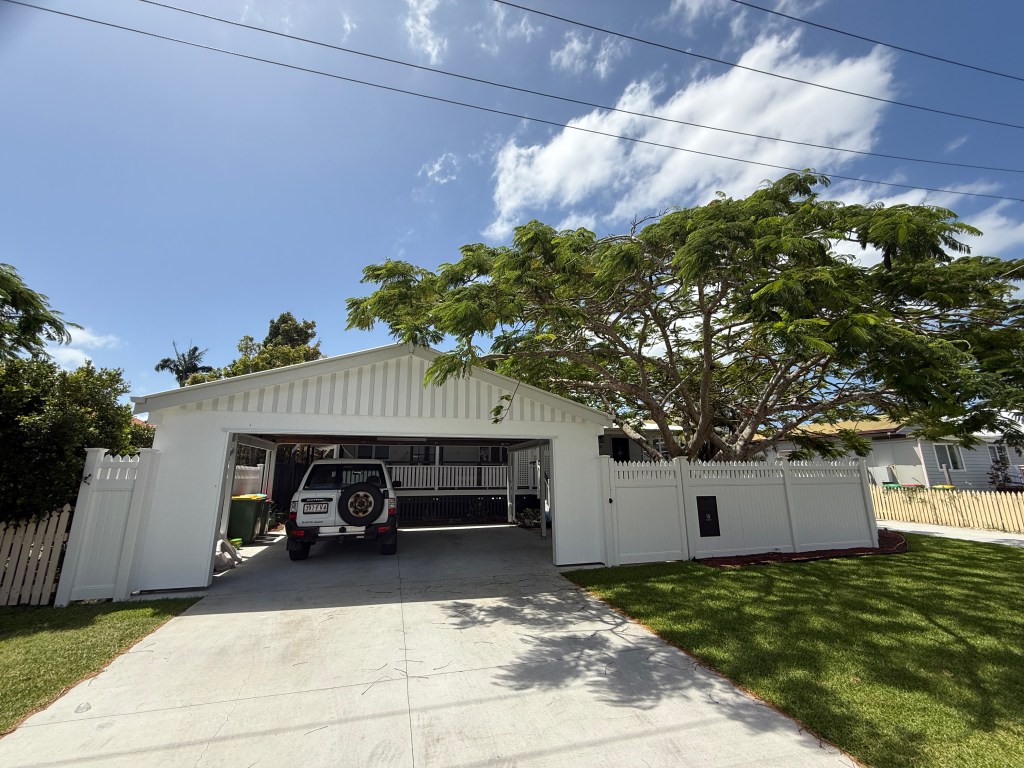
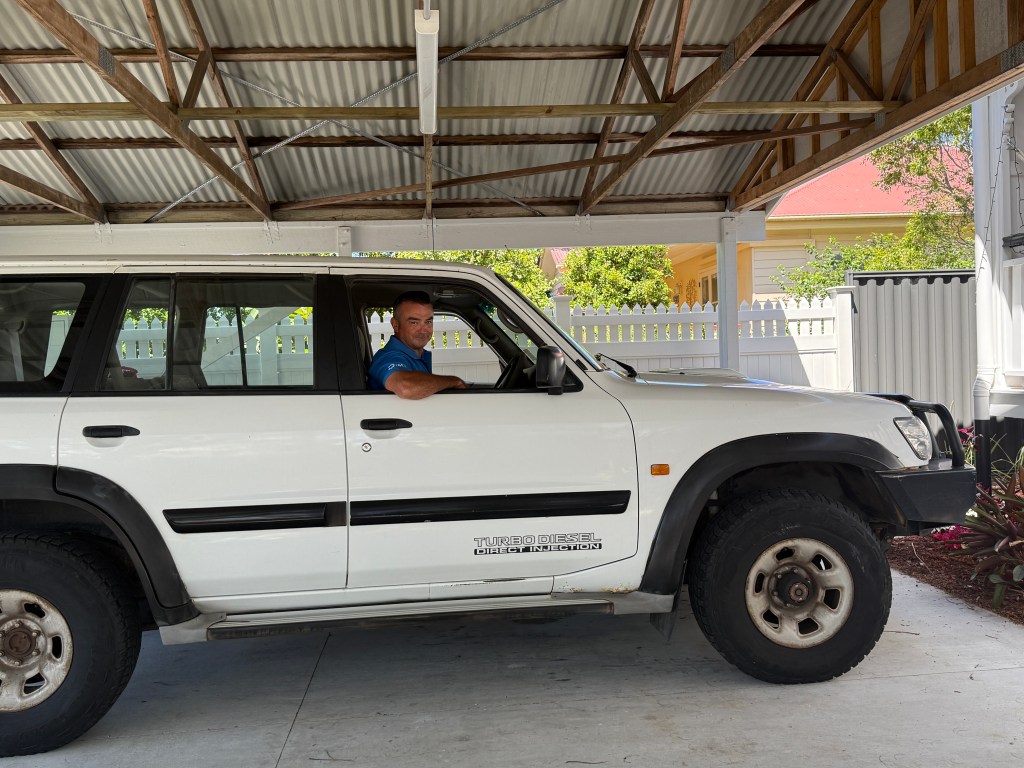
As well as a sheltered anchorage, Coochiemudlo was a short ferry ride to the mainland, and a short walk from there to Julian and Tracey’s home. As if the idea of staying at Coochiemudlo needed any sweetening, Julian promised to cook us a roast dinner when we arrived, and generously offered us the use of his home and car when he headed away for a few days to catch up with Tracey and family. It’s been said many times before, but the best thing about travelling really is the people you meet along the way.
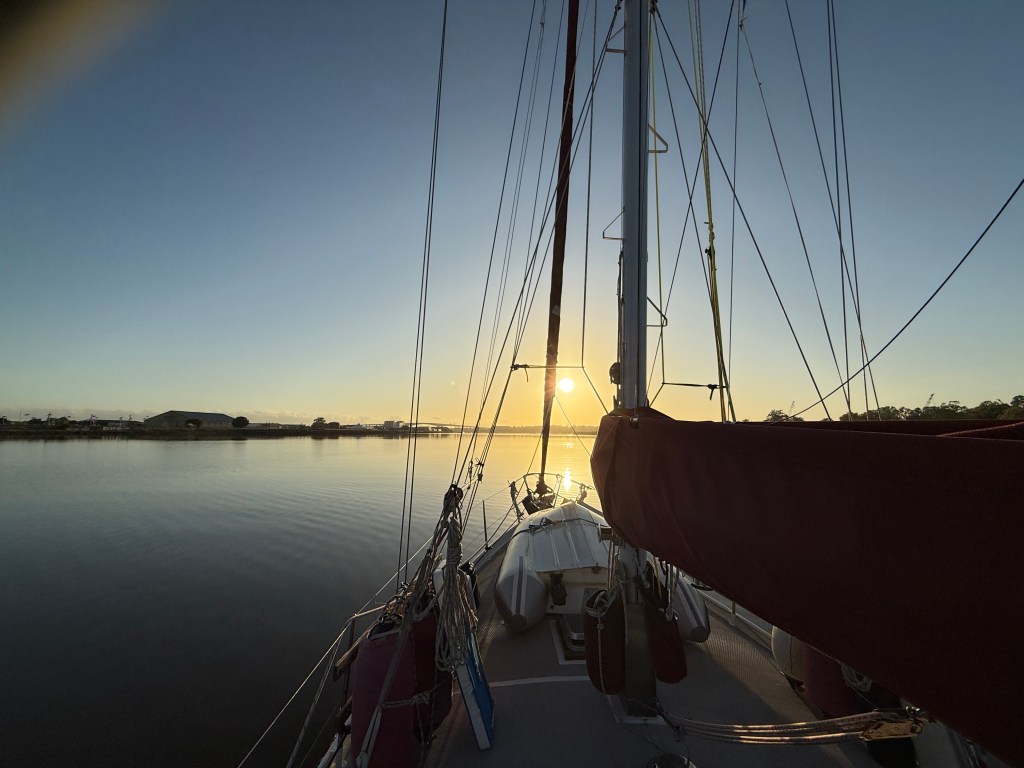
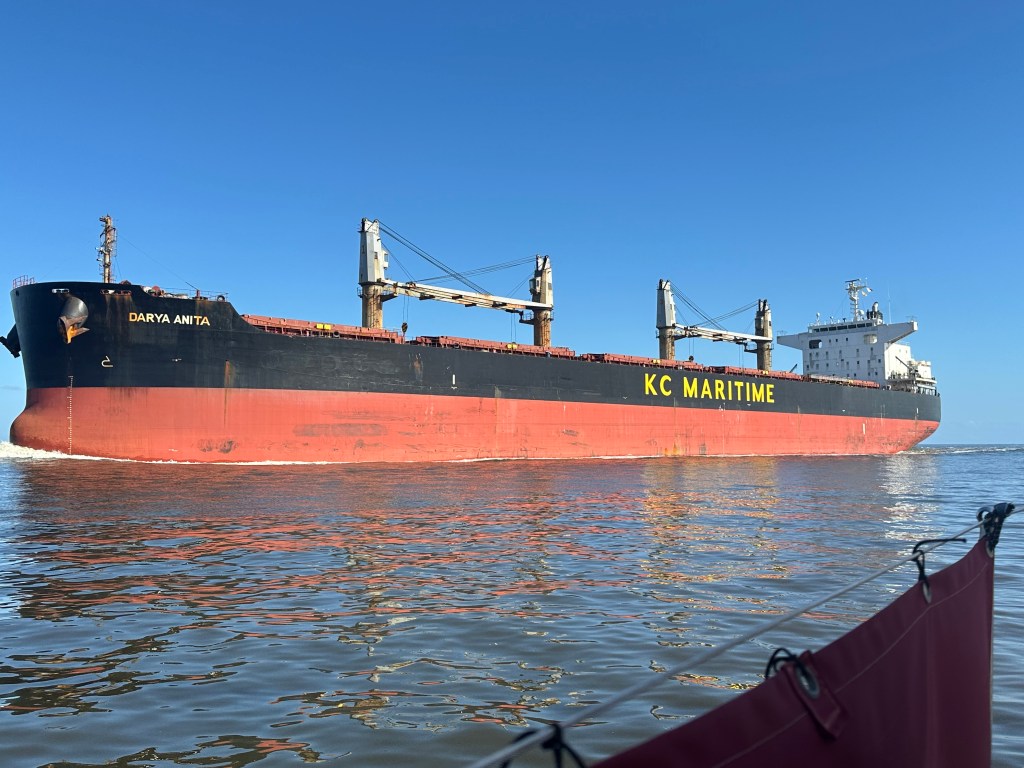
We headed down the Brisbane River early next morning to take advantage of the outgoing tide, and after some fun and games trying to fuel up at a jetty where the pump’s hose was too short to reach our fuel intake, we found ourselves back at sea.
Visiting Brisbane had been fantastic, it’s one of the Australian cities we don’t know well but would like to know better. One of the things our stay highlighted was that despite being close neighbours, we Kiwis are often ignorant of the realities of Aussie life. I had remarked to Julian that it was a shame the river was in flood and too dirty and swollen to swim in. Slightly aghast, he said the river was always that dirty, it’s known as the ‘Brown Snake’ by locals, but, he added, no-one swims in it anyway because of the sharks. Not entirely sure if he was serious (who ever heard of sharks in rivers?) I later did a quick google and found that scientists believe that upto 3,000 bull sharks may be in the Brisbane River at any one time. Apparently bull sharks, one of the more aggressive and dangerous species of shark, have developed the ability to breathe in both salt and fresh water, and have learnt to go up the river to feed on livestock that fall into the water. The idea of thousands of sharks in that brown turgid mass was certainly enough to put me off the idea of a dip!
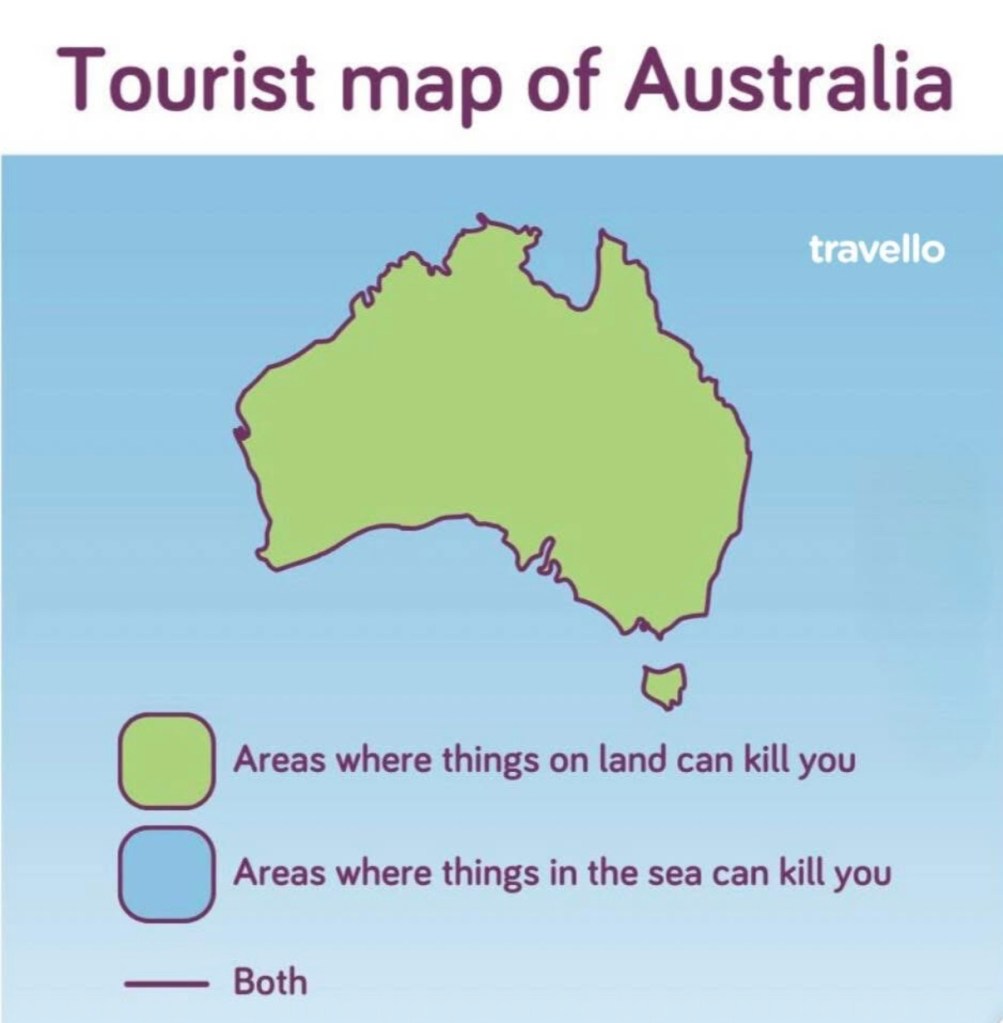
To remember the various hazards that Australia poses to the unwary we found a helpful map that reveals the areas of risk (below).
After a short sail of a few hours we reached Coochiemudlo, and dropped anchor a little way from the beach and moored boats. Steve and Karen who had been anchored in Moreton Bay sailed down to join us, and on hearing this Julian extended his dinner invitation to include them. We took our dinghies to the ferry terminal and headed to Victoria Point where Julian picked us up.

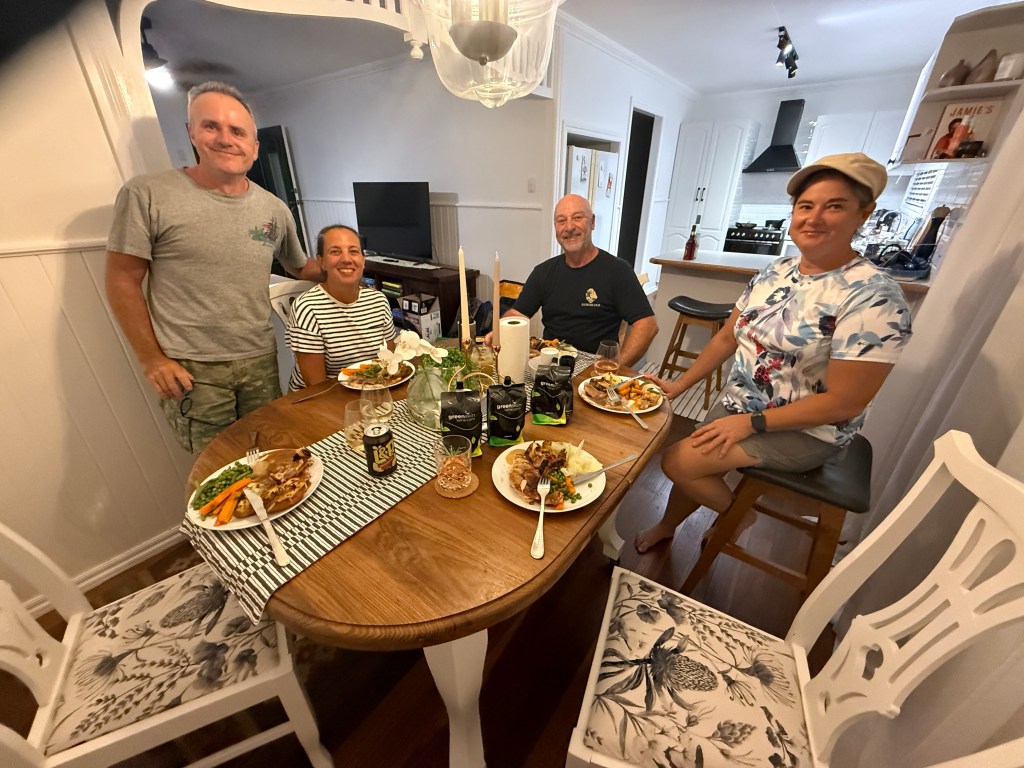
Dinner was roast pork with plenty of crackling, and by God it was good. The wine in the sachets on the table was gifted to us by Viki, the owner of the Pacific Island Rally. Greenskin, the wine company, had sent Viki some samples for cruisers to try. As well as being very palatable wine, the packets of 750ml each are much easier than bottles to store and can be returned to the company to be recycled once empty. So we now have white wine, red wine, and green wine! Thanks to Julian, Viki, and Greenskin, and can we make it a regular thing?
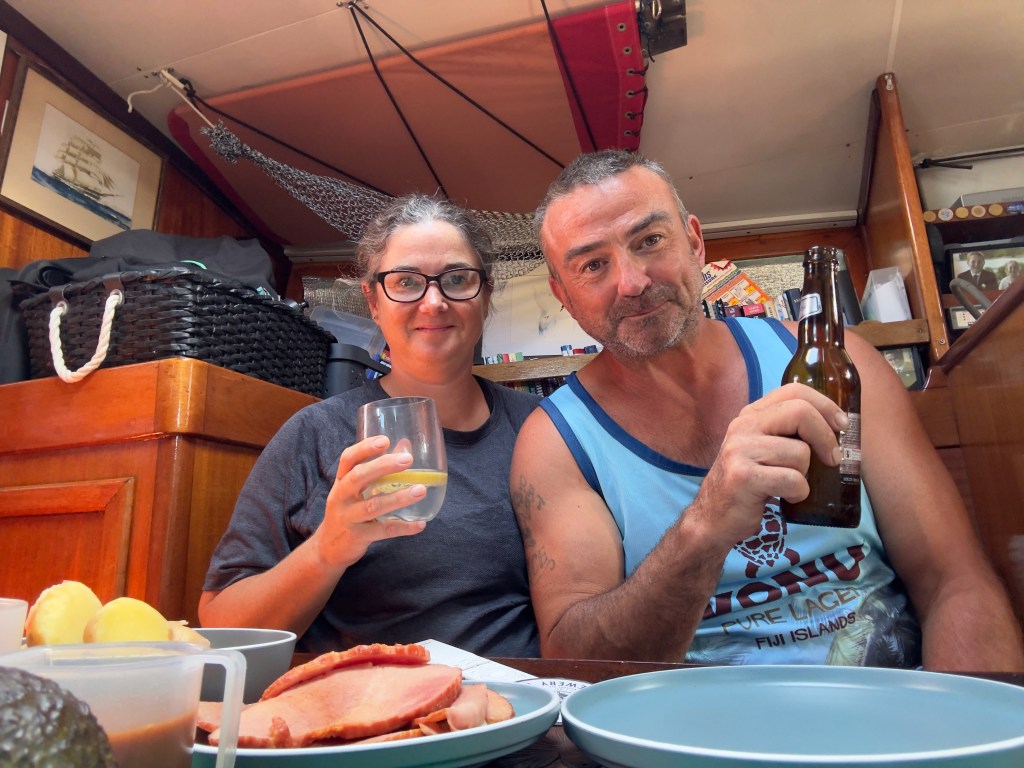
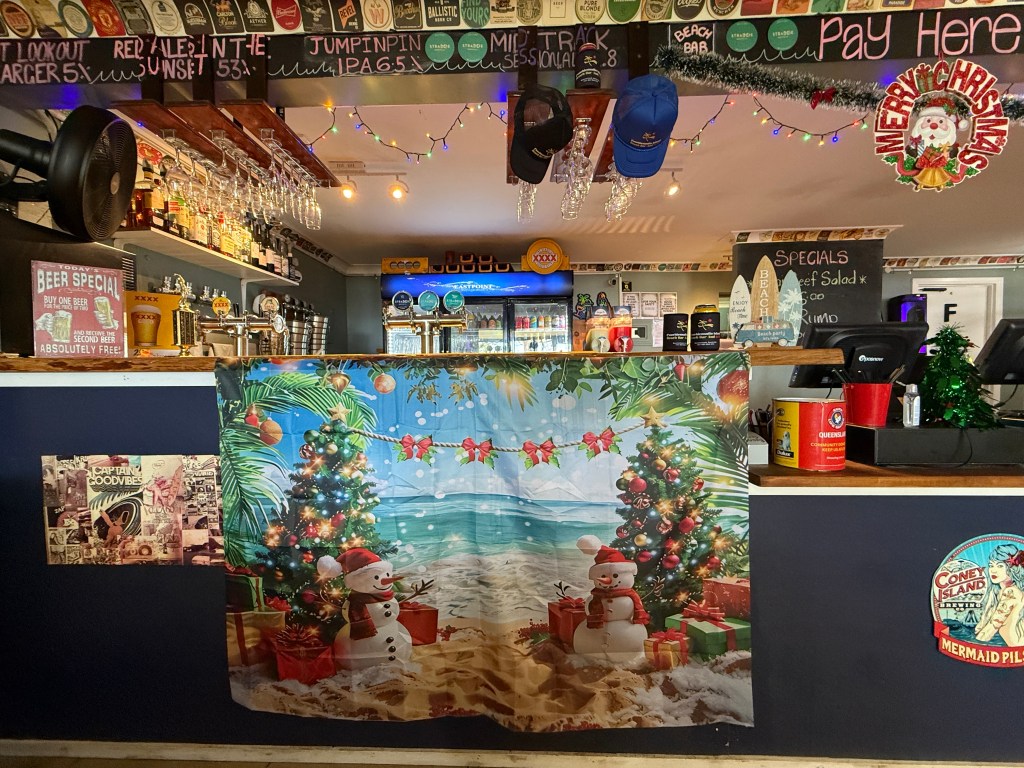
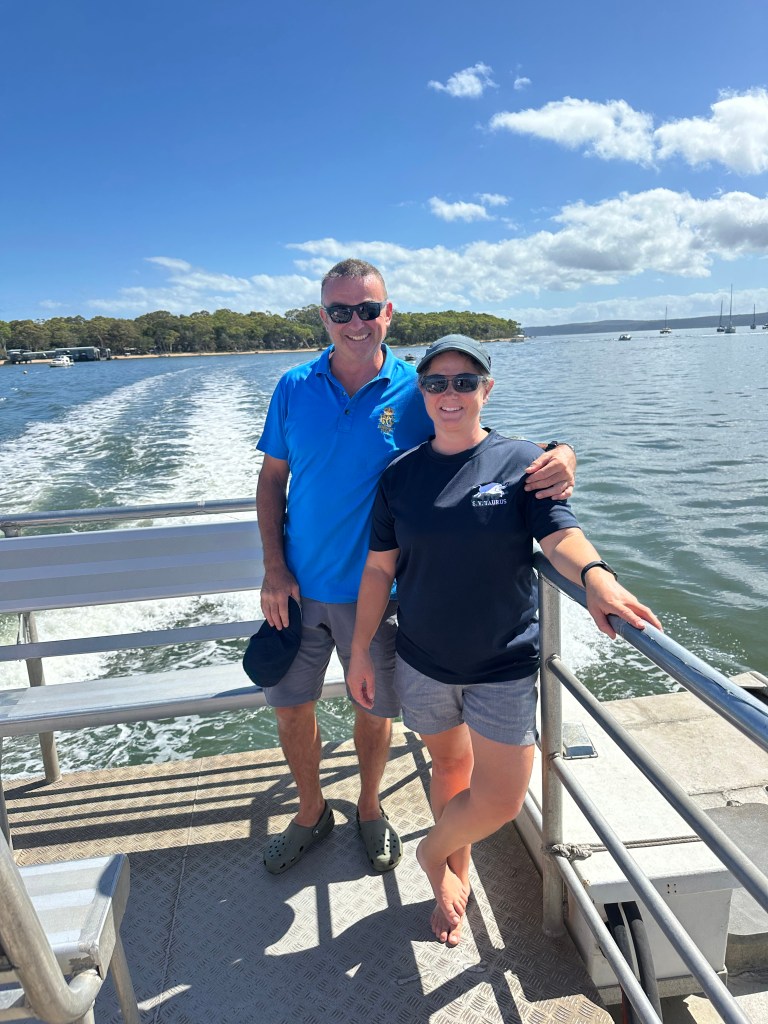
We stayed on Coochiemudlo for a few days, enjoying the island and making the most of access to a shower, washing machine, and car. Christmas Day was spent hanging out on Taurus eating too much (again), followed by a circumnavigation by foot of Coochiemudlo. On Boxing Day we drove down to the Gold Coast to catch up with my daughter, Abi, and her partner, Allan. It was an eyeopener to see how busy the four lane highways were and we ended up crawling along in a traffic jam for much of the way.
After picking Abi and Allan up we headed into town to try and find somewhere to get a meal and buy Abi a 21st birthday present. It being Boxing Day the city was insanely busy with shoppers looking for a bargain, and we maybe didn’t help ourselves by ending up at the Pacific Fair mall, the largest mall in Australasia apparently. The number of people was staggering, it seemed like half of Australia had decided to go shopping.

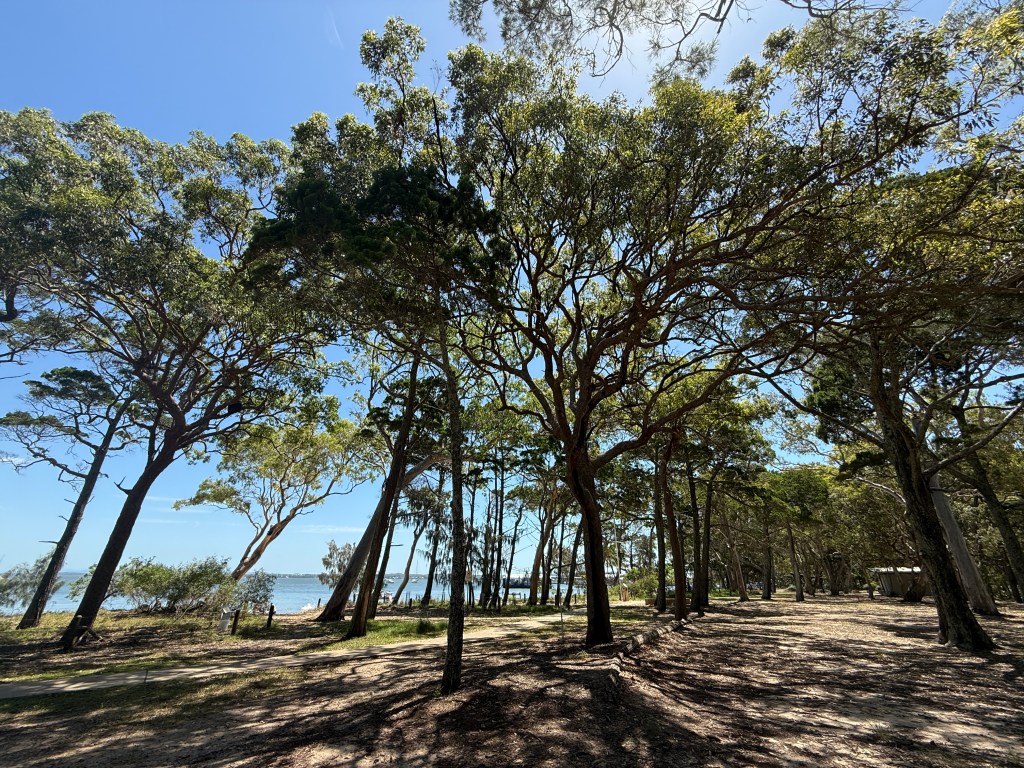


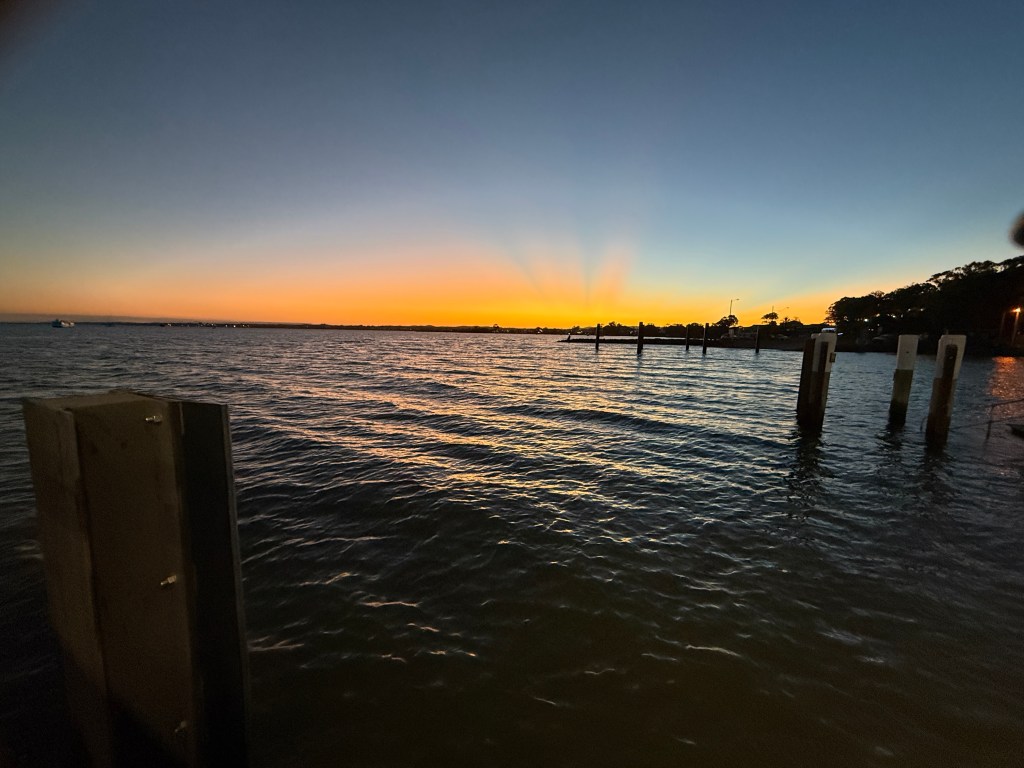
After our trip into the big smoke, it was a relief to return to our little boat in our quiet little corner of paradise.
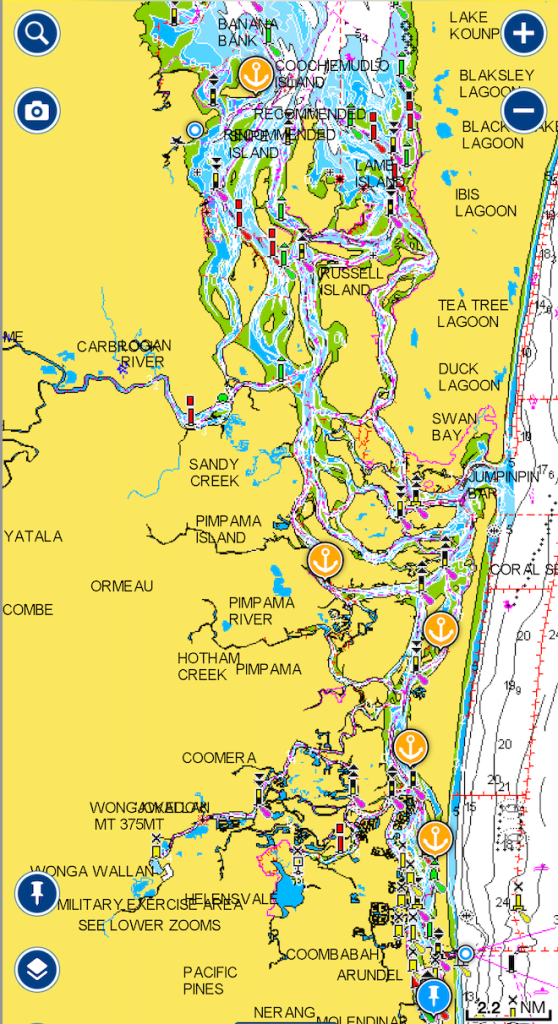
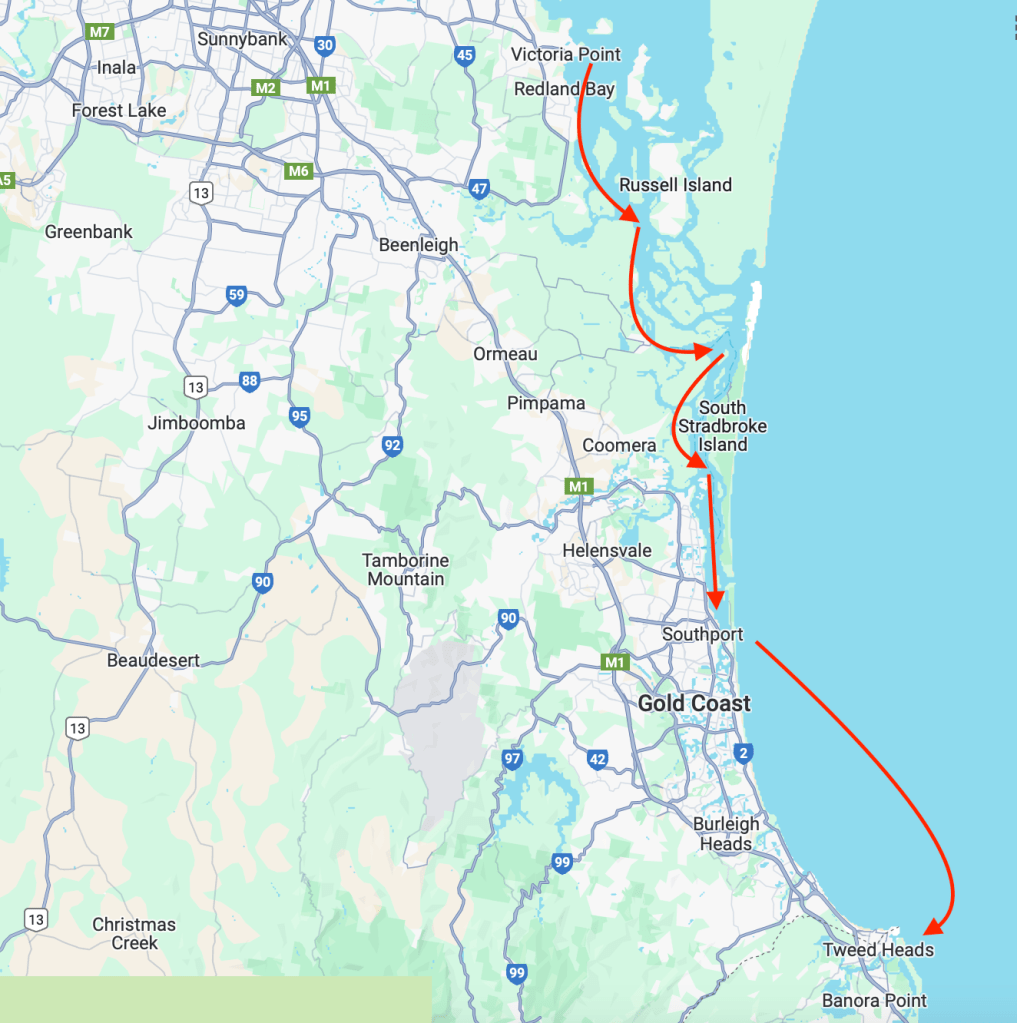
Next morning we bid adieu to ‘Coochie,’ as the locals call it, and headed south towards South Port. The image below shows the inland waterways we followed. The anchor symbols show our route, where we stopped or considered stopping along the way. Normally, these channels are quiet and serene, but over the holiday period they were busy, and the closer we got to the Gold Coast, the busier they got.
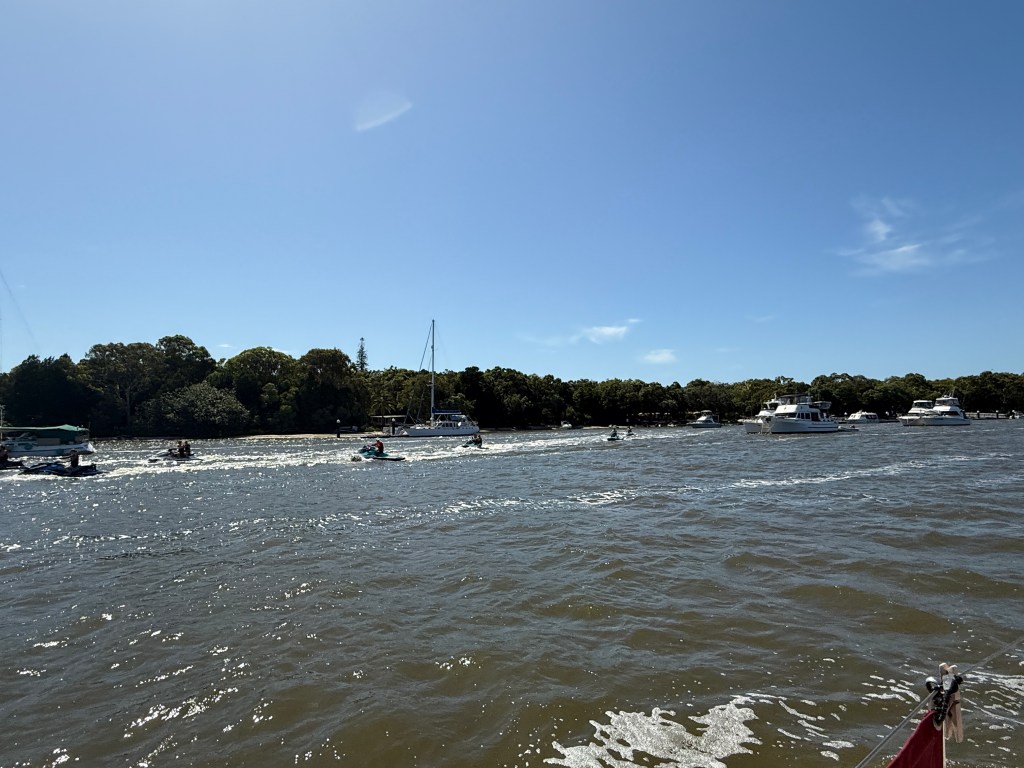
As we had been forewarned, the waterways were packed with boats and jetskis, all going as fast as they could, as loudly as they could. Often the people who had gone screaming past us turned around and came screaming back. I’m sure it would be great fun to ride a jetski for an hour or two, but the numbers involved and the apparent pointlessness of it all made it feel slightly perverse, the lack of attention to standard safety rules needlessly reckless. People flew past on either side, in either direction, often at the same time, cut across our bow, did little jinks to try and get each other wet, did circles around us, so that in the end we could only ignore them rather than try to maintain a safe distance. It was later reported that three people died in Queensland waters over the Christmas period. I’m amazed it was only three.

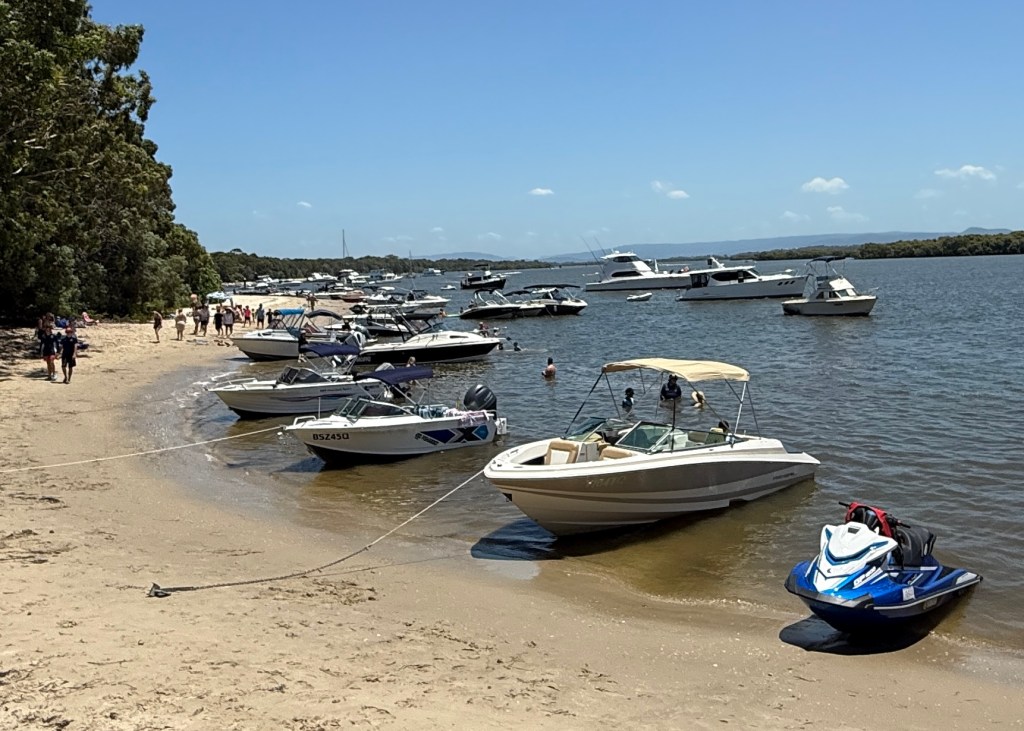
We stopped for a short while at Tipplers Bay on South Stradbroke Island, and squeezed into the space between land and channel along with dozens of other craft of all shapes and sizes. A short walk across the island we came across the ocean and an enormous beach that was practically deserted in comparison to the resort side. With gratitude we enjoyed a semblance of peace, went for a swim, and then rejoined the throngs for a beer before clearing out.

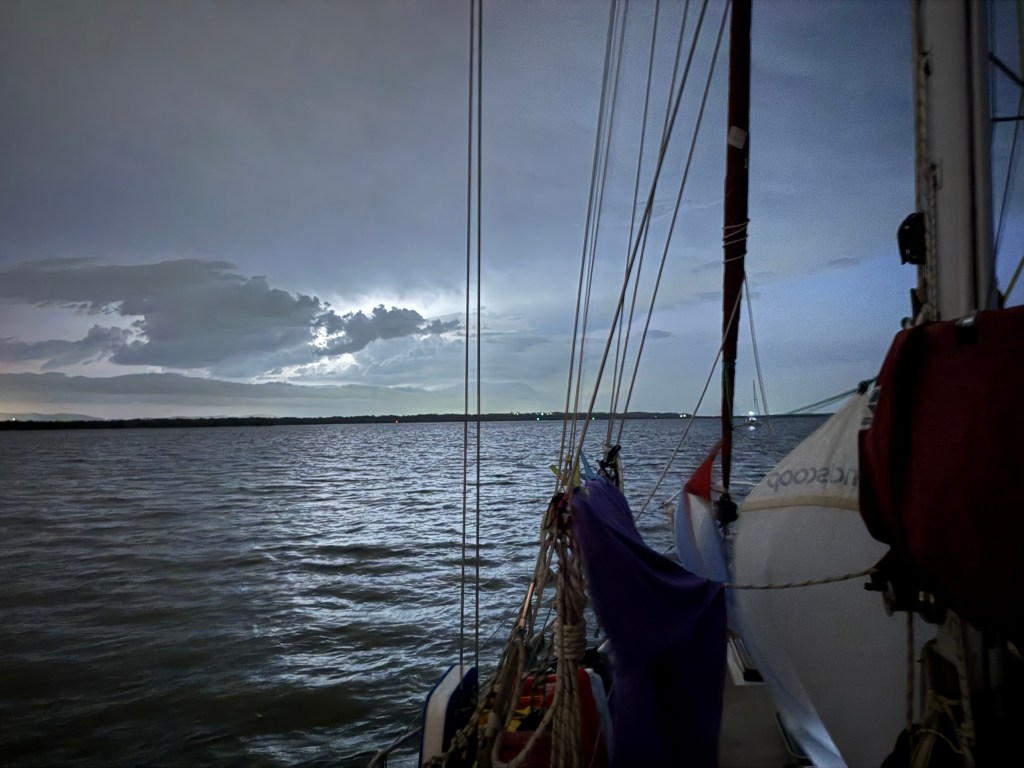
Trying to get away from the crowds we anchored later than day in another bay closer to South Port but separated from the main channel by a sand bank. That night we were entertained by a thunder storm that reminded us that nature and beauty could still be found in that humanity over-loaded environment.
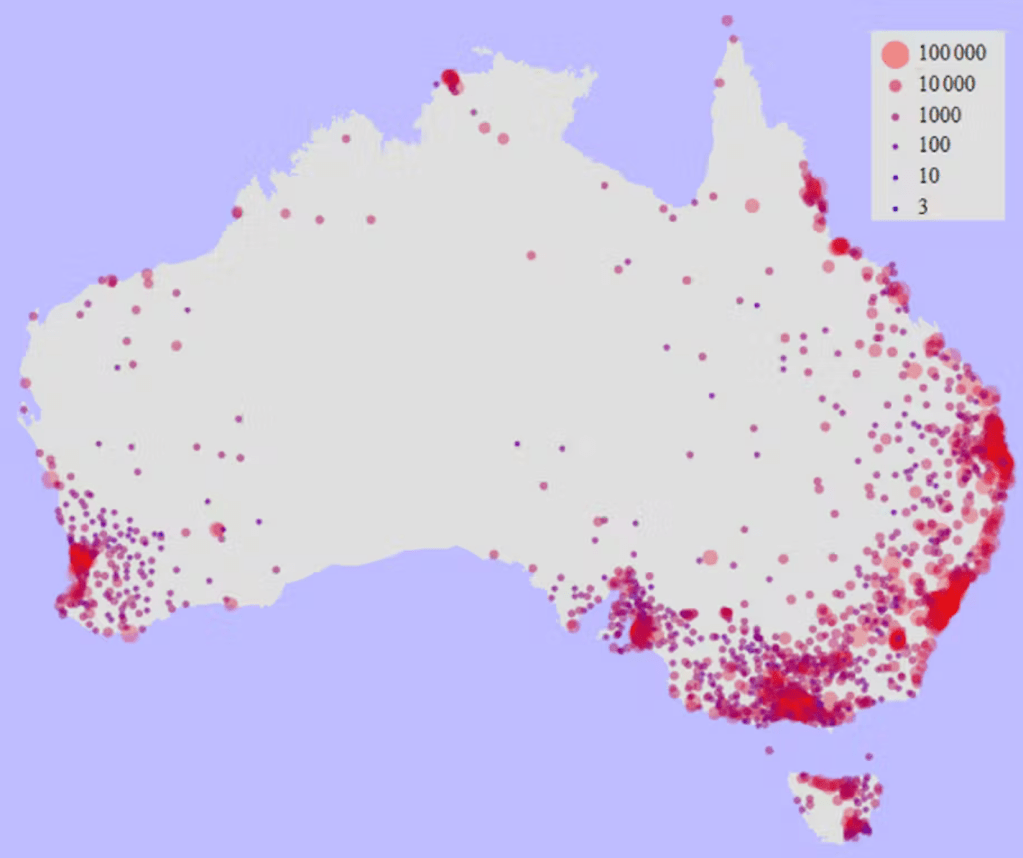
Australia is a big country, the sixth largest in the world, but despite this its population is one of the most urbanised in the world. The Crocodile Dundee type image of Australia is largely a fallacy. The vast majority of its 27 million people are squeezed into a narrow corridor between ocean and inhospitable interior. A full 90% of Australians live within fifty kilometres of the coast (a mere 0.22% of the country’s land mass): 73% in major cities, 26% in inner and outer regional areas, and only 2% in remote or very remote areas. The resulting density of people can be a little overwhelming, and the boom in building over the past few decades has resulted in parts of Australia becoming a seemingly endless vista of beaches, high-rises, and malls.
Naturally, in this capitalist heaven some succeed and many fail. Great wealth and poverty rub shoulders on the street, if nowhere else. A common topic of discussion is the inaffordablity of housing. The average Australian house price in March of 2024 was A$959,000. When you think of the massive divergence in price between housing in the interior and exterior of the country it becomes readily apparent that most people, living where most Australians do, have no chance of owning a house. Many of the citizens of the ‘lucky country’ no longer seem to believe that luck is going to come their way. Cost of living, crime (especially youth knife crime), mental health issues, and drug addiction all seem out of control. We have been quite surprised by the number of people we have seen wandering the streets, mumbling to themselves or yelling at passers by. As if worried for their own safety the police here, armed with sidearms, tasers, pepper spray and wearing stab resistant vests, wander round in packs of three or more. Australia is obviously facing some serious social issues, but solutions seem to be in short supply.
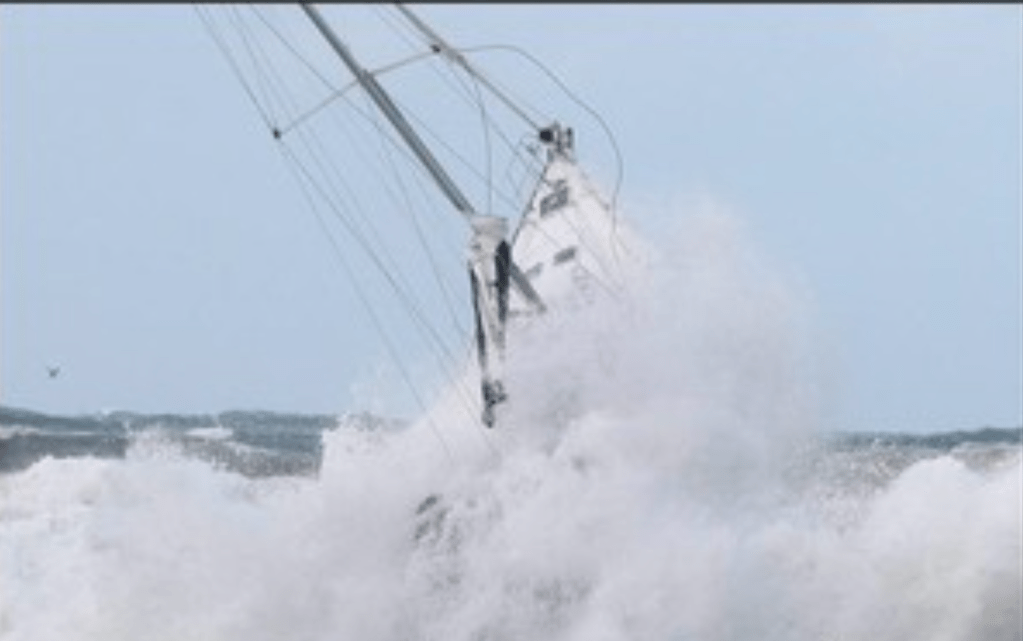
Early next day the jetskis were back, and the weather offered a small window for us to clear out. With an opportunity to leave there was no question of staying, so we packed up and headed towards the South Port bar, our escape route to sea and sanity. Before attempting the bar we called the local Marine Rescue chaps and been given the all clear, checked the on-line cams, and made sure that all the conditions were favourable. Even though everything was in our favour the bar still provided a couple of waves of sufficient size to stop Taurus in her tracks. When doing our research we had found some images of a yacht that attempted the bar in 60 odd knots of wind, with predictable consequences. It was a good reminder that you just can’t be complaisant about bar crossings.

Once out at sea we had to tack through the reefs and shallows that sit outside the Gold Coast, before heading south towards our destination for the day — Tweed Heads.

Tweed Heads is only 15 nautical miles from the Gold Coast, some three hours sailing if the wind plays ball. In our case it took just over 7 hours as we tacked through a south easterly, zigzagging towards our destination because we couldn’t take the straight line into the wind. Still, it was nice to arrive and cross the bar during daylight, and even better to find the tempo of life turned down from the frantic pace of the Gold Coast.

We motored a short way up the Tweed River before picking up one of the free public moorings provided by the New South Wales Government.
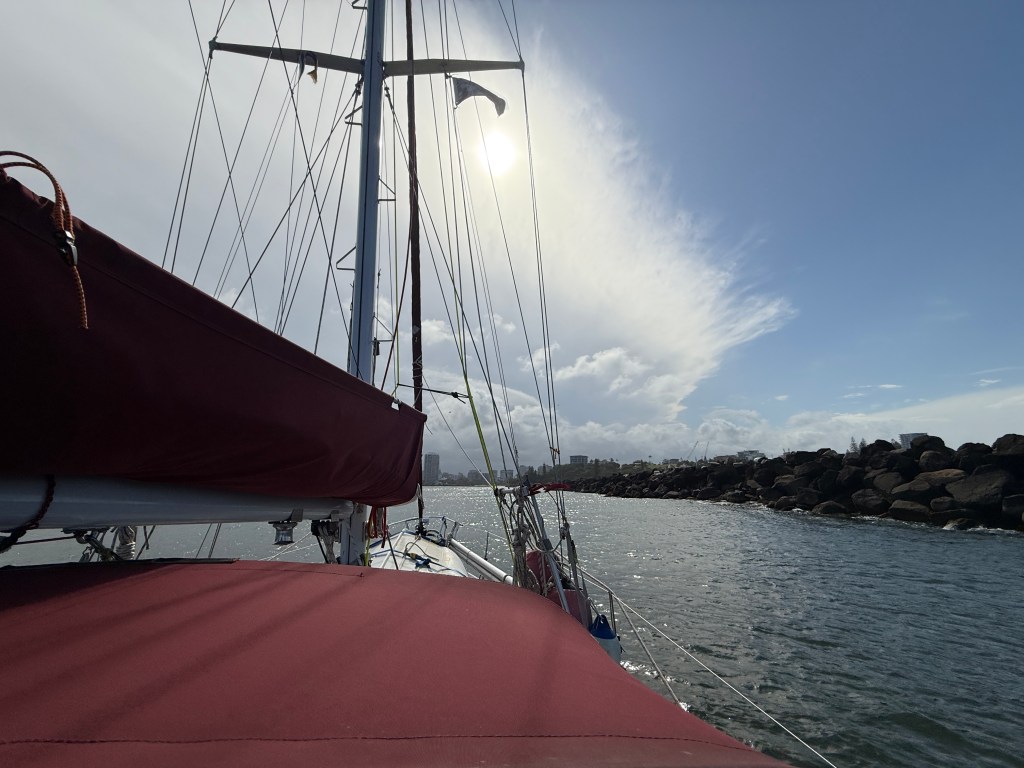
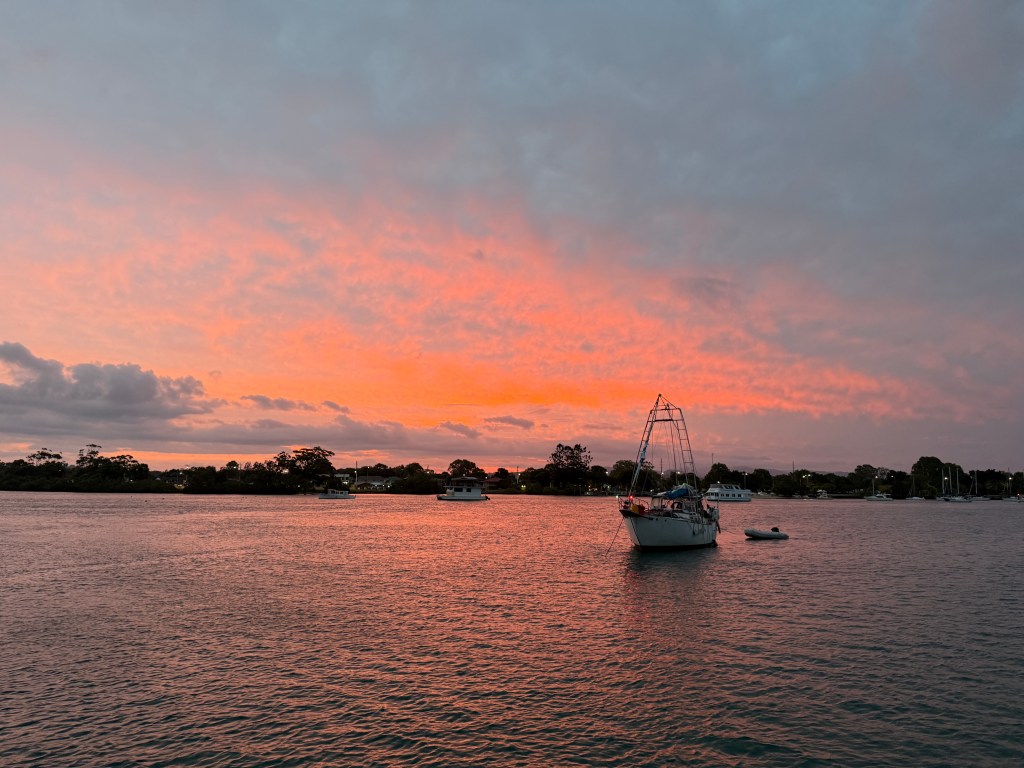
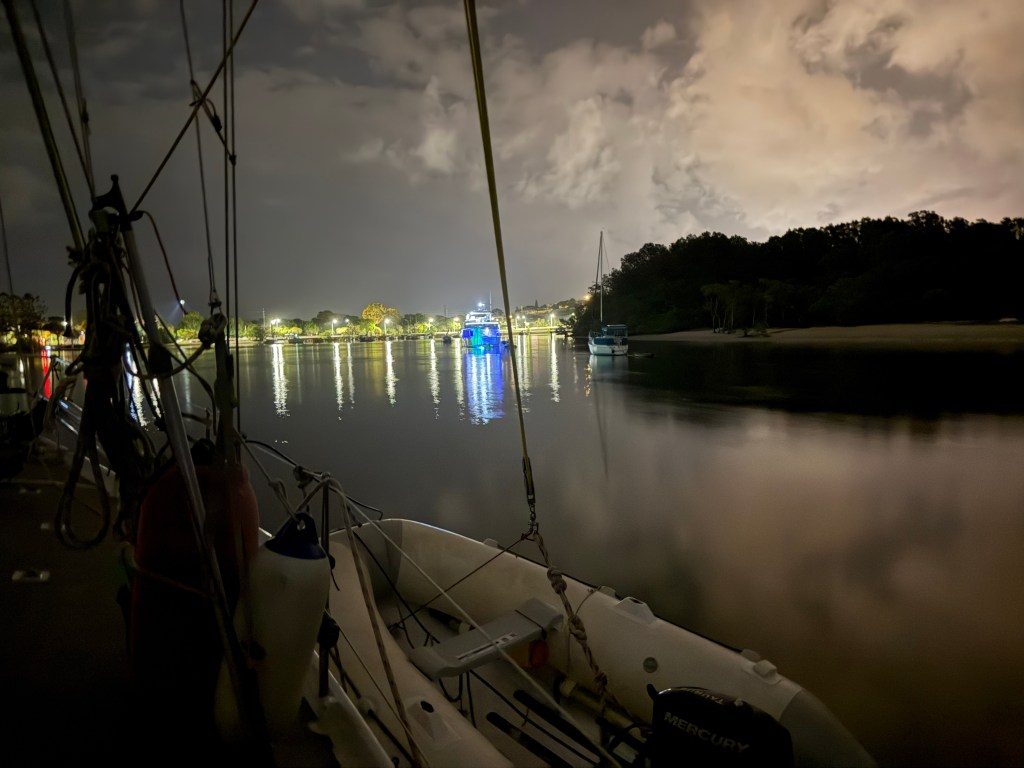
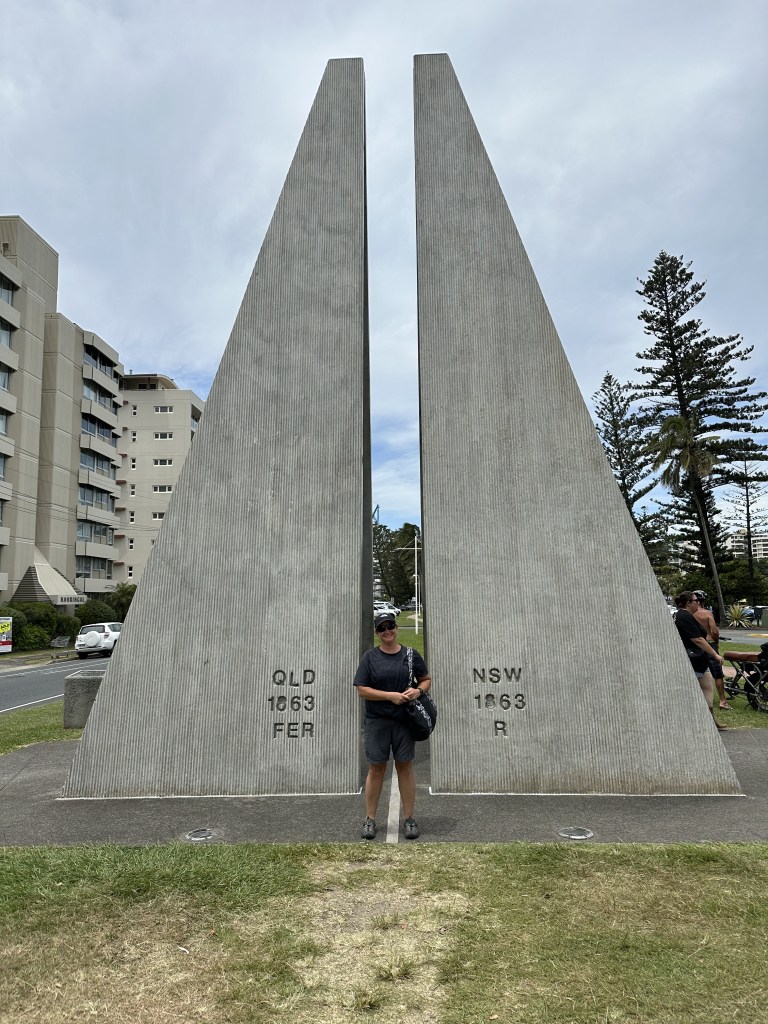
Tweed Heads and the merged town of Coolangatta lie across the border that divides Queensland from New South Wales. A 300 km fence once divided the states for ‘quarantine and customs purposes.’ The fence also held a darker purpose, making it harder for ‘black bird’ slaves, men taken from the Pacific Islands to work on the Queensland sugar plantations, to find freedom. New South Wales didn’t operate sugar plantations, and so the enslaved labourers were free men if they could find their way three miles or more over the border. If caught less than three miles from Queensland they were returned to their owners.
As mentioned in a previous post, Queensland, unlike the rest of Australia, decided against operating a daylight savings system, with the result that it lies an hour behind the rest of the country. In the photo below Cara’s right foot exists at 11:00 in the morning, whilst her left lies at 12:00 in the afternoon. I imagine living here would make my head ache.

We stayed in Tweed Heads for a couple of days, spending our time mooching around town and keeping a close eye on the weather. As soon as the opportunity arose we intended to head further south.
Next time: we celebrate New Years Eve at sea, do a couple of 48 hour passages, catch up with friends, and check out some Aboriginal rock carvings.
 Sailing Taurus NZ
Leave a comment