Whilst cruising in the Pacific we had been growingly increasingly concerned about paint blisters on our hull below the waterline. When these blisters burst, bare steel could be seen underneath which then began to rust. Being perhaps too fastidious for my own good, the idea of my hull being exposed to salt water and slowly rusting away was a source of irritation and concern. Though I had been told by several steel boat owners that the likelihood of any real damage to the boat was exceedingly small, steel rusts very slowly when underwater due to lack of oxygen, it was not something I could forget or be sanguine about.
At some point the problem, and its founding cause, would have to be addressed and fixed. Unfortunately, the source of the problem was not entirely clear. Queries about paint blisters on hulls often feature in steel boat forums, but though the problem is common the cure can be elusive. The advice commonly meted out is that blisters can be caused by one, or a combination of, three things:
- Poor paint application (paint applied on unclean steel, or when conditions were too hot or cold or humid).
- Electrolysis (stray current from the boat’s electronic systems ‘leaking’ into the hull and creating a charge that lifts the paint).
- Too many sacrificial anodes (zinc anodes, high on the galvanic scale, corrode before other metals such as bronze (which propellors are made of). The anodes are ‘eaten’ by the charge that inevitably occurs when dissimilar metals are placed in a solution (the sea in this case). Replaced annually, the sole purpose of anodes is to protect other more expensive items (like propellors) through their corroding away, but too many can apparently cause paint to blister).
As anyone familiar with sailors will be aware, we tend to hold strong opinions. We also like to be open minded, so tend not to limit ourselves to a single opinion. Ask three sailors a question and you are likely to get half a dozen differing opinions, all of which will be deeply held and strongly argued.
My own opinion on the cause of my hulls blisters was based on scientific fact and unassailable logic, of course. I reasoned that the paint application must have been fine as I did it myself only three or four years ago. Surely I could have done nothing wrong!
I could rule out electrolysis as Cara and I have spent a great deal of time and effort ensuring that every system on the boat is ‘above ground’ — i.e. not grounded to the hull.
Too many anodes seemed equally unlikely as we have only ever replaced the anodes that had always been on the boat, and even reduced the number of these, ‘just in case.’ So, we reasoned, the problem must be due to a vengeful God in an uncaring universe. C’est la vie!
But seriously, our purchase of an electrolysis monitor means that we can track any stray current and eliminate it. We have spent many, many hours on this endeavour, and I can therefore say with some certainty that Taurus has never been more electronically clean than she is today.
Too many anodes seemed equally unlikely. We have less anodes on her than she has had in the past, and our research suggests that we have slightly less than we should have (which is not a problem as long as we make sure the anodes don’t completely erode away before we change them).
So it seems maybe, just possibly, I didn’t do a great job when I painted her?
Naturally, we didn’t want to spend a vast amount of money getting the hull sandblasted, the best way to prepare steel for painting (and which I was all in favour of having spent a couple of weeks taking the paint off the hull with a sander last time, with the welcome help of my son, Daniel, it must be said — until he sanded the skin off his fingers) if the paint was only going to fall off again because the underlying cause hadn’t been rectified. On the other hand, the consequence of the problem had to be fixed regardless. Basically, we had to get the job done and hope the paint would stay on this time.
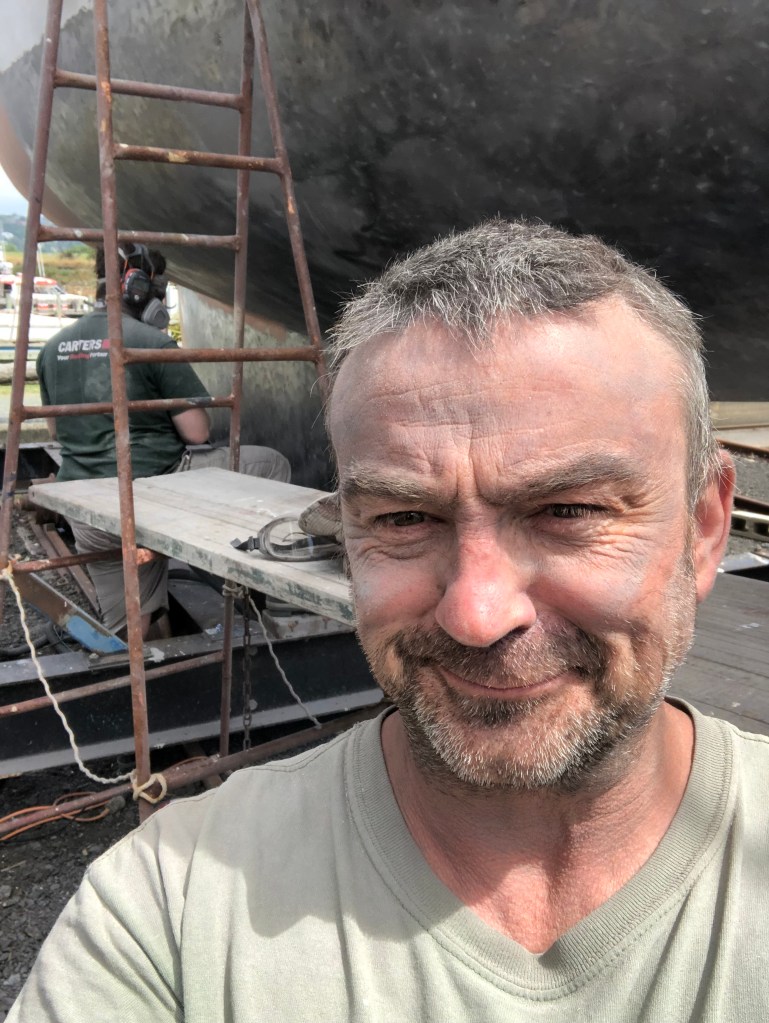

As to when and where to get the job done, the solution was oddly straight forward. A marine sandblasting and painting firm located in Bundaberg was able to do the job. Cara was keen to return to NZ to do some work that would help keep her anaesthetic registration current. A locum position for a month’s work came up, which meant that she could put in the necessary time and earn the money that would allow us to pay for the job, which I would ‘supervise’ whilst she was away. All the dots seemed to line up nicely.

Taurus was hence lifted onto the hard, Cara prepared to fly back to NZ, and we moved into temporary accomodation at a nearby campsite as we couldn’t live on the boat whilst it was being sandblasted.
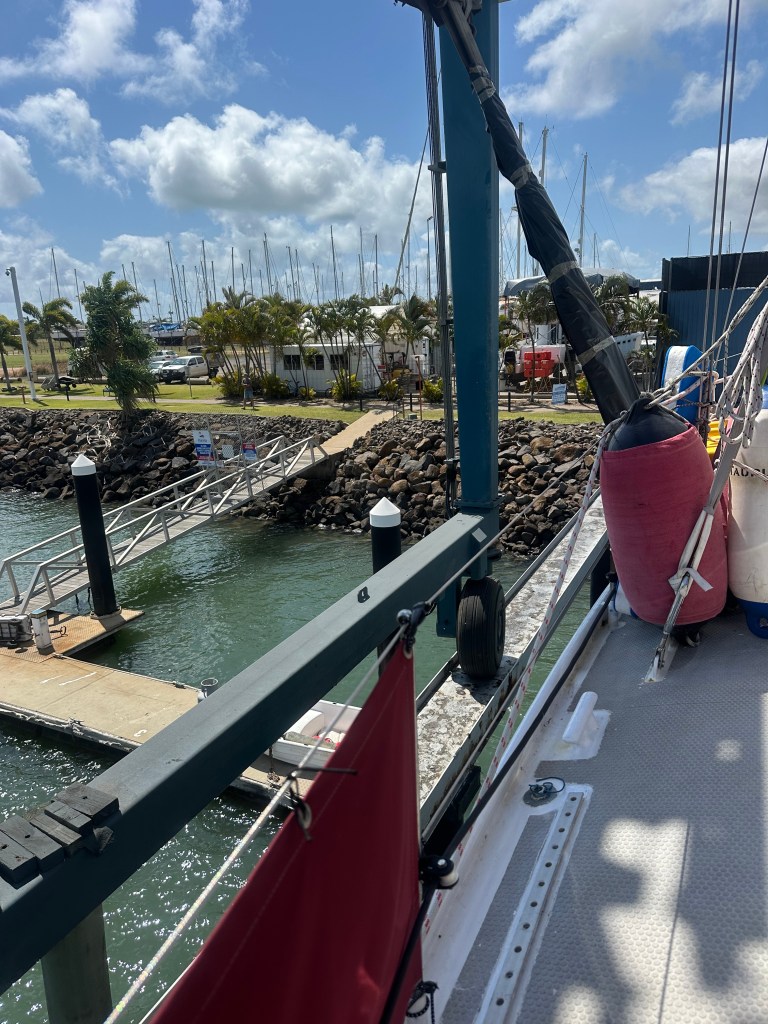

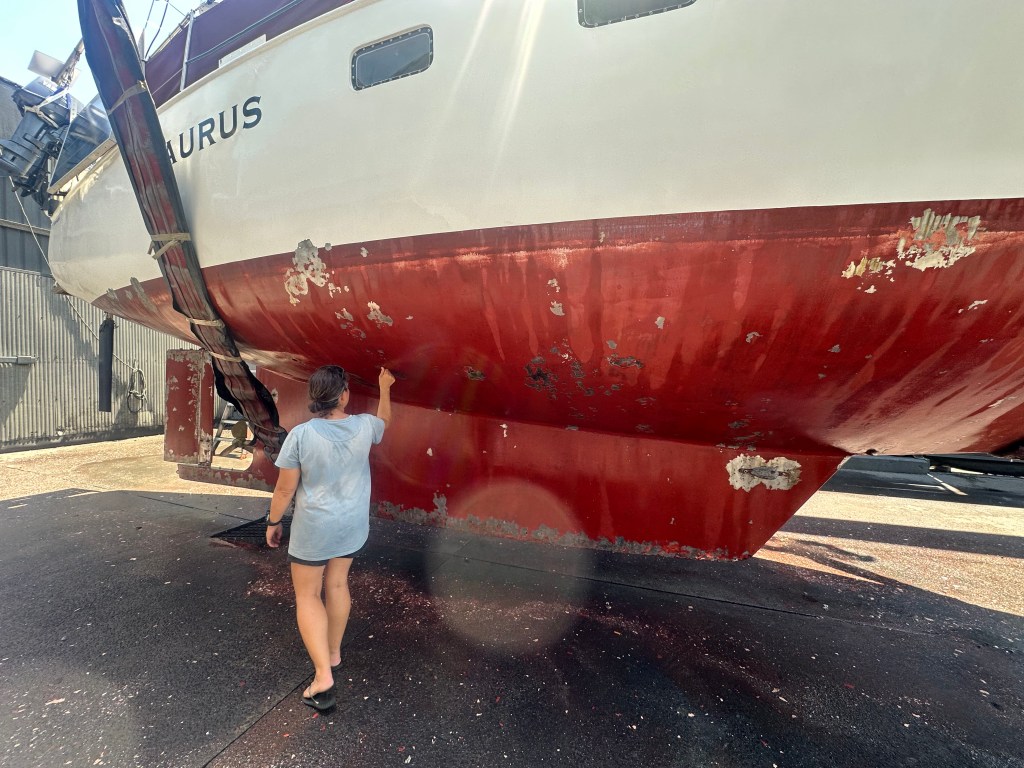
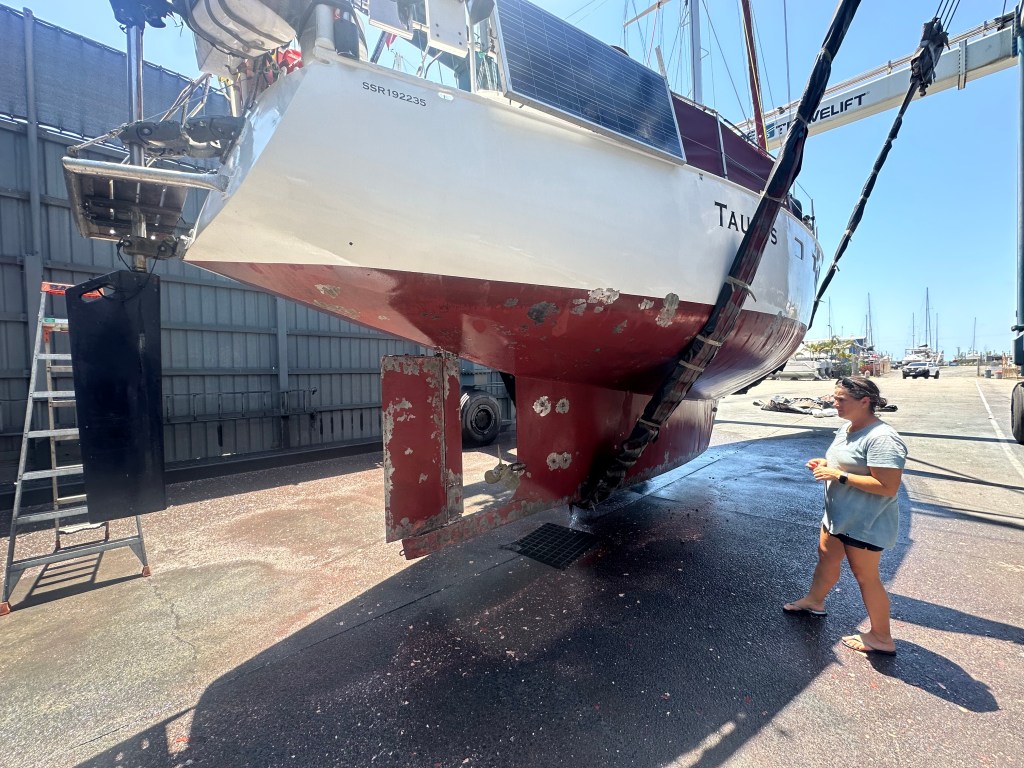
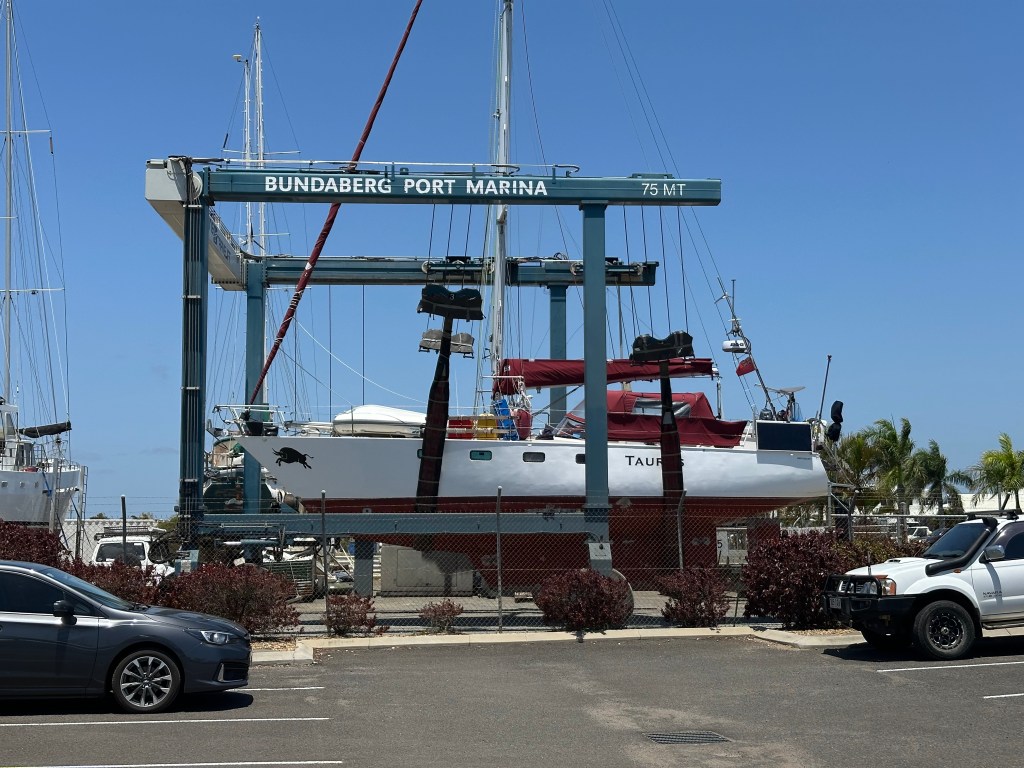
The sandblasting progressed remarkably quickly. We came in to see how the work was going the morning after depositing Taurus in her shed, and found that she had already been blasted and had a coat of paint applied. Another was added the following day, on a Saturday, and two more the next day, on a Sunday! We could hardly believe it. The guys cracked on with the work, starting and finishing early before it got too hot, and then retreating to the local pub. Fair dinkum cobbers, as they don’t say in Australia!

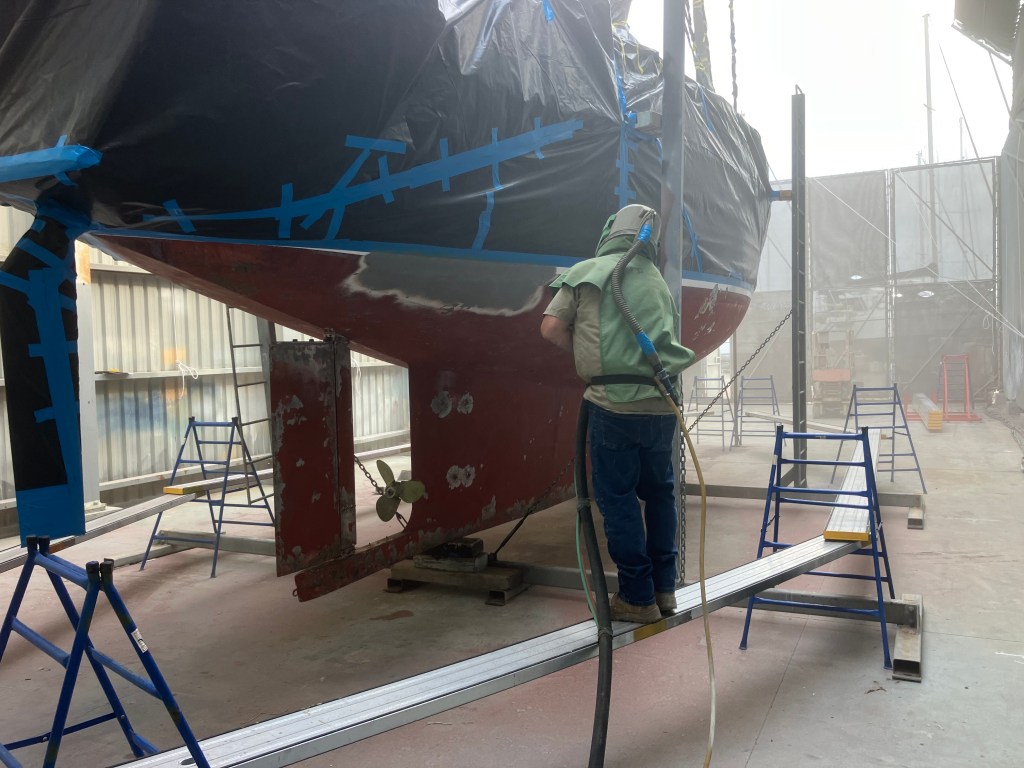


Happily, the sandblasters were very complimentary about the state of Taurus’ hull. Not only was there no damage, but they couldn’t believe that she was a 44 year old boat that had been round the world. The professional opinion was that the issue had indeed been one of paint application. So, hopefully, fingers crossed, the paint will stay on this time!


Cara had left by this time so I asked a friend to help me take the boat from the travel lift to an anchorage in the river. I couldn’t justify staying in the marina at $70 per day for a month, especially as you aren’t allowed to work on your boat in these places. I was glad I had help as when we were lowered into the water and went to reverse out of the travel lift the boat stalled. When I tried again it stalled again. I racked my brain for possible causes. The classic reason would be something caught around the propellor — but I had just been looking at the prop and it was free. The travel lift operators, for whom time is money, were asking if I wanted to be hauled out again and go on the hard to sort the issue out. I had limited time to solve the problem. Eventually, something freed up and we nervously headed out of the marina, praying the boat wouldn’t stall and leave us powerless to avoid crashing into someones expensive pride and joy. However, Taurus now seemed fine, and we anchored in a small bay beside the marina. In hindsight I can only think the problem was due to the prop shaft having been painted over at the the cutlass bearing (where the prop shaft enters the boat) which gummed it up enough to prevent the shaft from turning and hence stall the engine when it was put under power. Any other ideas?
Once on anchor I felt that Taurus was uncomfortably close to some boats in marina berths behind me. On the chart it appeared that I would have plenty of room but, as I eventually worked out, the marina had built another finger berth that wasn’t on the chart, thus reducing the room in the bay significantly. I wanted to anchor in that particular bay so that I could row ashore and be able to walk the couple of kilometres to the supermarket. I had been warned about thefts in the area so didn’t want to leave my dinghy with an outboard on the beach where there was nothing to lock it to. This meant being within rowing range. Ultimately, I didn’t feel that I could stay, so I picked up the hook and motored across the river to anchor opposite the marina. I spent a few days there but wasn’t happy about the dinghy/shore issue. I inquired at the marina if there was somewhere I could leave my dinghy and was told that yes, for A$30 a day they would let me use a dinghy dock. As I had just spent nearly A$3,000 with them I thought this was a bit on the nose, and thanked them kindly whilst cursing them deeply for their money grubbing ways. This attitude of extracting every possible cent seems to be standard at Bundaberg Marina. Friends of mine paid in advance to stay there whilst they waited for some engine work to be completed. When the job was finished early they wanted to leave, but the marina refused to refund any of their money. I suppose this might make good business sense, but it doesn’t encourage loyalty or positive recommendations.

I returned to anchor in the bay, found that it hadn’t grown since my previous departure, felt that I was too close to the boats behind me, and left again after a quick trip to the supermarket.

It is possible, at high tide, to sail into Bundaberg itself and anchor there between moorings. However, the anchorage is supposedly full of debris from a marina that was destroyed in a flood some years ago, and there have been recent cases of dinghies being stolen and even stabbed for some reason — fun I guess? The idea of having to constantly worry about security, holding, and swinging room between moored boats didn’t appeal. I have to say that my reticence was partly due to Cara being away. When sailing short handed you get used to sailing with that other person, so that when they aren’t there everything seems that much harder. I didn’t fancy facing a very shallow river followed by trying to anchor solo in limited space; I simply didn’t feel confident to do it alone.
In some desperation I decided to head up river a ways to try another anchorage near Port Bundaberg. It might sound idyllic being on anchor on a yacht in Australia, but the reality can be pretty uncomfortable. Just about every day the temperature reached 30-35 degrees, at night it would drop to 25 or so. When it rains it pours, you have to shut the windows and the temperature, even outside, seems to leap up with the increased humidity. Sweat pours off you, especially if you are trying to do any work inside the boat. I ended up working naked much of the time because any clothing quickly became a sodden impediment. Washing frequently was a necessity, not just to avoid unpleasant body odour but to avoid sweat rashes. The river was too dirty to swim in, and there had been reports of crocodiles, so that was definitely out. Refrigeration on Taurus is very limited, so that fresh food only lasts a few days. I needed access to a washing machine, showers, and a supermarket. The anchorage off the port had plenty of room but the only landing site for a dinghy, a beach, was unusable except for two hours either side of high tide due to deep mangrove-like-mud. There was a navy cadet base with a jetty, but it was locked up like Fort Knox, due presumably to the crime issues. Trips to town to buy food, work supplies and so on, demanded access to shore and access to public transport, Bundaberg is about a forty minute bus ride from the port. Everything took a long time to organise, everything felt a bit more difficult than it needed to be, and everything was a bit of a PITA. On top of this, the isolation made the situation feel much worse. You don’t tend to meet people when on anchor, the people I had met previously had all left to head south, and you can quickly end up feeling like a stranger in a strange land. Working on the boat all day every day in these conditions, often finding new and bigger problems that had to be resolved, quickly became pretty miserable.
One bright spot, that helped massively in overcoming some of these issues, was meeting Trevor. Trevor was anchored on the boat next to me, so one day I took the dinghy over to ask him how he coped with life on anchor outside the port. He kindly put me in touch with a friend of his, Martin, who had a private jetty nearby. I spoke to Martin and he agreed to let me use his jetty, which was incredibly generous seeing as I had to walk through his garden to get from the jetty to the road. Trevor was also able to help me out with transporting some larger items that would have been difficult on the bus, and gave me a hand when I needed to move Taurus on to a berth. I dare say I could have coped without Trevor’s help, but it would have been bloody hard.


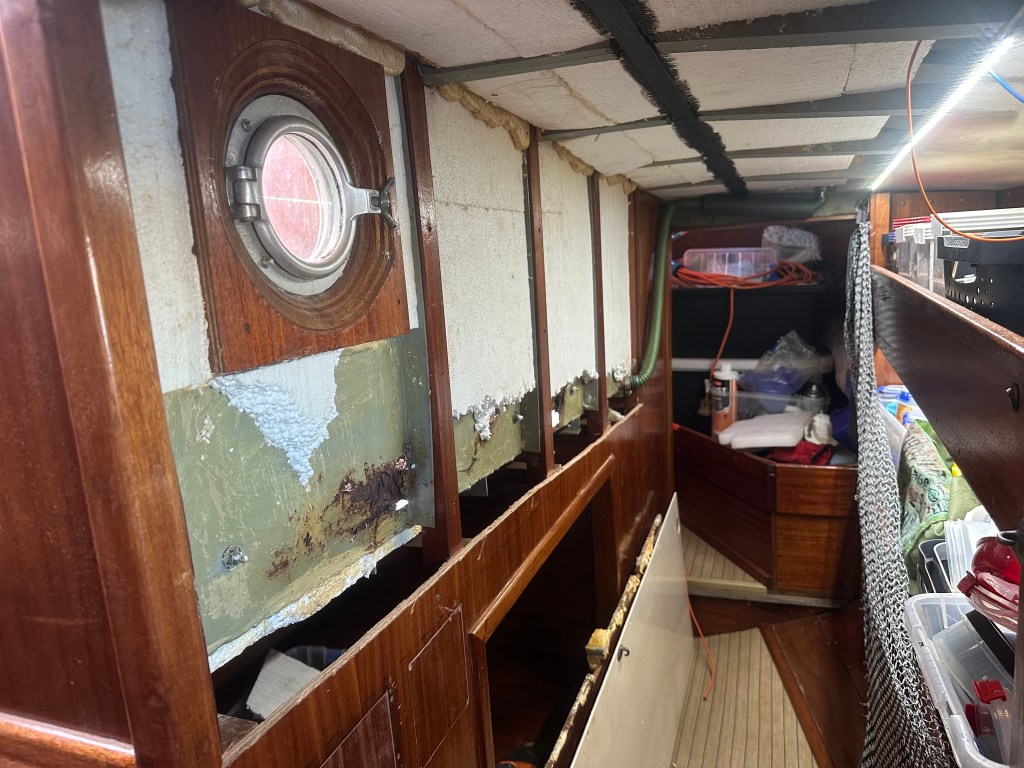
One of the jobs on my list was to clean up some surface rust in the bottom of the cockpit. Unfortunately, when I started cleaning the area up it soon became obvious that the rust was much worse than it appeared. As this area can catch waves it has to be waterproof, so the corrosion had to be repaired. The problem was how best to do it. The biggest difficulty was simply gaining access to the job. On the inside of the boat the corrosion was hidden behind wood panelling that had been epoxied in to place, the boat builders clearly hadn’t considered anyone ever having to take things apart.

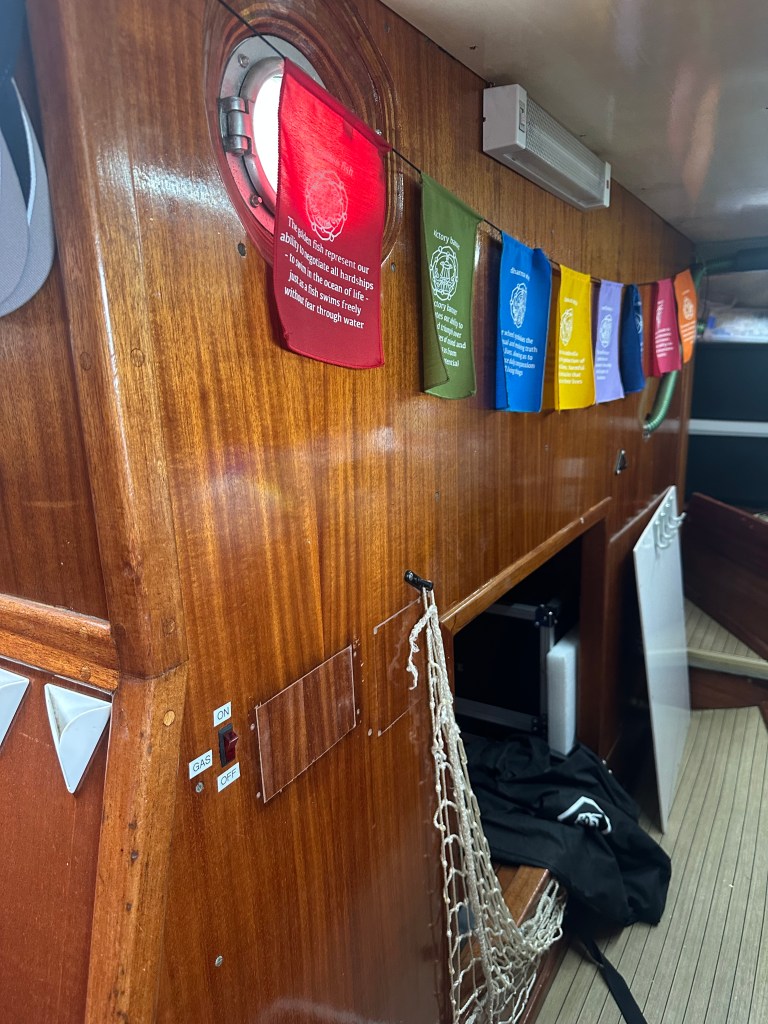
I asked friends for advice, and one solution was to simply treat the rust with a chemical killer and use a marine adhesive and rivets to fix a sheet of steel over it. Hey presto, waterproof solution. As the area is non-structural this would be an acceptable fix. I knew, however, that a ‘band aid’ solution would bug the hell out of me, and if I was going to cut the rust out, which is what needed to be done, then I might as well have a new panel of steel welded in. I was warned that ‘hot work’ would create a hell of a mess, and it did, but ultimately I couldn’t stomach the idea of a ‘bodge’ job.
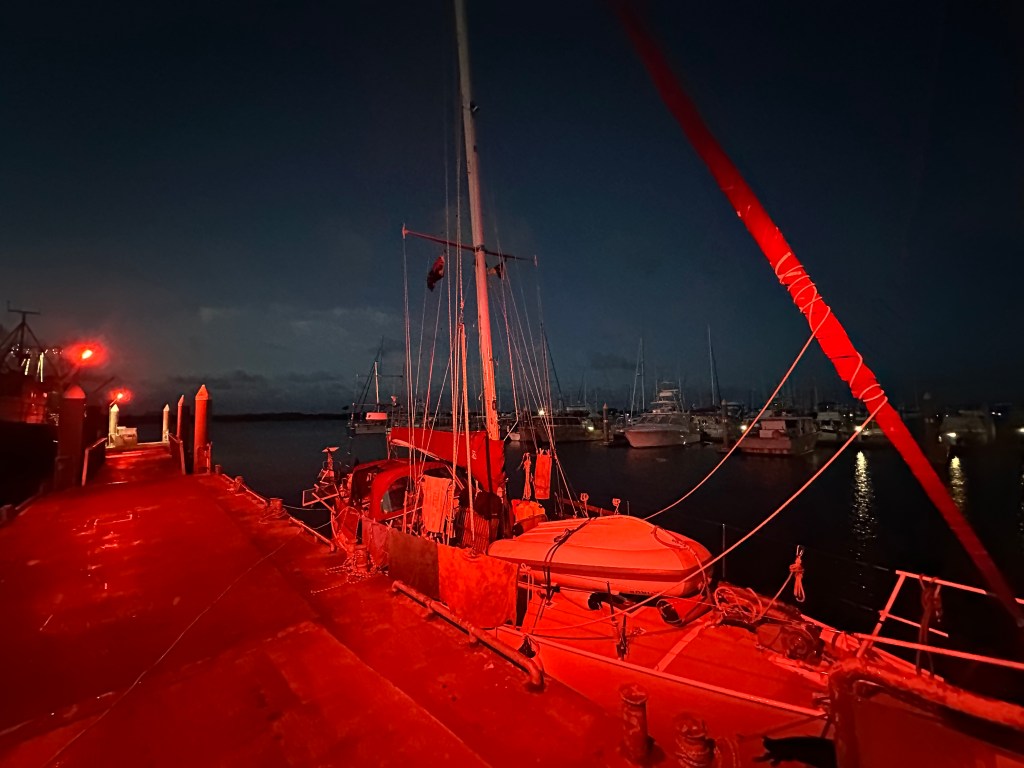
I spent a few days getting access to the area, using a skill saw to cut the panels rather than trying to remove the mahogany trim that was epoxied in to place and would inevitably splinter if attacked. Then I contacted some of the local welders to see if anyone could do the job before Christmas, which was beginning to loom large. After being told ‘no chance’ by a couple of firms, I was grateful to hear that Craig at ‘Oceanic Marine Services’ had had something fall through and could fit me in the next day. I then had to contact the marina to get a place on a working berth, with the fishing boats, and move Taurus with the kind aid of Trevor. The marina naturally charged me the standard rate for a berth, though there was no water and only one power outlet for all the boats to share. They also forgot to give me an access card so that I couldn’t get into the toilets and showers after hours… grrr.

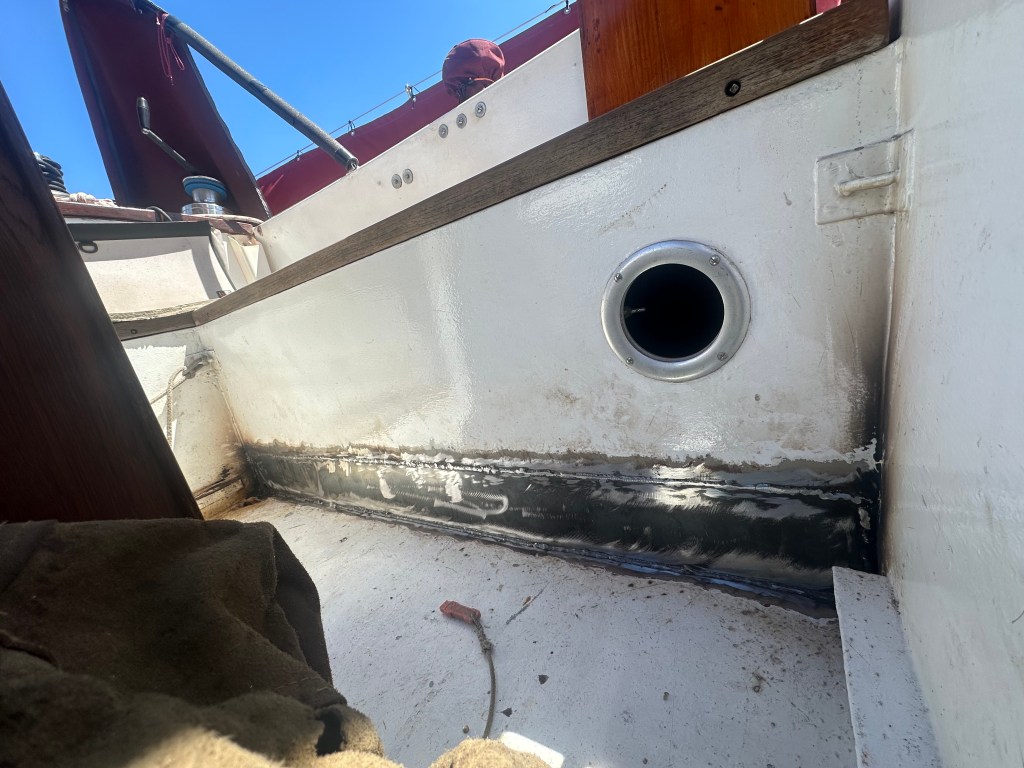
Working with the welder was an interesting experience. I was on ‘fire watch,’ making sure that the boat didn’t catch fire on the inside whilst he welded on the outside. Part of this role required me to hold a lump of steel, known as a ‘dolly,’ against the inside of the join being welded to reduce the number of sparks thrown through. I was running with sweat, but how the welder coped with his mask, hood, and heavy work gear is beyond me. I had thought of trying to do the job myself, but after seeing the experts struggle I was glad that I had had the sense to leave well enough alone.
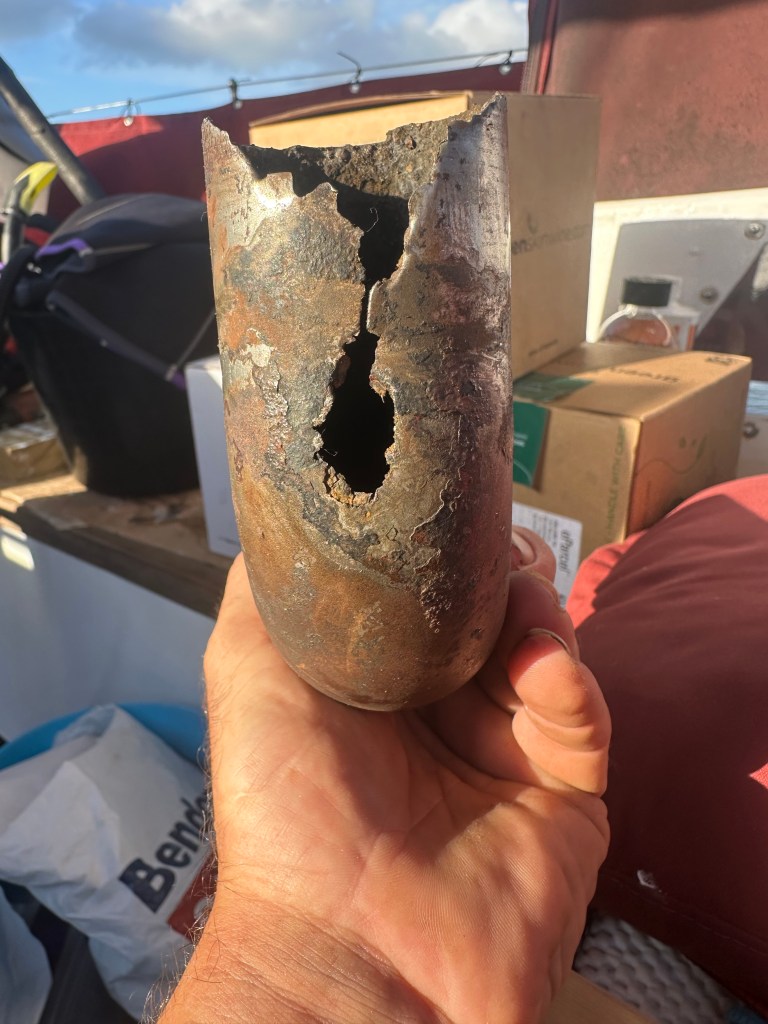
With the welding finished, Trevor and I headed back to the anchorage so I could start the painting process — two coats of CRC rust killer, two coats of Altex 504 primer, two coats of Altex 634 undercoat, two coats of E-line 379 top coat, or more, as needed — but when stuff goes wrong it tends to want to keep going wrong. After motoring back to the anchorage I found water in the bilge. Bugger. After some investigation I discovered a hole in one of the 90 degree exhaust bends. Boats generally use sea water to cool their engines as the engines, on the inside, aren’t able to be air cooled, like most cars for example. A series of hoses and a pump sucks sea water in, sends it to a heat exchanger where the hot oil sits in close proximity to the water, which reduces its heat, and is then ejected overboard. Naturally this system is a little more complex in reality, due for one thing to the danger of sea water entering the engine from the hose used to eject the water when the engine isn’t running. To prevent this the exhaust hose is often run above sea level for a short distance. In Taurus this requires a ninety degree bend or two.
Remarkably, a replacement part was mine for $60, which is practically free for a boat part (the affordability was no doubt due to the fact that it’s actually a car part) but fitting this swine of a thing was a three hour test of strength, ingenuity, and endurance. How hard can it be to fit a tube into a pipe that it’s designed to fit inside? It can be very hard indeed. I changed the second bend, for safety’s sake, and it slotted in like the proverbial ferret up a drainpipe, but the other, identical, pig of a thing… my word. Grease, a heat gun, files, a grinder, hammers, all came to the fore with plenty of sweat, swearing, and not a little blood. Far from feeling triumphant once the job was done, I gazed at the mess and was reminded of Sir Arthur Wellesley’s famous quote as he surveyed the field of Waterloo, “Nothing except a battle lost can be half so melancholy as a battle won.” Quite so Sir, quite so.
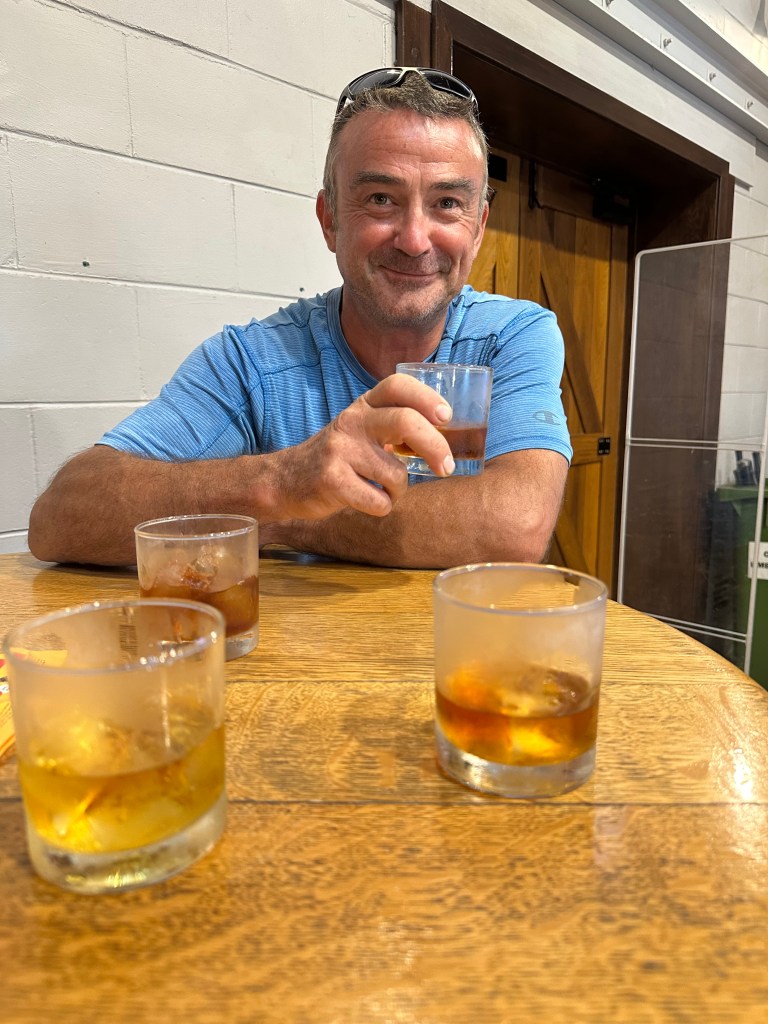
Putting the boat back together took a few days but it was all done before Cara got home. I have learnt that trying to live on a boat that resembles (or indeed is) a building site is less than ideal for marital relations, so it was a relief that it all came back together in the end. Then it was time for an outing and a well deserved drink, or two, possibly three…

Next time: we finally leave Bundaberg, we cross two sand bars in a day, we enter Mooloolaba Harbour at night and unintentionally join a Christmas parade, we enjoy other nautical frolics and mayhem…
 Sailing Taurus NZ
Leave a comment