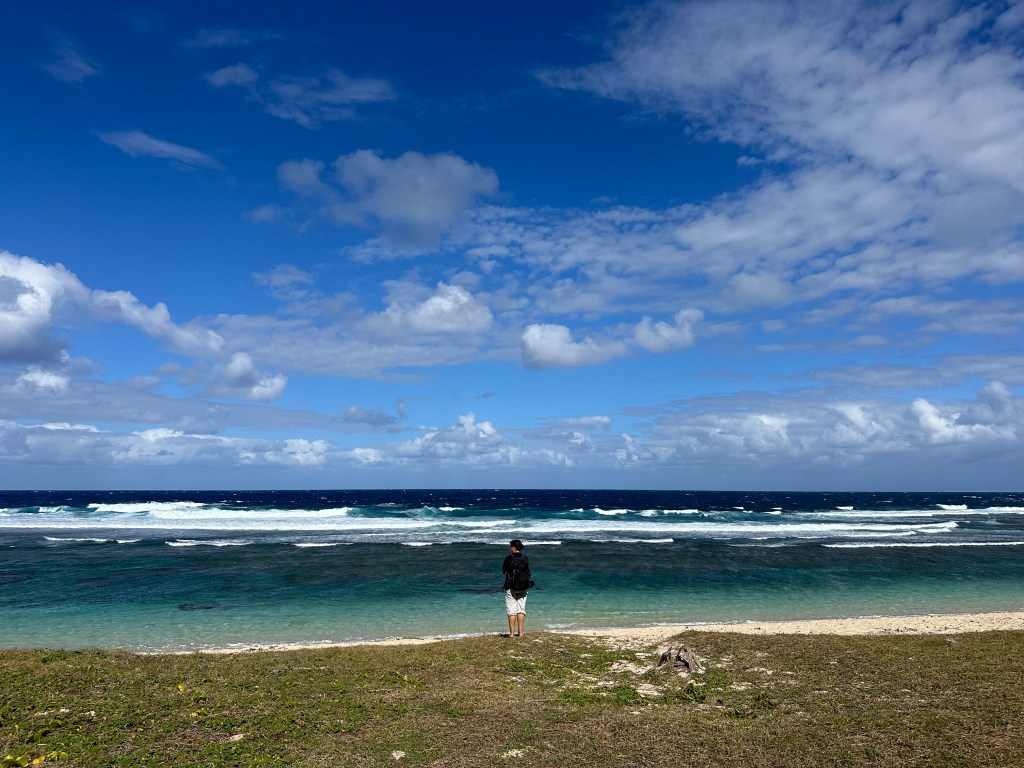
Having cleared Vanuatuan Customs we were free to explore. Vanuatu is a chain of 13 large and 70 smaller islands. Tanna, the island we had arrived at, is not quite the most southerly of these islands. The country has an interesting, if somewhat bleak history. Archaeologists believe the islands to have been inhabited since around 3000 BC. Europeans discovered the islands in 1606, but it wasn’t until nearly two centuries later that much interest in the group was taken, and they were then visited by such famous men as Bouganville, Cook, and d’Urville. Bligh also passed through the region on his infamous longboat voyage from Tonga to Timor following the mutiny on the Bounty.
The demand for sandalwood led to increased European and American interest from the early 1800s and led to several violent confrontations with the locals. The populace were later used as a cheap labour resource and taken to Australia in a practice known as ‘black birding,’ which quickly degenerated into a system little dissimilar to slavery. The British government stepped in in 1872 to try and protect the islanders. French interests in the islands subsequently resulted in a joint colonial governance, with the islands being run under an unwieldy system of British, French, and local law. Vanuatu eventually gained independence in 1978. The islanders collectively speak an astonishing 115 indigenous languages, as well as French and English which is an outcome of the ‘condominium government.’ In consequence, the Vanuatuan Government elected to create its own language, Bislama, which is a form of pidgin English. Since independence there has been an unfortunate degree of political corruption and instability, which has resulted in poor economic development. At the time of our visit we hear that the school teachers are striking because they haven’t been paid for some time, and that the government is bankrupt because the Chinese, who have built several impressive roads in the region, have called in their loans.
However, this dire history probably doesn’t impact the vast majority of people in Vanuatu who don’t miss the opportunities that they don’t know they have missed out on. Indeed, nuclear war, solar flares, or asteroid strike could probably pass unnoticed by the locals unless they happened to be in the direct line of fire. These are people whose carbon footprint would register in negative figures.
The technological resources in Port Resolution Village, home to some 200 people, amounted to one solar powered light outside the church, a couple of large communal water tanks, and a solar water pump. Breeze block houses with corrugated iron roofs are springing up here and there, challenging the traditional building techniques that are still used. However, as these houses stand up far better to the routine cyclones that lay waste to the area their ugliness shouldn’t disguise the fact that they represent real progress.
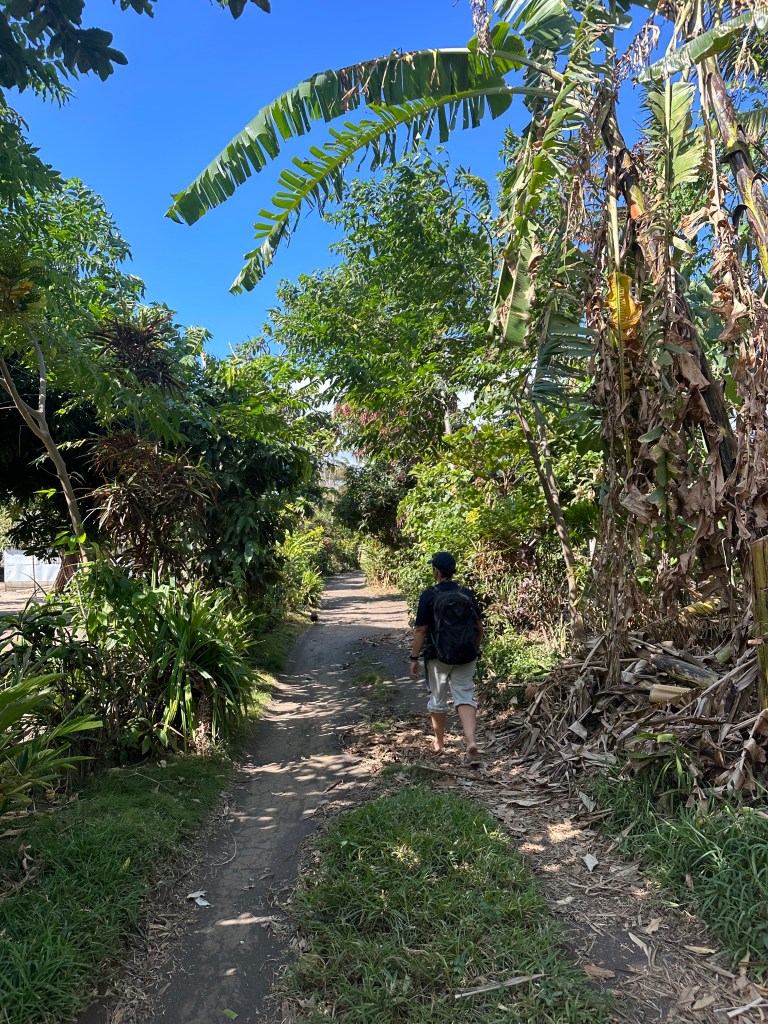
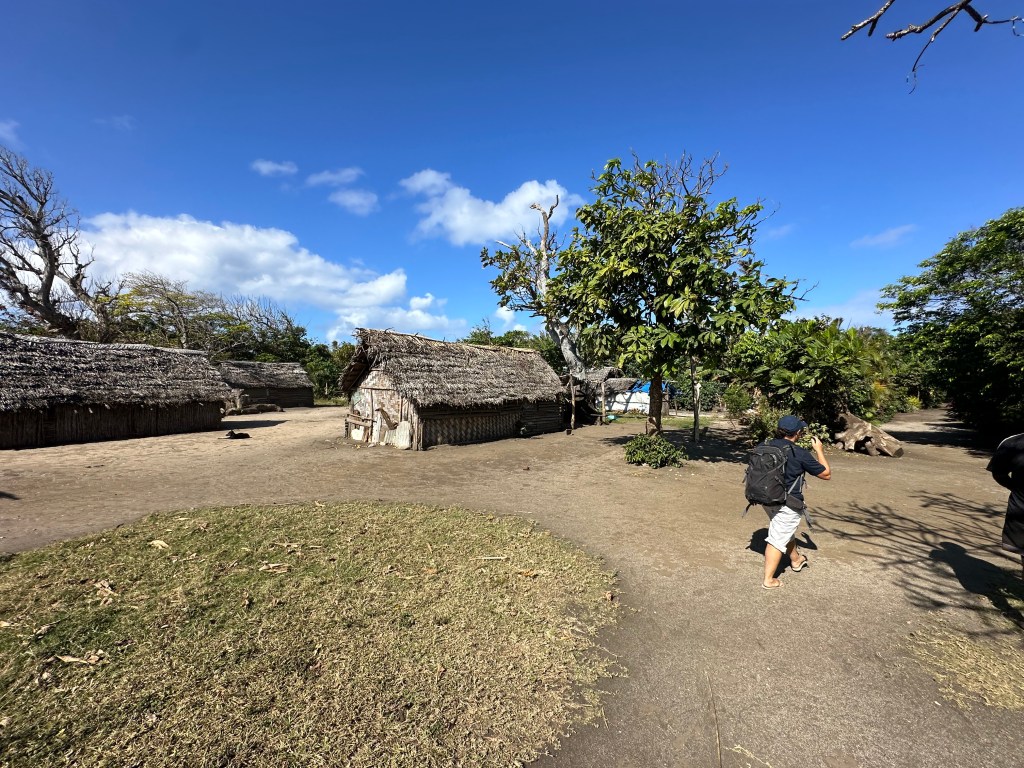
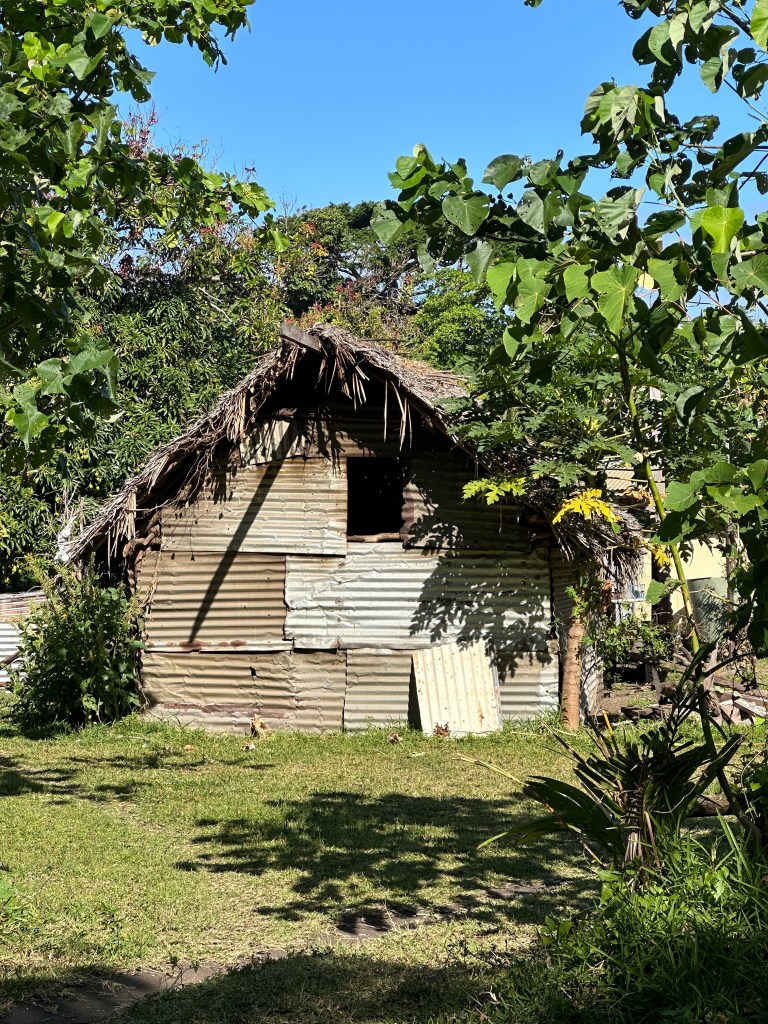
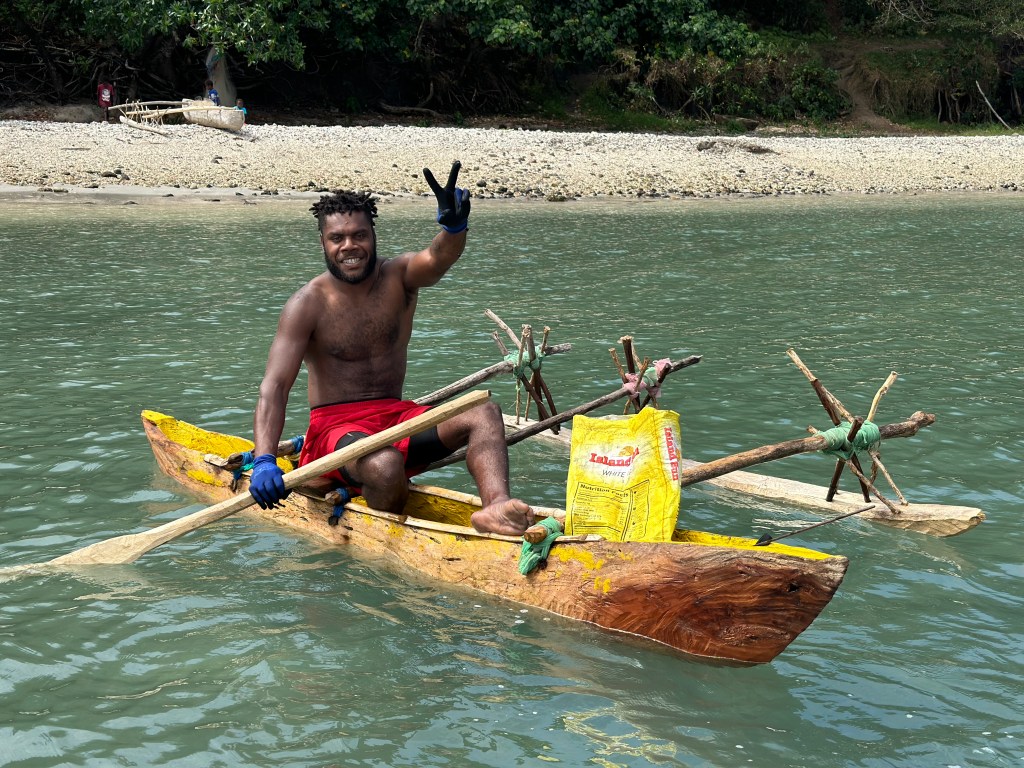
When we visited the village for dinner one evening the only available light came from open fires in huts which are often loosely clad with strips of wood with inch wide spaces between the slats, presumably for ventilation. The locals live lives that make western ideas of healthy, environmentally conscious living look slightly absurd. Our dinner, a feast of vegetables, rice, and omelette, lacked both meat and fish. When we asked our host about this she pointed to a plate of spinach and said, ‘this is our meat.’ When we asked how often the villagers ate fish, the men spending much of every day fishing in traditional outrigger canoes, she told us that the fish were sold at market or saved for feast days. Illumination for the meal was provided by a single torch propped on a beam. If cheap electricity goes the way of the dodo much of the world will crumble, but these people will hardly notice.

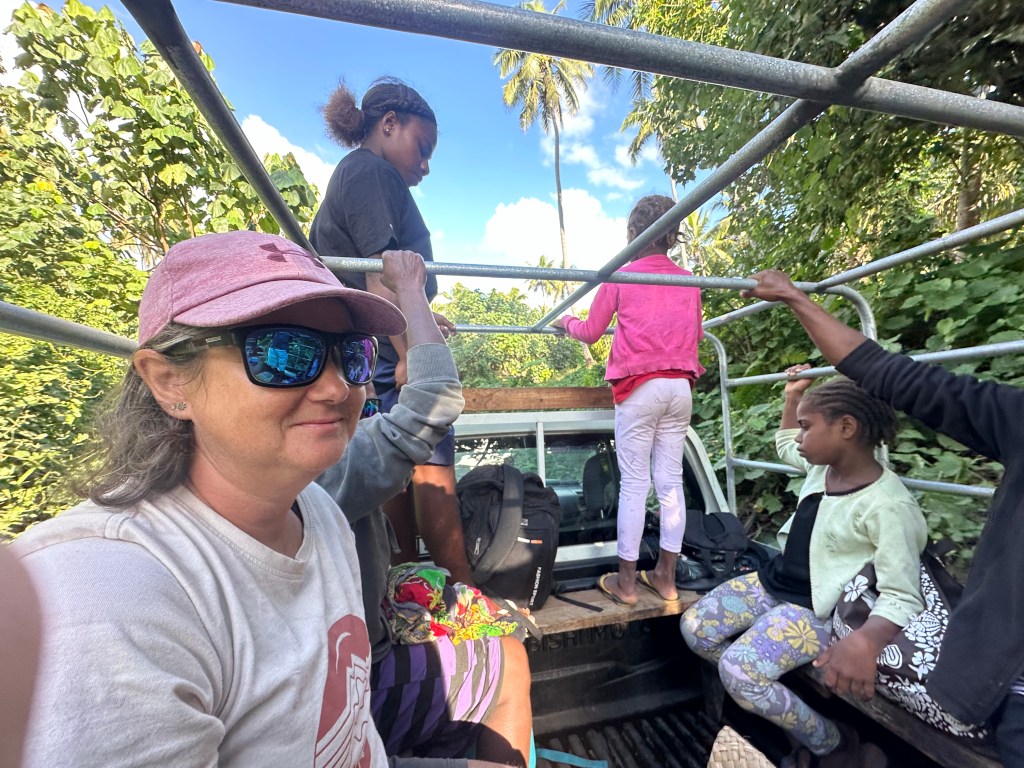
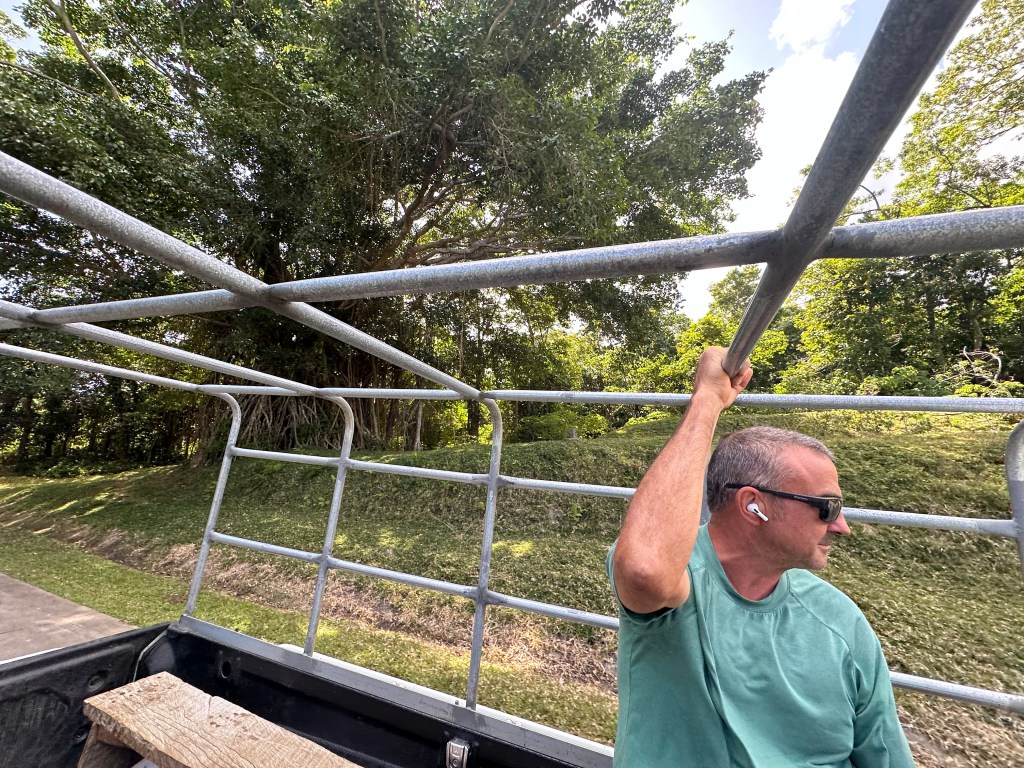
A day later we took a ride to the biggest town on Tanna, Lenakel. Together with a group of villagers we piled into the back of a 4×4 ute and enjoyed a bumpy ride along some rough jungle roads. Standing was often more comfortable than bouncing around on the hard seats, though a wary eye was needed to keep watch for low hanging branches.
After about three quarters of an hour the truck burst out of the bush onto a volcanic ash plain. The change from verdant jungle to lunar-like landscape was abrupt and surreal. After another 45 minutes or so of racing across loose tracks in the ash and in and out of gorges we struck another bizarrely different track — a paved road, built by the Chinese, that ran up and down steep hillsides as if intended as a testament to human ingenuity.


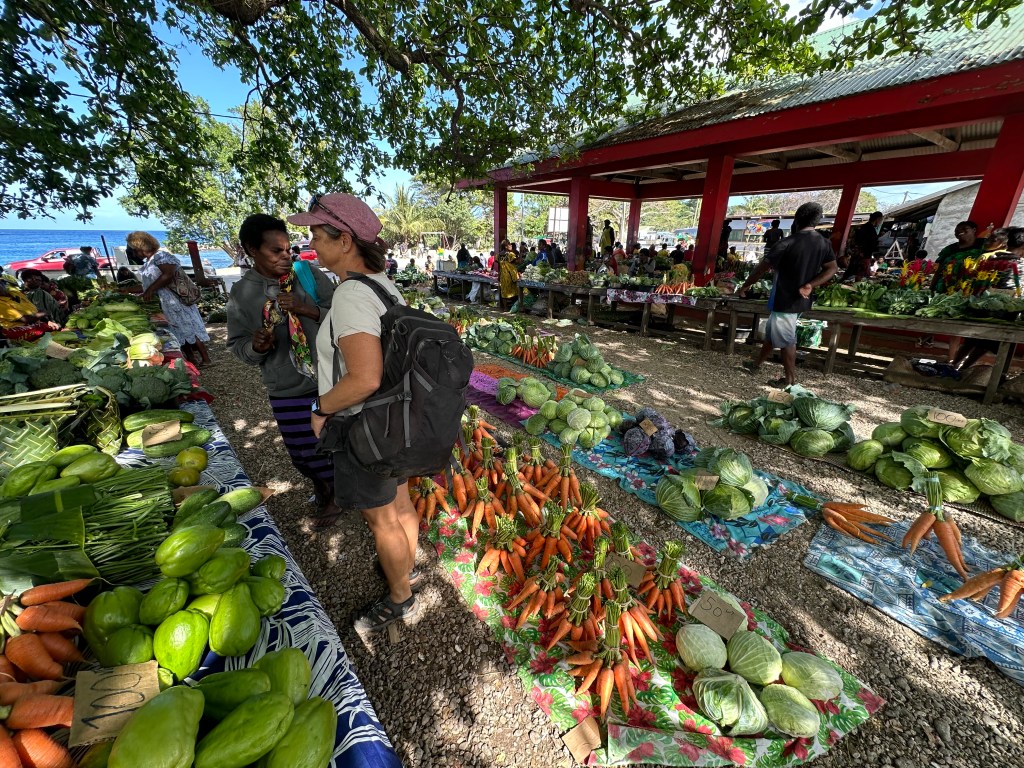
When we arrived in Lenakel we found a small town with an excellent market, full of local produce at good prices; perhaps a couple of dozen shops all selling pretty much the same stuff; a bank; and a small harbour choked with rubbish. After an hour or so we had ‘done’ Lenakel, and headed into the local cafe for a meal. The promised steak and chips turned out to be a bit of beef, cold rice, and salad, but it was tasty and disappeared quickly.


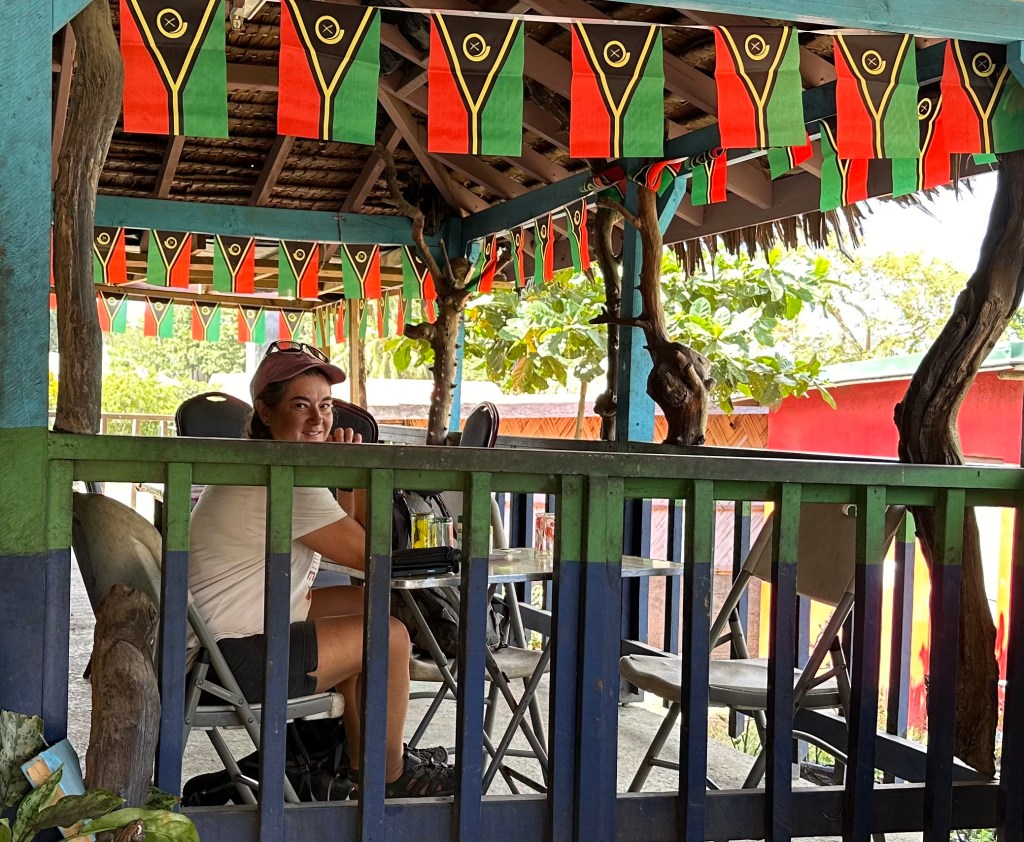
The drive back to Port Resolution followed a different route but was equally impressive, taking a coastal road with incredible vistas of cliffs and sea. As we neared Port Resolution the tarmac ran out again and we bumped along the rutted track before finishing off with a fast drive along the beach. This trip really has it all. But as much as we enjoyed it we have to take our hats off to the kids who do this trip every day to get to school and back.



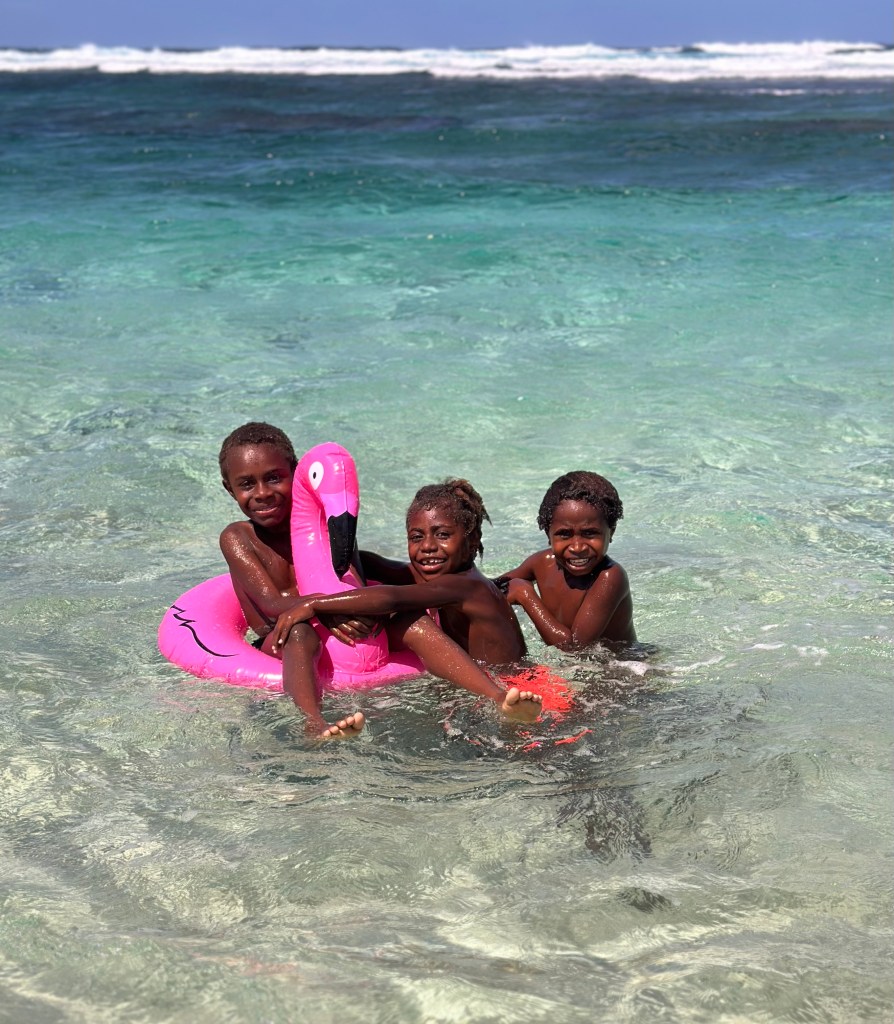
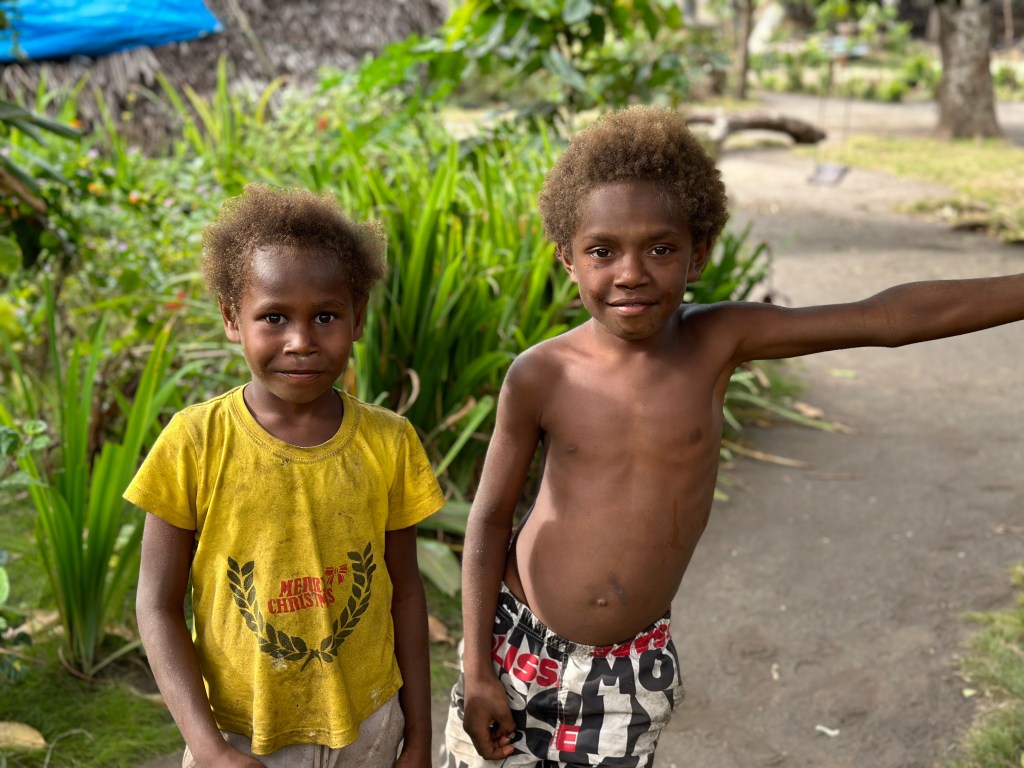
As we’ve found throughout the Pacific Islands, the kids around Port Resolution were simply a delight. Unfailingly cheerful, polite, and curious they seem to have no notion that they are anything less than blessed, despite their circumstances, to our eyes, being so very limited and lacking in opportunities.

Our next excursion was to Mount Yasur, the local volcano. Sometimes called ‘the light house of the Pacific,’ the glow from its crater had guided Cook to Port Resolution in 1774. The volcano is also an importance centre for the John Frum cult, a bizarre religion that stems from WWII and awaits the reappearance of an American deity with a wealth of material goods to give away.
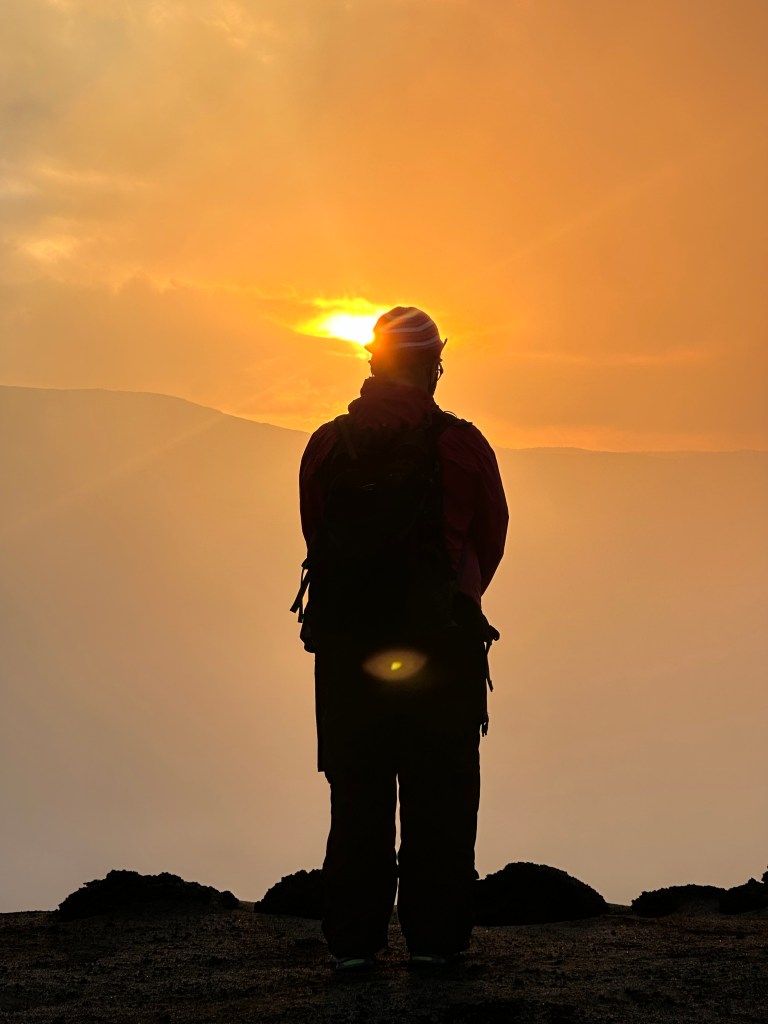
The volcano is easily accessible, and we only had to walk a hundred metres or so from the car park to the lip of the crater. At the top is a rudimentary fence hammered into the loose sand, beyond which is a vertical drop. From the viewing area we could hear the lava inside the volcano crashing as if it was the sea breaking against cliffs. At other times, deep booms made me appreciate why Vulcan, the Roman god of volcanoes, was imagined as a black smith. As we waited for dark there was little to see, but as the light fell we could see lava being thrown up and explosions inside the crater.



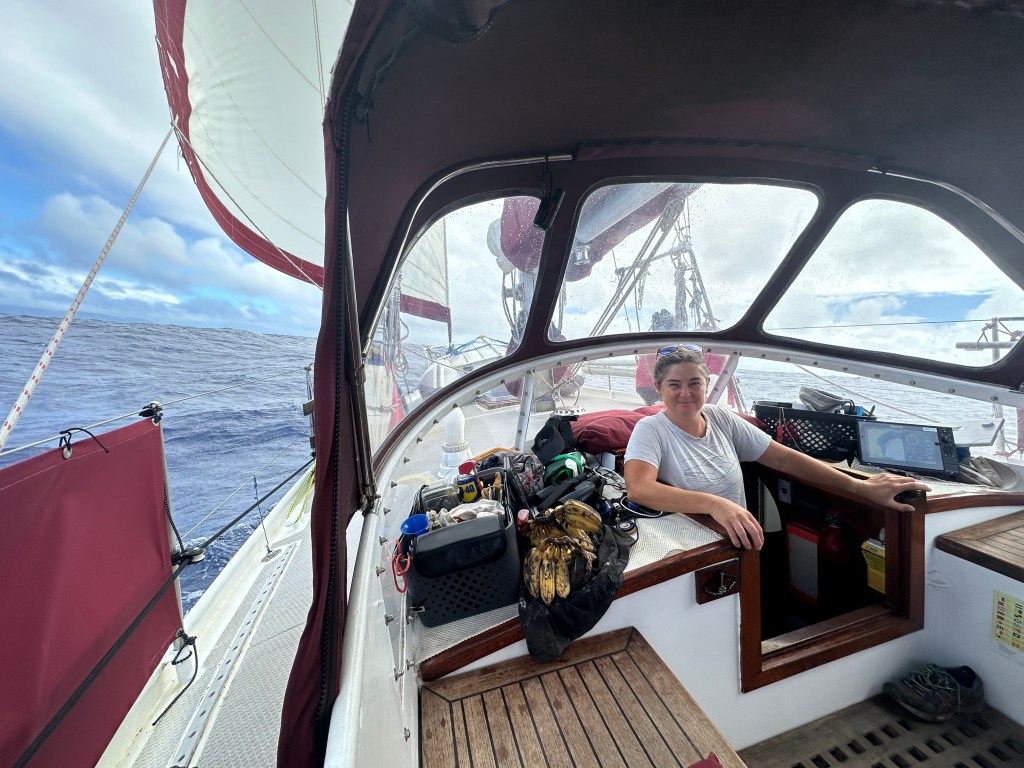
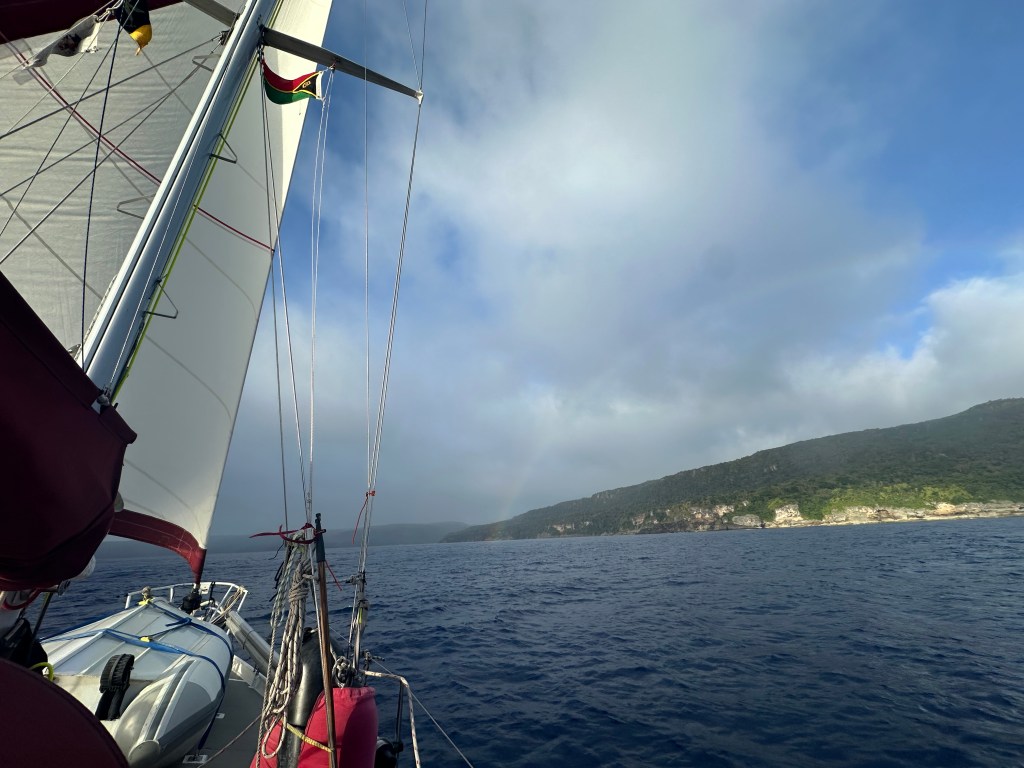
Next day we said adieu to Port Resolution and headed north to Dillons Bay, Erromango Island. We expected the 60 nautical mile trip to take about ten hours, but the strong winds blew us there in rapid quick time. As we turned into the shelter of the bay the wind disappeared and we anchored near a river mouth and the village of Unpongkor. That night we had a visitor. A local elder called David had paddled out with gifts of papaya and bananas and the offer of a tour of the village and a local cave used for burials. Who could say no?
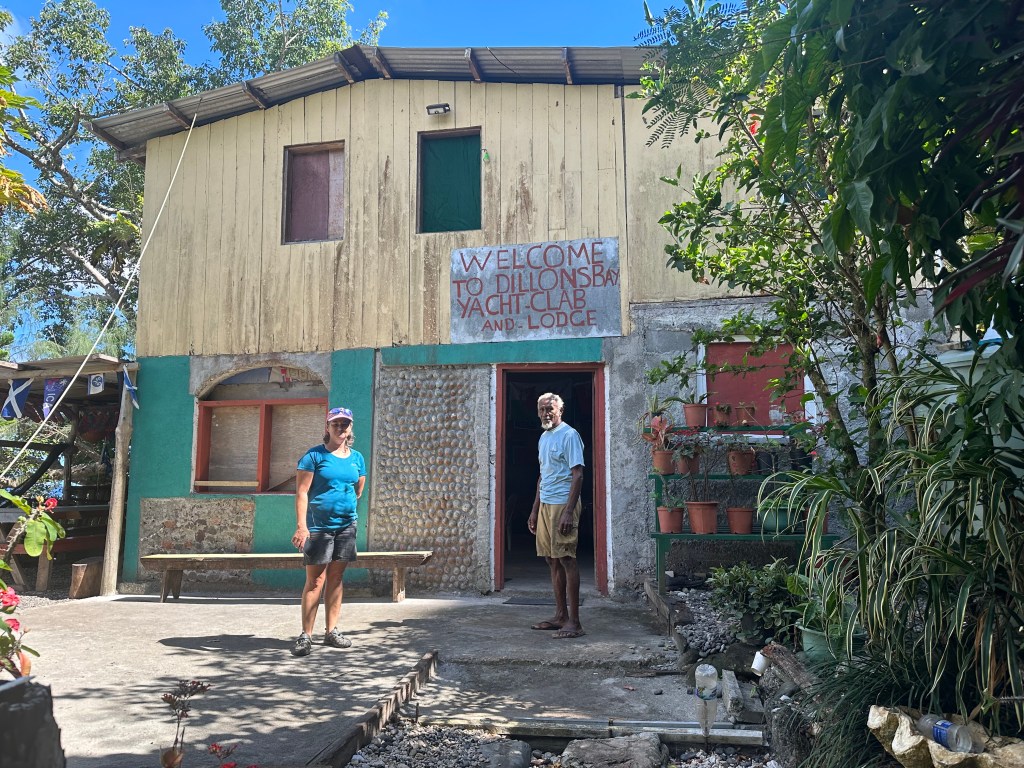
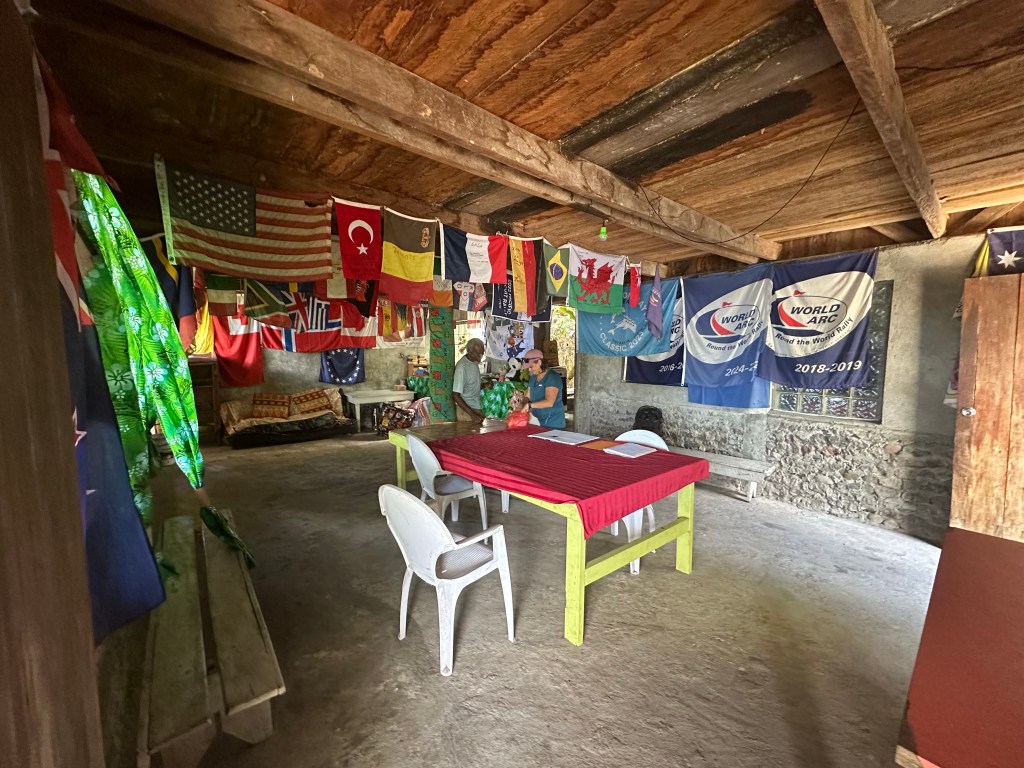
David proved to be the proud owner of the Dillons Bay Yacht Club, an entreprenurial attempt to attract yachties to the area. For a nominal fee David showed us round the village and took us to a swimming hole up river where we could swim in fresh water. That afternoon we took the dinghy to another bay and climbed to a couple of caves where the locals used to be buried. Apparently missionaries persuaded the natives that the dead should be buried in graves rather than caves, though what the difference is at the end of the day I don’t really know. And wasn’t Jesus buried in a cave for a while? Anyway, the skeletons in the caves are apparently those of past chiefs, and they serve their communities still by attracting ghoulish tourists who pay to view their earthly remains. Apparently, this money helps to pay for the local school, so it goes to a good cause.
On the way back to Unpongkor, David asked if he could borrow a battery powered drill. It’s hard to imagine, but in some respects we have more resources on board Taurus than the 900 strong community we were visiting. Unsurprisingly, this leads to visiting boats being seen to some degree as a resource to be exploited. Having given David coffee and milk we had to say no to subsequent requests for fishing line, petrol, and a lift for relatives to Port Vila, some 16 hours away by sail. We felt a bit mean saying no, but David had done pretty well out of us and we can’t give everything away, especially as the poverty of Vanuatuans rises the further you go from Port Vila, and here we were pretty close. No doubt we will be asked for items like these many times during our stay. Indeed, we had been asked to pay for fruit in Port Resolution with clothes we no longer wanted. Material things have greater value than money if they are hard to resource or ridiculously expensive.

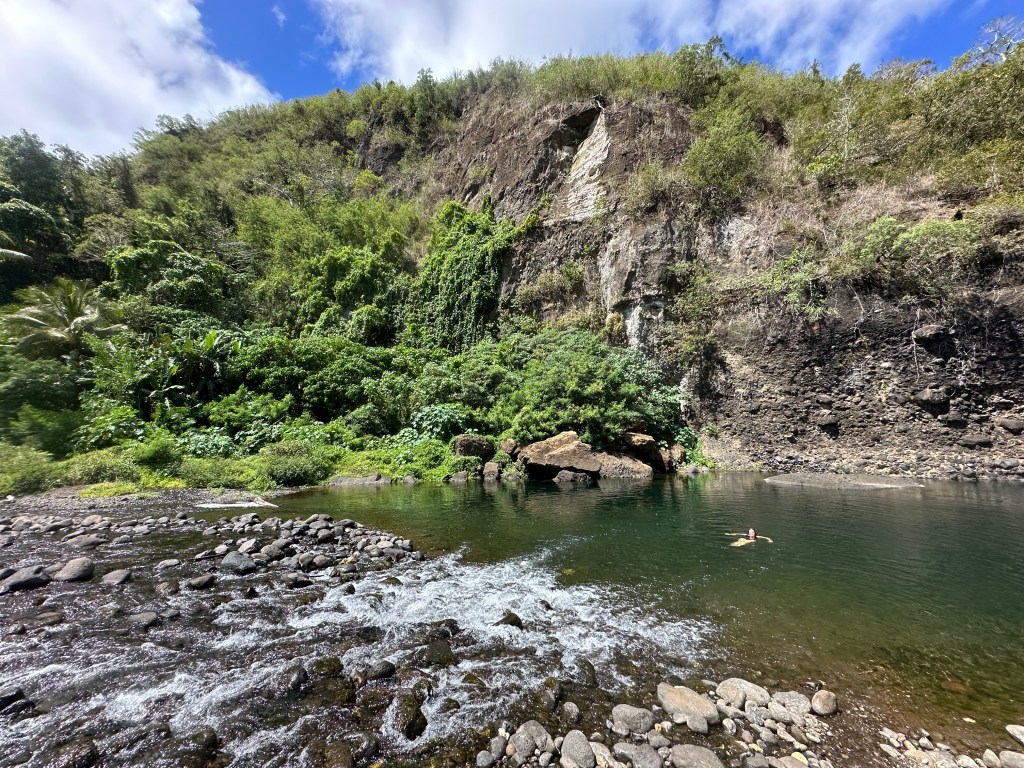

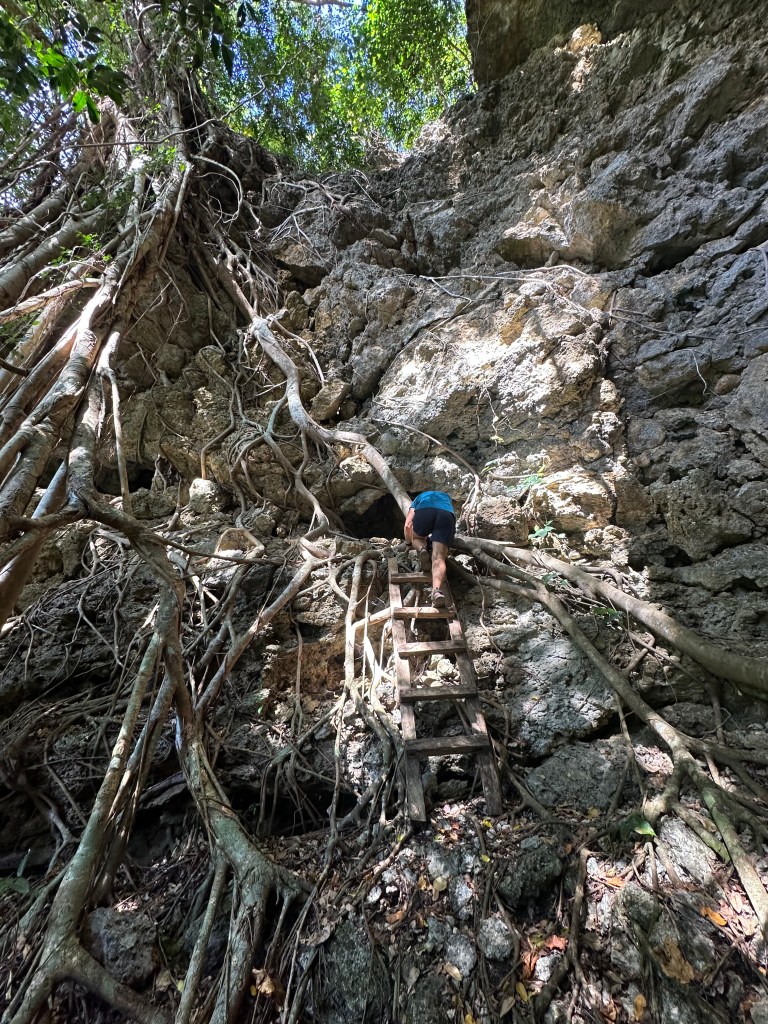

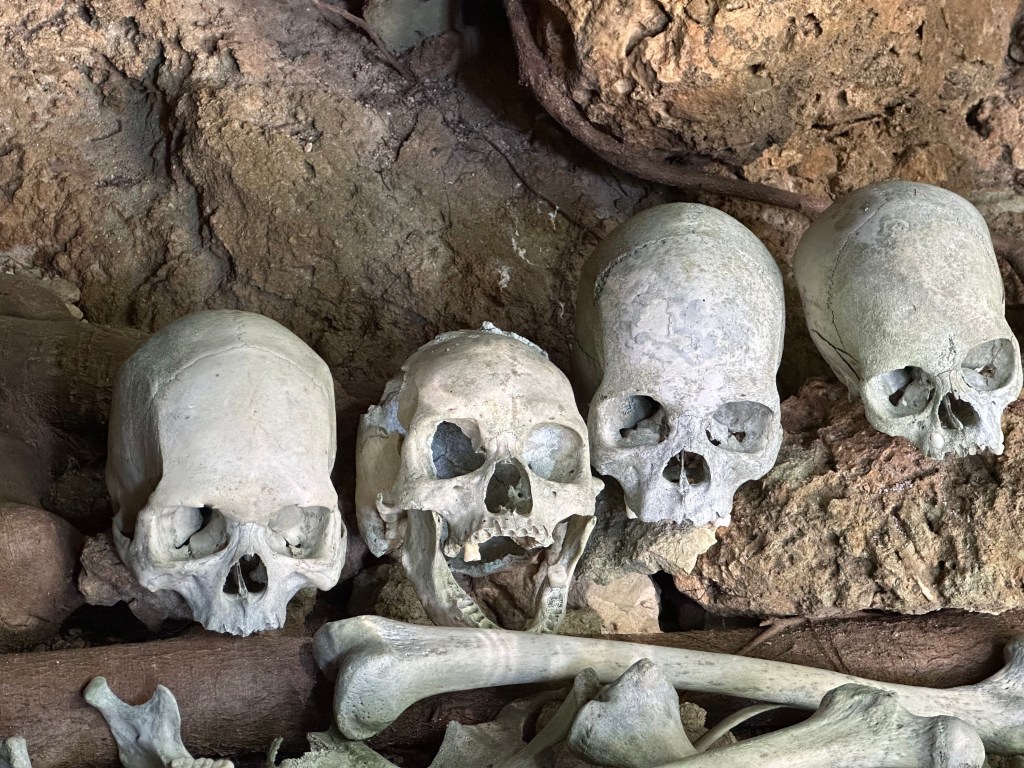
I couldn’t refuse David my drill, but I was a bit reluctant to just hand over my precious tools (it’s a guy thing), so offered to help build the pigpen he wanted to use it for. I wasn’t worried about the tools being stolen, but a few minutes trying to demonstrate how the drill worked proved that David wasn’t comfortable with even this degree of technology.
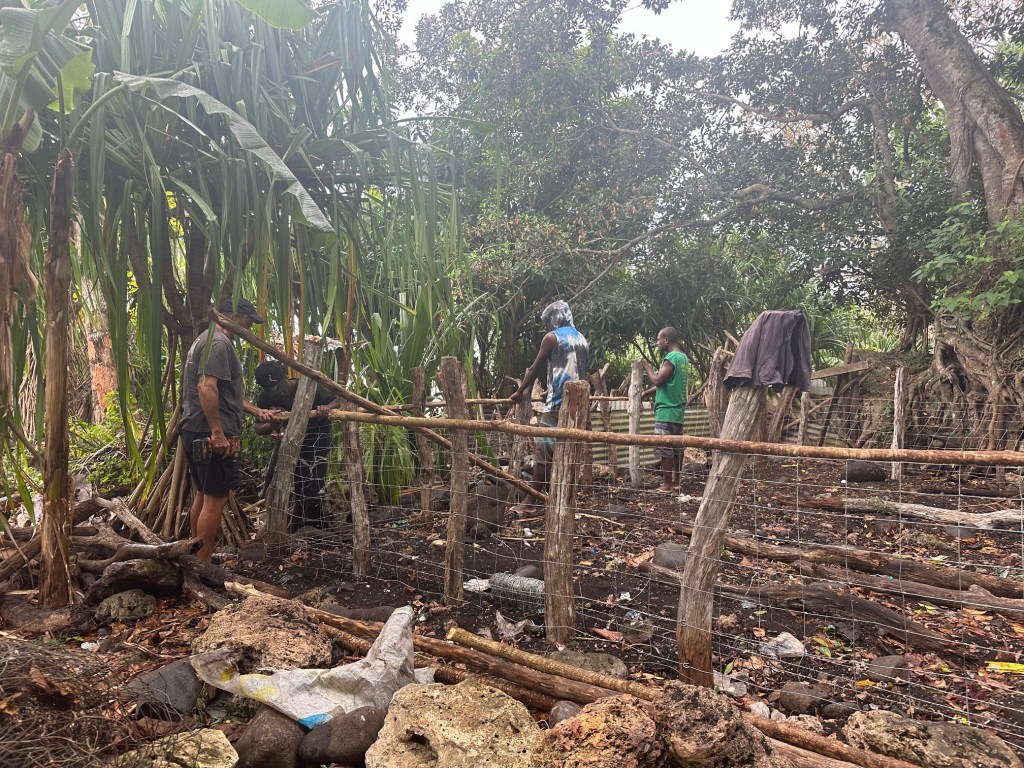

It felt good to be doing something practical and helpful, and the number of hands made light work of the job. Alas there is no room for a pig onboard — I’ve always had a soft spot for pigs.
That afternoon we caught up with friends, Richard and Jude on Amelie, who had arrived in the bay the night before. We first met these guys on our Advanced Sea Survival course in Christchurch in 2022 (yes, we are ASS qualified!). They left NZ last year and have cruised all round the Pacific Islands and the east coast of Australia, and are now planning to head home at the end of the season. It was very helpful to hear about their experiences as we intend to follow in their footsteps more or less, with cruising around Tasmania one of our ambitions. Later that evening we lifted anchor and headed off shore to Port Vila, aiming to arrive some time around mid-morning the following day, but that tale can wait for our next blog…

Next time: we sail to Port Vila and do other stuff.


 Sailing Taurus NZ
Leave a comment