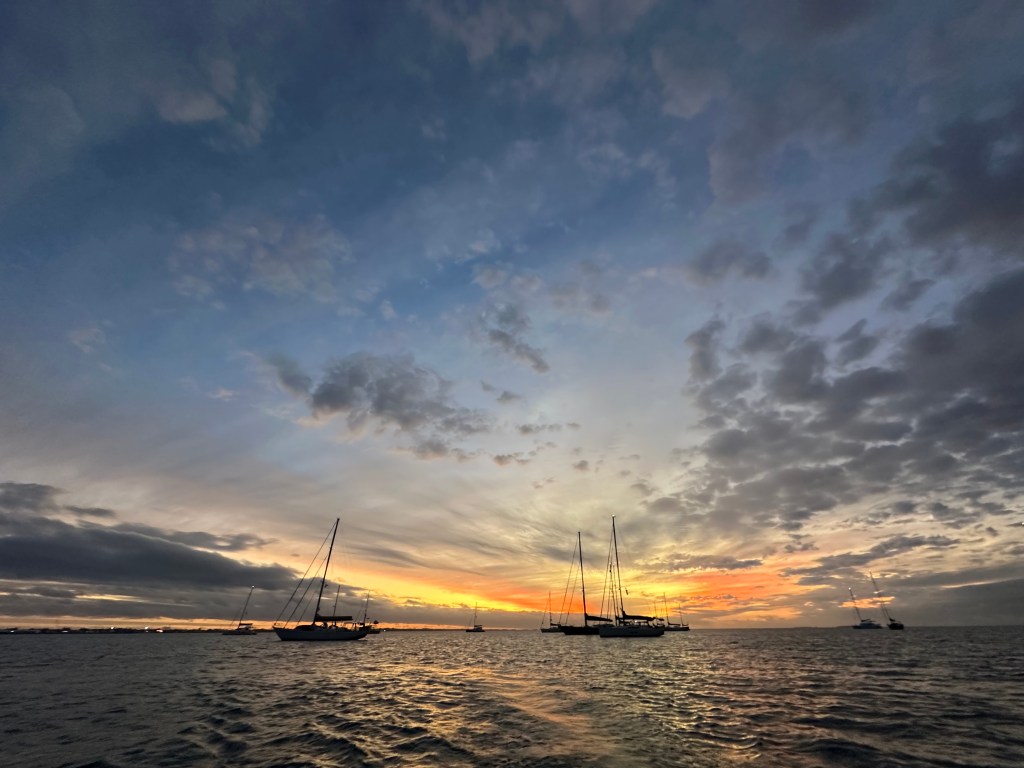
We arrived in Tonga on 20th of May, thirteen days after leaving Opua, NZ. The first few days were spent acclimatising to the hot and humid weather and catching up on lost sleep. Due to the heat we spent a lot of time swimming and snorkelling in the beautifully warm water. When we first set anchor off Big Mamma’s on Pangiamotu Island there were about five other yachts, but as the week wore on more boats arrived and soon there was about twenty of us swinging around the bay.

Most people, like us, were waiting for the party at Big Mamma’s before leaving, but we also needed to obtain fresh food, refill our diesel tank, and get some laundry done. Nuku’alofa, the local town and capital city of Tonga, is a twenty minute dinghy ride from the Pangiamotu anchorage. A water taxi is available at Pangiamotu, but at TOP $50 (Tongan Paanga — about 70c in 1 NZ$), it was a bit pricey. Town was a fifteen minute walk from the dinghy dock, but refilling jerrycans required another taxi (TOP$50) and laundry was supposed to need yet another taxi (TOP$50) and cost TOP$10 a kilo. We spent some time trying to find cheaper alternatives, asking if we could pay to use facilities in hotels and so on, but ultimately the was no way round the cost of washing, so one and a half loads of washing cost us TOP$70.
We were able to save on the cost of taxis by hiring a car. We hired a car from Fab Rentals for $80 a day, but because we made the booking on a Saturday we didn’t need to return the car until Monday morning (everything is shut on Sunday) so got a day’s use for free. The rental arrangement was a bit odd: I wasn’t asked to provide any ID, or proof of licence, didn’t sign anything, and didn’t even pay when I picked up the car (we ended up leaving the money in the glovebox when we dropped the car off on Sunday evening). The trust was endearing, but I hate to think what might have happened if we had been involved in an accident, or if a coconut had fallen through the windscreen (the number of cars driving around with broken windscreens suggests this happens regularly). Thus we got our washing and diesel jerrycans sorted out on Saturday morning, and spent the afternoon and Sunday sightseeing around Tongatapu, Tonga’s main island.
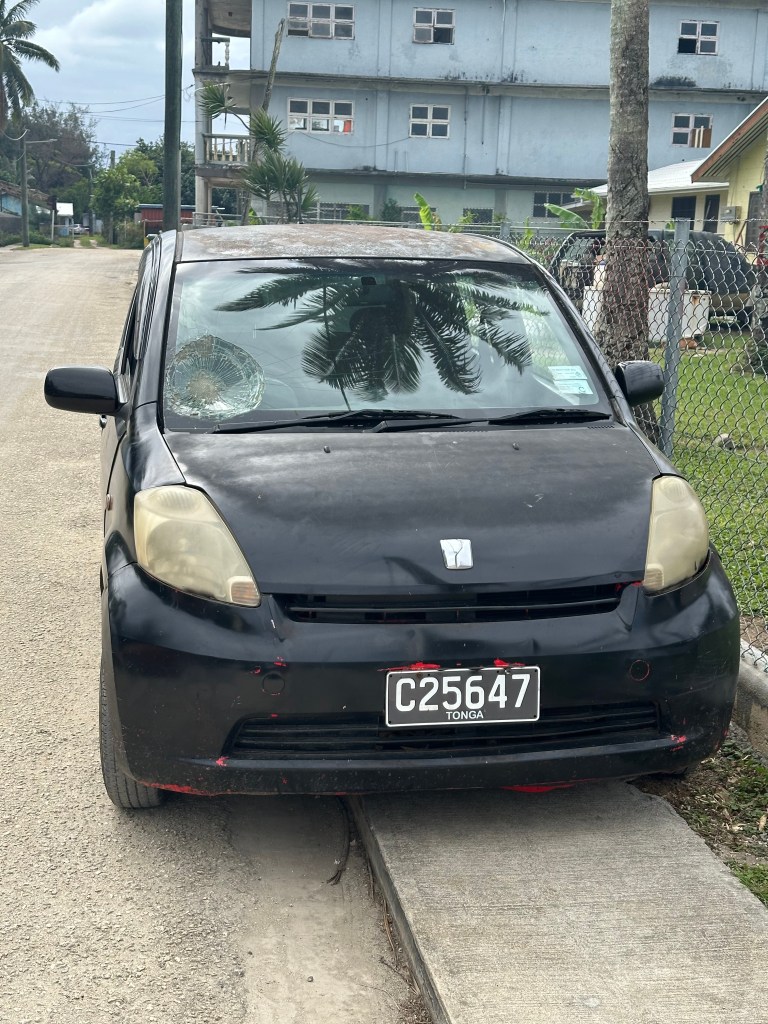
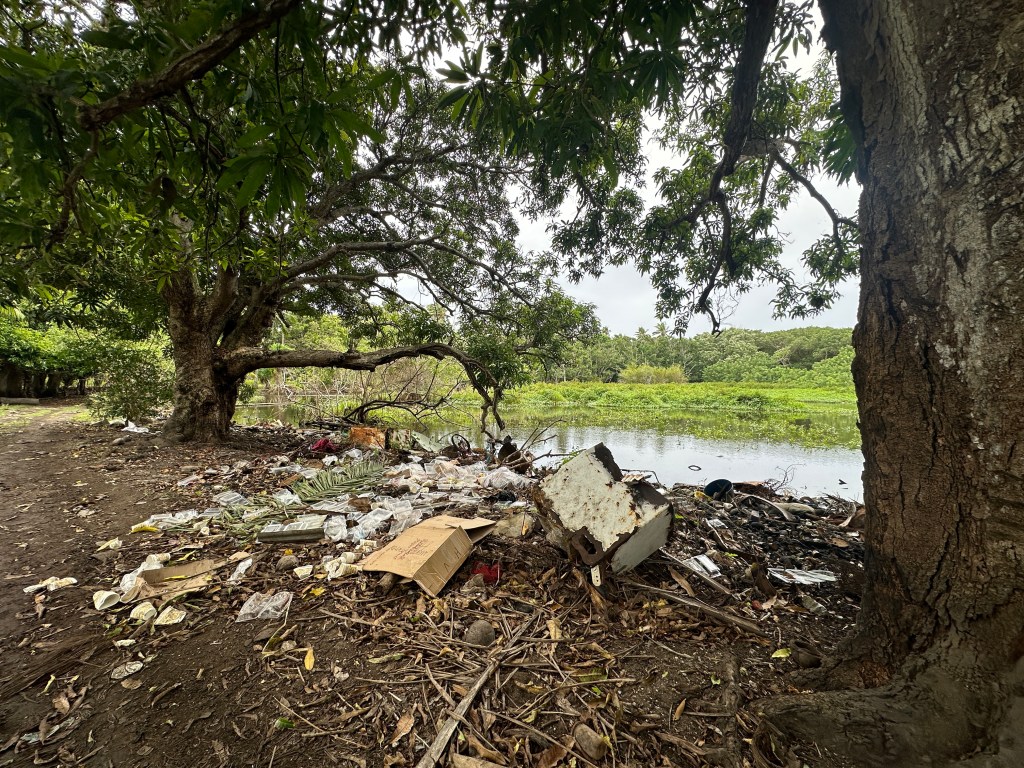
The parts of the kingdom we have seen so far create mixed emotions. On one hand it is stunningly beautiful, on the other the beauty is often marred by the degree of rubbish and pollution. It is difficult to know why this is, and we are wary of judging this poor nation from a wealthy Westerner’s stand point. After all, if our rubbish wasn’t picked up every week and taken away how long would it take to pile up and blow around? Happily, the further north we go the better the situation appears to be, presumably because the northern islands are less populated, and the islands with resorts have the kind of pristine beaches we all dream about.
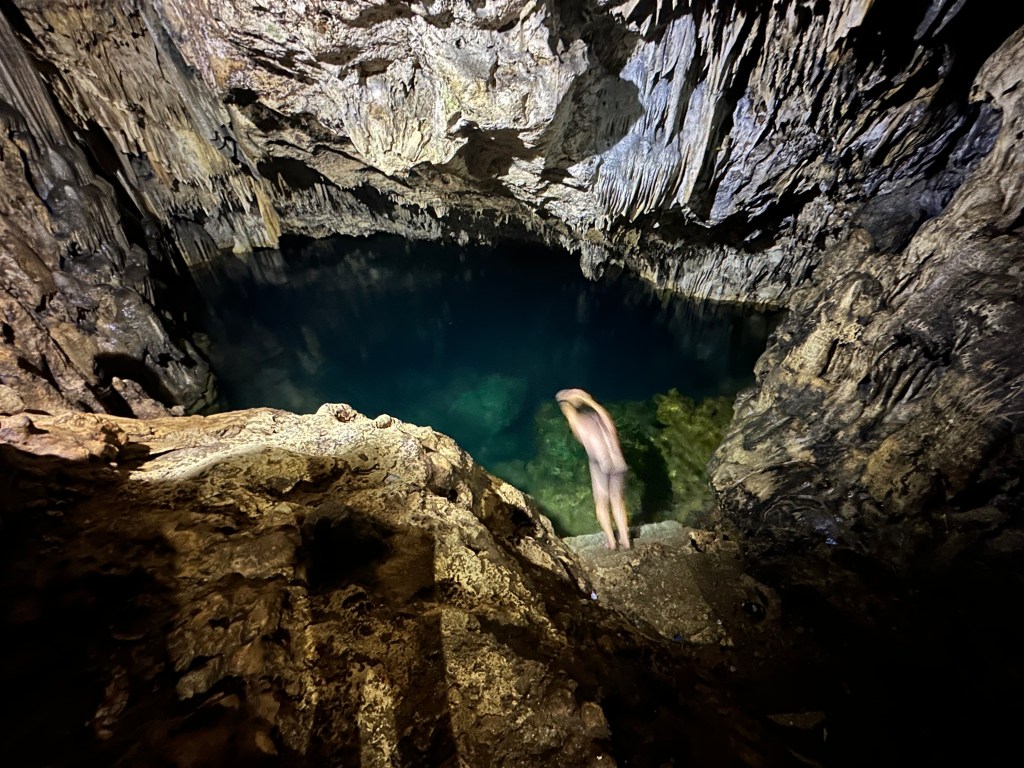
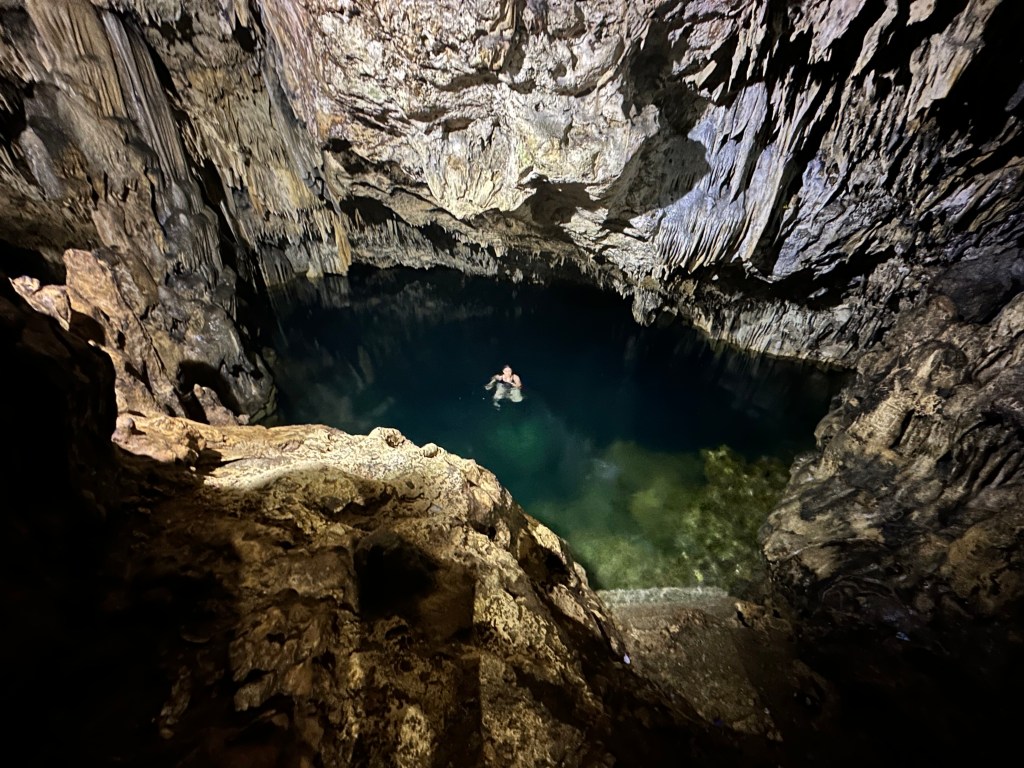
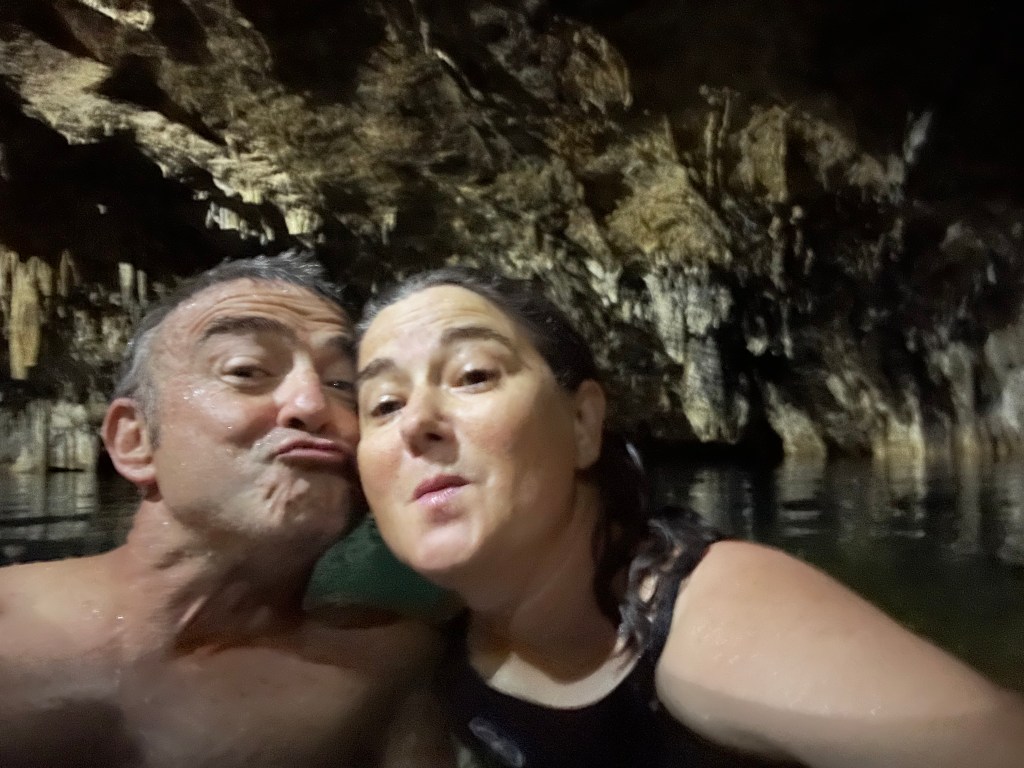
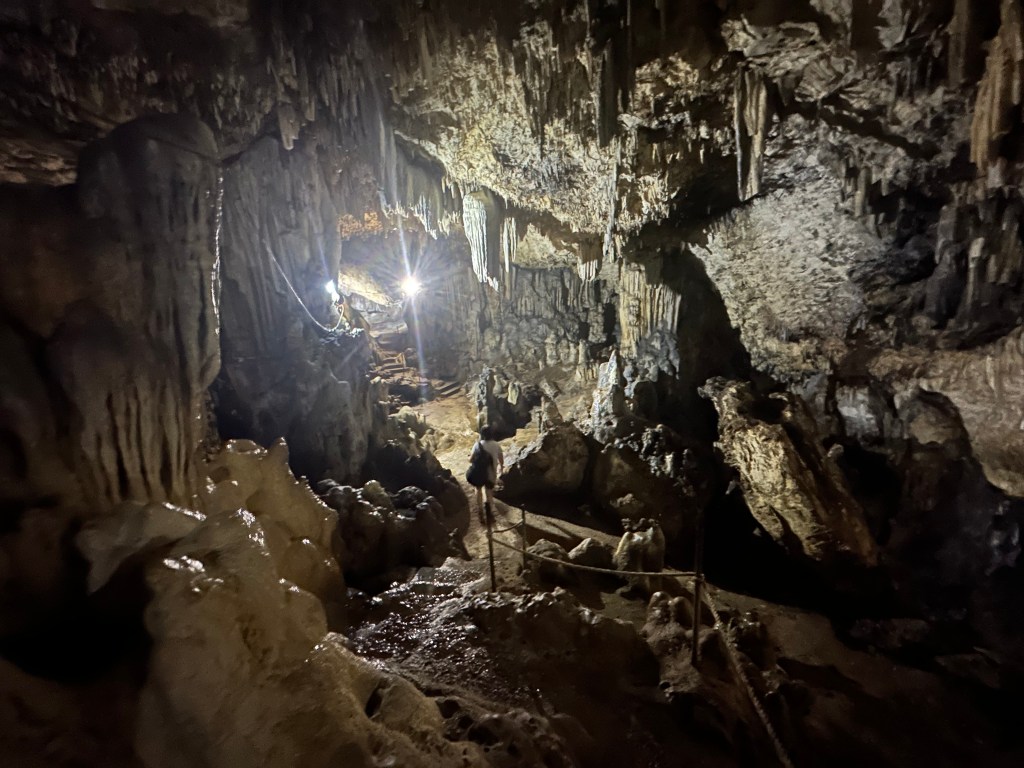
After dropping off the laundry we took our pretty fancy rental car, a Suzuki Swift, and hit the tourist trail. Our first stop was the Anahulu Cave, a cave with a pool where you could go swimming. Lonely Planet describes the place as “over-loved” and “blackened … [by] too much foot traffic.” They have a point, and the experience was spoilt a bit by the inevitable trash, but swimming in a cave was still pretty magical. Cara and I were the only people there and the guy sitting at the entrance turned on the lights especially for us. We went in by ourselves and followed a handrail around the pool to some steps where you can access the water. After swimming in so much saltwater the fresh water felt terrific, but the bats flying around and rubbish encouraged us not to drink too much! We only explored a small part but apparently you can swim for several hours through different parts of the cave system if you know the way.
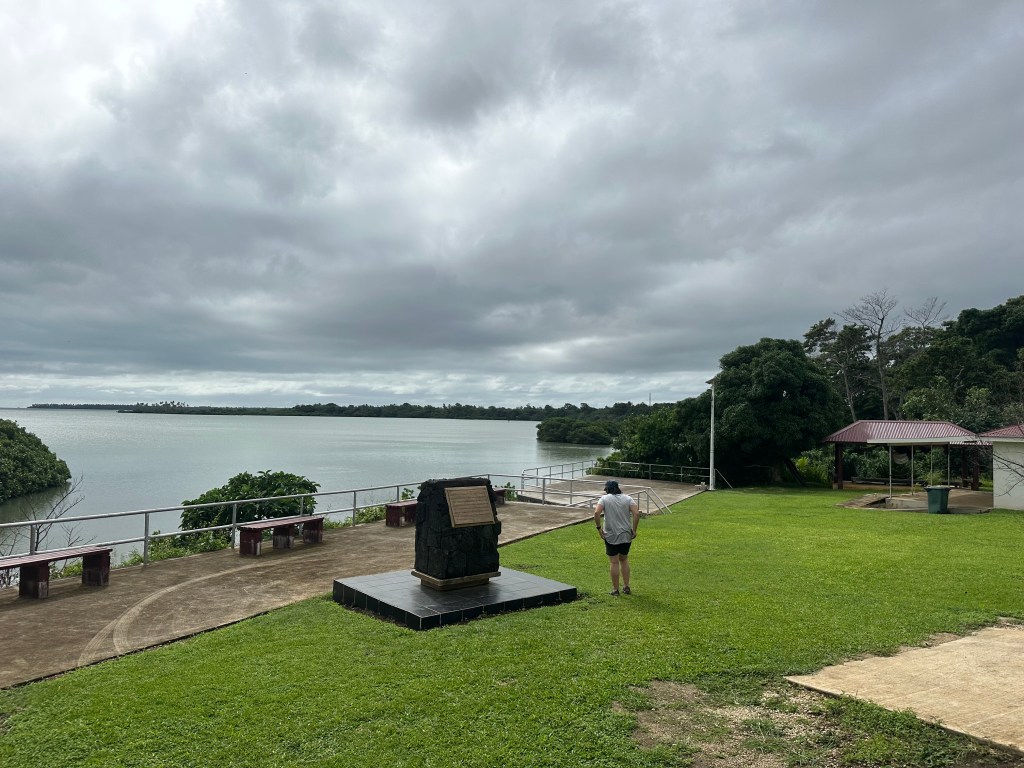
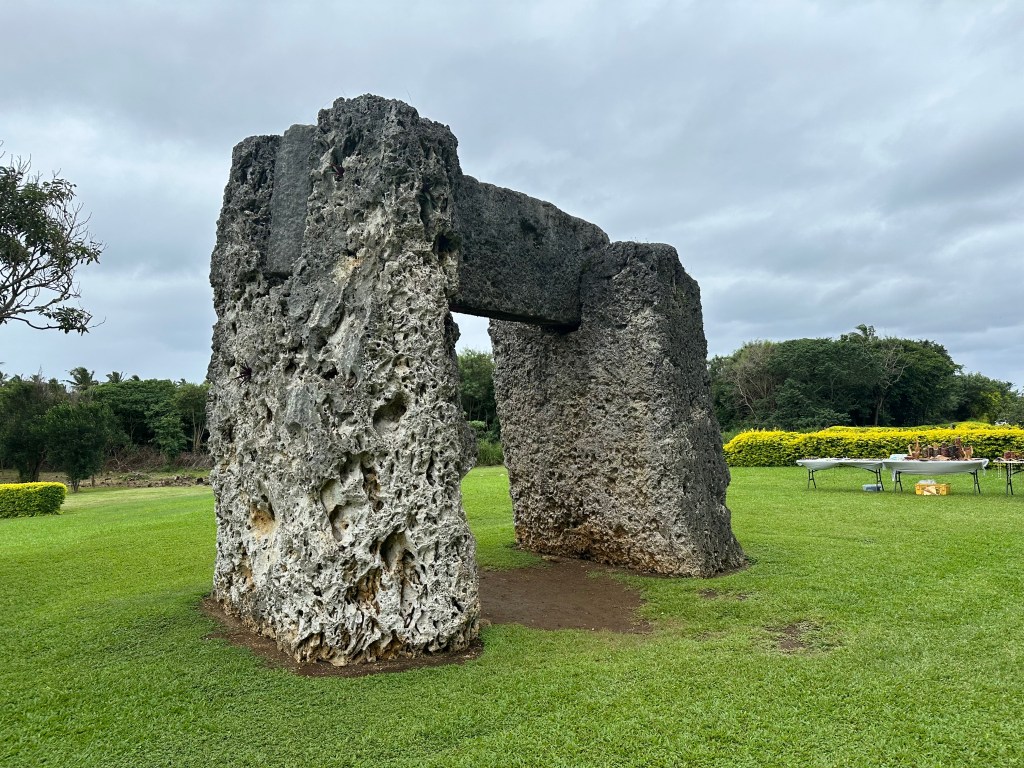
Our next next stop was the site where Captain Cook landed in Tonga, after which we headed to Ha’amonga ‘a Maui Trilithon: the Polynesian Stonehenge. No-one knows who built the trilithic gate, or when, but the blocks weight about forty tonnes each. These sites are owned by the Tongan King and are kept scrupulously clean and tidy.
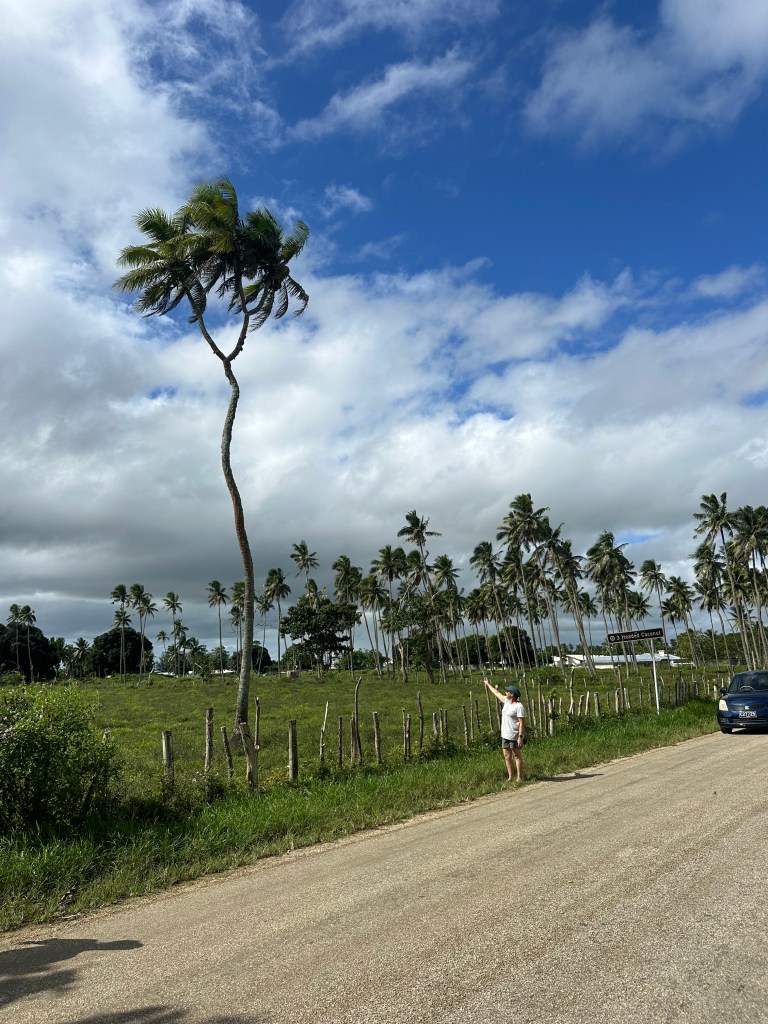
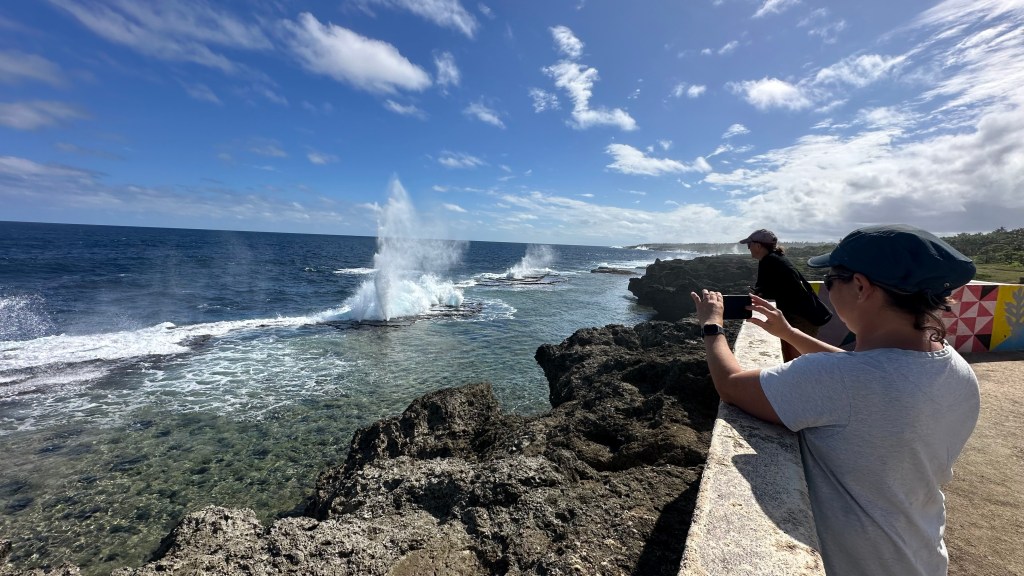
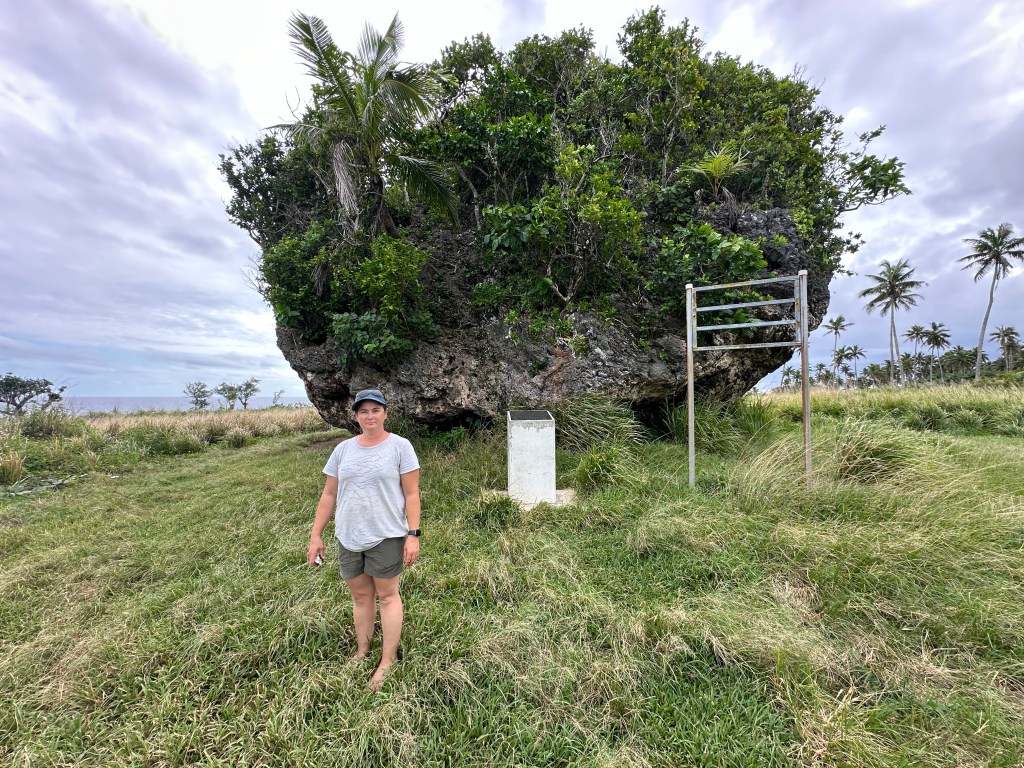
Next day we took the car and hit the roads again, accompanied by Jessica, the skipper of Saltlines, a commercial steel ketch that takes paying customers around the Pacific. We visited a famous three headed coconut tree (really), an amazing coast line full of blow holes, and a massive rock thrown up onto the coast by an ancient tsunami.

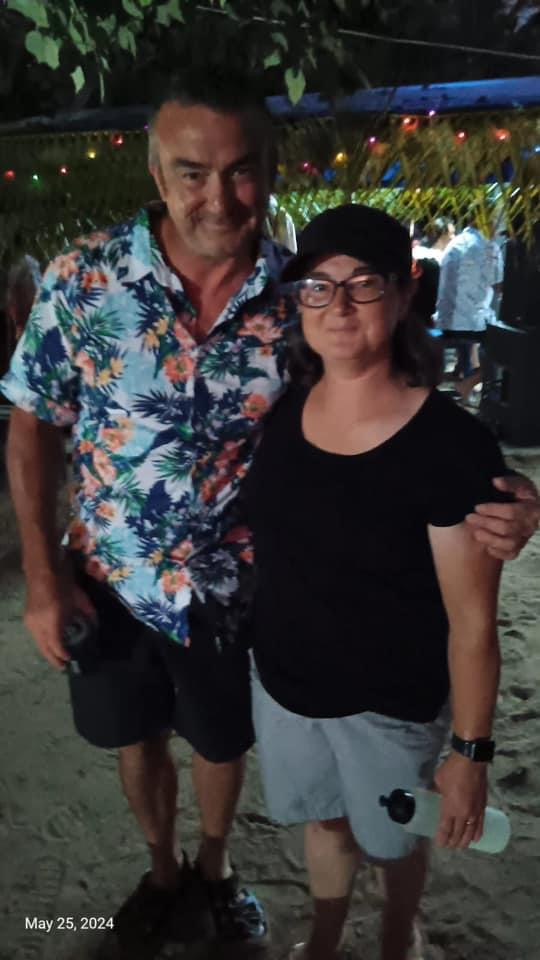
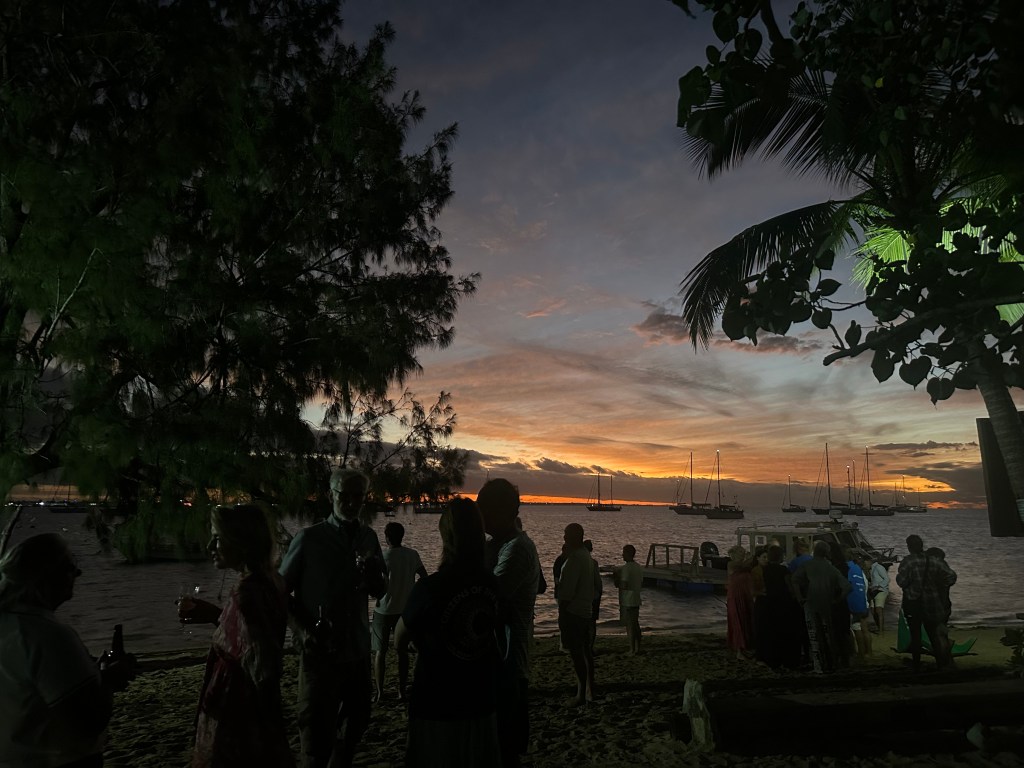
Saturday night was also party night at Big Mamma’s. All the cruisers came together to chat and drink and eat, and a good night was had by all.
Monday morning saw us anchored outside Nuku’alofa so that we could nip into town to get our clearance from Tongatapu signed and head off to Ha’apai, the next island group. The Tongan authorities control foreign visitors by getting them to clear in and out of the three island areas: Tongatapu, Ha’apai, and Vav’au. This apparently pointless bureaucracy is not improved by the inefficiency of the customs service. We arrived at 9:30 am at the main customs office and were told to go over the road to the other office. There was no-one there so we hung around for almost an hour before I headed back to the main building. It turned out that the customs agent was there, but in a meeting; I was told that he would be with me shortly. After another forty -five minutes the chap finally turned up. We went out to his car to drive across the road to his office. Once there he took the stamp from his car, stamped and signed our form, and we were free to go.
During this procedure Cara felt a reasonably strong earthquake, whilst I, in another part of the building, felt nothing. We left and picked up some groceries and were heading back to Taurus when all hell broke loose. There were sirens, police cars driving up and down the road with the officers shouting out the windows, shop-owners throwing the goods outside their shops inside, Tongans running hither and thither, and a general air of panic. It turned out that the earthquake had triggered a tsunami whose arrival was imminent. We were told by a passing driver to get to high ground, but having driven around the island for two days we knew that Tonga has no high ground, and trying to talk our way into a three story building for shelter seemed equally difficult. Although the situation felt unreal, Nuku’alofa had been devastated by a tsunami in 2022, so we could hardly discount or ignore the warning. Without a better plan we decided to hurry back to Taurus and the security of her steel walls, and hoped that we had time to get her into deep water. As we left we could see ahead of us all the yachts that had been anchored at Pangiamotu, and there was a general sprint from Nuku’alofa Harbour through the reefs.
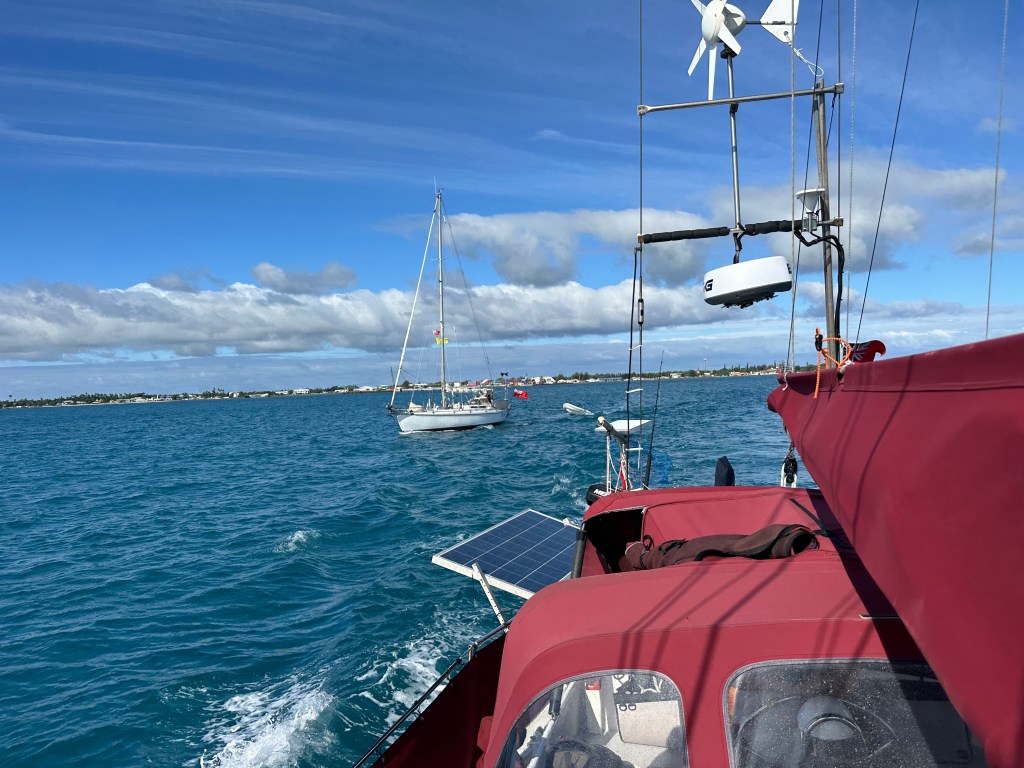
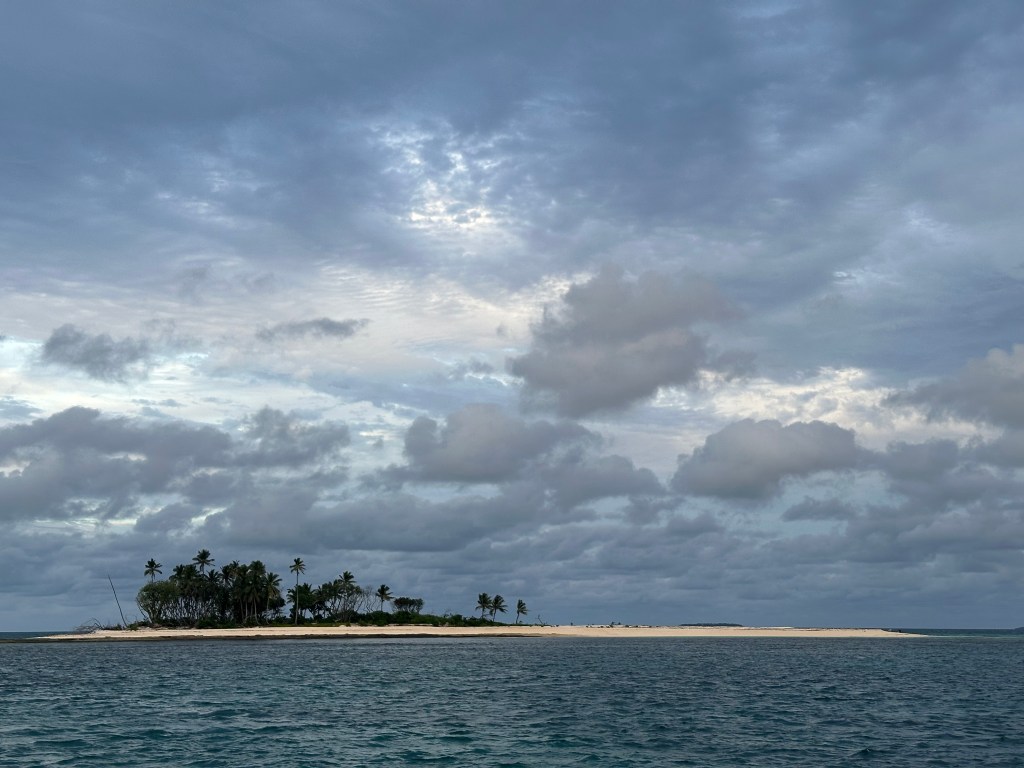
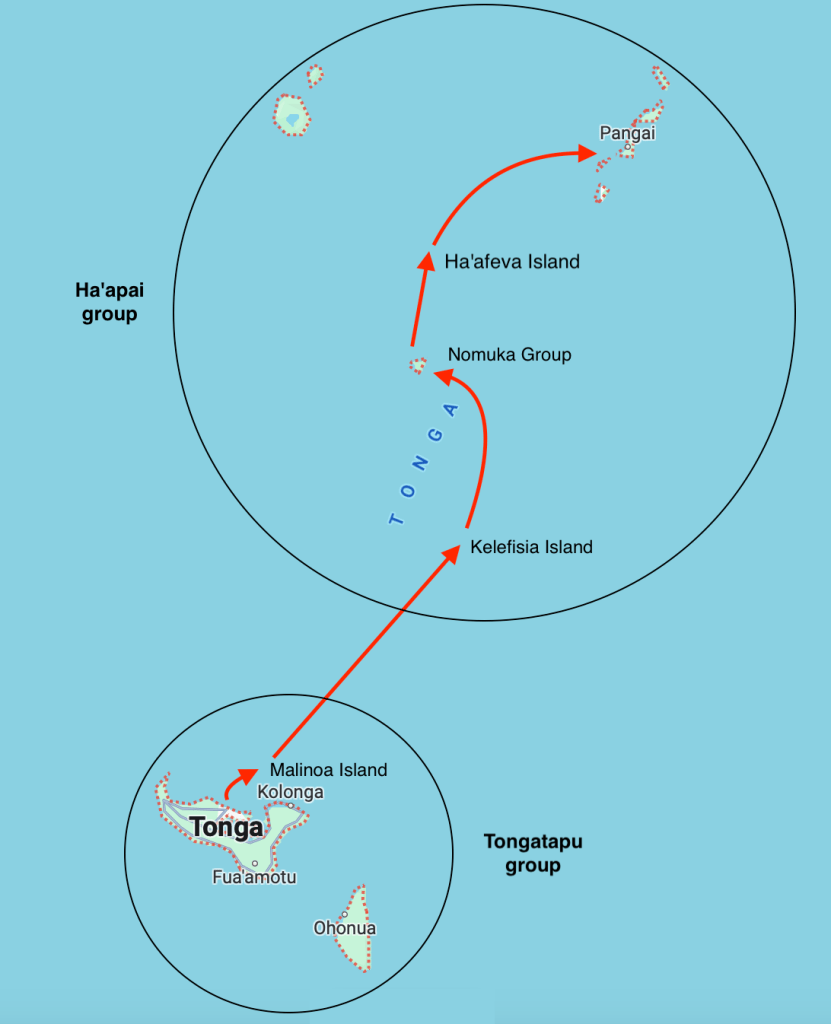
Happily, the alert was cancelled soon after and as we had cleared customs we sailed north to that nights anchorage, Malinoa Island. The island was fantastic and it was wonderful to have the place all to ourselves, and be able to snorkel in the clear water and walk on the deserted beaches.
Next day we left early, and prepared for a boisterous day’s sail in 30-35 knots. We expected to sail for about six hours to the next anchorage so set the Hydrovane (wind steering device) and settled down. After a few hours we found the Hydrovane was struggling to keep the boat on course in some of the stronger gusts, so I jumped onto the wheel to help turn the boat back onto course when she wandered off. I had been on the wheel for about ten minutes when I saw a large white object right in front of us. I said, “shit! There’s a whale!” The object disappeared as we dipped into the next trough but as we rose again I saw it was in fact a capsized boat. It disappeared again as I desperately turned the wheel and we just avoided a collision. Cara quickly grabbed her camera to take a photo, and recorded a waypoint on the chart.
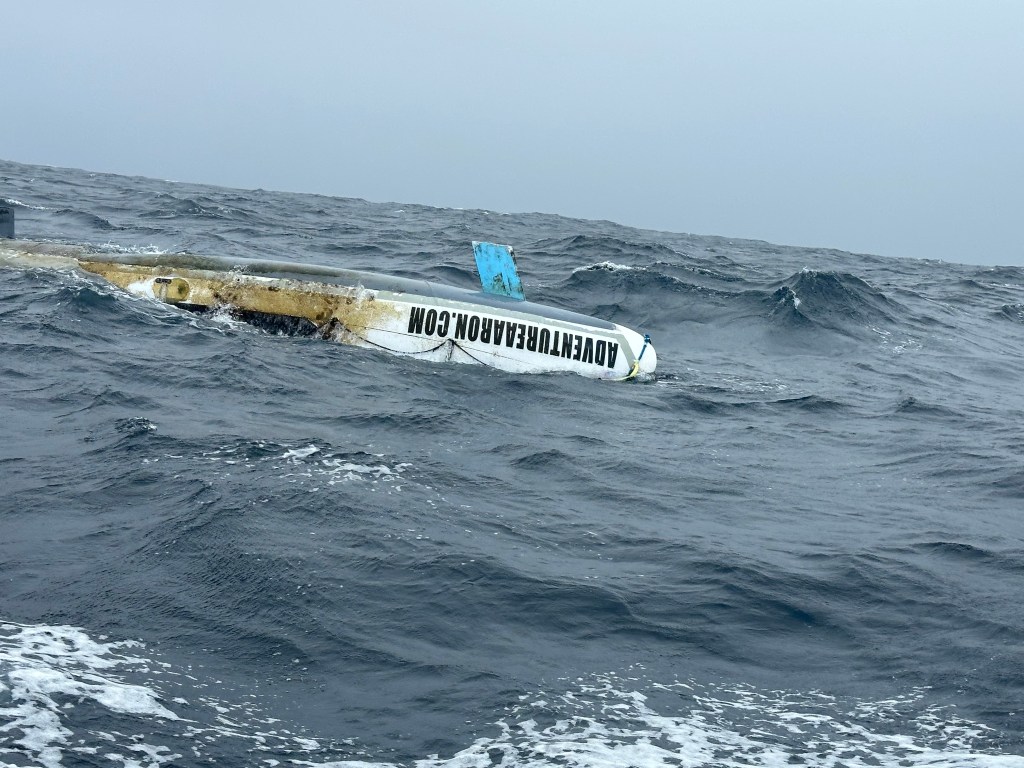
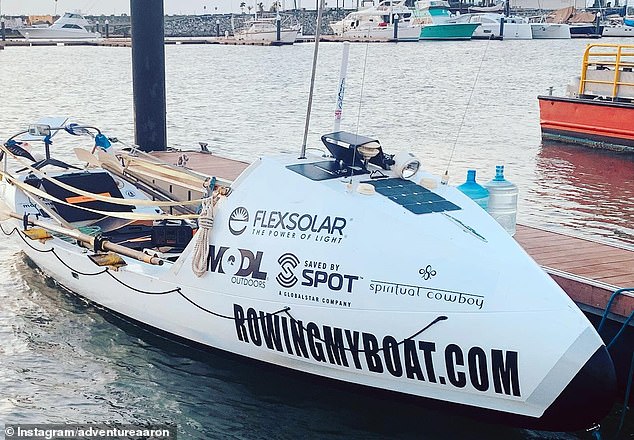
The capsized boat turned out to be a 23 foot long ocean-going rowing boat. It had been abandoned in June 2023 when its occupant, Aaron Carotta, had been dumped out of it by a freak wave. Aaron was eventually rescued from his life raft by a merchant ship. His boat turned out to have travelled some two and a half thousand nautical miles from the site of the accident to the point where we almost collided with her (for further details: https://www.dailymail.co.uk/news/article-12245025/Man-sailing-world-23-foot-rowboat-rescued-lost-power-capsized-wave.html).
We contacted the local Marine Search and Rescue centre with details and co-ordinates as well as posting on the rally chat group to warn other yachts heading the same way. Cara also posted the information on Aaron’s Facebook page. We got a nice message back from him saying that the sighting was “a long awaited gift,” and explaining how he hopes to rescue the boat with the help of the Tongan Navy.
Social media being what it is, some Facebook members criticised us for not taking the yacht under tow and attempting to salvage her. To some degree I can understand their point as they are basing their opinions on the photo we provided with a fairly calm looking sea. However, photos always flatten the sea and the conditions were far from calm, which is why I was hand steering. Approaching any boat in 35 knots and 3 metre waves, even one with crew and some mobility, is a difficult and dangerous endeavour. For a two person crew to attempt to tie a line onto another boat without aid in rough conditions (and even to right the boat as one person suggested, presumably expecting one of us to go over-board to try and do so) is really asking for damage or injury. To then try and tow this ‘sea anchor’ somewhere, hours from anywhere, would have reduced our speed to almost zero (we have previously towed a broken down tinnie and know that yachts aren’t designed for this kind of work) and seriously hampered our manoeuvrability. If someone’s life was on the line sure, you would take these risks, but to take them in order to salvage debris would be simply foolish.
Our adventures weren’t over for the day. We had planned to anchor at Kelefisia Island inside a coral reef. In the conditions we could hardly see the entrance, only a good deal of breaking waves, but we had the chart and satellite images with a GPS overlay of our position so began our approach. Cara wasn’t happy to go in, and I was nervous too, but the entrance to Minerva had been similar and once inside a stormy day became immediately calm. We pushed on but the entrance was very narrow and even as we neared the marked anchor site the waves continued to pound over the coral and throw us around. To drag an anchor in such a location could spell disaster, so seeing no light at the end of the tunnel we threw the wheel around and ran back to deeper water. In the back of our mind was the sad case of another rally yacht that had run aground on a coral reef near Fiji and had to be abandoned. The boat had been anchored next to us in Minerva and the experienced crew had brought her all the way from the US. Efforts are continuing to refloat her and we wish the crew well, but their experience shows just how easily a boat can be lost in this area.
Cara, the technical and navigation officer, quickly came up with a Plan B and we headed north again, dodging the islands and reefs, to Nomuka. Unfortunately we were fast running out of daylight, and the extra two hours sailing meant we had to enter the channel between two islands and several reefs in the dark. The anchor site was pretty challenging as the reef gave little protection from the wind and would turn Taurus as soon as the wind impacted on one side of her bow or the other. This was a bit unnerving as we didn’t have a huge amount of room and above the wind we could hear waves crashing on the reefs all around. Even though Cara and I had radios the wind meant that Cara couldn’t hear me at the bow, or see me, so we were effectively having to work independently. Thankfully, the holding was good and the chain quickly pulled us up. We enjoyed a stiff drink before bed!
We stayed at Nomuka for a couple of days, stretching our legs on the island and snorkelling around the reef. We then left, heading to an anchorage at Ha’afeva Island which promised decent protection in the strong SE winds predicted.
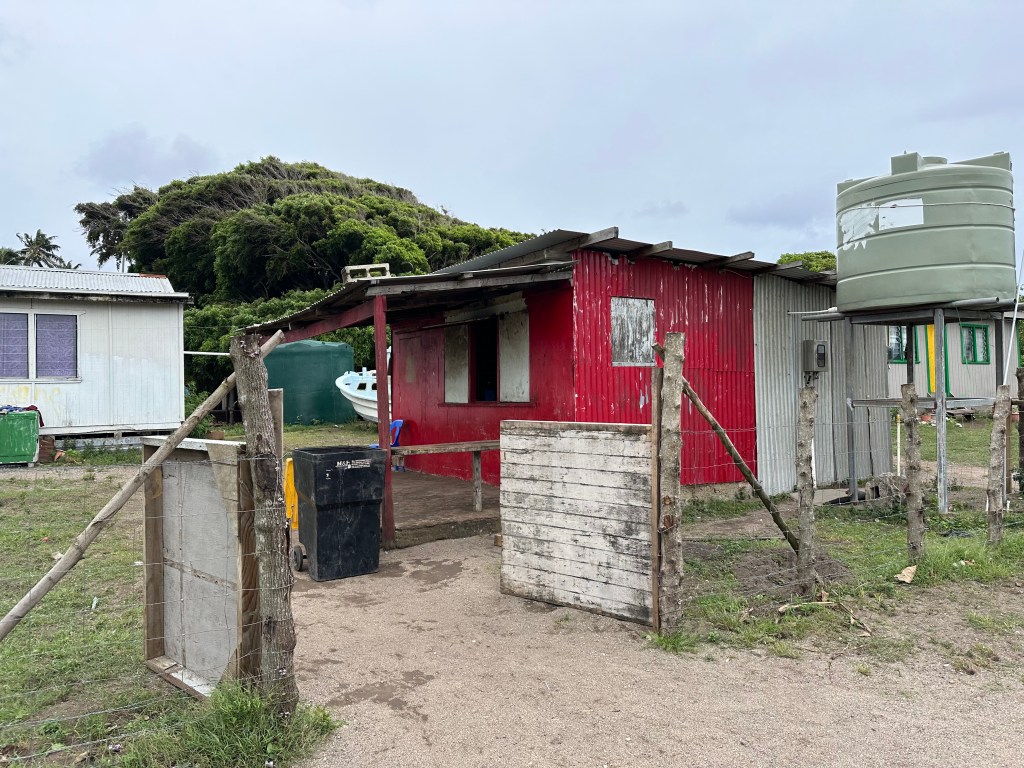
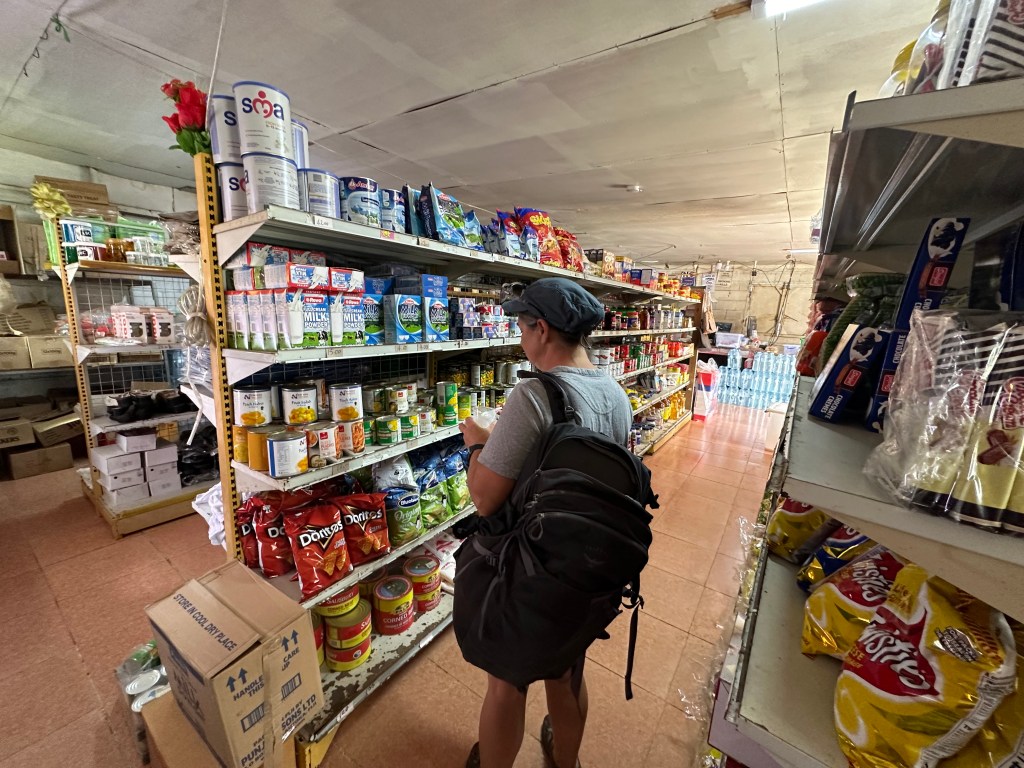
Ha’afeva is home to a small number of Tongan people, perhaps a hundred or so, who live in a village on the windward side of the island. The village was extremely basic, though boasted three churches and a missionary who had come all the way from the US. Dozens of pigs roamed the streets along with the obligatory dogs, whose uncontrolled breeding is a major issue. We had hoped to get some fresh produce but the ferry from the mainland was late and all the shop had was packets of chips, biscuits, and fizzy drinks.

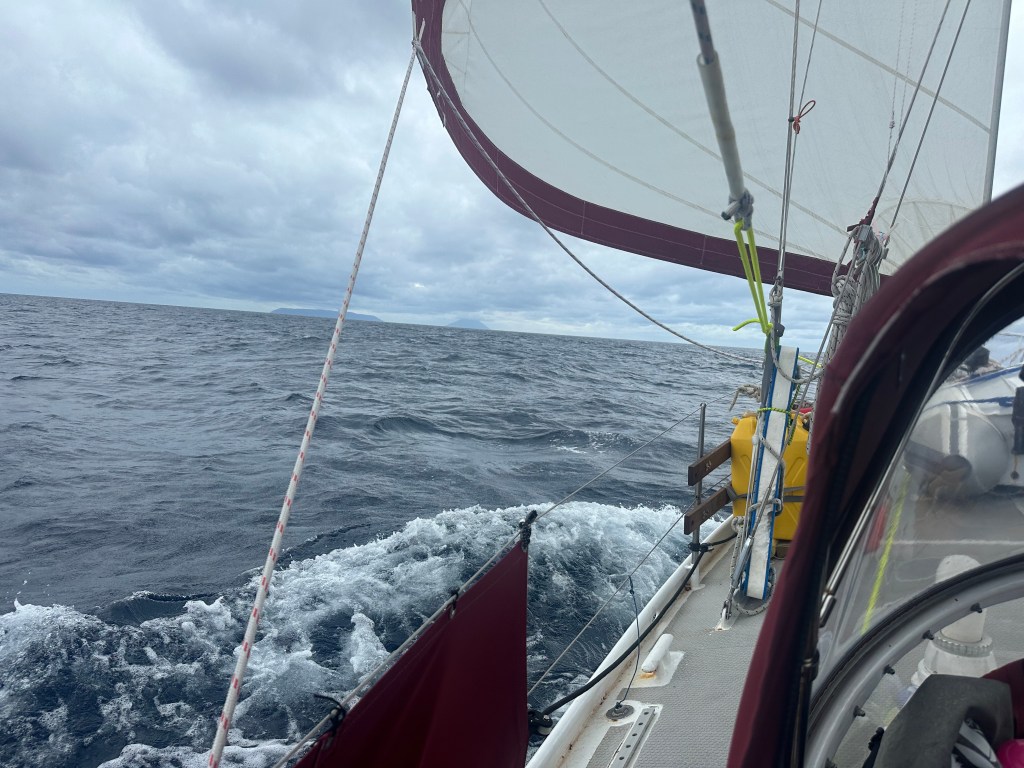
A couple of days later we left the island, heading North East to Pangai, where we needed to check in to the Ha’apai group, the group we had been in for the past several days. It was a pretty miserable sail as we tried to claw our way in the right direction by sailing as close as to the wind as we could. In one case we had to change course to sail to the west of an island because we couldn’t clear its eastern shore and the poor boat took a bit of a pounding. This is the downside of sailing in a trade wind zone where the wind almost always blows from one direction — it’s great unless you need to go against the wind! On arrival at the anchorage we managed to trail a line from the traveller, so that when we reversed on our anchor it got wrapped round the prop, stalled the engine, broke the cam cleats, and ripped some of the mounting hardware out of its setting. As this is more or less exactly what we had previously done in Minerva (with a fishing line) I was pretty annoyed with myself. In my defence, we didn’t think the traveller line would reach the prop, but it turned out that with the boom on one side, and if the lines then go into the water on that side then yes, yes they do. A quick swim freed the prop (though I don’t want to keep doing this as it’s possible to bend the shaft), manually working the gearbox got it changing gear again, and a few bodges had the traveller operational as well, so no major issues. I’m still annoyed with myself though — poor old Taurus deserves better care.
Rather than have to return to Pangai to check out again, as the authorities require, we chose to book out at the same time as checking in. The customs lady clearly wasn’t very happy about this, saying we would only have 24 hours to leave once checked out, but the alternative would be to sail back from wherever we end up in the Ha’apai group, anchor, take the dinghy off the boat, and drive into town to try and find the customs officer again, all for a stamp. As there is no urgency to check in, the imposed 24 hour time limit to leave after checking out seems a bit silly, so we played along, and if the 24 hours becomes two days or three days, why should anyone care?
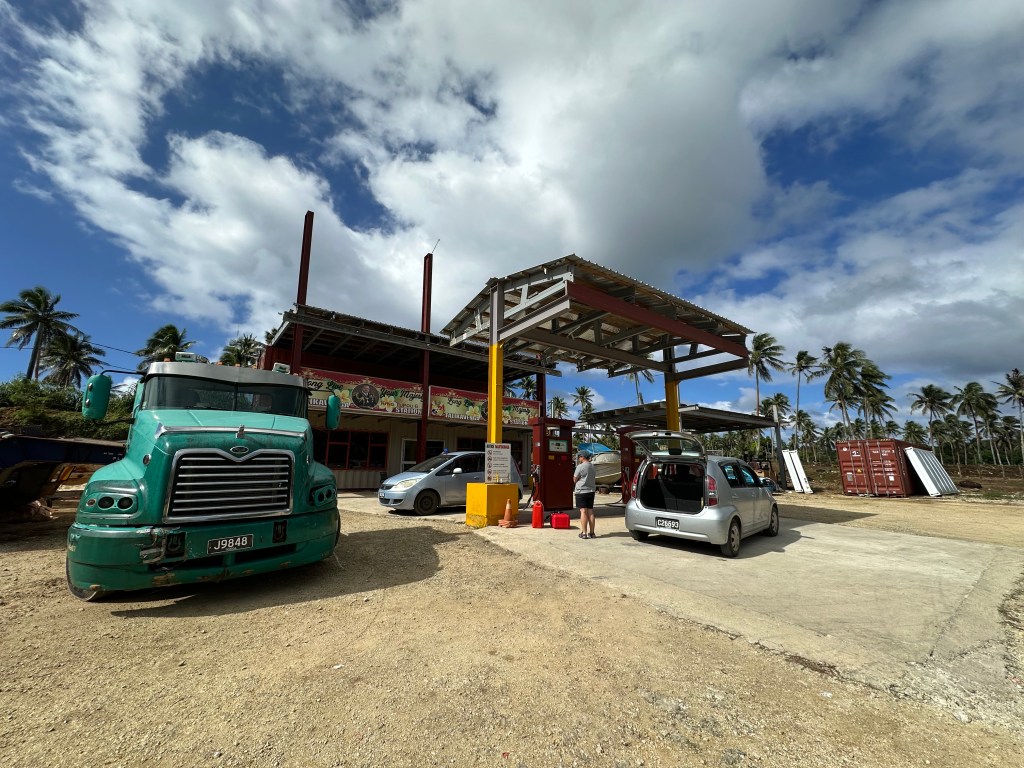
Pangai itself is not a town that requires two visits. Many of the shops and restaurants were closed, including the local garage. This was almost a disaster as we needed petrol, but a kind samaritan drove us out of town to fill our jerrycans and then brought us back to the dinghy. The local grocery store was less kind, inflating their prices by almost 100% for the visiting foreigners. When we realised the scam it was a bit late to do anything about it, and as we had only lost a few dollars we chalked it up to experience. Although we paid a higher price than the locals in this case it remains a mystery to us how the Tongans get by. Everything here is more expensive, often double the price of what we are used to in New Zealand, which is itself facing a cost of living crisis. As I doubt Tongan salaries are higher than Kiwi ones, a lot of Tongans work in NZ and send money home, I wonder how they get by? Certainly, a great many of the business, especially food stores, seem to be owned by Chinese people, so that avenue of income seems pretty limited for the locals.
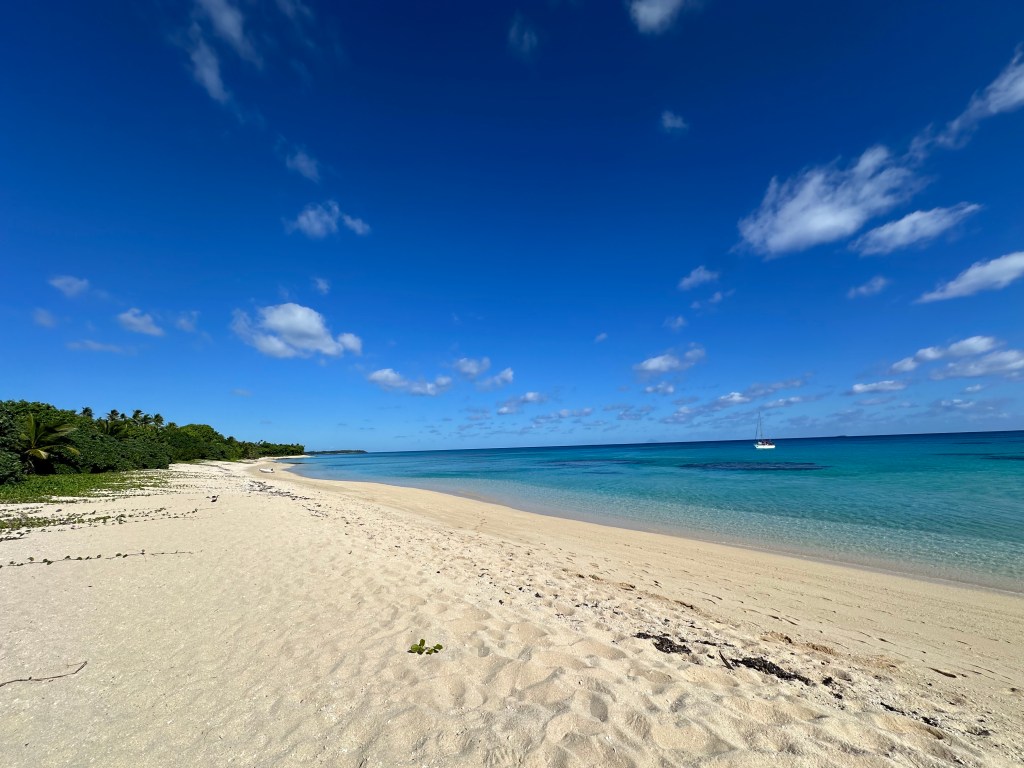
Next time, we leave Pangai and head to the beautiful Fau Island before sailing north to Vav’au.


 Sailing Taurus NZ
Leave a reply to Sailing Taurus Cancel reply