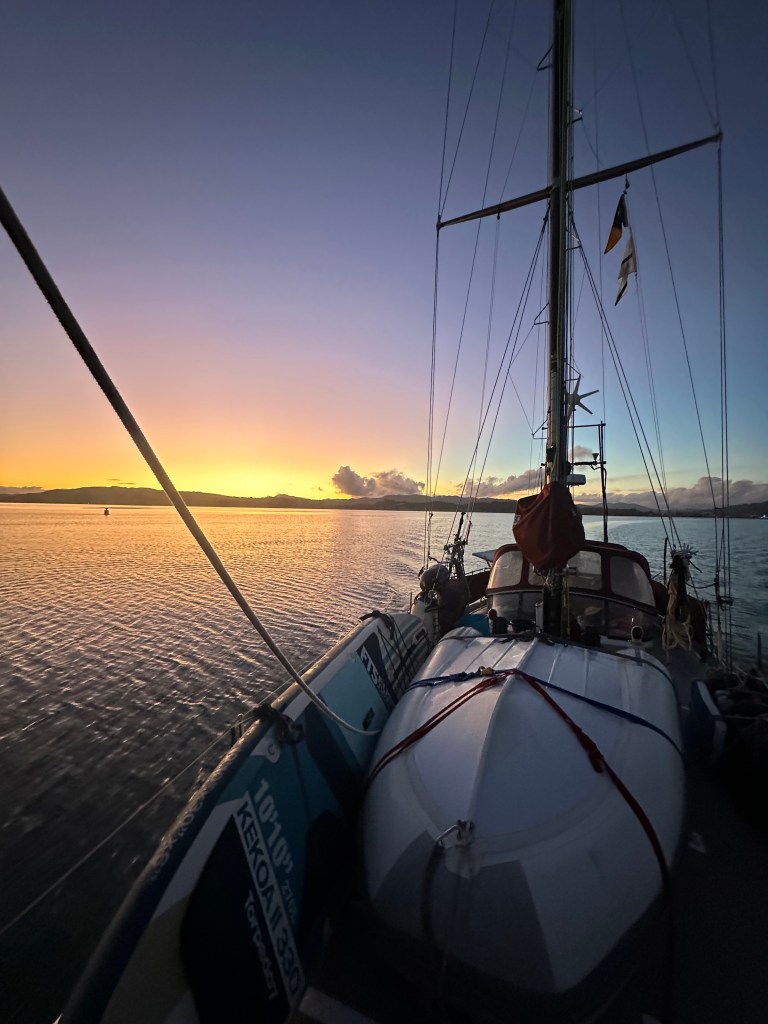
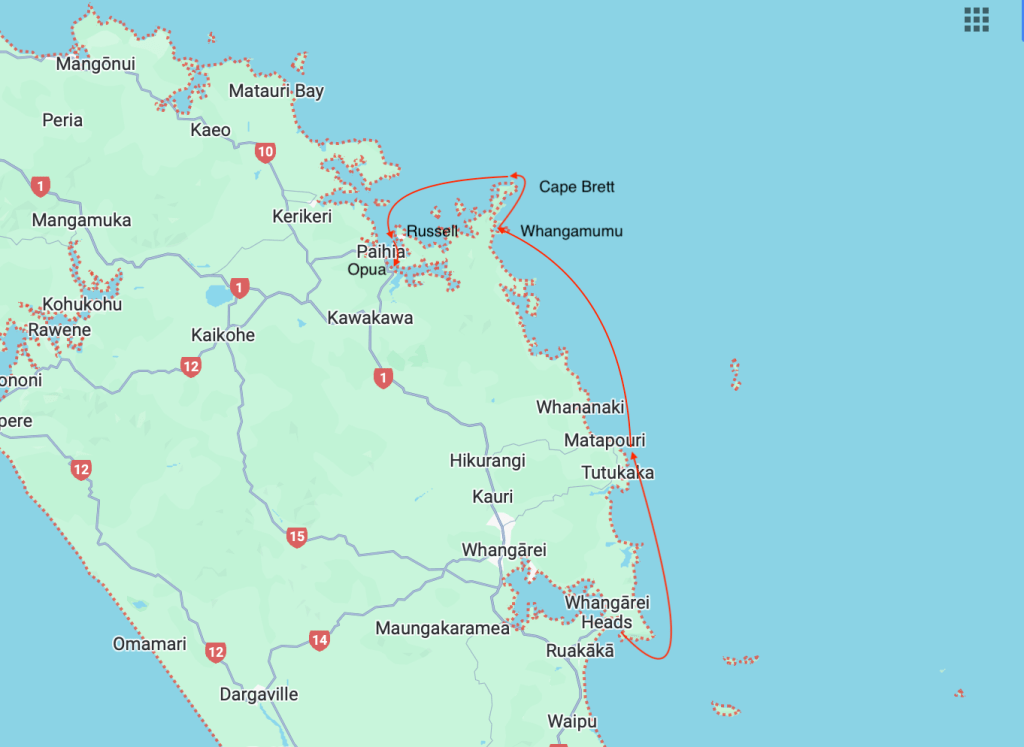
We left Whangarei Harbour on Monday 22nd of April. Leaving the heads we were caught out by an unexpected squall that caused us to struggle with our sails for a minute or two, and managed to make such a hash of it that a container ship coming in to the harbour blew its foghorn at us to make sure we knew he was there. Abashed, we carried on and hoped that not too many people had seen our amateur dramatics!
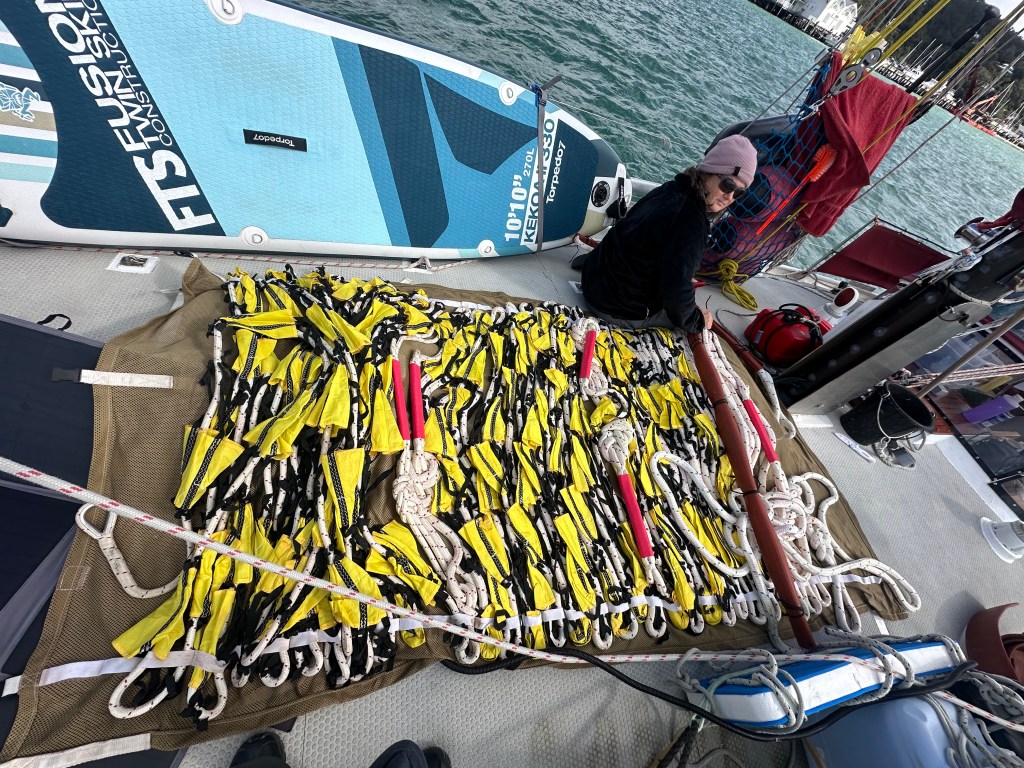
We needed to call in to Whangaruru to pick up a Jordan Series Drogue that we had bought second hand. The Jordan drogue was designed after the Fastnet Race disaster in 1979 in which nineteen sailors lost their lives. The drogue is essentially a long line with a number of small fabric cones attached (Taurus requires about 130 cones) that create drag and stop a boat accelerating too quickly in storm conditions. The idea is that with a drogue deployed the boat rides up and over waves as they go past, rather than flying down the face of a wave and smashing into the bottom of a trough and potentially pitchpoling (turning end over end), or broaching side on to the wave pattern and being rolled and capsized. As with all things sailing there is little consensus about storm tactics, but it is generally acknowledged that if you are going to use a drogue then a Jordans is probably the best option. Having been caught out in a storm of nearly 50 knots coming up the coast we were keen to have something in our arsenal that we could throw out, even if it was a kind of Hail Mary.
Ron, whose drogue we were buying, came out and picked us up in his dinghy and took us ashore to his beach front home. He and his wife, Sheryl, had sailed to the Islands many times in their fifty foot ferro boat, Pilgrim. Ron, now in his 70s, was clearly chomping at the bit to go cruising again, but Sheryl had a nice home and a little dog, and so it seemed like Ron’s cruising days were over and he had unhappily ‘swallowed the anchor.’ The deal done we were ferried back out to Taurus and Ron gave us a final wave, yelling out how jealous he felt as we motored away.
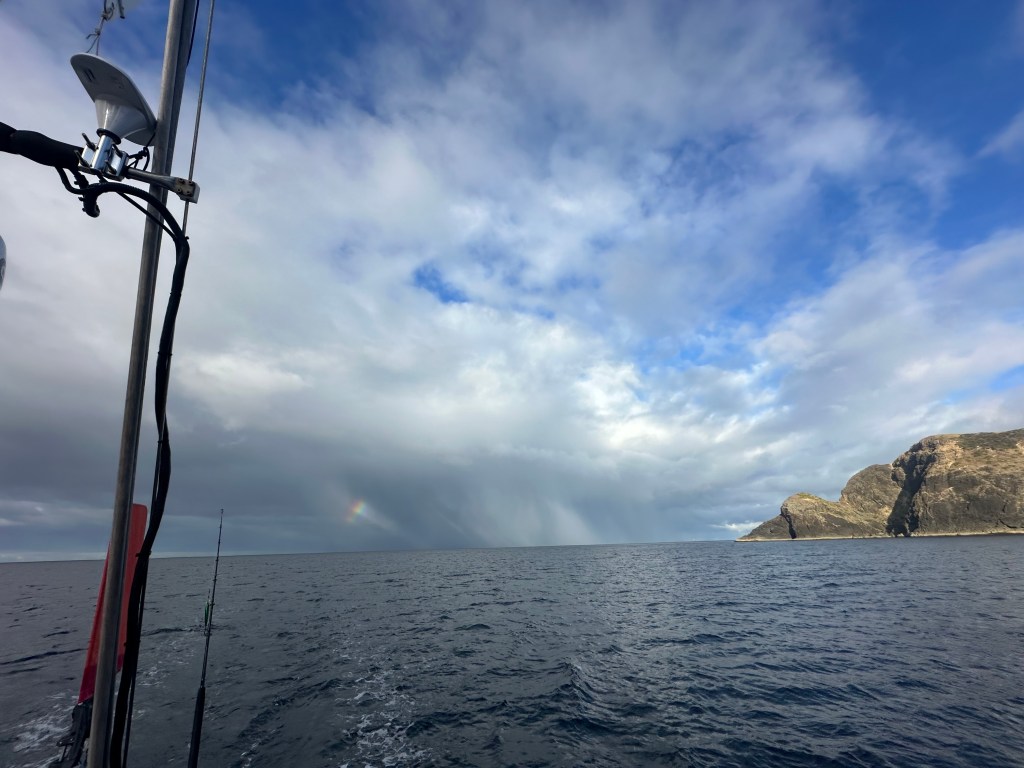
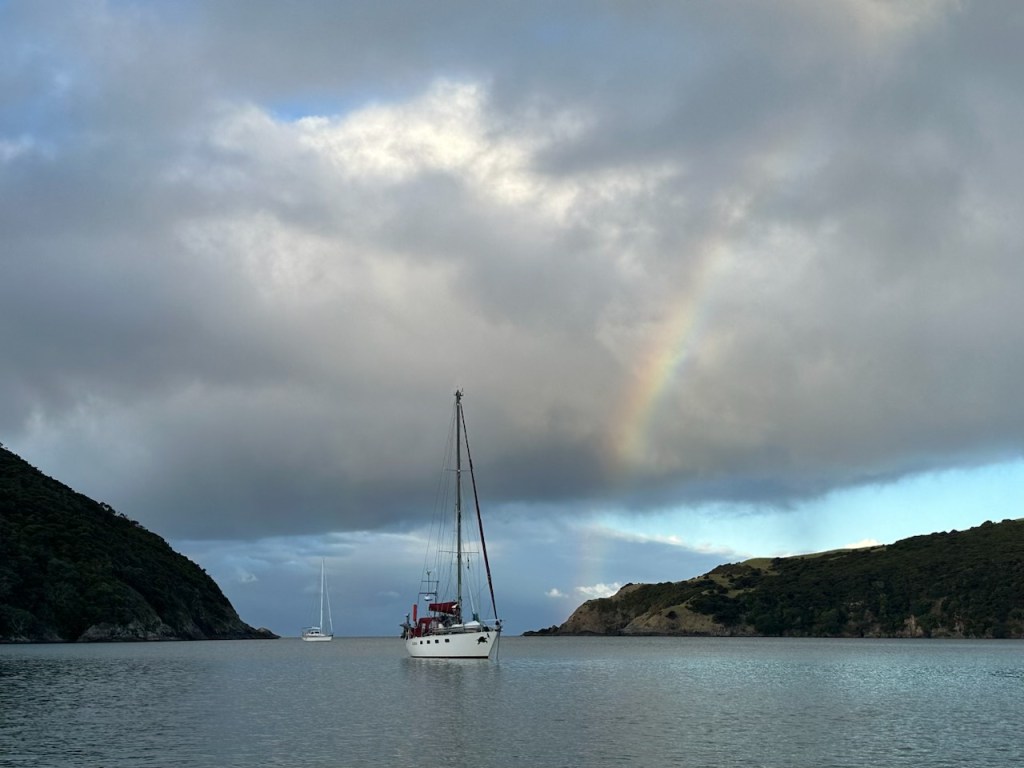
Our next stop was a magical spot at Whangamumu and we had a fantastic sail, just managing to stay ahead of rain clouds and a series of rainbows that coloured the sky behind us.
Whangamumu is the site of an old whalers’ station. The area was once so popular with whales that it allowed a unique hunting technique. The whalers would shepherd the whales into a bay and then string up a steel net to prevent them leaving, allowing the hunters to kill the trapped animals at their leisure. The ruins of the whalers’ station remain, with pieces of machinery and large concrete vats for rendering blubber standing as mute witnesses to a bygone era when our oceans were full of life.

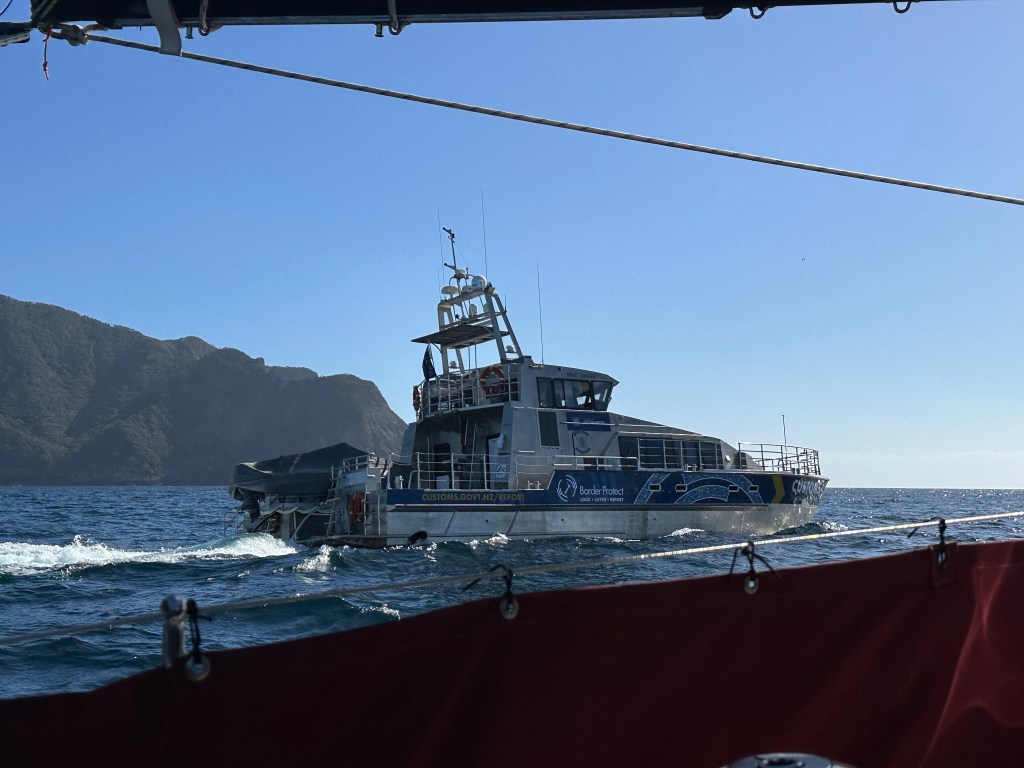
The following day we headed north once again and were approached by a NZ Customs vessel just before we rounded Cape Brett. A crewman shouted over that we needed to identify ourselves as they had no record of our boat entering New Zealand. The problem appears to have been due to our current UK registration, Taurus having been registered in Germany when she arrived. This explanation seemed to satisfy the authorities and they left us to try and sail around the Cape in the fretful light winds.

Sailing into the Bay of Islands we chose to anchor off Russell for the first night. This picturesque town, once a base for whaling ships coming and going from NZ, had such a reputation for violence and vice that it used to be known as the ‘hellhole of the Pacific.’ Cara and I stopped for a drink but there was little vice to be found, and even the fish and chip shop was shut.

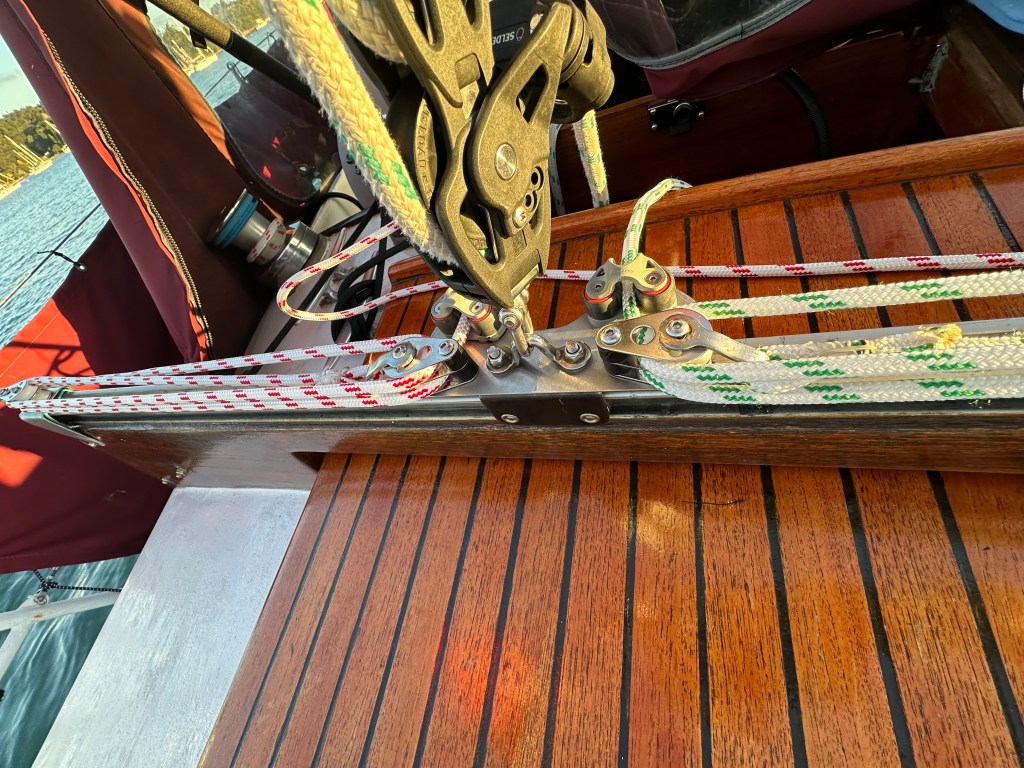
The anchorage off Russell was a bit rolly with the coming and going of ferries, so we picked up the hook next morning and headed round the corner to Opua. There we managed to find a quiet spot amongst the moored boats to anchor, and began setting about the latest job list. As any boatie knows, the job list is never finished! We needed to make sure that our drogue could be attached to the boat without chafing, fix our steaming light (a light halfway up the mast that is lit when the boat is under engine), cure a small coolant leak in the engine (I didn’t tighten up a hose properly after disturbing the heat exchanger), take down our dodger and replace the zips, replace the inverter that we use for the sewing machine after it let out its magic smoke whilst we were replacing the zips, clean the head pump, reinforce the stitching on some of our mainsail slugs, address some minor corrosion on our boom and mast, finish off an improvised mechanical advantage system for our traveller (a device that allows the angle of the mainsail to be altered), and first and foremost try to get rid of some of the stuff we had accumulated whilst living aboard for four years, and which had become a massive hindrance when cruising full time.

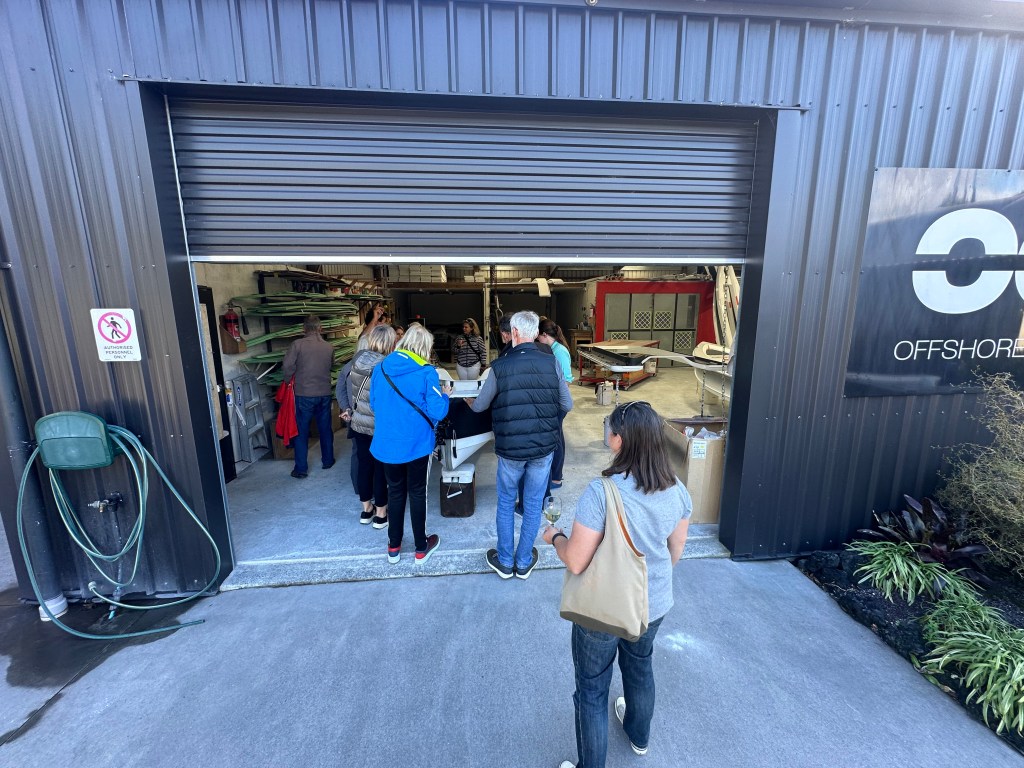
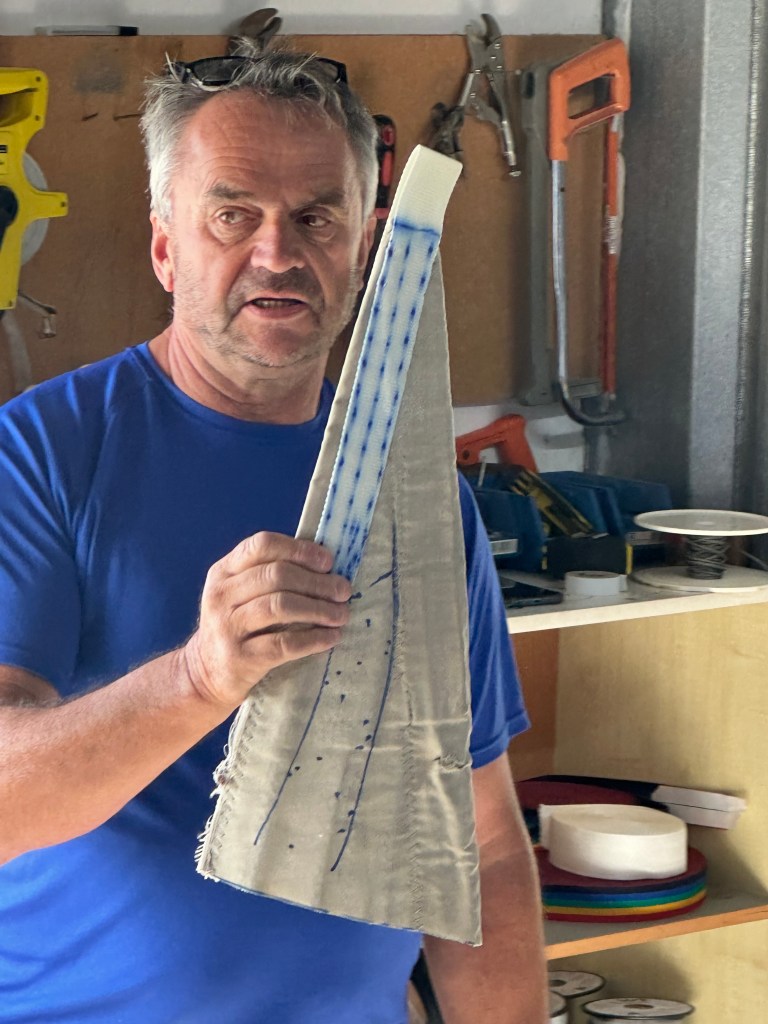
In our down time we had the chance to meet other Island Rally members as boats and people began to assemble at Opua ready for the off. Viki, who readers of this blog might remember as our saviour when we arrived in a stormy Lyttleton a few months ago, is the Director of Island Cruising NZ. She had organised various seminars and get togethers for rally crews. We had a chance to visit the OC Tender factory, enjoyed excellent lessons on sail repairs and diesel engines, weather routing, Pacific Island customs, fishing, and so on, as we waited for a weather window to depart New Zealand.

So, after much discussion, analysis, and a sense of ‘the hell with it, let’s go,’ Cara and I have decided that tomorrow, May 7th, is the big day. Waiting till further in the week is likely to see a reduced sea state, but will also see a period of lighter winds that would force us to motor for several days. The hardest part of any journey, so the saying goes, is casting off the mooring lines. Certainly, after four years of thinking and preparing for this trip it seems a bit surreal to be at the point of departure, but we are looking forward to the challenges and rewards of the passage. As Henry David Thoreau said, “The price of anything is the amount of life you exchange for it.” The cruising life we have experienced over the past few months has certainly not been a constant idyl, though it’s had its moments. At other times its been hard work, stressful, sometimes even frightening — but the idea of returning to a secure and stable existence with a 9-5 job, house, car, and so on, demands way too high a price in my opinion. Next stop Minerva Reef and then Tonga… Neptune willing.



 Sailing Taurus NZ
Leave a reply to healthandsafety80 Cancel reply