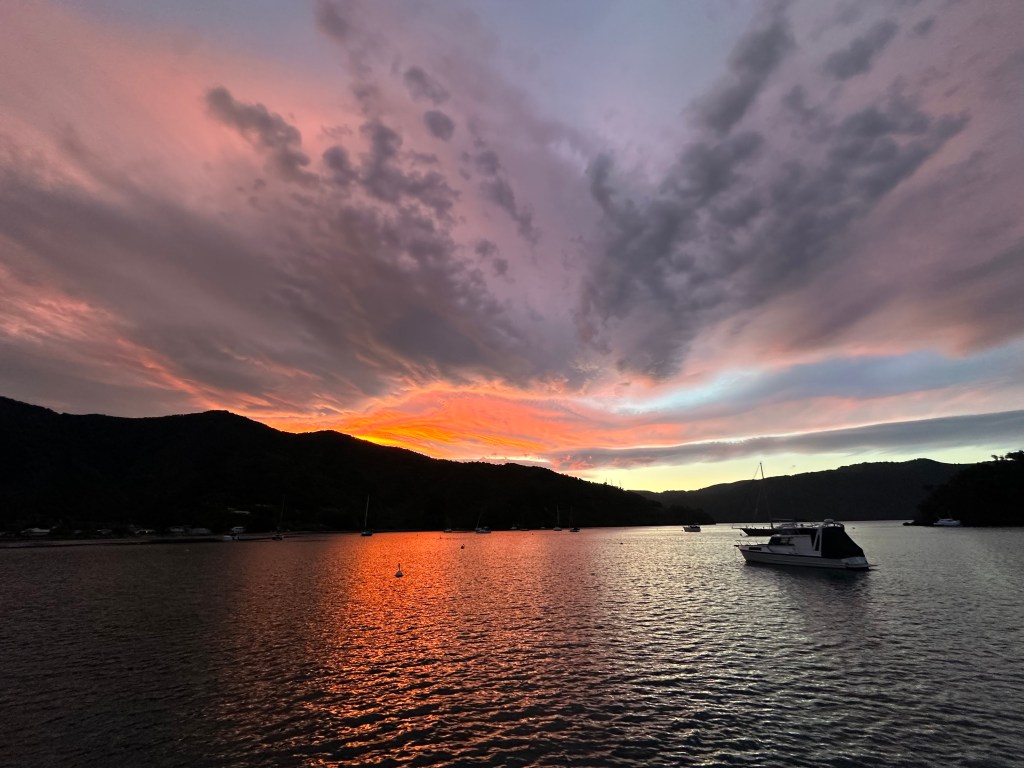
As previously noted, a focus of our time in the Sounds was the need to get our standing rigging replaced. We had sourced a couple of quotes from different companies, and these were so different in terms of time, cost, and work needed that it became quite an exercise to decide which firm we should choose. One company wanted to remove the mast, remove all fittings and crack test them, change all the electronics in the mast (various lights and radio aerials), as well as add new stays and shrouds (the wires that hold the mast up). The other company wanted to swop out the stays and shrouds and send us on our way. In predicaments like this I tend to ask for the advice of my wiser friends — but the split was fairly even. Eventually I contacted another rigger I had spoken to but who couldn’t do the work on Taurus due to her size, and asked him for his advice. He suggested that the extensive refit was a little OTT, and so the decision was made.
We now had a couple of weeks before we had to be back in Waikawa to get the work undertaken. Having spent quite a bit of time in Queen Charlotte we decided to head to Pelorus Sound. After a couple of blustery days on anchor we had a lovely sail around Cape Jackson, marvelling at the way in which the sea boiled where different tides converged, and glad that it was such a placid day as the boat was pulled this way and that.

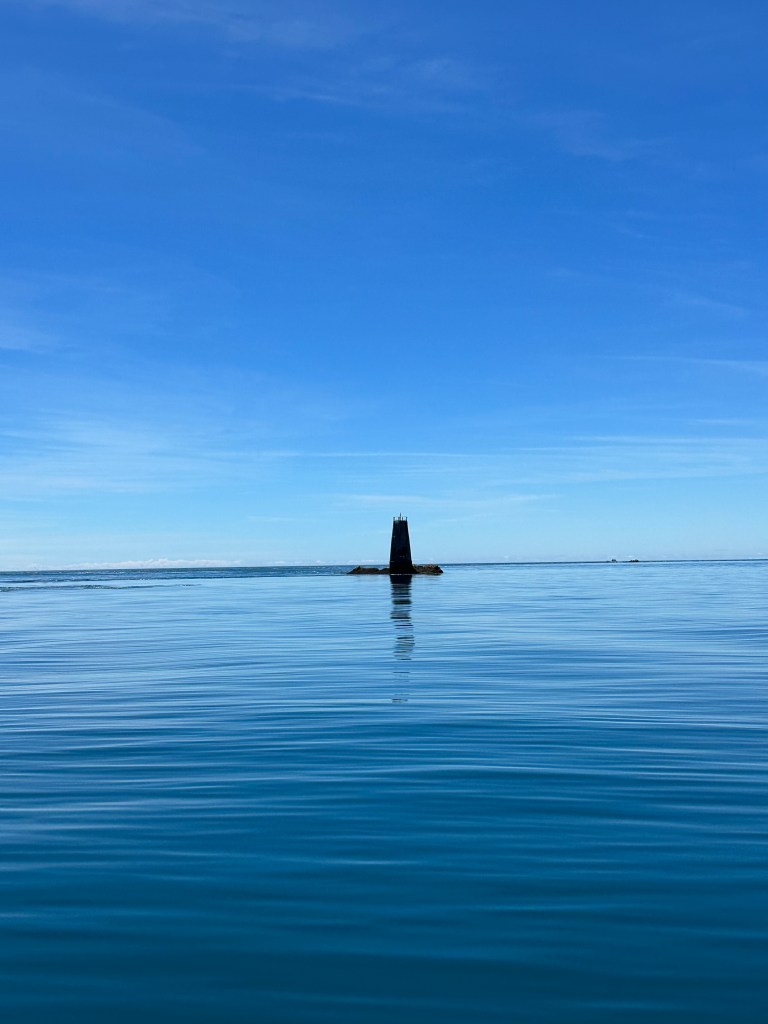
We anchored in Homestead Bay for a few days and then moved to Ketu Bay to avoid the worst of a predicted southerly change. Time was spent fishing, walking, and snorkelling and generally hanging out, but all too soon we had to head back to Waikawa so as not to miss our rigging window.
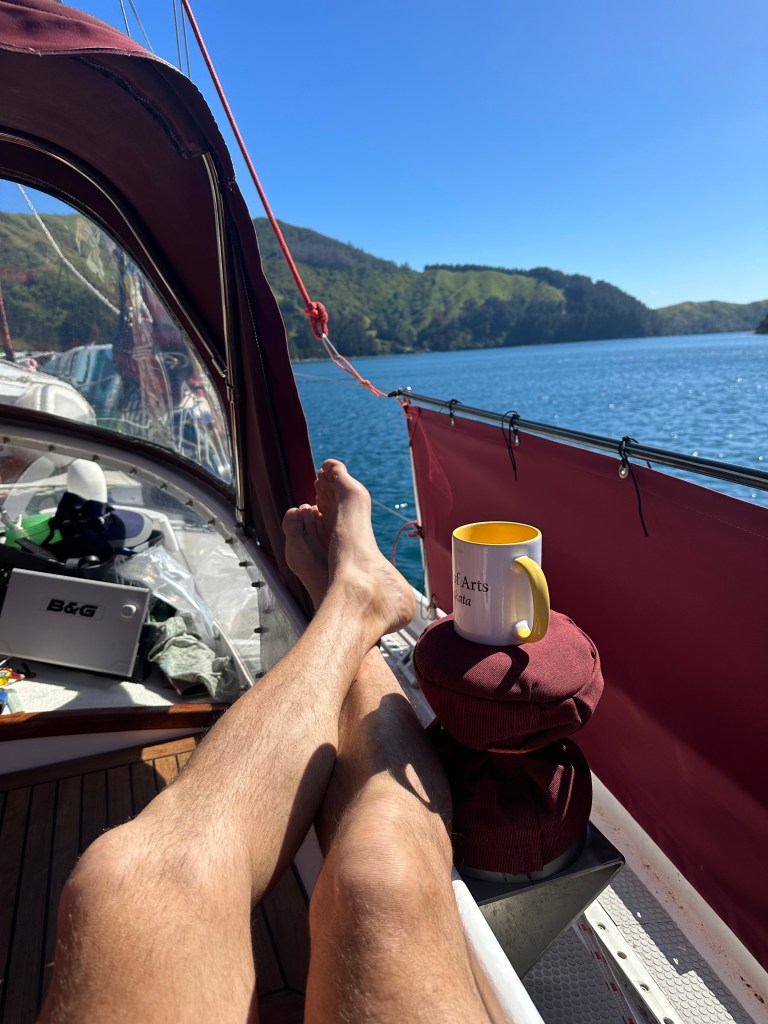
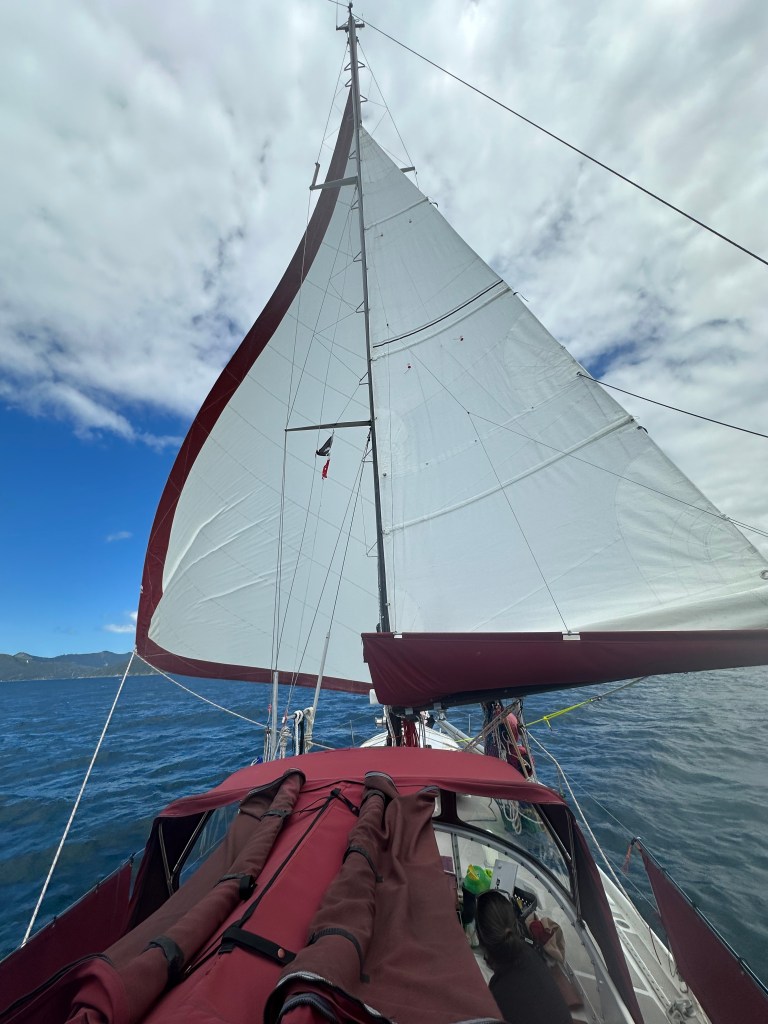
The trip back was uneventful and once again we were able to sail all the way, trying various sail combinations and finding out that our autopilot was much better at sailing ‘wing on wing’ (the main and jib pulled out on different sides of the boat which requires the wind to remain more or less directly astern to prevent an accidental gybe — the boom crashing from one side of the boat to the other) than we mere mortals.
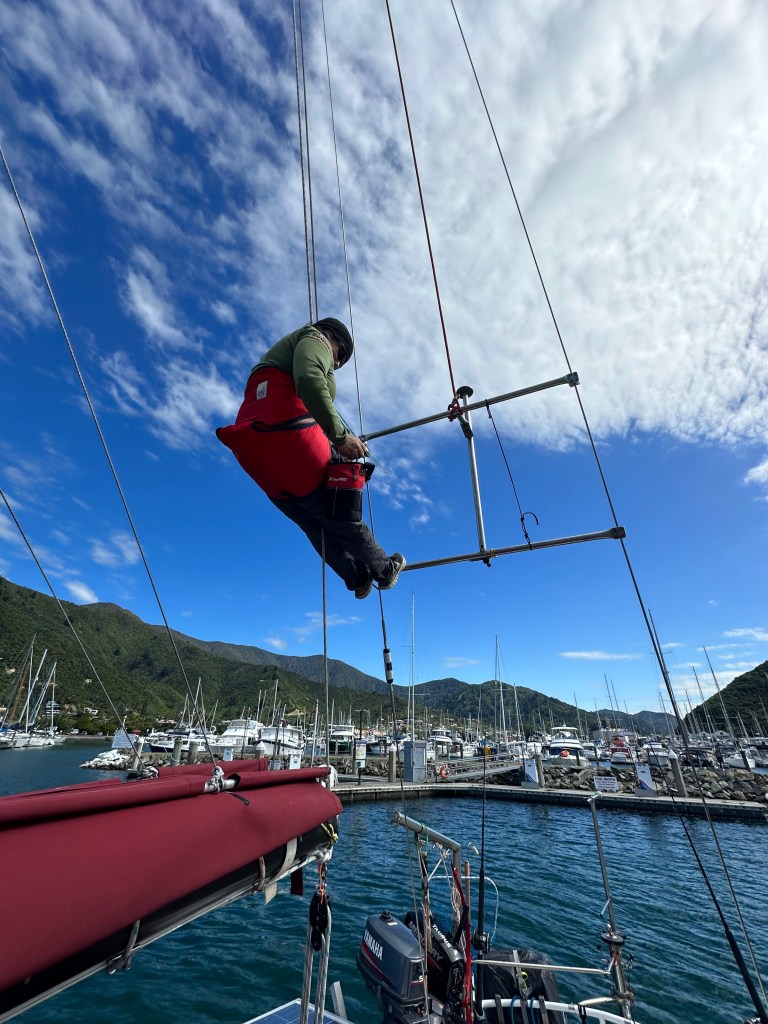
Having returned to Waikawa we went into the marina so that we could strip all the stuff off the rigging ready for the experts to come do their thing. Happily this was surprisingly straightforward, an exceedingly rare state of affairs when it comes to boat jobs, and we had time to work on the dinghy outboard — an easy fix too! Getting too big for my boots I then succeeded in straining my back, leaving me hampered and unable to do much more than hobble around if forced. Luckily Cara leapt into the breach and finished off the last jobs that were required.
With the rigging complete we had to decide where to next. We had several jobs that we needed to do, which required pulling the boat out of the water. Because most of the facilities in the area are businesses rather than clubs they tend to be a little more expensive and a little more health and safety conscious (meaning no living on board whilst ‘on the hard,’ which demands more $$$). We also needed to get rid of some stuff we had on board and wanted to pick up other stuff we had at home. The fact that Christmas was just round the corner helped us to decide to head back to Dunedin to use the facilities at our sailing alma mater, the Otago Yacht Club. With a good wind the trip takes about 4-5 days — naturally, however, good winds were not forthcoming.
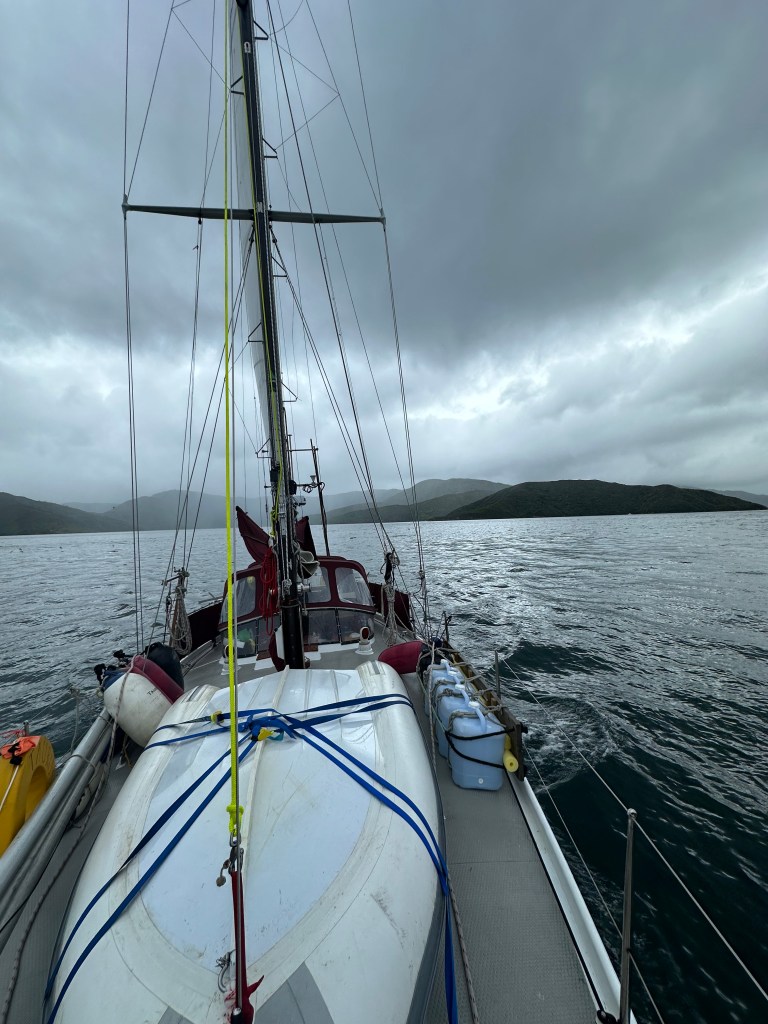
Seeing a narrow window we jumped at the chance to leave the Sounds and start heading South. Unfortunately, the window proved narrower than predicted and we spent the last hour and a half of our trip to Port Underwood battling a strong southerly that reached slightly over 40 knots. Our situation was not helped by the fact that our jib refused to roll away completely so that we were a little overpowered. The jib issue was a rookie mistake. When we replaced the jib sail we thought we had enough coils around the furler to be able to furl the sail. However, attempting to furl the sail in strong winds results in a tighter furl that demands more rope to pull the entire sail in. Having a tightly furled sail we ran out of line and were unable to move the sail any further in — and obviously unable to pull it out again to try and refurl without risking serious damage to the sail and losing control of the boat. Normally in rough weather the sailor tends to look for open water, its land that wrecks boats, but we were right at the entrance to Port Underwood and with conditions deteriorating we decided to close with land and keep our fingers crossed. Fortunately, the wind, waves, and tide were all heading into the Port so that the entrance was fairly blissful after the fight to get sufficiently south of the rocks at the northerly entrance and we were soon in a peaceful anchorage enjoying a well earnt beer!
We had intended to stay the night, but Cara noticed another window to head to Lyttleton and so after a couple of hours, in which we fixed the furler, we headed back out to find the wind had dropped drastically but was unfortunately blowing directly onto our nose. Tacking across the wind gained us little ground, so I dumped the sails and turned to the ‘iron donkey’ — the engine — for a few hours.
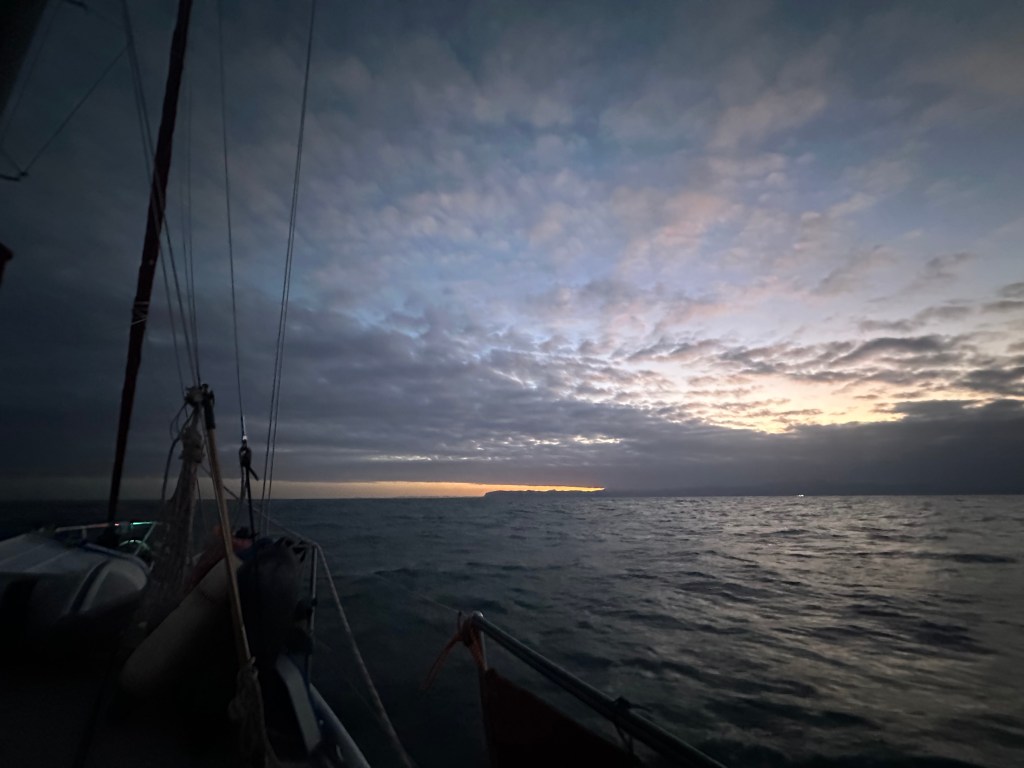
The next 48 hours sailing to Lyttleton saw us experience a variety of conditions: strong downwind sailing, another gale that came in that night at about 3:00am, and then ferocious winds and torrential rain when we finally reached the ‘shelter’ of Lyttleton Harbour. Viki Moore, a local sailing legend, had been watching us on AIS and seeing the crazy weather called us up and suggested that we pick up a mooring in Diamond Harbour where we would find the best shelter. Needless to say we were very grateful for this advice — the normal place we anchor in Lyttleton would have been very exposed and not an easy proposition, but I wasn’t keen to try and explore unknown, confined bays in the weather as it was.
Cara and I both felt a little battered, not least because whilst I could forget my strained back when occasion demanded, the after effects were pretty painful and debilitating. Poor Taurus had suffered too. Whilst putting the third main reef in at 30 knots the winch used to tighten the reefing lines simply fell off the boom. We were fortunate to have finished putting the reef in when it came adrift, and to be able to grab the winch barrel and caged bearings before they disappeared from the wildly pitching boat into the rain, and darkness. The next day we were able to replace the winch. It turned out that a mere circlip holds it in place, which seems a bit insufficient. Nothing was broken so I’ll keep my fingers crossed it stays where it is supposed to and try to source a replacement for a spare (about $3 boat dollars (BD) — $1 BD = $100 in normal money. Surprisingly, this strategy of self delusion does make you feel better about the constant outlay that boats demand!).

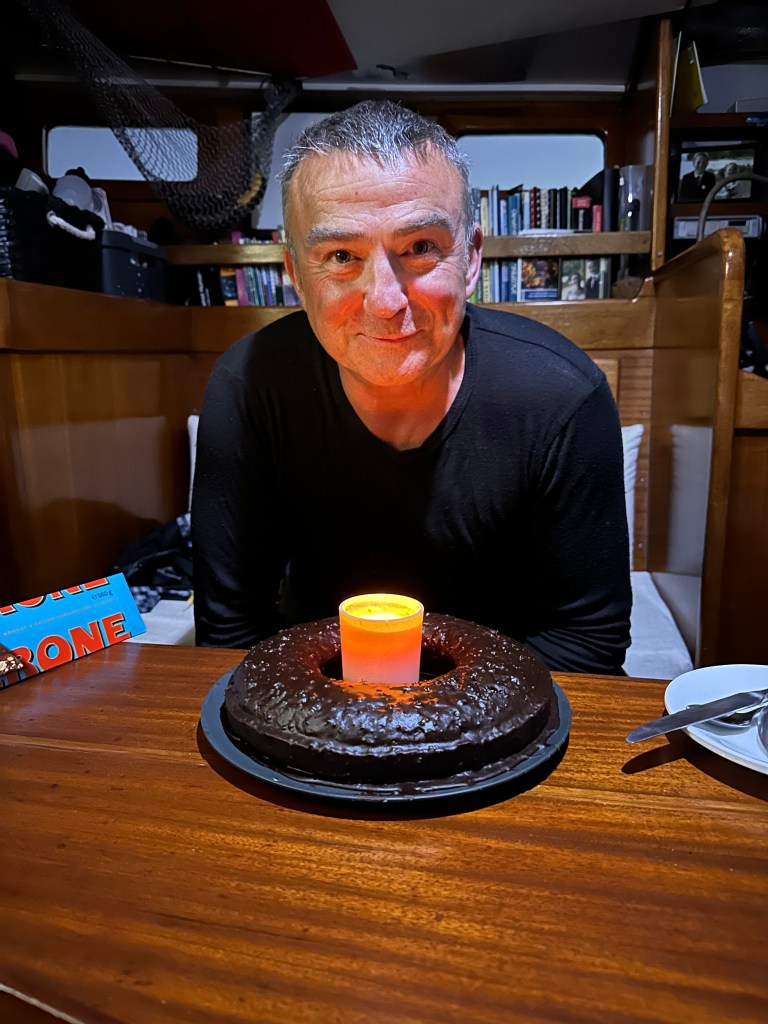
After a good night’s sleep, Viki kindly came to meet us and gave us a lift to a chandlers to buy a couple of stainless items that had broken during the maelstrom, and to a supermarket to buy some more beer. I hadn’t chosen a good time to try and cut down! It was also my birthday, and Cara spoilt me rotten with a home baked cake and lovely dinner out.
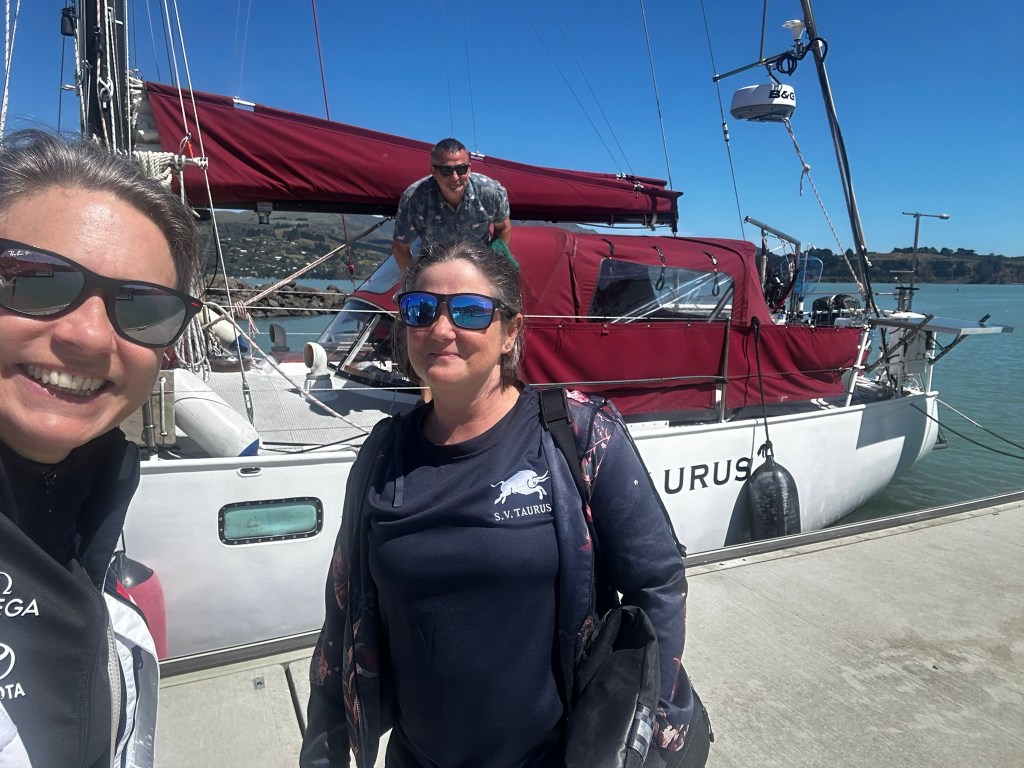
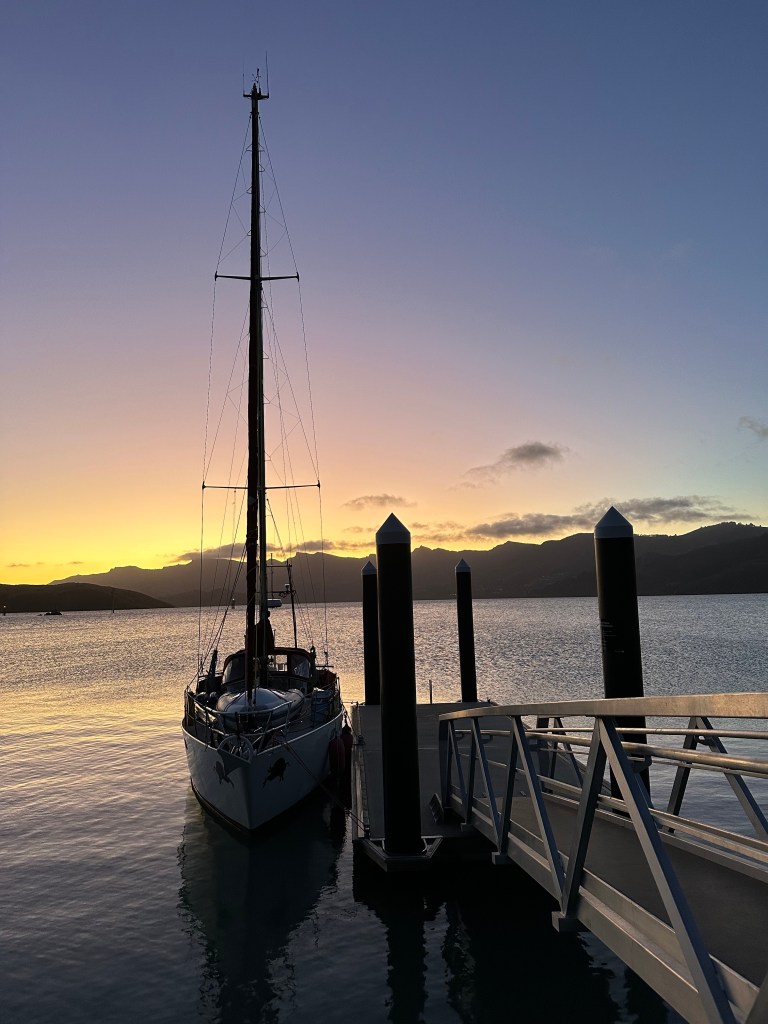
So, it is now two days since we arrived and we have a small weather window to make the 36 hour trip back to Dunedin if we leave at 8pm tonight. If competence is an outcome of experience, and experience an outcome of learning from the mistakes we make, then the trip thus far has been well worthwhile, but I’ve got my fingers crossed that the next leg lets us slumber in a little blissful ignorance…


 Sailing Taurus NZ
Leave a comment