Finally, a weather window appeared that allowed us to leave Oamaru and head to Akaroa. The window wasn’t great with light variable winds that threatened a good deal of motoring, but it was the best we’d seen and the best predicted to come.
We left Oamaru on Friday 22nd September at about 10:30 am in a 15 knot southerly on a wet and cold day. Fortunately, Taurus has a dodger that gives all round protection and means that rain and temperature are not so big an issue. Our previous yacht, Casino, was far more of a racer and meant that pretty much every trip involved getting seriously wet and cold. For cruising, especially in temperate climates such as New Zealand enjoys, protection from the elements is really a must, and one of the many factors that separates racer/cruiser style boats from true blue water cruisers.

At five knots the sail from Oamaru to Akaroa should take about 26 hours. The wind came and went during the night so that we had stretches of motoring, raising and lowering sails, and lots of sail adjustments. Normally on night passages Cara and I try to get into a 2 or 3 hour shift pattern that changes depending on how tired we feel. When we are only expecting a passage to take a single night this becomes even more flexible. With AIS (Automatic Identification System) that broadcasts your boats position and monitors other boats in a fairly wide vicinity, warning of close proximity or converging headings, the danger of collision is greatly reduced. However, leisure boats don’t have to have this system onboard, so they don’t generate a signal, and fishing boats are notorious for turning theirs off so that their competitors don’t know where they are…
Unless experienced it’s hard to realise just how dark the night is at sea, and how little can be seen. There would be no chance, for example of seeing a container floating in the water. The on-watch crew can see their own navigation lights, and look for other lights at sea that warn of other vessels, or lighthouses and beacons that warn of land. For this reason many single handed sailors sleep for 20 minutes and then look around for a few minutes before getting 20 minutes more sleep — the rationale being that it takes the fastest ship 20 minutes to get over the horizon and be close enough to be a hazard. Typically on our watches Cara and I watch videos or read books, keeping an eye on what’s happening around us as best we can, and making sure that every 20 minutes we have a good look around. In this way the night soon passes.
The variable wind continued the next day so we were glad to see the coast appear out the morning mist, and know that we were almost at the entrance to Akaroa.

Captain Cook famously mistook Banks Peninsula (named after Joseph Banks, his botanist) for an island, and Stewart Island for a peninsula. It’s easy to understand why, as the coast disappears and appears isolated from the mainland. Having spotted land we settled back to the long wait that is perhaps the most frustrating part of sailing. When you see your destination you tend to want to get in, but the slow speed of sailing dictates that landfall remains several hours distant. Finally, we passed the headland and entered the natural harbour in which Akaroa sits.

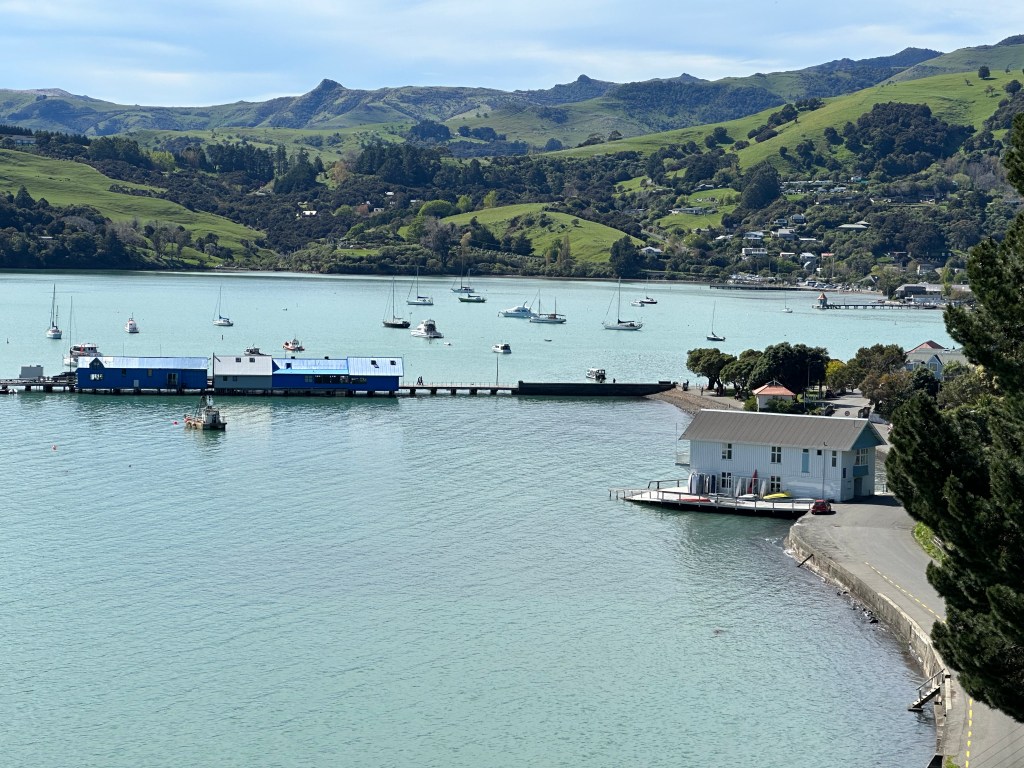
An hour or so later we finally dropped anchor in French Bay, Akaroa spread out before us.
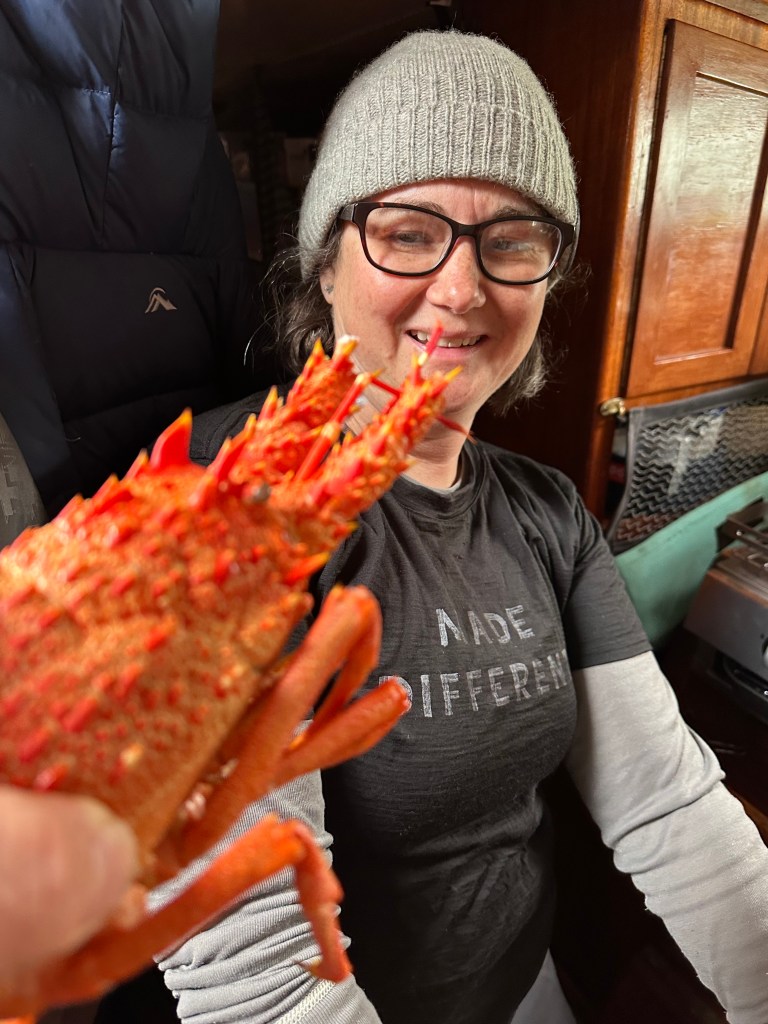
The next day we took the dinghy to shore for a walk around. We were keen to find a way to replenish water and diesel if possible, and to find somewhere to do some washing and have a shower. On the big commercial jetty that the tourist operators use we were lucky to ask a local fisherman if we could come alongside to use the hose. The fisherman, Gavin, turned out to be a real legend who couldn’t do enough to help us. Before we left we had solutions for water and fuel, and he had told us some good fishing spots as well as loaning us a craypot, which came complete with two crayfish! He also offered us use of a brand new mooring he had had put in. Gavin steadfastly refused any payment, even the standard NZ ‘thank you’ of a box of beer, or block of chocolate. Later he gave us several blue cod fillets. A genuinely generous and salt of the earth Kiwi, Gavin just wanted us to enjoy his corner of paradise.

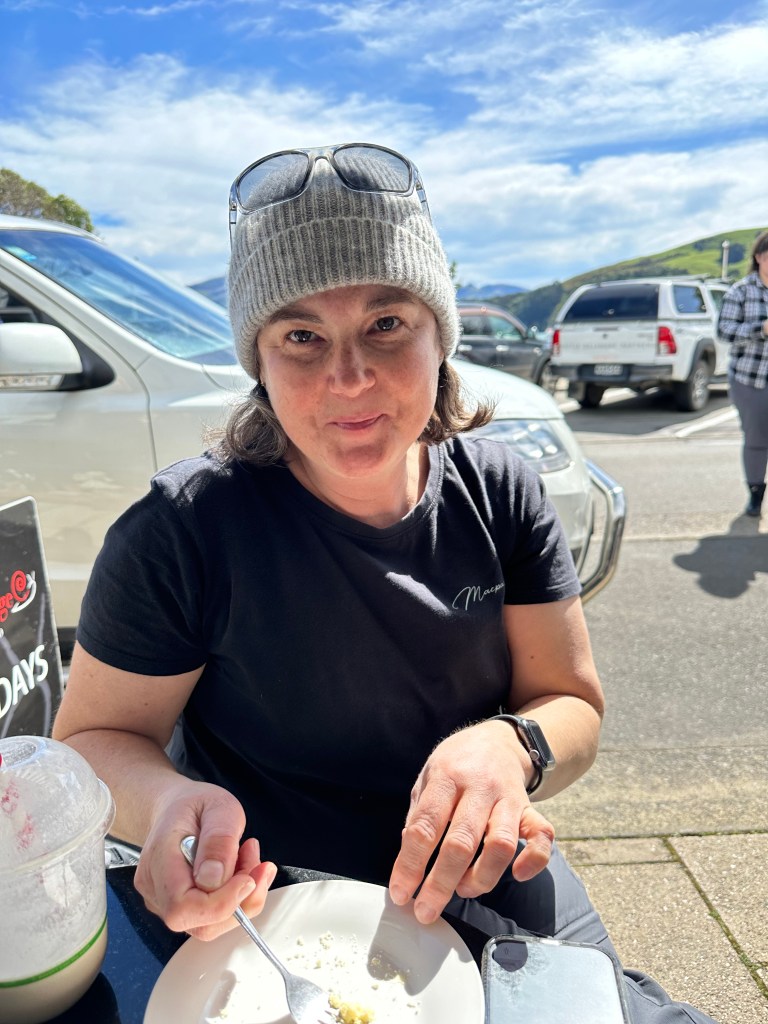
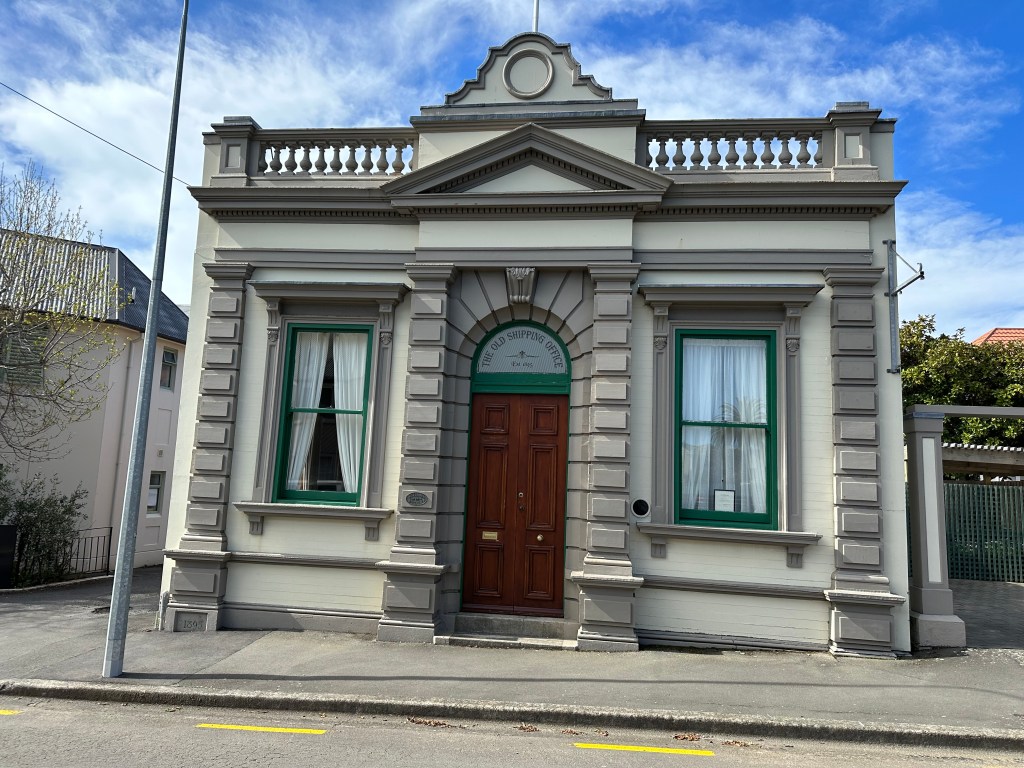
Akaroa’s point of difference is that the French originally settled the area, and the town proudly celebrates its Gallic foundations. Naturally, the coffee and baking on sale are a treat.
The weather continued to be very changeable and had a couple of bumpy nights on anchorage, both in Childrens Bay and later in Takamatua Bay. We also had a lot of fun trying to retrieve Gavin’s claypot from a bay near the heads as the weather turned quickly in the few hours it was down and we had to get Taurus close in to some rocks to pick it up. Another lesson learnt!
As a storm was predicted we took Gavin up on his offer and made use of his mooring. Childrens Bay wasn’t protected from this wind direction and we had a pretty rough 24 hours. We’d managed to refill our diesel jerrycans just before the storm hit, planning to leave the next day. The timing meant that we couldn’t get the dinghy back on the deck in the wind (they tend to take off like kites as they’re being raised in decent winds) so left it tethered behind. The next day we had a knock on the hull and looked out to find someone had brought our dinghy back before we even realised it was gone. The new 12mm painter (line that holds dinghy to boat) had chafed through and allowed the dinghy to escape. Fortunately it had gone straight ashore and escaped any serious damage.

With the prospect of another storm coming through, Cara and I had to decide what to do next. This storm was predicted to be worse than any of the others we’d recently experienced, and was to veer from the North West to South West, which meant finding a sheltered anchorage particularly difficult. We’d been told about some spots further round Banks Peninsula, so took Taurus to the jetty to fill up the water tank, bid farewell to Gavin, and headed out to sea with Pigeon Bay our destination.

 Sailing Taurus NZ
Leave a reply to Christine Thomson Cancel reply