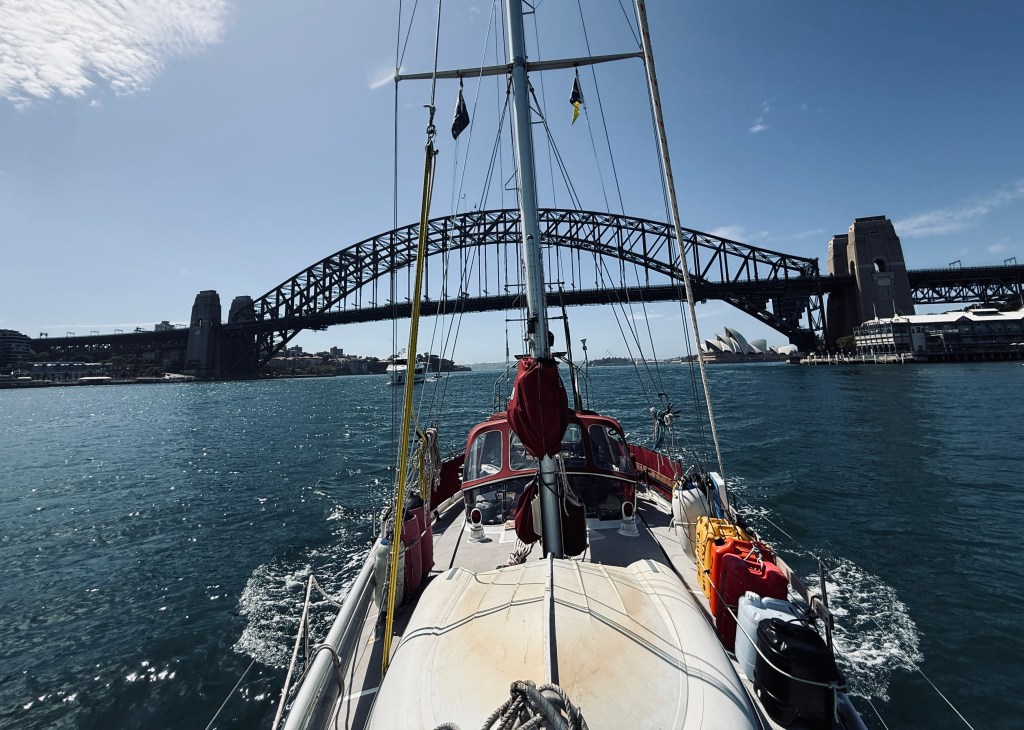
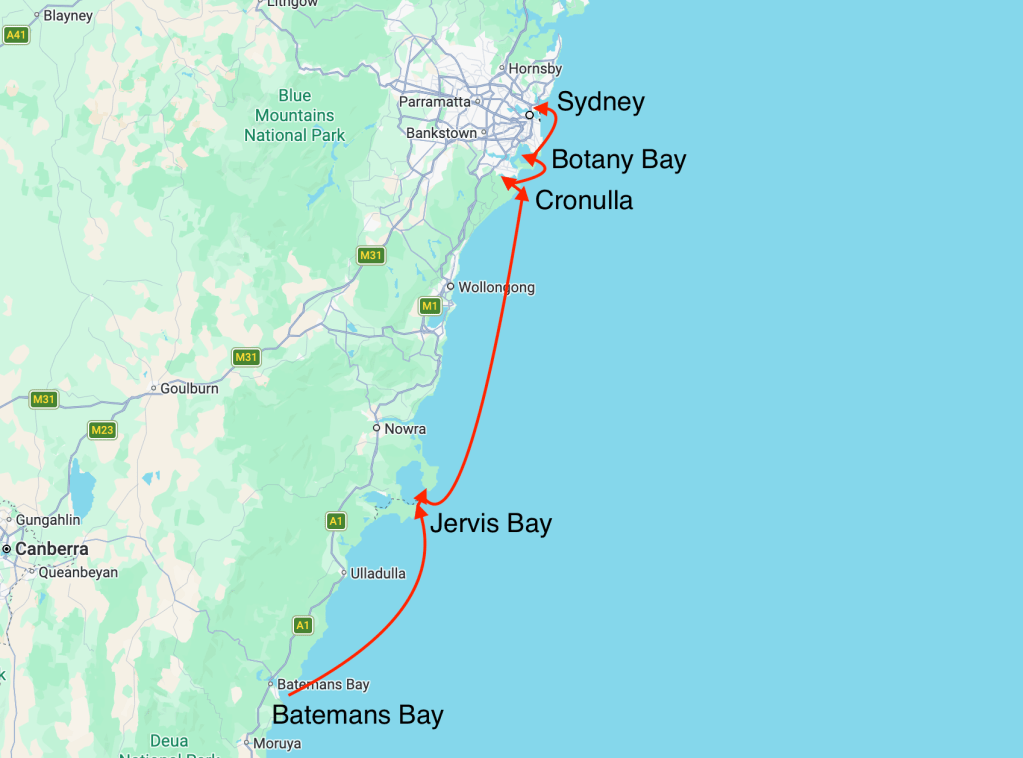
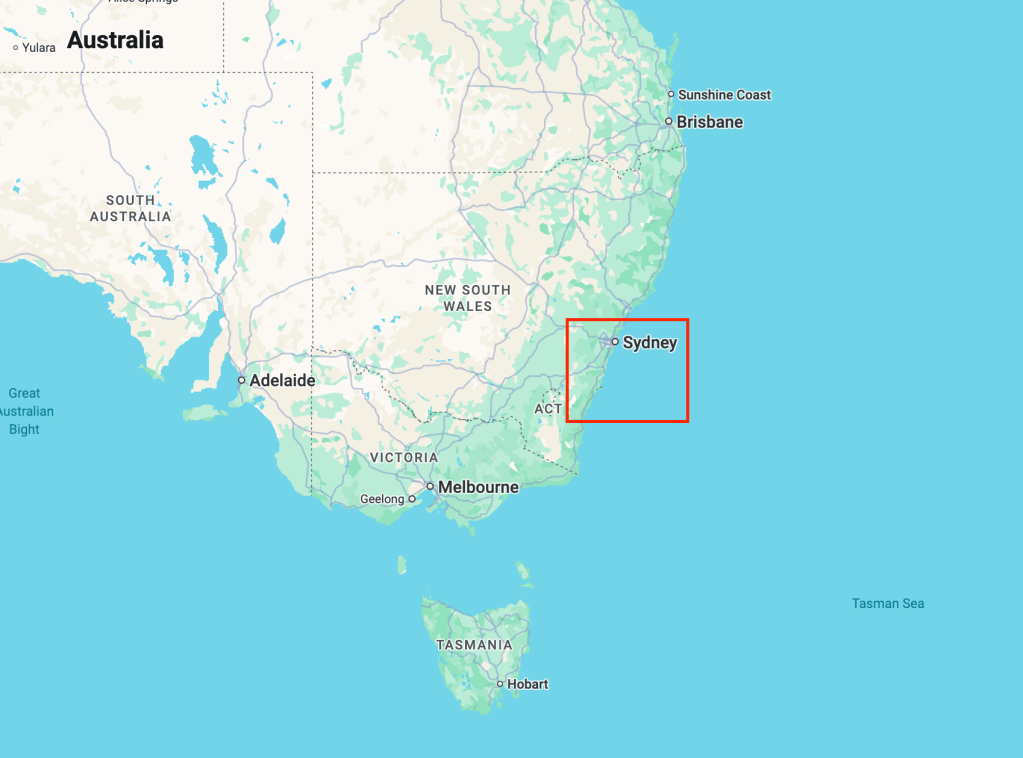
After a couple of quiet days in Batemans Bay a weather window appeared that would allow us to sail the fifty nautical miles to Jervis Bay, a ten hour trip more or less. We dropped our mooring, re-crossed the bar, and anchored in the north east at Maloneys Bay, ready to leave when the wind appeared late morning.
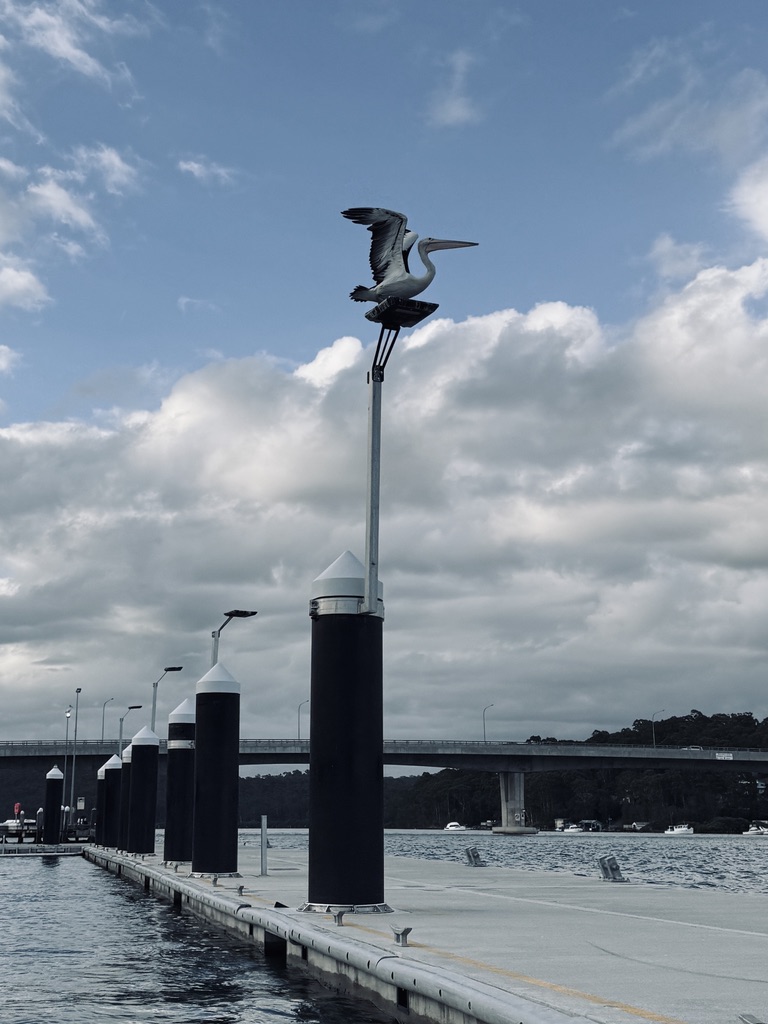
In the event it was one of those days when the wind appears, disappears, appears, disappears and so on, ad infinitum, ad nauseam. We were kept busy raising and lowering sails until, finally, when we were about two hours out from Jervis Bay, a squall suddenly appeared, bringing with it twenty to twenty five knots on the nose. An old weather saying has it that what is ‘sudden to arrive is soon to depart,’ but this wind kept on until we gratefully turned into Jervis to find some protection.
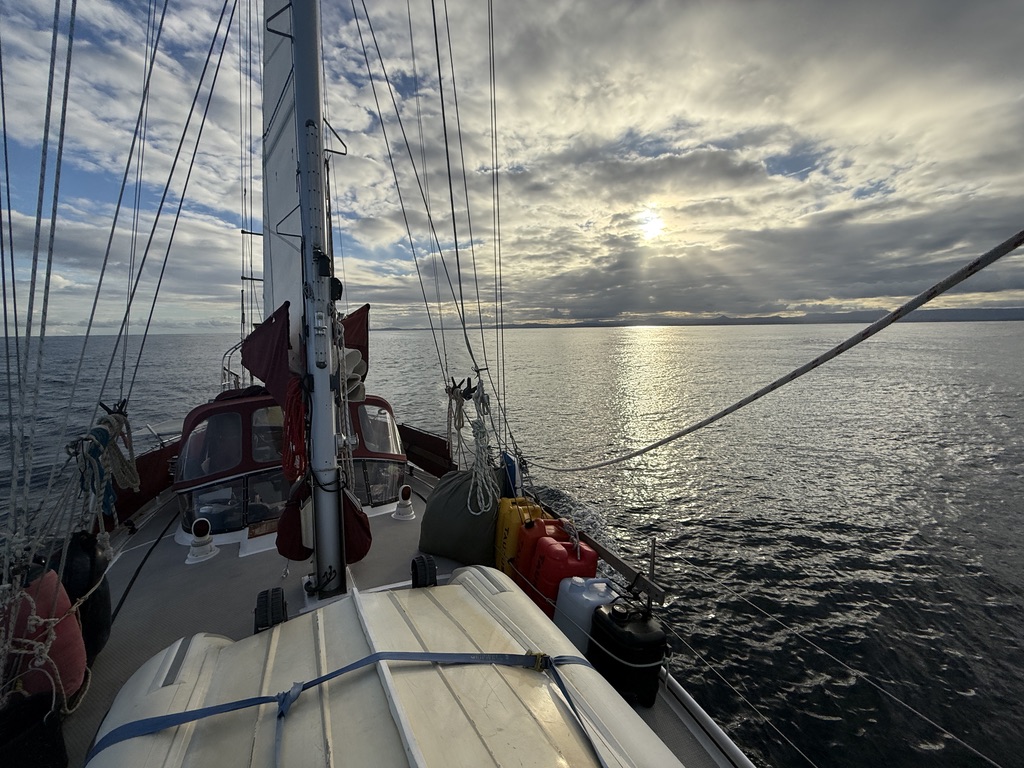
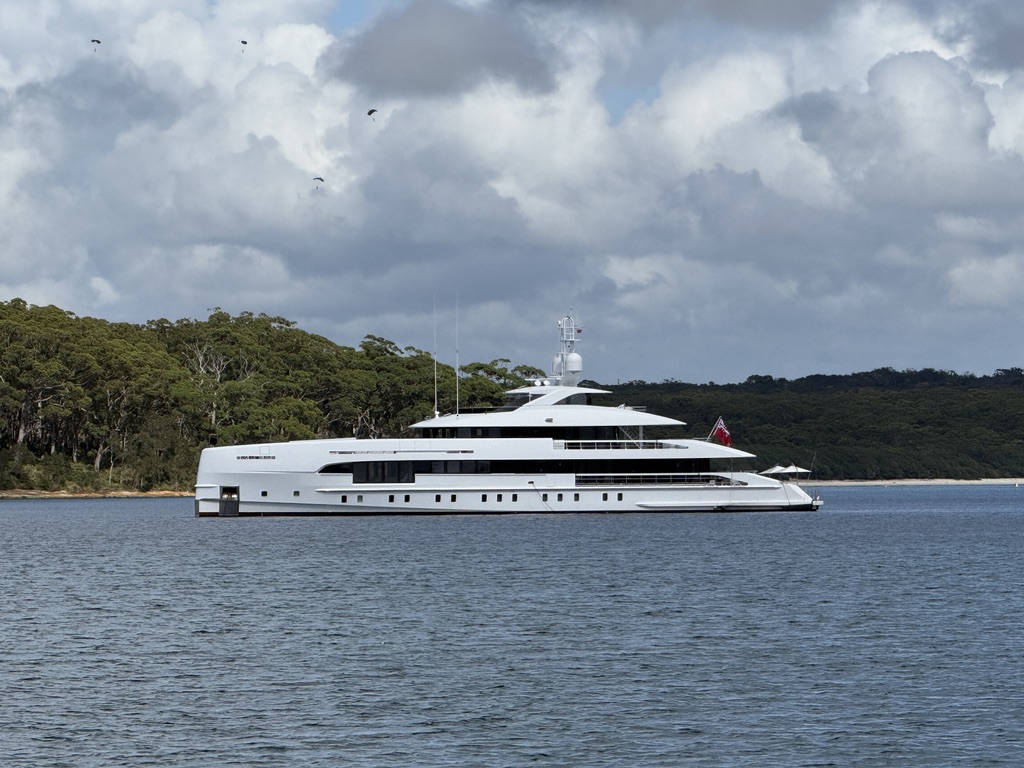
We anchored near the Royal Australian Naval Base, and next morning woke to a spectacular, sunny day. A super yacht was anchored nearby, flying the flag of some tiny island tax haven. As I’ve said many times before, the best thing about cruising is the amazing people you meet, but I’ve never really felt the desire to meet the owner of a super-yacht. I suspect that we would have little to talk about, and as this one was also flying the flag of Israel, probably the less said the better.
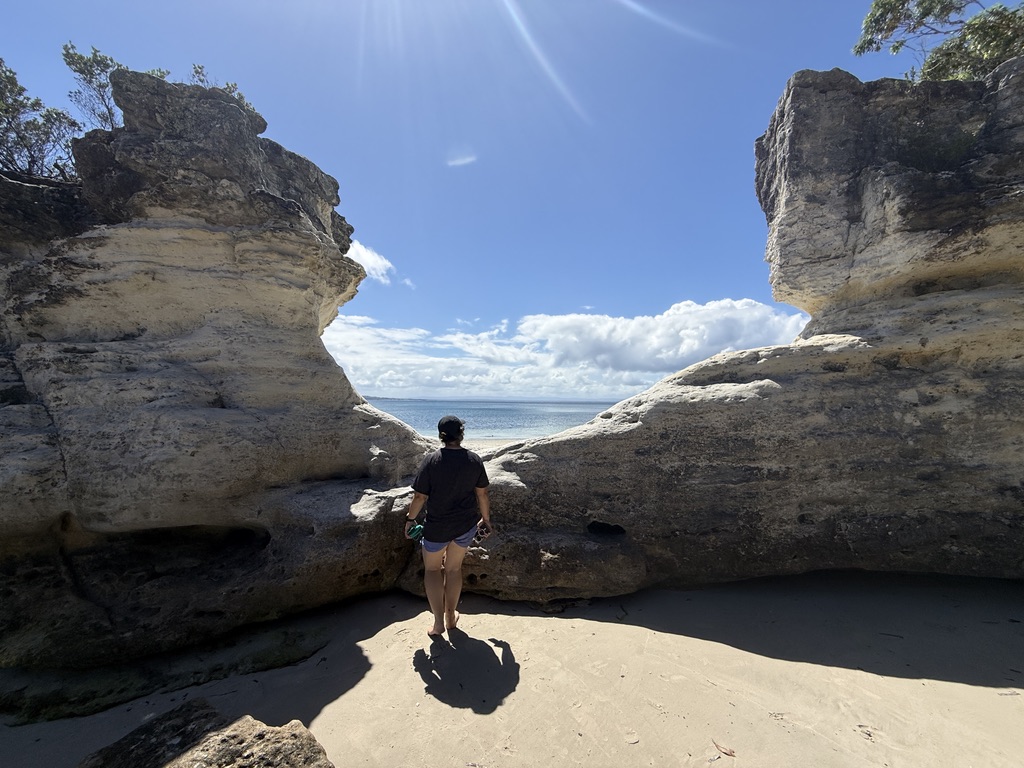
We ‘dinghied’ ashore for a walk and a swim and to explore the local rock attraction. Known as the ‘hole in the wall,’ it lived up to its reputation.
Strong northerlies were expected to arrive, so we lifted the anchor and headed to the north side of Jervis, taking cover in a bay called Boat Harbour. The wind blew hard all day with equally strong southerlies predicted to follow the day after — another opportunity to get north.
We waited until midday, when the southerly was due to come through, and poked our nose out past the northern head, aptly named Perpendicular Point. The wind rapidly rose from fifteen to twenty five knots, and then to thirty knots! This was going to be a blast!
The seventy nautical miles rapidly disappeared, and before long we could see the distant lights of the Sydney metropolis.
We wanted to try and visit some of the spots that we’d missed when heading south, so decided to head into Cronulla. This southern suburb is readily accessible by sea, and the yacht club there has a reputation for being friendly and helpful. We can confirm that this is certainly the case. After a text message to a club member he sent back details of a mooring we could stay on for free. However, as we arrived in the early hours we chose not to try and navigate the narrow and shallow channel to the inner anchorage, and instead anchored in a quiet bay just inside the heads, and hit the sack.
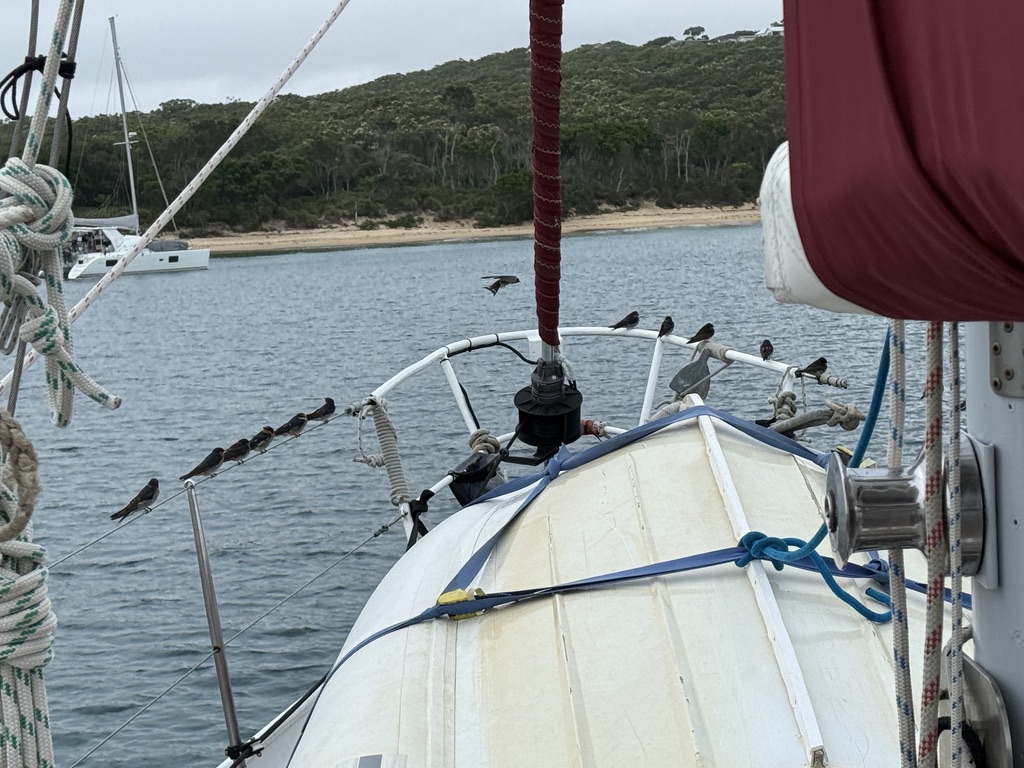
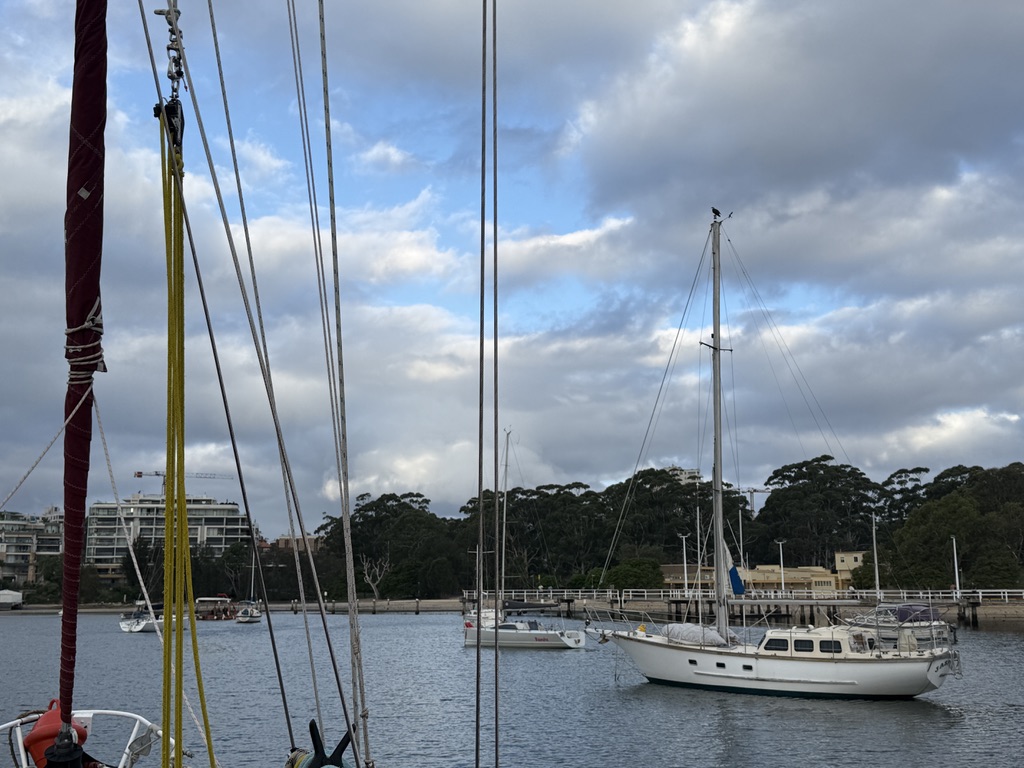
We woke in the morning to the sound of dogs on the beach and the twitter of tiny visitors. After lifting the hook we found our way to the mooring we had been offered, which was very handy for taking the dinghy to the yacht club, grabbing a hot shower, and exploring town.
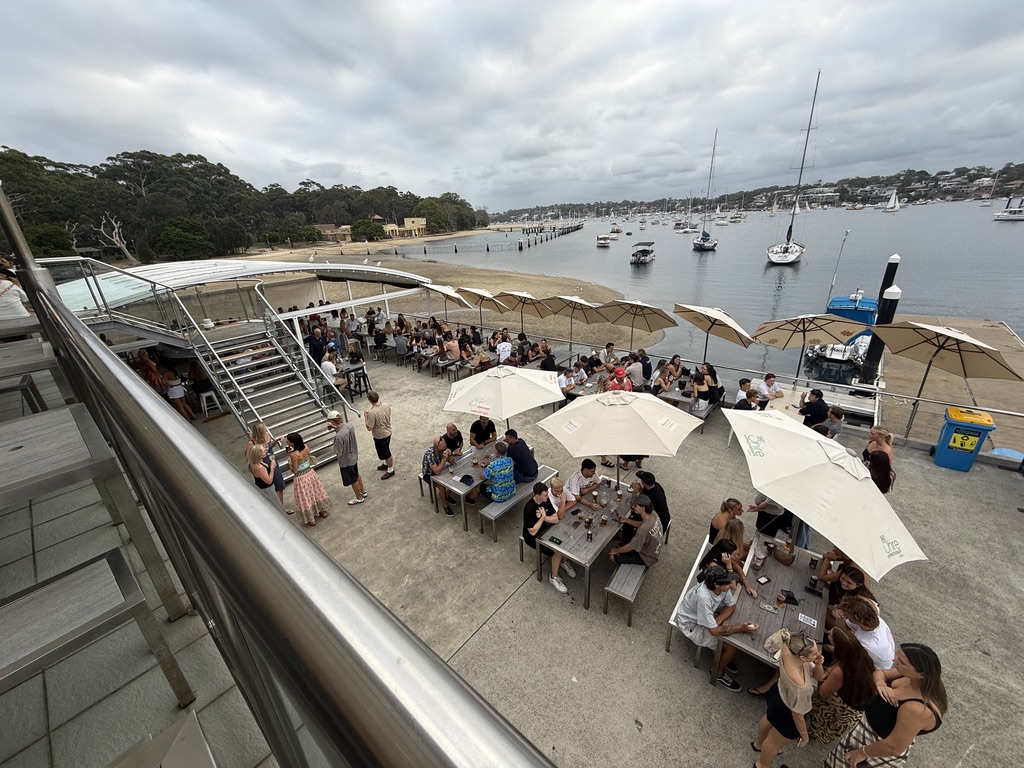
As we looked for a cafe to grab a coffee I happened to say ‘Gday’ to an elderly couple walking in the opposite direction. They almost jumped out of their skins, which belatedly reminded me that we were back in the city. Stranger danger was again a thing, and the well mannered ignore their fellow man.
We had been warned that Cronulla is a bit ‘rough’ by one Australian friend, and advised not to walk around the streets at night by another. I was surprised, because even though Cronulla is famous only for the race riots that took place there in 2005, it seems an affluent and pleasant place. One thing that struck me as odd as we wandered around was that most billboards were advertising real estate agents. Walking past an apartment for sale I, being nosy, looked it up on line and was a tad shocked to see that the asking price was A$3.6–4.2 million — for an apartment in a ‘rough’ suburb! I guess the commission on a property like that would pay for a few billboards. Property is big business in Sydney.
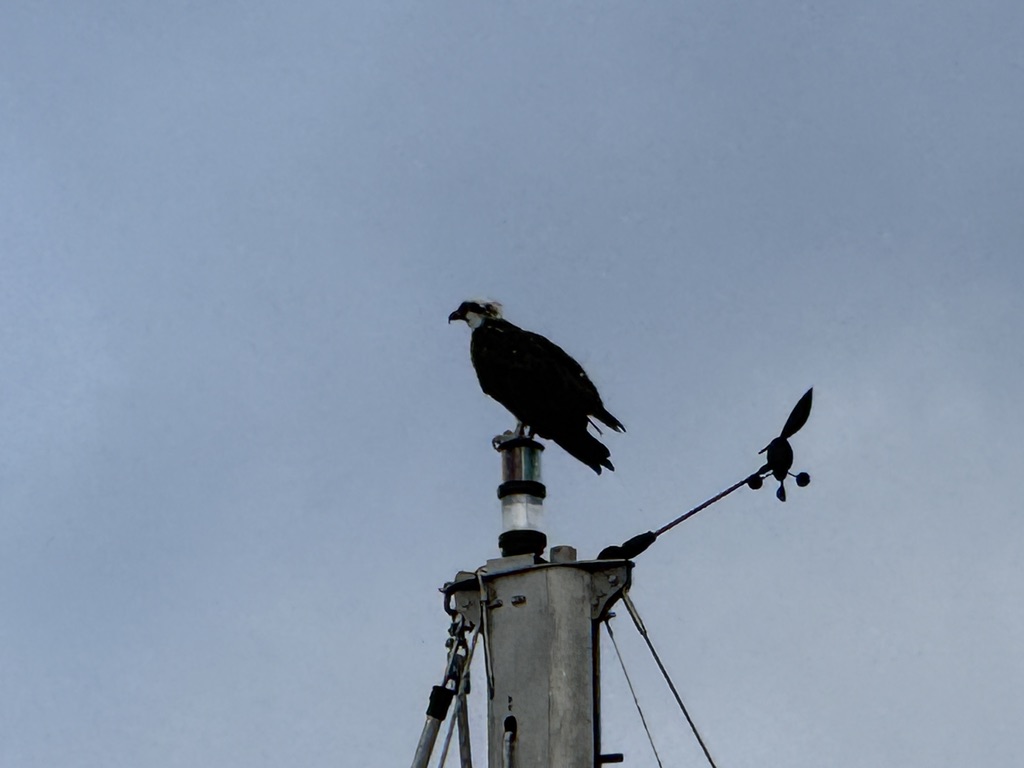
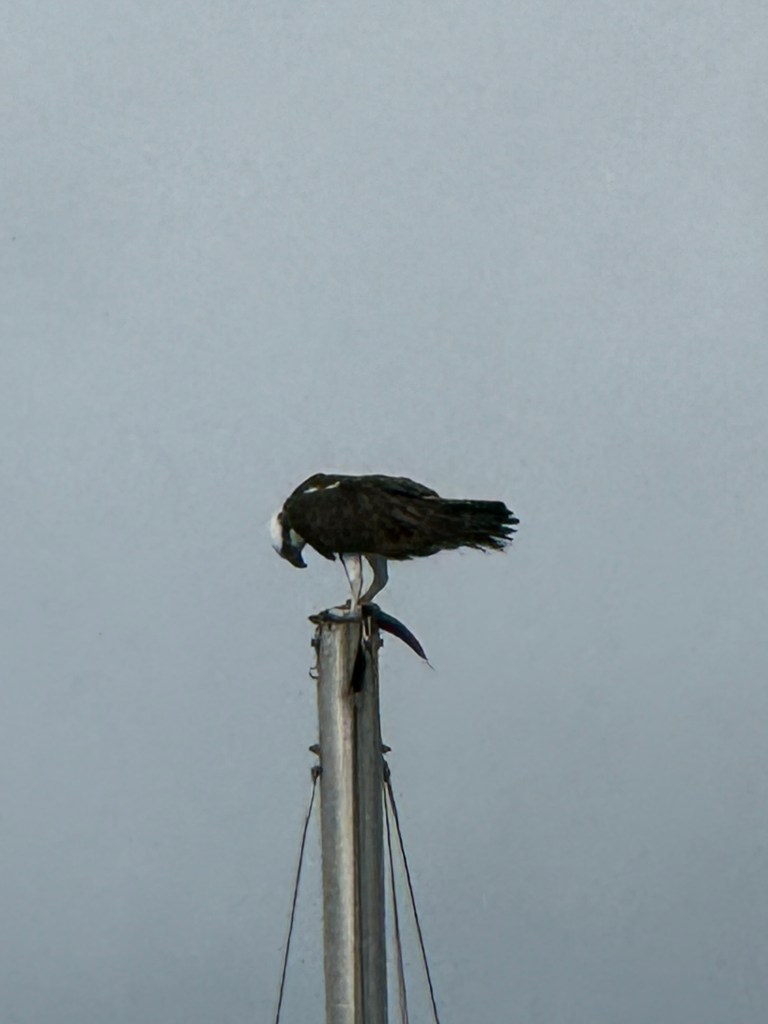
Some of the best entertainment we found in Cronulla was entirely free. A couple of Ospreys, also known as fish hawks, were hunting in our mooring field, and would land atop the nearest mast to enjoy their meal. I hoped that our mast had enough ‘spikey’ looking things on top to make it less attractive than the boat next door, as those things are quite delicate and expensive. The birds in Australia are an amusing if real hazard to boats. Whilst in Lake Entrance I had to scare away a flock of cockatoos who perched on the mast and began attacking the halyards with gusto.
After a few days our feet began to grow itchy, and we left Cronulla to head towards the next bay, sitting just to the north, Botany Bay.
Botany Bay today is a busy place. There is a constant stream of planes taking off and landing at the nearby Sydney airport, and an industrial complex that demands a stream of merchant vessels. It was also, of course, where Captain Cook landed on the 28th of April 1770, and subsequently, eight years later, the landing site of the First Fleet which brought 1,500 convicts and soldiers to Australia. Looking at Sydney today, it’s hard to believe that the entire city has been built in less than two hundred and fifty years. Humans are certainly busy bees.
Happily, Cook’s landing site, is still marked by a memorial that sits in a large and pleasant park.
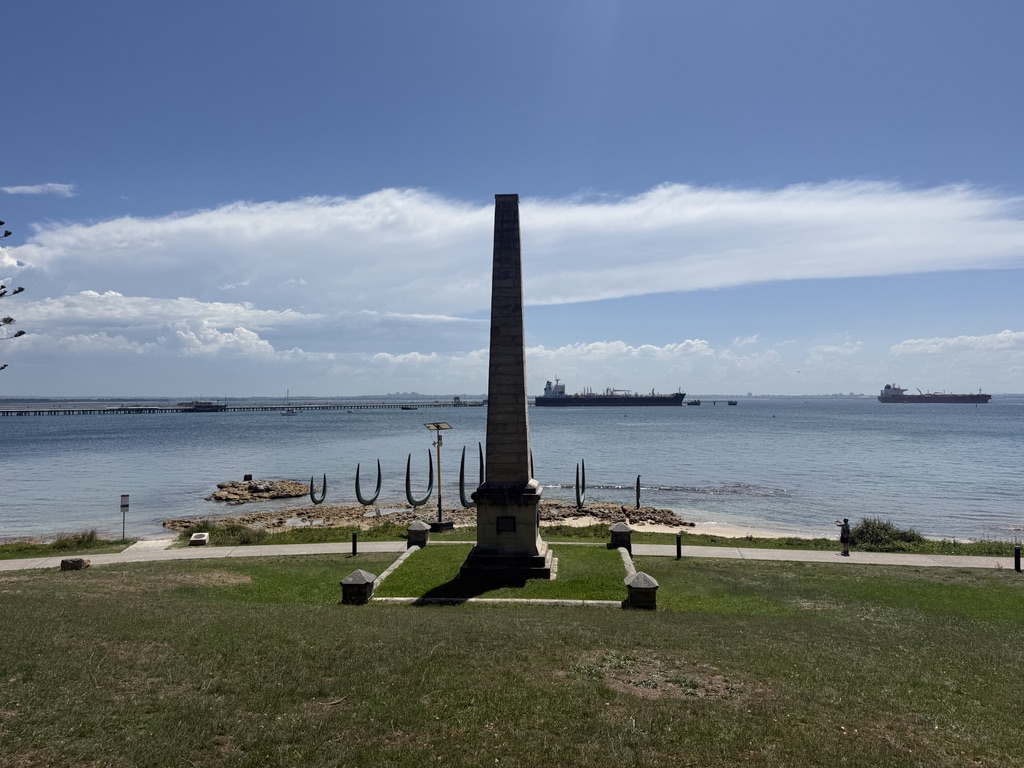
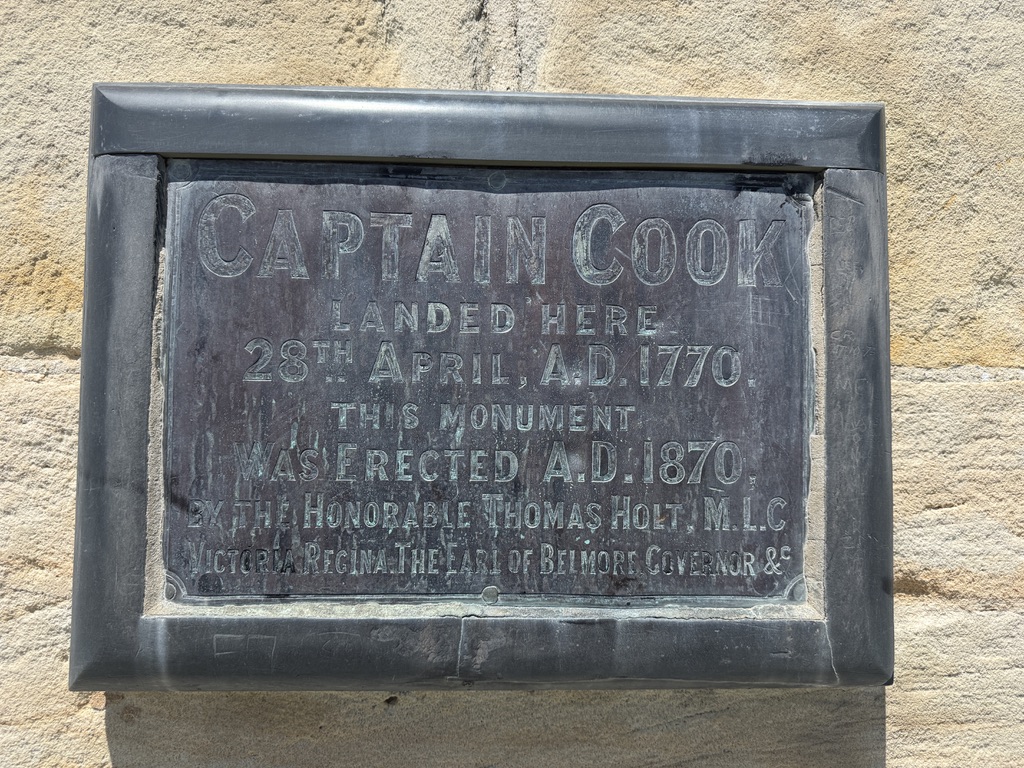
We enjoyed a stroll around the rocks at the waterfront, through the park, and on to the local ice cream shop for a deserved cooling treat. A great day.
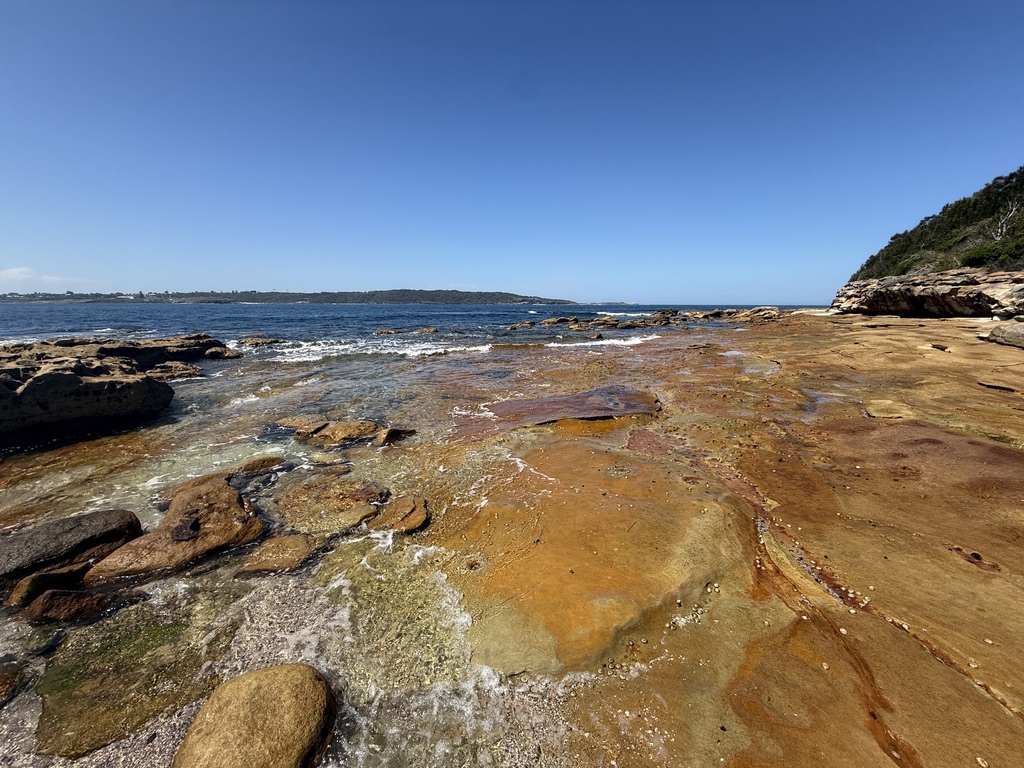
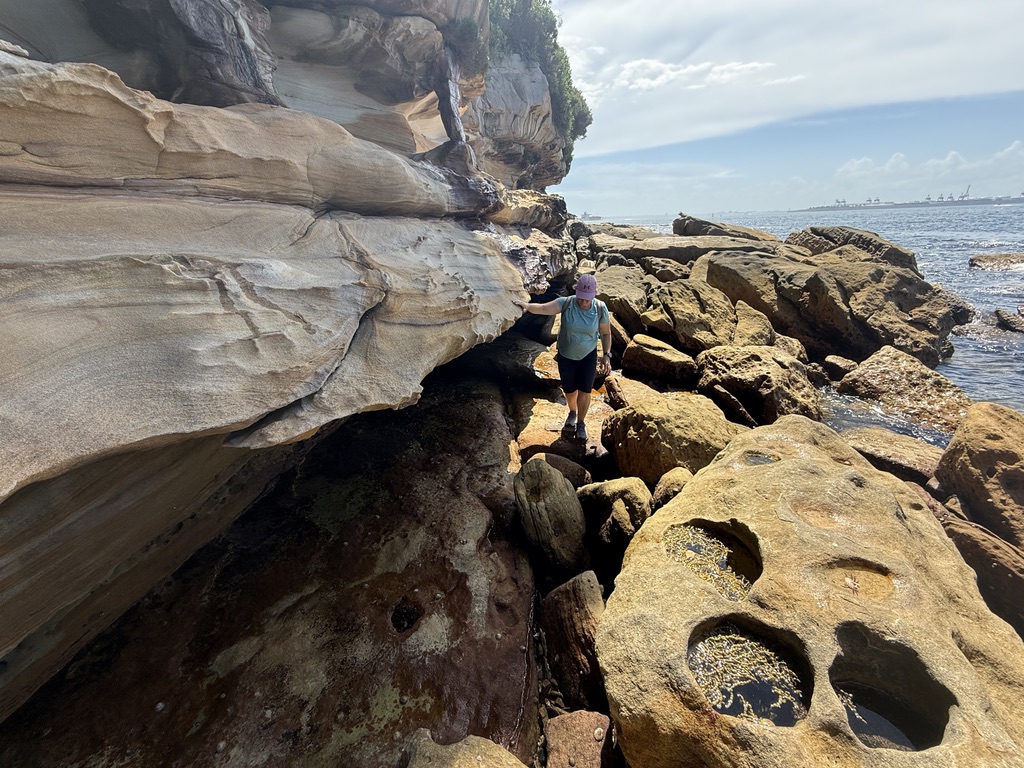
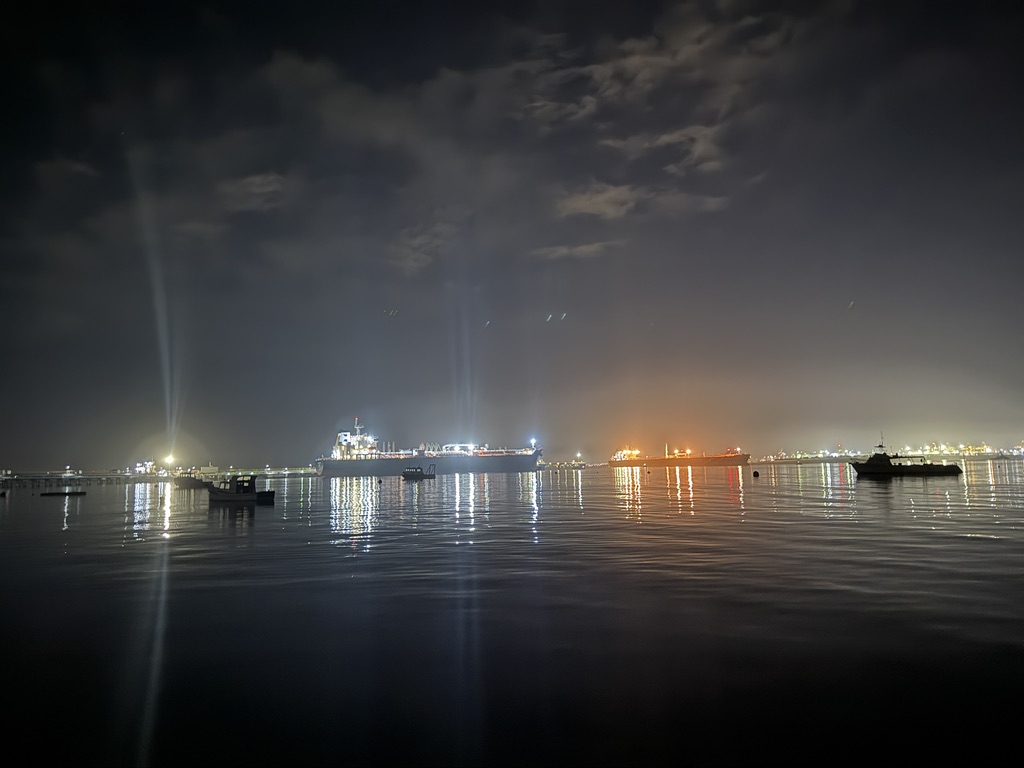
On the opposite side of the the bay lies Frenchman’s Beach and La Perouse Point, named after Jean-Francois de Galaup, Comte de la Perouse, who was a French navigator and explorer. Perouse was tasked by Louis XVI to emulate Cook, and show the world the mettle of French sailors.
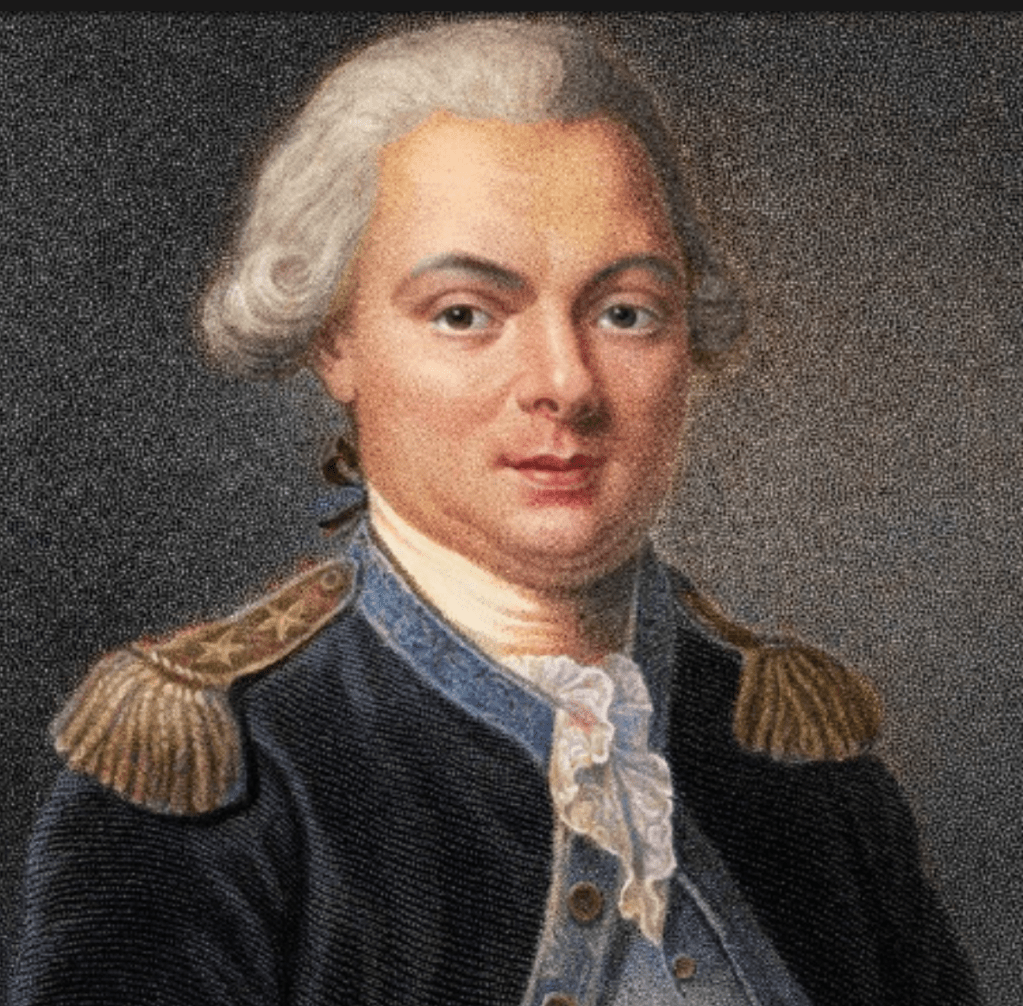
His expedition consisted of two ships – La Boussole and L’Astrolabe, carrying a total of 225 crew, officers, and scientists. The ships left France in August 1785 and sailed south around Cape Horn. Perouse arrived in Botany Bay only four days after the British First Fleet, which caused the British some consternation as they thought there were the only Europeans around for thousands of miles. Fortunately, cordial relations were maintained, and the French set up a stockade on the opposite side of the bay to the British. They had had violent encounters with indigenous peoples elsewhere, and were reluctant to trust the local Aboriginals.
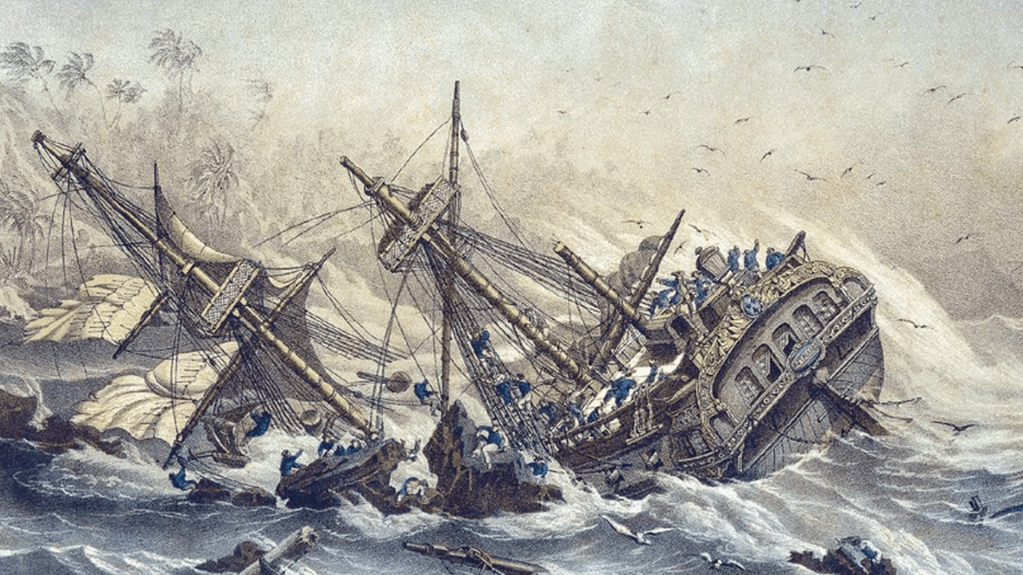
La Perouse’s ships sailed out of Botany Bay in March 1788, and were never seen again.
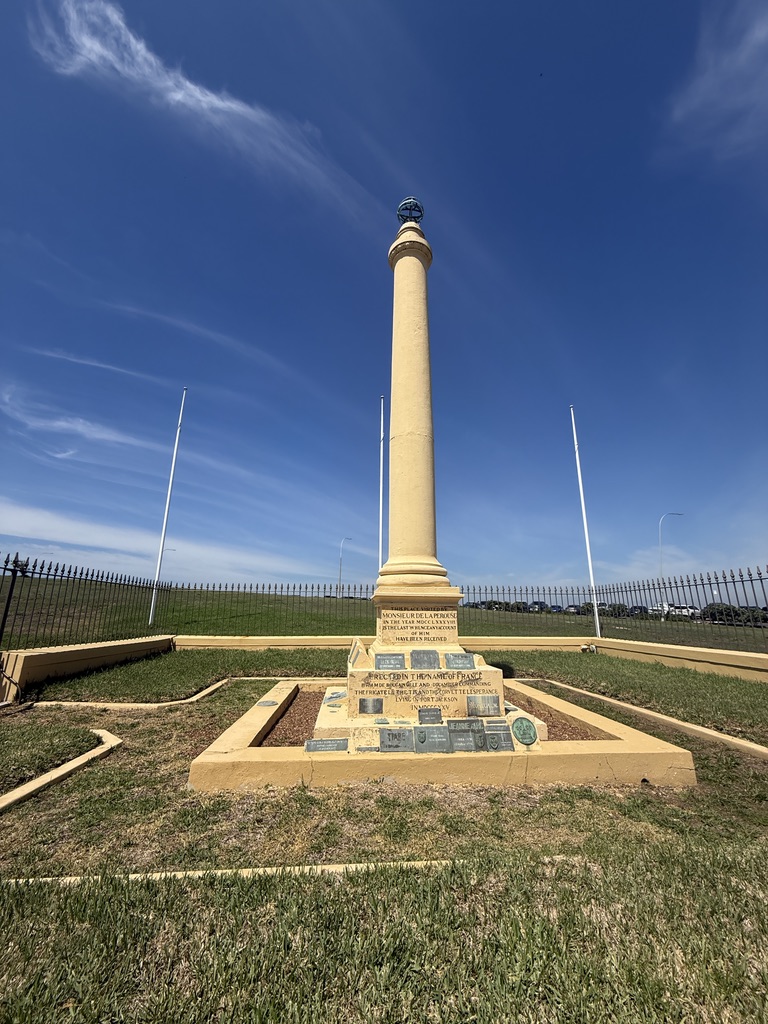
The French government sent out a search party in 1791, commanded by Rear Admiral Joseph Antoine Bruni d’Entrecasteaux, consisting of two ships, the Recherche and Esperance. In their hunt for La Perouse, d’Entrecasteaux visited Tasmania. We had enjoyed many happy hours sailing in the D’Entrecasteaux Channel, which separates Bruny Island from the Tasmanian mainland, south of Hobart, whilst Recherche Bay was our jumping off point for our trip around South West Cape. It almost felt as if we could reach out and touch history, and indeed we did! The mystery of La Perouses’ disappearance was finally solved in 1826 when the wreckage of his ships was found on the reefs of Vanikoro, north of Vanuatu.
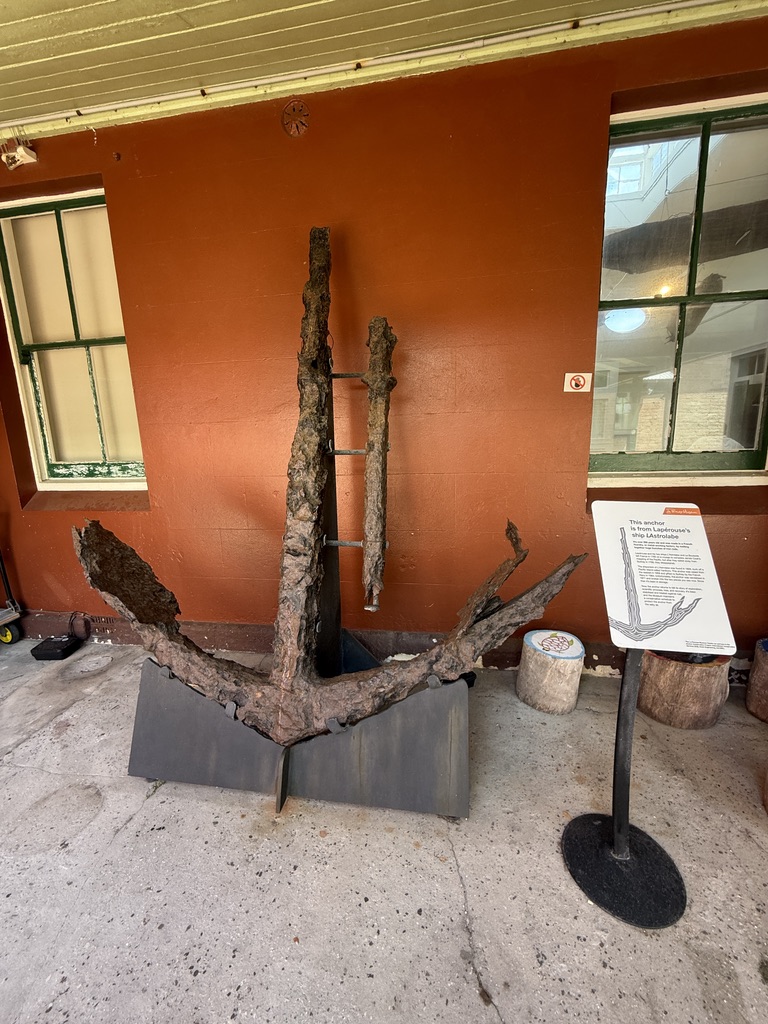
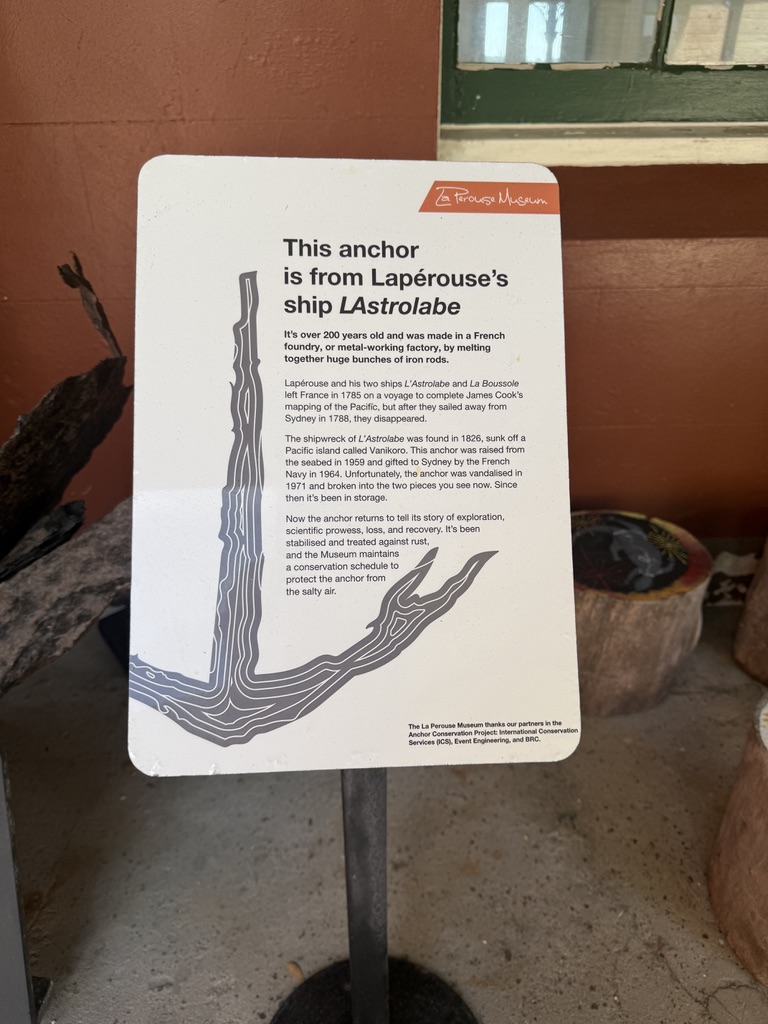
An anchor from L’Astrolabe was subsequently gifted to Sydney by the French Navy, and is today displayed at the small museum at La Perouse. Did I touch it? Yes I did!
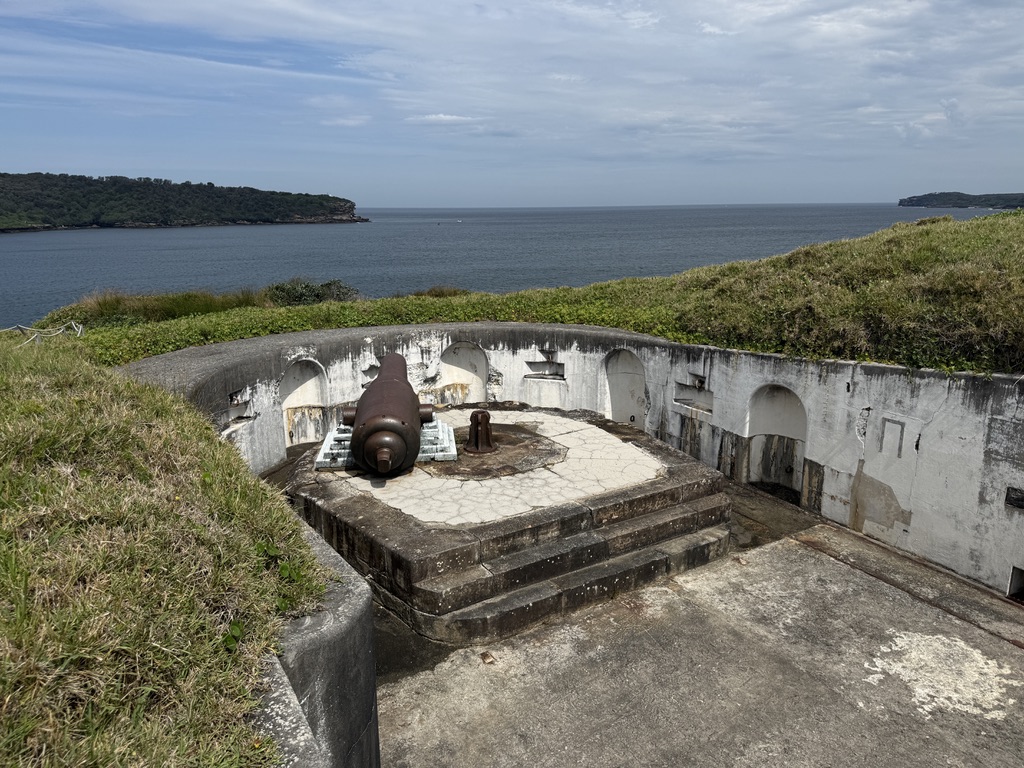
Nearby lies Bear Island, which was fortified in 1881 to protect Sydney from the Russian threat.
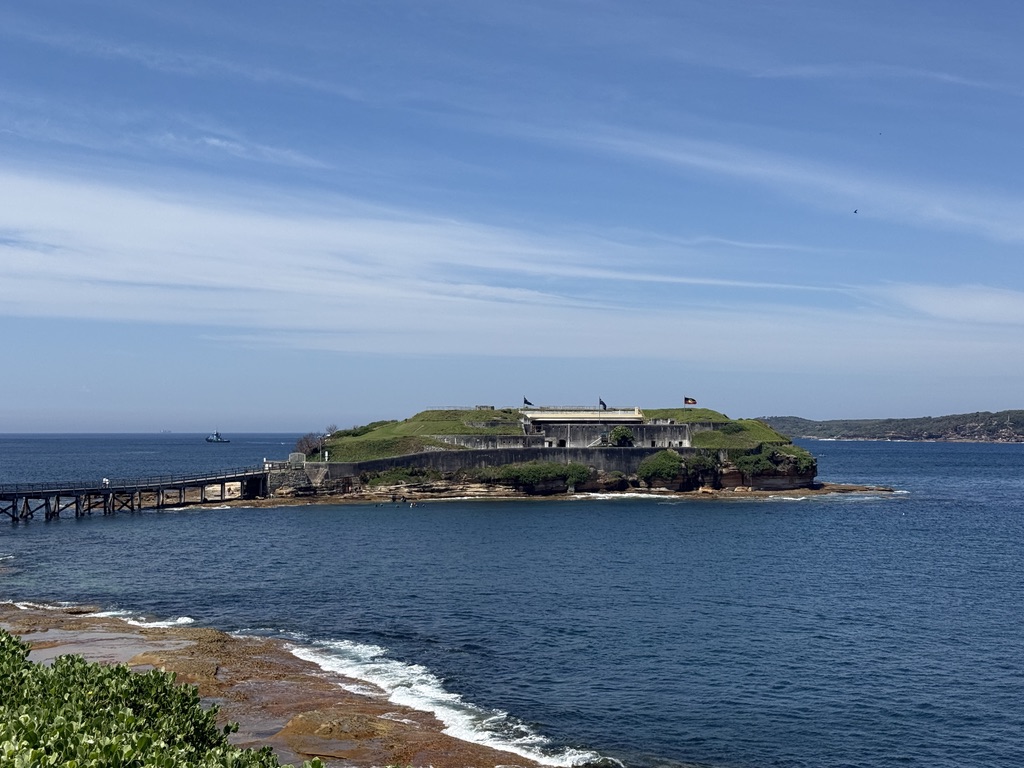
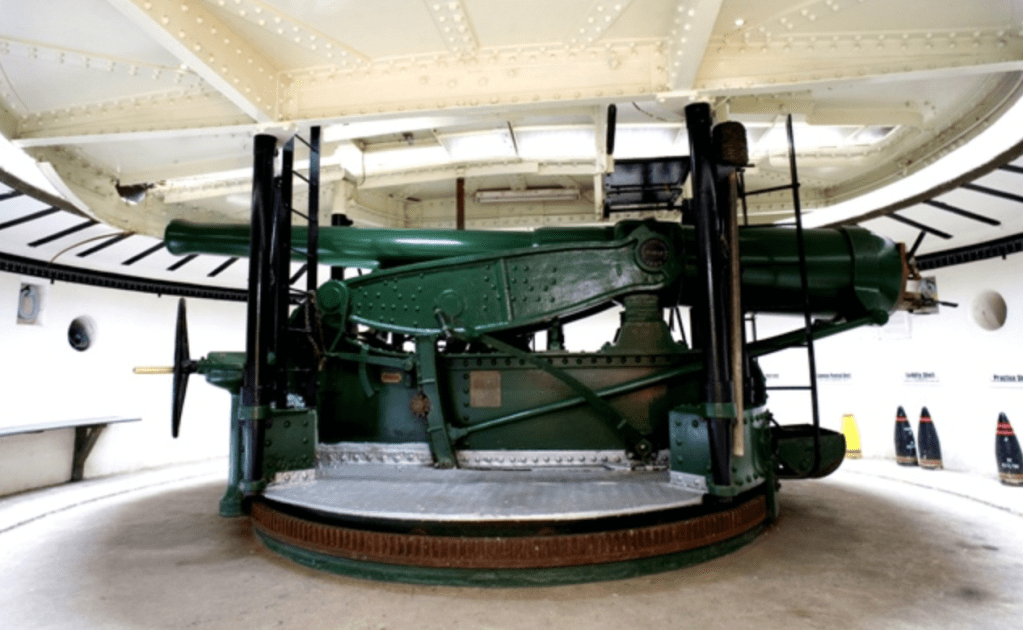
The designer of the fortifications took pains to ensure that none of the defences could be seen from the sea. To this end, a disappearing gun was mounted, which is today lost (one might say it worked!). However, a restored disappearing gun still graces a similar fort in Dunedin (our home town). The name refers to the fact that the recoil of the gun caused it to drop into a circular pit, so that it could be reloaded out of sight and in safety, and then raised again to fire.
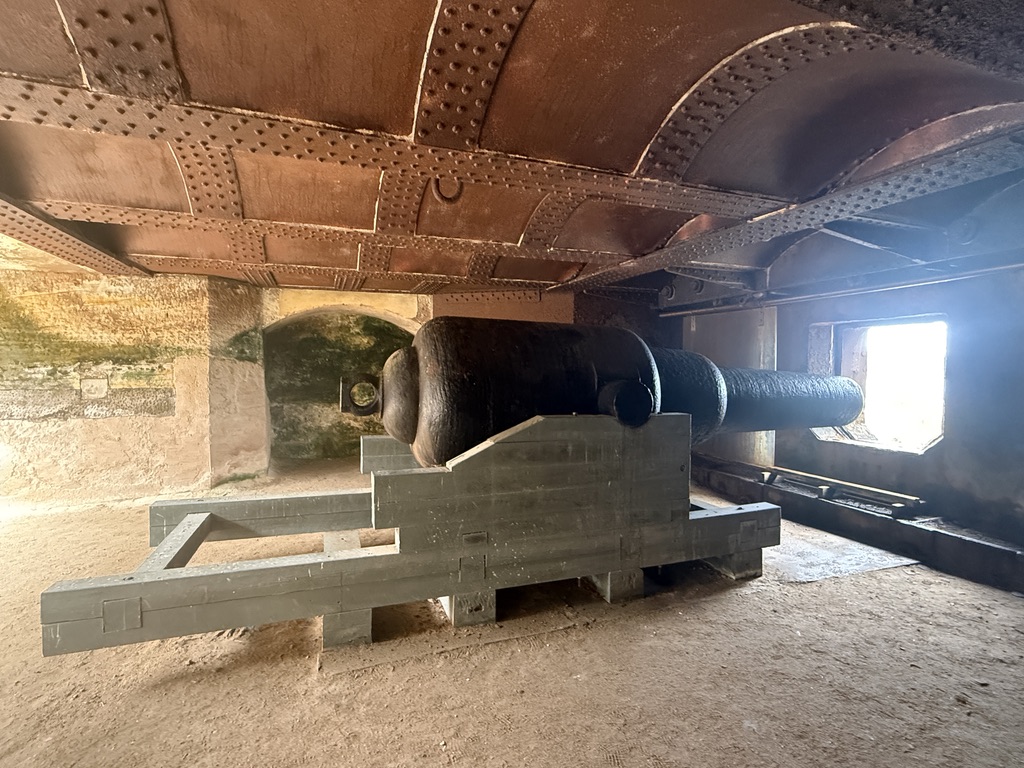
Several other cannon had been melted down for their scrap value, but those too heavy and difficult to move survived. One of the largest of these was almost unbelievably ‘misplaced.’ The story goes that after WWII the fort was occupied by recuperating soldiers. They decided that one of these cannon was in the way, so they dug a massive hole and tipped the cannon into it. The gun’s resting place was forgotten until a visitor to the fort confessed to a guide that he had read of the cannon’s fate in a relatives diary. The powers that be brought in a pipe detector, and got a rather large signal!
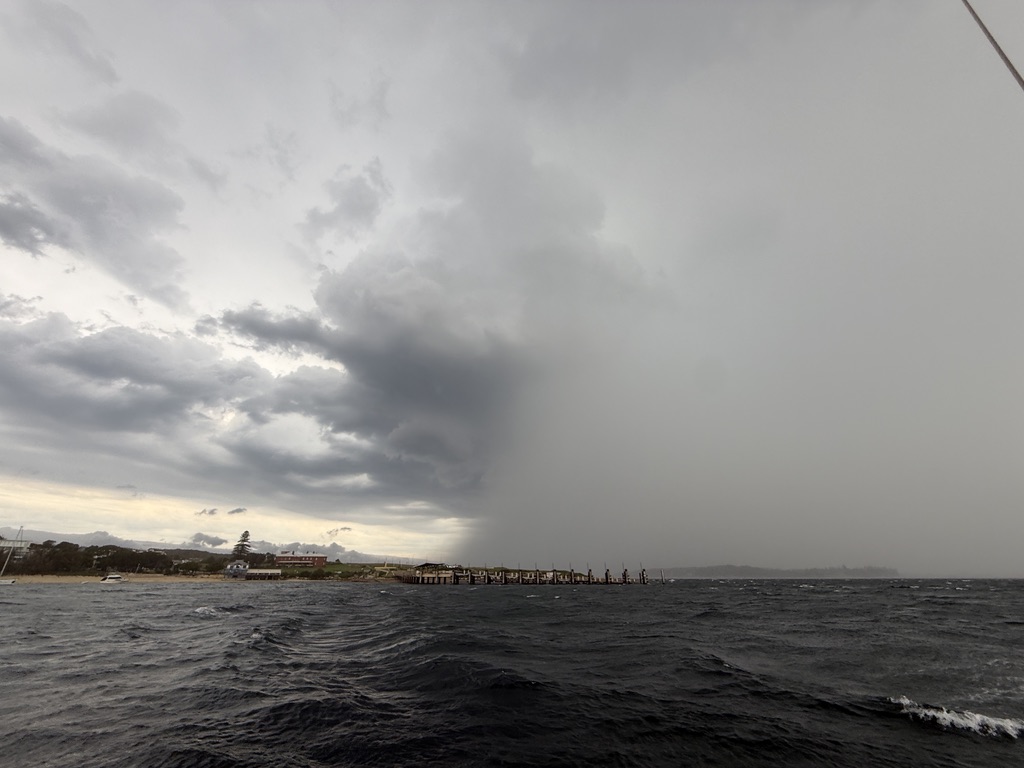
We returned to Taurus in time to prepare for a nasty squall that quickly emptied the beach behind us. The winds approached forty knots at one point, so we were glad to be back on board and not ‘putting’ along in our little dinghy when it struck.
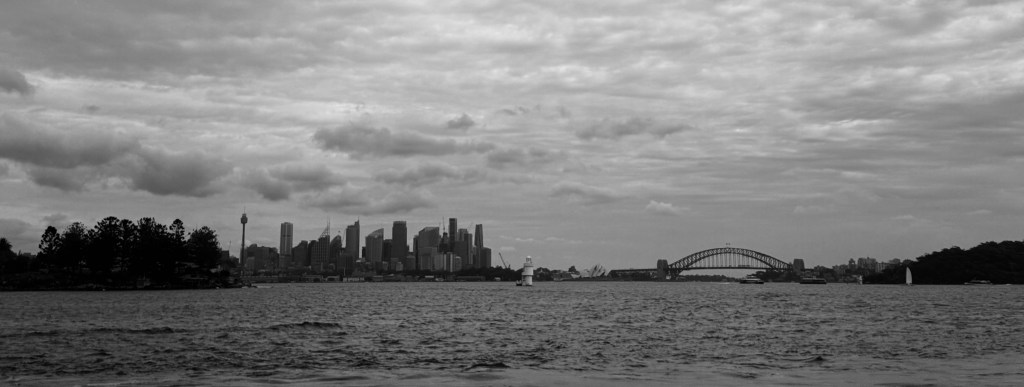
The following day brought light and variable winds, so we motored the three hours to Sydney. It was nice to be back in the big smoke, and we were keen to explore some of the anchorages we hadn’t had time to visit last year.
Those tales will have to wait till next time.
Next time: we ‘do’ Sydney, and we brake the boat (again….)
 Sailing Taurus NZ
Leave a comment