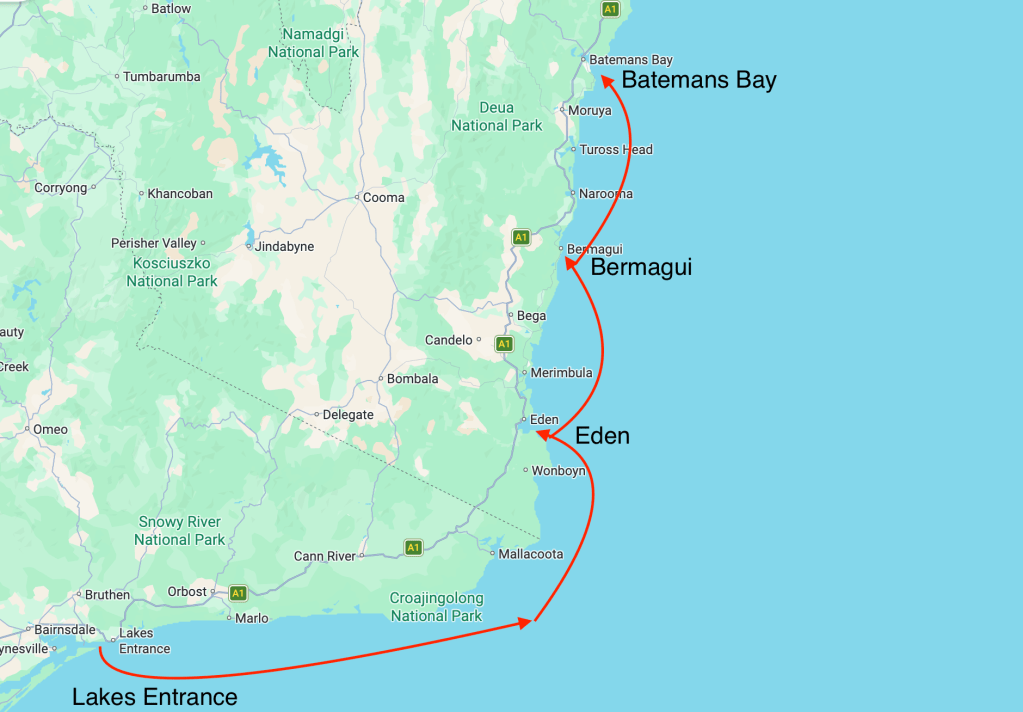
After leaving Lakes Entrance we hoisted the sails and sat on a port tack to gain some room from land. This point of sail saw us heading almost due south, so someone watching might have thought that we were heading back to Deal Island. We knew that the wind was going to be light and coming from the wrong direction for a few hours before it changed into something we could use. We raised a couple of scraps of canvas and sat back to enjoy the simple pleasure of sailing for sailing’s sake.
Before long the wind started to come round and we threw in a tack and started to slowly head in an easterly direction. As the afternoon turned into evening, and the evening into night, the imperative to gain some miles in the right direction began to exert itself. Eden is a twenty seven hour sail from Lakes Entrance at an average speed of five knots, but we were barely making two and a half knots, which, the instruments told us, meant our journey was going to take some forty odd hours from that point at that speed. We had just over ten knots of wind pushing us along from astern (which isn’t a great deal when it comes to a heavy displacement, full keel boat) but the current was robbing us of perhaps two and a half knots, at least half of our hoped for speed. This was our first experience of the East Australian Current working against us, but it was something we were going to get frustratingly used to.
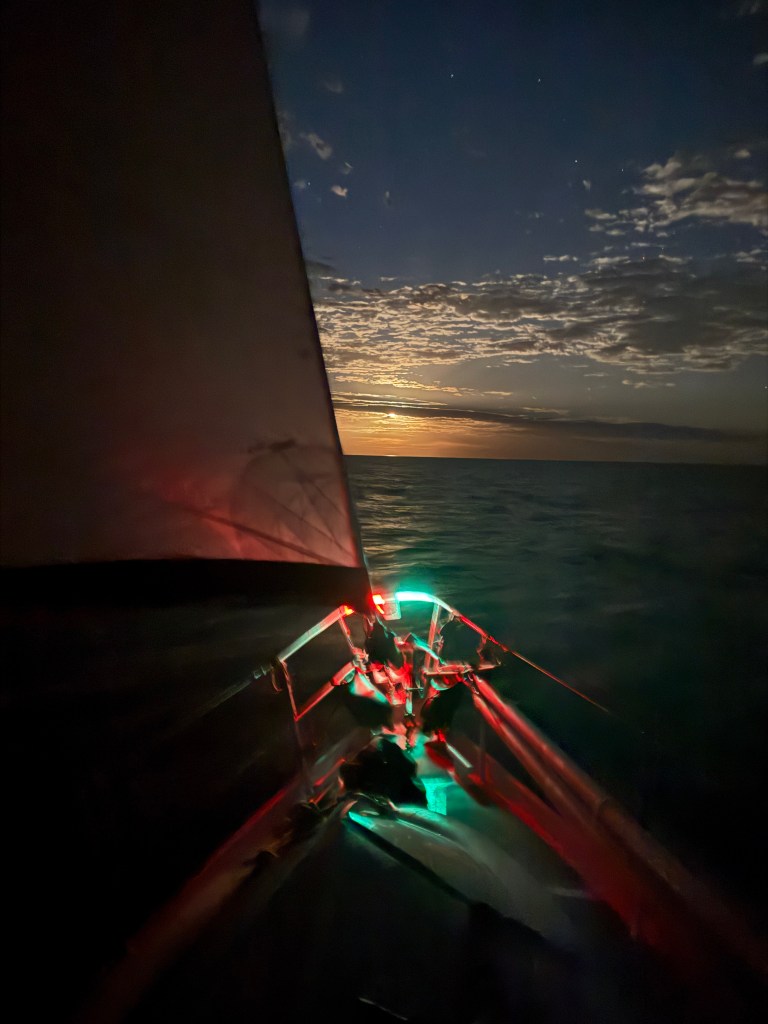
At about two in the morning, with our speed regularly dropping to around one and a half knots, I caved in to temptation and turned the engine on. Motor sailing allowed us to attain something more like a respectable speed; but I don’t like to motor sail, or indeed motor if I can help it. First and foremost, Taurus is a yacht, she’s built to sail; second, diesel costs money (though not a lot, we use about 3-4 litres of diesel an hour); third, motoring is noisy; and, lastly, motor sailing is bad for our gearbox. We were told by a very experienced mechanic in Launceston that motor sailing was probably what caused our friction plates to glaze and eventually fail — uneven and light power demand creating excess wear. So, with a view to prolonging the longevity of our gearbox, it being economically unfeasible to replace the clutch plates alone in this insane, throw away, era, we try not to motor sail.
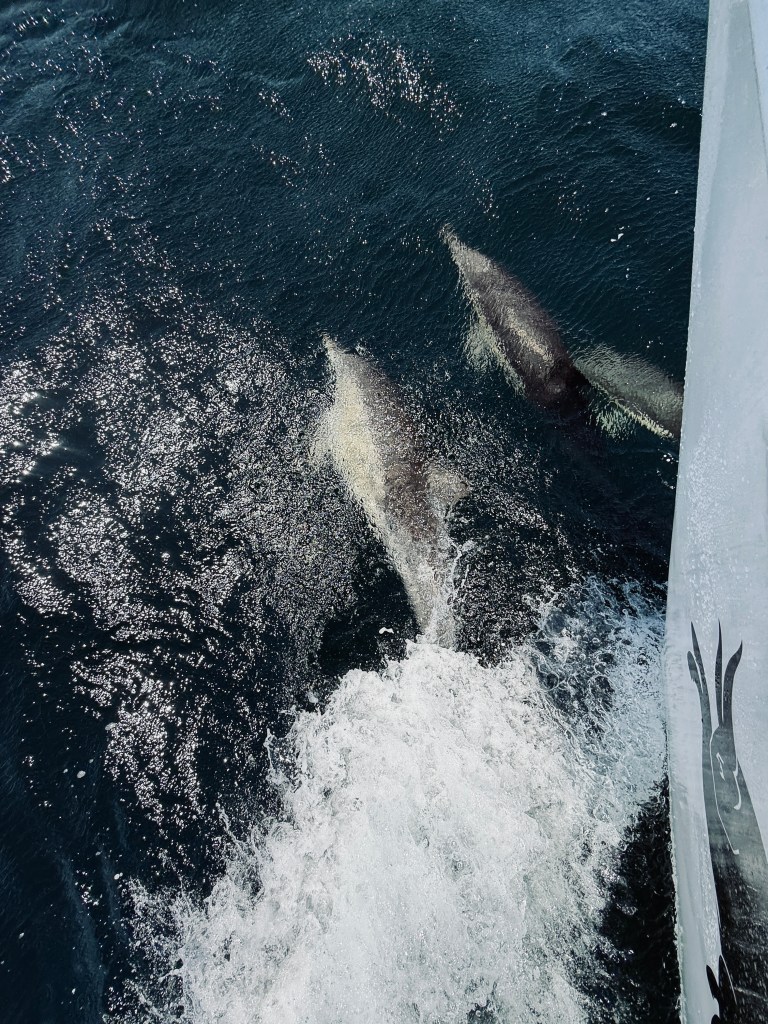
After a few hours the wind filled in and we could turn the engine off and enjoy some peace. Still, it was a slow old slog, and it was nice to see landmarks such as Gabo Island and Green Cape Lighthouse appear and oh, so, so, slowly vanish behind us. The highlight of the trip was a couple of pods of dolphins who joined us. I had the ‘bright’ idea of trying to put a Go Pro on a boat hook to see if I could film them underwater, but the dolphins didn’t seem to take too well to it and left soon afterwards. This area was once famed for its whale hunting, so perhaps the trauma still lingers in the cultural memories of its marine mammals?
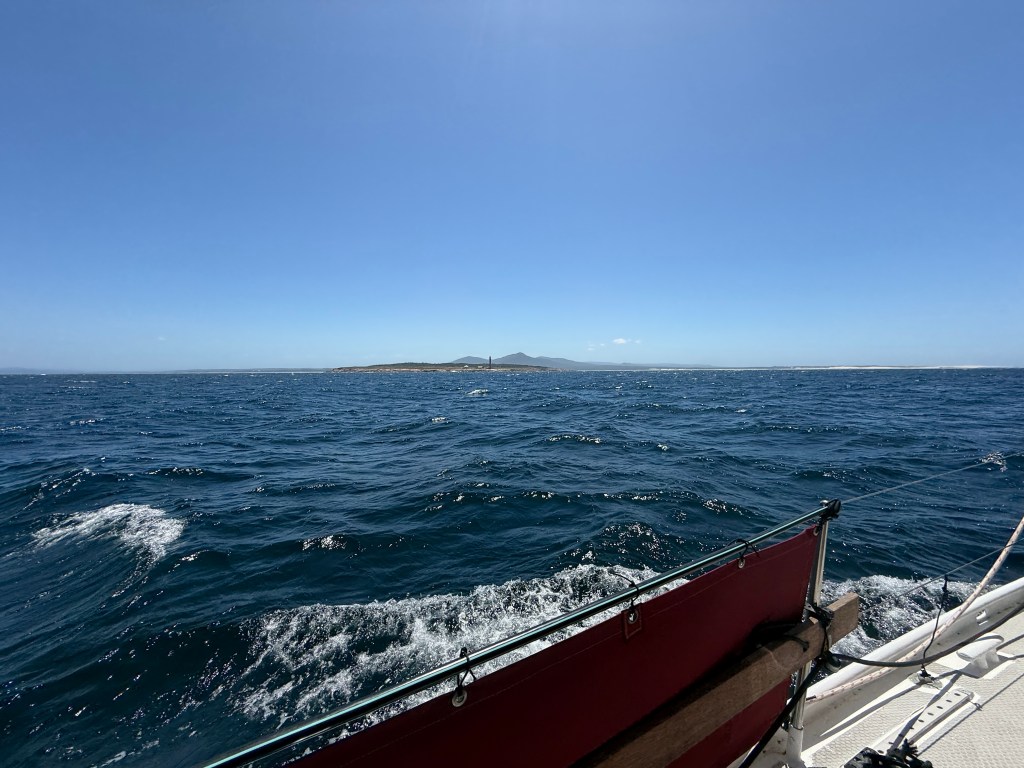
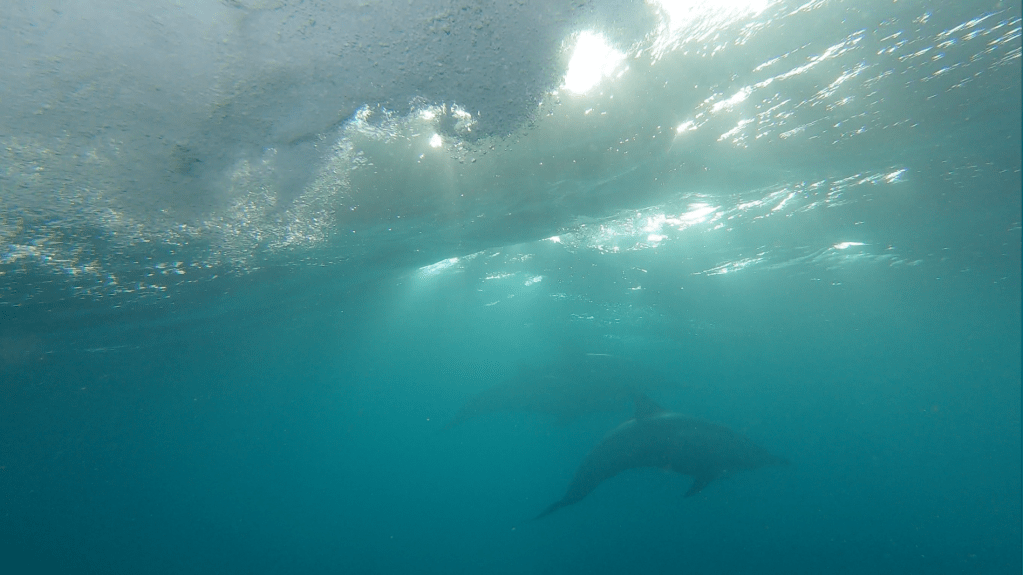
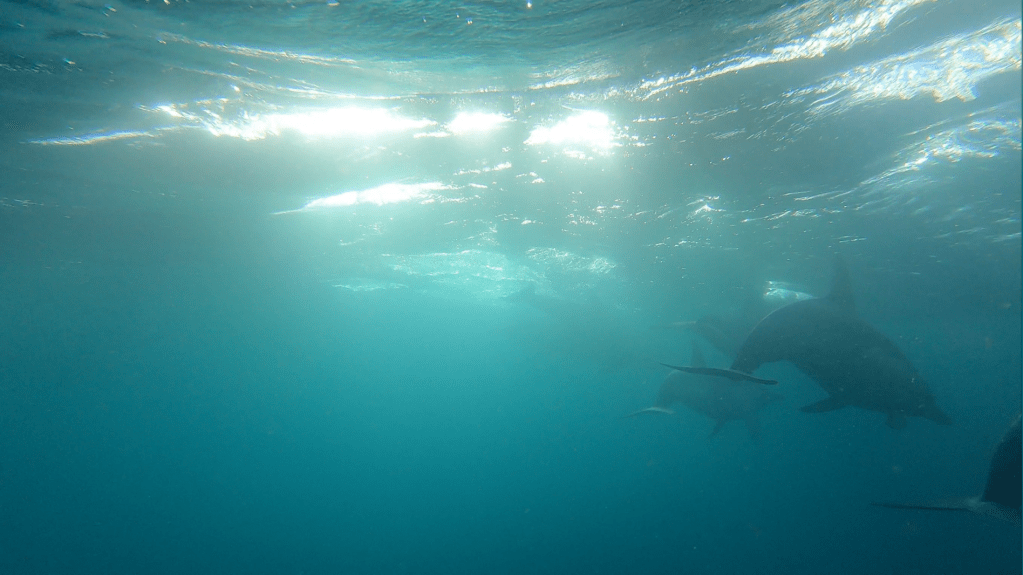
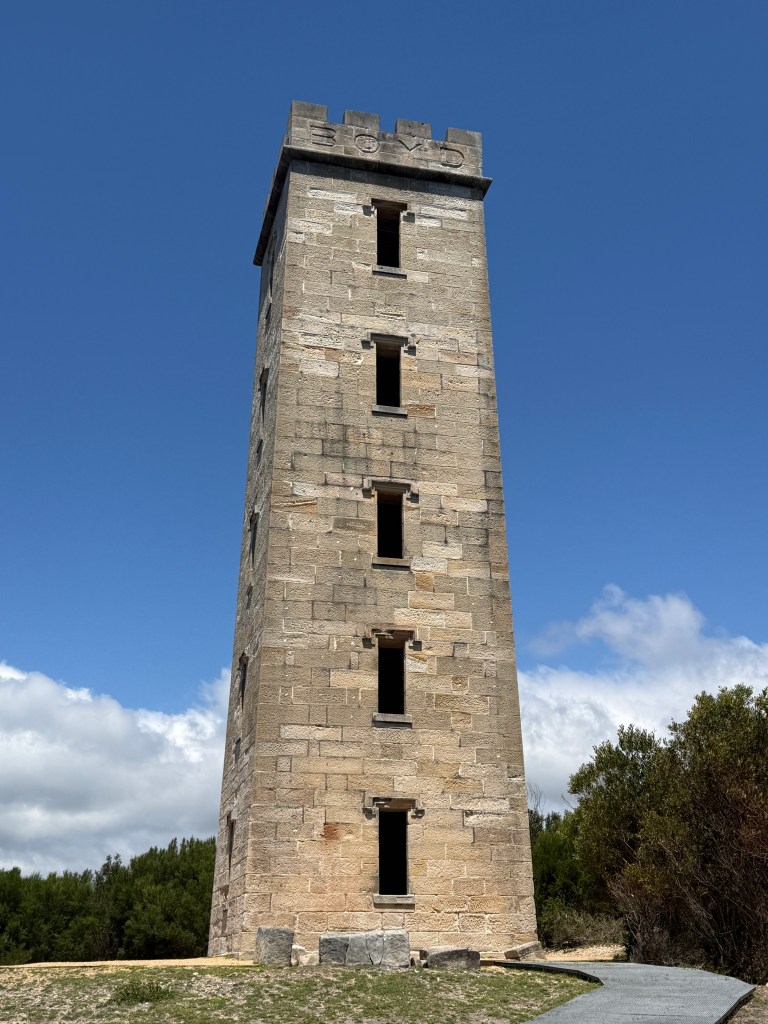
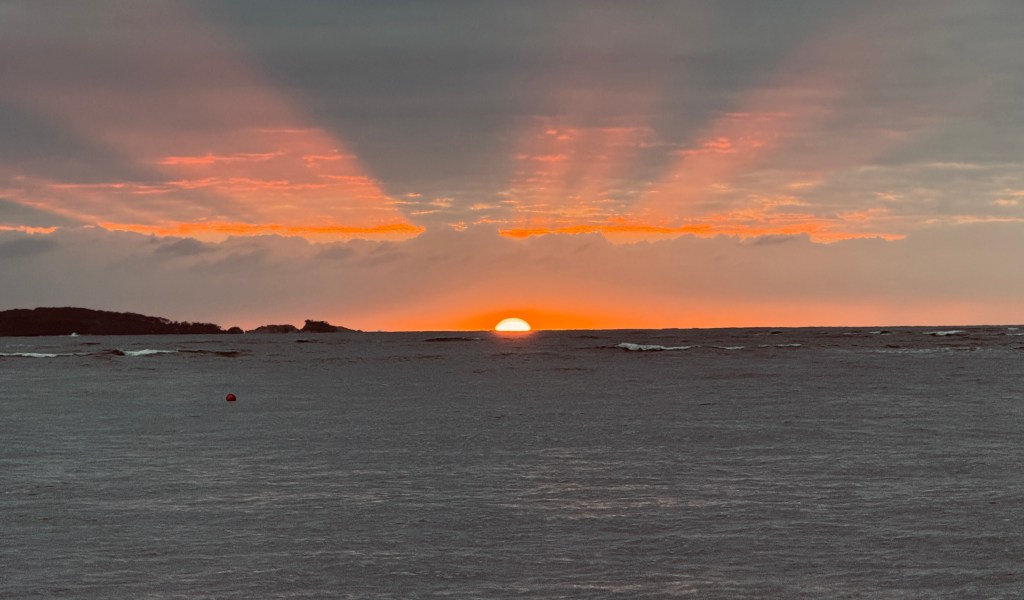
The second pod joined us just as we sailed into Eden Bay, the setting sun silhouetting the famous ‘Boyd’s Tower,’ once used as a lookout by whale hunters.
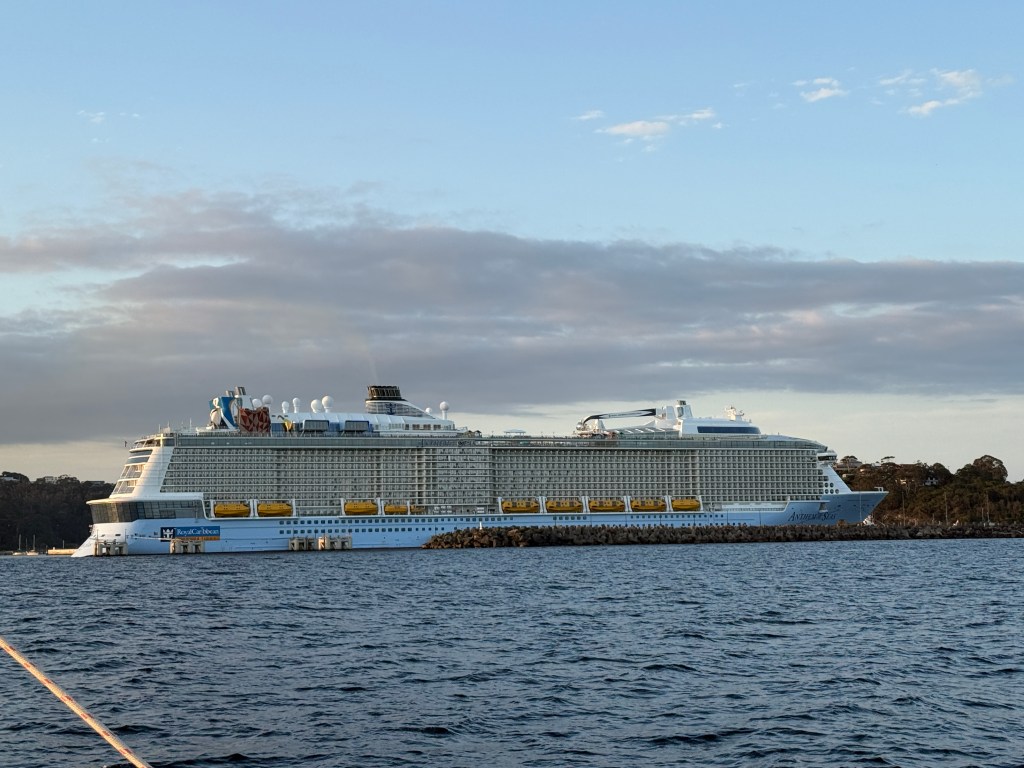
As we prepared to duck behind the sea wall that shelters the public mooring we kept an eye on the imposing cruise liner at berth, belching smoke into the air. We later learnt that the ship had broken down and desperate efforts were being made to fix her before the next liner was due to arrive. The only ‘passenger’ we could see didn’t look too phased, a giraffe with a swimming ring, on a Norwegian flagged vessel in Australia — what on earth is that about??
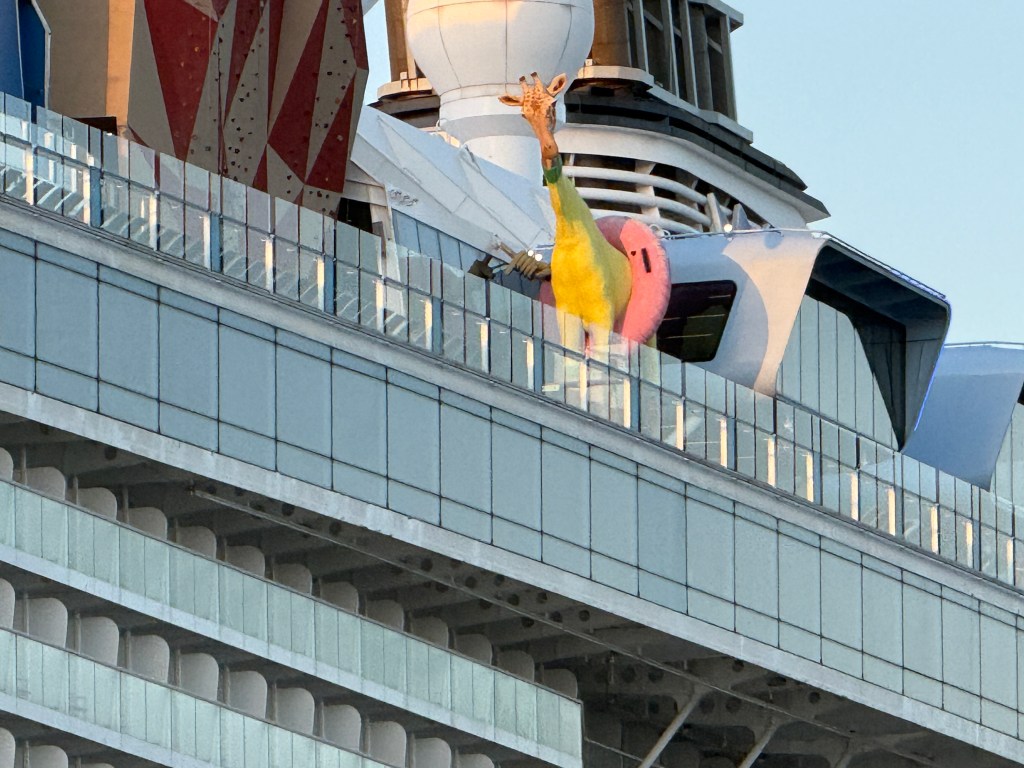
We picked up a mooring and had an early night, which wasn’t that early as we’d only had a few hours sleep between us.
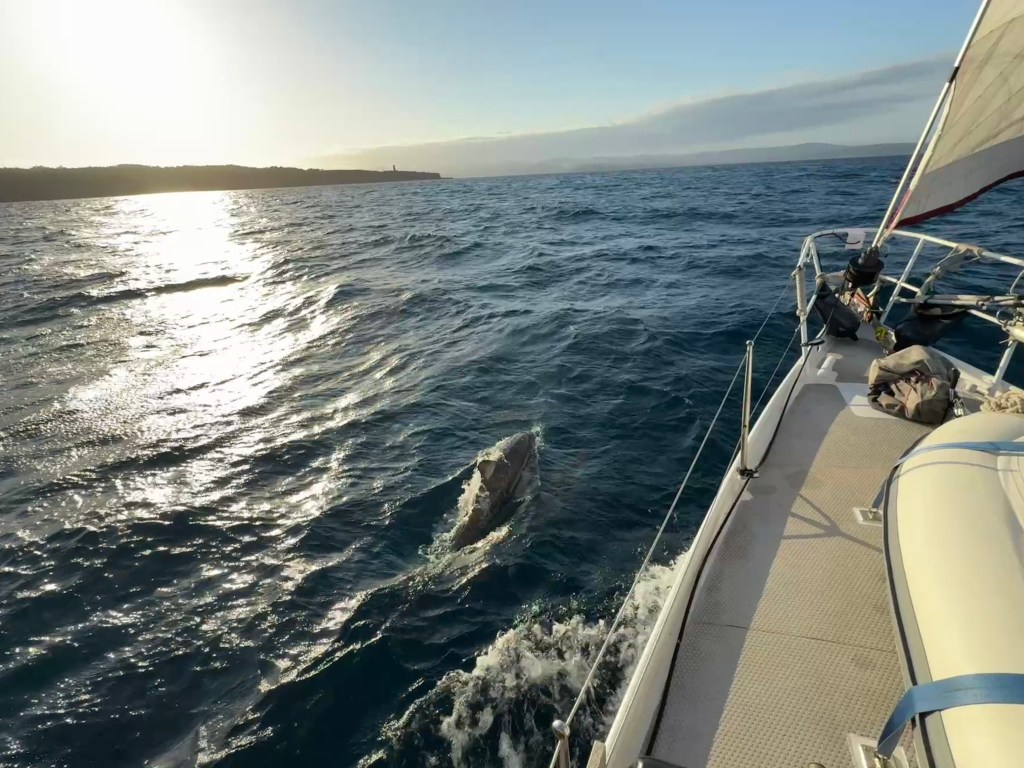
We had of course seen the Eden sites on our trip south a year ago, so after a quick wander about town and a fast food fix, we packed up to visit the southern end of the bay. As we arrived we were fortunate to be joined by yet more dolphins, who wanted to play in our bow wave.
From the bay a short dinghy ride takes you to a beach from which you can access a road that takes you to Boyd’s Tower. We hadn’t yet re-acclimatised to Aussie mainland temperatures, so it was stinking hot, and all the engine work I had had to do in Lakes Entrance had tweaked my back, so it was a bit of a slow walk.
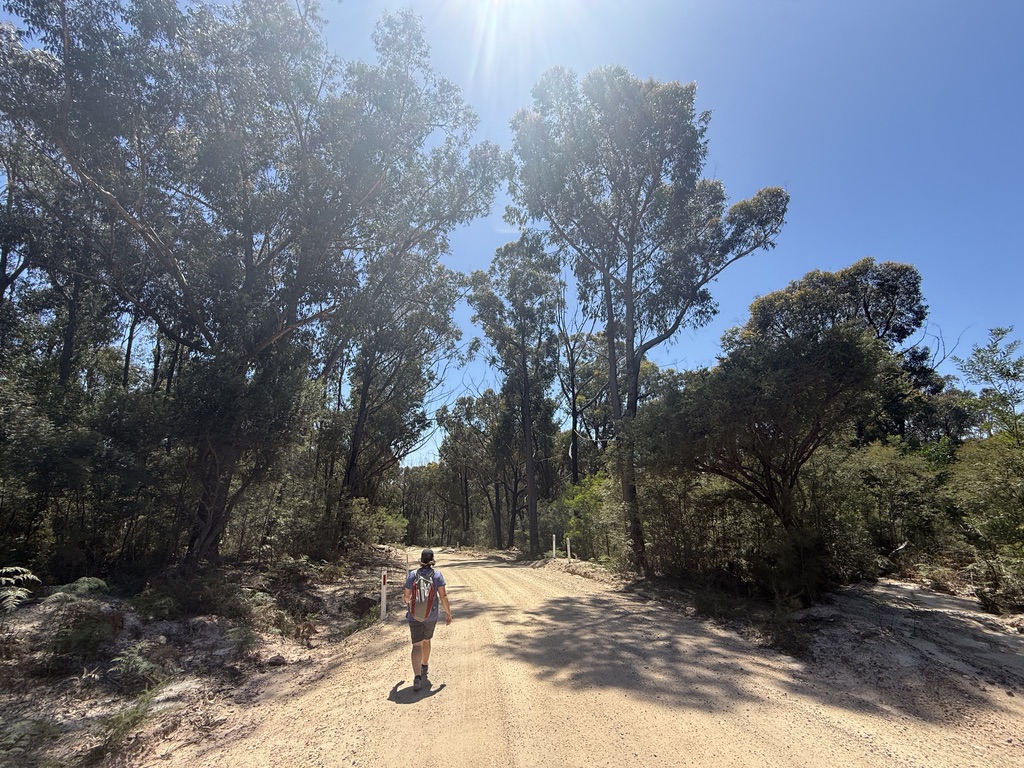
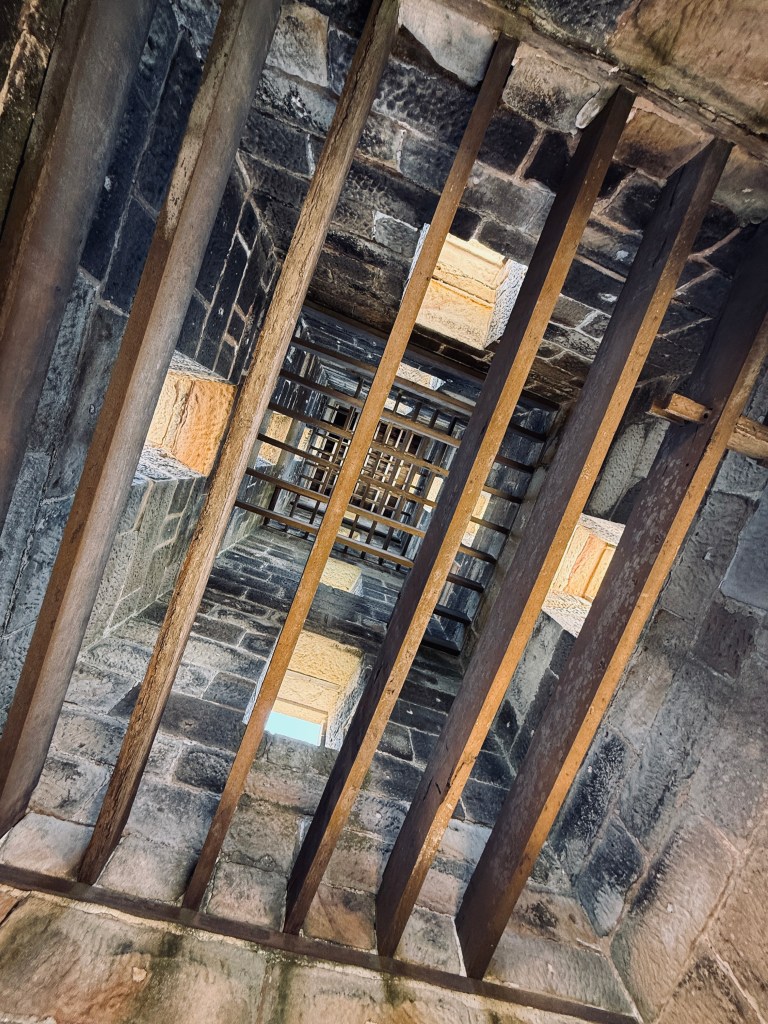
Still it was well worth the effort. Boyd’s Tower is one of those fascinating folly-like structures that, built to serve the hubris of man, instead makes manifest the saying that ‘pride comes before a fall.’
The Boyd in question was one Benjamin Boyd, a wealthy Scotsman who traveled to New South Wales to speculate in various businesses, such as farming, whaling, and shipping. He is credited with being the man who introduced ‘black birding’ into Australia, the practice of kidnapping Pacific Islanders to serve as slave labour in the new colony. Intended as a lighthouse, Boyd’s Tower failed to receive government sanction, and so was used instead as a whaling watchtower. Boyd went bankrupt soon after the tower was complete, and abandoning his debts and workers fled to the Californian gold fields. In 1851 he disappeared without trace, reportedly killed while visiting the Solomon Islands (for more information on Boyd, visit https://www.visiteden.com.au/1842-wanderer/)
Strong winds were due the following day, so after returning to Taurus we headed back to Eden and a sheltered anchorage. To our delight another cruising couple had arrived whilst we had been away, Richard and Annette on Heather Anne, a steel sloop. This ex-Kiwi, currently Tasmanian couple were returning home from a sojourn to the Whitsundays, so we had a fantastic evening learning about their experiences with whales, tidal races, and Australian Army firing ranges. The next evening Annette invited us aboard for a roast lamb dinner, setting a new standard for on-board hospitality! Alas, the conversation flowed so well that we didn’t take a photo of this fascinating and generous couple until we were on our way back to Taurus. Thanks guys, we hope to meet again some day!
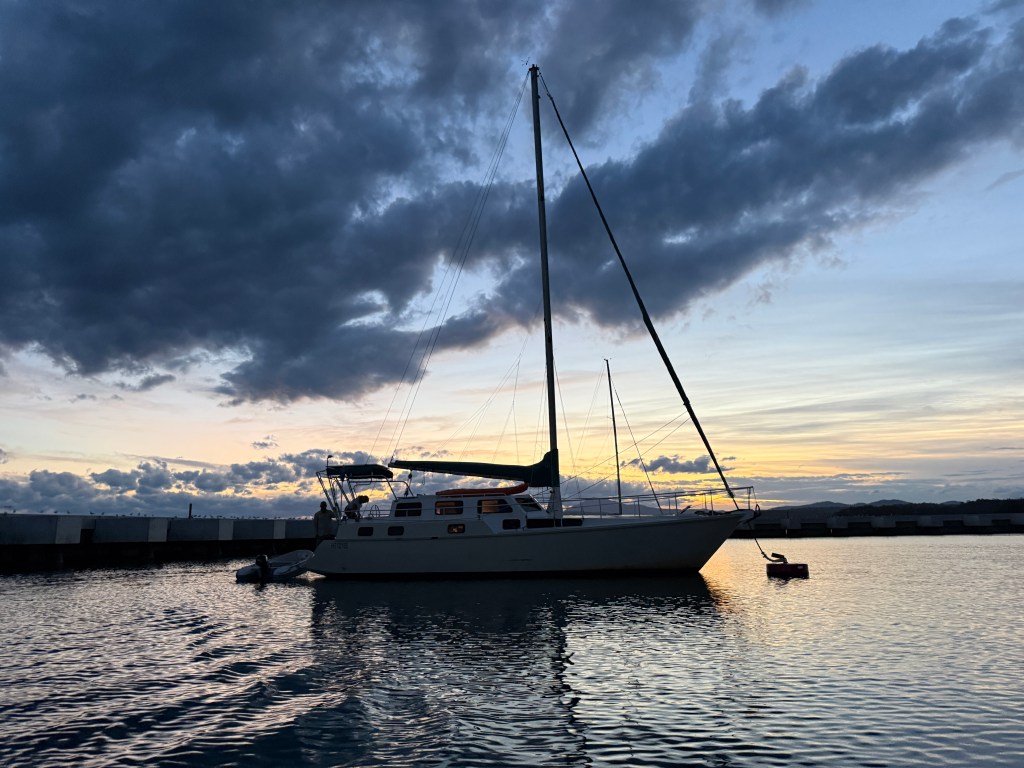
There was a possible weather window the next morning, a lightish southerly that we hoped would help us to get north. Wanting to leave early, we raised the dinghy and got everything ready for an early start.
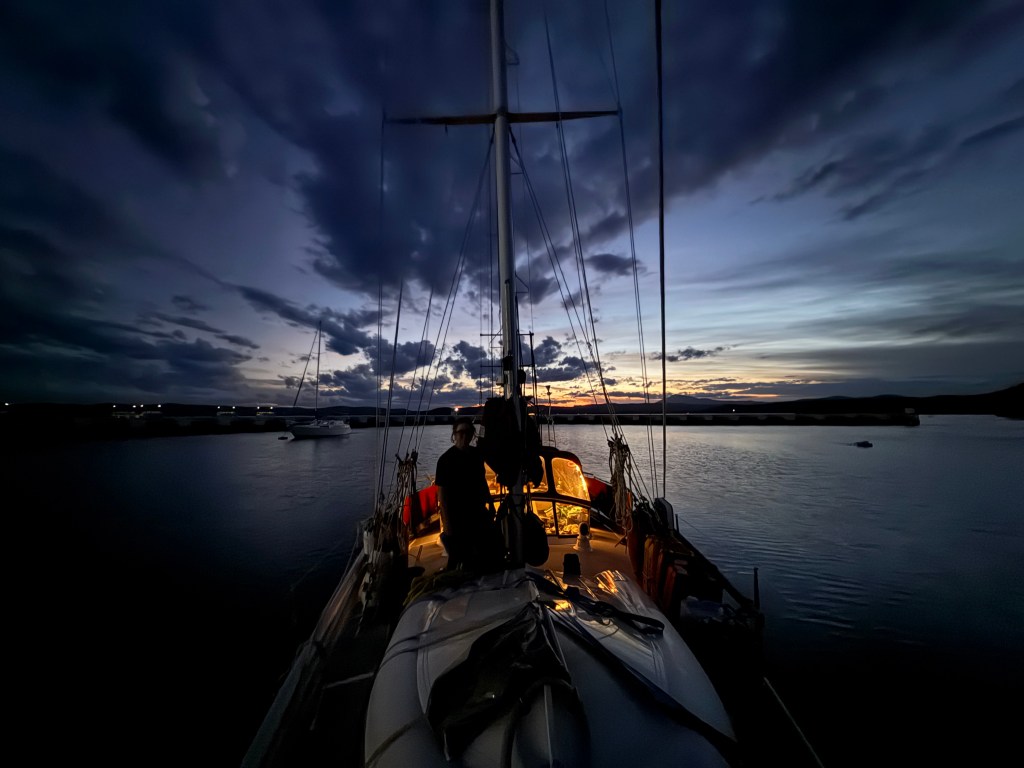
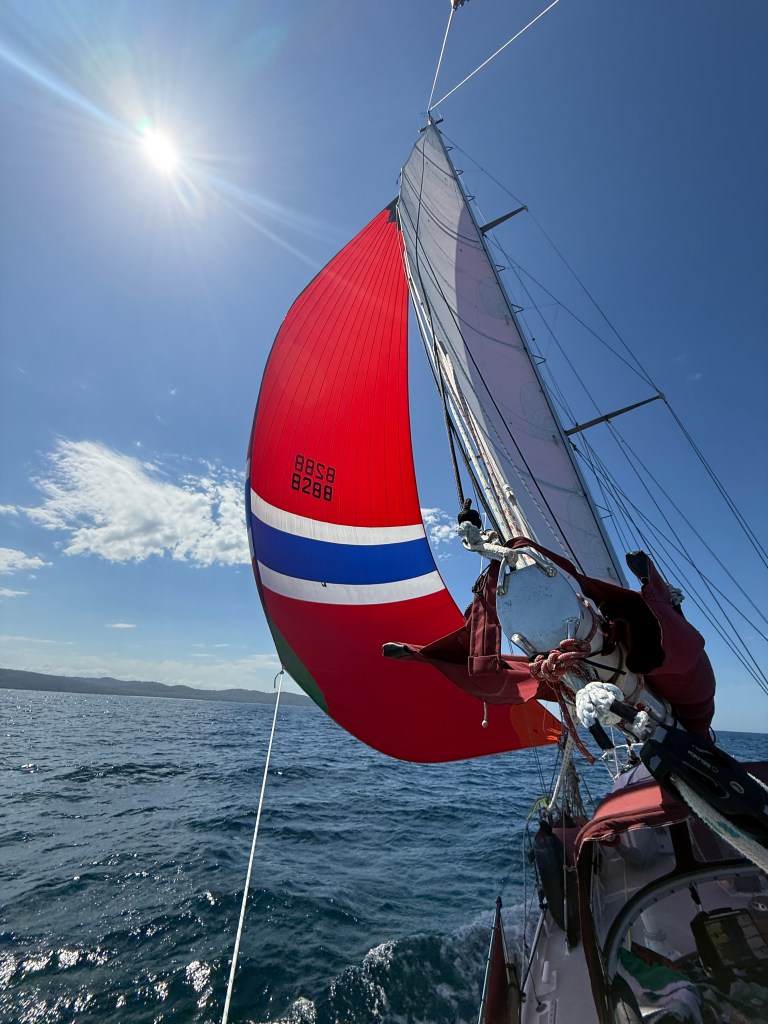
Of course, you never really know if a weather prediction is going to be spot on, or if the wind will be stronger, or weaker. We had hoped for stronger, but ended up with the other extreme. That coupled with a two knot current against us meant that we ended up motoring most of the following day. In the afternoon the wind started to lift, so we raised the spinnaker, more in hope than expectation, but without the engine’s assistance we were reduced to a crawling pace.
We had hoped to make Batemans Bay, but the going was desperately slow, and my back was still spasming periodically, so we decided to quit whilst behind, and bail into a closer port. Bermagui is a quiet Australian holiday destination, entered via what looks like it might be a bar, but which in fact isn’t. The river on the other side of the entrance is too shallow for a keeler to anchor, so we had no option but to pay for a marina berth. At $80 a day, the cost of a four day stay would cover us for nigh on a month in Tasmania — there was no doubt that we were back on the Aussie mainland.
We came to understand the cost a little better after meeting our neighbours, though to be fair the price isn’t exceptional on the east coast. Once, Bermagui was a fishing port, but when the fish failed small yachts had moved in. Now there was barely a handful of yachts, and each berth was instead occupied by multi-storey launches that towered overhead, designed for catching ‘big-game fish.’
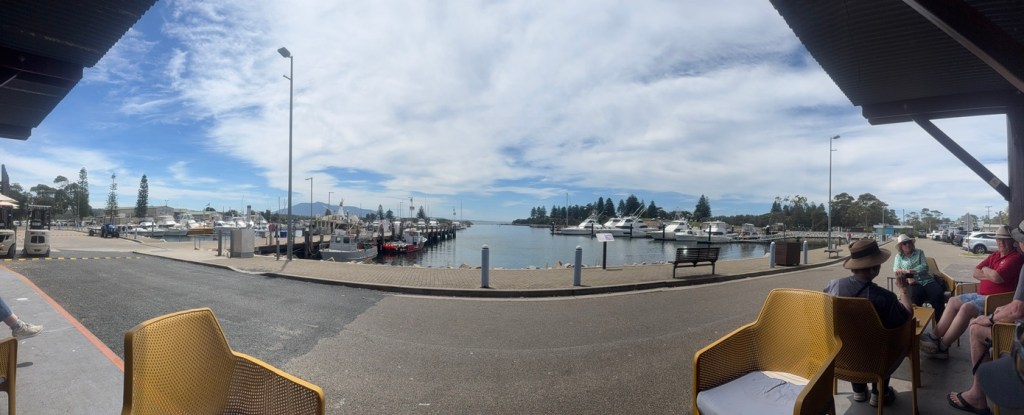
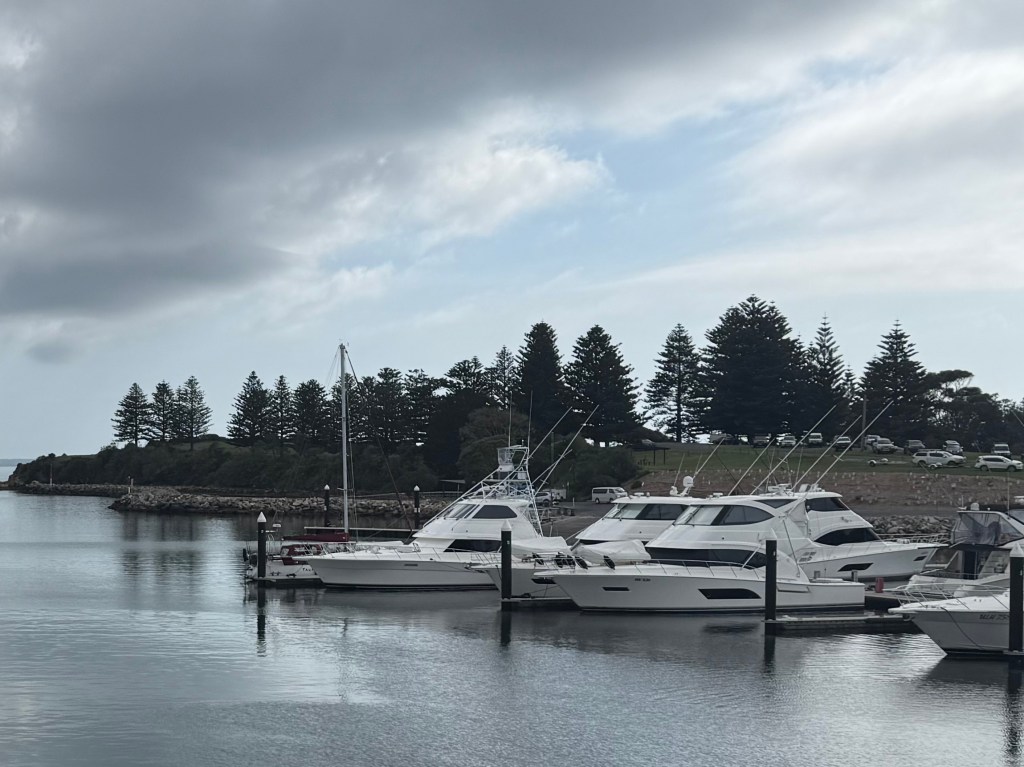
You can’t really comprehend the size of these boats from a photo, unless you see them next to a familiar object. Our immediate neighbour was far larger than Taurus, as you can see in the image above. I imagine the price of one of these things would easily be in the region of A$500,000 to A$750,000, but none of them moved in the few days that we spent in the marina. Seeing someone aboard one day I asked if the boat was a commercial vessel, taking paying customers out fishing.
“Oh no” he said, ‘this is a private vessel.”
“And what is it for?” I asked.
“Well, were not really sure ourselves,” he replied laughing, “it’s a bit like hunting lions, a bit pointless.”
“But what do you hunt?”
“Marlin mainly”
“And do you eat them afterwards?”
“Oh no, they’re OK smoked, but not that nice.”
Words failed me. In a country where homelessness is becoming an endemic problem and cost of living is never far from the headlines, some people are happy to spend a small fortune to own a boat whose sole purpose is to occasionally be used to try and catch a fish because it’s fun to catch. As many of the released fish subsequently die, the ‘catch’ part in the previous sentence could more honestly be replaced by ‘kill.’ After visiting Eden we shook our heads at the stupidity of the whaling industry, whose greed drove several species of whale to near extinction and caused the business itself to implode. But here, in this day and age, there were perhaps a dozen of these massive boats in this tiny port whose sole purpose was to kill (sorry, catch) a few species of fish or shark for entertainment. How long can any species survive this kind of assault? According to Google:
Australian marlin species are not currently listed as globally endangered, but they are under significant pressure and some stocks are considered depleted. Striped marlin in the South-West Pacific are classified as “depleted,” with evidence of overfishing and high post-release mortality. Black marlin populations are heavily targeted in recreational fisheries, but their exact status is unknown due to limited data.
As usual, the news on the fish front isn’t great, and it’s normally much worse, and too late, when the data actually becomes known. Closer to home, with this kind of brainless, brazen, blowing of moolah it was little wonder that the marina charges $80 a night. One might expect to be charged much more.
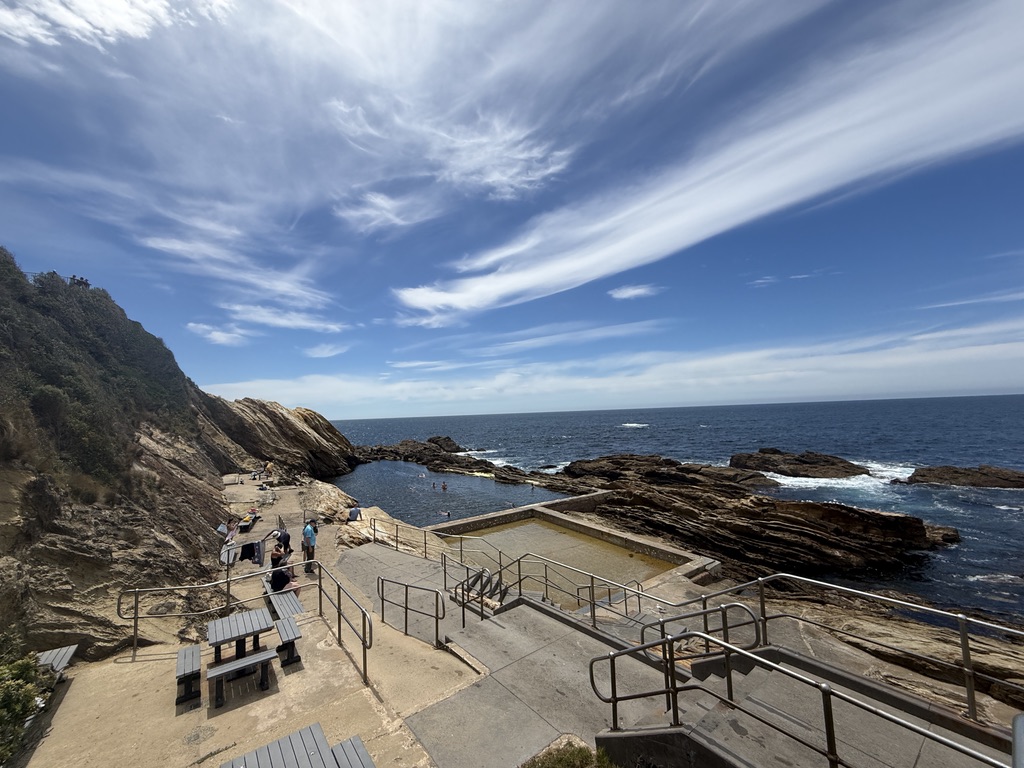
Anyhoo.. we had a couple of days to wait for another window. We did the rounds of town: the museum, Mitre 10 (a hardware store), and the best bit of all: a swim at the salt water pool with an outstanding view and real fish (yes, really).
Another southerly was due that night, so we got ready to go and stayed up till 11:00 pm, but using a weather app we could see that the ‘real time’ gusts tracking north were far stronger than predicted, in the high 40s. When the wind reached us in Bermagui it struck with a roar, and we were getting over thirty knots in the marina, which is protected from the south. You’d have to add at least another ten knots to that in unprotected water, and no-one chooses to go sailing in forty knots. We went to bed.
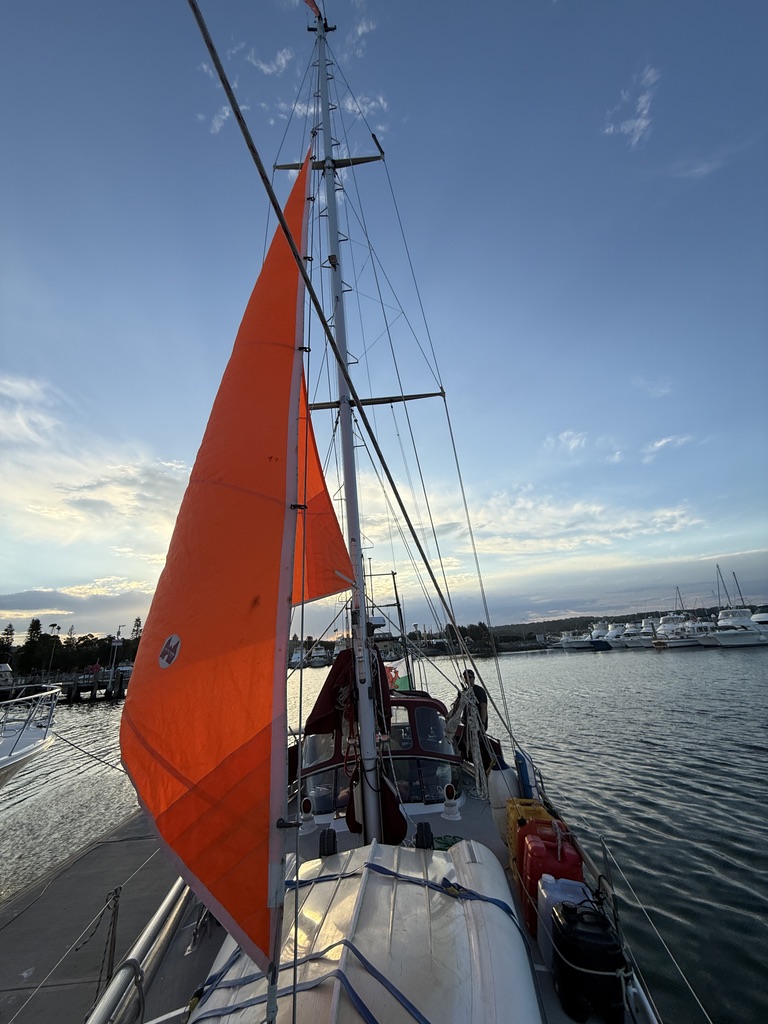
Next day it was still windy, but a more manageable thirty knots out at sea. Batemans Bay is forty five nautical miles from Bermagui, nine hours at five knots, so we waited until early afternoon for the worst of the weather to pass, and out we went.
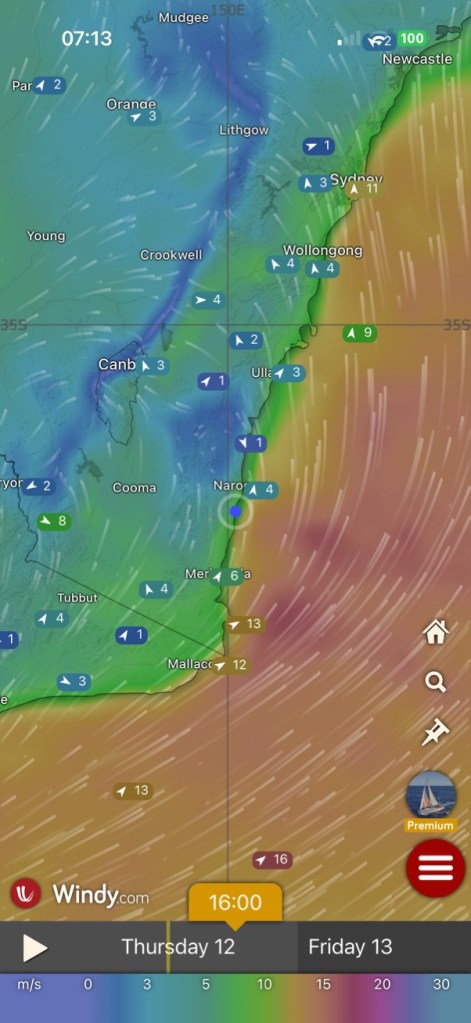
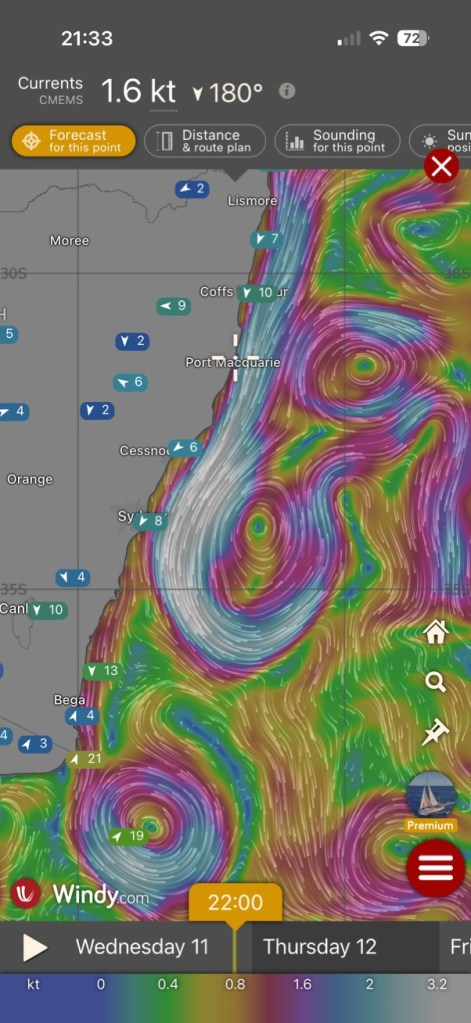
Above are representations of wind speed on the left, and current on the right, as per ‘Windy.’ Note that wind gusts can be up to 40% stronger than average wind speed.
The sailing was pretty fast and comfortable, though dead down wind is always a rolly point of sail. As the day wore on the wind picked the waves up so that the rolling went from bad to worse, and at the end we had to hold on the whole time or risk being violently thrown across the cockpit as the boat rocked from one rail to the other every few seconds . In these conditions you can steer off the wind — which would have seen us heading towards land or out to sea; hoist the main to try and dampen the roll — which prevents wind reaching the jib sail, so it collapses and snaps full, over and over again, killing gear and fraying nerves; or you can endure it.
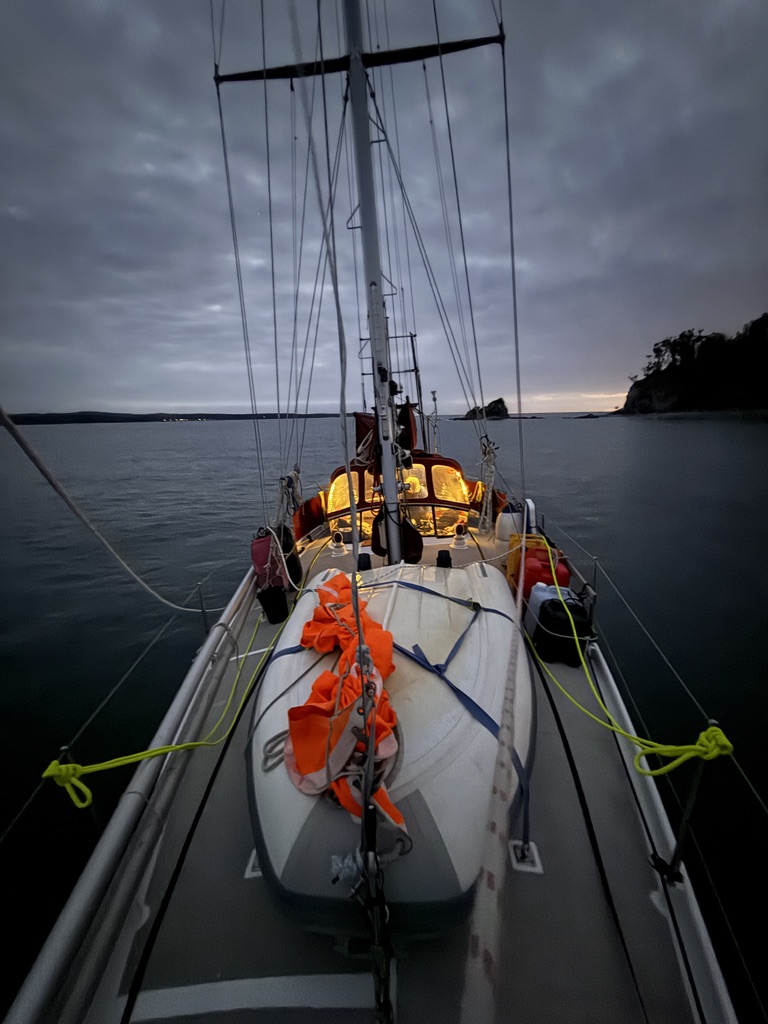
We finally arrived in Batemans Bay at 11 pm. We sailed to an island near the bar where we intended to anchor so that we could cross the shallow water at high tide next morning. We later found out that the bar has been dredged since we were last there, so we could have gone straight in. Ignorance is not always bliss! Our first attempt to anchor revealed a rocky bottom that the anchor skipped across without any realistic chance of setting. Plan B was to pick up a nearby public mooring.
In the pitch dark we used a spot light to identify the mooring and to allow Cara to steer up to it. We had to get within about a foot of the mooring as the pick up line was far too short. At the bow, I then had to put down the torch to try and grab a rope with a loop floating in the sea with a boat hook — a two handed job. Hit the line but miss the loop and the cussed line sank. Add strong winds, a bit of a chop, and sea-sickness all round and it was pretty challenging. Third time round was a charm.
After a rolly night on the mooring we were up at 5:30 am to cross the bar at high tide (which we didn’t need to worry about). Then we picked up another mooring in the Clyde River, and went back to bed!
We knew that getting north again would be a bit of a grind, and so it’s proven to be so far. We could make life easier for ourselves by waiting for perfect conditions, as opposed to chancing our arm when the wind is too heavy or too light, but these ‘Goldilocks’ conditions have been so few and far between that to do so could easily see us waiting weeks in each location. Unfortunately, if we want to enjoy the northern part of Australia in the brief season that our insurance allows us to visit, due to the risk of cyclones, waiting isn’t an option. We plan to spend a bit of time in the greater Sydney area, so hopefully our batteries will be recharged for the next dash north.
Next time: we sail on to Jervis Bay and Cronulla.
 Sailing Taurus NZ
Leave a comment