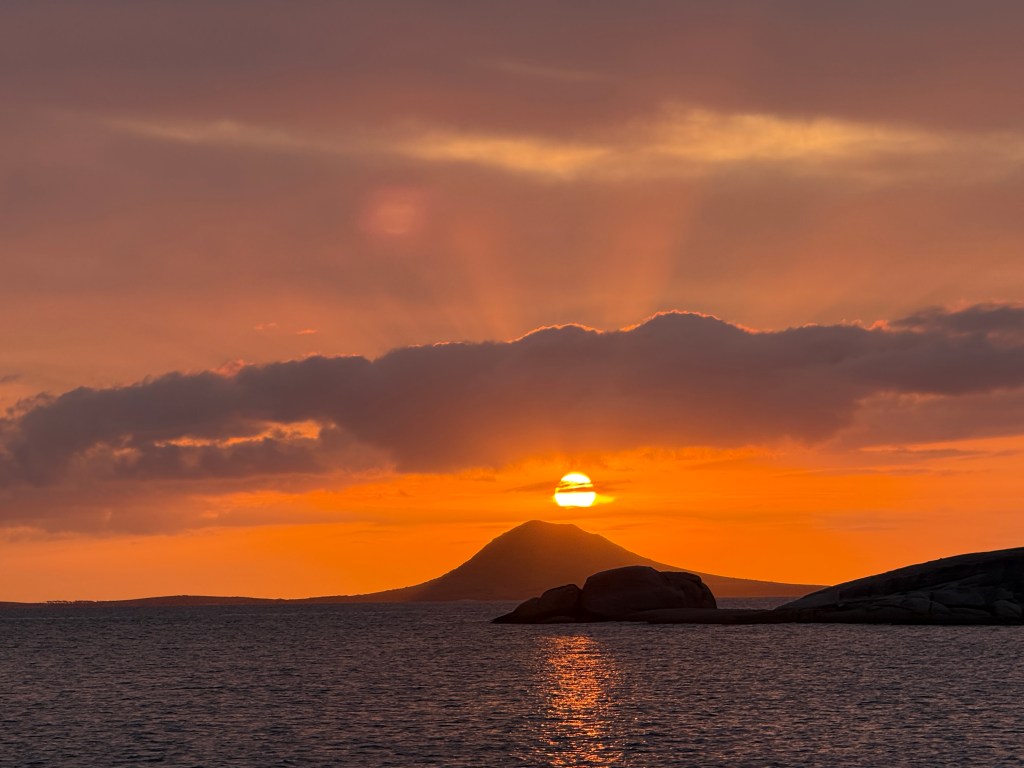
After a couple of days exploring Preservation Island it was time to get moving. The spell of fine weather that we had enjoyed was about to be abruptly terminated by strong westerlies that were predicted to blow at around forty knots. As with all forecasts, the figure given is the expected sustained wind strength, gusts, however, can be up to forty percent stronger, so winds of fifty knots plus (100 kmh) were a real possibility.
Having seen the forecast we’d spoken to Luke at the Beauty Point Marina, and he kindly offered us the use of his mooring at Lady Barron. One of the oddities about the Furneaux Group is that, despite it consisting of more than fifty islands, it can be surprisingly difficult to find good shelter. In other places, if the wind blows from the west you find a bay on the east in which to hide, and all is right with the world. In Furneaux, the wind has a knack of racing across the land, and should there be any hills in the way it accelerates down their lee slopes rather than being diverted. These strong gusts are variously known as katabatic winds, bullets, and williwaws, but in effect they make the world an uncomfortable and sometimes dangerous place until the wind chooses to cease and desist. This lack of protection, combined with weedy anchorages, makes finding a safe and comfortable anchorage in the area something of an ongoing challenge. So, if someone like Luke, who has lived in the area for thirty years, tells you that you better hide on his mooring, you say ‘thank you’ and go and hide on his mooring.
Entering Lady Barron requires a trip up the Franklin Sound. This channel experiences strong tidal currents and has several areas of shallow water to catch out the unwary. Cruising guides we referred to mention the currents, but failed to inform us of the current direction in relation to the tide, which is a bit hopeless. Thankfully, the Cruising Yacht Club of Tasmania fills this gap with a very useful website, which can be found at the following address:
Even though we entered on the correct tide we still found strong tidal currents working against us, and at one point, east of Little Green Island, our speed was reduced to about one and a half knots. We considered anchoring for a while, but in the end struggled on and soon found our way into Yellow Beaches and picked up Luke’s mooring.
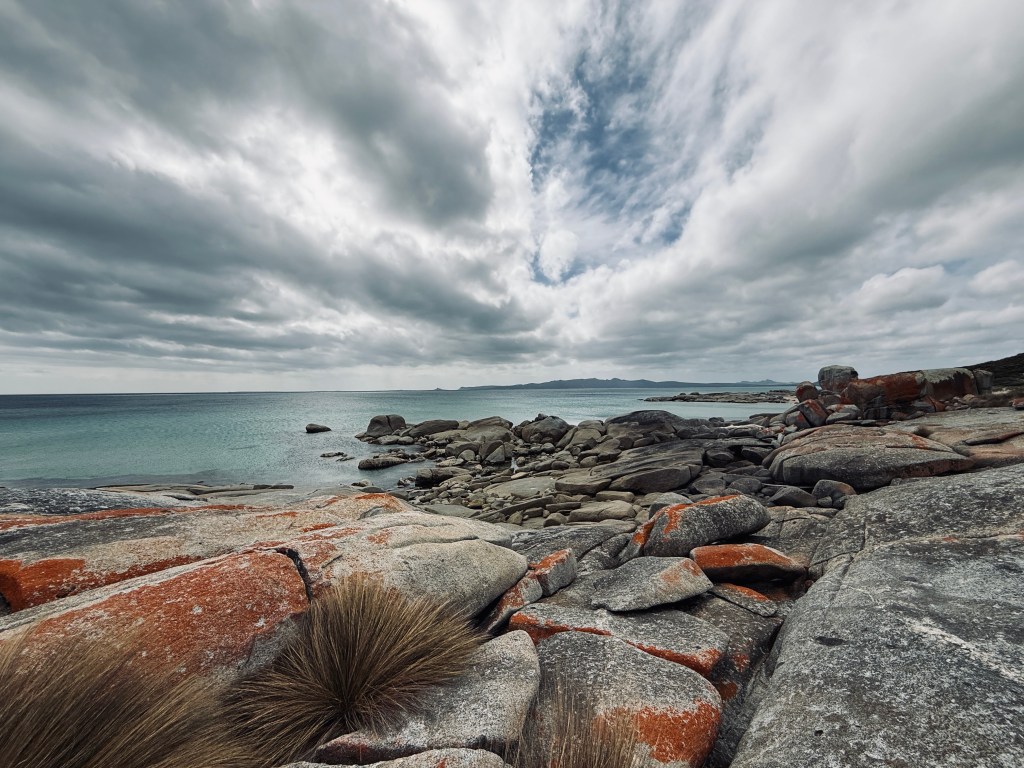
From the bay there’s a nice walk along the waterfront that leads to Lady Barron. The views are spectacular, and the rock formations unworldly.
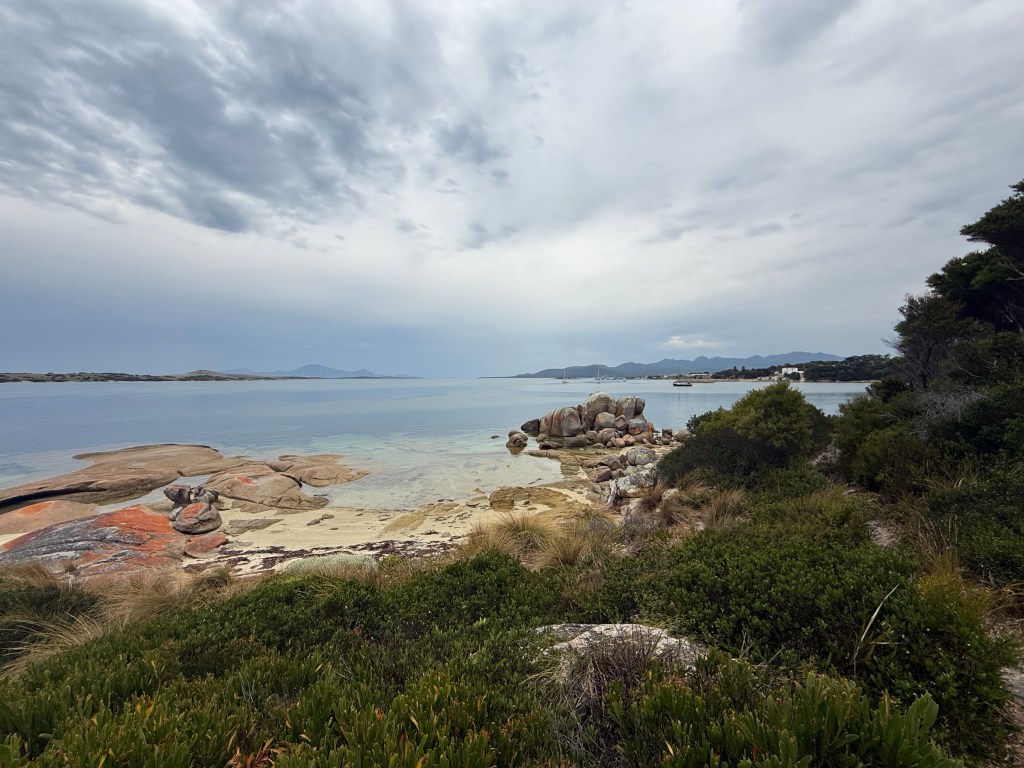
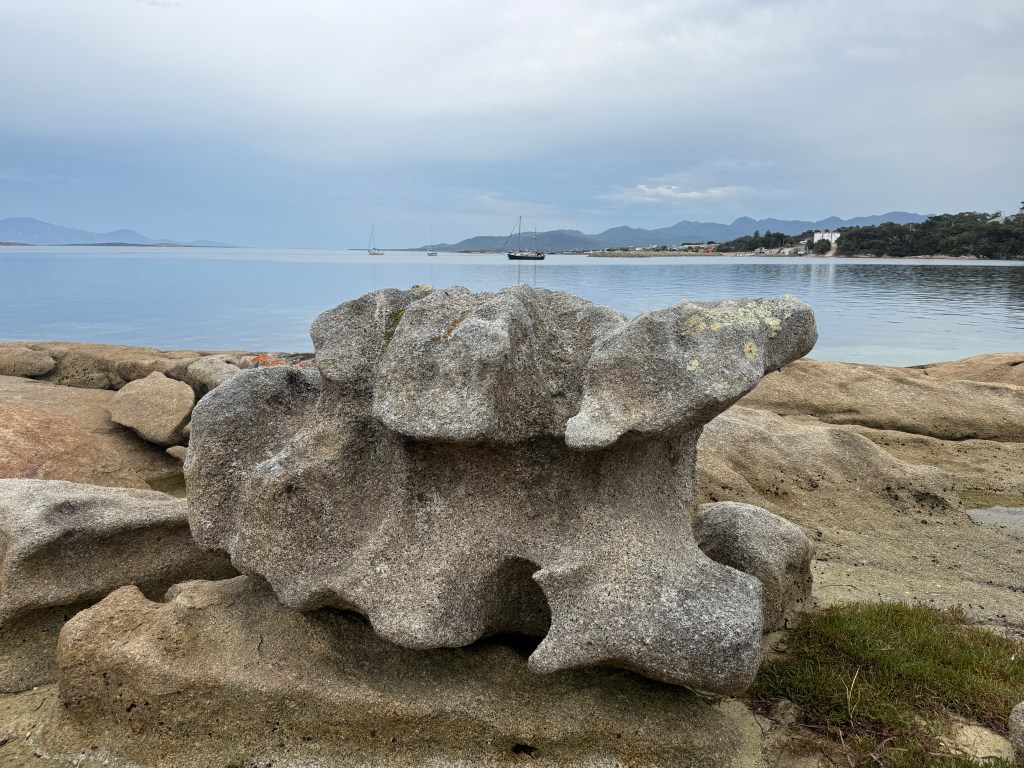
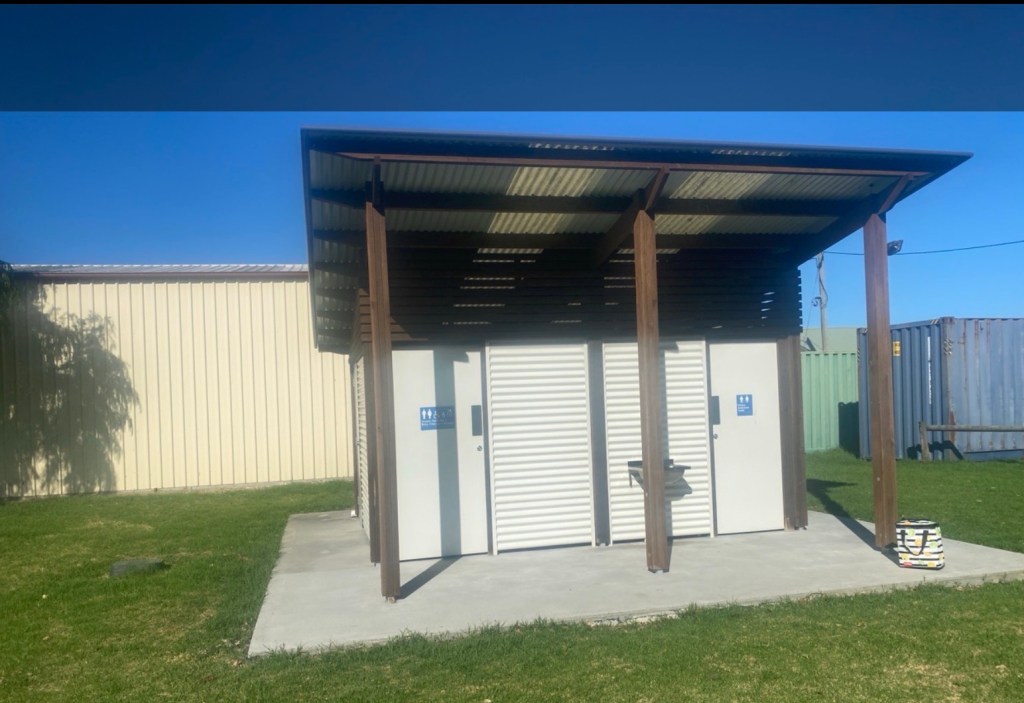
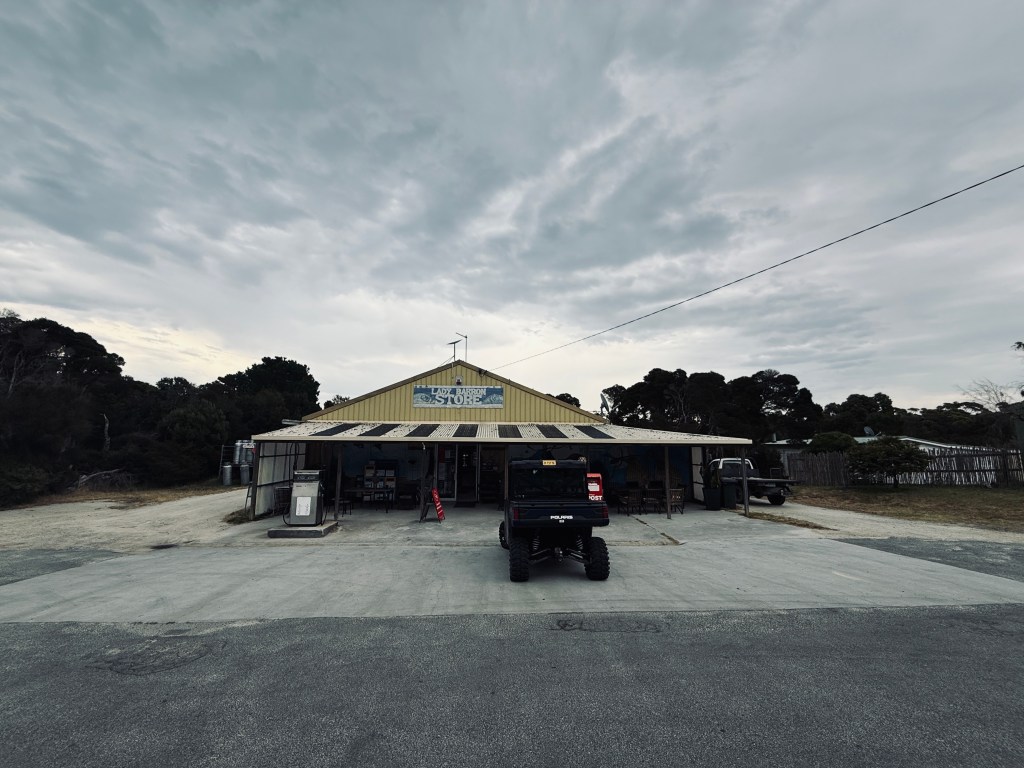
Lady Barron is a pretty quiet destination, with one pub, one public toilet with a hot shower, and one shop (in order of importance). It wasn’t long before we had seen all the sights, so ended up returning to the pub (Cara said it would be weird to hang out at the shower or shop).
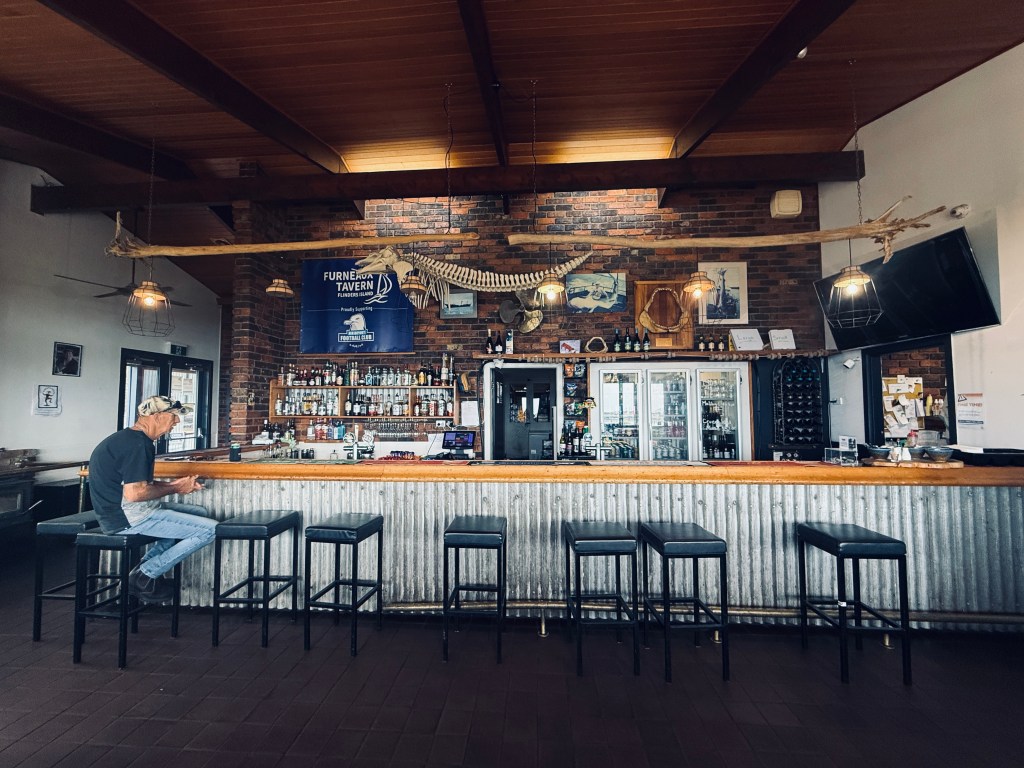
We met some cruisers in the pub and ended up having dinner with them. Much of the conversation centred around where best to hide from the strong weather due the following day. In the end one crew decided to stay where they were, moored up alongside the fisherman’s jetty, and one solo sailor decided to sit on a public mooring just behind them. Neither spot afforded much in the way of protection from the west.
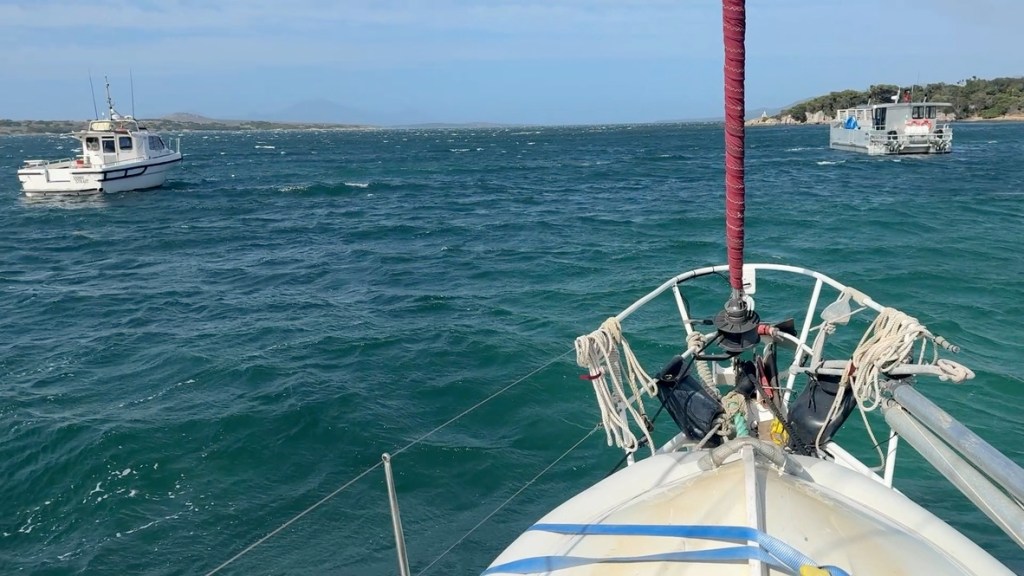
Next day in Yellow Beach, tucked behind a headland, the wind fairly howled at times and we saw speeds of nearly forty knots. We were pretty comfortable, but wondered how the others were fairing. Unfortunately they all left early the next day, using the tail of the storm to cross Bass Strait, so we didn’t see them again. I imagine it would have been a miserable day for them. We later spoke to another couple who had anchored behind Preservation Island, Craig and Lindie on Addictive. They told us that they had had a pretty awful time and dragged anchor twice. Naturally we were very grateful for Luke’s advice and the use of his mooring.
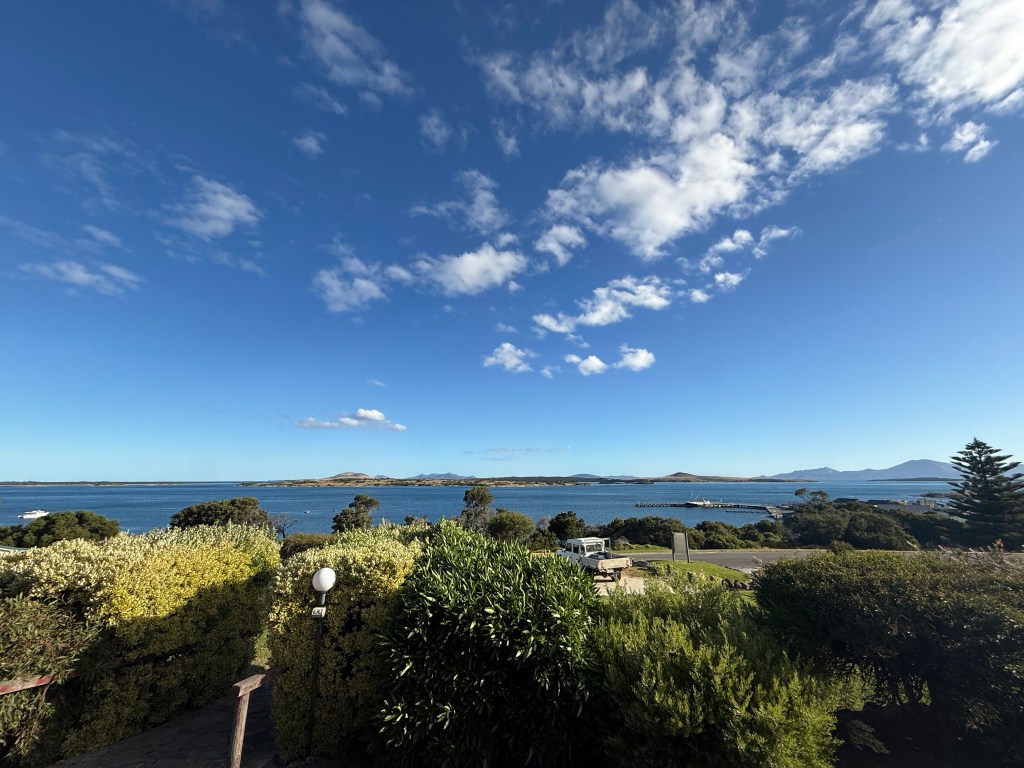
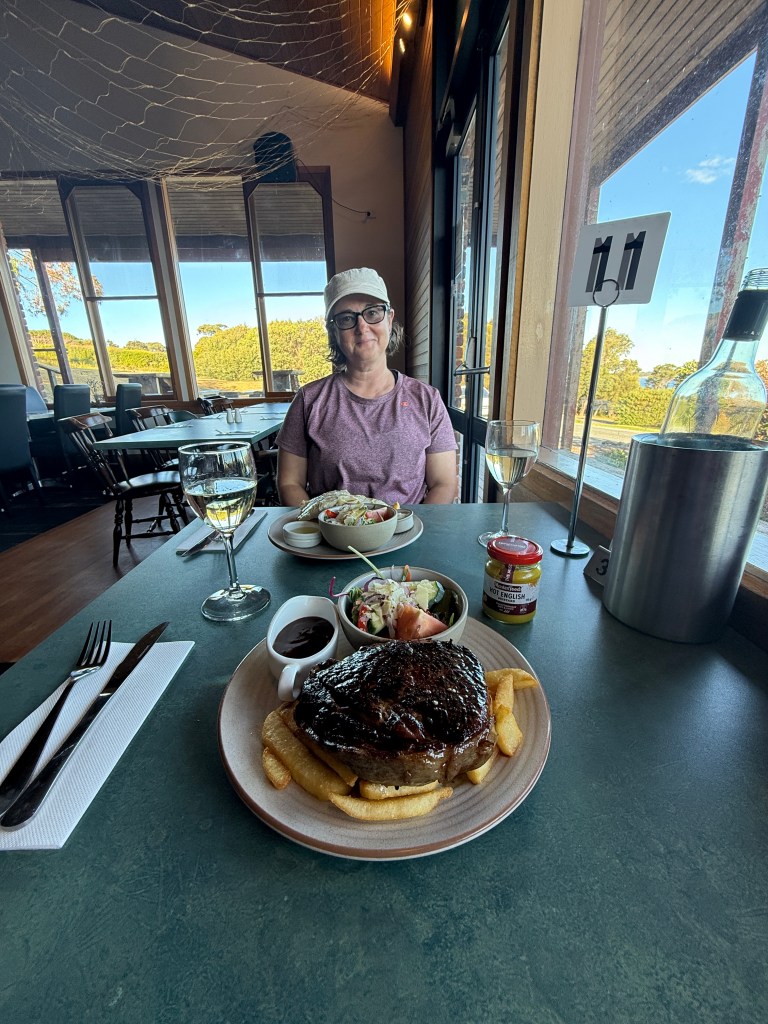
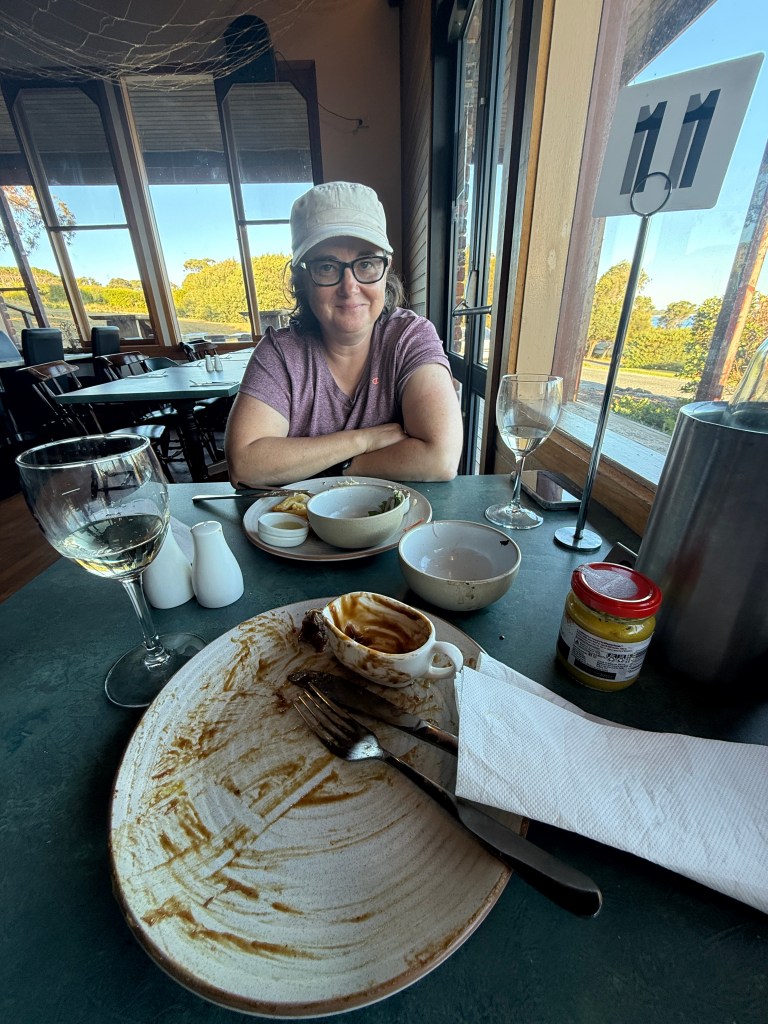
We were so impressed with our dinner at the pub that once the storm had passed we had to go back. The food there is seriously good, in fact some of the best I can remember eating. If you go to Lady Barron you have to have dinner there. The views were pretty damn impressive too!
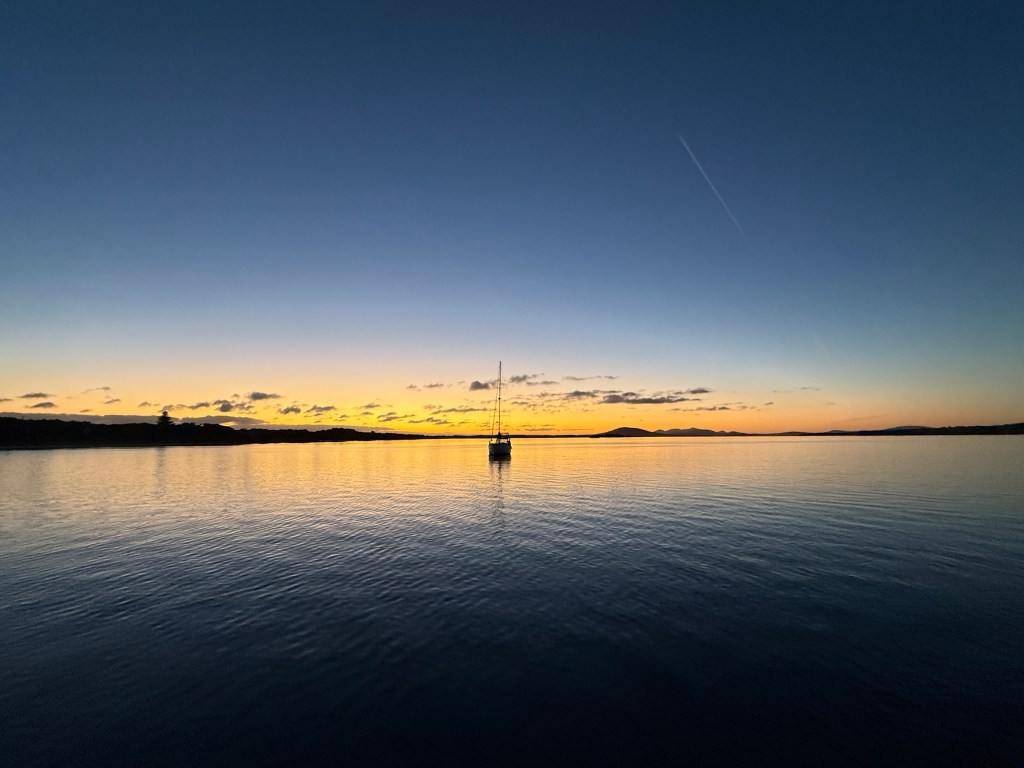
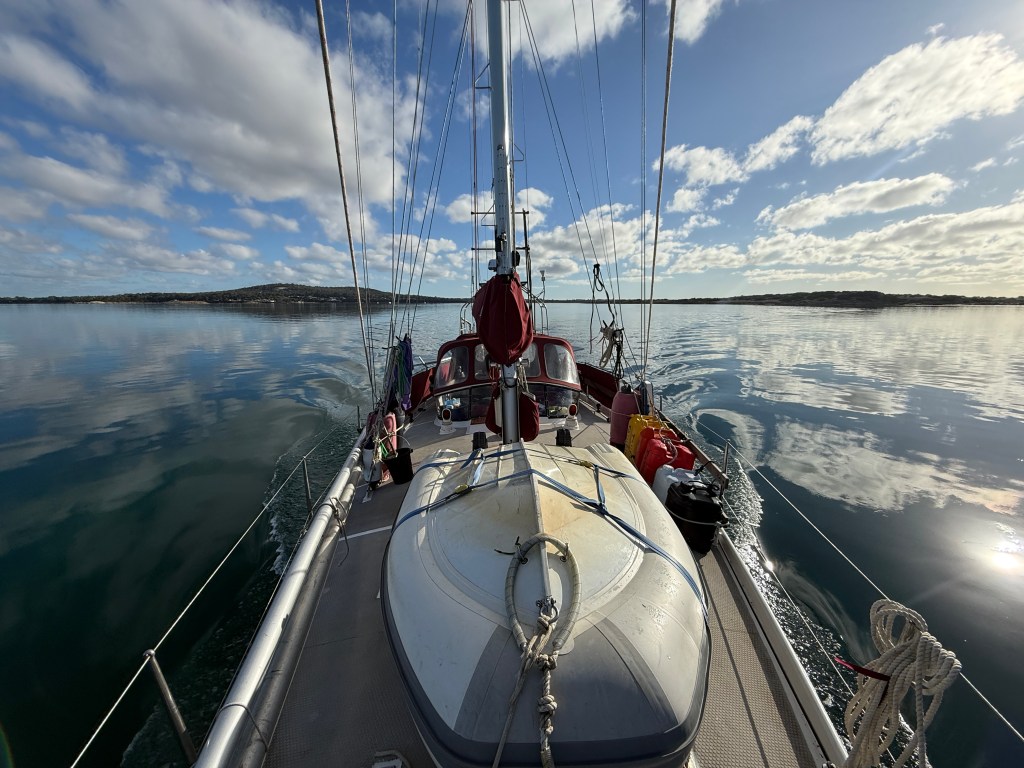
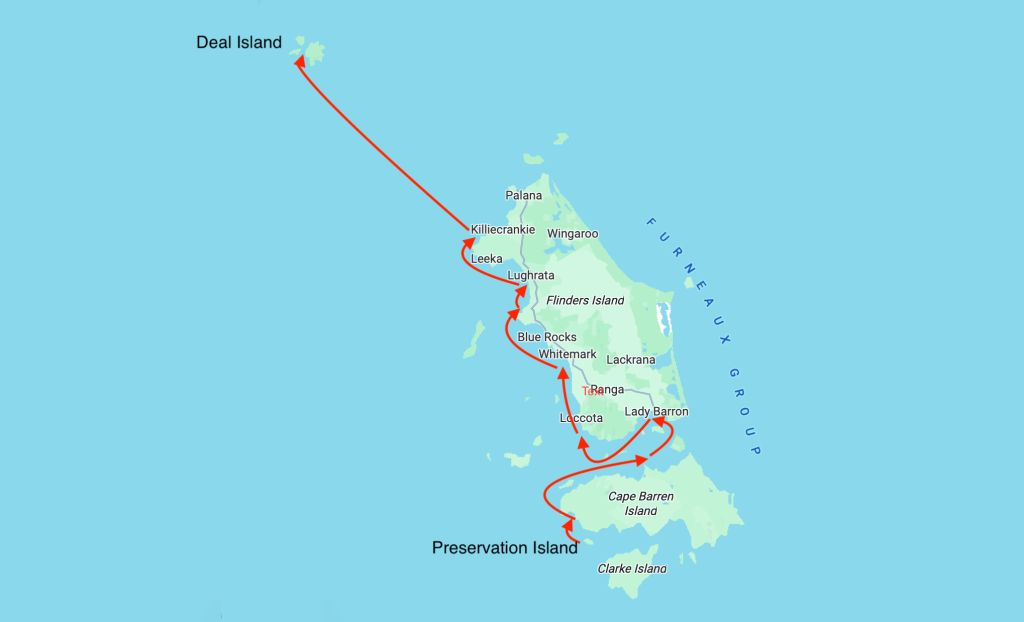
We left the following day, and experimented by leaving on a falling tide, the same as that which we had used on the way in, but we were now going in the opposite direction. We also took an alternative route, one that runs between the Great Dog and Little Dog Islands (and which can be a little shallow in places). Of course we found the tide was still against us; sometimes you just can’t win.
We picked up the mooring at Trouser Bay, the spot where we had stayed on our previous visit, but what a difference a change in the weather makes. This time around we were able to get off the boat and enjoy a coastal walk around the point.
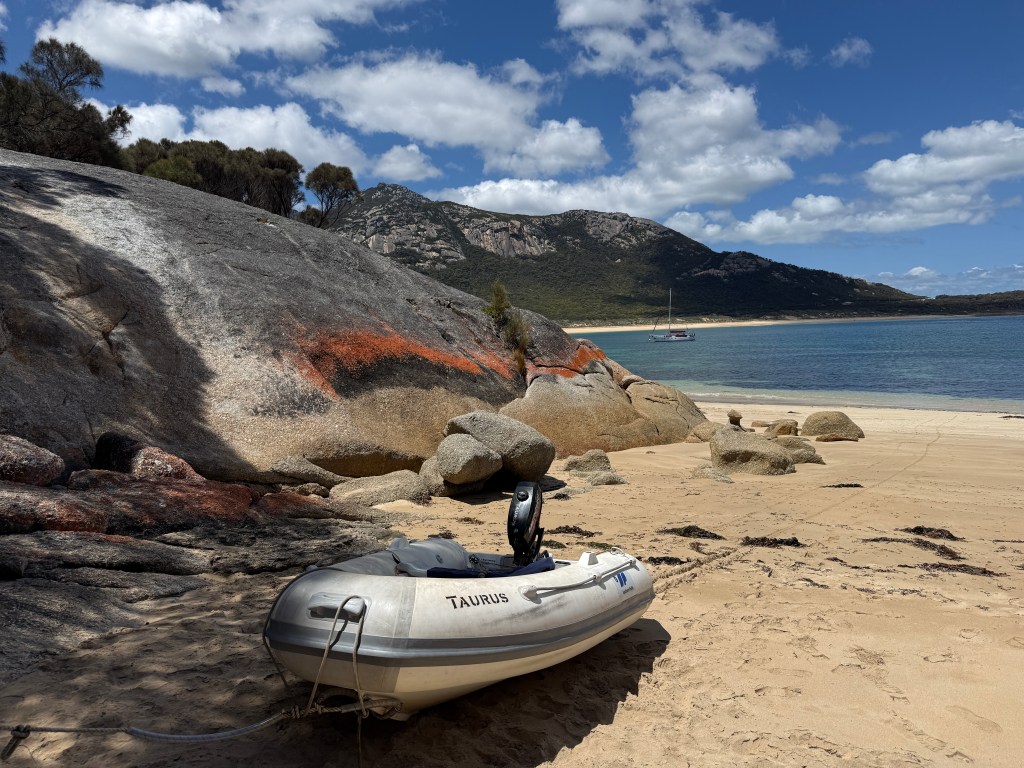
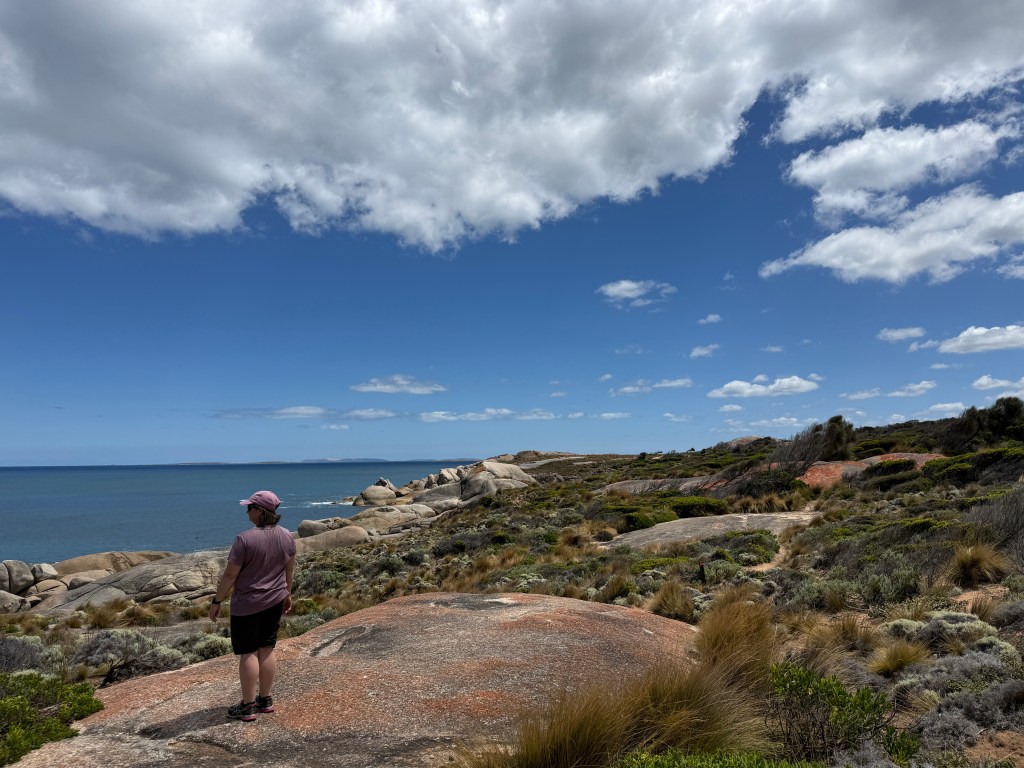
Jim and Angie, friends from Launceston, were heading towards Flinders Island on their steel yacht, Malibu, and we decided to pop into Whitemark, the main town on Flinders Island, before meeting them at Port Davies (not to be confused with Port Davey, on the west coast of Tassie, like I continually did).
Without wishing to be too blunt, Whitemark is a swine of a place to visit by yacht. The bay is so shallow that you have to anchor a loooong way from land, and there is so much weed that finding somewhere for your anchor to grab is an exercise in patience. We ended up with just 0.8 of a metre of water below us, which is very shallow for anchoring, and had to reset the anchor four times before it held.
We then had to motor in the dinghy for about a nautical mile to the beach, and drag it up very soft sand (the tide was out) as the jetty has been condemned and is fenced off.
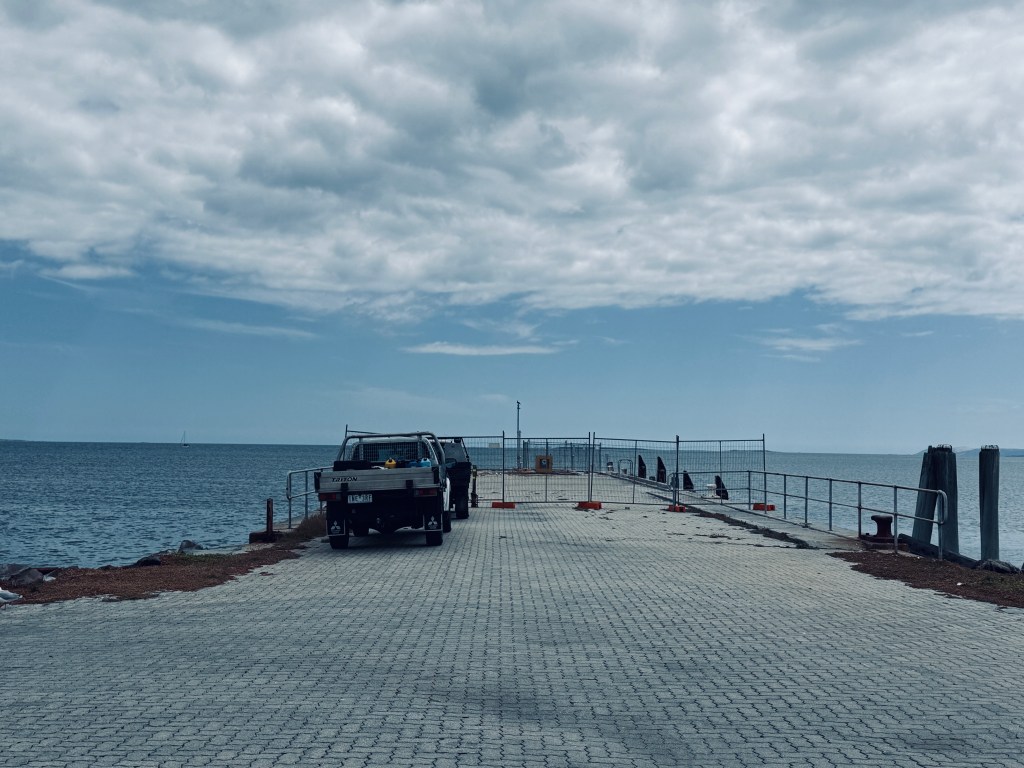
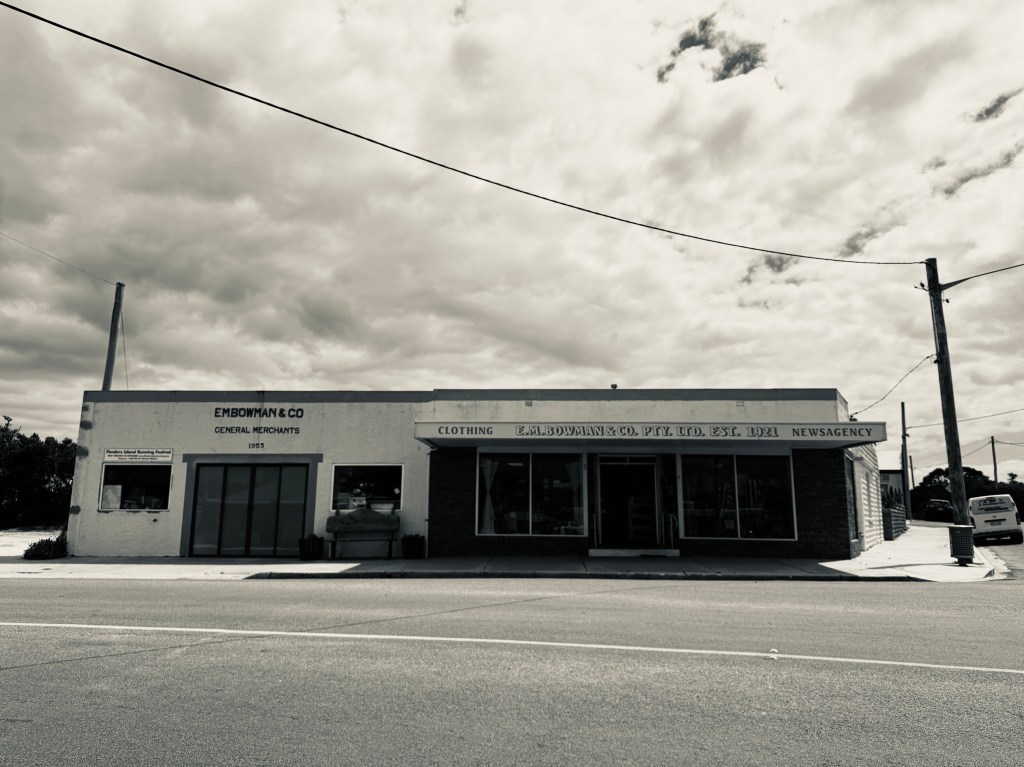
Even though we were there mid-afternoon, midweek, during the height of the tourist season, everything but the supermarket, dairy, and pub was closed. The town is frankly kind of depressing. Admittedly, the supermarket is better than the shop at Lady Barron, but not that much better. If you only need basic groceries and you have to choose between Whitemark and Lady Barron, go to Lady Barron, and go to the pub for dinner!
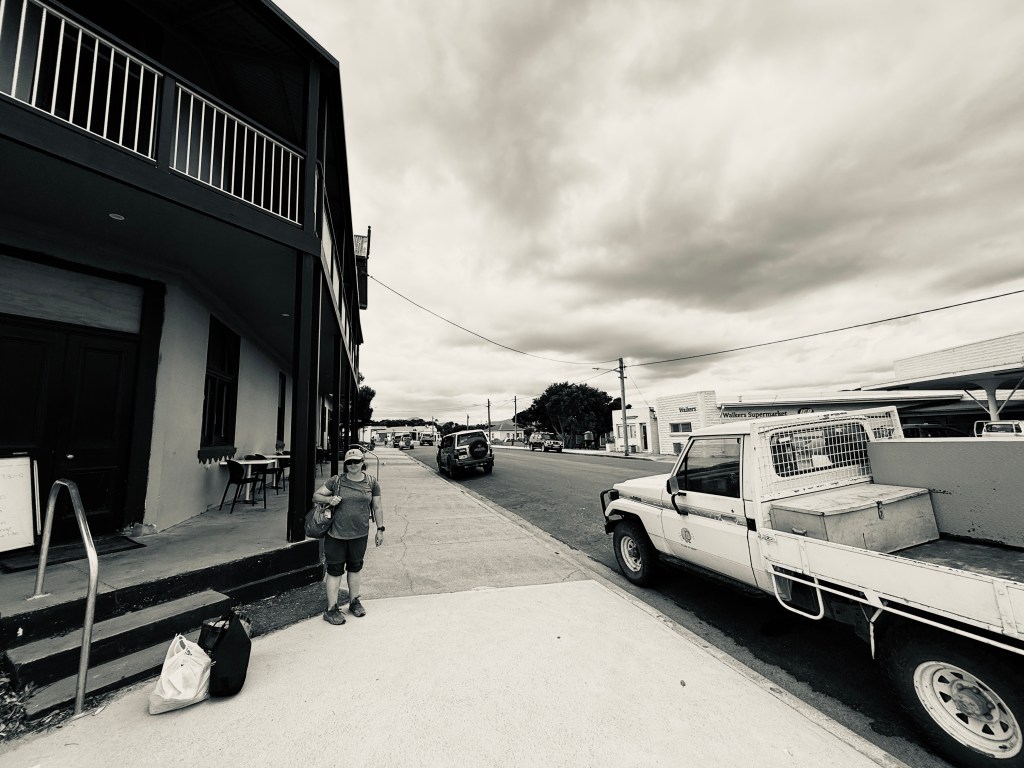
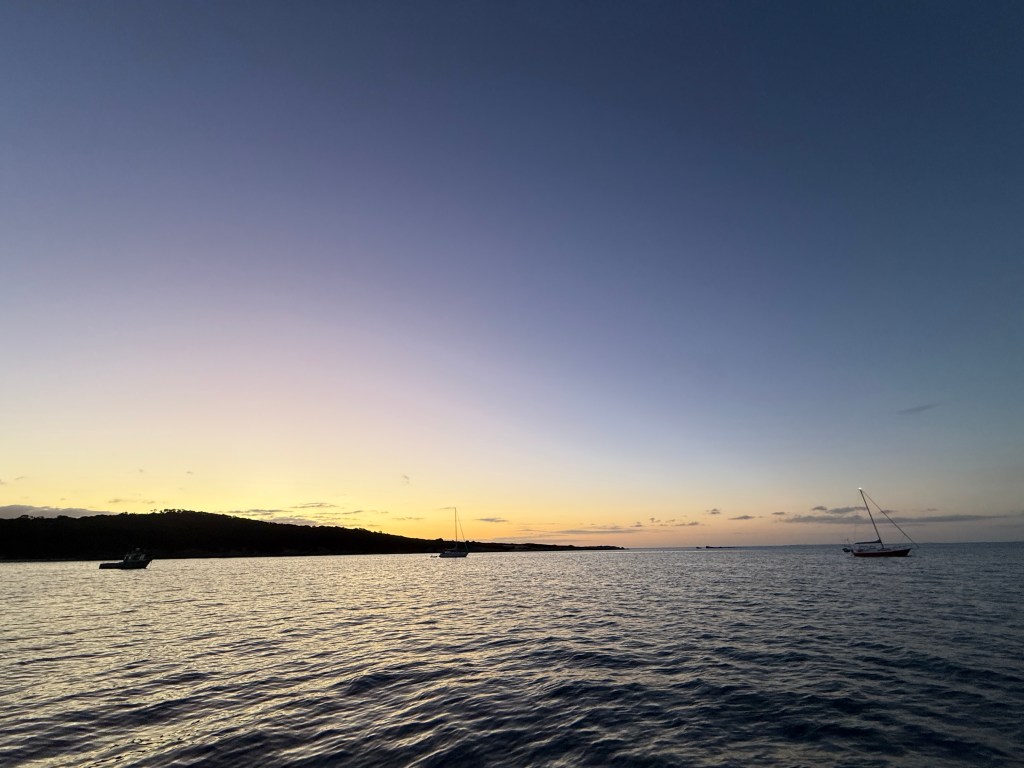
After dragging the dinghy back across the sinking sand and motoring the several miles back to Taurus, we lifted the dinghy back aboard and headed towards Port Davies.
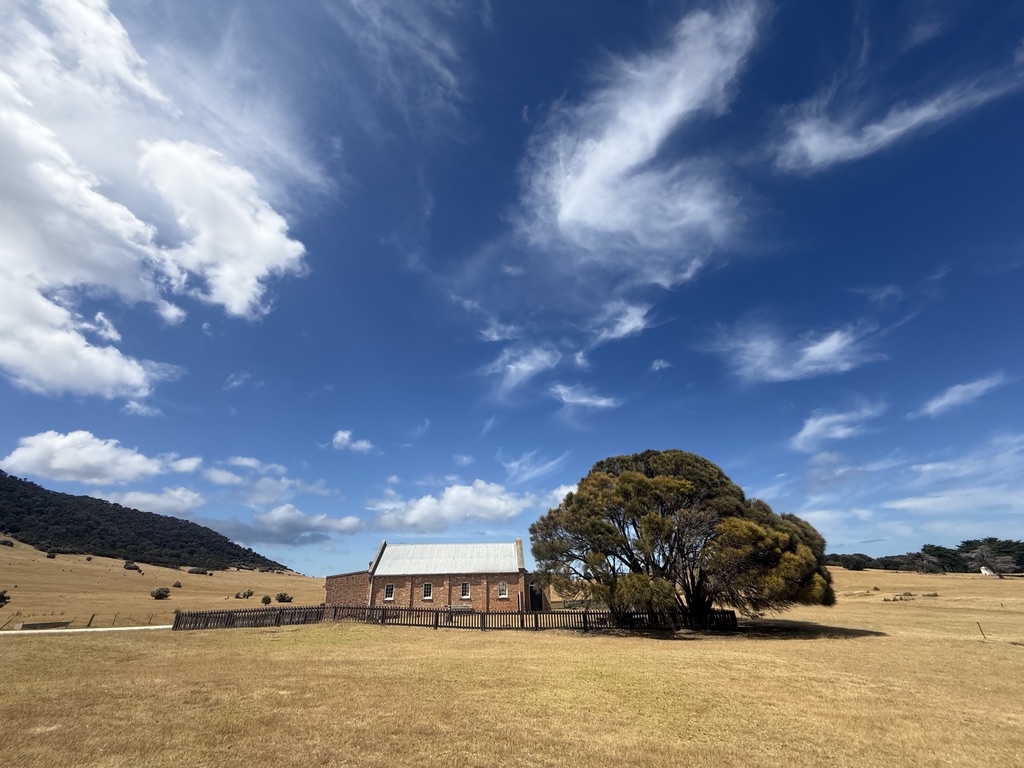
Not far from this anchorage is a museum that commemorates the aboriginal people who were forcibly removed from Tasmania and re-settled on Flinders. The chapel at Wybalenna has been restored, and is all that remains of the settlement that some have described as a ‘concentration camp.’
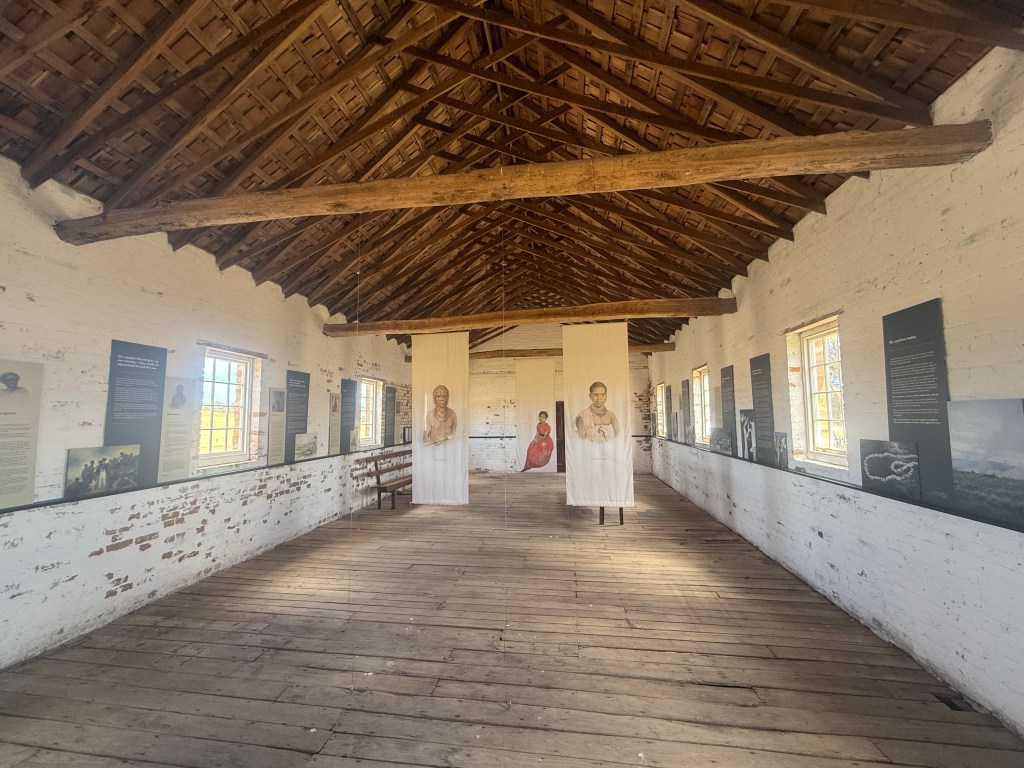
The stories were pretty sobering and it was in a somber mood that we walked back to the dinghy dock.
That evening all the cruisers in the bay got together on the beach for a few sun downers.
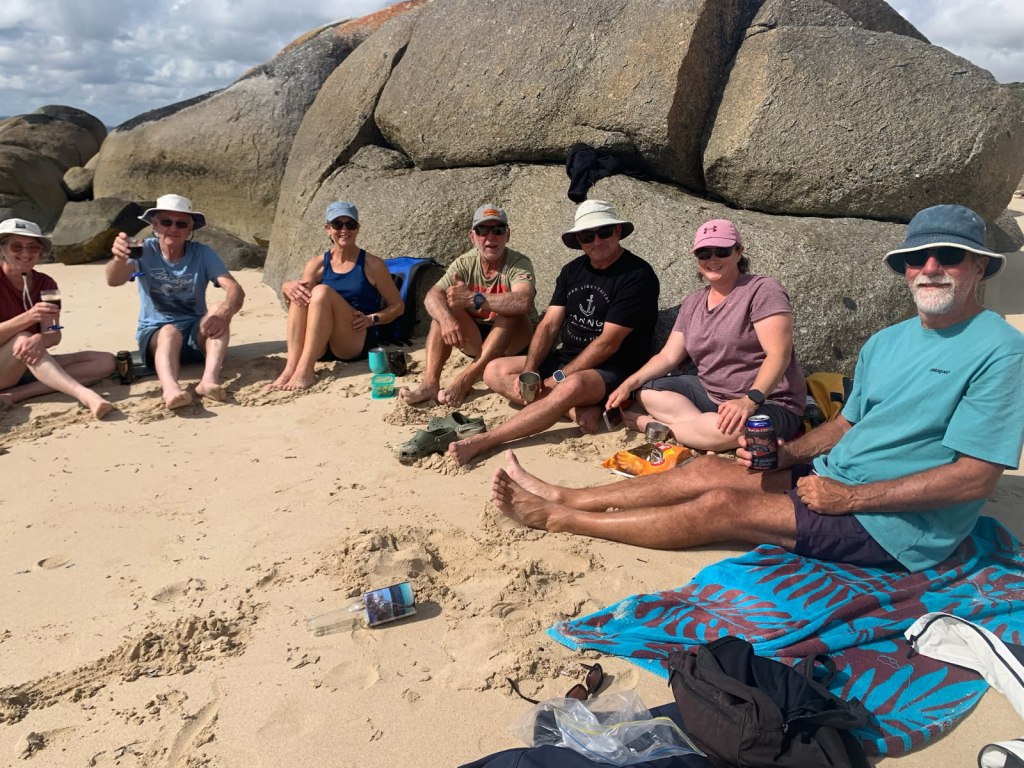
We found the anchorage to be a little windy, so later moved to Allports Bay with Malibu. From here it was an easy walk to the local museum and an iconic rock formation, known as Castle Rock.
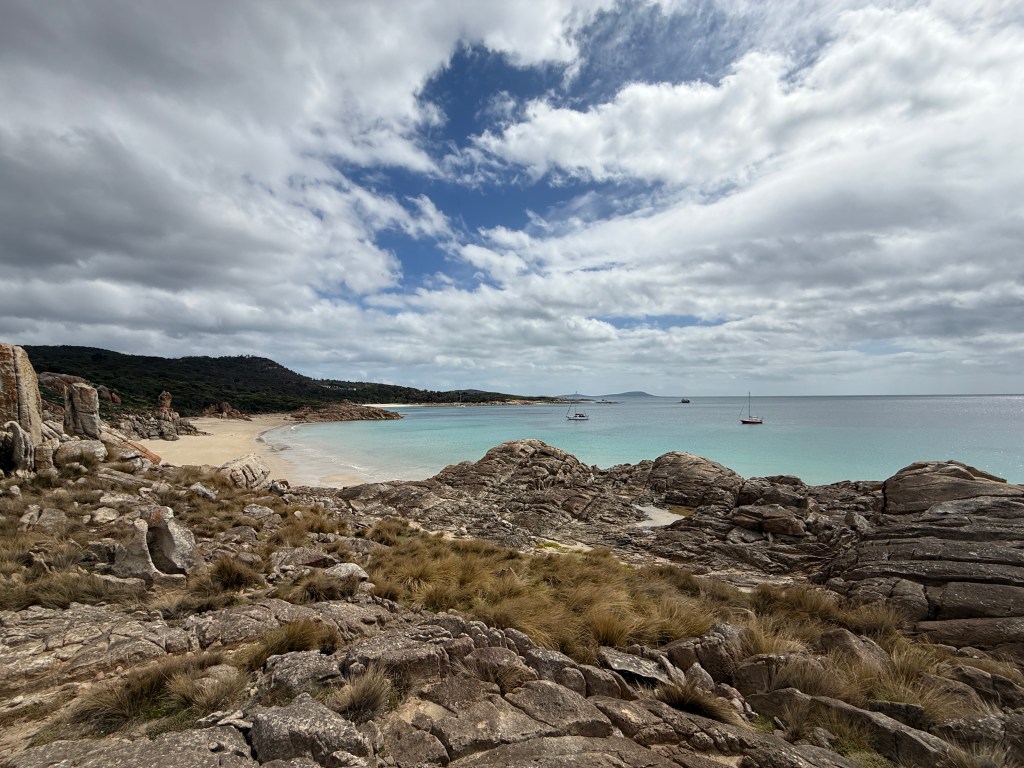
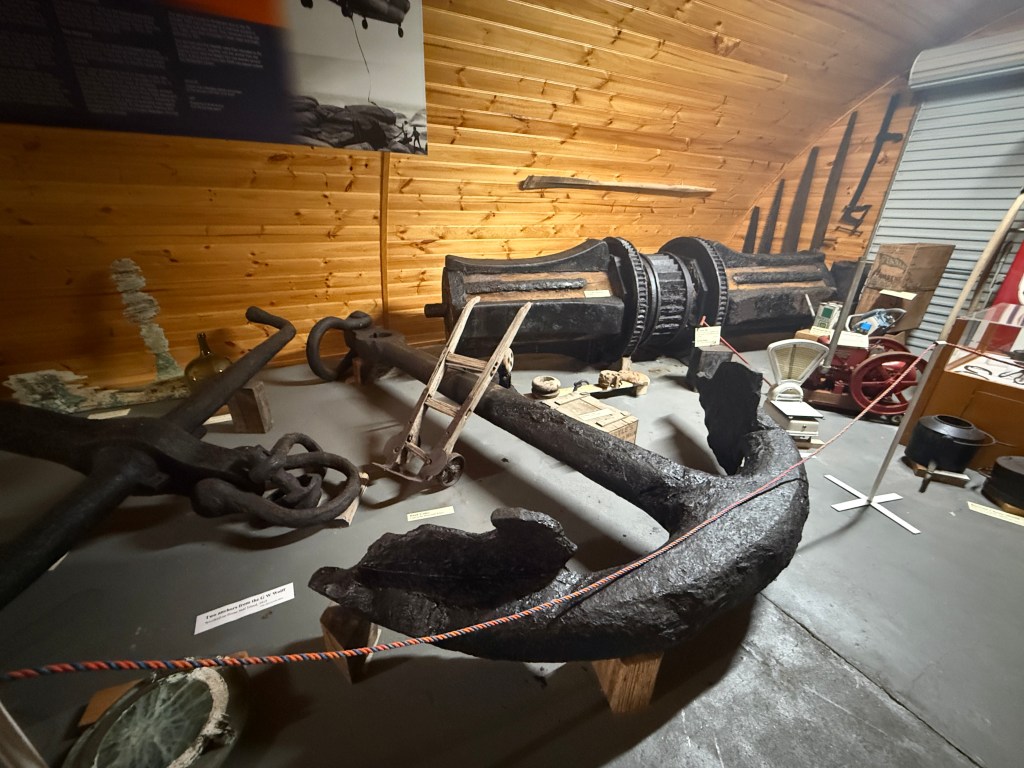
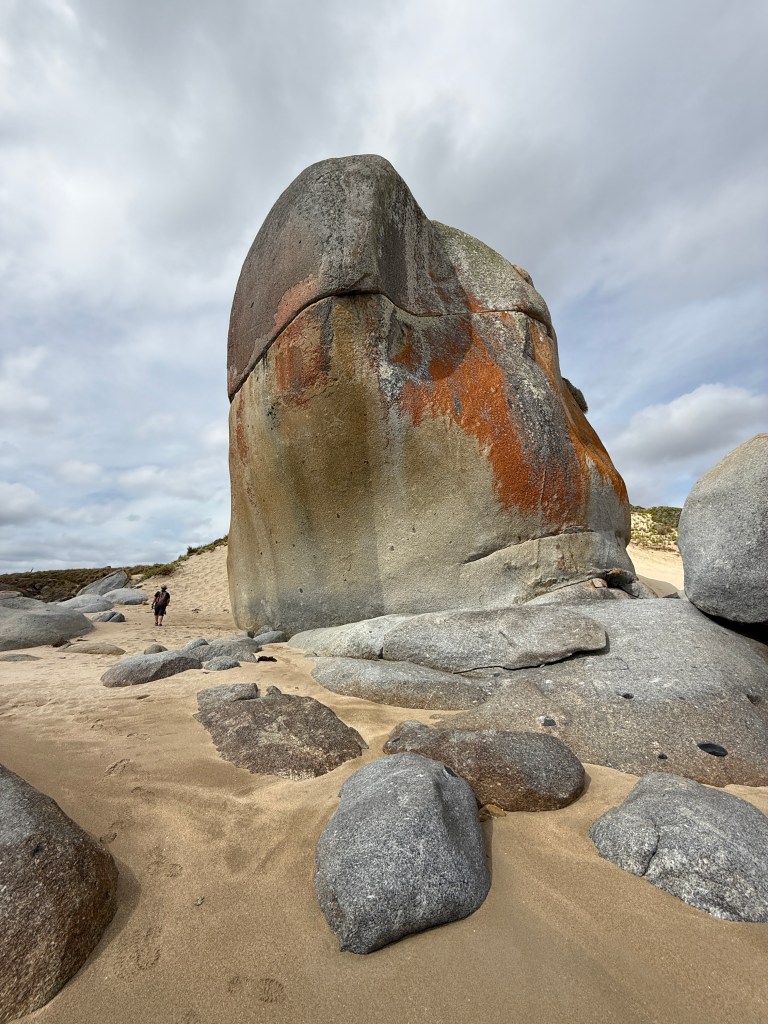
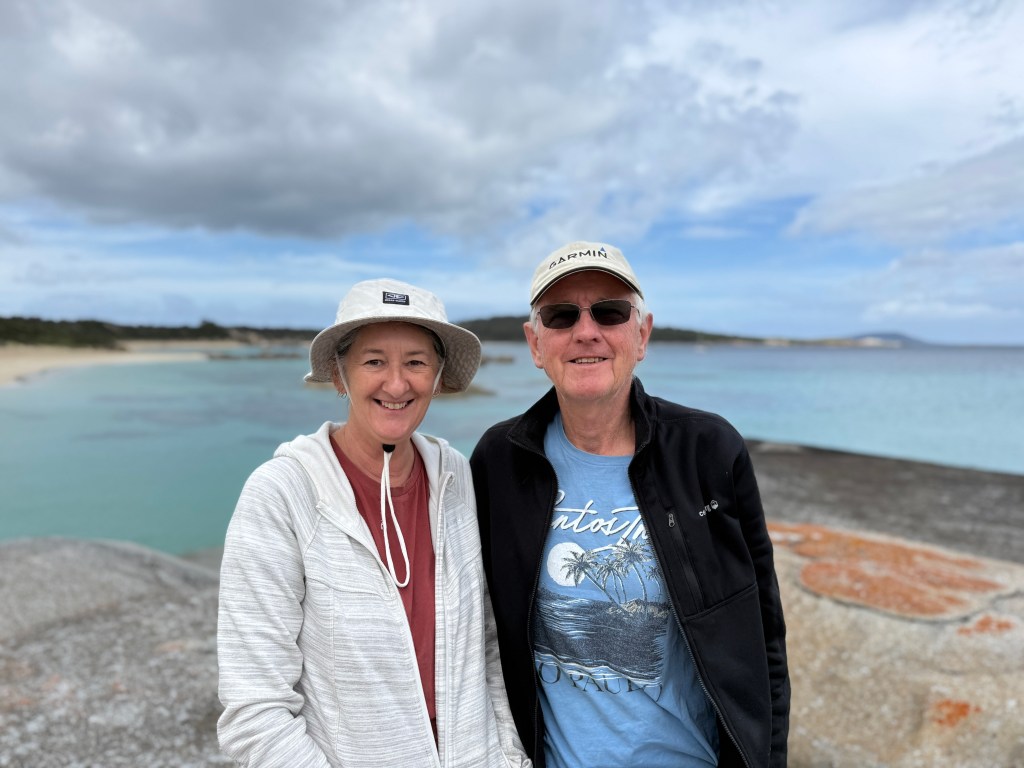
We sadly had to bid adieu to Jim and Angie as we were continuing north, and they had to head back to Launceston. We first met these guys when we were both on the hard, and they kindly leant me a compressor and needle gun, gave me some paint, later gave me a fisherman’s anchor, and were all round generous, lovely people. Hopefully we’ll meet again somewhere soon.
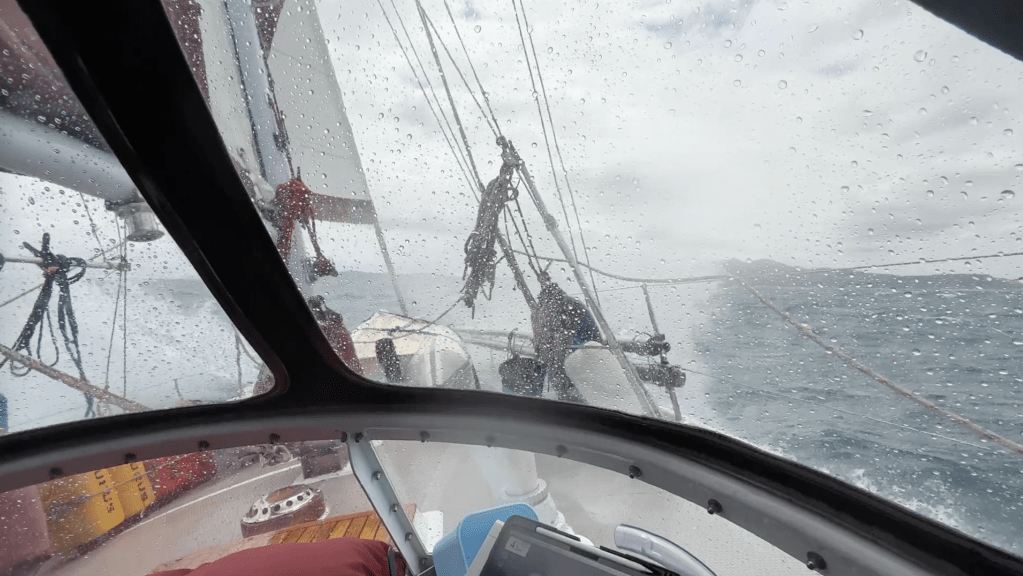
We had expected our sail to Killiecrankie to be fairly short and sweet. But this was one of those times that Tasmania decided to give us a boot up the bum to remind us not to become complacent. We left Allports with about twenty to twenty five knots from astern and had to thread our way carefully through a narrow pass between islands. We then turned round Cape Frankland and thought that we would be protected by the land and be able to motor in. Instead the easterly wind accelerated down the hills and we were suddenly beating into thirty knots. We had to run the engine and motor sail to make headway, and had to sail almost past Killiecrankie to ensure that we would be able to tack into the bay with room to avoid the rocks. It was a pretty unpleasant couple of hours.
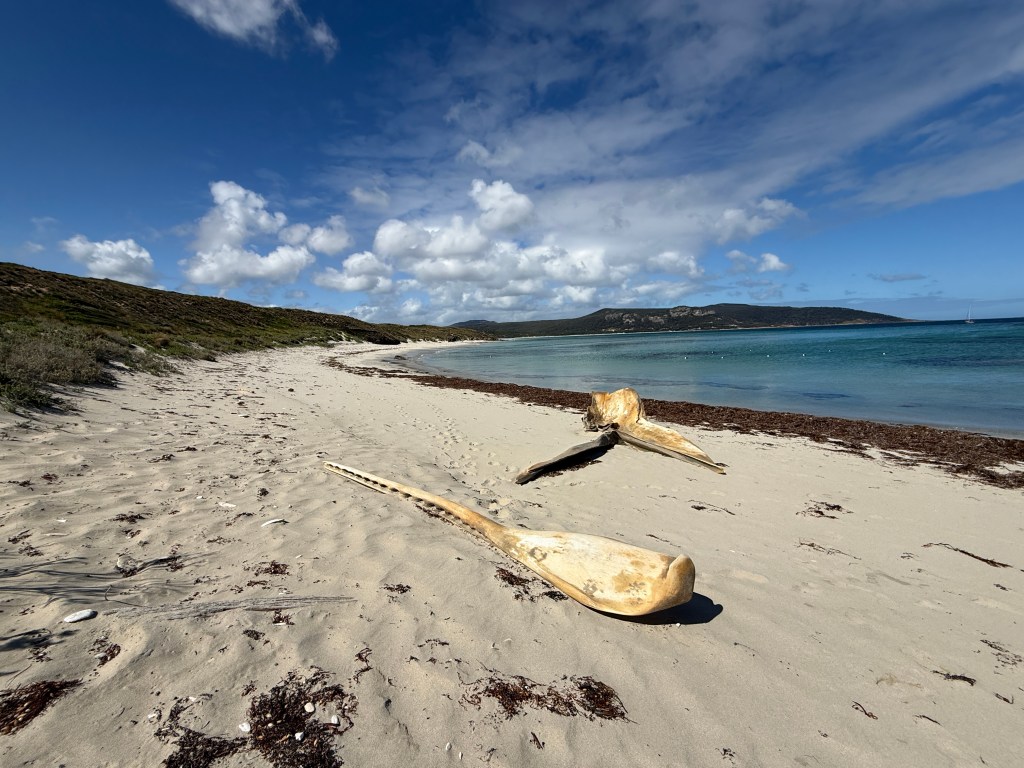
We anchored in the northern part of the bay as there was a slight northern edge to the wind, but found only marginal shelter. It wasn’t until the next day that we could get the dinghy off deck and go for a walk ashore. There, to our surprise, we found a decomposing whale. Apparently a twenty ton sperm whale had washed up a few weeks earlier and had been gradually rotting away on the beach. A local advised us not to go swimming as the whale would serve as burley and attract sharks from miles around..
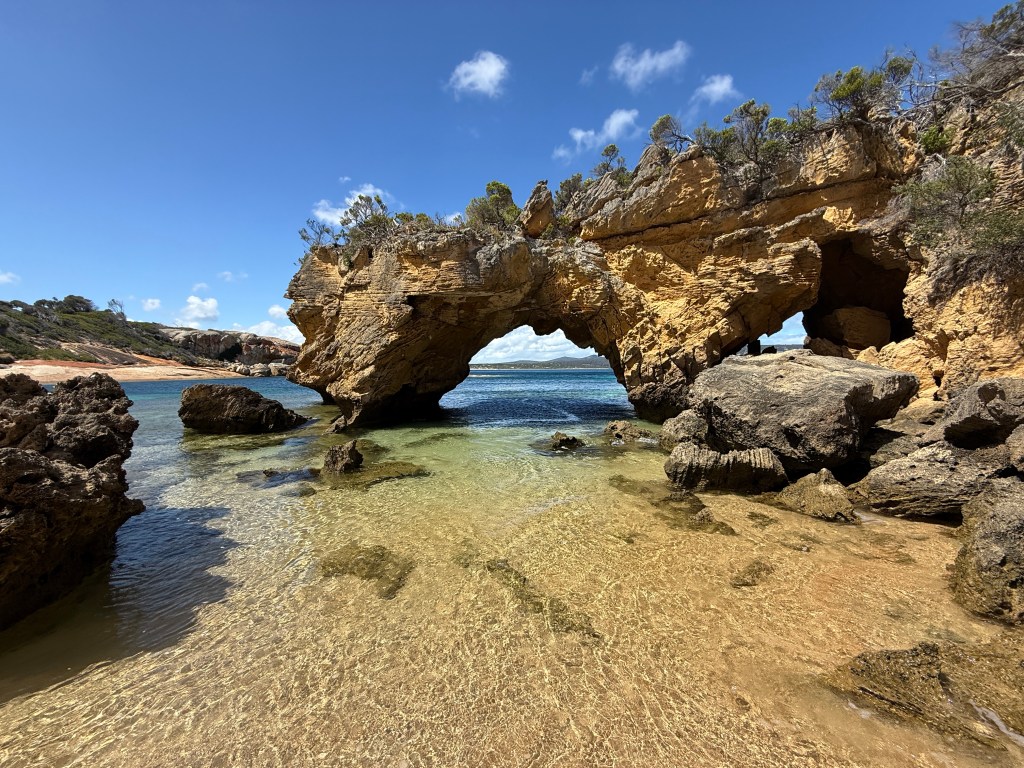
In the end we got so hot walking to Stackys Bight (the local tourist attraction rock formation), and the flies were such a PITA, that we did end up going for a swim. But only in clear and shallow water! Shark attacks have been in the news a lot recently in Australia, with something like five attacks in four days, although centred around Sydney rather than Tasmania. It’s certainly not the way I would choose to go, so we take the advice of locals seriously.
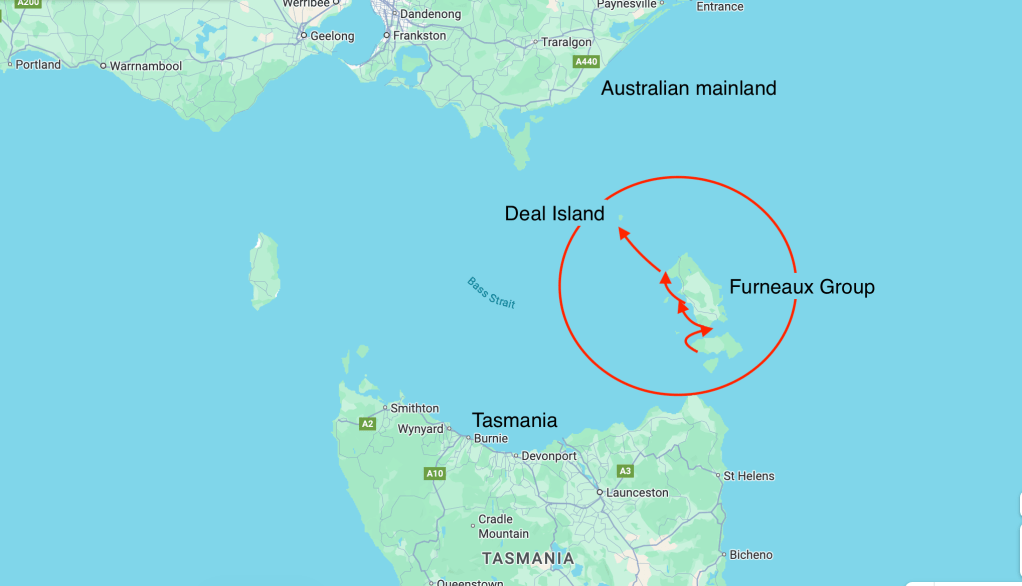
We had headed north to Killiekrankie because there was a weather window that would allow us to get to Deal Island, half way across Bass Strait, followed by a further window a couple of days later that would take us to Lakes Entrance in Victoria.
After our recent hiding we were a little nervous about sailing into Bass Strait, a notorious body of water at the best of times. In the event we had a beam reach for six hours in about twenty five to thirty knots of wind, with a swell of maybe a couple of metres. It was pretty pleasant, though the wind shifted behind us as we approached Deal so we ended up rolling a wee bit (or a good deal?).
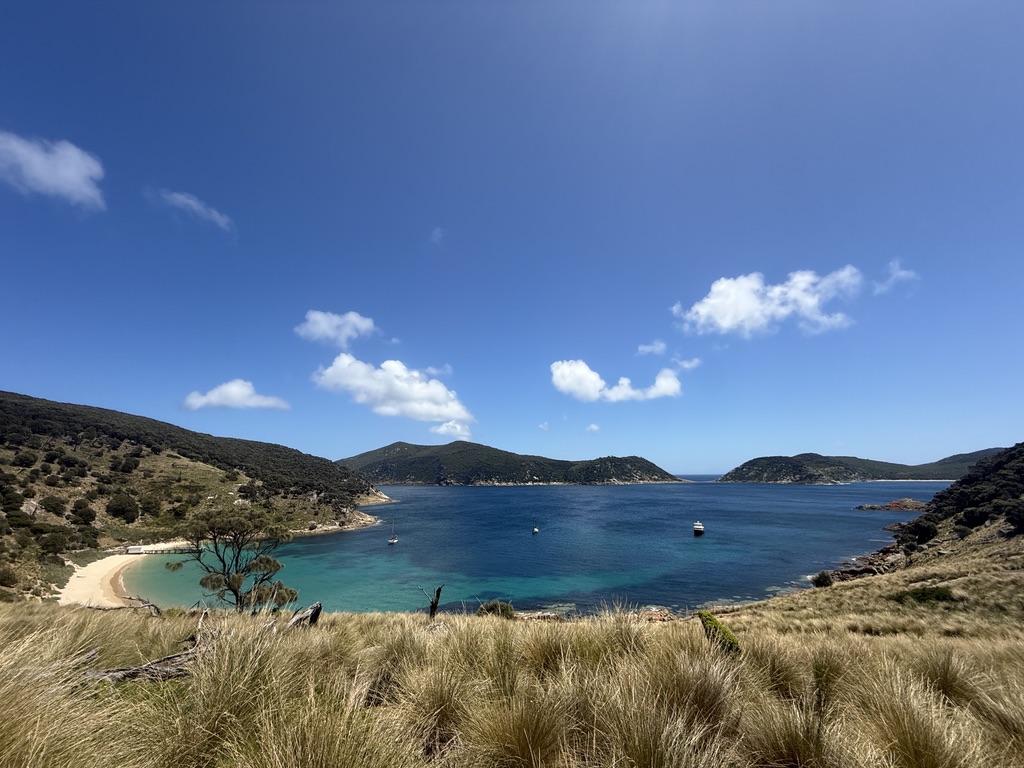
Deal is actually two islands with a passage between them, known as Murrays Passage. Because of the strong currents in Bass Strait, it’s important to ensure that you don’t end up in a wind against tide situation here, which would create dangerous standing waves. As such, you have to work out whether to enter from the north or south. We used the Cruising Yacht Club of Tasmania site (listed above) to make sure we got it right. We had intended to anchor in Garden Cove on the north coast, but I suspected that the easterly winds and northerly swell might curl round the headland and straight into the bay (we later walked to Garden Cove and in similar conditions it was very rolly). We had been watching a large motor launch that had left Flinders at roughly the same time as us on AIS, and they had headed to the south of Deal. We decided that they might have local knowledge and chose to follow them.
We all ended up in the same beautiful anchorage, a place called East Cove, and later met the crew of the launch, called Blue Affinity. But our adventures in Deal, and subsequent crossing of the rest of Bass Strait, will have to wait for next time.
 Sailing Taurus NZ
Leave a comment