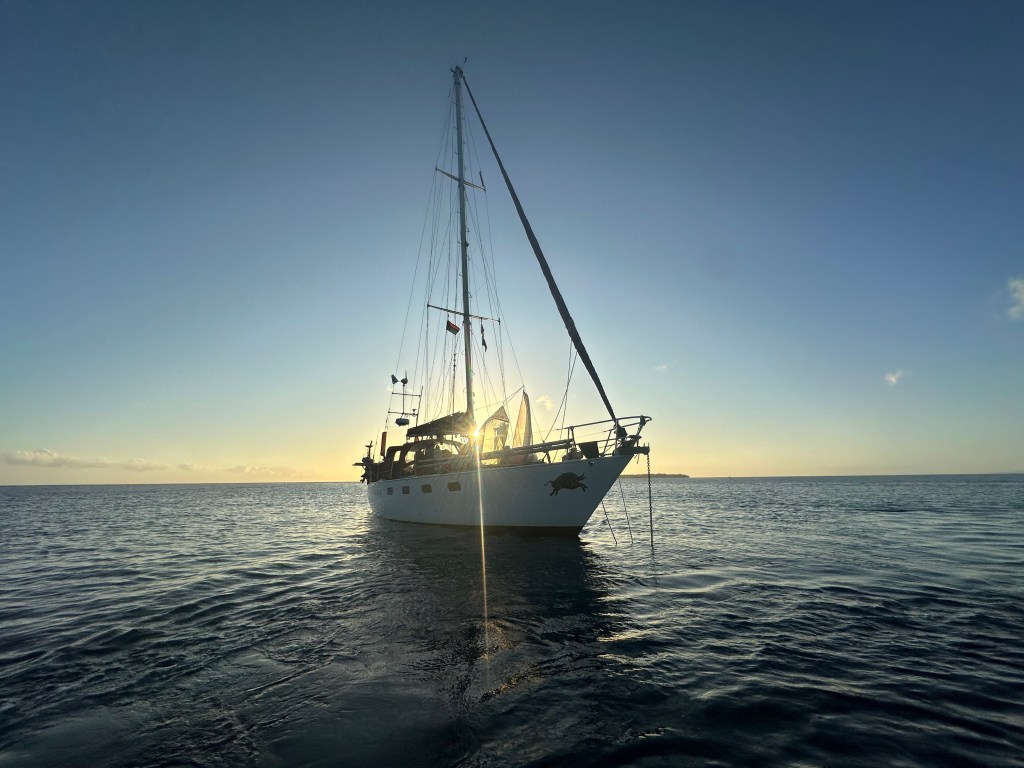
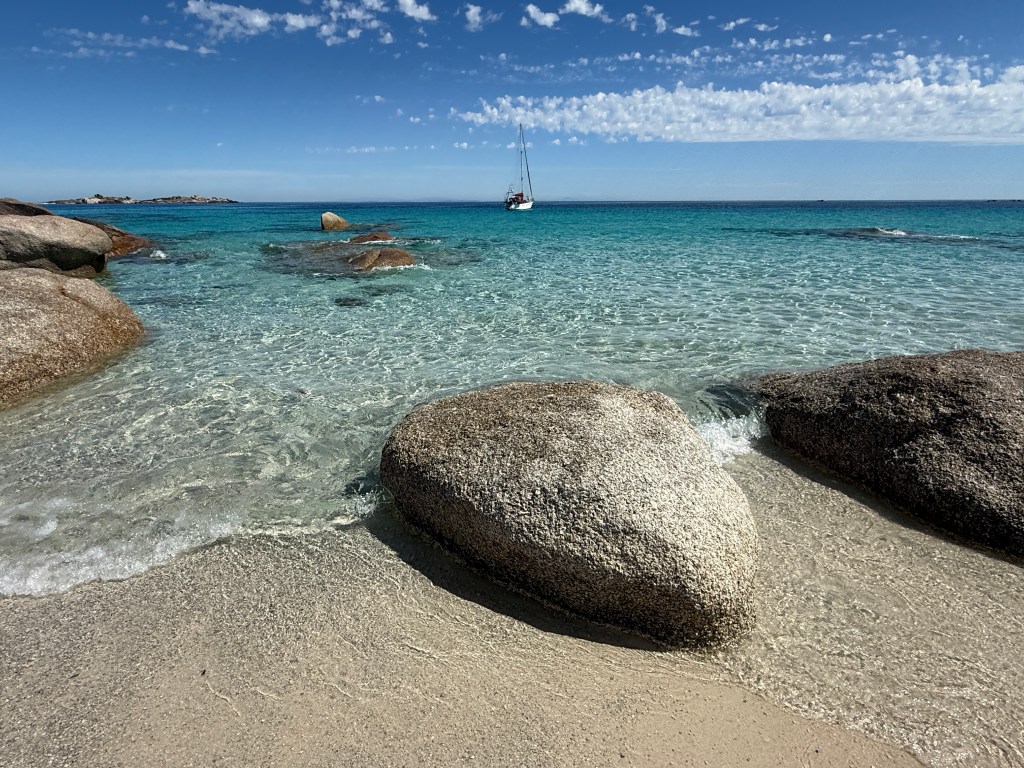
After returning to Taurus at Beauty Point we got stuck into finishing a few projects so that we were ready to leave when a weather window presented.
Amongst the jobs to do were replacing a couple of original winches with self tailing winches, re-bedding the diesel filler cap in the deck, and replacing our inner forestay. Of these the latter was the most interesting and challenging.
We use our inner forestay to fly our hanked on storm jib — ‘hanked on’ meaning that the sail is attached with clips (known as hanks) as opposed to a furling jib (which is stowed by being wrapped around itself and left permanently in situ) which is standard, at least for main jibs, nowadays. We have resisted moving to a second furling sail for a few reasons: at 39 feet we don’t have a lot of deck space for the extra hardware, we don’t need a second jib to be permanently in position, and we like to remove the inner forestay when it’s not in use as it makes tacking and gybing much easier (as the main jib sail doesn’t get caught around it).
However, our existing inner forestay was attached about three quarters of the way up the mast, which demanded that we support the same point with running back stays to prevent the mast being deformed, or pumping, when pressure was applied by the sail. The running back stays are only rigged when the storm jib is used, but they have to remain attached to the mast ready to go all the time, so that most of the time they lie coiled up near the shrouds, adding weight to the rig and getting in the way. The other, and more important, downside of our running back stay system is that when rigged they get in the way of the boom, so that they have to be taken down in order to tack, gybe, or heave to. This all creates extra work on deck when the conditions are poor (thus the storm jib is being utilised) and when being on deck is innately hazardous.
So, after talking to a rigger we ordered a new inner forestay that would attach to the head (top) of the mast and would allow us to do away with the running backstays as the top of the mast is supported by the permanently in place rear stays. We carefully measured the distance with a long tape measure and hoped that we hadn’t stretched the tape or allowed it to sag, so that our A$450 length of stainless steel wire wouldn’t prove to be too short or long, and thus useless! In the end it was slightly long by about a centimetre, but we were able to get around this by drilling a new hole in the attachment point.
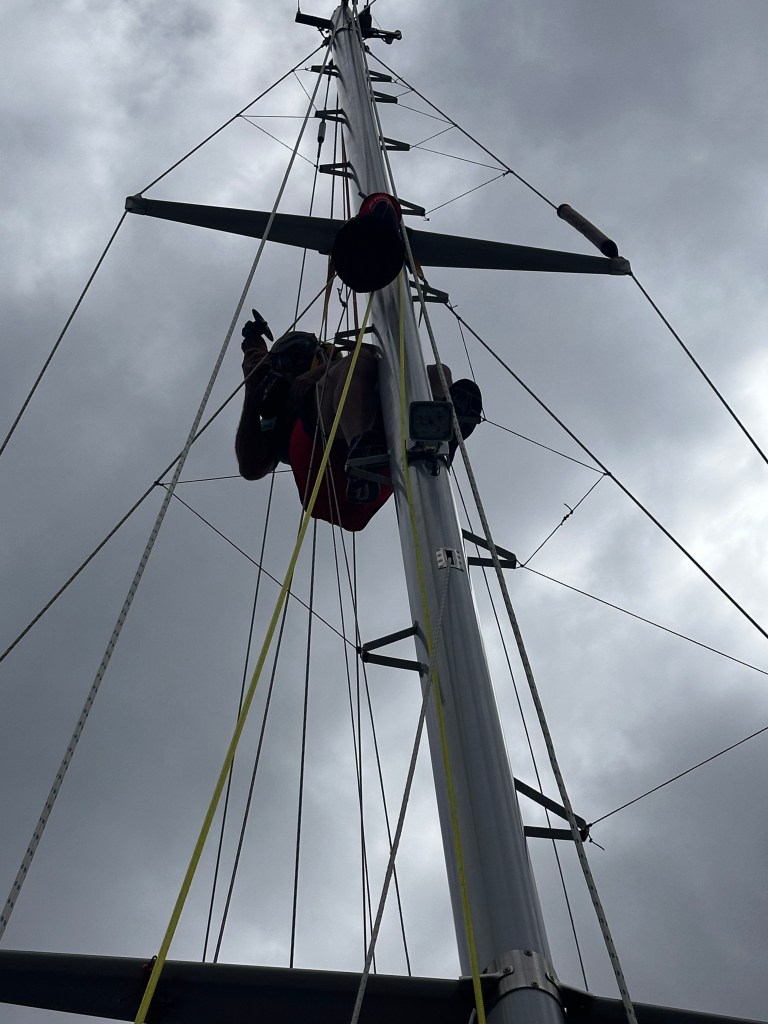
We then turned to removing the running back stays, only to find that the wires had been attached with the fat part of the pin against the mast — meaning the pins couldn’t be withdrawn. Now I could rail against the rigger in Fiji who committed this act of folly, but I have come to realise that the skipper is responsible for his or her boat, and everything that goes on in it or to it. It was my responsibility to check the rigger’s work, for I most assuredly know, after various experiences, that professional qualifications and extortionate fees provide absolutely no guarantee of quality of workmanship. Removing the pins, which would have taken a few seconds to sort out whilst the mast was down, now required me to climb the mast and cut the pins with an angle grinder. Obviously, a tool capable of cutting through 10mms of stainless steel would have little trouble cutting through a 12mm piece of rope, like that which I was hanging off some ten metres above the deck. It was one of those jobs most people would prefer to avoid, and one that certainly focuses the mind.
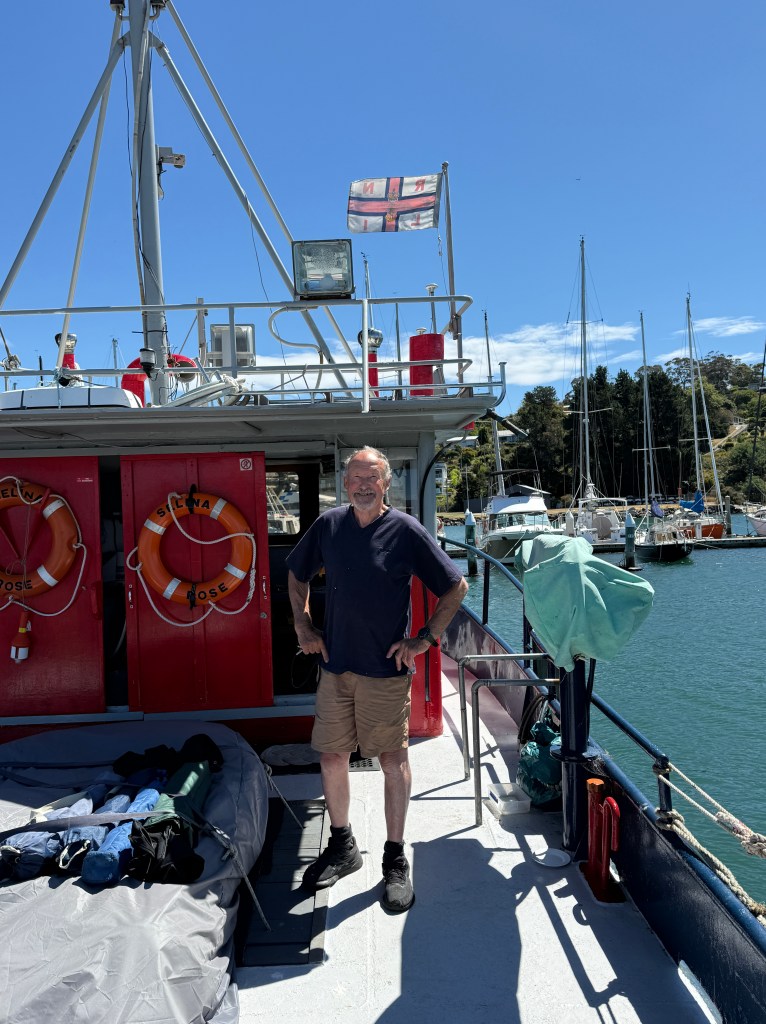
With most of the jobs taken care of, Cara and I celebrated New Years Eve with one of the many characters at Beauty Point Marina, a gent called Rowlie Walker, and his wife Gail. Rowlie used to captain ships that resupplied rigs in the north of Australia. With marine qualifications coming out of his yazoo, he now works as a delivery skipper, and runs a rescue service inspired by the Royal National Lifeboat Institution. I had a chance to jump aboard Rowlie’s boat as a deck hand for a rescue, though he didn’t need the help, but fortunately (if disappointingly) the skipper had managed to self-rescue himself before we arrived.
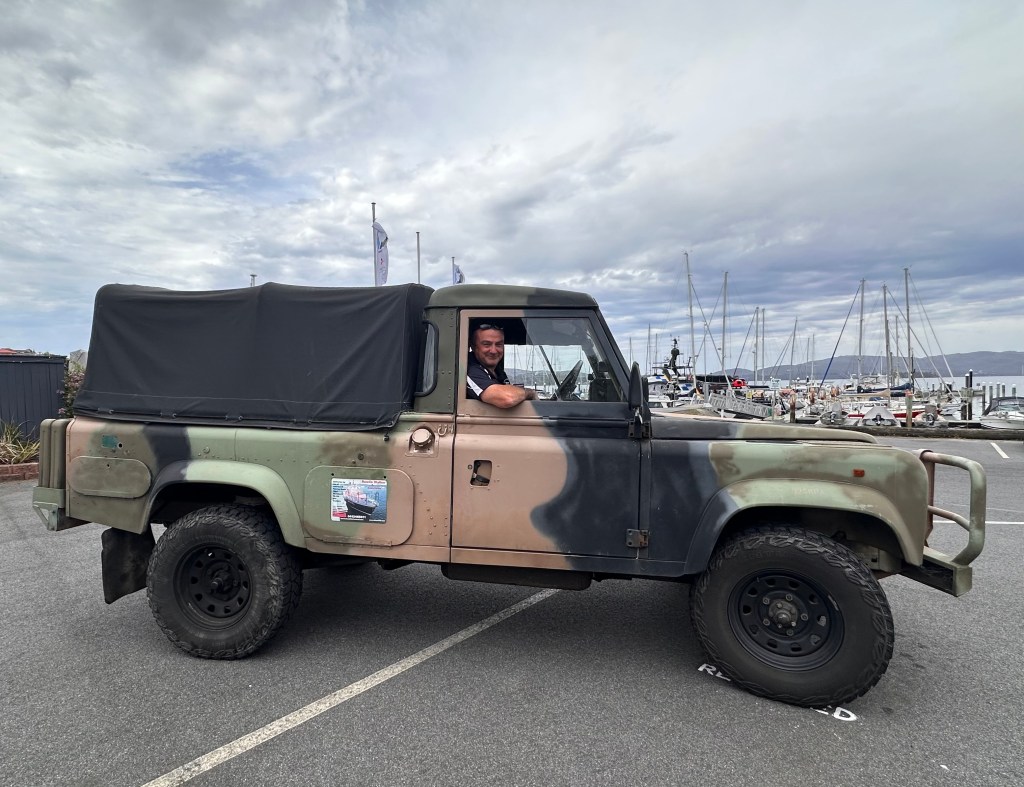
Rowlie also leant us his car a couple of times so that we could go to the supermarket; his car being a 110 ex-Australian Army Land Rover. I passed my driving test in an army Land Rover way back in the mists of time, so it was quite nostalgic and great fun to have a chance to drive another one. I’d forgotten how much they wander, the weight of the steering, and the need to keep them rolling if possible, but it all came flooding back. Like riding a bike you might say!
After about a fortnight our window to cross to the Furneaux Group appeared. We left Beauty Point fairly early in the morning to make the most of an outgoing tide and headed east. In the end we had spent about five months in the greater Launceston area. We’d had the pleasure to meet some very kind and generous people, (Cara had) made some money, and made a few improvements to Taurus, now it was time to go.
Our destination for the night was Waterhouse Island, which we reached after a fast ten hour sail. The anchorage there was a little rocky and a little rolly, but we slept well and were on our way again first thing in the morning.

We had to motor across Banks Strait as there was no wind, and that afternoon dropped the hook on the western side of Preservation Island. The island has an interesting history. On the 10th of November 1796 a cargo ship called the Sydney Cove, left Calcutta loaded with rum and other supplies destined for sale in Sydney. Taking on water, she was grounded before she foundered on the island. The stores were taken ashore, and the rum put out of reach of the sailors on an adjacent island that they named, appropriately, Rum Island.

A party of seventeen men attempted to sail to Sydney for help but were wrecked on the coast and had to walk over 600 kilometres to safety. Only three men survived the trip. Two schooners were subsequently sent to rescue the thirty men that had been left behind on Preservation. One of these ships was wrecked on its return voyage with the loss of all hands, including eight men from the Sydney Cove.

The Master of the Sydney Cove subsequently reported his belief, based on currents and wave patterns, that there was a channel between Australia and Tasmania, linking the southern Indian Ocean and Pacific Ocean. This suspicion was later confirmed by George Bass and Matthew Flinders in 1798. At Flinders request the passage was called Bass Strait; its discovery meant that ships no longer had to travel around Tasmania to reach Sydney, but could take a shorter and safer route.

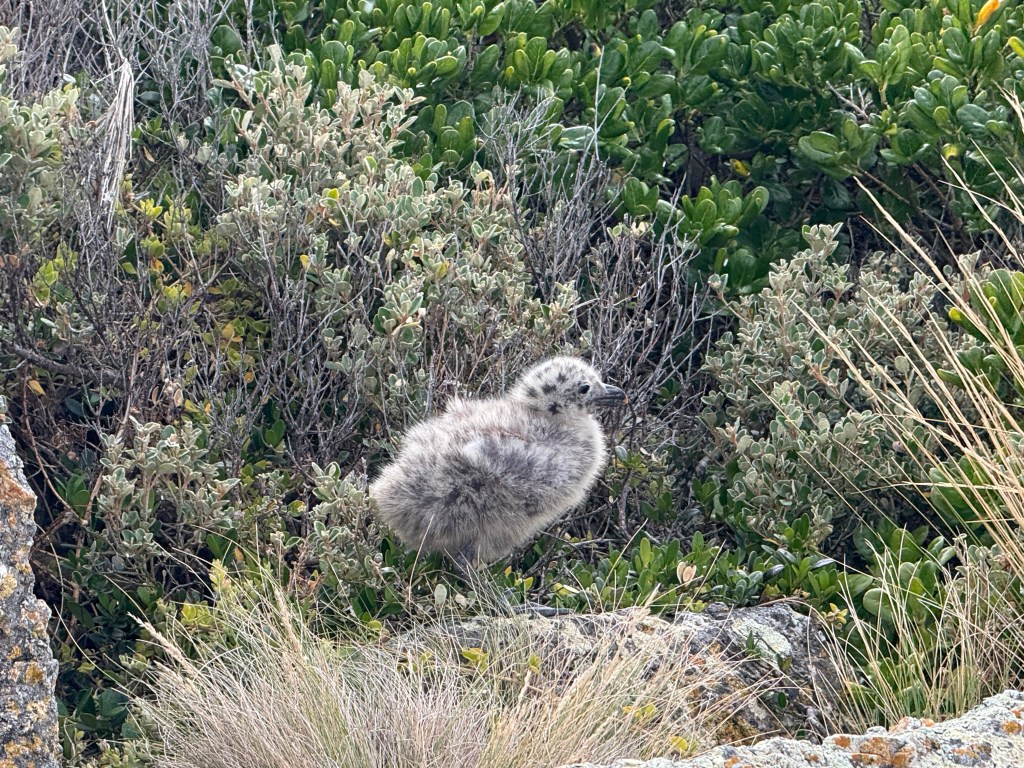
We enjoyed a mini-heatwave whilst at Preservation, and an entirely deserted anchorage. However, an impending westerly gale meant that we couldn’t linger for too long. We had been offered the use of a protected mooring in Lady Barron, but further adventures will have to wait for the next instalment!

 Sailing Taurus NZ
Leave a comment