
our last blog post ended with Taurus caught on a foot bridge as we attempted to enter the Seaport Marina. Access to the berth we had been given required that we make a ninety degree turn parallel to the footbridge to enter the fairway, and a second ninety degree turn immediately afterwards. Taurus‘ turning circle being what it is, we had to hug the bridge to have the maximum amount of room to turn and have a chance of getting into the berth. Boats are not like cars when it comes to making three point turns, and trying to manoeuvre a full keel boat in a confined, dark, and unknown space is an experience best avoided if possible.

All was going smoothly. Cara was on the wheel and I was at the bow to ‘help’ with directions. Alas, I thought we were going a bit fast, so I yelled to Cara to slow down. What I didn’t know was that she had already placed the engine in neutral, so in order to slow down she put us into reverse. Propellors in reverse can create a phenomenon known as ‘prop walk.’ This essentially means that the stern steps out (to left or right depending on which way the propellor turns). As we were hugging the bridge this ‘step’ was enough to put us alongside the bridge which caused us to catch our rigging on a steel protuberance that greatly resembled and perfectly functioned as a cleat. The rig bent alarmingly and I had visions of the mast coming down and fouling the bridge — an embarrassing spot on the Tasmanian news seemed to beckon! Happily, however, we had timed our arrival for slack tide, so we were able to push ourselves free without too much effort and gain our berth. It was a stressful end to a long day, and an even longer few days that had seen us race around most of Tasmania’s west and north coast. .

The Seaport Marina is nice enough, cheap, and run by friendly people. It has, however, three serious downsides: the tricky entrance, the hike to the toilets, and the mud. The Launceston end of the Tamar River is gradually silting up, so that at low tide a good deal of the marina is simply a quagmire. Our berth, one of the closest to the river, had about a metre of free water at low tide, so the lower half of the keel sat in a muddy hole. This has the potential to cause a major issue. As the boat cyclically rests in the muck, mud can be forced further and further into the through holes which provide water for things such as engine cooling. If blocked this can obviously cause the engine to overheat.
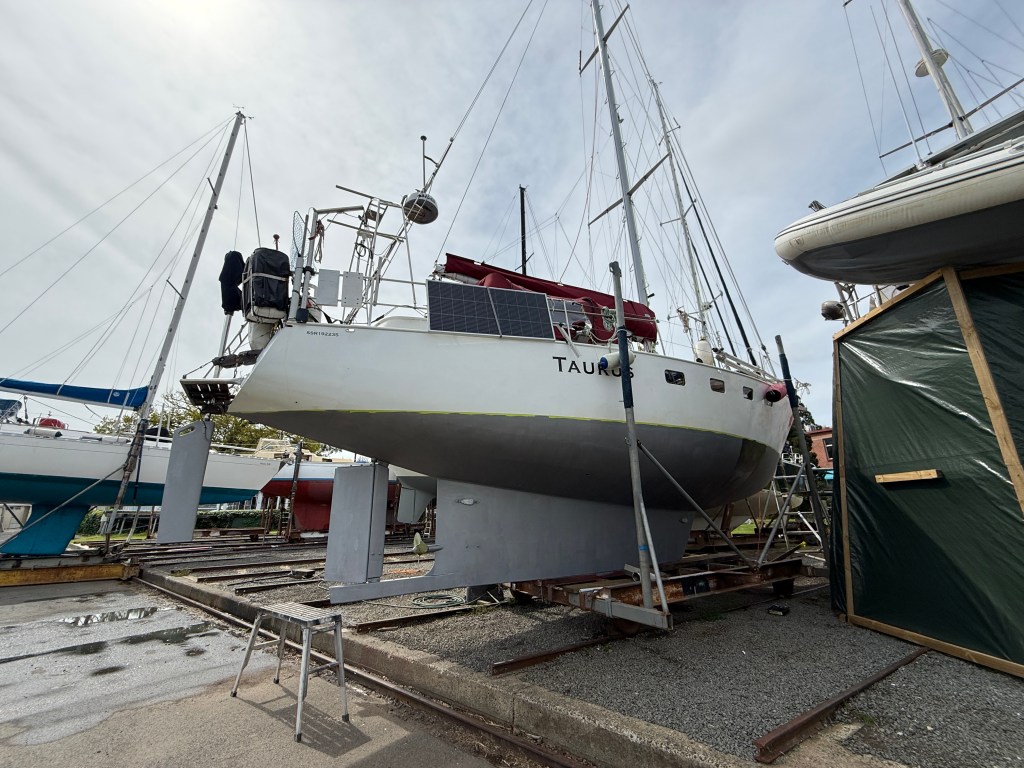
Of the various options locally available (moorings, and other berths outside of the marina) none apparently have sufficient depth to let a decent sized keeler float all tide round. We had been speaking to the Tamar Yacht Club about using their hard standing facilities, and as the cost of being on the hard was the same as being in the marina, and as there was no-one else waiting to use the cradle earmarked for us, we decided to escape the mud by sitting on the hard for the duration of our stay.
The club’s facilities are much the same as we are used to in Dunedin, with steel cradles lowered on tracks into the water and the boat driven into them at high tide and secured. As the tide drops the yacht comes to rest on the cradle and the whole shebang is pulled onto land by winch.

The bosun of the yard is, a self-effacing kind of guy called Pete. Pete started work at his family’s boat building business at the age of ten, and went on to run his own engineering business for thirty five odd years. As you might imagine, Pete is a mine of knowledge, but without knowing him you won’t know how generous he is with his time and skills. On a couple of occasions he even managed to squeeze himself into Taurus’ engine compartment, something I wouldn’t have thought possible if I hadn’t seen it with my own eyes! Getting him out again proved that miracles do happen!
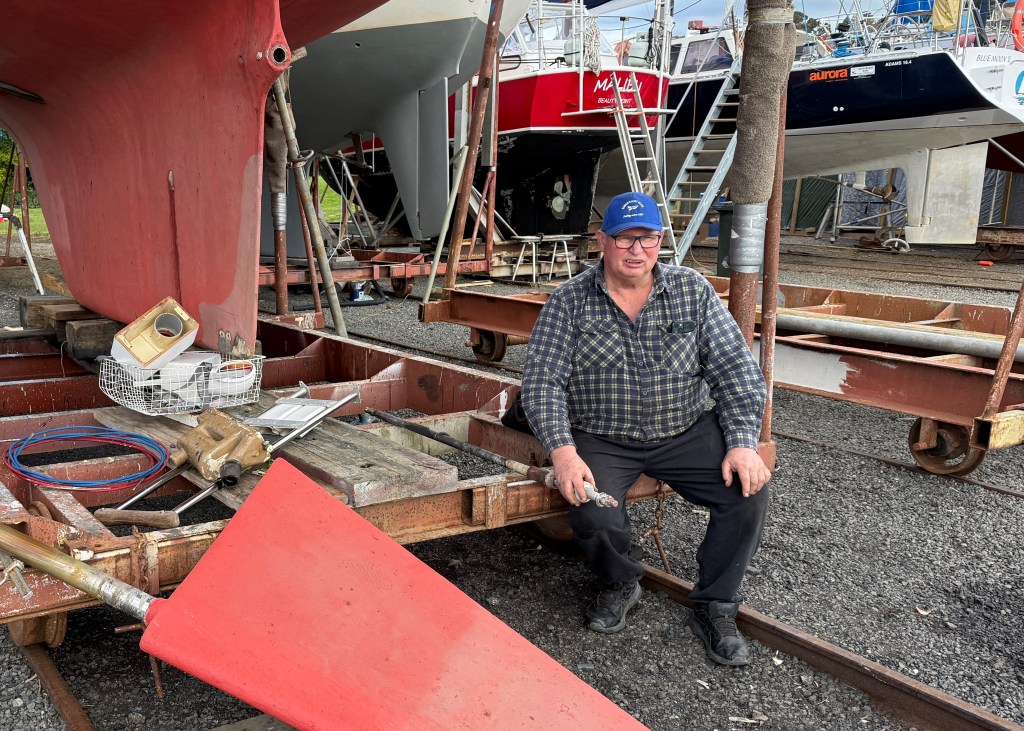
The yard, unsurprisingly. was full of boats, and populated by the interesting characters that own them. Our initial neighbour was a Swiss German chap, a solo sailor with a You Tube Channel who had run his yacht onto rocks entering the Tamar. We were keen to talk to him, but the experience seemed to have dented his sense of humour. He determinedly refused to engage with us, or indeed anyone else. He was so taciturn that after a stay of some months many of the other boat owners thought he spoke no English (his You Tube channel is provided in German and English versions). It seems odd to set out to travel the world and yet deliberately forego opportunities to interact with people, but each to their own I guess.
The Swiss chap left shortly after, and his cradle was taken by a guy called Ken Gourlay, who holds the Australian speed record for a solo circumnavigation. Ken was helping his son, Tristan, get his boat ready for an intended challenge to beat his record. At time of writing Tristan is a few days into his challenge and going great guns. You can follow his journey on Facebook at https://www.facebook.com/profile.php?id=61581996164631
Another interesting guy was Michael, whose boat, Serida, had sunk at the Beauty Point Marina, also run by the Tamar Yacht Club but some five or six hours up river. The fibre glass keel of his boat had badly cracked causing the boat to sink. According to the gossip mill, the stays holding his mast up had been overtightened, which had driven it through the hull. Later, however, the keel was cut from the boat in order to transport it to the tip. It transpired that ferrous metal had been used for ballast, and, as it slowly rusted over many years, it vastly expanded and may simply have burst the keel apart from the inside out.
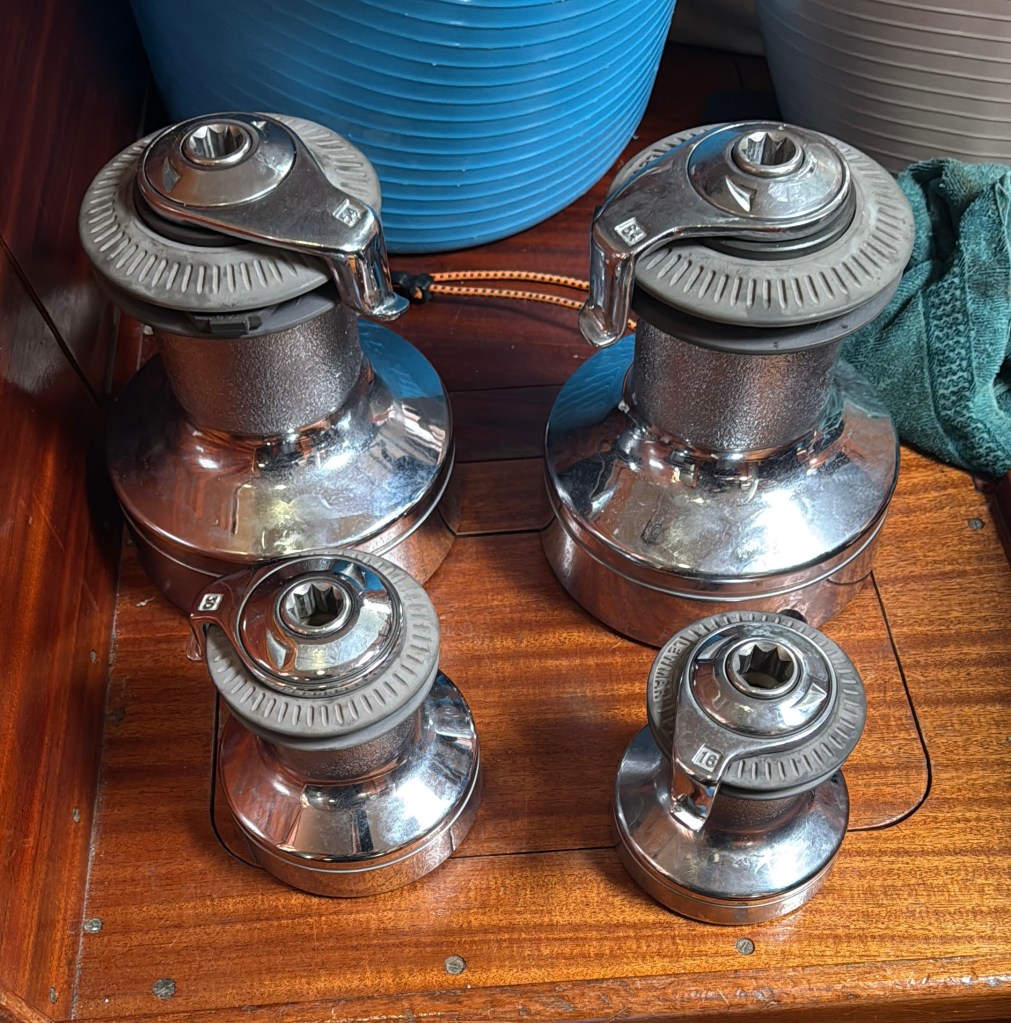
Once Serida had been condemned by the insurance company, Mike was allowed to sell off what parts he could. The potential for cheap goodies was too good to ignore, and we ended up buying a set of Lewmar winches and all manner of other things that we don’t really have room for. Later the poor old girl became fair game for stripping by whoever had the time and energy to take what they wanted. Cara and I spent a day or two taking out hinges, catches, blocks and such like. The older bronze and stainless steel items are often nicer than the modern stuff (which is uber expensive) and it would be a terrible sin to see it thrown in a hole in the ground.

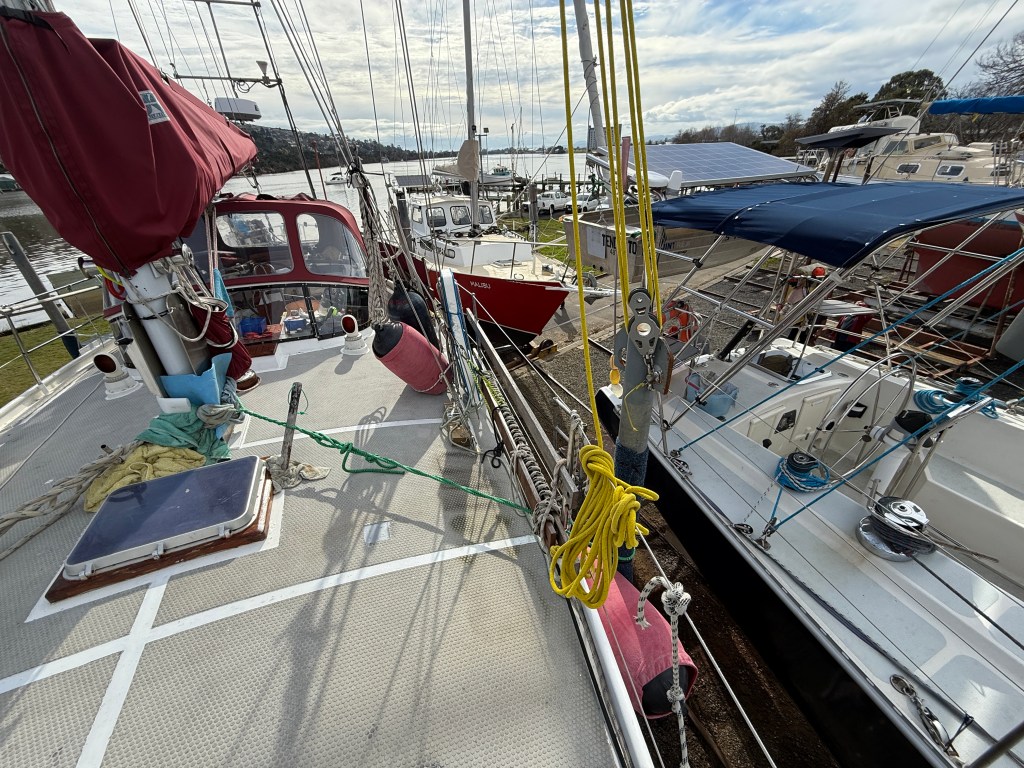
As usual, the strangers in the yard quickly became a community, friends who would bend over backwards to give a hand. Jim and Angela, A & E nurses and the owners of Malibu, the red steel boat you can see in the background of the above photo, leant us a compressor and needle gun, and even gave us some surplus paint. However, it wasn’t just the sailing community who went above and beyond. Gregg, Cara’s manager at the Launceston General Hospital, leant us a car for the duration of our stay, an act of generosity that saved us hundreds if not thousands of dollars. It’s often easy to be cynical of people, but since we have been travelling we have never received anything but kindness from strangers. Perhaps Jean Jacques Rousseau was right when he argued that people are inherently good and kind — although he did die alone, driven mad by the belief that people were conspiring against him… hmmm.

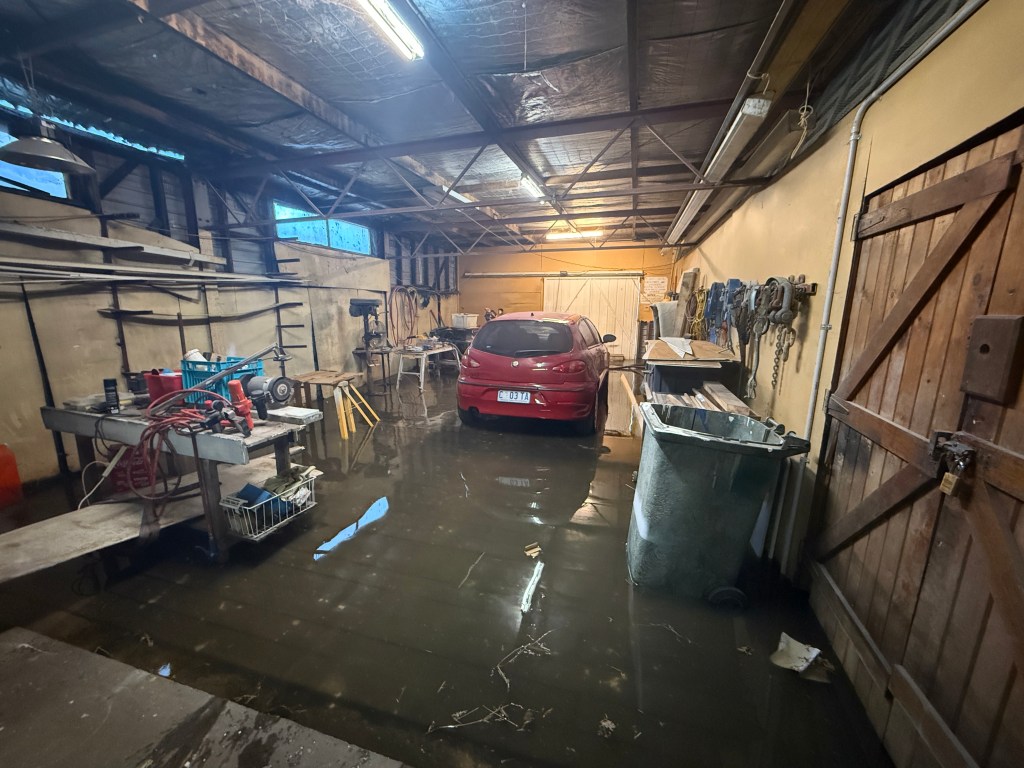
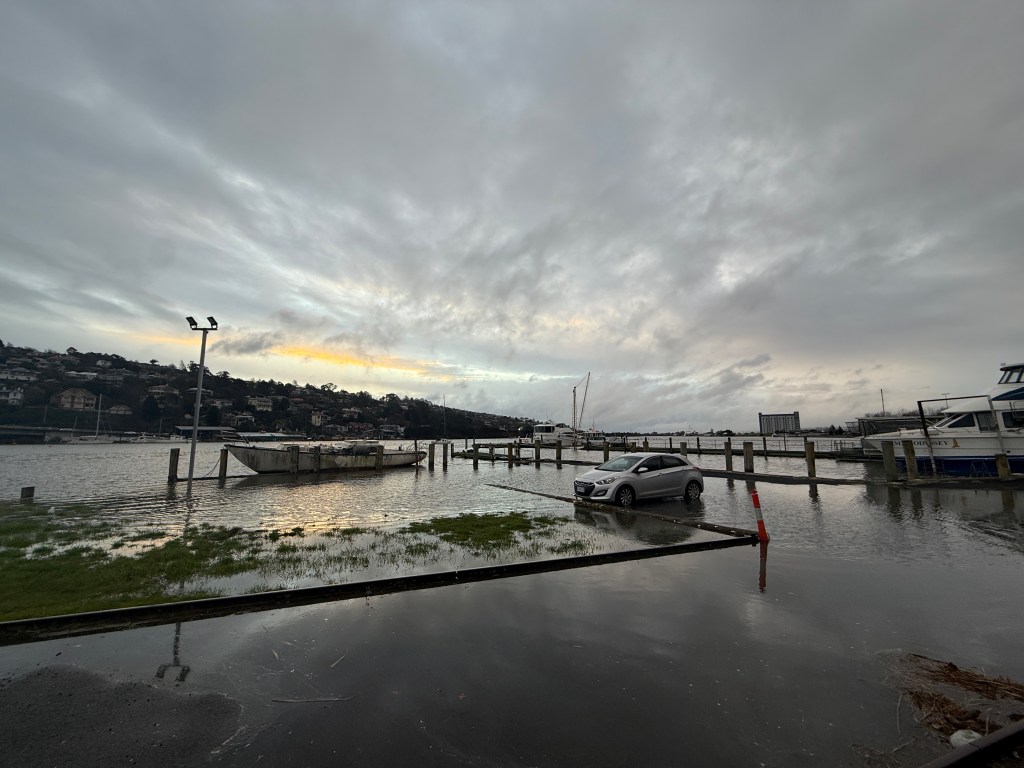
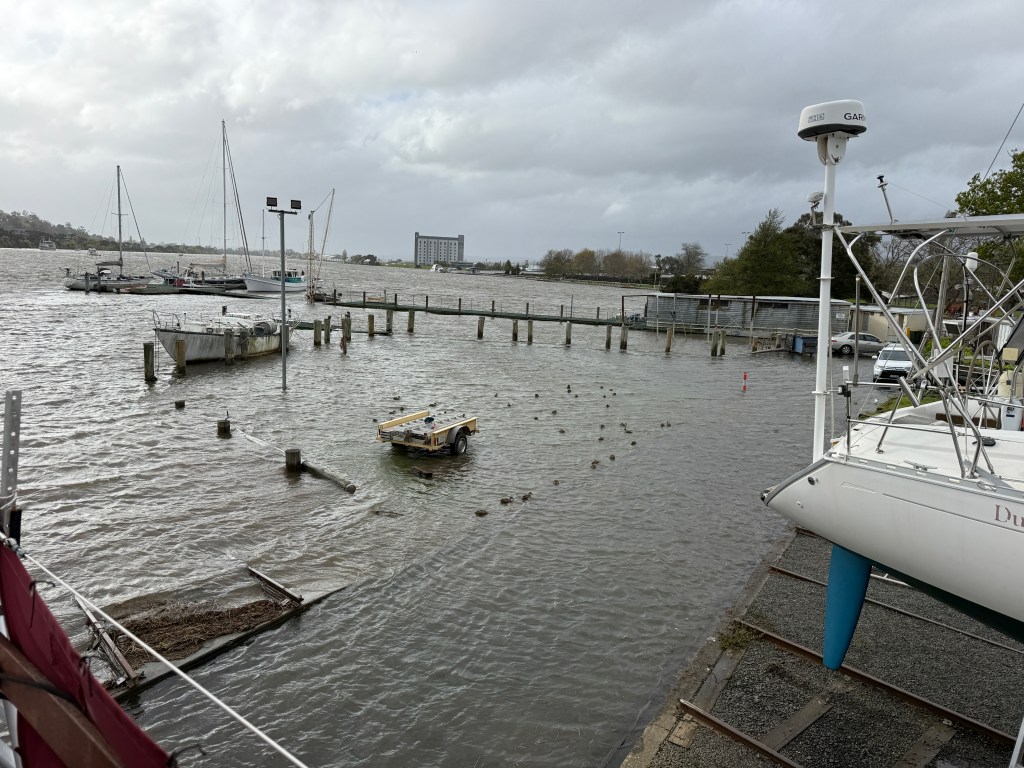
One of the more unusual aspects of the Tamar Yacht Club’s hard standing is its tendency to transform from land to lake. I was working in the shed on the pillar drill one evening when I realised my feet were getting wet. The tide was rising through the floor boards and kept going until it was several inches above the floor. Another evening I had to take off my shoes and socks to get to the car in the carpark which had become a large pond — complete with swans and ducks. After this experience I tried to remember to keep my gum boots handy!

With Taurus on a cradle it was time to get to work. We had a long list of jobs to do, and a couple of months to get them all done. As is the way with boat jobs, you start one thing and it leads to something else, and something else, and something else, and suddenly the list of jobs you started with is a distant memory. I, for example, wanted to re-varnish the galley whilst we were living off the boat (Cara’s job came with a free apartment), but after several months it sadly looks as shabby as ever. Other jobs kept cropping up and had to take priority.
One day we started emptying the bilge and noticed a line of paint that had lifted at the bottom of the keel where the plates join. This line of lifted paint had led to some minor rust which led all the way to the anchor locker. To gain access to repaint we had to remove the anchor chain, remove the bespoke anchor chain box (happily designed to be removed in several pieces) and the anchor locking lining. Then, whilst working in this tiny steel box we noticed that the deck below the windlass was badly corroded. The beauty of steel boats is that it is relatively easy to cut out corrosion and replace the old material with new steel. The welding part can take just an hour or so, but the headache is cleaning up the mess and repainting. At a minimum we normally aim for two coats of antirust, two coats of primer, and as many topcoats as required for a decent aesthetic finish. As each coat requires a day to dry, the painting can easily take a week — or more if you don’t have decent weather.
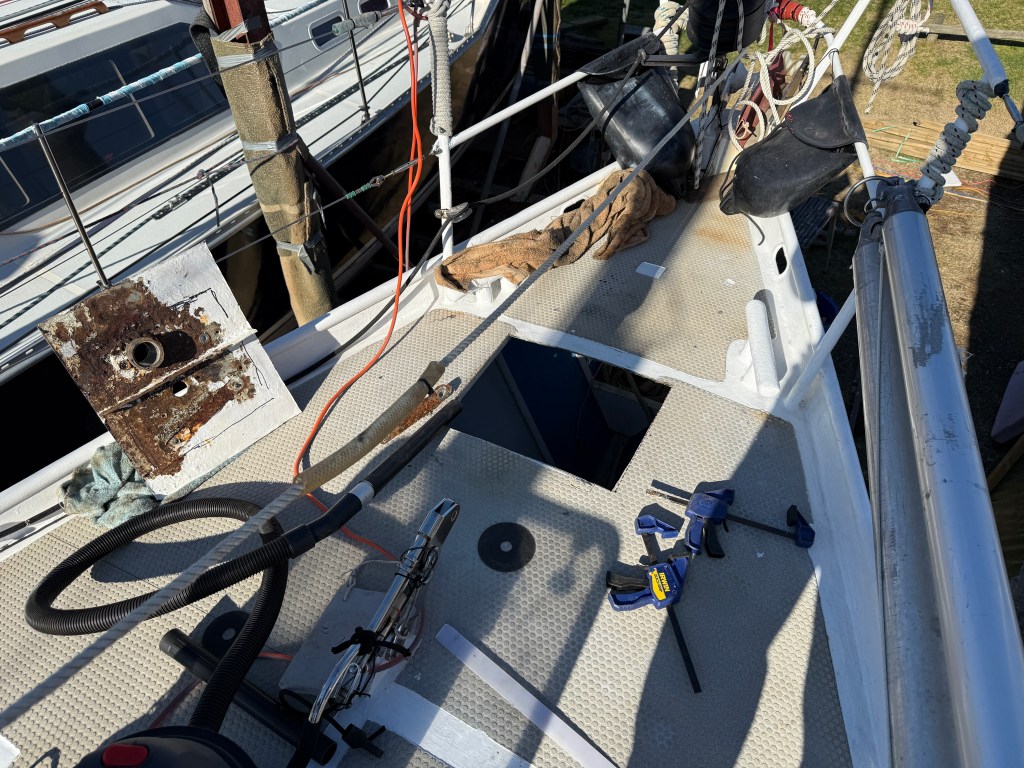

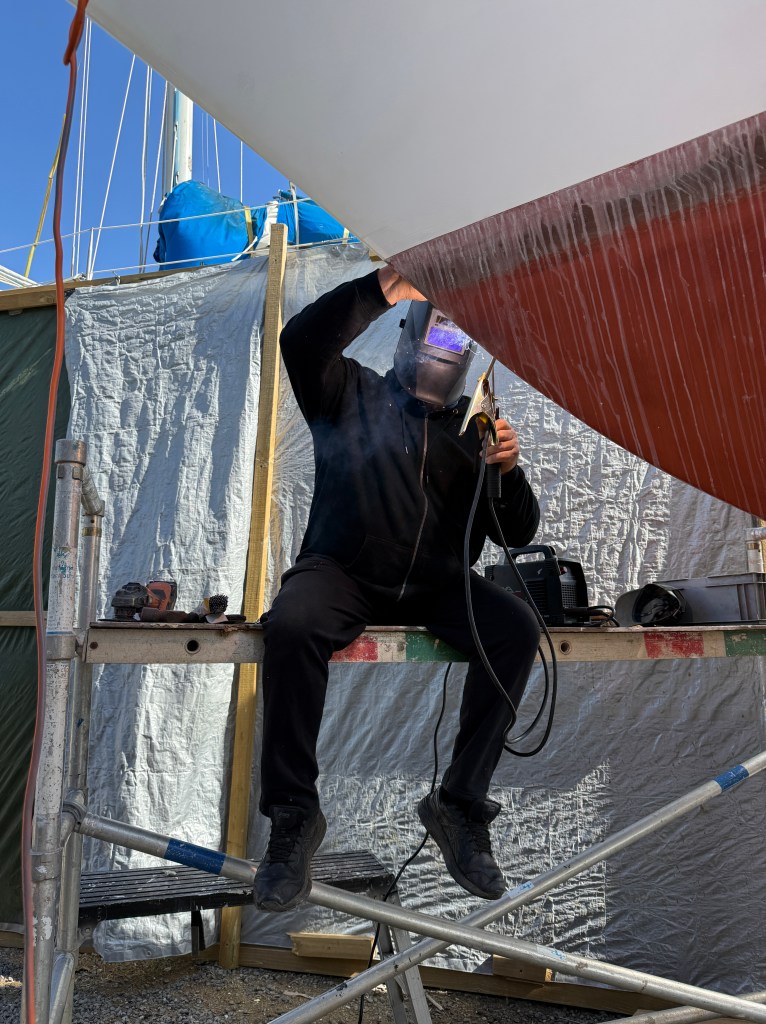
We also noticed another small area of corrosion in the bottom of the anchor locker (we were warned about this during our pre-purchase survey) so cut out that out too. It made sense to do the work whilst the anchor locker was accessible and we had access to Pete, a very experienced welder who charged a reasonable price, as well as all manner of paint suppliers, engineers, and so on. Within a few days, all the rust in the anchor locker was replaced with 6mm of brand new cortan steel, and I proceeded to smother it in epoxy paint. Naturally, the process wasn’t entirely straightforward, and weeks of gale force winds and squalls whistling straight down the Tamar River and into the exposed boat yard became a bit of a bore. On one memorable day the wind was blowing over forty knots and I turned up to find the three metre aluminium ladder that we used to get from ground level to the deck trying to take off. As it was tied on at the top (to prevent us falling backwards on the way up) it was flying up and down Taurus’ hull in the gusts. Apparently the weather was exceptional, everyone was sick of it, but finally the painting was done.


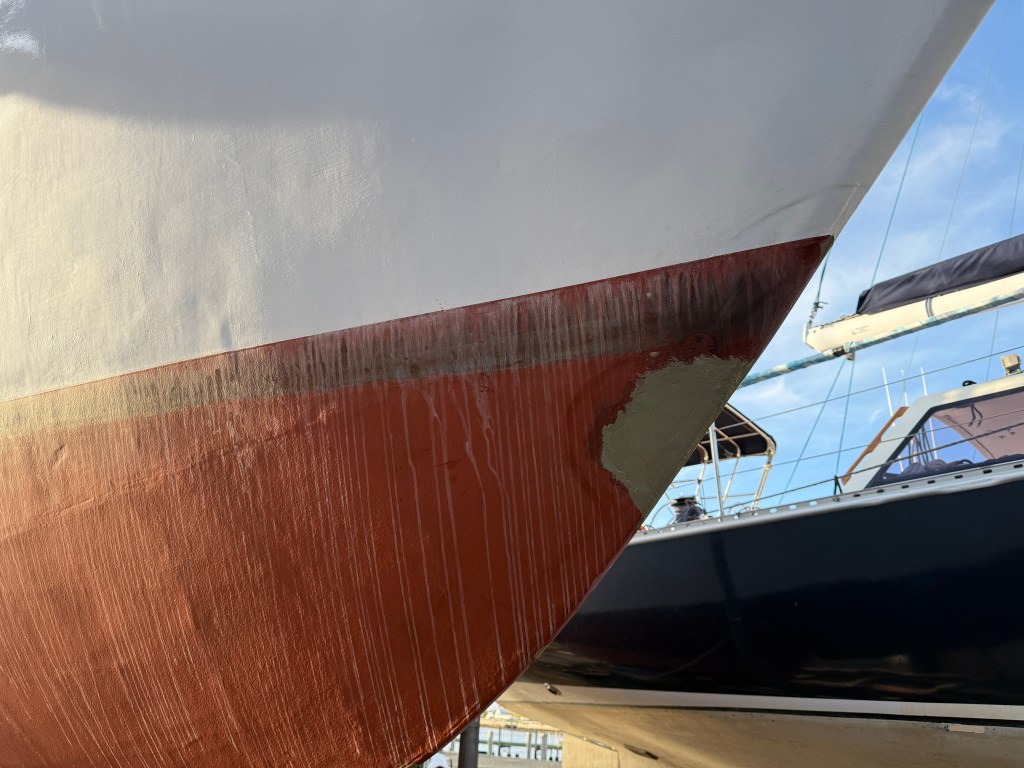
Another job undertaken was replacing the spare sureseal seal on the prop shaft (the previous spare having been used to stop the shaft leaking in Recherche Bay) This proved to be a real PITA of a job, due to poor access and the refusal of the universal joint to release from the shaft. After a three day battle with it I eventually found a clamp in an engineer’s scrap bin that was a perfect fit, and by smacking the clamp with a large hammer I was able to jar the joint free. I withdrew the shaft, put everything back together, and then realised I had forgotten to replace the sureseal cap. It all had to come apart again. How I laughed! The bright side was it came apart far more easily second time around.
We replaced the throttle and gear cables, and then thought that the steering cables might as well be replaced too. Should a movie ever be made on this decision it might be called “A Job Too Far.” It was another swine of a project, but one that needed to be done. We found that the sprocket that the steering chain runs on (which is then joined at either end to a cable) was made of plastic, so it had of course worn quite badly over its years or even decades of service. A couple of times when sailing under pressure the wheel had alarmingly slipped — now we knew why. The local engineers made short work of machining a a new metal sprocket to fit the shaft, and we could move on to trying to remove the steering quadrant. Now this particular lump of metal and I have ‘history.’ I had spent about a week trying to remove it when we first bought the boat so that I could paint beneath it. It sits on a tapered stainless steel shaft and had refused to budge despite copious amounts of lubricant, heat, increasingly large hammers, jacks, and anything else I imagined might make the difference. Eventually, wiser heads told me to leave it alone before I broke something, and worry about it when I actually needed to remove it. So, I wasn’t looking forward to renewing my acquaintance with this bloody minded inanimate object. However, with some advice from Pete, the judicious use of a gas torch, and a big hammer it popped apart in less than an hour. I could barely believe it.
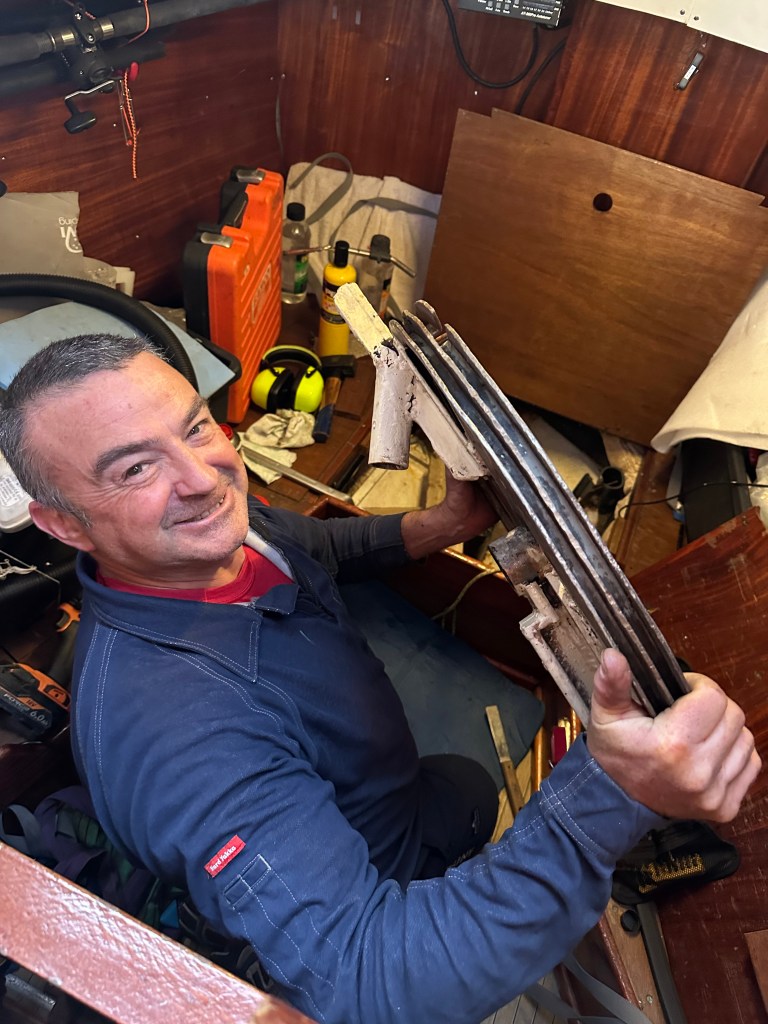
With the quadrant removed it was a simple matter to rig a new chain onto the cables and run them through the boat. As luck had it, Cara had a day off when I was running the cables, little people are good for small spaces.
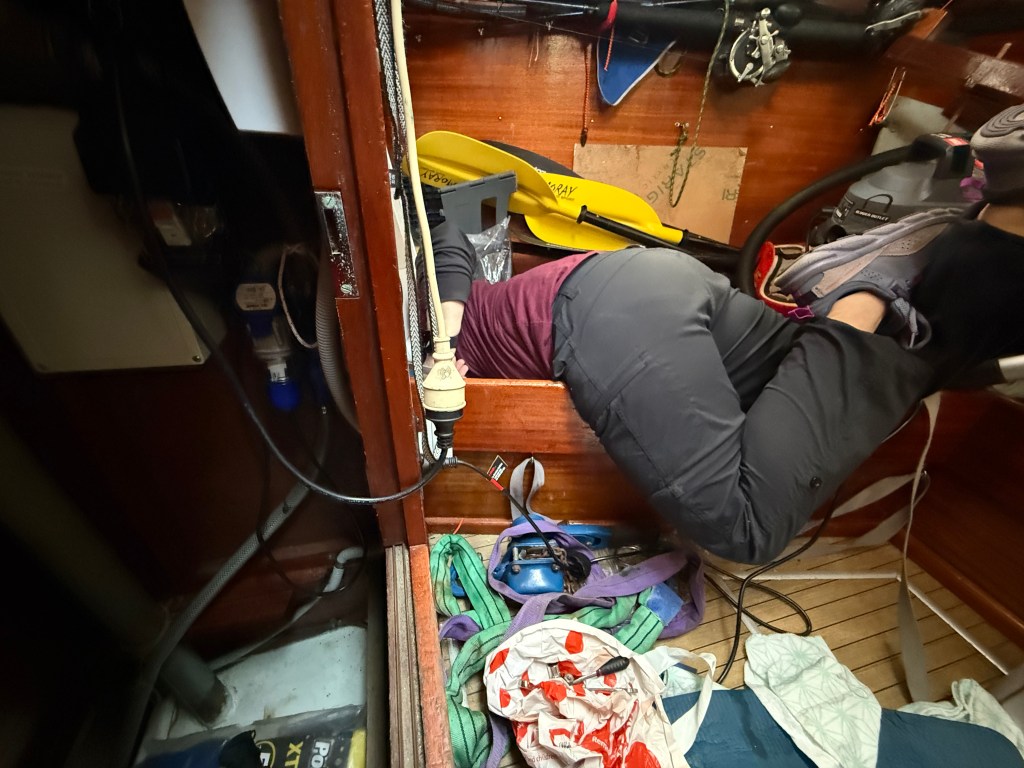
There are various euphemisms associated with working on boats that seek to capture the sheer bloody awkwardness of most boat projects. ‘Boat yoga’ is heard a lot, or the saying that ‘if you can see it you can’t reach it, and if you can reach it it’s only by being upside down and with one hand.’ Boat builders seem to delight in making jobs more difficult than they need to be for future owners. One gem is putting bolts into holes from which they can’t later be withdrawn. When faced with roadblocks like this you can either keep pulling the boat apart or go medieval — we opted for the bolt croppers.
Other jobs we tackled included removing and rebedding the two deck hatches (as well as replacing their acrylic ‘glass’), rewiring the windlass, adding several new electronic goodies that allow us to better monitor boat systems, repairing the dodger, adding a solar arch (taken from Serida) renewing the antifoul, cutting and polishing the topsides of the hull, servicing the engine and (hopefully) fixing a minor, intermittent oil leak, and so on and so forth. We also had a local rigger check the rig after our brush with the local infrastructure. Happily it passed inspection and as an added bonus the chap suggested a different lay out for our inner fore stay. This will allow us to do away with our running back stays, a way of strengthening the middle of the mast when under storm jib (which pulls from mid-mast), but which prevent us tacking, jibing, or heaving to without removing them first, which isn’t always easy in a big sea. We’re still waiting on the new stay to arrive, but fingers crossed it works as promised. So, with everything going on at once it was a busy time. Our apartment quickly became a secondary workshop complete with varnish station and winch strip down area, and resembled a crappy chandlery full of second hand boat bits and a charming bouquet of thinners.


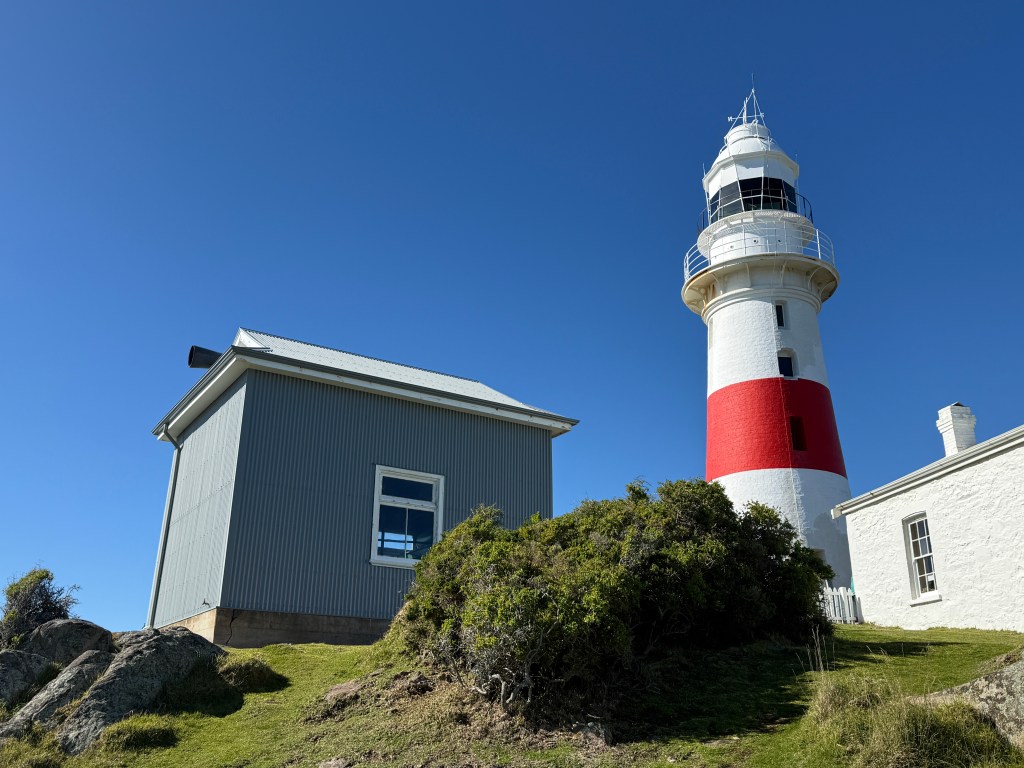
We did manage to take the odd day off. One of our best day trips was to the Low Head Lighthouse on a Sunday when they fire up the fog horn. After a long and interesting chat with the volunteers who run the beast we learnt that this the only operational ‘G’ type diaphone in the world. Who doesn’t love steam, brass, and loud noise?

According to the free leaflet, “The diaphone consists of three parts. The outer casing and two sections making up the piston. The driving and external parts of the piston are machined with annular slots and as the air passes through it is chopped 180 times per second to create the characteristic ‘groan-grunt’ sound.”
For those eager to experience the ‘groan-grunt’ click on the following link: https://youtu.be/HmC4PiGH6hY (remember to turn your volume up loud for a realistic effect!)
Eventually, Cara’s contract ran out, and it was time to finish up the boat yard jobs and get Taurus back into the water. Rather than stick around in the mud (hoho), we headed straight back up the Tamar for a few hours to the Beauty Point Marina. We had previously stayed at the marina a couple of years ago after crossing the Tasman Sea with our friends Dave and Jackie in their Hanse 370e, Hansel. It was nice to return in our own boat.
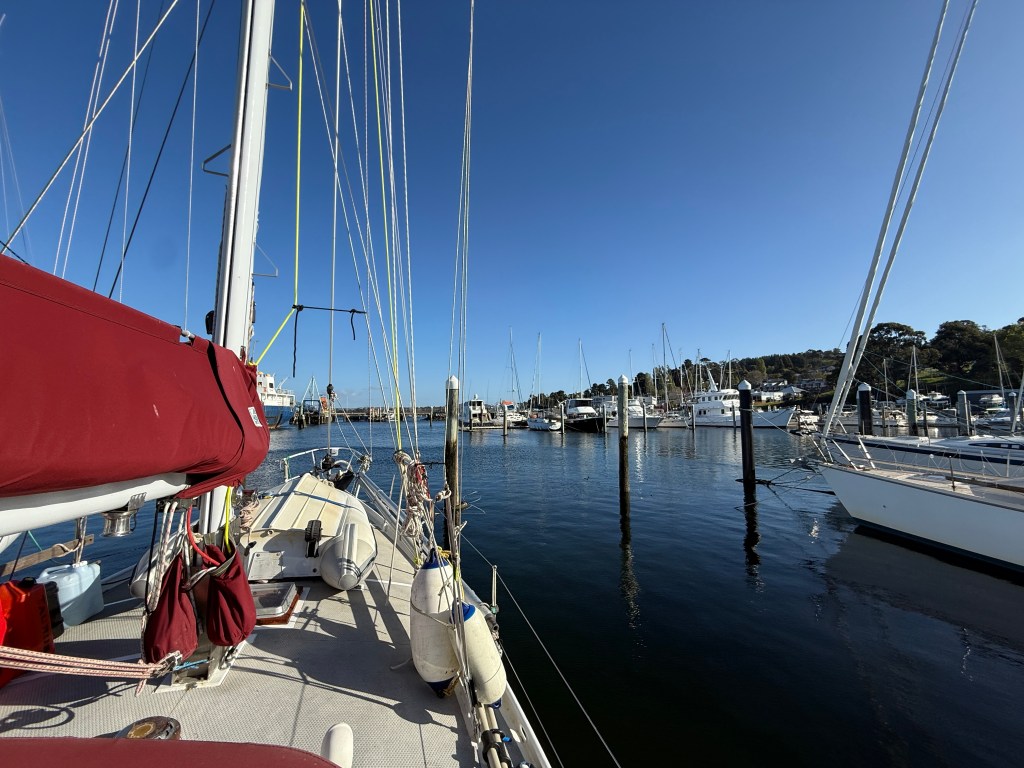

Luckily, we had time to finish up a few last jobs at the marina while we waited for a weather window to sail to Flinders Island across Banks Strait. Thursday, in two days time, is looking good. We don’t have a great deal of time up our sleeves to explore as we plan to visit the Gold Coast for my daughter, Abi’s, graduation, before flying to New Zealand for Christmas. After so long working on the boat we’re looking forward to actually sailing again. But, that having been said, I’m mindful that after fiddling with so many systems this will be a bit of a shake down cruise. Hopefully nothing important fails, but if so we’ll cross that bridge when we come to it, or smash into it — we’re getting good at that!
 Sailing Taurus NZ
Leave a comment