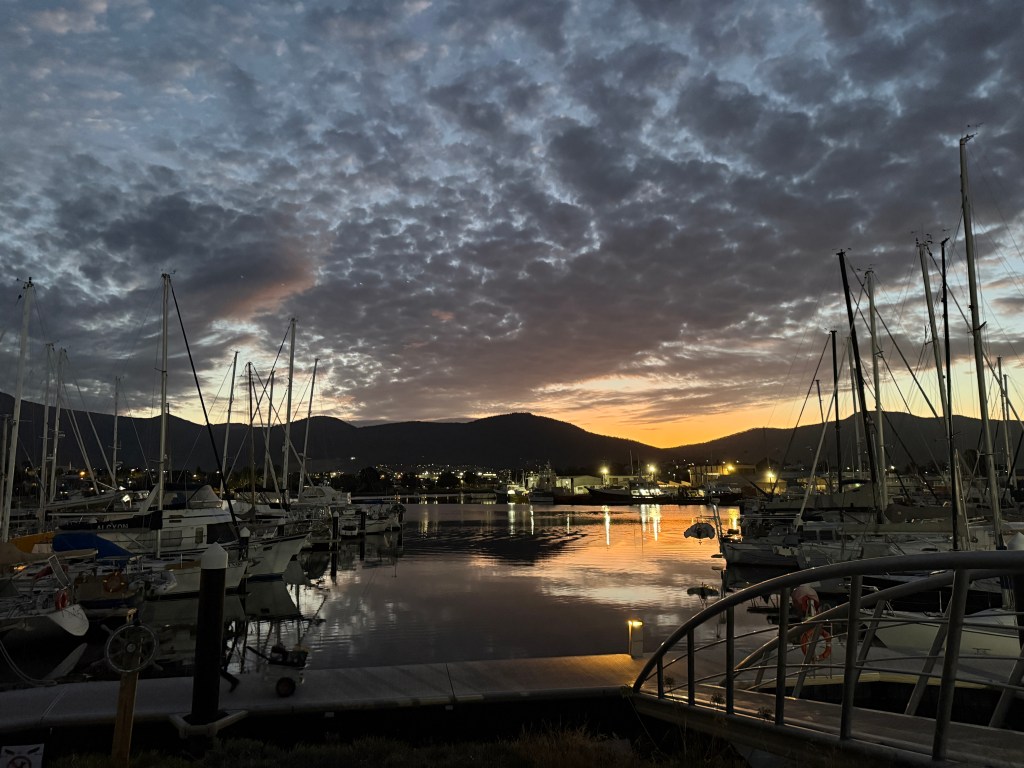
The incredible sailing in Tasmania, and innumerable bays and anchorages, naturally means that sailing is a popular pastime. This, in turn, means that there are a number of marinas. An incomplete list of those in Hobart includes Bellerive, Derwent, Kings Pier, Margate, Lindisfarne, Oyster Cove, Royal Yacht Club of Tasmania, and Prince of Wales Bay. Following the difficult experience I had living on anchor for a month in Bundaberg, when Cara headed back to New Zealand last time, I was prepared to spend a bit of money if it meant I could get off the boat easily and have access to such trivialities as food, toilets, and showers. The variety of options made the choice a bit tricky, but, as all seemed to offer more or less the same facilities, we took the obvious course and chose the cheapest: The Prince of Wales Bay Marina.
For once, the path of frugality didn’t end up biting us in the bottom, and staying at the Prince of Wales has been a great experience. But I get ahead of myself…
Leaving the free Sullivans Cove berth in downtown Hobart we sailed up the Derwent River, passing under the iconic Tasman Bridge. When it opened on 29 March 1965, this bridge was the longest pre-stressed concrete bridge in Australia, with a total length of almost 1.5 kilometres. Today, some 73,000 vehicles cross the bridge daily, making it the highest volume road section in Tasmania.

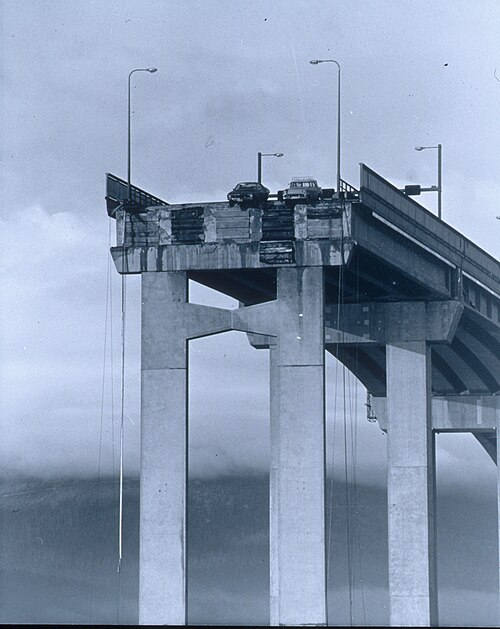
At 60 metres high, the bridge appears almost unnecessarily tall and ‘humped’ (when driving over it seems strangely steep). Another notable thing is that the piers are irregularly spaced. This irregularity is due to a terrible accident that took place in 1975. On a quiet Sunday evening in January the bridge was struck by the SS Lake Illawarra, a bulk ore carrier with a cargo of 10,000 tonnes of zinc concentrate. The collision caused two piers and three sections of concrete decking, totalling 127 metres, to collapse. The vessel sank almost immediately, drowning seven crew members who were trapped below deck. Five more people died, the occupants of four cars which plummeted from the bridge into the river. The disaster split the city in half, forcing commuters living on the eastern shore to drive an extra 25 kilometres to reach the CBD via the next bridge to the north. It took two and half years for the collapsed bridge to re-open.
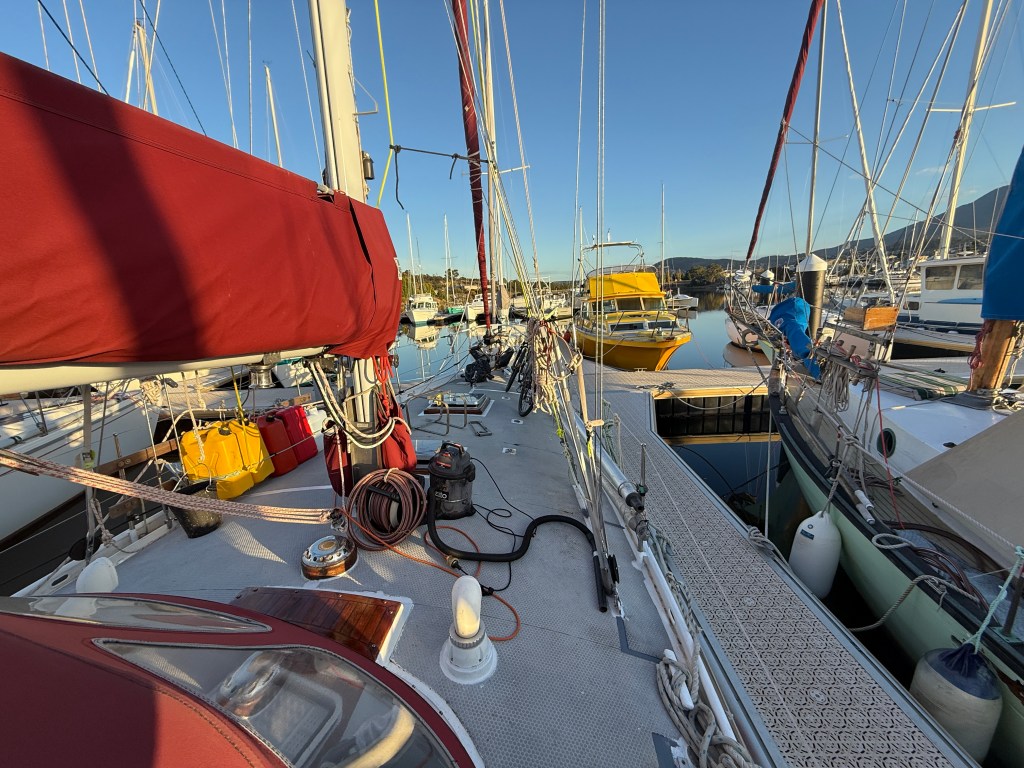
Happily our transit beneath the bridge was uneventful. We motored into the Prince of Wales Bay, found our berth, and secured our mooring lines.
Cara only had a couple of days before her flight to New Zealand, and before we knew it it was time for her to leave. Her mum, Christine, had asked her to give her a hand as she recovered from an operation. She was due to be away for three weeks, but this would prove to be four as one of her uncles sadly passed away and she stayed for the funeral.
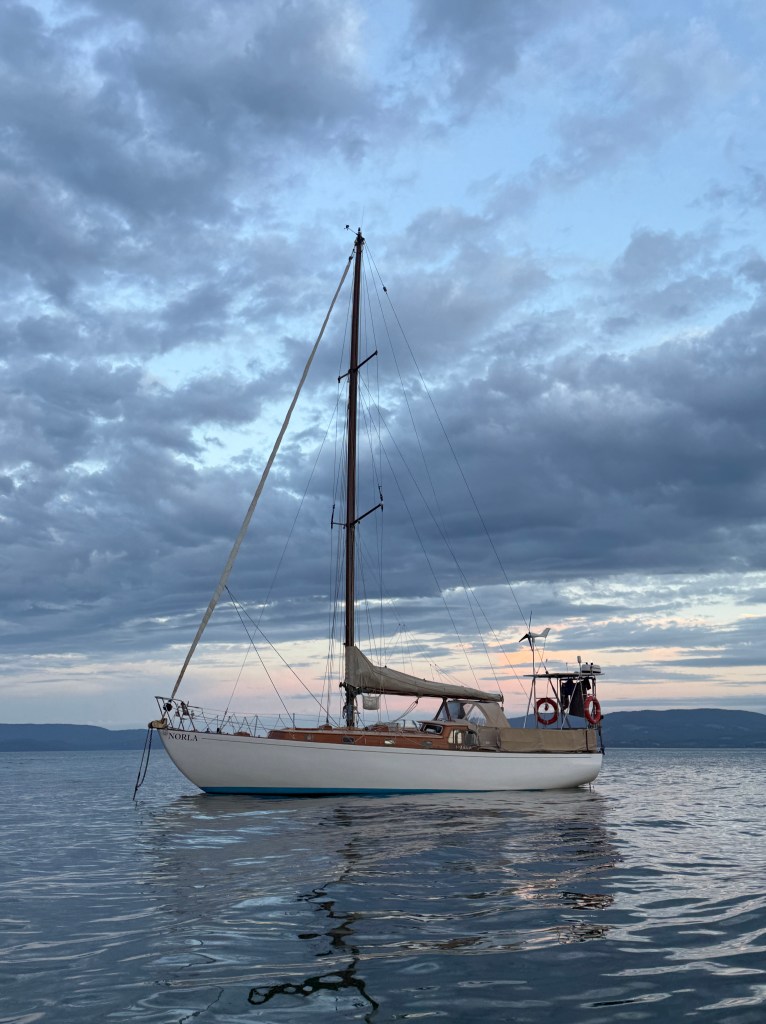
Various boat jobs kept me busy for the first couple of weeks, and then I grabbed the opportunity to go sailing with a friend on his yacht for a few days. We had met Sam and Emma aboard their classic wooden yacht Norla in Tonga, and bumped into them again in Fiji, Vanuatu, New Caledonia, and Bundaberg. Hailing from Hobart they were now home, but Sam was keen to get away for a few days and invited me along as crew.
Sam and I chose to explore the Lime Bay State Reserve area, a park that I hadn’t visited as yet. This region is renown for its great natural beauty and historic significance, especially in regards to Tasmania’s convict past. Eaglehawk neck, on the right of the map below, is the only land bridge that joins the Port Arthur settlement area with the rest of Tasmania. It was famously guarded by savage dogs during the convict period, effectively turning the peninsula into an island that was almost impossible to escape from.

Anchorages Sam and I stayed at — A: Lagoon Beach; B: Ironstone Bay; C: Lime Bay.
Anchoring in Ironstone Bay we took the dinghy ashore and followed an overgrown track to the remains of a convict coal mine, sited at the aptly named Coal Point.
The mine, established in 1833, was the state’s first operational mine, providing a much-needed source of local coal. The site once included a large stone barracks, which housed up to 170 prisoners; punishment cells; a chapel; bakehouse; store; and various quarters. By the late 1830s the site produced most of the coal used in Van Diemen’s Land. However, not everyone was keen on the product. The coal was of a poor quality that emitted showers of sparks when first lit, setting fire to carpets and ladies’ dresses.
The Coal Mines operated as a probation station from 1833 to 1848. The site had a fearsome reputation as a place of gruelling punishment for the worst class of convicts. During the 1840s up to 600 people were held here. To keep them in line, four solitary cells were built deep in the underground workings to punish those who dared to commit further crimes. Those were the days!


Alas, my sailing sojourn with Sam had to cease all too soon, and then it was back to Taurus, trouble, and toil.
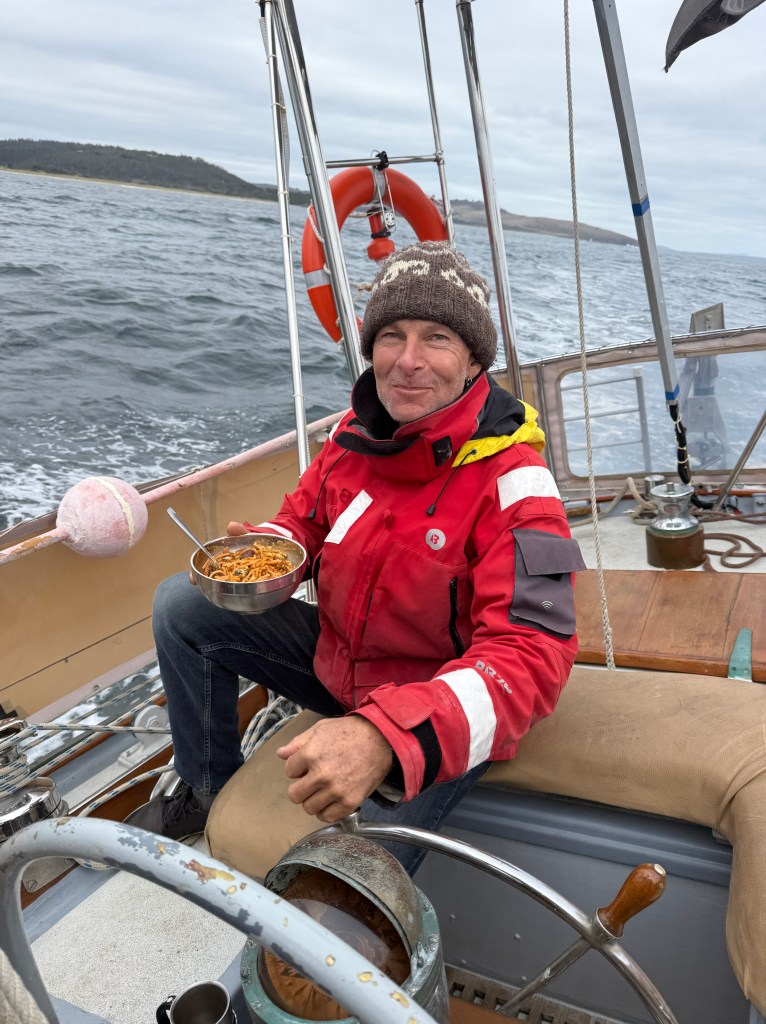
The list of jobs carried out included servicing our Lofrans windlass (I wrote an article about this for the Island Cruising group if anyone is interested), touching up paintwork, improving the life raft bracket, repairing the dodger, fixing the sewing machine, and innumerable other chores that find their way onto the never-ending boat jobs ‘to do’ list.
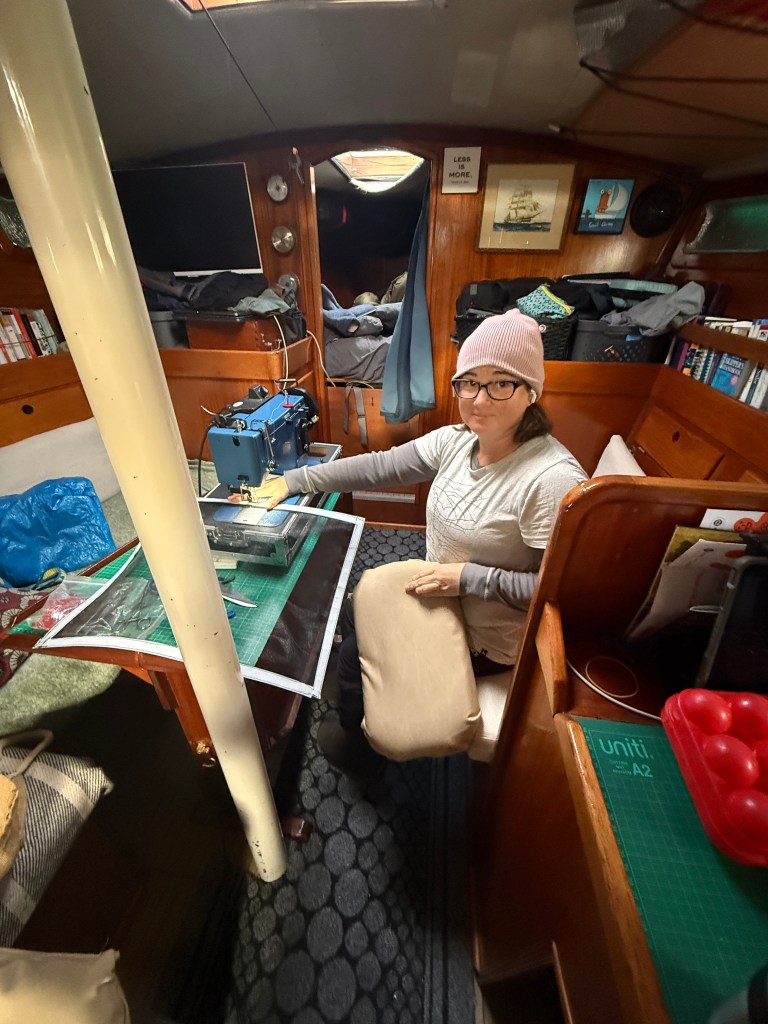
Being at the Prince of Wales Bay Marina made many of these jobs fairly straightforward, as the area is surrounded by engineers, hardware stores, and the like. Had I gone to another marina, such as Kettering, which is far more isolated, I would have struggled to get anything done without access to a vehicle. On the subjects of vehicles, the Prince of Wales Marina has two courtesy cars that cost $10 to rent for two hours. As the marina staff go home at 4:00 pm if you borrow the car after 2:00 pm it’s yours for the night, which is great for visiting friends or takeaways!
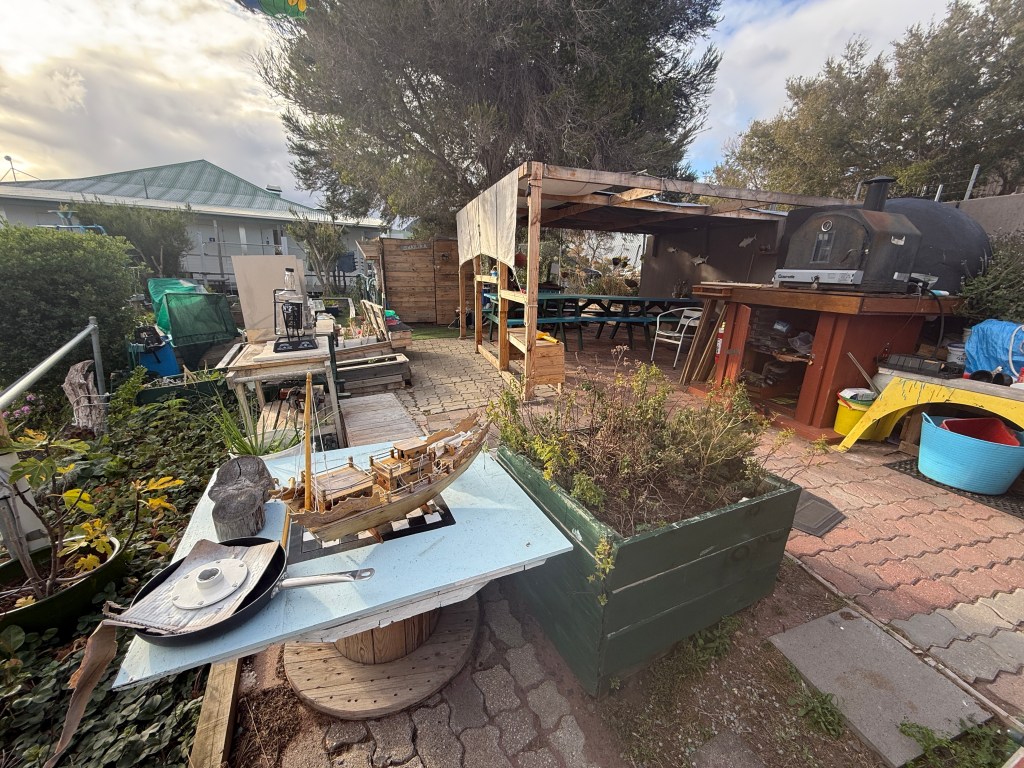
After a month, Cara returned, just in time for a cold snap that put an end to any further painting. The weather since has been cold in the evenings and mornings, but beautifully clear and sunny later in the day, and often surprisingly warm. We have only had a couple of days of rain, indeed, Hobart is apparently the driest of all Australia’s state capitals.
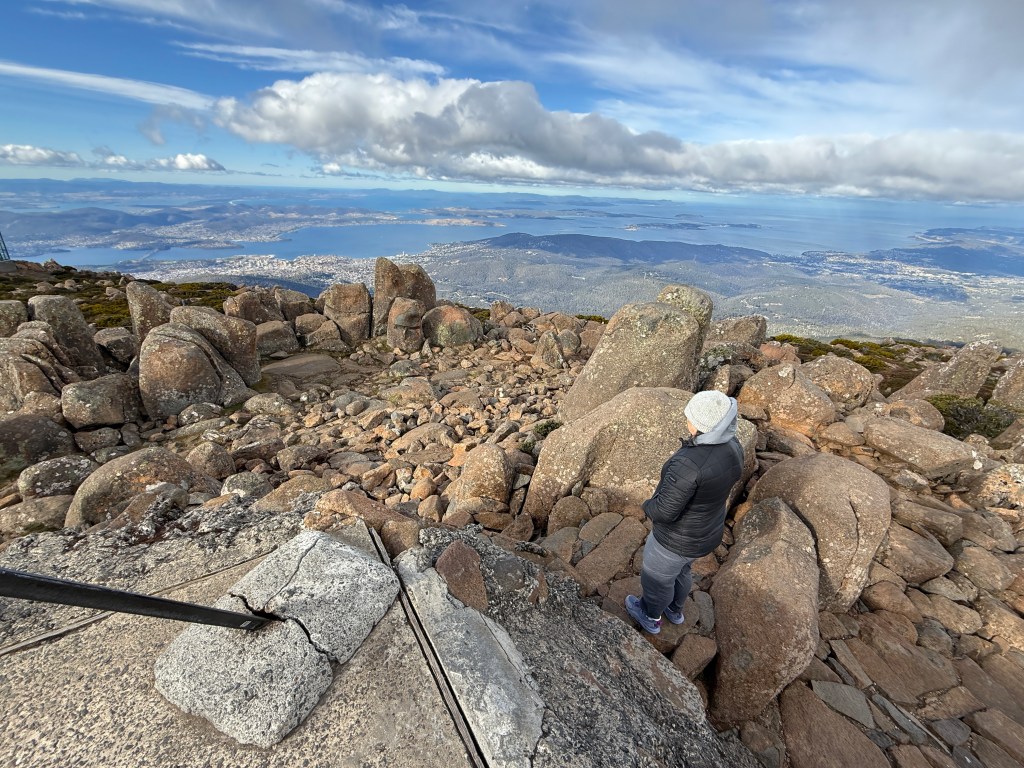
In part the lack of rain may be due to the iconic Mount Wellington, which acts as a bastion against inclement weather and can be seen from all round the city. We hired a car and drove up the mountain to take in the views, a trip well worth undertaking and one that Charles Darwin made when he visited Hobart aboard The Beagle in 1836. On the day we visited, survival seemed less predicated on fitness than on beanies and puffer jackets. Perhaps Charles had better weather…

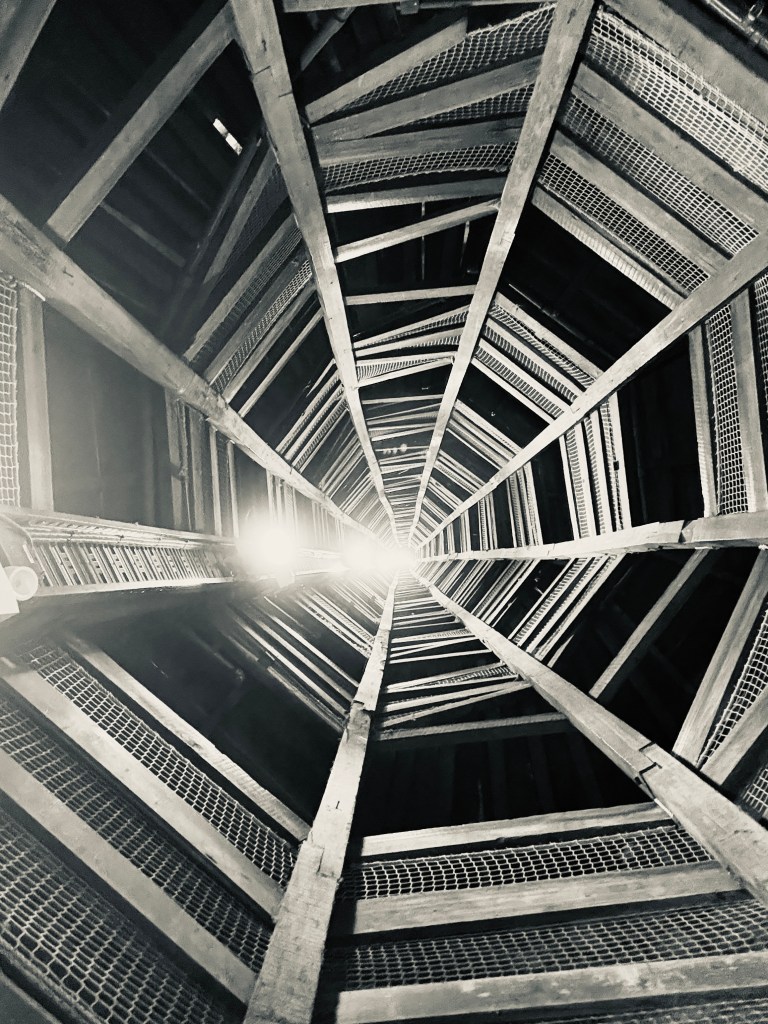
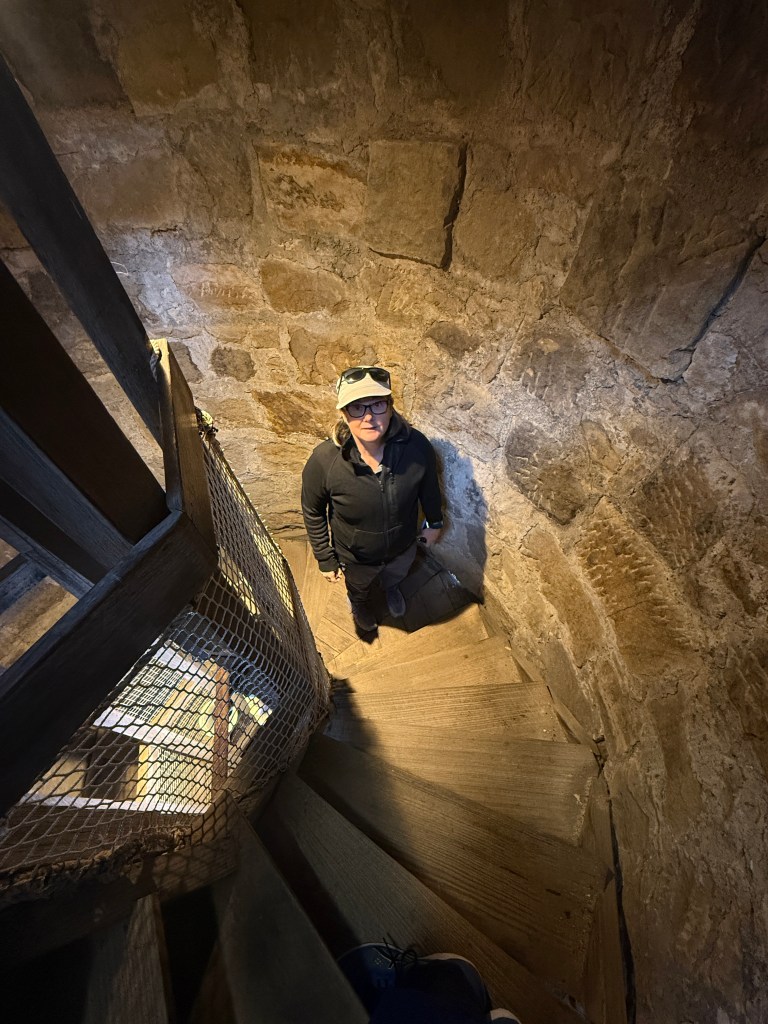
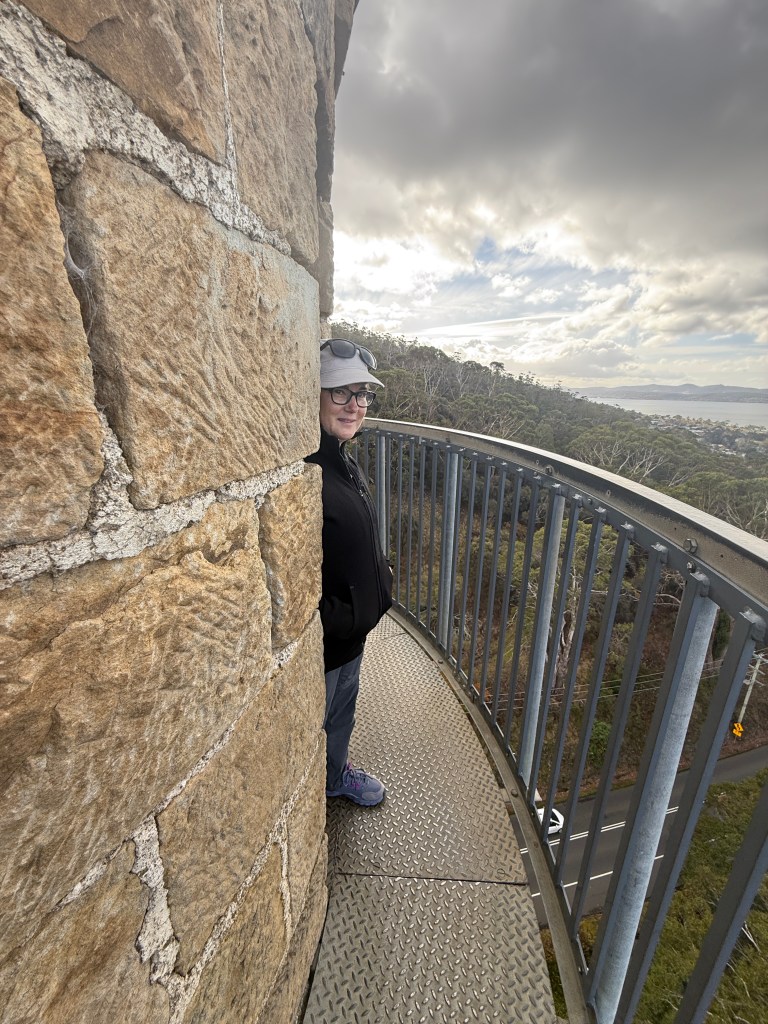
On another day we visited the ‘shot tower.’ This landmark structure, standing almost 50 metres high, was built in 1870 by one Joseph Moir to make pellets or ‘shot’ for shotguns. Basically, lead is melted at the top of the tower and allowed to drip through a steel plate with the appropriate size holes. The lead then falls the height of the tower, which ensures that the droplets become spherical rather than tear shaped, into a vat of cooling water where they are gathered. Today, one can still climb the tower, but it felt far more rickety than the lighthouse we visited recently. Perhaps the thin, creaky, wooden staircase had something to do with the sense that one shouldn’t linger too long — just in case!

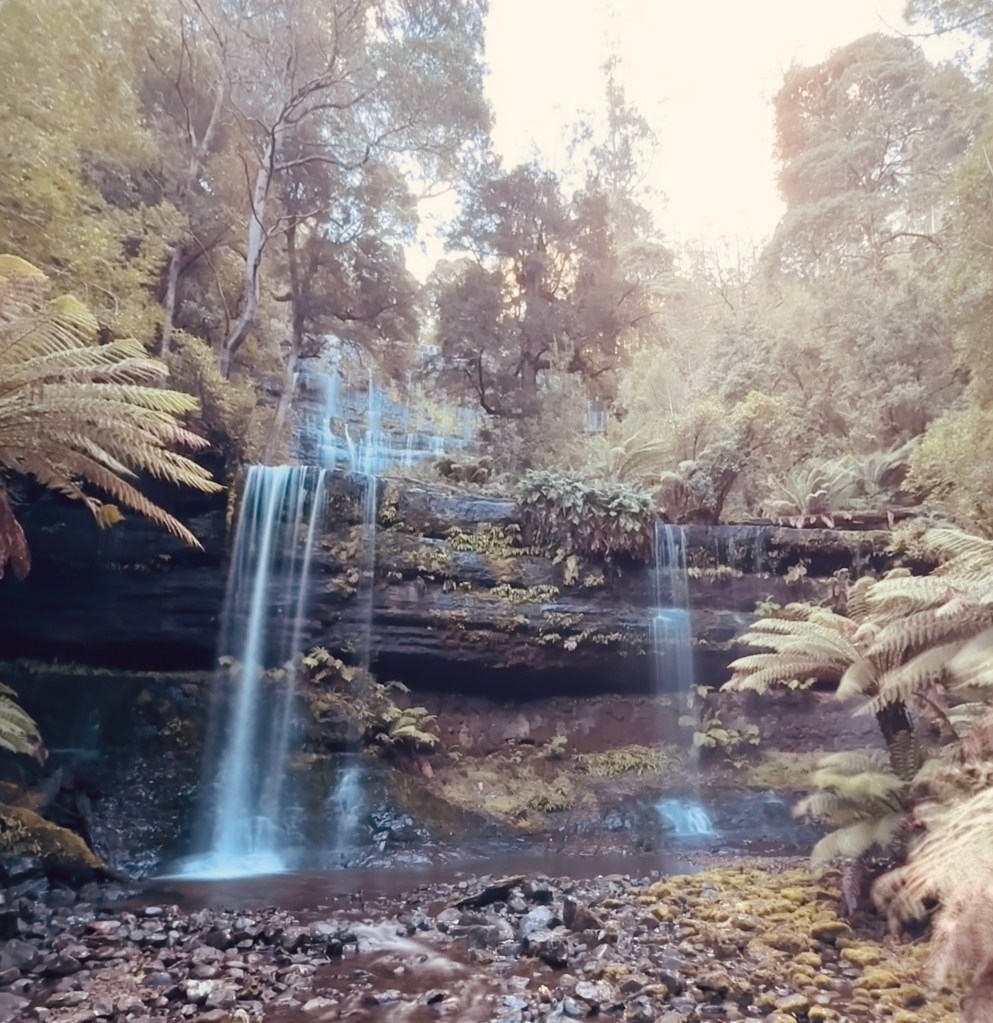
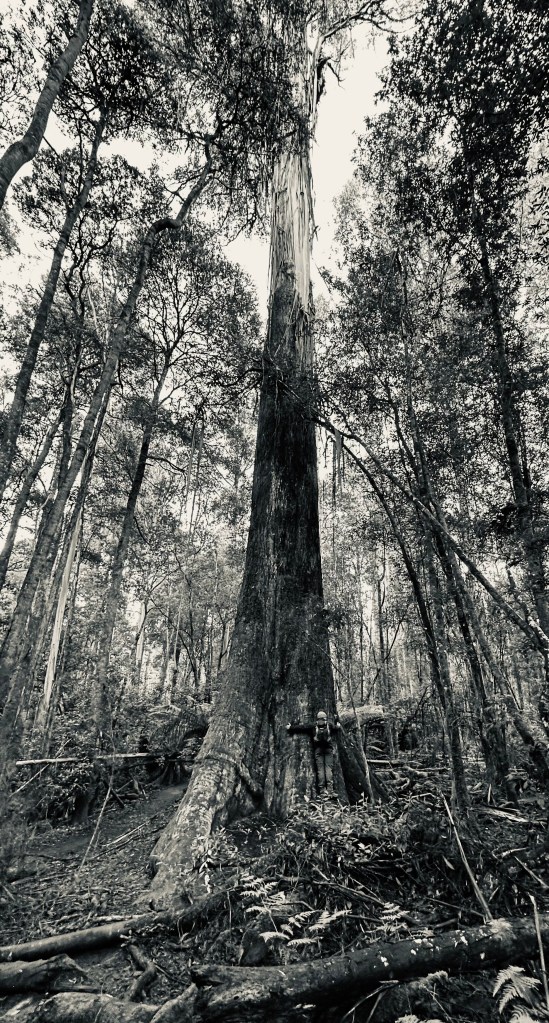
Russell Falls and Mount Field National Park were also on the tourist agenda. This area is renown for its beauty, waterfalls, and large trees.
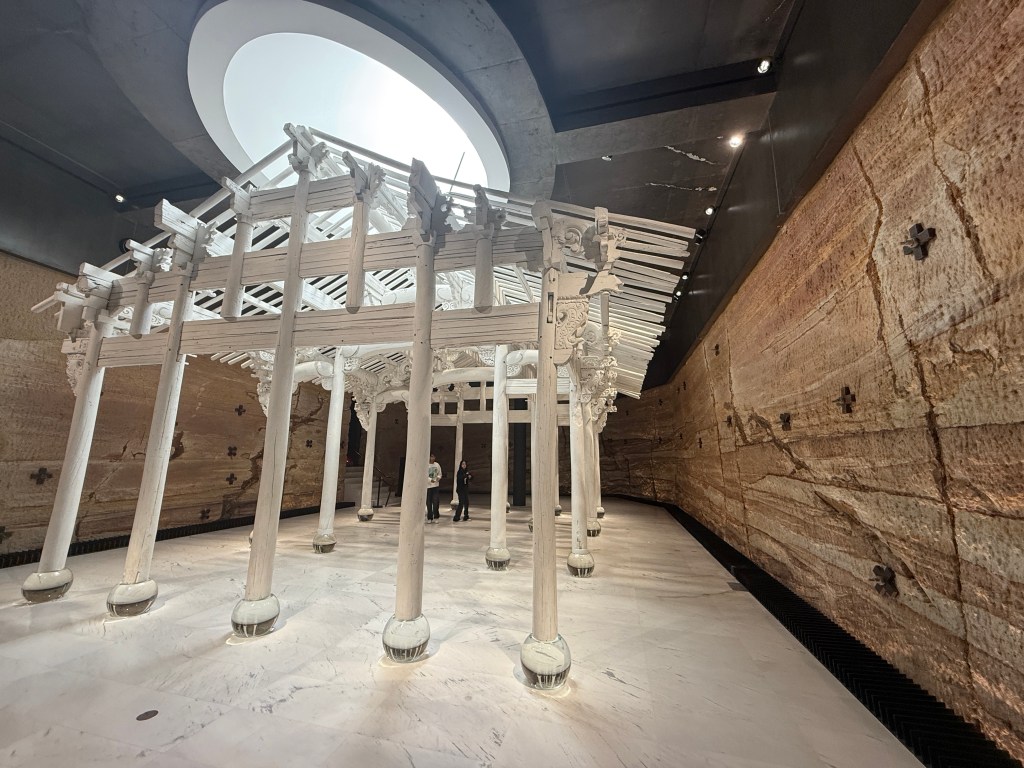
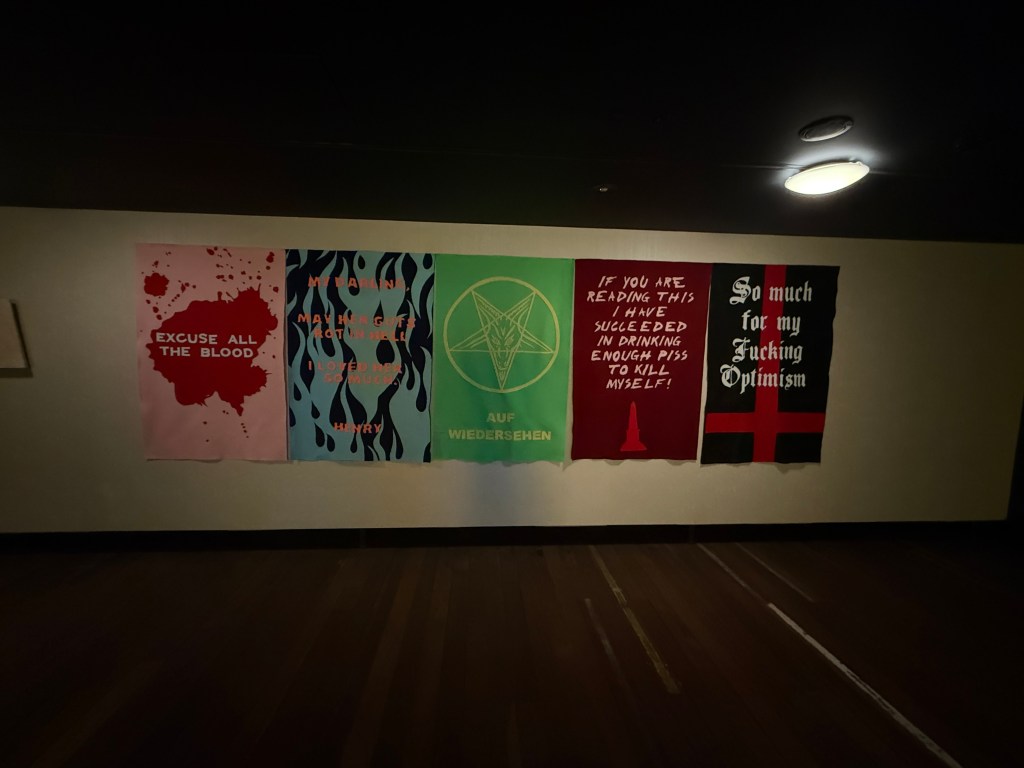
A trip to MONA, the Museum of Old and New Art, was mandatory. The eclectic nature of this private collection, apparently funded from the profits of gambling, is legendary. Much of it seems intended only to shock. The famous wall covered in plaster casts of dozens of vulvas is sadly gone, replaced by mirror finished hanging balls (a win for the guys perhaps, but the spheres didn’t seem to get nearly as much attention). Elsewhere, the puerile remains. For example, Oleg Kulik’s large black and white photo of a naked man on all fours being mounted by a dog, hangs close to a life size sculpture of a dead horse (naturally the mould was taken from a real dead horse) hanging in a sling. Next to these objects an ancient Egyptian sarcophagus leans against a wall. One wonders what the occupant would have thought of the decor of this, his latest tomb. Of course, in these times who can say what passes for decency? The man in the photo might identify as a dog, the dog as a man. Still, if the art is sometimes weird, the architecture is often wondrous, and worth the admittance price alone — disguised as Tasmanian residents we only paid $5 each.

As of today, Cara has been back for nearly a month. We should have left the marina already, but staying for three weeks costs the same as the discounted price for a month. It’s hard to leave somewhere when you’ve paid to be there. Life is comfortable: the showers are hot, the washing machines work, and the toilets are only a five minute walk away. Once again, we have to surmount our reluctance to cast off our mooring lines and take that step into the unknown. Still, if paying for access to showers, washing machines, and toilets means that they can be considered ‘possessions,’ then we must bare in mind the wise words of Bertrand Russell, who declared that “it is the preoccupation with possessions, more than anything else, that prevents us from living freely and nobly.” Who would choose to be a clean slave when they can be a dirty south sea vagabond?

In the next day or two we’ll be back out on anchor and waiting for a weather window that will allow us, hopefully, to sail to Port Davey on Tasmania’s West Coast. Like many stretches of water around Tasmania, the West Coast is notorious for strong winds and big seas, so we won’t be heading there unless the weather promises to be kind. Perhaps we should stay in the marina for another month, or maybe till Summer? A hot shower would be nice…
 Sailing Taurus NZ
Leave a comment