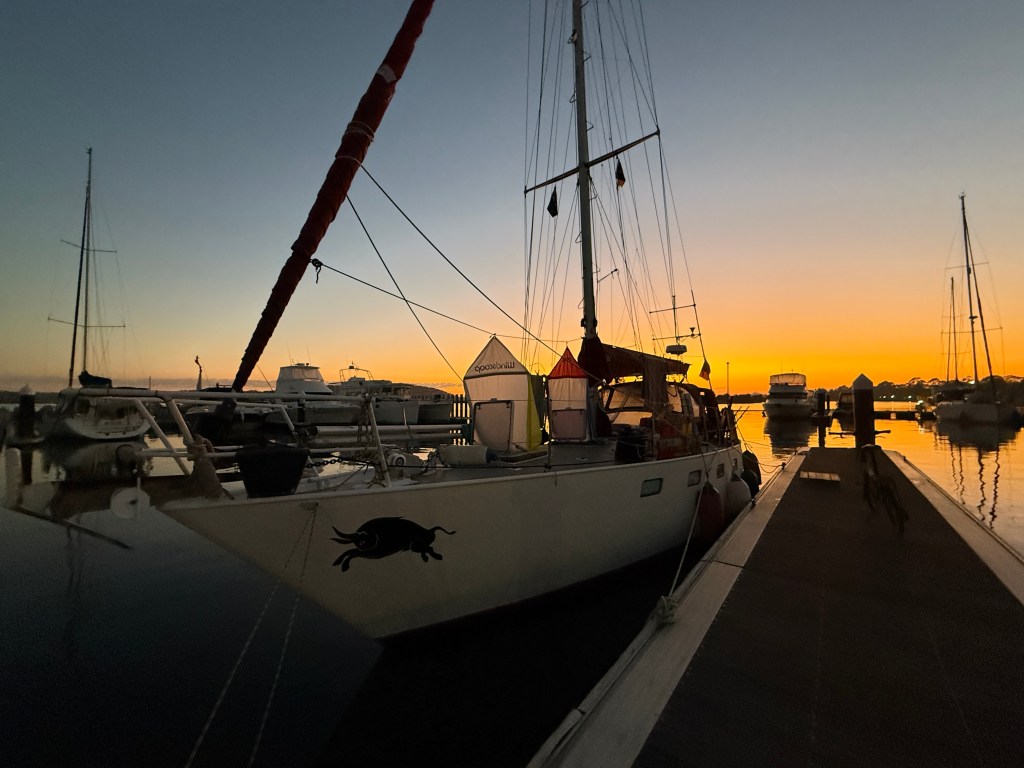
We arrived at Batemans Bay Marina a little after midday on Monday the 3rd of February. Owen, one of the marina staff, and his wife and two children met us at the jetty to take our lines, give us keys, and tell us where the showers and toilets were. We later met the manager, Mitch, who was another decent guy and helped us out as much as possible with lifts to the local hardware store and so on.
The marina is owned by the d’Albora Group, who own thirteen marinas throughout Australia. The companies mission statement reads:
At d’Albora, we believe every experience on the water should be lived to the fullest. Our extensive end-to-end marine and hospitality services are carefully designed to create effortless boating lifestyles for our members.
Of course, the gobbledygook corporate speak really means:
At d’Albora, we seek to extract every possible cent from our customers whilst giving them the bare minimum that we can get away with in return.
We knew the double speak routine well enough. But sometimes it can be fun to act like you naively believe such nonsense. Cara and I challenged the company’s zeal for their customers’ “effortless boating lifestyle” by having the temerity to ask for another key to the gates that give access to the berths. With only one key you either have to go everywhere together, someone has to wait on the boat if the other has gone out, or you have to co-ordinate arriving back at the marina at the same time to avoid someone having to wait outside the gate like a school kid whose mum has forgotten to pick them up. Two keys, for two adults, is much more convenient, and allows for a measure of (gasp) independence.
We didn’t know at the time but the great Victorian author Charles Dickens had previously been a guest at a d’Albora marina. He later altered the subsequent conversation to appear in one of his novels:
‘Please, sir, I want another key.’
The master was a fat, healthy man; but he turned very pale. He gazed in stupified astonishment on the small rebel for some seconds, and then clung for support to the copper. The assistants were paralysed with wonder; the boys with fear.
‘What!’ said the master at length, in a faint voice.
‘Please, sir,’ replied the paying visitor, ‘I want another key.’
The marina staff member aimed a blow at his head with the ladle; pinioned him in his arm; and shrieked aloud for the beadle.
The d’Albora board were sitting in solemn conclave, when Mr Bumble rushed into the room in great excitement, and addressing the gentleman in the high chair, said,
‘Mr Limbkins, I beg your pardon, sir! A marina visitor has asked for another key!’
There was a general start. Horror was depicted on every countenance.
‘For another KEY!’ said Mr Limbkins. ‘Compose yourself, Bumble, and answer me distinctly. Do I understand that he asked for another key, after being given the allotted one?’
‘He did, sir,’ replied Bumble.
‘That sailor will be hung,’ said the gentleman in the white waistcoat. ‘I know that sailor will be hung.’
To be fair, poor Owen to whom we addressed our request is far from fat. But to our surprise he did express something very much like Mr Bumble’s shock and awe. He told us that even the permanent live aboard couples only get one key (and he should know as he and his family are live-a-boards) and added that a fishing competition was taking place soon (after we were due to leave), and that all the spare keys were needed! After the week we had had these all sounded like not our problems, and we politely pointed out that for $107 per day we would like two keys. Apparently, the giving out of two keys doesn’t gel with d’Albora’s ‘effortless boating lifestyle’ vision, so Owen, being a good guy, smuggled us another key under the counter. Sadly he couldn’t do anything about a second key for the toilet block, but a win’s a win and Cara and I could co-ordinate our bowel movements.
Our ‘impertinence’ vis-à-vis two keys stemmed in part from the feeling that d’Albora were taking us for a bit of a ride. There was nothing great about the marina (apart from the staff who went out of their way for us, sometimes in direct opposition to d’Albora policies), little that was good, and quite a lot that was kind of average or crappy. Given the price we were paying the experience left a bit of a sour taste in our mouth. I won’t go on about it, but if you are thinking about heading there send us a message and we will fill you in. Unfortunately, the d’Albora corporate experience seems to be becoming normalised in Australia. Hopefully people will vote with their feet so that the law of supply and demand swings back into the users favour.
Of course, we were in the marina for a reason, to fix our gearbox, so our priority was to get it done as soon as possible and move on. We certainly didn’t want to have to pay for another week.
Imagine our delight when we found that our gearbox was waiting for us when we arrived. We picked it up that very afternoon and brought it back to Taurus as gently as if it were a sacred relic.
Our best access to the broken gearbox still installed came from lying on top of the engine and reaching down and behind it. Our plan was to disconnect the Constant Velocity (CV) joint and lift the engine just enough to be able to take the weight from the rear engine mounts that form part of the bell housing. We had to remove the bell housing as the gearbox was bolted onto it from the inside. We had discussed lifting the engine further so that we could get better access to try and fix a minor oil leak from the engine, but getting this extra access required the removal of the water maker, the batteries, the battery boxes, and a good deal of the engine’s plumbing. Ultimately we decided against it because it made what we needed to do a much bigger job. This might well bite us in the bum later on, but sometimes you just have to cross one bridge at a time.
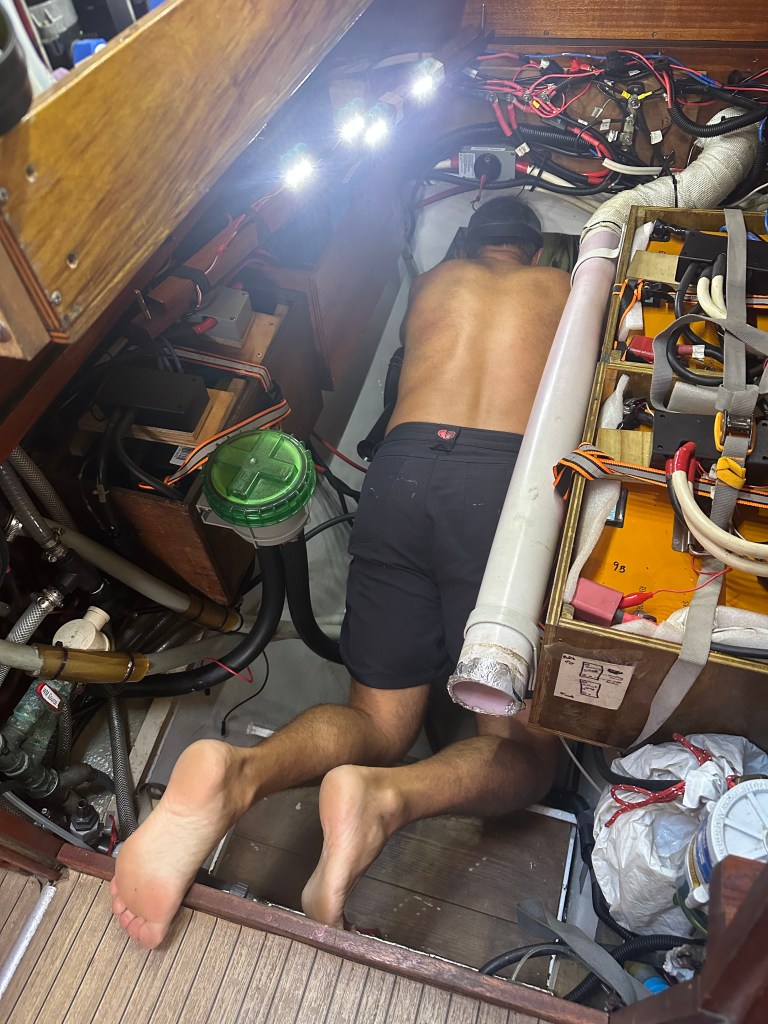
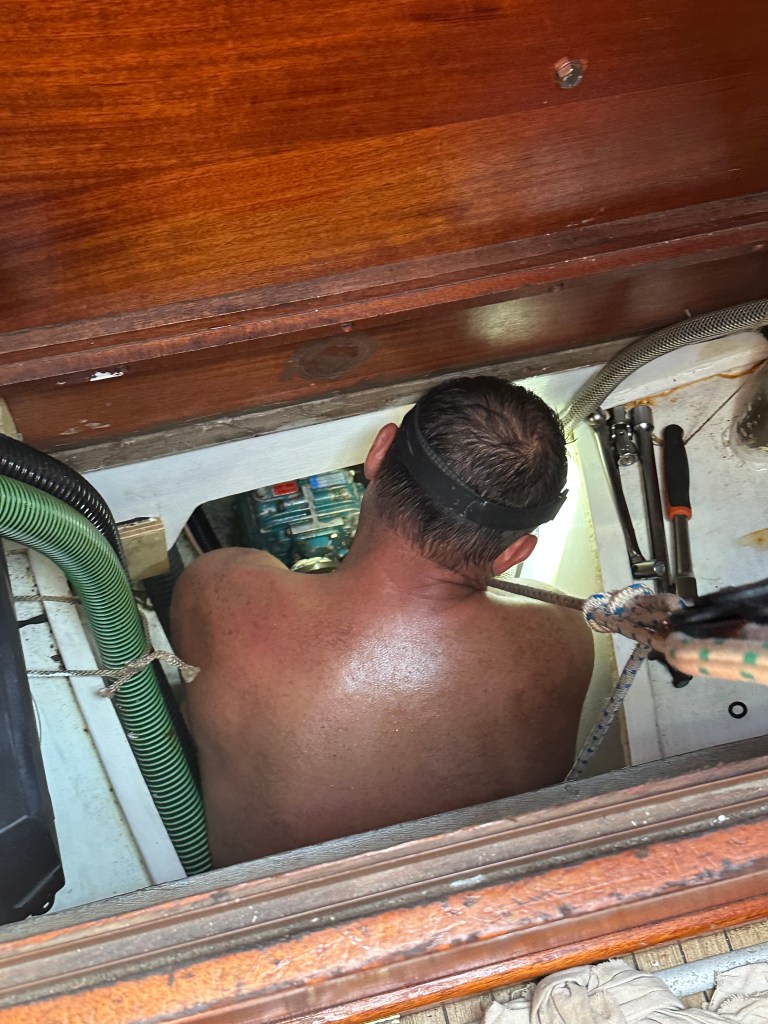
Thankfully, when we removed the engine a few years ago we cut a head sized notch out of a steel brace that lies above the gearbox. This is the white steel panel above my head in the photograph above. This notch greatly improves access, and without it the entire job would have had to be attacked from the tiny space entered from the rear of the engine. In this hole one has to balance on one foot above the prop shaft and be careful not to stand on the dripless seal that doesn’t take kindly to such treatment and squirts sea water everywhere to register its displeasure. Stand on it too much and the sea water might not stop squirting in, so best to give it plenty of room.
We were able to release the forward part of the CV joint fairly quickly, but the aft portion was unwilling to come apart, no matter the blood, sweat, and strong language employed against it. I’m reluctant to say that I’ve grown older and wiser (which is only half true), but I can safely state that I have broken too many things by trying to force them to automatically reach for a bigger lever or hammer. In this respect I am a great believer in the Hippocratic Oath, which starts with the advice, “First do no harm!” This I take to mean ‘when trying to fix something don’t break anything else!’
After having spoken with a marine engineer friend in New Zealand at some length (cheers Luke!) we were pretty happy that the prop shaft wouldn’t disappear into the sea, and that the dripless seal was secure and wouldn’t start letting the ocean in. With one side of the CV joint released we could now move to the second stage and try to raise the engine. This was as far as we got on the first day, which, if you remember our last blog, had been pretty long and eventful.

For those who aren’t diesel mechanics or marine engineers, in the above photo the blue bit on the left is the bell housing, which forms the aft part of our engine. The silver block behind it is the gearbox, the egg timer looking thing attached to the rear end of that is the CV joint. The prop shaft joins to that, and runs through a pillow block (the black thing) inside of which is a thrust bearing that keeps the shaft running true and doesn’t let it disappear out the back of the boat. Beyond that, the blue bellows thing is the dripless stern gland that allows the prop shaft to exit the boat without letting water in. Simple innit?
What we now needed to do was lift the engine so that we could take the weight off the engine mounts and bell housing, and unbolt it. To do this we ran a nice thick rope under the engine and tied a good knot. This was attached to a ‘come along,’ a handy device which provides heaps of mechanical advantage, which was attached at the other end to a lifting point above the engine. Pretty soon we had the engine swinging like it was the 1960s again.

In the above image the engine sits in its rope cradle. You can just see my belly on the far side of the engine where I am balanced on one foot whilst trying to undo the bell housing. Before taking out the last bolt out I made sure another rope was attached, so that as the weight came on there was no way I could drop it — remember Hippocrates! The other end of that line was attached via the rear companionway to the boom (in fact we tied the boom off and used the main sheet as a handy billy which we attached to the line attached to the gearbox). One of the few benefits of doing this kind of work on a boat is there is normally plenty of rope around. As Cara would tell you, I really like rope. As a young sapper in the Royal Engineers we received a lecture on basic engineering principles, and I remember the lecturer telling us that the simplest machine in the world was a rope. I’m not sure I agree today, it depends on your definition of ‘machine,’ and perhaps a lever is simpler? Anyway, I remember it fired my imagination and the more I learnt about the various systems that allow a rope to provide mechanical advantage the more enamoured I became of it. Rope is great!
It was a bit of a squeeze getting the gearbox and bell housing past me, but in short order we had the pair sat in the cockpit for inspection.
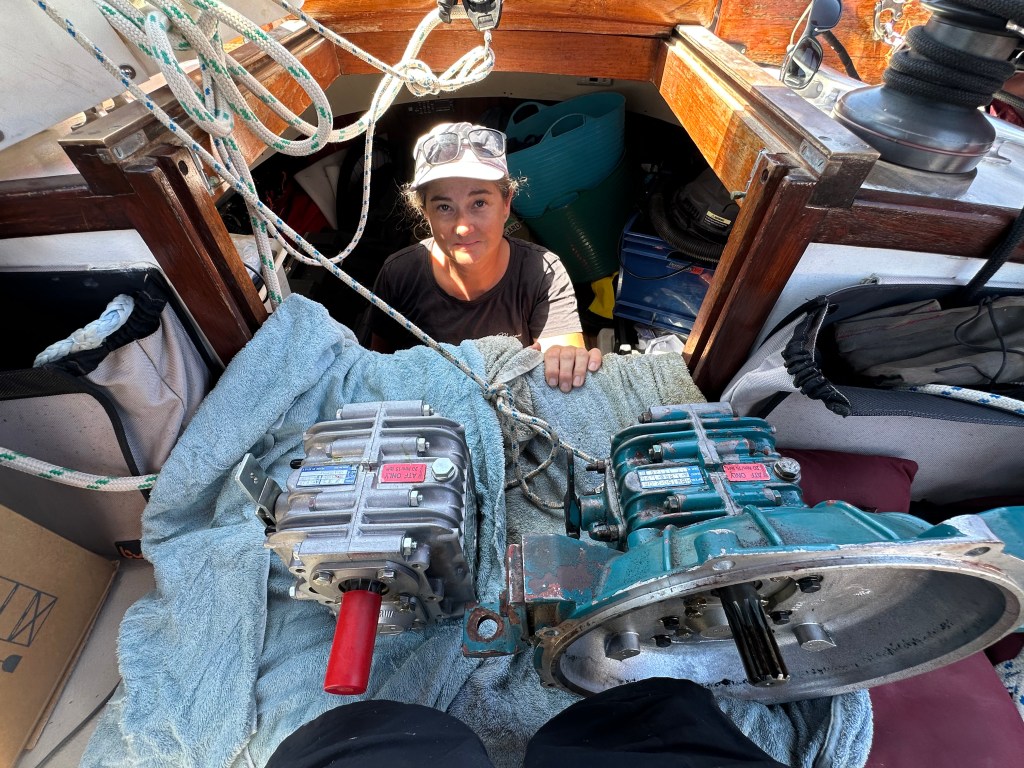
With the old and new gearbox side by side we could compare the two units. We had been warned that the new one might be some 25mm longer than the original, and that the shaft might exit 25mm lower. If this had proven to be correct we would have had a big headache and all sorts of issues getting the new gearbox in and aligning it with the prop shaft. Thankfully the units proved to be identical as ZM, the manufacturer, had promised.
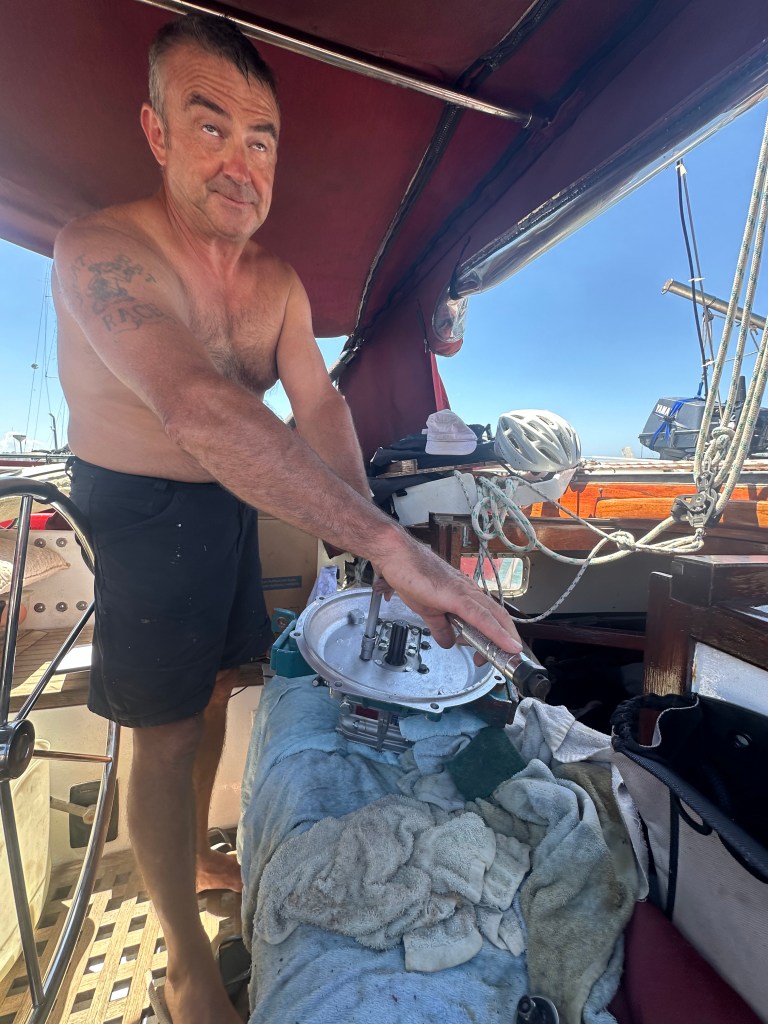
All we now had to do was remove the bell housing and attach it to the new gearbox before reversing the dismantling procedure. By the afternoon of the third day we were done. You beauty!
On the fourth day we gingerly tried forward and reverse on the dock, and when nothing went BANG! we cast off and motored out to the river for a quick run up and down. So far so good. Having paid to stay in the marina for a week we now had a few spare days to put Taurus back together. As if to remind us that work on a boat never ends the galley foot pump chose this moment to fail. We didn’t have a spare pump and couldn’t buy a new one, so we had a nice afternoon taking our old, previously failed, pumps apart to try and bastardise a working one. Eventually we succeeded and water returned to the galley sink. We were on a roll!

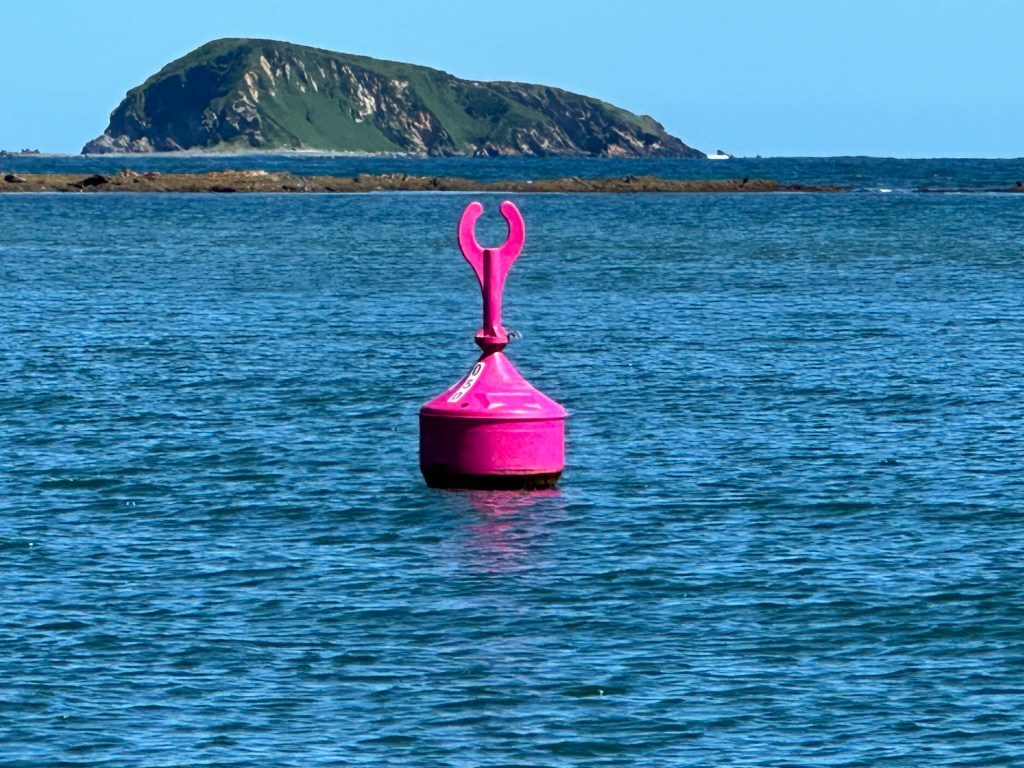
On the seventh day we departed Batemans Bay Marina and returned to Maloneys Beach, where we had anchored when we first arrived without an engine. On arrival the public mooring was free, so we hooked up to it without really considering the odd design (photo below). Apparently, the mooring rope is supposed to be draped through the horns, but in practice the horns prevent the mooring being pulled in tight because they catch on the anchor, pulpit bars, and whatever else they can grab onto. We let out plenty of slack and hoped that the swell would be sufficient to keep us a safe enough distance away.
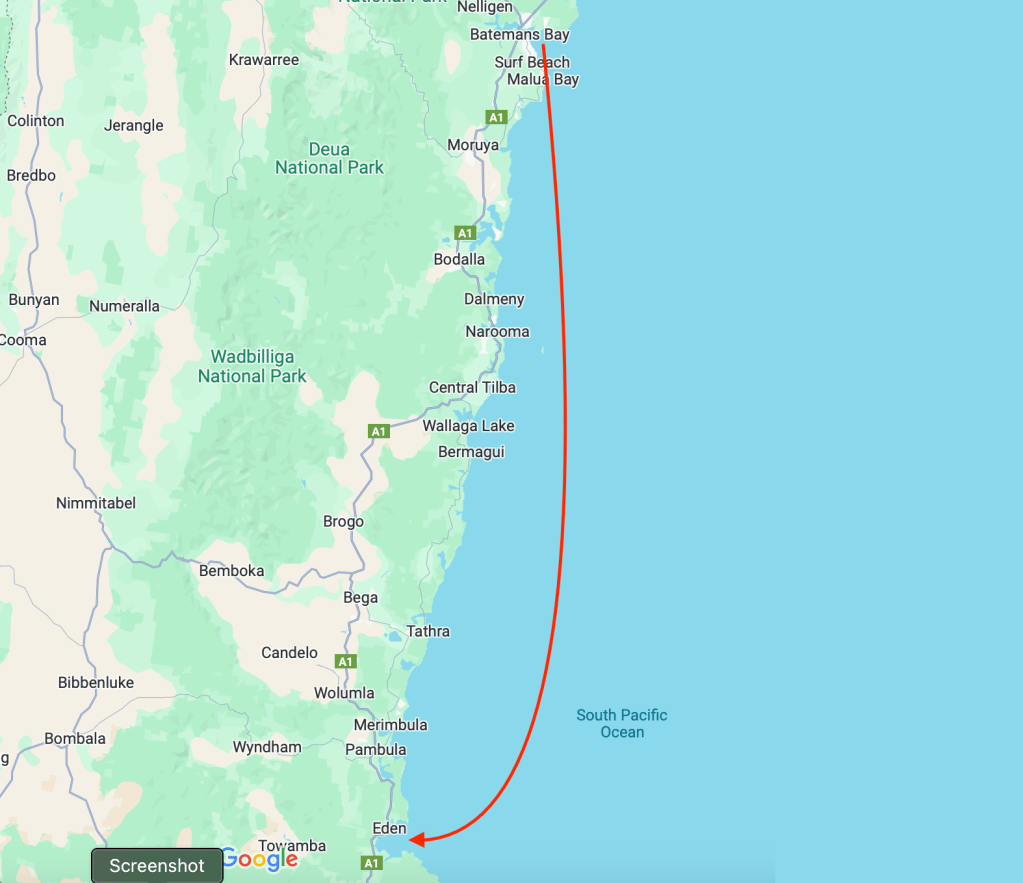
The following day it seemed like that might be an opportunity to leave as some meteorological models had the wind swinging from the south to the east. As we watched, the wind moved from 180 degrees to 110, so after a while we headed out, only to see the wind switch doggedly back to 160-180 degrees. With no possibility of sailing to Eden, about seventeen hours away, we turned round. Once ‘home’ we ignored the mooring and dropped our anchor, so no more buoy horns to worry about. Friends who were watching us via AIS commented that we seemed to be doing the Hokey Pokey. We had to laugh, and there is certainly some truth in the remark. We have made a habit recently of putting one foot out, one foot in, one foot out and spin around again (apologies to creator of the Hokey Pokey). After leaving Pittwater we had turned around because the wind was much stronger than predicted; we turned round after leaving Jervis Bay due to our failed gearbox; and we had now returned to Batemans Bay when the wind didn’t change direction for us. Still, As JRR Tolkien said, “not all who wander are lost,” and who said a journey has to be made in a straight line?
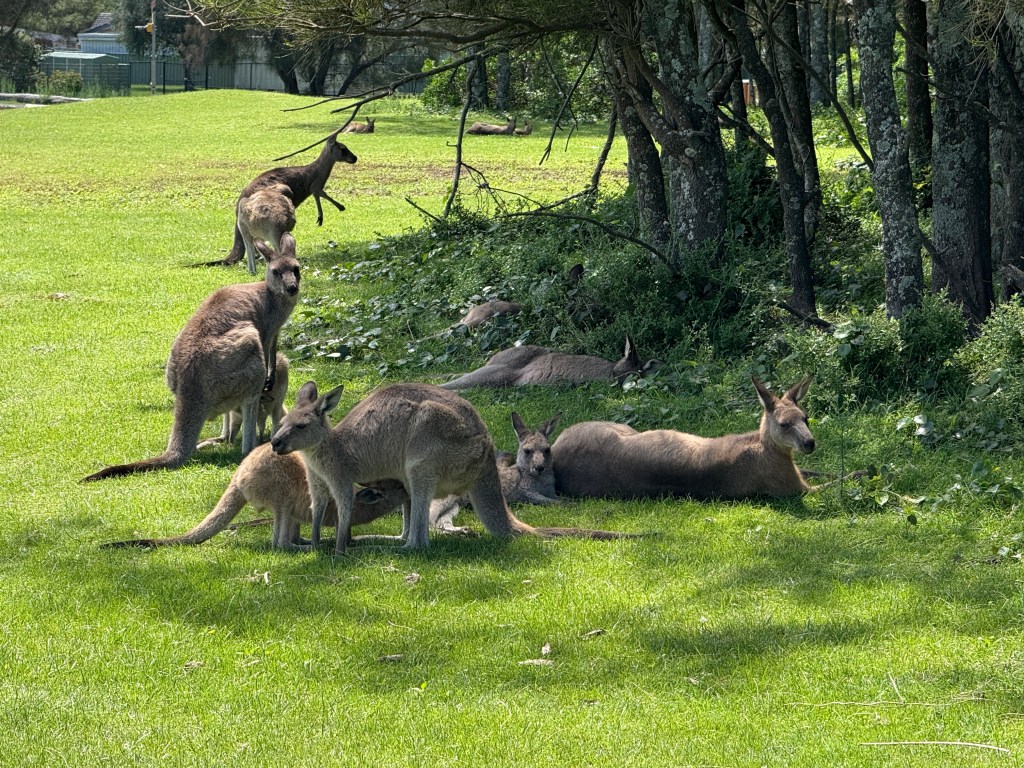
With another day to wait for the wind to shift we took the dinghy to shore. To our delight there was a ‘mob’ of kangaroos, lying round scratching themselves in the sun — yes, ‘mob’ is the collective noun for kangaroos. ‘Shore’ turned out to be part of the Murramarang National Park, home to a large number of eastern grey kangaroos, amazing bird life, and a number of tracks through the bush and along the coast.

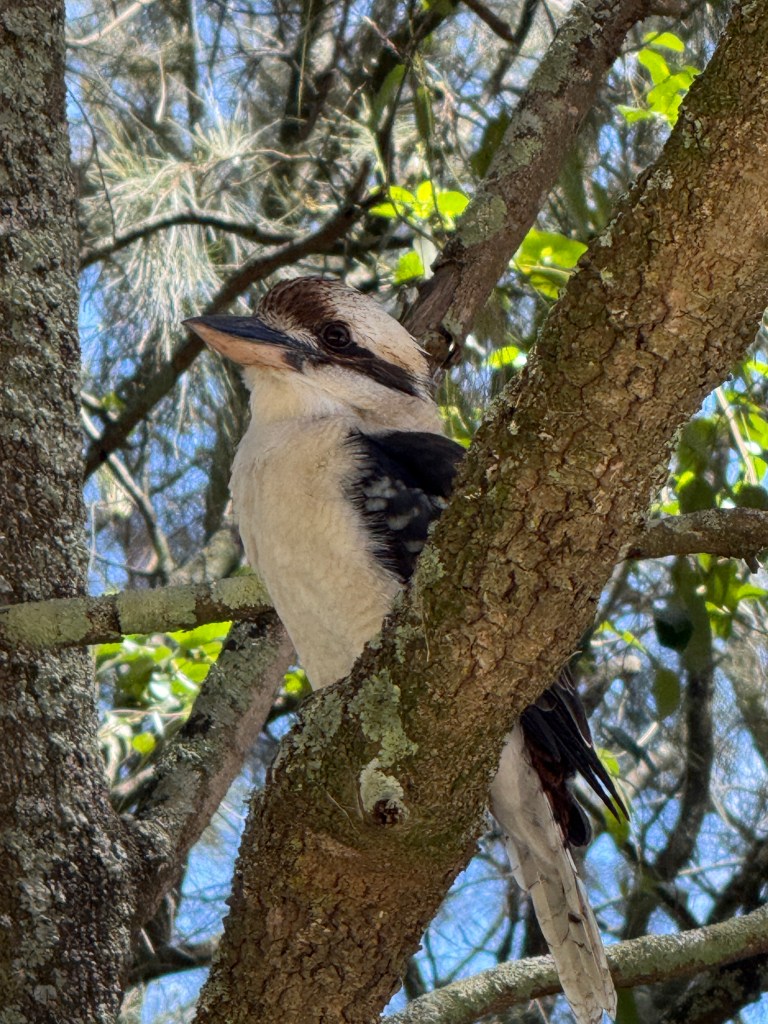
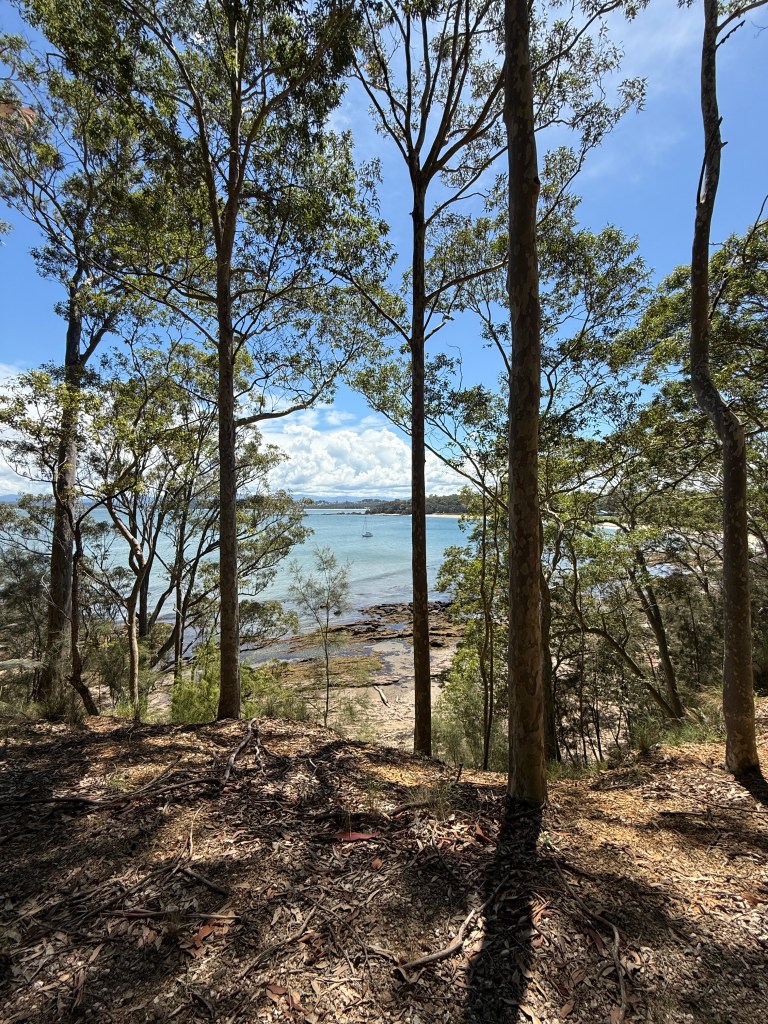


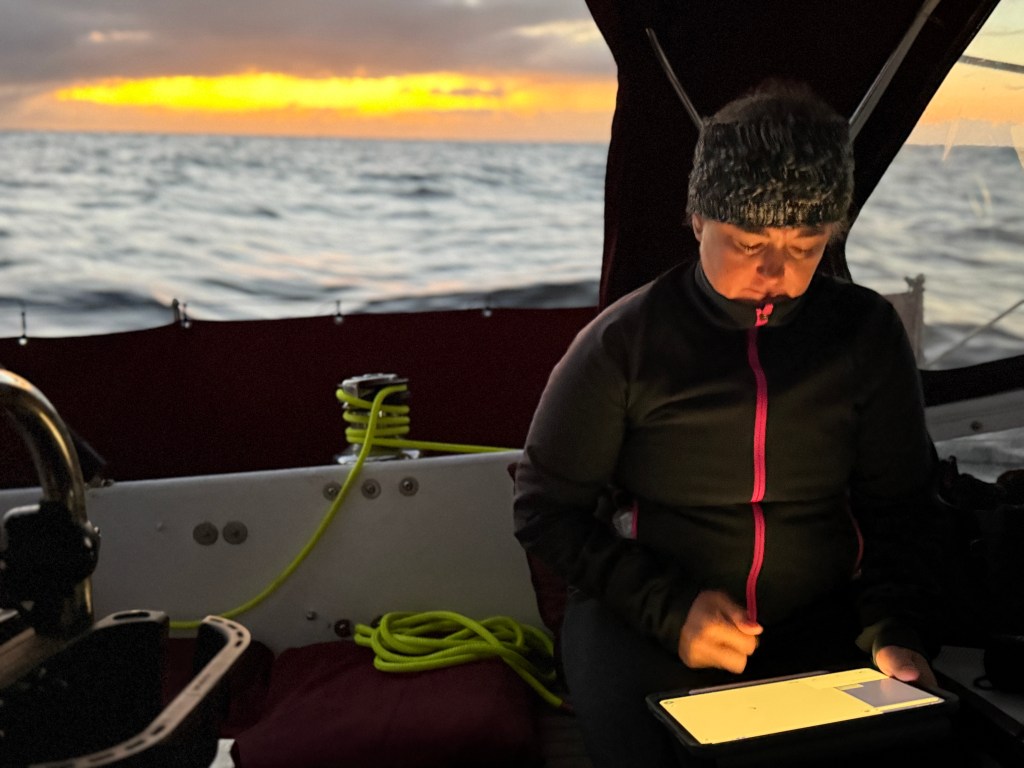
The following day the wind finally swung into the east and we left Batemans Bay to head south. The wind played ball for the first few hours and we enjoyed decent sailing, but as it eased the speed of Taurus in the current caused the sails to flog and collapse. Ultimately we had to motor for several hours, a test for the engine and gearbox which we seemed to pass (I’m still touching wood that I didn’t do anything wrong in the rebuild).
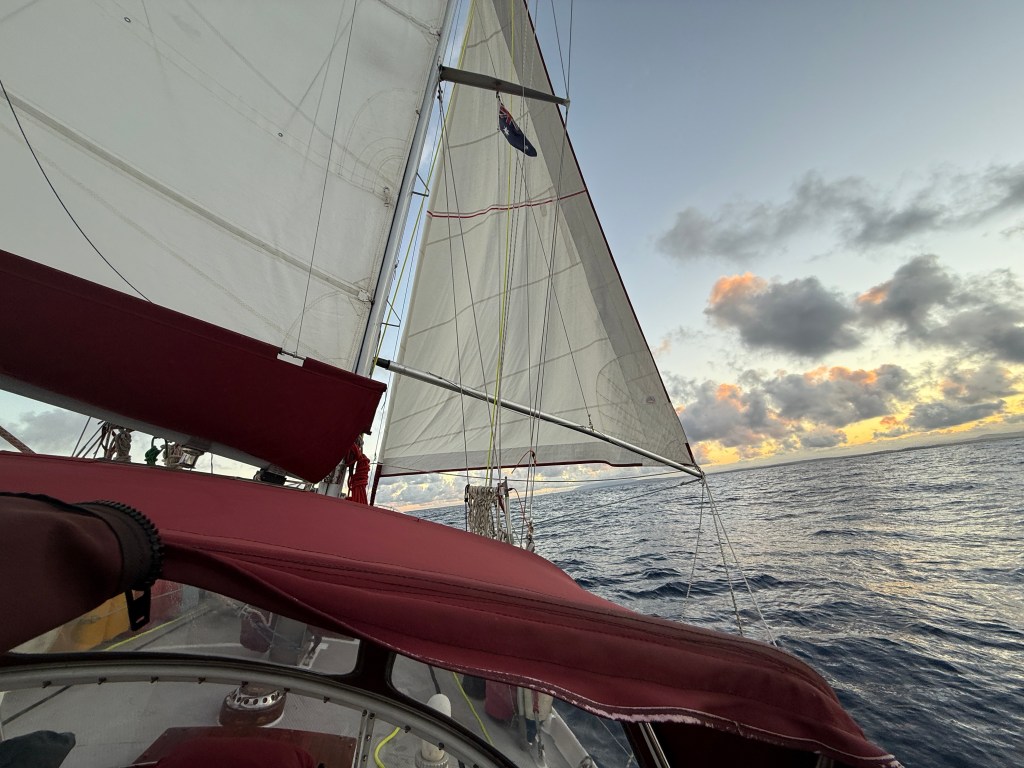
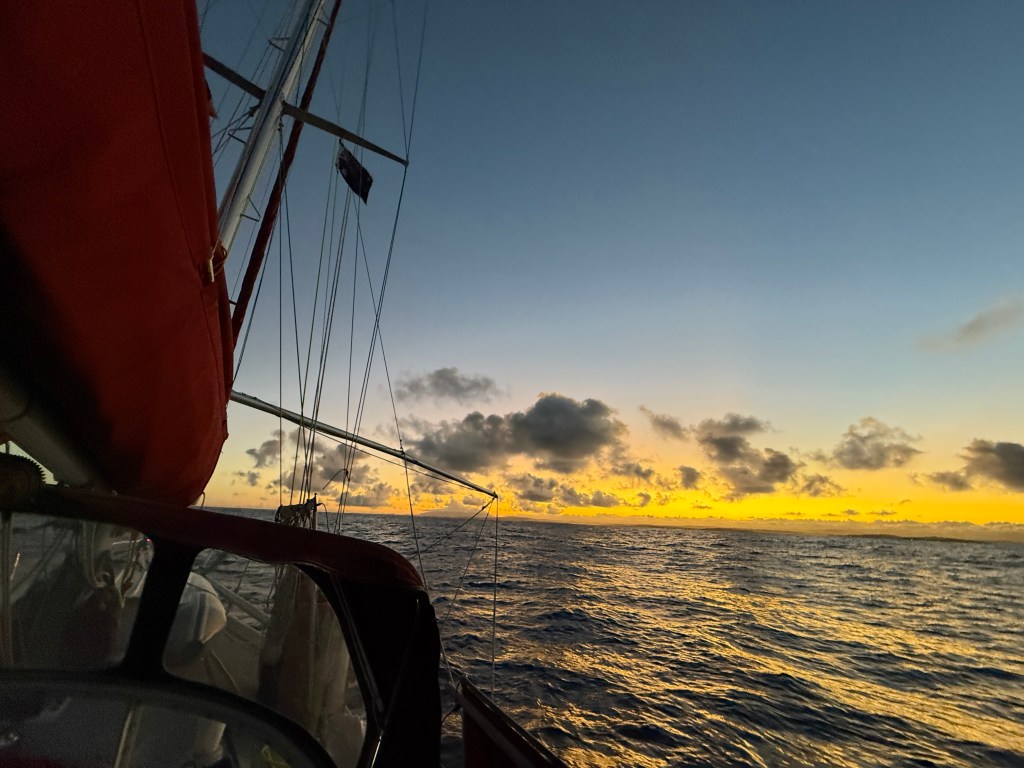


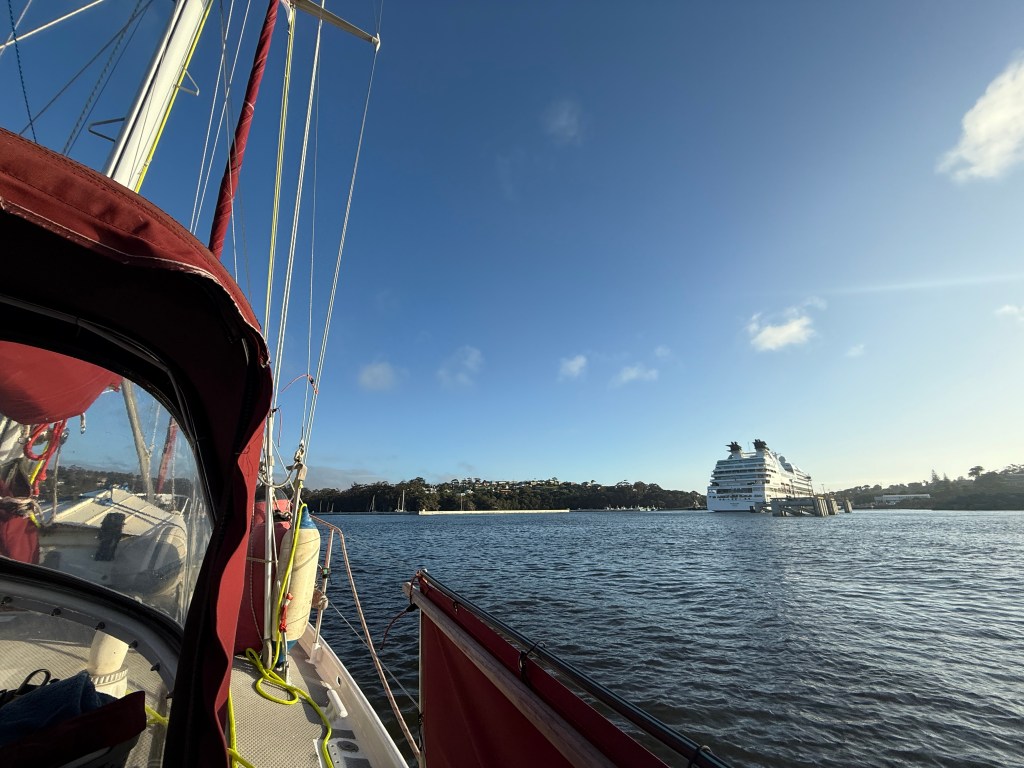
Shortly after dawn we arrived off Eden and watched as a cruise liner raced in ahead of us. The wind had finally built and we could sail easily, so we headed towards the public moorings just outside of town.

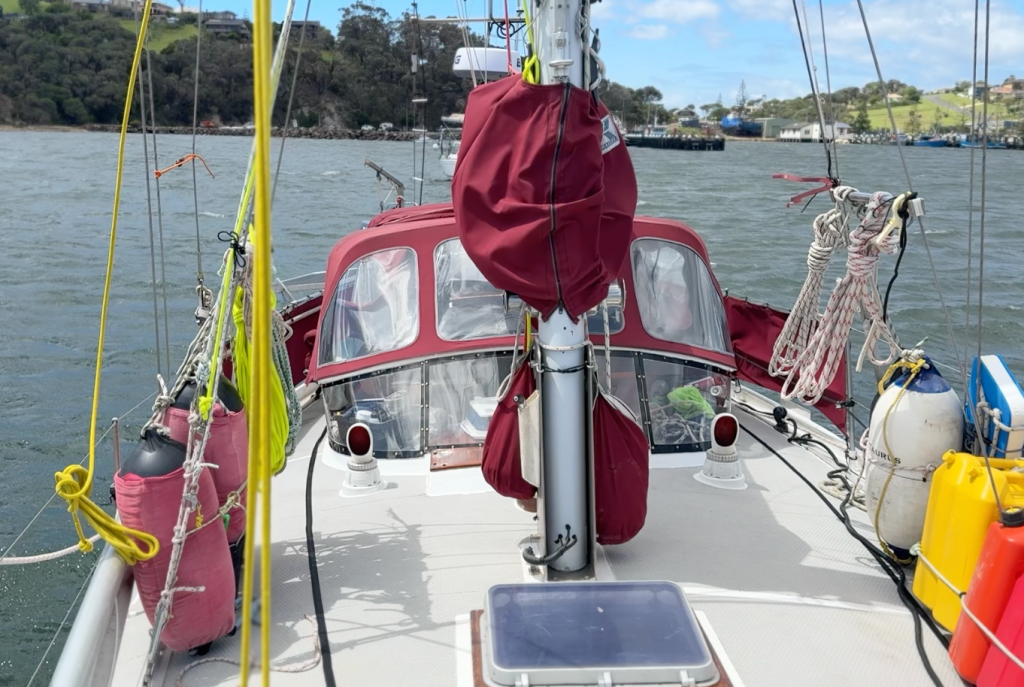
There were a number of boats on the other public moorings, belonging to cruisers intending to go in various directions. Pretty soon we had arranged to meet over a few drinks, but that tale will have to wait for another day.
Next time, we meet our neighbours, we explore Eden, we plan our three day journey across the notorious Bass and Banks Strait!
 Sailing Taurus NZ
Leave a comment