
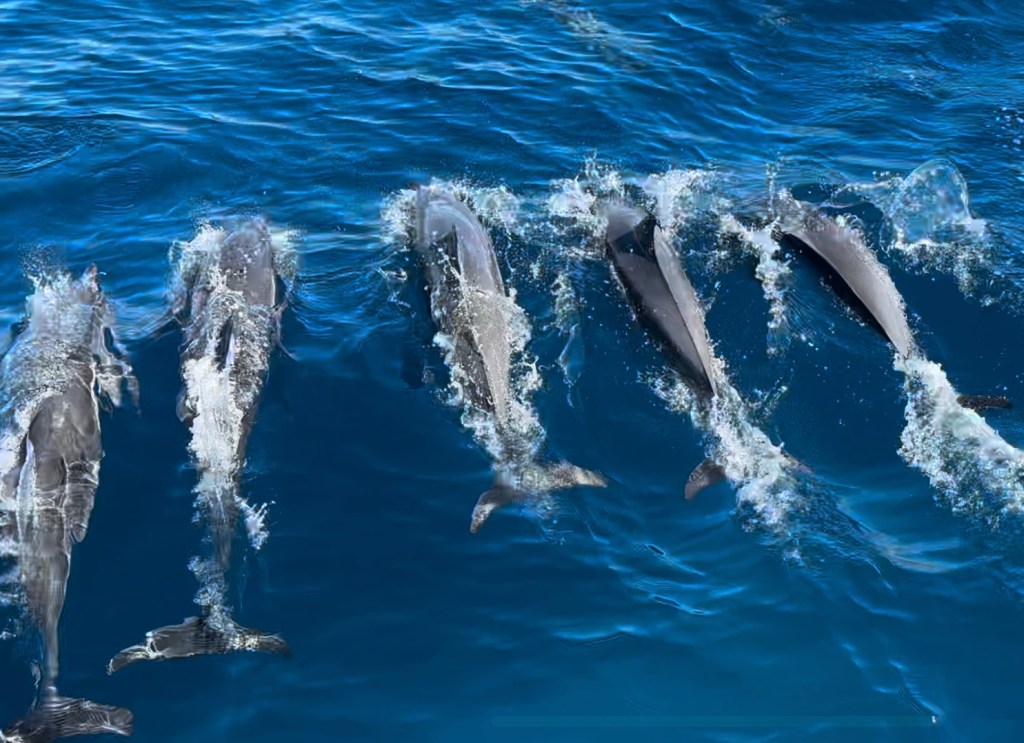
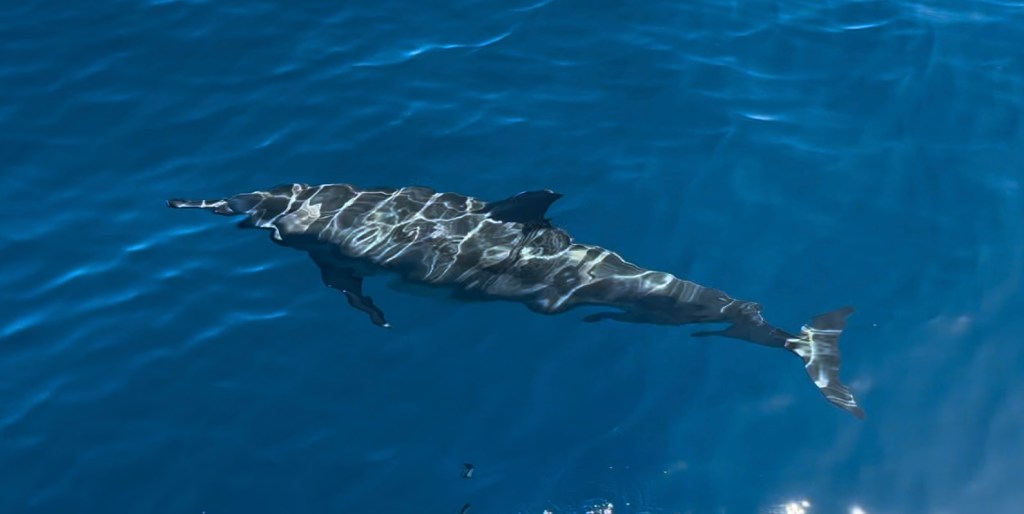
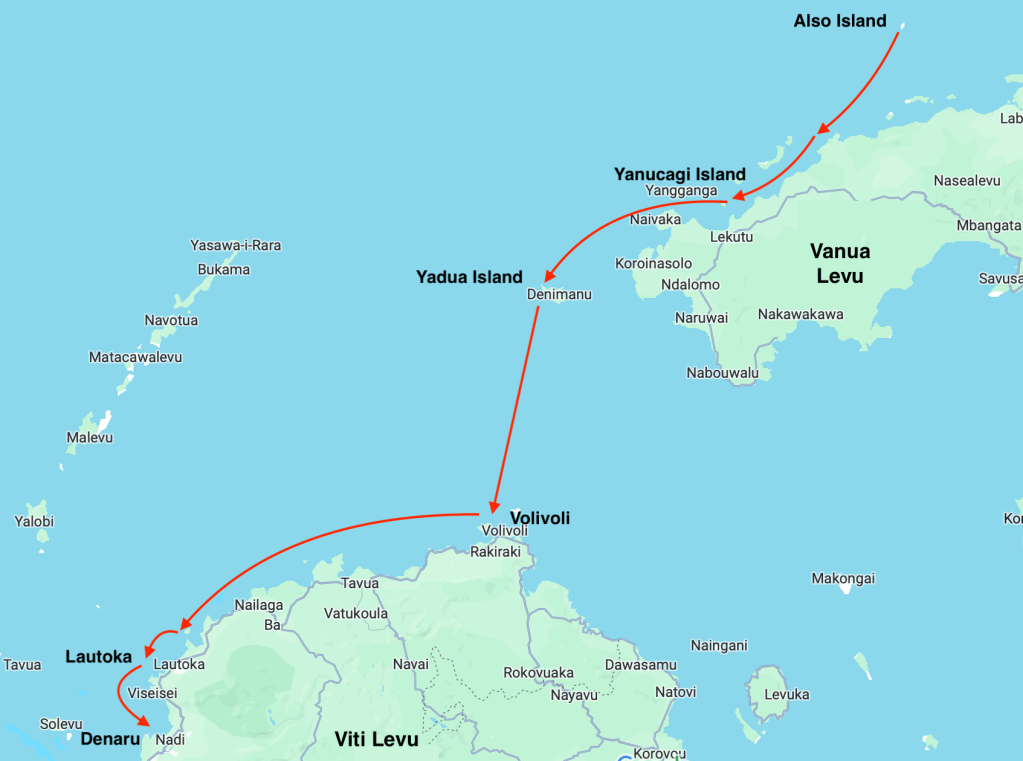
We left Kia Island with a nice easterly breeze that allowed us to sail for most of the morning. Alas, later in the afternoon the breeze slowly died away and we ended up motoring in very hot and humid conditions. During this time we were joined by one of the largest pods of dolphins we have met to date, and they swam at the bow of the boat in the crystal clear water.

As the day dragged on we tried various ways to keep our cool. At one point I rigged our hammock between the mast and gib, laid back with a cold beer, and tried to stay in the shade. This might sound idyllic, but the way in which the hammock closed around me was pretty clammy and uncomfortable, and after fetching me my first beer Cara chose to ignore all calls for further hydration. So it wasn’t that great. To be honest I am not one for sitting around in the sun, so trying to pass time when all there is to do is to sit in the sun is pretty painful. I appreciate that many of our friends and family, especially those back in Dunedin who have had a miserable summer, will think that I’m skiting (boasting), but continue on gentle reader and you will discover that soon enough the other shoe was to drop…

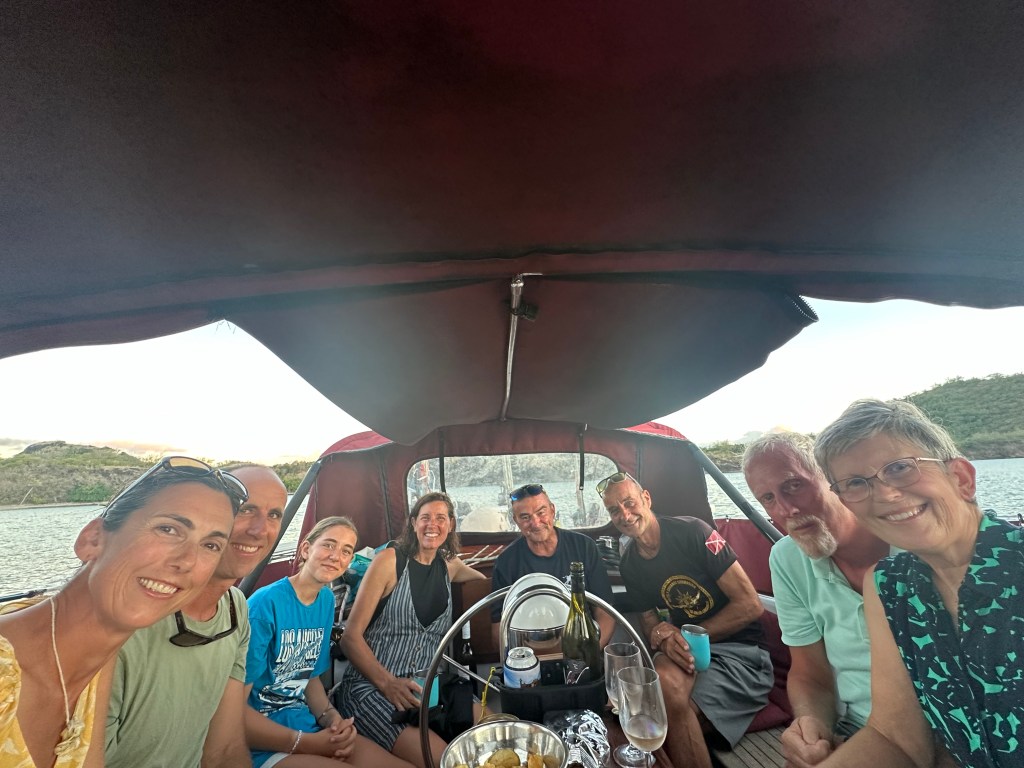
At the end of the day we anchored behind Yanucagi Island, a mangrove swampy kind of place with a nasty reef, so we didn’t go ashore and left first thing in the morning. Our destination was Yadua Island, an island that sits between Vanua Levu and Viti Levu, the two main islands in the Fijian group. As we approached Yadua Island we were delighted to see Maina heading in to the bay, and later on who should appear but Love Machine. We have bumped into these yachts several times since we first met in Tonga and have become good friends with their crews. We arranged to have sundowners and a catchup and invited the crew of another yacht already in the bay to join us.
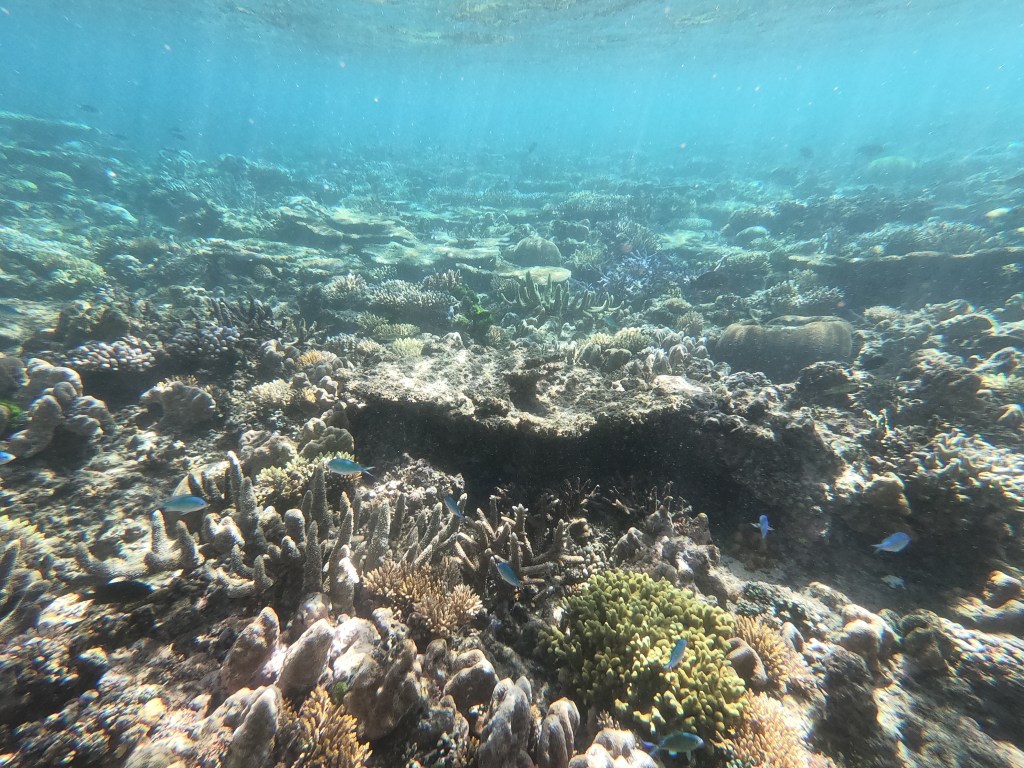
Yadua is known for great snorkelling, and has several different reefs to choose from. This is the first time we have seen sharks on this trip and they seemed neither afraid or curious, which is more than can be said for us. No doubt they will have seen many more snorkellers in the past than we have seen sharks.


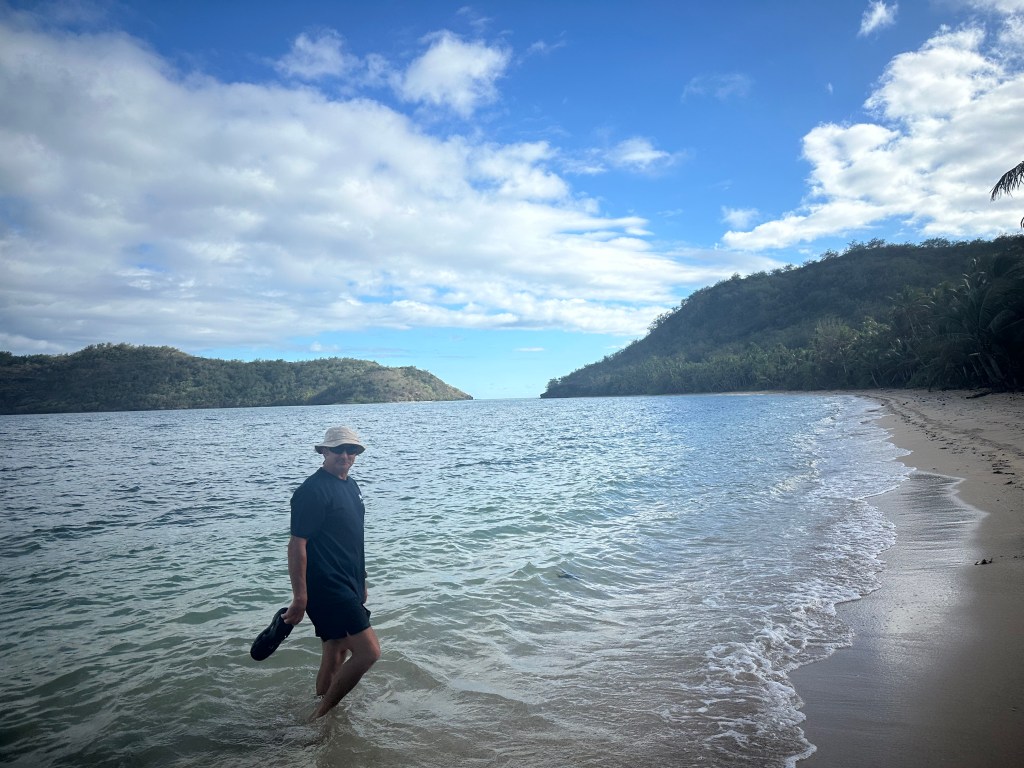
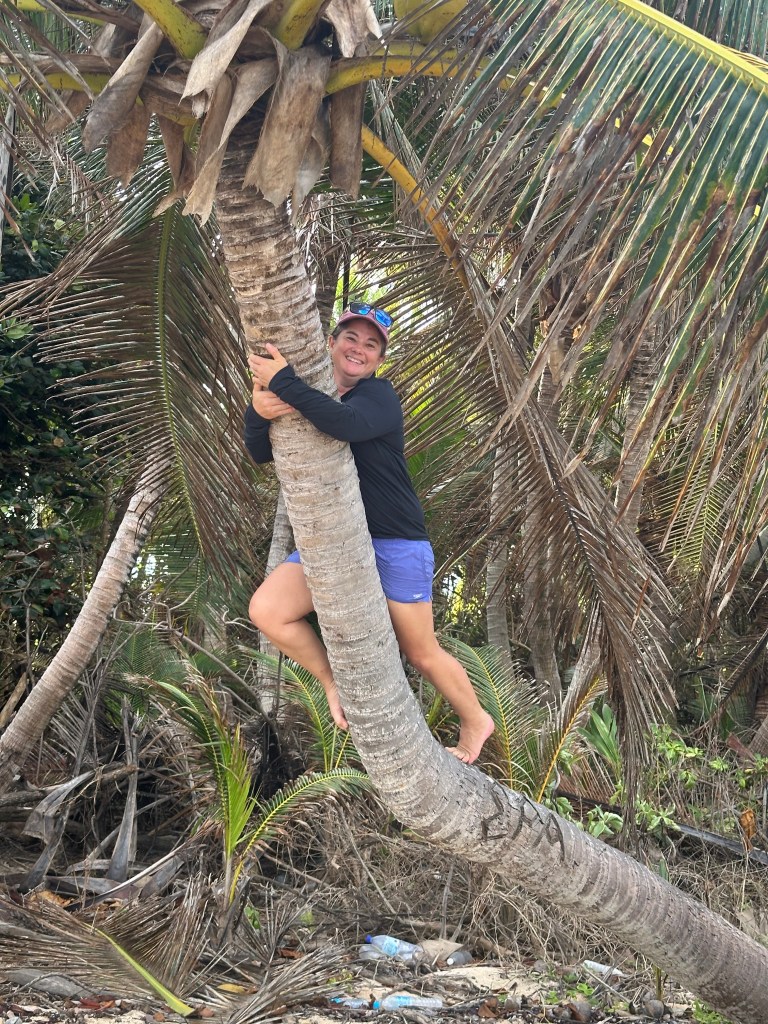
Another day we walked across a small isthmus to another beach where we gathered coconuts and tried to find crabs to eat.

After a couple of days we left our friends who were heading on to the Yasawa group and headed south west towards Viti Levu. I was a bit under the weather so Cara took the reins and ran the cutter for the day. One small incident had me kicking myself. We had managed to catch another Wahoo and after getting it on board and killing it with a blow to the head, I thought I would try a technique I had read about which involves cutting the fishes throat and the artery at the back fin and then allowing it to drag behind the boat to bleed out — thereby saving a good deal of cleaning up (we normally put the fish in a chilly bin with seawater to exsanguinate, but it’s still a ‘bloody mess’). Unfortunately, as soon as the fish was back in the water the gaff slipped out and then the lure, with fish attached, broke off the line. I thought briefly about jumping in to rescue lure and fish as they floated away, but we were sailing, which makes stopping the boat a challenge, and I didn’t fancy finding out first hand how one of the hooks feels when it rips into your flesh (luckily for fish they don’t have feelings — according to Kurt Cobain — though I find hooked fish always look pretty miserable, and I’m sure a hooked Julian would be most unhappy). We turned the boat around but fish and lure had gone to Davy Jones. I do hate killing something pointlessly, though I’m sure the fish went back into the food chain, and I do hate losing a lure that was working so well — but on the bright side, no fish for tea!
On arrival we sailed through a series of channels in reefs which was great fun as the wind came from a direction that allowed us to continue sailing on jib alone as we navigated our way through. Anchoring off Volivoli we spied a resort and decided to go ashore for a decent meal. Unfortunately, after getting the dinghy off the boat, the engine on the dinghy, and our glad rags on we were turned away without even being able to buy a drink in the near empty bar. Perhaps our rags weren’t glad enough?
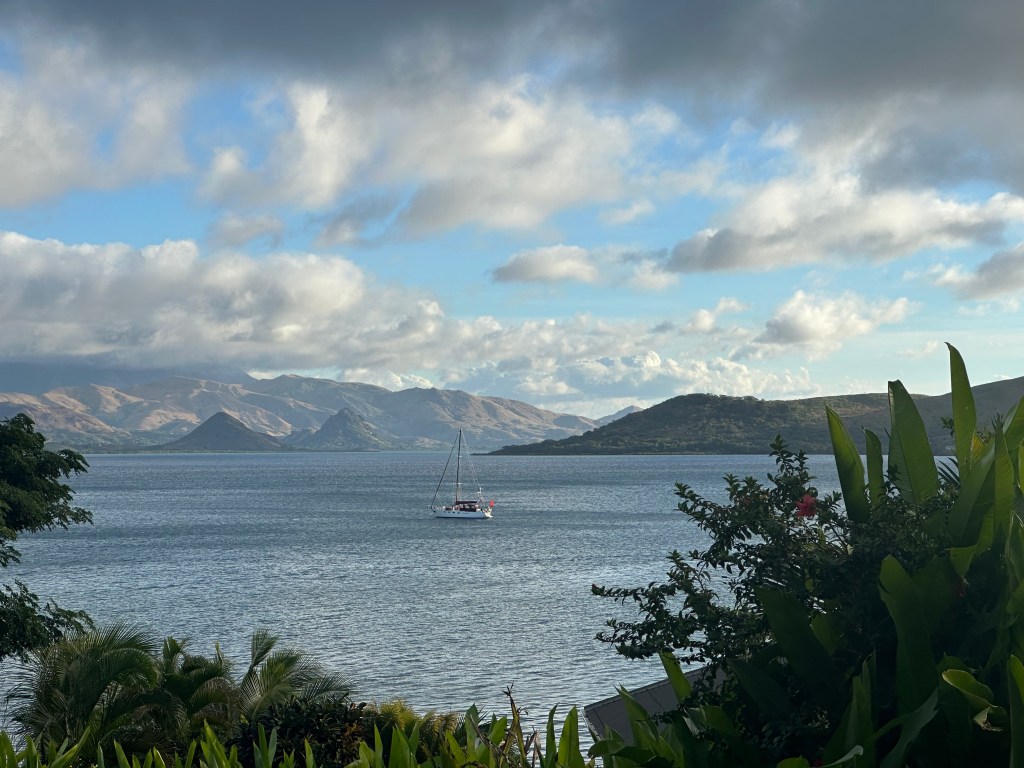
Our journey continued next morning, and we sailed downwind all day following channels between the mainland and reef.
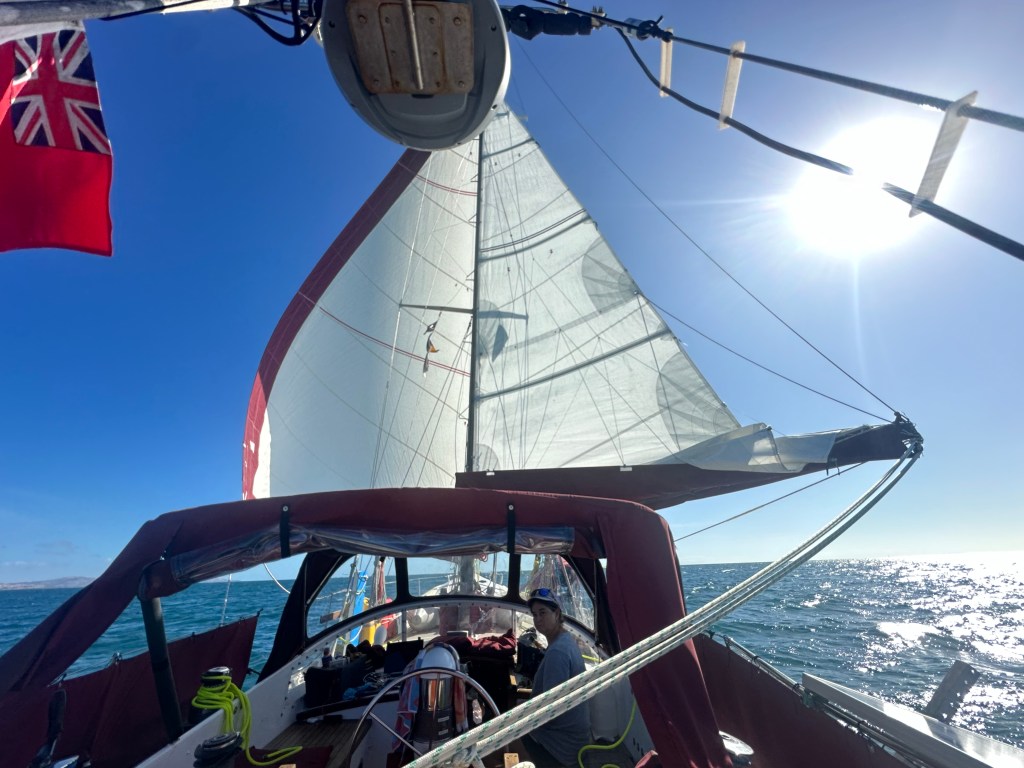
At the end of the day Cara noticed a small tear in the jib, so we quickly furled it away before it ripped any further — a stitch in time and all that. We stopped near another mangrove swamp and next morning dropped the sail for repair. After placing patches either side of the sail and stitching them together we were ready to go again.

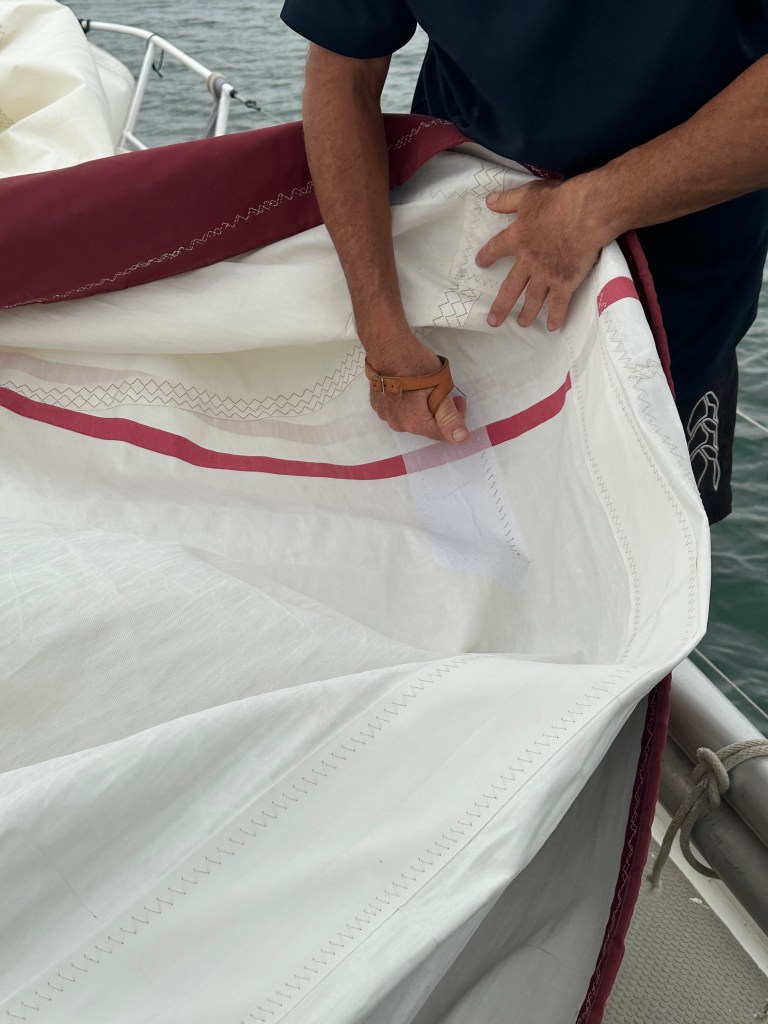
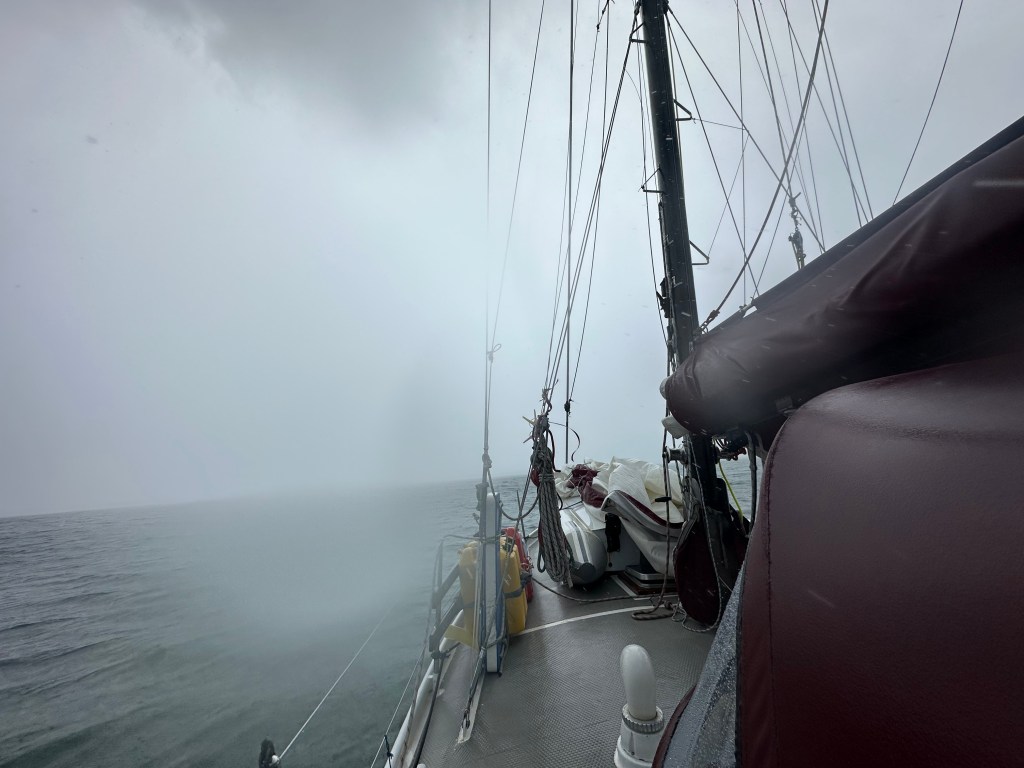
The damage to the sail was near a previous tear, so we suspected that perhaps there was something sharp catching the sail as it dragged past the mast, such as a split pin. I climbed the mast to find an unpleasant surprise…
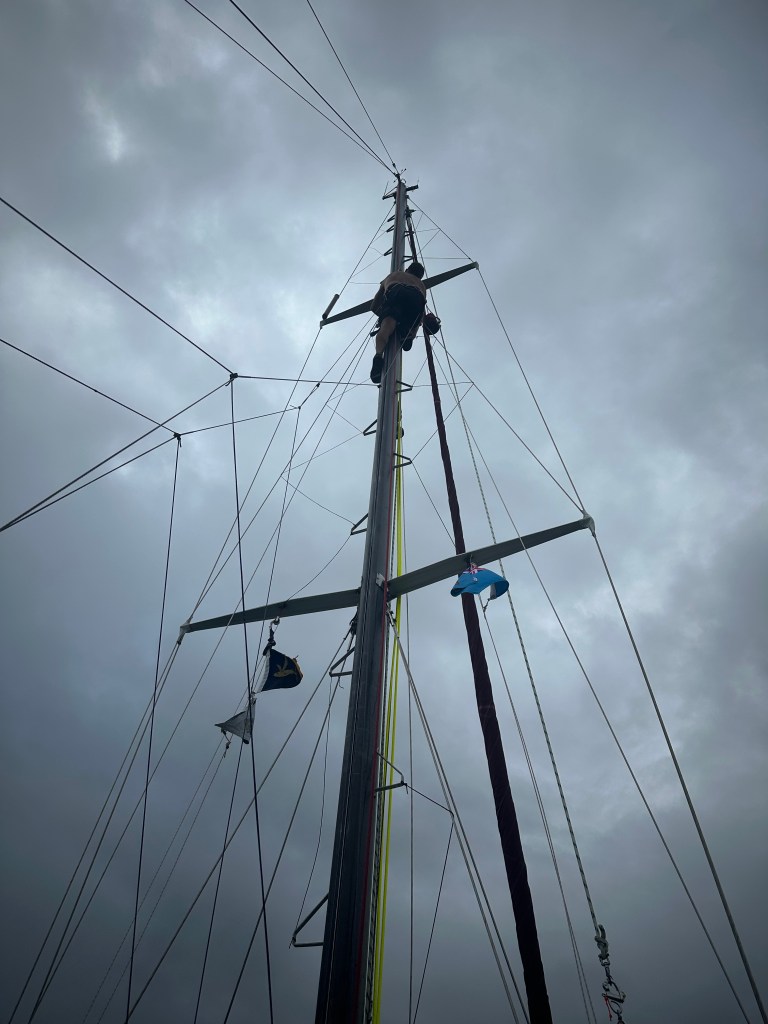
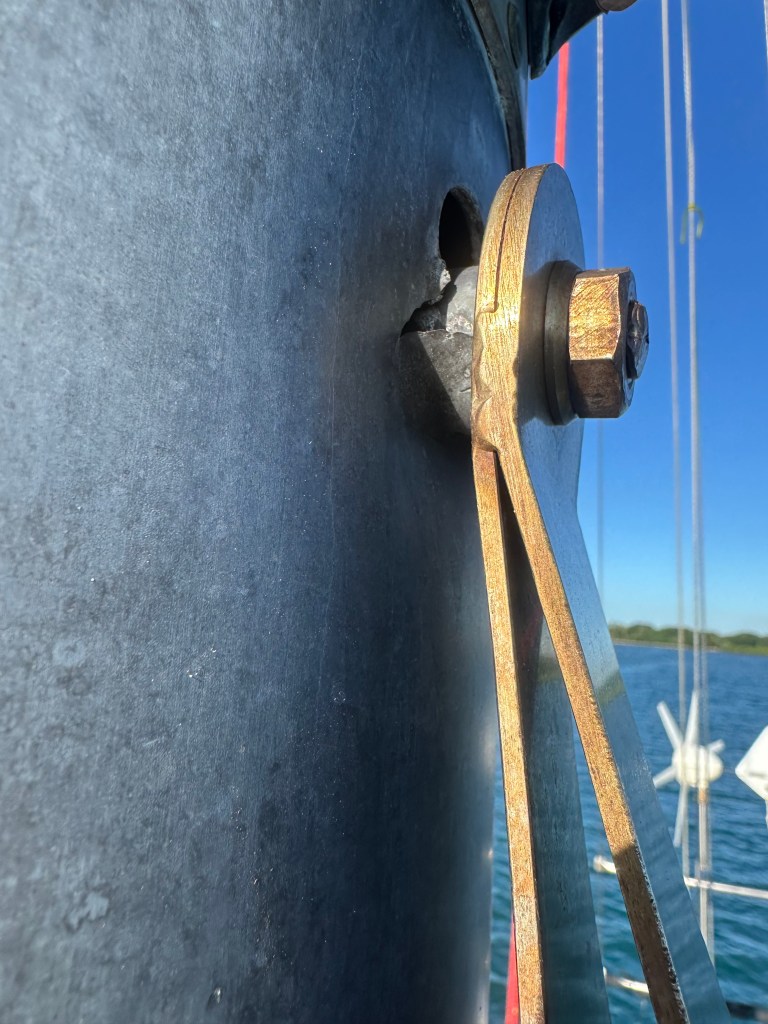
The port side lower shroud attachment had ripped through the mast wall. As you can see in the previous photo, in which I’m climbing the mast, Taurus has two sets of spreaders, the short lateral bars that extend from the mast and three sets of shrouds that attach beneath the spreaders and at the top of the mast. The shrouds laterally support the mast at points of high stress so that failure of the shrouds can create a situation in which the mast collapses. Our rig was replaced in December in New Zealand, but with no idea when the damage had been incurred we had to face the unsavoury fact that we may have sailed a long way, sometimes in heavy weather, with a sub-par rig. On the positive side, the fact that we may have sailed a long way, sometimes in heavy weather, with a sub-par rig that hadn’t yet collapsed gave us some confidence that the mast wasn’t about to fall over. If the glass can’t be full then half full has to be next best.
With this in mind, our ripping the sail turned out to be a stroke of good fortune, because it meant that we found this issue near one of the few places in Fiji where we can get professional rigging work carried out. It is quite possible that had it not happened we would have set sail to Vanuatu none the wiser, and the next opportunity for repair would probably be in Australia. I was reminded of the story of when a farmer’s son breaks his leg and all his neighbours come along and say, ‘such bad luck.’ The next day the army turns up and conscripts all the young men and takes them off to war. The farmer’s son is left behind due to his injury and all the neighbours come and say to him, ‘such good luck.’ Other incidents happen with luck flip flopping between apparently good and bad as regularly as a pendulum, with the moral being that one can never really say if fate has been kind or not as it always depends on contextual factors that lie in the future.
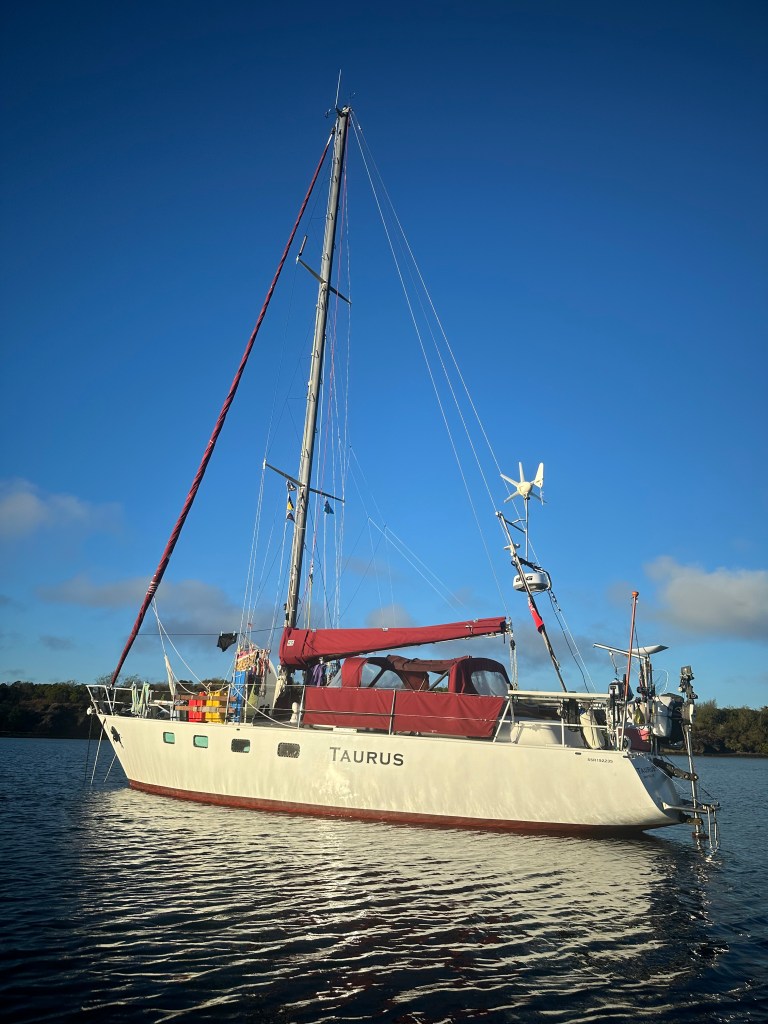
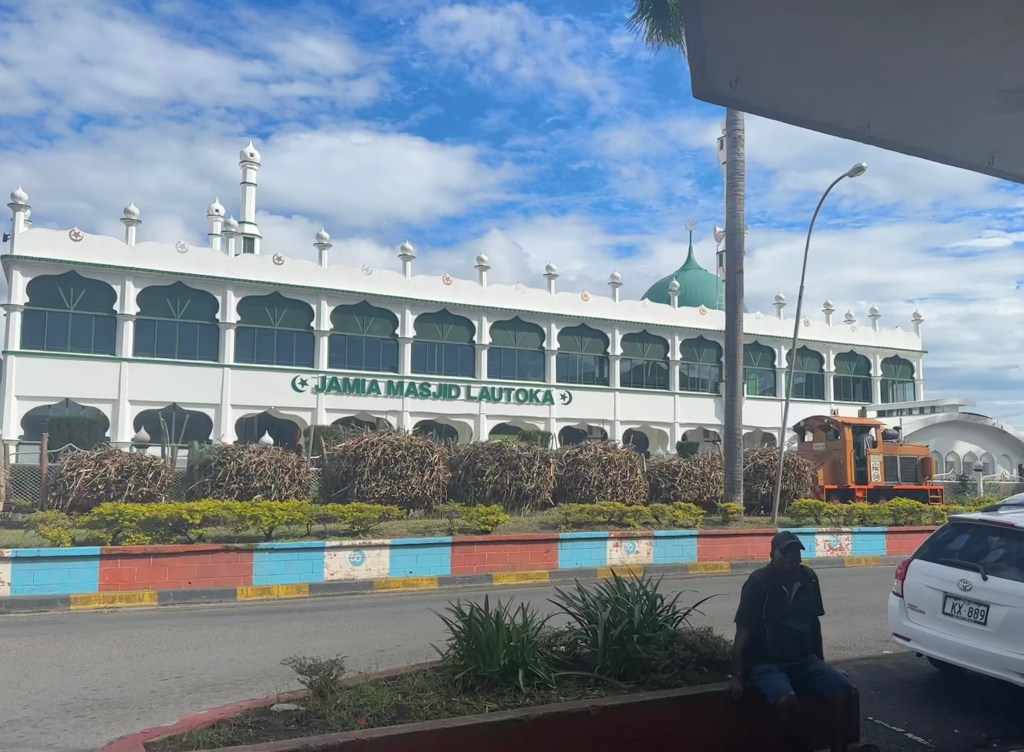
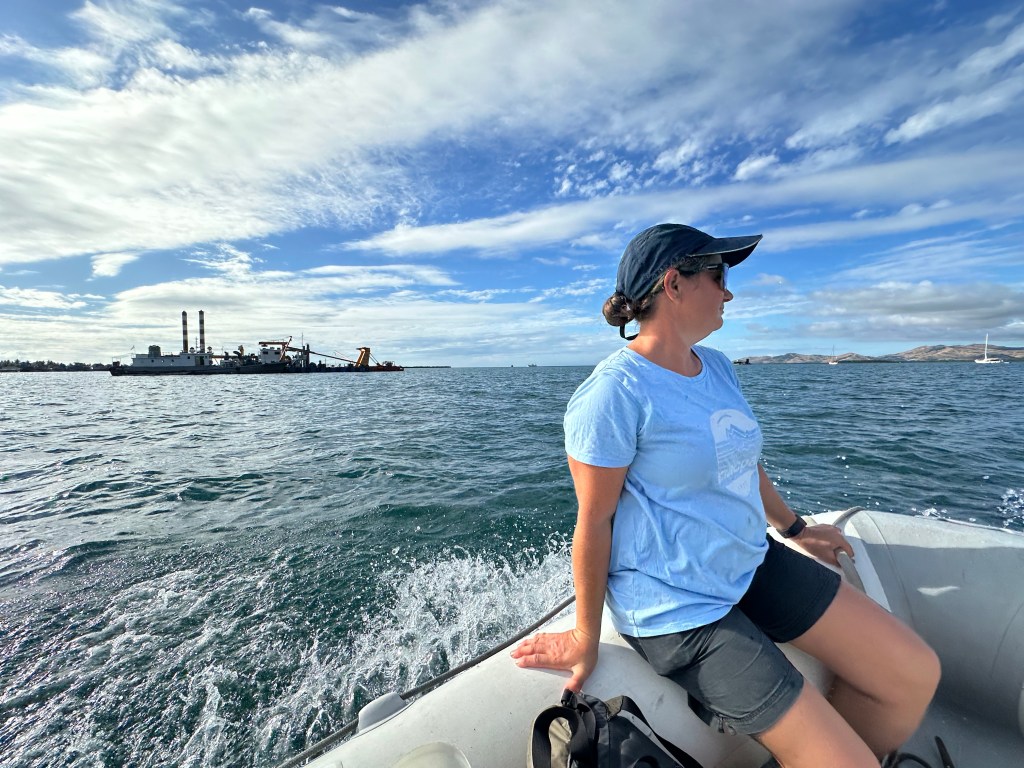
We couldn’t contact the rigger working in Denaru at the weekend, a few hours to the south, so decided to continue with our plans. Our next stop was Lautoka, a bustling city of 70,000 people, Fiji’s second largest city, and a hub of sugar cane production. After a ‘gentle sail’ of a couple of hours we found an anchor site in the harbour and took the dinghy to shore via a very narrow dredged channel. Our first priority was a decent meal. Though Cara, who does most of the cooking onboard, is able to do wonders with the ship’s rations, there is a limit to what can be created in our small galley. Eating out is a treat we both look forward to, especially as the food in Fiji is universally delicious and cheap as, well, chips.
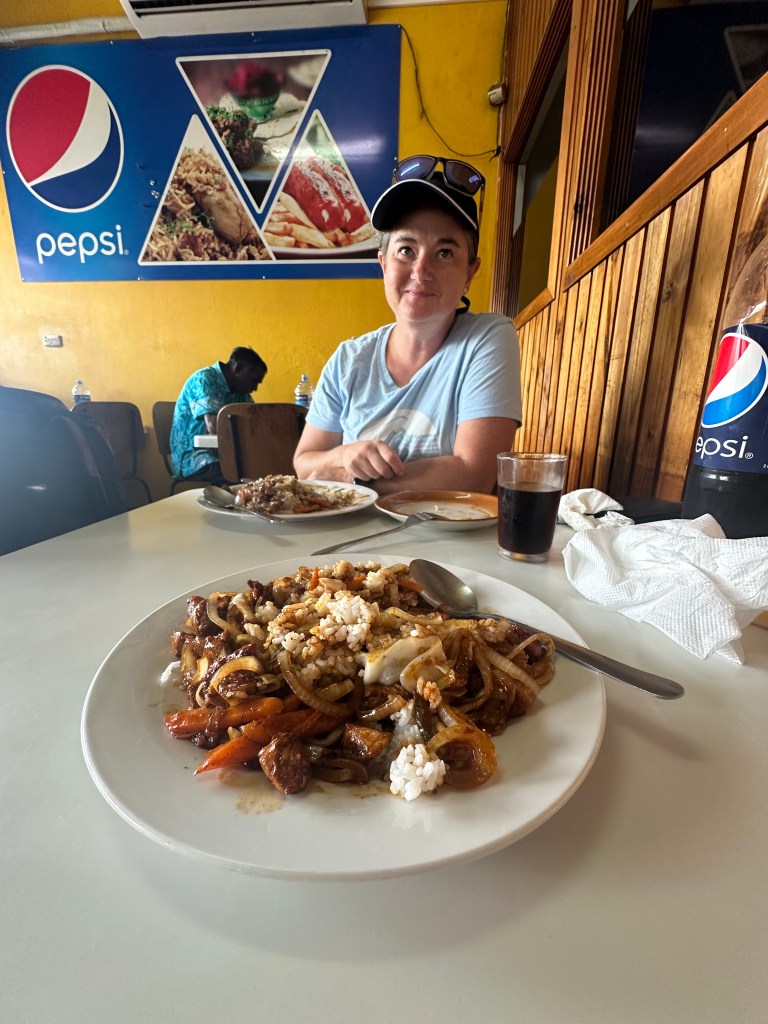
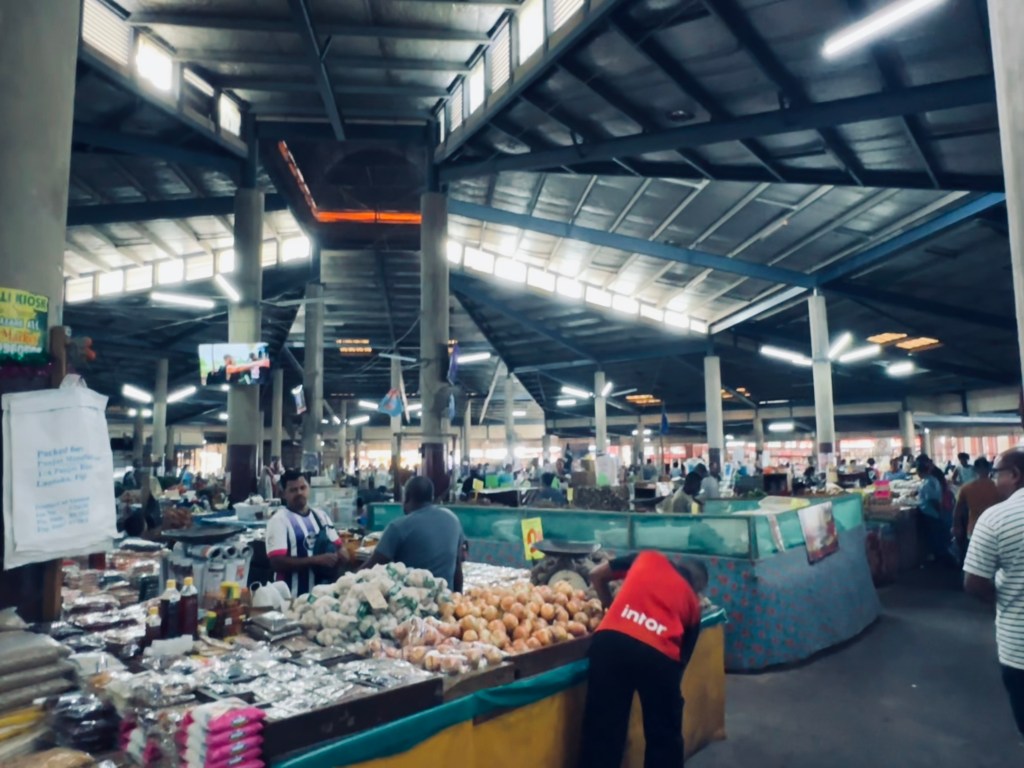
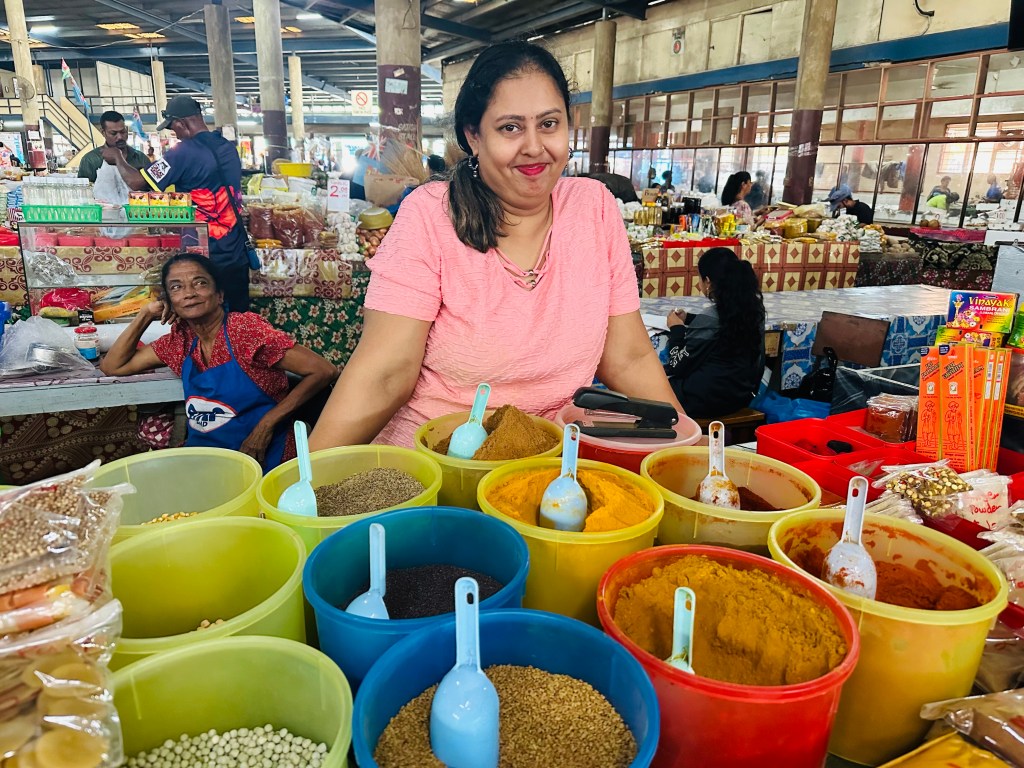
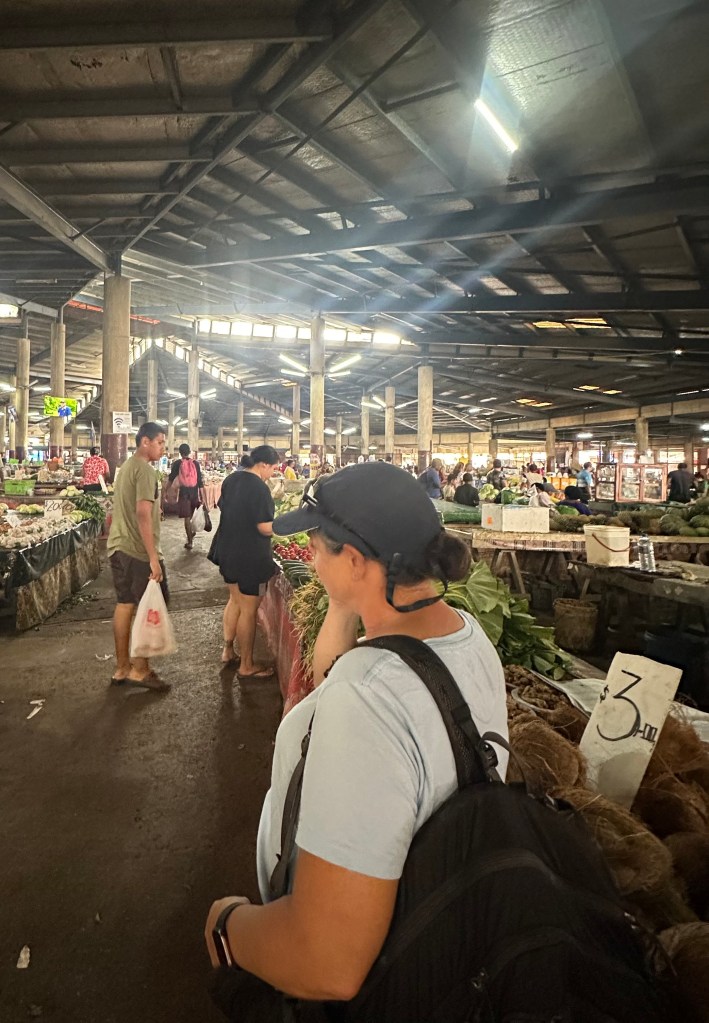
After curry for lunch we headed to the market to re-provision. The range of fruit and vegetables in these places is amazing, with many exotic items for sale that I have never seen, let alone can put a name to. The aroma of the market is something else as well, with many Indian spice merchants selling their goods from open containers. Everywhere you turn people smile and call out, “Bula!”, Fijian for “hello!”
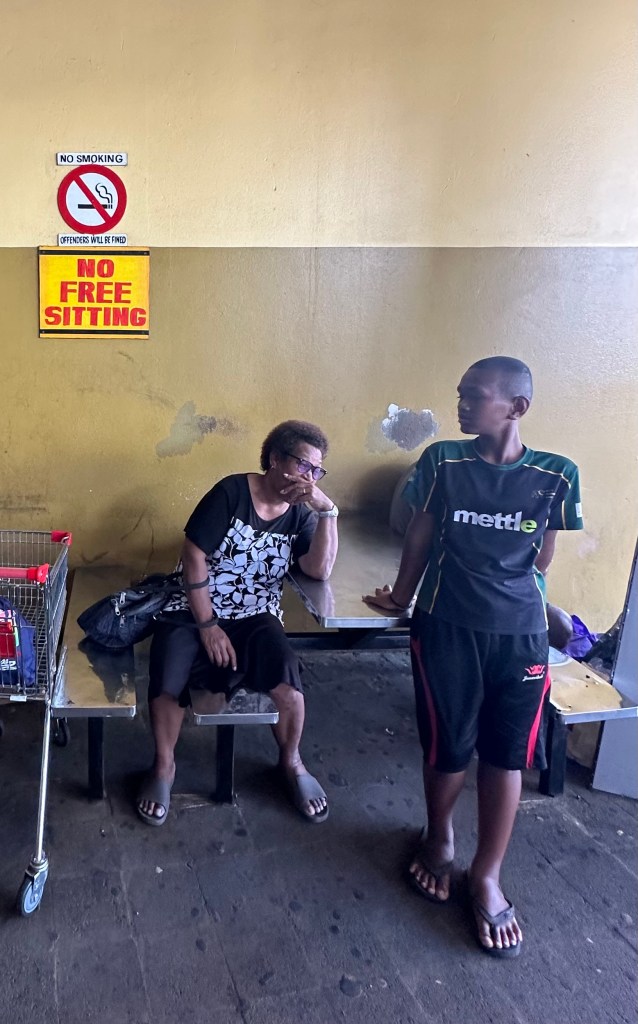
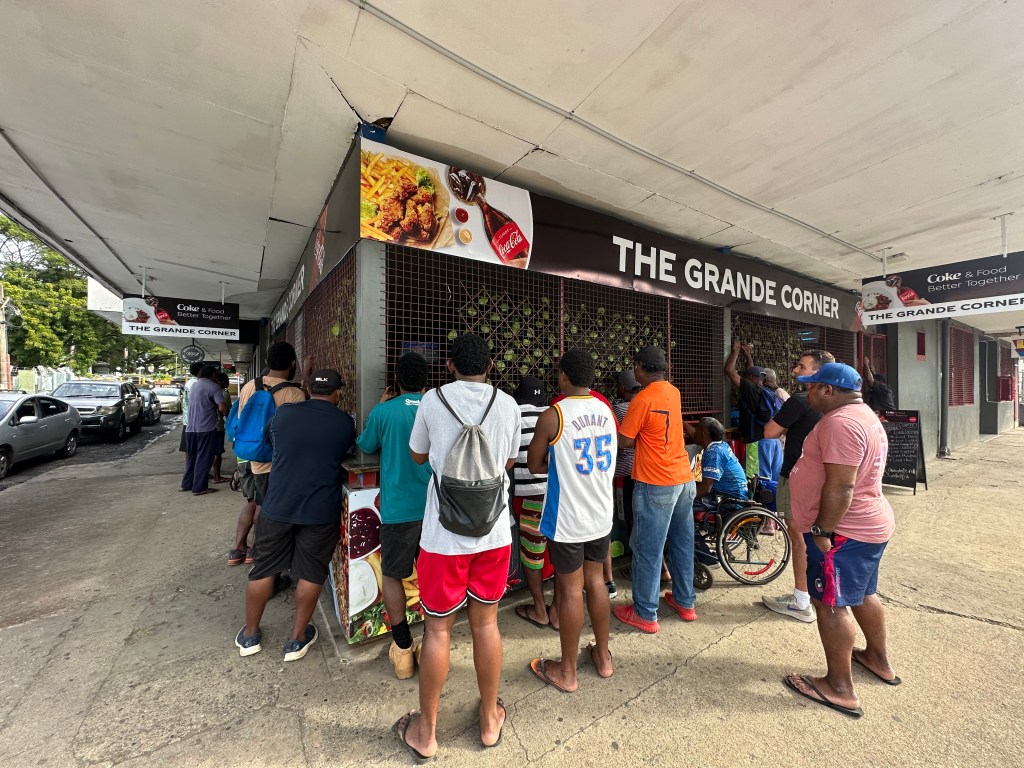
As we were leaving we noticed a crowd gathered round what looked like a corner dairy. We went over to see what the attraction was and found that the All Blacks were playing Fiji on TV, and those unable to get a table inside, or too poor to buy a beer, stood outside to cheer their national team on. We knew that the game was taking place but hadn’t realised it was going to be played so early — the San Diego venue catching us out. As ever, the Fijians couldn’t have been kinder and made room for their Kiwi friends so we could all enjoy the game.
After the game we carried on back to the boat when suddenly we heard a weird hooting noise. The next thing a train rattled through the centre of town, right along the middle of the main road, pulling wagon after wagon of sugar cane. It was a surreal sight but obviously something that happened frequently enough for the locals to completely ignore it.
We returned to the dinghy and ran back out to Taurus to get under way. Cara’s mum, Christine, was due to arrive in a couple of days and we needed to be in Denarau to meet her.

Anchoring outside Denarau we googled the local town to see what was available and if it was worth going ashore for a look around and a drink or meal. The prices were shocking compared to what we had grown used to, with the cheapest meal available over $50.00 and most closer to F$90 — over ten times what we had paid for a meal a couple of hours north in Lautoka.
The next day we took the dinghy into Denarau Marina and then walked the twenty minutes to the hotel Christine was staying in. The streets were immaculate with manicured hedges and lawns and gated communities along the way. The hotel was something else as well: opulent in your standardised corporate fashion, and full of white people wearing expensive jewellery and designer clothes. Being stuck for anywhere to go for dinner we ended up eating in the hotel restaurant and paying F$89.00 per person for a buffet. Naturally, because we were paying such a high price for the meal, I tried to stuff in as much as possible, whilst the Fijian staff cleared plate after plate so we could stuff in some more. The experience felt less luxurious than slightly demeaning; the hotel restaurant, no fancier than any of its ilk in any corner of the world, reminded me of childhood holidays at Butlins — get the punters in, get them fed, get them out. The racial divide between those being served and those serving was also uncomfortably distinct. Presumably people of colour do stay at the Sofitel sometimes, but I have yet to see one. The wealth divide was only slightly less obvious due to the uniforms the staff wore. I couldn’t help but wonder what the Fijians must think of us — paying a fortune for an average meal that we shovelled down as if expecting a famine and desperately needed to add to our already well padded frames. The courtesy of the staff was no less than we had found elsewhere in Fiji, but there was an edge of unhappy subservience, of their kindness having been bought and paid for.
Denaru felt unreal, like a Fiji Disneyland, a place where the rich go to experience a Fiji sans the unpleasant rubbish and poverty that they might find elsewhere — a sanitised Fiji that can’t possibly offend unless your taste runs towards not paying exorbitant amounts of money for an experience devoid of charm or reality. Or, perhaps the idea is simply to sit in the sun with other wealthy people and the location, besides bragging rights, is entirely beside the point. A control booth that separates the hotel complexes from the rest of the country, complete with barrier arm, reinforced the view that real Fijian people weren’t welcome in this playground for wealthy foreigners. Back at the marina I found a book in the office that was written for super yacht owners. Within its pages the tourism ministers of various Pacific nations, including New Zealand, competed to fawn and pander to the mega wealthy and beg them to visit. One of the chapters was all about the altruistic possibilities of mega yacht cruising, a hub for natural disaster management being the example given. I couldn’t help but snort with derision. Perhaps we should hand out super hero capes to these people, along with the tax breaks, opportunities for citizenship, and God knows what else that they expect and take for granted.

My champagne socialist roots are showing, and who am I to complain about how other people spend their money? The older I get the less I feel I know. It’s not my intention to insult anyone or try to assume a moral high ground. I am privileged to have the opportunities to travel that I do, and I couldn’t have done it without Cara who earnt a very good salary as a doctor. However, I feel that I have some right to record my discomfort with the money taking machine that passes itself off as an opportunity for relaxation and travel because A: this is my blog, and B: Cara and I have deliberately tried to minimise our footprint and live simpler, sustainable lives. Having seen the degree of poverty elsewhere, and the kindness that the poor have shown us, the wealth being squandered in this never-never land is jarring. Life changing amounts for the average Fijian blown on a week’s worth of pool side recliner.
In the Four Quartets T. S. Eliot wrote the following famous lines:
“We shall not cease from exploration
And the end of all our exploring
Will be to arrive where we started
And know the place for the first time.
Through the unknown, remembered gate
When the last of earth left to discover
Is that which was the beginning;
At the source of the longest river
The voice of the hidden waterfall
And the children in the apple-tree
Not known, because not looked for
But heard, half-heard, in the stillness
Between two waves of the sea.
—T.S. Eliot, from “Little Gidding,” Four Quartets. Originally published 1943.”
I’m not necessarily convinced that the point of a holiday in a five star hotel is ‘exploration’ or personal growth. But perhaps the point of sailing on a small yacht on a budget for as long and as far as possible is. If so, one lesson that we keep running into is that money is no substitute for community. The warmth of the Fijian people, the laughing and happy children one sees everywhere, the lack of crime, all highlight the view that though first world nations may glitter, their lustre may be that of fool’s gold.
Next time: Friends arrive and we speak to a rigger about fixing the mast…
 Sailing Taurus NZ
Leave a comment