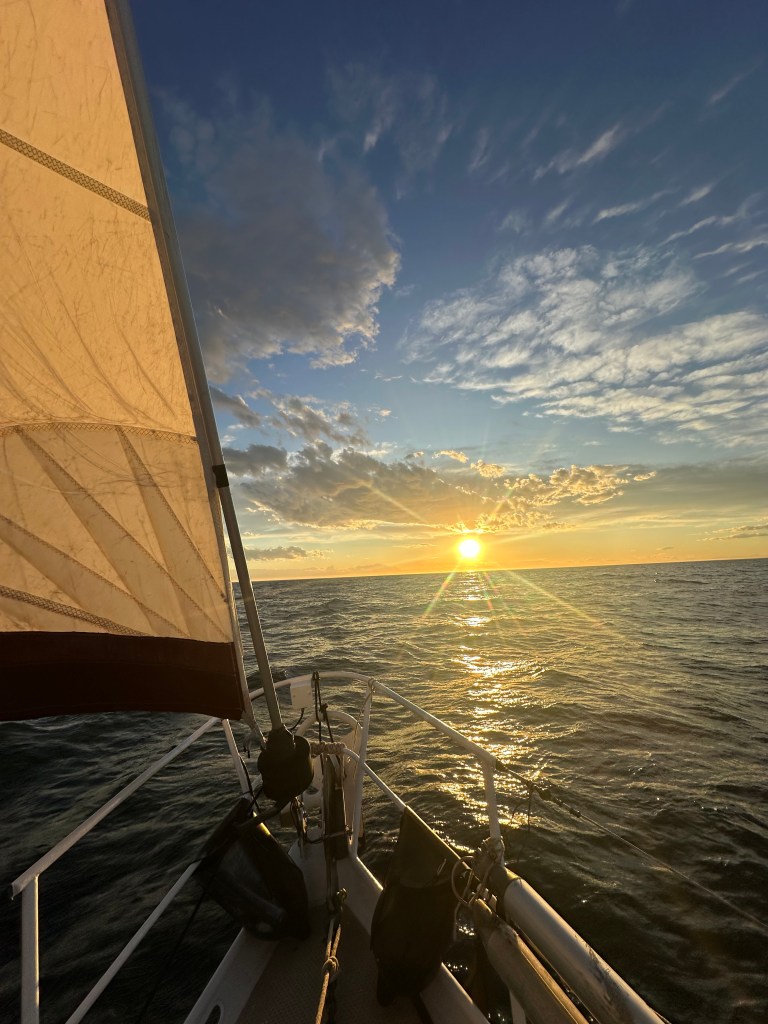
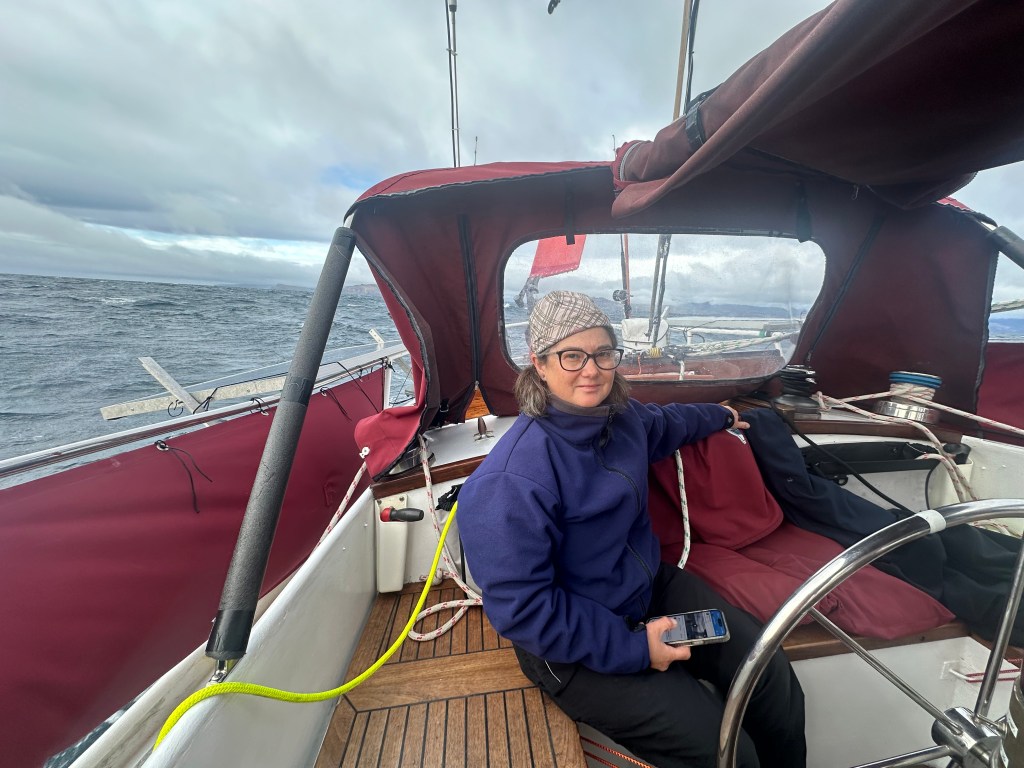
Our desire for a quieter passage from Lyttleton to Dunedin was granted, but as is the way with human nature (or perhaps my nature) this resulted not in a calm and relaxing trip, but rather a frustrating journey because we couldn’t power Taurus up. Nevertheless, the slow trip eventually came to an end, and we arrived home on the 16th of December.
We had decided to return to Dunedin for a number of reasons:
- We needed to be hauled out to do a number of jobs, including antifouling the hull, removing our old wind-steering gear, and fitting our ‘new’ Hydrovane. It made sense to do this in Dunedin as the marina is a club rather than a business – so has cheaper rates. The club also has less concern with health and safety issues (such as the constant wearing of high vis gear, the inspection and labelling of all electrical tools and extension cords, a ban on all ‘hot work’ (i.e. grinding, welding, drilling), our living on the boat whilst on the hard, and so on) which can be a bit OTT elsewhere.
- Hailing from this jewel of the South, we also had friends and family in Dunedin which we looked forward to catching up with, and which we knew would help us out with transport, boatey advice, and alcohol consumption.
- We have a storage garage in Dunedin and wanted to drop off some stuff and pick up some other stuff.
- It was Christmas, and Cara wanted to see her family.
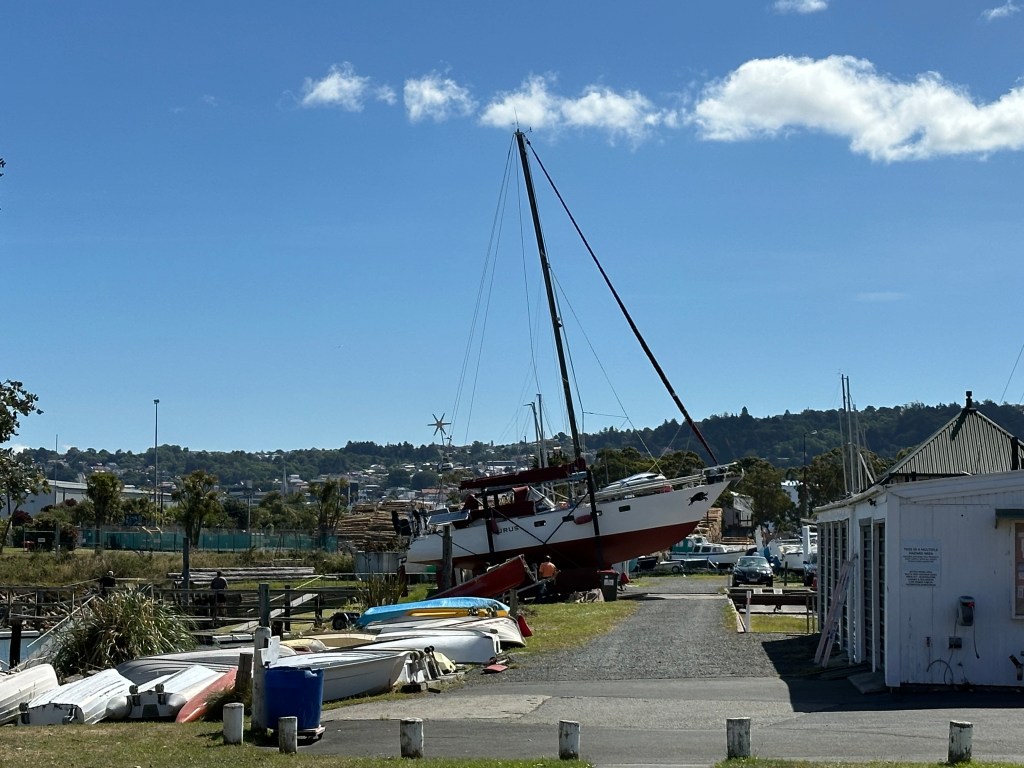
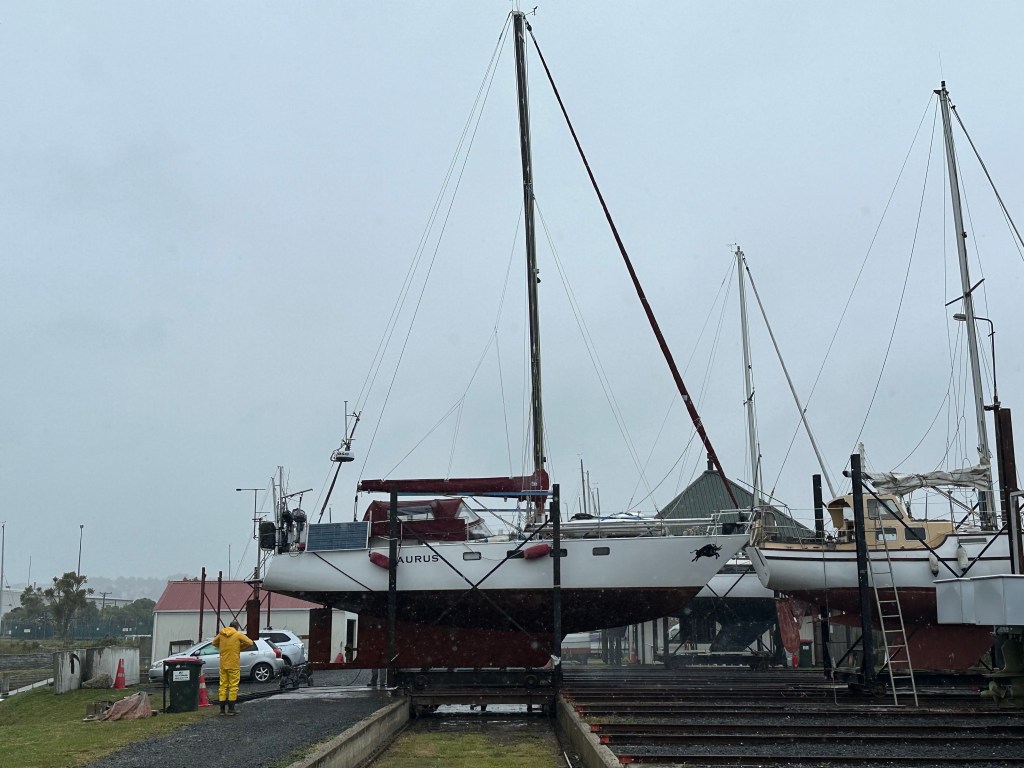
Though it is impossible to beat Dunedin on a good day, these can be few and far apart, and the weather was certainly ‘changeable’ — often providing four seasons in a day. Nevertheless, thanks to Geoff, the club manager, we were soon able to grab a cradle and haul Taurus up onto the hard.
The first job was to water blast any growth from the hull so it was nice and clean and ready to repaint with antifoul. This job is great fun as one can look forward to getting slimy and soaking wet whilst wearing ancient ‘water proofs.’ These garments, which are as water repellent as a sleeping bag sized tea bag, are typically several sizes too small, a tasteful bright yellow, and are cherished (or at least saved from the rubbish bin year after year) because no-one wants to get their decent waterproofs (expensive holy sacraments) dirty on this filthy annual chore.
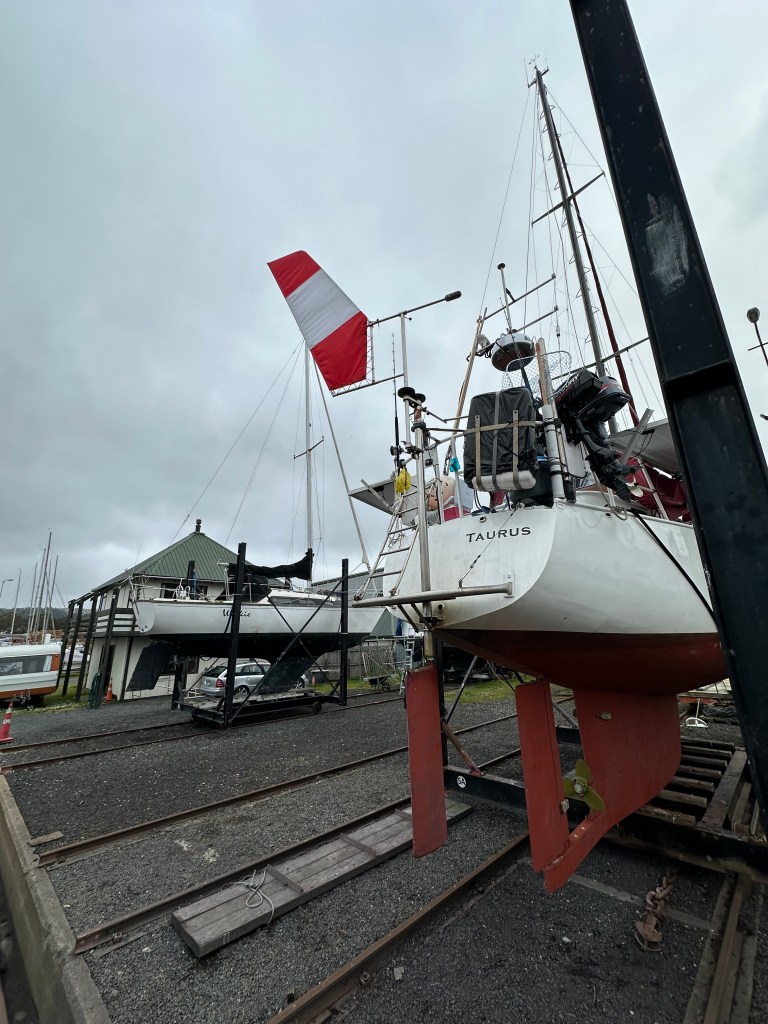
Changing our old Windpilot Atlantic for the second hand Hydrovane we had bought in the Marlborough Sounds was another priority. The Windpilot is considered old technology and uses a large sail that is essentially connected directly to an auxiliary rudder. The sail is angled to ‘blade’ into the wind, and hence if the yacht wanders off course, according to wind direction, the wind applies pressure to the sail, which applies pressure to the rudder, and turns it back. However, this vertical style of wind vane provides 1:1 steering power to wind energy, and the Atlantic is only recommended for boats up to 11 metres long, Taurus is 12 metres. Our experience with the Atlantic was a bit love/hate. When it worked it was great, saving us from either having to hand steer or use energy to run the electronic autopilot, but getting it to work was often difficult and sometimes impossible.
The Hydrovane uses a horizontal system that also utilises a sail that is bladed into the wind, but when the boat goes off course it flips or flaps rather than rotates, and through the magic of mysterious gearing provides a power to energy ratio of 3:1. Although it has been around, largely unchanged, since the 60’s, when the craze for single handed sailing made wind powered steering a necessity, the Hydrovane has an outstanding reputation as the ‘Rolls Royce’ of wind vanes. Certainly, the system was impressively ‘beefy’ compared to our old unit, and looked a bit like a transformer was breaking through the transom.

Our next chosen task was to replace the mast head light. Ours was probably original, so destroyed by forty years of UV, and sadly lacking an anchor light. Being conscientious boat owners we thought we would replace the wiring in the mast at the same time. This, we hoped, would give us the added benefit of being able to do the wiring on the deck instead of 16m in the air atop a hollow stick held in place by skinny wire. Naturally, boats being what they are, we subsequently found that we could not remove the original wire that had helpfully been crimped and then riveted in place inside the mast. Our choices were thus to either run a new wire down the mast (but as we would be unable to secure it it would slap in any kind of swell or wind and drive us quickly insane) or reuse the old wire. Choosing the latter we had to accept wiring the new light atop the mast, and then fixing the light to the mast head. Fortunately, our mast is fitted with steps so that I can climb up easily, and normally use a climbing ascender on the main halyard as a safety (it locks on the rope under pressure — such as the effect of gravity on my body). The downside of this system is that should I be incapacitated I cannot be lowered without someone attaching me to another rope and freeing me from the safety. A pre-attached second line would of course help in this regard, but would still need me to free the safety device, and would then require someone to constantly belay me. Thus, though the method we use is less safe it is a more practicable and manageable solution. You pay your money and make your choice. I find working at the top of the mast neither comfortable or fun. Initially I gripped my tools too tightly, a consequence of worrying about dropping them either onto Cara’s head or through a hatch cover, which led to odd cramps in my thumbs that prevented my being able to grip at all. When this happened I had to hang my arms down until the cramps eased before I could do any more work, or even climb down. Happily, familiarity breeds contempt, and this together with lanyards on the heavier tools and a healthy dose of denial managed to belie the possibility of my braining my one true love or of my falling to earth and dying, and eventually the job was completed. Or so we thought. As we considered the mast wiring we noted that one of the through deck grommet was placed right in the way of someone walking around the mast. This had led to the wire it held being damaged, and so we needed to move the grommet and fix the wire — a VHF coax cable. When we looked at moving the grommet we found that someone had taken the time to tap holes in the steel deck and had then used stainless steel machines screws that had of course rusted in place (dissimilar metals on boats always lead to corrosion). The damage required a small welding job and several coats of three different two-pot paints, before we could drill a new hole for a new through deck fitting, the bare metal being protected by several coats of three types of two-pot paint! Before we knew it, and with barely an incident likely to haunt us at 3am or be diagnosed as the cause of PTSD, we had a new mast light fitting.

Next we attacked the ‘head’ or toilet. The system had a nasty habit of becoming blocked due to the presence of a couple of 90 degree bends in the outlet system. The solution we had had to use in the past was to block the vent pipe and then pressurise the holding tank in the hope that the blockage succumbed before the tank burst. We had gotten away with this dodge a few times, but it felt a bit like poking a bear — it wasn’t something we could expect to get away with forever! The job, of course, turned into yet another mission, but I doubt anyone wants to hear the nasty details; needless to say we did away with the bends and hope to have solved the problem, but we would like to move to a composting system one day soon.


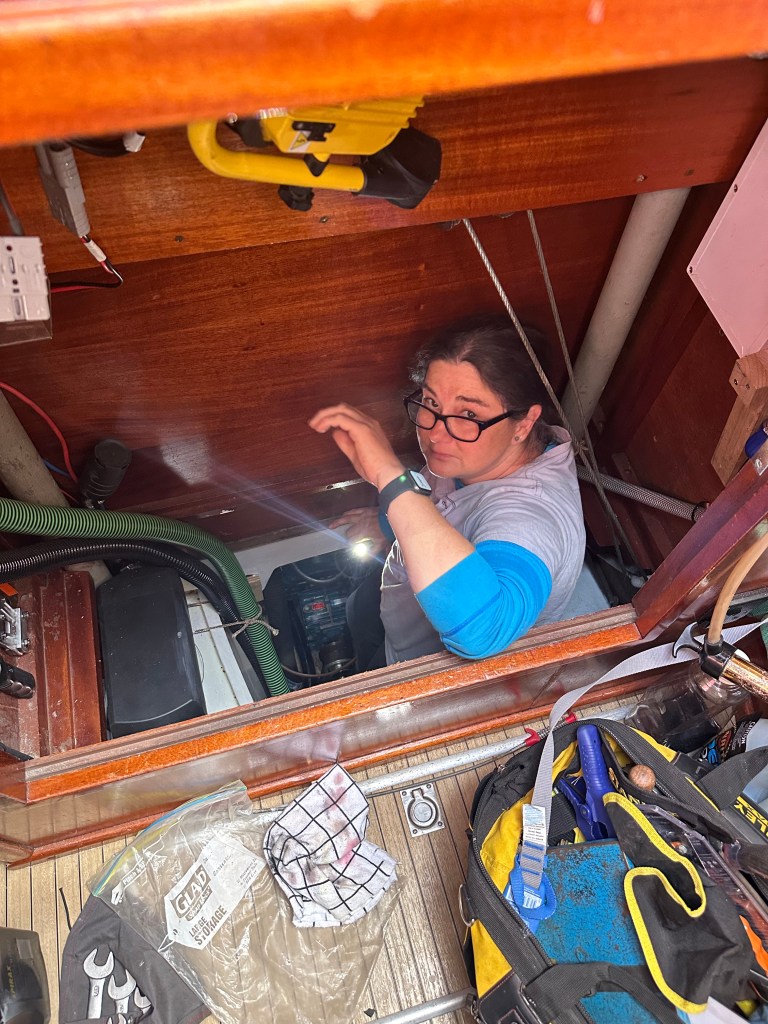
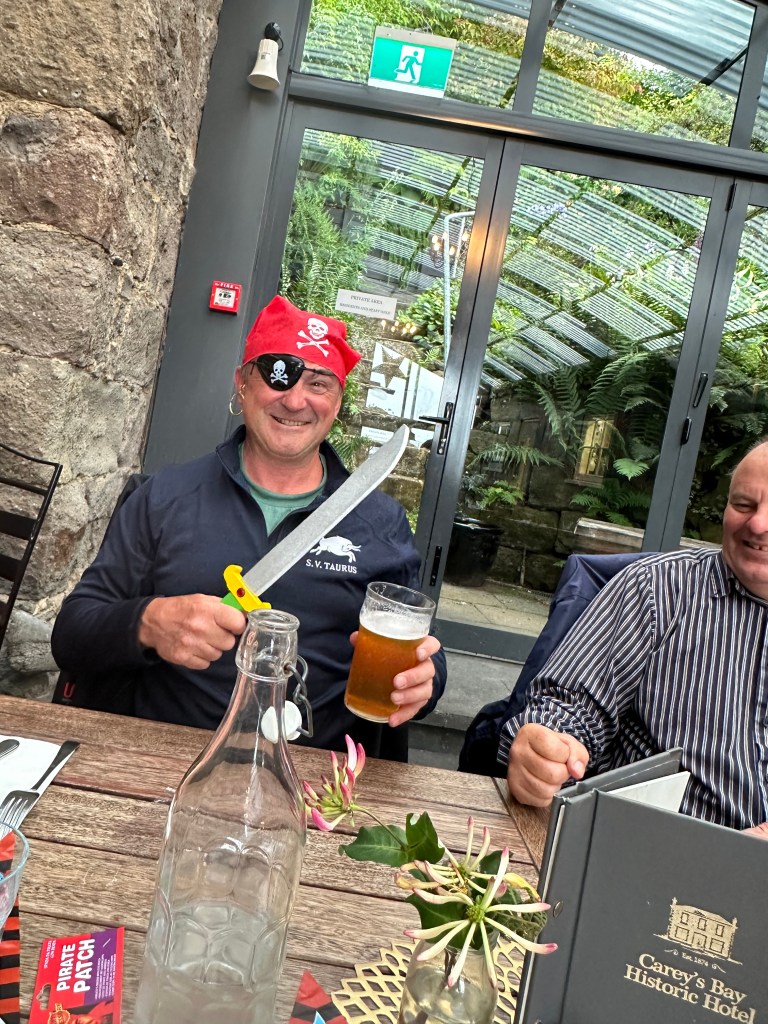
Our time in Dunedin wasn’t all work, and we took a bit of time off to hang out with friends for food, fun, and silliness.
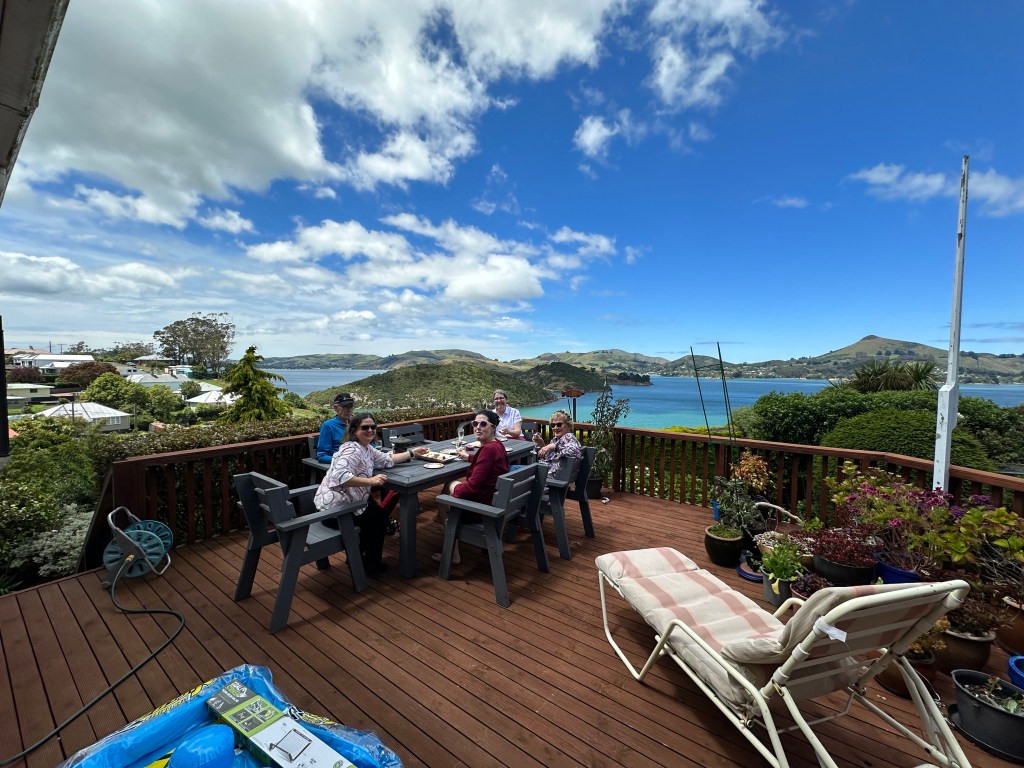
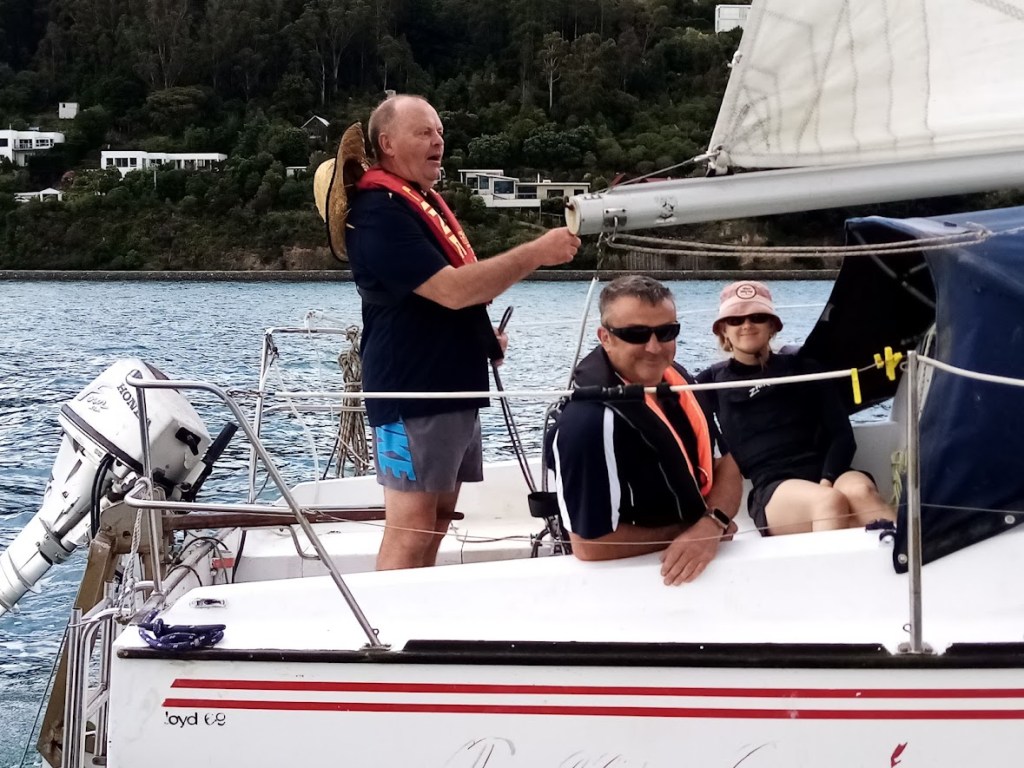




Next time: we find out if the Hydrovane and the head works, and sail north up the east coast of the South Island, again…
 Sailing Taurus NZ
Leave a comment