
The longed for day finally arrived and the house we had been building for about two and half years was finished, in our possession, and ready to be rented out.
By this time we were living aboard in Deborah Bay, having given up our live aboard status at the Otago Yacht Club when we left in January. The Otago Yacht Club committee subsequently decided to ban live aboards, a decision that had been in the wind for some years due to various club personalities and politics, and which hopefully will be reversed soon. Being able to live aboard is a great opportunity for those wishing to go cruising on their boats for any length of time, as it lets you work out what you need (and don’t need) and allows you to get the boat ready. The club also seems much quieter without people around, but perhaps that’s how some people like it.
We were waiting for a weather window to head north to Akaroa, but, predictably, the weather wasn’t playing the game. Akaroa is about a 36 hour sail from Dunedin across the Canterbury Bight, a serious body of water, especially as a direct line takes one about 40 nautical miles (about 80 kms) off shore. There are lots of cargo ships and fishing boats in this area and we had previously met an experienced sailor who got knocked down several times in a storm and barely lived to tell the tale. It’s not somewhere we wanted to be if the weather wasn’t right.
Having waited about a week we decided to stick our nose out of the harbour and see if the weather predictions matched reality. We found the weather wasn’t too bad and thought we might head north to anchor for a night or two around Karitane, a local community just up the coast. However, once we started sailing we thought we might as well keep going and head to Oamaru, about 8 hours away.
The weather was pretty variable switching from nothing at all to 30 knot plus gusts, so we were kept on our toes. Then about six hours into our sail we were fortunate to be called up by a local fishing boat who warned us of a number of cray pots in our path. Cray pots can be the blight of passing vessels. Essentially a welded steel cage dropped to the seafloor with a rope attached to a float so they can be pulled back to the surface, the idea is to catch crayfish (a NZ delicacy, like lobster but minus claws) but craypots can be equally adept at catching yachts. Should the rope get tangled in the propellor or rudder the boat can be trapped, and the only remedy may be to go for a swim with a knife, which is easier said than done in cold water and with a steel yacht bouncing around above your head. We were sailing, which is good on one hand because the line is less likely to get wrapped in the propellor, but not so good on the other as the boat is much less manoeuvrable.
We were surprised by the number of pots, which ranged in the dozens, and went on for what seemed several NM. If nothing else, trying to spot pots is a great reminder of how hard it would be to spot a man over board, as even though often brightly coloured, they can be very hard to see until close to, and, if spotted at a distance, they have a disconcerting habit of disappearing as they get knocked around in the swell, or dragged under water if the line is too tight.

Weaving through this minefield took a good deal of time and meant that we wouldn’t be able to get to Oamaru until after dark. Instead, we decided to call into Moeraki, a very pleasant spot where Cara and I used to go camping when were first courting, and a contact in Oamaru was able to hook us up with a fisherman’s mooring to use for the night.

The next day we left early and threw a line over the side as we headed back out to sea, quickly catching a barracuda. These fish aren’t usually eaten in NZ because their flesh contains worms. However, they’re fun to catch and they make very good bait. We reasoned that there may be some good fishing to be had near where we found more cray pots, so stopped to see if we could find some blue cod. As usual, Cara quickly hit the jackpot and brought tea on-board.

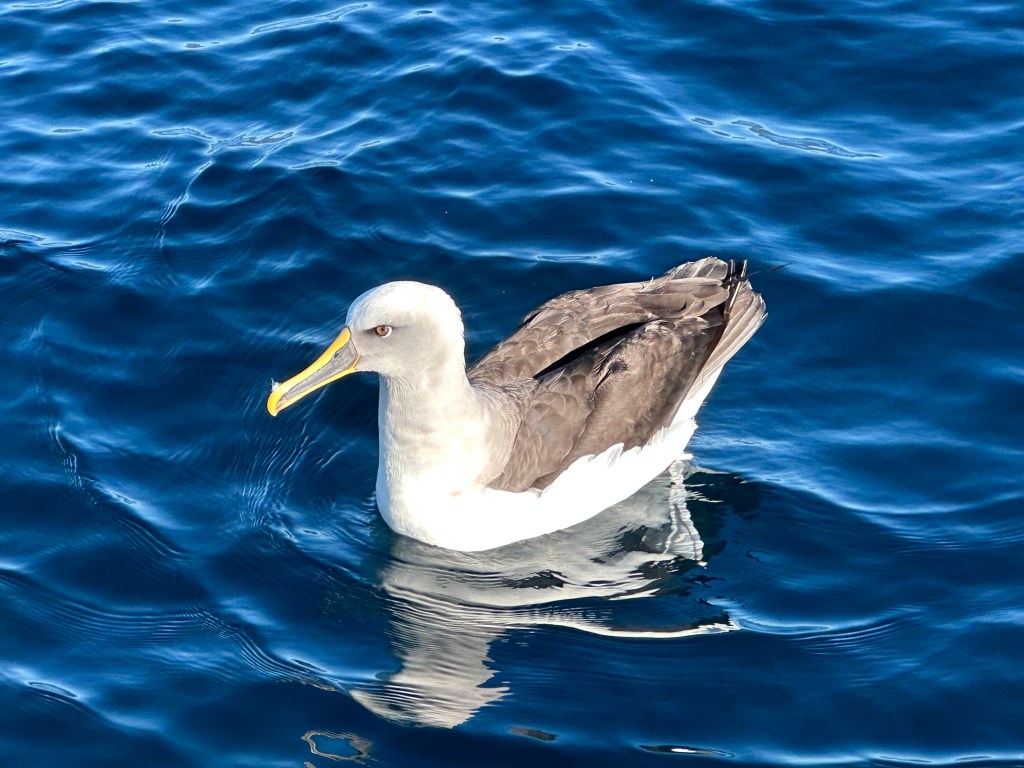
A crowd of mollymawks soon joined us, hoping to be fed. These birds, whose name comes from the Dutch for ‘silly gull,’ belong to the albatross family and are incredible in the air, sweeping along millimetres above the surface of waves.
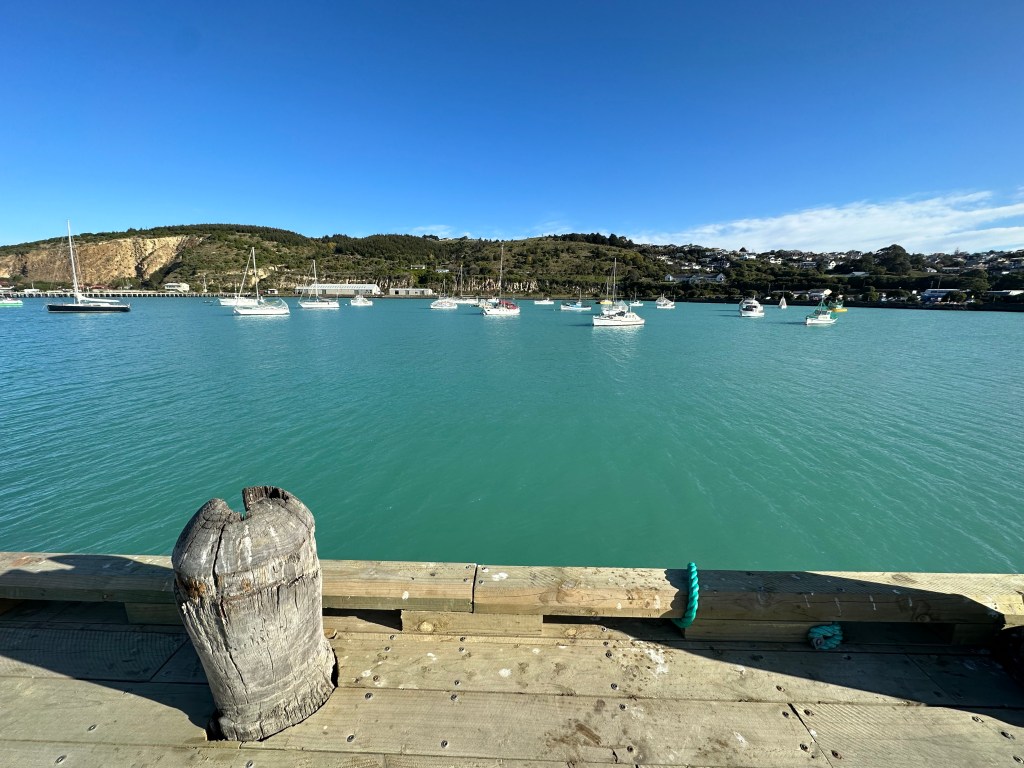
The rest of the sail to Oamaru was pretty uneventful. We had stopped there several times before, so knew to make our entry parallel to the shore and as close to the right hand of the seawall as one dares. The left hand side of the entrance is silted up so that it is easy to run aground there. The commodore of the Oamaru Yacht Club had found us another mooring to use (thanks Kevin) so we weren’t plagued by the roll that can get quite bad if you aren’t tucked in. Though we didn’t know it at the time, Oamaru was to be home for the next 9 days, as we were unable to find a window to continue north to Akaroa. Strong winds, veering 180 degrees in direction every 12–24, hours meant that we were happy to stay put. Little did we know how bad this unpredictable weather pattern was to get and how many weeks it would last…
Next time: we head to Akaroa for French fun and frolics!

 Sailing Taurus NZ
Leave a comment